The World as Will and Representation, Volume I
Preface to the First Edition
German
Wie dieses Buch zu lesen sei, um möglicherweise verstanden werden zu können, habe ich hier anzugeben mir vorgesetzt. — Was durch dasselbe mitgetheilt werden soll, ist ein einziger Gedanke. Dennoch konnte ich, aller Bemühungen ungeachtet, keinen kürzern Weg ihn mitzutheilen finden, als dieses ganze Buch. — Ich halte jenen Gedanken für Dasjenige, was man unter dem Namen der Philosophie sehr lange gesucht hat, und dessen Auffindung, eben daher, von den historisch Gebildeten für so unmöglich gehalten wird, wie die des Steines der Weisen, obgleich ihnen schon Plinius sagte: Quam multa fieri non posse, priusquam sint facta, judicantur? (Hist. nat., 7, 1.)
Je nachdem man jenen einen mitzutheilenden Gedanken von verschiedenen Seiten betrachtet, zeigt er sich als Das, was man Metaphysik, Das, was man Ethik und Das, was man Aesthetik genannt hat; und freilich müßte er auch dieses alles seyn, wenn er wäre, wofür ich ihn, wie schon eingestanden, halte.
Ein System von Gedanken muß allemal einen architektonischen Zusammenhang haben, d. h. einen solchen, in welchem immer ein Theil den andern trägt, nicht aber dieser auch jenen, der Grundstein endlich alle, ohne von ihnen getragen zu werden, der Gipfel getragen wird, ohne zu tragen. Hingegen ein einziger Gedanke muß, so umfassend er auch seyn mag, die vollkommenste Einheit bewahren. Läßt er dennoch, zum Behuf seiner Mittheilung, sich in Theile zerlegen; so muß doch wieder der Zusammenhang dieser Theile ein organischer, d. h. ein solcher seyn, wo jeder Theil ebenso sehr das Ganze erhält, als er vom Ganzen gehalten wird, keiner der erste und keiner der letzte ist, der ganze Gedanke durch jeden Theil an Deutlichkeit gewinnt und auch der kleinste Theil nicht völlig verstanden werden kann, ohne daß schon das Ganze vorher verstanden sei. — Ein Buch muß inzwischen eine erste und eine letzte Zeile haben und wird insofern einem Organismus allemal sehr unähnlich bleiben, so sehr diesem ähnlich auch immer sein Inhalt seyn mag: folglich werden Form und Stoff hier im Widerspruch stehen.
Es ergiebt sich von selbst, daß, unter solchen Umständen, zum Eindringen in den dargelegten Gedanken, kein anderer Rath ist, als das Buch zwei Mal zu lesen und zwar das erste Mal mit vieler Geduld, welche allein zu schöpfen ist aus dem freiwillig geschenkten Glauben, daß der Anfang das Ende beinahe so sehr voraussetze, als das Ende den Anfang, und eben so jeder frühere Theil den spätern beinahe so sehr, als dieser jenen. Ich sage „beinahe“: denn ganz und gar so ist es keineswegs, und was irgend zu thun möglich war, um Das, welches am wenigsten erst durch das Folgende aufgeklärt wird, voranzuschicken, wie überhaupt, was irgend zur möglichst leichten Faßlichkeit und Deutlichkeit beitragen konnte, ist redlich und gewissenhaft geschehen: ja, es könnte sogar damit in gewissem Grade gelungen seyn, wenn nicht der Leser, was sehr natürlich ist, nicht bloß an das jedesmal Gesagte, sondern auch an die möglichen Folgerungen daraus, beim Lesen dächte, wodurch, außer den vielen wirklich vorhandenen Widersprüchen gegen die Meinungen der Zeit und muthmaaßlich auch des Lesers, noch so viele andere anticipirte und imaginäre hinzukommen können, daß dann als lebhafte Mißbilligung sich darstellen muß, was noch bloßes Mißverstehen ist, wofür man es aber um so weniger erkennt, als die mühsam erreichte Klarheit der Darstellung und Deutlichkeit des Ausdrucks über den unmittelbaren Sinn des Gesagten wohl nie zweifelhaft läßt, jedoch nicht seine Beziehungen auf alles Uebrige zugleich aussprechen kann. Darum also erfordert die erste Lektüre, wie gesagt, Geduld, aus der Zuversicht geschöpft, bei der zweiten Vieles, oder Alles, in ganz anderem Lichte erblicken zu werden. Uebrigens muß das ernstliche Streben nach völliger und selbst leichter Verständlichkeit, bei einem sehr schwierigen Gegenstande, es rechtfertigen, wenn hier und dort sich eine Wiederholung findet. Schon der organische, nicht kettenartige Bau des Ganzen machte es nöthig, bisweilen dieselbe Stelle zwei Mal zu berühren. Eben dieser Bau auch und der sehr enge Zusammenhang aller Theile hat die mir sonst sehr schätzbare Eintheilung in Kapitel und Paragraphen nicht zugelassen; sondern mich genöthigt, es bei vier Hauptabtheilungen, gleichsam vier Gesichtspunkten des einen Gedankens, bewenden zu lassen. In jedem dieser vier Bücher hat man sich besonders zu hüten, nicht über die nothwendig abzuhandelnden Einzelheiten den Hauptgedanken, dem sie angehören, und die Fortschreitung der ganzen Darstellung aus den Augen zu verlieren. — Hiemit ist nun die erste und, gleich den folgenden, unerlaßliche Forderung an den (dem Philosophen, eben weil der Leser selbst einer ist) ungeneigten Leser ausgesprochen.
Die zweite Forderung ist diese, daß man vor dem Buche die Einleitung zu demselben lese, obgleich sie nicht mit in dem Buche steht, sondern fünf Jahre früher erschienen ist, unter dem Titel: „Ueber die vierfache Wurzel des Satzes vom zureichenden Grunde: eine philosophische Abhandlung.“ — Ohne Bekanntschaft mit dieser Einleitung und Propädeutik ist das eigentliche Verständniß gegenwärtiger Schrift ganz und gar nicht möglich, und der Inhalt jener Abhandlung wird hier überall so vorausgesetzt, als stände sie mit im Buche. Uebrigens würde sie, wenn sie diesem nicht schon um mehrere Jahre vorangegangen wäre, doch wohl nicht eigentlich als Einleitung ihm vorstehen, sondern dem ersten Buch einverleibt seyn, welches jetzt, indem das in der Abhandlung Gesagte ihm fehlt, eine gewisse Unvollkommenheit schon durch diese Lücken zeigt, welche es immer durch Berufen auf jene Abhandlung ausfüllen muß. Indessen war mein Widerwille, mich selbst abzuschreiben, oder das schon einmal zur Genüge Gesagte mühsälig unter andern Worten nochmals vorzubringen, so groß, daß ich diesen Weg vorzog, ungeachtet ich sogar jetzt dem Inhalt jener Abhandlung eine etwas bessere Darstellung geben könnte, zumal indem ich sie von manchen, aus meiner damaligen zu großen Befangenheit in der Kantischen Philosophie herrührenden Begriffen reinigte, als da sind: Kategorien, äußerer und innerer Sinn u. dgl. Indessen stehen auch dort jene Begriffe nur noch weil ich mich bis dahin nie eigentlich tief mit ihnen eingelassen hatte, daher nur als Nebenwerk und ganz außer Berührung mit der Hauptsache, weshalb denn auch die Berichtigung solcher Stellen jener Abhandlung, durch die Bekanntschaft mit gegenwärtiger Schrift, sich in den Gedanken des Lesers ganz von selbst machen wird. — Aber allein wenn man durch jene Abhandlung vollständig erkannt hat, was der Satz vom Grunde sei und bedeute, worauf und worauf nicht sich seine Gültigkeit erstrecke, und daß nicht vor allen Dingen jener Satz, und erst in Folge und Gemäßheit desselben, gleichsam als sein Korrolarium, die ganze Welt sei; sondern er vielmehr nichts weiter ist, als die Form, in der das stets durch das Subjekt bedingte Objekt, welcher Art es auch sei, überall erkannt wird, sofern das Subjekt ein erkennendes Individuum ist: nur dann wird es möglich seyn, auf die hier zuerst versuchte, von allen bisherigen völlig abweichende Methode des Philosophirens einzugehen.
Allein der selbe Widerwille, mich selbst wörtlich abzuschreiben, oder aber auch mit anderen und schlechteren Worten, nachdem ich mir die besseren selbst vorweggenommen, zum zweiten Male ganz das Selbe zu sagen, hat noch eine zweite Lücke im ersten Buche dieser Schrift veranlaßt, indem ich alles Dasjenige weggelassen habe, was im ersten Kapitel meiner Abhandlung „Ueber das Sehen und die Farben“ steht und sonst hier wörtlich seine Stelle gefunden hätte. Also auch die Bekanntschaft mit dieser frühern kleinen Schrift wird hier vorausgesetzt.
Die dritte an den Leser zu machende Forderung endlich könnte sogar stillschweigend vorausgesetzt werden: denn es ist keine andere, als die der Bekanntschaft mit der wichtigsten Erscheinung, welche seit zwei Jahrtausenden in der Philosophie hervorgetreten ist und uns so nahe liegt: ich meyne die Hauptschriften Kant's. Die Wirkung, welche sie in dem Geiste, zu welchem sie wirklich reden, hervorbringen, finde ich in der That, wie wohl schon sonst gesagt worden, der Staaroperation am Blinden gar sehr zu vergleichen: und wenn wir das Gleichniß fortsetzen wollen, so ist mein Zweck dadurch zu bezeichnen, daß ich Denen, an welchen jene Operation gelungen ist, eine Staarbrille habe in die Hand geben wollen, zu deren Gebrauch also jene Operation selbst die nothwendigste Bedingung ist. — So sehr ich demnach von Dem ausgehe, was der große Kant geleistet hat; so hat dennoch eben das ernstliche Studium seiner Schriften mich bedeutende Fehler in denselben entdecken lassen, welche ich aussondern und als verwerflich darstellen mußte, um das Wahre und Vortreffliche seiner Lehre rein davon und geläutert voraussetzen und anwenden zu können. Um aber nicht meine eigene Darstellung durch häufige Polemik gegen Kant zu unterbrechen und zu verwirren, habe ich diese in einen besondern Anhang gebracht. So sehr nun, dem Gesagten zufolge, meine Schrift die Bekanntschaft mit der Kantischen Philosophie voraussetzt; so sehr setzt sie also auch die Bekanntschaft mit jenem Anhange voraus: daher es in dieser Rücksicht rathsam wäre, den Anhang zuerst zu lesen, um so mehr, als der Inhalt desselben gerade zum ersten Buche gegenwärtiger Schrift genaue Beziehungen hat. Andererseits konnte, der Natur der Sache nach, es nicht vermieden werden, daß nicht auch der Anhang hin und wieder sich auf die Schrift selbst beriefe: daraus nichts anderes folgt; als daß er eben sowohl, als der Haupttheil des Werkes, zwei Mal gelesen werden muß.
Kants Philosophie also ist die einzige, mit welcher eine gründliche Bekanntschaft bei dem hier Vorzutragenden geradezu vorausgesetzt wird. — Wenn aber überdies noch der Leser in der Schule des göttlichen Platon geweilt hat; so wird er um so besser vorbereitet und empfänglicher seyn, mich zu hören. Ist er aber gar noch der Wohlthat der Veda's theilhaft geworden, deren uns durch die Upanischaden eröffneter Zugang, in meinen Augen, der größte Vorzug ist, den dieses noch junge Jahrhundert vor den früheren aufzuweisen hat, indem ich vermuthe, daß der Einfluß der Sanskrit-Litteratur nicht weniger tief eingreifen wird, als im 15. Jahrhundert die Wiederbelebung der Griechischen: hat also, sage ich, der Leser auch schon die Weihe uralter Indischer Weisheit empfangen und empfänglich aufgenommen; dann ist er auf das allerbeste bereitet zu hören, was ich ihm vorzutragen habe. Ihn wird es dann nicht, wie manchen Andern fremd, ja feindlich ansprechen; da ich, wenn es nicht zu stolz klänge, behaupten möchte, daß jeder von den einzelnen und abgerissenen Aussprüchen, welche die Upanischaden ausmachen, sich als Folgesatz aus dem von mir mitzutheilenden Gedanken ableiten ließe, obgleich keineswegs auch umgekehrt dieser schon dort zu finden ist.
Aber schon sind die meisten Leser ungeduldig aufgefahren und in den mühsam so lange zurückgehaltenen Vorwurf ausgebrochen, wie ich doch wagen könne, dem Publikum ein Buch unter Forderungen und Bedingungen, von denen die beiden ersten anmaaßend und ganz unbescheiden sind, vorzulegen, und dies zu einer Zeit, wo ein so allgemeiner Reichthum an eigenthümlichen Gedanken ist, daß in Deutschland allein solche jährlich in drei Tausend gehaltreichen, originellen und ganz unentbehrlichen Werken, und außerdem in unzähligen periodischen Schriften, oder gar täglichen Blättern, durch die Druckerpresse zum Gemeingute gemacht werden? zu einer Zeit, wo besonders an ganz originellen und tiefen Philosophen nicht der mindeste Mangel ist; sondern allein in Deutschland deren mehr zugleich leben, als sonst etliche Jahrhunderte hintereinander aufzuweisen hatten? wie man denn, frägt der entrüstete Leser, zu Ende kommen solle, wenn man mit einem Buche so umständlich zu Werke gehen müßte?
Da ich gegen solche Vorwürfe nicht das Mindeste vorzubringen habe, hoffe ich nur auf einigen Dank bei diesen Lesern dafür, daß ich sie bei Zeiten gewarnt habe, damit sie keine Stunde verlieren mit einem Buche, dessen Durchlesung ohne Erfüllung der gemachten Forderungen nicht fruchten könnte und daher ganz zu unterlassen ist, zumal da auch sonst gar Vieles zu wetten, daß es ihnen nicht zusagen kann, daß es vielmehr immer nur paucorum hominum seyn wird und daher gelassen und bescheiden auf die Wenigen warten muß, deren ungewöhnliche Denkungsart es genießbar fände. Denn, auch abgesehen von den Weitläuftigkeiten und der Anstrengung, die es dem Leser zumuthet, welcher Gebildete dieser Zeit, deren Wissen dem herrlichen Punkte nahe gekommen ist, wo parador und falsch ganz einerlei sind, könnte es ertragen, fast auf jeder Seite Gedanken zu begegnen, die Dem, was er doch selbst ein für allemal als wahr und ausgemacht festgesetzt hat, geradezu widersprechen? Und dann, wie unangenehm wird Mancher sich getäuscht finden, wenn er hier gar keine Rede antrifft von Dem, was er gerade hier durchaus suchen zu müssen glaubt, weil seine Art zu spekuliren zusammentrifft mit der eines noch lebenden großen Philosophen [1], welcher wahrhaft rührende Bücher geschrieben und nur die kleine Schwachheit hat, Alles, was er vor seinem funfzehnten Jahre gelernt und approbirt hat, für angeborne Grundgedanken des menschlichen Geistes zu halten. Wer möchte alles dies ertragen? Daher mein Rath ist, das Buch nur wieder wegzulegen.
Allein ich fürchte selbst so nicht loszukommen. Der bis zur Vorrede, die ihn abweist, gelangte Leser hat das Buch für baares Geld gekauft und frägt, was ihn schadlos hält? — Meine letzte Zuflucht ist jetzt, ihn zu erinnern, daß er ein Buch, auch ohne es gerade zu lesen, doch auf mancherlei Art zu benutzen weiß. Es kann, so gut wie viele andere, eine Lücke seiner Bibliothek ausfüllen, wo es sich, sauber gebunden, gewiß gut ausnehmen wird. Oder auch er kann es seiner gelehrten Freundin auf die Toilette, oder den Theetisch legen. Oder endlich er kann ja, was gewiß das Beste von Allem ist und ich besonders rathe, es recensiren.
2 F. H. Jacobi.
Und so, nachdem ich mir den Scherz erlaubt, welchem eine Stelle zu gönnen in diesem durchweg zweideutigen Leben kaum irgend ein Blatt zu ernsthaft seyn kann, gebe ich mit innigem Ernst das Buch hin, in der Zuversicht, daß es früh oder spät Diejenigen erreichen wird, an welche es allein gerichtet seyn kann, und übrigens gelassen darin ergeben, daß auch ihm in vollem Maaße das Schicksal werde, welches in jeder Erkenntniß, also um so mehr in der wichtigsten, allezeit der Wahrheit zu Theil ward, der nur ein kurzes Siegesfest beschieden ist, zwischen den beiden langen Zeiträumen, wo sie als parador verdammt und als trivial geringgeschätzt wird. Auch pflegt das erstere Schicksal ihren Urheber mitzutreffen. — Aber das Leben ist kurz und die Wahrheit wirkt ferne und lebt lange: sagen wir die Wahrheit.
(Geschrieben zu Dresden im August 1818.)
English
I have set myself the task of explaining here how this book should be read if there is to be any chance of understanding it.—What the book is meant to communicate is a single thought. Yet in spite of every effort, I could find no shorter way to communicate it than this whole book.—I believe this thought is what people have been searching for, for a very long time, under the name of philosophy. That is exactly why people with a historical education consider it as impossible to find as the philosopher’s stone, even though Pliny already told them: Quam multa fieri non posse, priusquam sint facta, judicantur? (Hist. nat., 7, 1.)
Depending on which side you look at this one thought from, it shows up as what people have called metaphysics, as what they have called ethics, and as what they have called aesthetics. And of course it would have to be all of these, if it is what I, as I have already admitted, take it to be.
A system of thoughts must always have an architectural structure. That means one in which each part supports another, but the other does not also support the first. The foundation stone finally supports all the rest without being supported by any of them, and the top is supported without supporting anything. A single thought, on the other hand, however wide-reaching it may be, must keep the most perfect unity. If it can still be broken into parts to make it communicable, then the connection between those parts must again be organic. That means each part sustains the whole just as much as the whole holds it up. No part is first and none is last. The whole thought becomes clearer through every part, and even the smallest part cannot be fully understood unless the whole has been understood beforehand.—A book, however, has to have a first line and a last line. To that extent it will always remain very unlike an organism, however much its content may resemble one. So form and material are in conflict here.
It follows of itself that, in these circumstances, there is no way into the thought set out here except to read the book twice. The first time calls for a great deal of patience. That patience can only come from a freely given belief that the beginning presupposes the end almost as much as the end presupposes the beginning, and that every earlier part likewise presupposes the later ones almost as much as they presuppose it. I say “almost,” because it is by no means entirely so. I have done honestly and conscientiously everything that could be done to put first whatever depends least on being explained by what follows. I have done the same for everything that could make the book as easy to grasp and as clear as possible. I might even have succeeded to some degree, if readers did not, quite naturally, think as they read not only about what is said at each point but also about what might follow from it. That adds so many anticipated and imaginary contradictions to the many real contradictions with the opinions of the time (and presumably with the reader’s own) that what is still only a misunderstanding has to look like strong disapproval. The reader recognizes it as a misunderstanding all the less because the clear presentation and distinct expression I worked hard to achieve never leave the immediate meaning of what is said in doubt, yet cannot also state its relations to everything else at the same moment. So, as I said, the first reading calls for patience, drawn from the confidence that on the second reading you will see much, or everything, in a quite different light. Besides, the serious effort to be fully understandable, and even easily understandable, on a very difficult subject must justify a repetition here and there. The organic structure of the whole, which is not a chain, already made it necessary at times to touch the same passage twice. This same structure, and the very close connection of all the parts, also did not allow the division into chapters and sections, which I would otherwise value highly. It forced me to leave it at four main divisions, four viewpoints, so to speak, of the one thought. In each of these four books one has to take special care not to lose sight of the main thought they belong to, or of the progress of the whole presentation, because of the details that have to be dealt with along the way.—This, then, is the first demand, and like the ones that follow it, it is indispensable. I make it of a reader who is ill disposed toward the philosopher, precisely because the reader is a philosopher too.
The second demand is this: that before reading the book you read its introduction. It is not in the book. It appeared five years earlier, under the title “On the Fourfold Root of the Principle of Sufficient Reason: A Philosophical Essay.”—Without knowing this introduction and preparatory study, a real understanding of the present work is quite impossible, and the content of that essay is presupposed everywhere here as if it were part of the book. In fact, if it had not already come out several years before this book, it would not really stand in front of it as an introduction. It would be built into the first book. That book now lacks what the essay says, and this lack already makes it incomplete in a certain way. It always has to fill the gaps by referring to the essay. But my reluctance to copy myself, or to laboriously say again in other words what had already been said well enough once, was so great that I chose this way. I chose it even though I could now present the content of that essay somewhat better, above all by cleaning it of certain concepts that come from my then excessive entanglement in Kant’s philosophy: the categories, outer and inner sense, and the like. Even there, though, these concepts appear only as side matter, quite apart from the main point, because up to then I had never really gone deeply into them. So getting to know the present work will correct such passages of that essay in the reader’s mind quite by itself.—But only if that essay has given you a complete grasp of what the principle of sufficient reason is and means, how far its validity reaches and where it does not, and that this principle is not first of all things, with the whole world following from it as its corollary; rather it is nothing more than the form in which the object (which is always conditioned by the subject, whatever kind of object it is) is known everywhere, insofar as the subject is a knowing individual: only then will it be possible to enter into the way of philosophizing that is attempted here for the first time and that departs completely from all earlier ones.
But the same reluctance to copy myself word for word, or else, after I had used up the better words, to say exactly the same thing a second time in other and worse ones, has caused a second gap in the first book of this work. I have left out everything that is in the first chapter of my essay “On Vision and Colors,” which would otherwise have found its place here word for word. So familiarity with that earlier little work is also presupposed here.
The third demand I make of the reader could even be left unspoken. It is nothing other than familiarity with the most important event in philosophy in the last two thousand years, one that lies so close to us. I mean the main works of Kant. I find that the effect they have on a mind they really speak to is very much like a cataract operation on a blind person, as has been said before. If we carry the comparison further, my aim can be described like this: I wanted to put a pair of cataract glasses into the hands of those on whom the operation has succeeded. The operation itself is therefore the necessary condition for using the glasses.—Much as I start from what the great Kant accomplished, serious study of his writings has nevertheless shown me significant errors in them. I had to separate these out and present them as unacceptable, so that I could assume and apply what is true and excellent in his teaching, free of them and purified. But so as not to interrupt and confuse my own presentation with frequent polemic against Kant, I have put that polemic into a separate appendix. Just as my work, as I have said, presupposes familiarity with Kant’s philosophy, it also presupposes familiarity with that appendix. In this respect it would be advisable to read the appendix first, all the more because its content is closely related to the first book of the present work. On the other hand, given the nature of the subject, it could not be avoided that the appendix itself should now and then refer to the work proper. The only conclusion from that is that the appendix, just like the main part of the work, has to be read twice.
Kant’s philosophy, then, is the only one with which a thorough familiarity is directly presupposed for what is to be presented here.—If the reader has also spent time in the school of the divine Plato, the reader will be that much better prepared and more ready to listen to me. And if the reader has also come to share in the benefit of the Vedas, then better still. The access to them that the Upanishads have opened to us is, in my eyes, the greatest advantage this still young century has over earlier ones. I suspect that the influence of Sanskrit literature will cut no less deep than the revival of Greek literature did in the 15th century. So, I say, if the reader has also received the consecration of ancient Indian wisdom and taken it in with an open mind, then the reader is as well prepared as possible to hear what I have to say. It will not strike such a reader as strange, or even hostile, as it does some others. If it did not sound too proud, I would claim that each of the individual, disconnected sayings that make up the Upanishads could be derived as a consequence from the thought I have to communicate, although by no means can this thought, conversely, already be found there.
But most readers have already started up in impatience and burst out with the reproach they have held back with such effort for so long. How can I dare, they ask, to put a book before the public with demands and conditions, the first two of which are presumptuous and quite immodest? And at a time when there is such a general wealth of original thought that in Germany alone it is made common property by the printing press every year in three thousand substantial, original and entirely indispensable works, and besides that in countless periodicals and even daily papers? At a time when there is not the slightest shortage of original and deep philosophers, and more of them are alive at once in Germany alone than other times could show in several centuries one after another? How, the indignant reader asks, is anyone ever to finish reading, if one had to go to such lengths over a single book?
I have nothing at all to say against such reproaches. So I hope only for some thanks from these readers for warning them in good time, so that they do not lose an hour on a book that could do them no good to read without meeting the demands I made, and that should therefore be left alone altogether. There are, besides, plenty of other reasons to bet that it cannot please them, and that it will always be only paucorum hominum and must therefore wait calmly and modestly for the few whose unusual way of thinking would find it enjoyable. For even leaving aside the length and the effort it demands of the reader, what educated person of this age, whose knowledge has come close to the glorious point where paradoxical and false are the same thing, could stand running into thoughts on almost every page that flatly contradict what that person has settled once and for all as true and certain? And then, how unpleasantly disappointed many people will be to find no mention here of what they feel they must look for here above all, because their way of speculating coincides with that of a great philosopher who is still alive [1]. He has written truly touching books, and his one small weakness is that he takes everything he learned and approved before his fifteenth year to be innate basic ideas of the human mind. Who could stand all this? So my advice is simply to put the book down again.
But I fear that even so I will not get rid of them. A reader who has got as far as the preface that turns him away has bought the book for cash and asks what will make up for his loss.—My last refuge is to remind him that a book can be put to use in various ways even without being read. Like many others, it can fill a gap in his library, where, neatly bound, it will certainly look good. Or he can lay it on the dressing table or the tea table of his learned lady friend. Or finally, he can review it. That is surely the best of all, and I especially recommend it.
2 F. H. Jacobi.
And so, having allowed myself the joke (and in this thoroughly ambiguous life hardly any page is too serious to give a joke a place), I hand over the book in deep earnest. I am confident that sooner or later it will reach those to whom alone it can be addressed. For the rest, I calmly accept that it will meet in full measure the fate that has always fallen to truth in every kind of knowledge, and so all the more in the most important kind. Truth is granted only a short festival of victory, between the two long periods when it is condemned as paradoxical and then dismissed as trivial. The first fate usually strikes its author too.—But life is short, and truth works far and lives long: let us speak the truth.
(Written at Dresden in August 1818.)
Preface to the Second Edition
Nicht den Zeitgenossen, nicht den Landsgenossen, — der Menschheit übergebe ich mein nunmehr vollendetes Werk, in der Zuversicht, daß es nicht ohne Werth für sie seyn wird; sollte auch dieser, wie es das Loos des Guten in jeder Art mit sich bringt, erst spät erkannt werden. Denn nur für sie, nicht für das vorübereilende, mit seinem einstweiligen Wahn beschäftigte Geschlecht, kann es gewesen seyn, daß mein Kopf, fast wider meinen Willen, ein langes Leben hindurch, seiner Arbeit unausgesetzt obgelegen hat. An dem Werth derselben hat, während der Zeit, auch der Mangel an Theilnahme mich nicht irre machen können; weil ich fortwährend das Falsche, das Schlechte, zuletzt das Absurde und Unsinnige [1] in allgemeiner Bewunderung und Verehrung stehen sah und bedachte, daß wenn Diejenigen, welche das Aechte und Rechte zu erkennen fähig sind, nicht so selten wären, daß man einige zwanzig Jahre hindurch vergeblich nach ihnen sich umsehen kann, Derer, die es hervorzubringen vermögen, nicht so wenige seyn könnten, daß ihre Werke nachmals eine Ausnahme machen [2] Hegel'sche Philosophie. von der Vergänglichkeit irdischer Dinge; wodurch dann die erquickende Aussicht auf die Nachwelt verloren gienge, deren Jeder, der sich ein hohes Ziel gesteckt hat, zu seiner Stärkung bedarf. — Wer eine Sache, die nicht zu materiellem Nutzen führt, ernsthaft nimmt und betreibt, darf auf die Theilnahme der Zeitgenossen nicht rechnen. Wohl aber wird er meistens sehen, daß unterdessen der Schein solcher Sache sich in der Welt geltend macht und seinen Tag genießt: und dies ist in der Ordnung. Denn die Sache selbst muß auch ihrer selbst wegen betrieben werden: sonst kann sie nicht gelingen; weil überall jede Absicht der Einsicht Gefahr droht. Demgemäß hat, wie die Litterargeschichte durchweg bezeugt, jedes Werthvolle, um zur Geltung zu gelangen, viel Zeit gebraucht; zumal wenn es von der belehrenden, nicht von der unterhaltenden Gattung war: und unterdessen glänzte das Falsche. Denn die Sache mit dem Schein der Sache zu vereinigen ist schwer, wo nicht unmöglich. Das eben ist ja der Fluch dieser Welt der Noth und des Bedürfnisses, daß Diesen Alles dienen und fröhnen muß: daher eben ist sie nicht so beschaffen, daß in ihr irgend ein edles und erhabenes Streben, wie das nach Licht und Wahrheit ist, ungehindert gedeihen und seiner selbst wegen daseyn dürfte. Sondern selbst wenn ein Mal ein solches sich hat geltend machen können und dadurch der Begriff davon eingeführt ist; so werden alsbald die materiellen Interessen, die persönlichen Zwecke, auch seiner sich bemächtigen, um ihr Werkzeug, oder ihre Maske daraus zu machen. Demgemäß mußte, nachdem Kant die Philosophie von Neuem zu Ansehen gebracht hatte, auch sie gar bald das Werkzeug der Zwecke werden, der staatlichen von oben, der persönlichen von unten; — denn auch, genau genommen, nicht sie; doch ihr Doppelgänger, der für sie gilt. Dies darf sogar uns nicht befremden: denn die unglaublich große Mehrzahl der Menschen ist, ihrer Natur zufolge, durchaus keiner andern, als materieller Zwecke fähig, ja, kann keine andern begreifen. Demnach ist das Streben nach Wahrheit allein ein viel zu hohes und excentrisches, als daß erwartet werden dürfte, daß Alle, daß Viele, ja daß auch nur Einige aufrichtig daran Theil nehmen sollten. Sieht man dennoch ein Mal, wie z. B. eben jetzt in Deutschland, eine auffallende Regsamkeit, ein allgemeines Treiben, Schreiben und Reden in Sachen der Philosophie; so darf man zuversichtlich voraussetzen, daß das wirkliche primum mobile, die versteckte Triebfeder solcher Bewegung, aller feierlichen Mienen und Versicherungen ungeachtet, allein reale, nicht ideale Zwecke sind, daß nämlich persönliche, amtliche, kirchliche, staatliche, kurz, materielle Interessen es sind, die man dabei im Auge hat, und daß folglich bloße Parteizwecke die vielen Federn angeblicher Weltweisen in so starke Bewegung setzen, mithin daß Absichten, nicht Einsichten, der Leitstern dieser Tumultuanten sind, die Wahrheit aber gewiß das Letzte ist, woran dabei gedacht wird. Sie findet keine Parteigänger: vielmehr kann sie, durch ein solches philosophisches Streitgetümmel hindurch, ihren Weg so ruhig und unbeachtet zurücklegen, wie durch die Winternacht des finstersten, im starrsten Kirchenglauben befangenen Jahrhunderts, wo sie etwan nur als Geheimlehre wenigen Adepten mitgetheilt, oder gar dem Pergament allein anvertraut wird. Ja, ich möchte sagen, daß keine Zeit der Philosophie ungünstiger seyn kann, als die, da sie von der einen Seite als Staatsmittel, von der andern als Erwerbsmittel schnöde mißbraucht wird. Oder glaubt man etwan, daß bei solchem Streben und unter solchem Getümmel, so nebenher auch die Wahrheit, auf die es dabei gar nicht abgesehen ist, zu Tage kommen wird? Die Wahrheit ist keine Hure, die sich Denen an den Hals wirft, welche ihrer nicht begehren: vielmehr ist sie eine so spröde Schöne, daß selbst wer ihr Alles opfert noch nicht ihrer Gunst gewiß seyn darf.
Machen nun die Regierungen die Philosophie zum Mittel ihrer Staatszwecke; so sehen andererseits die Gelehrten in philosophischen Professuren ein Gewerbe, das seinen Mann nährt, wie jedes andere: sie drängen sich also danach, unter Versicherung ihrer guten Gesinnung, d. h. der Absicht, jenen Zwecken zu dienen. Und sie halten Wort: nicht Wahrheit, nicht Klarheit, nicht Plato, nicht Aristoteles, sondern die Zwecke, denen zu dienen sie bestellt worden, sind ihr Leitstern und werden sofort auch das Kriterium des Wahren, des Werthvollen, des zu Beachtenden, und ihres Gegentheils. Was daher jenen nicht entspricht, und wäre es das Wichtigste und Außerordentlichste in ihrem Fach, wird entweder verurtheilt, oder, wo dies bedenklich scheint, durch unmüthiges Ignoriren erstickt. Man sehe nur ihren einhelligen Eifer gegen den Pantheismus: wird irgend ein Tropf glauben, er gehe aus Ueberzeugung hervor? — Wie sollte auch überhaupt die zum Brodgewerbe herabgewürdigte Philosophie nicht in Sophistik ausarten? Eben weil dies unausbleiblich ist und die Regel „Weß Brod ich eß', deß Lied ich sing'“ von jeher gegolten hat, war bei den Alten das Geldverdienen mit der Philosophie das Merkmal des Sophisten. — Nun kommt aber noch hinzu, daß, da in dieser Welt überall nichts als Mittelmäßigkeit zu erwarten steht, gefordert werden darf und für Geld zu haben ist, man mit dieser auch hier vorlieb zu nehmen hat. Danach sehen wir denn, auf allen Deutschen Universitäten, die liebe Mittelmäßigkeit sich abmühen, die noch gar nicht vorhandene Philosophie aus eigenen Mitteln zu Stande zu bringen, und zwar nach vorgeschriebenem Maaß und Ziel; — ein Schauspiel, über welches zu spotten beinahe grausam wäre.
Während solchermaaßen schon lange die Philosophie durchgängig als Mittel dienen mußte, von der einen Seite zu öffentlichen, von der andern zu Privatzwecken, bin ich, davon ungestört, seit mehr als dreißig Jahren, meinem Gedankenzuge nachgegangen, eben auch nur weil ich es mußte und nicht anders konnte, aus einem instinktartigen Triebe, der jedoch von der Zuversicht unterstützt wurde, daß was Einer Wahres gedacht und Verborgenes beleuchtet hat, doch auch irgendwann von einem andern denkenden Geiste gefaßt werden, ihn ansprechen, freuen und trösten wird: zu einem solchen redet man, wie die uns Aehnlichen zu uns geredet haben und dadurch unser Trost in dieser Lebensöde geworden sind. Seine Sache treibt man derweilen ihrer selbst wegen und für sich selbst. Nun aber steht es um philosophische Meditationen seltsamerweise so, daß gerade nur Das, was Einer für sich selbst durchdacht und erforscht hat, nachmals auch Andern zu Gute kommt; nicht aber Das, was schon ursprünglich für Andere bestimmt war. Kenntlich ist Jenes zunächst am Charakter durchgängiger Redlichkeit; weil man nicht sich selbst zu täuschen sucht, noch sich selber hohle Nüsse darreicht; wodurch dann alles Sophisticiren und aller Wortkram wegfällt und in Folge hievon jede hingeschriebene Periode für die Mühe sie zu lesen sogleich entschädigt. Dem entsprechend tragen meine Schriften das Gepräge der Redlichkeit und Offenheit so deutlich auf der Stirn, daß sie schon dadurch grell abstechen von denen der drei berühmten Sophisten der nachkantischen Periode: stets findet man mich auf dem Standpunkt der Reflexion, d. i. der vernünftigen Besinnung und redlichen Mittheilung, niemals auf dem der Inspiration, genannt intellektuelle Anschauung, oder auch absolutes Denken, beim rechten Namen jedoch Windbeutelei und Scharlatanerei. — In diesem Geiste also arbeitend und während dessen immerfort das Falsche und Schlechte in allgemeiner Geltung, ja, Windbeutelei3 und Scharlatanerei4 in höchster Verehrung sehend, habe ich längst auf den Beifall meiner Zeitgenossen verzichtet. Es ist unmöglich, daß eine Zeitgenossenschaft5 Fichte und Schelling.
6 Hegel., welche, zwanzig Jahre hindurch, einen Hegel, diesen geistigen Kaliban, als den größten der Philosophen ausgeschrien hat, so laut, daß es in ganz Europa widerhallte, Den, der Das angesehen, nach ihrem Beifall lüstern machen könnte. Sie hat keine Ehrenkränze mehr zu vergeben: ihr Beifall ist prostituirt, und ihr Tadel hat nichts zu bedeuten. Daß es hiemit mein Ernst sei, ist daraus ersichtlich, daß, wenn ich irgend nach dem Beifall meiner Zeitgenossen getrachtet hätte, ich zwanzig Stellen hätte streichen müssen, welche allen Ansichten derselben ganz und gar widersprechen, ja, zum Theil ihnen anstößig seyn müssen. Allein ich würde es mir zum Vergehen anrechnen, jenem Beifall auch nur eine Silbe zum Opfer zu bringen. Mein Leitstern ist ganz ernstlich die Wahrheit gewesen: ihm nachgehend durfte ich zunächst nur nach meinem eigenen Beifall trachten, gänzlich abgewendet von einem, in Hinsicht auf alle höheren Geistesbestrebungen, tief gesunkenen Zeitalter und einer, bis auf die Ausnahmen, demoralisirten Nationallitteratur, in welcher die Kunst, hohe Worte mit niedriger Gesinnung zu verbinden, ihren Gipfel erreicht hat. Den Fehlern und Schwächen, welche meiner Natur, wie jeder die ihrigen, nothwendig anhängen, kann ich freilich nimmermehr entgehen; aber ich werde sie nicht durch unwürdige Akkommodationen vermehren.
Was nunmehr diese zweite Auflage betrifft, so freut es mich zuvörderst, daß ich nach fünfundzwanzig Jahren nichts zurückzunehmen finde, also meine Grundüberzeugungen sich wenigstens an mir selbst bewährt haben. Die Veränderungen im ersten Bande, welcher allein den Text der ersten Auflage enthält, berühren demnach nirgends das Wesentliche, sondern betreffen theils nur Nebendinge, größtentheils aber bestehen sie in meist kurzen, erläuternden, hin und wieder eingefügten Zusätzen. Bloß die Kritik der Kantischen Philosophie hat bedeutende Berichtigungen und ausführliche Zusätze erhalten; da solche sich hier nicht in ein ergänzendes Buch bringen ließen, wie die vier Bücher, welche meine eigene Lehre darstellen, jedes eines, im zweiten Bande, erhalten haben. Bei diesen habe ich letztere Form der Vermehrung und Verbesserung deswegen gewählt, weil die seit ihrer Abfassung verstrichenen fünfundzwanzig Jahre in meiner Darstellungsweise und im Ton des Vortrags eine so merkliche Veränderung herbeigeführt haben, daß es nicht wohl angieng, den Inhalt des zweiten Bandes mit dem des ersten in ein Ganzes zu verschmelzen, als bei welcher Fusion beide zu leiden gehabt haben würden. Ich gebe daher beide Arbeiten gesondert und habe an der früheren Darstellung oft selbst da, wo ich mich jetzt ganz anders ausdrücken würde, nichts geändert; weil ich mich hüten wollte, nicht durch die Krittelei des Alters die Arbeit meiner jüngern Jahre zu verderben. Was in dieser Hinsicht zu berichtigen seyn möchte, wird sich, mit Hülfe des zweiten Bandes, im Geiste des Lesers schon von selbst zurechtstellen. Beide Bände haben, im vollen Sinne des Worts, ein ergänzendes Verhältniß zu einander, sofern nämlich dieses darauf beruht, daß das eine Lebensalter des Menschen, in intellektueller Hinsicht, die Ergänzung des andern ist: daher wird man finden, daß nicht bloß jeder Band Das enthält, was der andere nicht hat, sondern auch, daß die Vorzüge des einen gerade in Dem bestehen, was dem andern abgeht. Wenn demnach die erste Hälfte meines Werkes vor der zweiten Das voraus hat, was nur das Feuer der Jugend und die Energie der ersten Konception verleihen kann; so wird dagegen diese jene übertreffen durch die Reife und vollständige Durcharbeitung der Gedanken, welche allein den Früchten eines langen Lebenslaufes und seines Fleißes zu Theil wird. Denn, als ich die Kraft hatte, den Grundgedanken meines Systems ursprünglich zu erfassen, ihn sofort in seine vier Verzweigungen zu verfolgen, von ihnen auf die Einheit ihres Stammes zurückzugehen und dann das Ganze deutlich darzustellen; da konnte ich noch nicht im Stande seyn, alle Theile des Systems, mit der Vollständigkeit, Gründlichkeit und Ausführlichkeit durchzuarbeiten, die nur durch eine vieljährige Meditation desselben erlangt werden, als welche erfordert ist, um es an unzähligen Thatsachen zu prüfen und zu erläutern, es durch die verschiedenartigsten Belege zu stützen, es von allen Seiten hell zu beleuchten, die verschiedenen Gesichtspunkte danach kühn in Kontrast zu stellen, die mannigfaltigen Materien rein zu sondern und wohlgeordnet darzulegen. Daher, wenngleich es dem Leser allerdings angenehmer seyn müßte, mein ganzes Werk aus Einem Gusse zu haben, statt daß es jetzt aus zwei Hälften besteht, welche beim Gebrauch aneinander zu bringen sind; so wolle er bedenken, daß dazu erfordert gewesen wäre, daß ich in Einem Lebensalter geleistet hätte, was nur in zweien möglich ist, indem ich dazu in Einem Lebensalter hätte die Eigenschaften besitzen müssen, welche die Natur an zwei ganz verschiedene vertheilt hat. Demnach ist die Nothwendigkeit, mein Werk in zwei einander ergänzenden Hälften zu liefern, der zu vergleichen, in Folge welcher man ein achromatisches Objektivglas, weil es aus Einem Stücke zu verfertigen unmöglich ist, dadurch zu Stande bringt, daß man es aus einem Konvexglase von Flintglas und einem Konkavglase von Krownglas zusammensetzt, deren vereinigte Wirkung allererst das Beabsichtigte leistet. Andererseits jedoch wird der Leser, für die Unbequemlichkeit zwei Bände zugleich zu gebrauchen, einige Entschädigung finden in der Abwechselung und Erholung, welche die Behandlung des selben Gegenstandes, vom selben Kopfe, im selben Geist, aber in sehr verschiedenen Jahren, mit sich bringt. Inzwischen ist es für Den, welcher mit meiner Philosophie noch nicht bekannt ist, durchaus rathsam, zuvörderst den ersten Band, ohne Hinzuziehung der Ergänzungen, durchzulesen und diese erst bei einer zweiten Lektüre zu benutzen; weil es ihm sonst zu schwer seyn würde, das System in seinem Zusammenhange zu fassen, als in welchem es allein der erste Band darlegt, während im zweiten die Hauptlehren einzeln ausführlicher begründet und vollständig entwickelt werden. Selbst wer zu einer zweiten Durchlesung des ersten Bandes sich nicht entschließen sollte, wird besser thun, den zweiten erst nach demselben und für sich durchzulesen, in der geraden Folge seiner Kapitel, als welche allerdings in einem, wiewohl loseren Zusammenhang mit einander stehen, dessen Lücken ihm die Erinnerung des ersten Bandes, wenn er ihn wohl gefaßt hat, vollkommen ausfüllen wird: zudem findet er überall die Zurückweisung auf die betreffenden Stellen des ersten Bandes, in welchem ich, zu diesem Behuf, die in der ersten Auflage durch bloße Trennungslinien bezeichneten Abschnitte in der zweiten mit Paragraphenzahlen versehen habe. —
Schon in der Vorrede zur ersten Auflage habe ich erklärt, daß meine Philosophie von der Kantischen ausgeht und daher eine gründliche Kenntniß dieser voraussetzt: ich wiederhole es hier. Denn Kants Lehre bringt in jedem Kopf, der sie gefaßt hat, eine fundamentale Veränderung hervor, die so groß ist, daß sie für eine geistige Wiedergeburt gelten kann. Sie allein nämlich vermag, den ihm angeborenen, von der ursprünglichen Bestimmung des Intellekts herrührenden Realismus wirklich zu beseitigen, als wozu weder Berkeley noch Malebranche ausreichen; da diese zu sehr im Allgemeinen bleiben, während Kant ins Besondere geht, und zwar in einer Weise, die weder Vorbild noch Nachbild kennt und eine ganz eigenthümliche, man möchte sagen unmittelbare Wirkung auf den Geist hat, in Folge welcher dieser eine gründliche Enttäuschung erleidet und fortan alle Dinge in einem andern Lichte erblickt. Erst hiedurch aber wird er für die positiveren Aufschlüsse empfänglich, welche ich zu geben habe. Wer hingegen der Kantischen Philosophie sich nicht bemeistert hat, ist, was sonst er auch getrieben haben mag, gleichsam im Stande der Unschuld, nämlich in demjenigen natürlichen und kindlichen Realismus befangen geblieben, in welchem wir Alle geboren sind und der zu allem Möglichen, nur nicht zur Philosophie befähigt. Folglich verhält ein Solcher sich zu jenem Ersteren wie ein Unmündiger zum Mündigen. Daß diese Wahrheit heut zu Tage paradox klingt, welches in den ersten dreißig Jahren nach dem Erscheinen der Vernunftkritik keineswegs der Fall gewesen wäre, kommt daher, daß seitdem ein Geschlecht herangewachsen ist, welches Kanten eigentlich nicht kennt, da hiezu mehr, als eine flüchtige, ungeduldige Lektüre, oder ein Bericht aus zweiter Hand gehört, und Dieses wieder daher, daß dasselbe, in Folge schlechter Anleitung, seine Zeit mit den Philosophemen gewöhnlicher, also unberufener Köpfe, oder gar windbeutelnder Sophisten, die man ihm unverantwortlicher Weise anpries, vergeudet hat. Daher die Verworrenheit in den ersten Begriffen und überhaupt das unsäglich Rohe und Plumpe, welches aus der Hülle der Pretiosität und Prätensiosität, in den eigenen philosophischen Versuchen des so erzogenen Geschlechts, hervorsieht. Aber in einem heillosen Irrthum ist Der befangen, welcher vermeint, er könne Kants Philosophie aus den Darstellungen Anderer davon kennen lernen. Vielmehr muß ich vor dergleichen Relationen, zumal aus neuerer Zeit, ernstlich warnen: und gar in diesen allerletzten Jahren sind mir in Schriften der Hegelianer Darstellungen der Kantischen Philosophie vorgekommen, die wirklich ins Fabelhafte gehen. Wie sollten auch die schon in frischer Jugend durch den Unsinn der Hegelei verrenkten und verdorbenen Köpfe noch fähig seyn, Kants tiefsinnigen Untersuchungen zu folgen? Sie sind früh gewöhnt, den hohlsten Wortkram für philosophische Gedanken, die armseligsten Sophismen für Scharfsinn, und läppischen Aberwitz für Dialektik zu halten, und durch das Aufnehmen rasender Wortzusammenstellungen, bei denen etwas zu denken der Geist sich vergeblich martert und erschöpft, sind ihre Köpfe desorganisirt. Für sie gehört keine Kritik der Vernunft, für sie keine Philosophie: für sie gehört eine medicina mentis, zunächst als Kathartikon etwan un petit cours de senscommunologie, und dann muß man weiter sehen, ob bei ihnen noch jemals von Philosophie die Rede seyn kann. — Die Kantische Lehre also wird man vergeblich irgend wo anders suchen, als in Kants eigenen Werken: diese aber sind durchweg belehrend, selbst da wo er irrt, selbst da wo er fehlt. In Folge seiner Originalität gilt von ihm im höchsten Grade was eigentlich von allen ächten Philosophen gilt: nur aus ihren eigenen Schriften lernt man sie kennen; nicht aus den Berichten Anderer. Denn die Gedanken jener außerordentlichen Geister können die Filtration durch den gewöhnlichen Kopf hindurch nicht vertragen. Geboren hinter den breiten, hohen, schön gewölbten Stirnen, unter welchen strahlende Augen hervorleuchteten, kommen sie, wenn versetzt in die enge Behausung und niedrige Bedachung der engen, gedrückten, dickwändigen Schädel, aus welchen stumpfe, auf persönliche Zwecke gerichtete Blicke hervorspähen, um alle Kraft und alles Leben, und sehen sich selber nicht mehr ähnlich. Ja, man kann sagen, diese Art Köpfe wirken wie unebene Spiegel, in denen Alles sich verrenkt, verzerrt, das Ebenmaaß seiner Schönheit verliert und eine Fratze darstellt. Nur von ihren Urhebern selbst kann man die philosophischen Gedanken empfangen: daher hat wer sich zur Philosophie getrieben fühlt, die unsterblichen Lehrer derselben im stillen Heiligthum ihrer Werke selbst aufzusuchen. Die Hauptkapitel eines jeden dieser ächten Philosophen werden in ihre Lehren hundert Mal mehr Einsicht verschaffen, als die schleppenden und schielenden Relationen darüber, welche Alltagsköpfe zu Stande bringen, die noch zudem meistens tief befangen sind in der jedesmaligen Modephilosophie, oder ihrer eigenen Herzensmeinung. Aber es ist zum Erstaunen, wie entschieden das Publikum vorzugsweise nach jenen Darstellungen aus zweiter Hand greift. Hiebei scheint in der That die Wahlverwandschaft zu wirken, vermöge welcher die gemeine Natur zu ihres Gleichen gezogen wird und demnach sogar was ein großer Geist gesagt hat lieber von ihres Gleichen vernehmen will. Vielleicht beruht Dies auf dem selben Princip mit dem System des wechselseitigen Unterrichts, nach welchem Kinder am besten von ihres Gleichen lernen.
Jetzt noch ein Wort für die Philosophieprofessoren. — Die Sagacität, den richtigen und feinen Takt, womit sie meine Philosophie, gleich bei ihrem Auftreten, als etwas ihren eigenen Bestrebungen ganz Heterogenes, wohl gar Gefährliches, oder, populär zu reden, etwas das nicht in ihren Kram paßt, erkannt haben, so wie die sichere und scharfsinnige Politik, vermöge derer sie das ihr gegenüber allein richtige Verfahren sogleich herausfanden, die vollkommene Einmüthigkeit, mit der sie dasselbe in Anwendung brachten, endlich die Beharrlichkeit mit welcher sie ihm treu geblieben sind, — habe ich von jeher bewundern müssen. Dieses Verfahren, welches nebenbei sich auch durch die überaus leichte Ausführbarkeit empfiehlt, besteht bekanntlich im gänzlichen Ignoriren und dadurch im Sekretiren, — nach Goethe's maliziösem Ausdruck, welcher eigentlich das Unterschlagen des Wichtigen und Bedeutenden besagt. Die Wirksamkeit dieses stillen Mittels wird erhöht durch den Korybantenlärm, mit welchem die Geburt der Geisteskinder der Einverstandenen gegenseitig gefeiert wird, und welcher das Publikum nöthigt hinzusehen und die wichtigen Mienen gewahr zu werden, mit welchen man sich darüber begrüßt. Wer könnte das Zweckmäßige dieses Verfahrens verkennen? Ist doch gegen den Grundsatz primum vivere, deinde philosophari nichts einzuwenden. Die Herren wollen leben und zwar von der Philosophie leben: an diese sind sie, mit Weib und Kind, gewiesen, und haben, trotz dem povera e nuda vai filosofia des Petrarka, es darauf gewagt. Nun ist aber meine Philosophie ganz und gar nicht darauf eingerichtet, daß man von ihr leben könnte. Es fehlt ihr dazu an den ersten, für eine wohlbesoldete Kathederphilosophie unerläßlichen Requisiten, zunächst gänzlich an einer spekulativen Theologie, welche doch gerade — dem leidigen Kant mit seiner Vernunftkritik zum Trotz — das Hauptthema aller Philosophie seyn soll und muß, wenn gleich diese dadurch die Aufgabe erhält, immerfort von dem zu reden, wovon sie schlechterdings nichts wissen kann; ja, die meinige statuirt nicht ein Mal die von den Philosophieprofessoren so klug ersonnene und ihnen unentbehrlich gewordene Fabel von einer unmittelbar und absolut erkennenden, anschauenden, oder vernehmenden Vernunft, die man nur gleich Anfangs seinen Lesern aufzubinden braucht, um nachher in das von Kant unserer Erkenntniß gänzlich und auf immer abgesperrte Gebiet jenseit der Möglichkeit aller Erfahrung, auf die bequemste Weise von der Welt, gleichsam mit vier Pferden einzufahren, woselbst man sodann gerade die Grunddogmen des modernen, judaisirenden, optimistischen Christenthums unmittelbar offenbart und auf das schönste zurechtgelegt vorfindet. Was nun, in aller Welt, geht meine, dieser wesentlichen Requisiten ermangelnde, rücksichtslose und nahrungslose, grüblerische Philosophie, — welche zu ihrem Nordstern ganz allein die Wahrheit, die nackte, unbelohnte, unbefreundete, oft verfolgte Wahrheit hat und, ohne rechts oder links zu blicken, gerade auf diese zusteuert, — jene alma mater, die gute, nahrhafte Universitätsphilosophie an, welche, mit hundert Absichten und tausend Rücksichten belastet, behutsam ihres Weges daherlavirt kommt, indem sie allezeit die Furcht des Herrn, den Willen des Ministeriums, die Satzungen der Landeskirche, die Wünsche des Verlegers, den Zuspruch der Studenten, die gute Freundschaft der Kollegen, den Gang der Tagespolitik, die momentane Richtung des Publikums und was noch Alles vor Augen hat? Oder was hat mein stilles, ernstes Forschen nach Wahrheit gemein mit dem gellenden Schulgezänke der Katheder und Bänke, dessen innerste Triebfedern stets persönliche Zwecke sind? Vielmehr sind beide Arten der Philosophie sich von Grund aus heterogen. Darum auch giebt es mit mir keinen Kompromiß und keine Kameradschaft, und findet bei mir Keiner seine Rechnung, als etwan Der, welcher nichts, als die Wahrheit suchte; also keine der philosophischen Parteien des Tages: denn sie alle verfolgen ihre Absichten; ich aber habe bloße Einsichten zu bieten, die zu keiner von jenen passen, weil sie eben nach keiner gemodelt sind. Damit aber meine Philosophie selbst kathederfähig würde, müßten erst ganz andere Zeiten heraufgezogen seyn. — Das wäre also etwas Schönes, wenn so eine Philosophie, von der man gar nicht leben kann, Luft und Licht, wohl gar allgemeine Beachtung gewönne! Mithin war Dies zu verhüten und mußten dagegen Alle für Einen Mann stehen. Beim Bestreiten und Widerlegen aber hat man nicht so leichtes Spiel: auch ist Dies schon darum ein mißliches Mittel, weil es die Aufmerksamkeit des Publikums auf die Sache hinlenkt und diesem das Lesen meiner Schriften den Geschmack an den Lukubrationen der Philosophieprofessoren verderben könnte. Denn wer den Ernst gekostet hat, dem wird der Spaaß, zumal von der langweiligen Art, nicht mehr munden. Demnach also ist das so einmüthig ergriffene schweigende System das allein richtige, und kann ich nur rathen, dabei zu bleiben und damit fortzufahren, so lange es geht, so lange nämlich bis einst aus dem Ignoriren die Ignoranz abgeleitet wird: dann wird es zum Einlenken gerade noch Zeit seyn. Unterweilen bleibt ja doch Jedem unbenommen, sich hier und da ein Federchen zu eigenem Gebrauch auszurupfen, da zu Hause der Ueberfluß an Gedanken nicht sehr drückend zu seyn pflegt. So kann denn das Ignorir- und Schweigesystem noch eine gute Weile vorhalten, wenigstens die Spanne Zeit, die ich noch zu leben haben mag; womit schon viel gewonnen ist. Wenn auch dazwischen hie und da eine indiskrete Stimme sich hat vernehmen lassen, so wird sie doch bald übertäubt vom lauten Vortrag der Professoren, welche das Publikum von ganz andern Dingen, mit wichtiger Miene, zu unterhalten wissen. Ich rathe jedoch, auf die Einmüthigkeit des Verfahrens etwas strenger zu halten und besonders die jungen Leute zu überwachen, als welche bisweilen schrecklich indiskret sind. Denn selbst so kann ich doch nicht verbürgen, daß das belobte Verfahren für immer vorhalten wird, und kann für den endlichen Ausgang nicht einstehen. Es ist nämlich eine eigene Sache um die Lenkung des im Ganzen guten und folgsamen Publikums. Wenn wir auch so ziemlich zu allen Zeiten die Gorgiasse und Hippiasse oben auf sehen, das Absurde in der Regel kulminirt und es unmöglich scheint, daß durch den Chorus der Bethörer und Bethörten die Stimme des Einzelnen je durchdränge; — so bleibt dennoch jederzeit den ächten Werken eine ganz eigenthümliche, stille, langsame, mächtige Wirkung, und wie durch ein Wunder sieht man sie endlich aus dem Getümmel sich erheben, gleich einem Aerostaten, der aus dem dicken Dunstkreise dieses Erdenraums in reinere Regionen emporschwebt, wo er, ein Mal angekommen, stehen bleibt, und Keiner mehr ihn herabziehen vermag.
Geschrieben in Frankfurt a. M. im Februar 1844.
I hand over my now finished work not to my contemporaries and not to my countrymen—I hand it to humanity. I trust that it will not be without value to humanity, even if, as is the lot of anything good of any kind, that value is recognized only late. For it can only have been for humanity, not for the generation that rushes past, busy with its passing delusion, that my mind, almost against my will, has kept at its work without a break through a long life. During that time even the lack of interest could not shake my confidence in the value of the work. I kept seeing what is false and bad, and in the end what is absurd and nonsensical [1], held in general admiration and honor. And I reflected that if those who are able to recognize what is genuine and right were not so rare that one can look around for them in vain for some twenty years, then those who are able to produce it could not be so few that their works would later make an exception [2] Hegelian philosophy. to the transience of earthly things. If that happened, the refreshing prospect of posterity would be lost, and everyone who has set a high goal needs that prospect to keep up their strength.—Anyone who takes seriously, and pursues, something that brings no material benefit must not count on the interest of contemporaries. But what that person will mostly see is that in the meantime the mere appearance of such a thing makes itself felt in the world and enjoys its day. And that is as it should be. For the thing itself must be pursued for its own sake; otherwise it cannot succeed, because every private aim is a danger to insight. Accordingly, as the history of literature everywhere shows, everything of value has needed a long time to come into its own, especially if it was of the instructive kind and not the entertaining kind. And meanwhile what was false shone. For it is hard, if not impossible, to unite the thing with the appearance of the thing. That, indeed, is the curse of this world of need and want, that everything must serve and wait on these. For that very reason it is not made so that any noble and lofty striving, like the striving for light and truth, could thrive unhindered and exist for its own sake. Rather, even if such a striving has once managed to make itself felt, and the idea of it has thereby been introduced, material interests and personal purposes will immediately take hold of it too, to make it their tool or their mask. Accordingly, after Kant had brought philosophy back into esteem, it too very soon had to become a tool of purposes: the purposes of the state from above, and personal purposes from below.—Strictly speaking, though, it was not philosophy itself that became the tool but its double, which passes for it. We should not even be surprised at this. For the incredibly large majority of people are by their nature capable of no purposes except material ones; indeed, they can grasp no other. So the striving for truth alone is far too high and eccentric for us to expect that all, or many, or even just a few should take a sincere part in it. Still, if you ever see, as just now in Germany for example, a striking liveliness, a general bustle of doing, writing and talking on philosophical matters, you can confidently assume that the real primum mobile, the hidden driving spring of such a movement, whatever the solemn faces and assurances, consists only of real purposes, not ideal ones. That is, what people have in view are personal, official, church and state interests—in short, material interests. So mere party purposes set the many pens of alleged philosophers in such brisk motion, and intentions, not insights, are the guiding star of these troublemakers, while truth is surely the last thing anyone thinks of. Truth finds no partisans. On the contrary, it can make its way through such a philosophical uproar as quietly and unnoticed as through the winter night of the darkest century, held fast in the most rigid church belief, when perhaps it was passed on only as a secret doctrine to a few initiates, or even entrusted to parchment alone. Indeed, I would say that no age can be less favorable to philosophy than one in which it is shamefully misused, on one side as a tool of the state and on the other as a way of earning a living. Or does anyone suppose that with such aims and in such an uproar, truth will also come to light on the side, when it is not what anyone is after? Truth is no whore who throws herself at the neck of those who do not desire her. Rather she is such a coy beauty that even someone who sacrifices everything to her cannot be sure of her favor.
If governments make philosophy a tool for their state purposes, then scholars on the other side see a philosophy professorship as a trade that feeds its man, like any other. So they crowd after it, assuring everyone of their good attitude, that is, of their intention to serve those purposes. And they keep their word. It is not truth, not clarity, not Plato, not Aristotle but the purposes they were appointed to serve that are their guiding star, and these at once become the test of what is true, what is valuable, what deserves attention, and of their opposites. So whatever does not suit those purposes—even if it is the most important and extraordinary thing in their field—is either condemned or, where that seems risky, smothered by sullen silence. Just look at their unanimous zeal against pantheism: will any fool believe it comes from conviction?—And how could philosophy, once degraded to a bread-winning trade, fail to degenerate into sophistry? Precisely because this is unavoidable, and the rule “Whose bread I eat, his song I sing” has always held, earning money from philosophy was among the ancients the mark of the sophist.—And there is more. Since in this world nothing but mediocrity is to be expected, can be demanded, and can be had for money, we have to make do with it here too. So at every German university we see dear mediocrity struggling to produce, out of its own resources, a philosophy that does not yet exist at all, and to produce it by a prescribed measure and toward a prescribed goal. It is a spectacle that it would be almost cruel to mock.
While philosophy has long had to serve, throughout, as a means—on one side for public purposes and on the other for private ones—I have gone on following my train of thought, undisturbed by all that, for more than thirty years. I did it only because I had to and could not do otherwise, out of an instinctive drive. Yet that drive was supported by the confidence that whatever truth anyone has thought and whatever hidden thing anyone has lit up will sooner or later be grasped by some other thinking mind, and will speak to it, please it and comfort it. One speaks to such a mind as those who resemble us spoke to us and thereby became our comfort in the bleakness of life. Meanwhile one pursues one’s subject for its own sake and for oneself. Now, with philosophical meditations, oddly enough, it is only what one has thought through and investigated for oneself that afterward does others good too, and not what was meant for others from the start. You can recognize the first kind, to begin with, by its thoroughgoing honesty. One is not trying to deceive oneself or to hand oneself empty nuts. So all sophistry and all word-mongering fall away, and as a result every sentence written down immediately pays back the trouble of reading it. Accordingly my writings carry the stamp of honesty and openness so plainly on their foreheads that they already stand out sharply by this from those of the three famous sophists of the post-Kantian period. You will always find me on the ground of reflection, that is, of reasonable thought and honest communication, never on that of inspiration, called intellectual intuition or absolute thinking, which by its right name is humbug and charlatanry.—So, working in this spirit, and all the while seeing what is false and bad in general esteem, and humbug3 and charlatanry4 held in the highest honor, I gave up long ago on the applause of my contemporaries. It is impossible that a body of contemporaries5 Fichte and Schelling.
6 Hegel. that has for twenty years proclaimed a Hegel, that mental Caliban, as the greatest of philosophers, and so loudly that it echoed through all of Europe, could make anyone who has seen this hungry for its applause. It has no more wreaths of honor to give. Its applause has been prostituted, and its blame means nothing. That I am in earnest about this is clear from the fact that if I had sought the applause of my contemporaries at all, I would have had to strike out twenty passages that flatly contradict all their views and in part must even offend them. But I would count it as a wrong to sacrifice even one syllable to that applause. My guiding star has been truth, in all seriousness. Following it, I could aim at first only at my own approval, turned completely away from an age that has sunk deep in all higher strivings of the mind, and from a national literature, demoralized except for a few exceptions, in which the art of joining lofty words to low attitudes has reached its peak. The faults and weaknesses that necessarily cling to my nature, as to everyone’s, I can of course never escape. But I will not add to them by unworthy accommodations.
As for this second edition, I am glad first of all that after twenty-five years I find nothing to take back. So my basic convictions have at least proved themselves in my own case. The changes in the first volume, which alone contains the text of the first edition, therefore touch nothing essential. They concern partly only minor matters, but mostly they consist of additions that are usually short, explanatory, and inserted here and there. Only the critique of Kant’s philosophy has received significant corrections and detailed additions. These could not be put into a supplementary book here, as they were for the four books that present my own teaching, each of which has received one in the second volume. For those four books I chose that form of expansion and improvement because the twenty-five years since they were written have brought about so marked a change in my manner of presentation and my tone that it was not really possible to fuse the content of the second volume with that of the first into one whole. Both would have suffered from such a fusion. So I give the two works separately. In the earlier presentation I have often changed nothing even where I would now express myself quite differently, because I wanted to guard against spoiling the work of my younger years by the fault-finding of old age. Whatever may need correcting in this respect will set itself right in the reader’s mind, with the help of the second volume. The two volumes stand to each other, in the full sense of the word, as supplements of each other, insofar as that relation rests on the fact that one stage of a person’s life is, intellectually, the supplement of the other. So one will find not only that each volume contains what the other lacks, but also that the strengths of one lie precisely in what the other is missing. If the first half of my work has an advantage over the second in what only the fire of youth and the energy of first conception can give, then the second will surpass the first in the maturity and thorough working-out of the thoughts, which fall only to the fruits of a long life and its diligence. For when I had the strength to grasp the basic thought of my system originally, to follow it at once into its four branches, to go back from them to the unity of their trunk, and then to present the whole clearly, I could not yet be in a position to work through all the parts of the system with the completeness, thoroughness and detail that come only from many years of meditating on it. That kind of meditation is needed to test the system against countless facts and illustrate it with them, to support it with the most varied evidence, to light it brightly from all sides, to set its different viewpoints boldly in contrast, and to separate the many kinds of material cleanly and set them out in good order. So the reader would no doubt find it more pleasant to have my whole work cast in one piece, instead of two halves that have to be brought together when it is used. But the reader should bear in mind that this would have required me to accomplish in one stage of life what is possible only in two, because I would have had to possess in one stage of life the qualities that nature has divided between two quite different ones. The necessity of delivering my work in two halves that complete each other is therefore like the necessity by which one makes an achromatic objective lens. Since it is impossible to make one from a single piece, one puts it together from a convex lens of flint glass and a concave lens of crown glass, and only their combined effect does what is wanted. On the other hand, the reader will find some compensation for the inconvenience of using two volumes at once in the variety and refreshment that come from treating the same subject, by the same mind, in the same spirit, but in very different years. Meanwhile, for anyone not yet familiar with my philosophy, it is absolutely advisable to read the first volume through first, without consulting the supplements, and to use them only on a second reading. Otherwise it would be too hard to grasp the system as a connected whole, which only the first volume sets out, while in the second the main teachings are given more detailed grounds one by one and are fully developed. Even someone who cannot decide on a second reading of the first volume will do better to read the second only after the first, and by itself, in the straight order of its chapters. These do stand in a connection with each other, though a looser one, and memory of the first volume, if it has been well grasped, will completely fill its gaps. Besides, the reader finds everywhere references back to the relevant passages of the first volume. For that purpose I have given section numbers, in the second edition, to the divisions that were marked in the first edition by mere dividing lines.— I already said in the preface to the first edition that my philosophy starts from Kant’s and so presupposes a thorough knowledge of it. I repeat that here. For Kant’s teaching produces in every mind that has grasped it a fundamental change, so great that it can count as a spiritual rebirth. It alone can really remove the realism we are born with, which comes from the original purpose of the intellect. Neither Berkeley nor Malebranche is enough for that, because they stay too general, while Kant goes into particulars. He does this in a way that has no model before it and no copy after it, and it has a quite peculiar, one might say immediate, effect on the mind. As a result the mind suffers a thorough disillusionment and from then on sees all things in a different light. Only in this way does it become receptive to the more positive explanations I have to give. Anyone, on the other hand, who has not mastered Kant’s philosophy, whatever else that person may have pursued, is still in a kind of state of innocence. Such a person has stayed caught in that natural, childlike realism in which we are all born and which fits us for everything possible except philosophy. Such a person therefore stands to the former as a minor stands to an adult. It sounds paradoxical today to say this, which would not have been so at all in the first thirty years after the Critique of Reason appeared. The reason is that a generation has since grown up that does not really know Kant. To know him takes more than a hasty, impatient reading or a secondhand report. And this in turn comes from the fact that this generation, badly guided, has wasted its time on the philosophical doctrines of ordinary minds, who had no calling for it, or even of humbugging sophists whom it was irresponsibly urged to admire. Hence the confusion in the first concepts, and in general the unspeakable crudeness and clumsiness that peeks out from under the cloak of preciousness and pretension in the philosophical efforts of a generation brought up like that. But anyone who imagines it possible to get to know Kant’s philosophy from other people’s accounts of it is caught in a hopeless error. Rather, I must seriously warn against such reports, especially recent ones. In these last few years in particular I have come across, in writings of the Hegelians, accounts of Kant’s philosophy that are really fantastic. And how could minds that were twisted and ruined in their fresh youth by the nonsense of Hegelry still be able to follow Kant’s profound inquiries? They were trained early to take the emptiest word-mongering for philosophical thoughts, the most wretched sophisms for acuteness, and silly nonsense for dialectic. Their minds are disorganized by taking in raving combinations of words, over which the mind torments and exhausts itself in vain trying to think something. For them there is no place for a critique of reason, no place for philosophy. What they need is a medicina mentis, first, as a purgative, perhaps un petit cours de senscommunologie, and then we must see whether philosophy can ever be spoken of in their case at all.—So Kant’s teaching will be sought in vain anywhere except in Kant’s own works. These are instructive throughout, even where he errs, even where he fails. Because of his originality, what really holds of all genuine philosophers holds of him to the highest degree: you get to know them only from their own writings, not from other people’s reports. For the thoughts of those extraordinary minds cannot stand being filtered through the ordinary head. Born behind broad, high, finely arched foreheads from under which radiant eyes shine out, they lose all their strength and life when moved into the cramped dwelling and low roof of narrow, pressed, thick-walled skulls, from which dull eyes, set on personal ends, peer out. They no longer look like themselves. One can even say that heads of this kind work like uneven mirrors, in which everything is twisted and distorted, loses the symmetry of its beauty and shows up as a grimace. One can receive philosophical thoughts only from their originators themselves. So anyone who feels driven toward philosophy should seek out its immortal teachers in the quiet sanctuary of their own works. The main chapters of any one of these genuine philosophers will give a hundred times more insight into their teachings than the dragging and squinting reports about them made by everyday minds, who are, besides, mostly deeply caught up in the fashionable philosophy of the moment, or in their own heart’s opinion. Yet it is astonishing how decidedly the public prefers those secondhand accounts. Here the elective affinity really seems to be at work, by which common nature is drawn to its like, and therefore would rather hear even what a great mind has said from its like. Perhaps this rests on the same principle as the system of mutual instruction, by which children learn best from their own kind.
Now one more word for the professors of philosophy.—I have always had to admire the shrewdness and the right, fine tact with which they recognized my philosophy, right when it appeared, as something quite foreign to their own endeavors, even dangerous, or, to put it popularly, something that does not suit their business. I have equally admired the sure and clever policy by which they at once found the only right way of dealing with it, the perfect unanimity with which they applied it, and finally the persistence with which they have stayed true to it. This way of dealing, which among other things recommends itself by being extremely easy to carry out, consists, as everyone knows, in total ignoring and thereby in secreting—in Goethe’s malicious expression, which really means suppressing what is important and significant. The effectiveness of this quiet means is increased by the Corybantic din with which the birth of the intellectual children of those in the agreement is celebrated by one another. That din forces the public to look and to notice the important faces with which they greet each other about it. Who could fail to see how well suited this way is to its end? After all, there is nothing to object to in the principle primum vivere, deinde philosophari. These gentlemen want to live, and to live from philosophy. They are tied to it, with wife and children, and they have risked it despite Petrarch’s povera e nuda vai filosofia. Now my philosophy is not set up at all so that anyone could live from it. It lacks the first requirements that a well-paid lecture-hall philosophy cannot do without. First of all it lacks entirely a speculative theology, which—in spite of the wretched Kant and his Critique of Reason—is supposed to be, and must be, the main theme of all philosophy, even though that gives philosophy the task of talking all the time about what it can absolutely know nothing of. Indeed, mine does not even lay down the fable, so cleverly devised by the professors of philosophy and become indispensable to them, of a reason that knows, intuits or perceives directly and absolutely. All you need to do is tie that on your readers right at the start, in order afterwards to drive into the territory beyond the possibility of all experience (which Kant closed off completely and forever to our knowledge) in the most comfortable way in the world, as if with a four-horse carriage. There you then find the basic dogmas of modern, judaizing, optimistic Christianity directly revealed and beautifully laid out. What on earth, then, does my philosophy have to do with that alma mater, the good, nourishing university philosophy? Mine lacks these essential requirements. It is regardless of consequences, has no bread to offer, and is brooding. Its north star is truth alone, the naked, unrewarded, unfriended, often persecuted truth, and it steers straight toward it without looking right or left. The university philosophy comes tacking cautiously along its way, burdened with a hundred aims and a thousand considerations. It always keeps in view the fear of the Lord, the will of the ministry, the statutes of the established church, the wishes of the publisher, the approval of the students, the good friendship of colleagues, the course of the day’s politics, the momentary direction of the public, and whatever else. Or what has my quiet, serious search for truth in common with the shrill school-squabbling of lecterns and benches, whose innermost driving springs are always personal ends? On the contrary, the two kinds of philosophy are foreign to each other from the ground up. That is also why there is no compromise or comradeship with me, and why nobody gets what they want from me, except perhaps one who sought nothing but truth. That excludes all the philosophical parties of the day: for they all pursue their intentions, while I have only insights to offer, which fit none of them, because they were not molded after any. For my philosophy itself to become fit for the lecture hall, quite different times would first have to arrive.—That would be a fine thing indeed, if a philosophy that one cannot live from at all should gain air and light, and even general notice! So this had to be prevented, and everyone had to stand together as one man. But disputing and refuting is not such easy play. It is also a risky means, because it draws the public’s attention to the matter, and reading my writings might spoil the public’s taste for the lucubrations of the philosophy professors. For whoever has tasted seriousness will no longer enjoy the fun, especially the boring kind. So the silent system, so unanimously adopted, is the only right one, and I can only advise them to stick to it and go on with it as long as it works. That is, until the day when ignorance is inferred from the ignoring: then there will be just time enough to change course. Meanwhile it remains open to anyone to pluck a little feather here and there for their own use, since at home the abundance of thoughts is not usually very oppressive. So the system of ignoring and silence can hold out a good while longer, at least for the span of time I may still have to live, and that already gains a lot. Even if an indiscreet voice has now and then made itself heard in between, it is soon drowned out by the loud lectures of the professors, who know how to entertain the public with quite different things, with an air of importance. I advise them, however, to hold somewhat more strictly to unanimity in procedure and to watch the young people in particular, who are sometimes terribly indiscreet. For even so I cannot guarantee that the praised procedure will hold out forever, and I cannot vouch for the final outcome. For steering the public, which is on the whole good and obedient, is a peculiar matter. Even if at almost every time we see the Gorgiases and Hippiases on top, the absurd as a rule reaching its peak, and it seems impossible that the voice of a single person could ever break through the chorus of deceivers and deceived,—still genuine works always keep a quite peculiar, quiet, slow, powerful effect. And, as if by a miracle, one finally sees them rise out of the tumult, like a balloon that floats up from the thick atmosphere of this earthly space into purer regions. Once it has arrived there, it stays, and no one can pull it down again.
Written in Frankfurt am Main in February 1844.
Preface to the Third Edition
Das Wahre und Aechte würde leichter in der Welt Raum gewinnen, wenn nicht Die, welche unfähig sind, es hervorzubringen, zugleich verschworen wären, es nicht aufkommen zu lassen. Dieser Umstand hat schon Manches, das der Welt zu Gute kommen sollte, gehemmt und verzögert, wo nicht gar erstickt. Für mich ist seine Folge gewesen, daß, obwohl ich erst dreißig Jahre zählte, als die erste Auflage dieses Werkes erschien, ich diese dritte nicht früher, als im zweiundsiebenzigsten erlebe. Darüber jedoch finde ich Trost in Petrarka's Worten: si quis, tota die currens, pervenit ad vesperam, satis est (de vera sapientia, p. 140). Bin ich zuletzt doch auch angelangt und habe die Befriedigung, am Ende meiner Laufbahn den Anfang meiner Wirksamkeit zu sehen, unter der Hoffnung, daß sie, einer alten Regel gemäß, in dem Verhältniß lange dauern wird, als sie spät angefangen hat. —
Der Leser wird in dieser dritten Auflage nichts von Dem vermissen, was die zweite enthält, wohl aber beträchtlich mehr erhalten, indem sie, vermöge der ihr gegebenen Zusätze, bei gleichem Druck, 136 Seiten mehr hat, als die zweite.
Sieben Jahre nach dem Erscheinen der zweiten Auflage habe ich zwei Bände „Parerga und Paralipomena“ herausgegeben. Das unter letzterem Namen Begriffene besteht in Zusätzen zur systematischen Darstellung meiner Philosophie und würde seine richtige Stelle in diesen Bänden gefunden haben: allein ich mußte es damals unterbringen wo ich konnte, da es sehr zweifelhaft war, ob ich diese dritte Auflage erleben würde. Man findet es im zweiten Bande besagter Parerga und wird es an den Ueberschriften der Kapitel leicht erkennen.
Frankfurt a. M. im September 1859.
What is true and genuine would win its place in the world more easily if the people who cannot produce it were not also conspiring to keep it from rising. This has already held back and delayed, if not smothered, many things that were meant to benefit the world. For me the result is this: I was only thirty when the first edition of this work appeared, yet I live to see the third only in my seventy-second year. I find comfort in Petrarch’s words, though: si quis, tota die currens, pervenit ad vesperam, satis est (de vera sapientia, p. 140). I have arrived in the end too, and I have the satisfaction of seeing, at the close of my career, the beginning of my influence. I hope that, by an old rule, it will last as long as it was late in starting.—
The reader will miss nothing in this third edition that the second contained, and will get a good deal more. Thanks to the additions, it has 136 more pages than the second, in the same type.
Seven years after the second edition appeared, I published two volumes, “Parerga and Paralipomena.” What falls under the latter name consists of additions to the systematic presentation of my philosophy, and it would have found its proper place in these volumes. But at that time I had to put it wherever I could, because it was very doubtful that I would live to see this third edition. You will find it in the second volume of those Parerga, and you will easily recognize it by the chapter headings.
Frankfurt a. M., September 1859.
Book I
1 „Die Welt ist meine Vorstellung:“ — dies ist eine Wahrheit, welche in Beziehung auf jedes lebende und erkennende Wesen gilt; wiewohl der Mensch allein sie in das reflektirte abstrakte Bewußtsein bringen kann: und thut er dies wirklich; so ist die philosophische Besonnenheit bei ihm eingetreten. Es wird ihm dann deutlich und gewiß, daß er keine Sonne kennt und keine Erde; sondern immer nur ein Auge, das eine Sonne sieht, eine Hand, die eine Erde fühlt; daß die Welt, welche ihn umgiebt, nur als Vorstellung da ist, d. h. durchweg nur in Beziehung auf ein Anderes, das Vorstellende, welches er selbst ist. — Wenn irgend eine Wahrheit a priori ausgesprochen werden kann, so ist es diese: denn sie ist die Aussage derjenigen Form aller möglichen und erdenklichen Erfahrung, welche allgemeiner, als alle andern, als Zeit, Raum und Kausalität ist: denn alle diese setzen jene eben schon voraus, und wenn jede dieser Formen, welche alle wir als so viele besondere Gestaltungen des Satzes vom Grunde erkannt haben, nur für eine besondere Klasse von Vorstellungen gilt; so ist dagegen das Zerfallen in Objekt und Subjekt die gemeinsame Form aller jener Klassen, ist diejenige Form, unter welcher allein irgend eine Vorstellung, welcher Art sie auch sei, abstrakt oder intuitiv, rein oder empirisch, nur überhaupt möglich und denkbar ist. Keine Wahrheit ist also gewisser, von allen andern unabhängiger und eines Beweises weniger bedürftig, als diese, daß Alles, was für die Erkenntniß da ist, also diese ganze Welt, nur Objekt in Beziehung auf das Subjekt ist, Anschauung des Anschauenden, mit Einem Wort, Vorstellung. Natürlich gilt Dieses, wie von der Gegenwart, so auch von jeder Vergangenheit und jeder Zukunft, vom Fernsten, wie vom Nahen: denn es gilt von Zeit und Raum selbst, in welchen allein sich dieses alles unterscheidet. Alles, was irgend zur Welt gehört und gehören kann, ist unausweichbar mit diesem Bedingtseyn durch das Subjekt behaftet, und ist nur für das Subjekt da. Die Welt ist Vorstellung.
Neu ist diese Wahrheit keineswegs. Sie lag schon in den skeptischen Betrachtungen, von welchen Kartesius ausging. Berkeley aber war der erste, welcher sie entschieden aussprach: er hat sich dadurch ein unsterbliches Verdienst um die Philosophie erworben, wenn gleich das Uebrige seiner Lehren nicht bestehen kann. Kants erster Fehler war die Vernachlässigung dieses Satzes, wie im Anhange ausgeführt ist. — Wie früh hingegen diese Grundwahrheit von den Weisen Indiens erkannt worden ist, indem sie als der Fundamentalsatz der dem Vyasa zugeschriebenen Vedantaphilosophie auftritt, bezeugt W. Jones, in der letzten seiner Abhandlungen: on the philosophy of the Asiatics; Asiatic researches, Vol. IV, p. 164: the fundamental tenet of the Vedanta school consisted not in denying the existence of matter, that is of solidity, impenetrability, and extended figure (to deny which would be lunacy), but in correcting the popular notion of it, and in contending that it has no essence independent of mental perception; that existence and perceptibility are convertible terms1. Diese Worte drücken das Zusammenbestehn der empirischen Realität mit der transscendentalen Idealität hinlänglich aus.
Also nur von der angegebenen Seite, nur sofern sie Vorstellung ist, betrachten wir die Welt in diesem ersten Buche. Daß [2] Das Grunddogma der Vedantaschule bestand nicht im Ableugnen des Daseyns der Materie, d. h. der Solidität, Undurchdringlichkeit und Ausdehnung (welche zu leugnen Wahnsinn wäre), sondern in der Berichtigung des gewöhnlichen Begriffs derselben, durch die Behauptung, daß sie kein von der erkennenden Auffassung unabhängiges Daseyn habe; indem Daseyn und Wahrnehmbarkeit Wechselbegriffe seien. jedoch diese Betrachtung, ihrer Wahrheit unbeschadet, eine einseitige, folglich durch irgend eine willkürliche Abstraktion hervorgerufen ist, kündigt Jedem das innere Widerstreben an, mit welchem er die Welt als seine bloße Vorstellung annimmt; welcher Annahme er sich andererseits doch nimmermehr entziehen kann. Die Einseitigkeit dieser Betrachtung aber wird das folgende Buch ergänzen, durch eine Wahrheit, welche nicht so unmittelbar gewiß ist, wie die, von der wir hier ausgehen; sondern zu welcher nur tiefere Forschung, schwierigere Abstraktion, Trennung des Verschiedenen und Vereinigung des Identischen führen kann, — durch eine Wahrheit, welche sehr ernst und Jedem, wo nicht furchtbar, doch bedenklich seyn muß, nämlich diese, daß eben auch er sagen kann und sagen muß: „die Welt ist mein Wille." —
Bis dahin aber, also in diesem ersten Buch, ist es nöthig, unverwandt diejenige Seite der Welt zu betrachten, von welcher wir ausgehen, die Seite der Erkennbarkeit, und demnach, ohne Widerstreben, alle irgend vorhandenen Objekte, ja sogar den eigenen Leib (wie wir bald näher erörtern werden) nur als Vorstellung zu betrachten, bloße Vorstellung zu nennen. Das, wovon hierbei abstrahirt wird, ist, wie später hoffentlich Jedem gewiß seyn wird, immer nur der Wille, als welcher allein die andere Seite der Welt ausmacht: denn diese ist, wie einerseits durch und durch Vorstellung, so andererseits durch und durch Wille. Eine Realität aber, die keines von diesen Beiden wäre, sondern ein Objekt an sich (zu welcher auch Kants Ding an sich ihm leider unter den Händen ausgeartet ist), ist ein erträumtes Unding und dessen Annahme ein Irrlicht in der Philosophie.
2 Dasjenige, was Alles erkennt und von Keinem erkannt wird, ist das Subjekt. Es ist sonach der Träger der Welt, die durchgängige, stets vorausgesetzte Bedingung alles Erscheinenden, alles Objekts: denn nur für das Subjekt ist, was nur immer da ist. Als dieses Subjekt findet Jeder sich selbst, jedoch nur sofern er erkennt, nicht sofern er Objekt der Erkenntniß ist. Objekt ist aber schon sein Leib, welchen selbst wir daher, von diesem Standpunkt aus, Vorstellung nennen. Denn der Leib ist Objekt unter Objekten und den Gesetzen der Objekte unterworfen, obwohl er unmittelbares Objekt ist [3]. Er liegt, wie alle Objekte der Anschauung, in den Formen alles Erkennens, in Zeit und Raum, durch welche die Vielheit ist. Das Subjekt aber, das Erkennende, nie Erkannte, liegt auch nicht in diesen Formen, von denen selbst es vielmehr immer schon vorausgesetzt wird: ihm kommt also weder Vielheit, noch deren Gegensatz, Einheit, zu. Wir erkennen es nimmer, sondern es eben ist es, das erkennt, wo nur erkannt wird.
Die Welt als Vorstellung also, in welcher Hinsicht allein wir sie hier betrachten, hat zwei wesentliche, nothwendige und untrennbare Hälften. Die eine ist das Objekt: dessen Form ist Raum und Zeit, durch diese die Vielheit. Die andere Hälfte aber, das Subjekt, liegt nicht in Raum und Zeit: denn sie ist ganz und ungetheilt in jedem vorstellenden Wesen; daher ein einziges von diesen, eben so vollständig, als die vorhandenen Millionen, mit dem Objekt die Welt als Vorstellung ergänzt: verschwände aber auch jenes einzige; so wäre die Welt als Vorstellung nicht mehr. Diese Hälften sind daher unzertrennlich, selbst für den Gedanken: denn jede von beiden hat nur durch und für die andere Bedeutung und Daseyn, ist mit ihr da und verschwindet mit ihr. Sie begränzen sich unmittelbar: wo das Objekt anfängt, hört das Subjekt auf. Die Gemeinschaftlichkeit dieser Gränze zeigt sich eben darin, daß die wesentlichen und daher allgemeinen Formen alles Objekts, welche Zeit, Raum und Kausalität sind, auch ohne die Erkenntniß des Objekts selbst, vom Subjekt ausgehend gefunden und vollständig erkannt werden können, d. h. in Kants Sprache, a priori in unserm Bewußtseyn liegen. Dieses entdeckt zu haben, ist ein Hauptverdienst Kants und ein sehr großes. Ich behaupte nun überdies, daß der Satz vom Grunde der gemeinschaftliche Ausdruck für alle diese uns a priori bewußten Formen des Objekts ist, und daß daher Alles, was wir rein a priori wissen, nichts ist, als eben der Inhalt jenes Satzes und was aus diesem folgt, in ihm also eigentlich unsere ganze a priori gewisse Erkenntniß ausgesprochen ist. In meiner Abhandlung über den Satz vom Grunde habe ich ausführlich gezeigt, wie jedes irgend [4] Ueber den Satz vom Grunde, 2. Aufl., §. 22. mögliche Objekt demselben unterworfen ist, d. h. in einer nothwendigen Beziehung zu andern Objekten steht, einerseits als bestimmt, andererseits als bestimmend: dies geht so weit, daß das ganze Daseyn aller Objekte, sofern sie Objekte, Vorstellungen und nichts anderes sind, ganz und gar zurückläuft auf jene ihre nothwendige Beziehung zu einander, nur in solcher besteht, also gänzlich relativ ist: wovon bald ein Mehreres. Ich habe ferner gezeigt, daß, gemäß den Klassen, in welche die Objekte ihrer Möglichkeit nach zerfallen, jene nothwendige Beziehung, welche der Satz vom Grunde im Allgemeinen ausdrückt, in andern Gestalten erscheint; wodurch wiederum die richtige Eintheilung jener Klassen sich bewährt. Ich setze hier beständig alles dort Gesagte als bekannt und dem Leser gegenwärtig voraus: denn es würde, wenn es nicht dort schon gesagt wäre, hier seine nothwendige Stelle haben.
3 Der Hauptunterschied zwischen allen unsern Vorstellungen ist der des Intuitiven und Abstrakten. Letzteres macht nur eine Klasse von Vorstellungen aus, die Begriffe: und diese sind auf der Erde allein das Eigenthum des Menschen, dessen ihn von allen Thieren unterscheidende Fähigkeit zu denselben von jeher Vernunft genannt worden ist [5]. Wir werden weiterhin diese abstrakten Vorstellungen für sich betrachten, zuvörderst aber ausschließlich von der intuitiven Vorstellung reden. Diese nun befaßt die ganze sichtbare Welt, oder die gesammte Erfahrung, nebst den Bedingungen der Möglichkeit derselben. Es ist, wie gesagt, eine sehr wichtige Entdeckung Kants, daß eben diese Bedingungen, diese Formen derselben, d. h. das Allgemeinste in ihrer Wahrnehmung, das allen ihren Erscheinungen auf gleiche Weise Eigene, Zeit und Raum, auch für sich und abgesondert von ihrem Inhalt, nicht nur in abstracto gedacht, sondern auch unmittelbar angeschaut werden kann, und daß diese Anschauung nicht etwan [6] Kant allein hat diesen Begriff der Vernunft verwirrt, in welcher Hinsicht ich auf den Anhang verweise, wie auch auf meine „Grundprobleme der Ethik“: Grundl. d. Moral, §. 6, S. 148—154, der ersten Auflage. ein durch Wiederholung von der Erfahrung entlehntes Phantasma ist, sondern so sehr unabhängig von der Erfahrung, daß vielmehr umgekehrt diese als von jener abhängig gedacht werden muß, indem die Eigenschaften des Raumes und der Zeit, wie sie die Anschauung a priori erkennt, für alle mögliche Erfahrung als Gesetze gelten, welchen gemäß diese überall ausfallen muß. Dieserhalb habe ich, in meiner Abhandlung über den Satz vom Grunde, Zeit und Raum, sofern sie rein und inhaltsleer angeschaut werden, als eine besondere und für sich bestehende Klasse von Vorstellungen betrachtet. So wichtig nun auch diese von Kant entdeckte Beschaffenheit jener allgemeinen Formen der Anschauung ist, daß sie nämlich für sich und unabhängig von der Erfahrung anschaulich und ihrer ganzen Gesetzmäßigkeit nach erkennbar sind, worauf die Mathematik mit ihrer Unfehlbarkeit beruht; so ist es doch eine nicht minder beachtungswerthe Eigenschaft derselben, daß der Satz vom Grunde, der die Erfahrung als Gesetz der Kausalität und Motivation, und das Denken als Gesetz der Begründung der Urtheile bestimmt, hier in einer ganz eigenthümlichen Gestalt auftritt, der ich den Namen Grund des Seyns gegeben habe, und welche in der Zeit die Folge ihrer Momente, und im Raum die Lage seiner sich ins Unendliche wechselseitig bestimmenden Theile ist.
Wem aus der einleitenden Abhandlung die vollkommene Identität des Inhalts des Satzes vom Grunde, bei aller Verschiedenheit seiner Gestalten, deutlich geworden ist, der wird auch überzeugt seyn, wie wichtig zur Einsicht in sein innerstes Wesen gerade die Erkenntniß der einfachsten seiner Gestaltungen, als solcher, ist, und für diese haben wir die Zeit erkannt. Wie in ihr jeder Augenblick nur ist, sofern er den vorhergehenden, seinen Vater, vertilgt hat, um selbst wieder eben so schnell vertilgt zu werden; wie Vergangenheit und Zukunft (abgesehen von den Folgen ihres Inhalts) so nichtig als irgend ein Traum sind, Gegenwart aber nur die ausdehnungs- und bestandlose Gränze zwischen beiden ist; eben so werden wir dieselbe Nichtigkeit auch in allen andern Gestalten des Satzes vom Grunde wiedererkennen und einsehen, daß wie die Zeit, so auch der Raum, und wie dieser, so auch Alles, was in ihm und der Zeit zugleich ist, Alles also, was aus Ursachen oder Motiven hervorgeht, nur ein relatives Daseyn hat, nur durch und für ein Anderes, ihm gleichartiges, d. h. wieder nur eben so bestehendes, ist. Das Wesentliche dieser Ansicht ist alt: Herakleitos bejammerte in ihr den ewigen Fluß der Dinge; Platon würdigte ihren Gegenstand herab, als das immerdar Werdende, aber nie Seiende; Spinoza nannte es bloße Accidenzien der allein seienden und bleibenden einzigen Substanz; Kant setzte das so Erkannte als bloße Erscheinung dem Dinge an sich entgegen; endlich die uralte Weisheit der Inder spricht: „es ist die Maja, der Schleier des Truges, welcher die Augen der Sterblichen umhüllt und sie eine Welt sehen läßt, von der man weder sagen kann, daß sie sei, noch auch, daß sie nicht sei: denn sie gleicht dem Traume, gleicht dem Sonnenglanz auf dem Sande, welchen der Wanderer von ferne für ein Wasser hält, oder auch dem hingeworfenen Strick, den er für eine Schlange ansieht.“ (Diese Gleichnisse finden sich in unzähligen Stellen der Veden und Puranas wiederholt.) Was Alle diese aber meinten und wovon sie reden, ist nichts Anderes, als was auch wir jetzt eben betrachten: die Welt als Vorstellung, unterworfen dem Satze des Grundes.
4 Wer die Gestaltung des Satzes vom Grunde, welche in der reinen Zeit als solcher erscheint und auf der alles Zählen und Rechnen beruht, erkannt hat, der hat eben damit auch das ganze Wesen der Zeit erkannt. Sie ist weiter nichts, als eben jene Gestaltung des Satzes vom Grunde, und hat keine andere Eigenschaft. Succession ist die Gestalt des Satzes vom Grunde in der Zeit; Succession ist das ganze Wesen der Zeit. — Wer ferner den Satz vom Grunde, wie er im bloßen rein angeschauten Raum herrscht, erkannt hat, der hat eben damit das ganze Wesen des Raumes erschöpft; da dieser durch und durch nichts Anderes ist, als die Möglichkeit der wechselseitigen Bestimmungen seiner Theile durch einander, welche Lage heißt. Die ausführliche Betrachtung dieser und Niederlegung der sich daraus ergebenden Resultate in abstrakte Begriffe, zu bequemerer Anwendung, ist der Inhalt der ganzen Geometrie. — Eben so nun, wer diejenige Gestaltung des Satzes vom Grunde, welche den Inhalt jener Formen (der Zeit und des Raumes), ihre Wahrnehmbarkeit, d. i. die Materie, beherrscht, also das Gesetz der Kausalität erkannt hat; der hat eben damit das ganze Wesen der Materie als solcher erkannt: denn diese ist durch und durch nichts als Kausalität, welches Jeder unmittelbar einsieht, sobald er sich besinnt. Ihr Seyn nämlich ist ihr Wirken: kein anderes Seyn derselben ist auch nur zu denken möglich. Nur als wirkend füllt sie den Raum, füllt sie die Zeit: ihre Einwirkung auf das unmittelbare Objekt (das selbst Materie ist) bedingt die Anschauung, in der sie allein existirt: die Folge der Einwirkung jedes andern materiellen Objekts auf ein anderes wird nur erkannt, sofern das letztere jetzt anders als zuvor auf das unmittelbare Objekt einwirkt, besteht nur darin. Ursach und Wirkung ist also das ganze Wesen der Materie: ihr Seyn ist ihr Wirken. (Das Nähere hierüber in der Abhandlung über den Satz vom Grunde, §. 21, S. 77.) Höchst treffend ist daher im Deutschen der Inbegriff alles Materiellen Wirklichkeit genannt [7], welches Wort viel bezeichnender ist, als Realität. Das, worauf sie wirkt, ist allemal wieder Materie: ihr ganzes Seyn und Wesen besteht also nur in der gesetzmäßigen Veränderung, die ein Theil derselben im andern hervorbringt, ist folglich gänzlich relativ, nach einer nur innerhalb ihrer Gränzen geltenden Relation, also eben wie die Zeit, eben wie der Raum.
Zeit aber und Raum, jedes für sich, sind auch ohne die Materie anschaulich vorstellbar; die Materie aber nicht ohne jene. Schon die Form, welche von ihr unzertrennlich ist, setzt den Raum voraus, und ihr Wirken, in welchem ihr ganzes Daseyn besteht, betrifft immer eine Veränderung, also eine Bestimmung der Zeit. Aber Zeit und Raum werden nicht bloß jedes für sich von der Materie vorausgesetzt; sondern eine Vereinigung beider macht ihr Wesen aus, eben weil dieses, wie gezeigt, im Wirken, in der Kausalität, besteht. Alle gedenkbaren, unzähligen Erscheinungen und Zustände nämlich könnten im unendlichen Raum, ohne sich zu beengen, neben einander liegen, oder auch in der unendlichen Zeit, ohne sich zu stören, auf einander folgen; daher dann eine nothwendige Beziehung derselben auf einander und eine Regel, [8] Mira in quibusdam rebus verborum proprietas est, et consuetudo sermonis antiqui quaedam efficacissimis notis signat. Seneca epist. 81. welche sie dieser gemäß bestimmte, keineswegs nöthig, ja nicht einmal anwendbar wäre: folglich gäbe es alsdann, bei allem Nebeneinander im Raum und allem Wechsel in der Zeit, so lange jede dieser beiden Formen für sich, und ohne Zusammenhang mit der andern ihren Bestand und Lauf hätte, noch gar keine Kausalität, und da diese das eigentliche Wesen der Materie ausmacht, auch keine Materie. — Nun aber erhält das Gesetz der Kausalität seine Bedeutung und Nothwendigkeit allein dadurch, daß das Wesen der Veränderung nicht im bloßen Wechsel der Zustände an sich, sondern vielmehr darin besteht, daß an demselben Ort im Raum jetzt ein Zustand ist und darauf ein anderer, und zu einer und derselben bestimmten Zeit hier dieser Zustand und dort jener: nur diese gegenseitige Beschränkung der Zeit und des Raums durch einander giebt einer Regel, nach der die Veränderung vorgehen muß, Bedeutung und zugleich Nothwendigkeit. Was durch das Gesetz der Kausalität bestimmt wird, ist also nicht die Succession der Zustände in der bloßen Zeit, sondern diese Succession in Hinsicht auf einen bestimmten Raum, und nicht das Daseyn der Zustände an einem bestimmten Ort, sondern an diesem Ort zu einer bestimmten Zeit. Die Veränderung, d. h. der nach dem Kausalgesetz eintretende Wechsel, betrifft also jedesmal einen bestimmten Theil des Raumes und einen bestimmten Theil der Zeit zugleich und im Verein. Demzufolge vereinigt die Kausalität den Raum mit der Zeit. Wir haben aber gefunden, daß im Wirken, also in der Kausalität, das ganze Wesen der Materie besteht: folglich müssen auch in dieser Raum und Zeit vereinigt seyn, d. h. sie muß die Eigenschaften der Zeit und die des Raumes, so sehr sich beide widerstreiten, zugleich an sich tragen, und was in jedem von jenen beiden für sich unmöglich ist, muß sie in sich vereinigen, also die bestandlose Flucht der Zeit mit dem starren unveränderlichen Beharren des Raumes, die unendliche Theilbarkeit hat sie von beiden. Diesem gemäß finden wir durch sie zuvörderst das Zugleichseyn herbeigeführt, welches weder in der bloßen Zeit, die kein Nebeneinander, noch im bloßen Raum, der kein Vor, Nach oder Jetzt kennt, seyn konnte. Das Zugleichseyn vieler Zustände aber macht eigentlich das Wesen der Wirklichkeit aus: denn durch dasselbe wird allererst die Dauer möglich, indem nämlich diese nur erkennbar ist an dem Wechsel des mit dem Dauernden zugleich Vorhandenen: aber auch nur mittelst des Dauernden im Wechsel erhält dieser jetzt den Charakter der Veränderung, d. h. des Wandels der Qualität und Form, beim Beharren der Substanz, d. i. der Materie9. Im bloßen Raum wäre die Welt starr und unbeweglich: kein Nacheinander, keine Veränderung, kein Wirken: eben mit dem Wirken ist aber auch die Vorstellung der Materie aufgehoben. In der bloßen Zeit wiederum wäre alles flüchtig: kein Beharren, kein Nebeneinander und daher kein Zugleich, folglich keine Dauer: also wieder auch keine Materie. Erst durch die Vereinigung von Zeit und Raum erwächst die Materie, d. i. die Möglichkeit des Zugleichseyns und dadurch der Dauer, durch diese wieder des Beharrens der Substanz, bei der Veränderung der Zustände [10]. Im Verein von Zeit und Raum ihr Wesen habend, trägt die Materie durchweg das Gepräge von beiden. Sie beurkundet ihren Ursprung aus dem Raum, theils durch die Form, die von ihr unzertrennlich ist, besonders aber (weil der Wechsel allein der Zeit angehört, in dieser allein und für sich aber nichts Bleibendes ist) durch ihr Beharren (Substanz), dessen Gewißheit a priori daher ganz und gar von der des Raumes abzuleiten ist [11]: ihren Ursprung aus der Zeit aber offenbart sie an der Qualität (Accidenz), ohne die sie nie erscheint, und welche schlechthin immer Kausalität, Wirken auf andere Materie, also Veränderung (ein Zeitbegriff) ist. Die Gesetzmäßigkeit dieses Wirkens aber bezieht sich immer auf Raum und Zeit zugleich und hat eben nur dadurch Bedeutung. Was für ein Zustand zu dieser Zeit an diesem Ort eintreten muß, ist die Bestimmung, auf welche ganz allein die Gesetzgebung der Kausalität sich erstreckt. Auf dieser Ableitung der Grundbestimmungen der Materie aus den uns a priori bewußten Formen unserer Erkenntniß beruht es, daß wir ihr gewisse Eigenschaften a priori zuerkennen, nämlich Raumerfüllung, d. i. Undurchdringlichkeit, d. i. Wirksamkeit12 Daß Materie und Substanz Eines sind, ist im Anhange ausgeführt.
13 Dies zeigt auch den Grund der Kantischen Erklärung der Materie, „daß sie sei das Bewegliche im Raum“: denn Bewegung besteht nur in der Vereinigung von Raum und Zeit.
14 Nicht von der Erkenntniß der Zeit, wie Kant will, welches im Anhange ausgeführt. sodann Ausdehnung, unendliche Theilbarkeit, Beharrlichkeit, d. h. Unzerstörbarkeit, und endlich Beweglichkeit; hingegen ist die Schwere, ihrer Ausnahmslosigkeit ungeachtet, doch wohl der Erkenntniß a posteriori beizuzählen, obgleich Kant in den „Metaphys. Anfangsgr. d. Naturwiss.", S. 71 (Rosenkranz: Ausg., S. 372) sie als a priori erkennbar aufstellt.
Wie aber das Objekt überhaupt nur für das Subjekt da ist, als dessen Vorstellung; so ist jede besondere Klasse von Vorstellungen nur für eine eben so besondere Bestimmung im Subjekt da, die man ein Erkenntnißvermögen nennt. Das subjektive Korrelat von Zeit und Raum für sich, als leere Formen, hat Kant reine Sinnlichkeit genannt, welcher Ausdruck, weil Kant hier die Bahn brach, beibehalten werden mag; obgleich er nicht recht paßt, da Sinnlichkeit schon Materie voraussetzt. Das subjektive Korrelat der Materie oder der Kausalität, denn beide sind Eines, ist der Verstand, und er ist nichts außerdem. Kausalität erkennen ist seine einzige Funktion, seine alleinige Kraft, und es ist eine große, Vieles umfassende, von mannigfaltiger Anwendung, doch unverkennbarer Identität aller ihrer Aeußerungen. Umgekehrt ist alle Kausalität, also alle Materie, mithin die ganze Wirklichkeit, nur für den Verstand, durch den Verstand, im Verstande. Die erste, einfachste, stets vorhandene Aeußerung des Verstandes ist die Anschauung der wirklichen Welt: diese ist durchaus Erkenntniß der Ursache aus der Wirkung: daher ist alle Anschauung intellektual. Es könnte dennoch nie zu ihr kommen, wenn nicht irgend eine Wirkung unmittelbar erkannt würde und dadurch zum Ausgangspunkte diente. Dieses aber ist die Wirkung auf die thierischen Leiber. Insofern sind diese die unmittelbaren Objekte des Subjekts: die Anschauung aller andern Objekte ist durch sie vermittelt. Die Veränderungen, welche jeder thierische Leib erfährt, werden unmittelbar erkannt, d. h. empfunden, und indem sogleich diese Wirkung auf ihre Ursache bezogen wird, entsteht die Anschauung der letzteren als eines Objekts. Diese Beziehung ist kein Schluß in abstrakten Begriffen, geschieht nicht durch Reflexion, nicht mit Willkür, sondern unmittelbar, nothwendig und sicher. Sie ist die Erkenntnißweise des reinen Verstandes, ohne welchen es nie zur Anschauung käme; sondern nur ein dumpfes, pflanzenartiges Bewußtseyn der Veränderungen des unmittelbaren Objekts übrig bliebe, die völlig bedeutungslos auf einander folgten, wenn sie nicht etwan als Schmerz oder Wollust eine Bedeutung für den Willen hätten. Aber wie mit dem Eintritt der Sonne die sichtbare Welt dasteht; so verwandelt der Verstand mit einem Schlage, durch seine einzige, einfache Funktion, die dumpfe, nichtssagende Empfindung in Anschauung. Was das Auge, das Ohr, die Hand empfindet, ist nicht die Anschauung: es sind bloße Data. Erst indem der Verstand von der Wirkung auf die Ursache übergeht, steht die Welt da, als Anschauung im Raume ausgebreitet, der Gestalt nach wechselnd, der Materie nach durch alle Zeit beharrend: denn er vereinigt Raum und Zeit in der Vorstellung Materie, d. i. Wirksamkeit. Diese Welt als Vorstellung ist, wie nur durch den Verstand, auch nur für den Verstand da. Im ersten Kapitel meiner Abhandlung „über das Sehen und die Farben" habe ich bereits auseinandergesetzt, wie aus den Datis, welche die Sinne liefern, der Verstand die Anschauung schafft, wie durch Vergleichung der Eindrücke, welche vom nämlichen Objekt die verschiedenen Sinne erhalten, das Kind die Anschauung erlernt, wie eben nur dieses den Aufschluß über so viele Sinnenphänomene giebt, über das einfache Sehen mit zwei Augen, über das Doppeltsehen beim Schielen, oder bei ungleicher Entfernung hinter einander stehender Gegenstände, die man zugleich ins Auge faßt, und über allen Schein, welcher durch eine plötzliche Veränderung an den Sinneswerkzeugen hervorgebracht wird. Viel ausführlicher und gründlicher jedoch habe ich diesen wichtigen Gegenstand behandelt in der zweiten Auflage der Abhdlg. über den Satz vom Grunde, §. 21. Alles daselbst Gesagte hätte hier seine nothwendige Stelle, müßte also eigentlich hier nochmals gesagt werden: da ich indessen fast so viel Widerwillen habe, mich selbst, als Andere abzuschreiben, auch nicht im Stande bin, es besser, als dort geschehen, darzustellen; so verweise ich darauf, statt es hier zu wiederholen, setze es nun aber auch als bekannt voraus.
Das Sehenlernen der Kinder und operirter Blindgebornen, das einfache Sehen des doppelt, mit zwei Augen, Empfundenen, das Doppeltsehen und Doppelttasten bei der Verrückung der Sinneswerkzeuge aus ihrer gewöhnlichen Lage, die aufrechte Erscheinung der Gegenstände, während ihr Bild im Auge verkehrt steht, das Uebertragen der Farbe, welche bloß eine innere Function, eine polarische Theilung der Thätigkeit des Auges ist, auf die äußern Gegenstände, und endlich auch das Stereoskop — dies Alles sind feste und unwiderlegliche Beweise davon, daß alle Anschauung nicht bloß sensual, sondern intellectual, d. h. reine Verstandeserkenntniß der Ursache aus der Wirkung ist, folglich das Gesetz der Kausalität voraussetzt, von dessen Erkenntniß alle Anschauung, mithin alle Erfahrung, ihrer ersten und ganzen Möglichkeit nach, abhängt, nicht umgekehrt die Erkenntniß des Kausalgesetzes von der Erfahrung, welches letztere der Humische Skepticismus war, der erst hiedurch widerlegt ist. Denn die Unabhängigkeit der Erkenntniß der Kausalität von aller Erfahrung, d. h. ihre Apriorität, kann allein dargethan werden aus der Abhängigkeit aller Erfahrung von ihr: und dieses wieder kann allein geschehen, indem man auf die hier angegebene und an den soeben bezeichneten Stellen ausgeführte Art nachweist, daß die Erkenntniß der Kausalität in der Anschauung überhaupt, in deren Gebiet alle Erfahrung liegt, schon enthalten ist, also völlig a priori in Hinsicht auf die Erfahrung besteht, von ihr als Bedingung vorausgesetzt wird, nicht sie voraussetzt: nicht aber kann dasselbe dargethan werden auf die von Kant versuchte und von mir in der Abhandlung über den Satz vom Grunde §. 23 kritisirte Weise.
5 Man hüte sich aber vor dem großen Mißverständniß, daß, weil die Anschauung durch die Erkenntniß der Kausalität vermittelt ist, deswegen zwischen Objekt und Subjekt das Verhältniß von Ursach und Wirkung bestehe; da vielmehr dasselbe immer nur zwischen unmittelbarem und vermitteltem Objekt, also immer nur zwischen Objekten Statt findet. Eben auf jener falschen Voraussetzung beruht der thörichte Streit über die Realität der Außenwelt, in welchem sich Dogmatismus und Skepticismus gegenüberstehen und jener bald als Realismus, bald als Idealismus auftritt. Der Realismus setzt das Objekt als Ursach, und deren Wirkung ins Subjekt. Der Fichte'sche Idealismus macht das Objekt zur Wirkung des Subjekts. Weil nun aber, was nicht genug eingeschärft werden kann, zwischen Subjekt und Objekt gar kein Verhältniß nach dem Satz vom Grunde Statt findet; so konnte auch weder die eine, noch die andere der beiden Behauptungen je bewiesen werden, und der Skepticismus machte auf beide siegreiche Angriffe. — Wie nämlich das Gesetz der Kausalität schon, als Bedingung, der Anschauung und Erfahrung vorhergeht, daher nicht aus diesen (wie Hume meinte) gelernt seyn kann; so gehen Objekt und Subjekt, schon als erste Bedingung, aller Erkenntniß, daher auch dem Satz vom Grunde überhaupt, vorher, da dieser nur die Form alles Objekts, die durchgängige Art und Weise seiner Erscheinung ist; das Objekt aber immer schon das Subjekt voraussetzt: zwischen beiden also kann kein Verhältniß von Grund und Folge seyn. Meine Abhandlung über den Satz vom Grunde soll eben dieses leisten, daß sie den Inhalt jenes Satzes als die wesentliche Form alles Objekts, d. h. als die allgemeine Art und Weise alles Objektseyns darstellt, als etwas, das dem Objekt als solchem zukommt: als solches aber setzt das Objekt überall das Subjekt voraus, als sein nothwendiges Korrelat: dieses bleibt also immer außerhalb des Gebietes der Gültigkeit des Satzes vom Grunde. Der Streit über die Realität der Außenwelt beruht eben auf jener falschen Ausdehnung der Gültigkeit des Satzes vom Grunde auch auf das Subjekt, und von diesem Mißverständnisse ausgehend konnte er sich selbst nie verstehen. Einerseits will der realistische Dogmatismus, die Vorstellung als Wirkung des Objekts betrachtend, diese beiden, Vorstellung und Objekt, die eben Eines sind, trennen und eine von der Vorstellung ganz verschiedene Ursache annehmen, ein Objekt an sich, unabhängig vom Subjekt: etwas völlig Undenkbares: denn eben schon als Objekt setzt es immer wieder das Subjekt voraus und bleibt daher immer nur dessen Vorstellung. Ihm stellt der Skepticismus, unter der selben falschen Voraussetzung, entgegen, daß man in der Vorstellung immer nur die Wirkung habe, nie die Ursache, also nie das Seyn, immer nur das Wirken der Objekte kenne; dieses aber mit jenem vielleicht gar keine Aehnlichkeit haben möchte, ja wohl gar überhaupt ganz fälschlich angenommen würde, da das Gesetz der Kausalität erst aus der Erfahrung angenommen sei, deren Realität nun wieder darauf beruhen soll. — Hierauf nun gehört Beiden die Belehrung, erstlich, daß Objekt und Vorstellung das Selbe sind; dann, daß das Seyn der anschaulichen Objekte eben ihr Wirken ist, daß eben in diesem des Dinges Wirklichkeit besteht, und die Forderung des Daseyns des Objekts außer der Vorstellung des Subjekts und auch eines Seyns des wirklichen Dinges verschieden von seinem Wirken, gar keinen Sinn hat und ein Widerspruch ist; daß daher die Erkenntniß der Wirkungsart eines angeschauten Objekts eben auch es selbst erschöpft, sofern es Objekt, d. h. Vorstellung ist, da außerdem für die Erkenntniß nichts an ihm übrig bleibt. Insofern ist also die angeschaute Welt in Raum und Zeit, welche sich als lauter Kausalität kund giebt, vollkommen real, und ist durchaus das, wofür sie sich giebt, und sie giebt sich ganz und ohne Rückhalt, als Vorstellung, zusammenhängend nach dem Gesetz der Kausalität. Dieses ist ihre empirische Realität. Andererseits aber ist alle Kausalität nur im Verstande und für den Verstand, jene ganze wirkliche, d. i. wirkende Welt ist also als solche immer durch den Verstand bedingt und ohne ihn nichts. Aber nicht nur dieserhalb, sondern schon weil überhaupt kein Objekt ohne Subjekt sich ohne Widerspruch denken läßt, müssen wir dem Dogmatiker, der die Realität der Außenwelt als ihre Unabhängigkeit vom Subjekt erklärt, eine solche Realität derselben schlechthin ableugnen. Die ganze Welt der Objekte ist und bleibt Vorstellung, und eben deswegen durchaus und in alle Ewigkeit durch das Subjekt bedingt: d. h. sie hat transscendentale Idealität. Sie ist aber dieserwegen nicht Lüge, noch Schein: sie giebt sich als das, was sie ist, als Vorstellung, und zwar als eine Reihe von Vorstellungen, deren gemeinschaftliches Band der Satz vom Grunde ist. Sie ist als solche dem gesunden Verstande, selbst ihrer innersten Bedeutung nach, verständlich und redet eine ihm vollkommen deutliche Sprache. Bloß dem durch Vernünfteln verschrobenen Geist kann es einfallen, über ihre Realität zu streiten, welches allemal durch unrichtige Anwendung des Satzes vom Grunde geschieht, der zwar alle Vorstellungen, welcher Art sie auch seyen, unter einander verbindet, keineswegs aber diese mit dem Subjekt, oder mit etwas, das weder Subjekt noch Objekt wäre, sondern bloß Grund des Objekts; ein Unbegriff, weil nur Objekte Grund seyn können und zwar immer wieder von Objekten. — Wenn man dem Ursprung dieser Frage nach der Realität der Außenwelt noch genauer nachforscht, so findet man, daß außer jener falschen Anwendung des Satzes vom Grunde auf Das, was außer seinem Gebiete liegt, noch eine besondere Verwechselung seiner Gestalten hinzukommt, nämlich diejenige Gestalt, die er bloß in Hinsicht auf die Begriffe oder abstrakten Vorstellungen hat, wird auf die anschaulichen Vorstellungen, die realen Objekte, übertragen und ein Grund des Erkennens gefordert von Objekten, die keinen andern als einen Grund des Werdens haben können. Ueber die abstrakten Vorstellungen, die zu Urtheilen verknüpften Begriffe, herrscht der Satz vom Grunde allerdings in der Art, daß jedes derselben seinen Werth, seine Gültigkeit, seine ganze Existenz, hier Wahrheit genannt, einzig und allein hat durch die Beziehung des Urtheils auf etwas außer ihm, seinen Erkenntnißgrund, auf welchen also immer zurückgegangen werden muß. Ueber die realen Objekte hingegen, die anschaulichen Vorstellungen, herrscht der Satz vom Grunde nicht als Satz vom Grund des Erkennens, sondern des Werdens, als Gesetz der Kausalität: jedes derselben hat ihm dadurch, daß es geworden ist, d. h. als Wirkung aus einer Ursache hervorgegangen ist, schon seine Schuld abgetragen: die Forderung eines Erkenntnißgrundes hat hier also keine Gültigkeit und keinen Sinn; sondern gehört einer ganz anderen Klasse von Objekten an. Daher auch erregt die anschauliche Welt, so lange man bei ihr stehen bleibt, im Betrachter weder Skrupel noch Zweifel: es giebt hier weder Irrthum noch Wahrheit; diese sind ins Gebiet des Abstrakten, der Reflexion gebannt. Hier aber liegt für Sinne und Verstand die Welt offen da, giebt sich mit naiver Wahrheit für Das, was sie ist, für anschauliche Vorstellung, welche gesetzmäßig am Bande der Kausalität sich entwickelt.
So wie wir die Frage nach der Realität der Außenwelt bis hieher betrachtet haben, war sie immer hervorgegangen aus einer. bis zum Mißverstehen ihrer selbst gehenden Verirrung der Vernunft, und insofern war die Frage nur durch Aufklärung ihres Inhalts zu beantworten. Sie mußte, nach Erforschung des ganzen Wesens des Satzes vom Grunde, der Relation zwischen Objekt und Subjekt und der eigentlichen Beschaffenheit der sinnlichen Anschauung, sich selbst aufheben, weil ihr eben gar keine Bedeutung mehr blieb. Allein jene Frage hat noch einen andern, von dem bisher angegebenen, rein spekulativen, gänzlich verschiedenen Ursprung, einen eigentlich empirischen, obwohl sie auch so noch immer in spekulativer Absicht aufgeworfen wird, und sie hat in dieser Bedeutung einen viel verständlicheren Sinn, als in jener ersteren, nämlich folgenden: wir haben Träume; ist nicht etwan das ganze Leben ein Traum? — oder bestimmter: giebt es ein sicheres Kriterium zwischen Traum und Wirklichkeit? zwischen Phantasmen und realen Objekten? — Das Vorgeben der geringern Lebhaftigkeit und Deutlichkeit der geträumten, als der wirklichen Anschauung, verdient gar keine Berücksichtigung; da noch Keiner diese beiden zum Vergleich neben einander gehalten hat; sondern man nur die Erinnerung des Traumes verglichen konnte mit der gegenwärtigen Wirklichkeit. — Kant löst die Frage so: „Der Zusammenhang der Vorstellungen unter sich nach dem Gesetze der Kausalität unterscheidet das Leben vom Traum." — Aber auch im Traume hängt alles Einzelne ebenfalls nach dem Satz vom Grunde in allen seinen Gestalten zusammen, und dieser Zusammenhang bricht bloß ab zwischen dem Leben und dem Traume und zwischen den einzelnen Träumen. Kants Antwort könnte daher nur noch so lauten: der lange Traum (das Leben) hat in sich durchgängigen Zusammenhang gemäß dem Satz vom Grunde, nicht aber mit den kurzen Träumen; obgleich jeder von diesen in sich denselben Zusammenhang hat: zwischen diesen und jenem also ist jene Brücke abgebrochen und daran unterscheidet man beide. — Jedoch eine Untersuchung, ob etwas geträumt oder geschehen sei, nach diesem Kriterium anzustellen, wäre sehr schwierig und oft unmöglich; da wir keineswegs im Stande sind, zwischen jeder erlebten Begebenheit und dem gegenwärtigen Augenblick den kausalen Zusammenhang Glied vor Glied zu verfolgen, deswegen aber doch nicht sie für geträumt erklären. Darum bedient man sich im wirklichen Leben, um Traum von Wirklichkeit zu unterscheiden, gemeiniglich nicht jener Art der Untersuchung. Das allein sichere Kriterium zur Unterscheidung des Traumes von der Wirklichkeit ist in der That kein anderes, als das ganz empirische des Erwachens, durch welches allerdings der Kausalzusammenhang zwischen den geträumten Begebenheiten und denen des wachen Lebens ausdrücklich und fühlbar abgebrochen wird. Einen vortrefflichen Beleg hiezu giebt die Bemerkung, welche Hobbes im Leviathan, Kap. 2, macht: nämlich daß wir Träume dann leicht auch hinterher für Wirklichkeit halten, wann wir, ohne es zu beabsichtigen, angekleidet geschlafen haben, vorzüglich aber, wann noch hinzukommt, daß irgend ein Unternehmen, oder Vorhaben, alle unsere Gedanken einnimmt und uns im Traum eben so wie im Wachen beschäftigt: in diesen Fällen wird nämlich das Erwachen fast so wenig als das Einschlafen bemerkt, Traum fließt mit Wirklichkeit zusammen und wird mit ihr vermengt. Dann bleibt freilich nur noch die Anwendung des Kantischen Kriteriums übrig: wenn nun aber nachher, wie es oft der Fall ist, der kausale Zusammenhang mit der Gegenwart, oder dessen Abwesenheit, schlechterdings nicht auszumitteln ist, so muß es auf immer unentschieden bleiben, ob ein Vorfall geträumt oder geschehen sei. — Hier tritt nun in der That die enge Verwandtschaft zwischen Leben und Traum sehr nahe an uns heran: auch wollen wir uns nicht schämen sie einzugestehen, nachdem sie von vielen großen Geistern anerkannt und ausgesprochen worden ist. Die Veden und Puranas wissen für die ganze Erkenntniß der wirklichen Welt, welche sie das Gewebe der Maja nennen, keinen bessern Vergleich und brauchen keinen häufiger, als den Traum. Platon sagt öfter, daß die Menschen nur im Traume leben, der Philosoph allein sich zu wachen bestrebe. Pindaros sagt (II. η, 135): σκιας οναρ ανθρωπος (umbrae somnium homo) und Sophokles:
῾Ορω γαρ ἡμας ουδεν οντας αλλο, πλην Ειδωλ', οσοιπερ ζωμεν, η κουφην σκιαν.
Ajax 125.
(Nos enim, quicunque vivimus, nihil aliud esse comperio, quam simulacra et levem umbram.)
Neben welchem am würdigsten Shakespeare steht:
We are such stuff As dreams are made of, and our little life Is rounded with a sleep. —
Temp. A. 4, Sc. 1.15
16 Wir sind solches Zeug, wie das, woraus die Träume gemacht sind, und unser kurzes Leben ist von einem Schlaf umschlossen.
Endlich war Calderon von dieser Ansicht so tief ergriffen, daß er in einem gewissermaaßen metaphysischen Drama „Das Leben ein Traum" sie auszusprechen suchte.
Nach diesen vielen Dichterstellen möge es nun auch mir vergönnt seyn, mich durch ein Gleichniß auszudrücken. Das Leben und die Träume sind Blätter eines und des nämlichen Buches. Das Lesen im Zusammenhang heißt wirkliches Leben. Wann aber die jedesmalige Lesestunde (der Tag) zu Ende und die Erholungszeit gekommen ist, so blättern wir oft noch müßig und schlagen, ohne Ordnung und Zusammenhang, bald hier, bald dort ein Blatt auf: oft ist es ein schon gelesenes, oft ein noch unbekanntes, aber immer aus dem selben Buch. So ein einzeln gelesenes Blatt ist zwar außer Zusammenhang mit der folgerechten Durchlesung: doch steht es hiedurch nicht so gar sehr hinter dieser zurück, wenn man bedenkt, daß auch das Ganze der folgerechten Lektüre ebenso aus dem Stegreife anhebt und endigt und sonach nur als ein größeres einzelnes Blatt anzusehen ist.
Obwohl also die einzelnen Träume vom wirklichen Leben dadurch geschieden sind, daß sie in den Zusammenhang der Erfahrung, welcher durch dasselbe stetig geht, nicht mit eingreifen, und das Erwachen diesen Unterschied bezeichnet; so gehört ja doch eben jener Zusammenhang der Erfahrung schon dem wirklichen Leben als seine Form an, und der Traum hat ebenso auch einen Zusammenhang in sich dagegen aufzuweisen. Nimmt man nun den Standpunkt der Beurtheilung außerhalb beider an, so findet sich in ihrem Wesen kein bestimmter Unterschied, und man ist genöthigt, den Dichtern zuzugeben, daß das Leben ein langer Traum sei.
Kehren wir nun von diesem ganz für sich bestehenden, empirischen Ursprung der Frage nach der Realität der Außenwelt zu ihrem spekulativen zurück, so haben wir zwar gefunden, daß dieser liege, erstlich in der falschen Anwendung des Satzes vom Grunde, nämlich auch zwischen Subjekt und Objekt, und sodann wieder in der Verwechselung seiner Gestalten, indem nämlich der Satz vom Grunde des Erkennens auf das Gebiet übertragen wurde, wo der Satz vom Grunde des Werdens gilt: allein dennoch hätte jene Frage schwerlich die Philosophen so anhaltend beschäftigen können, wenn sie ganz ohne allen wahren Gehalt wäre und nicht in ihrem Innersten doch irgend ein richtiger Gedanke und Sinn als ihr eigentlichster Ursprung läge, von welchem man demnach anzunehmen hätte, daß allererst, indem er in die Reflexion trat und seinen Ausdruck suchte, er in jene verkehrten, sich selbst nicht verstehenden Formen und Fragen eingegangen wäre. So ist es, meiner Meinung nach, allerdings; und als den reinen Ausdruck jenes innersten Sinnes der Frage, welchen sie nicht zu treffen wußte, setze ich diesen: Was ist diese anschauliche Welt noch außerdem, daß sie meine Vorstellung ist? Ist sie, deren ich mir nur einmal und zwar als Vorstellung bewußt bin, eben wie mein eigener Leib, dessen ich mir doppelt bewußt bin, einerseits Vorstellung, andererseits Wille? — Die deutlichere Erklärung und die Bejahung dieser Frage wird der Inhalt des zweiten Buches seyn, und die Folgesätze aus ihr werden den übrigen Theil dieser Schrift einnehmen.
6 Inzwischen betrachten wir für jetzt, in diesem ersten Buch, Alles nur als Vorstellung, als Objekt für das Subjekt: und wie alle andern realen Objekte, sehen wir auch den eigenen Leib, von dem das Anschauen der Welt in Jedem ausgeht, bloß von der Seite der Erkennbarkeit an: und er ist uns sonach nur eine Vorstellung. Zwar widerstrebt das Bewußtseyn eines Jeden, welches sich schon gegen das Erklären der andern Objekte für bloße Vorstellungen auflehnte, noch mehr, wenn der eigene Leib bloß eine Vorstellung seyn soll; welches daher kommt, daß Jedem das Ding an sich, sofern es als sein eigener Leib erscheint, unmittelbar, sofern es in den andern Gegenständen der Anschauung sich objektivirt, ihm nur mittelbar bekannt ist. Allein der Gang unserer Untersuchung macht diese Abstraktion, diese einseitige Betrachtungsart, dies gewaltsame Trennen des wesentlich zusammen Bestehenden nothwendig: daher muß jenes Widerstreben einstweilen unterdrückt und beruhigt werden durch die Erwartung, daß die folgenden Betrachtungen die Einseitigkeit der gegenwärtigen ergänzen werden, zur vollständigen Erkenntniß des Wesens der Welt.
Der Leib ist uns also hier unmittelbares Objekt, d. h. diejenige Vorstellung, welche den Ausgangspunkt der Erkenntniß des Subjekts macht, indem sie selbst, mit ihren unmittelbar erkannten Veränderungen, der Anwendung des Gesetzes der Kausalität vorhergeht und so zu dieser die ersten Data liefert. Alles Wesen der Materie besteht, wie gezeigt, in ihrem Wirken. Wirkung und Ursach giebt es aber nur für den Verstand, als welcher nichts weiter, als das subjektive Korrelat derselben ist. Aber der Verstand könnte nie zur Anwendung gelangen, wenn es nicht noch etwas Anderes gäbe, von welchem er ausgeht. Ein solches ist die bloß sinnliche Empfindung, das unmittelbare Bewußtseyn der Veränderungen des Leibes, vermöge dessen dieser unmittelbares Objekt ist. Die Möglichkeit der Erkennbarkeit der anschaulichen Welt finden wir demnach in zwei Bedingungen: die erste ist, wenn wir sie objektiv ausdrücken, die Fähigkeit der Körper auf einander zu wirken, Veränderungen in einander hervorzubringen, ohne welche allgemeine Eigenschaft aller Körper auch mittelst der Sensibilität der thierischen doch keine Anschauung möglich würde; wollen wir aber diese nämliche erste Bedingung subjektiv ausdrücken, so sagen wir: der Verstand vor Allem macht die Anschauung möglich: denn nur aus ihm entspringt und für ihn auch nur gilt das Gesetz der Kausalität, die Möglichkeit von Wirkung und Ursach, und nur für ihn und durch ihn ist daher die anschauliche Welt da. Die zweite Bedingung aber ist die Sensibilität thierischer Leiber, oder die Eigenschaft gewisser Körper, unmittelbar Objekte des Subjekts zu seyn. Die bloßen Veränderungen, welche die Sinnesorgane durch die ihnen specifisch angemessene Einwirkung von Außen erleiden, sind nun zwar schon Vorstellungen zu nennen, sofern solche Einwirkungen weder Schmerz noch Wollust erregen, d. h. keine unmittelbare Bedeutung für den Willen haben, und dennoch wahrgenommen werden, also nur für die Erkenntniß da sind: und insofern also sage ich, daß der Leib unmittelbar erkannt wird, unmittelbares Objekt ist; jedoch ist hier der Begriff Objekt nicht einmal im eigentlichsten Sinn zu nehmen: denn durch diese unmittelbare Erkenntniß des Leibes, welche der Anwendung des Verstandes vorhergeht und bloße sinnliche Empfindung ist, steht der Leib selbst nicht eigentlich als Objekt da, sondern erst die auf ihn einwirkenden Körper; weil jede Erkenntniß eines eigentlichen Objekts, d. h. einer im Raum anschaulichen Vorstellung, nur durch und für den Verstand ist, also nicht vor, sondern erst nach dessen Anwendung. Daher wird der Leib als eigentliches Objekt, d. h. als anschauliche Vorstellung im Raum, eben wie alle anderen Objekte, erst mittelbar, durch Anwendung des Gesetzes der Kausalität auf die Einwirkung eines seiner Theile auf den andern erkannt, also indem das Auge den Leib sieht, die Hand ihn betastet. Folglich wird durch das bloße Gemeingefühl die Gestalt des eigenen Leibes uns nicht bekannt; sondern nur durch die Erkenntniß, nur in der Vorstellung, d. h. nur im Gehirn, stellt auch der eigene Leib allererst sich dar als ein Ausgedehntes, Gegliedertes, Organisches: ein Blindgeborner erhält diese Vorstellung erst allmälig, durch die Data, welche das Getast ihm giebt; ein Blinder ohne Hände würde seine Gestalt nie kennen lernen, oder höchstens aus der Einwirkung anderer Körper auf ihn allmälig dieselbe erschließen und konstruiren. Mit dieser Restriktion also ist es zu verstehen, wenn wir den Leib unmittelbares Objekt nennen.
Uebrigens sind, dem Gesagten zufolge, alle thierischen Leiber unmittelbare Objekte, d. h. Ausgangspunkte der Anschauung der Welt, für das Alles erkennende und eben deshalb nie erkannte Subjekt. Das Erkennen, mit dem durch dasselbe bedingten Bewegen auf Motive, ist daher der eigentliche Charakter der Thierheit, wie die Bewegung auf Reize der Charakter der Pflanze: das Unorganisirte aber hat keine andere Bewegung, als die durch eigentliche Ursachen im engsten Verstande bewirkte; welches Alles ich ausführlicher erörtert habe in der Abhandlung über den Satz vom Grunde, 2. Aufl., §. 20, in der Ethik, erste Abhandl., III, und „über das Sehen und die Farben", §. 1; wohin ich also verweise.
Aus dem Gesagten ergiebt sich, daß alle Thiere Verstand haben, selbst die unvollkommensten: denn sie alle erkennen Objekte, und diese Erkenntniß bestimmt als Motiv ihre Bewegungen. — Der Verstand ist in allen Thieren und allen Menschen der nämliche, hat überall dieselbe einfache Form: Erkenntniß der Kausalität, Uebergang von Wirkung auf Ursach und von Ursach auf Wirkung, und nichts außerdem. Aber die Grade seiner Schärfe und die Ausdehnung seiner Erkenntnißsphäre sind höchst verschieden, mannigfaltig und vielfach abgestuft, vom niedrigsten Grad, welcher nur das Kausalitätsverhältniß zwischen dem unmittelbaren Objekt und den mittelbaren erkennt, also eben hinreicht, durch den Uebergang von der Einwirkung, welche der Leib erleidet, auf deren Ursach, diese als Objekt im Raum anzuschauen, bis zu den höheren Graden der Erkenntniß des kausalen Zusammenhanges der bloß mittelbaren Objekte unter einander, welche bis zum Verstehen der zusammengesetztesten Verkettungen von Ursachen und Wirkungen in der Natur geht. Denn auch dieses Letztere gehört immer noch dem Verstande an, nicht der Vernunft, deren abstrakte Begriffe nur dienen können, jenes unmittelbar Verstandene aufzunehmen, zu firiren und zu verknüpfen, nie das Verstehen selbst hervorzubringen. Jede Naturkraft und Naturgesetz, jeder Fall, in welchem sie sich äußern, muß zuerst vom Verstande unmittelbar erkannt, intuitiv aufgefaßt werden, ehe er in abstracto für die Vernunft ins reflektirte Bewußtseyn treten kann. Intuitive, unmittelbare Auffassung durch den Verstand war R. Hookes Entdeckung des Gravitationsgesetzes und die Zurückführung so vieler und großer Erscheinungen auf dies eine Gesetz, wie sodann Neutons Berechnungen solche bewährten; eben das war auch Lavoisiers Entdeckung des Sauerstoffs und seiner wichtigen Rolle in der Natur; eben das Göthes Entdeckung der Entstehungsart physischer Farben. Diese Entdeckungen alle sind nichts Anderes, als ein richtiges unmittelbares Zurückgehen von der Wirkung auf die Ursache, welchem alsbald die Erkenntniß der Identität der in allen Ursachen derselben Art sich äußernden Naturkraft folgt: und diese gesammte Einsicht ist eine bloß dem Grade nach verschiedene Aeußerung der nämlichen und einzigen Funktion des Verstandes, durch welche auch ein Thier die Ursache, welche auf seinen Leib wirkt, als Objekt im Raum anschaut. Daher sind auch jene großen Entdeckungen alle, eben wie die Anschauung und jede Verstandesäußerung, eine unmittelbare Einsicht und als solche das Werk des Augenblicks, ein apperçu, ein Einfall, nicht das Produkt langer Schlußketten in abstracto; welche letztere hingegen dienen, die unmittelbare Verstandeserkenntniß für die Vernunft, durch Niederlegung in ihre abstrakten Begriffe, zu firiren, d. h. sie deutlich zu machen, d. h. sich in den Stand zu setzen, sie Anderen zu deuten, zu bedeuten. — Jene Schärfe des Verstandes im Auffassen der kausalen Beziehungen der mittelbar erkannten Objekte findet ihre Anwendung nicht allein in der Naturwissenschaft (deren sämmtliche Entdeckungen ihr zu verdanken sind); sondern auch im praktischen Leben, wo sie Klugheit heißt; da sie hingegen in der ersteren Anwendung besser Scharfsinn, Penetration und Sagacität genannt wird: genau genommen bezeichnet Klugheit ausschließlich den im Dienste des Willens stehenden Verstand. Jedoch sind die Gränzen dieser Begriffe nie scharf zu ziehen, da es immer eine und dieselbe Funktion des nämlichen, schon bei der Anschauung der Objekte im Raum in jedem Thiere thätigen Verstandes ist, die, in ihrer größten Schärfe, bald in den Erscheinungen der Natur von der gegebenen Wirkung die unbekannte Ursache richtig erforscht und so der Vernunft den Stoff giebt zum Denken allgemeiner Regeln als Naturgesetze; bald, durch Anwendung bekannter Ursachen zu bezweckten Wirkungen, komplicirte sinnreiche Maschinen erfindet; bald, auf Motivation angewendet, entweder feine Intriguen und Machinationen durchschaut und vereitelt, oder aber auch selbst die Motive und die Menschen, welche für jedes derselben empfänglich sind, gehörig stellt, und sie eben nach Belieben, wie Maschinen durch Hebel und Räder, in Bewegung setzt und zu ihren Zwecken leitet. — Mangel an Verstand heißt im eigentlichen Sinne Dummheit und ist eben Stumpfheit in der Anwendung des Gesetzes der Kausalität, Unfähigkeit zur unmittelbaren Auffassung der Verkettungen von Ursach und Wirkung, Motiv und Handlung. Ein Dummer sieht nicht den Zusammenhang der Naturerscheinungen ein, weder wo sie sich selbst überlassen hervortreten, noch wo sie absichtlich gelenkt, d. h. zu Maschinen dienstbar gemacht sind: dieserhalb glaubt er gern an Zauberei und Wunder. Ein Dummer merkt nicht, daß verschiedene Personen, scheinbar unabhängig von einander, in der That aber in verabredetem Zusammenhange handeln: er läßt sich daher leicht mystifiziren und intriguiren: er merkt nicht die verheimlichten Motive gegebener Rathschläge, ausgesprochener Urtheile u. s. w. Immer aber mangelt ihm nur das Eine: Schärfe, Schnelligkeit, Leichtigkeit der Anwendung des Gesetzes der Kausalität, d. i. Kraft des Verstandes. — Das größte und in der zu betrachtenden Rücksicht lehrreiche Beispiel von Dummheit, das mir je vorgekommen, war ein völlig blödsinniger Knabe von etwan elf Jahren, im Irrenhause, der zwar Vernunft hatte, da er sprach und vernahm, aber an Verstand manchem Thiere nachstand: denn er betrachtete, so oft ich kam, ein Brillenglas, das ich am Halse trug und in welchem, durch die Spiegelung, die Fenster des Zimmers und Baumgipfel hinter diesen erschienen: darüber hatte er jedes Mal große Verwunderung und Freude, und wurde nicht müde, es mit Erstaunen anzusehen; weil er diese ganz unmittelbare Kausalität der Spiegelung nicht verstand.
Wie bei den Menschen die Grade der Schärfe des Verstandes sehr verschieden sind, so sind sie zwischen den verschiedenen Thiergattungen es wohl noch mehr. Bei allen, selbst denen, welche der Pflanze am nächsten stehen, ist doch so viel Verstand da, als zum Uebergang von der Wirkung im unmittelbaren Objekt zum vermittelten als Ursach, also zur Anschauung, zur Apprehension eines Objekts, hinreicht: denn diese eben macht sie zu Thieren, indem sie ihnen die Möglichkeit giebt einer Bewegung nach Motiven und dadurch des Aufsuchens, wenigstens Ergreifens der Nahrung; statt daß die Pflanzen nur Bewegung auf Reize haben, deren unmittelbare Einwirkung sie abwarten müssen, oder verschmachten, nicht ihnen nachgehen, oder sie ergreifen können: In den vollkommensten Thieren bewundern wir ihre große Sagacität: so beim Hunde, Elephanten, Affen, beim Fuchse, dessen Klugheit Büffon so meisterhaft geschildert hat. An diesen allerklügsten Thieren können wir ziemlich genau abmessen, wie viel der Verstand ohne Beihülfe der Vernunft, d. h. der abstrakten Erkenntniß in Begriffen, vermag: an uns selbst können wir Dieses nicht so erkennen, weil Verstand und Vernunft sich da immer wechselseitig unterstützen. Wir finden deshalb oft die Verstandesäußerungen der Thiere bald über, bald unter unserer Erwartung. Einerseits überrascht uns die Sagacität jenes Elephanten, der, nachdem er auf seiner Reise in Europa schon über viele Brücken gegangen war, sich einst weigert, eine zu betreten, über welche er doch wie sonst den übrigen Zug von Menschen und Pferden gehen sieht, weil sie ihm für sein Gewicht zu leicht gebaut scheint; andererseits wieder wundern wir uns, daß die klugen Orang-Utane das vorgefundene Feuer, an dem sie sich wärmen, nicht durch Nachlegen von Holz unterhalten: ein Beweis, daß dieses schon eine Ueberlegung erfordert, die ohne abstrakte Begriffe nicht zu Stande kommt. Daß die Erkenntniß von Ursach und Wirkung, als die allgemeine Verstandesform, auch sogar a priori den Thieren einwohne, ist zwar schon daraus völlig gewiß, daß sie ihnen, wie uns, die vorhergehende Bedingung aller anschaulichen Erkenntniß der Außenwelt ist: will man jedoch noch einen besonderen Beleg dazu, so betrachte man z. B. nur, wie selbst ein ganz junger Hund nicht wagt vom Tische zu springen, so sehr er es auch wünscht, weil er die Wirkung der Schwere seines Leibes vorhersieht, ohne übrigens diesen besonderen Fall schon aus Erfahrung zu kennen. Wir müssen indessen bei Beurtheilung des Verstandes der Thiere uns hüten, nicht ihm zuzuschreiben, was Aeußerung des Instinkts ist, einer von ihm, wie auch von der Vernunft, gänzlich verschiedenen Eigenschaft, die aber oft der vereinigten Thätigkeit jener beiden sehr analog wirkt. Die Erörterung desselben gehört jedoch nicht hierher, sondern wird bei Betrachtung der Harmonie oder sogenannten Teleologie der Natur im zweiten Buch ihre Stelle finden: und das 27. Kapitel der Ergänzungen ist ihr eigens gewidmet.
Mangel an Verstand hieß Dummheit; Mangel an Anwendung der Vernunft auf das Praktische werden wir später als Thorheit erkennen: so auch Mangel an Urtheilskraft als Einfalt; endlich stückweisen oder gar gänzlichen Mangel des Gedächtnisses als Wahnsinn. Doch von jedem an seinem Ort. — Das durch die Vernunft richtig Erkannte ist Wahrheit, nämlich ein abstraktes Urtheil mit zureichendem Grunde (Abhandlung üb. d. Satz vom Grunde, §. 29 ff.): das durch den Verstand richtig Erkannte ist Realität, nämlich richtiger Uebergang von der Wirkung im unmittelbaren Objekt auf deren Ursache. Der Wahrheit steht der Irrthum als Trug der Vernunft, der Realität der Schein als Trug des Verstandes gegenüber. Die ausführlichere Erörterung von allem Diesem ist im ersten Kapitel meiner Abhandlung über das Sehen und die Farben nachzulesen. — Schein tritt alsdann ein, wann eine und dieselbe Wirkung durch zwei gänzlich verschiedene Ursachen herbeigeführt werden kann, deren eine sehr häufig, die andere selten wirkt: der Verstand, der kein Datum hat zu unterscheiden, welche Ursache hier wirkt, da die Wirkung ganz dieselbe ist, setzt dann allemal die gewöhnliche Ursache voraus, und weil seine Thätigkeit nicht reflektiv und diskursiv ist, sondern direkt und unmittelbar, so steht solche falsche Ursache als angeschautes Objekt vor uns da, welches eben der falsche Schein ist. Wie auf diese Weise Doppeltsehen und Doppeltasten entstehen, wenn die Sinneswerkzeuge in eine ungewöhnliche Lage gebracht sind, habe ich am angeführten Orte gezeigt und eben damit einen unumstößlichen Beweis gegeben, daß die Anschauung nur durch den Verstand und für den Verstand dasteht. Beispiele von solchem Verstandestruge, oder Schein, sind ferner der ins Wasser getauchte Stab, welcher gebrochen erscheint; die Bilder sphärischer Spiegel, die bei konverer Oberfläche etwas hinter derselben, bei konkaver weit vor derselben erscheinen: auch gehört hieher die scheinbar größere Ausdehnung des Mondes am Horizont als im Zenith, welche nicht optisch ist; da, wie das Mikrometer beweist, das Auge den Mond im Zenith sogar in einem etwas größern Sehewinkel auffaßt, als am Horizont; sondern der Verstand ist es, welcher als Ursache des schwächern Glanzes des Mondes und aller Sterne am Horizont eine größere Entfernung derselben annimmt, sie wie irdische Gegenstände nach der Luftperspektive schätzend, und daher den Mond am Horizont für sehr viel größer als im Zenith, auch zugleich das Himmelsgewölbe für ausgedehnter am Horizont, also für abgeplattet hält. Die selbe falsch angewandte Schätzung nach der Luftperspektive läßt uns sehr hohe Berge, deren uns allein sichtbarer Gipfel in reiner durchsichtiger Luft liegt, für näher als sie sind, zum Nachtheil ihrer Höhe, halten, z. B. den Montblanc von Salenche aus gesehen. — Und alle solche täuschende Scheine stehen in unmittelbarer Anschauung vor uns da, welche durch kein Räsonnement der Vernunft wegzubringen ist: ein solches kann bloß den Irrthum, d. h. ein Urtheil ohne zureichenden Grund, verhüten, durch ein entgegengesetztes wahres, so z. B. in abstracto erkennen, daß nicht die größere Ferne, sondern die trüberen Dünste am Horizont Ursache des schwächern Glanzes von Mond und Sternen sind: aber der Schein bleibt in allen angeführten Fällen, jeder abstrakten Erkenntniß zum Trotz, unverrückbar stehen: denn der Verstand ist von der Vernunft, als einem beim Menschen allein hinzugekommenen Erkenntnißvermögen, völlig und scharf geschieden, und allerdings an sich auch im Menschen unvernünftig. Die Vernunft kann immer nur wissen: dem Verstand allein und frei von ihrem Einfluß bleibt das Anschauen.
7 In Hinsicht auf unsere ganze bisherige Betrachtung ist noch Folgendes wohl zu bemerken. Wir sind in ihr weder vom Objekt noch vom Subjekt ausgegangen; sondern von der Vorstellung, welche jene beiden schon enthält und voraussetzt; da das Zerfallen in Objekt und Subjekt ihre erste, allgemeinste und wesentlichste Form ist. Diese Form als solche haben wir daher zuerst betrachtet, sodann (wiewohl hier der Hauptsache nach auf die einleitende Abhandlung verweisend) die andern ihr untergeordneten Formen, Zeit, Raum und Kausalität, welche allein dem Objekt zukommen; jedoch weil sie diesem als solchem wesentlich sind, dem Subjekt aber wieder als solchem das Objekt wesentlich ist, auch vom Subjekt aus gefunden, d. h. a priori erkannt werden können, und insofern als die gemeinschaftliche Gränze beider anzusehen sind. Sie alle aber lassen sich zurückführen auf einen gemeinschaftlichen Ausdruck, den Satz vom Grunde, wie in der einleitenden Abhandlung ausführlich gezeigt ist.
Dies Verfahren unterscheidet nun unsere Betrachtungsart ganz und gar von allen je versuchten Philosophien, als welche alle entweder vom Objekt oder vom Subjekt ausgingen, und demnach das eine aus dem andern zu erklären suchten, und zwar nach dem Satz vom Grunde, dessen Herrschaft wir hingegen das Verhältniß zwischen Objekt und Subjekt entziehen, ihr bloß das Objekt lassend. — Man könnte als nicht unter dem angegebenen Gegensatz begriffen die in unsern Tagen entstandene und allgemein bekannt gewordene Identitäts-Philosophie ansehen, sofern dieselbe weder Objekt noch Subjekt zum eigentlichen ersten Ausgangspunkte macht, sondern ein drittes, das durch Vernunft-Anschauung erkennbare Absolutum, welches weder Objekt noch Subjekt, sondern die Einerleiheit beider ist. Obgleich ich, aus gänzlichem Mangel aller Vernunft-Anschauung, von der besagten ehrwürdigen Einerleiheit und dem Absolutum mitzureden, mich nicht unterfangen werde; so muß ich dennoch, indem ich bloß auf den Allen, auch uns Profanen, offenliegenden Protokollen der Vernunft-Anschauer fuße, bemerken, daß besagte Philosophie nicht von dem oben aufgestellten Gegensatze zweier Fehler auszunehmen ist; da sie trotz der nicht denkbaren, sondern bloß intellektual anschaubaren, oder durch eigenes Versenken in sie zu erfahrenden Identität von Subjekt und Objekt, dennoch jene beiden entgegengesetzten Fehler nicht vermeidet; sondern vielmehr nur beide in sich vereinigt, indem sie selbst in zwei Disciplinen zerfällt, nämlich den transcendentalen Idealismus, der die Fichtesche Ich-Lehre ist und folglich, nach dem Satz vom Grunde, das Objekt vom Subjekt hervorgebracht oder aus diesem herausgesponnen werden läßt, und zweitens die Naturphilosophie, welche ebenso aus dem Objekt allmälig das Subjekt werden läßt, durch Anwendung einer Methode, welche Konstruktion genannt wird, von der mir sehr wenig, aber doch so viel klar ist, daß sie ein Fortschreiten gemäß dem Satze vom Grunde in mancherlei Gestalten ist. Auf die tiefe Weisheit selbst, welche jene Konstruktion enthält, thue ich Verzicht; da mir, dem die Vernunft-Anschauung völlig abgeht, alle jene sie voraussetzenden Vorträge ein Buch mit sieben Siegeln seyn müssen; welches denn auch in solchem Grade der Fall ist, daß, es ist seltsam zu erzählen, bei jenen Lehren tiefer Weisheit mir immer ist, als hörte ich nichts als entsetzliche und noch obendrein höchst langweilige Windbeuteleien.
Die vom Objekt ausgehenden Systeme hatten zwar immer die ganze anschauliche Welt und ihre Ordnung zum Problem; doch ist das Objekt, welches sie zum Ausgangspunkte nehmen, nicht immer diese, oder deren Grundelement die Materie: vielmehr läßt sich, in Gemäßheit der in der einleitenden Abhandlung aufgestellten vier Klassen möglicher Objekte eine Eintheilung jener Systeme machen. So kann man sagen, daß von der ersten jener Klassen, oder der realen Welt, ausgegangen sind: Thales und die Jonier, Demokritos, Epikuros, Jordan Bruno und die französischen Materialisten. Von der zweiten, oder dem abstrakten Begriff: Spinoza (nämlich vom bloß abstrakten und allein in seiner Definition existirenden Begriff Substanz) und früher die Eleaten. Von der dritten Klasse, nämlich der Zeit, folglich den Zahlen: die Pythagoreer und die Chinesische Philosophie im Y-king. Endlich von der vierten Klasse, nämlich dem durch Erkenntniß motivirten Willensakt: die Scholastiker, welche eine Schöpfung aus Nichts, durch den Willensakt eines außerweltlichen, persönlichen Wesens lehren.
Am konsequentesten und am weitesten durchzuführen ist das objektive Verfahren, wenn es als eigentlicher Materialismus auftritt. Dieser setzt die Materie, und Zeit und Raum mit ihr, als schlechthin bestehend, und überspringt die Beziehung auf das Subjekt, in welcher dies Alles doch allein da ist. Er ergreift ferner das Gesetz der Kausalität zum Leitfaden, an dem er fortschreiten will, es nehmend als an sich bestehende Ordnung der Dinge, veritas aeterna; folglich den Verstand überspringend, in welchem und für welchen allein Kausalität ist. Nun sucht er den ersten, einfachsten Zustand der Materie zu finden, und dann aus ihm alle anderen zu entwickeln, aufsteigend vom bloßen Mechanismus zum Chemismus, zur Polarität, Vegetation, Animalität: und gesetzt, dies gelänge, so wäre das letzte Glied der Kette die thierische Sensibilität, das Erkennen: welches folglich jetzt als eine bloße Modifikation der Materie, ein durch Kausalität herbeigeführter Zustand derselben, aufträte. Wären wir nun dem Materialismus, mit anschaulichen Vorstellungen, bis dahin gefolgt; so würden wir, auf seinem Gipfel mit ihm angelangt, eine plötzliche Anwandlung des unauslöschlichen Lachens der Olympier spüren, indem wir, wie aus einem Traum erwachend, mit einem Male inne würden, daß sein letztes, so mühsam herbeigeführtes Resultat, das Erkennen, schon beim allerersten Ausgangspunkt, der bloßen Materie, als unumgängliche Bedingung vorausgesetzt war, und wir mit ihm zwar die Materie zu denken uns eingebildet, in der That aber nichts Anderes als das die Materie vorstellende Subjekt, das sie sehende Auge, die sie fühlende Hand, den sie erkennenden Verstand gedacht hätten. So enthüllte sich unerwartet die enorme petitio principii: denn plötzlich zeigte sich das letzte Glied als den Anhaltspunkt, an welchem schon das erste hing, die Kette als Kreis; und der Materialist gliche dem Freiherrn von Münchhausen, der, zu Pferde im Wasser schwimmend, mit den Beinen das Pferd, sich selbst aber an seinem nach Vorne übergeschlagenen Zopf in die Höhe zieht. Demnach besteht die Grundabsurdität des Materialismus darin, daß er vom Objektiven ausgeht, ein Objektives zum letzten Erklärungsgrunde nimmt, sei nun dieses die Materie, in abstracto, wie sie nur gedacht wird, oder die schon in die Form eingegangene, empirisch gegebene, also der Stoff, etwan die chemischen Grundstoffe, nebst ihren nächsten Verbindungen. Dergleichen nimmt er als an sich und absolut existirend, um daraus die organische Natur und zuletzt das erkennende Subjekt hervorgehen zu lassen und diese dadurch vollständig zu erklären; — während in Wahrheit alles Objektive, schon als solches, durch das erkennende Subjekt, mit den Formen seines Erkennens, auf mannigfaltige Weise bedingt ist und sie zur Voraussetzung hat, mithin ganz verschwindet, wenn man das Subjekt wegdenkt. Der Materialismus ist also der Versuch, das uns unmittelbar Gegebene aus dem mittelbar Gegebenen zu erklären. Alles Objektive, Ausgedehnte, Wirkende, also alles Materielle, welches der Materialismus für ein so solides Fundament seiner Erklärungen hält, daß eine Zurückführung darauf (zumal wenn sie zuletzt auf Stoß und Gegenstoß hinausliefe) nichts zu wünschen übrig lassen könne, — alles Dieses, sage ich, ist ein nur höchst mittelbar und bedingterweise Gegebenes, demnach nur relativ Vorhandenes: denn es ist durchgegangen durch die Maschinerie und Fabrikation des Gehirns und also eingegangen in deren Formen, Zeit, Raum und Kausalität, vermöge welcher allererst es sich darstellt als ausgedehnt im Raum und wirkend in der Zeit. Aus einem solchermaaßen Gegebenen will nun der Materialismus sogar das unmittelbar Gegebene, die Vorstellung (in der jenes Alles dasteht), und am Ende gar den Willen erklären, aus welchem vielmehr alle jene Grundkräfte, welche sich am Leitfaden der Ursachen und daher gesetzmäßig äußern, in Wahrheit zu erklären sind. — Der Behauptung, daß das Erkennen Modifikation der Materie ist, stellt sich also immer mit gleichem Recht die umgekehrte entgegen, daß alle Materie nur Modifikation des Erkennens des Subjekts, als Vorstellung desselben, ist. Dennoch ist im Grunde das Ziel und das Ideal aller Naturwissenschaft ein völlig durchgeführter Materialismus. Daß wir nun diesen hier als offenbar unmöglich erkennen, bestätigt eine andere Wahrheit, die aus unserer fernern Betrachtung sich ergeben wird, daß nämlich alle Wissenschaft im eigentlichen Sinne, worunter ich die systematische Erkenntniß am Leitfaden des Satzes vom Grunde verstehe, nie ein letztes Ziel erreichen, noch eine völlig genügende Erklärung geben kann; weil sie das innerste Wesen der Welt nie trifft, nie über die Vorstellung hinaus kann, vielmehr im Grunde nichts weiter, als das Verhältniß einer Vorstellung zur andern kennen lehrt.
Jede Wissenschaft geht immer von zwei Haupt-Datis aus. Deren eines ist allemal der Satz vom Grunde, in irgend einer Gestalt, als Organon; das andere ihr besonderes Objekt, als Problem. So hat z. B. die Geometrie den Raum als Problem; den Grund des Seyns in ihm als Organon: die Arithmetik hat die Zeit als Problem, und den Grund des Seyns in ihr als Organon: die Logik hat die Verbindungen der Begriffe als solche zum Problem, den Grund des Erkennens zum Organon: die Geschichte hat die geschehenen Thaten der Menschen im Großen und in Masse zum Problem, das Gesetz der Motivation als Organon: die Naturwissenschaft nun hat die Materie als Problem und das Gesetz der Kausalität als Organon: ihr Ziel und Zweck demnach ist, am Leitfaden der Kausalität, alle möglichen Zustände der Materie auf einander und zuletzt auf einen zurückzuführen, und wieder aus einander und zuletzt aus einem abzuleiten. Zwei Zustände stehen sich daher in ihr als Extreme entgegen: der Zustand der Materie, wo sie am wenigsten, und der, wo sie am meisten unmittelbares Objekt des Subjekts ist: d. h. die todteste, roheste Materie, der erste Grundstoff, und dann der menschliche Organismus. Den ersten sucht die Naturwissenschaft als Chemie, den zweiten als Physiologie. Aber bis jetzt sind beide Extreme unerreicht, und bloß zwischen beiden ist Einiges gewonnen. Auch ist die Aussicht ziemlich hoffnungslos. Die Chemiker, unter der Voraussetzung, daß die qualitative Theilung der Materie nicht wie die quantitative ins Unendliche gehen wird, suchen die Zahl ihrer Grundstoffe, jetzt noch etwan 60, immer mehr zu verringern: und wären sie bis auf zwei gekommen, so würden sie diese auf einen zurückführen wollen. Denn das Gesetz der Homogeneität leitet auf die Voraussetzung eines ersten chemischen Zustandes der Materie, der allen anderen, als welche nicht der Materie als solcher wesentlich, sondern nur zufällige Formen, Qualitäten, sind, vorhergegangen ist und allein der Materie als solcher zukommt. Andererseits ist nicht einzusehen, wie dieser, da noch kein zweiter, um auf ihn zu wirken, da war, je eine chemische Veränderung erfahren konnte; wodurch hier im Chemischen die selbe Verlegenheit eintritt, auf welche im Mechanischen Epikuros stieß, als er anzugeben hatte, wie zuerst das eine Atom aus der ursprünglichen Richtung seiner Bewegung kam: ja, dieser sich ganz von selbst entwickelnde und weder zu vermeidende, noch aufzulösende Widerspruch könnte ganz eigentlich als eine chemische Antinomie aufgestellt werden: wie er sich hier an dem ersten der beiden gesuchten Extreme der Naturwissenschaft findet, so wird sich uns auch am zweiten ein ihm entsprechendes Gegenstück zeigen. — Zur Erreichung dieses andern Extrems der Naturwissenschaft ist ebenso wenig Hoffnung; da man immer mehr einsieht, daß nie ein Chemisches auf ein Mechanisches, noch ein Organisches auf ein Chemisches, oder Elektrisches, zurückgeführt werden kann. Die aber, welche heut zu Tage diesen alten Irrweg von Neuem einschlagen, werden ihn bald, wie alle ihre Vorgänger, still und beschämt zurückschleichen. Hievon wird im folgenden Buch ausführlicher die Rede seyn. Die hier nur beiläufig erwähnten Schwierigkeiten stehen der Naturwissenschaft auf ihrem eigenen Gebiet entgegen. Als Philosophie genommen, wäre sie überdies Materialismus: dieser aber trägt, wie wir gesehen, schon bei seiner Geburt den Tod im Herzen; weil er das Subjekt und die Formen des Erkennens überspringt, welche doch bei der rohesten Materie, von der er anfangen möchte, schon ebenso sehr, als beim Organismus, zu dem er gelangen will, vorausgesetzt sind. Denn „kein Objekt ohne Subjekt“ ist der Satz, welcher auf immer allen Materialismus unmöglich macht. Sonnen und Planeten, ohne ein Auge, das sie sieht, und einen Verstand, der sie erkennt, lassen sich zwar mit Worten sagen: aber diese Worte sind für die Vorstellung ein Sideroxylon. Nun leitet aber dennoch andererseits das Gesetz der Kausalität und die ihm nachgehende Betrachtung und Forschung der Natur uns nothwendig zu der sichern Annahme, daß, in der Zeit, jeder höher organisirte Zustand der Materie erst auf einen roheren gefolgt ist: daß nämlich Thiere früher als Menschen, Fische früher als Landthiere, Pflanzen auch früher als diese, das Unorganische vor allem Organischen dagewesen ist; daß folglich die ursprüngliche Masse eine lange Reihe von Veränderungen durchzugehen gehabt, bevor das erste Auge sich öffnen konnte. Und dennoch bleibt immer von diesem ersten Auge, das sich öffnete, und habe es einem Insekt angehört, das Daseyn jener ganzen Welt abhängig, als von dem nothwendig Vermittelnden der Erkenntniß, für die und in der sie allein ist und ohne die sie nicht einmal zu denken ist: denn sie ist schlechthin Vorstellung, und bedarf als solche des erkennenden Subjekts, als Trägers ihres Daseyns: ja, jene lange Zeitreihe selbst, von unzähligen Veränderungen gefüllt, durch welche die Materie sich steigerte von Form zu Form, bis endlich das erste erkennende Thier ward, diese ganze Zeit selbst ist ja allein denkbar in der Identität eines Bewußtseyns, dessen Folge von Vorstellungen, dessen Form des Erkennens sie ist und außer der sie durchaus alle Bedeutung verliert und gar nichts ist. So sehen wir einerseits nothwendig das Daseyn der ganzen Welt abhängig vom ersten erkennenden Wesen, ein so unvollkommenes dieses immer auch seyn mag; andererseits ebenso nothwendig dieses erste erkennende Thier völlig abhängig von einer langen ihm vorhergegangenen Kette von Ursachen und Wirkungen, in die es selbst als ein kleines Glied eintritt. Diese zwei widersprechenden Ansichten, auf jede von welchen wir in der That mit gleicher Nothwendigkeit geführt werden, könnte man allerdings wieder eine Antinomie in unserm Erkenntnißvermögen nennen und sie als Gegenstück der in jenem ersten Extrem der Naturwissenschaft gefundenen aufstellen; während die Kantische vierfache Antinomie in der, gegenwärtiger Schrift angehängten Kritik seiner Philosophie als eine grundlose Spiegelfechterei nachgewiesen werden wird. — Der sich uns hier zuletzt nothwendig ergebende Widerspruch findet jedoch seine Auflösung darin, daß, in Kants Sprache zu reden, Zeit, Raum und Kausalität nicht dem Dinge an sich zukommen, sondern allein seiner Erscheinung, deren Form sie sind; welches in meiner Sprache so lautet, daß die objektive Welt, die Welt als Vorstellung, nicht die einzige, sondern nur die eine, gleichsam die äußere Seite der Welt ist, welche noch eine ganz und gar andere Seite hat, die ihr innerstes Wesen, ihr Kern, das Ding an sich ist: und dieses werden wir im folgenden Buche betrachten, es benennend, nach der unmittelbarsten seiner Objektivationen, Wille. Die Welt als Vorstellung aber, welche allein wir hier betrachten, hebt allerdings erst an mit dem Aufschlagen des ersten Auges, ohne welches Medium der Erkenntniß sie nicht seyn kann, also auch nicht vorher war. Aber ohne jenes Auge, d. h. außer der Erkenntniß, gab es auch kein Vorher, keine Zeit. Dennoch hat deswegen nicht die Zeit einen Anfang, sondern aller Anfang ist in ihr: da sie aber die allgemeinste Form der Erkennbarkeit ist, welcher sich alle Erscheinungen mittelst des Bandes der Kausalität einfügen, so steht mit dem ersten Erkennen auch sie (die Zeit) da, mit ihrer ganzen Unendlichkeit nach beiden Seiten, und die Erscheinung, welche diese erste Gegenwart füllt, muß zugleich erkannt werden als ursächlich verknüpft und abhängig von einer Reihe von Erscheinungen, die sich unendlich in die Vergangenheit erstreckt, welche Vergangenheit selbst jedoch ebenso wohl durch diese erste Gegenwart bedingt ist, als umgekehrt diese durch jene; so daß, wie die erste Gegenwart, so auch die Vergangenheit, aus der sie stammt, vom erkennenden Subjekt abhängig und ohne dasselbe nichts ist, jedoch die Nothwendigkeit herbeiführt, daß diese erste Gegenwart nicht als die erste, d. h. als keine Vergangenheit zur Mutter habend und als Anfang der Zeit, sich darstellt; sondern als Folge der Vergangenheit, nach dem Grunde des Seyns in der Zeit, und so auch die sie füllende Erscheinung als Wirkung früherer jene Vergangenheit füllender Zustände, nach dem Gesetz der Kausalität. — Wer mythologische Deuteleien liebt, mag als Bezeichnung des hier ausgedrückten Moments des Eintritts der dennoch anfangslosen Zeit die Geburt des Kronos (χρονος), des jüngsten Titanen, ansehen, mit dem, da er seinen Vater entmannt, die rohen Erzeugnisse des Himmels und der Erde aufhören und jetzt das Götter- und Menschengeschlecht den Schauplatz einnimmt.
Diese Darstellung, auf welche wir gekommen sind, indem wir dem konsequentesten der vom Objekt ausgehenden philosophischen Systeme, dem Materialismus, nachgingen, dient zugleich die untrennbare gegenseitige Abhängigkeit, bei nicht aufzuhebendem Gegensatz, zwischen Subjekt und Objekt anschaulich zu machen; welche Erkenntniß darauf leitet, das innerste Wesen der Welt, das Ding an sich, nicht mehr in einem jener beiden Elemente der Vorstellung, sondern vielmehr in einem von der Vorstellung gänzlich Verschiedenen zu suchen, welches nicht mit einem solchen ursprünglichen, wesentlichen und dabei unauflöslichen Gegensatz behaftet ist.
Dem erörterten Ausgehen vom Objekt, um aus diesem das Subjekt entstehen zu lassen, steht das Ausgehen vom Subjekt entgegen, welches aus diesem das Objekt hervortreiben will. So häufig und allgemein aber in aller bisherigen Philosophie jenes Erstere gewesen ist; so findet sich dagegen vom Letzteren eigentlich nur ein einziges Beispiel, und zwar ein sehr neues, die Schein-Philosophie des J. G. Fichte, welcher daher in dieser Hinsicht bemerkt werden muß, so wenig ächten Werth und innern Gehalt seine Lehre an sich auch hatte, ja, überhaupt nur eine Spiegelfechterei war, die jedoch mit der Miene des tiefsten Ernstes, gehaltenem Ton und lebhaftem Eifer vorgetragen und mit beredter Polemik schwachen Gegnern gegenüber vertheidigt, glänzen konnte und etwas zu seyn schien. Aber der ächte Ernst, der, allen äußeren Einflüssen unzugänglich, sein Ziel, die Wahrheit, unverwandt im Auge behält, fehlte diesem, wie allen ähnlichen, sich in die Umstände schickenden Philosophen, gänzlich. Dem konnte freilich nicht anders seyn. Der Philosoph nämlich wird es immer durch eine Perplexität, welcher er sich zu entwinden sucht, und welche des Platons θαυμαζειν, das er ein μαλα φιλοσοφικον παθος nennt, ist. Aber hier scheidet die unächten Philosophen von den ächten dieses, daß letzteren aus dem Anblick der Welt selbst jene Perplexität erwächst, jenen ersteren hingegen nur aus einem Buche, einem vorliegenden Systeme: dieses war denn auch Fichte's Fall, da er bloß über Kant's Ding an sich zum Philosophen geworden ist und ohne dasselbe höchst wahrscheinlich ganz andere Dinge mit viel besserem Erfolg getrieben hätte, da er bedeutendes rhetorisches Talent besaß. Wäre er jedoch in den Sinn des Buches, das ihn zum Philosophen gemacht hat, die Kritik der reinen Vernunft, nur irgend tief gedrungen; so würde er verstanden haben, daß ihre Hauptlehre, dem Geiste nach, diese ist: daß der Satz vom Grunde nicht, wie alle scholastische Philosophie will, eine veritas aeterna ist, d. h. nicht eine unbedingte Gültigkeit vor, außer und über aller Welt habe; sondern nur eine relative und bedingte, allein in der Erscheinung geltende, er mag als nothwendiger Nexus des Raumes oder der Zeit, oder als Kausalitäts-, oder als Erkenntnißgrundes-Gesetz auftreten; daß daher das innere Wesen der Welt, das Ding an sich, nimmer an seinem Leitfaden gefunden werden kann; sondern alles, wozu dieser führt, immer selbst wieder abhängig und relativ, immer nur Erscheinung, nicht Ding an sich ist; daß er ferner gar nicht das Subjekt trifft, sondern nur Form der Objekte ist, die eben deshalb nicht Dinge an sich sind, und daß mit dem Objekt schon sofort das Subjekt und mit diesem jenes da ist; also weder das Objekt zum Subjekt, noch dieses zu jenem erst als Folge zu seinem Grunde hinzukommen kann. Aber von allem Diesem hat nicht das Mindeste an Fichte gehaftet: ihm war das allein Interessante bei der Sache das Ausgehen vom Subjekt, welches Kant gewählt hatte, um das bisherige Ausgehen vom Objekt, welches dadurch zum Ding an sich geworden, als falsch zu zeigen. Fichte aber nahm dies Ausgehen vom Subjekt für Das, worauf es ankomme, vermeinte, nach Weise aller Nachahmer, daß wenn er Kanten darin noch überböte, er ihn auch überträfe, und wiederholte nun in dieser Richtung die Fehler, welche der bisherige Dogmatismus in der entgegengesetzten begangen und eben dadurch Kants Kritik veranlaßt hatte; so daß in der Hauptsache nichts geändert war und der alte Grundfehler, die Annahme eines Verhältnisses von Grund und Folge zwischen Objekt und Subjekt, nach wie vor blieb, der Satz vom Grunde daher, eben wie zuvor, eine unbedingte Gültigkeit behielt und das Ding an sich, statt wie sonst ins Objekt, jetzt in das Subjekt des Erkennens verlegt war, die gänzliche Relativität dieser Beiden aber, welche anzeigt, daß das Ding an sich, oder innere Wesen der Welt, nicht in ihnen, sondern außer diesem, wie außer jedem andern nur beziehungsweise Existirenden zu suchen sei, nach wie vor unerkannt blieb. Gleich als ob Kant gar nicht dagewesen wäre, ist der Satz vom Grunde bei Fichte noch eben Das, was er bei allen Scholastikern war, eine aeterna veritas. Nämlich gleich wie über die Götter der Alten noch das ewige Schicksal herrschte, so herrschten über den Gott der Scholastiker noch jene aeternae veritates, d. h. die metaphysischen, mathematischen und metalogischen Wahrheiten, bei Einigen auch die Gültigkeit des Moralgesetzes. Diese veritates allein hiengen von nichts ab: durch ihre Nothwendigkeit aber war sowohl Gott als Welt. Dem Satz vom Grund, als einer solchen veritas aeterna, zufolge ist also bei Fichte das Ich Grund der Welt oder des Nicht-Ichs, des Objekts, welches eben seine Folge, sein Machwerk ist. Den Satz vom Grund weiter zu prüfen oder zu kontroliren, hat er sich daher wohl gehütet. Sollte ich aber die Gestalt jenes Satzes angeben, an deren Leitfaden Fichte das Nicht-Ich aus dem Ich hervorgehen läßt, wie aus der Spinne ihr Gewebe; so finde ich, daß es der Satz vom Grunde des Seyns im Raum ist: denn nur auf diesen bezogen erhalten jene quaalvollen Deduktionen der Art und Weise wie das Ich das Nicht-Ich aus sich produzirt und fabrizirt, welche den Inhalt des sinnlosesten und bloß dadurch langweiligsten Buchs, das je geschrieben, ausmachen, doch eine Art von Sinn und Bedeutung. — Diese Fichte'sche Philosophie, sonst nicht einmal der Erwähnung werth, ist uns also nur interessant als der spät erschienene eigentliche Gegensatz des uralten Materialismus, welcher das konsequenteste Ausgehen vom Objekt war, wie jene das vom Subjekt. Wie der Materialismus übersah, daß er mit dem einfachsten Objekt schon sofort auch das Subjekt gesetzt hatte; so übersah Fichte, daß er mit dem Subjekt (er mochte es nun tituliren, wie er wollte) nicht nur auch schon das Objekt gesetzt hatte, weil kein Subjekt ohne solches denkbar ist; sondern er übersah auch dieses, daß alle Ableitung a priori, ja alle Beweisführung überhaupt, sich auf eine Nothwendigkeit stützt, alle Nothwendigkeit aber ganz allein auf den Satz vom Grund; weil nothwendig seyn und aus gegebenem Grunde folgen — Wechselbegriffe sind17, daß der Satz vom Grunde aber nichts Anderes als die allgemeine Form des Objekts als solchen ist, mithin das Objekt schon voraussetzt, nicht aber, vor und außer demselben geltend, es erst herbeiführen und in Gemäßheit seiner Gesetzgebung entstehen lassen kann. Ueberhaupt also hat das Ausgehen vom Subjekt mit dem oben dargestellten Ausgehen vom Objekt den selben Fehler gemein, zum voraus anzunehmen, was es erst abzuleiten vorgiebt, nämlich das nothwendige Korrelat seines Ausgangspunkts.
Von diesen beiden entgegengesetzten Mißgriffen nun unterscheidet sich unser Verfahren toto genere, indem wir weder vom Objekt noch vom Subjekt ausgehen, sondern von der Vorstellung, als erster Thatsache des Bewußtseyns, deren erste wesentlichste Grundform das Zerfallen in Objekt und Subjekt ist, die Form des Objekts wieder der Satz vom Grund, in seinen verschiedenen Gestalten, deren jede die ihr eigene Klasse von Vorstellungen so sehr beherrscht, daß, wie gezeigt, mit der Erkenntniß jener Gestalt auch das Wesen der ganzen Klasse erkannt ist, indem diese (als Vorstellung) eben nichts Anderes als jene Gestalt selbst ist: so die Zeit selbst nichts Anderes als der Grund des Seyns in ihr, d. h. Succession; der Raum nichts Anderes als der Satz vom Grund in ihm, also Lage; die Materie nichts Anderes als Kausalität; der Begriff (wie sich sogleich zeigen wird) nichts Anderes als Beziehung auf den Erkenntnißgrund. Diese gänzliche und durchgängige Relativität der Welt als Vorstellung, sowohl nach ihrer allgemeinsten Form (Subjekt und Objekt), als nach der dieser untergeordneten (Satz vom Grund), weist uns, wie gesagt, darauf hin, das innerste Wesen der Welt in einer ganz andern, von der Vorstellung durchaus verschiedenen Seite derselben zu suchen, welche das nächste Buch in einer jedem lebenden Wesen ebenso unmittelbar gewissen Thatsache nachweisen wird.
18 Siehe hierüber „Die vierfache Wurzel des Satzes vom Grunde", 2. Aufl., §. 49.
Doch ist zuvor noch diejenige Klasse von Vorstellungen zu betrachten, welche dem Menschen allein angehört, deren Stoff der Begriff und deren subjektives Korrelat die Vernunft ist, wie das der bisher betrachteten Vorstellungen Verstand und Sinnlichkeit war, welche auch jedem Thiere beizulegen sind [19].
8 Wie aus dem unmittelbaren Lichte der Sonne in den geborgten Wiederschein des Mondes, gehn wir von der anschaulichen, unmittelbaren, sich selbst vertretenden und verbürgenden Vorstellung über zur Reflexion, zu den abstrakten, diskursiven Begriffen der Vernunft, die allen Gehalt nur von jener anschaulichen Erkenntniß und in Beziehung auf dieselbe haben. So lange wir uns rein anschauend verhalten, ist Alles klar, fest und gewiß. Da giebt es weder Fragen, noch Zweifeln, noch Irren: man will nicht weiter, kann nicht weiter, hat Ruhe im Anschauen, Befriedigung in der Gegenwart. Die Anschauung ist sich selber genug; daher was rein aus ihr entsprungen und ihr treu geblieben ist, wie das ächte Kunstwerk, niemals falsch seyn, noch durch irgend eine Zeit widerlegt werden kann: denn es giebt keine Meinung, sondern die Sache selbst. Aber mit der abstrakten Erkenntniß, mit der Vernunft, ist im Theoretischen der Zweifel und der Irrthum, im Praktischen die Sorge und die Reue eingetreten. Wenn in der anschaulichen Vorstellung der Schein auf Augenblicke die Wirklichkeit entstellt, so kann in der abstrakten der Irrthum Jahrtausende herrschen, auf ganze Völker sein eisernes Joch werfen, die edelsten Regungen der Menschheit ersticken und selbst Den, welchen zu täuschen er nicht vermag, durch seine Sklaven, seine Getäuschten, in Fesseln legen lassen. Er ist der Feind, gegen welchen die weisesten Geister aller Zeiten den ungleichen Kampf unterhielten, und nur was sie ihm abgewannen, ist Eigenthum der Menschheit geworden. Daher ist es gut, sogleich auf ihn aufmerksam zu machen, indem wir den Boden betreten, auf welchem sein Gebiet liegt. Obwohl oft gesagt worden, daß man der Wahrheit nachspüren soll, auch wo kein Nutzen von ihr abzusehen, weil dieser mittelbar seyn und hervortreten kann, wo man ihn nicht erwartet; so finde ich hier doch noch hinzuzusetzen, daß man auch ebenso sehr bestrebt seyn soll, jeden Irrthum aufzudecken und auszurotten, auch wo kein Schaden von ihm abzusehen, weil auch dieser sehr mittelbar seyn und einst hervortreten kann, wo man ihn nicht erwartet: denn jeder Irrthum trägt ein Gift in seinem Innern. Ist es der Geist, ist es die Erkenntniß, welche den Menschen zum Herrn der Erde macht; so giebt es keine unschädliche Irrthümer, noch weniger ehrwürdige, heilige Irrthümer. Und zum Trost Derer, welche dem edlen und so schweren Kampf gegen den Irrthum, in irgend einer Art und Angelegenheit, Kraft und Leben widmen, kann ich mich nicht entbrechen, hier hinzuzusetzen, daß zwar so lange, als die Wahrheit noch nicht dasteht, der Irrthum sein Spiel treiben kann, wie Eulen und Fledermäuse in der Nacht: aber eher mag man erwarten, daß Eulen und Fledermäuse die Sonne zurück in den Osten scheuchen werden, als daß die erkannte und deutlich und vollständig ausgesprochene Wahrheit wieder verdrängt werde, damit der alte Irrthum seinen breiten Platz nochmals ungestört einnehme. Das ist die Kraft der Wahrheit, deren Sieg schwer und mühsam, aber dafür, wenn einmal errungen, ihr nicht mehr zu entreißen ist.
20 Zu diesen ersten sieben Paragraphen gehören die vier ersten Kapitel des ersten Buches der Ergänzungen.
Außer den bis hieher betrachteten Vorstellungen nämlich, welche, ihrer Zusammensetzung nach, sich zurückführen ließen auf Zeit und Raum und Materie, wenn wir aufs Objekt, oder reine Sinnlichkeit und Verstand (d. i. Erkenntniß der Kausalität), wenn wir aufs Subjekt sehen, ist im Menschen allein, unter allen Bewohnern der Erde, noch eine andere Erkenntnißkraft eingetreten, ein ganz neues Bewußtseyn aufgegangen, welches sehr treffend und mit ahndungsvoller Richtigkeit die Reflexion genannt ist. Denn es ist in der That ein Wiederschein, ein Abgeleitetes von jener anschaulichen Erkenntniß, hat jedoch eine von Grund aus andere Natur und Beschaffenheit als jene angenommen, kennt deren Formen nicht, und auch der Satz vom Grund, der über alles Objekt herrscht, hat hier eine völlig andere Gestalt. Dieses neue, höher potenzirte Bewußtseyn, dieser abstrakte Reflex alles Intuitiven im nichtanschaulichen Begriff der Vernunft, ist es allein, der dem Menschen jene Besonnenheit verleiht, welche sein Bewußtseyn von dem des Thieres so durchaus unterscheidet, und wodurch sein ganzer Wandel auf Erden so verschieden ausfällt von dem seiner unvernünftigen Brüder. Gleich sehr übertrifft er sie an Macht und an Leiden. Sie leben in der Gegenwart allein; er dabei zugleich in Zukunft und Vergangenheit. Sie befriedigen das augenblickliche Bedürfniß; er sorgt durch die künstlichsten Anstalten für seine Zukunft, ja für Zeiten, die er nicht erleben kann. Sie sind dem Eindruck des Augenblicks, der Wirkung des anschaulichen Motivs gänzlich anheimgefallen: ihn bestimmen abstrakte Begriffe unabhängig von der Gegenwart. Daher führt er überlegte Pläne aus, oder handelt nach Maximen, ohne Rücksicht auf die Umgebung und die zufälligen Eindrücke des Augenblicks: er kann daher z. B. mit Gelassenheit die künstlichen Anstalten zu seinem eigenen Tode treffen, kann sich verstellen, bis zur Unerforschlichkeit, und sein Geheimniß mit ins Grab nehmen, hat endlich eine wirkliche Wahl zwischen mehreren Motiven: denn nur in abstracto können solche, neben einander im Bewußtseyn gegenwärtig, die Erkenntniß bei sich führen, daß eines das andere ausschließt, und so ihre Gewalt über den Willen gegen einander messen; wonach dann das überwiegende, indem es den Ausschlag giebt, die überlegte Entscheidung des Willens ist und als ein sicheres Anzeichen seine Beschaffenheit kund macht. Das Thier hingegen bestimmt der gegenwärtige Eindruck: nur die Furcht vor dem gegenwärtigen Zwange kann seine Begierde zähmen, bis jene Furcht endlich zur Gewohnheit geworden ist und nunmehr als solche es bestimmt: das ist Dressur. Das Thier empfindet und schaut an; der Mensch denkt überdies und weiß: Beide wollen. Das Thier theilt seine Empfindung und Stimmung mit, durch Geberde und Laut: der Mensch theilt dem andern Gedanken mit, durch Sprache, oder verbirgt Gedanken, durch Sprache. Sprache ist das erste Erzeugniß und das nothwendige Werkzeug seiner Vernunft: daher wird im Griechischen und im Italiänischen Sprache und Vernunft durch das selbe Wort bezeichnet: ὁ λογος, il discorso. Vernunft kommt von Vernehmen, welches nicht synonym ist mit Hören, sondern das Innewerden der durch Worte mitgetheilten Gedanken bedeutet. Durch Hülfe der Sprache allein bringt die Vernunft ihre wichtigsten Leistungen zu Stande, nämlich das übereinstimmende Handeln mehrerer Individuen, das planvolle Zusammenwirken vieler Tausende, die Civilisation, den Staat; ferner die Wissenschaft, das Aufbewahren früherer Erfahrung, das Zusammenfassen des Gemeinsamen in einen Begriff, das Mittheilen der Wahrheit, das Verbreiten des Irrthums, das Denken und Dichten, die Dogmen und die Superstitionen. Das Thier lernt den Tod erst im Tode kennen: der Mensch geht mit Bewußtseyn in jeder Stunde seinem Tode näher, und dies macht selbst Dem das Leben bisweilen bedenklich, der nicht schon am ganzen Leben selbst diesen Charakter der steten Vernichtung erkannt hat. Hauptsächlich dieserhalb hat der Mensch Philosophien und Religionen: ob jedoch Dasjenige, was wir mit Recht an seinem Handeln über Alles hoch schätzen, das freiwillige Rechtthun und der Edelmuth der Gesinnung, je die Frucht einer jener beiden gewesen, ist ungewiß. Als sichere, ihnen allein angehörige Erzeugnisse beider und Produktionen der Vernunft auf diesem Wege stehen hingegen da die wunderlichsten, abenteuerlichsten Meinungen der Philosophen verschiedener Schulen, und die seltsamsten, bisweilen auch grausamen Gebräuche der Priester verschiedener Religionen.
Daß alle diese so mannigfaltigen und so weit reichenden Aeußerungen aus einem gemeinschaftlichen Princip entspringen, aus jener besondern Geisteskraft, die der Mensch vor dem Thiere voraus hat, und welche man Vernunft, ὁ λογος, το λογιστικον, το λογιμον, ratio, genannt hat, ist die einstimmige Meinung aller Zeiten und Völker. Auch wissen alle Menschen sehr wohl die Aeußerungen dieses Vermögens zu erkennen, und zu sagen, was vernünftig, was unvernünftig sei, wo die Vernunft im Gegensatz mit andern Fähigkeiten und Eigenschaften des Menschen auftritt, und endlich, was wegen des Mangels derselben auch vom klügsten Thiere nie zu erwarten steht. Die Philosophen aller Zeiten sprechen im Ganzen auch übereinstimmend mit jener allgemeinen Kenntniß der Vernunft, und heben überdies einige besonders wichtige Aeußerungen derselben hervor, wie die Beherrschung der Affekte und Leidenschaften, die Fähigkeit, Schlüsse zu machen und allgemeine Principien, sogar solche, die vor aller Erfahrung gewiß sind, aufzustellen u. s. w. Dennoch sind alle ihre Erklärungen vom eigentlichen Wesen der Vernunft schwankend, nicht scharf bestimmt, weitläufig, ohne Einheit und Mittelpunkt, bald diese bald jene Aeußerung hervorhebend, daher oft von einander abweichend. Dazu kommt, daß Viele dabei von dem Gegensatz zwischen Vernunft und Offenbarung ausgehen, welcher der Philosophie ganz fremd ist, und nur dient die Verwirrung zu vermehren. Es ist höchst auffallend, daß bisher kein Philosoph alle jene mannigfaltigen Aeußerungen der Vernunft strenge auf eine einfache Funktion zurückgeführt hat, die in ihnen allen wiederzuerkennen wäre, aus der sie alle zu erklären wären und die demnach das eigentliche innere Wesen der Vernunft ausmachte. Zwar giebt der vortreffliche Locke, im „Essay on human understanding“, Buch 2, Kap. 11, §. 10 u. 11, als den unterscheidenden Charakter zwischen Thier und Mensch die abstrakten allgemeinen Begriffe sehr richtig an; und Leibnitz wiederholt Dieses völlig beistimmend, in den „Nouveaux essays sur l'entendement humain“, Buch 2, Kap. 11, §. 10 u. 11. Allein wenn Locke in Buch 4, Kap. 17, §. 2, 3, zur eigentlichen Erklärung der Vernunft kommt, so verliert er ganz jenen einfachen Hauptcharakter derselben aus dem Gesicht, und geräth eben auch auf eine schwankende, unbestimmte, unvollständige Angabe zerstückelter und abgeleiteter Aeußerungen derselben: auch Leibnitz, an der mit jener korrespondirenden Stelle seines Werkes, verhält sich im Ganzen ebenso, nur mit mehr Konfusion und Unklarheit. Wie sehr nun aber Kant den Begriff vom Wesen der Vernunft verwirrt und verfälscht hat, darüber habe ich im Anhange ausführlich geredet. Wer aber gar sich die Mühe giebt, die Masse philosophischer Schriften, welche seit Kant erschienen sind, in dieser Hinsicht zu durchgehen, der wird erkennen, daß, so wie die Fehler der Fürsten von ganzen Völkern gebüßt werden, die Irrthümer großer Geister ihren nachtheiligen Einfluß auf ganze Generationen, sogar auf Jahrhunderte verbreiten, ja, wachsend und sich fortpflanzend, zuletzt in Monstrositäten ausarten: welches Alles daher abzuleiten ist, daß, wie Berkeley sagt: Few men think; yet all will have opinions [21].
Wie der Verstand nur eine Funktion hat: unmittelbare Erkenntniß des Verhältnisses von Ursach und Wirkung, und die Anschauung der wirklichen Welt, wie auch alle Klugheit, Sagacität und Erfindungsgabe, so mannigfaltig auch ihre Anwendung ist, doch ganz offenbar nichts Anderes sind, als Aeußerungen jener einfachen Funktion; so hat auch die Vernunft eine Funktion: Bildung des Begriffs; und aus dieser einzigen erklären sich sehr leicht und ganz und gar von selbst alle jene oben angeführten Erscheinungen, die das Leben des Menschen von dem des Thieres unterscheiden, und auf die Anwendung oder Nicht-Anwendung jener Funktion deutet schlechthin Alles, was man überall und jederzeit vernünftig oder unvernünftig genannt hat [22].
9 Die Begriffe bilden eine eigenthümliche, von den bisher betrachteten, anschaulichen Vorstellungen toto genere verschiedene Klasse, die allein im Geiste des Menschen vorhanden ist. Wir können daher nimmer eine anschauliche, eine eigentlich evidente Erkenntniß von ihrem Wesen erlangen; sondern auch nur eine [23] Wenige Menschen denken, aber alle wollen Meinungen haben.
24 Mit diesem Paragraph ist zu vergleichen §. 26 u. 27 der zweiten Auflage der Abhandlung über den Satz vom Grunde. abstrakte und diskursive. Es wäre daher ungereimt zu fordern, daß sie in der Erfahrung, sofern unter dieser die reale Außenwelt, welche eben anschauliche Vorstellung ist, verstanden wird, nachgewiesen, oder wie anschauliche Objekte vor die Augen, oder vor die Phantasie gebracht werden sollten. Nur denken, nicht anschauen lassen sie sich, und nur die Wirkungen, welche durch sie der Mensch hervorbringt, sind Gegenstände der eigentlichen Erfahrung. Solche sind die Sprache, das überlegte planmäßige Handeln und die Wissenschaft; hernach was aus diesen allen sich ergiebt. Offenbar ist die Rede, als Gegenstand der äußeren Erfahrung, nichts Anderes als ein sehr vollkommener Telegraph, der willkürliche Zeichen mit größter Schnelligkeit und feinster Nüancirung mittheilt. Was bedeuten aber diese Zeichen? Wie geschieht ihre Auslegung? Uebersetzen wir etwan, während der Andere spricht, sogleich seine Rede in Bilder der Phantasie, die blitzschnell an uns vorüberfliegen und sich bewegen, verketten, umgestalten und ausmalen, gemäß den hinzuströmenden Worten und deren grammatischen Flexionen? Welch ein Tumult wäre dann in unserm Kopfe, während des Anhörens einer Rede, oder des Lesens eines Buches! So geschieht es keineswegs. Der Sinn der Rede wird unmittelbar vernommen, genau und bestimmt aufgefaßt, ohne daß in der Regel sich Phantasmen einmengten. Es ist die Vernunft, die zur Vernunft spricht, sich in ihrem Gebiete hält, und was sie mittheilt und empfängt, sind abstrakte Begriffe, nichtanschauliche Vorstellungen, welche ein für alle Mal gebildet und verhältnißmäßig in geringer Anzahl, doch alle unzähligen Objekte der wirklichen Welt befassen, enthalten und vertreten. Hieraus allein ist es erklärlich, daß nie ein Thier sprechen und vernehmen kann, obgleich es die Werkzeuge der Sprache und auch die anschaulichen Vorstellungen mit uns gemein hat: aber eben weil die Worte jene ganz eigenthümliche Klasse von Vorstellungen bezeichnen, deren subjektives Korrelat die Vernunft ist, sind sie für das Thier ohne Sinn und Bedeutung. So ist die Sprache, wie jede andere Erscheinung, die wir der Vernunft zuschreiben, und wie Alles, was den Menschen vom Thiere unterscheidet, durch dieses Eine und Einfache als seine Quelle zu erklären: die Begriffe, die abstrakten, nicht anschaulichen, allgemeinen, nicht in Zeit und Raum individuellen Vorstellungen. Nur in einzelnen Fällen gehen wir von den Begriffen zur Anschauung über, bilden uns Phantasmen als anschauliche Repräsentanten der Begriffe, denen sie jedoch nie adäquat sind. Diese sind in der Abhandlung über den Satz vom Grunde, §. 28, besonders erörtert worden, daher ich hier nicht dasselbe wiederholen will: mit dem dort Gesagten ist zu vergleichen, was Hume im zwölften seiner „Philosophical essays“, S. 244, und was Herder in der „Metakritik“ (einem übrigens schlechten Buch), Theil 1, S. 274, sagt. — Die Platonische Idee, welche durch den Verein von Phantasie und Vernunft möglich wird, macht den Hauptgegenstand des dritten Buchs gegenwärtiger Schrift aus.
Obgleich nun also die Begriffe von den anschaulichen Vorstellungen von Grund aus verschieden sind, so stehen sie doch in einer nothwendigen Beziehung zu diesen, ohne welche sie nichts wären, welche Beziehung folglich ihr ganzes Wesen und Daseyn ausmacht. Die Reflexion ist nothwendig Nachbildung, Wiederholung der urbildlichen anschaulichen Welt, wiewohl Nachbildung ganz eigener Art, in einem völlig heterogenen Stoff. Deshalb sind die Begriffe ganz passend Vorstellungen von Vorstellungen zu nennen. Der Satz vom Grunde hat hier ebenfalls eine eigene Gestalt, und wie diejenige, unter welcher er in einer Klasse von Vorstellungen herrscht, auch eigentlich immer das ganze Wesen dieser Klasse, sofern sie Vorstellungen sind, ausmacht und erschöpft, so daß, wie wir gesehen haben, die Zeit durch und durch Succession und sonst nichts, der Raum durch und durch Lage und sonst nichts, die Materie durch und durch Kausalität und sonst nichts ist: so besteht auch das ganze Wesen der Begriffe, oder der Klasse der abstrakten Vorstellungen, allein in der Relation, welche in ihnen der Satz vom Grunde ausdrückt: und da diese die Beziehung auf den Erkenntnißgrund ist, so hat die abstrakte Vorstellung ihr ganzes Wesen einzig und allein in ihrer Beziehung auf eine andere Vorstellung, welche ihr Erkenntnißgrund ist. Diese kann nun zwar wieder zunächst ein Begriff, oder abstrakte Vorstellung seyn, und sogar auch dieser wieder nur einen eben solchen abstrakten Erkenntnißgrund haben; aber nicht so ins Unendliche: sondern zuletzt muß die Reihe der Erkenntnißgründe mit einem Begriff schließen, der seinen Grund in der anschaulichen Erkenntniß hat. Denn die ganze Welt der Reflexion ruht auf der anschaulichen als ihrem Grunde des Erkennens. Daher hat die Klasse der abstrakten Vorstellungen von den andern das Unterscheidende, daß in diesen der Satz vom Grund immer nur eine Beziehung auf eine andere Vorstellung der nämlichen Klasse fordert, bei den abstrakten Vorstellungen aber zuletzt eine Beziehung auf eine Vorstellung aus einer andern Klasse.
Man hat diejenigen Begriffe, welche, wie eben angegeben, nicht unmittelbar, sondern nur durch Vermittelung eines oder gar mehrerer anderer Begriffe sich auf die anschauliche Erkenntniß beziehen, vorzugsweise abstracta, und hingegen die, welche ihren Grund unmittelbar in der anschaulichen Welt haben, concreta genannt. Diese letztere Benennung paßt aber nur ganz uneigentlich auf die durch sie bezeichneten Begriffe, da nämlich auch diese immer noch abstracta sind und keineswegs anschauliche Vorstellungen. Jene Benennungen sind aber auch nur aus einem sehr undeutlichen Bewußtseyn des damit gemeinten Unterschiedes hervorgegangen, können jedoch, mit der hier gegebenen Deutung, stehen bleiben. Beispiele der ersten Art, also abstracta im eminenten Sinn, sind Begriffe wie „Verhältniß, Tugend, Untersuchung, Anfang" u. s. w. Beispiele der letztern Art, oder uneigentlich so genannte concreta sind die Begriffe „Mensch, Stein, Pferd" u. s. w. Wenn es nicht ein etwas zu bildliches und dadurch ins Scherzhafte fallendes Gleichniß wäre; so könnte man sehr treffend die letzteren das Erdgeschoß, die ersteren die oberen Stockwerke des Gebäudes der Reflexion nennen [25].
Daß ein Begriff Vieles unter sich begreift, d. h. daß viele anschauliche, oder auch selbst wieder abstrakte Vorstellungen in der Beziehung des Erkenntnißgrundes zu ihm stehen, d. h. durch ihn gedacht werden, dies ist nicht, wie man meistens angiebt, eine wesentliche, sondern nur eine abgeleitete sekundäre Eigenschaft desselben, die sogar nicht immer in der That, wiewohl immer der Möglichkeit nach, daseyn muß. Jene Eigenschaft fließt daraus her, daß der Begriff Vorstellung einer Vorstellung ist, d. h. sein ganzes Wesen allein hat in seiner Beziehung auf eine andere Vorstellung; da er aber nicht diese Vorstellung selbst ist, ja diese sogar meistens zu einer ganz andern Klasse von Vorstellungen [26] Hiezu Kap. 5 u. 6 des zweiten Bandes. gehört, nämlich anschaulich ist, so kann sie zeitliche, räumliche und andere Bestimmungen und überhaupt noch viele Beziehungen haben, die im Begriff gar nicht mit gedacht werden, daher mehrere im Unwesentlichen verschiedene Vorstellungen durch denselben Begriff gedacht, d. h. unter ihn subsumirt werden können. Allein dies Gelten von mehreren Dingen ist keine wesentliche, sondern nur accidentale Eigenschaft des Begriffs. Es kann daher Begriffe geben, durch welche nur ein einziges reales Objekt gedacht wird, die aber deswegen doch abstrakt und allgemein, keineswegs aber einzelne und anschauliche Vorstellungen sind: dergleichen ist z. B. der Begriff, den Jemand von einer bestimmten Stadt hat, die er aber bloß aus der Geographie kennt: obgleich nur diese eine Stadt dadurch gedacht wird, so wären doch mehrere in einigen Stücken verschiedene Städte möglich, zu denen allen er paßte. Nicht also weil ein Begriff von mehreren Objekten abstrahirt ist, hat er Allgemeinheit; sondern umgekehrt, weil Allgemeinheit, d. i. Nichtbestimmung des Einzelnen, ihm als abstrakter Vorstellung der Vernunft wesentlich ist, können verschiedene Dinge durch denselben Begriff gedacht werden.
Aus dem Gesagten ergiebt sich, daß jeder Begriff, eben weil er abstrakte und nicht anschauliche und eben daher nicht durchgängig bestimmte Vorstellung ist, Dasjenige hat, was man einen Umfang oder Sphäre nennt, auch sogar in dem Fall, daß nur ein einziges reales Objekt vorhanden ist, das ihm entspricht. Nun finden wir durchgängig, daß die Sphäre jedes Begriffs mit den Sphären anderer etwas Gemeinschaftliches hat, d. h. daß in ihm zum Theil das Selbe gedacht wird, was in jenen andern, und in diesen wieder zum Theil das Selbe, was in jenem erstern; obgleich, wenn sie wirklich verschiedene Begriffe sind, jeder, oder wenigstens einer von beiden etwas enthält, das der andere nicht hat: in diesem Verhältniß steht jedes Subjekt zu seinem Prädikat. Dieses Verhältniß erkennen, heißt urtheilen. Die Darstellung jener Sphären durch räumliche Figuren ist ein überaus glücklicher Gedanke. Zuerst hat ihn wohl Gottfried Plouquet gehabt, der Quadrate dazu nahm; Lambert, wiewohl nach ihm, bediente sich noch bloßer Linien, die er unter einander stellte: Euler führte es zuerst mit Kreisen vollständig aus. Worauf diese so genaue Analogie zwischen den Verhältnissen der Begriffe und denen räumlicher Figuren zuletzt beruhe, weiß ich nicht anzugeben. Es ist inzwischen für die Logik ein sehr günstiger Umstand, daß alle Verhältnisse der Begriffe sich sogar ihrer Möglichkeit nach, d. h. a priori, durch solche Figuren anschaulich darstellen lassen, in folgender Art:
1) Die Sphären zweier Begriffe sind sich ganz gleich: z. B. der Begriff der Nothwendigkeit und der der Folge aus gegebenem Grunde; desgleichen der von Ruminantia und Bisulca (Wiederkäuer und Thiere mit gespaltenem Huf); auch von Wirbelthieren und Rothblütigen (wogegen jedoch wegen der Anneliden etwas einzuwenden wäre): es sind Wechselbegriffe. Solche stellt dann ein einziger Kreis dar, der sowohl den einen als den andern bedeutet.
2) Die Sphäre eines Begriffs schließt die eines andern ganz ein:
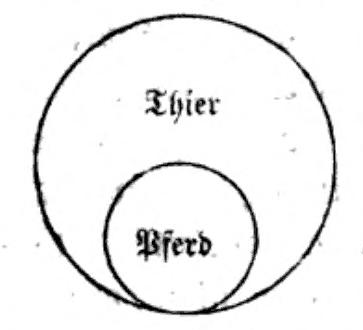
3) Eine Sphäre schließt zwei oder mehrere ein, die sich ausschließen und zugleich die Sphäre füllen:
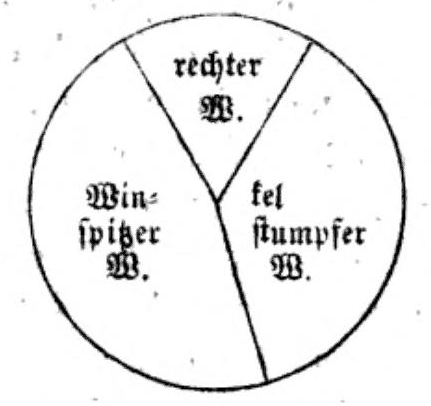
4) Zwei Sphären schließen jede einen Theil der andern ein:
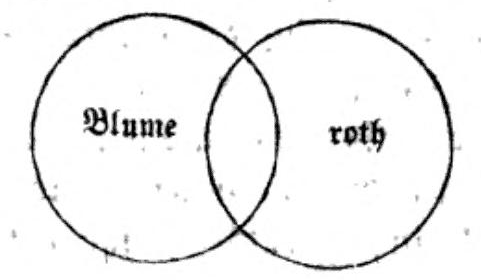
5) Zwei Sphären liegen in einer dritten, die sie jedoch nicht füllen:
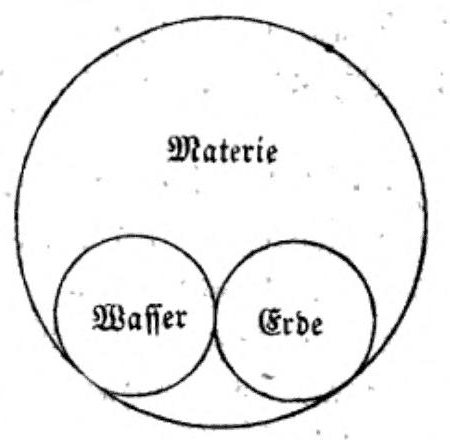
Dieser letztere Fall gilt von allen Begriffen, deren Sphären nicht unmittelbare Gemeinschaft haben, da immer ein dritter, wenn gleich oft sehr weiter, beide einschließen wird.
Auf diese Fälle möchten alle Verbindungen von Begriffen zurückzuführen seyn, und die ganze Lehre von den Urtheilen, deren Konversion, Kontraposition, Reciprokation, Disjunktion (diese nach der dritten Figur) läßt sich daraus ableiten: ebenso auch die Eigenschaften der Urtheile, auf welche Kant die vorgeblichen Kategorien des Verstandes gründete, jedoch mit Ausnahme der hypothetischen Form, welche nicht mehr eine Verbindung von bloßen Begriffen, sondern von Urtheilen ist; sodann mit Ausnahme der Modalität, über welche, wie über jede Eigenschaft von Urtheilen, die den Kategorien zum Grunde gelegt ist, der Anhang ausführlich Rechenschaft giebt. Ueber die angegebenen möglichen Begriffsverbindungen ist nur noch zu bemerken, daß sie auch unter einander mannigfaltig verbunden werden können, z. B. die vierte Figur mit der zweiten. Nur wenn eine Sphäre, die eine andere ganz oder zum Theil enthält, wieder von einer dritten ganz eingeschlossen wird, stellen diese zusammen den Schluß in der ersten Figur dar, d. h. diejenige Verbindung von Urtheilen, durch welche erkannt wird, daß ein Begriff, der in einem andern ganz oder zum Theil enthalten ist, es auch ebenso in einem dritten ist, der wieder diesen enthält: oder auch das Umgekehrte davon, die Negation; deren bildliche Darstellung natürlich nur darin bestehen kann, daß zwei verbundene Sphären nicht in einer dritten liegen. Umschließen sich viele Sphären auf diese Weise, so entstehen lange Ketten von Schlüssen. — Diesen Schematismus der Begriffe, der schon in mehreren Lehrbüchern ziemlich gut ausgeführt ist, kann man der Lehre von dem Urtheilen, wie auch der ganzen Syllogistik zum Grunde legen, wodurch der Vortrag beider sehr leicht und einfach wird. Denn alle Regeln derselben lassen sich daraus ihrem Ursprung nach einsehen, ableiten und erklären. Diese aber dem Gedächtniß aufzuladen, ist nicht nothwendig, da die Logik nie von praktischem Nutzen, sondern nur von theoretischem Interesse für die Philosophie seyn kann. Denn obwohl sich sagen ließe, daß die Logik zum vernünftigen Denken sich verhält wie der Generalbaß zur Musik, und auch, wenn wir es weniger genau nehmen, wie die Ethik zur Tugend, oder die Aesthetik zur Kunst; so ist dagegen zu bedenken, daß noch kein Künstler es durch Studium der Aesthetik geworden ist, noch ein edler Charakter durch Studium der Ethik, daß lange vor Rameau richtig und schön komponirt wurde, und auch, daß man nicht den Generalbaß inne zu haben braucht, um Disharmonien zu bemerken: ebenso wenig braucht man Logik zu wissen, um sich durch Trugschlüsse nicht täuschen zu lassen. Jedoch muß eingeräumt werden, daß, wenn auch nicht für die Beurtheilung, dennoch für die Ausübung der musikalischen Komposition der Generalbaß von großem Nutzen ist: sogar auch mögen, wenn gleich in viel geringerem Grade, Aesthetik und selbst Ethik für die Ausübung einigen, wiewohl hauptsächlich negativen Nutzen haben, also auch ihnen nicht aller praktische Werth abzusprechen seyn: aber von der Logik läßt sich nicht einmal so viel rühmen. Sie ist nämlich bloß das Wissen in abstracto Dessen, was Jeder in concreto weiß. Daher, so wenig als man sie braucht, einem falschen Räsonnement nicht beizustimmen, so wenig ruft man ihre Regeln zu Hülfe, um ein richtiges zu machen, und selbst der gelehrteste Logiker setzt sie bei seinem wirklichen Denken ganz bei Seite. Dies erklärt sich aus Folgendem. Jede Wissenschaft besteht aus einem System allgemeiner, folglich abstrakter Wahrheiten, Gesetze und Regeln, in Bezug auf irgend eine Art von Gegenständen. Der unter diesen nachher vorkommende einzelne Fall wird nun jedesmal nach jenem allgemeinen Wissen, welches ein für alle Mal gilt, bestimmt; weil solche Anwendung des Allgemeinen unendlich leichter ist, als den vorkommenden einzelnen Fall für sich, von Vorne an zu untersuchen; indem allezeit die einmal erlangte allgemeine abstrakte Erkenntniß uns näher zur Hand liegt, als die empirische Untersuchung des Einzelnen. Mit der Logik aber ist es gerade umgekehrt. Sie ist das allgemeine, durch Selbstbeobachtung der Vernunft und Abstraktion von allem Inhalt erkannte und in der Form von Regeln ausgedrückte Wissen von der Verfahrungsweise der Vernunft. Dieser aber ist jene Verfahrungsweise nothwendig und wesentlich: sie wird also in keinem Fall davon abweichen, sobald sie sich selbst überlassen ist. Es ist daher leichter und sicherer, sie in jedem besondern Fall ihrem Wesen gemäß verfahren zu lassen, als ihr das aus diesem Verfahren erst abstrahirte Wissen davon, in Gestalt eines fremden von Außen gegebenen Gesetzes, vorzuhalten. Es ist leichter: weil, wenn gleich bei allen andern Wissenschaften die allgemeine Regel uns näher liegt, als die Untersuchung des einzelnen Falles allein und durch sich selbst; umgekehrt, beim Gebrauch der Vernunft, das im gegebenen Fall nöthige Verfahren derselben uns immer näher liegt, als die daraus abstrahirte allgemeine Regel, da das Denkende in uns ja selbst jene Vernunft ist. Es ist sicherer: weil viel leichter ein Irrthum in solchem abstrakten Wissen, oder dessen Anwendung, vorfallen kann, als ein Verfahren der Vernunft eintreten, das ihrem Wesen, ihrer Natur, zuwiderliefe. Daher kommt das Sonderbare, daß, wenn man in anderen Wissenschaften die Wahrheit des einzelnen Falles an der Regel prüft, in der Logik umgekehrt die Regel immer am einzelnen Fall geprüft werden muß: und auch der geübteste Logiker wird, wenn er bemerkt, daß er in einem einzelnen Fall anders schließt als eine Regel aussagt, immer eher einen Fehler in der Regel suchen, als in dem von ihm wirklich gemachten Schluß. Praktischen Gebrauch von der Logik machen wollen, hieße also Das, was uns im Einzelnen unmittelbar mit der größten Sicherheit bewußt ist, erst mit unsäglicher Mühe aus allgemeinen Regeln ableiten wollen: es wäre gerade so, wie wenn man bei seinen Bewegungen erst die Mechanik, und bei der Verdauung die Physiologie zu Rathe ziehen wollte: und wer die Logik zu praktischen Zwecken erlernt, gleicht dem, der einen Biber zu seinem Bau abrichten will. — Obgleich also ohne praktischen Nutzen, muß nichtsdestoweniger die Logik beibehalten werden, weil sie philosophisches Interesse hat, als specielle Kenntniß der Organisation und Aktion der Vernunft. Als abgeschlossene, für sich bestehende, in sich vollendete, abgerundete und vollkommen sichere Disciplin ist sie berechtigt, für sich allein und unabhängig von allem Andern wissenschaftlich abgehandelt und ebenso auf Universitäten gelehrt zu werden: aber ihren eigentlichen Werth erhält sie erst im Zusammenhange der gesammten Philosophie, bei Betrachtung des Erkennens, und zwar des vernünftigen oder abstrakten Erkennens. Demgemäß sollte ihr Vortrag nicht so sehr die Form einer auf das Praktische gerichteten Wissenschaft haben, nicht bloß nackte hingestellte Regeln zum richtigen Umkehren der Urtheile, Schließen u. s. w. enthalten; sondern mehr darauf gerichtet seyn, daß das Wesen der Vernunft und des Begriffs erkannt und der Satz vom Grunde des Erkennens ausführlich betrachtet werde: denn eine bloße Paraphrase desselben ist die Logik, und zwar eigentlich nur für den Fall, wo der Grund, welcher den Urtheilen Wahrheit giebt, nicht empirisch oder metaphysisch, sondern logisch oder metalogisch ist. Neben dem Satz vom Grunde des Erkennens sind daher die übrigen drei ihm so nah verwandten Grundgesetze des Denkens, oder Urtheile von metalogischer Wahrheit, aufzuführen; woraus denn nach und nach die ganze Technik der Vernunft erwächst. Das Wesen des eigentlichen Denkens, d. h. des Urtheilens und Schließens, ist aus der Verbindung der Begriffssphären, gemäß dem räumlichen Schema, auf die oben angedeutete Weise darzustellen und aus diesem alle Regeln des Urtheilens und Schließens durch Konstruktion abzuleiten. Der einzige praktische Gebrauch, den man von der Logik machen kann, ist, daß man, beim Disputiren, dem Gegner, nicht sowohl seine wirklichen Fehlschlüsse, als seine absichtlichen Trugschlüsse nachweist, indem man sie bei ihrem technischen Namen nennt. Durch solche Zurückdrängung der praktischen Richtung und Hervorhebung des Zusammenhanges der Logik mit der gesammten Philosophie, als ein Kapitel derselben, sollte ihre Kenntniß dennoch nicht seltener werden, als sie jetzt ist: denn heut zu Tage muß Jeder, welcher nicht in der Hauptsache roh bleiben und der unwissenden, in Dumpfheit befangenen Menge beigezählt werden will, spekulative Philosophie studirt haben: und dies deswegen, weil dieses neunzehnte Jahrhundert ein philosophisches ist; womit nicht sowohl gesagt seyn soll, daß es Philosophie besitze, oder Philosophie in ihm herrschend sei, als vielmehr, daß es zur Philosophie reif und eben deshalb ihrer durchaus bedürftig ist: dieses ist ein Zeichen hoch getriebener Bildung, sogar ein fester Punkt auf der Skala der Kultur der Zeiten27.
So wenig praktischen Nutzen die Logik haben kann, so ist dennoch wohl nicht zu leugnen, daß sie zum praktischen Behuf erfunden worden. Ihre Entstehung erkläre ich mir auf folgende Weise. Als unter den Eleatikern, Megarikern und Sophisten die Lust am Disputiren sich immer mehr entwickelt hatte und allmälig fast zur Sucht gestiegen war, mußte die Verwirrung, in welche fast jede Disputation gerieth, ihnen bald die Nothwendigkeit eines methodischen Verfahrens fühlbar machen, als Anleitung, zu welchem eine wissenschaftliche Dialektik zu suchen war. Das Erste, was bemerkt werden mußte, war, daß beide streitende Parteien allemal über irgend einen Satz einig seyn mußten, auf welchen die strittigen Punkte zurückzuführen waren, im Disputiren. Der Anfang des methodischen Verfahrens bestand darin, daß man diese gemeinschaftlich anerkannten Sätze förmlich als solche aussprach und an die Spitze der Untersuchung stellte. Diese Sätze aber betrafen Anfangs nur das Materiale der Untersuchung. Man wurde bald inne, daß auch in der Art und Weise, wie man auf die gemeinschaftlich anerkannte Wahrheit zurückging und seine Behauptungen aus ihr abzuleiten suchte, gewisse Formen und Gesetze befolgt wurden, über welche man, obgleich ohne vorhergegangene Uebereinkunft, sich dennoch nie veruneinigte, woraus man sah, daß sie der eigenthümliche, in ihrem Wesen liegende Gang der Vernunft selbst seyn mußten, das Formale der Untersuchung. Obgleich nun dieses nicht dem Zweifel und der Uneinigkeit ausgesetzt war, so gerieth doch irgend ein bis zur Pedanterie systematischer Kopf auf den Gedanken, daß es recht schön aussehen und die Vollendung der methodischen Dialektik seyn würde, wenn auch dieses Formelle alles Disputirens, dieses immer gesetzmäßige Verfahren der Vernunft selbst, ebenfalls in abstrakten Sätzen ausgesprochen würde, welche man eben wie jene das Materiale der Untersuchung betreffenden gemeinschaftlich anerkannten Sätze, an die Spitze der Untersuchung stellte, als [28] Hiezu Kap. 9 u. 10 des zweiten Bandes. den festen Kanon des Disputirens selbst, auf welchen man stets zurückzusehen und sich darauf zu berufen hätte. Indem man auf diese Weise Das, was man bisher wie durch stillschweigende Uebereinkunft befolgt, oder wie instinktmäßig ausgeübt hatte, nunmehr mit Bewußtseyn als Gesetz anerkennen und förmlich aussprechen wollte, fand man allmälig mehr oder minder vollkommene Ausdrücke für logische Grundsätze, wie den Satz vom Widerspruch, vom zureichenden Grunde, vom ausgeschlossenen Dritten, das dictum de omni et nullo, sodann die speciellern Regeln der Syllogistik, wie z. B. ex meris particularibus aut negativis nihil sequitur, a rationato ad rationem non valet consequentia u. s. w. Daß man hiemit aber nur langsam und sehr mühsam zu Stande kam und vor dem Aristoteles Alles sehr unvollkommen blieb, sehen wir theils aus der unbeholfenen und weitschweifigen Art, mit der in manchen Platonischen Gesprächen logische Wahrheiten ans Licht gebracht werden, noch besser aber aus dem, was uns Sextus Empirikus von den Streitigkeiten der Megariker über die leichtesten und einfachsten logischen Gesetze und die mühsame Art, wie sie solche zur Deutlichkeit brachten, berichtet (Sext. Emp. adv. Math. L. 8. p. 112 seqq.). Aristoteles aber sammelte, ordnete, berichtigte das Vorgefundene und brachte es zu einer ungleich höhern Vollkommenheit. Wenn man auf diese Weise beachtet, wie der Gang der Griechischen Kultur die Arbeit des Aristoteles vorbereitet und herbeigeführt hatte, wird man wenig geneigt seyn, der Angabe Persischer Schriftsteller Glauben zu schenken, welche uns Jones, sehr für dieselbe eingenommen, mittheilt, daß nämlich Kallisthenes bei den Indern eine fertige Logik vorgefunden und sie seinem Oheim Aristoteles übersandt habe (Asiatic researches, Bd. 4, S. 163). — Daß im traurigen Mittelalter dem disputirsüchtigen, beim Mangel aller Realkenntniß, an Formeln und Worten allein zehrenden Geiste der Scholastiker die Aristotelische Logik höchst willkommen seyn mußte, selbst in ihrer Arabischen Verstümmelung begierig ergriffen und bald zum Mittelpunkt alles Wissens erhoben wurde, läßt sich leicht begreifen. Von ihrem Ansehen zwar seitdem gesunken, hat sie sich dennoch bis auf unsere Zeit im Kredit einer für sich bestehenden, praktischen und höchst nöthigen Wissenschaft erhalten: sogar hat in unsern Tagen die Kantische Philosophie, die ihren Grundstein eigentlich aus der Logik nahm, wieder ein neues Interesse für sie rege gemacht, welches sie in dieser Hinsicht, d. h. als Mittel zur Erkenntniß des Wesens der Vernunft, auch allerdings verdient.
Wie die richtigen strengen Schlüsse dadurch zu Stande kommen, daß man das Verhältniß der Begriffssphären genau betrachtet, und nur wenn eine Sphäre genau in einer andern und diese wieder ganz in einer dritten enthalten ist, auch die erste für in der dritten ganz enthalten anerkennt; so beruht hingegen die Ueberredungskunst darauf, daß man die Verhältnisse der Begriffssphären nur einer oberflächlichen Betrachtung unterwirft und sie dann seinen Absichten gemäß einseitig bestimmt, hauptsächlich dadurch, daß, wenn die Sphäre eines betrachteten Begriffs nur zum Theil in einer andern liegt, zum Theil aber auch in einer ganz verschiedenen, man sie als ganz in der ersten liegend angiebt, oder ganz in der zweiten, nach der Absicht des Redners. Z. B. wenn von Leidenschaft geredet wird, kann man diese beliebig unter den Begriff der größten Kraft, des mächtigsten Agens in der Welt subsumiren, oder unter den Begriff der Unvernunft, und diesen unter den der Ohnmacht, der Schwäche. Dasselbe Verfahren kann man nun fortsetzen und bei jedem Begriff, auf den die Rede führt, von Neuem anwenden. Fast immer theilen sich in der Sphäre eines Begriffs mehrere andere, deren jede einen Theil des Gebiets des ersteren auf dem ihrigen enthält, selbst aber auch noch mehr außerdem umfaßt: von diesen letzteren Begriffssphären läßt man aber nur die eine beleuchtet werden, unter welche man den ersten Begriff subsumiren will, während man die übrigen unbeachtet liegen läßt, oder verdeckt hält. Auf diesem Kunstgriff beruhen eigentlich alle Ueberredungskünste, alle feineren Sophismen: denn die logischen, wie der mentiens, velatus, cornutus u. s. w. sind für die wirkliche Anwendung offenbar zu plump. Da mir nicht bekannt ist, daß man bisher das Wesen aller Sophistikation und Ueberredung auf diesen letzten Grund ihrer Möglichkeit zurückgeführt und denselben in der eigenthümlichen Beschaffenheit der Begriffe, d. i. in der Erkenntnißweise der Vernunft, nachgewiesen hat; so will ich, da mein Vortrag mich darauf geführt hat, die Sache, so leicht sie auch einzusehen ist, noch durch ein Schema auf der beifolgenden Tafel
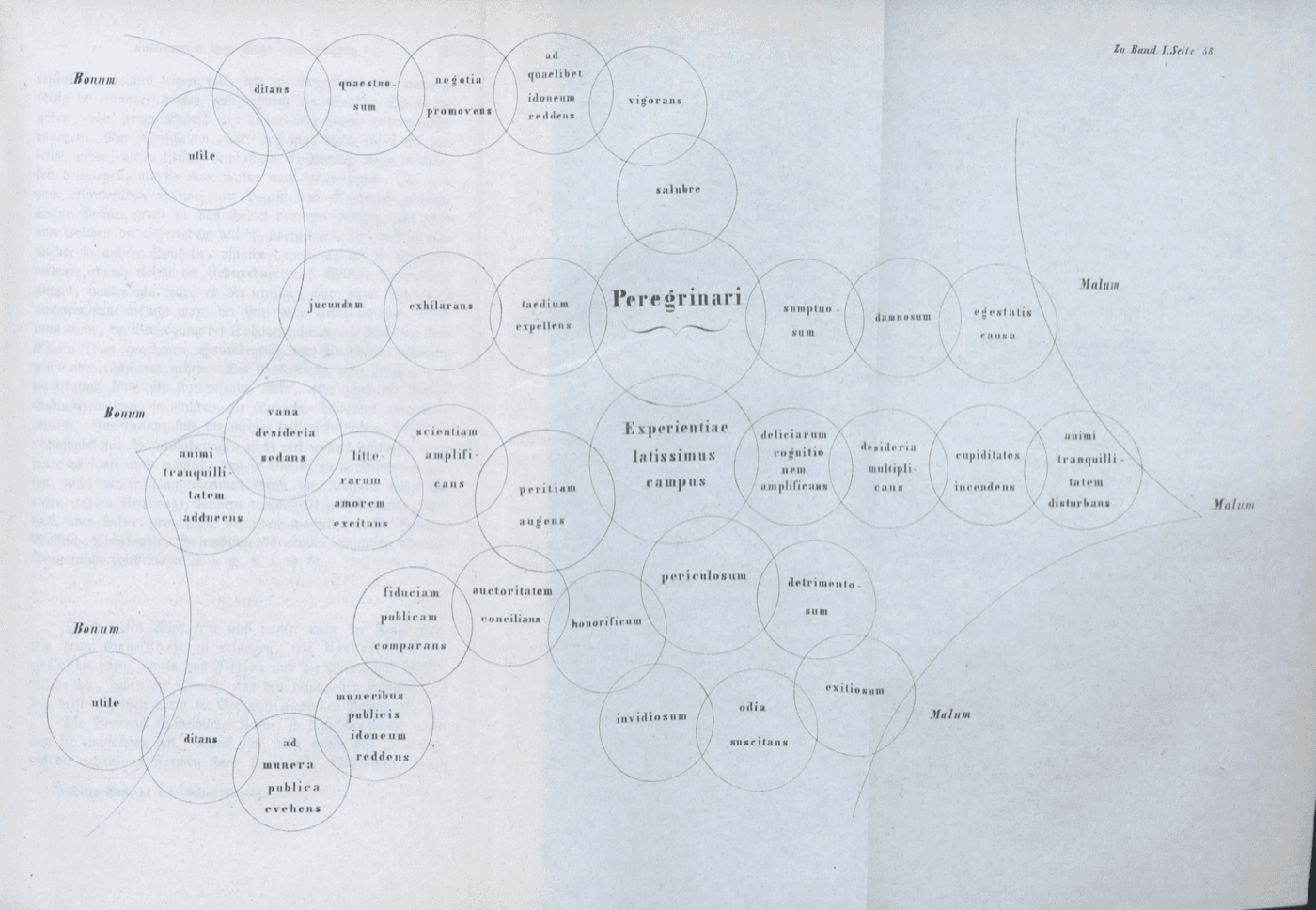
erläutern, welches zeigen soll, wie die Begriffssphären mannigfaltig in einander greifen und dadurch der Willkür Spielraum geben, von jedem Begriff auf diesen oder jenen andern überzugehen. Nur wünsche ich nicht, daß man durch die Tafel verleitet werde, dieser kleinen beiläufigen Erörterung mehr Wichtigkeit beizulegen, als sie ihrer Natur nach haben kann. Ich habe zum erläuternden Beispiel den Begriff des Reisens gewählt. Seine Sphäre greift in das Gebiet von vier andern, auf jeden von welchen der Ueberredner beliebig übergehen kann: diese greifen wieder in andere Sphären, manche davon zugleich in zwei und mehrere, durch welche der Ueberredner nach Willkür seinen Weg nimmt, immer als wäre es der einzige, und dann zuletzt, je nachdem seine Absicht war, bei Gut oder Uebel anlangt. Nur muß man, bei Verfolgung der Sphären, immer die Richtung vom Centro (dem gegebenen Hauptbegriff) zur Peripherie behalten, nicht aber rückwärts gehen. Die Einkleidung einer solchen Sophistikation kann die fortlaufende Rede, oder auch die strenge Schlußform seyn, je nachdem die schwache Seite des Hörers es anräth. Im Grunde sind die meisten wissenschaftlichen, besonders philosophischen Beweisführungen nicht viel anders beschaffen: wie wäre es sonst auch möglich, daß so Vieles, zu verschiedenen Zeiten, nicht nur irrig angenommen (denn der Irrthum selbst hat einen andern Ursprung), sondern demonstrirt und bewiesen, dennoch aber später grundfalsch befunden worden, z. B. Leibnitz-Wolfische Philosophie, Ptolemäische Astronomie, Stahlsche Chemie, Newtonische Farbenlehre u. s. w. u. s. w.29.
10 Durch dieses Alles tritt uns immer mehr die Frage nah, wie denn Gewißheit zu erlangen, wie Urtheile zu begründen seien, worin das Wissen und die Wissenschaft bestehe, welche wir, neben der Sprache und dem besonnenen Handeln, als den dritten großen durch die Vernunft gegebenen Vorzug rühmen.
Die Vernunft ist weiblicher Natur: sie kann nur geben, nachdem sie empfangen hat. Durch sich selbst allein hat sie nichts, als die gehaltlosen Formen ihres Operirens. Vollkommen reine [30] Hiezu Kap. 11 des zweiten Bandes.
Vernunfterkenntniß giebt es sogar keine andere, als die vier Sätze, welchen ich metalogische Wahrheit beigelegt habe, also die Sätze von der Identität, vom Widerspruch, vom ausgeschlossenen Dritten und vom zureichenden Erkenntnißgrunde. Denn selbst das Uebrige der Logik ist schon nicht mehr vollkommen reine Vernunfterkenntniß, weil es die Verhältnisse und Kombinationen der Sphären der Begriffe voraussetzt: aber Begriffe überhaupt sind erst da, nach vorhergegangenen anschaulichen Vorstellungen, die Beziehung auf welche ihr ganzes Wesen ausmacht, die sie folglich schon voraussetzen. Da indessen diese Voraussetzung sich nicht auf den bestimmten Gehalt der Begriffe, sondern nur allgemein auf ein Daseyn derselben erstreckt; so kann die Logik doch, im Ganzen genommen, für reine Vernunftwissenschaft gelten. In allen übrigen Wissenschaften hat die Vernunft den Gehalt aus den anschaulichen Vorstellungen erhalten: in der Mathematik aus den vor aller Erfahrung anschaulich bewußten Verhältnissen des Raumes und der Zeit; in der reinen Naturwissenschaft, d. h. in dem, was wir vor aller Erfahrung über den Lauf der Natur wissen, geht der Gehalt der Wissenschaft aus dem reinen Verstande hervor, d. h. aus der Erkenntniß a priori des Gesetzes der Kausalität und dessen Verbindung mit jenen reinen Anschauungen des Raumes und der Zeit. In allen anderen Wissenschaften gehört Alles, was nicht aus den eben genannten entlehnt ist, der Erfahrung an. Wissen überhaupt heißt: solche Urtheile in der Gewalt seines Geistes zu willkürlicher Reproduktion haben, welche in irgend etwas außer ihnen ihren zureichenden Erkenntnißgrund haben, d. h. wahr sind. Die abstrakte Erkenntniß allein ist also ein Wissen; dieses ist daher durch die Vernunft bedingt, und von den Thieren können wir, genau genommen, nicht sagen, daß sie irgend etwas wissen, wiewohl sie die anschauliche Erkenntniß, für diese auch Erinnerung und eben deshalb Phantasie haben, welche überdies ihr Träumen beweist. Bewußtseyn legen wir ihnen bei, dessen Begriff folglich, obgleich das Wort von Wissen genommen ist, mit dem des Vorstellens überhaupt, von welcher Art es auch sei, zusammenfällt. Daher auch legen wir der Pflanze zwar Leben, aber kein Bewußtseyn bei. — Wissen also ist das abstrakte Bewußtseyn, das Fixirthaben in Begriffen der Vernunft, des auf andere Weise überhaupt Erkannten.
11 In dieser Hinsicht ist nun der eigentliche Gegensatz des Wissens das Gefühl, dessen Erörterung wir deshalb hier einschalten müssen. Der Begriff, den das Wort Gefühl bezeichnet, hat durchaus nur einen negativen Inhalt, nämlich diesen, daß etwas, das im Bewußtseyn gegenwärtig ist, nicht Begriff, nicht abstrakte Erkenntniß der Vernunft sei: übrigens mag es seyn, was es will, es gehört unter den Begriff Gefühl, dessen unmäßig weite Sphäre daher die heterogensten Dinge begreift, von denen man nimmer einsieht, wie sie zusammenkommen, so lange man nicht erkannt hat, daß sie allein in dieser negativen Rücksicht, nicht abstrakte Begriffe zu seyn, übereinstimmen. Denn die verschiedensten, ja feindlichsten Elemente liegen ruhig neben einander in jenem Begriff, z. B. religiöses Gefühl, Gefühl der Wolluft, moralisches Gefühl, körperliches Gefühl als Getast, als Schmerz, als Gefühl für Farben, für Töne und deren Harmonien und Disharmonien, Gefühl des Hasses, Abscheues, der Selbstzufriedenheit, der Ehre, der Schande, des Rechts, des Unrechts, Gefühl der Wahrheit, ästhetisches Gefühl, Gefühl von Kraft, Schwäche, Gesundheit, Freundschaft, Liebe u. s. w. u. s. w. Durchaus keine Gemeinschaft ist zwischen ihnen, als die negative, daß sie keine abstrakte Vernunfterkenntniß sind; aber dieses wird am auffallendsten, wenn sogar die anschauliche Erkenntniß a priori der räumlichen Verhältnisse, und vollends die des reinen Verstandes unter jenen Begriff gebracht wird, und überhaupt von jeder Erkenntniß, jeder Wahrheit, deren man sich nur erst intuitiv bewußt ist, sie aber noch nicht in abstrakte Begriffe abgesetzt hat, gesagt wird, daß man sie fühle. Hievon will ich, zur Erläuterung, einige Beispiele aus neuern Büchern beibringen, weil sie frappante Belege meiner Erklärung sind. Ich erinnere mich, in der Einleitung einer Verdeutschung des Eukleides gelesen zu haben, man solle die Anfänger in der Geometrie die Figuren erst alle zeichnen lassen, ehe man zum Demonstriren schreite, weil sie alsdann die geometrische Wahrheit schon vorher fühlten, ehe ihnen die Demonstration die vollendete Erkenntniß beibrächte. — Ebenso wird in der „Kritik der Sittenlehre“ von F. Schleiermacher geredet vom logischen und mathematischen Gefühl (S. 339), auch vom Gefühl der Gleichheit oder Verschiedenheit zweier Formeln (S. 342); ferner in Tennemanns „Geschichte der Philosophie“, Bd. 1, S. 361, heißt es: „Man fühlte, daß die Trugschlüsse nicht richtig waren, konnte aber doch den Fehler nicht entdecken.“ — So lange man nun diesen Begriff Gefühl nicht aus dem rechten Gesichtspunkte betrachtet und nicht jenes eine negative Merkmal, welches allein ihm wesentlich ist, erkennt, muß derselbe, wegen der übermäßigen Weite seiner Sphäre und seines bloß negativen, ganz einseitig bestimmten und sehr geringen Gehaltes, beständig Anlaß zu Misverständnissen und Streitigkeiten geben. Da wir im Deutschen noch das ziemlich gleichbedeutende Wort Empfindung haben, so würde es dienlich seyn, dieses für die körperlichen Gefühle, als eine Unterart, in Beschlag zu nehmen. Der Ursprung jenes gegen alle anderen disproportionirten Begriffs Gefühl ist aber ohne Zweifel folgender. Alle Begriffe, und nur Begriffe sind es welche Worte bezeichnen, sind nur für die Vernunft da, gehen von ihr aus: man steht mit ihnen also schon auf einem einseitigen Standpunkt. Aber von einem solchen aus erscheint das Nähere deutlich und wird als positiv gesetzt; das Fernere fließt zusammen und wird bald nur noch negativ berücksichtigt: so nennt jede Nation alle Anderen Fremde, der Grieche alle Anderen Barbaren, der Engländer Alles, was nicht England oder Englisch ist, continent und continental, der Gläubige alle Anderen Ketzer, oder Heiden, der Adel alle Anderen roturiers, der Student alle Anderen Philister u. dgl. m. Dieselbe Einseitigkeit, man kann sagen dieselbe rohe Unwissenheit aus Stolz, läßt sich, so sonderbar es auch klingt, die Vernunft selbst zu Schulden kommen, indem sie unter den einen Begriff Gefühl jede Modifikation des Bewußtseyns befaßt, die nur nicht unmittelbar zu ihrer Vorstellungsweise gehört, d. h. nicht abstrakter Begriff ist. Sie hat dieses bisher, weil ihr eigenes Verfahren ihr nicht durch gründliche Selbstkenntniß deutlich geworden war, büßen müssen durch Misverständnisse und Verirrungen auf ihrem eigenen Gebiet, da man sogar ein besonderes Gefühlvermögen aufgestellt hat und nun Theorien desselben konstruirt.
12 Wissen, als dessen kontradiktorisches Gegentheil ich soeben den Begriff Gefühl erörtert habe, ist, wie gesagt, jede abstrakte Erkenntniß, d. h. Vernunfterkenntniß. Da nun aber die Vernunft immer nur das anderweitig Empfangene wieder vor die Erkenntniß bringt, so erweitert sie nicht eigentlich unser Erkennen, sondern giebt ihm bloß eine andere Form. Nämlich was intuitiv, was in concreto erkannt wurde, läßt sie abstrakt und allgemein erkennen. Dies ist aber ungleich wichtiger, als es, so ausgedrückt, dem ersten Blicke scheint. Denn alles sichere Aufbewahren, alle Mittheilbarkeit und alle sichere und weitreichende Anwendung der Erkenntniß auf das Praktische hängt davon ab, daß sie ein Wissen, eine abstrakte Erkenntniß geworden sei. Die intuitive Erkenntniß gilt immer nur vom einzelnen Fall, geht nur auf das Nächste, und bleibt bei diesem stehen, weil Sinnlichkeit und Verstand eigentlich nur ein Objekt zur Zeit auffassen können. Jede anhaltende, zusammengesetzte, planmäßige Thätigkeit muß daher von Grundsätzen, also von einem abstrakten Wissen ausgehen und danach geleitet werden. So ist z. B. die Erkenntniß, welche der Verstand vom Verhältniß der Ursach und Wirkung hat, zwar an sich viel vollkommener, tiefer und erschöpfender, als was davon in abstracto sich denken läßt: der Verstand allein erkennt anschaulich unmittelbar und vollkommen die Art des Wirkens eines Hebels, Flaschenzuges, Kammrades, das Ruhen eines Gewölbes in sich selbst u. s. w. Aber wegen der eben berührten Eigenschaft der intuitiven Erkenntniß, nur auf das unmittelbar Gegenwärtige zu gehen, reicht der bloße Verstand nicht hin zur Konstruktion von Maschinen und Gebäuden: vielmehr muß hier die Vernunft eintreten, an die Stelle der Anschauungen abstrakte Begriffe setzen, solche zur Richtschnur des Wirkens nehmen, und waren sie richtig, so wird der Erfolg eintreffen. Ebenso erkennen wir in reiner Anschauung vollkommen das Wesen und die Gesetzmäßigkeit einer Parabel, Hyperbel, Spirale; aber um von dieser Erkenntniß sichere Anwendung in der Wirklichkeit zu machen, müßte sie zuvor zum abstrakten Wissen geworden seyn, wobei sie freilich die Anschaulichkeit einbüßt, aber dafür die Sicherheit und Bestimmtheit des abstrakten Wissens gewinnt. Also erweitert alle Differentialrechnung eigentlich gar nicht unsere Erkenntniß von den Kurven, enthält nichts mehr, als was schon die bloße reine Anschauung derselben; aber sie ändert die Art der Erkenntniß, verwandelt die intuitive in eine abstrakte, welches für die Anwendung so höchst folgenreich ist. Hier kommt nun aber noch eine Eigenthümlichkeit unsers Erkenntnißvermögens zur Sprache, welche man bisher wohl nicht bemerken konnte, so lange der Unterschied zwischen anschaulicher und abstrakter Erkenntniß nicht vollkommen deutlich gemacht war. Es ist diese, daß die Verhältnisse des Raums nicht unmittelbar und als solche in die abstrakte Erkenntniß übertragen werden können, sondern hiezu allein die zeitlichen Größen, d. h. die Zahlen geeignet sind. Die Zahlen allein können in ihnen genau entsprechenden abstrakten Begriffen ausgedrückt werden, nicht die räumlichen Größen. Der Begriff Tausend ist vom Begriff Zehn genau so verschieden, wie beide zeitliche Größen es in der Anschauung sind: wir denken bei Tausend ein bestimmt vielfaches von Zehn, in welches wir jenes für die Anschauung in der Zeit beliebig auflösen können, d. h. es zählen können. Aber zwischen dem abstrakten Begriff einer Meile und dem eines Fußes, ohne alle anschauliche Vorstellung von beiden und ohne Hülfe der Zahl, ist gar kein genauer und jenen Größen selbst entsprechender Unterschied. In beiden wird überhaupt nur eine räumliche Größe gedacht, und sollen beide hinlänglich unterschieden werden, so muß durchaus entweder die räumliche Anschauung zu Hülfe genommen, also schon das Gebiet der abstrakten Erkenntniß verlassen werden, oder man muß den Unterschied in Zahlen denken. Will man also von den räumlichen Verhältnissen abstrakte Erkenntniß haben, so müssen sie erst in zeitliche Verhältnisse, d. h. in Zahlen, übertragen werden: deswegen ist nur die Arithmetik, nicht die Geometrie, allgemeine Größenlehre, und die Geometrie muß in Arithmetik übersetzt werden, wenn sie Mittheilbarkeit, genaue Bestimmtheit und Anwendbarkeit auf das Praktische haben soll. Zwar läßt sich ein räumliches Verhältniß als solches auch in abstracto denken, z. B. „der Sinus wächst nach Maaßgabe des Winkels“; aber wenn die Größe dieses Verhältnisses angegeben werden soll, bedarf es der Zahl. Diese Nothwendigkeit, daß der Raum, mit seinen drei Dimensionen, in die Zeit, welche nur eine Dimension hat, übersetzt werden muß, wenn man eine abstrakte Erkenntniß (d. h. ein Wissen, kein bloßes Anschauen) seiner Verhältnisse haben will, diese Nothwendigkeit ist es, welche die Mathematik so schwierig macht. Dies wird sehr deutlich, wenn wir die Anschauung der Kurven vergleichen mit der analytischen Berechnung derselben, oder auch nur die Tafeln der Logarithmen der trigonometrischen Funktionen mit der Anschauung der wechselnden Verhältnisse der Theile des Dreiecks, welche durch jene ausgedrückt werden: was hier die Anschauung in einem Blick, vollkommen und mit äußerster Genauigkeit auffaßt, nämlich wie der Kosinus abnimmt, indem der Sinus wächst, wie der Kosinus des einen Winkels der Sinus des andern ist, das umgekehrte Verhältniß der Ab- und Zunahme beider Winkel u. s. w., welches ungeheuern Gewebes von Zahlen, welcher mühsäligen Rechnung bedurfte es nicht, um dieses in abstracto auszudrücken: wie muß nicht, kann man sagen, die Zeit mit ihrer einen Dimension sich quälen, um die drei Dimensionen des Raumes wiederzugeben! Aber dies war nothwendig, wenn wir, zum Behuf der Anwendung, die Verhältnisse des Raumes in abstrakte Begriffe niedergelegt besitzen wollten: unmittelbar konnten jene nicht in diese eingehen, sondern nur durch Vermittelung der rein zeitlichen Größe, der Zahl, als welche allein der abstrakten Erkenntniß sich unmittelbar anfügt. Noch ist bemerkenswerth, daß, wie der Raum sich so sehr für die Anschauung eignet und, mittelst seiner drei Dimensionen, selbst komplicirte Verhältnisse leicht übersehen läßt, dagegen der abstrakten Erkenntniß sich entzieht; umgekehrt die Zeit zwar leicht in die abstrakten Begriffe eingeht, dagegen aber der Anschauung sehr wenig giebt: unsere Anschauung der Zahlen in ihrem eigenthümlichen Element, der bloßen Zeit, ohne Hinzuziehung des Raumes, geht kaum bis Zehn; darüber hinaus haben wir nur noch abstrakte Begriffe, nicht mehr anschauliche Erkenntniß der Zahlen: hingegen verbinden wir mit jedem Zahlwort und allen algebraischen Zeichen genau bestimmte abstrakte Begriffe.
Nebenbei ist hier zu bemerken, daß manche Geister nur im anschaulich Erkannten völlige Befriedigung finden. Grund und Folge des Seyns im Raum anschaulich dargelegt, ist es, was sie suchen: ein Eukleidischer Beweis, oder eine arithmetische Auflösung räumlicher Probleme, spricht sie nicht an. Andere Geister hingegen verlangen die zur Anwendung und Mittheilung allein brauchbaren abstrakten Begriffe: sie haben Geduld und Gedächtniß für abstrakte Sätze, Formeln, Beweisführungen in langen Schlußketten, und Rechnungen, deren Zeichen die komplicirtesten Abstraktionen vertreten. Diese suchen Bestimmtheit: jene Anschaulichkeit. Der Unterschied ist charakteristisch.
Das Wissen, die abstrakte Erkenntniß, hat ihren größten Werth in der Mittheilbarkeit und in der Möglichkeit, fixirt aufbehalten zu werden: erst hiedurch wird sie für das Praktische so unschätzbar wichtig. Einer kann vom kausalen Zusammenhange der Veränderungen und Bewegungen natürlicher Körper eine unmittelbare, anschauliche Erkenntniß im bloßen Verstande haben und in derselben völlige Befriedigung finden; aber zur Mittheilung wird sie erst geschickt, nachdem er sie in Begriffen fixirt hat. Selbst für das Praktische ist eine Erkenntniß der erstern Art hinreichend, sobald er auch die Ausführung ganz allein übernimmt, und zwar in einer, während noch die anschauliche Erkenntniß lebendig ist, ausführbaren Handlung; nicht aber, wenn er fremder Hülfe, oder auch nur eines zu verschiedenen Zeiten eintretenden eigenen Handelns und daher eines überlegten Planes bedarf. So kann z. B. ein geübter Billiardspieler eine vollständige Kenntniß der Gesetze des Stoßes elastischer Körper auf einander haben, bloß im Verstande, bloß für die unmittelbare Anschauung, und er reicht damit vollkommen aus: hingegen hat nur der wissenschaftliche Mechaniker ein eigentliches Wissen jener Gesetze, d. h. eine Erkenntniß in abstracto davon. Selbst zur Konstruktion von Maschinen reicht jene bloß intuitive Verstandeserkenntniß hin, wenn der Erfinder der Maschine sie auch allein ausführt, wie man oft an talentvollen Handwerkern ohne alle Wissenschaft sieht: hingegen sobald mehrere Menschen und eine zusammengesetzte, zu verschiedenen Zeitpunkten eintretende Thätigkeit derselben zur Ausführung einer mechanischen Operation, einer Maschine, eines Baues nöthig sind, muß der, welcher sie leitet, den Plan in abstracto entworfen haben, und nur durch Beihülfe der Vernunft ist eine solche zusammenwirkende Thätigkeit möglich. Merkwürdig ist es aber, daß bei jener erstern Art von Thätigkeit, wo Einer allein, in einer ununterbrochenen Handlung etwas ausführen soll, das Wissen, die Anwendung der Vernunft, die Reflexion ihm sogar oft hinderlich seyn kann, z. B. eben beim Billiardspielen, beim Fechten, beim Stimmen eines Instruments, beim Singen: hier muß die anschauliche Erkenntniß die Thätigkeit unmittelbar leiten: das Durchgehen durch die Reflexion macht sie unsicher, indem es die Aufmerksamkeit theilt und den Menschen verwirrt. Darum führen Wilde und rohe Menschen, die sehr wenig zu denken gewohnt sind, manche Leibesübungen, den Kampf mit Thieren, das Treffen mit dem Pfeil u. dgl. mit einer Sicherheit und Geschwindigkeit aus, die der reflektirende Europäer nie erreicht, eben weil seine Ueberlegung ihn schwanken und zaudern macht: denn er sucht z. B. die rechte Stelle, oder den rechten Zeitpunkt, aus dem gleichen Abstand von beiden falschen Extremen zu finden: der Naturmensch trifft sie unmittelbar, ohne auf die Abwege zu reflektiren. Ebenso hilft es mir nicht, wenn ich den Winkel, in welchem ich das Rasiermesser anzusetzen habe, nach Graden und Minuten in abstracto anzugeben weiß, wenn ich ihn nicht intuitiv kenne, d. h. im Griff habe. Auf gleiche Weise störend ist ferner die Anwendung der Vernunft bei dem Verständniß der Physiognomie: auch dieses muß unmittelbar durch den Verstand geschehen: der Ausdruck, die Bedeutung der Züge läßt sich nur fühlen, sagt man, d. h. eben geht nicht in die abstrakten Begriffe ein. Jeder Mensch hat seine unmittelbare intuitive Physiognomik und Pathognomik: doch erkennt Einer deutlicher, als der Andere, jene signatura rerum. Aber eine Physiognomik in abstracto zum Lehren und Lernen ist nicht zu Stande zu bringen; weil die Nüancen hier so fein sind, daß der Begriff nicht zu ihnen herab kann; daher das abstrakte Wissen sich zu ihnen verhält, wie ein musivisches Bild zu einem van der Werft oder Denner: wie, so fein auch die Musaik ist, die Gränzen der Steine doch stets bleiben und daher kein stetiger Uebergang einer Tinte in die andere möglich ist; so sind auch die Begriffe, mit ihrer Starrheit und scharfen Begränzung, so fein man sie auch durch nähere Bestimmung spalten möchte, stets unfähig, die feinen Modifikationen des Anschaulichen zu erreichen, auf welche es, bei der hier zum Beispiel genommenen Physiognomik, gerade ankommt31.
32 Ich bin dieserwegen der Meinung, daß die Physiognomik nicht weiter mit Sicherheit gehen kann, als zur Aufstellung einiger ganz allgemeiner Regeln, z. B. solcher: in Stirn und Auge ist das Intellektuale, im Munde und der untern Gesichtshälfte, das Ethische, die Willensäußerungen, zu lesen; — Stirn und Auge erläutern sich gegenseitig, jedes von beiden, ohne das andere gesehen, ist nur halb verständlich; — Genie ist nie ohne hohe, breite, schön gewölbte Stirn; diese aber oft ohne jenes; — von einem geistreichen Aussehen ist auf Geist um so sicherer zu schließen, je häßlicher das Gesicht ist, und von einem dummen Aussehen auf Dummheit desto sicherer, je schöner das Gesicht ist; weil Schönheit, als Angemessenheit zu dem Typus der Menschheit, schon an und für sich auch den Ausdruck geistiger Klarheit trägt, Häßlichkeit sich entgegengesetzt verhält, u. s. w.
Diese nämliche Beschaffenheit der Begriffe, welche sie den Steinen des Musivbildes ähnlich macht, und vermöge welcher die Anschauung stets ihre Asymptote bleibt, ist auch der Grund, weshalb in der Kunst nichts Gutes durch sie geleistet wird. Will der Sänger, oder Virtuose, seinen Vortrag durch Reflexion leiten, so bleibt er todt. Das Selbe gilt vom Komponisten, vom Maler, ja vom Dichter: immer bleibt für die Kunst der Begriff unfruchtbar: bloß das Technische in ihr mag er leiten: sein Gebiet ist die Wissenschaft. Wir werden im dritten Buch näher untersuchen, weshalb alle ächte Kunst aus der anschaulichen Erkenntniß hervorgeht, nie aus dem Begriff. — Sogar auch in Hinsicht auf das Betragen, auf die persönliche Annehmlichkeit im Umgange, taugt der Begriff nur negativ, um die groben Ausbrüche des Egoismus und der Bestialität zurückzuhalten, wie denn die Höflichkeit sein löbliches Werk ist; aber das Anziehende, Gratiose, Einnehmende des Betragens, das Liebevolle und Freundliche, darf nicht aus dem Begriff hervorgegangen seyn: sonst „fühlt man Absicht und man ist verstimmt.“ — Alle Verstellung ist Werk der Reflexion; aber auf die Dauer und unausgesetzt ist sie nicht haltbar: nemo potest personam diu ferre fictam, sagt Seneka, im Buche de clementia: auch wird sie dann meistens erkannt und verfehlt ihre Wirkung. Im hohen Lebensdrange, wo es schneller Entschlüsse, keden Handelns, raschen und festen Ergreifens bedarf, ist zwar Vernunft nöthig, kann aber, wenn sie die Oberhand gewinnt und das intuitive, unmittelbare, rein verständige Ausfinden und zugleich Ergreifen des Rechten verwirrend hindert und Unentschlossenheit herbeiführt, leicht Alles verderben.
Endlich geht auch Tugend und Heiligkeit nicht aus Reflexion hervor, sondern aus der innern Tiefe des Willens und deren Verhältniß zum Erkennen. Diese Erörterung gehört an eine ganz andere Stelle dieser Schrift: nur so viel mag ich hier bemerken, daß die auf das Ethische sich beziehenden Dogmen in der Vernunft ganzer Nationen die selben seyn können, aber das Handeln in jedem Individuo ein anderes, und so auch umgekehrt: das Handeln geschieht, wie man spricht, nach Gefühlen: d. h. eben nur nicht nach Begriffen, nämlich dem ethischen Gehalte nach. Die Dogmen beschäftigen die müßige Vernunft: das Handeln geht zuletzt unabhängig von ihnen seinen Gang, meistens nicht nach abstrakten, sondern nach unausgesprochenen Maximen, deren Ausdruck eben der ganze Mensch selbst ist. Daher, wie verschieden auch die religiosen Dogmen der Völker sind, so ist doch bei allen die gute That von unaussprechlicher Zufriedenheit, die böse von unendlichem Grausen begleitet: erstere erschüttert kein Spott: von letzterem befreit keine Absolution des Beichtvaters. Jedoch soll hiedurch nicht geleugnet werden, daß bei der Durchführung eines tugendhaften Wandels Anwendung der Vernunft nöthig sei: nur ist sie nicht die Quelle desselben; sondern ihre Funktion ist eine untergeordnete, nämlich die Bewahrung gefaßter Entschlüsse, das Vorhalten der Maximen, zum Widerstand gegen die Schwäche des Augenblicks und zur Konsequenz des Handelns. Das Selbe leistet sie am Ende auch in der Kunst, wo sie doch ebenso in der Hauptsache nichts vermag, aber die Ausführung unterstützt, eben weil der Genius nicht in jeder Stunde zu Gebote steht, das Werk aber doch in allen Theilen vollendet und zu einem Ganzen gerundet seyn soll33.
13 Alle diese Betrachtungen sowohl des Nutzens, als des Nachtheils der Anwendung der Vernunft, sollen dienen deutlich zu machen, daß, obwohl das abstrakte Wissen der Reflex der anschaulichen Vorstellung und auf diese gegründet ist, es ihr doch keineswegs so kongruirt, daß es überall die Stelle derselben vertreten34 Hiezu Kap. 7 des zweiten Bandes. könnte: vielmehr entspricht es ihr nie ganz genau; daher, wie wir gesehen haben, zwar viele der menschlichen Verrichtungen nur durch Hülfe der Vernunft und des überlegten Verfahrens, jedoch einige besser ohne deren Anwendung zu Stande kommen. — Eben jene Inkongruenz der anschaulichen und der abstrakten Erkenntniß, vermöge welcher diese sich jener immer nur so annähert, wie die Musivarbeit der Malerei, ist nun auch der Grund eines sehr merkwürdigen Phänomens, welches, eben wie die Vernunft, der menschlichen Natur ausschließlich eigen ist, dessen bisher immer von Neuem versuchte Erklärungen aber alle ungenügend sind: ich meyne das Lachen. Wir können, dieses seines Ursprunges wegen, uns einer Erörterung desselben an dieser Stelle nicht entziehen, obwohl sie unsern Gang von Neuem aufhält. Das Lachen entsteht jedesmal aus nichts Anderem, als aus der plötzlich wahrgenommenen Inkongruenz zwischen einem Begriff und den realen Objekten, die durch ihn, in irgend einer Beziehung, gedacht worden waren, und es ist selbst eben nur der Ausdruck dieser Inkongruenz. Sie tritt oft dadurch hervor, daß zwei oder mehrere reale Objekte durch einen Begriff gedacht und seine Identität auf sie übertragen wird; darauf aber eine gänzliche Verschiedenheit derselben im Uebrigen es auffallend macht, daß der Begriff nur in einer einseitigen Rücksicht auf sie paßte. Ebenso oft jedoch ist es ein einziges reales Objekt, dessen Inkongruenz zu dem Begriff, dem es einerseits mit Recht subsumirt worden, plötzlich fühlbar wird. Je richtiger nun einerseits die Subsumtion solcher Wirklichkeiten unter den Begriff ist, und je größer und greller andererseits ihre Unangemessenheit zu ihm, desto stärker ist die aus diesem Gegensatz entspringende Wirkung des Lächerlichen. Jedes Lachen also entsteht auf Anlaß einer paradoxen und daher unerwarteten Subsumtion; gleichviel ob diese durch Worte, oder Thaten sich ausspricht. Dies ist in der Kürze die richtige Erklärung des Lächerlichen.
Ich werde mich hier nicht damit aufhalten, Anekdoten als Beispiele desselben zu erzählen, um daran meine Erklärung zu erläutern: denn diese ist so einfach und faßlich, daß sie dessen nicht bedarf, und zum Beleg derselben ist jedes Lächerliche, dessen sich der Leser erinnert, auf gleiche Weise tauglich. Wohl aber erhält unsere Erklärung Bestätigung und Erläuterung zugleich durch die Entfaltung zweier Arten des Lächerlichen, in welche es zerfällt, und die eben aus jener Erklärung hervorgehen. Entweder nämlich sind in der Erkenntniß zwei oder mehrere sehr verschiedene reale Objekte, anschauliche Vorstellungen, vorhergegangen, und man hat sie willkürlich durch die Einheit eines beide fassenden Begriffes identifizirt: diese Art des Lächerlichen heißt Witz. Oder aber umgekehrt, der Begriff ist in der Erkenntniß zuerst da, und man geht nun von ihm zur Realität und zum Wirken auf dieselbe, zum Handeln über: Objekte, die übrigens grundverschieden, aber alle in jenem Begriffe gedacht sind, werden nun auf gleiche Weise angesehen und behandelt, bis ihre übrige große Verschiedenheit zur Ueberraschung und zum Erstaunen des Handelnden hervortritt: diese Art des Lächerlichen heißt Narrheit. Demnach ist jedes Lächerliche entweder ein witziger Einfall, oder eine närrische Handlung, je nachdem von der Diskrepanz der Objekte auf die Identität des Begriffs, oder aber umgekehrt gegangen wurde: ersteres immer willkürlich, letzteres immer unwillkürlich und von Außen aufgedrungen. Diesen Ausgangspunkt nun aber scheinbar umzukehren und Witz als Narrheit zu maskiren, ist die Kunst des Hofnarren und des Hanswurst: ein solcher, der Diversität der Objekte sich wohl bewußt, vereinigt dieselben, mit heimlichem Witz, unter einem Begriff, von welchem sodann ausgehend er von der nachher gefundenen Diversität der Objekte diejenige Ueberraschung erhält, welche er selbst sich vorbereitet hatte. — Es ergiebt sich aus dieser kurzen, aber hinreichenden Theorie des Lächerlichen, daß, letztern Fall der Lustigmacher bei Seite gesetzt, der Witz sich immer in Worten zeigen muß, die Narrheit aber meistens in Handlungen, wiewohl auch in Worten, wenn sie nämlich nur ihr Vorhaben ausspricht, statt es wirklich zu vollführen, oder auch sich in bloßen Urtheilen und Meinungen äußert.
Zur Narrheit gehört auch die Pedanterei. Sie entsteht daraus, daß man wenig Zutrauen zu seinem eigenen Verstande hat und daher ihm es nicht überlassen mag, im einzelnen Fall unmittelbar das Rechte zu erkennen, demnach ihn ganz und gar unter die Vormundschaft der Vernunft stellt und sich dieser überall bedienen, d. h. immer von allgemeinen Begriffen, Regeln, Maximen ausgehen und sich genau an sie halten will, im Leben, in der Kunst, ja im ethischen Wohlverhalten. Daher das der Pedanterei eigene Kleben an der Form, an der Manier, am Ausdruck und Wort, welche bei ihr an die Stelle des Wesens der Sache treten. Da zeigt sich denn bald die Inkongruenz des Begriffs zur Realität, zeigt sich, wie jener nie auf das Einzelne herabgeht und wie seine Allgemeinheit und starre Bestimmtheit nie genau zu den feinen Nüancen und mannigfaltigen Modifikationen der Wirklichkeit passen kann. Der Pedant kommt daher mit seinen allgemeinen Maximen im Leben fast immer zu kurz, zeigt sich unklug, abgeschmackt, unbrauchbar: in der Kunst, für die der Begriff unfruchtbar ist, producirt er leblose, steife, manierirte Aftergeburten. Sogar in ethischer Hinsicht kann der Vorsatz, recht oder edel zu handeln, nicht überall nach abstrakten Maximen ausgeführt werden; weil in vielen Fällen die unendlich fein nüancirte Beschaffenheit der Umstände eine unmittelbar aus dem Charakter hervorgegangene Wahl des Rechten nöthig macht, indem die Anwendung bloß abstrakter Maximen theils, weil sie nur halb passen, falsche Resultate giebt, theils nicht durchzuführen ist, indem sie dem individuellen Charakter des Handelnden fremd sind und dieser sich nie ganz verleugnen läßt: daher dann Inkonsequenzen folgen. Wir können Kanten, sofern er zur Bedingung des moralischen Werths einer Handlung macht, daß sie aus rein vernünftigen abstrakten Maximen, ohne alle Neigung oder momentane Aufwallung geschehe, vom Vorwurf der Veranlassung moralischer Pedanterei nicht ganz frei sprechen; welcher Vorwurf auch der Sinn des Schillerschen Epigramms, „Gewissenskrupel” überschrieben, ist. — Wenn, besonders in politischen Angelegenheiten, geredet wird von Doktrinärs, Theoretikern, Gelehrten u. s. w.; so sind Pedanten gemeint, d. h. Leute, welche die Dinge wohl in abstracto, aber nicht in concreto kennen. Die Abstraktion besteht im Wegdenken der nähern Bestimmungen: gerade auf diese aber kommt im Praktischen sehr viel an.
Noch ist, zur Vervollständigung der Theorie, eine Afterart des Witzes zu erwähnen, das Wortspiel, calembourg, pun, zu welchem auch die Zweideutigkeit, l’équivoque, deren Hauptgebrauch der obscöne (die Zote) ist, gezogen werden kann. Wie der Witz zwei sehr verschiedene reale Objekte unter einen Begriff zwingt, so bringt das Wortspiel zwei verschiedene Begriffe, durch Benutzung des Zufalls, unter ein Wort: der selbe Kontrast entsteht wieder, aber viel matter und oberflächlicher, weil er nicht aus dem Wesen der Dinge, sondern aus dem Zufall der Namengebung entsprungen ist. Beim Witz ist die Identität im Begriff, die Verschiedenheit in der Wirklichkeit; beim Wortspiel aber ist die Verschiedenheit in den Begriffen und die Identität in der Wirklichkeit, als zu welcher der Wortlaut gehört. Es wäre nur ein etwas zu gesuchtes Gleichniß, wenn man sagte, das Wortspiel verhalte sich zum Witz, wie die Parabel des obern umgekehrten Kegels zu der des untern. Der Misverstand des Worts aber, oder das quid pro quo, ist der unwillkürliche Calembourg, und verhält sich zu diesem gerade so wie die Narrheit zum Witz; daher auch muß oft der Harthörige, so gut wie der Narr, Stoff zum Lachen geben, und schlechte Komödienschreiber brauchen jenen statt diesen, um Lachen zu erregen.
Ich habe das Lachen hier bloß von der psychischen Seite betrachtet: hinsichtlich der physischen verweise ich auf das in Parerga, Bd. 2, Kap. 6, §. 96, S. 134 (erste Aufl.), darüber Beigebrachte35.
14 Von allen diesen mannigfaltigen Betrachtungen, durch welche hoffentlich der Unterschied und das Verhältniß zwischen der Erkenntnißweise der Vernunft, dem Wissen, dem Begriff einerseits, und der unmittelbaren Erkenntniß in der reinsinnlichen, mathematischen Anschauung und der Auffassung durch den Verstand andererseits, zu völliger Deutlichkeit gebracht ist, ferner auch von den episodischen Erörterungen über Gefühl und Lachen, auf welche wir durch die Betrachtung jenes merkwürdigen Verhältnisses unserer Erkenntnißweisen fast unumgänglich geleitet wurden, — kehre ich nunmehr zurück zur fernern Erörterung der Wissenschaft, als des, neben Sprache und besonnenem Handeln, dritten Vorzugs, den die Vernunft dem Menschen giebt. Die allgemeine Betrachtung der Wissenschaft, die uns hier obliegt, wird theils ihre Form, theils die Begründung ihrer Urtheile, endlich auch ihren Gehalt betreffen.
36 Hiezu Kap. 8 des zweiten Bandes.
Wir haben gesehen, daß, die Grundlage der reinen Logik ausgenommen, alles Wissen überhaupt seinen Ursprung nicht in der Vernunft selbst hat; sondern, anderweitig als anschauliche Erkenntniß gewonnen, in ihr niedergelegt ist, indem es dadurch in eine ganz andere Erkenntnißweise, die abstrakte, übergieng. Alles Wissen, d. h. zum Bewußtseyn in abstracto erhobene Erkenntniß, verhält sich zur eigentlichen Wissenschaft, wie ein Bruchstück zum Ganzen. Jeder Mensch hat durch Erfahrung, durch Betrachtung des sich darbietenden Einzelnen, ein Wissen um mancherlei Dinge erlangt: aber nur wer sich die Aufgabe macht, über irgend eine Art von Gegenständen vollständige Erkenntniß in abstracto zu erlangen, strebt nach Wissenschaft. Durch den Begriff allein kann er jene Art aussondern; daher steht an der Spitze jeder Wissenschaft ein Begriff, durch welchen der Theil aus dem Ganzen aller Dinge gedacht wird, von welchem sie eine vollständige Erkenntniß in abstracto verspricht: z. B. der Begriff der räumlichen Verhältnisse, oder des Wirkens unorganischer Körper auf einander, oder der Beschaffenheit der Pflanzen, der Thiere, oder der successiven Veränderungen der Oberfläche des Erdballs, oder der Veränderungen des Menschengeschlechts im Ganzen, oder des Baues einer Sprache u. s. w. Wollte die Wissenschaft die Kenntniß von ihrem Gegenstande dadurch erlangen, daß sie alle durch den Begriff gedachten Dinge einzeln erforschte, bis sie so allmälig das Ganze erkannt hätte; so würde theils kein menschliches Gedächtniß zureichen, theils keine Gewißheit der Vollständigkeit zu erlangen seyn. Daher benutzt sie jene oben erörterte Eigenthümlichkeit der Begriffssphären, einander einzuschließen, und geht hauptsächlich auf die weiteren Sphären, welche innerhalb des Begriffs ihres Gegenstandes überhaupt liegen: indem sie deren Verhältnisse zu einander bestimmt hat, ist eben damit auch alles in ihnen Gedachte im Allgemeinen mit bestimmt und kann nun, mittelst Aussonderung immer engerer Begriffssphären, genauer und genauer bestimmt werden. Hiedurch wird es möglich, daß eine Wissenschaft ihren Gegenstand ganz umfasse. Dieser Weg, den sie zur Erkenntniß geht, nämlich vom Allgemeinen zum Besonderen, unterscheidet sie vom gemeinen Wissen: daher ist die systematische Form ein wesentliches und charakteristisches Merkmal der Wissenschaft. Die Verbindung der allgemeinsten Begriffssphären jeder Wissenschaft, d. h. die Kenntniß ihrer obersten Sätze, ist unumgängliche Bedingung ihrer Erlernung: wie weit man von diesen auf die mehr besonderen Sätze gehen will, ist beliebig und vermehrt nicht die Gründlichkeit, sondern den Umfang der Gelehrsamkeit. — Die Zahl der oberen Sätze, welchen die übrigen alle untergeordnet sind, ist in den verschiedenen Wissenschaften sehr verschieden, so daß in einigen mehr Subordination, in andern mehr Koordination ist; in welcher Hinsicht jene mehr die Urtheilskraft, diese das Gedächtniß in Anspruch nehmen. Es war schon den Scholastikern bekannt37, daß, weil der Schluß zwei Prämissen erfordert, keine Wissenschaft von einem einzigen nicht weiter abzuleitenden Obersatz ausgehen kann; sondern deren mehrere, wenigstens zwei, haben muß. Die eigentlich klassifizirenden Wissenschaften: Zoologie, Botanik, auch Physik und Chemie, sofern diese letzteren auf wenige Grundkräfte alles unorganische Wirken zurückführen, haben die meiste Subordination; hingegen hat Geschichte eigentlich gar keine, da das Allgemeine in ihr bloß in der Uebersicht der Hauptperioden besteht, aus denen aber die besonderen Begebenheiten sich nicht ableiten lassen und ihnen nur der Zeit nach subordinirt, dem Begriff nach koordinirt sind: daher Geschichte, genau genommen, zwar ein Wissen, aber keine Wissenschaft ist. In der Mathematik sind zwar, nach der Eukleidischen Behandlung, die Axiome die allein indemonstrabeln Obersätze und ihnen alle Demonstrationen stufenweise streng subordinirt: jedoch ist diese Behandlung ihr nicht wesentlich, und in der That hebt jeder Lehrsatz doch wieder eine neue räumliche Konstruktion an, die an sich von den vorherigen unabhängig ist und eigentlich auch völlig unabhängig von ihnen erkannt werden kann, aus sich selbst, in der reinen Anschauung des Raumes, in welcher auch die verwickelteste Konstruktion eigentlich so unmittelbar evident ist, wie das Axiom: doch davon ausführlich weiter unten. Inzwischen bleibt immer jeder mathematische Satz doch eine allgemeine Wahrheit, welche für unzählige einzelne Fälle gilt, auch ist ein stufenweiser Gang von den einfachen Sätzen zu den komplicirten, welche auf jene zurückzuführen sind, ihr wesentlich: also ist Mathematik in jeder Hinsicht Wissenschaft. — Die [38] Suarez, Disput. metaphysicae, disp. III, sect. 3, tit. 3.
Vollkommenheit einer Wissenschaft als solcher, d. h. der Form nach, besteht darin, daß so viel wie möglich Subordination und wenig Koordination der Sätze sei. Das allgemein wissenschaftliche Talent ist demnach die Fähigkeit, die Begriffssphären nach ihren verschiedenen Bestimmungen zu subordiniren, damit, wie Platon wiederholentlich anempfiehlt, nicht bloß ein Allgemeines und unmittelbar unter diesem eine unübersehbare Mannigfaltigkeit neben einander gestellt die Wissenschaft ausmache; sondern vom Allgemeinsten zum Besonderen die Kenntniß allmälig herabschreite, durch Mittelbegriffe und nach immer näheren Bestimmungen gemachte Eintheilungen. Nach Kants Ausdrücken heißt dies, dem Gesetz der Homogeneität und dem der Specifikation gleichmäßig Genüge leisten. Eben daraus aber, daß dieses die eigentliche wissenschaftliche Vollkommenheit ausmacht, ergiebt sich, daß der Zweck der Wissenschaft nicht größere Gewißheit ist: denn diese kann auch die abgerissenste einzelne Erkenntniß ebenso sehr haben; sondern Erleichterung des Wissens, durch die Form desselben, und dadurch gegebene Möglichkeit der Vollständigkeit des Wissens. Es ist deshalb eine zwar gangbare, aber verkehrte Meinung, daß Wissenschaftlichkeit der Erkenntniß in der größern Gewißheit bestehe, und ebenso falsch ist die hieraus hervorgegangene Behauptung, daß nur Mathematik und Logik Wissenschaften im eigentlichen Sinne wären; weil nur in ihnen, wegen ihrer gänzlichen Apriorität, unumstößliche Gewißheit der Erkenntniß ist. Dieser letztere Vorzug selbst ist ihnen nicht abzustreiten: nur giebt er ihnen keinen besondern Anspruch auf Wissenschaftlichkeit, als welche nicht in der Sicherheit, sondern in der durch das stufenweise Herabsteigen vom Allgemeinen zum Besonderen begründeten systematischen Form der Erkenntniß liegt. — Dieser den Wissenschaften eigenthümliche Weg der Erkenntniß, vom Allgemeinen zum Besonderen, bringt es mit sich, daß in ihnen Vieles durch Ableitung aus vorhergegangenen Sätzen, also durch Beweise, begründet wird, und dies hat den alten Irrthum veranlaßt, daß nur das Bewiesene vollkommen wahr sei und jede Wahrheit eines Beweises bedürfe; da vielmehr im Gegentheil jeder Beweis einer unbewiesenen Wahrheit bedarf, die zuletzt ihn, oder auch wieder seine Beweise, stützt: daher eine unmittelbar begründete Wahrheit der durch einen Beweis begründeten so vorzuziehen ist, wie Wasser aus der Quelle dem aus dem Aquädukt. Anschauung, theils reine a priori, wie sie die Mathematik, theils empirische a posteriori, wie sie alle anderen Wissenschaften begründet, ist die Quelle aller Wahrheit und die Grundlage aller Wissenschaft. (Auszunehmen ist allein die auf nichtanschauliche, aber doch unmittelbare Kenntniß der Vernunft von ihren eigenen Gesetzen gegründete Logik.) Nicht die bewiesenen Urtheile, noch ihre Beweise; sondern jene aus der Anschauung unmittelbar geschöpften und auf sie, statt alles Beweises, gegründeten Urtheile sind in der Wissenschaft das, was die Sonne im Weltgebäude: denn von ihnen geht alles Licht aus, von welchem erleuchtet die anderen wieder leuchten. Unmittelbar aus der Anschauung die Wahrheit solcher ersten Urtheile zu begründen, solche Grundvesten der Wissenschaft aus der unübersehbaren Menge realer Dinge herauszuheben; das ist das Werk der Urtheilskraft, welche in dem Vermögen, das anschaulich Erkannte richtig und genau ins abstrakte Bewußtseyn zu übertragen, besteht, und demnach die Vermittlerin zwischen Verstand und Vernunft ist. Nur ausgezeichnete und das gewöhnliche Maaß überschreitende Stärke derselben in einem Individuo kann die Wissenschaften wirklich weiter bringen: aber Sätze aus Sätzen zu folgern, zu beweisen, zu schließen, vermag Jeder, der nur gesunde Vernunft hat. Hingegen das anschaulich Erkannte in angemessene Begriffe für die Reflexion absetzen und fixiren, so daß einerseits das Gemeinsame vieler realen Objekte durch einen Begriff, andererseits ihr Verschiedenes durch ebenso viele Begriffe gedacht wird, und also das Verschiedene, trotz einer theilweisen Uebereinstimmung, doch als verschieden, dann aber wieder das Identische, trotz einer theilweisen Verschiedenheit, doch als identisch erkannt und gedacht wird, Alles gemäß dem Zweck und der Rücksicht, die jedesmal obwalten: dies Alles thut die Urtheilskraft. Mangel derselben ist Einfalt. Der Einfältige verkennt bald die theilweise oder relative Verschiedenheit des in einer Rücksicht Identischen, bald die Identität des relativ oder theilweise Verschiedenen. Uebrigens kann auch auf diese Erklärung der Urtheilskraft Kants Eintheilung derselben in reflektirende und subsumirende angewandt werden, je nachdem sie nämlich von den anschaulichen Objekten zum Begriff, oder von diesem zu jenen übergeht, in beiden Fällen immer vermittelnd zwischen der anschaulichen Erkenntniß des Verstandes und der reflektiven der Vernunft. — Es kann keine Wahrheit geben, die unbedingt allein durch Schlüsse herauszubringen wäre; sondern die Nothwendigkeit, sie bloß durch Schlüsse zu begründen, ist immer nur relativ, ja subjektiv. Da alle Beweise Schlüsse sind, so ist für eine neue Wahrheit nicht zuerst ein Beweis, sondern unmittelbare Evidenz zu suchen, und nur so lange es an dieser gebricht, der Beweis einstweilen aufzustellen. Durch und durch beweisbar kann keine Wissenschaft seyn; so wenig als ein Gebäude in der Luft stehn kann: alle ihre Beweise müssen auf ein Anschauliches und daher nicht mehr Beweisbares zurückführen. Denn die ganze Welt der Reflexion ruht und wurzelt auf der anschaulichen Welt. Alle letzte, d. h. ursprüngliche Evidenz, ist eine anschauliche: dies verräth schon das Wort. Demnach ist sie entweder eine empirische, oder aber auf die Anschauung a priori der Bedingungen möglicher Erfahrung gegründet: in beiden Fällen liefert sie daher nur immanente, nicht transscendente Erkenntniß. Jeder Begriff hat seinen Werth und sein Daseyn allein in der, wenn auch sehr vermittelten Beziehung auf eine anschauliche Vorstellung: was von den Begriffen gilt, gilt auch von den aus ihnen zusammengesetzten Urtheilen, und von den ganzen Wissenschaften. Daher muß es irgendwie möglich seyn, jede Wahrheit, die durch Schlüsse gefunden und durch Beweise mitgetheilt wird, auch ohne Beweise und Schlüsse unmittelbar zu erkennen. Am schwersten ist dies gewiß bei manchen komplicirten mathematischen Sätzen, zu denen wir allein an Schlußketten gelangen, z. B. die Berechnung der Sehnen und Tangenten zu allen Bögen, mittelst Schlüssen aus dem Pythagorischen Lehrsatze: allein auch eine solche Wahrheit kann nicht wesentlich und allein auf abstrakten Sätzen beruhen, und auch die ihr zum Grunde liegenden räumlichen Verhältnisse müssen für die reine Anschauung a priori so hervorgehoben werden können, daß ihre abstrakte Aussage unmittelbar begründet wird. Vom Beweisen in der Mathematik wird aber sogleich ausführlich die Rede seyn.
Wohl wird oft und in hohem Tone geredet von Wissenschaften, welche durchweg auf richtigen Schlüssen aus sichern Prämissen beruhen und deshalb unumstößlich wahr seien. Allein durch rein logische Schlußketten wird man, seien die Prämissen auch noch so wahr, nie mehr erhalten, als eine Verdeutlichung und Ausführung Dessen, was schon in den Prämissen fertig liegt: man wird also nur explicite darlegen was daselbst implicite verstanden war. Mit jenen angerühmten Wissenschaften meint man jedoch besonders die mathematischen, namentlich die Astronomie. Die Sicherheit dieser letzteren stammt aber daher, daß ihr die a priori gegebene, also unfehlbare, Anschauung des Raumes zum Grunde liegt, alle räumlichen Verhältnisse aber eines aus dem andern, mit einer Nothwendigkeit (Seynsgrund), welche Gewißheit a priori liefert, folgen und sich daher mit Sicherheit aus einander ableiten lassen. Zu diesen mathematischen Bestimmungen kommt hier nur noch eine einzige Naturkraft, die Schwere, welche genau im Verhältniß der Massen und des Quadrats der Entfernung wirkt, und endlich das a priori gesicherte, weil aus dem der Kausalität folgende, Gesetz der Trägheit, nebst dem empirischen Datum der ein für alle Mal jeder dieser Massen aufgedrückten Bewegung. Dies ist das ganze Material der Astronomie, welches, sowohl durch seine Einfachheit, als seine Sicherheit, zu festen und, vermöge der Größe und Wichtigkeit der Gegenstände, sehr interessanten Resultaten führt. Z. B. kenne ich die Masse eines Planeten und die Entfernung seines Trabanten von ihm, so kann ich auf die Umlaufszeit dieses mit Sicherheit schließen, nach dem zweiten Kepplerschen Gesetz: der Grund dieses Gesetzes ist aber, daß, bei dieser Entfernung, nur diese Velocität den Trabanten zugleich an den Planeten fesselt und ihn vom Hineinfallen in denselben abhält. — Also nur auf solcher geometrischen Grundlage, d. h. mittelst einer Anschauung a priori, und noch dazu unter Anwendung eines Naturgesetzes, da läßt sich mit Schlüssen weit gelangen; weil sie hier gleichsam bloß Brücken von einer anschaulichen Auffassung zur andern sind; nicht aber ebenso mit bloßen und reinen Schlüssen, auf dem ausschließlich logischen Wege. — Der Ursprung der ersten astronomischen Grundwahrheiten aber ist eigentlich Induktion, d. h. Zusammenfassung des in vielen Anschauungen Gegebenen in ein richtiges unmittelbar begründetes Urtheil: aus diesem werden nachher Hypothesen gebildet, deren Bestätigung durch die Erfahrung, als der Vollständigkeit sich nähernde Induktion, den Beweis für jenes erste Urtheil giebt. Z. B. die scheinbare Bewegung der Planeten ist empirisch erkannt: nach vielen falschen Hypothesen über den räumlichen Zusammenhang dieser Bewegung (Planetenbahn), ward endlich die richtige gefunden, sodann die Gesetze, welche sie befolgt (die Keplerischen), zuletzt auch die Ursache derselben (allgemeine Gravitation), und sämmtlichen Hypothesen gab die empirisch erkannte Uebereinstimmung aller vorkommenden Fälle mit ihnen und mit den Folgerungen aus ihnen, also Induktion, vollkommene Gewißheit. Die Auffindung der Hypothese war Sache der Urtheilskraft, welche die gegebene Thatsache richtig auffaßte und demgemäß ausdrückte; Induktion aber, d. h. vielfache Anschauung, bestätigte ihre Wahrheit. Aber sogar auch unmittelbar, durch eine einzige empirische Anschauung, könnte diese begründet werden, sobald wir die Welträume frei durchlaufen könnten und teleskopische Augen hätten. Folglich sind Schlüsse auch hier nicht die wesentliche und einzige Quelle der Erkenntniß, sondern immer wirklich nur ein Nothbehelf.
Endlich wollen wir, um ein drittes heterogenes Beispiel aufzustellen, noch bemerken, daß auch die sogenannten metaphysischen Wahrheiten, d. h. solche, wie sie Kant in den metaphysischen Anfangsgründen der Naturwissenschaft aufstellt, nicht den Beweisen ihre Evidenz verdanken. Das a priori Gewisse erkennen wir unmittelbar: es ist, als die Form aller Erkenntniß, uns mit der größten Nothwendigkeit bewußt. Z. B. daß die Materie beharrt, d. h. weder entstehen, noch vergehen kann, wissen wir unmittelbar als negative Wahrheit: denn unsere reine Anschauung von Raum und Zeit giebt die Möglichkeit der Bewegung; der Verstand giebt, im Gesetz der Kausalität, die Möglichkeit der Aenderung der Form und Qualität: aber zu einem Entstehen oder Verschwinden von Materie gebricht es uns an Formen der Vorstellbarkeit. Daher ist jene Wahrheit zu allen Zeiten, überall und Jedem evident gewesen, noch jemals im Ernst bezweifelt worden; was nicht seyn könnte, wenn ihr Erkenntnißgrund kein anderer wäre, als ein so schwieriger auf Nadelspitzen einherschreitender Kantischer Beweis. Ja überdies habe ich (wie im Anhange ausgeführt) Kants Beweis falsch befunden und oben gezeigt, daß nicht aus dem Antheil, den die Zeit, sondern aus dem, welchen der Raum an der Möglichkeit der Erfahrung hat, das Beharren der Materie abzuleiten ist. Die eigentliche Begründung aller in diesem Sinn metaphysisch genannter Wahrheiten, d. h. abstrakter Ausdrücke der nothwendigen und allgemeinen Formen des Erkennens, kann nicht wieder in abstrakten Sätzen liegen; sondern nur im unmittelbaren, sich durch apodiktische und keine Widerlegung besorgende Aussagen a priori kund gebenden Bewußtseyn der Formen des Vorstellens. Will man dennoch einen Beweis derselben geben, so kann dieser nur darin bestehen, daß man nachweist, in irgend einer nicht bezweifelten Wahrheit sei die zu beweisende schon als Theil, oder als Voraussetzung enthalten: so habe ich z. B. gezeigt, daß alle empirische Anschauung schon die Anwendung des Gesetzes der Kausalität enthält, dessen Erkenntniß daher Bedingung aller Erfahrung ist und darum nicht erst durch diese gegeben und bedingt seyn kann, wie Hume behauptete. — Beweise sind überhaupt weniger für die, welche lernen, als für die, welche disputiren wollen. Diese leugnen hartnäckig die unmittelbar begründete Einsicht: nur die Wahrheit kann nach allen Seiten konsequent seyn; man muß daher jenen zeigen, daß sie unter einer Gestalt und mittelbar zugeben, was sie unter einer andern Gestalt und unmittelbar leugnen, also den logisch nothwendigen Zusammenhang zwischen dem Geleugneten und dem Zugestandenen.
Außerdem bringt aber auch die wissenschaftliche Form, nämlich Unterordnung alles Besonderen unter ein Allgemeines und so immerfort aufwärts, es mit sich, daß die Wahrheit vieler Sätze nur logisch begründet wird, nämlich durch ihre Abhängigkeit von anderen Sätzen, also durch Schlüsse, die zugleich als Beweise auftreten. Man soll aber nie vergessen, daß diese ganze Form nur ein Erleichterungsmittel der Erkenntniß ist, nicht aber ein Mittel zu größerer Gewißheit. Es ist leichter, die Beschaffenheit eines Thieres aus der Species, zu der es gehört, und so aufwärts aus dem genus, der Familie, der Ordnung, der Klasse zu erkennen, als das jedesmal gegebene Thier für sich zu untersuchen; aber die Wahrheit aller durch Schlüsse abgeleiteter Sätze ist immer nur bedingt und zuletzt abhängig von irgend einer, die nicht auf Schlüssen, sondern auf Anschauung beruht. Läge diese letztere uns immer so nahe, wie die Ableitung durch einen Schluß, so wäre sie durchaus vorzuziehen. Denn alle Ableitung aus Begriffen ist, wegen des oben gezeigten mannigfaltigen Ineinandergreifens der Sphären und der oft schwankenden Bestimmung ihres Inhalts, vielen Täuschungen ausgesetzt; wovon so viele Beweise falscher Lehren und Sophismen jeder Art Beispiele sind. — Schlüsse sind zwar der Form nach völlig gewiß: allein sie sind sehr unsicher durch ihre Materie, die Begriffe; weil theils die Sphären dieser oft nicht scharf genug bestimmt sind, theils sich so mannigfaltig durchschneiden, daß eine Sphäre theilweise in vielen andern enthalten ist, und man also willkürlich aus ihr in die eine oder die andere von diesen übergehen kann und von da wieder weiter, wie bereits dargestellt. Oder mit andern Worten: der terminus minor und auch der medius können immer verschiedenen Begriffen untergeordnet werden, aus denen man beliebig den terminus major und den medius wählt, wonach dann der Schluß verschieden ausfällt. — Ueberall folglich ist unmittelbare Evidenz der bewiesenen Wahrheit weit vorzuziehen, und diese nur da anzunehmen, wo jene zu weit herzuholen wäre, nicht aber, wo sie ebenso nahe oder gar näher liegt, als diese. Daher sahen wir oben, daß in der That bei der Logik, wo die unmittelbare Erkenntniß uns in jedem einzelnen Fall näher liegt, als die abgeleitete wissenschaftliche, wir unser Denken immer nur nach der unmittelbaren Erkenntniß der Denkgesetze leiten und die Logik unbenutzt lassen39.
15 Wenn wir nun mit unserer Ueberzeugung, daß die Anschauung die erste Quelle aller Evidenz, und die unmittelbare oder vermittelte Beziehung auf sie allein absolute Wahrheit ist, daß ferner der nächste Weg zu dieser stets der sicherste ist, da jede Vermittelung durch Begriffe vielen Täuschungen aussetzt; — wenn wir, sage ich, mit dieser Ueberzeugung uns zur Mathematik wenden, wie sie vom Eukleides als Wissenschaft aufgestellt und bis auf den heutigen Tag im Ganzen geblieben ist; so können wir nicht umhin, den Weg, den sie geht, seltsam, ja verkehrt zu finden. Wir verlangen die Zurückführung jeder logischen Begründung auf eine anschauliche; sie hingegen ist mit großer Mühe bestrebt, die ihr eigenthümliche, überall nahe, anschauliche40 Hiezu Kap. 12 des zweiten Bandes. Evidenz muthwillig zu verwerfen, um ihr eine logische zu substituiren. Wir müssen finden, daß dies ist, wie wenn Jemand sich die Beine abschnitte, um mit Krücken zu gehen, oder wie wenn der Prinz, im „Triumph der Empfindsamkeit“, aus der wirklichen schönen Natur flieht, um sich an einer Theaterdekoration, die sie nachahmt, zu erfreuen. — Ich muß hier an dasjenige erinnern, was ich im sechsten Kapitel der Abhandlung über den Satz vom Grunde gesagt habe, und setze es als dem Leser in frischem Andenken und ganz gegenwärtig voraus; so daß ich hier meine Bemerkungen daran knüpfe, ohne von Neuem den Unterschied auseinanderzusetzen zwischen dem bloßen Erkenntnißgrund einer mathematischen Wahrheit, der logisch gegeben werden kann, und dem Grunde des Seyns, welcher der unmittelbare, allein anschaulich zu erkennende Zusammenhang der Theile des Raumes und der Zeit ist, die Einsicht in welchen allein wahre Befriedigung und gründliche Kenntniß gewährt, während der bloße Erkenntnißgrund stets auf der Oberfläche bleibt, und zwar ein Wissen, daß es so ist, aber keines, warum es so ist, geben kann. Eukleides gieng diesen letztern Weg, zum offenbaren Nachtheil der Wissenschaft. Denn z. B. gleich Anfangs, wo er ein für alle Mal zeigen sollte, wie im Dreieck Winkel und Seiten sich gegenseitig bestimmen und Grund und Folge von einander sind, gemäß der Form, die der Satz vom Grund im bloßen Raume hat, und die dort, wie überall, die Nothwendigkeit giebt, daß Eines so ist, wie es ist; weil ein von ihm ganz verschiedenes Anderes so ist, wie es ist; statt so in das Wesen des Dreiecks eine gründliche Einsicht zu geben, stellt er einige abgerissene, beliebig gewählte Sätze über das Dreieck auf und giebt einen logischen Erkenntnißgrund derselben, durch einen mühsäligen, logisch, gemäß dem Satz des Widerspruchs geführten Beweis. Statt einer erschöpfenden Erkenntniß dieser räumlichen Verhältnisse, erhält man daher nur einige beliebig mitgetheilte Resultate aus ihnen, und ist in dem Fall, wie Jemand, dem die verschiedenen Wirkungen einer künstlichen Maschine gezeigt, ihr innerer Zusammenhang und Getriebe aber vorenthalten würde. Daß, was Eukleides demonstrirt, alles so sei, muß man, durch den Satz vom Widerspruch gezwungen, zugeben: warum es aber so ist, erfährt man nicht. Man hat daher fast die unbehagliche Empfindung, wie nach einem Taschenspielerstreich, und in der That sind einem solchen die meisten Eukleidischen Beweise auffallend ähnlich. Fast immer kommt die Wahrheit durch die Hinterthür herein, indem sie sich per accidens aus irgend einem Nebenumstand ergiebt. Oft schließt ein apagogischer Beweis alle Thüren, eine nach der andern, zu, und läßt nur die eine offen, in die man nun bloß deswegen hinein muß. Oft werden, wie im Pythagorischen Lehrsatze, Linien gezogen, ohne daß man weiß warum: hinterher zeigt sich, daß es Schlingen waren, die sich unerwartet zuziehn und den Assensus des Lernenden gefangen nehmen, der nun verwundert zugeben muß, was ihm seinem innern Zusammenhang nach völlig unbegreiflich bleibt, so sehr, daß er den ganzen Eukleides durchstudiren kann, ohne eigentliche Einsicht in die Gesetze der räumlichen Verhältnisse zu gewinnen, sondern statt ihrer nur einige Resultate aus ihnen auswendig lernt. Diese eigentlich empirische und unwissenschaftliche Erkenntniß gleicht der des Arztes, welcher Krankheit und Mittel dagegen, aber nicht den Zusammenhang beider kennt. Dieses alles aber ist die Folge, wenn man die einer Erkenntnißart eigenthümliche Weise der Begründung und Evidenz grillenhaft abweist, und statt ihrer eine ihrem Wesen fremde gewaltsam einführt. Indessen verdient übrigens die Art, wie vom Eukleides dieses durchgesetzt ist, alle Bewunderung, die ihm so viele Jahrhunderte hindurch geworden und so weit gegangen ist, daß man seine Behandlungsart der Mathematik für das Muster aller wissenschaftlichen Darstellung erklärte, nach der man sogar alle andern Wissenschaften zu modeln sich bemühte, später jedoch hievon zurückkam, ohne sehr zu wissen warum. In unsern Augen kann jene Methode des Eukleides in der Mathematik dennoch nur als eine sehr glänzende Verkehrtheit erscheinen. Nun läßt sich aber wohl immer von jeder großen, absichtlich und methodisch betriebenen, dazu vom allgemeinen Beifall begleiteten Verirrung, sie möge das Leben oder die Wissenschaft betreffen, der Grund nachweisen in der zu ihrer Zeit herrschenden Philosophie. — Die Eleaten zuerst hatten den Unterschied, ja öfteren Widerstreit entdeckt zwischen dem Angeschauten, φαινομενον, und dem Gedachten, νοουμενον41, und hatten ihn [42] An Kants Misbrauch dieser Griechischen Ausdrücke, der im Anhang gerügt ist, darf hier gar nicht gedacht werden. zu ihren Philosophemen, auch zu Sophismen, mannigfaltig benutzt. Ihnen folgten später Megariker, Dialektiker, Sophisten, Neu-Akademiker und Skeptiker; diese machten aufmerksam auf den Schein, d. i. auf die Täuschung der Sinne, oder vielmehr des ihre Data zur Anschauung umwandelnden Verstandes, welche uns oft Dinge sehen läßt, denen die Vernunft mit Sicherheit die Realität abspricht, z. B. den gebrochenen Stab im Wasser u. dgl. Man erkannte, daß der sinnlichen Anschauung nicht unbedingt zu trauen sei, und schloß voreilig, daß allein das vernünftige logische Denken Wahrheit begründe; obgleich Platon (im Parmenides), die Megariker, Pyrrhon und die Neu-Akademiker durch Beispiele (in der Art wie später Sextus Empirikus) zeigten, wie auch andererseits Schlüsse und Begriffe irre führten, ja Paralogismen und Sophismen hervorbrächten, die viel leichter entstehen und viel schwerer zu lösen sind, als der Schein in der sinnlichen Anschauung. Inzwischen behielt jener also im Gegensatz des Empirismus entstandene Rationalismus die Oberhand, und ihm gemäß bearbeitete Eukleides die Mathematik, also auf die anschauliche Evidenz (φαινομενον) bloß die Axiome nothgedrungen stützend, alles Uebrige aber auf Schlüsse (νοουμενον). Seine Methode blieb herrschend alle Jahrhunderte hindurch, und mußte es bleiben, so lange nicht die reine Anschauung a priori von der empirischen unterschieden wurde. Zwar scheint schon des Eukleides Kommentator Proklos jenen Unterschied völlig erkannt zu haben, wie die Stelle jenes Kommentators zeigt, welche Kepler in seinem Buche de harmonia mundi lateinisch übersetzt hat: allein Proklos legte nicht genug Gewicht auf die Sache, stellte sie zu isolirt auf, blieb unbeachtet und drang nicht durch. Erst zwei tausend Jahre später daher, wird die Lehre Kants, welche so große Veränderungen in allem Wissen, Denken und Treiben der Europäischen Völker hervorzubringen bestimmt ist, auch in der Mathematik eine solche veranlassen. Denn erst nachdem wir von diesem großen Geiste gelernt haben, daß die Anschauungen des Raumes und der Zeit von der empirischen gänzlich verschieden, von allem Eindruck auf die Sinne gänzlich unabhängig, diesen bedingend, nicht durch ihn bedingt, d. h. a priori sind, und daher dem Sinnentruge gar nicht offen stehen, erst jetzt können wir einsehen, daß des Eukleides logische Behandlungsart der Mathematik eine unnütze Vorsicht, eine Krücke für gesunde Beine ist, daß sie einem Wandrer gleicht, der Nachts einen hellen festen Weg für ein Wasser haltend, sich hütet ihn zu betreten, und stets daneben auf holprigtem Boden geht, zufrieden von Strecke zu Strecke an das vermeinte Wasser zu stoßen. Erst jetzt können wir mit Sicherheit behaupten, daß, was bei der Anschauung einer Figur sich uns als nothwendig ankündigt, nicht aus der auf dem Papier vielleicht sehr mangelhaft gezeichneten Figur kommt, auch nicht aus dem abstrakten Begriff, den wir dabei denken, sondern unmittelbar aus der uns a priori bewußten Form aller Erkenntniß: diese ist überall der Satz vom Grunde: hier ist sie, als Form der Anschauung, d. i. Raum, Satz vom Grunde des Seyns: dessen Evidenz und Gültigkeit aber ist ebenso groß und unmittelbar, wie die vom Satze des Erkenntnißgrundes, d. i. die logische Gewißheit. Wir brauchen und dürfen also nicht, um bloß der letztern zu trauen, das eigenthümliche Gebiet der Mathematik verlassen, um sie auf einem ihr ganz fremden, dem der Begriffe, zu beglaubigen. Halten wir uns auf jenem der Mathematik eigenthümlichen Boden, so erlangen wir den großen Vortheil, daß in ihr nunmehr das Wissen, daß etwas so sei, Eines ist mit dem, warum es so sei; statt daß die Eukleidische Methode beide gänzlich trennt und bloß das erstere, nicht das letztere erkennen läßt. Aristoteles aber sagt ganz vortrefflich, in den Analyt. post. I, 27: „Ακριβεστερα δ' επιστημη επιστημης και προτερα, ήτε του οτι και του διοτι ή αυτη, αλλα μη χωρις του οτι, της του διοτι.“ (Subtilior autem et praestantior ea est scientia, quâ quod aliquid sit, et cur sit una simulque intelligimus, non separatim quod, et cur sit.) Sind wir doch in der Physik nur dann befriedigt, wann die Erkenntniß, daß etwas so sei, vereint ist mit der, warum es so ist: daß das Quecksilber in der Torricellianischen Röhre 28 Zoll hoch steht, ist ein schlechtes Wissen, wenn nicht auch hinzukommt, daß es so vom Gegengewicht der Luft gehalten wird. Aber in der Mathematik soll uns die qualitas occulta des Cirkels, daß die Abschnitte jeder zwei in ihm sich schneidender Sehnen stets gleiche Rektangel bilden, genügen? Daß es so sei, beweist freilich Eukleides im 35sten Satze des dritten Buches: das Warum steht noch dahin. Ebenso lehrt der Pythagorische Lehrsatz uns eine qualitas occulta des rechtwinklichten Dreiecks kennen: des Eukleides stelzbeiniger, ja, hinterlistiger Beweis verläßt uns beim Warum, und beistehende, schon bekannte, einfache Figur giebt auf einen Blick weit mehr, als jener Beweis, Einsicht in die Sache und innere feste Ueberzeugung von jener Nothwendigkeit und von der Abhängigkeit jener Eigenschaft vom rechten Winkel:
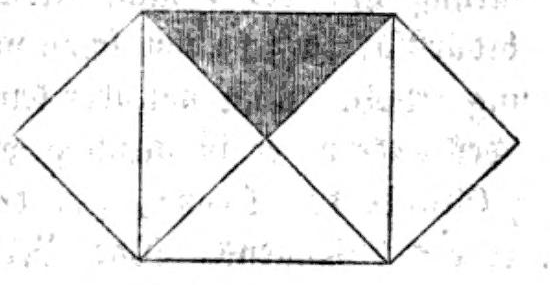
Auch bei ungleichen Katheten muß es sich zu einer solchen anschaulichen Ueberzeugung bringen lassen, wie überhaupt bei jeder möglichen geometrischen Wahrheit, schon deshalb, weil ihre Auffindung allemal von einer solchen angeschauten Nothwendigkeit ausging und der Beweis erst hinterher hinzu ersonnen ward: man bedarf also nur einer Analyse des Gedankenganges bei der ersten Auffindung einer geometrischen Wahrheit, um ihre Nothwendigkeit anschaulich zu erkennen. Es ist überhaupt die analytische Methode, welche ich für den Vortrag der Mathematik wünsche, statt der synthetischen, welche Eukleides gebraucht hat. Allerdings aber wird dies, bei komplicirten mathematischen Wahrheiten, sehr große, jedoch nicht unüberwindliche Schwierigkeiten haben. Schon fängt man in Deutschland hin und wieder an, den Vortrag der Mathematik zu ändern und mehr diesen analytischen Weg zu gehen. Am entschiedensten hat dies Herr Kosack, Lehrer der Mathematik und Physik am Gymnasio zu Nordhausen, gethan, indem er dem Programm zur Schulprüfung am 6. April 1852 einen ausführlichen Versuch, die Geometrie nach meinen Grundsätzen zu behandeln, beigegeben hat.
Um die Methode der Mathematik zu verbessern, wird vorzüglich erfordert, daß man das Vorurtheil aufgebe, die bewiesene Wahrheit habe irgend einen Vorzug vor der anschaulich erkannten, oder die logische, auf dem Satz vom Widerspruch beruhende, vor der metaphysischen, welche unmittelbar evident ist und zu der auch die reine Anschauung des Raumes gehört.
Das Gewisseste und überall Unerklärbare ist der Inhalt des Satzes vom Grunde. Denn dieser, in seinen verschiedenen Gestalten, bezeichnet die allgemeine Form aller unserer Vorstellungen und Erkenntnisse. Alle Erklärung ist Zurückführung auf ihn, Nachweisung im einzelnen Fall des durch ihn überhaupt ausgedrückten Zusammenhangs der Vorstellungen. Er ist sonach das Princip aller Erklärung und daher nicht selbst einer Erklärung fähig, noch ihrer bedürftig, da jede ihn schon voraussetzt und nur durch ihn Bedeutung erhält. Nun hat aber keine seiner Gestalten einen Vorzug vor der andern: er ist gleich gewiß und unbeweisbar als Satz vom Grunde des Seyns, oder des Werdens, oder des Handelns, oder des Erkennens. Das Verhältniß des Grundes zur Folge ist, in der einen wie in der andern seiner Gestalten, ein nothwendiges, ja es ist überhaupt der Ursprung, wie die alleinige Bedeutung, des Begriffs der Nothwendigkeit. Es giebt keine andere Nothwendigkeit, als die der Folge, wenn der Grund gegeben ist, und es giebt keinen Grund, der nicht Nothwendigkeit der Folge herbeiführte. So sicher also aus dem in den Prämissen gegebenen Erkenntnißgrunde die im Schlußsatze ausgesprochene Folge fließt, so sicher bedingt der Seynsgrund im Raum seine Folge im Raum: habe ich das Verhältniß dieser beiden anschaulich erkannt, so ist diese Gewißheit ebenso groß, wie irgend eine logische. Ausdruck eines solchen Verhältnisses ist aber jeder geometrische Lehrsatz, ebenso gut, wie eines der zwölf Axiome: er ist eine metaphysische Wahrheit und als solche ebenso unmittelbar gewiß, wie der Satz vom Widerspruche selbst, der eine metalogische Wahrheit und die allgemeine Grundlage aller logischen Beweisführung ist. Wer die anschaulich dargelegte Nothwendigkeit der in irgend einem Lehrsatze ausgesprochenen räumlichen Verhältnisse leugnet, kann mit gleichem Recht die Axiome leugnen, und mit gleichem Recht die Folge des Schlusses aus den Prämissen, ja den Satz vom Widerspruch selbst: denn alles Dieses sind gleich unbeweisbare, unmittelbar evidente und a priori erkennbare Verhältnisse. Wenn man daher die anschaulich erkennbare Nothwendigkeit räumlicher Verhältnisse erst durch eine logische Beweisführung aus dem Satze vom Widerspruch ableiten will; so ist es nicht anders, als wenn dem unmittelbaren Herrn eines Landes ein andrer dasselbe erst zu Lehn ertheilen wollte. Dies aber ist es, was Euklides gethan hat. Bloß seine Axiome läßt er nothgedrungen auf unmittelbarer Evidenz beruhen: alle folgenden geometrischen Wahrheiten werden logisch bewiesen, nämlich, unter Voraussetzung jener Axiome, aus der Uebereinstimmung mit den im Lehrsatz gemachten Annahmen, oder mit einem frühern Lehrsatz, oder auch aus dem Widerspruch des Gegentheils des Lehrsatzes mit den Annahmen, den Axiomen, den frühern Lehrsätzen, oder gar sich selbst. Aber die Axiome selbst haben nicht mehr unmittelbare Evidenz, als jeder andere geometrische Lehrsatz, sondern nur mehr Einfachheit durch geringeren Gehalt.
Wenn man einen Delinquenten vernimmt, so nimmt man seine Aussagen zu Protokoll, um aus ihrer Uebereinstimmung ihre Wahrheit zu beurtheilen. Dies ist aber ein bloßer Nothbehelf, bei dem man es nicht bewenden läßt, wenn man unmittelbar die Wahrheit jeder seiner Aussagen für sich erforschen kann; zumal da er von Anfang an konsequent lügen konnte. Jene erste Methode ist es jedoch, nach der Euklides den Raum erforschte. Zwar gieng er dabei von der richtigen Voraussetzung aus, daß die Natur überall, also auch in ihrer Grundform, dem Raum, konsequent seyn muß und daher, weil die Theile des Raumes im Verhältniß von Grund und Folge zu einander stehn, keine einzige räumliche Bestimmung anders seyn kann, als sie ist, ohne mit allen andern im Widerspruch zu stehen. Aber dies ist ein sehr beschwerlicher und unbefriedigender Umweg, der die mittelbare Erkenntniß der ebenso gewissen unmittelbaren vorzieht, der ferner die Erkenntniß, daß etwas ist, von der, warum es ist, zum großen Nachtheil der Wissenschaft trennt, und endlich dem Lehrling die Einsicht in die Gesetze des Raumes gänzlich vorenthält, ja, ihn entwöhnt vom eigentlichen Erforschen des Grundes und des innern Zusammenhanges der Dinge, ihn statt dessen anleitend, sich an einem historischen Wissen, daß es so sei, genügen zu lassen. Die dieser Methode so unablässig nachgerühmte Uebung des Scharfsinns besteht aber bloß darin, daß sich der Schüler im Schließen, d. h. im Anwenden des Satzes vom Widerspruch, übt, besonders aber sein Gedächtniß anstrengt, um alle jene Data, deren Uebereinstimmung zu vergleichen ist, zu behalten.
Es ist übrigens bemerkenswerth, daß diese Beweismethode bloß auf die Geometrie angewandt worden und nicht auf die Arithmetik: vielmehr läßt man in dieser die Wahrheit wirklich allein durch Anschauung einleuchten, welche hier im bloßen Zählen besteht. Da die Anschauung der Zahlen in der Zeit allein ist und daher durch kein sinnliches Schema, wie die geometrische Figur, repräsentirt werden kann; so fiel hier der Verdacht weg, daß die Anschauung nur empirisch und daher dem Schein unterworfen wäre, welcher Verdacht allein die logische Beweisart hat in die Geometrie bringen können. Zählen ist, weil die Zeit nur eine Dimension hat, die einzige arithmetische Operation, auf die alle andern zurückzuführen sind: und dies Zählen ist doch nichts Anderes, als Anschauung a priori, auf welche sich zu berufen man hier keinen Anstand nimmt, und durch welche allein das Uebrige, jede Rechnung, jede Gleichung, zuletzt bewährt wird. Man beweist z. B. nicht, daß
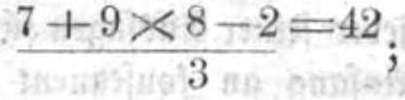
sondern man beruft sich auf die reine Anschauung in der Zeit, das Zählen, macht also jeden einzelnen Satz zum Axiom. Statt der Beweise, welche die Geometrie füllen, ist daher der ganze Inhalt der Arithmetik und Algebra eine bloße Methode zum Abkürzen des Zählens. Unsere unmittelbare Anschauung der Zahlen in der Zeit reicht zwar, wie oben erwähnt, nicht weiter, als etwa bis Zehn: darüber hinaus muß schon ein abstrakter Begriff der Zahl, durch ein Wort fixirt, die Stelle der Anschauung vertreten, welche daher nicht mehr wirklich vollzogen, sondern nur ganz bestimmt bezeichnet wird. Jedoch ist selbst so, durch das wichtige Hülfsmittel der Zahlenordnung, welche größere Zahlen immer durch die selben kleinen repräsentiren läßt, eine anschauliche Evidenz jeder Rechnung möglich gemacht, sogar da, wo man die Abstraktion so sehr zu Hülfe nimmt, daß nicht nur die Zahlen, sondern unbestimmte Größen und ganze Operationen nur in abstracto gedacht und in dieser Hinsicht bezeichnet werden, wie
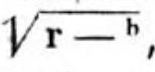
so daß man sie nicht mehr vollzieht, sondern nur andeutet.
Mit demselben Recht und derselben Sicherheit, wie in der Arithmetik, könnte man auch in der Geometrie die Wahrheit allein durch reine Anschauung a priori begründet seyn lassen. In der That ist es auch immer diese, gemäß dem Satz vom Grunde des Seyns anschaulich erkannte Nothwendigkeit, welche der Geometrie ihre große Evidenz ertheilt und auf der im Bewußtseyn eines Jeden die Gewißheit ihrer Sätze beruht: keineswegs ist es der auf Stelzen einherschreitende logische Beweis, welcher, der Sache immer fremd, meistens bald vergessen wird, ohne Nachtheil der Ueberzeugung, und ganz wegfallen könnte, ohne daß die Evidenz der Geometrie dadurch vermindert würde, da sie ganz unabhängig von ihm ist und er immer nur Das beweist, wovon man schon vorher, durch eine andere Erkenntnißart, völlige Ueberzeugung hat: insofern gleicht er einem feigen Soldaten, der dem von andern erschlagenen Feinde noch eine Wunde versetzt, und sich dann rühmt, ihn erlegt zu haben43.
Diesem allen zufolge wird es hoffentlich keinem Zweifel weiter unterliegen, daß die Evidenz der Mathematik, welche zum Musterbild und Symbol aller Evidenz geworden ist, ihrem Wesen nach nicht auf Beweisen, sondern auf unmittelbarer Anschauung beruht, welche also hier, wie überall, der letzte Grund und die Quelle aller Wahrheit ist. Jedoch hat die Anschauung, welche der Mathematik zum Grunde liegt, einen großen Vorzug vor jeder andern, also vor der empirischen. Nämlich, da sie a priori ist, mithin unabhängig von der Erfahrung, die immer nur theilweise und successiv gegeben wird; liegt ihr Alles gleich nahe, und man kann beliebig vom Grunde, oder von der Folge ausgehen. Dies nun giebt ihr eine völlige Untrüglichkeit dadurch, daß in ihr die Folge aus dem Grunde erkannt wird, welche Erkenntniß allein Nothwendigkeit hat: z. B. die Gleichheit der Seiten wird erkannt [44] Spinoza, der sich immer rühmt, more geometrico zu verfahren, hat dies wirklich noch mehr gethan, als er selbst wußte. Denn was ihm, aus einer unmittelbaren, anschaulichen Auffassung des Wesens der Welt, gewiß und ausgemacht war, sucht er unabhängig von jener Erkenntniß logisch zu demonstriren. Das beabsichtigte und bei ihm vorher gewisse Resultat erlangt er aber freilich nur dadurch, daß er willkürlich selbstgemachte Begriffe (substantia, causa sui u. s. w.) zum Ausgangspunkt nimmt und im Beweisen alle jene Willkürlichkeiten sich erlaubt, zu denen das Wesen der weiten Begriffssphären bequeme Gelegenheit giebt. Das Wahre und Vortrefflichste seiner Lehre ist daher bei ihm auch ganz unabhängig von den Beweisen, eben wie in der Geometrie.
Hiezu Kap. 13 des zweiten Bandes. als begründet durch die Gleichheit der Winkel; da hingegen alle empirische Anschauung und der größte Theil aller Erfahrung nur umgekehrt von der Folge zum Grunde geht, welche Erkenntnißart nicht unfehlbar ist, da Nothwendigkeit allein der Folge zukommt, sofern der Grund gegeben ist, nicht aber der Erkenntniß des Grundes aus der Folge, da dieselbe Folge aus verschiedenen Gründen entspringen kann. Diese letztere Art der Erkenntniß ist immer nur Induktion: d. h. aus vielen Folgen, die auf einen Grund deuten, wird der Grund als gewiß angenommen; da die Fälle aber nie vollständig beisammen seyn können, so ist die Wahrheit hier auch nie unbedingt gewiß. Diese Art von Wahrheit allein aber hat alle Erkenntniß durch sinnliche Anschauung und die allermeiste Erfahrung. Die Affektion eines Sinnes veranlaßt einen Verstandesschluß von der Wirkung auf die Ursache: weil aber vom Begründeten auf den Grund der Schluß nie sicher ist, so ist der falsche Schein, als Sinnentrug, möglich und oft wirklich, wie oben ausgeführt. Erst wenn mehrere oder alle fünf Sinne Affektionen erhalten, welche auf die selbe Ursache deuten, ist die Möglichkeit des Scheines äußerst klein geworden, dennoch aber vorhanden: denn in gewissen Fällen, z. B. durch falsche Münze, täuscht man die gesammte Sinnlichkeit. Im selben Fall ist alle empirische Erkenntniß, folglich die ganze Naturwissenschaft, ihren reinen (nach Kant metaphysischen) Theil bei Seite gesetzt. Auch hier werden aus den Wirkungen die Ursachen erkannt: daher beruht alle Naturlehre auf Hypothesen, die oft falsch sind und dann allmälig richtigeren Platz machen. Bloß bei den absichtlich angestellten Experimenten geht die Erkenntniß von der Ursach auf die Wirkung, also den sichern Weg: aber sie selbst werden erst in Folge von Hypothesen unternommen. Deshalb konnte kein Zweig der Naturwissenschaft, z. B. Physik, oder Astronomie, oder Physiologie, mit einem Male gefunden werden, wie Mathematik oder Logik es konnten; sondern es bedurfte und bedarf der gesammelten und verglichenen Erfahrungen vieler Jahrhunderte. Erst vielfache empirische Bestätigung bringt die Induktion, auf der die Hypothese beruht, der Vollständigkeit so nahe, daß sie für die Praxis die Stelle der Gewißheit einnimmt und der Hypothese ihr Ursprung so wenig nachtheilig erachtet wird, wie der Anwendung der Geometrie die Inkommensurabilität gerader und krummer Linien, oder der Arithmetik die nicht zu erlangende vollkommene Richtigkeit des Logarithmus: denn wie man die Quadratur des Cirkels und den Logarithmus durch unendliche Brüche der Richtigkeit unendlich nahe bringt, so wird auch durch vielfache Erfahrung die Induktion, d. h. die Erkenntniß des Grundes aus den Folgen, der mathematischen Evidenz, d. h. der Erkenntniß der Folge aus dem Grunde, zwar nicht unendlich, aber doch so nahe gebracht, daß die Möglichkeit der Täuschung gering genug wird, um vernachlässigt werden zu können. Vorhanden aber ist sie doch: z. B. ein Induktionsschluß ist auch der, von unzähligen Fällen auf alle, d. h. eigentlich auf den unbekannten Grund, von welchem alle abhängen. Welcher Schluß dieser Art scheint nun sicherer, als der, daß alle Menschen das Herz auf der linken Seite haben? Dennoch giebt es, als höchst seltene, völlig vereinzelte Ausnahmen, Menschen, denen das Herz auf der rechten Seite sitzt. — Sinnliche Anschauung und Erfahrungswissenschaft haben also die selbe Art der Evidenz. Der Vorzug, den Mathematik, reine Naturwissenschaft und Logik als Erkenntnisse a priori vor ihnen haben, beruht bloß darauf, daß das Formelle der Erkenntnisse, auf welches alle Apriorität sich gründet, ganz und zugleich gegeben ist und daher hier immer vom Grunde auf die Folge gegangen werden kann, dort aber meistens nur von der Folge auf den Grund. An sich ist übrigens das Gesetz der Kausalität, oder der Satz vom Grunde des Werdens, welcher die empirische Erkenntniß leitet, ebenso sicher, wie jene andern Gestaltungen des Satzes vom Grunde, denen obige Wissenschaften a priori folgen. — Logische Beweise aus Begriffen, oder Schlüsse, haben ebenso wohl, wie die Erkenntniß durch Anschauung a priori, den Vorzug, vom Grund auf die Folge zu gehen, wodurch sie an sich, d. h. ihrer Form nach, unfehlbar sind. Dies hat viel beigetragen, die Beweise überhaupt in so großes Ansehen zu bringen. Allein diese Unfehlbarkeit derselben ist eine relative: sie subsumiren bloß unter die oberen Sätze der Wissenschaft: diese aber sind es, welche den ganzen Fonds von Wahrheit der Wissenschaft enthalten, und sie dürfen nicht wieder bloß bewiesen seyn, sondern müssen sich auf Anschauung gründen, welche in jenen genannten wenigen Wissenschaften a priori eine reine, sonst aber immer empirisch und nur durch Induktion zum Allgemeinen erhoben ist. Wenn also auch bei Erfahrungswissenschaften das Einzelne aus dem Allgemeinen bewiesen wird, so hat doch wieder das Allgemeine seine Wahrheit nur vom Einzelnen erhalten, ist nur ein Speicher gesammelter Vorräthe, kein selbsterzeugender Boden.
Soviel von der Begründung der Wahrheit. — Ueber den Ursprung und die Möglichkeit des Irrthums sind seit Platons bildlichen Auflösungen darüber, vom Taubenschlage, wo man die unrechte Taube greift u. s. w. (Theaetet., S. 167 u. ff.), viele Erklärungen versucht worden. Kants vage, unbestimmte Erklärung vom Ursprung des Irrthums, mittelst des Bildes der Diagonalbewegung, findet man in der Kritik d. rein. Vern., S. 294 der ersten u. S. 350 der fünften Ausgabe. — Da die Wahrheit die Beziehung eines Urtheils auf seinen Erkenntnißgrund ist, so ist es allerdings ein Problem, wie der Urtheilende einen solchen Grund zu haben wirklich glauben kann und doch keinen hat, d. h. wie der Irrthum, der Trug der Vernunft, möglich ist. Ich finde diese Möglichkeit ganz analog der des Scheines, oder Truges des Verstandes, die oben erklärt worden. Meine Meinung nämlich ist (und das giebt dieser Erklärung gerade hier ihre Stelle), daß jeder Irrthum ein Schluß von der Folge auf den Grund ist, welcher zwar gilt, wo man weiß, daß die Folge jenen und durchaus keinen andern Grund haben kann; außerdem aber nicht. Der Irrende setzt entweder der Folge einen Grund, den sie gar nicht haben kann; worin er dann wirklichen Mangel an Verstand, d. h. an der Fähigkeit unmittelbarer Erkenntniß der Verbindung zwischen Ursach und Wirkung, zeigt: oder aber, was häufiger der Fall ist, er bestimmt der Folge einen zwar möglichen Grund, setzt jedoch zum Obersatz seines Schlusses von der Folge auf den Grund noch hinzu, daß die besagte Folge allemal nur aus dem von ihm angegebenen Grunde entstehe, wozu ihn nur eine vollständige Induktion berechtigen könnte, die er aber voraussetzt, ohne sie gemacht zu haben: jenes allemal ist also ein zu weiter Begriff, statt dessen nur stehen dürfte bisweilen, oder meistens; wodurch der Schlußsatz problematisch ausfiele und als solcher nicht irrig wäre. Daß der Irrende aber auf die angegebene Weise verfährt, ist entweder Uebereilung, oder zu beschränkte Kenntniß von der Möglichkeit, weshalb er die Nothwendigkeit der zu machenden Induktion nicht weiß. Der Irrthum ist also dem Schein ganz analog. Beide sind Schlüsse von der Folge auf den Grund: der Schein stets nach dem Gesetze der Kausalität und vom bloßen Verstande, also unmittelbar in der Anschauung selbst, vollzogen; der Irrthum, nach allen Formen des Satzes vom Grunde, von der Vernunft, also im eigentlichen Denken, vollzogen, am häufigsten jedoch ebenfalls nach dem Gesetze der Kausalität, wie folgende drei Beispiele belegen, die man als Typen oder Repräsentanten dreier Arten von Irrthümern ansehen mag. 1) Der Sinnenschein, (Trug des Verstandes) veranlaßt Irrthum (Trug der Vernunft), z. B. wenn man eine Malerei für ein Haut-Relief ansieht und wirklich dafür hält; es geschieht durch einen Schluß aus folgendem Obersatz: „Wenn Dunkelgrau stellenweise durch alle Nüancen in Weiß übergeht; so ist allemal die Ursache das Licht, welches Erhabenheiten und Vertiefungen ungleich trifft: ergo —.“ 2) „Wenn Geld in meiner Kasse fehlt; so ist die Ursache allemal, daß mein Bedienter einen Nachschlüssel hat: ergo —.“ 3) „Wenn das durch das Prisma gebrochene, d. i. herauf oder herab gerückte Sonnenbild, statt vorher rund und weiß, jetzt länglich und gefärbt erscheint; so ist die Ursache einmal und allemal, daß im Licht verschieden-gefärbte und zugleich verschieden-brechbare homogene Lichtstrahlen gesteckt haben, die, durch ihre verschiedene Brechbarkeit auseinandergerückt, jetzt ein längliches und zugleich verschiedenfarbiges Bild zeigen: ergo — bibamus!“ — Auf einen solchen Schluß aus einem, oft nur fälschlich generalisirten, hypothetischen, aus der Annahme eines Grundes zur Folge entsprungenen Obersatz muß jeder Irrthum zurückzuführen seyn; nur nicht etwan Rechnungsfehler, welche eben nicht eigentlich Irrthümer sind, sondern bloße Fehler: die Operation, welche die Begriffe der Zahlen angaben, ist nicht in der reinen Anschauung, dem Zählen, vollzogen worden; sondern eine andere statt ihrer.
Was den Inhalt der Wissenschaften überhaupt betrifft, so ist dieser eigentlich immer das Verhältniß der Erscheinungen der Welt zu einander, gemäß dem Satz vom Grunde und am Leitfaden des durch ihn allein geltenden und bedeutenden Warum. Die Nachweisung jenes Verhältnisses heißt Erklärung. Diese kann also nie weiter gehen, als daß sie zwei Vorstellungen zu einander in dem Verhältnisse der in der Klasse, zu der sie gehören, herrschenden Gestaltung des Satzes vom Grunde zeigt. Ist sie dahin gelangt, so kann gar nicht weiter Warum gefragt werden: denn das nachgewiesene Verhältniß ist dasjenige, welches schlechterdings nicht anders vorgestellt werden kann, d. h. es ist die Form aller Erkenntniß. Daher frägt man nicht warum 2 + 2 = 4 ist; oder warum Gleichheit der Winkel im Dreieck, Gleichheit der Seiten bestimmt; oder warum auf irgend eine gegebene Ursache ihre Wirkung folgt; oder warum aus der Wahrheit der Prämissen, die der Konklusion einleuchtet. Jede Erklärung, die nicht auf ein Verhältniß, davon weiter kein Warum gefordert werden kann, zurückführt, bleibt bei einer angenommenen qualitas occulta stehen: dieser Art ist aber auch jede ursprüngliche Naturkraft. Bei einer solchen muß jede naturwissenschaftliche Erklärung zuletzt stehen bleiben, also bei einem völlig Dunkelen: sie muß daher das innere Wesen eines Steines ebenso unerklärt lassen, wie das eines Menschen; kann so wenig von der Schwere, Kohäsion, chemischen Eigenschaften u. s. w., die Jener äußert, als vom Erkennen und Handeln Dieses Rechenschaft geben. So z. B. ist die Schwere eine qualitas occulta: denn sie läßt sich wegdenken, geht also nicht aus der Form des Erkennens als ein Nothwendiges hervor: dies hingegen ist der Fall mit dem Gesetze der Trägheit, als welches aus dem der Kausalität folgt; daher eine Zurückführung auf dasselbe eine vollkommen genügende Erklärung ist. Zwei Dinge nämlich sind schlechthin unerklärlich, d. h. nicht auf das Verhältniß, welches der Satz vom Grunde ausspricht, zurückzuführen: erstlich, der Satz vom Grunde selbst, in allen seinen vier Gestalten, weil er das Princip aller Erklärung ist, dasjenige, in Beziehung worauf sie allein Bedeutung hat; und zweitens, Das, was nicht von ihm erreicht wird, woraus aber eben das Ursprüngliche in allen Erscheinungen hervorgeht: es ist das Ding an sich, dessen Erkenntniß gar nicht die dem Satz vom Grunde unterworfene ist. Dieses Letztere muß hier nun ganz unverstanden stehen bleiben, da es erst durch das folgende Buch, in welchem wir auch diese Betrachtung der möglichen Leistungen der Wissenschaften wieder aufnehmen werden, verständlich werden kann. Aber da, wo die Naturwissenschaft, ja jede Wissenschaft, die Dinge stehen läßt, indem nicht nur ihre Erklärung derselben, sondern sogar das Princip dieser Erklärung, der Satz vom Grund, nicht über diesen Punkt hinausführt; da nimmt eigentlich die Philosophie die Dinge wieder auf und betrachtet sie nach ihrer, von jener ganz verschiedenen Weise. — In der Abhandlung über den Satz vom Grunde, §. 51, habe ich gezeigt, wie, in den verschiedenen Wissenschaften, die eine oder die andere Gestaltung jenes Satzes Hauptleitfaden ist: in der That möchte hienach sich vielleicht die treffendeste Eintheilung der Wissenschaften machen lassen. Jede nach jenem Leitfaden gegebene Erklärung ist aber, wie gesagt, immer nur relativ: sie erklärt die Dinge in Beziehung auf einander, läßt aber immer Etwas unerklärt, welches sie eben schon voraussetzt: Dieses ist z. B. in der Mathematik Raum und Zeit; in der Mechanik, Physik und Chemie die Materie, die Qualitäten, die ursprünglichen Kräfte, die Naturgesetze; in der Botanik und Zoologie die Verschiedenheit der Species und das Leben selbst; in der Geschichte das Menschengeschlecht, mit allen seinen Eigenthümlichkeiten des Denkens und Wollens; — in allen der Satz vom Grund in seiner jedesmal anzuwendenden Gestaltung. — Die Philosophie hat das Eigene, daß sie gar nichts als bekannt voraussetzt, sondern Alles ihr in gleichem Maaße fremd und ein Problem ist, nicht nur die Verhältnisse der Erscheinungen, sondern auch diese selbst, ja der Satz vom Grunde selbst, auf welchen Alles zurückzuführen die anderen Wissenschaften zufrieden sind, durch welche Zurückführung bei ihr aber nichts gewonnen wäre, da ein Glied der Reihe ihr so fremd ist, wie das andere, ferner auch jene Art des Zusammenhangs selbst ihr ebenso gut ein Problem ist, als das durch ihn Verknüpfte, und dieses wieder nach aufgezeigter Verknüpfung, so gut als vor derselben. Denn, wie gesagt, eben Jenes, was die Wissenschaften voraussetzen und ihren Erklärungen zum Grunde legen und zur Gränze setzen, ist gerade das eigentliche Problem der Philosophie, die folglich insofern da anfängt, wo die Wissenschaften aufhören. Beweise können nicht ihr Fundament seyn: denn diese leiten aus bekannten Sätzen unbekannte ab: aber ihr ist Alles gleich unbekannt und fremd. Es kann keinen Satz geben, in Folge dessen allererst die Welt mit allen ihren Erscheinungen da wäre: daher läßt sich nicht eine Philosophie, wie Spinoza wollte, ex firmis principiis demonstrirend ableiten. Auch ist die Philosophie das allgemeinste Wissen, dessen Hauptsätze also nicht Folgerungen aus einem andern, noch allgemeineren, seyn können. Der Satz vom Widerspruch setzt bloß die Uebereinstimmung der Begriffe fest; giebt aber nicht selbst Begriffe. Der Satz vom Grund erklärt Verbindungen der Erscheinungen, nicht diese selbst: daher kann Philosophie nicht darauf ausgehen, eine causa efficiens oder eine causa finalis der ganzen Welt zu suchen. Die gegenwärtige wenigstens sucht keineswegs, woher oder wozu die Welt dasei; sondern bloß, was die Welt ist. Das Warum aber ist hier dem Was untergeordnet: denn es gehört schon zur Welt, da es allein durch die Form ihrer Erscheinung, den Satz vom Grund, entsteht und nur insofern Bedeutung und Gültigkeit hat. Zwar könnte man sagen, daß Was die Welt sei, ein Jeder ohne weitere Hülfe erkenne; da er das Subjekt des Erkennens, dessen Vorstellung sie ist, selbst ist: auch wäre dies insoweit wahr. Allein jene Erkenntniß ist eine anschauliche, ist in concreto: dieselbe in abstracto wiederzugeben, das successive, wandelbare Anschauen und überhaupt alles Das, was der weite Begriff Gefühl umfaßt und bloß negativ, als nicht abstraktes, deutliches Wissen bezeichnet, eben zu einem solchen, zu einem bleibenden Wissen zu erheben, ist die Aufgabe der Philosophie. Sie muß demnach eine Aussage in abstracto vom Wesen der gesammten Welt seyn, vom Ganzen wie von allen Theilen. Um aber dennoch nicht in eine endlose Menge von einzelnen Urtheilen sich zu verlieren, muß sie sich der Abstraktion bedienen und alles Einzelne im Allgemeinen denken, seine Verschiedenheiten aber auch wieder im Allgemeinen: daher wird sie theils trennen, theils vereinigen, um alles Mannigfaltige der Welt überhaupt, seinem Wesen nach, in wenige abstrakte Begriffe zusammengefaßt, dem Wissen zu überliefern. Durch jene Begriffe, in welchen sie das Wesen der Welt fixirt, muß jedoch, wie das Allgemeine, auch das ganz Einzelne erkannt werden, die Erkenntniß beider also auf das Genaueste verbunden seyn: daher die Fähigkeit zur Philosophie eben darin besteht, worin Plato sie setzte, im Erkennen des Einen im Vielen und des Vielen im Einen. Die Philosophie wird demnach eine Summe sehr allgemeiner Urtheile seyn, deren Erkenntnißgrund unmittelbar die Welt selbst in ihrer Gesammtheit ist, ohne irgend etwas auszuschließen: also Alles, was im menschlichen Bewußtseyn sich vorfindet: sie wird seyn eine vollständige Wiederholung, gleichsam Abspiegelung der Welt in abstrakten Begriffen, welche allein möglich ist durch Vereinigung des wesentlich Identischen in einen Begriff und Aussonderung des Verschiedenen zu einem andern. Diese Aufgabe setzte schon Bako von Verulam der Philosophie, indem er sagte: ea demum vera est philosophia, quae mundi ipsius voces fidelissime reddit, et veluti dictante mundo conscripta est, et nihil aliud est, quam ejusdem simulacrum et reflectio, neque addit quidquam de proprio, sed tantum iterat et resonat. (de augm. scient., L. 2, c. 13). Wir nehmen jedoch dieses in einem ausgedehnteren Sinn, als Bako damals denken konnte.
Die Uebereinstimmung, welche alle Seiten und Theile der Welt, eben weil sie zu einem Ganzen gehören, mit einander haben, muß auch in jenem abstrakten Abbilde der Welt sich wiederfinden. Demnach könnte in jener Summe von Urtheilen das eine aus dem andern gewissermaaßen abgeleitet werden und zwar immer wechselseitig. Doch müssen sie hiezu für’s Erste daseyn und also zuvor, als unmittelbar durch die Erkenntniß der Welt in concreto begründet, aufgestellt werden, um so mehr, als alle unmittelbare Begründung sicherer ist, als die mittelbare: ihre Harmonie zu einander, vermöge welcher sie sogar zur Einheit eines Gedankens zusammenfließen, und welche entspringt aus der Harmonie und Einheit der anschaulichen Welt selbst, die ihr gemeinsamer Erkenntnißgrund ist, wird daher nicht als das Erste zu ihrer Begründung gebraucht werden; sondern nur noch als Bekräftigung ihrer Wahrheit hinzukommen. — Diese Aufgabe selbst kann erst durch ihre Auflösung vollkommen deutlich werden [45].
16 Nach dieser ganzen Betrachtung der Vernunft, als einer dem Menschen allein eigenen, besonderen Erkenntnißkraft, und der durch sie herbeigeführten, der menschlichen Natur eigenthümlichen Leistungen und Phänomene, bliebe mir jetzt noch übrig von der [46] Hiezu Kap. 17 des zweiten Bandes.
Vernunft zu reden, sofern sie die Handlungen der Menschen leitet, also in dieser Rücksicht praktisch genannt werden kann. Allein das hier zu Erwähnende hat größtentheils seine Stelle an einem andern Orte gefunden, nämlich im Anhang zu dieser Schrift, wo das Daseyn der von Kant so genannten praktischen Vernunft zu bestreiten war, welche er (freilich sehr bequem) als unmittelbare Quelle aller Tugend und als den Sitz eines absoluten (d. h. vom Himmel gefallenen) Soll darstellt. Die ausführliche und gründliche Widerlegung dieses Kantischen Princips der Moral habe ich später geliefert, in den „Grundproblemen der Ethik“. — Ich habe deshalb hier nur noch Weniges über den wirklichen Einfluß der Vernunft, im wahren Sinne dieses Worts, auf das Handeln zu sagen. Schon am Eingang unserer Betrachtung der Vernunft haben wir im Allgemeinen bemerkt, wie sehr das Thun und der Wandel des Menschen von dem des Thieres sich unterscheidet, und daß dieser Unterschied doch allein als Folge der Anwesenheit abstrakter Begriffe im Bewußtseyn anzusehen ist. Der Einfluß dieser auf unser ganzes Daseyn ist so durchgreifend und bedeutend, daß er uns zu den Thieren gewissermaaßen in das Verhältniß setzt, welches die sehenden Thiere zu den augenlosen (gewisse Larven, Würmer und Zoophyten) haben: letztere erkennen durch das Getast allein das ihnen im Raum unmittelbar Gegenwärtige, sie Berührende; die Sehenden dagegen einen weiten Kreis von Nahem und Fernem. Ebenso nun beschränkt die Abwesenheit der Vernunft die Thiere auf die ihnen in der Zeit unmittelbar gegenwärtigen anschaulichen Vorstellungen, d. i. realen Objekte: wir hingegen, vermöge der Erkenntniß in abstracto, umfassen, neben der engen wirklichen Gegenwart, noch die ganze Vergangenheit und Zukunft, nebst dem weiten Reiche der Möglichkeit: wir übersehen das Leben frei nach allen Seiten, weit hinaus über die Gegenwart und Wirklichkeit. Was also im Raum und für die sinnliche Erkenntniß das Auge ist, das ist gewissermaaßen in der Zeit und für die innere Erkenntniß die Vernunft. Wie aber die Sichtbarkeit der Gegenstände ihren Werth und Bedeutung doch nur dadurch hat, daß sie die Fühlbarkeit derselben verkündigt, so liegt der ganze Werth der abstrakten Erkenntniß immer in ihrer Beziehung auf die anschauliche. Daher auch legt der natürliche Mensch immer viel mehr Werth auf das unmittelbar und anschaulich Erkannte, als auf die abstrakten Begriffe, das bloß Gedachte: er zieht die empirische Erkenntniß der logischen vor. Umgekehrt aber sind diejenigen gesinnt, welche mehr in Worten, als Thaten leben, mehr in Papier und Bücher, als in die wirkliche Welt gesehen haben, und die in ihrer größten Ausartung zu Pedanten und Buchstabenmenschen werden. Daraus allein ist es begreiflich, wie Leibniz nebst Wolf und allen ihren Nachfolgern, so weit sich verirren konnten, nach dem Vorgange des Duns Skotus, die anschauliche Erkenntniß für eine nur verworrene abstrakte zu erklären! Zur Ehre Spinozas muß ich erwähnen, daß sein richtigerer Sinn umgekehrt alle Gemeinbegriffe für entstanden aus der Verwirrung des anschaulich Erkannten erklärt hat. (Eth. II, prop. 40, Schol. 1.) — Aus jener verkehrten Gesinnung ist es auch entsprungen, daß man in der Mathematik die ihr eigenthümliche Evidenz verwarf, um allein die logische gelten zu lassen; daß man überhaupt jede nicht abstrakte Erkenntniß unter dem weiten Namen Gefühl begriff und gering schätzte; daß endlich die Kantische Ethik den reinen, unmittelbar bei Erkenntniß der Umstände ansprechenden und zum Rechtthun und Wohlthun leitenden guten Willen als bloßes Gefühl und Aufwallung für werth- und verdienstlos erklärte, und nur dem aus abstrakten Maximen hervorgegangenen Handeln moralischen Werth zuerkennen wollte.
Die allseitige Uebersicht des Lebens im Ganzen, welche der Mensch durch die Vernunft vor dem Thiere voraus hat, ist auch zu vergleichen mit einem geometrischen, farblosen, abstrakten, verkleinerten Grundriß seines Lebensweges. Er verhält sich damit zum Thiere, wie der Schiffer, welcher mittelst Seekarte, Kompaß und Quadrant seine Fahrt und jedesmalige Stelle auf dem Meer genau weiß, zum unkundigen Schiffsvolk, das nur die Wellen und den Himmel sieht. Daher ist es betrachtungswerth, ja wunderbar, wie der Mensch, neben seinem Leben in concreto, immer noch ein zweites in abstracto führt. Im ersten ist er allen Stürmen der Wirklichkeit und dem Einfluß der Gegenwart Preis gegeben, muß streben, leiden, sterben, wie das Thier. Sein Leben in abstracto aber, wie es vor seinem vernünftigen Besinnen steht, ist die stille Abspiegelung des ersten und der Welt worin er lebt, ist jener eben erwähnte verkleinerte Grundriß. Hier im Gebiet der ruhigen Ueberlegung erscheint ihm kalt, farblos und für den Augenblick fremd, was ihn dort ganz besitzt und heftig bewegt: hier ist er bloßer Zuschauer und Beobachter. In diesem Zurückziehen in die Reflexion gleicht er einem Schauspieler, der seine Scene gespielt hat und bis er wieder auftreten muß, unter den Zuschauern seinen Platz nimmt, von wo aus er was immer auch vorgehen möge, und wäre es die Vorbereitung zu seinem Tode (im Stück), gelassen ansieht, darauf aber wieder hingeht und thut und leidet wie er muß. Aus diesem doppelten Leben geht jene von der thierischen Gedankenlosigkeit sich so sehr unterscheidende menschliche Gelassenheit hervor, mit welcher Einer, nach vorhergegangener Ueberlegung, gefaßtem Entschluß oder erkannter Nothwendigkeit, das für ihn Wichtigste, oft Schrecklichste kaltblütig über sich ergehen läßt, oder vollzieht: Selbstmord, Hinrichtung, Zweikampf, lebensgefährliche Wagstücke jeder Art und überhaupt Dinge, gegen welche seine ganze thierische Natur sich empört. Da sieht man dann, in welchem Maaße die Vernunft der thierischen Natur Herr wird, und ruft dem Starken zu: σιδηρειον νυ τοι ἦτορ! (ferreum certe tibi cor!) Il. 24, 521. Hier, kann man wirklich sagen, äußert sich die Vernunft praktisch: also überall, wo das Thun von der Vernunft geleitet wird, wo die Motive abstrakte Begriffe sind, wo nicht anschauliche, einzelne Vorstellungen, noch der Eindruck des Augenblicks, welcher das Thier leitet, das Bestimmende ist, da zeigt sich praktische Vernunft. Daß aber dieses gänzlich verschieden und unabhängig ist vom ethischen Werthe des Handelns, daß vernünftig Handeln und tugendhaft Handeln zwei ganz verschiedene Dinge sind, daß Vernunft sich ebenso wohl mit großer Bosheit, als mit großer Güte im Verein findet und der einen wie der andern durch ihren Beitritt erst große Wirksamkeit verleiht, daß sie zur methodischen, konsequenten Ausführung des edeln, wie des schlechten Vorsatzes, der klugen, wie der unverständigen Maxime, gleich bereit und dienstbar ist, welches eben ihre weibliche, empfangende und aufbewahrende, nicht selbst erzeugende Natur so mit sich bringt, — dieses Alles habe ich im Anhange ausführlich auseinandergesetzt, und durch Beispiele erläutert. Das dort Gesagte stände hier an seinem eigentlichen Platz, hat indessen, wegen der Polemik gegen Kants vorgebliche praktische Vernunft, dorthin verlegt werden müssen; wohin ich deshalb von hier wieder verweise.
Die vollkommenste Entwickelung der praktischen Vernunft, im wahren und ächten Sinne des Worts, der höchste Gipfel, zu dem der Mensch durch den bloßen Gebrauch seiner Vernunft gelangen kann, und auf welchem sein Unterschied vom Thiere sich am deutlichsten zeigt, ist als Ideal dargestellt im Stoischen Weisen. Denn die Stoische Ethik ist ursprünglich und wesentlich gar nicht Tugendlehre, sondern bloß Anweisung zum vernünftigen Leben, dessen Ziel und Zweck Glück durch Geistesruhe ist. Der tugendhafte Wandel findet sich dabei gleichsam nur per accidens, als Mittel, nicht als Zweck ein. Daher ist die Stoische Ethik, ihrem ganzen Wesen und Gesichtspunkt nach, grundverschieden von den unmittelbar auf Tugend dringenden ethischen Systemen, als da sind die Lehren der Veden, des Platon, des Christenthums und Kants. Der Zweck der Stoischen Ethik ist Glück: τελος το ευδαιμονειν (virtutes omnes finem habere beatitudinem) heißt es in der Darstellung der Stoa bei Stobäos. (Ecl., L. II, c. 7, p. 114, und ebenfalls p. 138.) Jedoch weist die Stoische Ethik nach, daß das Glück im innern Frieden und in der Ruhe des Geistes (αταραξια) allein sicher zu finden sei, und diese wieder allein durch Tugend zu erreichen: eben dieses nur bedeutet der Ausdruck, daß Tugend höchstes Gut sei. Wenn nun aber freilich allmälig der Zweck über das Mittel vergessen und die Tugend auf eine Weise empfohlen wird, die ein ganz anderes Interesse, als das des eigenen Glückes verräth, indem es diesem zu deutlich widerspricht; so ist dies eine von den Inkonsequenzen, durch welche in jedem System die unmittelbar erkannte, oder wie man sagt gefühlte Wahrheit auf den rechten Weg zurückleitet, den Schlüssen Gewalt anthuend; wie man dies z. B. deutlich sieht in der Ethik des Spinoza, welche aus dem egoistischen suum utile quaerere, durch handgreifliche Sophismen, reine Tugendlehre ableitet. Nach Dem, wie ich den Geist der Stoischen Ethik aufgefaßt habe, liegt ihr Ursprung in dem Gedanken, ob das große Vorrecht des Menschen, die Vernunft, welche ihm mittelbar, durch planmäßiges Handeln und was aus diesem hervorgeht, so sehr das Leben und dessen Lasten erleichtert, nicht auch fähig wäre, unmittelbar, d. h. durch bloße Erkenntniß, ihn den Leiden und Quaalen aller Art, welche sein Leben füllen, auf ein Mal zu entziehen, entweder ganz, oder doch beinahe ganz. Man hielt es dem Vorzug der Vernunft nicht angemessen, daß das mit ihr begabte Wesen, welches durch dieselbe eine Unendlichkeit von Dingen und Zuständen umfaßt und übersieht, dennoch durch die Gegenwart und durch die Vorfälle, welche die wenigen Jahre eines so kurzen, flüchtigen, ungewissen Lebens enthalten können, so heftigen Schmerzen, so großer Angst und Leiden, die aus dem ungestümen Drang des Begehrens und Fliehens hervorgehen, Preis gegeben seyn sollte, und meinte, die gehörige Anwendung der Vernunft müßte den Menschen darüber hinwegheben, ihn unverwundbar machen können. Daher sagte Antisthenes: Δει κτασθαι νουν, η βροχον (aut mentem parandam, aut laqueum. Plut. de stoic. repugn., c. 14), d. h. das Leben ist so voller Plagen und Hudeleien, daß man entweder, mittelst berichtigter Gedanken, sich darüber hinaussetzen, oder es verlassen muß. Man sah ein, daß die Entbehrung, das Leiden, nicht unmittelbar und nothwendig hervorging aus dem Nicht-haben; sondern erst aus dem Haben-wollen und doch nicht haben; daß also dieses Haben-wollen die nothwendige Bedingung ist, unter der allein das Nicht-haben zur Entbehrung wird, und den Schmerz erzeugt. Ου πενια λυπην εργαζεται, αλλα επιθυμια (non paupertas dolorem efficit, sed cupiditas), Epict. fragm. 25. Man erkannte zudem aus Erfahrung, daß bloß die Hoffnung, der Anspruch es ist, der den Wunsch gebiert und nährt; daher uns weder die vielen, Allen gemeinsamen und unvermeidlichen Uebel, noch die unerreichbaren Güter beunruhigen und plagen; sondern allein das unbedeutende Mehr und Weniger des dem Menschen Ausweichbaren und Erreichbaren; ja, daß nicht nur das absolut, sondern auch schon das relativ Unerreichbare, oder Unvermeidliche, uns ganz ruhig läßt; daher die Uebel, welche unserer Individualität einmal beigegeben sind, oder die Güter, welche ihr nothwendig versagt bleiben müssen, mit Gleichgültigkeit betrachtet werden, und daß, dieser menschlichen Eigenthümlichkeit zufolge, jeder Wunsch bald erstirbt, und also keinen Schmerz mehr erzeugen kann, wenn nur keine Hoffnung ihm Nahrung giebt. Aus diesem allen ergab sich, daß alles Glück nur auf dem Verhältniß beruht zwischen unseren Ansprüchen und dem, was wir erhalten: wie groß oder klein die beiden Größen dieses Verhältnisses sind, ist einerlei, und das Verhältniß kann sowohl durch Verkleinerung der ersten Größe, als durch Vergrößerung der zweiten hergestellt werden: und ebenso, daß alles Leiden eigentlich hervorgeht aus dem Misverhältniß dessen, was wir fordern und erwarten, mit dem, was uns wird, welches Misverhältniß aber offenbar nur in der Erkenntniß liegt [47], und durch bessere Einsicht völlig gehoben werden könnte. Daher sagte Chrysippos: δει ζην κατ' εμπειριαν των φυσει συμβαινοντων (Stob. Ecl., L. II, c. 7, p. 134), d. h. man soll leben mit gehöriger Kenntniß des Hergangs der Dinge in der Welt. Denn so oft ein Mensch irgendwie aus der Fassung kommt, durch ein Unglück zu Boden geschlagen wird, oder sich erzürnt, oder verzagt; so zeigt er eben dadurch, daß er die Dinge anders findet, als er sie erwartete, folglich daß er im Irrthum befangen war, die Welt und das Leben nicht kannte, nicht wußte, wie durch Zufall die leblose Natur, durch entgegengesetzte Zwecke, auch durch Bosheit, die belebte den Willen des Einzelnen bei jedem Schritte durchkreuzt: er hat also entweder seine Vernunft nicht gebraucht, um zu einem allgemeinen Wissen dieser Beschaffenheit des Lebens zu kommen, oder auch es fehlt ihm an Urtheilskraft, wenn, was er im Allgemeinen weiß, er doch im Einzelnen nicht wiedererkennt und deshalb davon überrascht und aus der Fassung gebracht wird [48]. So auch ist jede lebhafte Freude ein Irrthum, ein Wahn, weil kein erreichter Wunsch dauernd befriedigen kann, auch weil jeder Besitz und jedes Glück nur vom Zufall auf unbestimmte Zeit geliehen ist, und daher in der nächsten Stunde wieder zurückgefordert werden kann. Jeder Schmerz aber beruht auf dem Verschwinden eines solchen Wahns: beide also entstehen [49] Omnes perturbationes judicio censent fieri et opinione. Cic. Tusc., 4, 6. Ταρασσει τους ανθρωπους ου τα πραγματα, αλλα τα περι των πραγματων δογματα. (Perturbant homines non res ipsae, sed de rebus opiniones.) Epictet., c. V.
50 Τουτο γαρ εστι το αιτιον τοις ανθρωποις παντων των κακων, το τας προληψεις τας κοινας μη δυνασθαι εφαρμοζειν ταις επι μερους. (Haec est causa mortalibus omnium malorum, non posse communes notiones aptare singularibus.) Epict. dissert., III, 26. aus fehlerhafter Erkenntniß: dem Weisen bleibt daher Jubel wie Schmerz immer fern, und keine Begebenheit stört seine αταραξια.
Diesem Geist und Zweck der Stoa gemäß, fängt Epiktet damit an und kommt beständig darauf zurück, als auf den Kern seiner Weisheit, daß man wohl bedenken und unterscheiden solle, was von uns abhängt und was nicht, daher auf Letzteres durchaus nicht Rechnung machen; wodurch man zuverlässig frei bleiben wird vom allem Schmerz, Leiden und Angst. Was nun aber von uns abhängt, ist allein der Wille: und hier geschieht nun ein allmäliger Uebergang zur Tugendlehre, indem bemerkt wird, daß, wie die von uns nicht abhängige Außenwelt Glück und Unglück bestimmt, so aus dem Willen innere Zufriedenheit oder Unzufriedenheit mit uns selbst hervorgehe. Nachher aber ward gefragt, ob man den beiden ersteren oder den beiden letzteren die Namen bonum et malum beilegen solle? Das war eigentlich willkürlich und beliebig und that nichts zur Sache. Aber dennoch stritten hierüber unaufhörlich die Stoiker mit Peripatetikern und Epikuräern, unterhielten sich mit der unstatthaften Vergleichung zweier völlig inkommensurabeler Größen und den daraus hervorgehenden, entgegengesetzten, paradoren Aussprüchen, die sie einander zuwarfen. Eine interessante Zusammenstellung dieser, von der stoischen Seite aus, liefern uns die Paradoxa des Cicero.
Zenon, der Stifter, scheint ursprünglich einen etwas andern Gang genommen zu haben. Der Ausgangspunkt war bei ihm dieser: daß man zur Erlangung des höchsten Gutes, d. h. der Glücksäligkeit durch Geistesruhe, übereinstimmend mit sich selbst leben solle. (ὁμολογουμενως ζην· τουτο δ' εστι καθ' ενα λογον και συμφωνον ζην. — Consonanter vivere: hoc est secundum unam rationem et concordem sibi vivere. Stob. Ecl. eth., L. II, c. 7, p. 132. Imgleichen: αρετην διαθεσιν ειναι ψυχης συμφωνον ἑαυτῃ περι ολον τον βιον. Virtutem esse animi affectionem secum per totam vitam consentientem, ibid., p. 104.) Nun war aber dieses allein dadurch möglich, daß man durchaus vernünftig, nach Begriffen, nicht nach wechselnden Eindrücken und Launen sich bestimmte; da aber nur die Maxime unsers Handelns, nicht der Erfolg, noch die äußern Umstände, in unserer Gewalt sind: so mußte man, um immer konsequent bleiben zu können, allein jene, nicht diese sich zum Zwecke machen; wodurch wieder die Tugendlehre eingeleitet wird.
Aber schon den unmittelbaren Nachfolgern des Zenon schien sein Moralprincip — übereinstimmend zu leben — zu formal und inhaltsleer. Sie gaben ihm daher materialen Gehalt, durch den Zusatz: „übereinstimmend mit der Natur zu leben“ (ὁμολογουμενως τῃ φυσει ζην.); welches, wie Stobäos a. a. O. berichtet, zuerst vom Kleanthes hinzugesetzt wurde und die Sache sehr ins Weite schob, durch die große Sphäre des Begriffs und die Unbestimmtheit des Ausdrucks. Denn Kleanthes meinte die gesammte allgemeine Natur, Chrysippos aber die menschliche Natur insbesondere (Diog. Laërt., 7, 89). Das dieser letzteren allein Angemessene sollte nachher die Tugend seyn, wie den thierischen Naturen Befriedigung thierischer Triebe, wodurch wieder gewaltsam zur Tugendlehre eingelenkt, und, es mochte biegen oder brechen, die Ethik durch die Physik begründet werden sollte. Denn die Stoiker giengen überall auf Einheit des Princips: wie denn auch Gott und die Welt bei ihnen durchaus nicht zweierlei war.
Die Stoische Ethik, im Ganzen genommen, ist in der That ein sehr schätzbarer und achtungswerther Versuch, das große Vorrecht des Menschen, die Vernunft, zu einem wichtigen und heilbringenden Zweck zu benutzen, nämlich um ihn über die Leiden und Schmerzen, welchen jedes Leben anheimgefallen ist, hinauszuheben, durch eine Anweisung „Qua ratione queas traducere leniter aevum: Ne te semper inops agitet vexetque cupido, Ne pavor et rerum mediocriter utilium spes.“ und ihn eben dadurch im höchsten Grade der Würde theilhaft zu machen, welche ihm, als vernünftigem Wesen, im Gegensatz des Thieres zusteht, und von der in diesem Sinn allerdings die Rede seyn kann, nicht in einem andern. — Diese meine Ansicht der Stoischen Ethik brachte es mit sich, daß sie hier, bei Darstellung dessen, was die Vernunft ist und zu leisten vermag, erwähnt werden mußte. So sehr aber auch jener Zweck, durch Anwendung der Vernunft und durch eine bloß vernünftige Ethik in gewissem Grade erreichbar ist, wie denn auch die Erfahrung zeigt, daß jene rein vernünftigen Charaktere, die man gemeinhin praktische Philosophen nennt — und mit Recht, weil, wie der eigentliche d. i. der theoretische Philosoph das Leben in den Begriff überträgt, sie den Begriff ins Leben übertragen, — wohl die glücklichsten sind; so fehlt dennoch sehr viel, daß etwas Vollkommenes in dieser Art zu Stande kommen und wirklich die richtig gebrauchte Vernunft uns aller Last und allen Leiden des Lebens entziehen und zur Glücksäligkeit führen könnte. Es liegt vielmehr ein vollkommener Widerspruch darin, leben zu wollen ohne zu leiden, welchen daher auch das oft gebrauchte Wort „seeliges Leben“ in sich trägt: dieses wird demjenigen gewiß einleuchtend seyn, der meine folgende Darstellung bis ans Ende gefaßt haben wird. Dieser Widerspruch offenbart sich auch schon in jener Ethik der reinen Vernunft selbst, dadurch, daß der Stoiker genöthigt ist, seiner Anweisung zum glücksäligen Leben (denn das bleibt seine Ethik immer) eine Empfehlung des Selbstmordes einzuflechten (wie sich unter dem prächtigen Schmuck und Geräth orientalischer Despoten auch ein kostbares Fläschchen mit Gift findet), für den Fall nämlich, wo die Leiden des Körpers, die sich durch keine Sätze und Schlüsse wegphilosophiren lassen, überwiegend und unheilbar sind, sein alleiniger Zweck, Glücksäligkeit, also doch vereitelt ist, und nichts bleibt, um dem Leiden zu entgehen, als der Tod, der aber dann gleichgültig, wie jede andere Arzenei, zu nehmen ist. Hier wird ein starker Gegensatz offenbar, zwischen der Stoischen Ethik und allen jenen oben erwähnten, welche Tugend an sich und unmittelbar, auch mit den schwersten Leiden, zum Zweck machen und nicht wollen, daß man, um dem Leiden zu entfliehen, das Leben endige; obgleich keine von ihnen allen den wahren Grund zur Verwerfung des Selbstmordes auszusprechen wußte, sondern sie mühsam allerhand Scheingründe zusammensuchen: im vierten Buch wird jener Grund im Zusammenhang unserer Betrachtung sich ergeben. Aber obiger Gegensatz offenbart und bestätigt eben den wesentlichen, im Grundprincip liegenden Unterschied zwischen der Stoa, die eigentlich doch nur ein besonderer Eudämonismus ist, und jenen erwähnten Lehren, obgleich beide oft in den Resultaten zusammentreffen und scheinbare Verwandtschaft haben. Der oben erwähnte innere Widerspruch aber, mit welchem die Stoische Ethik, selbst in ihrem Grundgedanken, behaftet ist, zeigt sich ferner auch darin, daß ihr Ideal, der Stoische Weise, in ihrer Darstellung selbst, nie Leben oder innere poetische Wahrheit gewinnen konnte, sondern ein hölzerner, steifer Gliedermann bleibt, mit dem man nichts anfangen kann, der selbst nicht weiß wohin mit seiner Weisheit, dessen vollkommene Ruhe, Zufriedenheit, Glücksäligkeit dem Wesen der Menschheit geradezu widerspricht und uns zu keiner anschaulichen Vorstellung davon kommen läßt. Wie ganz anders erscheinen, neben ihn gestellt, die Weltüberwinder und freiwilligen Büßer, welche die Indische Weisheit uns aufstellt und wirklich hervorgebracht hat, oder gar der Heiland des Christenthums, jene vortreffliche Gestalt, voll tiefen Lebens, von größter poetischer Wahrheit und höchster Bedeutsamkeit, die jedoch, bei vollkommener Tugend, Heiligkeit und Erhabenheit, im Zustande des höchsten Leidens vor uns steht [51].
52 Hiezu Kap. 16 des zweiten Bandes.
1 “The world is my representation”: this is a truth that holds for every living and knowing being, though only a human being can bring it into reflective, abstract consciousness. When a person really does this, philosophical thoughtfulness has begun in them. It then becomes clear and certain to them that they know no sun and no earth, only an eye that sees a sun and a hand that feels an earth. The world around them exists only as representation, that is, entirely in relation to something else, the one who represents, which is they themselves.—If any truth can be stated a priori, it is this one. It states the form of all possible and imaginable experience, a form more general than any other, more general than time, space and causality. All of these already presuppose it. We have recognized each of these forms as one particular shape of the principle of sufficient reason, and each holds only for a particular class of representations. The splitting into object and subject, by contrast, is the common form of all those classes. It is the one form under which any representation at all, of whatever kind, abstract or intuitive, pure or empirical, is possible and thinkable. So no truth is more certain, more independent of all the others, or in less need of proof than this one: that everything that exists for knowledge, and so this whole world, is object only in relation to the subject, the intuitive perception of someone who perceives; in a word, representation. Of course this holds of the present just as it holds of every past and every future, of what is farthest just as of what is near. For it holds of time and space themselves, and only in them do all these things differ. Everything that belongs or can belong to the world carries this condition of depending on the subject, and cannot get rid of it. It exists only for the subject. The world is representation.
This truth is by no means new. It was already there in the skeptical reflections from which Descartes started. But Berkeley was the first to state it outright, and by doing so he earned an immortal merit in philosophy, even though the rest of his teaching cannot stand. Kant’s first mistake was neglecting this proposition, as is set out in the Appendix.—How early, on the other hand, the sages of India recognized this basic truth is shown by the fact that it appears as the fundamental proposition of the Vedanta philosophy, which is credited to Vyasa. W. Jones attests this in the last of his essays: on the philosophy of the Asiatics; Asiatic researches, Vol. IV, p. 164: the fundamental tenet of the Vedanta school consisted not in denying the existence of matter, that is of solidity, impenetrability, and extended figure (to deny which would be lunacy), but in correcting the popular notion of it, and in contending that it has no essence independent of mental perception; that existence and perceptibility are convertible terms1. These words adequately express how empirical reality and transcendental ideality exist side by side.
So in this first book we consider the world only from the side I have indicated, only insofar as it is representation. That [2] The basic dogma of the Vedanta school was not a denial that matter exists, that is, solidity, impenetrability and extension (to deny which would be madness), but a correction of the usual concept of it, by the claim that it has no existence independent of the knowing mind’s grasp of it, since existence and perceptibility are interchangeable concepts. this view, however, though it loses nothing of its truth, is one-sided, and so is produced by some arbitrary abstraction: this is announced to everyone by the inner resistance with which they accept the world as their mere representation, an acceptance they can never escape either. The next book will make up for the one-sidedness of this view with a truth that is not as immediately certain as the one we start from here. Only deeper inquiry, harder abstraction, and the separating of what differs and uniting of what is identical can lead to it. It is a truth that must be very serious, and if not terrifying then at least troubling, to everyone: namely that they too can and must say, “the world is my will.”—
Until then, that is, in this first book, we have to look steadily at the side of the world from which we start, the side of knowability. So we have to regard all objects that exist, and even our own body (as we will soon discuss more closely), only as representation, and call them mere representation, without resisting. What we leave out of account in doing so is, as I hope everyone will later be sure, always only the will, which alone makes up the other side of the world. For the world is through and through representation on one side, and through and through will on the other. A reality that was neither of these, but an object in itself (into which, unfortunately, even Kant’s thing in itself degenerated in his hands), is a dreamed-up non-thing, and assuming it is a will-o’-the-wisp in philosophy.
2 What knows everything and is known by nothing is the subject. So it is what carries the world, the constant, always presupposed condition of everything that appears, of every object. For whatever exists, exists only for the subject. Everyone finds themselves to be this subject, but only insofar as they know, not insofar as they are an object of knowledge. Their body, however, is already an object, and so from this standpoint we call it representation too. For the body is an object among objects and is subject to the laws of objects, even though it is the immediate object [3]. Like all objects of intuition, it lies in the forms of all knowing, in time and space, through which multiplicity exists. But the subject, the knower that is never known, does not lie in these forms either. These forms always presuppose it. So neither multiplicity nor its opposite, unity, belongs to it. We never know it. It is precisely what knows wherever anything is known.
So the world as representation, the only aspect in which we consider it here, has two essential, necessary and inseparable halves. One is the object. Its form is space and time, and through them, multiplicity. The other half, the subject, does not lie in space and time. It is whole and undivided in every representing being. So a single one of these beings, together with the object, completes the world as representation just as fully as the millions that exist do. And if that single one disappeared, the world as representation would be no more. The two halves are therefore inseparable, even in thought. Each has meaning and existence only through and for the other, is there with it and vanishes with it. They border directly on each other: where the object begins, the subject ends. That the border is shared shows in this: the essential, and therefore universal, forms of every object, which are time, space and causality, can be found and fully known starting from the subject, without knowing the object itself. In Kant’s language, they lie a priori in our consciousness. Discovering this is Kant’s main merit, and a very great one. I claim something further: that the principle of sufficient reason is the common expression of all these forms of the object that we know a priori. So everything we know purely a priori is nothing but the content of that principle and what follows from it, and our whole a priori certain knowledge is really stated in it. In my essay on the principle of sufficient reason I showed in detail how any [4] On the Principle of Sufficient Reason, 2nd ed., § 22. possible object is subject to it. That is, every object stands in a necessary relation to other objects, on one side as determined, on the other as determining. This goes so far that the whole existence of all objects, insofar as they are objects and representations and nothing else, runs entirely back to this necessary relation to one another. It consists only in that relation, and so is entirely relative. More on this soon. I showed further that, according to the classes into which objects divide by their possibility, this necessary relation, which the principle of sufficient reason expresses in general, appears in different forms. This in turn confirms that the division of the classes is right. I constantly assume here that everything said there is known and present to the reader. For if it had not been said there, it would necessarily have its place here.
3 The main difference among all our representations is that between the intuitive and the abstract. The abstract makes up only one class of representations, concepts. On earth these belong to human beings alone, and the ability to form them, which sets humans apart from all animals, has always been called reason [5]. Later we will look at these abstract representations by themselves, but first we speak only of intuitive representation. It takes in the whole visible world, or all experience, together with the conditions that make experience possible. As I said, it is a very important discovery of Kant’s that these very conditions, these forms of experience, can be not only thought in the abstract but also directly perceived by intuition, by themselves and apart from their content. These forms are the most general part of how experience is perceived, what belongs equally to all its appearances, namely time and space. And Kant’s discovery is also that this intuition is not [6] Kant alone has muddled this concept of reason; on this point I refer to the Appendix, and also to my “Fundamental Problems of Ethics”: Basis of Morals, § 6, pp. 148–154, of the first edition. a phantasm borrowed from experience by repetition. It is so independent of experience that, on the contrary, experience has to be thought of as dependent on it. For the properties of space and time, as intuition knows them a priori, hold for all possible experience as laws, and experience must always turn out according to them. For this reason, in my essay on the principle of sufficient reason I treated time and space, insofar as they are intuited purely and empty of content, as a special class of representations existing in its own right. Kant discovered something important about these general forms of intuition: they can be perceived by themselves, independent of experience, and known in all their lawfulness, and mathematics with its infallibility rests on this. Yet it is just as worth noting about them that the principle of sufficient reason, which governs experience as the law of causality and motivation, and governs thinking as the law of the grounding of judgments, appears here in a quite peculiar form. I have given this form the name ground of being. In time it is the succession of its moments, and in space it is the position of its parts, which determine one another reciprocally without end.
Anyone to whom the introductory essay has made clear that the principle of sufficient reason has exactly the same content in all its different forms will also be convinced how important it is, for seeing into its innermost nature, to know the simplest of its forms as such. For this simplest form we have identified time. In time, each moment exists only by having destroyed the one before it, its father, only to be destroyed itself just as quickly. Past and future (setting aside the consequences of their content) are as empty as any dream, and the present is only the border between them, with no extension and no duration. We will recognize this same emptiness in all the other forms of the principle of sufficient reason as well. We will see that space is like time, and that everything that is in space and time together is like space. That means everything that comes from causes or motives has only a relative existence: it exists only through and for something else of its own kind, that is, something that again exists only in the same way. The core of this view is old. Heraclitus lamented in it the eternal flux of things. Plato dismissed its object as what is always becoming but never is. Spinoza called it mere accidents of the one substance that alone is and remains. Kant set what is known in this way, as mere appearance, against the thing in itself. And finally the ancient wisdom of the Indians says: “It is Maya, the veil of deception, which covers the eyes of mortals and makes them see a world of which one can say neither that it is nor that it is not. For it is like a dream, like the glare of the sun on sand, which a traveler from far off takes for water, or like a rope thrown down, which the traveler takes for a snake.” (These comparisons are repeated in countless passages of the Vedas and Puranas.) But what all these thinkers meant and speak of is nothing other than what we are considering now: the world as representation, subject to the principle of sufficient reason.
4 Anyone who has recognized the form of the principle of sufficient reason that appears in pure time as such, and on which all counting and calculating rest, has thereby recognized the whole nature of time. Time is nothing more than that form of the principle, and has no other property. Succession is the form the principle takes in time; succession is the whole nature of time.—Likewise, anyone who has recognized the principle of sufficient reason as it rules in bare, purely intuited space has exhausted the whole nature of space. For space is through and through nothing other than the possibility of the reciprocal determinations of its parts by one another, which is called position. Examining this in detail, and putting the results into abstract concepts so they are easier to use, is the content of the whole of geometry.—In the same way, anyone who has recognized the form of the principle that governs the content of those forms (of time and space), their perceptibility, that is, matter, so the law of causality, has thereby recognized the whole nature of matter as such. For matter is through and through nothing but causality, as anyone sees directly as soon as they stop to think. Its being is its acting: no other being of it can even be thought. Only as acting does it fill space, and only as acting does it fill time. Its action on the immediate object (which is itself matter) conditions the intuition in which alone matter exists. The effect of any other material object on another is known only insofar as the latter now acts on the immediate object differently than before, and consists only in this. So cause and effect is the whole nature of matter: its being is its acting. (More on this in the essay on the principle of sufficient reason, § 21, p. 77.) It is therefore very fitting that in German the sum of everything material is called Wirklichkeit [7], a word that is much more telling than Realität. What matter acts on is always again matter. So its whole being and nature consists only in the lawful change that one part of it brings about in another. It is therefore entirely relative, by a relation that holds only within its own limits, just like time, just like space.
Time and space, each by itself, can be represented intuitively even without matter, but matter cannot be represented without them. Even its shape, which cannot be separated from it, presupposes space. And its acting, in which its whole existence consists, always concerns a change, and so a determination of time. But matter does not merely presuppose time and space, each taken separately. A union of the two makes up its nature, precisely because its nature, as shown, consists in acting, in causality. All the countless appearances and states that anyone could think of could lie side by side in infinite space without crowding one another, or follow one another in infinite time without disturbing one another. A necessary relation among them would then not be needed at all, and neither would a rule [8] Mira in quibusdam rebus verborum proprietas est, et consuetudo sermonis antiqui quaedam efficacissimis notis signat. Seneca epist. 81. that determined them by that relation; such a rule would not even be applicable. So there would then be no causality yet, for all the side-by-side existence in space and all the change in time, as long as each of the two forms had its own duration and course by itself, unconnected with the other. And since causality is the real nature of matter, there would be no matter either.—But the law of causality gets its meaning and its necessity only from this: the nature of change lies not in the bare alternation of states in itself, but rather in this—at the same place in space there is now one state and afterward another, and at one and the same definite time there is this state here and that state there. Only this mutual limiting of time and space by each other gives meaning, and necessity along with it, to a rule by which change must proceed. So what the law of causality determines is not the succession of states in bare time, but this succession with respect to a definite space. And it is not the existence of states at a definite place, but their existence at this place at a definite time. Change, that is, the alternation that takes place according to the causal law, therefore always concerns a definite part of space and a definite part of time at once and together. Accordingly, causality unites space with time. But we found that the whole nature of matter consists in acting, and so in causality. So space and time must be united in matter too. That is, matter must carry the properties of time and the properties of space together, however much the two conflict. What is impossible in either of them alone, matter must unite in itself: the unstable flight of time with the rigid, unchanging persistence of space. Infinite divisibility it has from both. Accordingly, we find that matter brings about, first of all, simultaneity, which could exist neither in bare time, which knows no side-by-side, nor in bare space, which knows no before, after or now. The simultaneity of many states, though, is really what makes up the nature of actuality. Only through simultaneity does duration first become possible, since duration can be known only by the change in what exists at the same time as the enduring thing. And conversely, only by means of what endures within change does that change take on the character of alteration, that is, of a change of quality and form while substance, that is, matter, persists9. In bare space the world would be rigid and motionless: no succession, no change, no acting. But with acting the representation of matter is also gone. In bare time, again, everything would be fleeting: no persistence, no side-by-side and so no simultaneity, and so no duration; and so again no matter. Only through the union of time and space does matter arise, that is, the possibility of simultaneity, and through that of duration, and through duration again of the persistence of substance while states change [10]. Since matter has its nature in the union of time and space, it carries the stamp of both throughout. It shows its origin from space partly by its shape, which cannot be separated from it, but especially by its persistence (substance). Change belongs to time alone, and in time alone and by itself nothing remains; so the certainty of this persistence a priori has to be derived entirely from that of space [11]. But it shows its origin from time in its quality (accident), without which it never appears, and which is always, without exception, causality, acting on other matter, and so change (a concept of time). The lawfulness of this acting, however, always refers to space and time together, and has meaning only because of that. What state must occur at this time at this place is the one determination to which the legislation of causality extends, and to which it extends alone. It rests on this derivation of the basic determinations of matter from the forms of our knowledge that we know a priori, that we recognize certain properties in matter a priori, namely the filling of space, that is, impenetrability, that is, efficacy12 Matter and substance are one and the same, as is set out in the Appendix.
13 This also shows the ground of Kant’s definition of matter, “that it is the movable in space”: for motion consists only in the union of space and time.
14 Not from the knowledge of time, as Kant would have it, as is set out in the Appendix. then extension, infinite divisibility, persistence, that is, indestructibility; and finally mobility. Weight, on the other hand, despite the fact that it has no exceptions, should probably be counted as knowledge a posteriori, although Kant, in the “Metaphysical Foundations of Natural Science,” p. 71 (Rosenkranz ed., p. 372), puts it forward as knowable a priori.
Just as the object exists at all only for the subject, as its representation, so every particular class of representations exists only for an equally particular determination in the subject, which is called a faculty of knowledge. The subjective correlate of time and space taken by themselves, as empty forms, Kant called pure sensibility. Since Kant broke the trail here, this term may be kept, although it does not fit well, because sensibility already presupposes matter. The subjective correlate of matter or of causality—for the two are one—is the understanding, and it is nothing besides. Knowing causality is its only function, its sole power. It is a great power, covering much, with many kinds of use, yet all its expressions are plainly the same. Conversely, all causality, and so all matter, and so the whole of actuality, exists only for the understanding, through the understanding, in the understanding. The first, simplest and always present expression of the understanding is the intuitive perception of the actual world. This is entirely knowledge of the cause from the effect. That is why all intuitive perception is intellectual. It could still never come about unless some effect were known directly and so served as a starting point. This is the effect on animal bodies. To that extent these bodies are the immediate objects of the subject, and the intuitive perception of all other objects is mediated through them. The changes that any animal body undergoes are known directly, that is, felt. As soon as this effect is related to its cause, the intuitive perception of that cause as an object arises. This relating is not an inference in abstract concepts. It does not happen by reflection, or by choice, but directly, necessarily and with certainty. It is the mode of knowledge of the pure understanding, without which intuitive perception would never come about. All that would remain is a dull, plantlike consciousness of the changes of the immediate object, which would follow one another with no meaning at all, unless as pain or pleasure they happened to mean something for the will. But just as the visible world stands there when the sun rises, so the understanding, at a single stroke and by its one simple function, turns the dull, empty sensation into intuitive perception. What the eye, the ear and the hand feel is not intuitive perception. It is mere data. Only when the understanding passes from the effect to the cause does the world stand there: spread out in space as intuition, changing in shape, persisting through all time as to matter. For the understanding unites space and time in the representation of matter, that is, of activity. This world as representation exists only through the understanding, and so also only for the understanding. In the first chapter of my essay “On Vision and Colors” I have already set out how the understanding creates intuitive perception from the data that the senses supply. A child learns intuitive perception by comparing the impressions that the different senses receive from the same object. This alone explains so many sensory phenomena: single vision with two eyes, double vision when the eyes squint or when objects stand one behind another at different distances and one takes them in at once, and every illusion produced by a sudden change in the sense organs. But I treated this important subject much more fully and thoroughly in the second edition of the essay on the principle of sufficient reason, § 21. Everything said there would have its necessary place here, so it really ought to be said again here. But I dislike copying myself almost as much as copying others, and I am also unable to present it better than it was done there. So I refer to it instead of repeating it, and I now assume it as known.
The way children learn to see, and the way people born blind learn after an operation; the single vision of what is sensed double with two eyes; the double vision and double touch when the sense organs are moved out of their usual position; the upright appearance of objects while their image in the eye is inverted; the transfer of color, which is merely an inner function, a polar division of the activity of the eye, onto external objects; and finally the stereoscope too—all of this is firm and irrefutable proof that all intuitive perception is not merely sensory but intellectual, that is, pure knowledge by the understanding of the cause from the effect. So it presupposes the law of causality. All intuitive perception, and therefore all experience, in its first and whole possibility, depends on knowing that law. It is not the other way around, that knowledge of the causal law depends on experience; that was Hume’s skepticism, and it is refuted only by this. For the independence of the knowledge of causality from all experience, that is, its a priori character, can be shown only from the dependence of all experience on it. And that can be done only by showing, in the way indicated here and carried out in the passages just named, that the knowledge of causality is already contained in intuitive perception in general, in whose domain all experience lies. So it exists completely a priori in relation to experience, is presupposed by experience as its condition, and does not presuppose it. The same cannot be shown in the way Kant tried, which I criticized in the essay on the principle of sufficient reason, § 23.
5 But we must guard against a big misunderstanding: that because intuitive perception is mediated by the knowledge of causality, the relation of cause and effect therefore holds between object and subject. That relation holds only between the immediate and the mediated object, and so always only between objects. The foolish quarrel over the reality of the external world rests on exactly this false assumption. In that quarrel dogmatism and skepticism face each other, and dogmatism appears now as realism, now as idealism. Realism makes the object the cause, and puts its effect in the subject. Fichte’s idealism makes the object the effect of the subject. But, and this cannot be stressed enough, no relation according to the principle of sufficient reason holds between subject and object at all. So neither of these two claims could ever be proved, and skepticism made victorious attacks on both.—The law of causality comes before intuitive perception and experience as their condition, and so cannot have been learned from them (as Hume thought). In the same way object and subject come before all knowledge as its first condition, and therefore before the principle of sufficient reason in general. For that principle is only the form of every object, the universal manner of its appearing, and the object always presupposes the subject already. So there can be no relation of ground and consequent between the two. My essay on the principle of sufficient reason is meant to do just this: to present the content of that principle as the essential form of every object, that is, as the general manner of all being an object, as something that belongs to the object as such. But as such, the object always presupposes the subject as its necessary correlate. So the subject always stays outside the domain in which the principle of sufficient reason is valid. The quarrel over the reality of the external world rests precisely on that false extension of the validity of the principle to the subject as well. Starting from this misunderstanding, the quarrel could never understand itself. On one side, realistic dogmatism regards the representation as an effect of the object. It wants to separate these two, representation and object, which are really one, and to assume a cause quite different from the representation, an object in itself, independent of the subject. That is something wholly unthinkable: for as an object it always presupposes the subject again, and so always remains only the subject’s representation. Against it, skepticism, on the same false assumption, objects that in the representation one always has only the effect, never the cause, and so never the being; one knows only the acting of objects. This acting, it says, may perhaps have no likeness at all to that being, and may even be assumed quite falsely overall, since the law of causality is supposed to have been taken from experience, whose reality in turn is supposed to rest on that law.—Both sides now need to be taught, first, that object and representation are the same thing; then, that the being of objects of intuitive perception is just their acting, that the thing’s actuality consists precisely in this, and that the demand for the object to exist outside the representation of the subject, and also for a being of the actual thing different from its acting, has no sense at all and is a contradiction. Therefore knowing how an object that is perceived acts also exhausts that object itself, insofar as it is object, that is, representation, since otherwise nothing of it is left for knowledge. So far, then, the world perceived in space and time, which shows itself to be pure causality, is completely real, and is entirely what it claims to be. It presents itself wholly and without reserve as representation, connected by the law of causality. This is its empirical reality. On the other hand, all causality exists only in the understanding and for the understanding. That whole actual, that is, acting, world is therefore, as such, always conditioned by the understanding and nothing without it. But there is a further reason, and not only this one: no object at all can be thought without a subject without contradiction. So we must flatly deny to the dogmatist, who explains the reality of the external world as its independence from the subject, that the world has any such reality. The whole world of objects is and remains representation, and for just this reason is wholly and for all eternity conditioned by the subject. That is, it has transcendental ideality. But it is not, because of this, a lie or an illusion. It presents itself as what it is, as representation, indeed as a series of representations whose common bond is the principle of sufficient reason. As such it is intelligible to sound understanding, even in its innermost meaning, and speaks a language that is perfectly clear to it. Only a mind twisted by over-clever reasoning could think of disputing its reality. That always happens through wrong use of the principle of sufficient reason. The principle connects all representations with one another, of whatever kind they may be, but by no means connects them with the subject, or with something that would be neither subject nor object but merely the ground of the object. That is a non-concept, since only objects can be grounds, and indeed always again of objects.—If one traces the origin of this question about the reality of the external world more exactly, one finds that besides that false use of the principle of sufficient reason on what lies outside its domain, there is a further confusion of its forms. The form it has only with regard to concepts or abstract representations is carried over to intuitive representations, the real objects, and a ground of knowing is demanded from objects that can have no ground but one of becoming. Over abstract representations, the concepts linked into judgments, the principle of sufficient reason does rule, in the sense that each of them has its value, its validity, its whole existence, here called truth, solely through the relation of the judgment to something outside it, its ground of knowledge, to which one must therefore always go back. Over real objects, the intuitive representations, the principle does not rule as the principle of the ground of knowing but of becoming, as the law of causality. Each of them has already paid its debt to the principle by having become, that is, by having come out of a cause as an effect. So the demand for a ground of knowledge has no validity or sense here; it belongs to a quite different class of objects. That is also why the world of intuitive perception, as long as one stays with it, arouses in the observer neither scruple nor doubt. Here there is neither error nor truth; these are banned to the domain of the abstract, of reflection. But here the world lies open to the senses and the understanding, and presents itself with naive truth as what it is, as intuitive representation, which unfolds in lawful order, tied together by causality.
As we have considered the question of the reality of the external world up to this point, it had always come from a straying of reason that went as far as misunderstanding itself, and to that extent the question could be answered only by clearing up its content. After the whole nature of the principle of sufficient reason, the relation between object and subject, and the real character of sensory intuition had been examined, the question had to cancel itself, because no meaning at all remained for it. But that question has another origin, wholly different from the purely speculative one given so far, an origin that is really empirical, though even so it is still raised with a speculative aim. In this sense it has a much more understandable meaning than in the first, namely this: we have dreams; is not the whole of life perhaps a dream?—or, more precisely: is there a sure criterion between dream and actuality? between phantasms and real objects?—The claim that dreamed perception is less vivid and clear than real perception deserves no consideration at all, since no one has yet held the two side by side for comparison. One could only compare the memory of the dream with present actuality.—Kant solves the question like this: “The connection of representations among themselves according to the law of causality distinguishes life from dream.”—But in a dream too, every single thing is connected according to the principle of sufficient reason in all its forms, and this connection breaks off only between life and the dream and between the individual dreams. So Kant’s answer could only come out like this: the long dream (life) has thoroughgoing connection in itself according to the principle of sufficient reason, but not with the short dreams, although each of these has the same connection in itself. So the bridge between them and the long dream is broken, and that is how one tells them apart.—But to carry out an inquiry into whether something was dreamed or happened by this criterion would be very hard and often impossible. We are by no means able to trace the causal connection link by link between every event we have lived through and the present moment, and yet we do not for that reason declare those events dreamed. So in real life, to tell dream from actuality, people usually do not use this kind of inquiry. The only sure criterion for distinguishing dream from actuality is in fact nothing other than the wholly empirical one of waking up, by which the causal connection between the dreamed events and those of waking life is explicitly and palpably broken. An excellent proof of this is the remark Hobbes makes in the Leviathan, ch. 2: that we easily take dreams for actuality afterward too, when we have slept dressed without intending to, but especially when, in addition, some undertaking or plan occupies all our thoughts and keeps us busy in dream as in waking. In these cases waking is noticed almost as little as falling asleep. Dream flows together with actuality and is mixed with it. Then only the application of the Kantian criterion remains. But if afterward, as often happens, the causal connection with the present, or its absence, simply cannot be worked out, then it must remain forever undecided whether an event was dreamed or happened.—Here the close kinship between life and dream does come very near us. And let us not be ashamed to admit it, since many great minds have recognized and spoken of it. The Vedas and Puranas know no better comparison for the whole knowledge of the actual world, which they call the web of Maya, and use none more often, than the dream. Plato often says that human beings live only in a dream, and the philosopher alone strives to be awake. Pindar says (II. η, 135): σκιας οναρ ανθρωπος (umbrae somnium homo) and Sophocles:
῾Ορω γαρ ἡμας ουδεν οντας αλλο, πλην Ειδωλ’, οσοιπερ ζωμεν, η κουφην σκιαν.
Ajax 125.
(Nos enim, quicunque vivimus, nihil aliud esse comperio, quam simulacra et levem umbram.)
Next to which stands, most worthily, Shakespeare:
We are such stuff As dreams are made of, and our little life Is rounded with a sleep.—
Temp. A. 4, Sc. 1.15
16 We are of such stuff as that of which dreams are made, and our short life is enclosed by a sleep.
Finally Calderon was so deeply moved by this view that he tried to express it in a drama of a somewhat metaphysical kind, “Life Is a Dream.”
After so many passages from the poets, may I too be allowed to express myself in a simile. Life and dreams are pages of one and the same book. Reading them in order is called real life. But when the daily reading hour (the day) is over and the time for rest has come, we often go on paging idly through the book. We open a page now here, now there, without order or connection. Sometimes it is a page we have already read, sometimes one still unknown, but always from the same book. A page read on its own like this is out of connection with the consistent reading from start to end. Yet it does not rank so far below that reading, when you consider that the whole of the consistent reading likewise begins and ends on the spur of the moment, and so can be seen only as one larger single page.
So although individual dreams are separated from real life by the fact that they do not join in the connection of experience, which runs continuously through real life, and waking marks this difference, that very connection of experience already belongs to real life as its form, and the dream can likewise show a connection within itself in return. If one now takes a standpoint for judging outside both, one finds no definite difference in their nature, and one is forced to grant the poets that life is a long dream.
If we now return from this wholly separate, empirical origin of the question about the reality of the external world to its speculative one, we found that the latter lies first in the false use of the principle of sufficient reason, namely also between subject and object, and then in the confusion of its forms, since the principle of the ground of knowing was carried over to the domain where the principle of the ground of becoming holds. Still, that question could hardly have occupied philosophers for so long if it were quite without any true content, and if at its core there did not lie some correct thought and sense as its real origin. We would have to assume that only when this thought entered reflection and sought its expression did it slip into those perverse forms and questions that do not understand themselves. That is how it is, in my opinion. As the pure expression of that innermost sense of the question, which the question did not know how to hit, I put this: What is this intuitive world besides being my representation? Is it—it, of which I am conscious only once, and then as representation—just as my own body is, of which I am conscious twice over: representation on one side, will on the other?—The clearer explanation and the affirmative answer to this question will be the content of the second book, and the consequences that follow from it will take up the rest of this work.
6 For now, in this first book, we consider everything only as representation, as an object for the subject. And like all other real objects, we also look at our own body, from which the perceiving of the world starts out in each of us, only from the side of knowability. So for us it is only a representation. Everyone’s consciousness, which already rebelled against declaring the other objects mere representations, resists even more when their own body is supposed to be only a representation. That comes from this: the thing in itself is known to each person directly insofar as it appears as their own body, but only indirectly insofar as it objectifies itself in the other objects of intuitive perception. But the course of our inquiry makes this abstraction, this one-sided way of looking, this violent separation of what essentially exists together, necessary. So that resistance must be suppressed and calmed for now by the expectation that the following reflections will make up for the one-sidedness of the present one, toward a complete knowledge of the nature of the world.
The body is therefore the immediate object for us here, that is, the representation that is the starting point of the subject’s knowledge. It comes before the application of the law of causality, along with its directly known changes, and so supplies the first data for it. The whole nature of matter consists, as shown, in its acting. But effect and cause exist only for the understanding, which is nothing more than their subjective correlate. And the understanding could never come to be used if there were not something else from which it starts. That something is bare sensory sensation, the immediate consciousness of the changes of the body, which makes the body an immediate object. So we find that the possibility of knowing the intuitive world rests on two conditions. The first, put objectively, is the ability of bodies to act on one another and produce changes in one another. Without this general property of all bodies, no intuitive perception would be possible, even with the sensitivity of animal bodies. If we put this same first condition subjectively, we say: above all, the understanding makes intuitive perception possible. For the law of causality, the possibility of effect and cause, springs only from the understanding and holds only for it. So the intuitive world exists only for the understanding and through it. The second condition is the sensitivity of animal bodies, or the property of certain bodies of being immediate objects of the subject. The mere changes that the sense organs undergo from outside action specifically suited to them can already be called representations, when such actions arouse neither pain nor pleasure, that is, have no immediate meaning for the will, and yet are perceived, and so exist only for knowledge. To that extent I say that the body is known immediately and is an immediate object. But even here the concept of object is not to be taken in its strictest sense. For through this immediate knowledge of the body, which comes before the use of the understanding and is mere sensory sensation, the body itself does not really stand there as an object. Only the bodies acting on it do. For all knowledge of a real object, that is, of a representation perceived in space, exists only through and for the understanding, and so not before its use but only after. Therefore the body, as a real object, that is, as intuitive representation in space, just like all other objects, is known only indirectly, by applying the law of causality to the action of one of its parts on another, as when the eye sees the body or the hand feels it. Consequently the mere general feeling of the body does not tell us the shape of our own body. Only through knowledge, only in the representation, that is, only in the brain, does our own body first present itself as something extended, jointed and organic. A person born blind gets this representation only gradually, from the data that touch gives. A blind person without hands would never learn their own shape, or at most would gradually infer and construct it from the action of other bodies on them. It is with this restriction, then, that we are to understand it when we call the body an immediate object.
Moreover, according to what has been said, all animal bodies are immediate objects, that is, starting points of the intuitive perception of the world, for the subject that knows everything and for just that reason is never known. Knowing, together with the moving on motives that it conditions, is therefore the real character of animality, just as moving on stimuli is the character of the plant. What is unorganized has no other motion than the one brought about by causes in the strictest sense. I have discussed all this more fully in the essay on the principle of sufficient reason, 2nd ed., § 20, in the Ethics, first essay, III, and in “On Vision and Colors,” § 1; I refer to those places.
From what has been said it follows that all animals have understanding, even the most imperfect: for they all know objects, and this knowledge determines their movements as a motive.—The understanding is the same in all animals and all humans. It has the same simple form everywhere: knowledge of causality, the move from effect to cause and from cause to effect, and nothing besides. But the degrees of its sharpness and the extent of its sphere of knowledge differ greatly, and are manifold and stepped in many ways. At the lowest degree it knows only the causal relation between the immediate object and the mediated ones. That just suffices, by the move from the action the body suffers to its cause, to perceive that cause as an object in space. At the higher degrees it knows the causal connection of the merely mediated objects with one another, and this goes as far as understanding the most complex chains of causes and effects in nature. For even this last still belongs to the understanding, not to reason, whose abstract concepts can only serve to take up, fix and link what the understanding has grasped directly, and never to produce the understanding itself. Every force of nature and every law of nature, and every case in which they show themselves, must first be known directly by the understanding, grasped intuitively, before it can enter reflective consciousness in abstracto for reason. R. Hooke’s discovery of the law of gravitation, and his tracing of so many great appearances back to this one law, as Newton’s calculations then confirmed it, was a direct, intuitive grasp by the understanding. So was Lavoisier’s discovery of oxygen and its important role in nature. So was Goethe’s discovery of how physical colors arise. All these discoveries are nothing other than a correct, direct going back from the effect to the cause. Soon after comes the knowledge of the identity of the force of nature that shows itself in all causes of the same kind. And this whole insight is an expression, differing only in degree, of the same single function of the understanding by which an animal too perceives the cause that acts on its body as an object in space. Therefore all those great discoveries too, like intuitive perception and every act of the understanding, are an immediate insight and as such the work of a moment, an apperçu, a sudden idea, not the product of long chains of inference in abstracto. These chains of inference serve instead to fix the direct knowledge of the understanding for reason by setting it down in its abstract concepts. That is, they serve to make it clear; that is, to put oneself in a position to explain it to others, to give it meaning.—That sharpness of the understanding in grasping the causal relations of objects known indirectly is used not only in natural science (all of whose discoveries are owed to it) but also in practical life, where it is called shrewdness. In the former use it is better called acuteness, penetration and sagacity. Strictly speaking, shrewdness means only the understanding that stands in the service of the will. But the limits of these concepts can never be drawn sharply, since it is always one and the same function of the same understanding, which is already active in every animal when it perceives objects in space. In its greatest sharpness this function sometimes correctly traces, in the appearances of nature, the unknown cause from the given effect, and so gives reason the material for thinking general rules as laws of nature. Sometimes, by applying known causes to intended effects, it invents complicated, ingenious machines. Sometimes, applied to motivation, it either sees through and foils subtle intrigues and machinations, or itself arranges the motives, and the people who are receptive to each of them, properly, and sets them in motion at will, like machines by levers and wheels, and steers them to its ends.—Lack of understanding is properly called stupidity. It is precisely dullness in applying the law of causality, inability to grasp directly the chains of cause and effect, of motive and action. A stupid person does not see the connection of the appearances of nature, neither where they appear left to themselves nor where they are purposely steered, that is, made to serve in machines. For this reason such a person readily believes in magic and miracles. A stupid person does not notice that different people, apparently independent of one another, are in fact acting in an agreed connection. So they are easily mystified and intrigued against. They do not notice the hidden motives of advice given, of judgments expressed, and so on. But what is always missing in them is one thing only: sharpness, speed and ease in applying the law of causality, that is, power of the understanding.—The greatest example of stupidity I have ever come across, and an instructive one in the respect under discussion, was a completely feeble-minded boy of about eleven, in an asylum. He had reason, since he spoke and understood speech, but in understanding he ranked below many an animal. Whenever I came, he looked at a spectacle lens that I wore around my neck, in which the windows of the room and treetops behind them appeared by reflection. Each time he was greatly amazed and delighted by this, and never tired of looking at it in wonder, because he did not understand this entirely direct causality of reflection.
Just as the degrees of sharpness of understanding differ greatly among humans, they probably differ even more among the different kinds of animals. In all of them, even those closest to the plant, there is as much understanding as is enough for the move from the effect in the immediate object to the mediated object as cause, and so for intuitive perception, for apprehending an object. This is precisely what makes them animals, because it gives them the possibility of moving on motives and so of seeking out, or at least seizing, their food. Plants, by contrast, have only movement on stimuli, whose direct action they must wait for or else waste away; they cannot go after stimuli or seize them. In the most perfect animals we admire their great sagacity: in the dog, the elephant, the ape, the fox, whose cleverness Buffon described so masterfully. In these cleverest animals we can measure fairly exactly how much the understanding can do without the help of reason, that is, of abstract knowledge in concepts. In ourselves we cannot see this so clearly, because understanding and reason always support each other there. So we often find the expressions of understanding in animals now above, now below our expectation. On one side we are surprised by the sagacity of that elephant who, after crossing many bridges on his journey through Europe, once refused to step on one, although he saw the rest of the procession of people and horses cross it as usual, because it seemed to him built too lightly for his weight. On the other side we wonder that the clever orangutans do not keep up a fire they have found, at which they warm themselves, by putting wood on it. That is proof that this already requires a reflection which does not come about without abstract concepts. That the knowledge of cause and effect, as the general form of the understanding, lives in animals a priori too, is already entirely certain from this: for them, as for us, it is the prior condition of all intuitive knowledge of the external world. But if one wants a special proof, just look at how even a very young dog does not dare to jump from the table, much as it wants to, because it foresees the effect of the weight of its body, without knowing this particular case from experience. In judging the understanding of animals, though, we must be careful not to ascribe to it what is the expression of instinct. Instinct is a property wholly different from the understanding, as from reason, though it often works very much like the joint activity of those two. The discussion of instinct does not belong here. It will find its place when we consider the harmony or so-called teleology of nature in the second book, and chapter 27 of the Supplements is devoted to it.
Lack of understanding was called stupidity. Lack of applying reason to practical matters we will later recognize as folly; likewise lack of power of judgment as simple-mindedness; and finally piecemeal or even complete lack of memory as madness. But each in its place.—What is correctly known through reason is truth, namely an abstract judgment with a sufficient ground (essay on the principle of sufficient reason, § 29 ff.). What is correctly known through the understanding is reality, namely a correct move from the effect in the immediate object to its cause. Opposed to truth stands error as deception of reason; opposed to reality stands illusion as deception of the understanding. The fuller discussion of all this can be read in the first chapter of my essay on vision and colors.—Illusion arises when one and the same effect can be brought about by two quite different causes, one of which acts very often and the other rarely. The understanding has no datum for telling which cause is at work here, since the effect is exactly the same, so it always presupposes the usual cause. And because its activity is not reflective and discursive but direct and immediate, this false cause stands before us as an object perceived, which is precisely the false illusion. How double vision and double touch arise in this way when the sense organs are brought into an unusual position I have shown in the place cited. By that I gave an irrefutable proof that intuitive perception exists only through the understanding and for the understanding. Further examples of such deception of the understanding, or illusion, are the stick dipped in water that looks broken, and the images in spherical mirrors, which appear somewhat behind the surface if it is convex, and far in front of it if it is concave. The apparently greater size of the moon at the horizon than at the zenith also belongs here. This is not optical: for, as the micrometer proves, the eye takes in the moon at the zenith at even a slightly larger visual angle than at the horizon. It is the understanding that takes a greater distance as the cause of the weaker brightness of the moon and all the stars at the horizon, and judges them by aerial perspective as it judges earthly objects. So it takes the moon at the horizon to be much larger than at the zenith, and at the same time the vault of heaven to be more extended at the horizon, and so flattened. The same misapplied estimation by aerial perspective makes us take very high mountains, whose summit, the only part visible to us, lies in pure transparent air, to be nearer than they are, to the detriment of their height, for example Mont Blanc seen from Salenche.—And all such deceptive illusions stand before us in immediate intuitive perception, which no reasoning of reason can remove. Reasoning can only prevent error, that is, a judgment without sufficient ground, by an opposite true judgment, as for example by knowing in abstracto that not greater distance but the denser vapors at the horizon are the cause of the weaker brightness of moon and stars. But in all the cases cited the illusion stays immovably in place, in spite of any abstract knowledge. For the understanding is wholly and sharply separated from reason, which is a faculty of knowledge added only in humans, and in itself, even in humans, the understanding is indeed unreasoning. Reason can only ever know. Intuitive perception remains for the understanding alone, free of reason’s influence.
7 Regarding our whole inquiry so far, the following should be noted. In it we started neither from the object nor from the subject, but from the representation, which already contains and presupposes both of them, since the splitting into object and subject is its first, most general and most essential form. So we considered this form as such first. Then (though here mostly referring to the introductory essay) we considered the other forms subordinate to it: time, space and causality, which belong only to the object. But these are essential to the object as such, and the object is again essential to the subject as such. So they can also be found starting from the subject, that is, known a priori, and to that extent are to be seen as the common border of both. All of them, though, can be traced back to one common expression, the principle of sufficient reason, as is shown in detail in the introductory essay.
This procedure sets our way of looking entirely apart from all the philosophies ever attempted. All of those started either from the object or from the subject, and so tried to explain the one from the other, and did so by the principle of sufficient reason. We, by contrast, withdraw the relation between object and subject from the rule of that principle, and leave it only the object.—One might think that the identity philosophy, which arose in our days and has become generally known, is not covered by this contrast. It makes neither object nor subject its real first starting point, but a third thing, the Absolute, which can be known by intuition of reason, and which is neither object nor subject but the sameness of both. I am wholly without any intuition of reason, so I will not presume to speak about this venerable sameness and the Absolute. Still, I rely only on the records of those who intuit by reason, which lie open to everyone, even to us uninitiated, and I must remark that this philosophy is not to be exempted from the contrast of two errors set up above. For despite the identity of subject and object, which cannot be thought but only intuited intellectually, or experienced by one’s own immersion in it, it still does not avoid those two opposite errors. Instead it merely unites both within itself, by itself splitting into two disciplines. One is transcendental idealism, which is Fichte’s doctrine of the I, and which therefore, following the principle of sufficient reason, has the object produced by the subject or spun out of it. The other is the philosophy of nature, which likewise lets the subject gradually come out of the object, by using a method called construction. Of that method very little is clear to me, but this much is: it is a progression according to the principle of sufficient reason in various forms. I renounce the deep wisdom that this construction contains. To me, who am wholly without intuition of reason, all the lectures that presuppose it must be a book with seven seals. This is so true that, strange to say, with those teachings of deep wisdom it always seems to me as though I were hearing nothing but dreadful and, on top of that, extremely boring bluster.
The systems that start from the object always had the whole intuitive world and its order as their problem. Still, the object they take as their starting point is not always this world, or its basic element, matter. Rather, a classification of these systems can be made by the four classes of possible objects set up in the introductory essay. So one can say that Thales and the Ionians, Democritus, Epicurus, Giordano Bruno and the French materialists started from the first of those classes, the real world. Spinoza started from the second, the abstract concept (namely the merely abstract concept of substance, which exists only in its definition), and earlier the Eleatics did. From the third class, namely time, and so numbers, started the Pythagoreans and the Chinese philosophy in the Y-king. Finally from the fourth class, namely the act of will motivated by knowledge, started the Scholastics, who teach a creation out of nothing by the act of will of a personal being outside the world.
The objective procedure can be carried through most consistently and furthest when it appears as materialism proper. Materialism takes matter, and time and space with it, as simply existing, and skips over the relation to the subject, in which all of this exists alone. It also seizes the law of causality as the thread to follow forward, taking it as an order of things existing in itself, veritas aeterna. So it skips over the understanding, in which and for which alone causality exists. Now it tries to find the first, simplest state of matter, and then to develop all the others from it, rising from mere mechanism to chemism, to polarity, vegetation, animality. And suppose this succeeded: the last link of the chain would be animal sensitivity, knowing. Knowing would then appear as a mere modification of matter, a state of it brought about by causality. If we had followed materialism this far with intuitive representations, then on reaching its summit with it we would feel a sudden fit of the inextinguishable laughter of the Olympians. As if waking from a dream, we would suddenly realize that its last result, knowing, so laboriously brought about, was already presupposed at the very first starting point, mere matter, as an unavoidable condition. We would have imagined we were thinking matter with it, but in fact we would have been thinking of nothing other than the subject that represents matter, the eye that sees it, the hand that feels it, the understanding that knows it. So the enormous petitio principii would unexpectedly be uncovered. For suddenly the last link would show itself as the point of support on which the first already hung, and the chain would show itself as a circle. And the materialist would be like Baron Münchhausen, who, swimming in water on his horse, pulls the horse up with his legs and himself up by his pigtail thrown forward. So the basic absurdity of materialism is that it starts from the objective and takes something objective as the last ground of explanation. This may be matter in abstracto, as it is only thought, or matter already entered into form, given empirically, that is, stuff, for example the basic chemical substances along with their nearest compounds. Materialism takes such things as existing in themselves and absolutely, in order to have organic nature and finally the knowing subject come out of them and so explain these completely. In truth, though, everything objective, already as such, is conditioned in many ways by the knowing subject, with the forms of its knowing, and has them as a presupposition, and so disappears entirely if one thinks the subject away. So materialism is the attempt to explain what is given to us directly from what is given indirectly. Everything objective, extended, acting, so everything material, is taken by materialism for such a solid foundation of its explanations that a reduction to it (especially if it ended up in push and counterpush) could leave nothing to wish for. All this, I say, is given only very indirectly and conditionally, and so exists only relatively. For it has gone through the machinery and manufacture of the brain, and so has entered its forms, time, space and causality, by which alone it presents itself as extended in space and acting in time. From something given in this way, materialism wants even to explain what is given directly, the representation (in which all of that stands), and in the end even the will, from which instead all those basic forces that show themselves lawfully along the thread of causes are really to be explained.—The claim that knowing is a modification of matter is therefore always met, with equal right, by the reverse claim: that all matter is only a modification of the subject’s knowing, as its representation. And yet at bottom the aim and ideal of all natural science is a fully carried-out materialism. That we recognize this here as plainly impossible confirms another truth that will result from our further inquiry. It is that all science in the proper sense, by which I mean systematic knowledge along the thread of the principle of sufficient reason, can never reach a final goal or give a fully satisfying explanation. For it never touches the innermost nature of the world, can never get beyond the representation, and at bottom teaches nothing more than the relation of one representation to another.
Every science always starts from two main data. One is always the principle of sufficient reason, in some form, as its organon; the other is its particular object, as its problem. So, for example, geometry has space as its problem and the ground of being in space as its organon. Arithmetic has time as its problem, and the ground of being in time as its organon. Logic has the connections of concepts as such as its problem and the ground of knowing as its organon. History has the deeds that human beings have done, on the large scale and in mass, as its problem, and the law of motivation as its organon. Natural science has matter as its problem and the law of causality as its organon. Its aim and purpose is therefore, along the thread of causality, to trace all possible states of matter back to one another and finally to one, and again to derive them from one another and finally from one. Two states therefore face each other in it as extremes: the state of matter in which it is least, and the state in which it is most, an immediate object of the subject. That is, the deadest, crudest matter, the first basic substance, and then the human organism. Natural science looks for the first as chemistry, the second as physiology. But so far both extremes are unreached, and only between them has something been gained. The prospect is also quite hopeless. Chemists assume that the qualitative division of matter will not go on to infinity as the quantitative does, and they try to reduce the number of their basic substances, now still about 60, more and more. If they had come down to two, they would want to reduce these to one. For the law of homogeneity leads to the assumption of a first chemical state of matter, which preceded all the others, since they are not essential to matter as such but only accidental forms, qualities, and which alone belongs to matter as such. On the other hand, it is not to be seen how this state, with no second one yet there to act on it, could ever undergo a chemical change. So the same embarrassment arises here in chemistry that Epicurus met in mechanics, when he had to say how one atom first came out of the original direction of its movement. Indeed, this contradiction, which develops entirely by itself and can neither be avoided nor resolved, could properly be set up as a chemical antinomy. As it is found here at the first of the two extremes sought by natural science, so a counterpart to it will show itself to us at the second.—There is just as little hope of reaching this other extreme of natural science, since people see more and more that a chemical thing can never be reduced to a mechanical one, nor an organic thing to a chemical or electrical one. But those who take up this old wrong road again today will soon, like all their predecessors, creep back along it quietly and ashamed. More on this will be said in the next book. The difficulties mentioned here only in passing confront natural science on its own territory. Taken as philosophy, it would moreover be materialism. But materialism, as we have seen, carries death in its heart from birth, because it skips over the subject and the forms of knowing. These are presupposed already in the crudest matter, from which it wants to begin, just as much as in the organism, which it wants to reach. For “no object without a subject” is the proposition that makes all materialism impossible forever. Suns and planets, without an eye that sees them and an understanding that knows them, can be said in words, but for the representation these words are a sideroxylon. Yet on the other hand the law of causality, and the examination and study of nature that follows it, lead us necessarily to the sure assumption that, in time, every more highly organized state of matter followed a cruder one. That is, animals existed before humans, fishes before land animals, plants before these, the inorganic before everything organic. So the original mass had to go through a long series of changes before the first eye could open. And yet the existence of that whole world remains dependent on this first eye that opened, even if it belonged to an insect. It depends on that eye as on the necessary mediator of knowledge, for which and in which alone the world is, and without which it cannot even be thought. For the world is simply representation, and as such needs the knowing subject as the bearer of its existence. Indeed, that long series of time itself, filled with countless changes through which matter rose from form to form until at last the first knowing animal came to be, this whole time itself is thinkable only in the identity of a consciousness, whose sequence of representations it is, whose form of knowing it is, and outside which it loses all meaning and is nothing at all. So on one side we necessarily see the existence of the whole world depending on the first knowing being, however imperfect this may be. On the other side we just as necessarily see this first knowing animal depending entirely on a long chain of causes and effects that preceded it, in which it appears itself as a small link. These two contradictory views, to each of which we are in fact led with equal necessity, one could indeed again call an antinomy in our faculty of knowledge, and set up as the counterpart of the one found at the first extreme of natural science. Meanwhile Kant’s fourfold antinomy will be shown, in the critique of his philosophy appended to the present work, to be a groundless sham fight.—The contradiction that necessarily results here at last finds its resolution in this: to speak Kant’s language, time, space and causality do not belong to the thing in itself but only to its appearance, whose form they are. In my language this goes: the objective world, the world as representation, is not the only side of the world but only one side, its outer side, so to speak. The world has a wholly different side, which is its innermost nature, its kernel, the thing in itself. We will look at this in the next book, naming it, after the most immediate of its objectifications, will. The world as representation, however, which alone we consider here, begins only with the opening of the first eye, without which medium of knowledge it cannot be, and so also was not before. But without that eye, that is, apart from knowledge, there was no before either, no time. Even so, time does not for this reason have a beginning; rather, all beginning is in time. But time is the most general form of knowability, into which all appearances fit by means of the bond of causality. So with the first knowing, time too (with its whole infinity in both directions) stands there. And the appearance that fills this first present must at the same time be known as causally linked with, and dependent on, a series of appearances that extends infinitely into the past. This past is itself just as much conditioned by this first present as, conversely, this present is by that past. So, like the first present, the past it comes from too depends on the knowing subject and is nothing without it. Yet it brings with it the necessity that this first present not show itself as the first, that is, as having no past for its mother and as the beginning of time, but as a consequence of the past, according to the ground of being in time. In the same way the appearance that fills it shows itself as the effect of earlier states that fill that past, according to the law of causality.—Whoever likes mythological interpretations may take as a sign of the moment expressed here, the entry of time which nonetheless has no beginning, the birth of Kronos (χρονος), the youngest Titan, with whom, since he emasculates his father, the crude offspring of heaven and earth cease and the race of gods and humans now takes the stage.
This presentation, which we have reached by following the most consistent of the philosophical systems that start from the object, materialism, serves at the same time to make clear the inseparable mutual dependence of subject and object, with an opposition between them that cannot be removed. This knowledge leads us to look for the innermost nature of the world, the thing in itself, no longer in one of those two elements of the representation, but in something wholly different from the representation, something that is not burdened with such an original, essential and irresolvable opposition.
Opposed to the approach just discussed, which starts from the object so that the subject may arise out of it, is the approach that starts from the subject and wants to push the object out of it. Common and general as the first has been in all philosophy up to now, of the second there is really only a single example, and a very recent one, the sham philosophy of J. G. Fichte; he therefore has to be noted in this respect, however little real worth or inner substance his teaching had in itself, and indeed it was nothing but a sham fight, though one that could shine and seem to be something, since it was presented with an air of the deepest seriousness, in a measured tone and with lively zeal, and defended with eloquent polemic against weak opponents. But real seriousness, which is closed to all outside influences and keeps its goal, the truth, steadily in view, was completely missing in him, as in all similar philosophers who adapt themselves to circumstances. Of course, it could not have been otherwise. For a philosopher always becomes one through a perplexity that he tries to free himself from, and this perplexity is Plato’s θαυμαζειν, which Plato calls a μαλα φιλοσοφικον παθος. But here is what separates the false philosophers from the real ones: in the real ones this perplexity grows out of the sight of the world itself, in the false ones only out of a book, a system that lies before them; this was also Fichte’s case, for he became a philosopher only through Kant’s thing in itself, and without it would most probably have done quite different things with much better success, as he had considerable rhetorical talent. Had he, however, penetrated at all deeply into the meaning of the book that made him a philosopher, the Critique of Pure Reason, he would have understood that its main teaching, in spirit, is this: that the principle of sufficient reason is not, as all scholastic philosophy wants it, a veritas aeterna, that is, does not have an unconditional validity before, outside and above the whole world, but only a relative and conditioned one, holding solely in the appearance, whether it shows up as the necessary nexus of space or of time, or as the law of causality, or as the law of the ground of knowledge; that the inner nature of the world, the thing in itself, can therefore never be found by following it as a guide, but everything to which it leads is itself again dependent and relative, always only appearance, not thing in itself; that it further does not touch the subject at all but is only the form of objects, which for that very reason are not things in themselves; and that with the object the subject is there at once, and with the subject the object, so that neither can the object come to the subject, nor the subject to the object, as a consequence comes to its ground. But not the slightest part of all this stuck with Fichte: the only interesting thing in the matter, for him, was the starting from the subject, which Kant had chosen in order to show that the earlier starting from the object, which had thereby become the thing in itself, was false. Fichte, however, took this starting from the subject to be what the matter turned on; he imagined, as all imitators do, that if he outdid Kant in this he would also surpass him, and he now repeated, in this direction, the mistakes that the earlier dogmatism had made in the opposite one, and by that very fact had prompted Kant’s Critique; so in the main nothing was changed, and the old basic mistake, the assumption of a relation of ground and consequence between object and subject, stayed as it was; the principle of sufficient reason therefore kept an unconditional validity, exactly as before; the thing in itself was now moved into the knowing subject instead of, as formerly, into the object; and the complete relativity of the two, which shows that the thing in itself, or inner nature of the world, is to be sought not in them but outside them, as outside everything else that exists only in relation, stayed unrecognized as before. As if Kant had never lived, the principle of sufficient reason in Fichte is still what it was for all the scholastics, an aeterna veritas. For just as eternal fate still ruled over the gods of the ancients, so those aeternae veritates still ruled over the God of the scholastics, that is, the metaphysical, mathematical and metalogical truths, and with some of them also the validity of the moral law. These veritates alone depended on nothing; but through their necessity both God and the world existed. According to the principle of sufficient reason, taken as such a veritas aeterna, the I in Fichte is therefore the ground of the world, or of the not-I, the object, which is simply its consequence, its handiwork. He therefore took good care not to examine or check the principle of sufficient reason any further. But suppose I had to name the form of that principle along whose thread Fichte lets the not-I come forth from the I, like a web from a spider; I find that it is the principle of sufficient reason of being in space, for only in relation to that do those tormenting deductions of the way the I produces and manufactures the not-I out of itself, which make up the content of the most senseless book ever written, and the most boring for that reason alone, get any kind of sense and meaning.—This Fichtean philosophy, otherwise not even worth mentioning, is then of interest to us only as the late-appearing true opposite of the age-old materialism, which was the most consistent starting from the object, as that philosophy was the most consistent starting from the subject. Just as materialism overlooked that with the simplest object it had already posited the subject as well, so Fichte overlooked that with the subject (whatever title he chose to give it) he had not only already posited the object too, since no subject is thinkable without one, but also this: that all derivation a priori, indeed all proof whatsoever, rests on a necessity, and all necessity solely on the principle of sufficient reason, because being necessary and following from a given ground are interchangeable concepts17; and that the principle of sufficient reason is nothing other than the general form of the object as such, and so already presupposes the object, and cannot, holding before and outside it, first bring it about and let it arise in accordance with the laws it lays down. In general, then, starting from the subject has the same fault as the starting from the object described above: it assumes in advance what it only claims to derive, namely the necessary correlate of its starting point.
Our procedure now differs toto genere from these two opposite mistakes, in that we start neither from the object nor from the subject, but from the representation, as the first fact of consciousness, whose first and most essential basic form is the splitting into object and subject, while the form of the object is in turn the principle of sufficient reason, in its different shapes, each of which so thoroughly governs its own class of representations that, as has been shown, knowing the shape also means knowing the nature of the whole class, since that class (as representation) is nothing other than that shape itself: so time is nothing other than the ground of being within it, that is, succession; space nothing other than the principle of sufficient reason within it, that is, position; matter nothing other than causality; the concept (as will be shown right away) nothing other than a relation to the ground of knowledge. This complete and thoroughgoing relativity of the world as representation, both in its most general form (subject and object) and in the form subordinate to that (the principle of sufficient reason), points us, as I said, to look for the innermost nature of the world in an entirely different side of it, one wholly distinct from representation, which the next book will show in a fact that is just as immediately certain to every living being.
18 On this, see “The Fourfold Root of the Principle of Sufficient Reason,” 2nd ed., § 49.
But first we must still consider the class of representations that belongs to human beings alone, whose material is the concept and whose subjective correlate is reason, just as the subjective correlate of the representations considered so far was understanding and sensibility, which must also be granted to every animal [19].
8 We move from the direct light of the sun to the borrowed reflection of the moon when we pass from the intuitive, immediate representation, which stands in for itself and vouches for itself, to reflection, to the abstract, discursive concepts of reason, which get all their content only from that intuitive knowledge and in relation to it. As long as we stay purely in intuition, everything is clear, firm and certain. There are no questions there, no doubts, no errors: one wants nothing further, can go no further, finds rest in intuiting and satisfaction in the present. Intuition is enough for itself; therefore what has sprung purely from it and stayed true to it, like the genuine work of art, can never be false and cannot be refuted by any time, for it gives no opinion but the thing itself. But with abstract knowledge, with reason, doubt and error have entered in theory, and worry and regret in practice. If in intuitive representation illusion can distort reality for a moment, in the abstract one error can rule for thousands of years, throw its iron yoke over whole nations, stifle the noblest impulses of humanity, and have even those whom it cannot deceive put in chains by its slaves, its deceived. It is the enemy against which the wisest minds of all ages carried on an unequal fight, and only what they won from it has become the property of humanity. So it is good to draw attention to it at once, as we step onto the ground where its territory lies. Although it has often been said that one should track down the truth even where no use can be foreseen from it, because the use may be indirect and may appear where one does not expect it, I find I must add here that one should be just as eager to uncover and root out every error, even where no harm can be foreseen from it, because this harm too may be very indirect and may one day appear where one does not expect it: for every error carries a poison inside. If it is the mind, if it is knowledge, that makes human beings masters of the earth, then there are no harmless errors, and even less any respectable, sacred errors. And as a comfort to those who devote strength and life to the noble and so hard fight against error, in any kind of matter or affair, I cannot refrain from adding here that error may indeed play its game as long as the truth is not yet there, like owls and bats in the night; but one may sooner expect owls and bats to chase the sun back to the east than expect that the truth, once recognized and clearly and completely stated, will be pushed out again so that the old error can take its broad place once more, undisturbed. That is the power of truth: its victory is hard and laborious, but in return, once it is won, that victory can never be wrested from it again.
20 To these first seven paragraphs belong the first four chapters of the first book of the Supplements.
For besides the representations considered so far, which could be traced back in their composition to time and space and matter if we look at the object, or to pure sensibility and understanding (that is, knowledge of causality) if we look at the subject, another power of knowledge has appeared in human beings alone, among all the inhabitants of the earth. A completely new consciousness has dawned, and it has been called reflection, very fittingly and with an accuracy that seems to have sensed the truth in advance. That is because it really is a reflection, something derived from that intuitive knowledge. Yet it has taken on a nature and character entirely different from that knowledge. It does not know its forms, and even the principle of sufficient reason, which rules over every object, has a completely different shape here. It is this new consciousness, raised to a higher power, this abstract reflection of everything intuitive in the non-intuitive concept of reason, that alone gives human beings that deliberateness. This is what makes their consciousness so utterly different from that of animals, and why their whole way of life on earth is so different from that of their unreasoning brothers. Human beings surpass animals just as much in power as in suffering. Animals live in the present alone. Human beings live in it too, but at the same time in the future and the past. Animals satisfy the need of the moment. Human beings provide for their future through the most elaborate arrangements, even for times they cannot live to see. Animals are wholly given over to the impression of the moment, to the effect of the intuitive motive. Human beings are determined by abstract concepts that do not depend on the present. So they carry out deliberate plans, or act on maxims, without regard to their surroundings and the chance impressions of the moment. They can, for example, calmly make the elaborate arrangements for their own deaths, can pretend to the point of being impossible to fathom, and can take their secret with them to the grave. Finally, they have a real choice between several motives. For only in abstracto can such motives, present side by side in consciousness, carry with them the knowledge that one excludes the other, and so measure their power over the will against each other. The one that prevails then settles the matter. It is the deliberate decision of the will, and as a sure sign it makes known the will’s own nature. An animal, by contrast, is determined by the present impression. Only fear of present compulsion can tame its desire, until that fear finally becomes habit and from then on determines it as habit. That is training. Animals feel and perceive intuitively. Human beings also think and know. Both will. Animals communicate their feeling and mood by gesture and sound. Human beings communicate thoughts to others by language, or hide thoughts by language. Language is the first product and the necessary tool of reason. That is why Greek and Italian use the same word for language and reason: ὁ λογος, il discorso. Vernunft (reason) comes from Vernehmen, which is not a synonym of hearing but means becoming aware of thoughts communicated through words. Reason achieves its most important accomplishments only with the help of language. These are the concerted action of several individuals, the planned cooperation of many thousands, civilization, the state; further, science, the preserving of earlier experience, the gathering of what is common into one concept, the communicating of truth, the spreading of error, thinking and writing poetry, dogmas and superstitions. Animals get to know death only in dying. Human beings come closer to their death every hour, and know it, and this sometimes makes life seem questionable even to someone who has not already recognized, in life as a whole, this character of constant annihilation. This is mainly why human beings have philosophies and religions. But whether what we rightly value above everything else in human conduct, doing right voluntarily and nobility of disposition, has ever been the fruit of either of them is uncertain. On the other hand, the things that stand there as the sure products of both, belonging to them alone and made by reason along this path, are the oddest, most fantastic opinions of the philosophers of the various schools and the strangest, sometimes also cruel, customs of the priests of the various religions.
All these varied and far-reaching activities spring from one shared principle. It is that special power of the mind which human beings have over animals, and which has been called reason, ὁ λογος, το λογιστικον, το λογιμον, ratio. All times and peoples agree on this. All people also know very well how to recognize the activities of this ability. They can say what is reasonable and what is unreasonable, where reason stands in contrast with other abilities and qualities of human beings, and finally what, for lack of reason, can never be expected even from the cleverest animal. The philosophers of all times, on the whole, speak in agreement with this common knowledge of reason. They also pick out some especially important activities of it, such as the control of emotions and passions, the ability to draw conclusions and to set up general principles, even ones that are certain before all experience, and so on. Even so, all their explanations of what reason really is are wavering and not sharply defined. They are long-winded, with no unity and no center, stressing now this activity, now that, and so they often differ from one another. On top of this, many of them start from the opposition between reason and revelation. That opposition is entirely foreign to philosophy and only adds to the confusion. It is very striking that no philosopher so far has strictly traced all these varied activities of reason back to one simple function. Such a function would have to be recognizable in all of them, would have to explain all of them, and would therefore make up the real inner nature of reason. It is true that the excellent Locke, in the “Essay on human understanding”, Book 2, chapter 11, §§ 10 and 11, names abstract general concepts, quite rightly, as the mark that distinguishes animal from human being. And Leibniz repeats this in complete agreement, in the “Nouveaux essays sur l’entendement humain”, Book 2, chapter 11, §§ 10 and 11. But when Locke comes to the actual explanation of reason, in Book 4, chapter 17, §§ 2 and 3, he loses sight of that simple main mark altogether. He, too, ends up with a wavering, vague, incomplete list of broken-up and derived activities of reason. Leibniz, in the matching passage of his work, does much the same overall, only with more confusion and less clarity. How badly Kant confused and falsified the concept of the nature of reason, I have discussed at length in the Appendix. And anyone who takes the trouble to go through, in this respect, the mass of philosophical writings that have appeared since Kant will see this. Just as whole nations pay for the mistakes of their princes, the errors of great minds spread their harmful influence over whole generations, even over centuries. They grow and propagate, and in the end degenerate into monstrosities. All of this comes from the fact that, as Berkeley says: Few men think; yet all will have opinions [21].
Understanding has only one function: immediate knowledge of the relation of cause and effect. The intuition of the real world, and likewise all cleverness, sagacity and inventiveness, however varied their uses, are plainly nothing but expressions of that one simple function. In the same way reason too has one function: the forming of concepts. From this single function all the differences listed above, which set human life apart from animal life, are explained very easily and entirely by themselves. And everything that has ever and anywhere been called reasonable or unreasonable points, without exception, to the use or non-use of that function [22].
9 Concepts make up a class of their own, different toto genere from the intuitive representations considered so far, and found only in the human mind. We can therefore never gain an intuitive, properly evident knowledge of their nature, but only an [23] Few people think, but all want to have opinions.
24 Compare with this paragraph §§ 26 and 27 of the second edition of the treatise on the principle of sufficient reason. abstract and discursive one. It would therefore be absurd to demand that concepts be proved in experience, if by experience we mean the real external world, which is itself intuitive representation. It would be equally absurd to demand that they be put before our eyes or before our imagination, as intuitive objects can be. They can only be thought, not intuited. Only the effects that human beings produce through them are objects of real experience. These effects are language, deliberate planned action and science, and then whatever follows from all of these. Speech, as an object of outer experience, is plainly nothing other than a very perfect telegraph, which passes on arbitrary signs with the greatest speed and the finest shades of meaning. But what do these signs mean? How are they interpreted? Do we, while the other person speaks, immediately translate the speech into images of the imagination, which fly past us in a flash, move, link up, change shape and fill in with color, following the words as they stream in and their grammatical endings? What an uproar there would be in our heads while listening to a speech or reading a book! That is not at all what happens. We take in the meaning of speech directly, grasp it exactly and definitely, and as a rule no phantasms mix in. It is reason speaking to reason, staying within its own territory. What it communicates and receives are abstract concepts, non-intuitive representations. They are formed once and for all, and are comparatively few in number, yet they cover, contain and stand for all the countless objects of the real world. This alone explains why no animal can ever speak or understand speech, although it shares with us the organs of speech and the intuitive representations too. The reason is that words name that wholly distinctive class of representations whose subjective correlate is reason, so for an animal they have no sense or meaning. So language, like every other phenomenon we ascribe to reason, and like everything that sets human beings apart from animals, is to be explained from this one simple source: concepts, the abstract, non-intuitive, general representations, which are not individual in time and space. Only in single cases do we pass from concepts to intuition and form phantasms for ourselves as intuitive stand-ins for concepts, though these are never adequate to them. I discussed these phantasms in particular in the treatise on the principle of sufficient reason, § 28, so I will not repeat it here. Compare what is said there with what Hume says in the twelfth of his “Philosophical essays”, p. 244, and with what Herder says in the “Metakritik” (a bad book, incidentally), part 1, p. 274.—The Platonic Idea, which becomes possible through the union of imagination and reason, is the main subject of the third book of the present work.
Concepts are thus radically different from intuitive representations. Still, they stand in a necessary relation to them. Without it they would be nothing, and so this relation makes up their whole nature and existence. Reflection is necessarily a copy, a repetition, of the original intuitive world. It is a copy of a quite special kind, though, made in an entirely different material. That is why concepts can fittingly be called representations of representations. The principle of sufficient reason has a shape of its own here too. The shape in which it rules over one class of representations always makes up and exhausts the whole nature of that class, insofar as its members are representations. As we have seen, time is through and through succession and nothing else, space is through and through position and nothing else, and matter is through and through causality and nothing else. In the same way the whole nature of concepts, or of the class of abstract representations, consists only in the relation which the principle of sufficient reason expresses in them. This relation is the relation to the ground of knowledge. So the abstract representation has its whole nature solely and entirely in its relation to another representation, which is its ground of knowledge. This other representation may itself first of all be a concept, or abstract representation, and even that one may again have only such an abstract ground of knowledge. But this cannot go on to infinity. In the end the series of grounds of knowledge must close with a concept that has its ground in intuitive knowledge. For the whole world of reflection rests on the intuitive world as its ground of knowing. So the class of abstract representations differs from the other classes in this: in the other classes the principle of sufficient reason always demands only a relation to another representation of the same class, but with abstract representations it demands, at the end, a relation to a representation from another class.
Some concepts, as just described, relate to intuitive knowledge not directly but only through one or even several other concepts. These have been called abstracta in the special sense. Those that have their ground directly in the intuitive world have been called concreta. This second name, however, fits the concepts it labels only very loosely, since these too are still abstracta and by no means intuitive representations. Both names came out of a very unclear awareness of the difference they were meant to mark. They can stay, though, with the interpretation given here. Examples of the first kind, abstracta in the highest sense, are concepts such as “relation, virtue, inquiry, beginning” and so on. Examples of the second kind, the so-called concreta (loosely so called), are the concepts “human being, stone, horse” and so on. If the comparison were not a little too pictorial, and so slightly comic, one could very aptly call the second kind the ground floor and the first kind the upper stories of the building of reflection [25].
A concept comprehends many things under it. That is, many intuitive or even abstract representations stand to it in the relation of ground of knowledge, which means that they are thought through it. Most people state this as an essential property of the concept. It is not. It is only a derived, secondary property, and it does not even always have to exist in fact, though it must always exist as a possibility. This property comes from the fact that a concept is a representation of a representation, that is, has its whole nature only in its relation to another representation. But the concept is not that representation itself. That representation, in fact, mostly belongs to an entirely different class of representations [26] On this, chapters 5 and 6 of the second volume. namely the intuitive class. So it can have determinations of time, of space and others, and in general many relations that are not thought in the concept at all. For that reason several representations that differ in inessential respects can be thought through the same concept, that is, subsumed under it. But this applying to several things is not an essential property of the concept, only an accidental one. So there can be concepts through which only one single real object is thought, and which are nevertheless abstract and general, and in no way individual, intuitive representations. An example is the concept someone has of a particular city that he knows only from geography. Only this one city is thought through it. Yet several cities that differ in some respects would be possible, and the concept would fit all of them. A concept, then, does not have generality because it is abstracted from several objects. It is the other way round. Generality, that is, leaving the individual undetermined, is essential to the concept as an abstract representation of reason, and that is why different things can be thought through the same concept.
It follows from what has been said that every concept has what is called an extent or sphere. This is because it is an abstract representation, not an intuitive one, and therefore not thoroughly determined. It has a sphere even where only one single real object corresponds to it. Now we find throughout that the sphere of every concept has something in common with the spheres of others. That is, the concept partly thinks the same thing that those others think, and each of those others in turn partly thinks the same thing as the first, even though, if they are really different concepts, each of them, or at least one of the two, contains something the other does not. Every subject stands in this relation to its predicate. To recognize this relation is to judge. Showing those spheres by spatial figures is an extremely happy idea. Gottfried Plouquet probably had it first, and he used squares. Lambert, though after him, still used mere lines, which he placed one under another. Euler was the first to carry it out fully, with circles. What this very exact analogy between the relations of concepts and those of spatial figures finally rests on, I cannot say. Meanwhile it is a very favorable circumstance for logic that all relations of concepts, even as to their possibility, that is, a priori, can be shown intuitively by such figures, in this way:
1) The spheres of two concepts are exactly equal. For example, the concept of necessity and that of following from a given ground. Likewise that of Ruminantia and Bisulca (ruminants and animals with a cloven hoof), and also that of vertebrates and red-blooded animals (though there would be something to object to there because of the annelids). These are interchangeable concepts. A single circle shows them, standing for the one as well as the other.
2) The sphere of one concept includes that of another entirely:
3) One sphere includes two or more that exclude each other and together fill the sphere:
4) Two spheres each include a part of the other:
5) Two spheres lie within a third, which they do not, however, fill:
This last case holds for all concepts whose spheres have no direct community, since a third sphere, even if often a very wide one, will always include both.
All connections of concepts may be traced back to these cases, and the whole doctrine of judgments (their conversion, contraposition, reciprocation, and disjunction, this last according to the third figure) can be derived from them. So can the properties of judgments on which Kant based the supposed categories of the understanding. The exceptions are the hypothetical form, which is no longer a connection of mere concepts but of judgments, and modality. The Appendix gives a detailed account of modality, as of every property of judgments that has been laid at the base of the categories. About the possible connections of concepts given here, only this remains to be noted: they can also be combined with one another in many ways, for example the fourth figure with the second. Only when one sphere that contains another wholly or in part is itself wholly enclosed by a third do these together represent the inference in the first figure. That is the connection of judgments by which it is known that a concept contained wholly or in part in another is likewise contained in a third that again contains this one. Or it is the reverse of this, the negation, whose pictorial representation can of course consist only in this: two connected spheres do not lie in a third. If many spheres enclose one another in this way, long chains of inferences arise.—This schematism of concepts, which is already carried out fairly well in several textbooks, can be laid at the base of the doctrine of judgments, as of the whole of syllogistics, and this makes the presentation of both very easy and simple. For all their rules can be seen, derived and explained from it in their origin. It is not necessary, though, to load the memory with these rules, since logic can never be of practical use, but only of theoretical interest for philosophy. For although one could say that logic is to rational thinking what thorough-bass is to music, and, if we take it less strictly, what ethics is to virtue or aesthetics to art, one must reflect on this: no artist has yet become one through the study of aesthetics, nor a noble character through the study of ethics; people composed correctly and beautifully long before Rameau; and one does not need to have thorough-bass in hand to notice discords. Just as little does one need to know logic to avoid being deceived by fallacies. Still, it must be granted that, if not for judging music, then for practicing musical composition, thorough-bass is of great use. Even aesthetics and ethics may, though in a much lesser degree, have some use for practice, though chiefly a negative one, so that not all practical value is to be denied them either. But of logic not even this much can be said. For it is merely the knowledge in abstracto of what everyone knows in concreto. So, just as one does not need it in order not to agree with a false piece of reasoning, one does not call on its rules to make a correct one, and even the most learned logician sets them wholly aside in his actual thinking. This is explained as follows. Every science consists of a system of general, and so abstract, truths, laws and rules about some kind of objects. The individual case that afterward comes up among these objects is then always determined by that general knowledge, which holds once and for all. For such an application of the general is infinitely easier than examining the individual case that comes up by itself, from the beginning. Once obtained, the general abstract knowledge is always nearer to hand than the empirical examination of the individual. With logic, however, it is just the reverse. Logic is the general knowledge of the procedure of reason, known by reason’s self-observation and by abstraction from all content, and expressed in the form of rules. But for reason that procedure is necessary and essential. So reason will never depart from it in any case, once it is left to itself. It is therefore easier and safer to let reason proceed according to its nature in each particular case than to hold up to it the knowledge of this procedure, abstracted from the procedure itself, in the form of a foreign law given from outside. It is easier: for although in all other sciences the general rule lies nearer to us than examining the individual case alone and by itself, in the use of reason it is the other way round. The procedure needed in the given case always lies nearer to us than the general rule abstracted from it, since what thinks in us is itself that very reason. It is safer: for an error can occur much more easily in such abstract knowledge, or in its application, than a procedure of reason can occur that would run against its essence, its nature. Hence the oddity that while in other sciences one tests the truth of the individual case against the rule, in logic the rule must always be tested against the individual case. And even the most practiced logician, when he notices that in an individual case he draws an inference differently from what a rule states, will always look for a mistake in the rule sooner than in the inference he actually made. To want to make practical use of logic would therefore mean wanting to derive, with unspeakable trouble from general rules, what is immediately known to us in the individual case with the greatest certainty. It would be exactly like consulting mechanics before moving one’s limbs, or physiology before digesting. And whoever learns logic for practical purposes is like someone who wants to train a beaver to build its lodge.—So although it has no practical use, logic must nonetheless be kept, because it has philosophical interest, as special knowledge of the organization and action of reason. As a closed discipline, standing on its own, complete in itself, rounded off and perfectly certain, it has the right to be treated scientifically by itself and independent of everything else, and likewise to be taught in universities. But it gets its real value only in the context of the whole of philosophy, in considering knowing, and in fact rational or abstract knowing. Accordingly, its presentation should not so much have the form of a science aimed at the practical, nor contain merely bare rules set out for correctly converting judgments, drawing inferences and so on. It should rather be aimed at making the nature of reason and of the concept known, and at considering the principle of the ground of knowing in detail. For logic is a mere paraphrase of that principle, and indeed really only for the case where the ground that gives judgments truth is not empirical or metaphysical but logical or metalogical. Beside the principle of the ground of knowing, the other three fundamental laws of thinking so closely related to it, or judgments of metalogical truth, are therefore to be set out. From these the whole technique of reason gradually grows. The nature of actual thinking, that is, of judging and inferring, is to be shown from the combination of the spheres of concepts, according to the spatial schema, in the way indicated above, and all the rules of judging and inferring are to be derived from it by construction. The only practical use that can be made of logic is, in disputes, to point out to the opponent not so much his real fallacies as his intentional sophisms, by naming them by their technical names. By thus pushing back the practical aim and bringing out the connection of logic with the whole of philosophy, as a chapter of it, knowledge of logic should nonetheless become no rarer than it is now. For nowadays everyone who does not want to stay crude in what matters most and be counted among the ignorant crowd, caught in dullness, must have studied speculative philosophy. This is so because this nineteenth century is a philosophical one. That is not meant to say so much that it possesses philosophy or that philosophy rules in it, as that it is ripe for philosophy and for just that reason is in thorough need of it. This is a sign of highly advanced education, indeed a fixed point on the scale of culture of the ages27.
However little practical use logic can have, it can still hardly be denied that it was invented for a practical purpose. I explain its origin to myself as follows. Among the Eleatics, Megarians and Sophists, the pleasure in disputing developed more and more and gradually rose almost to a craze. The confusion into which almost every dispute fell soon made them feel the need for a methodical procedure, as guidance, for which a scientific dialectic had to be sought. The first thing that had to be noticed was that both disputing parties must always agree on some proposition, to which the points in dispute were to be traced back. The beginning of the methodical procedure consisted in stating these commonly acknowledged propositions formally as such and placing them at the head of the inquiry. At first, though, these propositions concerned only the material of the inquiry. People soon noticed that in the way they went back to the commonly acknowledged truth and tried to derive their claims from it, they also followed certain forms and laws, about which they never fell out, though without any prior agreement. From this they saw that these must be the peculiar course of reason itself, lying in its nature, the formal side of the inquiry. Now although this was not exposed to doubt and disagreement, some head, systematic to the point of pedantry, hit on the thought that it would look very fine, and would be the completion of methodical dialectic, if this formal side of all disputing, this always lawful procedure of reason itself, were also stated in abstract propositions. Like those commonly acknowledged propositions concerning the material of the inquiry, these too were to be placed at the head of the inquiry, as [28] On this see ch. 9 and 10 of the second volume. the fixed canon of disputing itself, which one would always have to look back to and appeal to. In this way, what they had so far followed as if by silent agreement, or practiced as if by instinct, they now wanted to recognize consciously as law and state formally. And so they gradually found more or less perfect expressions for logical principles, such as the principle of contradiction, of sufficient reason, of the excluded third, the dictum de omni et nullo, and then the more specific rules of syllogistics, such as ex meris particularibus aut negativis nihil sequitur, a rationato ad rationem non valet consequentia, and so on. That they reached this only slowly and with great effort, and that before Aristotle everything remained very imperfect, we see partly from the clumsy and long-winded way in which logical truths are brought to light in some Platonic dialogues. We see it better still from what Sextus Empiricus reports about the disputes of the Megarians over the easiest and simplest logical laws and the laborious way in which they made them clear (Sext. Emp. adv. Math. L. 8. p. 112 seqq.). Aristotle, however, collected, ordered and corrected what he found, and brought it to an incomparably higher perfection. If one notes in this way how the course of Greek culture had prepared and brought about Aristotle’s work, one will be little inclined to believe the claim of Persian writers, which Jones, very much in favor of it, passes on to us: that Callisthenes found a finished logic among the Indians and sent it to his uncle Aristotle (Asiatic researches, vol. 4, p. 163).—That in the sad Middle Ages the Aristotelian logic had to be most welcome to the quarrelsome spirit of the Scholastics, who, lacking all real knowledge, lived on formulas and words alone, that they seized on it eagerly even in its Arabic mutilation, and soon raised it to the center of all knowledge, is easy to understand. Though its prestige has fallen since then, it has still kept, down to our time, its credit as a science that stands on its own, is practical and is highly necessary. In our days the Kantian philosophy, which really took its cornerstone from logic, has even stirred up a new interest in it. It deserves that interest in this respect, that is, as a means to knowledge of the nature of reason.
Correct, strict inferences come about by considering the relation of the spheres of concepts exactly, and acknowledging that the first sphere is wholly contained in the third only when it is exactly contained in a second and that second is again wholly contained in a third. The art of persuasion, by contrast, rests on subjecting the relations of the concept spheres only to a superficial look, and then determining them one-sidedly to suit one’s aims. It does this mainly as follows. When the sphere of a concept under consideration lies only partly in another sphere and partly in a quite different one, the speaker presents it as lying wholly in the first, or wholly in the second, according to his purpose. For example, when passion is being discussed, one can subsume it at will under the concept of the greatest force, the mightiest agent in the world, or under the concept of unreason, and this again under the concept of impotence, weakness. The same procedure can be continued and applied afresh with each concept the speech leads to. Almost always, several other spheres divide up within the sphere of a concept. Each of them contains a part of the territory of the first on its own, but also takes in more besides. Of these latter concept spheres one lets only the one be lit, under which one wants to subsume the first concept, while the rest are left unnoticed or kept covered. All arts of persuasion, all the finer sophisms, really rest on this trick. For the logical ones, such as the mentiens, velatus, cornutus and so on, are clearly too clumsy for actual use. It is not known to me that anyone has yet traced the nature of all sophistry and persuasion back to this last ground of its possibility, and shown that ground in the peculiar character of concepts, that is, in the mode of knowledge of reason. Since my presentation has led me to it, I will explain the matter further, easy as it is to see, by a diagram on the accompanying table
which is meant to show how the concept spheres overlap in many ways and so leave room to pass at whim from any concept to this or that other. Only I do not want the table to lead anyone into attaching more importance to this small side discussion than it can have by its nature. As an illustrative example I chose the concept of traveling. Its sphere overlaps the territory of four others, and the persuader may pass to any of them at will. These again overlap other spheres, some of them two or more at once, through which the persuader takes his way at will, always as if it were the only one, and in the end, according to his purpose, arrives at good or evil. Only, in following the spheres, one must always keep the direction from the center (the main concept given) to the periphery, and not go backward. The dress of such a sophistry can be continuous speech, or the strict form of the syllogism, as the weak side of the listener suggests. At bottom most scientific proofs, especially philosophical ones, are not very differently made. How else would it be possible that so many things have, at different times, not only been mistakenly assumed (for error itself has another origin) but demonstrated and proved, and yet later been found utterly false? For example the Leibniz-Wolffian philosophy, Ptolemaic astronomy, Stahl’s chemistry, Newton’s theory of colors, and so on and so on29.
10 Through all this the question comes ever closer to us: how is certainty to be obtained, how are judgments to be grounded, what do knowledge and science consist in? We praise knowledge and science, along with language and considered action, as the third great advantage given by reason.
Reason is feminine in nature: it can give only after it has received. By itself alone it has nothing but the contentless forms of its operating. Perfectly pure [30] On this see ch. 11 of the second volume.
cognition of reason there is, in fact, none other than the four propositions to which I assigned metalogical truth, that is, the propositions of identity, of contradiction, of the excluded third and of the sufficient ground of cognition. For even the rest of logic is no longer perfectly pure cognition of reason, because it presupposes the relations and combinations of the spheres of concepts. But concepts at all exist only after preceding intuitive representations, to which their whole nature consists in referring, and which they therefore already presuppose. Since, however, this presupposition does not extend to the definite content of the concepts but only generally to their existence, logic, taken as a whole, can still count as a pure science of reason. In all the other sciences reason has received its content from intuitive representations. In mathematics it comes from the relations of space and time, which are known by intuition before all experience. In pure natural science, that is, in what we know before all experience about the course of nature, the content of the science comes from the pure understanding, that is, from a priori cognition of the law of causality and its connection with those pure intuitions of space and time. In all other sciences, everything that is not borrowed from those just named belongs to experience. To know in general means: to have in the power of one’s mind, for reproduction at will, such judgments as have their sufficient ground of cognition in something outside them, that is, are true. Abstract cognition alone is therefore knowledge. Knowledge is thus conditioned by reason, and of animals we cannot, strictly speaking, say that they know anything, although they have intuitive cognition, and for it also memory, and for that very reason imagination, which their dreaming moreover proves. Consciousness we do ascribe to them. Its concept therefore, although the word is taken from knowing, coincides with that of representing in general, of whatever kind. For the same reason we ascribe life to the plant, but no consciousness.—Knowledge, then, is abstract consciousness: having fixed, in concepts of reason, whatever has been cognized in some other way.
11 In this respect, the real opposite of knowledge is feeling, and so we must insert a discussion of it here. The concept that the word feeling designates has only a negative content, namely this: that something present in consciousness is not a concept, not abstract cognition of reason. Otherwise it may be whatever it likes; it falls under the concept feeling. The immoderately wide sphere of this concept therefore takes in the most heterogeneous things, and one never sees how they belong together until one has recognized that they agree only in this negative respect, of not being abstract concepts. For the most different, even the most hostile, elements lie peacefully side by side in that concept: for example religious feeling, feeling of sensual pleasure, moral feeling, bodily feeling as touch, as pain, as feeling for colors, for tones and their harmonies and discords, feeling of hatred, of disgust, of self-satisfaction, of honor, of shame, of right, of wrong, feeling of truth, aesthetic feeling, feeling of strength, of weakness, of health, of friendship, of love, and so on and so on. There is no common ground at all among them except the negative one, that they are not abstract cognition of reason. But this is most striking when even the a priori intuitive cognition of spatial relations, and above all that of the pure understanding, is brought under that concept. It is also striking when it is said, of any cognition or truth of which one is as yet only intuitively conscious and has not yet put into abstract concepts, that one feels it. To illustrate this I will bring forward some examples from newer books, because they are striking proofs of my explanation. I remember reading in the introduction to a German version of Euclid that beginners in geometry should first be made to draw all the figures before going on to demonstrate, because then they would feel the geometrical truth beforehand, before the demonstration brought them the complete cognition.—Likewise, in the “Critique of Moral Theory” by F. Schleiermacher there is talk of the logical and mathematical feeling (p. 339), and also of the feeling of the equality or difference of two formulas (p. 342). Further, in Tennemann’s “History of Philosophy,” vol. 1, p. 361, it says: “People felt that the fallacies were not correct, but still could not discover the mistake.”—As long as this concept of feeling is not looked at from the right point of view and the one negative mark that alone is essential to it is not recognized, it must constantly give occasion for misunderstandings and quarrels. The reasons are the excessive width of its sphere and its merely negative, wholly one-sidedly determined and very slight content. Since German also has the nearly synonymous word Empfindung (sensation), it would be useful to take that over for bodily feelings, as a subspecies. The origin of that concept feeling, disproportionate to all others, is however without doubt the following. All concepts, and it is only concepts that words designate, exist only for reason and proceed from it. So with them one already stands on a one-sided standpoint. But from such a standpoint what is nearer appears distinctly and is posited as positive, and what is farther flows together and soon is regarded only negatively. In the same way each nation calls all others foreigners, the Greek calls all others barbarians, the Englishman calls everything that is not England or English, continent and continental, the believer calls all others heretics or heathens, the nobility calls all others roturiers, the student calls all others philistines, and the like. Reason itself, strange as it sounds, can be charged with the same one-sidedness, one might say the same crude ignorance from pride. It includes under the one concept feeling every modification of consciousness that does not belong directly to its own way of representing, that is, is not an abstract concept. Because its own procedure had not become clear to it through thorough self-knowledge, it has had to pay for this so far by misunderstandings and errors in its own field. People have even set up a special faculty of feeling and now construct theories of it.
12 Knowledge, whose contradictory opposite I have just discussed as the concept feeling, is, as said, every abstract cognition, that is, cognition of reason. But reason only ever brings before cognition again what was received elsewhere. So it does not properly widen our cognizing; it only gives it another form. What was cognized intuitively, in concreto, it lets us cognize abstractly and generally. This is however far more important than it seems at first glance when put like this. For all safe keeping, all communicability and all safe and far-reaching application of cognition to practical matters depends on its having become knowledge, abstract cognition. Intuitive cognition always holds only of the individual case, goes only to what is nearest, and stops there, since sensibility and understanding can really take in only one object at a time. Every sustained, composite, planned activity must therefore start from principles, so from abstract knowledge, and be guided by it. For example, the cognition that the understanding has of the relation of cause and effect is in itself far more perfect, deeper and more exhaustive than anything of it that can be thought in abstracto. The understanding alone cognizes by intuition, directly and perfectly, how a lever, a pulley or a cogwheel works, how a vault rests on itself, and so on. But because of the property of intuitive cognition just touched on, that it goes only to what is immediately present, the bare understanding is not enough for constructing machines and buildings. Reason must step in here, put abstract concepts in the place of intuitions, take them as the guide for acting, and if they were right, success will follow. Likewise we cognize in pure intuition the nature and lawfulness of a parabola, hyperbola, spiral perfectly. But to make a sure application of this cognition in actuality, it would first have to have become abstract knowledge. It certainly loses its intuitiveness in that, but gains in return the certainty and definiteness of abstract knowledge. So all differential calculus does not really widen our cognition of curves at all; it contains nothing more than the bare pure intuition of them already does. But it changes the kind of cognition, turns the intuitive into an abstract one, and this is of the greatest consequence for application. Here, however, a peculiarity of our faculty of cognition comes up that could probably not be noticed so long as the difference between intuitive and abstract cognition had not been made fully clear. It is this: the relations of space cannot be carried over directly and as such into abstract cognition. Only magnitudes of time, that is, numbers, are suited to this. Only numbers can be expressed in abstract concepts that exactly correspond to them, not magnitudes of space. The concept thousand differs from the concept ten exactly as the two magnitudes of time differ in intuition. With thousand we think a definite multiple of ten, into which we can resolve it at will for intuition in time, that is, count it. But between the abstract concept of a mile and that of a foot, without any intuitive representation of the two and without the help of number, there is no exact difference corresponding to those magnitudes themselves. In both only a magnitude of space is thought at all, and if the two are to be distinguished sufficiently, then either spatial intuition must be called to help, and so the domain of abstract cognition already left, or the difference must be thought in numbers. So if one wants abstract cognition of spatial relations, they must first be carried over into temporal relations, that is, into numbers. That is why only arithmetic, not geometry, is the general theory of magnitude, and geometry has to be translated into arithmetic if it is to have communicability, exact definiteness and applicability to practical matters. A spatial relation as such can indeed also be thought in abstracto, for example “the sine increases in proportion to the angle.” But if the size of this relation is to be stated, number is needed. This necessity that space, with its three dimensions, must be translated into time, which has only one dimension, if one wants an abstract cognition (that is, a knowledge, no mere intuiting) of its relations, this necessity is what makes mathematics so difficult. This becomes very clear when we compare the intuition of curves with the analytic calculation of them. It also becomes clear when we compare the tables of logarithms of trigonometric functions with the intuition of the changing relations of the parts of the triangle that those tables express. Intuition takes in at one glance, perfectly and with extreme exactness, how the cosine decreases as the sine increases, how the cosine of one angle is the sine of the other, the inverse relation of decrease and increase of both angles, and so on. What an enormous web of numbers, what laborious calculation was needed to express this in abstracto! How, one can say, time with its one dimension must torment itself to reproduce the three dimensions of space! But this was necessary if, for the sake of application, we wanted to have the relations of space set down in abstract concepts. They could not enter these directly, but only through the mediation of the purely temporal magnitude, number, which alone connects directly with abstract cognition. It is also noteworthy that space is so well suited to intuition and, by means of its three dimensions, lets even complicated relations be surveyed easily, yet escapes abstract cognition. Conversely, time enters abstract concepts easily but gives very little to intuition. Our intuition of numbers in their own element, bare time, without bringing in space, hardly goes beyond ten. Beyond that we have only abstract concepts, no longer intuitive cognition of the numbers. Yet we connect exactly determined abstract concepts with every number word and all algebraic signs.
In passing it should be noted here that some minds find full satisfaction only in what is cognized intuitively. What they seek is ground and consequent of being in space, set out intuitively. A Euclidean proof, or an arithmetical solution of spatial problems, does not appeal to them. Other minds, by contrast, demand the abstract concepts that alone are usable for application and communication. They have patience and memory for abstract propositions, formulas, proofs in long chains of inferences, and calculations whose signs stand for the most complicated abstractions. These seek definiteness; those seek intuitiveness. The difference is characteristic.
Knowledge, abstract cognition, has its greatest value in communicability and in the possibility of being kept fixed. Only through this does it become so inestimably important for practical matters. Someone may have an immediate, intuitive cognition in the bare understanding of the causal connection of the changes and movements of natural bodies, and find complete satisfaction in it. But it becomes fit for communication only after he has fixed it in concepts. Even for practical matters a cognition of the first kind is sufficient, as long as he takes over the carrying out wholly alone, and in an action that can be carried out while the intuitive cognition is still alive. It is not sufficient when he needs others’ help, or even just a series of his own actions at different times, and therefore a considered plan. So, for example, a practiced billiard player can have a complete knowledge of the laws of the impact of elastic bodies on one another, merely in the understanding, merely for immediate intuition, and he manages perfectly with it. By contrast, only the scientific mechanic has real knowledge of those laws, that is, a cognition of them in abstracto. Even for constructing machines that merely intuitive cognition of the understanding is enough, if the inventor of the machine also carries it out alone, as one often sees in talented craftsmen without any science. But as soon as several people and a composite activity of theirs, taking place at different points in time, are needed to carry out a mechanical operation, a machine or a building, the one who directs them must have drawn up the plan in abstracto, and only with the help of reason is such cooperating activity possible. It is remarkable, though, that in that first kind of activity, where one person alone is to carry something out in one uninterrupted action, knowledge, the use of reason, reflection can often even be a hindrance to him. Examples are billiards, fencing, tuning an instrument, singing. Here intuitive cognition must guide the activity directly. Passing through reflection makes it unsure, since it divides the attention and confuses the person. That is why savages and crude people, who are used to thinking very little, carry out many bodily exercises, fighting with animals, hitting with an arrow and the like, with a certainty and speed that the reflecting European never reaches. His deliberation makes him waver and hesitate. For example, he tries to find the right place, or the right moment, at an equal distance from the two false extremes. The natural man hits it directly, without reflecting on the wrong paths. Likewise it does not help me if I know in abstracto, in degrees and minutes, the angle at which I have to set the razor, if I do not know it intuitively, that is, have it in my grip. In the same way, using reason is also disturbing in understanding physiognomy. This too must happen directly through the understanding. The expression, the meaning of the features, can only be felt, people say, that is, does not enter abstract concepts. Everyone has their own immediate intuitive physiognomics and pathognomics, yet one person recognizes that signatura rerum more clearly than another. But a physiognomics in abstracto, to teach and learn, cannot be brought about. For the nuances are so fine here that the concept cannot reach down to them. So abstract knowledge stands to them as a mosaic picture stands to a van der Werff or Denner. However fine the mosaic is, the borders of the stones always remain, and so no continuous transition of one tint into another is possible. In the same way concepts, with their rigidity and sharp limits, however finely one may split them by closer determination, are always unable to reach the fine modifications of the intuitive, which in physiognomics, taken here as the example, is just what matters31.
32 For this reason I am of the opinion that physiognomy cannot go further with certainty than setting up a few quite general rules, for example this one: the intellectual is to be read in forehead and eye, the ethical, the expressions of will, in the mouth and the lower half of the face;—forehead and eye explain each other, and each of the two, seen without the other, is only half understandable;—a man of genius is never without a high, broad, finely arched forehead, but such a forehead is often without the man of genius;—from an intelligent look one may infer intelligence the more surely, the uglier the face is, and from a stupid look one may infer stupidity the more surely, the more beautiful the face is, because beauty, as conformity to the type of humanity, already in and of itself bears also the expression of mental clarity, and ugliness behaves the opposite way, and so on.
This same character of concepts, which makes them like the stones of a mosaic picture, and by virtue of which intuition always remains their asymptote, is also the reason why nothing good is accomplished by them in art. If the singer, or virtuoso, wants to guide his performance by reflection, he stays dead. The same holds for the composer, the painter, indeed the poet: for art the concept always remains unfruitful. It may guide only the technical side in art; its domain is science. In the third book we will investigate more closely why all genuine art comes from intuitive cognition, never from the concept.—Even with regard to conduct, to personal agreeableness in company, the concept is good only negatively, to hold back the coarse outbursts of egoism and bestiality, as politeness is its praiseworthy work. But what is attractive, graceful and winning in conduct, what is loving and friendly, must not have come from the concept: otherwise “one feels intention and is out of sorts.”—All dissimulation is the work of reflection. But it cannot be kept up for long and without interruption: nemo potest personam diu ferre fictam, says Seneca, in the book de clementia. It is also then mostly recognized and misses its effect. In the press of life, where quick decisions, bold action, swift and firm seizing are needed, reason is indeed necessary. But if it gains the upper hand, confusingly hinders the intuitive, immediate, purely understanding discovery and at the same time seizing of the right thing, and brings about indecision, it can easily spoil everything.
Finally, virtue and holiness too come not from reflection but from the inner depth of the will and its relation to knowing. This discussion belongs in a quite different place in this work. I may remark here only this much: the dogmas that relate to ethics can be the same in the reason of whole nations, yet the acting in each individual is different, and conversely too. Acting happens, as people say, according to feelings, that is, just not according to concepts, namely as to its ethical content. The dogmas occupy idle reason. Acting in the end goes its own way independent of them, mostly not by abstract maxims but by unspoken ones, whose expression is the whole person themself. Therefore, however different the religious dogmas of peoples are, in all of them the good deed is accompanied by unspeakable satisfaction, the evil one by endless horror. No mockery shakes the former; no absolution by the father confessor frees anyone from the latter. Yet this is not meant to deny that using reason is necessary in carrying through a virtuous way of life. It is only not its source. Its function is a subordinate one, namely preserving resolutions once made, holding the maxims before one, for resisting the weakness of the moment and for consistency in acting. In the end it does the same in art, where it likewise can do nothing in the main thing but supports the execution, precisely because genius is not at one’s command at every hour, and yet the work should be completed in all its parts and rounded into a whole33.
13 All these remarks on the use and the harm of reason are meant to make one thing clear. Abstract knowledge is the reflection of the intuitive representation and is built on it. But it does not match it so closely that it could take [34] See chapter 7 of the second volume. the place of it everywhere. In fact it never corresponds to it quite exactly. So, as we have seen, many human activities can be done only with the help of reason and careful deliberation, while a few are done better without it.—This same incongruity between intuitive and abstract cognition, which lets abstract cognition come near the intuitive only as mosaic work comes near painting, is also the reason for a very remarkable phenomenon. Like reason, it belongs to human nature alone. All the explanations of it that have been tried so far are inadequate. I mean laughter. Because laughter comes from this source, we cannot avoid discussing it here, even though it holds up our progress once more. Laughter always arises from nothing other than the suddenly perceived incongruity between a concept and the real objects that were thought through it in some respect. It is itself only the expression of this incongruity. Often the incongruity comes out like this: two or more real objects are thought through one concept, and the identity of the concept is carried over to them. Then a complete difference between them in everything else shows that the concept fitted them only from one side. Just as often, though, it is a single real object whose incongruity with the concept suddenly becomes noticeable, an object that was rightly subsumed under that concept in one respect. Now, the more correct the subsumption of such realities under the concept is, and the greater and more glaring their unsuitability to it, the stronger is the effect of the ridiculous that comes from this contrast. So every laugh arises on the occasion of a paradoxical and therefore unexpected subsumption. It makes no difference whether this shows itself in words or in deeds. That, in short, is the correct explanation of the ridiculous.
I will not stop here to tell anecdotes as examples to illustrate my explanation. It is so simple and easy to grasp that it does not need them, and any ridiculous thing the reader remembers will serve equally well as proof. But our explanation does gain confirmation and illustration together from showing the two kinds of the ridiculous into which it divides, which follow directly from the explanation. Either two or more very different real objects, intuitive representations, came first in cognition, and one arbitrarily identifies them through the unity of a concept that takes in both. This kind of the ridiculous is called wit. Or, the other way around, the concept comes first in cognition, and one then passes from it to reality and to acting on reality, that is, to action. Objects that are otherwise completely different, but are all thought in that concept, are now looked at and treated in the same way. At last their great difference in other respects comes out, to the surprise and astonishment of the person acting. This kind of the ridiculous is called folly. So every ridiculous thing is either a witty idea or a foolish action, depending on whether the movement went from the difference of the objects to the identity of the concept, or the other way around. The first is always voluntary, the second always involuntary and forced on one from outside. To reverse this starting point in appearance, and to disguise wit as folly, is the art of the court jester and the buffoon. Such a man is well aware of how different the objects are. With hidden wit he unites them under one concept. Starting from that concept, he then gets, from the difference he afterwards finds in the objects, the very surprise that he had prepared for himself.—From this short but sufficient theory of the ridiculous it follows that, setting aside this last case of the jester, wit must always show itself in words. Folly shows itself mostly in actions, though it can also show itself in words: when it only announces its plan instead of really carrying it out, or when it appears in mere judgments and opinions.
Pedantry also belongs to folly. It comes from having little confidence in one’s own understanding. So one does not want to leave it to recognize the right thing directly in the single case. One puts it entirely under the guardianship of reason and wants to use reason everywhere. That means always starting from general concepts, rules and maxims and keeping strictly to them, in life, in art, even in ethical conduct. Hence the clinging to form, to manner, to expression and to the word that is typical of pedantry. In pedantry these take the place of the essence of the matter. Soon the incongruity of the concept with reality shows itself. It shows that the concept never comes down to the particular, and that its generality and rigid definiteness can never fit exactly the fine shades and many variations of reality. So the pedant with his general maxims almost always falls short in life. He shows himself unwise, tasteless and useless. In art, for which the concept is barren, he produces lifeless, stiff, mannered, misbegotten works. Even in ethics, the resolve to act rightly or nobly cannot always be carried out by abstract maxims. In many cases the infinitely fine shading of the circumstances requires a choice of the right action that comes directly from character. Applying merely abstract maxims partly gives false results, because they fit only half. It also partly cannot be carried through, because the maxims are foreign to the individual character of the person acting, and that character can never be wholly denied. Inconsistencies then follow. We cannot quite clear Kant of the charge of having given occasion for moral pedantry, insofar as he makes it a condition of the moral worth of an action that it be done from purely rational, abstract maxims, without any inclination or momentary impulse. This charge is also the sense of Schiller’s epigram titled “Scruples of Conscience.”—When people talk, especially in political affairs, about doctrinaires, theorists, scholars and so on, pedants are meant: people who know things in abstracto but not in concreto. Abstraction consists in thinking away the closer determinations. But in practice a great deal depends on exactly these.
To complete the theory, one more bastard kind of wit must still be mentioned: the play on words, calembourg, pun. The double meaning, l’équivoque, can be counted with it, and its chief use is for the obscene (the dirty joke). Wit forces two very different real objects under one concept. The pun, by making use of chance, brings two different concepts under one word. The same contrast arises again, but much weaker and more superficial, because it comes not from the nature of things but from the accident of naming. In wit the identity is in the concept and the difference is in reality. In the pun the difference is in the concepts and the identity is in reality, since the sound of the word belongs to reality. It would be only a somewhat forced comparison to say that the pun is to wit as the parabola of the upper, inverted cone is to that of the lower. But the misunderstanding of a word, the quid pro quo, is the involuntary calembourg. It stands to the pun just as folly stands to wit. So a person who is hard of hearing, like a fool, must often supply material for laughter, and bad comedy writers use the one instead of the other to raise a laugh.
I have looked at laughter here only from the psychic side. For the physical side I refer to what is said about it in Parerga, vol. 2, ch. 6, § 96, p. 134 (first edition)35.
14 I hope these many considerations have made completely clear the difference and the relation between two things. On one side is the mode of knowledge of reason, abstract knowledge, the concept. On the other is immediate cognition in purely sensuous, mathematical intuition and the grasping by the understanding. I have also given episodic discussions of feeling and of laughter, to which the study of this remarkable relation between our modes of knowledge led us almost unavoidably.—Now I return to the further discussion of science. Next to language and considered action, science is the third advantage that reason gives to man. The general account of science that we have to give here will concern partly its form, partly the grounding of its judgments, and finally also its content.
36 See chapter 8 of the second volume.
We have seen that, apart from the basis of pure logic, no knowledge has its origin in reason itself. It is won elsewhere as intuitive cognition and is deposited in reason, passing over in this way into a quite different mode of knowledge, the abstract one. All knowledge, that is, cognition raised to consciousness in abstracto, stands to real science as a fragment to the whole. Every person has gained knowledge of various things through experience, by looking at the particular things that present themselves. But only the person who sets themselves the task of getting complete cognition in abstracto of some kind of object strives for science. That kind can be picked out only through a concept. So at the head of every science stands a concept, through which is thought that part of the whole of all things of which the science promises complete cognition in abstracto. Examples are the concept of spatial relations, or of the action of inorganic bodies on each other, or of the nature of plants, or of animals, or of the successive changes of the earth’s surface, or of the changes of the human race as a whole, or of the structure of a language, and so on. Suppose a science tried to get knowledge of its object by investigating one by one all the things thought through the concept, until it had gradually come to know the whole. Then no human memory would be enough, and no certainty of completeness could be reached. So the science uses the peculiarity of concept spheres discussed above, that they include one another. It goes mainly for the wider spheres that lie within the concept of its object as a whole. Once it has determined how these relate to one another, everything thought in them is thereby also determined in general, and can then be determined more and more exactly by picking out ever narrower concept spheres. This makes it possible for a science to take in its whole object. This route to cognition, from the general to the particular, distinguishes science from ordinary knowledge. So the systematic form is an essential and characteristic mark of science. The connection of the most general concept spheres of every science, that is, knowledge of its highest propositions, is an unavoidable condition of learning it. How far one wants to go from these to the more particular propositions is up to one, and does not increase thoroughness, only the extent of one’s learning.—The number of highest propositions, to which all the rest are subordinate, differs greatly in the different sciences. In some there is more subordination, in others more coordination. In this respect the former make more demand on the power of judgment, the latter on memory. The Scholastics already knew37 that, since an inference needs two premises, no science can start from a single highest proposition that cannot be derived further. It must have several, at least two. The properly classifying sciences, zoology and botany, and also physics and chemistry insofar as these reduce all inorganic action to a few fundamental forces, have the most subordination. History, on the other hand, really has none at all. What is general in it is only the overview of the main periods, and the particular events cannot be derived from these. They are subordinate to them only in time, and coordinate with them as to the concept. So history, strictly speaking, is knowledge but not a science. In mathematics, in Euclid’s treatment, the axioms are indeed the only highest propositions that cannot be demonstrated, and all the demonstrations are strictly subordinated to them step by step. But this treatment is not essential to mathematics. In fact every theorem begins a new spatial construction, which is in itself independent of the earlier ones. It can really also be known quite independently of them, from itself, in the pure intuition of space. In that intuition even the most complicated construction is really as immediately evident as the axiom. More on this in detail below. Meanwhile every mathematical proposition remains a general truth that holds for countless single cases. A stepwise progress from the simple propositions to the complicated ones that can be traced back to them is also essential to it. So mathematics is in every respect a science.—The [38] Suarez, Disput. metaphysicae, disp. III, sect. 3, tit. 3.
perfection of a science as such, that is, in its form, consists in having as much subordination and as little coordination of propositions as possible. So the general scientific talent is the ability to subordinate concept spheres according to their different determinations. The reason is that, as Plato recommends repeatedly, a science should not consist of one general thing with an unmanageable variety of things set side by side directly beneath it. Knowledge should instead come down gradually from the most general to the particular, through middle concepts and through divisions made according to ever closer determinations. In Kant’s terms, this means satisfying equally the law of homogeneity and the law of specification. But from the very fact that this makes up the real scientific perfection, it follows that the aim of science is not greater certainty. Even the most isolated single piece of cognition can have certainty just as well. The aim is instead to make knowledge easier through its form, and so to make completeness of knowledge possible. It is therefore a common but mistaken opinion that the scientific character of cognition consists in greater certainty. The claim that follows from this, that only mathematics and logic are sciences in the proper sense, is just as false. That claim rests on the idea that only in them, because they are wholly a priori, is there unshakable certainty of cognition. This advantage cannot be denied them. But it gives them no special claim to being scientific, since being scientific lies not in certainty but in the systematic form of cognition, which rests on descending step by step from the general to the particular.—This path of cognition, from the general to the particular, which is peculiar to the sciences, has the result that in them much is grounded by derivation from earlier propositions, that is, by proofs. This gave rise to the old error that only what is proved is perfectly true and that every truth needs a proof. In fact the opposite is the case: every proof needs an unproved truth that in the end supports it, or supports its proofs in turn. So a truth grounded directly is to be preferred to one grounded by a proof, as water from the spring is to water from the aqueduct. Intuition is the source of all truth and the foundation of all science. It is partly pure and a priori, as the intuition that grounds mathematics, and partly empirical and a posteriori, as the intuition that grounds all the other sciences. (The one exception is logic, which is founded on reason’s non-intuitive but still immediate knowledge of its own laws.) In science, the judgments that are drawn directly from intuition and are founded on it in place of any proof are what the sun is in the universe. It is not the proved judgments, and not their proofs. All the light comes from those first judgments, and the other judgments shine by being lit from them. To ground the truth of such first judgments directly in intuition, and to lift such foundations of science out of the immense multitude of real things, is the work of the power of judgment. The power of judgment consists in the ability to transfer what is known intuitively, correctly and exactly, into abstract consciousness. It is therefore the mediator between understanding and reason. Only an outstanding strength of it in an individual, beyond the ordinary measure, can really carry the sciences further. But anyone with sound reason can deduce propositions from propositions, prove, and infer. What the power of judgment does is different. It takes what is known intuitively and sets it down and fixes it in suitable concepts for reflection. What many real objects have in common is thought through one concept, and what is different in them is thought through as many concepts. So the different, despite a partial agreement, is still known and thought as different, and the identical, despite a partial difference, is still known and thought as identical, all according to the purpose and the point of view that prevail in each case. The power of judgment does all this. Lack of it is simple-mindedness. The simpleton sometimes fails to see the partial or relative difference in things that are identical in one respect, and sometimes the identity in things that are relatively or partly different. Besides, Kant’s division of the power of judgment into reflecting and subsuming can also be applied to this explanation of it. It depends on whether judgment passes from the intuitive objects to the concept, or from the concept to them. In both cases it always mediates between the intuitive cognition of the understanding and the reflective cognition of reason.—There can be no truth that could be brought out absolutely by inferences alone. The necessity of grounding a truth merely by inferences is always only relative, indeed subjective. All proofs are inferences. So for a new truth one should look first not for a proof but for immediate evidence, and one should set up the proof only for as long as that evidence is lacking, and only for the time being. No science can be provable through and through, any more than a building can stand in the air. All its proofs must lead back to something intuitive that therefore can no longer be proved. For the whole world of reflection rests and is rooted on the intuitive world. All final, that is, original, evidence is intuitive. The word itself reveals this. So this evidence is either empirical or founded on the a priori intuition of the conditions of possible experience. In both cases it supplies only immanent, not transcendent, cognition. Every concept has its worth and its existence only in its relation, however indirect, to an intuitive representation. What holds for concepts also holds for the judgments composed from them and for whole sciences. So it must somehow be possible to know directly, without proofs and inferences, every truth that is found by inference and communicated by proofs. This is certainly hardest with some complicated mathematical propositions that we reach only through chains of inference, for example the calculation of the chords and tangents for all arcs, by inferences from the Pythagorean theorem. But even such a truth cannot rest essentially and solely on abstract propositions. The spatial relations at its base must also be capable of being brought out for pure a priori intuition in such a way that their abstract statement is directly grounded. But proof in mathematics will be discussed in detail very soon.
People often talk, and in a lofty tone, about sciences that rest throughout on correct inferences from certain premises and are therefore supposedly unshakably true. But by purely logical chains of inference, however true the premises, one never gets more than a clarification and elaboration of what already lies ready in the premises. One only sets out explicitly what was understood implicitly there. By those praised sciences, however, people mean especially the mathematical ones, above all astronomy. But the certainty of astronomy comes from the fact that it rests on the a priori given, and therefore infallible, intuition of space. All spatial relations follow one from another with a necessity (ground of being) that supplies a priori certainty, and so they can be derived from one another with certainty. To these mathematical determinations only a single force of nature is added here, gravity, which acts exactly in proportion to the masses and to the square of the distance. Besides that there is the law of inertia, which is secured a priori because it follows from the law of causality, together with the empirical datum of the motion impressed once and for all on each of these masses. This is the whole material of astronomy. Through both its simplicity and its certainty it leads to firm results, which, because of the size and importance of its objects, are very interesting. For example, if I know the mass of a planet and the distance of its satellite from it, I can infer the satellite’s period of revolution with certainty, by Kepler’s second law. The ground of this law, however, is that at this distance only this velocity both binds the satellite to the planet and keeps it from falling into it.—So only on such a geometrical foundation, that is, by means of an intuition a priori, and moreover with application of a law of nature, can one get far with inferences. Here they are, so to speak, merely bridges from one intuitive grasp to another. It is not the same with mere, pure inferences on the exclusively logical path.—The origin of the first basic truths of astronomy, however, is really induction, that is, the gathering of what is given in many intuitions into one correct, directly grounded judgment. Hypotheses are formed from this afterward, and their confirmation by experience, as an induction approaching completeness, gives the proof of that first judgment. For example, the apparent motion of the planets is known empirically. After many false hypotheses about the spatial connection of this motion (the planetary orbit), the correct one was finally found. Then came the laws it follows (Kepler’s), and last also their cause (universal gravitation). The empirically known agreement of all occurring cases with all these hypotheses and with the consequences drawn from them, that is, induction, gave all of them perfect certainty. Finding the hypothesis was the business of the power of judgment, which grasped the given fact correctly and expressed it accordingly. Induction, that is, manifold intuition, confirmed its truth. But this truth could even be grounded directly, by a single empirical intuition, as soon as we could travel freely through the spaces of the universe and had telescopic eyes. So here too inferences are not the essential and only source of cognition, but are always really only a makeshift.
Finally, to give a third and quite different example, let us note that even the so-called metaphysical truths, that is, those that Kant sets out in the Metaphysical Foundations of Natural Science, do not owe their evidence to proofs. What is certain a priori, we know directly. As the form of all cognition it is present in our consciousness with the greatest necessity. For example, that matter persists, that is, can neither come into being nor pass away, we know directly as a negative truth. Our pure intuition of space and time gives the possibility of motion. The understanding, in the law of causality, gives the possibility of change of form and quality. But for matter to come into being or vanish, we lack the forms of representability. So that truth has been evident at all times, everywhere and to everyone, and has never seriously been doubted. That could not be so if its ground of cognition were nothing other than such a difficult Kantian proof, which walks along on needle points. Moreover, I have found Kant’s proof false (as I set out in the Appendix), and I showed above that the persistence of matter is to be derived not from the share that time has in the possibility of experience but from the share that space has. The real grounding of all truths that are called metaphysical in this sense, that is, abstract expressions of the necessary and general forms of knowing, cannot again lie in abstract propositions. It can lie only in the immediate consciousness of the forms of representing, which makes itself known through a priori statements that are apodictic and fear no refutation. If one still wants to give a proof of them, it can only consist in showing that the truth to be proved is already contained, as a part or as a presupposition, in some truth that is not doubted. For example, I have shown that all empirical intuition already contains the application of the law of causality. Knowledge of that law is therefore a condition of all experience, and so cannot be first given and conditioned by experience, as Hume claimed.—Proofs are in general less for those who want to learn than for those who want to dispute. These stubbornly deny insight that is directly grounded. Only truth can be consistent on all sides. So one must show them that they admit, in one form and indirectly, what they deny in another form and directly. That is, one must show the logically necessary connection between what they deny and what they admit.
Besides this, the scientific form, namely the subordination of everything particular under something general, and so on continually upward, also has the result that the truth of many propositions is grounded only logically, namely by their dependence on other propositions, that is, by inferences that at the same time appear as proofs. But one should never forget that this whole form is only a means of making cognition easier, not a means to greater certainty. It is easier to know the nature of an animal from the species it belongs to, and so upward from the genus, the family, the order and the class, than to investigate each animal given on its own. But the truth of all propositions derived by inferences is always only conditional and in the end depends on some truth that rests not on inferences but on intuition. If this latter were always as close to us as derivation by an inference, it would be altogether preferable. For all derivation from concepts is open to many deceptions, because of the many ways the spheres interlock, shown above, and the often wavering determination of their content. The many proofs of false doctrines and sophisms of every kind are examples of this.—Inferences are indeed completely certain in form. But they are very uncertain through their matter, the concepts. This is partly because the spheres of the concepts are often not sharply enough determined, and partly because they cross one another in so many ways that one sphere is partly contained in many others. So one can pass from it arbitrarily into one or another of these, and from there on again, as already shown. Or in other words: the terminus minor and also the medius can always be subordinated to different concepts, and from these one can choose the terminus major and the medius at will, and the inference then comes out differently.—So everywhere immediate evidence is far preferable to proved truth. Proof should be accepted only where evidence would have to be fetched from too far away, and not where it lies just as near or even nearer than the proof. So we saw above that in logic, where immediate cognition is nearer to us in every single case than the derived scientific kind, we always guide our thinking only by immediate knowledge of the laws of thought, and leave logic unused39.
15 Here are our convictions. Intuition is the first source of all evidence. Absolute truth consists only in a direct or mediated relation to intuition. The nearest path to truth is always the surest, since every mediation through concepts exposes us to many deceptions.—With these convictions, I say, let us turn to mathematics, as Euclid set it up as a science and as it has remained on the whole to this day. We cannot help finding the path it takes strange, even perverse. We demand that every logical grounding be traced back to an intuitive one. Mathematics, by contrast, works hard to throw away, willfully, its own intuitive40 See chapter 12 of the second volume. evidence, which is near at hand everywhere, in order to put a logical evidence in its place. We have to find that this is like someone cutting off their legs so as to walk on crutches, or like the prince in the “Triumph of Sensibility,” who runs away from real, beautiful nature to enjoy a stage set that imitates it.—I must recall here what I said in the sixth chapter of the treatise on the principle of sufficient reason. I assume it is fresh in the reader’s mind and fully present, so that I can attach my remarks to it here without explaining again the difference between two things. One is the mere ground of cognition of a mathematical truth, which can be given logically. The other is the ground of being, which is the direct connection of the parts of space and of time, a connection that can be known only intuitively. Insight into the ground of being alone gives true satisfaction and thorough knowledge, while the mere ground of cognition always stays on the surface. It can give knowledge that something is so, but never why it is so. Euclid took this latter path, to the obvious harm of science. Take the very beginning, for example. There he should have shown once and for all how, in a triangle, angles and sides determine one another and are ground and consequence of one another. That follows the form that the principle of sufficient reason has in mere space, which there, as everywhere, gives the necessity that one thing is as it is because another, wholly different thing is as it is. Instead of giving thorough insight into the nature of the triangle in this way, he sets up a few disconnected propositions about the triangle, chosen at will, and gives a logical ground of cognition for them, by a laborious proof led logically according to the principle of contradiction. Instead of exhaustive cognition of these spatial relations, one therefore gets only a few results from them, handed over at will. One is in the position of someone who is shown the various effects of an ingenious machine but is kept from seeing its inner connection and mechanism. That everything Euclid demonstrates is so, one must admit, forced by the principle of contradiction. But why it is so, one does not learn. So one has almost the uneasy feeling that follows a conjuror’s trick, and in fact most of Euclid’s proofs are strikingly like one. Almost always the truth comes in by the back door, turning up per accidens from some side circumstance. Often an apagogic proof shuts all the doors one after another and leaves only one open, through which one must go for that reason alone. Often, as in the Pythagorean theorem, lines are drawn without one knowing why. Afterward it turns out they were nooses that suddenly draw tight and take the learner’s assent captive. The learner must then admit in amazement what remains completely unintelligible to them in its inner connection. So much so that they can study the whole of Euclid without gaining real insight into the laws of spatial relations, and learn by heart a few results from them instead. This kind of cognition, really empirical and unscientific, is like that of the doctor who knows the illness and the remedy for it but not the connection between the two. All this is the result of whimsically rejecting the mode of grounding and evidence that is peculiar to a kind of cognition and forcibly bringing in, in its place, one that is foreign to its nature. Still, the way Euclid carried this through deserves all the admiration it has received for so many centuries. The admiration went so far that his treatment of mathematics was declared the model of all scientific presentation, and people even tried to mold all the other sciences on it. Later they turned back from this without quite knowing why. In our eyes, however, that method of Euclid’s in mathematics can only appear as a very brilliant perversity. Now, of every great error that is pursued deliberately and methodically and is moreover accompanied by general applause, whether it concerns life or science, the ground can always be traced to the philosophy that ruled at the time.—The Eleatics were the first to discover the difference, indeed the frequent conflict, between what is perceived, φαινομενον, and what is thought, νοουμενον41, and had made much use of it [42] Kant’s misuse of these Greek expressions, which is censured in the Appendix, must not be thought of here at all. in many ways for their philosophical doctrines and also for sophisms. Later the Megarians, Dialecticians, Sophists, New Academics and Skeptics followed them. These drew attention to illusion, that is, to the deception of the senses, or rather of the understanding that turns their data into intuition. This deception often lets us see things whose reality reason denies with certainty, for example the stick that looks broken in water, and the like. People recognized that sensuous intuition cannot be trusted without condition, and hastily concluded that only rational, logical thinking grounds truth. Yet Plato (in the Parmenides), the Megarians, Pyrrho and the New Academics showed through examples (in the way Sextus Empiricus did later) how, on the other side, inferences and concepts also lead astray. They even produce paralogisms and sophisms that arise much more easily and are much harder to resolve than illusion in sensuous intuition. Meanwhile this rationalism, which had arisen in opposition to empiricism, kept the upper hand. In accordance with it Euclid worked up mathematics, resting on intuitive evidence (φαινομενον) only the axioms, out of necessity, and everything else on inferences (νοουμενον). His method stayed dominant through all the centuries, and had to stay so as long as pure a priori intuition was not distinguished from the empirical. Euclid’s commentator Proclus seems indeed to have recognized this difference fully, as is shown by the passage of that commentator that Kepler translated into Latin in his book de harmonia mundi. But Proclus did not put enough weight on the point, stated it too much in isolation, went unnoticed and did not break through. So only two thousand years later will the teaching of Kant, which is destined to bring such great changes in all the knowing, thinking and doing of the European peoples, bring about such a change in mathematics too. Only after we have learned from this great mind that the intuitions of space and time are wholly different from the empirical intuition, wholly independent of every impression on the senses, conditioning it and not conditioned by it, that is, a priori, and therefore not open to deception of the senses at all—only now can we see that Euclid’s logical treatment of mathematics is a useless precaution, a crutch for healthy legs. It is like a traveler who at night takes a bright, firm road for water, is careful not to step on it, and keeps walking beside it on rough ground, content to bump from stretch to stretch against the imagined water. Only now can we say with certainty that what announces itself to us as necessary in the intuition of a figure does not come from the figure, which may be drawn very badly on paper. It does not come from the abstract concept we think in connection with it either. It comes directly from the form of all cognition that we are conscious of a priori. This form is everywhere the principle of sufficient reason. Here, as the form of intuition, that is, space, it is the principle of the ground of being. Its evidence and validity are as great and as direct as those of the principle of the ground of cognition, that is, logical certainty. So to trust the latter alone we neither need nor may leave the proper territory of mathematics, to vouch for mathematics on a ground wholly foreign to it, that of concepts. If we stay on the ground that is proper to mathematics, we gain the great advantage that in it knowing that something is so becomes one with knowing why it is so. The Euclidean method, instead, separates the two completely and lets us know only the first, not the second. Aristotle, however, says this very well, in Analyt. post. I, 27: “Ακριβεστερα δ’ επιστημη επιστημης και προτερα, ήτε του οτι και του διοτι ή αυτη, αλλα μη χωρις του οτι, της του διοτι.” (Subtilior autem et praestantior ea est scientia, quâ quod aliquid sit, et cur sit una simulque intelligimus, non separatim quod, et cur sit.) In physics too we are satisfied only when the cognition that something is so is united with the cognition of why it is so. That the mercury in the Torricellian tube stands 28 inches high is poor knowledge unless we add that it is held there by the counterweight of the air. But in mathematics, are we to be content with the qualitas occulta of the circle, that the segments of any two chords intersecting in it always form equal rectangles? That it is so, Euclid proves in the 35th proposition of the third book. The why remains open. In the same way, the Pythagorean theorem teaches us a qualitas occulta of the right-angled triangle. Euclid’s stilted, even sly proof abandons us when it comes to the why. The simple figure beside it, already familiar, gives at a glance far more than that proof does: insight into the matter and a firm inner conviction of that necessity and of the dependence of that property on the right angle.
For unequal legs too, it must be possible to bring it to such an intuitive conviction, as with every possible geometrical truth. The reason is that the finding of a geometrical truth always started from such an intuited necessity and the proof was thought up only afterward. So one needs only an analysis of the train of thought at the first discovery of a geometrical truth in order to know its necessity intuitively. In general it is the analytic method that I wish for the teaching of mathematics, instead of the synthetic one that Euclid used. Admittedly, with complicated mathematical truths this will meet very great, though not insurmountable, difficulties. Here and there in Germany people are already beginning to change the teaching of mathematics and to go more along this analytic path. Herr Kosack, teacher of mathematics and physics at the Gymnasium in Nordhausen, has done this most decisively. He attached to the program for the school examination of April 6, 1852 a detailed attempt to treat geometry according to my principles.
To improve the method of mathematics, what is needed above all is to give up the prejudice that proved truth has any advantage over truth known intuitively, or that the logical truth, which rests on the principle of contradiction, has any advantage over the metaphysical truth, which is immediately evident and to which the pure intuition of space also belongs.
The most certain thing, and the thing that can never be explained, is the content of the principle of sufficient reason. In its various forms it designates the general form of all our representations and cognitions. All explanation is a tracing back to it, a showing in the single case of the connection of representations that it expresses in general. It is therefore the principle of all explanation, and so is neither capable of explanation nor in need of it, since every explanation already presupposes it and gets its meaning only through it. Now none of its forms has an advantage over another. It is equally certain and unprovable as the principle of the ground of being, or of becoming, or of acting, or of knowing. The relation of ground to consequence is a necessary one, in every one of its forms. It is in fact the origin, and the only meaning, of the concept of necessity. There is no other necessity than that of the consequence when the ground is given, and there is no ground that would not bring with it the necessity of the consequence. So surely as the consequence stated in the conclusion flows from the ground of cognition given in the premises, just so surely does the ground of being in space condition its consequence in space. If I have known the relation of the two intuitively, this certainty is as great as any logical certainty. Every geometrical theorem, just like any of the twelve axioms, is the expression of such a relation. It is a metaphysical truth, and as such it is as immediately certain as the principle of contradiction itself, which is a metalogical truth and the general basis of all logical proof. Whoever denies the necessity, shown intuitively, of the spatial relations stated in any theorem can with equal right deny the axioms, and with equal right the consequence of the conclusion from the premises, even the principle of contradiction itself. For all these are equally unprovable, immediately evident relations that can be known a priori. So if one wants to derive the intuitively knowable necessity of spatial relations first by a logical proof from the principle of contradiction, it is just as if a second man wanted to grant as a fief a country to the man who already rules it directly. But this is what Euclid has done. Only his axioms, out of necessity, does he let rest on immediate evidence. All the following geometrical truths are proved logically. That is, on the assumption of those axioms, they are proved from agreement with the assumptions made in the theorem, or with an earlier theorem, or else from the contradiction of the opposite of the theorem with the assumptions, the axioms, the earlier theorems, or even with itself. But the axioms themselves do not have more immediate evidence than any other geometrical theorem. They have only more simplicity, through lesser content.
When one questions an accused person, one takes down their statements in a record, in order to judge their truth from how well they agree. But this is a mere makeshift, and one does not stop at it if one can investigate directly the truth of each statement by itself, especially since the accused could have lied consistently from the start. That first method, however, is the one by which Euclid investigated space. He did start from the correct assumption that nature must be consistent everywhere, so also in its basic form, space. Because the parts of space stand to each other as ground and consequence, no single spatial determination can be other than it is without contradicting all the others. But this is a very troublesome and unsatisfying roundabout way. It prefers mediated cognition to the equally certain immediate cognition. It separates the cognition that something is from the cognition why it is, to the great harm of science. And in the end it completely withholds from the learner insight into the laws of space. It even weans the learner from really investigating the ground and the inner connection of things, and leads them instead to be satisfied with a historical knowledge that it is so. The exercise of sharpness of mind that is so ceaselessly praised in this method consists merely in the student practicing inference, that is, applying the principle of contradiction, and especially in straining their memory to hold all the data whose agreement has to be compared.
It is, by the way, remarkable that this method of proof has been applied only to geometry and not to arithmetic. In arithmetic one really lets the truth become clear by intuition alone, which here consists in mere counting. The intuition of numbers is in time alone and so cannot be represented by any sensuous schema, as the geometrical figure can. So the suspicion fell away here that the intuition is only empirical and therefore subject to illusion. That suspicion alone could bring the logical kind of proof into geometry. Because time has only one dimension, counting is the only arithmetical operation to which all the others can be reduced. And this counting is nothing other than intuition a priori. Here people have no hesitation in appealing to it, and by it alone everything else, every calculation, every equation, is finally confirmed. For example, one does not prove that
but one appeals to the pure intuition in time, to counting, and so makes every single proposition an axiom. Instead of the proofs that fill geometry, the whole content of arithmetic and algebra is therefore a mere method of shortening counting. Our immediate intuition of numbers in time reaches no further, as mentioned above, than about ten. Beyond that, an abstract concept of the number, fixed by a word, must take the place of intuition, which is then no longer really carried out but only designated quite definitely. Even so, though, through the important aid of the order of numbers, which lets larger numbers always be represented by the same small ones, an intuitive evidence of every calculation is made possible. This holds even where abstraction is called in so heavily that not only the numbers but indeterminate quantities and whole operations are thought only in abstracto and designated in that way, as in
so that one no longer carries them out but only indicates them.
With the same right and the same certainty as in arithmetic, one could also let truth in geometry be grounded by pure intuition a priori alone. In fact it is always this necessity, known intuitively according to the principle of the ground of being, that gives geometry its great evidence, and on which the certainty of its propositions rests in everyone’s consciousness. It is by no means the logical proof walking along on stilts. This proof is always foreign to the matter. It is mostly soon forgotten without harm to conviction, and it could drop out entirely without lessening the evidence of geometry, because that evidence is wholly independent of it. The proof always proves only what one already, by another mode of cognition, fully believes. In this respect it is like a cowardly soldier who inflicts one more wound on an enemy already killed by others, and then boasts of having killed the enemy43.
From all this it will hopefully be open to no further doubt that the evidence of mathematics, which has become the model and symbol of all evidence, rests in its essence not on proofs but on immediate intuition, which here, as everywhere, is the last ground and the source of all truth. Yet the intuition that underlies mathematics has a great advantage over every other, that is, over the empirical. For since it is a priori, and therefore independent of experience, which is always given only partially and in succession, everything lies equally near to it, and one can start at will from the ground or from the consequence. This gives it complete infallibility, because in it the consequence is known from the ground, and only this knowledge has necessity. For example, the equality of the sides is known [44] Spinoza, who always boasts of proceeding more geometrico, has in fact done this even more than he himself knew. For what was certain and settled for him from an immediate, intuitive grasp of the essence of the world, he tries to demonstrate logically, independently of that cognition. He reaches the intended result, which was certain to him beforehand, only by taking as his starting point arbitrary concepts of his own making (substantia, causa sui, and so on), and by allowing himself in his proofs all those arbitrary moves that the nature of wide concept spheres conveniently offers. So the true and most excellent part of his teaching is also quite independent of the proofs in his case, just as in geometry.
See chapter 13 of the second volume. as grounded in the equality of the angles. In all empirical intuition, and in the greatest part of all experience, by contrast, the movement goes only the other way, from the consequence to the ground. This mode of cognition is not infallible. Necessity belongs only to the consequence, insofar as the ground is given. It does not belong to the cognition of the ground from the consequence, because the same consequence can arise from different grounds. This latter kind of cognition is always only induction: that is, from many consequences that point to a ground, the ground is assumed as certain. But since the cases can never be all together, truth here is also never unconditionally certain. Yet only this kind of truth belongs to all cognition through sensuous intuition and to nearly all experience. The affection of a sense gives occasion to an inference of the understanding from the effect to the cause. But since the inference from the grounded to the ground is never safe, false illusion, as deception of the senses, is possible and often real, as set out above. Only when several or all five senses receive affections that point to the same cause does the possibility of illusion become extremely small. Even then it is still there. For in certain cases, for example with false coin, one deceives the whole of sensibility. All empirical cognition is in the same case, and so is the whole of natural science, setting aside its pure part (metaphysical, according to Kant). Here too the causes are known from the effects. So all natural science rests on hypotheses that are often false and then gradually make room for more correct ones. Only in experiments set up on purpose does cognition go from the cause to the effect, that is, the safe way. But these experiments are themselves undertaken only as a result of hypotheses. For this reason no branch of natural science, for example physics, or astronomy, or physiology, could be found all at once, as mathematics or logic could. It needed, and still needs, the collected and compared experiences of many centuries. Only manifold empirical confirmation brings the induction on which the hypothesis rests so near to completeness that for practice it takes the place of certainty. The origin of the hypothesis is then considered as little harmful as the incommensurability of straight and curved lines is to the application of geometry, or the unattainable perfect exactness of the logarithm is to arithmetic. For the squaring of the circle and the logarithm are brought infinitely near to exactness by infinite fractions. In the same way, induction, that is, cognition of the ground from the consequences, is brought by manifold experience near to mathematical evidence, that is, cognition of the consequence from the ground. It is not brought infinitely near, but near enough that the possibility of deception becomes small enough to be neglected. It is still there, though. For example, the inference from countless cases to all cases, that is, really to the unknown ground on which all depend, is also an inductive inference. Now what inference of this kind seems surer than that all men have the heart on the left side? Yet there are men whose heart sits on the right side, as extremely rare, wholly isolated exceptions.—Sensuous intuition and empirical science therefore have the same kind of evidence. The advantage that mathematics, pure natural science and logic have over them as cognitions a priori rests only on this: the formal element of cognitions, on which all apriority is founded, is given whole and at once. So here one can always go from the ground to the consequence, there mostly only from the consequence to the ground. In itself, moreover, the law of causality, or the principle of the ground of becoming, which guides empirical cognition, is just as certain as the other forms of the principle of sufficient reason that the above sciences follow a priori.—Logical proofs from concepts, or inferences, have just as much as cognition through intuition a priori the advantage of going from ground to consequence, which makes them infallible in themselves, that is, in their form. This has contributed much to bringing proofs in general into such high repute. But their infallibility is relative. They only subsume under the upper propositions of the science. These upper propositions, however, are what contain the whole fund of truth of the science. They must not themselves be merely proved either, but must be founded on intuition. In those few sciences named, this intuition is pure and a priori. Otherwise it is always empirical and raised to the general only through induction. So even in the empirical sciences, where the particular is proved from the general, the general has in turn received its truth only from the particular. It is only a storehouse of gathered supplies, not a self-producing soil.
So much for the grounding of truth.—On the origin and the possibility of error, many explanations have been tried since Plato’s figurative solutions of it, from the dovecote where one seizes the wrong dove, and so on (Theaetet., p. 167 ff.). Kant’s vague, indefinite explanation of the origin of error, by means of the image of diagonal motion, is found in the Critique of Pure Reason, p. 294 of the first and p. 350 of the fifth edition.—Since truth is the relation of a judgment to its ground of cognition, it is certainly a problem how a person who judges can really believe they have such a ground and yet have none, that is, how error, the deception of reason, is possible. I find this possibility entirely analogous to that of illusion, or deception of the understanding, which was explained above. My opinion, namely (and this is what gives this explanation its place here), is that every error is an inference from the consequence to the ground. Such an inference holds good where one knows that the consequence can have that ground and absolutely no other, but otherwise not. The person in error either assigns to the consequence a ground it cannot possibly have. In that case they show real lack of understanding, that is, of the capacity for immediate cognition of the connection between cause and effect. Or else, which is more often the case, they assign to the consequence a ground that is indeed possible, but add to the major premise of their inference from consequence to ground that the said consequence always arises only from the ground they have named. Only a complete induction could entitle them to this, but they presuppose it without having made it. That “always” is thus too wide a concept, and in its place only “sometimes” or “mostly” would be allowed to stand. Then the conclusion would turn out problematic and as such would not be erroneous. That the person in error proceeds in the way stated is due either to haste or to too limited a knowledge of the possibility, so that they do not know the necessity of the induction that has to be made. Error is thus quite analogous to illusion. Both are inferences from the consequence to the ground. Illusion is always carried out according to the law of causality and by the mere understanding, so directly in intuition itself. Error is carried out by reason, so in real thinking, according to all the forms of the principle of sufficient reason, though most often likewise according to the law of causality, as the following three examples show, which one may regard as types or representatives of three kinds of errors. 1) Illusion of the senses (deception of the understanding) gives occasion to error (deception of reason), for example when one takes a painting for a haut-relief and really believes it is one. This happens by an inference from the following major premise: “When dark gray passes in places through all shades into white, the cause is always light, which strikes raised and sunken parts unequally: ergo—.” 2) “When money is missing from my cash box, the cause is always that my servant has a skeleton key: ergo—.” 3) “When the image of the sun, refracted through the prism, that is, moved up or down, appears no longer round and white as before but elongated and colored, the cause is once and always that homogeneous rays of light of different color and at the same time of different refrangibility were contained in the light. These, spread apart by their different refrangibility, now show an elongated and at the same time many-colored image: ergo—bibamus!”—Every error must be traceable to an inference of this kind, from a major premise that is hypothetical, that arose from assuming a ground for the consequence, and that is often only falsely generalized. The one exception is perhaps errors of calculation, which are not really errors at all but mere mistakes: the operation that the concepts of the numbers indicated has not been carried out in pure intuition, in counting, but another operation in its place.
As for what the sciences contain, it is always, really, the relation of the world’s appearances to one another. That relation follows the principle of sufficient reason and is traced along the thread of the “why,” which has validity and meaning only through that principle. Showing such a relation is called explanation. So an explanation can never go further than showing two representations standing to each other in the relation set by the form of the principle of sufficient reason that governs the class they belong to. Once it has got that far, no further “why” can be asked. The relation it has shown is the one that simply cannot be represented in any other way; that is, it is the form of all knowledge. That is why no one asks why 2 + 2 = 4, or why equal angles in a triangle fix equal sides, or why a given cause is followed by its effect, or why the truth of the conclusion is evident from the truth of the premises. Any explanation that does not lead back to a relation about which no further “why” can be demanded stops at an assumed qualitas occulta. Every original force of nature is of this kind. Every scientific explanation of nature must finally come to a stop at such a force, that is, at something wholly dark. So it must leave the inner nature of a stone just as unexplained as that of a human being. It can give no more account of the gravity, cohesion, chemical properties and so on that the stone shows than of the knowing and acting of the human being. Gravity, for example, is a qualitas occulta. You can think it away, so it does not follow as something necessary from the form of knowing. The law of inertia is different. It follows from the law of causality, so tracing something back to it is a fully sufficient explanation. For two things are absolutely inexplicable, that is, cannot be traced back to the relation that the principle of sufficient reason states. The first is the principle of sufficient reason itself, in all four of its forms, because it is the principle of all explanation, the one thing in relation to which explanation has any meaning at all. The second is what the principle does not reach, but from which the original element in all appearances comes: the thing in itself, whose knowledge is not of the kind that falls under the principle of sufficient reason. This second point has to stay entirely uncomprehended here. It can only become intelligible through the next book, where we will also take up again this look at what the sciences can possibly achieve. But natural science, and in fact every science, leaves things standing at a certain point, because not only its explanation of them but even the principle of that explanation, the principle of sufficient reason, leads no further. There philosophy takes the things up again and considers them in its own way, which is quite different from the way of the sciences.—In the treatise on the principle of sufficient reason, §. 51, I showed how, in the various sciences, one or another form of that principle is the main guiding thread. In fact, the most fitting classification of the sciences could perhaps be made on that basis. But every explanation given along such a thread is, as I said, only relative. It explains things in relation to each other, but it always leaves something unexplained, which it already presupposes. In mathematics this is space and time; in mechanics, physics and chemistry it is matter, qualities, original forces and the laws of nature; in botany and zoology it is the difference of species and life itself; in history it is the human race with all its peculiarities of thinking and willing;—and in all of them it is the principle of sufficient reason in whatever form applies in each case.—Philosophy is peculiar in that it presupposes nothing at all as known. Everything is equally strange to it and a problem: not only the relations of appearances but the appearances themselves, and even the principle of sufficient reason itself, which the other sciences are content to trace everything back to. Philosophy would gain nothing by such tracing back, since one link of the series is as strange to it as another. Further, that kind of connection is just as much a problem to it as the things connected by it, and these are just as much a problem after the connection has been shown as before. For, as I said, what the sciences presuppose, lay at the base of their explanations and set as their limit is precisely the real problem of philosophy. So philosophy begins where the sciences end. Proofs cannot be its foundation, for proofs derive unknown propositions from known ones, whereas for philosophy everything is equally unknown and strange. There can be no proposition as a result of which the world with all its appearances would first exist. So a philosophy cannot be derived by demonstration ex firmis principiis, as Spinoza wanted. Philosophy is also the most general knowledge, so its main propositions cannot be consequences of some other, still more general proposition. The principle of contradiction only establishes that concepts agree; it does not itself give concepts. The principle of sufficient reason explains connections between appearances, not the appearances themselves. So philosophy cannot set out to look for a causa efficiens or a causa finalis of the whole world. The present philosophy, at least, does not at all ask from where or what for the world exists, but only what the world is. The why is subordinate to the what here, for the why already belongs to the world. It arises only through the form of the world’s appearance, the principle of sufficient reason, and has meaning and validity only so far. One might say, to be sure, that everyone knows what the world is without further help, since everyone is themselves the subject of knowing, whose representation the world is. And that would be true as far as it goes. But that knowledge is intuitive; it is knowledge in concreto. Philosophy’s task is to give the same knowledge in abstracto. It must lift the successive, changing intuiting, and in general all that the broad concept feeling takes in and designates only negatively, as not abstract, distinct knowing, into just such knowing, a lasting knowing. Philosophy must therefore be a statement in abstracto of the essence of the whole world, of the whole and of all its parts. But so as not to get lost in an endless number of single judgments, it must make use of abstraction. It must think everything single in the general, and its differences too in the general. So it will partly separate and partly unite, in order to hand over to knowledge the whole manifold of the world, in its essence, gathered into a few abstract concepts. Through those concepts, in which it fixes the essence of the world, the wholly particular must be known just as the general is, so that the knowledge of the two is joined in the closest way. So the ability for philosophy consists in just what Plato placed it in: knowing the one in the many and the many in the one. Philosophy will therefore be a sum of very general judgments. Their ground of knowledge is directly the world itself in its totality, with nothing excluded, so everything found in human consciousness. Philosophy will be a complete repetition, as it were a mirroring, of the world in abstract concepts. This is possible only by uniting what is essentially identical in one concept and setting apart what differs in another. Bacon of Verulam already set this task for philosophy when he said: ea demum vera est philosophia, quae mundi ipsius voces fidelissime reddit, et veluti dictante mundo conscripta est, et nihil aliud est, quam ejusdem simulacrum et reflectio, neque addit quidquam de proprio, sed tantum iterat et resonat. (de augm. scient., L. 2, c. 13). We take this, however, in a wider sense than Bacon could have had in mind then.
The agreement that all sides and parts of the world have with one another, just because they belong to one whole, must also show up again in that abstract image of the world. So in that sum of judgments, one could in a way be derived from another, and always reciprocally. But for that, first of all, the judgments have to exist. So they must be set up beforehand, as grounded directly in the knowledge of the world in concreto, all the more because every direct grounding is more certain than an indirect one. Their harmony with one another is such that they even flow together into the unity of one thought. It arises from the harmony and unity of the intuitive world itself, which is their common ground of knowledge. So this harmony will not be used as the first thing to ground the judgments; it will only come in afterward, as a confirmation of their truth.—This task itself can become fully clear only through its solution [45].
16 Now that we have looked at the whole of reason as a special power of knowledge that belongs to human beings alone, and at the achievements and phenomena it brings about that are peculiar to human nature, what remains for me is to speak of [46] On this, see Chapter 17 of the second volume.
reason insofar as it guides human actions, and so in that respect can be called practical. But most of what has to be mentioned here has already found its place elsewhere, namely in the Appendix to this work. There I had to dispute the existence of what Kant calls practical reason, which he presents (very conveniently, to be sure) as the direct source of all virtue and the seat of an absolute Ought, that is, an Ought fallen from heaven. I delivered the detailed and thorough refutation of this Kantian principle of morals later, in the “Basic Problems of Ethics.”—So here I have only a little to say about the real influence of reason, in the true sense of the word, on conduct. Right at the start of our look at reason we remarked in general how greatly the doing and living of a human being differ from those of an animal, and that this difference is to be seen solely as a consequence of abstract concepts being present in consciousness. The influence of these concepts on our whole existence is so thoroughgoing and important that it puts us, in a way, in the same relation to the animals that sighted animals have to eyeless ones (certain larvae, worms and zoophytes). The eyeless ones know by touch alone what is immediately present to them in space, what touches them. The sighted ones know a wide circle of near and far. In just the same way, the absence of reason confines animals to the intuitive representations immediately present to them in time, that is, to real objects. We, on the other hand, through knowledge in abstracto, take in the whole past and future and the wide realm of possibility, besides the narrow actual present. We survey life freely on all sides, far beyond the present and the actual. So what the eye is in space and for sensory knowledge, reason is, in a way, in time and for inner knowledge. But the visibility of objects has its worth and meaning only because it announces their tangibility. In the same way, the whole worth of abstract knowledge always lies in its relation to intuitive knowledge. For this reason too the natural human being always puts much more value on what is known directly and intuitively than on abstract concepts, the merely thought. Such a person prefers empirical knowledge to logical. The opposite is the attitude of those who live more in words than in deeds, who have looked more into paper and books than into the real world, and who in their worst degeneration become pedants and slaves of the letter. Only from this can we understand how Leibniz, together with Wolf and all their followers, could stray so far, following Duns Scotus, as to declare intuitive knowledge to be merely confused abstract knowledge! To Spinoza’s credit I must mention that his more correct sense declared the reverse, that all general concepts arise from the confusion of what is known intuitively. (Eth. II, prop. 40, Schol. 1.)—That same perverse attitude is also the source of several other errors. In mathematics, people rejected the evidence peculiar to it, so that only logical evidence would count. In general, all knowledge that is not abstract was grouped under the broad name feeling and held cheap. And finally the Kantian ethics declared the pure good will worthless and without merit, calling it mere feeling and impulse. That is the will which speaks directly on knowing the circumstances and leads to doing right and doing good. Kant wanted to grant moral worth only to action that comes from abstract maxims.
The overview of life as a whole from all sides, which a human being has over the animal through reason, can also be compared to a geometric, colorless, abstract, reduced ground plan of that human being’s path through life. In this the human being stands to the animal as a navigator stands to an ignorant crew. The navigator, with chart, compass and quadrant, knows the voyage and the exact position at every moment on the sea. The crew sees only the waves and the sky. So it is worth reflecting on, even wonderful, how a human being, besides life in concreto, always leads a second life in abstracto. In the first life the human being is handed over to all the storms of reality and to the influence of the present, and must strive, suffer and die, like the animal. But the life in abstracto, as it stands before rational reflection, is the quiet mirror image of the first life and of the world lived in. It is the reduced ground plan just mentioned. Here, in the realm of calm reflection, what possessed the person wholly and moved them violently there looks cold, colorless and, for the moment, alien. Here the person is a mere spectator and observer. In this withdrawal into reflection a person is like an actor who has played a scene and, until the next entrance, takes a seat among the audience. From there the actor calmly watches whatever may go on, even the preparation for the actor’s own death (in the play), and then goes back on stage and acts and suffers as required. From this double life comes that human composure, so very different from animal thoughtlessness. With it a person, after deliberation, a firm resolve or a recognized necessity, coolly lets happen, or carries out, what is most important and often most terrible for them: suicide, execution, a duel, life-threatening ventures of every kind, and in general things against which the person’s whole animal nature rebels. Then one sees to what degree reason masters the animal nature, and calls out to the strong person: σιδηρειον νυ τοι ἦτορ! (ferreum certe tibi cor!) Il. 24, 521. Here one can truly say that reason shows itself practically. So wherever conduct is guided by reason, wherever the motives are abstract concepts, wherever what decides is neither intuitive single representations nor the impression of the moment (which guide the animal), there practical reason shows itself. But this is wholly different from, and independent of, the ethical worth of the action. Acting rationally and acting virtuously are two quite different things. Reason is found together with great wickedness just as well as with great goodness, and it gives great effectiveness to either one only by joining it. It is equally ready and serviceable for the methodical, consistent carrying out of a noble purpose and a bad one, of a prudent maxim and a foolish one. This follows from its feminine nature, which receives and preserves but does not itself produce. All this I have set out at length in the Appendix and illustrated with examples. What was said there would stand here in its proper place, but because of the polemic against Kant’s supposed practical reason it had to be moved there. So I refer back there from here.
The most complete development of practical reason, in the true and genuine sense of the word, is shown as an ideal in the Stoic sage. It is the highest peak a human being can reach by the mere use of reason, and the point where the difference from the animal shows most clearly. For Stoic ethics is not originally or essentially a teaching of virtue at all. It is simply instruction for a rational life, whose aim and purpose is happiness through peace of mind. A virtuous way of life comes in along with this only per accidens, as a means, not as an end. So Stoic ethics, in its whole nature and point of view, is fundamentally different from the ethical systems that press directly for virtue, such as the teachings of the Vedas, of Plato, of Christianity and of Kant. The aim of Stoic ethics is happiness: τελος το ευδαιμονειν (virtutes omnes finem habere beatitudinem), it says in the account of the Stoa in Stobaeus. (Ecl., L. II, c. 7, p. 114, and likewise p. 138.) Still, Stoic ethics shows that happiness is to be found securely only in inner peace and calm of mind (αταραξια), and that this in turn can be reached only through virtue. That alone is what the statement means that virtue is the highest good. In time, though, the end is gradually forgotten for the sake of the means, and virtue comes to be recommended in a way that betrays a quite different interest from that of one’s own happiness, because it contradicts that happiness too plainly. This is one of those inconsistencies by which, in every system, truth known directly, or, as people say, felt, leads back to the right path and does violence to the inferences. One sees this clearly, for example, in the ethics of Spinoza, which derives a pure teaching of virtue from the egoistic suum utile quaerere by means of obvious sophisms. As I have understood the spirit of Stoic ethics, its origin lies in this thought. Reason is the great privilege of the human being. Indirectly, through planned action and what comes of it, reason makes life and its burdens so much lighter. Might it not also be able to withdraw the human being directly, that is, by mere knowledge, from the sufferings and torments of every kind that fill life, all at once, either entirely or very nearly? It was thought unbecoming to the superiority of reason that a being endowed with it should still be handed over to such violent pains, such great fear and suffering. Through reason this being takes in and surveys an infinity of things and states. Yet it was to be delivered up to the present, and to the events that the few years of so short, fleeting and uncertain a life can contain, and to the suffering that comes from the stormy urge of desiring and fleeing. The Stoics thought that the proper use of reason must be able to lift a person above all this and make them invulnerable. So Antisthenes said: Δει κτασθαι νουν, η βροχον (aut mentem parandam, aut laqueum. Plut. de stoic. repugn., c. 14), that is, life is so full of plagues and vexations that one must either set oneself above it by corrected thoughts or leave it. They saw that deprivation, suffering, did not come directly and necessarily from not having. It came only from wanting to have and yet not having. So this wanting to have is the necessary condition under which alone not having becomes deprivation and produces pain. Ου πενια λυπην εργαζεται, αλλα επιθυμια (non paupertas dolorem efficit, sed cupiditas), Epict. fragm. 25. They also recognized from experience that it is only hope, the claim, that gives birth to the wish and feeds it. So we are troubled and tormented neither by the many evils that are common to all and unavoidable, nor by the goods that cannot be reached. What troubles us is only the slight more or less in what a person can avoid and can reach. In fact, not only what is absolutely unattainable or unavoidable but even what is only relatively so leaves us quite calm. So the evils that are simply attached to our individuality, or the goods that must necessarily be denied to it, are regarded with indifference. And because of this human peculiarity, every wish soon dies away, and so can no longer produce pain, if no hope gives it food. From all this it followed that all happiness rests only on the relation between our claims and what we get. It does not matter how large or small the two terms of this relation are, and the relation can be produced as well by making the first smaller as by making the second larger. It also followed that all suffering really comes from a mismatch between what we demand and expect and what comes to us. But this mismatch plainly lies only in knowledge [47], and could be removed entirely by better insight. So Chrysippus said: δει ζην κατ’ εμπειριαν των φυσει συμβαινοντων (Stob. Ecl., L. II, c. 7, p. 134), that is, one should live with proper knowledge of how things go in the world. For whenever a person loses composure in any way, is knocked to the ground by misfortune, or becomes angry or despondent, that person shows by this very thing that they find things different from what they expected. So they were caught in an error. They did not know the world and life. They did not know how inanimate nature, by chance, and animate nature, by opposed purposes and even by malice, crosses the will of the individual at every step. Such a person has either not used reason to arrive at a general knowledge of this nature of life, or else lacks judgment, if what they know in general they do not recognize in the particular case, and so are surprised and thrown off balance by it [48]. In the same way every lively joy is an error, a delusion, because no wish once reached can satisfy lastingly. Also, every possession and every piece of good fortune is lent by chance only for an indefinite time, and so can be demanded back in the very next hour. Every pain, however, rests on the vanishing of such a delusion. So both arise [49] Omnes perturbationes judicio censent fieri et opinione. Cic. Tusc., 4, 6. Ταρασσει τους ανθρωπους ου τα πραγματα, αλλα τα περι των πραγματων δογματα. (Perturbant homines non res ipsae, sed de rebus opiniones.) Epictet., c. V.
50 Τουτο γαρ εστι το αιτιον τοις ανθρωποις παντων των κακων, το τας προληψεις τας κοινας μη δυνασθαι εφαρμοζειν ταις επι μερους. (Haec est causa mortalibus omnium malorum, non posse communes notiones aptare singularibus.) Epict. dissert., III, 26. from faulty knowledge. So jubilation and pain both stay always far from the sage, and no event disturbs the sage’s αταραξια.
In keeping with this spirit and purpose of the Stoa, Epictetus begins with this, and keeps coming back to it as the core of his wisdom: one should think carefully about what depends on us and what does not, and tell the two apart, and so not count on the latter at all. In this way one will reliably stay free of all pain, suffering and fear. What depends on us, however, is the will alone. Here a gradual transition to the teaching of virtue takes place, in that it is observed that just as the outer world, which does not depend on us, determines good and bad fortune, so inner satisfaction or dissatisfaction with ourselves comes from the will. Afterward the question was asked whether the names bonum et malum should be given to the first pair or to the second. That was really arbitrary and a matter of choice, and made no difference to the matter. Yet the Stoics argued over it endlessly with the Peripatetics and the Epicureans. They busied themselves with the unacceptable comparison of two wholly incommensurable quantities and with the opposed, paradoxical statements that came out of it, which they threw at one another. Cicero’s Paradoxa give us an interesting collection of these from the Stoic side.
Zeno, the founder, seems originally to have taken a somewhat different course. His starting point was this: to reach the highest good, that is, blessedness through peace of mind, one should live in agreement with oneself. (ὁμολογουμενως ζην· τουτο δ’ εστι καθ’ ενα λογον και συμφωνον ζην.—Consonanter vivere: hoc est secundum unam rationem et concordem sibi vivere. Stob. Ecl. eth., L. II, c. 7, p. 132. Likewise: αρετην διαθεσιν ειναι ψυχης συμφωνον ἑαυτῃ περι ολον τον βιον. Virtutem esse animi affectionem secum per totam vitam consentientem, ibid., p. 104.) Now this was possible only if a person determined their conduct wholly by reason, by concepts, and not by changing impressions and moods. But only the maxim of our action is in our power, not its result or the outward circumstances. So to stay always consistent, one had to make the maxim, not the result, one’s aim. By this the teaching of virtue is introduced again.
But even Zeno’s immediate successors found his moral principle, to live in agreement, too formal and empty of content. So they gave it material content by adding: “to live in agreement with nature” (ὁμολογουμενως τῃ φυσει ζην.). As Stobaeus reports in the passage cited, Cleanthes was the first to add this. It widened the matter enormously, because the concept covers so wide a sphere and the expression is so vague. For Cleanthes meant nature as a whole, universal nature, but Chrysippus meant human nature in particular (Diog. Laërt., 7, 89). What suits human nature alone was then to be virtue, just as for animal natures it is the satisfaction of animal drives. By this, ethics was again forced around toward the teaching of virtue, and ethics was to be founded on physics, whether it bent or broke. For the Stoics everywhere aimed at unity of principle, just as God and the world were by no means two things for them.
Taken as a whole, Stoic ethics is in fact a very valuable and respectable attempt to use the great privilege of the human being, reason, for an important and salutary purpose. The purpose is to lift a person above the sufferings and pains that every life falls prey to, by giving instruction “Qua ratione queas traducere leniter aevum: Ne te semper inops agitet vexetque cupido, Ne pavor et rerum mediocriter utilium spes.” In this way it makes the person share in the highest degree of the dignity that belongs to a rational being, as opposed to the animal. In this sense one can certainly speak of such dignity, but not in any other.—This view of mine of Stoic ethics meant that it had to be mentioned here, in presenting what reason is and what it can accomplish. Yet that purpose can be reached to a certain degree by applying reason and a merely rational ethics. Experience also shows that those purely rational characters whom people commonly call practical philosophers are probably the happiest. They are rightly so called, because the real, that is the theoretical, philosopher carries life over into the concept, and they carry the concept over into life. Still, it is very far from true that something perfect of this kind could come about, or that reason rightly used could really withdraw us from all the burden and suffering of life and lead us to blessedness. There is rather a complete contradiction in wanting to live without suffering. The often-used phrase “blessed life” carries this contradiction in itself. This will certainly be clear to anyone who has grasped my account that follows through to the end. The contradiction already shows itself in that ethics of pure reason itself. The Stoic is forced to weave into the instruction for a blessed life (for that is all Stoic ethics ever remains) a recommendation of suicide, just as among the splendid ornaments and furnishings of oriental despots there is also a costly little flask of poison. This is for the case where the sufferings of the body, which no propositions and inferences can philosophize away, are overwhelming and incurable. Then the sole aim, blessedness, is defeated after all, and nothing is left to escape the suffering but death, which is then to be taken without concern, like any other medicine. Here a strong contrast shows itself between Stoic ethics and all those mentioned above. Those make virtue itself, and directly, the aim, even amid the heaviest sufferings, and do not want a person to end life in order to flee suffering. Yet none of them knew how to state the true ground for rejecting suicide; they laboriously scrape together all sorts of apparent grounds. In the fourth book that ground will emerge in the course of our investigation. But the contrast above reveals and confirms the essential difference, lying in the basic principle, between the Stoa, which is really only a special eudaemonism, and the teachings mentioned, though both often agree in their results and have an apparent kinship. The inner contradiction mentioned above, with which Stoic ethics is burdened even in its basic idea, also shows itself in another way. Its ideal, the Stoic sage, could never gain life or inner poetic truth in the Stoics’ own presentation. It remains a wooden, stiff jointed puppet, good for nothing, that does not itself know what to do with its wisdom. Its perfect calm, contentment and blessedness flatly contradict the nature of humanity and let us arrive at no intuitive representation of it. How different, placed beside this figure, are the world-conquerors and voluntary penitents that Indian wisdom sets before us and has really produced! How different, too, is the Savior of Christianity, that excellent figure, full of deep life, of the greatest poetic truth and highest significance, who nevertheless, in perfect virtue, holiness and sublimity, stands before us in a state of the highest suffering [51].
52 On this, see Chapter 16 of the second volume.
Book II
Der Welt als Wille erste Betrachtung: Die Objektivation des Willens.
Nos habitat, non tartara, sed nec sidera coeli: Spiritus, in nobis qui viget, illa facit.
17 Wir haben im ersten Buche die Vorstellung nur als solche, also nur der allgemeinen Form nach, betrachtet. Zwar, was die abstrakte Vorstellung, den Begriff, betrifft, so wurde diese uns auch ihrem Gehalt nach bekannt, sofern sie nämlich allen Gehalt und Bedeutung allein hat durch ihre Beziehung auf die anschauliche Vorstellung, ohne welche sie werth- und inhaltslos wäre. Gänzlich also auf die anschauliche Vorstellung hingewiesen, werden wir verlangen, auch ihren Inhalt, ihre näheren Bestimmungen und die Gestalten, welche sie uns vorführt, kennen zu lernen. Besonders wird uns daran gelegen seyn, über ihre eigentliche Bedeutung einen Aufschluß zu erhalten, über jene ihre sonst nur gefühlte Bedeutung, vermöge welcher diese Bilder nicht, wie es außerdem seyn müßte, völlig fremd und nichtssagend an uns vorüberziehen, sondern unmittelbar uns ansprechen, verstanden werden und ein Interesse erhalten, welches unser ganzes Wesen in Anspruch nimmt.
Wir richten unsern Blick auf die Mathematik, die Naturwissenschaft und die Philosophie, von welchen jede uns hoffen läßt, daß sie einen Theil des gewünschten Aufschlusses geben werde. — Nun finden wir aber zuvörderst die Philosophie als ein Ungeheuer mit vielen Köpfen, deren jeder eine andere Sprache redet. Zwar sind sie über den hier angeregten Punkt, die Bedeutung jener anschaulichen Vorstellung, nicht alle uneinig unter einander: denn, mit Ausnahme der Skeptiker und Idealisten, reden die anderen, der Hauptsache nach, ziemlich übereinstimmend von einem Objekt, welches der Vorstellung zum Grunde läge, und welches zwar von der Vorstellung seinem ganzen Seyn und Wesen nach verschieden, dabei ihr aber doch in allen Stücken so ähnlich, wie ein Ei dem andern wäre. Uns wird aber damit nicht geholfen seyn: denn wir wissen solches Objekt von der Vorstellung gar nicht zu unterscheiden; sondern finden, daß beide nur Eines und das Selbe sind, da alles Objekt immer und ewig ein Subjekt voraussetzt und daher doch Vorstellung bleibt; wie wir denn auch das Objektseyn als zur allgemeinsten Form der Vorstellung, welche eben das Zerfallen in Objekt und Subjekt ist, gehörig, erkannt haben. Zudem ist der Satz vom Grund, auf den man sich dabei beruft, uns ebenfalls nur Form der Vorstellung, nämlich die gesetzmäßige Verbindung einer Vorstellung mit einer andern, nicht aber die Verbindung der gesammten, endlichen oder endlosen Reihe der Vorstellungen mit etwas, das gar nicht Vorstellung wäre, also auch gar nicht vorstellbar seyn kann. — Von Skeptikern aber und Idealisten ist oben, bei Erörterung des Streites über die Realität der Außenwelt, geredet worden.
Suchen wir nun um die gewünschte nähere Kenntniß jener uns nur ganz allgemein, der bloßen Form nach, bekannt gewordenen anschaulichen Vorstellung bei der Mathematik nach; so wird uns diese von jenen Vorstellungen nur reden, sofern sie Zeit und Raum füllen, d. h. sofern sie Größen sind. Sie wird das Wieviel und Wiegroß höchst genau angeben: da aber dieses immer nur relativ, d. h. eine Vergleichung einer Vorstellung mit anderen, und zwar nur in jener einseitigen Rücksicht auf Größe ist; so wird auch dieses nicht die Auskunft seyn, die wir hauptsächlich suchen.
Blicken wir endlich auf das weite, in viele Felder getheilte Gebiet der Naturwissenschaft, so können wir zuvörderst zwei Hauptabtheilungen derselben unterscheiden. Sie ist entweder Beschreibung von Gestalten, welche ich Morphologie, oder Erklärung der Veränderungen, welche ich Aetiologie nenne. Erstere betrachtet die bleibenden Formen, letztere die wandelnde Materie, nach den Gesetzen ihres Uebergangs aus einer Form in die andere. Erstere ist das, was man, wenn gleich uneigentlich, Naturgeschichte nennt, in seinem ganzen Umfange: besonders als Botanik und Zoologie lehrt sie uns die verschiedenen, beim unaufhörlichen Wechsel der Individuen, bleibenden, organischen und dadurch fest bestimmten Gestalten kennen, welche einen großen Theil des Inhalts der anschaulichen Vorstellung ausmachen: sie werden von ihr klassificirt, gesondert, vereinigt, nach natürlichen und künstlichen Systemen geordnet, unter Begriffe gebracht, welche eine Uebersicht und Kenntniß aller möglich machen. Es wird ferner auch eine durch alle gehende, unendlich nüancirte Analogie derselben im Ganzen und in den Theilen nachgewiesen (unité de plan), vermöge welcher sie sehr mannigfaltigen Variationen auf ein nicht mitgegebenes Thema gleichen. Der Uebergang der Materie in jene Gestalten, d. h. die Entstehung der Individuen, ist kein Haupttheil der Betrachtung, da jedes Individuum aus dem ihm gleichen durch Zeugung hervorgeht, welche, überall gleich geheimnißvoll, sich bis jetzt der deutlichen Erkenntniß entzieht: das Wenige aber, was man davon weiß, findet seine Stelle in der Physiologie, die schon der ätiologischen Naturwissenschaft angehört. Zu dieser neigt sich auch schon die der Hauptsache nach zur Morphologie gehörende Mineralogie hin, besonders da, wo sie Geologie wird. Eigentliche Aetiologie sind nun alle die Zweige der Naturwissenschaft, welchen die Erkenntniß der Ursach und Wirkung überall die Hauptsache ist: diese lehren, wie, gemäß einer unfehlbaren Regel, auf einen Zustand der Materie nothwendig ein bestimmter anderer folgt; wie eine bestimmte Veränderung nothwendig eine andere, bestimmte, bedingt und herbeiführt: welche Nachweisung Erklärung genannt wird. Hier finden wir nun hauptsächlich Mechanik, Physik, Chemie, Physiologie.
Wenn wir uns aber ihrer Belehrung hingeben, so werden wir bald gewahr, daß die Auskunft, welche wir hauptsächlich suchen, uns von der Aetiologie so wenig, als von der Morphologie zu Theil wird. Diese letztere führt uns unzählige, unendlich mannigfaltige und doch durch eine unverkennbare Familienähnlichkeit verwandte Gestalten vor, für uns Vorstellungen, die auf diesem Wege uns ewig fremd bleiben und, wenn bloß so betrachtet, gleich unverstandenen Hieroglyphen vor uns stehen. — Die Aetiologie hingegen lehrt uns, daß, nach dem Gesetze von Ursach und Wirkung, dieser bestimmte Zustand der Materie jenen andern herbeiführt, und damit hat sie ihn erklärt und das Ihrige gethan. Indessen thut sie im Grunde nichts weiter, als daß sie die gesetzmäßige Ordnung, nach der die Zustände in Raum und Zeit eintreten, nachweist und für alle Fälle lehrt, welche Erscheinung zu dieser Zeit, an diesem Orte, nothwendig eintreten muß: sie bestimmt ihnen also ihre Stelle in Zeit und Raum, nach einem Gesetz, dessen bestimmten Inhalt die Erfahrung gelehrt hat, dessen allgemeine Form und Nothwendigkeit jedoch unabhängig von ihr uns bewußt ist. Ueber das innere Wesen irgend einer jener Erscheinungen erhalten wir dadurch aber nicht den mindesten Aufschluß: dieses wird Naturkraft genannt und liegt außerhalb des Gebiets der ätiologischen Erklärung, welche die unwandelbare Konstanz des Eintritts der Aeußerung einer solchen Kraft, so oft die ihr bekannten Bedingungen dazu da sind, Naturgesetz nennt. Dieses Naturgesetz, diese Bedingungen, dieser Eintritt, in Bezug auf bestimmten Ort zu bestimmter Zeit, sind aber Alles was sie weiß und je wissen kann. Die Kraft selbst, die sich äußert, das innere Wesen der nach jenen Gesetzen eintretenden Erscheinungen, bleibt ihr ewig ein Geheimniß, ein ganz Fremdes und Unbekanntes, sowohl bei der einfachsten, wie bei der komplicirtesten Erscheinung. Denn, wiewohl die Aetiologie bis jetzt ihren Zweck am vollkommensten in der Mechanik, am unvollkommensten in der Physiologie erreicht hat; so ist dennoch die Kraft, vermöge welcher ein Stein zur Erde fällt, oder ein Körper den andern fortstößt, ihrem innern Wesen nach, uns nicht minder fremd und geheimnißvoll, als die, welche die Bewegungen und das Wachsthum eines Thieres hervorbringt. Die Mechanik setzt Materie, Schwere, Undurchdringlichkeit, Mittheilbarkeit der Bewegung durch Stoß, Starrheit u. s. w. als unergründlich voraus, nennt sie Naturkräfte, ihr nothwendiges und regelmäßiges Erscheinen unter gewissen Bedingungen Naturgesetz, und danach erst fängt sie ihre Erklärung an, welche darin besteht, daß sie treu und mathematisch genau angiebt, wie, wo, wann jede Kraft sich äußert, und daß sie jede ihr vorkommende Erscheinung auf eine jener Kräfte zurückführt. Ebenso machen es Physik, Chemie, Physiologie in ihrem Gebiet, nur daß sie noch viel mehr voraussetzen und weniger leisten. Demzufolge wäre auch die vollkommenste ätiologische Erklärung der gesammten Natur eigentlich nie mehr, als ein Verzeichniß der unerklärlichen Kräfte, und eine sichere Angabe der Regel, nach welcher die Erscheinungen derselben in Zeit und Raum eintreten, sich succediren, einander Platz machen: aber das innere Wesen der also erscheinenden Kräfte müßte sie, weil das Gesetz dem sie folgt nicht dahin führt, stets unerklärt lassen, und bei der Erscheinung und deren Ordnung stehen bleiben. Sie wäre insofern dem Durchschnitt eines Marmors zu vergleichen, welcher vielerlei Adern neben einander zeigt, nicht aber den Lauf jener Adern im Innern des Marmors bis zu jener Fläche erkennen läßt. Oder wenn ich mir ein scherzhaftes Gleichniß, weil es frappanter ist, erlauben darf, — bei der vollendeten Aetiologie der ganzen Natur müßte dem philosophischen Forscher doch immer so zu Muthe seyn, wie Jemanden, der, er wüßte gar nicht wie, in eine ihm gänzlich unbekannte Gesellschaft gerathen wäre, von deren Mitgliedern, der Reihe nach, ihm immer eines das andere als seinen Freund und Vetter präsentirte und so hinlänglich bekannt machte: er selbst aber hätte unterdessen, indem er jedesmal sich über den Präsentirten zu freuen versicherte, stets die Frage auf den Lippen: „Aber wie Teufel komme ich denn zu der ganzen Gesellschaft?"
Also auch die Aetiologie kann uns nimmermehr über jene Erscheinungen, welche wir nur als unsere Vorstellungen kennen, den erwünschten, uns hierüber hinausführenden Aufschluß geben. Denn nach allen ihren Erklärungen, stehen sie noch als bloße Vorstellungen, deren Bedeutung wir nicht verstehen, völlig fremd vor uns. Die ursächliche Verknüpfung giebt bloß die Regel und relative Ordnung ihres Eintritts in Raum und Zeit an, lehrt uns aber das, was also eintritt, nicht näher kennen. Zudem hat das Gesetz der Kausalität selbst nur Gültigkeit für Vorstellungen, für Objekte einer bestimmten Klasse, unter deren Voraussetzung es allein Bedeutung hat: es ist also, wie diese Objekte selbst, immer nur in Beziehung auf das Subjekt, also bedingterweise da; weshalb es auch ebenso wohl wenn man vom Subjekt ausgeht, d. h. a priori, als wenn man vom Objekt ausgeht, d. h. a posteriori, erkannt wird, wie eben Kant uns gelehrt hat.
Was aber uns jetzt zum Forschen antreibt, ist eben, daß es uns nicht genügt zu wissen, daß wir Vorstellungen haben, daß sie solche und solche sind, und nach diesen und jenen Gesetzen, deren allgemeiner Ausdruck allemal der Satz vom Grunde ist, zusammenhängen. Wir wollen die Bedeutung jener Vorstellung wissen: wir fragen, ob diese Welt nichts weiter, als Vorstellung sei; in welchem Falle sie wie ein wesenloser Traum, oder ein gespensterhaftes Luftgebilde, an uns vorüberziehen müßte, nicht unserer Beachtung werth; oder aber ob sie noch etwas Anderes, noch etwas außerdem ist, und was sodann dieses sei. Soviel ist gleich gewiß, daß dieses Nachgefragte etwas von der Vorstellung völlig und seinem ganzen Wesen nach Grundverschiedenes seyn muß, dem daher auch ihre Formen und ihre Gesetze völlig fremd seyn müssen; daß man daher, von der Vorstellung aus, zu ihm nicht am Leitfaden derjenigen Gesetze gelangen kann, die nur Objekte, Vorstellungen, unter einander verbinden; welches die Gestaltungen des Satzes vom Grunde sind.
Wir sehen schon hier, daß von außen dem Wesen der Dinge nimmermehr beizukommen ist: wie immer man auch forschen mag, so gewinnt man nichts, als Bilder und Namen. Man gleicht Einem, der um ein Schloß herumgeht, vergeblich einen Eingang suchend und einstweilen die Fassaden skizzirend. Und doch ist dies der Weg, den alle Philosophen vor mir gegangen sind.
18 In der That würde die nachgeforschte Bedeutung der mir lediglich als meine Vorstellung gegenüberstehenden Welt, oder der Uebergang von ihr, als bloßer Vorstellung des erkennenden Subjekts, zu dem, was sie noch außerdem seyn mag, nimmermehr zu finden seyn, wenn der Forscher selbst nichts weiter als das rein erkennende Subjekt (geflügelter Engelskopf ohne Leib) wäre. Nun aber wurzelt er selbst in jener Welt, findet sich nämlich in ihr als Individuum, d. h. sein Erkennen, welches der bedingende Träger der ganzen Welt als Vorstellung ist, ist dennoch durchaus vermittelt durch einen Leib, dessen Affektionen, wie gezeigt, dem Verstande der Ausgangspunkt der Anschauung jener Welt sind. Dieser Leib ist dem rein erkennenden Subjekt als solchem eine Vorstellung wie jede andere, ein Objekt unter Objekten: die Bewegungen, die Aktionen desselben sind ihm in soweit nicht anders, als wie die Veränderungen aller anderen anschaulichen Objekte bekannt, und wären ihm ebenso fremd und unverständlich, wenn die Bedeutung derselben ihm nicht etwan auf eine ganz andere Art enträthselt wäre. Sonst sähe er sein Handeln auf dargebotene Motive mit der Konstanz eines Naturgesetzes erfolgen, eben wie die Veränderungen anderer Objekte auf Ursachen, Reize, Motive. Er würde aber den Einfluß der Motive nicht näher verstehen, als die Verbindung jeder andern ihm erscheinenden Wirkung mit ihrer Ursache. Er würde dann das innere, ihm unverständliche Wesen jener Aeußerungen und Handlungen seines Leibes, eben auch eine Kraft, eine Qualität, oder einen Charakter, nach Belieben, nennen, aber weiter keine Einsicht darin haben. Diesem allen nun aber ist nicht so: vielmehr ist dem als Individuum erscheinenden Subjekt des Erkennens das Wort des Räthsels gegeben: und dieses Wort heißt Wille. Dieses, und dieses allein, giebt ihm den Schlüssel zu seiner eigenen Erscheinung, offenbart ihm die Bedeutung, zeigt ihm das innere Getriebe seines Wesens, seines Thuns, seiner Bewegungen. Dem Subjekt des Erkennens, welches durch seine Identität mit dem Leibe als Individuum auftritt, ist dieser Leib auf zwei ganz verschiedene Weisen gegeben: einmal als Vorstellung in verständiger Anschauung, als Objekt unter Objekten, und den Gesetzen dieser unterworfen; sodann aber auch zugleich auf eine ganz andere Weise, nämlich als jenes Jedem unmittelbar Bekannte, welches das Wort Wille bezeichnet. Jeder wahre Akt seines Willens ist sofort und unausbleiblich auch eine Bewegung seines Leibes: er kann den Akt nicht wirklich wollen, ohne zugleich wahrzunehmen, daß er als Bewegung des Leibes erscheint. Der Willensakt und die Aktion des Leibes sind nicht zwei objektiv erkannte verschiedene Zustände, die das Band der Kausalität verknüpft, stehen nicht im Verhältniß der Ursache und Wirkung; sondern sie sind Eines und das Selbe, nur auf zwei gänzlich verschiedene Weisen gegeben: einmal ganz unmittelbar und einmal in der Anschauung für den Verstand. Die Aktion des Leibes ist nichts Anderes, als der objektivirte, d. h. in die Anschauung getretene Akt des Willens. Weiterhin wird sich uns zeigen, daß dieses von jeder Bewegung des Leibes gilt, nicht bloß von der auf Motive, sondern auch von der auf bloße Reize erfolgenden unwillkürlichen, ja, daß der ganze Leib nichts Anderes, als der objektivirte, d. h. zur Vorstellung gewordene Wille ist; welches alles sich im weitern Verfolg ergeben und deutlich werden wird. Ich werde daher den Leib, welchen ich im vorigen Buche und in der Abhandlung über den Satz vom Grunde, nach dem dort mit Absicht einseitig genommenen Standpunkt (dem der Vorstellung), das unmittelbare Objekt hieß, hier, in einer andern Rücksicht, die Objektität des Willens nennen. Auch kann man daher in gewissem Sinne sagen: der Wille ist die Erkenntniß a priori des Leibes, und der Leib die Erkenntniß a posteriori des Willens. — Willensbeschlüsse, die sich auf die Zukunft beziehen, sind bloße Ueberlegungen der Vernunft, über das, was man dereinst wollen wird, nicht eigentliche Willensakte: nur die Ausführung stempelt den Entschluß, der bis dahin immer nur noch veränderlicher Vorsatz ist und nur in der Vernunft, in abstracto existirt. In der Reflexion allein ist Wollen und Thun verschieden: in der Wirklichkeit sind sie Eins. Jeder wahre, ächte, unmittelbare Akt des Willens ist sofort und unmittelbar auch erscheinender Akt des Leibes: und diesem entsprechend ist andererseits jede Einwirkung auf den Leib sofort und unmittelbar auch Einwirkung auf den Willen: sie heißt als solche Schmerz, wenn sie dem Willen zuwider; Wohlbehagen, Wollust, wenn sie ihm gemäß ist. Die Gradationen beider sind sehr verschieden. Man hat aber gänzlich Unrecht, wenn man Schmerz und Wollust Vorstellungen nennt: das sind sie keineswegs, sondern unmittelbare Affektionen des Willens, in seiner Erscheinung, dem Leibe: ein erzwungenes augenblickliches Wollen oder Nichtwollen des Eindrucks, den dieser erleidet. Unmittelbar als bloße Vorstellungen zu betrachten und daher von dem eben Gesagten auszunehmen, sind nur gewisse wenige Eindrücke auf den Leib, die den Willen nicht anregen und durch welche allein der Leib unmittelbares Objekt des Erkennens ist, da er als Anschauung im Verstande schon mittelbares Objekt, gleich allen andern, ist. Das hier Gemeinte sind nämlich die Affektionen der rein objektiven Sinne, des Gesichts, Gehörs und Getastes, wiewohl auch nur, sofern diese Organe auf die ihnen besonders eigenthümliche, specifische, naturgemäße Weise afficirt werden, welche eine so äußerst schwache Anregung der gesteigerten und specifisch modificirten Sensibilität dieser Theile ist, daß sie nicht den Willen afficirt; sondern, durch keine Anregung desselben gestört, nur dem Verstande die Data liefert, aus denen die Anschauung wird. Jede stärkere, oder anderartige Affektion jener Sinneswerkzeuge ist aber schmerzhaft, d. h. dem Willen entgegen, zu dessen Objektität also auch sie gehören. — Nervenschwäche äußert sich darin, daß die Eindrücke, welche bloß den Grad von Stärke haben sollten, der hinreicht sie zu Datis für den Verstand zu machen, den höhern Grad erreichen, auf welchem sie den Willen bewegen, d. h. Schmerz oder Wohlgefühl erregen, wiewohl öfterer Schmerz, der aber zum Theil dumpf und undeutlich ist, daher nicht nur einzelne Töne und starkes Licht schmerzlich empfinden läßt, sondern auch im Allgemeinen krankhafte hypochondrische Stimmung veranlaßt, ohne deutlich erkannt zu werden. — Ferner zeigt sich die Identität des Leibes und Willens unter anderm auch darin, daß jede heftige und übermäßige Bewegung des Willens, d. h. jeder Affekt, ganz unmittelbar den Leib und dessen inneres Getriebe erschüttert und den Gang seiner vitalen Funktionen stört. Dies findet man speciell ausgeführt im „Willen in der Natur“, S. 27 der zweiten Auflage.
Endlich ist die Erkenntniß, welche ich von meinem Willen habe, obwohl eine unmittelbare, doch von der meines Leibes nicht zu trennen. Ich erkenne meinen Willen nicht im Ganzen, nicht als Einheit, nicht vollkommen seinem Wesen nach, sondern ich erkenne ihn allein in seinen einzelnen Akten, also in der Zeit, welche die Form der Erscheinung meines Leibes, wie jedes Objekts ist: daher ist der Leib Bedingung der Erkenntniß meines Willens. Diesen Willen ohne meinen Leib kann ich demnach eigentlich nicht vorstellen. In der Abhandlung über den Satz vom Grund ist zwar der Wille, oder vielmehr das Subjekt des Wollens, als eine besondere Klasse der Vorstellungen oder Objekte aufgestellt: allein schon daselbst sahen wir dieses Objekt mit dem Subjekt zusammenfallen, d. h. eben aufhören Objekt zu seyn: wir nannten dort dieses Zusammenfallen das Wunder κατ’ εξοχην: gewissermaaßen ist die ganze gegenwärtige Schrift die Erklärung desselben. — Sofern ich meinen Willen eigentlich als Objekt erkenne, erkenne ich ihn als Leib: dann bin ich aber wieder bei der in jener Abhandlung aufgestellten ersten Klasse der Vorstellungen, d. h. bei den realen Objekten. Wir werden im weitern Fortgang mehr und mehr einsehen, daß jene erste Klasse der Vorstellungen ihren Aufschluß, ihre Enträthselung, eben nur findet an der dort aufgestellten vierten Klasse, welche nicht mehr eigentlich als Objekt dem Subjekt gegenüberstehen wollte, und daß wir, Dem entsprechend, aus dem die vierte Klasse beherrschenden Gesetz der Motivation, das innere Wesen des in der ersten Klasse geltenden Gesetzes der Kausalität, und dessen was diesem gemäß geschieht, verstehen lernen müssen.
Die nun vorläufig dargestellte Identität des Willens und des Leibes kann nur, wie hier, und zwar zum ersten Male, geschehen ist und im weitern Fortgang mehr und mehr geschehen soll, nachgewiesen, d. h. aus dem unmittelbaren Bewußtseyn, aus der Erkenntniß in concreto, zum Wissen der Vernunft erhoben, oder in die Erkenntniß in abstracto übertragen werden: hingegen kann sie ihrer Natur nach niemals bewiesen, d. h. als mittelbare Erkenntniß aus einer andern unmittelbarern abgeleitet werden, eben weil sie selbst die unmittelbarste ist, und wenn wir sie nicht als solche auffassen und festhalten, werden wir vergebens erwarten, sie irgend mittelbar, als abgeleitete Erkenntniß wiederzuerhalten. Sie ist eine Erkenntniß ganz eigener Art, deren Wahrheit eben deshalb nicht einmal eigentlich unter eine der vier Rubriken gebracht werden kann, in welche ich in der Abhandlung über den Satz vom Grund, §. 29 ff., alle Wahrheit getheilt habe, nämlich in logische, empirische, metaphysische und metalogische: denn sie ist nicht, wie alle jene, die Beziehung einer abstrakten Vorstellung auf eine andere Vorstellung, oder auf die nothwendige Form des intuitiven, oder des abstrakten Vorstellens; sondern sie ist die Beziehung eines Urtheils auf das Verhältniß, welches eine anschauliche Vorstellung, der Leib, zu dem hat, was gar nicht Vorstellung ist, sondern ein von dieser toto genere Verschiedenes: Wille. Ich möchte darum diese Wahrheit vor allen andern auszeichnen und sie κατ' εξοχην philosophische Wahrheit nennen. Den Ausdruck derselben kann man verschiedentlich wenden, und sagen: mein Leib und mein Wille sind Eines; — oder was ich als anschauliche Vorstellung meinen Leib nenne, nenne ich, sofern ich desselben auf eine ganz verschiedene, keiner andern zu vergleichende Weise mir bewußt bin, meinen Willen; — oder, mein Leib ist die Objektität meines Willens; — oder, abgesehen davon, daß mein Leib meine Vorstellung ist, ist er nur noch mein Wille; u. s. w. [1].
19 Wenn wir im ersten Buche, mit innerm Widerstreben, den eigenen Leib, wie alle übrigen Objekte dieser anschaulichen Welt, für bloße Vorstellung des erkennenden Subjekts erklärten; so ist es uns nunmehr deutlich geworden, was im Bewußtseyn eines Jeden, die Vorstellung des eigenen Leibes von allen anderen, dieser übrigens ganz gleichen, unterscheidet, nämlich dies, daß der Leib noch in einer ganz andern, toto genere verschiedenen Art im Bewußtseyn vorkommt, die man durch das Wort Wille bezeichnet, und daß eben diese doppelte Erkenntniß, die wir vom eigenen Leibe haben, uns über ihn selbst, über sein Wirken und Bewegen auf Motive, wie auch über sein Leiden durch äußere Einwirkung, mit Einem Wort, über das, was er, nicht als Vorstellung, sondern außerdem, also an sich ist, denjenigen Aufschluß giebt, welchen wir über das Wesen, Wirken und Leiden aller andern realen Objekte unmittelbar nicht haben.
Das erkennende Subjekt ist eben durch diese besondere Beziehung auf den einen Leib, der ihm, außer derselben betrachtet, nur eine Vorstellung gleich allen übrigen ist, Individuum. Die Beziehung aber, vermöge welcher das erkennende Subjekt Individuum ist, ist ebendeshalb nur zwischen ihm und einer einzigen unter allen seinen Vorstellungen, daher es nur dieser einzigen nicht bloß als einer Vorstellung, sondern zugleich in ganz anderer Art, nämlich als eines Willens, sich bewußt ist. Da aber, wenn es von jener besondern Beziehung, von jener zwiefachen und ganz heterogenen Erkenntniß des Einen und Nämlichen, abstrahirt; dann jenes Eine, der Leib, eine Vorstellung gleich allen andern ist: so muß, um sich hierüber zu orientiren, das erkennende Individuum entweder annehmen, daß das Unterscheidende jener einen Vorstellung bloß darin liegt, daß seine Erkenntniß nur zu jener einen Vorstellung in dieser doppelten Beziehung steht, nur in dieses eine anschauliche Objekt ihm auf zwei Weisen2 Hiezu Kap. 18 des zweiten Bandes. zugleich die Einsicht offen steht, daß dies aber nicht durch einen Unterschied dieses Objekts von allen anderen, sondern nur durch einen Unterschied des Verhältnisses seiner Erkenntniß zu diesem einen Objekt, von dem, so es zu allen anderen hat, zu erklären ist; oder auch es muß annehmen, daß dieses eine Objekt wesentlich von allen anderen verschieden ist, ganz allein unter allen zugleich Wille und Vorstellung ist, die übrigen hingegen bloße Vorstellung, d. h. bloße Phantome sind, sein Leib also das einzige wirkliche Individuum in der Welt, d. h. die einzige Willenserscheinung und das einzige unmittelbare Objekt des Subjekts. — Daß die anderen Objekte, als bloße Vorstellungen betrachtet, seinem Leibe gleich sind, d. h. wie dieser den (nur als Vorstellung selbst möglicherweise vorhandenen) Raum füllen, und auch wie dieser im Raume wirken, dies ist zwar beweisbar gewiß, aus dem für Vorstellungen a priori sichern Gesetz der Kausalität, welches keine Wirkung ohne Ursache zuläßt: aber, abgesehen davon, daß sich von der Wirkung nur auf eine Ursache überhaupt, nicht auf eine gleiche Ursache schließen läßt; so ist man hiemit immer noch im Gebiet der bloßen Vorstellung, für die allein das Gesetz der Kausalität gilt, und über welches hinaus es nie führen kann. Ob aber die dem Individuo nur als Vorstellungen bekannten Objekte, dennoch, gleich seinem eigenen Leibe, Erscheinungen eines Willens sind; dies ist, wie bereits im vorigen Buche ausgesprochen, der eigentliche Sinn der Frage nach der Realität der Außenwelt: dasselbe zu leugnen, ist der Sinn des theoretischen Egoismus, der eben dadurch alle Erscheinungen, außer seinem eigenen Individuum, für Phantome hält, wie der praktische Egoismus genau das Selbe in praktischer Hinsicht thut, nämlich nur die eigene Person als eine wirklich solche, alle übrigen aber als bloße Phantome ansieht und behandelt. Der theoretische Egoismus ist zwar durch Beweise nimmermehr zu widerlegen: dennoch ist er zuverlässig in der Philosophie nie anders, denn als skeptisches Sophisma, d. h. zum Schein gebraucht worden. Als ernstliche Ueberzeugung hingegen könnte er allein im Tollhause gefunden werden: als solche bedürfte es dann gegen ihn nicht sowohl eines Beweises, als einer Kur. Daher wir uns insofern auf ihn nicht weiter einlassen, sondern ihn allein als die letzte Feste des Skeptizismus, der immer polemisch ist, betrachten.
Bringt nun also unsere stets an Individualität gebundene und eben hierin ihre Beschränkung habende Erkenntniß es nothwendig mit sich, daß Jeder nur Eines seyn, hingegen alles andere erkennen kann, welche Beschränkung eben eigentlich das Bedürfniß der Philosophie erzeugt; so werden wir, die wir eben deshalb durch Philosophie die Schranken unserer Erkenntniß zu erweitern streben, jenes sich uns hier entgegenstellende skeptische Argument des theoretischen Egoismus ansehen als eine kleine Gränzfestung, die zwar auf immer unbezwinglich ist, deren Besatzung aber durchaus auch nie aus ihr herauskann, daher man ihr vorbeigehen und ohne Gefahr sie im Rücken liegen lassen darf.
Wir werden demzufolge die nunmehr zur Deutlichkeit erhobene doppelte, auf zwei völlig heterogene Weisen gegebene Erkenntniß, welche wir vom Wesen und Wirken unseres eigenen Leibes haben, weiterhin als einen Schlüssel zum Wesen jeder Erscheinung in der Natur gebrauchen und alle Objekte, die nicht unser eigener Leib, daher nicht auf doppelte Weise, sondern allein als Vorstellungen unserm Bewußtseyn gegeben sind, eben nach Analogie jenes Leibes beurtheilen und daher annehmen, daß, wie sie einerseits, ganz so wie er, Vorstellung und darin mit ihm gleichartig sind, auch andererseits, wenn man ihr Daseyn als Vorstellung des Subjekts bei Seite setzt, das dann noch übrig Bleibende, seinem innern Wesen nach, das selbe seyn muß, als was wir an uns Wille nennen. Denn welche andere Art von Daseyn oder Realität sollten wir der übrigen Körperwelt beilegen? woher die Elemente nehmen, aus der wir eine solche zusammensetzten? Außer dem Willen und der Vorstellung ist uns gar nichts bekannt, noch denkbar. Wenn wir der Körperwelt, welche unmittelbar nur in unserer Vorstellung dasteht, die größte uns bekannte Realität beilegen wollen; so geben wir ihr die Realität, welche für Jeden sein eigener Leib hat: denn der ist Jedem das Realste. Aber wenn wir nun die Realität dieses Leibes und seiner Aktionen analysiren, so treffen wir, außerdem daß er unsere Vorstellung ist, nichts darin an, als den Willen: damit ist selbst seine Realität erschöpft. Wir können daher eine anderweitige Realität, um sie der Körperwelt beizulegen, nirgends finden. Wenn also die Körperwelt noch etwas mehr seyn soll, als bloß unsere Vorstellung, so müssen wir sagen, daß sie außer der Vorstellung, also an sich und ihrem innersten Wesen nach, Das sei, was wir in uns selbst unmittelbar als Willen finden. Ich sage, ihrem innersten Wesen nach: dieses Wesen des Willens aber haben wir zuvörderst näher kennen zu lernen, damit wir Das, was nicht ihm selbst, sondern schon seiner, viele Grade habenden Erscheinung angehört, von ihm zu unterscheiden wissen: dergleichen ist z. B. das Begleitetseyn von Erkenntniß und das dadurch bedingte Bestimmtwerden durch Motive: dieses gehört, wie wir im weitern Fortgang einsehen werden, nicht seinem Wesen sondern bloß seiner deutlichen Erscheinung als Thier und Mensch an. Wenn ich daher sagen werde: die Kraft, welche den Stein zur Erde treibt, ist ihrem Wesen nach, an sich und außer aller Vorstellung, Wille; so wird man diesem Satz nicht die tolle Meinung unterlegen, daß der Stein sich nach einem erkannten Motive bewegt, weil im Menschen der Wille also erscheint3. — Nunmehr aber wollen wir das bis hieher vorläufig und allgemein Dargestellte ausführlicher und deutlicher nachweisen, begründen und in seinem ganzen Umfang entwickeln4.
20 Als des eigenen Leibes Wesen an sich, als dasjenige, was dieser Leib ist, außerdem daß er Objekt der Anschauung, Vorstellung ist, giebt, wie gesagt, der Wille zunächst sich kund in den willkürlichen Bewegungen dieses Leibes, sofern diese nämlich nichts Anderes sind, als die Sichtbarkeit der einzelnen Willensakte, mit welchen sie unmittelbar und völlig zugleich eintreten, [5] Wir werden also keineswegs dem Bako v. Verulam beistimmen, wenn er (de augm. scient. L. 4 in fine) meint, daß alle mechanischen und physischen Bewegungen der Körper erst nach vorhergegangener Perception in diesen Körpern erfolgten; obgleich eine Ahndung der Wahrheit auch diesem falschen Satz das Daseyn gab. Ebenso verhält es sich mit Kepplers Behauptung, in seiner Abhandlung de planeta Martis, daß die Planeten Erkenntniß haben müßten, um ihre elliptischen Bahnen so richtig zu treffen und die Schnelligkeit ihrer Bewegung so abzumessen, daß die Triangel der Fläche ihrer Bahn stets der Zeit proportional bleiben, in welcher sie deren Basis durchlaufen.
6 Hiezu Kap. 19 des zweiten Bandes. als Ein und dasselbe mit ihnen, nur durch die Form der Erkennbarkeit, in die sie übergegangen, d. h. Vorstellung geworden sind, von ihnen unterschieden.
Diese Akte des Willens haben aber immer noch einen Grund außer sich, in den Motiven. Jedoch bestimmen diese nie mehr, als das was ich zu dieser Zeit, an diesem Ort, unter diesen Umständen will; nicht aber daß ich überhaupt will, noch was ich überhaupt will, d. h. die Maxime, welche mein gesammtes Wollen charakterisirt. Daher ist mein Wollen nicht seinem ganzen Wesen nach aus den Motiven zu erklären; sondern diese bestimmen bloß seine Aeußerung im gegebenen Zeitpunkt, sind bloß der Anlaß, bei dem sich mein Wille zeigt: dieser selbst hingegen liegt außerhalb des Gebietes des Gesetzes der Motivation: nur seine Erscheinung in jedem Zeitpunkt ist durch dieses nothwendig bestimmt. Lediglich unter Voraussetzung meines empirischen Charakters ist das Motiv hinreichender Erklärungsgrund meines Handelns: abstrahire ich aber von meinem Charakter und frage dann, warum ich überhaupt dieses und nicht jenes will; so ist keine Antwort darauf möglich, weil eben nur die Erscheinung des Willens dem Satze vom Grunde unterworfen ist, nicht aber er selbst, der insofern grundlos zu nennen ist. Hiebei setze ich theils Kants Lehre vom empirischen und intelligibeln Charakter, wie auch meine in den „Grundproblemen der Ethik“, S. 48—58, und wieder S. 178 ff. der ersten Auflage, dahin gehörigen Erörterungen voraus, theils werden wir im vierten Buch ausführlicher davon zu reden haben. Für jetzt habe ich nur darauf aufmerksam zu machen, daß das Begründetseyn einer Erscheinung durch die andere, hier also der That durch das Motiv, gar nicht damit streitet, daß ihr Wesen an sich Wille ist, der selbst keinen Grund hat, indem der Satz vom Grunde, in allen seinen Gestalten, bloß Form der Erkenntniß ist, seine Gültigkeit sich also bloß auf die Vorstellung, die Erscheinung, die Sichtbarkeit des Willens erstreckt, nicht auf diesen selbst, der sichtbar wird.
Ist nun jede Aktion meines Leibes Erscheinung eines Willensaktes, in welchem sich, unter gegebenen Motiven, mein Wille selbst überhaupt und im Ganzen, also mein Charakter, wieder ausspricht; so muß auch die unumgängliche Bedingung und Voraussetzung jener Aktion Erscheinung des Willens seyn: denn sein Erscheinen kann nicht von etwas abhängen, das nicht unmittelbar und allein durch ihn, das mithin für ihn nur zufällig wäre, wodurch sein Erscheinen selbst nur zufällig würde: jene Bedingung aber ist der ganze Leib selbst. Dieser selbst also muß schon Erscheinung des Willens seyn, und muß zu meinem Willen im Ganzen, d. h. zu meinem intelligibeln Charakter, dessen Erscheinung in der Zeit mein empirischer Charakter ist, sich so verhalten, wie die einzelne Aktion des Leibes zum einzelnen Akte des Willens. Also muß der ganze Leib nichts Anderes seyn, als mein sichtbar gewordener Wille, muß mein Wille selbst seyn, sofern dieser anschauliches Objekt, Vorstellung der ersten Klasse ist. — Als Bestätigung hievon ist bereits angeführt, daß jede Einwirkung auf meinen Leib sofort und unmittelbar auch meinen Willen affizirt und in dieser Hinsicht Schmerz oder Wollust, im niedrigeren Grade angenehme oder unangenehme Empfindung heißt, und auch, daß umgekehrt jede heftige Bewegung des Willens, also Affekt und Leidenschaft, den Leib erschüttert und den Lauf seiner Funktionen stört. — Zwar läßt sich, wenn gleich sehr unvollkommen, von der Entstehung, und etwas besser von der Entwickelung und Erhaltung meines Leibes auch ätiologisch eine Rechenschaft geben, welche eben die Physiologie ist: allein diese erklärt ihr Thema gerade nur so, wie die Motive das Handeln erklären. So wenig daher die Begründung der einzelnen Handlung durch das Motiv und die nothwendige Folge derselben aus diesem damit streitet, daß die Handlung überhaupt und ihrem Wesen nach nur Erscheinung eines an sich selbst grundlosen Willens ist; ebenso wenig thut die physiologische Erklärung der Funktionen des Leibes der philosophischen Wahrheit Eintrag, daß das ganze Daseyn dieses Leibes und die gesammte Reihe seiner Funktionen nur die Objektivirung eben jenes Willens ist, der in desselben Leibes äußerlichen Aktionen nach Maaßgabe der Motive erscheint. Sucht doch die Physiologie auch sogar eben diese äußerlichen Aktionen, die unmittelbar willkürlichen Bewegungen, auf Ursachen im Organismus zurückzuführen, z. B. die Bewegung des Muskels zu erklären aus einem Zufluß von Säften („wie die Zusammenziehung eines Strickes der naß wird“ sagt Reil, in seinem Archiv für Physiologie, Bd. 6, S. 153): allein gesetzt, man käme wirklich zu einer gründlichen Erklärung dieser Art, so würde dies doch nie die unmittelbar gewisse Wahrheit aufheben, daß jede willkürliche Bewegung (functiones animales) Erscheinung eines Willensaktes ist. Ebenso wenig nun kann je die physiologische Erklärung des vegetativen Lebens (functiónes naturales, vitales), und gediehe sie auch noch so weit, die Wahrheit aufheben, daß dieses ganze, sich so entwickelnde thierische Leben selbst Erscheinung des Willens ist. Ueberhaupt kann ja, wie oben erörtert worden, jede ätiologische Erklärung nie mehr angeben, als die nothwendig bestimmte Stelle in Zeit und Raum einer einzelnen Erscheinung, ihren nothwendigen Eintritt daselbst nach einer festen Regel: hingegen bleibt das innere Wesen jeder Erscheinung auf diesem Wege immer unergründlich, und wird von jeder ätiologischen Erklärung vorausgesetzt und bloß bezeichnet durch die Namen Kraft, oder Naturgesetz, oder, wenn von Handlungen die Rede ist, Charakter, Wille. — Obgleich also jede einzelne Handlung, unter Voraussetzung des bestimmten Charakters, nothwendig bei dargebotenem Motiv erfolgt, und obgleich das Wachsthum, der Ernährungsproceß und sämmtliche Veränderungen im thierischen Leibe nach nothwendig wirkenden Ursachen (Reizen) vor sich gehen; so ist dennoch die ganze Reihe der Handlungen, folglich auch jede einzelne, und ebenso auch deren Bedingung, der ganze Leib selbst, der sie vollzieht, folglich auch der Proceß durch den und in dem er besteht — nichts Anderes, als die Erscheinung des Willens, die Sichtbarwerdung, Objektität des Willens. Hierauf beruht die vollkommene Angemessenheit des menschlichen und thierischen Leibes zum menschlichen und thierischen Willen überhaupt, derjenigen ähnlich, aber sie weit übertreffend, die ein absichtlich verfertigtes Werkzeug zum Willen des Verfertigers hat, und dieserhalb erscheinend als Zweckmäßigkeit, d. i. die teleologische Erklärbarkeit des Leibes. Die Theile des Leibes müssen deshalb den Hauptbegehrungen, durch welche der Wille sich manifestirt, vollkommen entsprechen, müssen der sichtbare Ausdruck derselben seyn: Zähne, Schlund und Darmkanal sind der objektivirte Hunger; die Genitalien der objektivirte Geschlechtstrieb; die greifenden Hände, die raschen Füße entsprechen dem schon mehr mittelbaren Streben des Willens, welches sie darstellen. Wie die allgemeine menschliche Form dem allgemeinen menschlichen Willen, so entspricht dem individuell modifizirten Willen, dem Charakter des Einzelnen, die individuelle Korporisation, welche daher durchaus und in allen Theilen charakteristisch und ausdrucksvoll ist. Es ist sehr bemerkenswerth, daß dieses schon Parmenides, in folgenden von Aristoteles (Metaph. III, 5) angeführten Versen, ausgesprochen hat:
Ως γαρ εκαστος εχει κρασιν μελεων πολυκαμπτων, Τως νοος ανθρωποισι παρεστηκεν· το γαρ αυτο Εστιν, οπερ φρονεει, μελεων φυσις ανθρωποισι, Και πασιν και παντι· το γαρ πλεον εστι νοημα.
(Ut enim cuique complexio membrorum flexibilium se habet, ita mens hominibus adest: idem namque est, quod sapit, membrorum natura hominibus, et omnibus et omni: quod enim plus est, intelligentia est.)7
21 Wem nun, durch alle diese Betrachtungen, auch in abstracto, mithin deutlich und sicher, die Erkenntniß geworden ist, welche in concreto Jeder unmittelbar, d. h. als Gefühl besitzt, daß nämlich das Wesen an sich seiner eigenen Erscheinung, welche als Vorstellung sich ihm sowohl durch seine Handlungen, als durch das bleibende Substrat dieser, seinen Leib, darstellt, sein Wille ist, der das Unmittelbarste seines Bewußtseyns ausmacht, als solches aber nicht völlig in die Form der Vorstellung, in welcher Objekt und Subjekt sich gegenüber stehen, eingegangen ist; sondern auf eine unmittelbare Weise, in der man Subjekt und Objekt nicht ganz deutlich unterscheidet, sich kund giebt, jedoch auch nicht im Ganzen, sondern nur in seinen einzelnen Akten dem Individuo selbst kenntlich wird: — wer, sage ich, mit mir diese Ueberzeugung gewonnen hat, dem wird sie, ganz von selbst, der Schlüssel werden zur Erkenntniß des innersten Wesens der gesammten Natur, indem er sie nun auch auf alle jene Erscheinungen8 Hiezu Kap. 20 des zweiten Bandes; wie auch, in meiner Schrift „Ueber den Willen in der Natur“, die Rubriken „Physiologie“ und „Vergleichende Anatomie“, woselbst das hier nur Angedeutete seine gründliche Ausführung erhalten hat. überträgt, die ihm nicht, wie seine eigene, in unmittelbarer Erkenntniß neben der mittelbaren, sondern bloß in letzterer, also bloß einseitig, als Vorstellung allein, gegeben sind. Nicht allein in denjenigen Erscheinungen, welche seiner eigenen ganz ähnlich sind, in Menschen und Thieren, wird er als ihr innerstes Wesen jenen nämlichen Willen anerkennen; sondern die fortgesetzte Reflexion wird ihn dahin leiten, auch die Kraft, welche in der Pflanze treibt und vegetirt, ja, die Kraft durch welche der Krystall anschießt, die, welche den Magnet zum Nordpol wendet, die, deren Schlag ihm aus der Berührung heterogener Metalle entgegenfährt, die, welche in den Wahlverwandtschaften der Stoffe als Fliehen und Suchen, Trennen und Vereinen erscheint, ja, zuletzt sogar die Schwere, welche in aller Materie so gewaltig strebt, den Stein zur Erde und die Erde zur Sonne zieht, — diese Alle nur in der Erscheinung für verschieden, ihrem innern Wesen nach aber als das Selbe zu erkennen, als jenes ihm unmittelbar so intim und besser als alles Andere Bekannte, was da, wo es am deutlichsten hervortritt, Wille heißt. Diese Anwendung der Reflexion ist es allein, welche uns nicht mehr bei der Erscheinung stehen bleiben läßt, sondern hinüberführt zum Ding an sich. Erscheinung heißt Vorstellung, und weiter nichts: alle Vorstellung, welcher Art sie auch sei, alles Objekt, ist Erscheinung. Ding an sich aber ist allein der Wille: als solcher ist er durchaus nicht Vorstellung, sondern toto genere von ihr verschieden: er ist es, wovon alle Vorstellung, alles Objekt, die Erscheinung, die Sichtbarkeit, die Objektität ist. Er ist das Innerste, der Kern jedes Einzelnen und ebenso des Ganzen: er erscheint in jeder blindwirkenden Naturkraft: er auch erscheint im überlegten Handeln des Menschen; welcher beiden große Verschiedenheit doch nur den Grad des Erscheinens, nicht das Wesen des Erscheinenden trifft.
22 Dieses Ding an sich (wir wollen den Kantischen Ausdruck als stehende Formel beibehalten), welches als solches nimmermehr Objekt ist, eben weil alles Objekt schon wieder seine bloße Erscheinung, nicht mehr es selbst ist, mußte, wenn es dennoch objektiv gedacht werden sollte, Namen und Begriff von einem Objekt borgen, von etwas irgendwie objektiv Gegebenem, folglich von einer seiner Erscheinungen: aber diese durfte, um als Verständigungspunkt zu dienen, keine andere seyn, als unter allen seinen Erscheinungen die vollkommenste, d. h. die deutlichste, am meisten entfaltete, vom Erkennen unmittelbar beleuchtete: diese aber eben ist des Menschen Wille. Man hat jedoch wohl zu bemerken, daß wir hier allerdings nur eine denominatio a potiori gebrauchen, durch welche eben deshalb der Begriff Wille eine größere Ausdehnung erhält, als er bisher hatte. Erkenntniß des Identischen in verschiedenen Erscheinungen und des Verschiedenen in ähnlichen ist eben, wie Platon so oft bemerkt, Bedingung zur Philosophie. Man hatte aber bis jetzt die Identität des Wesens jeder irgend strebenden und wirkenden Kraft in der Natur mit dem Willen nicht erkannt, und daher die mannigfaltigen Erscheinungen, welche nur verschiedene Species desselben Genus sind, nicht dafür angesehen, sondern als heterogen betrachtet: deswegen konnte auch kein Wort zur Bezeichnung des Begriffs dieses Genus vorhanden seyn. Ich benenne daher das Genus nach der vorzüglichsten Species, deren uns näher liegende, unmittelbare Erkenntniß zur mittelbaren Erkenntniß aller anderen führt. Daher aber würde in einem immerwährenden Mißverständniß befangen bleiben, wer nicht fähig wäre, die hier geforderte Erweiterung des Begriffs zu vollziehen, sondern bei dem Worte Wille immer nur noch die bisher allein damit bezeichnete eine Species, den vom Erkennen geleiteten und ausschließlich nach Motiven, ja wohl gar nur nach abstrakten Motiven, also unter Leitung der Vernunft sich äußernden Willen verstehen wollte, welcher, wie gesagt, nur die deutlichste Erscheinung des Willens ist. Das uns unmittelbar bekannte innerste Wesen eben dieser Erscheinung müssen wir nun in Gedanken rein aussondern, es dann auf alle schwächeren, undeutlicheren Erscheinungen desselben Wesens übertragen, wodurch wir die verlangte Erweiterung des Begriffs Wille vollziehen. — Auf die entgegengesetzte Weise würde mich aber der mißverstehen, der etwan meinte, es sei zuletzt einerlei, ob man jenes Wesen an sich aller Erscheinung durch das Wort Wille, oder durch irgend ein anderes bezeichnete. Dies würde der Fall seyn, wenn jenes Ding an sich etwas wäre, auf dessen Existenz wir bloß schlössen und es so allein mittelbar und bloß in abstracto erkennten: dann könnte man es allerdings nennen wie man wollte: der Name stände als bloßes Zeichen einer unbekannten Größe da. Nun aber bezeichnet das Wort Wille, welches uns, wie ein Zauberwort, das innerste Wesen jedes Dinges in der Natur aufschließen soll, keineswegs eine unbekannte Größe, ein durch Schlüsse erreichtes Etwas; sondern ein durchaus unmittelbar Erkanntes und so sehr Bekanntes, daß wir, was Wille sei, viel besser wissen und verstehen, als sonst irgend etwas, was immer es auch sei. — Bisher subsumirte man den Begriff Wille unter den Begriff Kraft: dagegen mache ich es gerade umgekehrt und will jede Kraft in der Natur als Wille gedacht wissen. Man glaube ja nicht, daß dies Wortstreit, oder gleichgültig sei: vielmehr ist es von der allerhöchsten Bedeutsamkeit und Wichtigkeit. Denn dem Begriffe Kraft liegt, wie allen anderen, zuletzt die anschauliche Erkenntniß der objektiven Welt, d. h. die Erscheinung, die Vorstellung, zum Grunde, und daraus ist er geschöpft. Er ist aus dem Gebiet abstrahirt, wo Ursach und Wirkung herrscht, also aus der anschaulichen Vorstellung, und bedeutet eben das Ursachseyn der Ursache, auf dem Punkt, wo es ätiologisch durchaus nicht weiter erklärlich, sondern eben die nothwendige Voraussetzung aller ätiologischen Erklärung ist. Hingegen der Begriff Wille ist der einzige, unter allen möglichen, welcher seinen Ursprung nicht in der Erscheinung, nicht in bloßer anschaulicher Vorstellung hat, sondern aus dem Innern kommt, aus dem unmittelbarsten Bewußtseyn eines Jeden hervorgeht, in welchem dieser sein eigenes Individuum, seinem Wesen nach, unmittelbar, ohne alle Form, selbst ohne die von Subjekt und Objekt, erkennt und zugleich selbst ist, da hier das Erkennende und das Erkannte zusammenfallen. Führen wir daher den Begriff der Kraft auf den des Willens zurück, so haben wir in der That ein Unbekannteres auf ein unendlich Bekannteres, ja, auf das einzige uns wirklich unmittelbar und ganz und gar Bekannte zurückgeführt und unsere Erkenntniß um ein sehr großes erweitert. Subsumiren wir hingegen, wie bisher geschah, den Begriff Wille unter den der Kraft; so begeben wir uns der einzigen unmittelbaren Erkenntniß, die wir vom innern Wesen der Welt haben, indem wir sie untergehen lassen in einen aus der Erscheinung abstrahirten Begriff, mit welchem wir daher nie über die Erscheinung hinauskönnen.
23 Der Wille als Ding an sich ist von seiner Erscheinung gänzlich verschieden und völlig frei von allen Formen derselben, in welche er eben erst eingeht, indem er erscheint, die daher nur seine Objektität betreffen, ihm selbst fremd sind. Schon die allgemeinste Form aller Vorstellung, die des Objekts für ein Subjekt, trifft ihn nicht; noch weniger die dieser untergeordneten, welche insgesammt ihren gemeinschaftlichen Ausdruck im Satz vom Grunde haben, wohin bekanntlich auch Zeit und Raum gehören, und folglich auch die durch diese allein bestehende und möglich gewordene Vielheit. In dieser letztern Hinsicht werde ich, mit einem aus der alten eigentlichen Scholastik entlehnten Ausdruck, Zeit und Raum das principium individuationis nennen, welches ich ein für alle Mal zu merken bitte. Denn Zeit und Raum allein sind es, mittelst welcher das dem Wesen und dem Begriff nach Gleiche und Eine doch als verschieden, als Vielheit neben und nach einander erscheint: sie sind folglich das principium individuationis, der Gegenstand so vieler Grübeleien und Streitigkeiten der Scholastiker, welche man im Suarez (Disp. 5, sect. 3) beisammen findet. — Der Wille als Ding an sich liegt, dem Gesagten zufolge, außerhalb des Gebietes des Satzes vom Grund in allen seinen Gestaltungen, und ist folglich schlechthin grundlos, obwohl jede seiner Erscheinungen durchaus dem Satz vom Grunde unterworfen ist: er ist ferner frei von aller Vielheit, obwohl seine Erscheinungen in Zeit und Raum unzählig sind: er selbst ist Einer: jedoch nicht wie ein Objekt Eines ist, dessen Einheit nur im Gegensatz der möglichen Vielheit erkannt wird: noch auch wie ein Begriff Eins ist, der nur durch Abstraktion von der Vielheit entstanden ist: sondern er ist Eines als das, was außer Zeit und Raum, dem principio individuationis, d. i. der Möglichkeit der Vielheit, liegt. Erst wenn uns dieses alles durch die folgende Betrachtung der Erscheinungen und verschiedenen Manifestationen des Willens völlig deutlich geworden seyn wird, werden wir den Sinn der Kantischen Lehre völlig verstehen, daß Zeit, Raum und Kausalität nicht dem Dinge an sich zukommen, sondern nur Formen des Erkennens sind.
Die Grundlosigkeit des Willens hat man auch wirklich da erkannt, wo er sich am deutlichsten manifestirt, als Wille des Menschen, und diesen frei, unabhängig genannt. Sogleich hat man aber auch, über die Grundlosigkeit des Willens selbst, die Nothwendigkeit, der seine Erscheinung überall unterworfen ist, übersehen, und die Thaten für frei erklärt, was sie nicht sind, da jede einzelne Handlung aus der Wirkung des Motivs auf den Charakter mit strenger Nothwendigkeit folgt. Alle Nothwendigkeit ist, wie schon gesagt, Verhältniß der Folge zum Grunde und durchaus nichts weiter. Der Satz vom Grunde ist allgemeine Form aller Erscheinung, und der Mensch in seinem Thun muß, wie jede andere Erscheinung, ihm unterworfen seyn. Weil aber im Selbstbewußtseyn der Wille unmittelbar und an sich erkannt wird, so liegt auch in diesem Bewußtseyn das der Freiheit. Allein es wird übersehen, daß das Individuum, die Person, nicht Wille als Ding an sich, sondern schon Erscheinung des Willens ist, als solche schon determinirt und in die Form der Erscheinung, den Satz vom Grund, eingegangen. Daher kommt die wunderliche Thatsache, daß Jeder sich a priori für ganz frei, auch in seinen einzelnen Handlungen, hält und meint, er könne jeden Augenblick einen andern Lebenswandel anfangen, welches hieße ein Anderer werden. Allein a posteriori, durch die Erfahrung, findet er zu seinem Erstaunen, daß er nicht frei ist, sondern der Nothwendigkeit unterworfen, daß er aller Vorsätze und Reflexionen ungeachtet, sein Thun nicht ändert, und vom Anfang seines Lebens bis zum Ende denselben von ihm selbst mißbilligten Charakter durchführen und gleichsam die übernommene Rolle bis zu Ende spielen muß. Ich kann diese Betrachtung hier nicht weiter ausführen, da sie als ethisch an eine andere Stelle dieser Schrift gehört. Hier wünsche ich inzwischen nur darauf hinzuweisen, daß die Erscheinung des an sich grundlosen Willens doch als solche dem Gesetz der Nothwendigkeit, d. i. dem Satz vom Grunde, unterworfen ist; damit wir an der Nothwendigkeit, mit welcher die Erscheinungen der Natur erfolgen, keinen Anstoß nehmen, in ihnen die Manifestationen des Willens zu erkennen.
Man hat bisher für Erscheinungen des Willens nur diejenigen Veränderungen angesehen, die keinen andern Grund, als ein Motiv, d. h. eine Vorstellung haben; daher man in der Natur allein dem Menschen und allenfalls den Thieren einen Willen beilegte; weil das Erkennen, das Vorstellen, allerdings, wie ich an einem andern Orte schon erwähnt habe, der ächte und ausschließende Charakter der Thierheit ist. Allein daß der Wille auch da wirkt, wo keine Erkenntniß ihn leitet, sehen wir zu allernächst an dem Instinkt und den Kunsttrieben der Thiere9. Daß sie Vorstellungen und Erkenntniß haben, kommt hier gar nicht in Betracht, da der Zweck, zu dem sie gerade so hinwirken, als wäre er ein erkanntes Motiv, von ihnen ganz unerkannt bleibt; daher ihr Handeln hier ohne Motiv geschieht, nicht von der Vorstellung geleitet ist und uns zuerst und am deutlichsten zeigt, wie der Wille auch ohne alle Erkenntniß thätig ist. Der einjährige Vogel hat keine Vorstellung von den Eiern, für die er ein Nest baut; die junge Spinne nicht von dem Raube, zu dem sie ein Netz wirkt; noch der Ameisenlöwe von der Ameise, der er zum ersten Male eine Grube gräbt; die Larve des Hirschschröters beißt das Loch im Holze, wo sie ihre Verwandelung bestehen will, noch einmal so groß, wenn sie ein männlicher, als wenn sie ein weiblicher Käfer werden will, im ersten Fall um Platz für Hörner zu haben, von denen sie noch keine Vorstellung hat. In solchem Thun dieser Thiere ist doch offenbar, wie in ihrem übrigen Thun, der Wille thätig: aber er ist in blinder Thätigkeit, die zwar von Erkenntniß begleitet, aber nicht von ihr geleitet ist. Haben wir nun einmal die Einsicht erlangt, daß Vorstellung als Motiv keine nothwendige und wesentliche Bedingung der Thätigkeit des Willens ist; so werden wir das Wirken des Willens nun auch leichter in Fällen wiedererkennen, wo es weniger augenfällig ist, und dann z. B. so wenig das Haus der Schnecke einem ihr selbst fremden, aber von Erkenntniß geleiteten Willen zuschreiben, als das Haus, welches wir selbst bauen, durch einen andern Willen als unsern eigenen ins Daseyn tritt; sondern wir werden beide Häuser für Werke des in beiden Erscheinungen sich objektivirenden Willens erkennen, der in uns nach Motiven, in der Schnecke aber noch blind, als nach Außen gerichteter Bildungstrieb wirkt. Auch in uns wirkt der selbe Wille vielfach blind: in allen den Funktionen unseres Leibes, welche keine Erkenntniß leitet, in allen seinen vitalen und vegetativen Prozessen, [10] Von diesen handelt speciell Kap. 27 des zweiten Bandes.
Verdauung, Blutumlauf, Sekretion, Wachsthum, Reproduktion. Nicht nur die Aktionen des Leibes, sondern er selbst ganz und gar ist, wie oben nachgewiesen, Erscheinung des Willens, objektivirter Wille, konkreter Wille: alles was in ihm vorgeht, muß daher durch Wille vorgehen, obwohl hier dieser Wille nicht von Erkenntniß geleitet ist, nicht nach Motiven sich bestimmt, sondern, blind wirkend, nach Ursachen, die in diesem Fall Reize heißen.
Ich nenne nämlich Ursach, im engsten Sinne des Worts, denjenigen Zustand der Materie, der, indem er einen andern mit Nothwendigkeit herbeiführt, selbst eine ebenso große Veränderung erleidet, wie die ist, welche er verursacht, welches durch die Regel „Wirkung und Gegenwirkung sind sich gleich“ ausgedrückt wird. Ferner wächst, bei der eigentlichen Ursach, die Wirkung genau in eben dem Verhältniß wie die Ursach, die Gegenwirkung also wieder auch; so daß, wenn einmal die Wirkungsart bekannt ist, aus dem Grade der Intensität der Ursach der Grad der Wirkung sich messen und berechnen läßt, und so auch umgekehrt. Solche eigentlich sogenannte Ursachen wirken in allen Erscheinungen des Mechanismus, Chemismus u. s. w., kurz, bei allen Veränderungen unorganischer Körper. Ich nenne dagegen Reiz diejenige Ursach, die selbst keine ihrer Wirkung angemessene Gegenwirkung erleidet, und deren Intensität durchaus nicht dem Grade nach parallel geht mit der Intensität der Wirkung, welche daher nicht nach jener gemessen werden kann: vielmehr kann eine kleine Vermehrung des Reizes eine sehr große in der Wirkung veranlassen, oder auch umgekehrt die vorherige Wirkung ganz aufheben u. s. w. Dieser Art ist alle Wirkung auf organische Körper als solche: auf Reize also, nicht auf bloße Ursachen, gehen alle eigentlich organischen und vegetativen Veränderungen im thierischen Leibe vor. Der Reiz aber, wie überhaupt jede Ursach, und ebenso das Motiv, bestimmt nie mehr, als den Eintrittspunkt der Aeußerung jeder Kraft in Zeit und Raum, nicht das innere Wesen der sich äußernden Kraft selbst, welches wir, unserer vorhergegangenen Ableitung gemäß, für Wille erkennen, dem wir daher sowohl die bewußtlosen, als die bewußten Veränderungen des Leibes zuschreiben. Der Reiz hält das Mittel, macht den Uebergang zwischen dem Motiv, welches die durch das Erkennen hindurhgegangene Kausalität ist, und der Ursach im engsten Sinn. In den einzelnen Fällen liegt er bald dem Motiv, bald der Ursach näher, ist indessen doch noch immer von beiden zu unterscheiden: so geschieht z. B. das Steigen der Säfte in den Pflanzen auf Reiz und ist nicht aus bloßen Ursachen, nach den Gesezen der Hydraulik, nochh der Haarröhrchen, zu erklären: dennochh wird es wohl von diesen unterstützt und ist überhaupt der rein ursächlichen Veränderung schon sehr nahe. Hingegen sind die Bewegungen des Hedysarum gyrans und der Mimosa pudica, obwohl noch auf bloße Reize erfolgend, dennoch schon denen auf Motive sehr ähnlich und scheinen fast den Uebergang machen zu wollen. Die Verengerung der Pupille bei vermehrtem Lichte geschieht auf Reiz, aber geht schon über in die Bewegung auf Motiv; da sie geschieht, weil das zu starke Licht die Retina schmerzlich affiziren würde und wir, dies zu vermeiden, die Pupille zusammenziehen. — Der Anlaß der Erektion ist ein Motiv, da er eine Vorstellung ist; er wirkt jedoch mit der Nothwendigkeit eines Reizes: d. h. ihm kann nicht widerstanden werden, sondern man muß ihn entfernen, um ihn unwirksam zu machen. Ebenso verhält es sich mit ekelhaften Gegenständen, welche Neigung zum Erbrechen erregen. Als ein wirkliches Mittelglied ganz anderer Art zwischen der Bewegung auf Reiz und dem Handeln nach einem erkannten Motiv haben wir soeben den Instinkt der Thiere betrachtet. Noch als ein anderes Mittelglied dieser Art könnte man versucht werden, das Athemholen anzusehen: man hat nämlich gestritten, ob es zu den willkürlichen oder zu den unwillkürlichen Bewegungen gehöre, d. h. eigentlich ob es auf Motiv, oder Reiz erfolge, danach es sich vielleicht für ein Mittelding zwischen beiden erklären ließe. Marshall Hall („On the diseases of the nervous system“, §. 293 sq.) erklärt es für eine gemischte Funktion, da es unter dem Einfluß theils der Cerebral- (willkürlichen) theils der Spinal- (unwillkürlichen) Neroen steht. Indessen müssen wir es zulegt doch den auf Motiv erfolgenden Willensäußerungen beizählen: denn andere Motive, d. h. bloße Vorstellungen, können den Willen bestimmen es zu hemmen oder zu beschleunigen, und es hat, wie jede andere willkürliche Handlung, den Schein, daß man es ganz unterlassen könnte und frei ersticken. Dies könnte man auch in der That, sobald irgend ein anderes Motiv so stark den Willen bestimmte, daß es das dringende Bedürfniß nach Luft überwöge. Nach Einigen soll Diogenes wirklich auf diese Weise seinem Leben ein Ende gemacht haben (Diog. Laert. VI, 76). Auch Neger sollen dies gethan haben (F. B. Osiander, „Ueber den Selbstmord“ 1813, S. 170—180). Wir hätten daran ein starkes Beispiel vom Einfluß abstrakter Motive, d. h. von der Uebermacht des eigentlich vernünftigen Wollens über das bloß thierishe. Für das wenigstens theilweise Bedingtseyn des Athmens durch cerebrale Thätigkeit spricht die Thatsache, daß Blausäure zunächst dadurch tódtet, daß sie das Gehirn lähmt und so mittelbar das Athmen hemmt: wird aber dieses künstlich unterhalten, bis jene Betäubung des Gehirns vorüber ist, so tritt gar kein Tod ein. Zugleich giebt uns hier beiläufig das Athemholen das augenfälligste Beispiel davon, daß Motive mit eben so großer Nothwendigkeit, wie Reize und bloße Ursachen im engsten Sinne wirken, und eben nur durch entgegengeseßte Motive, wie Druck durch Gegendruck, außer Wirksamkeit geseßt werden können: denn beim Athmen ist der Schein des Unterlassenkönnens ungleich schwächer, als bei anderen auf Motive erfolgenden Bewegungen; weil das Motiv dort sehr dringend, sehr nah, seine Befriedigung, wegen der Unermüdlichkeit der sie vollziehenden Muskeln, sehr leicht, ihr in der Regel nichts entgegenstehend und das Ganze durch die älteste Gewohnheit des Individuums unterstüzt ist. Und doch wirken eigentlich alle Motive mit der selben Nothwendigkeit. Die Erkenntniß, daß die Nothwendigkeit den Bewegungen auf Motive mit denen auf Reize gemeinschaftlich ist, wird uns die Einsicht erleichtern, daß auch Das, was im organischen Leibe auf Reize und völlig gesezmäßig vor sich geht, dennoch seinem innern Wesen nach Wille ist, der zwar nie an sich, aber in allen seinen Erscheinungen dem Sayg vom Grund, d. h. der Nothwendigkeit unterworfen ist11. Wir werden demnach nicht dabei stehen bleiben, die Thiere, wie in ihrem Handeln, so auch in ihrem ganzen Daseyn, Korporisation [12] Diese Erkenntniß wird durch meine Preisschrift über die Freiheit des Willens völlig festgestellt, woselbst (S. 30—44 der „Grundprobleme der Ethik“) daher auch das Verhältniß zwischen Ursache, Reiz und Motiv seine ausführliche Erörterung erhalten hat., und Organisation als Willenserscheinungen zu erkennen; sondern werden diese uns allein gegebene unmittelbare Erkenntniß des Wesens an sich der Dinge auch auf die Pflanzen übertragen, deren sämmtliche Bewegungen auf Reize erfolgen, da die Abwesenheit der Erkenntniß und der durch diese bedingten Bewegung auf Motive allein den wesentlichen Unterschied zwischen Thier und Pflanze ausmacht. Wir werden also was für die Vorstellung als Pflanze, als bloße Vegetation, blind treibende Kraft erscheint, seinem Wesen an sich nach, für Willen ansprehen und für eben Das erkennen, was die Basis unserer eigenen Erscheinung ausmacht, wie sie sich in unserm Thun und auch schon im ganzen Daseyn unseres Leibes selbst ausspricht.
Es bleibt uns nur noch der lezte Schritt zu thun übrig, die Ausdehnung unserer Betrachtungsweise auch auf alle jene Kräfte, welche in der Natur nach allgemeinen, unveränderlichen Gesezen wirken, denen gemäß die Bewegungen aller der Körper erfolgen, welche, ganz ohne Organe, für den Reiz keine Empfänglichkeit und für das Motiv keine Erkenntniß haben. Wir müssen also den Schlüssel zum Verständniß des Wesens an sich der Dinge, welchen uns die unmittelbare Erkenntniß unseres eigenen Wesens allein geben konnte, auch an diese Erscheinungen der unorganischen Welt legen, die von allen im weitesten Abstande von uns stehen. — Wenn wir sie nun mit forschendem Blicke betrachten, wenn wir den gewaltigen, unaufhaltsamen Drang sehen, mit dem die Gewässer der Tiefe zueilen, die Beharrlichkeit, mit welcher der Magnet sich immer wieder zum Nordpol wendet, die Sehnsucht, mit der das Eisen zu ihm fliegt, die Heftigkeit, mit welcher die Pole der Elektricität zur Wiedervereinigung streben, und welche, gerade wie die der menschlichen Wünsche, durch Hindernisse gesteigert wird; wenn wir den Krystall schnell und plötzlich anschießen sehen, mit so viel Regelmäßigkeit der Bildung, die offenbar nur eine von Erstarrung ergriffene und festgehaltene ganz entschiedene und genau bestimmte Bestrebung nach verschiedenen Richtungen ist; wenn wir die Auswahl bemerken, mit der die Körper, durch den Zustand der Flüssigkeit in Freiheit gesezt und den Banden der Starrheit entzogen, sih suchen und fliehen, vereinigen und trennen; wenn wir endlih ganz unmittelbar fühlen, wie eine Last, deren Streben zur Erdmasse unser Leib hemmt, auf diesen unablässig drückt und drängt, ihre einzige Bestrebung verfolgend; — so wird es uns keine große Anstrengung der Einbildungskraft kosten, selbst aus so großer Entfernung unser eigenes Wesen wiederzuerkennen, jenes Nämliche, das in uns beim Lichte der Erkenntniß seine Zwecke verfolgt, hier aber, in den schwächsten seiner Erscheinungen, nur blind, dumpf, einseitig und unveränderlich strebt, jedoch, weil es überall Eines und das Selbe ist, — so gut wie die erste Morgendämmerung mit den Strahlen des vollen Mittags den Namen des Sonnenlichts theilt, — auch hier wie dort den Namen Wille führen muß, welcher Das bezeichnet, was das Seyn an sich jedes Dinges in der Welt und der alleinige Kern jeder Erscheinung ist.
Der Abstand jedoch, ja der Schein einer gänzlichen Verschiedenheit zwischen den Erscheinungen der unorganischen Natur und dem Willen, den wir als das Innere unseres eigenen Wesens wahrnehmen, entsteht vorzüglich aus dem Kontrast zwischen der völlig bestimmten Gesetzmäßigkeit in der einen und der scheinbar regellosen Willkür in der andern Art der Erscheinung. Denn im. Menschen tritt die Individualität mächtig hervor: ein Jeder hat einen eigenen Charakter: daher hat auch das selbe Motiv nicht auf Alle die gleiche Gewalt, und tausend Nebenumstände, die in der weiten Erkenntnißsphäre des Individuums Raum haben, aber Andern unbekannt bleiben, modificiren seine Wirkung; weshalb sich aus dem Motiv allein die Handlung nicht vorherbestimmen läßt, weil der andere Faktor fehlt, die genaue Kenntniß des individuellen Charakters und der ihn begleitenden Erkenntniß. Hingegen zeigen die Erscheinungen der Naturkräfte hier das andere Extrem: sie wirken nach allgemeinen Gesetzen, ohne Abweichung, ohne Individualität, nach offen darliegenden Umständen, der genauesten Vorherbestimmung unterworfen, und die selbe Naturkraft äußert sich in den Millionen ihrer Erscheinungen genau auf gleiche Weise. Wir müssen, um diesen Punkt aufzuklären, um.die Identität des einen und untheilbaren Willens in allen seinen so verschiedenen Erscheinungen, in den schwächsten, wie in den stärksten, nachzuweisen, zuvörderst das Verhältniß betrachten, welches der Wille als Ding an sich zu seiner Erscheinung, d. h. die Welt als Wille zur Welt als Vorstellung hat, wodurch sich uns der beste Weg öffnen wird zu einer tiefer gehenden Erforschung des gesammten in diesem zweiten Buch behandelten Gegenstandes [13].
24 Wir haben von dem großen Kant gelernt, daß Zeit, Raum und Kausalität, ihrer ganzen Gesezmäßigkeit und der Möglichkeit aller ihrer Formen nach, in unserm Bewußtseyn vorhanden sind, ganz unabhängig von den Objekten, die in ihnen erscheinen die ihren Inhalt ausmachen, oder mit anderen Worten: daß sie eben sowohl, wenn man vom Subjekt, als wenn man vom Objekt ausgeht, gefunden werden können; daher man fie mit gleichem Recht Anschauungsweisen des Subjekts, oder auch Beschaffenheiten des Objekts, sofern es Objekt (bei Kant: Erscheinung) d. h. Vorstellung ist, nennen kann. Auch kann man jene Formen ansehen als die untheilbare Gränze zwischen Objekt und Subjekt: daher zwar alles Objekt in ihnen erscheinen muß, aber auh das Subjekt, unabhängig vom erscheinenden Objekt, fie vollständig besit und übersieht. — Sollten nun aber die in diesen Formen erscheinenden Objekte nicht leere Phantome seyn; sondern eine Bedeutung haben: so müßten sie auf etwas deuten, der Ausdruck von etwas seyn, das nicht wieder wie sie selbst Objekt, Vorstellung, ein nur relativ, nämlih für ein Subjekt, Vorhandenes wäre; sondern welches ohne solche Abhängigkeit von einem ihm als wesentliche Bedingung Gegenüberstehenden und dessen Formen existirte, d. h. eben keine Vorstellung, sondern ein Ding an sich wäre. Demnach ließe sich wenigstens fragen: sind jene Vorstellungen, jene Objekte, noch etwas außerdem und abgesehen davon, daß sie Vorstellungen, Objekte des Subjekts sind? Und was alsdann wären fie in diesem Sinn? Was if jene ihre andere von der Vorstellung toto genere verschiedene Seite? Was ist das Ding an sich? — Der Wille: ist unsere Antwort gewesen, die ich jedoch für jetzt bei Seite setze.
14 Hiezu Kap. 23 des zweiten Bandes, imgleichen, in meiner Schrift „über den Willen in der Natur,“ das Kapitel „Pflanzenphysiologie“ und das für den Kern meiner Metaphyfif überaus wichtige Kapitel „Physische Astronomie.“
Was auch immer das Ding an sich sei, so hat Kant richtig geschlossen, daß Zeit, Raum und Kausalität (die wir späterhin als Gestaltungen des Satzes vom Grunde, und diesen als allgemeinen Ausdruck der Formen der Erscheinung erkannt haben) nicht Bestimmungen desselben seyn, sondern ihm erst zukomnen konnten, nahdem und sofern es Vorstellung geworden, d. h. nur feiner Erscheinung angehörten, nicht ihm selbst. Denn da das Subjekt sie aus sich selbst, unabhängig von allem Objekt, vollständig erkennt und konstruirt; so müssen sie dem Vorstellungseyn als solchem anhängen, nicht Dem, was Vorstellung wird. Sie müssen die Form der Vorstellung als solcher, nicht aber Eigenschaften Dessen seyn, was diese Form angenommen hat. Sie müssen schon mit dem bloßen Gegensatz von Subjekt und Objekt (nicht im Begriff, sondern in der That) gegeben seyn, folglich ‘nur die nähere Bestimmung der Form der Erkenntniß überhaupt seyn, deren allgemeinste Bestimmung jener Gegensatzz selbst ist. Was nun in der Erscheinung, im Objekt, wiederum durch Zeit, Raum und Kausalität bedingt ‘ist, indem es nur mittelst derselben vorgestellt wérden kann, nämlich Vielheit, durch das Neben- und Nacheinander, Wechsel und Dauer, durch das Gesetz der Kausalität, und die nur unter Voraussegung der Kausalität vorstellbare Materie, endlich alles wieder nur mittelst dieser Vorstellbare, — dieses Alles insgesammt ist Dem, das da erscheint, das in die Form der Vorstellung eingegangen ist, wesentlich nicht eigen, sondern hängt nur dieser Form selbst an. Umgekehrt aber wird Dasjenige in der Erscheinung, was nicht durch Zeit, Raum und Kausalität bedingt, noch auf diese zurüfzuführen, noch nach diefen zu erklären ist, gerade Das seyn, worin sich unmittelbar das Erscheinende, das Ding an sich kund giebt. Diesem zufolge wird nun die vollfommenste Erkennbarkeit, dd. h. die größte Klarheit, Deutlichkeit und ershöpfende Ergründlichkeit, nothwendig Dem zukommen, was der Erkenntniß als solcher eigen ist, also der Form der Erkenntniß; nicht aber Dem, was, an sich nicht Vorstellung, nicht Objekt, erst durch das Eingehen in diese Formen erkennbar, d. h. Vorstellung, Objekt, geworden ift. Nur Das alfo, was alleín abhángi vom Erkanntwerden, vom Vorstellungseyn überhaupt und als solchem (nicht von Dem, was erkannt wird, und er zur Vorstellung geworden ist), was daher Allem, das erkannt wird, ohne Unterschied zukommt, was eben deswegen so gut wenn man vom Subjekt, als wenn man vom Objekt ausgeht, gefunden wird, — Dies allein wird ohne Rückhalt eine genügende, völlig erschöpfende bis auf den letzten Grund klare Erkenntniß gewähren könuen. Dieses aber besteht in nichts Anderem, als in den uns a priori bewußten Formen aller Erscheinung, die sich gemeinschaftlih als Satz vom Grunde aussprechen lassen, dessen auf die anschauliche Erkenntniß (mit der wir hier es ausschließlich zu thun haben) sich beziehenden Geftalten Zeit, Raum und Kausalität sind. Auf sie allein gegründet ist die gesammte reine Mathematik und die reine Naturwissenschaft a priori. Nur in diesen Wissenschaften daher findet die Erkenntniß keine Dunkelheit, stößt nicht auf das Unergründliche (Grundlose d. i. Wille), auf das nicht weiter Abzuleitendez in welcher Hinsicht auch Kant, wie gesagt, jene Erkenntnisse vorzugsweise, ja ausschlieplih, nebst der Logik, Wissenschaften nennen wollte. Andererseits aber zeigen uns diese.Erkenntnisse weiter nichts, als bloße Verhältnisse, Relationen einer Vorstellung zur andern, Form, ohne allen Inhalt. Jeder Inhalt, den sie bekommen, jede Erscheinung, die jene Formen füllt, enthält schon etwas nicht mehr vollständig seinem ganzen Wesen nach Erkennbares, nicht mehr durch ein Anderes ganz und gar zu Erklärendes, also etwas Grundloses, wodurch fogleich die Ere fenntniß an Evidenz verliert und die volllommene Durchsichtigkeit einbüßt. Dieses der Ergründung sich Entziehende aber ist eben das Ding an sich, ist dasjenige, was wesentlich nicht Vorstellung, nicht Objekt der Erkenntniß ist; sondern erst indem es in jene Form eingieng, erkennbar geworden ist. Die Form ist ihm ursprünglich fremd, und es kann nie ganz Eins mit ihr werden, kann nie auf die bloße Form zurückgeführt, und, da diese der Satz vom Grund ist, also nicht vollständig ergründet werden. Wenn daher auch alle Mathematik uns erschöpfende Erkenntniß giebt von Dem, was an den Erscheinungen Größe, Lage, Zahl, kurz, räumliches und zeitliches Verhältniß ist, wenn alle Aetiologie uns die gesezmäßigen Bedingungen, unter denen die Erschei nungen, mit allen ihren Bestimmungen, in Zeit und Raum eintreten, vollständig angiebt, bei dem Allen aber doh nicht mehr lehrt, als.jedesmal warum eine jede bestimmte Erscheinung gerade jetzt hier und gerade hier jetzt sich zeigen muß; so dringen wir mit deren Hülfe doch nimmermehr in das innere Wesen der Dinge, so bleibt dennoch immer Etwas, daran sich keine Erklärung wagen darf, sondern das sie immer voraussezt, nämlich die Kräfte der Natur, die bestimmte Wirkungsart der Dinge, die Qualität, der Charakter jeder Erscheinung, das Grundlose, was nicht von der Form der Erscheinung, dem Satz vom Grunde, abhängt, dem diese Form an sich fremd ist, das aber in sie eingegangen ist, und nun nach ihrem Gesetz hervortritt, welches Gesetz aber eben auch nur das Hervortreten bestimmt, nicht Das, was hervortritt, nur das Wie, nicht das Was der Erscheinung, nur die Form, nicht den Inhalt. — Mechanik, Physik, Chemie lehren die Regeln und Gesetze, nach denen die Kräfte der Undurchdringlichkeit, Schwere, Starrheit, Flüssigkeit, Kohäsion, Elasticität, Wärme, Licht, Wahlverwandschaften, Magnetismus, Elektricität u. s. w. wirken, d. h. das Gesetz, die Regel, welche diese. Kräfte.in Hinsicht auf ihren jedesmaligen Eintritt in Zeit und Raum beobachten: die Kräfte selbst aber bleiben dabei, wie man sich auch geberden mag, qualitates occultae. Denn es ist eben das Ding an sich, welches, indem es erscheint, jene Phänomene darstellt, von ihnen selbst gänzlich verschieden, zwar in seiner Erscheinung dem Satz vom Grund, als der Form der Vorstellung, völlig unterworfen, selbst aber nie auf diese Form zurüzuführen, und daher nicht ätiologish bis auf das Letzte zu erklären, nicht jemals vollständig zu ergründen; zwar völlig begreiflich, sofern es jene Form angenommen hat, d. h. sofern es Erscheinung ist; seinem innern Wesen nach aber durch jene Begreiflichkeit nicht im Mindesten erklärt. Daher, je mehr Nothwendigkeit eine Erkenntniß mit sich führt, je mehr in ihr von Dem ist, was sich gar nicht anders denken und vorstellen läßt — wie z. B. die räumlichen Verhältnisse —, je klärer und genügender sie daher ist; desto weniger rein objektiven Gehalt hat sie, oder desto weniger eigentliche Realität ist in ihr gegeben: und umgekehrt, je Mehreres in ihr als rein zufällig aufgefaßt werden muß, je Mehreres sich uns als bloß empirisch gegeben aufdringt; desto mehr eigentlich Objektives und wahrhaft Reales ist in solcher Erkenntniß; aber auch zugleih desto mehr Unerklärliches, d. h. aus Anderm nicht weiter Ableitbares.
Freilich hat zu allen Zeiten eine ihr Ziel verkennende Aetiologie dahin gestrebt, alles organische Leben auf Chemismus, oder Elektricität, allen Chemismus, d. i. Qualität, wieder auf Mechanismus (Wirkung durch die Gestalt der Atome), diesen aber wieder theils auf den Gegenstand der Phoronomie, d. i. Zeit und Raum zur Möglichkeit der Bewegung vereint, theils auf den der bloßen Geometrie, d. i. Lage im Raum, zurückzuführen (ungefähr so, wie man, mit Recht, die Abnahme einer Wirkung nach dem Quadrat der Entfernung und die Theorie des Hebels rein geometrisch construirt): die Geometrie läßt sich endlich in Arithmetik auflösen, welche die, wegen Einheit der Dimension, faßlichste, übersehbarste, bis aufs Letzte ergründliche Gestaltung des Satzes vom Grunde ist. Belege zu der hier allgemein bezeichneten Methode sind: des Demokritos Atome, des Cartesius Wirbel, die mechanische Physik des Lesage, welcher, gegen Ende des vorigen Jahrhunderts, sowohl die chemischen Affinitäten, als auch die Gravitation mechanisch, durch Stoß und Druck zu erklären suchte wie des Näheren zu ersehen aus dem „Lucrèce Neutonien“; auch Reils Form und Mischung als Ursache des thierischen Lebens tendirt dahin: ganz dieser Art ist endlich der eben jetzt, in der Mitte des 19. Jahrhunderts wieder aufgewärmte, aus Unwissenheit sich original dünkende, rohe Materialismus, welcher zunächst, unter stupider Ableugnung der Lebenskraft, die Erscheinungen des Lebens aus physikalischen und chemischen Kräften erklären, diese aber wieder aus dem mechanischen Wirken der Materie, Lage, Gestalt und Bewegung erträumter Atome entstehen lassen und so alle Kräfte der Natur auf Stoß und Gegenstoß zurückführen möchte, als welche sein „Ding an sich“ sind. Demgemäß soll dann sogar das Licht das mechanische Vibriren, oder gar Unduliren, eines imaginären und zu diesem Zweck postulirten Aethers seyn, welcher, wenn angelangt, auf der Retina trommelt, wo dann z. B. 483 Billionen Trommelschläge in der Sekunde Roth, und 727 Billionen Violett geben u. s. f.: die Farbeblinden wären dann wohl Solche, welche die Trommelschläge nicht zählen können: nicht wahr? Dergleichen krasse, mechanische, demokritische, plumpe und wahrhaft knollige Theorien sind ganz der Leute würdig, die, funfzig Jahre nach dem Erscheinen der Goetheschen Farbenlehre, noch an Neutons homogene Lichter glauben und sich nicht schämen es zu sagen. Sie werden erfahren, daß was man dem Kinde (dem Demokrit) nachsieht, dem Manne nicht verziehen wird. Sie könnten sogar einst schmählich enden: aber dann schleicht Jeder davon, und thut als wäre er nicht dabei gewesen. Wir werden auf diese falsche Zurückführung ursprünglicher Naturkräfte auf einander bald nochmals zu reden kommen: hier nur soviel. Gesetzt dieses gienge so an, so wäre freilich Alles erklärt und ergründet, ja zuletzt auf ein Rechnungsexempel zurückgeführt, welches dann das Allerheiligste im Tempel der Weisheit wäre, zu welchem der Satz vom Grunde am Ende glücklich geleitet hätte. Aber aller Inhalt der Erscheinung wäre verschwunden, und bloße Form übrig geblieben: Das, was da erscheint, wäre zurückgeführt auf Das, wie es erscheint, und dieses wie wäre das auch a priori Erkennbare, daher ganz abhängig vom Subjekt, daher allein für dasselbe, daher endlich bloßes Phantom, Vorstellung und Form der Vorstellung durch und durch: nach keinem Ding an sich könnte gefragt werden. — Es wäre demnach, gesetzt dies gienge so an, dann wirklich die ganze Welt aus dem Subjekt abgeleitet und in der That Das geleistet, was Fichte durch seine Windbeuteleien zu leisten scheinen wollte. — Nun aber geht es nicht so an: Phantasien, Sophistikationen, Luftschlösser hat man in jener Art zu Stande gebracht, keine Wissenschaft. Es ist gelungen, und gab, so oft es gelang, einen wahren Fortschritt, die vielen und mannigfaltigen Erscheinungen in der Natur auf einzelne ursprüngliche Kräfte zurückzuführen: man hat mehrere, Anfangs für verschieden gehaltene Kräfte und Qualitäten eine aus der andern abgeleitet (z. B. den Magnetismus aus der Elektricität) und so ihre Zahl vermindert: die Aetiologie wird am Ziele seyn, wenn sie alle ursprünglichen Kräfte der Natur als solche erkannt und aufgestellt, und ihre Wirkungsarten, d. h. die Regel, nach der, am Leitfaden der Kausalität, ihre Erscheinungen in Zeit und Raum eintreten und sich unter einander ihre Stelle bestimmen, festgesetzt haben wird: aber stets werden Urkräfte übrig bleiben, stets wird, als unauflösliches Residuum, ein Inhalt der Erscheinung bleiben, der nicht auf ihre Form zurückzuführen, also nicht nach dem Satz vom Grunde aus etwas Anderem zu erklären ist. — Denn in jedem Ding in der Natur ist etwas, davon kein Grund je angegeben werden kann, keine Erklärung möglich, keine Ursache weiter zu suchen ist: es ist die specifische Art seines Wirkens, d. h. eben die Art seines Daseyns, sein Wesen. Zwar von jeder einzelnen Wirkung des Dinges ist eine Ursach nachzuweisen, aus welcher folgt, daß es gerade jetzt, gerade hier wirken mußte: aber davon daß es überhaupt und gerade so wirkt, nie. Hat es keine anderen Eigenschaften, ist es ein Sonnenstäubchen, so zeigt es wenigstens als Schwere und Undurchdringlichkeit jenes unergründliche Etwas: dieses aber, sage ich, ist ihm, was dem Menschen sein Wille ist, und ist, so wie dieser, seinem innern Wesen nach, der Erklärung nicht unterworfen, ja, ist an sich mit diesem identisch. Wohl läßt sich für jede Aeußerung des Willens, für jeden einzelnen Akt desselben zu dieser Zeit, an diesem Ort, ein Motiv nachweisen, auf welches er, unter Voraussetzung des Charakters des Menschen, nothwendig erfolgen mußte. Aber daß er diesen Charakter hat, daß er überhaupt will, daß von mehreren Motiven gerade dieses und kein anderes, ja, daß irgend eines seinen Willen bewegt, davon ist kein Grund je anzugeben. Was dem Menschen sein unergründlicher, bei aller Erklärung seiner Thaten aus Motiven vorausgesetzter Charakter ist; eben das ist jedem unorganischen Körper seine wesentliche Qualität, die Art seines Wirkens, deren Aeußerungen hervorgerufen werden durch Einwirkung von Außen, während hingegen sie selbst durch nichts außer ihr bestimmt, also auch nicht erklärlich ist: ihre einzelnen Erscheinungen, durch welche allein sie sichtbar wird, sind dem Satz vom Grund unterworfen: sie selbst ist grundlos. Schon die Scholastiker hatten Dies im Wesentlichen richtig erkannt und als forma substantialis bezeichnet. (Worüber Suarez, Disput. metaph., disp. XV, sect. 1.)
Es ist ein ebenso großer, wie gewöhnlicher Irrthum, daß die häufigsten, allgemeinsten und einfachsten Erscheinungen es wären, die wir am besten verständen; da sie doch vielmehr nur diejenigen sind, an deren Anblick und unsere Unwissenheit darüber wir uns am meisten gewöhnt haben. Es ist uns ebenso unerklärlich, daß ein Stein zur Erde fällt, als daß ein Thier sich bewegt. Man hat, wie oben erwähnt, vermeint, daß man, von den allgemeinsten Naturkräften (z. B. Gravitation, Kohäsion, Undurchdringlichkeit) ausgehend, aus ihnen die seltener und nur unter kombinirten Umständen wirkenden (z. B. chemische Qualität, Elektricität, Magnetismus) erklären, zuletzt aus diesen wieder den Organismus und das Leben der Thiere, ja des Menschen Erkennen und Wollen verstehen würde. Man fügte sich stillschweigend darin, von lauter qualitates occultae auszugehen, deren Aufhellung ganz aufgegeben wurde, da man über ihnen zu bauen, nicht sie zu unterwühlen vorhatte. Dergleichen kann, wie gesagt, nicht gelingen. Aber abgesehen davon, so stände solches Gebäude immer in der Luft. Was helfen Erklärungen, die zuletzt auf ein eben so Unbekanntes, als das erste Problem war, zurückführen? Versteht man aber am Ende vom innern Wesen jener allgemeinen Naturkräfte mehr, als vom innern Wesen eines Thieres? Ist nicht eines so unerforscht, wie das andere? Unergründlich, weil es grundlos, weil es der Inhalt, das Was der Erscheinung ist, das nie auf ihre Form, auf das Wie, auf den Satz vom Grunde, zurückgeführt werden kann. Wir aber, die wir hier nicht Aetiologie, sondern Philosophie, d. i. nicht relative, sondern unbedingte Erkenntniß vom Wesen der Welt beabsichtigen, schlagen den entgegengesetzten Weg ein und gehen von Dem, was uns unmittelbar, was uns am vollständigsten bekannt und ganz und gar vertraut ist, was uns am nächsten liegt, aus, um Das zu verstehen, was uns nur entfernt, einseitig und mittelbar bekannt ist: und aus der mächtigsten, bedeutendsten, deutlichsten Erscheinung wollen wir die unvollkommenere, schwächere verstehen lernen. Mir ist von allen Dingen, meinen eigenen Leib ausgenommen, nur eine Seite bekannt, die der Vorstellung: ihr inneres Wesen bleibt mir verschlossen und ein tiefes Geheimniß, auch wenn ich alle Ursachen kenne, auf die ihre Veränderungen erfolgen. Nur aus der Vergleichung mit Dem, was in mir vorgeht, wenn, indem ein Motiv mich bewegt, mein Leib eine Aktion ausübt, was das innere Wesen meiner eigenen durch äußere Gründe bestimmten Veränderungen ist, kann ich Einsicht erhalten in die Art und Weise, wie jene leblosen Körper sich auf Ursachen verändern, und so verstehen, was ihr inneres Wesen sei, von dessen Erscheinen mir die Kenntniß der Ursache die bloße Regel des Eintritts in Zeit und Raum angiebt und weiter nichts. Dies kann ich darum, weil mein Leib das einzige Objekt ist, von dem ich nicht bloß die eine Seite, die der Vorstellung, kenne, sondern auch die zweite, welche Wille heißt. Statt also zu glauben, ich würde meine eigene Organisation, dann mein Erkennen und Wollen und meine Bewegung auf Motive, besser verstehen, wenn ich sie nur zurückführen könnte auf Bewegung aus Ursachen, durch Elektricität, durch Chemismus, durch Mechanismus; muß ich, sofern ich Philosophie, nicht Aetiologie suche, umgekehrt auch die einfachsten und gemeinsten Bewegungen des unorganischen Körpers, die ich auf Ursachen erfolgen sehe, zuvörderst ihrem innern Wesen nach verstehen lernen aus meiner eigenen Bewegung auf Motive, und die unergründlichen Kräfte, welche sich in allen Körpern der Natur äußern, für der Art nach als identisch mit Dem erkennen, was in mir der Wille ist, und für nur dem Grade nach davon verschieden. Dies heißt: die in der Abhandlung über den Satz vom Grund aufgestellte vierte Klasse der Vorstellungen muß mir der Schlüssel werden zur Erkenntniß des innern Wesens der ersten Klasse, und aus dem Gesetz der Motivation muß ich das Gesetz der Kausalität, seiner innern Bedeutung nach, verstehen lernen.
Spinoza sagt (epist. 62), daß der durch einen Stoß in die Luft fliegende Stein, wenn er Bewußtseyn hätte, meinen würde, aus seinem eigenen Willen zu fliegen. Ich setze nur noch hinzu, daß der Stein Recht hätte. Der Stoß ist für ihn, was für mich das Motiv, und was bei ihm als Kohäsion, Schwere, Beharrlichkeit im angenommenen Zustande erscheint, ist, dem innern Wesen nach, das Selbe, was ich in mir als Willen erkenne, und was, wenn auch bei ihm die Erkenntniß hinzuträte, auch er als Willen erkennen würde. Spinoza, an jener Stelle, hatte sein Augenmerk auf die Nothwendigkeit, mit welcher der Stein fliegt, gerichtet und will sie, mit Recht, übertragen auf die Nothwendigkeit des einzelnen Willensaktes einer Person. Ich hingegen betrachte das innere Wesen, welches aller realen Nothwendigkeit (d. i. Wirkung aus Ursache), als ihre Voraussetzung, erst Bedeutung und Gültigkeit ertheilt, beim Menschen Charakter, beim Stein Qualität heißt, in beiden aber das Selbe ist, da wo es unmittelbar erkannt wird, Wille genannt, und welches im Stein den schwächsten, im Menschen den stärksten Grad der Sichtbarkeit, Objektität, hat. — Dieses im Streben aller Dinge mit unserm Wollen Identische hat sogar der heilige Augustinus, mit richtigem Gefühl, erkannt, und ich kann mich nicht entbrechen, seinen naiven Ausdruck der Sache herzusetzen: Si pecora essemus, carnalem vitam et quod secundum sensum ejusdem est amaremus, idque esset sufficiens bonum nostrum, et secundum hoc si esset nobis bene, nihil aliud quaereremus. Item, si arbores essemus, nihil quidem sentientes motu amare possemus: verumtamen id quasi appetere videremur, quo feracius essemus, uberiusque fructuosae. Si essemus lapides, aut fluctus, aut ventus, aut flamma, vel quid ejusmodi, sine ullo quidem sensu atque vita, non tamen nobis deesset quasi quidam nostrorum locorum atque ordinis appetitus. Nam velut amores corporum momenta sunt ponderum, sive deorsum gravitate, sive sursum levitate nitantur: ita enim corpus pondere, sicut animus amore fertur quocunque fertur (de civ. Dei, XI, 28).
Noch verdient bemerkt zu werden, daß schon Euler einsah, das Wesen der Gravitation müsse zuletzt auf eine den Körpern eigenthümliche „Neigung und Begierde“ (also Willen) zurückgeführt werden (im 68. Briefe an die Prinzessin). Sogar macht gerade Dies ihn dem Begriffe der Gravitation, wie er bei Neuton dasteht, abhold, und er ist geneigt, eine Modifikation desselben, gemäß der frühern Kartesianischen Theorie zu versuchen, also die Gravitation aus dem Stoße eines Aethers auf die Körper abzuleiten, als welches „vernünftiger und den Leuten, die helle und begreifliche Grundsätze lieben“, angemessener wäre. Die Attraktion will er als qualitas occulta aus der Physik verbannt sehen. Dies ist eben nur der todten Naturansicht, welche, als Korrelat der immateriellen Seele, zu Eulers Zeit herrschte, gemäß: allein es ist beachtenswerth in Hinsicht auf die von mir aufgestellte Grundwahrheit, welche nämlich schon damals dieser seine Kopf aus der Ferne durchschimmern sehend, bei Zeiten umzukehren sich beeilte und nun, in seiner Angst, alle damaligen Grundansichten gefährdet zu sehen, sogar beim alten, bereits abgethanen Absurden Schutz suchte.
25 Wir wissen, daß die Vielheit überhaupt nothwendig durch Zeit und Raum bedingt und nur in ihnen denkbar ist, welche wir in dieser Hinsicht das principium individuationis nennen. Zeit und Raum aber haben wir als Gestaltungen des Satzes vom Grunde erkannt, in welchem Satz alle unsere Erkenntniß a priori ausgedrückt ist, die aber, wie oben auseinandergesetzt, eben als solche, nur der Erkennbarkeit der Dinge, nicht ihnen selbst zukommt, d. h. nur unsere Erkenntnißform, nicht Eigenschaft des Dinges an sich ist, welches als solches frei ist von aller Form der Erkenntniß, auch von der allgemeinsten, der des Objektseyns für das Subjekt, d. h. etwas von der Vorstellung ganz und gar Verschiedenes ist. Ist nun dieses Ding an sich, wie ich hinlänglich nachgewiesen und einleuchtend gemacht zu haben glaube, der Wille; so liegt er, als solcher und gesondert von seiner Erscheinung betrachtet, außer der Zeit und dem Raum, und kennt demnach keine Vielheit, ist folglich einer; doch, wie schon gesagt, nicht wie ein Individuum, noch wie ein Begriff Eins ist; sondern wie etwas, dem die Bedingung der Möglichkeit der Vielheit, das principium individuationis, fremd ist. Die Vielheit der Dinge in Raum und Zeit, welche sämmtlich seine Objektität sind, trifft daher ihn nicht und er bleibt, ihrer ungeachtet, untheilbar. Nicht ist etwa ein kleinerer Theil von ihm im Stein, ein größerer im Menschen: da das Verhältniß von Theil und Ganzem ausschließlich dem Raume angehört und keinen Sinn mehr hat, sobald man von dieser Anschauungsform abgegangen ist; sondern auch das Mehr und Minder trifft nur die Erscheinung, d. i. die Sichtbarkeit, die Objektivation: von dieser ist ein höherer Grad in der Pflanze, als im Stein; im Thier ein höherer, als in der Pflanze: ja, sein Hervortreten in die Sichtbarkeit, seine Objektivation, hat so unendliche Abstufungen, wie zwischen der schwächsten Dämmerung und dem hellsten Sonnenlicht, dem stärksten Ton und dem leisesten Nachklange sind. Wir werden weiter unten auf die Betrachtung dieser Grade der Sichtbarkeit, die zu seiner Objektivation, zum Abbilde seines Wesens gehören, zurückkommen. Noch weniger aber, als die Abstufungen seiner Objektivation ihn selbst unmittelbar treffen, trifft ihn die Vielheit der Erscheinungen auf diesen verschiedenen Stufen, d. i. die Menge der Individuen jeder Form, oder der einzelnen Aeußerungen jeder Kraft; da diese Vielheit unmittelbar durch Zeit und Raum bedingt ist, in die er selbst nie eingeht.
Er offenbart sich ebenso ganz und ebenso sehr in einer Eiche, wie in Millionen: ihre Zahl, ihre Vervielfältigung in Raum und Zeit hat gar keine Bedeutung in Hinsicht auf ihn, sondern nur in Hinsicht auf die Vielheit der in Raum und Zeit erkennenden und selbst darin vervielfachten und zerstreuten Individuen, deren Vielheit aber selbst wieder auch nur seine Erscheinung, nicht ihn angeht. Daher könnte man auch behaupten, daß wenn, per impossibile, ein einziges Wesen, und wäre es das geringste, gänzlich vernichtet würde, mit ihm die ganze Welt untergehen müßte. Im Gefühl hievon sagt der große Mystiker Angelus Silesius:
„Ich weiß, daß ohne mich Gott nicht ein Nu kann leben: Werd' ich zunicht; er muß von Noth den Geist aufgeben.“
Man hat auf mancherlei Weise versucht, die unermeßliche Größe des Weltgebäudes der Fassungskraft eines Jeden näher zu bringen, und dann Anlaß zu erbaulichen Betrachtungen daher genommen, wie etwan über die relative Kleinheit der Erde und gar des Menschen; dann wieder im Gegensatz hievon, über die Größe des Geistes in diesem so kleinen Menschen, der jene Weltgröße herausbringen, begreifen, ja messen kann, u. dgl. m. Alles gut! Inzwischen ist mir, bei Betrachtung der Unermeßlichkeit der Welt, das Wichtigste Dieses, daß das Wesen an sich, dessen Erscheinung die Welt ist, — was immer es auch seyn möchte, — doch nicht sein wahres Selbst solchergestalt im gränzenlosen Raum auseinandergezogen und zertheilt haben kann, sondern diese unendliche Ausdehnung ganz allein seiner Erscheinung angehört, es selbst hingegen in jeglichem Dinge der Natur, in jedem Lebenden, ganz und ungetheilt gegenwärtig ist; daher eben man nichts verliert, wenn man bei irgend einem Einzelnen stehen bleibt, und auch die wahre Weisheit nicht dadurch zu erlangen ist, daß man die gränzenlose Welt ausmißt, oder, was noch zweckmäßiger wäre, den endlosen Raum persönlich durchflöge; sondern vielmehr dadurch, daß man irgend ein Einzelnes ganz erforscht, indem man das wahre und eigentliche Wesen desselben vollkommen erkennen und verstehen zu lernen sucht.
Demgemäß wird Folgendes, was sich hier jedem Schüler des Platon schon von selbst aufgedrungen hat, im nächsten Buch der Gegenstand einer ausführlichen Betrachtung seyn, nämlich daß jene verschiedenen Stufen der Objeftivation des Willens, welche, in zahllosen Individuen ausgedrückt, als die unerreichten Musterbilder dieser, oder als die ewigen Formen der Dinge dastehen, nicht selbst in Zeit und Raum, das Medium der Jndividuen, eintretend; sondern fest stehend, keinem Wechsel unterworfen, immer seiend, nie geworden; während jene entstehen und vergehen, immer werden und nie sind; daß, sage ich, diese Stufen der Objektivation des Willens nichts Anderes als Platons Ideen sind. Ich erwähne es hier vorläufig, um fortan das Wort Idee in diesem Sinne gebrauchen zu können, welches also bei mir immer in seiner ächten und ursprünglichen, von Platon ihm ertheilten Bedeutung zu verstehen ist und dabei durchaus nicht zu denken an jene abstrakten Produktionen der scholastisch dogmatisirenden Vernunft, zu deren Bezeichnung Kant jenes von Platon shon in Besitz genommene und höchst zweckmäßig gebrauchte Wort, ebenso unpassend, wie unrechtmäßig gemißbraucht hat. Ich verstehe also unter Idee jede bestimmte und feste Stufe der Objektivation des Willens, sofern er Ding an sich und daher der Vielheit fremd ist, welche Stufen zu den einzelnen Dingen sich allerdings verhalten, wie ihre ewigen Formen, oder ihre Musterbilder. Den kürzesten und bündigsten Ausdruck jenes berühmten Platonischen Dogmas giebt uns Diogenes Laertius (III, 12): ὁ Πλατων φησι, εν τῃ φυσει τας ιδεας ἑσταναι, καθαπερ παραδειγματα· τα δ’αλλα ταυταις εοικεναι, τουτων ὁμοιωματα καθεστωτα. (Plato ideas in natura velat exemplaria dixit subsisgtere; cetera his esse similia, ad istarum similitudinem consistentia.) Von jenem Kantischen Mißbrauch nehme ich weiter keine Notiz: das Röthige darüber steht im Anhang.
26 Als die niedrigste Stufe der Objektivation des Willens stellen sich die allgemeinsten Kräfte der Natur dar, welche theils in jeder Materie ohne Ausnahme erscheinen, wie Schwere, Undurchdringlichkeit, theils sich unter einander in die überhaupt vorhandene Materie getheilt haben, so daß einige über diese, andere über jene, eben dadurch specifisch verschiedene Materie herrschen, wie Starrheit, Flüssigkeit, Elafticität, Elektricität, Maynetismus, chemische Eigenschaften und Qualitäten jeder Art. Sie sind an sich unmittelbare Erscheinungen des Willens, so gut wie das Thun des Menschen, sind als solche grundlos, wie der Charakter des Menschen, nur ihre einzelnen Erscheinungen sind dem Satz vom Grund unterworfen, wie die Handlungen des Menschen, sie selbst hingegen könneu niemals weder Wirkung noh Ursache heißen, sondern sind die vorhergegangenen und vorausgesegzten Bedingungen aller Ursachen und Wirkungen, durch welche ihr eigenes Wesen sich entfaltet und offenbart. Es is deshalb unverständig, nach einer Ursache der Schwere, der Elektricität zu fragen: dies sind ursprüngliche Kräfte, deren Aeußerungen zwar nach Ursach und Wirkung vor sich gehen, so daß jede einzelne Erscheinung derselben eine Ursache hat, die selbst wieder eben eine solche einzelne Erscheinung ist und die Bestimmung giebt, daß hier jene Kraft sich äußern, in Zeit und Raum hexvortreten mußte; keineswegs aber ist die Kraft selbst Wirkung einer Ursache, noh auch Ursache einer Wirkung. — Daher ist es auch falsch zu sagen: „die Schwere ist Ursache, daß der Stein fällt“; vielmehr ist die Nähe der Erde hier die Ursache, indem diese den Stein zieht. Nehmt die Erde weg, und der Stein wird nicht fallen, obgleih die Schwere geblieben ist. Die Kraft selbst liegt ganz außerhalb der Kette der Ursachen und Wirkungen, welche die Zeit voraussezt, indem sie nur in Bezug auf diese Bedeutung hat: jene aber liegt auch außerhalb der Zeit. Die einzelne Veränderung hat immer wieder eine ebenso einzelne Veränderung, nicht aber die Kraft, zur Ursache, deren Aeußerung sie ist. Denn Das eben, was einer Ursache, so unzählige Male sie eintreten mag, immer die Wirksamkeit verleiht, ist eine Naturkraft, ist als solche grundlos, d. h. liegt ganz außerhalb der Kette der Urfachen und überhaupt des Gebietes des Satzes vom Grunde, und wird philosophisch erkannt als unmittelbare Objeftität des Willens, der das An-sich der gesammten Natur ist; in der Aetiologie, hier Physik, aber nachgewiesen, als ursprüngliche Kraft, d. i. qualitas occulta.
Auf den obern Stufen der Objektität des Willens sehen wir die Individualität bedeutend hervortreten, besonders beim Menschen, als die große Verschiedenheit individueller Charaktere, d. h. als vollständige Persönlichkeit, shon äußerlich ausgedrückt durch stark gezeichnete individuelle Physiognomie, welche die gesammte Korporisation mitbegreift. Diese Individualität hat bei weitem in solchem Grade kein Thier; sondern nur die obern Thiere haben einen Anstrich davon, über den jedoch der Gattungscharafter noch ganz und gar vorherrscht, eben deshalb auch nur wenig Individualphysiognomie. Je weiter abwärts, desto mehr verliert sich jede Spur von Individualcharakter in dem allgemeinen der Species, deren Physiognomie auch allein übrig bleibt. Man kennt den psychologischen Charakter der Gattung, und weiß daraus genau, was vom Judividuo zu erwarten steht; da hingegen in der Menschenspecies jedes Judividuum für sich studirt und ergründet seyn will, was, um mit einiger Sicherheit sein Verfahren zum voraus zu bestimmen, wegen der erst mit der Vernunft eingetretenen Möglichkeit der Verstellung, von der größten Schwierigkeit ist. Wahrscheinlich hängt es mit diesem Unterschiede der Menschengattung von allen anderen zusammen, daß die Furchen und Windungen des Gehirns, welche bei den Vögeln noch ganz fehlen und ‘bei den Nagethieren noch sehr schwach sind, selbst bei den obern Thieren weit symmetrischer an beiden Seiten und konstanter bei jedem Individuo die selben sind, als beim Menschen [15]. Ferner ist es als ein Phänomen jenes den Menschen von allen Thieren unterscheidenden eigentlichen Individualcharakters anzusehen, daß bei den Thieren der Geschlechtstrieb seine Befriedigung ohne merkliche Auswahl sucht, während diese Auswahl beim Menschen, und zwar auf eine von aller Reflexion unabhängige, instinktmäßige Weise, fo hoch getrieben wird, daß sie bis zur gewaltigen Leidenschaft steigt. Während nun also jeder Mensch als eine besonders bestimmte und charakterisirte Erscheinung des Willens, sogar gewissermaaßen als eine eigene Idee anzuschen ist, bei den Thieren aber dieser Judividualcharafter im Ganzen fehlt, indem nur noch die Species eine eigenthümliche Bedeutung hat, und seine Spur immer mehr verschwindet, je weiter sie vom Menschen abstehen, die Pflanzen endlich gar keine andere Eigenthümlichkeiten des Individuums mehr haben, als solche, die sich aus äußern günstigen16 Wenzel, De structura cerebri hominis et brutorum 1812, Kap. 3. — Cuvier, Leçons d’anat. comp. leçon 9, art. 4 u. 5. — Vicq d'Azyr, Hist. de l’acad. d. sc. de Paris 1783, S. 470 u. 483. oder ungünstigen Einflüssen des Bodens und Klimas und anderen Zufälligkeiten vollkommen erklären lassen; so verschwindet endlich im unorganischen Reiche der Natur gänzlih alle Individualität. Bloß der Krystall ist noch gewissermaaßen als Judividuum anzusehen: er ist eine Einheit des Strebens nach bestimmten Richtungen, von der Erstarrung ergriffen, die dessen Spur bleibend macht: er ist zugleih ein Aggregat aus seiner Kerngestalt, durch eine Idee zur Einheit verbunden, ganz so wie der Baum ein Aggregat ist aus der einzelnen treibenden Faser, die sich in jeder Rippe des Blattes, jedem Blatt, jedem Ast darstellt, wiederholt und gewissermaaßen jedes von diesen als ein eigenes Gewächs ansehen läßt, das sich parasitisch vom größern nährt, so daß der Baum, ähnlih dem Krystall, ein systematishes Aggregat von kleinen Pflanzen ist, wiewohl erst das Ganze die vollendete Darstellung einer untheilbaren Idee, d. i. dieser bestimmten Stufe der Dbjektivation des Willens ist. Die Individuen derselben Gattung von Krystallen können aber keinen andern Unterschied haben, als den äußere Zufälligkeiten herbeiführen: man kann sogar jede Gattung nach Belieben zu großen, oder kleinen Krystallen anschießen machen. Das Individuum aber als solches, d. h. mit Spuren eines individuellen Charakters, findet sich durchaus nicht mehr in der unorganischen Natur. Alle ihre Erscheinungen sind Aeußerungen allgemeiner Naturkräfte, d. h. solcher Stufen der Objektivation des Willens, welche sich durhaus nicht (wie in der organischen Natur) durch die Vermittelung der Verschiedenheit der Individualitäten, die das Ganze der Idee theilweise aussprechen, objeftiviren; sondern sich allein in der Species und diese in jeder einzelnen Erscheinung ganz und ohne alle Abweichung darstellen. Da Zeit, Raum, Vielheit und Bedingtseyn durch Ursache nicht dem Willen, noch der Idee (der Stufe der Objektivation des Willens), sondern nur den einzelnen Erscheinungen dieser angehören; so muß in allen Millionen Erscheinungen einer solchen Naturkraft, z. B. der Schwere, oder der Elektricität, sie als solche sich ganz genau auf gleiche Weise darstellen, und bloß die äußern Umstände können die Erscheinung modificiren. Diese Einheit ihres Wesens in allen ihren Erscheinungen, diese unwandelbare Konstanz des Eintritts derselben, sobald, am Leitfaden der Kaufalität, die Bedingungen dazu vorhanden sind, heißt ein Naturgesetz.
Ist ein solches durch Erfahrung einmal bekannt, so läßt sich die Erscheinung der Naturkraft, deren Charakter in ihm ausgesprochen und niedergelegt ist, genau vorherbestimmen und bereehnen. Diese Gesegmäßigkeit der Erscheinungen der untern Stufen der Objektivation des Willens ist es aber eben, die ihnen ein so verschiedenes Ansehen giebt von den Erscheinungen des selben Willens auf den höheren, d. i. deutlicheren Stufen seiner Objektivation, in Thieren, Menschen und deren Thun, wo das stärkere oder schwächere Hervortreten des individuellen Charakters und das Bewegtwerden durch Motive, welche, weil in der Erkenntniß liegend, dem Zuschauer oft verborgen bleiben, das Identische des innern Wesens beider Arten von Erscheinungen bisher gänzlich hat verkennen lassen.
Die Unfehlbarkeit der Naturgesetze hat, wenn man von der Erkenntniß des Einzelnen, nicht von der der Idee ausgeht, etwas Ueberraschendes, ja, bisweilen fast Schqudererregendes. Man könnte sich wundern, daß die Natur ihre Gesetze auch nicht ein einziges Mal vergißt: daß z. B. wenn es einmal einem Naturgesetz gemäß ist, daß beim Zusammentreffen gewisser Stoffe, unter bestimmten Bedingungen, eine chemishe Verbindung, Gasentwickelung, Verbrennung Statt habe; nun auch, wenn die Bedingungen zusammentreffen, sei es durch unsere Veranstaltung, oder ganz und gar durch Zufall (wo die Pünktlichkeit durch das Unerwartete desto überraschender ist), heute so gut wie vor tausend Jahren, sofort und ohne Aufschub die bestimmte Erscheinung eintritt, Am lebhaftesten empfinden wir dieses Wunderbare bei seltenen, nur unter sehr kombinirten Umständen erfolgenden, unter diesen aber uns vorherverkündeten Erscheinungen: so z. B. daß, wenn gewisse Metalle, unter einander und mit einer gesäuerten Feuchtigkeit abwechselnd, sich berühren, Silberblätthen, zwischen die Extremitäten dieser Verkettung gebracht, plötzlich in grüne Flammen aufgehen müssen: oder daß unter gewissen Bedingungen der harte Diamant sich in Kohlensäure verwandelt. Es ist die geistermäßige Allgegenwart der Naturkräfte, die uns alsdann Überrascht, und was uns bei den alltäglichen Erscheinungen nicht mehr einfällt, bemerken wir hier, nämlich wie zwischen Ursach und Wirkung der Zusammenhang eigentlich so geheimnißvoll ist; wie der, welchen man dichtet zwischen einer Zauberformel und dem Geist, der durch sie herbeigerufen nothwendig erscheint. Hingegen, wenn wir in die philosophische Erkenntniß eingedrungen sind, daß eine Naturkraft eine bestimmte Stufe der Objektivation des Willens ist, d. h. Desjenigen, was auch wir als unser innerstes Wesen erkennen, und daß dieser Wille an sich selbst und unterschieden von seiner Erscheinung und deren Formen, außer der Zeit und dem Raume liegt, und daher die durch diese bedingte Vielheit nicht ihm, noch unmittelbar der Stufe seiner Objektivation, d. i. der Idee, sondern erst den Erscheinungen dieser zukommt, das Gesetz der Kausalität aber nur in Bezichung auf Zeit und Raum Bedeutung hat, indem es nämlich in diesen den vervielfachten Erscheinungen der verschiedenen Ideen, in welchen der Wille sich manifestirt, ihre Stelle bestimmt, die Ordnung regelnd, in der sie eintreten müssen; — wenn uns, sage ich, in dieser Erkenntniß der innere Sinn der großen Lehre Kants aufgegangen ist, daß Raum, Zeit und Kausalität nicht dem Dinge an sich, sondern nur der Erscheinung zukommen, nur Formen unserer Erkenntniß, nicht Beschaffenheiten des Dinges an sich sind; dann werden wir einsehen, daß jenes Erstaunen über die Gesetzmäßigfeit und Pünktlichkeit des Wirkens einer Naturkraft, über die vollkommene Gleichheit aller ihrer Millionen Erscheinungen, über die Unfehlbarkeit des Eintritts derselben, in der That dem Erftaunen eines Kindes, oder eines Wilden zu vergleichen ist, der zum ersten Mal durch ein Glas mit vielen Facetten etwan eine Blume betrachtend, sich wundert über die vollflommene Gleichheit der unzähligen Blumen, die er sieht, und einzeln die Blätter einer jeder derselben zählt.
Jede allgemeine ursprüngliche Naturkraft ist also in ihrem innern Wesen nichts Anderes, als die Objektivation des Willens auf einer niedrigen Stufe: wir nennen eine jede solche Stufe eine ewige Idee, in Platons Sinn. Das Naturgesetz aber ist die Beziehung der Idee auf die Form ihrer Erscheinung. Diese Form ist Zeit, Raum und Kausalität, welche nothwendigen und unzerirennlichen Zusammenhang und Beziehung auf einander haben. Durch Zeit und Raum vervielfältigt sich die Idee in unzählige Erscheinungen: die Ordnung aber, nach welcher diese in jene Formen der Mannigfaltigkeit eintreten, ist fest bestimmt durch das Gesetz der Kausalität: dieses ist gleichsam die Norm der Gränzpunkte jener Erscheinungen verschiedener Ideen, nach welcher Raum, Zeit und Materie an sie vertheilt sind. Diese Norm bezieht sich daher nothwendig auf die Identität der gesammten vorhandenen Materie, welche das gemeinsame Substrat aller jener verschiedenen Erscheinungen ist. Wären diese nicht alle an jene gemeinsame Materie gewiesen, in deren Besitz sie sich zu theilen haben; so bedürfte es nicht eines solchen Gesetzes, ihre Ansprüche zu bestimmen: sie könnten alle zugleich und neben einander den unendlichen Raum, eine unendliche Zeit hindurch, füllen. Nur also weil alle jene Erscheinungen der ewigen Ideen an eine und die selbe Materie gewiesen sind, mußte eine Regel ihres Ein- und Austritts seyn: sonst würde keine der andern Platz machen. Diesergestalt ist das Gesetz der Kausalität wesentlich verbunden mit dem der Beharrlichkeit der Substanz: beide erhalten bloß von einander wechselseitig Bedeutung: ebenso aber auch wieder verhalten sich zu ihnen Raum und Zeit. Denn die bloße Möglichkeit entgegengesetzter Bestimmungen an der selben Materie ist die Zeit: die bloße Möglichkeit des Beharrens der selben Materie unter allen entgegengesetzten Bestimmungen ist der Raum. Darum erklärten wir im vorigen Buche die Materie als die Vereinigung von Zeit und Raum; welche Vereinigung sich zeigt als Wechsel der Accidenzien beim Beharren der Substanz, wovon die allgemeine Möglichkeit eben die Kausalität, oder das Werden ist. Wir sagten daher auch, die Materie sei durch und durch Kausalität. Wir erklärten den Verstand als das fubjektive Korrelat der Kausalität, und sagten, die Materie (also die gesammte Welt als Vorstellung) sei nur für den Verstand da, er sei ihre Bedingung, ihr Träger, als ihr nothwendiges Korrelat. Dieses alles hier nur zur beiläufigen Erinnerung an Das, was im ersten Buche ausgeführt ist. Die Beachtung der innern Uebereinstimmung beider Bücher wird zu ihrem völligen Verständniß erfordert: da, was in der wirklichen Welt unzertrennlich vereint ist, als ihre zwei Seiten, Wille und Vorstellung, durch diese zwei Bücher aus einander gerissen worden, um jedes isolirt desto deutlicher zu erkennen.
Es möchte vielleicht nicht überflüssig seyn, durch ein Beispiel noch deutlicher zu machen, wie das Gese der Kausalität nur in Beziehung auf Zeit und Raum und die, in der Vereinigung beider bestehende, Materie Bedeutung hat; indem es die Gränzen bestimmt, welchen gemäß die Erscheinungen der Naturkräfte sich in den Besitz jener theilen, während die ursprünglichen Naturkräfte selbst, als unmittelbare Objektivationen des Willens, der als Ding an sich dem Satz vom Grunde nicht unterworfen ist, außerhalb jener Formen liegen, innerhalb welcher allein jede ätiologische Erklärung Gültigkeit und Bedeutung hat und eben deshalb nie zum innern Wesen der Natur führen kann. — Denken wir uns, zu diesem Zweck, etwan eine nach Gesetzen der Mechanik konstruirte Maschine. Eiserne Gewichte geben durch ihre Schwere den Anfang der Bewegung; kupferne Räder widerstehen durch ihre Starrheit, stoßen und heben einander und die Hebel vermöge ihrer Undurchdringlichkeit u. s. f. Hier sind Schwere, Starrheit, Undurchdringlichkeit ursprüngliche, unerklärte Kräfte: bloß die Bedingungen unter denen, und die Art und Weise, wie sie sich äußern, hervortreten, bestimmte Materie, Zeit. und Ort beherrschen, giebt die Mechanik an. Es kann jetzt etwan ein starker Magnet auf das Eisen der Gewichte wirken, die Schwere überwältigen: die Bewegung der Maschine stockt und die Materie ist sofort der Schauplatz einer ganz andern Naturkraft, von der die ätiologische Erklärung ebenfalls nichts weiter, als die Bedingungen ihres Eintritts angiebt, des Magnetismus. Oder aber es werden nunmehr die kupfernen Scheiben jener Maschine auf Zinkplatten ge legt, gesäuerte Feuchtigkeit dazwischen geleitet: sogleich ist die selbe Materie der Maschine einer andern ursprünglichen Kraft, dem Galvanismus anheimgefallen, der nun nach seinen Gesegen sie. beherrscht, durch seine Erscheinungen an ihr sich offenbart, von welchen die Aetiologie auch nicht mehr, als die Umstände, unter denen, und die Gesetze, nach welchen sie sich zeigen, angeben kann. Jetzt lassen wir die Temperatur wachsen, reinen Sauerstoff, hinzutreten: die ganze Maschine verbrennt: d. h. abermals hat eine gänzlich verschiedene Naturkraft, der Chemismus, zu dieser Zeit, an diesem Ort, unweigerlihen Auspruch an jene Materie, und offenbart sich an ihr als Idee, als bestimmte Stufe der Objektivation des Willens. — Der dadurch entstandene Metallkalk verbinde sich nun mit einer Säure: ein Salz entsteht, Krystalle schießen an: sie sind die Erscheinung einer andern Idee, die selbst wieder ganz unergründlich ist, während der Eintritt ihrer Erscheinung von jenen Bedingungen abhing, welche die Aetiologie anzugeben weiß. Die Krystalle verwittern, vermischen sich mit anderen Stoffen, eine Vegetation erhebt sich aus ihiien: eine neue Willenserscheinung: — und so ließe sich ins Unendliche die nämliche beharrende Materie verfolgen, und zusehen, wie bald diese, bald jene Naturkraft ein Recht auf sie gewinnt und es unausbleiblich ergreist, um hervorzutreten und ihr Wesen zu offenbären. Die Bestimmung dieses Rechts, den Punkt in der Zeit und dem Raume, wo es gültig wird, giebt das Gesetz der Kausalität an; aber auch nur bis dahin geht die auf dasselbe gegründete Erklärung. Die Kraft selbst ist Erscheinung des Willens und als solche nicht den Gestaltungen des Satzes vom Grunde unterworfen, d. h. grundlos. Sie liegt außer aller Zeit, ist allgegenwärtig und scheint gleichsam beständig auf den Eintritt der Umstände zu harren, unter denen sie hervortreten und sich ener bestimmten Materie, mit Verdrängung der bis dahin diéfe beherrschenden Kräfte, bemächtigen kann. Alle Zeit ist nur für ihre Erscheinung da, ihr selbst ohne Bedeutung: Jahrtausende schlummern die chemischen Kräfte in einer Materie, bis die Berührung der Reagenzien sie frei macht: dann erscheinen sie: aber die Zeit ist nur für diese Erschemung, nicht für die Kräfte selbst da. Jahrtaufende schlummert der Galvanismus im Kupfer und Zink, und sie liegen ruhig neben dem Silber, welches,, sobald alle drei, unter den erforderten Bedingungen sich berühren, in Flammen aufgehen muß. Selbst im organischen Reiche fehèn wir ein trockenes Saamenkorn, dreitausend Jahre lang die shlummernde Kraft bewahren, welche, beim endlichen Eintritt der 'günftigen Umstände, als Pflanze emporsteigt [17].
18 Am 16. Sept. 1840 zeigte, im litterarischen und wissenschaftlichen Institut der Londoner City, Herr Pettigrew, bei einer Vorlesung über Aegyptische Alterthümer, Weizenkörner vor, die Sir G. Wilkinson in einem Grabe bei Theben gefunden hatte, woselbst solche dreißig Jahrhunderte gelegen haben müssen. Sie wurden in einer hermetisch versiegelten Vase gofunden. Zwölf Körner hatte er gesäet und “daraus eine Pflanze erhalten, welhe fünf Fuß hoh gewachsen und deren Saamen jet vollklommen reif war. Aus den Times, v. 21. Sept. 1840. — Desgleichen producirte in der medicinisch- “botanischen Gesellschaft zu London, im Jahr 1830, Herr Haulton tine fnollige Wurzel, welche sich in der Hand riner Aegyptischen Mumie gefunden Ist uns nun durch diese Betrachtung der Unterschied deutlich geworden zwischen der Naturkraft und allen ihren Erscheinungen; haben wir eingesehen, daß jene der Wille selbst auf dieser bestimmten Stufe seiner Objektivation ist; den Erscheinungen allein aber, durch Zeit und Raum, Vielheit zukommt, und das Gesetz der Kausalität nichts Anderes, als die Bestimmung der Stelle in Jenen für die einzelnen Erscheinungen ist; dann werden wir auch die vollkommene Wahrheit und den tiefen Sinn der Lehre des Mallebranche von den gelegentlichen Ursachen, causes occasionelles, erkennen. Es ist sehr der Mühe werth, diese seine Lehre, wie er sie in den Recherches de la vérité, zumal im dritten Kapitel des zweiten Theils des sechsten Buchs und in den hinten angehängten éclaircissements zu diesem Kapitel, vorträgt, mit meiner gegenwärtigen Darstellung zu vergleichen und die vollkfommenste Uebereinstimmung beider Lehren, bei so großer Verschiedenheit des Gedankengauges, wahrzunehmen. Ja, ich muß es bewundern, wie Mallebranche, gänzlich befangen in den positiven Dogmen, welche ihm sein Zeitalter unwiderstehlich aufzwang, dennoch, in solchen Banden, unter solcher Last, so glücklich, so richtig die Wahrheit traf und sie mit eben jenen Dogmen, wenigstens mit der Sprache derselben, zu vereinigen wußte.
Denn die Gewalt der Wahrheit ist unglaublich groß und von unsägliher Ausdauer. Wir finden ihre häufigen Spuren wieder in allen, selbst den bizarrsten, ja, absurdesten Dogmen verhatte, der sie aus einer religidsen Nücksicht mochte, beigegeben seyn, und die mithin weuigstens 2000 Jahre alt war. Er hatte sie in einen Blumentopf gepflanzt, wo sie sogleich gewachsen war und grünte. Dieses wird aus dem Medical Journal von 1830 angeführt im Journal of thé Royal Tnstitution of Great-Britain, Oktober 1830, S. 196. — „Im Garten des Herrn Grimstone, vom Herbarium, Highgate, in Loudon, steht jetzt eine Erbfenpflanze in, voller Frucht, welche hervorgegangen ist, aus einer Erbse, die Herr Pettigrew und die Beamten des Brittishen Museums einer Vase entnommen haben, welche sich in einem Aegyptischen Sarkophage vorgefunden hatte, woselbst sie 2844 Jahre gelegen haben muß.“ — Aus den Times v. 16. August 1844. — Ja, die in Kalkstein gefundenen, lebendigen Kröten führen zu der Annahme, daß selbst das thierische Leben einer solchen Suspension auf Jahrtausende fähig ist, wenn diese durh den Winterfchlaf eingeleitet und durch besondere Umstände erhalten wird. schiedener Zeiten und Länder, zwar oft in sonderbarer Gesellschaft, in wunderlicher Vermischung, aber doch zu erkennen. Sie gleicht sodann einer Pflanze, welche unter einem Haufen großer Steine keimt, aber dennoch zum Lichte heranklimmt, sich durcharbeitend, mit vielen Umwegen und Krümmungen, verunstaltet, verbläßt, verkümmert; — aber dennoch zum Lichte.
Allerdings hat Mallebranche Recht: jede natürliche Ursache ist nur Gelegenheitsursache, giebt nur Gelegenheit, Anlaß zur Erscheinung jenes einen und untheilbaren Willens, der das Ansich aller Dinge ist und dessen stufenweise Objektivirung diese ganze sichtbare Welt. Nur das Hervortreten, das Sichtbarwerden an diesem Ort, zu dieser Zeit, wird durch die Ursache herbeigefährt und ist insofern von ihr abhängig, nicht aber das Ganze der Erscheinung, nicht ihr inneres Wesen: dieses ist der Wille selbst, auf den der Satz vom Grunde keine Anwendung findet, der mithin grundlos ist. Kein Ding in der Welt hat eine Ursache seiner Existenz schlechthin und überhaupt; sondern nur eine Ursache, aus der es gerade hier und gerade jetzt da ist. Warum ein Stein jetzt Schwere, jetzt Starrheit, jetzt Elektricität, jetzt chemische Eigenschaften zeigt, das hängt von Ursachen, von äußern -Einwirkungen ab und ist aus diesen zu erklären: jene Eigenschaften selbst aber, also sein ganzes Wesen, welches aus ihnen besteht, und folglich sich auf alle jene angegebenen Weisen äußert, daß er also überhaupt ein solcher ist, wie er ist, daß er überhaupt existirt, das hat keinen Grund, sondern ist die Sichtbarwerdung des grundlosen Willens. Also alle Ursache ist Gelegenheitsursache. So haben wir es gefunden in der erkenntnißlosen Natur: gerade so aber ist es auch da, wo nicht mehr Ursachen und Reize, sondern Motive es sind, die den Eintrittspunkt der Erscheinungen bestimmen, also im Handeln der Thiere und Meuschen. Denn hier wie dort ist es ein und derselbe Wille, welcher erscheint, in den Graden seiner Manifestation höchst verschieden, in den Erscheinungen dieser vervielfacht und in Hinficht auf diese dem Sag vom Grunde unterworfen, an sich frei von dem allen, Die Motive bestimmen nicht den Charakter des Menschen, sondern nur die Erscheinung dieses Charafters, also die Thaten; die äußere Gestalt seines Lebenslaufs, nicht dessen innere Bedeutung und Gehalt: diese gehen hervor aus dem Charakter, der die unmittelbare Erscheinung des Willens, also grundlos ist. Warum der Eine boshaft, der Andere gut ist, hängt nicht von Motiven und äußerer Einwirkung, etwan von Lehren und Predigten ab, und ist schlehthin in diesem Sinne unerklärlih. Aber ob ein Böser seine Bosheit zeigt in kleinlichen Ungerechtigkeiten, feigen Ränken, niedrigen Schurkereien, die er im engen Kreise seiner Umgebungen ausübt, oder ob er als ein Eroberer Völker unterdrückt, eine Welt in Jammer stürzt, das Blut von Millionen vergießt: dies ist die äußere Form seiner Erscheinung, das Unwesentliche derselben, und hängt ab von den Umständen, in die ihn das Schicksal setzte, von den Umgebungen, von den äußern Einflüssen, von den Motiven; aber nie ist seine Entscheidung auf diese Motive aus ihnen erklärlich: sie geht hervor aus dem Willen, dessen Erscheinung dieser Mensch ist. Davon im vierten Buch. Die Art und Weise, wie der Charakter seine Eigenschaften entfaltet, ist ganz der zu vergleichen, wie jeder Körper der erkenntnißlosen Natur die feinigen zeigt. Das Wasser bleibt Wasser, mit seinen ihm inwohnenden Eigenschaften; ob es aber als stiller See seine Ufer spiegelt, oder ob es schäumend über Felsen stürzt, oder, künstlich veranlaßt, als langer Strahl in die Höhe spritzt: das hängt von den äußern Ursachen ab: Eines ist ihm so natürlich wie das Andere; aber je nachdem die Umstände sind, wird es das Eine oder Andere zeigen, zu Allem gleich sehr bereit, in jedem Fall jedoch seinem Charafter getreu und immer nur diesen ofenbarend. So wird sich auch jeder menschliche Charakter unter allen Umständen offenbaten: aber die Erscheinungen, die daraus hervorgehen, werden seyn, je nachdem die Umstände waren.
27 Wenn es nun aus allen vorhergehenden Betrachtungen über die Kräfte der Natur und die Erscheinungen derselben uns deutlich geworden ist, wie weit die Erklärung aus Ursachen gehen kann und wo sie aufhören muß, wenn sie nicht in das thörihte Bestreben verfallen will, den Inhalt aller Erscheinungen auf ihre bloße Form zurücfzuführen, wo denn am Ende nichts als Form übrig bliebe; so werden wir nunmehr auch im Allgemeinen bestimmen können, was von aller Aetiologie zu fordern ist. Sie hat zu allen Erscheinungen in der Natur die Ursachen aufzusuchen, d. h. die Umstände, unter denen sie allezeit eintreten: dann aber hat sie die unter mannigfaltigen Umständen vielgestalteten Erscheinungen zurückzuführen auf Das, was in aller Erscheinung wirkt und bei der Ursach vorausgesetzt wird, auf ursprüngliche Kräfte der Natur, richtig unterscheidend ob eine Verschiedenhett der Erscheinung von einer Verschiedenheit der Kraft, oder nur von Verschiedenheit der Umstände, unter denen die Kraft sich äußert, herrührt, und gleich sehr sich hütend, für Erscheinung verschiedener Kräfte zu halten, was Aeußerung einer und derselben Kraft, bloß unter verschiedenen Umständen, ist, àls ugekehrt, für Aeußerungen Einer Kraft zu halten, was ursprünglich verschiedenéèn Kräften angehört. Hiezu gehört nun unmittelbar Urtheilskraft; daher so wenige Menschen fähig sind, in der Physik die Einsicht, alle aber die Erfahrung zu erweitern. Trägheit und Unwissenheit machen geneigt, sich zu früh auf ursprünglihe Kräfte zu berufen: dies zeigt sich mit einer der Jronie gleichenden Uebertreibung in den Entitäten und Quiddltäten ber Scholastiker. Ich wünsche nichts weniger, als die Wiedereinfährung derfelben begünstigt zu haben. Man darf, statt eine physikalische Erklärung zu geben, sich so wenig auf die Objektivation des Willens berufen, als auf die Schöpferkraft Gottes. Denn die Physik verlangt Ursachen: der Wille aber ist nie Ursache: sein Verhältniß zur Erscheinung ist durchaus nicht nach dem Satz vom Grunde; sondern was an sich Wille ist, is andererseits áls Vorstellung da, d. h. ist Erscheinung: als solche befolgt es die Gesetze, welche die Form der Erscheinung ausmachen: dà — muß z. B. jede Bewegung, obwohl sie allemal Willenserscheinung ist, dennoch eine Ursache haben, aus der sie in Beziehung auf bestimmte Zeit und Ort, d. h. nicht im Allgemeinen, ihrem innern Wesen nach, sondern als einzelne Erscheinung zu erklären ist. Diese Ursache ist eine mechanische beim Stein, ist eín Motiv bei der Béwegung des Menschen: aber fehlen kann sie nie. Hingegen das Allgemeine, das gemeinsame Wesen aller Erscheiüungen einer bestimniten Art, Das, ohne dessen Voraussetzung die Erklärung aus der Ursache weder Sinn noch Beveutung hätte, das ist die allgemeine Naturkraft, die in der Physik als qualitas occulta stehen blefben muß, eben well hier die ätlologisché Erklärung zu Ende ist und die metaphysische anfängt. Die Kette der Ursachen und Wirkungen wird aber nie durch eine ursprüngliche Kraft, auf die man sich zu berufen hätte, abgebrochen, läuft nicht etwan auf diese, als aus ihr erstes Glied zurück; sondexn das nächste Glied der Kette, so gut als das entfernteste, setzt schon die ursprüngliche Kraft voraus, und könnte sonst nichts erklären, Eine Reihe von Ursachen und Wirkungen kann die Erscheinung der verschiedenartigsten Kräfte seyn, deren successiver Eintritt in die Sichtbarkeit durch sie geleitet wird, wie ich es oben, am Beispiel einer metallenen Maschine erläutert habe: aber die Verschiedenheit dieser ursprünglichen, nicht aus einander abzuleitenden Kräfte unterbricht keineswegs die Einheit jener Kette von Ursachen und den Zusammenhang zwischen allen ihren Gliedern. Die Aetiologie der Natur und die Philosophie der Natur thun einander nie Abbruch; sondern gehen neben einauder, den selben Gegenstand aus verschiedeuem Gefichtspunkte betrachtend. Die Aetiologie giebt Rechenschaft von. den Ursachen, welche die einzelne zu erflärende Erscheinung nothwendig herbeiführten, und zeigt, als die Grundlage aller ihrer Erklärungen, die allgemeinen Kräfte auf, welche in allen diesen Ursachen und Wirkungen thätig sind, bestimmt diese Kräfte genau, ihre Zahl, ihre Unterschiede, und dann alle Wirkungen, in denen jede Kraft, nach Maaßgabe der Verschiedenheit der Umstände, verschieden hervortritt, immer ihrem eigenthümlichen Charasier gemäß, den sie nach iner unfehlbaren Regel entfaltet, welche ein Naturgesetz heißt. Sohgld die Physik dies Alles in jeder Hinsicht vollständig geleistet haben wird, hat sie ihre Vollendung erreicht: dann ist keine Kraft in der unorganischen Natur mehr unbekannt und. keine Wirkung mehr da, welche nicht als Erscheinung einer jener Kräfte, unter, bestimmten Umständen, gemäß einem Naturgesetze, nachgewiesen wäre. Dennoch bleibt ein Naturgesetz bloß die der Natur abgemerkte Regel, nach der sie, unter bestimmten Umständen, sabald diese eintreten, jedes Mal verfährt: daher kann man allerdiugs das Naturgesetz definiren als eine allgemein ausgesprochene Thatsache, un fait généralisé; wonach denn eine vollständige Darlegung aller Naturgesetze doh nur ein kompletes Thatsachenregister wäre. — Die Betrachtung der gesammten Natur wird fodaun durch die Morphologie vollendet, welche alle bleibenden Gestalten der organischen Natur aufzählt, vergleicht und ordnet: über die Ursache des Eintritts der einzelnen Wesen hat sie wenig zu sagen, da solche bei allen die Zeugung ist, deren Theorie für sich geht, und in seltenen Fällen die generatiò aequivoca. Zu dieser letztern gehört aber, streng genommen, auch die Art, wie alle niedrigen Stufen der Objektität des Willers, also die physischen und chemischen Erscheinungen, im Einzelnen hervortreten, und die Angabe der Bedingungen zu diesem Hervortreten ist eben jene Aufgabe der Aetiologie. Die Philosophie hingegen betrachtet überall, also auch in der Natur, nur das Allgemeine: die ursprünglichen Kräfte selbst sind hier ihr Gegenstand, und sie erkennt in ihnen die verschiedenen Stufen der Objektivation des Willens, der das innere Wesen, das An-sich dieser Welt ist, welche sie, wenn sie von jenem absieht, für die bloße Vorstellung des Subjekts erklärt. — Wenn nun aber die 'Aetiologiè, statt der Philofophie vorzuarbeiten und ihren Lehren Anwerbung durch Belege: zu liefern, vielmehr meint, es sei ihr Ziel, alle ursprünglichen Kräfte wegzuleugnen, bis etwan auf eine, bie allgemeinste, z. B. Undurchdringlichkeit, welche sie von Grund aus zu verstehen sich einbildet und demnach auf sie alle anderèn gewaltsam zurüczuführen sucht; so entzieht sie sich ihre eigene Grundlage, und kann nur Irrthum statt Wahrheit geben. Der Géhalt der Natur wird jetzt durch die Form verdrängt, den einwirkenden Umständen wird Alles, dem innern Wesen der Dinge nichts zugeschrieben. Gelänge es wirklich auf dem Wege, ‘fo würde, wie schon gesagt, zuletzt ein Rehnungserempel das Räthsel der Welk lösen. Diesen Weg aber geht man, wenn, wie schon etwähnt, alle phyfiologishe Wirkung auf Form und Mischung,: asso etwan auf Elektricität, diese wieder auf Chemismus, dieser aber auf Mechanismnus zurückgeführt werden soll. Letzteres war z. B. der Fehler des Cartesius und aller Atomistiker, welche die Bewegung der Weltkörper auf den Stoß eines Fluidums, und die Qualitäten auf den Zusammenhang und die Gestalt dér Atöme zurückführten und dahin arbeiteten, alle Erscheinungen der Natur für bloße Phänóméene der Undurchdringlihkeit und':Kohäsion zu erklären. Obgleich nan davon zurückgekommen ist, so thun doch auch dasselbe in nnsern Tagen die elektrischen, chemischen und mechanischen Physiologen, welche hartnäckig das ganze Leben uind alle Funktionen des Organismus aus der „Form und Mischung“ seiner Bestandtheile erklären wollen. Daß das Ziel der physiologischen Erklärung die Zurückführung des organischen Lebens auf die allgemeinen Kräfte, welche die Physik betrachtet, sei, findet man ‘noch ausgesprochen in Meckels Archiv für Physiologie, 1820, Bd. 5, S. 185. — Auch Lamarck, in seiner Philosophie zoologique, Bd. 2, Kap. 3, erklärt das Leben für eine bloße Wirkung der Wärme und Elektricität: le calorique et la matière électrique suffisent parfaitement pour composer ensemble cette cause essentielle de la vie (S. 16). Danach wären eigentlich Wärme und Elektricität das Ding an sich und die Thier- und Pflanzenwelt dessen Erscheinung. Das Absurde dieser Meinung tritt S. 306 ff. jenes Werkes grell hervor. Es ist allbekannt, daß in neuester Zeit alle jene so oft erplodirten Ansich- — ten mit erneuerter Dreistigkeit wieder ausgetreten sind. Ihnen liegt, wenn man es genau betrachtet, zuletzt die Voraussetzung zum Grunde, daß der Organismus nur ein Aggregat von Erscheinungen physischer, chemischer und mechanischer Kräfte sei, die hier, zufällig zusammengekommen, den Organismus zu Stande brächten, als ein Naturspiel ohne weitere Bedeutung. Der Organismus eines Thieres, oder des Menschen, wäre demnach, philosophisch betrachtet, nicht Darstellung einer eigenen Idee, d. h. nicht selbst unmittelbar Objektität des Willens, auf einer bestimmten höhern Stufe; sondern in ihm erschienen nur jene Ideen, welche in der Elektricität, im Chemismus, im Mechanismus den Willen objektiviren: der Organismus wäre daher aus dem Zusammentreffen dieser Kräfte so zufällig zusammengeblasen, wie die Gestalten von Menschen und Thieren aus Wolken oder Stalaktiten, daher an sich weiter nicht interessant. — Wir werden indessen sogleich sehen, inwiefern dennochh jene Anwendung physischer und chemischer Erklärungsarten auf den Organismus innerhalb gewisser Gränzen gestattet und brauchbar seyn möchte; indem ich darlegen werde, daß die Lebenskraft die Kräfte der unorganischen Natur allerdings benutzt und gebraucht, jedoch keineswegs aus ihnen besteht; so wenig wie der Schmid aus Hammer und Amboß. Daher wird nie auch nur das so höchst einfache Pflanzenleben aus ihnen, etwan aus der Haarröhrchenkraft und der Endosmose, erklärt werden können, geschweige das thierische Leben.
Folgende Betrachtung bahnt uns den Weg zu jener ziemlich schwierigen Erörterung.
Es ist zwar, allem Gesagten zufolge, eine Verirruug der Naturwissenschaft, wenn sie die höheren Stufen der Objektität des Willens zurückführen will auf niedere; da das Verkennen und Leugnen ursprünglicher und für sich bestehender Naturkräfte eben so fehlerhaft ist, wie die grundlose Annahme eigenthümlicher Kräfte, wo bloß eine besondere Erscheinungsart schon bekannter Statt findet. Mit Recht sagt daher Kant, es sei nugereimt, auf einen Neuton des Grashalms zu hoffen, d. h. auf Denjenigen, der den Grashalm zurückführte auf Erscheinungen physischer und chemischer Kräfte, deren zufälliges Konkrement, also ein bloßes Naturspiel, er mithin wäre, in welchem keine eigenthümliche Idee erschiene, d. h. der Wille sich nicht auf einer höhern und besondern Stufe unmittelbar offenbarte; sondern eben nur so, wie in den Erscheinungen der unorganischen Natur, und zufällig in dieser Form, Die Scholastiker, welche Dergleichen keineswegs verstattet hätten, würden ganz recht gesagt haben, es wäre ein gänzliches Wegleugnen der forma substantialis und ein Herabwürdigen derselben zur forma accidentalis. Denn des Aristoteles forma substantialis bezeichnet genau Das, was ich den Grad der Objektivation des Willens in einem Dinge nenne. — Andererseits nun aber ist nicht zu übersehen, daß in allen Ideen, d, h. in allen Kräften der unorganischen und allen Gestalten der organischen Natur, einer und derselbe Wille es ist, der ih offenbart, d. h. in die Form der Vorstellung, in die Objektität, eingeht. Seine Einheit muß sih daher auch durch eine innere Verwandtschaft zwischen allen seinen Erscheinungen zu erkennen geben. Diese nun offenbart sich auf den höheren Stufen seiner Objektität, wo die ganze Erscheinung deutlicher ist; also im Pflanzen- und Thierreich, durch die allgemein durchgreifende Analogie aller Formen, den Grundtypus, der in allen Erscheinungen sich wiederfindet: dieser ist deshalb das leitende Princip der vortrefflichen, in diesem Jahrhundert von den Frauzosen ausgegangenen, zoologischen Systeme geworden und wird am vollständigsten in der vergleichenden Anatomie nachgewiesen, als l’unité de plan, l’uniformité de l’élément anatomique. Ihn aufzufinden ist auch sein Hauptgeschäft, oder doch: gewiß die löblichste Bestrebung der Naturphilosophen der Schellingischen Schule gewesen, welche sogar darin manches Verdienst haben; wenn gleih in vielen Fälfen ihre Jagd nach Analogien in der Natur zur bloßen Witzelei ausartet. Mit Recht aber haben sie jene allgemeine Verwandtschaft und Familienähnlichkeit auch in den Ideen der unorganischen Natur nachgewiesen, z: B. zwischen Elektricität und Magnetismus, deren Identität später konstatirt wurde, zwischen chemischer Anziehung und Schivere u. dgl. m. Sie haben besonders darauf aufmerksam gemacht, daß die Polarität, d. h. das Auseinandertreten einer Kraft in zwei qualitativ verschiedene, entgegengesetzte und zur Wiedervereinigung strebende Thätigkeiten, welches sich meistens an räumlich durch ein Auseinandetgehen in entgegengesetzte Richtigen offenbart, ein Grundtypus fast aller Erscheinungen der Natur, vom Magnet und Krystall bis zum Menschen ist. In China ist jedoch diese Erkenintniß seit den ältesten Zeiten gangbar, in der Lehre vom Gegensaß des Yin und Yang. — Ja, weil eben alle Dinge der Welt die Objektität des einen und selben Willens, folglich dem innern Wesen nach identisch sind; so muß nicht nur jene unverkennbare Analogie zwischen ihnen seyn und in jedem Unvollkommeneren sich schon die Spur, Andeutung, Anlage des zunächst liegenden Vollkommeneren zeigen; sondern auch, weil alle jene Formen doch nur der Welt als Vorstellung angehören, so läßt sich sogar annehmen; daß schon in den allgemeinsten Formen der Vorstellung, in diesem eigentlichen Grundgerüst der erscheinenden Welt, also in Rätm ‘und Zelt, der Grundtypus, die Andeutung, Anlage alles Dessen, was die Formen füllt, aufzufinden und nachzuweisen sei. Es scheint eine dunkle Erkenntniß hievon gewesen zu seyn, welhe der Kabbala und aller mathematischen Philosophie der Pythagoreer, auch der Chinesen, im Y-king, den Ursprung gab: und auch in jener Schellingischen Schule finden wir, bei ihren mannigfaltigen Bestrebungen die Analogie zwischen allen Erscheinungen der Natur an das Licht zu ziehen, auch manche, wiewohl unglückliche Verfué, ‘àâus den bloßen Gesetzen des Raumes und der Zeit Naturgesetze abzuleiten. Indessen kann man nicht wissen, wie weit einmal ein genialer' Kopf beide Bestrebungen realisiren wird.
Wenn nun gleih der Unterschied zwischen Erseheinung und Ding an sich nie aus den Augen zu lassen ist, und daher die Identität des in allen Ideen objektivirten Willens nie (weil er bestimmte Stufen seiner Objektität hat) verdreht werden darf zu einer Identität der einzelnen Ideen selbst, in denen er erscheint, und daher z. B. nimmermehr die chemische, oder elektrische Anziehung zurückgeführt werden darf auf die Anziehung durch Schwere, wenn gleich ihre innere Analogie erkannt wird und die ersteren gleichsam als höhere Potenzen dieser letzteren angesehen werden können; ebenso wenig, als die innere Analogie des Baues aller Thiere berechtigt, die Arten zu vermischen und zu identifiziren und etwan die vollkommeneren für Spielarten der unvollkommeneren zu erklären; wenn also endlich auch die physiologischen Funktionen nie auf chemische oder physische Prozesse zurückzuführen sind, so kann man doch, zur Rechtfertigung dieses Verfahrens innerhalb gewisser Schranken, Folgendes mit vieler Wahrscheinlichkeit annehmen.
Wenn von den Erscheinungen des Willens, auf den niedrigeren Stufen seiner Objektivation, also im Unorganischen, mehrere unter einander in Konflikt gerathen, indem jede, am Leitfaden der Kausalität, sich der vorhandenen Materie bemächtigen will; so geht aus diesem Streit die Erscheinung einer höhern Idee hervor, welche die vorhin dagewesenen unvollkommeneren alle überwältigt, jedoch so, daß sie das Wesen derselben auf eine untergeordnete Weise bestehen läßt, indem sie ein Analogon davon in sich aufnimmt; welcher Vorgang eben nur aus der Identität des erscheinenden Willens in allen Ideen und aus seinem Streben zu immer höherer Objektivation begreiflich ist. Wir sehen daher z. B. im Festwerden der Knochen ein unverkennbares Analogon der Krystallisation, als welche ursprünglich den Kalk beherrschte, obgleich die Ossifikation nie auf Krystallisation zurückzuführen ist. Schwächer zeigt sich die Analogie im Festwerden des Fleisches. So auch ist die Mischung der Säfte im thierischen Körper und die Sekretion ein Analogon der chemischen Mischung und Abscheidung, sogar wirken die Gesetze dieser dabei noch fort, aber untergeordnet, sehr modifizirt, von einer höhern Idee überwältigt; daher bloß chemische Kräfte, außerhalb des Organismus, nie solche Säfte liefern werden; sondern Encheiresin naturae nennt es die Chemie, Spottet ihrer selbst und weiß nicht wie.
Die aus solchem Siege über mehrere niedere Ideen, oder Objektivationen des Willens, hervorgehende vollkommenere gewinnt, eben dadurch, daß sie von jeder überwältigten, ein höher potenzirtes Analogon in sich aufnimmt, einen ganz neuen Charakter: der Wille objektivirt sich auf eine neue deutlichere Art: es entsteht, ursprünglich durch generatio aequivoca, nachher durch Assimilation an den vorhandenen Keim, organischer Saft, Pflanze, Thier, Mensch. Also aus dem Streit niedrigerer Erscheinungen geht die höhere, sie alle verschlingende, aber auch das Streben aller in höherm Grade verwirklichende hervor. — Es herrscht demnach schon hier das Gesetz: serpens, nisi serpentem comederit, non fit draco.
Ich wollte, daß es mir möglich gewesen wäre, durch die Klarheit der Darstellung, die dem Stoffe anhängende Dunkelheit dieser Gedanken zu überwinden: allein ich sehe gar wohl, daß die eigene Betrachtung des Lesers mir sehr zu Hülfe kommen muß, wenn ich nicht unverstanden bleiben, oder mißverstanden werden soll. — Der gegebenen Ansicht gemäß, wird man zwar im Organismus die Spuren chemischer und physischer Wirkungsarten nachweisen, aber nie ihn aus diesen erklären können; weil er keineswegs ein durch das vereinigte Wirken solcher Kräfte, also zufällig hervorgebrachtes Phänomen ist, sondern eine höhere Idee, welche sich jene niedrigeren durch überwältigende Assimilation unterworfen hat; weil der in allen Ideen sich objektivirende eine Wille, indem er zur höchstmöglichen Objektivation strebt, hier die niedern Stufen seiner Erscheinung, nach einem Konflikt derselben, aufgiebt, um auf einer höhern desto mächtiger zu erscheinen. Kein Sieg ohne Kampf: indem die höhere Idee, oder Willensobjektivation, nur durch Ueberwältigung der niedrigeren hervortreten kann, erleidet sie den Widerstand dieser, welche, wenn gleich zur Dienstbarkeit gebracht, doch immer noch streben, zur unabhängigen und vollständigen Aeußerung ihres Wesens zu gelangen. Wie der Magnet, der ein Eisen gehoben hat, einen fortdauernden Kampf mit der Schwere unterhält, welche, als die niedrigste Objektivation des Willens, ein ursprünglicheres Recht auf die Materie jenes Eisens hat, in welchem steten Kampf der Magnet sich sogar stärkt, indem der Widerstand ihn gleichsam zu größerer Anstrengung reizt; ebenso unterhält jede und auch die Willenserscheinung, welche sich im menschlichen Organismus darstellt, einen dauernden Kampf gegen die vielen physischen und chemischen Kräfte, welche, als niedrigere Ideen, ein früheres Recht auf jene Materie haben. Daher sinkt der Arm, den man eine Weile, mit Ueberwältigung der Schwere, gehoben gehalten: daher ist das behagliche Gefühl der Gesundheit, welches den Sieg der Idee des sich seiner bewußten Organismus über die physischen und chemischen Gesetze, welche ursprünglich die Säfte des Leibes beherrschen, ausdrückt, doch so oft unterbrochen, ja eigentlich immer begleitet von einer gewissen, größern oder kleinern Unbehaglichkeit, welche aus dem Widerstand jener Kräfte hervorgeht, und wodurch schon der vegetative Theil unseres Lebens mit einem leisen Leiden beständig verknüpft ist. Daher auch deprimirt die Verdauung alle animalischen Funktionen, weil sie die ganze Lebenskraft in Anspruch nimmt zur Ueberwältigung chemischer Naturkräfte durch die Assimilation. Daher also überhaupt die Last des physischen Lebens, die Nothwendigkeit des Schlafes und zuletzt des Todes, indem endlich, durch Umstände begünstigt, jene unterjochten Naturkräfte dem, selbst durch den steten Sieg ermüdeten, Organismus die ihnen entrissene Materie wieder abgewinnen, und zur ungehinderten Darstellung ihres Wesens gelangen. Man kann daher auch sagen, daß jeder Organismus die Idee, deren Abbild er ist, nur darstellt nach Abzug des Theiles seiner Kraft, welche verwendet wird auf Ueberwältigung der niedrigeren Ideen, die ihm die Materie streitig machen. Dieses scheint dem Jakob Böhm vorgeschwebt zu haben, wenn er irgendwo sagt, alle Leiber der Menschen und Thiere, ja alle Pflanzen seien eigentlich halb todt. Jenachdem nun dem Organismus die Ueberwältigung jener, die tieferen Stufen der Objektität des Willens ausdrückenden Naturkräfte mehr oder weniger gelingt, wird er zum vollkommeneren oder unvollkommeneren Ausdruck seiner Idee, d. h. steht näher oder ferner dem Ideal, welchem in seiner Gattung die Schönheit zukommt.
So sehen wir in der Natur überall Streit, Kampf und Wechsel des Sieges, und werden eben darin weiterhin die dem Willen wesentliche Entzweiung mit sich selbst deutlicher erkennen. Jede Stufe der Objektivation des Willens macht der andern die Materie, den Raum, die Zeit streitig. Beständig muß die beharrende Materie die Form wechseln, indem, am Leitfaden der Kausalität, mechanische, physische, chemische, organische Erscheinungen, sich gierig zum Hervortreten drängend, einander die Materie entreißen, da jede ihre Idee offenbaren will. Durch die gesammte Natur läßt sich dieser Streit verfolgen, ja, sie besteht eben wieder nur durch ihn: ει γαρ μη ην το νεικος εν τοις πραγμασιν, εν αν ην απαντα, ως φησιν Εμπεδοκλης· (nam si non inesset in rebus contentio, unum omnia essent, ut ait Empedocles. Arist. Metaph. B., 5): ist doch dieser Streit selbst nur die Offenbarung der dem Willen wesentlichen Entzweiung mit sich selbst. Die deutlichste Sichtbarkeit erreicht dieser allgemeine Kampf in der Thierwelt, welche die Pflanzenwelt zu ihrer Nahrung hat, und in welcher selbst wieder jedes Thier die Beute und Nahrung eines andern wird, d. h. die Materie, in welcher seine Idee sich darstellte, zur Darstellung einer andern abtreten muß, indem jedes Thier sein Daseyn nur durch die beständige Aufhebung eines fremden erhalten kann; so daß der Wille zum Leben durchgängig an sich selber zehrt und in verschiedenen Gestalten seine eigene Nahrung ist, bis zuletzt das Menschengeschlecht, weil es alle anderen überwältigt, die Natur für ein Fabrikat zu seinem Gebrauch ansieht, dasselbe Geschlecht jedoch auch, wie wir im vierten Buche finden werden, in sich selbst jenen Kampf, jene Selbstentzweiung des Willens zur furchtbarsten Deutlichkeit offenbart, und homo homini lupus wird. Inzwischen werden wir denselben Streit, dieselbe Ueberwältigung ebensowohl auf den niedrigen Stufen der Objektität des Willens wiedererkennen. Viele Insekten (besonders die Ichneumoniden) legen ihre Eier auf die Haut, ja, in den Leib der Larven anderer Insekten, deren langsame Zerstörung das erste Werk der auskriechenden Brut ist. Der junge Armpolyp, der aus dem alten als ein Zweig herauswächst und sich später von ihm abtrennt, kämpft, während er noch an jenem festsitzt, schon mit ihm um die sich darbietende Beute, so daß einer sie dem andern aus dem Maule reißt (Trembley, Polypod. II, S. 110, u. III, S. 165). In dieser Art liefert aber das grellste Beispiel die Bulldogs-Ameise (bulldog-ant) in Australien: nämlich wenn man sie durchschneidet, beginnt ein Kampf zwischen dem Kopf- und dem Schwanztheil: jener greift diesen mit seinem Gebiß an, und dieser wehrt sich tapfer, durch Stechen auf jenen: der Kampf pflegt eine halbe Stunde zu dauern, bis sie sterben, oder von anderen Ameisen weggeschleppt werden. Der Vorgang findet jedes Mal Statt. (Aus einem Briefe von Howitt, im W. Journal, abgedruckt in Galignani's Messenger, vom 17. Nov. 1855.) An den Ufern des Missouri sieht man bisweilen eine mächtige Eiche von einer riesenhaften wilden Weinrebe, am Stamm und allen Aesten, so umwunden, gefesselt und geschnürt, daß sie, wie erstickt, verwelken muß. Das Selbe zeigt sich sogar auf den niedrigsten Stufen, z. B. wo durch organische Assimilation Wasser und Kohle in Pflanzensaft, oder Pflanze oder Brod in Blut verwandelt wird, und so überall, wo mit Beschränkung der chemischen Kräfte auf eine untergeordnete Wirkungsart, animalische Sekretion vor sich geht; dann auch in der unorganischen Natur, wann z. B. anschießende Krystalle sich begegnen, kreuzen und gegenseitig so stören, daß sie nicht die rein auskrystallisirte Form zeigen können, wie denn fast jede Druse das Abbild eines solchen Streites des Willens auf jener so niedrigen Stufe seiner Objektivation ist; oder auch wann ein Magnet dem Eisen die Magneticität aufzwingt, um seine Idee auch hier darzustellen; oder auch wann der Galvanismus die Wahlverwandtschaften überwältigt, die festesten Verbindungen zersetzt, die chemischen Gesetze so sehr aufhebt, daß die Säure eines am negativen Pol zersetzten Salzes zum positiven Pol muß, ohne mit den Alkalien, durch die sie unterwegs geht, sich verbinden, oder nur den Lakmus, welchen sie antrifft, röthen zu dürfen. Im Großen zeigt es sich in dem Verhältniß zwischen Centralkörper und Planet: dieser, obgleich in entschiedener Abhängigkeit, widersteht noch immer, gleichwie die chemischen Kräfte im Organismus; woraus dann die beständige Spannung zwischen Centripetal- und Centrifugalkraft hervorgeht, welche das Weltgebäude in Bewegung erhält und selbst schon ein Ausdruck ist jenes allgemeinen der Erscheinung des Willens wesentlichen Kampfes, den wir eben betrachten. Denn da jeder Körper als Erscheinung eines Willens angesehen werden muß, Wille aber nothwendig als ein Streben sich darstellt; so kann der ursprüngliche Zustand jedes zur Kugel geballten Weltkörpers nicht Ruhe seyn, sondern Bewegung, Streben vorwärts in den unendlichen Raum, ohne Rast und Ziel. Diesem steht weder das Gesetz der Trägheit, noch das der Kausalität entgegen: denn da, nach jenem, die Materie als solche gegen Ruhe und Bewegung gleichgültig ist, so kann Bewegung, so gut wie Ruhe, ihr ursprünglicher Zustand seyn; daher, wenn wir sie in Bewegung vorfinden, wir ebenso wenig berechtigt sind vorauszusetzen, daß derselben ein Zustand der Ruhe vorhergegangen sei, und nach der Ursache des Eintritts der Bewegung zu fragen, als umgekehrt, wenn wir sie in Ruhe fänden, wir eine dieser vorhergegangene Bewegung vorauszusetzen und nach der Ursach ihrer Aufhebung zu fragen hätten. Daher ist kein erster Anstoß für die Centrifugalkraft zu suchen, sondern sie ist, bei den Planeten, nach Kants und Laplaces Hypothese, Ueberbleibsel der ursprünglichen Rotation des Centralkörpers, von welchem jene sich, bei dessen Zusammenziehung, getrennt haben. Diesem selbst aber ist Bewegung wesentlich: er rotirt noch immer und fliegt zugleich dahin im endlosen Raum, oder cirkulirt vielleicht um einen größern, uns unsichtbaren Centralkörper. Diese Ansicht stimmt gänzlich überein mit der Muthmaaßung der Astronomen von einer Centralsonne, wie auch mit dem wahrgenommenen Fortrücken unseres ganzen Sonnensystems, vielleicht auch des ganzen Sternhaufens, dem unsere Sonne angehört, daraus endlich auf ein allgemeines Fortrücken aller Fixsterne, mit sammt der Centralsonne, zu schließen ist, welches freilich im unendlichen Raum alle Bedeutung verliert (da Bewegung im absoluten Raum von der Ruhe sich nicht unterscheidet) und eben hiedurch, wie schon unmittelbar durch das Streben und Fliegen ohne Ziel, zum Ausdruck jener Nichtigkeit, jener Ermangelung eines letzten Zweckes wird, welche wir, am Schlusse dieses Buches, dem Streben des Willens in allen seinen Erscheinungen werden zuerkennen müssen; daher eben auch wieder endloser Raum und endlose Zeit die allgemeinsten und wesentlichsten Formen seiner gesammten Erscheinung seyn mußten, als welche sein ganzes Wesen auszudrücken da ist. — Wir können endlich den in Betrachtung genommenen Kampf aller Willenserscheinungen gegen einander sogar schon in der bloßen Materie, als solcher betrachtet, wiedererkennen, sofern nämlich das Wesen ihrer Erscheinung von Kant richtig ausgesprochen ist als Repulsiv- und Attraktivkraft; so daß schon sie nur in einem Kampf entgegenstrebender Kräfte ihr Daseyn hat. Abstrahiren wir von aller chemischen Verschiedenheit der Materie, oder denken uns in die Kette der Ursachen und Wirkungen so weit zurück, daß noch keine chemische Differenz da ist; so bleibt uns die bloße Materie, die Welt zu einer Kugel geballt, deren Leben, d. h. Objektivation des Willens, nun jener Kampf zwischen Attraktions- und Repulsionskraft ausmacht, jene als Schwere, von allen Seiten zum Centrum drängend, diese als Undurchdringlichkeit, sei es durch Starrheit oder Elasticität, jener widerstrebend, welcher stete Drang und Widerstand als die Objektität des Willens auf der alleruntersten Stufe betrachtet werden kann und schon dort dessen Charakter ausdrückt.
So sähen wir denn hier, auf der untersten Stufe, den Willen sich darstellen als einen blinden Drang, ein finsteres, dumpfes Treiben, fern von aller unmittelbaren Erkennbarkeit. Es ist die einfachste und schwächste Art seiner Objektivation. Als solcher blinder Drang und erkenntnißloses Streben erscheint er aber noch in der ganzen unorganischen Natur, in allen den ursprünglichen Kräften, welche aufzusuchen und ihre Gesetze kennen zu lernen, Physik und Chemie beschäftigt sind, und jede von welchen sich uns in Millionen ganz gleichartiger und gesetzmäßiger, keine Spur von individuellem Charakter ankündigender Erscheinungen darstellt, sondern bloß vervielfältigt durch Zeit und Raum, d. i. durch das principium individuationis, wie ein Bild durch die Facetten eines Glases vervielfältigt wird.
Von Stufe zu Stufe sich deutlicher objektivirend, wirkt dennoch auch im Pflanzenreich, wo nicht mehr eigentliche Ursachen, sondern Reize das Band seiner Erscheinungen sind, der Wille doch noch völlig erkenntnißlos, als finstere treibende Kraft, und so endlich auch noch im vegetativen Theil der thierischen Erscheinung, in der Hervorbringung und Ausbildung jedes Thieres und in der Unterhaltung der innern Oekonomie desselben, wo immer nur noch bloße Reize seine Erscheinung nothwendig bestimmen. Die immer höher stehenden Stufen der Objektität des Willens führen endlich zu dem Punkt, wo das Individuum, welches die Idee darstellt, nicht mehr durch bloße Bewegung auf Reize seine zu assimilirende Nahrung erhalten konnte; weil solcher Reiz abgewartet werden muß, hier aber die Nahrung eine specieller bestimmte ist, und bei der immer mehr angewachsenen Mannigfaltigkeit der Erscheinungen das Gedränge und Gewirre so groß geworden ist, daß sie einander stören, und der Zufall, von dem das durch bloße Reize bewegte Individuum seine Nahrung erwarten muß, zu ungünstig seyn würde. Die Nahrung muß daher aufgesucht, ausgewählt werden, von dem Punkt an, wo das Thier dem Ei oder Mutterleibe, in welchem es erkenntnißlos vegetirte, sich entwunden hat. Dadurch wird hier die Bewegung auf Motive und wegen dieser die Erkenntniß nothwendig, welche also eintritt als ein auf dieser Stufe der Objektivation des Willens erfordertes Hülfsmittel, μηχανη, zur Erhaltung des Individuums und Fortpflanzung des Geschlechts. Sie tritt hervor, repräsentirt durch das Gehirn oder ein größeres Ganglion, eben wie jede andere Bestrebung oder Bestimmung des sich objektivirenden Willens durch ein Organ repräsentirt ist, d. h. für die Vorstellung sich als ein Organ darstellt [19]. — Allein mit diesem Hülfsmittel, dieser μηχανη, steht nun, mit einem Schlage, die Welt als Vorstellung da, mit allen ihren Formen, Objekt und Subjekt, Zeit, Raum, Vielheit und Kausalität. Die Welt zeigt jetzt die zweite Seite. Bisher bloß Wille, ist sie nun zugleich Vorstellung, Objekt des erkennenden Subjekts. Der Wille, der bis hieher im Dunkeln, höchst sicher und unfehlbar, seinen Trieb verfolgte, hat sich auf dieser Stufe ein Licht angezündet, als ein Mittel, welches nothwendig wurde, zur Aufhebung des Nachtheils, der aus dem Gedränge und der komplicirten Beschaffenheit seiner Erscheinungen eben den vollendetesten erwachsen würde. Die bisherige unfehlbare Sicherheit und Gesetzmäßigkeit, mit welcher er in der unorganischen und bloß vegetativen Natur wirkte, beruhte darauf, daß er allein in seinem ursprünglichen Wesen, als blinder Drang, Wille, thätig war, ohne Beihülfe, aber auch ohne Störung von einer zweiten ganz andern Welt, der Welt als Vorstellung, welche zwar nur das Abbild seines eigenen Wesens, aber doch ganz anderer Natur ist und jetzt eingreift in den Zusammenhang seiner Erscheinungen. Dadurch hört nunmehr die unfehlbare Sicherheit derselben auf. Die Thiere sind schon dem Schein, der Täuschung [20] Hiezu Kap. 22 des zweiten Bandes; wie auch in meiner Schrift „Ueber den Willen in der Natur“, S. 54 ff. u. S. 70—79 der ersten, oder S. 46 ff. u. S. 63—72 der zweiten Auflage. ausgesetzt. Sie haben indessen bloß anschauliche Vorstellungen, keine Begriffe, keine Reflexion, sind daher an die Gegenwart gebunden, können nicht die Zukunft berücksichtigen. — Es scheint als ob diese vernunftlose Erkenntniß nicht in allen Fällen hinreichend zu ihrem Zweck gewesen sei und bisweilen gleichsam einer Nachhülfe bedurft habe. Denn es bietet sich uns die sehr merkwürdige Erscheinung dar, daß das blinde Wirken des Willens und das von der Erkenntniß erleuchtete, in zwei Arten von Erscheinungen, auf eine höchst überraschende Weise, eines in das Gebiet des andern hinübergreifen. Einmal nämlich finden wir, mitten unter dem von der anschaulichen Erkenntniß und ihren Motiven geleiteten Thun der Thiere, ein ohne diese, also mit der Nothwendigkeit des blindwirkenden Willens vollzogenes, in den Kunsttrieben, welche, durch kein Motiv, noch Erkenntniß geleitet, das Ansehen haben, als brächten sie ihre Werke sogar auf abstrakte, vernünftige Motive zu Stande. Der andere diesem entgegengesetzte Fall ist der, wo umgekehrt das Licht der Erkenntniß in die Werkstätte des blindwirkenden Willens eindringt und die vegetativen Funktionen des menschlichen Organismus beleuchtet: im magnetischen Hellsehen. — Endlich nun da, wo der Wille zum höchsten Grade seiner Objektivation gelangt ist, reicht die den Thieren aufgegangene Erkenntniß des Verstandes, dem die Sinne die Data liefern, woraus bloße Anschauung, die an die Gegenwart gebunden ist, hervorgeht, nicht mehr zu: das komplicirte, vielseitige, bildsame, höchst bedürftige und unzähligen Verletzungen ausgesetzte Wesen, der Mensch, mußte, um bestehen zu können, durch eine doppelte Erkenntniß erleuchtet werden, gleichsam eine höhere Potenz der anschaulichen Erkenntniß mußte zu dieser hinzutreten, eine Reflexion jener: die Vernunft als das Vermögen abstrakter Begriffe. Mit dieser war Besonnenheit da, enthaltend Ueberblick der Zukunft und Vergangenheit, und, in Folge derselben, Ueberlegung, Sorge, Fähigkeit des prämeditirten, von der Gegenwart unabhängigen Handelns, endlich auch völlig deutliches Bewußtseyn der eigenen Willensentscheidungen als solcher. Trat nun schon mit der bloß anschauenden Erkenntniß die Möglichkeit des Scheines und der Täuschung ein, wodurch die vorige Unfehlbarkeit im erkenntnißlosen Treiben des Willens aufgehoben wurde, deshalb Instinkt und Kunsttrieb, als erkenntnißlose Willensäußerungen, mitten unter den von Erkenntniß geleiteten, ihm zu Hülfe kommen mußten; so geht mit dem Eintritt der Vernunft jene Sicherheit und Untrüglichkeit der Willensäußerungen (welche am andern Extrem, in der unorganischen Natur, sogar als strenge Gesetzmäßigkeit erscheint) fast ganz verloren: der Instinkt tritt völlig zurück, die Ueberlegung, welche jetzt Alles ersetzen soll, gebiert (wie im ersten Buche ausgeführt) Schwanken und Unsicherheit: der Irrthum wird möglich, welcher in vielen Fällen die adäquate Objektivation des Willens durch Thaten hindert. Denn, wenn gleich der Wille schon im Charakter seine bestimmte und unveränderliche Richtung genommen hat, welcher entsprechend das Wollen selbst unfehlbar, nach Anlaß der Motive, eintritt; so kann doch der Irrthum die Aeußerungen desselben verfälschen, indem dann Wahnmotive gleich wirklichen einfließen und diese aufheben21: so z. B. wenn Superstition eingebildete Motive unterschiebt, die den Menschen zu einer Handlungsweise zwingen, welche der Art, wie sein Wille, unter den vorhandenen Umständen, sich sonst äußern würde, gerade entgegengesetzt sind: Agamemnon schlachtet seine Tochter; ein Geizhals spendet Almosen, aus reinem Egoismus, in der Hoffnung dereinstiger hundertfacher Wiedererstattung, u. s. f.
Die Erkenntniß überhaupt, vernünftige sowohl als bloß anschauliche, geht also ursprünglich aus dem Willen selbst hervor, gehört zum Wesen der höhern Stufen seiner Objektivation, als eine bloße μηχανη, ein Mittel zur Erhaltung des Individuums und der Art, so gut wie jedes Organ des Leibes. Ursprünglich also zum Dienste des Willens, zur Vollbringung seiner Zwecke bestimmt, bleibt sie ihm auch fast durchgängig gänzlich dienstbar: so in allen Thieren und in beinahe allen Menschen. Jedoch werden wir im dritten Buche sehen, wie in einzelnen Menschen die Erkenntniß sich dieser Dienstbarkeit entziehen, ihr Joch abwerfen und frei von allen Zwecken des Wollens rein für sich bestehen kann, als bloßer klarer Spiegel der Welt, woraus die Kunst hervorgeht; endlich im vierten Buch, wie durch diese Art der Erkenntniß, wenn sie auf den Willen zurückwirkt, die Selbstaufhebung22 Die Scholastiker sagten daher recht gut: Causa finalis movet non secundum suum esse reale, sed secundum esse cognitum. Siehe Suarez, Disp. metaph. disp. XXIII, sect. 7 et 8. desselben eintreten kann, d. i. die Resignation, welche das letzte Ziel, ja, das innerste Wesen aller Tugend und Heiligkeit, und die Erlösung von der Welt ist.
28 Wir haben die große Mannigfaltigkeit und Verschiedenheit der Erscheinungen betrachtet, in denen der Wille sich objektivirt; ja, wir haben ihren endlosen und unversöhnlichen Kampf gegen einander gesehen. Dennoch ist, unserer ganzen bisherigen Darstellung zufolge, der Wille selbst, als Ding an sich, keineswegs begriffen in jener Vielheit, jenem Wechsel. Die Verschiedenheit der (Platonischen) Ideen, d. i. Abstufungen der Objektivation, die Menge der Individuen, in welchen jede von diesen sich darstellt, der Kampf der Formen um die Materie: dies Alles trifft nicht ihn, sondern ist nur die Art und Weise seiner Objektivation, und hat nur durch diese eine mittelbare Relation zu ihm, vermöge welcher es zum Ausdruck seines Wesens für die Vorstellung gehört. Wie eine Zauberlaterne viele und mannigfaltige Bilder zeigt, es aber nur eine und dieselbe Flamme ist, welche ihnen allen die Sichtbarkeit ertheilt; so ist in allen mannigfaltigen Erscheinungen, welche neben einander die Welt füllen, oder nach einander als Begebenheiten sich verdrängen, doch nur der eine Wille das Erscheinende, dessen Sichtbarkeit, Objektität das Alles ist, und der unbewegt bleibt mitten in jenem Wechsel: er allein ist das Ding an sich: alles Objekt aber ist Erscheinung, Phänomen, in Kants Sprache zu reden. — Obgleich im Menschen, als (Platonischer) Idee, der Wille seine deutlichste und vollkommenste Objektivation findet; so konnte dennoch diese allein sein Wesen nicht ausdrücken. Die Idee des Menschen durfte, um in der gehörigen Bedeutung zu erscheinen, nicht allein und abgerissen sich darstellen, sondern mußte begleitet seyn von der Stufenfolge abwärts durch alle Gestaltungen der Thiere, durch das Pflanzenreich, bis zum Unorganischen: sie alle erst ergänzen sich zur vollständigen Objektivation des Willens; sie werden von der Idee des Menschen so vorausgesetzt, wie die Blüthen des Baumes Blätter, Aeste, Stamm und Wurzel voraussetzen: sie bilden eine Pyramide, deren Spitze der Mensch ist. Auch kann man, wenn man an Vergleichungen Wohlgefallen hat, sagen: ihre Erscheinung begleitet die des Menschen so nothwendig, wie das volle Licht begleitet ist von den allmäligen Gradationen aller Halbschatten, durch die es sich in die Finsterniß verliert: oder auch man kann sie den Nachhall des Menschen nennen und sagen: Thier und Pflanze sind die herabsteigende Quint und Terz des Menschen, das unorganische Reich ist die untere Oktav. Die ganze Wahrheit dieses letzten Gleichnisses wird uns aber erst deutlich werden, wenn wir, im folgenden Buche, die tiefe Bedeutsamkeit der Musik zu ergründen suchen und sich uns zeigen wird, wie die durch hohe leichtbewegliche Töne im Zusammenhang fortschreitende Melodie, in gewissem Sinn, als das durch Reflexion Zusammenhang habende Leben und Streben des Menschen darstellend, anzusehen ist, wo dann dagegen die unzusammenhängenden Ripienstimmen und der schwerbewegliche Baß, aus denen die zur Vollständigkeit der Musik nothwendige Harmonie hervorgeht, die übrige thierische und erkenntnißlose Natur abbilden. Doch davon an seinem Orte, wo es nicht mehr so paradox klingen wird. — Wir finden aber auch jene innere, von der adäquaten Objektität des Willens unzertrennliche Nothwendigkeit der Stufenfolge seiner Erscheinungen, in dem Ganzen dieser selbst, durch eine äußere Nothwendigkeit ausgedrückt, durch diejenige nämlich, vermöge welcher der Mensch zu seiner Erhaltung der Thiere bedarf, diese stufenweise eines des andern, dann auch der Pflanzen, welche wieder des Bodens bedürfen, des Wassers, der chemischen Elemente und ihrer Mischungen, des Planeten, der Sonne, der Rotation und des Umlaufs um diese, der Schiefe der Ekliptik u. s. f. — Im Grunde entspringt dies daraus, daß der Wille an sich selber zehren muß, weil außer ihm nichts da ist und er ein hungriger Wille ist. Daher die Jagd, die Angst und das Leiden.
Wie die Erkenntniß der Einheit des Willens, als Dinges an sich, in der unendlichen Verschiedenheit und Mannigfaltigkeit der Erscheinungen, allein den wahren Aufschluß giebt über jene wundersame, unverkennbare Analogie aller Produktionen der Natur, jene Familienähnlichkeit, die sie als Variationen des selben, nicht mitgegebenen Themas betrachten läßt; so wird gleichermaaßen durch die deutlich und tief gefaßte Erkenntniß jener Harmonie, jenes wesentlichen Zusammenhanges aller Theile der Welt, jener Nothwendigkeit ihrer Abstufung, welche wir soeben betrachtet haben, sich uns eine wahre und genügende Einsicht öffnen in das innere Wesen und die Bedeutung der unleugbaren Zweckmäßigkeit aller organischen Naturprodukte, die wir sogar a priori bei der Betrachtung und Beurtheilung derselben voraussetzen.
Diese Zweckmäßigkeit ist doppelter Art: theils eine innere, d. h. eine so geordnete Uebereinstimmung aller Theile eines einzelnen Organismus, daß die Erhaltung desselben und seiner Gattung daraus hervorgeht, und daher als Zweck jener Anordnung sich darstellt. Theils aber ist die Zweckmäßigkeit eine äußere, nämlich ein Verhältniß der unorganischen Natur zu der organischen überhaupt, oder auch einzelner Theile der organischen Natur zu einander, welches die Erhaltung der gesammten organischen Natur, oder auch einzelner Thiergattungen, möglich macht und daher als Mittel zu diesem Zweck unserer Beurtheilung entgegentritt.
Die innere Zweckmäßigkeit tritt nun folgendermaaßen in den Zusammenhang unserer Betrachtung. Wenn, dem Bisherigen zufolge, alle Verschiedenheiten der Gestalten in der Natur und alle Vielheit der Individuen nicht dem Willen, sondern nur seiner Objektität und der Form dieser angehört; so folgt nothwendig, daß er untheilbar und in jeder Erscheinung ganz gegenwärtig ist, wiewohl die Grade seiner Objektivation, die (Platonischen) Ideen, sehr verschieden sind. Wir können, zu leichterer Faßlichkeit, diese verschiedenen Ideen als einzelne und an sich einfache Willensakte betrachten, in denen sein Wesen sich mehr oder weniger ausdrückt: die Individuen aber sind wieder Erscheinungen der Ideen, also jener Akte, in Zeit und Raum und Vielheit. — Nun behält, auf den niedrigsten Stufen der Objektität, ein solcher Akt (oder eine Idee) auch in der Erscheinung seine Einheit bei; während er auf den höhern Stufen, um zu erscheinen, einer ganzen Reihe von Zuständen und Entwickelungen in der Zeit bedarf, welche alle zusammengenommen erst den Ausdruck seines Wesens vollenden. So z. B. hat die Idee, welche sich in irgend einer allgemeinen Naturkraft offenbart, immer nur eine einfache Aeußerung, wenn gleich diese nach Maaßgabe der äußeren Verhältnisse sich verschieden darstellt: sonst könnte auch ihre Identität gar nicht nachgewiesen werden, welches eben geschieht durch Absonderung der bloß aus den äußeren Verhältnissen entspringenden Verschiedenheit. Ebenso hat der Krystall nur eine Lebensäußerung, sein Anschießen, welche nachher an der erstarrten Form, dem Leichnam jenes momentanen Lebens, ihren völlig hinreichenden und erschöpfenden Ausdruck hat. Schon die Pflanze aber drückt die Idee, deren Erscheinung sie ist, nicht mit einem Male und durch eine einfache Aeußerung aus, sondern in einer Succession von Entwickelungen ihrer Organe, in der Zeit. Das Thier entwickelt nicht nur auf gleiche Weise, in einer Succession oft sehr verschiedener Gestalten (Metamorphose) seinen Organismus; sondern diese Gestalt selbst, obwohl schon Objektität des Willens auf dieser Stufe, reicht doch nicht hin zur vollständigen Darstellung seiner Idee, vielmehr wird diese erst ergänzt durch die Handlungen des Thieres, in denen sein empirischer Charakter, welcher in der ganzen Species derselbe ist, sich ausspricht und erst die vollständige Offenbarung der Idee ist, wobei sie den bestimmten Organismus als Grundbedingung voraussetzt. Beim Menschen ist schon in jedem Individuo der empirische Charakter ein eigenthümlicher (ja, wie wir im vierten Buche sehen werden, bis zur völligen Aufhebung des Charakters der Species, nämlich durch Selbstaufhebung des ganzen Wollens). Was, durch die nothwendige Entwickelung in der Zeit und das dadurch bedingte Zerfallen in einzelne Handlungen, als empirischer Charakter erkannt wird, ist, mit Abstraktion von dieser zeitlichen Form der Erscheinung, der intelligible Charakter, nach dem Ausdrucke Kants, der in der Nachweisung dieser Unterscheidung und Darstellung des Verhältnisses zwischen Freiheit und Nothwendigkeit, d. h. eigentlich zwischen dem Willen als Ding an sich und seiner Erscheinung in der Zeit, sein unsterbliches Verdienst besonders herrlich zeigt [23]. Der intelligible Charakter fällt also mit der Idee, oder noch eigentlicher mit dem ursprünglichen Willensakt, der sich in ihr offenbart24 Siehe „Kritik der reinen Vernunft, Auflösung der kosmol. Ideen von der Totalität der Ableitung der Weltbegebenheiten“, S. 560—586 der fünften u. S. 532 ff. der ersten Auflage, und „Kritik der praktischen Vernunft“, vierte Auflage, S. 169—179. Rosenkranz' Ausgabe, S. 224 ff. Vergl. meine Abhandlung über den Satz vom Grunde, §. 43., zusammen: insofern ist also nicht nur der empirische Charakter jedes Menschen, sondern auch der jeder Thierspecies, ja jeder Pflanzenspecies und sogar jeder ursprünglichen Kraft der unorganischen Natur, als Erscheinung eines intelligibeln Charakters, d. h. eines außerzeitlichen untheilbaren Willensaktes anzusehen. — Beiläufig möchte ich hier aufmerksam machen auf die Naivetät, mit der jede Pflanze ihren ganzen Charakter durch die bloße Gestalt ausspricht und offen darlegt, ihr ganzes Seyn und Wollen offenbart, wodurch die Physiognomien der Pflanzen so interessant sind; während das Thier, um seiner Idee nach erkannt zu werden, schon in seinem Thun und Treiben beobachtet, der Mensch vollends erforscht und versucht seyn will, da ihn Vernunft der Verstellung in hohem Grade fähig macht. Das Thier ist um ebenso viel naiver als der Mensch, wie die Pflanze naiver ist als das Thier. Im Thiere sehen wir den Willen zum Leben gleichsam nackter, als im Menschen, wo er mit so vieler Erkenntniß überkleidet und zudem durch die Fähigkeit der Verstellung verhüllt ist, daß sein wahres Wesen fast nur zufällig und stellenweise zum Vorschein kommt. Ganz nackt, aber auch viel schwächer, zeigt er sich in der Pflanze, als bloßer, blinder Drang zum Daseyn, ohne Zweck und Ziel. Denn diese offenbart ihr ganzes Wesen dem ersten Blick und mit vollkommener Unschuld, die nicht darunter leidet, daß sie die Genitalien, welche bei allen Thieren den verstecktesten Platz erhalten haben, auf ihrem Gipfel zur Schau trägt.
Diese Unschuld der Pflanze beruht auf ihrer Erkenntnißlosigkeit: nicht im Wollen, sondern im Wollen mit Erkenntniß liegt die Schuld. Jede Pflanze erzählt nun zunächst von ihrer Heimath, dem Klima derselben und der Natur des Bodens, dem sie entsprossen ist. Daher erkennt selbst der wenig Geübte leicht, ob eine exotische Pflanze der tropischen, oder der gemäßigten Zone angehöre, und ob sie im Wasser, im Sumpfe, auf Bergen, oder auf der Haide wachse. Außerdem aber spricht jede Pflanze noch den speciellen Willen ihrer Gattung aus und sagt etwas, das sich in keiner andern Sprache ausdrücken läßt. — Aber jetzt zur Anwendung des Gesagten auf die teleologische Betrachtung der Organismen, sofern sie ihre innere Zweckmäßigkeit betrifft. Wenn in der unorganischen Natur die überall als ein einziger Willensakt zu betrachtende Idee sich auch nur in einer einzigen und immer gleichen Aeußerung offenbart, und man daher sagen kann, daß hier der empirische Charakter unmittelbar der Einheit des intelligibeln theilhaft ist, gleichsam mit ihm zusammenfällt, weshalb hier keine innere Zweckmäßigkeit sich zeigen kann; wenn dagegen alle Organismen, durch eine Succession von Entwickelungen nach einander, welche durch eine Mannigfaltigkeit verschiedener Theile neben einander bedingt ist, ihre Idee darstellen, also die Summe der Aeußerungen ihres empirischen Charakters erst in der Zusammenfassung Ausdruck des intelligibeln ist; so hebt dieses nothwendige Nebeneinander der Theile und Nacheinander der Entwickelung doch nicht die Einheit der erscheinenden Idee, des sich äußernden Willensaktes, auf: vielmehr findet diese Einheit nunmehr ihren Ausdruck an der nothwendigen Beziehung und Verkettung jener Theile und Entwickelungen mit einander, nach dem Gesetz der Kausalität. Da es der einzige und untheilbare und eben dadurch ganz mit sich selbst übereinstimmende Wille ist, der sich in der ganzen Idee, als wie in einem Akt offenbart; so muß seine Erscheinung, obwohl in eine Verschiedenheit von Theilen und Zuständen auseinandertretend, doch in einer durchgängigen Uebereinstimmung derselben jene Einheit wieder zeigen: dies geschieht durch eine nothwendige Beziehung und Abhängigkeit aller Theile von einander, wodurch auch in der Erscheinung die Einheit der Idee wiederhergestellt wird. Demzufolge erkennen wir nun jene verschiedenen Theile und Funktionen des Organismus wechselseitig als Mittel und Zweck von einander, den Organismus selbst aber als den letzten Zweck aller. Folglich ist sowohl das Auseinandertreten der an sich einfachen Idee in die Vielheit der Theile und der Zustände des Organismus einerseits, als die Wiederherstellung ihrer Einheit durch die nothwendige Verknüpfung jener Theile und Funktionen, dadurch daß sie Ursach und Wirkung, also Mittel und Zweck, von einander sind, andererseits, nicht dem erscheinenden Willen als solchem, dem Dinge an sich, sondern nur seiner Erscheinung in Raum, Zeit und Kausalität (lauter Gestalten des Satzes vom Grunde, der Form der Erscheinung) eigenthümlich und wesentlich. Sie gehören der Welt als Vorstellung, nicht der Welt als Wille an: sie gehören zur Art und Weise, wie der Wille Objekt, d. i. Vorstellung wird, auf dieser Stufe seiner Objektität. Wer in den Sinn dieser vielleicht etwas schwierigen Erörterung eingedrungen ist, wird nunmehr recht eigentlich die Lehre Kants verstehen, welche dahin geht, daß sowohl die Zweckmäßigkeit des Organischen, als auch die Gesetzmäßigkeit des Unorganischen, allererst von unserm Verstande in die Natur hineingebracht wird, daher beide nur der Erscheinung, nicht dem Dinge an sich zukommen. Die oben erwähnte Verwunderung, über die unfehlbare Konstanz der Gesetzmäßigkeit der unorganischen Natur ist im Wesentlichen dieselbe mit der, über die Zweckmäßigkeit der organischen Natur: denn in beiden Fällen überrascht uns nur der Anblick der ursprünglichen Einheit der Idee, welche, für die Erscheinung, die Form der Vielheit und Verschiedenheit angenommen hatte25.
Was nun, nach der oben gemachten Eintheilung, die zweite Art der Zweckmäßigkeit, die äußere betrifft, welche sich nicht in der innern Oekonomie der Organismen, sondern in der Unterstützung und Hülfe zeigt, welche sie von Außen, sowohl von der unorganischen Natur, als einer vom andern erhalten; so findet dieselbe ihre Erklärung im Allgemeinen ebenfalls in der eben aufgestellten Erörterung, indem ja die ganze Welt, mit allen ihren Erscheinungen, die Objektität des einen und untheilbaren Willens ist, die Idee, welche sich zu allen andern Ideen verhält, wie die Harmonie zu den einzelnen Stimmen, daher jene Einheit des Willens sich auch in der Uebereinstimmung aller Erscheinungen desselben zu einander zeigen muß. Allein wir können diese Einsicht zu viel größerer Deutlichkeit erheben, wenn wir auf die Erscheinungen jener äußern Zweckmäßigkeit und Uebereinstimmung der verschiedenen Theile der Natur zu einander etwas näher eingehen, welche Erörterung zugleich auch auf die vorhergehende Licht zurückwerfen wird. Wir werden aber dahin am besten durch Betrachtung folgender Analogie gelangen.
Der Charakter jedes einzelnen Menschen kann, sofern er durchaus individuell und nicht ganz in dem der Species begriffen ist, als eine besondere Idee, entsprechend einem eigenthümlichen Objektivationsakt des Willens, angesehen werden. Dieser Akt selbst wäre dann sein intelligibler Charakter, sein empirischer aber [26] Vergleiche „Ueber den Willen in der Natur“, am Schlusse der Rubrik „Vergleichende Anatomie“. die Erscheinung desselben. Der empirische Charakter ist ganz und gar durch den intelligibeln, welcher grundloser, d. h. als Ding an sich dem Satz vom Grund (der Form der Erscheinung) nicht unterworfener Wille ist, bestimmt. Der empirische Charakter muß in einem Lebenslauf das Abbild des intelligibeln liefern, und kann nicht anders ausfallen, als das Wesen dieses es erfordert. Allein diese Bestimmung erstreckt sich nur auf das Wesentliche, nicht auf das Unwesentliche des demnach erscheinenden Lebenslaufes. Zu diesem Unwesentlichen gehört die nähere Bestimmung der Begebenheiten und Handlungen, welche der Stoff sind, an dem der empirische Charakter sich zeigt. Diese werden von äußeren Umständen bestimmt, welche die Motive abgeben, auf welche der Charakter seiner Natur gemäß reagirt, und da sie sehr verschieden seyn können, so wird sich nach ihrem Einfluß die äußere Gestaltung der Erscheinung des empirischen Charakters, also die bestimmte faktische oder historische Gestaltung des Lebenslaufes, richten müssen. Diese wird sehr verschieden ausfallen können, wenn gleich das Wesentliche dieser Erscheinung, ihr Inhalt, derselbe bleibt: so z. B. ist es unwesentlich, ob man um Nüsse oder Kronen spielt: ob man aber beim Spiel betrügt, oder ehrlich zu Werk geht, das ist das Wesentliche: dieses wird durch den intelligibeln Charakter, jenes durch äußern Einfluß bestimmt. Wie das selbe Thema sich in hundert Variationen darstellen kann, so der selbe Charakter in hundert sehr verschiedenen Lebensläufen. So verschiedenartig aber auch der äußere Einfluß seyn kann, so muß dennoch, wie er auch ausfalle, der sich im Lebenslauf ausdrückende empirische Charakter den intelligibeln genau objektiviren, indem er seine Objektivation dem vorgefundenen Stoffe faktischer Umstände anpaßt. — Etwas jenem Einfluß äußerer Umstände auf den im Wesentlichen durch den Charakter bestimmten Lebenslauf Analoges haben wir nun anzunehmen, wenn wir uns denken wollen, wie der Wille, im ursprünglichen Akt seiner Objektivation, die verschiedenen Ideen bestimmt, in denen er sich objektivirt, d. h. die verschiedenen Gestalten von Naturwesen aller Art, in welche er seine Objektivation vertheilt und die deswegen nothwendig eine Beziehung zu einander in der Erscheinung haben müssen. Wir müssen annehmen, daß zwischen allen jenen Erscheinungen des einen Willens ein allgemeines gegenseitiges sich Anpassen und Bequemen zu einander Statt fand, wobei aber, wie wir bald deutlicher sehen werden, alle Zeitbestimmung auszulassen ist, da die Idee außer der Zeit liegt. Demnach mußte jede Erscheinung sich den Umgebungen, in die sie eintrat, anpassen, diese aber wieder auch jener, wenn solche gleich in der Zeit eine viel spätere Stelle einnimmt; und überall sehen wir diesen consensus naturae. Angemessen darum ist jede Pflanze ihrem Boden und Himmelsstrich, jedes Thier seinem Element und der Beute, die seine Nahrung werden soll, ist auch irgendwie einigermaaßen geschützt gegen seinen natürlichen Verfolger; angemessen ist das Auge dem Licht und seiner Brechbarkeit, die Lunge und das Blut der Luft, die Schwimmblase dem Wasser, das Auge des Seehundes dem Wechsel seines Mediums, die wasserhaltigen Zellen im Magen des Kameels der Dürre Afrikanischer Wüsten, das Segel des Nautilus dem Winde, der sein Schiffchen treiben soll, und so bis auf die speciellsten und erstaunlichsten äußeren Zweckmäßigkeiten herab27. Nun aber ist hiebei von allen Zeitverhältnissen zu abstrahiren, da solche nur die Erscheinung der Idee, nicht diese selbst betreffen können. Demgemäß ist jene Erklärungsart auch rückwärts zu gebrauchen und nicht nur anzunehmen, daß jede Species sich nach den vorgefundenen Umständen bequemte, sondern diese in der Zeit vorhergegangenen Umstände selbst ebenso Rücksicht nahmen auf die dereinst noch kommenden Wesen. Denn es ist ja der eine und selbe Wille, der sich in der ganzen Welt objektivirt: er kennt keine Zeit, da diese Gestalt des Satzes vom Grunde nicht ihm, noch seiner ursprünglichen Objektität, den Ideen, angehört; sondern nur der Art und Weise, wie diese von den selbst vergänglichen Individuen erkannt werden, d. h. der Erscheinung der Ideen. Daher ist bei unserer gegenwärtigen Betrachtung der Art, wie die Objektivation des Willens sich in die Ideen vertheilt, die Zeitfolge ganz ohne Bedeutung, und die Ideen, deren Erscheinungen dem Gesetz der Kausalität, dem sie als solche unterworfen sind, gemäß, früher in die Zeitfolge eintraten, haben dadurch [28] Siehe „Ueber den Willen in der Natur“, die Rubrik „Vergleichende Anatomie“. kein Vorrecht vor denen, deren Erscheinung später eintritt, welche vielmehr gerade die vollkommensten Objektivationen des Willens sind, denen sich die früheren eben so sehr anpassen mußten, wie diese jenen. Also der Lauf der Planeten, die Neigung der Ekliptik, die Rotation der Erde, die Vertheilung des festen Landes und des Meeres, die Atmosphäre, das Licht, die Wärme und alle ähnlichen Erscheinungen, welche in der Natur das sind, was in der Harmonie der Grundbaß, bequemten sich ahndungsvoll den kommenden Geschlechtern lebender Wesen, deren Träger und Erhalter sie werden sollten. Eben so bequemte sich der Boden der Ernährung der Pflanzen, diese der Ernährung der Thiere, diese der Ernährung anderer Thiere, ebenso wohl als umgekehrt alle diese wieder jenen. Alle Theile der Natur kommen sich entgegen, weil ein Wille es ist, der in ihnen allen erscheint, die Zeitfolge aber seiner ursprünglichen und allein adäquaten Objektität (diesen Ausdruck erklärt das folgende Buch), den Ideen, ganz fremd ist. Noch jetzt, da die Geschlechter sich nur zu erhalten, nicht mehr zu entstehen haben, sehen wir hin und wieder eine solche sich auf das Zukünftige erstreckende, eigentlich von der Zeitfolge gleichsam abstrahirende Vorsorge der Natur, ein Sichbequemen dessen was da ist, nach dem was noch kommen soll. So baut der Vogel das Nest für die Jungen, welche er noch nicht kennt; der Biber errichtet einen Bau, dessen Zweck ihm unbekannt ist; die Ameise, der Hamster, die Biene sammeln Vorräthe zu dem ihnen unbekannten Winter; die Spinne, der Ameisenlöwe errichten, wie mit überlegter List, Fallen für den künftigen, ihnen unbekannten Raub; die Insekten legen ihre Eier dahin, wo die künftige Brut künftig Nahrung findet. Wann, um die Blüthezeit, die weibliche Blume der diöcistischen Valisneria die Spiralwindungen ihres Stängels, von denen sie bisher an den Grund des Wassers gehalten wurde, entwickelt und dadurch auf die Oberfläche hinaufsteigt, genau dann reißt die auf dem Grunde des Wassers an einem kurzen Stängel wachsende männliche Blume sich von diesem ab und gelangt so, mit Aufopferung ihres Lebens, auf die Oberfläche, woselbst sie umherschwimmend die weibliche Blume aufsucht, welche sodann, nach geschehener Befruchtung, sich wieder durch Kontraktion ihrer Spirale zurückzieht auf den Grund, woselbst die Frucht sich ausbildet29. Auch hier muß ich nochmals der Larve des männlichen Hirschschröters gedenken, die das Loch im Holze zu ihrer Metamorphose noch einmal so groß beißt, als die weibliche, um Raum für die künftigen Hörner zu gewinnen. Ueberhaupt also giebt uns der Instinkt der Thiere die beste Erläuterung zur übrigen Teleologie der Natur. Denn wie der Instinkt ein Handeln ist, gleich dem nach einem Zweckbegriff, und doch ganz ohne denselben; so ist alles Bilden der Natur gleich dem nach einem Zweckbegriff, und doch ganz ohne denselben. Denn in der äußern, wie in der innern Teleologie der Natur ist, was wir als Mittel und Zweck denken müssen, überall nur die für unsere Erkenntnißweise in Raum und Zeit auseinandergetretene Erscheinung der Einheit des mit sich selbst soweit übereinstimmenden einen Willens.
Inzwischen kann das aus dieser Einheit entspringende sich wechselseitige Anpassen und Sichbequemen der Erscheinungen dennoch nicht den oben dargestellten, im allgemeinen Kampf der Natur erscheinenden innern Widerstreit tilgen, der dem Willen wesentlich ist. Jene Harmonie geht nur so weit, daß sie den Bestand der Welt und ihrer Wesen möglich macht, welche daher ohne sie längst untergegangen wären. Daher erstreckt sie sich nur auf den Bestand der Species und der allgemeinen Lebensbedingungen, nicht aber auf den der Individuen. Wenn demnach, vermöge jener Harmonie und Akkomodation, die Species im Organischen und die allgemeinen Naturkräfte im Unorganischen neben einander bestehen, sogar sich wechselseitig unterstützen; so zeigt sich dagegen der innere Widerstreit des durch alle jene Ideen objektivirten Willens im unaufhörlichen Vertilgungskriege der Individuen jener Species und im beständigen Ringen der Erscheinungen jener Naturkräfte mit einander, wie oben ausgeführt worden. Der Tummelplatz und der Gegenstand dieses Kampfs ist die Materie, welche sie wechselseitig einander zu entreißen streben, wie auch Raum und Zeit, deren Vereinigung durch die Form der Kausalität eigentlich die Materie ist, wie im ersten Buche dargethan30.
31 Chatin, sur la Valisneria spiralis, in den Comptes rendus de l'acad. d. sc., Nr. 13, 1855.
32 Hiezu Kap. 26 u. 27 des zweiten Bandes.
29 Ich beschließe hier den zweiten Haupttheil meiner Darstellung, in der Hoffnung, daß, soweit es bei der allerersten Mittheilung eines noch nie dagewesenen Gedankens, der daher von den Spuren der Individualität, in welcher zuerst er sich erzeugte, nicht ganz frei seyn kann, — möglich ist, es mir gelungen sei, die deutliche Gewißheit mitzutheilen, daß diese Welt, in der wir leben und sind, ihrem ganzen Wesen nach, durch und durch Wille und zugleich durch und durch Vorstellung ist; daß diese Vorstellung schon als solche eine Form voraussetzt, nämlich Objekt und Subjekt, mithin relativ ist; und wenn wir fragen, was nach Aufhebung dieser Form und aller ihr untergeordneten, die der Satz vom Grund ausdrückt, noch übrig bleibt; dieses als ein von der Vorstellung toto genere Verschiedenes, nichts Anderes seyn kann, als Wille, der sonach das eigentliche Ding an sich ist. Jeder findet sich selbst als diesen Willen, in welchem das innere Wesen der Welt besteht, so wie er sich auch als das erkennende Subjekt findet, dessen Vorstellung die ganze Welt ist, welche insofern nur in Bezug auf sein Bewußtseyn, als ihren nothwendigen Träger, ein Daseyn hat. Jeder ist also in diesem doppelten Betracht die ganze Welt selbst, der Mikrokosmos, findet beide Seiten derselben ganz und vollständig in sich selbst. Und was er so als sein eigenes Wesen erkennt, dasselbe erschöpft auch das Wesen der ganzen Welt, des Makrokosmos: auch sie also ist, wie er selbst, durch und durch Wille, und durch und durch Vorstellung, und nichts bleibt weiter übrig. So sehen wir hier die Philosophie des Thales, die den Makrokosmos, und die des Sokrates, die den Mikrokosmos betrachtete, zusammenfallen, indem das Objekt beider sich als das Selbe aufweist. — Größere Vollständigkeit aber und dadurch auch größere Sicherheit wird die gesammte in den zwei ersten Büchern mitgetheilte Erkenntniß gewinnen, durch die noch folgenden zwei Bücher, in denen hoffentlich auch manche Frage, welche bei unserer bisherigen Betrachtung deutlich oder undeutlich sich aufgeworfen haben mag, ihre genügende Antwort finden wird.
Inzwischen mag eine solche Frage noch eigens erörtert werden, da sie eigentlich nur aufgeworfen werden kann, solange man noch nicht ganz in den Sinn der bisherigen Darstellung eingedrungen ist, und eben insofern zur Erläuterung derselben dienen kann. Es ist folgende. Jeder Wille ist Wille nach Etwas, hat ein Objekt, ein Ziel seines Wollens: was will denn zuletzt, oder wonach strebt jener Wille, der uns als das Wesen an sich der Welt dargestellt wird? — Diese Frage beruht, wie so viele andere, auf Verwechselung des Dinges an sich mit der Erscheinung. Auf diese allein, nicht auf jenes erstreckt sich der Satz vom Grunde, dessen Gestaltung auch das Gesetz der Motivation ist. Ueberall läßt sich nur von Erscheinungen als solchen, von einzelnen Dingen, ein Grund angeben, nie vom Willen selbst, noch von der Idee, in der er sich adäquat objektivirt. So ist von jeder einzelnen Bewegung, oder überhaupt Veränderung in der Natur, eine Ursache zu suchen, d. h. ein Zustand, welcher diese nothwendig herbeiführte; nie aber von der Naturkraft selbst, die sich in jener und in unzähligen gleichen Erscheinungen offenbart: und es ist daher wahrer Unverstand, aus Mangel an Besonnenheit entsprungen, wenn gefragt wird nach einer Ursache der Schwere, der Elektricität u. s. w. Nur etwan, wenn man dargethan hätte, daß Schwere, Elektricität, nicht ursprüngliche eigenthümliche Naturkräfte, sondern nur Erscheinungsweisen einer allgemeineren, schon bekannten Naturkraft wären, ließe sich fragen nach der Ursache, welche macht, daß diese Naturkraft hier die Erscheinung der Schwere, der Elektricität, hervorbringe. Alles Dieses ist oben weitläufig auseinandergesetzt. Ebenso nun hat jeder einzelne Willensakt eines erkennenden Individuums (welches selbst nur Erscheinung des Willens als Dinges an sich ist) nothwendig ein Motiv, ohne welches jener Akt nie einträte: aber wie die materielle Ursache bloß die Bestimmung enthält, daß zu dieser Zeit, an diesem Ort, an dieser Materie, eine Aeußerung dieser oder jener Naturkraft eintreten muß; so bestimmt auch das Motiv nur den Willensakt eines erkennenden Wesens, zu dieser Zeit, an diesem Ort, unter diesen Umständen, als ein ganz Einzelnes; keineswegs aber daß jenes Wesen überhaupt will und auf diese Weise will: dies ist Aeußerung seines intelligibeln Charakters, der, als der Wille selbst, das Ding an sich, grundlos ist, als außer dem Gebiet des Satzes vom Grunde liegend. Daher hat auch jeder Mensch beständig Zwecke und Motive, nach denen er sein Handeln leitet, und weiß von seinem einzelnen Thun allezeit Rechenschaft zu geben: aber wenn man ihn fragte, warum er überhaupt will, oder warum er überhaupt daseyn will; so würde er keine Antwort haben, vielmehr würde ihm die Frage ungereimt erscheinen: und hierin eben spräche sich eigentlich das Bewußtseyn aus, daß er selbst nichts, als Wille ist, dessen Wollen überhaupt sich also von selbst versteht und nur in seinen einzelnen Akten, für jeden Zeitpunkt, der nähern Bestimmung durch Motive bedarf.
In der That gehört Abwesenheit alles Zieles, aller Gränzen, zum Wesen des Willens an sich, der ein endloses Streben ist. Dies wurde bereits oben, bei Erwähnung der Centrifugalkraft berührt: auch offenbart es sich am einfachsten auf der allerniedrigsten Stufe der Objektität des Willens, nämlich in der Schwere, deren beständiges Streben, bei offenbarer Unmöglichkeit eines letzten Zieles, vor Augen liegt. Denn wäre auch, nach ihrem Willen, alle existirende Materie in einen Klumpen vereinigt; so würde im Innern desselben die Schwere, zum Mittelpunkte strebend, noch immer mit der Undurchdringlichkeit, als Starrheit oder Elasticität, kämpfen. Das Streben der Materie kann daher stets nur gehemmt, nie und nimmer erfüllt oder befriedigt werden. So aber gerade verhält es sich mit allem Streben aller Erscheinungen des Willens. Jedes erreichte Ziel ist wieder Anfang einer neuen Laufbahn, und so ins Unendliche. Die Pflanze erhöht ihre Erscheinung vom Keim durch Stamm und Blatt zur Blüthe und Frucht, welche wieder nur der Anfang eines neuen Keimes ist, eines neuen Individuums, das abermals die alte Bahn durchläuft, und so durch unendliche Zeit. Ebenso ist der Lebenslauf des Thieres: die Zeugung ist der Gipfel desselben, nach dessen Erreichung das Leben des ersten Individuums schnell oder langsam sinkt, während ein neues der Natur die Erhaltung der Species verbürgt und die selbe Erscheinung wiederholt. Ja, als die bloße Erscheinung dieses beständigen Dranges und Wechsels ist auch die stete Erneuerung der Materie jedes Organismus anzusehen, welche die Physiologen jetzt aufhören für nothwendigen Ersatz des bei der Bewegung verbrauchten Stoffes zu halten, da die mögliche Abnutzung der Maschine durchaus kein Aequivalent seyn kann für den beständigen Zufluß durch die Ernährung:
ewiges Werden, endloser Fluß, gehört zur Offenbarung des Wesens des Willens. Das Selbe zeigt sich endlich auch in den menschlichen Bestrebungen und Wünschen, welche ihre Erfüllung immer als letztes Ziel des Wollens uns vorgaukeln; sobald sie aber erreicht sind, sich nicht mehr ähnlich sehen und daher bald vergessen, antiquirt und eigentlich immer, wenn gleich nicht eingeständlich, als verschwundene Täuschungen bei Seite gelegt werden; glücklich genug, wenn noch etwas zu wünschen und zu streben übrig blieb, damit das Spiel des steten Ueberganges vom Wunsch zur Befriedigung und von dieser zum neuen Wunsch, dessen rascher Gang Glück, der langsame Leiden heißt, unterhalten werde, und nicht in jenes Stocken gerathe, das sich als furchtbare, lebenserstarrende Langeweile, mattes Sehnen ohne bestimmtes Objekt, ertödtender languor zeigt. — Diesem allen zufolge, weiß der Wille, wo ihn Erkenntniß beleuchtet, stets was er jetzt, was er hier will; nie aber was er überhaupt will: jeder einzelne Akt hat einen Zweck; das gesammte Wollen keinen: eben wie jede einzelne Naturerscheinung zu ihrem Eintritt an diesem Ort, zu dieser Zeit, durch eine zureichende Ursache bestimmt wird, nicht aber die in ihr sich manifestirende Kraft überhaupt eine Ursache hat, da solche Erscheinungsstufe des Dinges an sich, des grundlosen Willens ist. — Die einzige Selbsterkenntniß des Willens im Ganzen aber ist die Vorstellung im Ganzen, die gesammte anschauliche Welt. Sie ist seine Objektität, seine Offenbarung, sein Spiegel. Was sie in dieser Eigenschaft aussagt, wird der Gegenstand unserer fernern Betrachtung seyn [33].
34 Hiezu Kap. 28 des zweiten Bandes.
The First Consideration of the World as Will: The Objectification of the Will.
Nos habitat, non tartara, sed nec sidera coeli: Spiritus, in nobis qui viget, illa facit.
17 In the first book we looked at representation only as such, so only in its general form. As for abstract representation, the concept, we did come to know it in its content too, in that it gets all its content and meaning solely from its relation to intuitive representation. Without that relation it would be worthless and empty. So, pointed wholly toward intuitive representation, we will want to learn its content as well, its closer determinations and the shapes it presents to us. We will especially want information about its real meaning, the meaning that is otherwise only felt. Because of this meaning these images do not pass by us wholly strange and saying nothing, as they otherwise would have to. They speak to us directly, are understood, and take on an interest that claims our whole being.
We turn our gaze to mathematics, natural science and philosophy, each of which lets us hope that it will give part of the information we want.—But first of all we find philosophy to be a monster with many heads, each speaking a different language. They are not all in disagreement with each other on the point raised here, the meaning of that intuitive representation. For, with the exception of the skeptics and idealists, the others speak, in the main, fairly much alike of an object that lies at the ground of the representation. This object is supposed to be different from the representation in its whole being and essence, and yet like it in every respect, as one egg is like another. That will not help us, however. We cannot tell such an object from the representation at all. We find that the two are one and the same, since every object always and forever presupposes a subject and so remains representation. We have also recognized that being an object belongs to the most general form of representation, which is just the split into object and subject. Moreover, the principle of sufficient reason, which people appeal to here, is also for us only a form of representation, namely the lawful connection of one representation with another. It is not the connection of the whole series of representations, finite or endless, with something that is not representation at all and so cannot be represented.—Of skeptics and idealists, however, we spoke above, in discussing the dispute over the reality of the external world.
Suppose we look to mathematics for the closer knowledge we want of this intuitive representation, which we have come to know only quite generally, in mere form. Mathematics will speak to us of those representations only so far as they fill time and space, that is, so far as they are magnitudes. It will state the how many and how large very exactly. But this is always only relative, that is, a comparison of one representation with others, and only in that one-sided respect of magnitude. So this too will not be the information we mainly seek.
Finally, if we look at the wide field of natural science, divided into many areas, we can first distinguish two main divisions of it. It is either description of shapes, which I call morphology, or explanation of changes, which I call etiology. The first considers the lasting forms, the second the changing matter, according to the laws of its passage from one form into another. The first is what is called natural history, in its whole extent, though the name is not strictly right. Especially as botany and zoology, it teaches us to know the various organic, and thereby firmly determined, shapes that persist through the unceasing change of individuals. These make up a large part of the content of intuitive representation. Natural history classifies them, separates them, unites them and orders them in natural and artificial systems. It brings them under concepts that make an overview and knowledge of all of them possible. It also shows an analogy that runs through all of them, infinitely shaded, in the whole and in the parts (unité de plan), by which they are like very various variations on a theme that is not given. The passage of matter into those shapes, that is, the coming-to-be of individuals, is not a main part of the study, since each individual comes from one like itself through generation. Generation is equally mysterious everywhere, and so far it escapes clear knowledge. The little that is known about it finds its place in physiology, which already belongs to etiological natural science. Mineralogy, which belongs mainly to morphology, already leans toward etiological science too, especially where it becomes geology. Etiology proper includes all those branches of natural science in which the knowledge of cause and effect is the main thing. These teach how, by an unfailing rule, a certain other state of matter necessarily follows a given state; how a certain change necessarily conditions and brings about another, definite one. This showing is called explanation. Here we find mainly mechanics, physics, chemistry and physiology.
But when we give ourselves over to their teaching, we soon notice that the information we mainly seek comes to us as little from etiology as from morphology. Morphology puts before us countless shapes, infinitely varied and yet related by an unmistakable family likeness. For us they are representations that stay forever strange along this path and, looked at only so, stand before us like hieroglyphs not understood.—Etiology, on the other hand, teaches us that, by the law of cause and effect, this particular state of matter brings about that other one, and with that it has explained the state and done its part. In reality, though, it does nothing more than show the lawful order in which states occur in space and time, and teach, for all cases, what appearance must occur at this time in this place. So it fixes their place in time and space, according to a law whose definite content experience has taught, but whose general form and necessity we are aware of independently of experience. About the inner essence of any of those appearances, however, we get not the slightest information from this. That essence is called force of nature, and lies outside the territory of etiological explanation. Etiological explanation calls the unchanging constancy with which the expression of such a force occurs, whenever the conditions known to it are present, a law of nature. This law of nature, these conditions, this occurrence at a definite place at a definite time, are all that etiology knows or ever can know. The force itself that expresses itself, the inner essence of the appearances that occur according to those laws, remains forever a mystery to it, something wholly strange and unknown, in the simplest appearance as in the most complicated. For although etiology has so far reached its aim most completely in mechanics and least completely in physiology, even so the force by which a stone falls to the earth or one body pushes another away is, in its inner essence, no less strange and mysterious to us than the force that produces the movements and growth of an animal. Mechanics presupposes matter, gravity, impenetrability, the communicability of motion by impact, rigidity and so on as unfathomable. It calls them forces of nature, and calls their necessary and regular appearing under certain conditions a law of nature. Only after that does it begin its explanation. That explanation consists in stating faithfully and with mathematical exactness how, where and when each force expresses itself, and in tracing every appearance that comes up back to one of those forces. Physics, chemistry and physiology do the same in their territory, except that they presuppose much more and accomplish less. Accordingly, even the most perfect etiological explanation of the whole of nature would never be more than a list of inexplicable forces, together with a sure statement of the rule by which their appearances occur in time and space, follow one another and give way to one another. But it would have to leave the inner essence of the forces that thus appear always unexplained, because the law it follows does not lead there, and stop at the appearance and its order. In this respect it could be compared to a cross-section of a piece of marble, which shows many kinds of veins side by side, but does not let us see the course of those veins through the inside of the marble up to that surface. Or, if I may allow myself a joking comparison because it is more striking: with the completed etiology of the whole of nature, the philosophical inquirer would still always feel like someone who, without knowing how, had ended up in a wholly unknown company. One member after another presents another to this person as their friend and cousin, and so makes them sufficiently acquainted. But the person, while assuring each one presented of being glad to meet them, would constantly have the question on their lips: “But how the devil did I come to be in this whole company?”
So etiology too can never give us the desired information about those appearances, which we know only as our representations, information that would lead us beyond them. For after all its explanations they still stand before us as mere representations whose meaning we do not understand, wholly strange. The causal connection gives only the rule and relative order of their occurrence in space and time, but does not teach us to know more closely what thus occurs. Moreover, the law of causality itself is valid only for representations, for objects of a certain class, and only on the presupposition of those does it have any meaning. So it too, like these objects themselves, exists only in relation to the subject, that is, conditionally. That is why it is known just as well when one starts from the subject, that is, a priori, as when one starts from the object, that is, a posteriori, as Kant has taught us.
What drives us to inquire now, however, is just that it is not enough for us to know that we have representations, that they are such and such, and are connected according to these and those laws, whose general expression is always the principle of sufficient reason. We want to know the meaning of those representations. We ask whether this world is nothing more than representation. In that case it would have to pass by us like an insubstantial dream or a ghostly phantom of the air, not worth our attention. Or is it something else, something besides, and what then is that? This much is equally certain: that what is asked after must be something wholly and in its whole essence fundamentally different from representation. So its forms and laws must be wholly strange to it. So, starting from representation, one cannot reach it along the thread of those laws that only connect objects, representations, with one another; and those laws are the forms of the principle of sufficient reason.
We already see here that the essence of things can never be got at from outside. However one inquires, one gains nothing but images and names. One is like someone walking around a castle, looking in vain for an entrance and meanwhile sketching the fronts. And yet this is the path that all philosophers before me have taken.
18 In fact, the meaning of the world that stands before me only as my representation would never be found. Neither would the passage from that world, as mere representation of the knowing subject, to whatever else it may be. That would be so if the inquirer were nothing more than the purely knowing subject (a winged angel’s head with no body). But the inquirer is rooted in that world himself. He finds himself in it as an individual. That is, his knowing, which is the conditioning bearer of the whole world as representation, still works entirely through a body. As I have shown, the affections of this body are the understanding’s starting point for perceiving that world. To the purely knowing subject as such, this body is a representation like any other, an object among objects. Its movements and actions are known to him only the way the changes in all other perceptual objects are known. They would be just as strange and incomprehensible to him if their meaning were not solved for him in some entirely different way. Otherwise he would see his own acting follow on the motives presented to him with the constancy of a law of nature, just as the changes of other objects follow on causes, stimuli and motives. But he would understand the influence of motives no better than he understands how any other effect that appears to him is connected with its cause. He would then call the inner nature of these expressions and actions of his body a force, a quality or a character, as he liked, but he would have no further insight into it. None of this is so, however. Instead, the subject of knowing, who appears as an individual, has been given the word that solves the riddle. And this word is will. This, and this alone, gives him the key to his own appearance. It reveals the meaning to him and shows him the inner workings of his being, his doing and his movements. The subject of knowing appears as an individual through its identity with the body. This body is given to it in two entirely different ways. First, it is given as representation, in the understanding’s perception, as an object among objects and subject to their laws. But at the same time it is given in a completely different way, as that which everyone knows directly and which the word will names. Every true act of his will is at once and inevitably also a movement of his body. He cannot really will the act without at the same time perceiving that it appears as a movement of the body. The act of will and the action of the body are not two different states, known objectively and joined by the bond of causality. They do not stand in the relation of cause and effect. They are one and the same thing, given in two entirely different ways: once quite directly, and once in perception for the understanding. The action of the body is nothing other than the act of the will objectified, that is, passed into perception. Later it will be shown that this holds for every movement of the body. It holds not only for movements that follow motives but also for the involuntary movements that follow mere stimuli. In fact, the whole body is nothing other than the will objectified, that is, become representation. All this will come out and become clear as we go on. So here, from a different point of view, I will call the body the objectivity of the will. In the previous book and in the essay on the principle of sufficient reason I called it the immediate object. I took a standpoint there (that of representation) that was deliberately one-sided. For the same reason one can say, in a certain sense, that the will is the knowledge a priori of the body, and the body is the knowledge a posteriori of the will.—Decisions of the will that concern the future are mere deliberations of reason about what one will want someday. They are not real acts of will. Only the carrying out stamps the decision as one. Until then it is only a changeable intention, and it exists only in reason, in abstracto. Only in reflection are willing and doing different. In reality they are one. Every true, genuine, direct act of the will is at once and directly also an appearing act of the body. Correspondingly, every impact on the body is at once and directly also an impact on the will. As such it is called pain when it is against the will, and well-being or sensual pleasure when it agrees with the will. Both come in very different degrees. But it is quite wrong to call pain and sensual pleasure representations. They are not that at all. They are direct affections of the will in its appearance, the body: a forced, momentary willing or not-willing of the impression that the body undergoes. Only a few impressions on the body are to be taken directly as mere representations, and so are excepted from what I have just said. These are the impressions that do not stir the will. Only through them is the body an immediate object of knowing, since as a perception in the understanding it is already a mediate object, like all the others. What I mean here are the affections of the purely objective senses: sight, hearing and touch. Even these count only when the organs are affected in the way that is specially proper to them, their specific and natural way. This way is so extremely weak a stimulation of the heightened and specifically modified sensibility of these parts that it does not affect the will. Undisturbed by any stirring of the will, it only supplies the understanding with the data from which perception arises. But any stronger or different affection of these sense organs is painful, that is, against the will. So they too belong to its objectivity.—Weak nerves show themselves in this: impressions that should have only the degree of strength needed to make them data for the understanding reach a higher degree, at which they move the will, that is, arouse pain or a feeling of well-being. Pain is the more frequent of the two, though it is partly dull and indistinct. This pain makes single tones and strong light feel painful. It also brings on, in general, a morbid, hypochondriac mood, without being clearly recognized as pain.—The identity of body and will also shows itself, among other ways, in this: every violent and excessive movement of the will, that is, every emotion, shakes the body and its inner workings directly and disturbs the course of its vital functions. This is worked out in detail in “On the Will in Nature,” p. 27 of the second edition.
Finally, the knowledge I have of my will is direct, yet it cannot be separated from my knowledge of my body. I do not know my will as a whole, as a unity, or completely in its essence. I know it only in its single acts, and so in time, which is the form in which my body appears, like every object. So the body is a condition of my knowledge of my will. Strictly speaking, then, I cannot represent this will without my body. In the essay on the principle of sufficient reason, the will, or rather the subject of willing, is set up as a special class of representations or objects. But even there we saw this object coincide with the subject, that is, stop being an object. We called this coinciding the miracle κατ’ εξοχην. In a way, this whole present work is the explanation of it.—Insofar as I really know my will as an object, I know it as body. But then I am back at the first class of representations set up in that essay, that is, at real objects. As we go on we will see more and more that this first class of representations finds its explanation, the solution of its riddle, only in the fourth class set up there. That fourth class no longer really wanted to stand opposite the subject as an object. Accordingly, we must learn to understand the inner nature of the law of causality, which holds in the first class, and of what happens according to it, from the law of motivation, which governs the fourth class.
The identity of will and body, which I have now set out provisionally, can only be demonstrated. That is how it has been done here, for the first time, and how it is to be done more and more as we go on. To demonstrate it is to raise it from immediate consciousness, from knowledge in concreto, to knowledge of reason, or to carry it over into knowledge in abstracto. By its nature, though, it can never be proved, that is, derived as mediate knowledge from some other, more immediate knowledge. This is precisely because it is itself the most immediate knowledge. If we do not grasp it and hold to it as such, we will wait in vain to get it back in some mediate way, as derived knowledge. It is a knowledge of an entirely special kind. For that very reason its truth cannot even properly be placed under any of the four headings into which I divided all truth in the essay on the principle of sufficient reason, § 29 ff.: logical, empirical, metaphysical and metalogical. For unlike all of those, it is not the relation of an abstract representation to another representation, or to the necessary form of intuitive or abstract representing. It is the relation of a judgment to the relationship that an intuitive representation, the body, has to something that is not representation at all but is toto genere different from it: will. So I would like to single out this truth above all others and call it philosophical truth κατ’ εξοχην. One can put its expression in various ways. One can say: my body and my will are one. Or: what I call my body as an intuitive representation I call my will insofar as I am conscious of it in an entirely different way, comparable to no other. Or: my body is the objectivity of my will. Or: leaving aside that my body is my representation, it is only my will; and so on [1].
19 In the first book, with an inner reluctance, we declared our own body, like all other objects of this perceptual world, to be mere representation of the knowing subject. Now it has become clear what, in everyone’s consciousness, sets the representation of one’s own body apart from all the others, which are otherwise quite like it. It is this: the body also occurs in consciousness in an entirely different way, different toto genere, which the word will names. And it is this double knowledge we have of our own body that gives us information about the body itself: about its acting and moving on motives, and about its suffering from outside impact. In a word, it tells us what the body is not as representation but beyond that, and so in itself. We have no such direct information about the nature, acting and suffering of any other real objects.
The knowing subject is an individual precisely through this special relation to the one body, which, considered apart from that relation, is for it only a representation like all the rest. For that very reason, the relation by which the knowing subject is an individual holds only between it and a single one of all its representations. So it is conscious of this single one not merely as a representation but at the same time in an entirely different way, namely as a will. But suppose the subject sets aside that special relation, that double and wholly different knowledge of one and the same thing. Then that one thing, the body, is a representation like all the others. So, to get its bearings on this, the knowing individual must assume one of two things. Either it assumes that what distinguishes that one representation lies only in this: its knowledge stands in this double relation to that one representation alone, and only into this one perceptual object is insight open to it in two ways [2] On this see chapter 18 of the second volume. at once. But then this must be explained not by any difference of this object from all the others, but only by a difference between the relation its knowledge has to this one object and the relation it has to all the others. Or else it must assume that this one object is essentially different from all the others. It alone of all is at once will and representation, while the rest are mere representation, that is, mere phantoms. Then its body would be the only real individual in the world, that is, the only appearance of will and the only immediate object of the subject.—That the other objects, regarded as mere representations, are like his body can indeed be proved with certainty. Like his body, they fill space (which itself may possibly exist only as representation), and like it they act in space. The proof comes from the law of causality, which is secure a priori for representations and allows no effect without a cause. But an effect only lets us infer some cause or other, not a cause of the same kind. And so we are still within the realm of mere representation, to which alone the law of causality applies and beyond which it can never lead. Now, whether the objects known to the individual only as representations are nonetheless, like his own body, appearances of a will: as already said in the previous book, this is the real meaning of the question about the reality of the external world. To deny it is the meaning of theoretical egoism, which for that reason takes all appearances other than its own individual to be phantoms. Practical egoism does exactly the same thing in practice. It regards and treats only its own person as truly a person, and all the others as mere phantoms. Theoretical egoism can never be refuted by proofs. Still, in philosophy it has surely never been used other than as a skeptical sophism, that is, for show. As a serious conviction it could be found only in a madhouse. As such, it would need a cure rather than a proof. So we will not engage with it any further here. We will regard it only as the last stronghold of skepticism, which is always polemical.
Our knowledge is always tied to individuality, and its limit lies precisely there. So it necessarily follows that each person can be only one thing, while he can know everything else. This limit is what actually creates the need for philosophy. For that very reason we try to widen the limits of our knowledge through philosophy. So we will regard this skeptical argument of theoretical egoism, which confronts us here, as a small border fortress. It can never be taken, but its garrison can never get out of it either. So we may walk past it and leave it behind us without danger.
Accordingly, from here on we shall use the double cognition, now raised to clarity, which we have of the essence and action of our own body, given in two wholly different ways, as a key to the essence of every appearance in nature. All objects that are not our own body, and so are given to our consciousness not in a double way but only as representations, we shall judge by analogy with that body. We therefore assume that on one side they are, exactly like the body, representation, and in that respect of the same kind as it. On the other side, if one sets aside their existence as representation of the subject, then what still remains, in its inner essence, must be the same as what we call will in ourselves. For what other kind of existence or reality should we attribute to the rest of the bodily world? Where should we take the elements from, out of which to put such a thing together? Besides will and representation nothing at all is known to us or even thinkable. If we want to attribute to the bodily world, which directly exists only in our representation, the greatest reality known to us, then we give it the reality that each person’s own body has. For to each person their own body is the most real thing. But if we now analyze the reality of this body and its actions, we find in it, besides that it is our representation, nothing but will. With that its reality is exhausted. So we can find nowhere any other reality to attribute to the bodily world. If, then, the bodily world is to be something more than merely our representation, we must say that outside representation, so in itself and according to its innermost essence, it is what we find in ourselves immediately as will. I say according to its innermost essence. But we must first get to know this essence of the will more closely, so that we can tell apart from it what does not belong to it itself but already to its appearance, which has many degrees. Such, for example, is being accompanied by cognition, and the being determined by motives that depends on that. As we shall see further on, this belongs not to the essence of the will but only to its distinct appearance as animal and man. So when I say that the force that drives the stone to the earth is, in its essence, in itself and apart from all representation, will, nobody will read into this proposition the mad opinion that the stone moves according to a known motive, because in man the will appears in that way3.—But now we want to prove more fully and clearly what has been presented so far provisionally and in general, to ground it, and to develop it in its whole extent4.
20 As the essence in itself of one’s own body, as that which this body is besides being an object of intuition, a representation, the will, as said, first makes itself known in the voluntary movements of this body. These movements are nothing other than the visibility of the single acts of will, with which they occur immediately and wholly at the same time, [5] We shall therefore by no means agree with Bacon of Verulam when he holds (de augm. scient. L. 4 in fine) that all mechanical and physical movements of bodies came about only after a preceding perception in these bodies. Yet a presentiment of the truth gave existence even to this false proposition. The same is true of Kepler’s assertion, in his treatise de planeta Martis, that the planets must have cognition in order to hit their elliptical paths so correctly and to measure the speed of their motion so that the triangles of the area of their path always remain proportional to the time in which they run through its base.
6 See chapter 19 of the second volume. as one and the same with them, distinguished from them only by the form of knowability into which they have passed, that is, have become representation.
These acts of will, however, still have a ground outside themselves, in the motives. But the motives never determine more than what I will at this time, in this place, under these circumstances. They do not determine that I will at all, nor what I will at all, that is, the maxim that characterizes my willing as a whole. So my willing cannot be explained in its whole essence from the motives. They determine only its expression at the given moment and are only the occasion on which my will shows itself. The will itself, by contrast, lies outside the territory of the law of motivation. Only its appearance at each moment is necessarily determined by that law. Only on the presupposition of my empirical character is the motive a sufficient explanatory ground of my action. But if I abstract from my character and then ask why I will this and not that at all, no answer is possible. For only the appearance of the will is subject to the principle of sufficient reason, not the will itself, which in that respect can be called groundless. Here I presuppose partly Kant’s teaching on the empirical and intelligible character, and also my discussions of the matter in the “Fundamental Problems of Ethics,” pp. 48–58 and again p. 178 ff. of the first edition. Partly we shall have to speak of it at greater length in the fourth book. For now I only have to point out that the grounding of one appearance by another, here of the deed by the motive, in no way conflicts with the fact that its essence in itself is will, which itself has no ground. The principle of sufficient reason, in all its forms, is merely a form of cognition, so its validity extends only to the representation, the appearance, the visibility of the will, not to the will itself that becomes visible.
Now if every action of my body is the appearance of an act of will, in which, under given motives, my will itself in general and as a whole, that is, my character, expresses itself again, then the unavoidable condition and presupposition of that action must also be an appearance of the will. For its appearing cannot depend on something that does not come directly and solely through it, and that would therefore be only accidental for it. That would make its appearing itself only accidental. But that condition is the whole body itself. So this body itself must already be an appearance of the will. It must relate to my will as a whole, that is, to my intelligible character, whose appearance in time is my empirical character, as the single action of the body relates to the single act of will. So the whole body must be nothing other than my will become visible. It must be my will itself, insofar as this is an object of intuition, a representation of the first class.—As confirmation of this it has already been stated that every influence on my body at once and directly also affects my will, and in that respect is called pain or sensual pleasure, or, in a lower degree, agreeable or disagreeable sensation. It has also been stated that, conversely, every violent movement of the will, that is, emotion and passion, shakes the body and disturbs the course of its functions.—It is true that an account of the origin of my body, though a very imperfect one, and somewhat better of its development and preservation, can also be given etiologically. This is just physiology. But physiology explains its subject only in the way that motives explain acting. The grounding of the single action by the motive, and its necessary result from the motive, does not conflict with the fact that the action in general and in its essence is only the appearance of a will that is groundless in itself. In the same way, the physiological explanation of the functions of the body does not detract from the philosophical truth that the whole existence of this body and the whole series of its functions is only the objectification of that very will which appears in the outward actions of the same body according to the motives. Physiology even tries to trace these outward actions themselves, the immediately voluntary movements, back to causes in the organism. For example, it tries to explain the movement of the muscle from an inflow of fluids (“like the contraction of a rope that gets wet,” says Reil, in his Archiv für Physiologie, vol. 6, p. 153). But suppose one really came to a thorough explanation of this kind. It would still never cancel the immediately certain truth that every voluntary movement (functiones animales) is the appearance of an act of will. Just as little can the physiological explanation of vegetative life (functiones naturales, vitales), however far it may go, cancel the truth that this whole animal life, developing in this way, is itself appearance of the will. In general, as explained above, no etiological explanation can ever state more than the necessarily determined place in time and space of a single appearance, and its necessary entry there according to a fixed rule. On this path the inner essence of every appearance always remains unfathomable. Every etiological explanation presupposes it and only designates it by the names force, or law of nature, or, when actions are in question, character, will.—So although every single action, on the presupposition of the determinate character, follows necessarily when a motive is presented, and although growth, the process of nutrition and all the changes in the animal body go on according to necessarily acting causes (stimuli), still the whole series of actions, and therefore every single one, is nothing other than the appearance of the will, its becoming visible, its objectivity. The same holds for their condition, the whole body itself that carries them out, and so also for the process through which and in which it exists. On this rests the perfect fit of the human and animal body to the human and animal will in general. It is like the fit that a tool made on purpose has to the will of its maker, but far surpasses it, and for this reason appears as purposiveness, that is, as the body’s being explicable teleologically. The parts of the body must therefore correspond perfectly to the principal desires through which the will manifests itself. They must be the visible expression of those desires. Teeth, throat and intestinal canal are objectified hunger. The genitals are objectified sexual drive. The grasping hands and the quick feet correspond to the already more indirect striving of the will which they represent. As the general human form corresponds to the general human will, so the individual bodily constitution corresponds to the individually modified will, the character of the single person. That constitution is therefore characteristic and expressive throughout and in all its parts. It is very remarkable that Parmenides already said this, in the following verses cited by Aristotle (Metaph. III, 5):
Ως γαρ εκαστος εχει κρασιν μελεων πολυκαμπτων, Τως νοος ανθρωποισι παρεστηκεν· το γαρ αυτο Εστιν, οπερ φρονεει, μελεων φυσις ανθρωποισι, Και πασιν και παντι· το γαρ πλεον εστι νοημα.
(Ut enim cuique complexio membrorum flexibilium se habet, ita mens hominibus adest: idem namque est, quod sapit, membrorum natura hominibus, et omnibus et omni: quod enim plus est, intelligentia est.)7
21 Whoever has come, through all these considerations, to the knowledge in abstracto too, and so clearly and surely, which everyone possesses in concreto immediately, that is, as feeling, has come to this: the essence in itself of one’s own appearance is one’s will. This appearance presents itself as representation both through one’s actions and through their lasting substrate, one’s body. The will makes up the most immediate thing in consciousness, yet as such it has not fully entered into the form of representation, in which object and subject stand opposed. It makes itself known in an immediate way, in which subject and object are not quite clearly distinguished, and yet not as a whole either. It becomes recognizable to the individual only in its single acts.—Whoever, I say, has gained this conviction with me, to them it will become, quite of itself, the key to the cognition of the innermost essence of the whole of nature. For they will now carry it over also to all those appearances [8] See chapter 20 of the second volume; also, in my work “On the Will in Nature,” the headings “Physiology” and “Comparative Anatomy,” where what is only hinted at here has received its thorough development. that are given to them not, like their own, in immediate cognition beside the mediated one, but only in the latter, and so one-sidedly, as representation alone. Not only in those appearances that are quite like their own, in men and animals, will they recognize that same will as the innermost essence. Continued reflection will lead them to see also the force that drives and vegetates in the plant, even the force by which the crystal shoots, the force that turns the magnet to the north pole, the force whose shock leaps at them from the contact of heterogeneous metals, the force that appears in the elective affinities of substances as fleeing and seeking, separating and uniting, and finally even gravity, which strives so powerfully in all matter and pulls the stone to the earth and the earth to the sun: all these are different only in appearance, and in their inner essence are the same, namely that which is known to them so immediately and intimately, and better than anything else, and which, where it comes out most clearly, is called will. This application of reflection alone no longer lets us stop at appearance but leads us across to the thing in itself. Appearance means representation, and nothing more. All representation, of whatever kind, every object, is appearance. The thing in itself, however, is the will alone. As such it is not representation at all but differs from it toto genere. It is that of which all representation, all objects, are the appearance, the visibility, the objectivity. It is the innermost part, the kernel of every single thing and likewise of the whole. It appears in every blindly acting force of nature. It also appears in the deliberate action of man. The great difference between these two concerns only the degree of the appearing, not the essence of what appears.
22 This thing in itself (let us keep Kant’s expression as a standing formula) is never an object as such, precisely because every object is already again its mere appearance, not it itself. If it was nevertheless to be thought objectively, it had to borrow a name and a concept from an object, from something somehow given objectively, and therefore from one of its appearances. But to serve as a point of mutual understanding, this appearance could be no other than the most perfect of all its appearances, that is, the most distinct, the most developed, the one directly lit up by cognition. And that is precisely the will of man. One must note, however, that here we are only using a denominatio a potiori, through which, for that very reason, the concept of will gets a wider extent than it had before. Cognition of the identical in different appearances and of the different in similar ones is, as Plato so often remarks, the very condition of philosophy. Until now, though, the identity of the essence of every force in nature that strives and acts, with the will, had not been recognized. So the many kinds of appearance, which are only different species of the same genus, were not regarded as that, but were considered heterogeneous. For this reason there could also be no word to designate the concept of this genus. I therefore name the genus after its best species, the nearer, immediate cognition of which leads to the mediated cognition of all the others. But anyone who was not able to carry out the extension of the concept demanded here would remain caught in permanent misunderstanding. Such a person would insist on understanding by the word will only the one species it has so far alone designated: the will guided by cognition, expressing itself exclusively according to motives, indeed perhaps even only according to abstract motives, that is, under the guidance of reason. This, as I said, is only the most distinct appearance of the will. We must now separate out in thought, purely, the innermost essence of this appearance, which is known to us immediately. Then we must transfer it to all the weaker, less distinct appearances of the same essence. In this way we carry out the demanded extension of the concept of will.—In the opposite way, however, I would be misunderstood by anyone who perhaps thought it makes no difference in the end whether one designates that essence in itself of all appearance by the word will or by some other. This would be so if that thing in itself were something whose existence we merely inferred, and so knew only indirectly and only in abstracto. Then one could indeed call it whatever one liked. The name would stand there as a mere sign of an unknown quantity. But the word will, which is supposed to unlock to us, like a magic word, the innermost essence of every thing in nature, designates by no means an unknown quantity, a something reached by inferences. It designates something wholly immediately known, and so well known that we know and understand what will is much better than anything else, whatever it may be.—Until now people subsumed the concept of will under the concept of force. I do exactly the reverse and want every force in nature to be thought as will. Do not suppose that this is a quarrel about words, or a matter of indifference. It is rather of the highest significance and importance. For the concept of force, like all other concepts, rests in the end on the intuitive cognition of the objective world, that is, on appearance, on representation, and is drawn from it. It is abstracted from the territory where cause and effect rule, so from intuitive representation. It means precisely the very fact that a cause is a cause, at the point where this can in no way be explained further etiologically, but is just the necessary presupposition of all etiological explanation. The concept of will, by contrast, is the only one among all possible concepts that does not have its origin in appearance, in mere intuitive representation. It comes from within. It comes out of the most immediate consciousness of each person, in which each person knows their own individual, in its essence, immediately, without any form, even without that of subject and object, and at the same time is it, since here the knower and the known coincide. So if we trace the concept of force back to that of will, we have in fact traced something less known back to something infinitely better known, indeed to the one thing really, immediately and wholly known to us, and we have extended our knowledge very greatly. If, on the other hand, we subsume the concept of will under that of force, as has been done so far, we give up the one immediate cognition that we have of the inner essence of the world. We let it sink into a concept abstracted from appearance, with which we can therefore never get beyond appearance.
23 As thing in itself, the will is wholly different from its appearance and entirely free of all its forms. It enters into those forms only by appearing, so they concern only its objectivity and are foreign to it itself. Even the most general form of all representation, that of the object for a subject, does not touch it, still less the forms subordinate to this one, which all have their common expression in the principle of sufficient reason, to which, as is well known, time and space also belong, and therefore also the multiplicity that exists and becomes possible only through them. In this last respect I shall, using an expression borrowed from the old, real Scholasticism, call time and space the principium individuationis, which I ask the reader to note once and for all. For only time and space are the means by which what is the same and one in essence and concept still appears as different, as multiplicity side by side and one after another. They are therefore the principium individuationis, the object of so many subtleties and disputes of the Scholastics, which can be found together in Suarez (Disp. 5, sect. 3).—According to what has been said, the will as thing in itself lies outside the territory of the principle of sufficient reason in all its forms, and is therefore absolutely groundless, although each of its appearances is wholly subject to the principle of sufficient reason. It is further free of all multiplicity, although its appearances in time and space are countless. It itself is one. But it is not one as an object is one, whose unity is known only by contrast with possible multiplicity. Nor is it one as a concept is one, which arose only by abstraction from multiplicity. It is one as that which lies outside time and space, the principium individuationis, that is, outside the possibility of multiplicity. Only when all this has become completely clear to us through the following study of the appearances and different manifestations of the will, shall we completely understand the sense of Kant’s teaching that time, space and causality do not belong to the thing in itself but are only forms of knowing.
The groundlessness of the will was indeed recognized, where it manifests itself most distinctly, as the will of man, and this will was called free, independent. But people at once overlooked, because of the groundlessness of the will itself, the necessity to which its appearance is everywhere subject, and declared the deeds free, which they are not, since every single action follows with strict necessity from the effect of the motive on the character. All necessity is, as already said, the relation of consequence to ground and absolutely nothing more. The principle of sufficient reason is the general form of all appearance, and the human being in their doing must be subject to it, like every other appearance. But because in self-consciousness the will is known immediately and in itself, the consciousness of freedom lies in this consciousness too. What is overlooked is that the individual, the person, is not will as thing in itself, but already an appearance of the will, and as such already determined and entered into the form of appearance, the principle of sufficient reason. From this comes the strange fact that everyone holds themselves a priori to be wholly free, even in their single actions, and thinks they could begin a different way of life at any moment, which would mean becoming a different person. But a posteriori, through experience, they find to their astonishment that they are not free but subject to necessity: that in spite of all resolutions and reflections they do not change their doing, and that from the beginning of life to its end they must carry out the same character that they themselves disapprove of, and as it were play to the end the role they have taken on. I cannot pursue this consideration further here, since as an ethical matter it belongs at another place in this work. For now I only wish to point out that the appearance of the will, groundless in itself, is still as such subject to the law of necessity, that is, the principle of sufficient reason. This is so that the necessity with which the appearances of nature follow does not keep us from recognizing in them the manifestations of the will.
Until now people considered as appearances of the will only those changes that have no other ground than a motive, that is, a representation. So in nature, will was attributed only to man, and at most to animals, since knowing, representing, is indeed, as I have already mentioned elsewhere, the genuine and exclusive mark of animality. But that the will also acts where no cognition guides it, we see first of all in the instinct and the constructive drives of animals9. That they have representations and cognition does not come into consideration here at all, since the purpose toward which they work, exactly as if it were a known motive, remains entirely unknown to them. So their acting here happens without motive, is not guided by representation, and shows us first and most distinctly how the will is active even without any cognition. The one-year-old bird has no representation of the eggs for which it builds a nest. The young spider has none of the prey for which it spins a web. Nor has the ant-lion any of the ant for which it digs a pit for the first time. The larva of the stag beetle bites the hole in the wood, where it intends to undergo its transformation, twice as large if it is going to become a male beetle as if it is going to become a female. In the first case it does so to have room for horns, of which it has as yet no representation. In such doing of these animals the will is evidently active, as in the rest of their doing. But it is in blind activity, which is accompanied by cognition indeed, but not guided by it. Once we have gained the insight that representation as motive is no necessary and essential condition of the activity of the will, we shall also find it easier to recognize the working of the will in cases where it is less obvious. For example, we shall then no more ascribe the snail’s house to a will foreign to the snail itself but guided by cognition, than we suppose the house we build ourselves to come into existence through a will other than our own. Instead we shall recognize both houses as works of the will that objectifies itself in both appearances, which works in us according to motives, but in the snail still blindly, as a formative drive directed outward. In us too the same will works in many ways blindly: in all the functions of our body that no cognition guides, in all its vital and vegetative processes, [10] Chapter 27 of the second volume deals with these specially.
digestion, circulation of the blood, secretion, growth, reproduction. Not only the actions of the body, but the body itself wholly and entirely is, as shown above, appearance of the will, objectified will, concrete will. Everything that goes on in it must therefore go on through will, although here this will is not guided by cognition and is not determined according to motives, but, working blindly, according to causes, which in this case are called stimuli.
By cause, in the narrowest sense of the word, I mean that state of matter which, in necessarily bringing about another state, itself undergoes a change as great as the one it causes. This is expressed in the rule “action and reaction are equal.” Further, with the cause proper, the effect grows exactly in the same proportion as the cause, and so the reaction does too. So once the kind of effect is known, the degree of the effect can be measured and calculated from the degree of the cause’s intensity, and the other way around. Causes in this proper sense work in all the phenomena of mechanism, chemism and so on, in short, in all changes of inorganic bodies. Stimulus, by contrast, I call that cause which itself undergoes no reaction proportionate to its effect, and whose intensity in no way runs parallel in degree with the intensity of the effect, so that the effect cannot be measured by it. A small increase of the stimulus can bring about a very large increase in the effect, or can also, the other way around, cancel the previous effect entirely, and so on. Every effect on organic bodies as such is of this kind. All the properly organic and vegetative changes in the animal body therefore take place on stimuli, not on mere causes. But the stimulus, like every cause in general, and likewise the motive, never determines more than the point of entry in time and space for the manifestation of each force. It does not determine the inner essence of the manifesting force itself, which, according to our earlier derivation, we recognize as will. We therefore ascribe to the will both the unconscious and the conscious changes of the body. The stimulus holds the middle position and makes the transition between the motive, which is causality that has passed through cognition, and the cause in the narrowest sense. In single cases it lies now nearer the motive, now nearer the cause, but is still always to be distinguished from both. For example, the rise of sap in plants happens on stimulus. It cannot be explained from mere causes, according to the laws of hydraulics or of capillary tubes. Yet it is probably helped by these, and altogether is already very near to purely causal change. By contrast, the movements of Hedysarum gyrans and Mimosa pudica, although still following mere stimuli, are already very similar to those that follow motives, and seem almost to want to make the transition. The narrowing of the pupil under increased light happens on stimulus but already passes over into movement on motive. It happens because too strong a light would painfully affect the retina, and we contract the pupil to avoid this.—The occasion of an erection is a motive, since it is a representation. Yet it works with the necessity of a stimulus. That is, it cannot be resisted, but must be removed to make it ineffective. It is the same with disgusting objects, which arouse the inclination to vomit. We have just considered the instinct of animals as a real middle link of quite a different kind between movement on stimulus and acting according to a known motive. One might be tempted to look on breathing as another middle link of this kind. For people have disputed whether it belongs to the voluntary or the involuntary movements, that is, really whether it happens on motive or on stimulus. According to that it might perhaps be declared an intermediate thing between the two. Marshall Hall (“On the diseases of the nervous system,” § 293 sq.) declares it a mixed function, since it stands under the influence partly of the cerebral (voluntary) and partly of the spinal (involuntary) nerves. Still, in the end we must count it among the manifestations of will that follow motives. For other motives, that is, mere representations, can determine the will to check or hasten it. Like every other voluntary action, it has the appearance that one could omit it altogether and freely suffocate. One really could do so, as soon as some other motive determined the will so strongly that it outweighed the urgent need for air. According to some, Diogenes really ended his life in this way (Diog. Laert. VI, 76). Negroes too are said to have done this (F. B. Osiander, “On Suicide” 1813, pp. 170–180). We would have in this a strong example of the influence of abstract motives, that is, of the superior power of properly rational willing over merely animal willing. The fact that prussic acid kills primarily by paralyzing the brain and so indirectly checking breathing shows that breathing is at least partly conditioned by cerebral activity. But if breathing is kept up artificially until that stupefaction of the brain has passed, no death occurs at all. At the same time breathing here gives us, in passing, the most striking example that motives work with just as great a necessity as stimuli and mere causes in the narrowest sense, and can be put out of action only by opposite motives, as pressure by counterpressure. For in breathing the appearance of being able to omit it is far weaker than in other movements that follow motives. This is because the motive there is very urgent and very near, its satisfaction is very easy because the muscles that carry it out never tire, nothing usually stands against it, and the whole is supported by the oldest habit of the individual. And yet really all motives work with the same necessity. Knowing that necessity is common to movements on motives and movements on stimuli will make it easier for us to see that what goes on in the organic body on stimuli and wholly according to law is also, in its inner essence, will, which is never in itself, but in all its appearances, subject to the principle of sufficient reason, that is, to necessity11. We shall therefore not stop at recognizing the animals as appearances of will, in their acting and equally in their whole existence, bodily constitution [12] This knowledge is fully established by my prize essay on the freedom of the will, where (pp. 30–44 of the “Fundamental Problems of Ethics”) the relation between cause, stimulus and motive has also received its detailed discussion. and organization. We shall also transfer this immediate cognition of the essence in itself of things, which alone is given to us, to plants, all of whose movements follow stimuli, since the absence of cognition and of the movement on motive conditioned by it alone makes up the essential difference between animal and plant. So what appears to representation as plant, as mere vegetation, as blindly driving force, we shall address as will according to its essence in itself, and recognize as the very thing that makes up the basis of our own appearance, as it expresses itself in our doing and already in the whole existence of our own body.
There remains only the last step to take: to extend our way of looking to all those forces that act in nature according to general, unchangeable laws, in accordance with which move all the bodies that, wholly without organs, have no receptivity for stimulus and no cognition for motive. So we must apply the key to understanding the essence in itself of things, which only immediate cognition of our own essence could give us, to these appearances of the inorganic world too, which stand at the widest distance from us of all.—Now look at them with a searching eye. We see the mighty, unstoppable urge with which the waters hurry to the deep. We see the persistence with which the magnet turns again and again to the north pole, the longing with which the iron flies to it, the violence with which the poles of electricity strive to reunite, which, just like that of human wishes, is increased by obstacles. We see the crystal shoot quickly and suddenly, with such regularity of formation, which is clearly only a quite decided and exactly determined striving in different directions, seized and held fast by solidification. We notice the choice with which bodies, set free by the state of fluidity and released from the bonds of rigidity, seek and flee each other, unite and separate. And finally we feel quite immediately how a weight, whose striving toward the mass of the earth our body checks, presses and pushes on this body unceasingly, pursuing its one striving. Then it will cost us no great effort of imagination to recognize our own essence even at so great a distance. It is the very same thing that in us pursues its aims by the light of cognition, but here, in the weakest of its appearances, strives only blindly, dully, one-sidedly and unchangeably. Yet, because it is everywhere one and the same—just as the first dawn shares with the rays of full noon the name of sunlight—it must here as there bear the name will, which designates that which is the being in itself of every thing in the world and the sole kernel of every appearance.
The distance, however, indeed the appearance of a total difference, between the appearances of inorganic nature and the will that we perceive as the inside of our own essence arises chiefly from the contrast between the wholly determinate lawfulness in the one kind of appearance and the seemingly rule-less arbitrariness in the other. For in man individuality stands out strongly. Everyone has their own character. So the same motive does not have the same force on all, and a thousand side circumstances, which have room in the wide sphere of cognition of the individual but remain unknown to others, modify its effect. For that reason the action cannot be predetermined from the motive alone, because the other factor is missing, the exact knowledge of the individual character and of the cognition that goes with it. The appearances of the forces of nature show here the other extreme. They work according to general laws, without deviation, without individuality, according to openly visible circumstances, subject to the most exact predetermination, and the same force of nature manifests itself in the millions of its appearances in exactly the same way. To clear up this point, to prove the identity of the one and indivisible will in all its so different appearances, in the weakest as in the strongest, we must first consider the relation that the will as thing in itself has to its appearance, that is, that the world as will has to the world as representation. This will open to us the best way to a deeper investigation of the whole subject treated in this second book [13].
24 We have learned from the great Kant that time, space and causality, in all their lawfulness and in the possibility of all their forms, are present in our consciousness quite independently of the objects that appear in them and make up their content. Or in other words: they can be found just as well if one starts from the subject as if one starts from the object. So with equal right one can call them modes of intuition of the subject, or also properties of the object insofar as it is object (in Kant: appearance), that is, representation. One can also look on those forms as the indivisible boundary between object and subject. So all objects must indeed appear in them, but the subject too, independently of the appearing object, possesses them completely and surveys them.—Now if the objects that appear in these forms are not to be empty phantoms but to have a meaning, they would have to point to something. They would have to be the expression of something that is not again, like themselves, object, representation, something existing only relatively, namely for a subject. It would have to exist without such dependence on something standing opposite it as an essential condition, and without its forms, that is, it would have to be precisely no representation but a thing in itself. So one could at least ask: are those representations, those objects, anything else besides, and apart from being representations, objects of the subject? And what would they then be in that sense? What is that other side of theirs, different toto genere from representation? What is the thing in itself?—The will: that has been our answer, which, however, I set aside for now.
14 See chapter 23 of the second volume; likewise, in my work “On the Will in Nature,” the chapter “Plant Physiology” and the chapter “Physical Astronomy,” which is extremely important for the core of my metaphysics. Whatever the thing in itself may be, Kant concluded rightly that time, space and causality (which we have later recognized as forms of the principle of sufficient reason, and this principle as the general expression of the forms of appearance) are not determinations of it. They could belong to it only after and insofar as it has become representation, that is, they belonged only to its appearance, not to it itself. For since the subject knows and constructs them completely out of itself, independently of all objects, they must attach to being a representation as such, not to that which becomes representation. They must be the form of representation as such, not properties of that which has taken on this form. They must already be given with the mere opposition of subject and object (not in the concept, but in fact), and therefore be only the closer determination of the form of knowledge in general, whose most general determination is that opposition itself. Now consider what in the appearance, in the object, is in turn conditioned by time, space and causality, since it can be represented only by means of them: namely multiplicity, through the side-by-side and the one-after-another; change and duration, through the law of causality; matter, which can be represented only on the presupposition of causality; and finally everything that again can be represented only by means of this. All this together is essentially not proper to what appears, to what has entered into the form of representation, but attaches only to this form itself. Conversely, that in the appearance which is not conditioned by time, space and causality, nor can be traced back to them, nor explained according to them, will be precisely that in which what appears, the thing in itself, makes itself known immediately. According to this, the most perfect knowability, that is, the greatest clarity, distinctness and exhaustive fathomability, will necessarily belong to what is proper to knowledge as such, that is, the form of knowledge. It will not belong to what, in itself not representation and not object, became knowable, that is, representation, object, only by entering into these forms. So only that which depends solely on being known, on being a representation in general and as such (not on what is known and has become representation), which therefore belongs without distinction to everything that is known, and which for that reason is found just as well if one starts from the subject as if one starts from the object—this alone will be able to provide, without reservation, a sufficient, completely exhaustive knowledge, clear to the last ground. But this consists in nothing other than the forms of all appearance that we are conscious of a priori, which can be expressed jointly as the principle of sufficient reason. Its forms that relate to intuitive cognition (with which we are exclusively concerned here) are time, space and causality. On these alone is founded the whole of pure mathematics and of pure natural science a priori. Only in these sciences, therefore, does cognition find no darkness, and not run up against the unfathomable (the groundless, that is, will), against what cannot be derived further. In this respect Kant too, as said, wanted to call those cognitions, along with logic, preeminently, indeed exclusively, sciences. On the other hand, however, these cognitions show us nothing further than mere relations, relations of one representation to another, form, without any content. Every content they get, every appearance that fills those forms, already contains something no longer completely knowable in its whole essence, no longer wholly explainable through something else, therefore something groundless. At once cognition loses evidence by this and loses its perfect transparency. But this which withdraws from fathoming is precisely the thing in itself. It is that which is essentially not representation, not object of cognition, but has become knowable only by entering into that form. The form is originally foreign to it, and it can never become wholly one with it. It can never be traced back to the mere form, and, since this is the principle of sufficient reason, it can therefore not be completely fathomed. So even if all mathematics gives us exhaustive cognition of what in appearances is magnitude, position, number, in short, spatial and temporal relation, and if all etiology gives us completely the lawful conditions under which the appearances, with all their determinations, enter in time and space, yet with all this it teaches no more than why each determinate appearance must show itself just now here and just here now. So with their help we still never penetrate into the inner essence of things. There always remains something on which no explanation may venture, which it always presupposes: namely the forces of nature, the determinate way things act, the quality, the character of every appearance, the groundless, which does not depend on the form of appearance, the principle of sufficient reason, to which that form is foreign in itself, but which has entered into it and now comes forth according to its law. This law, however, determines only the coming forth, not what comes forth, only the How, not the What of the appearance, only the form, not the content.—Mechanics, physics and chemistry teach the rules and laws according to which the forces of impenetrability, gravity, rigidity, fluidity, cohesion, elasticity, heat, light, elective affinities, magnetism, electricity and so on act, that is, the law, the rule, which these forces observe in regard to their entry into time and space on each occasion. The forces themselves, however, remain, however one may carry on, qualitates occultae. For it is precisely the thing in itself which, in appearing, presents those phenomena. It is wholly different from them themselves. In its appearance it is indeed wholly subject to the principle of sufficient reason as the form of representation, but it can itself never be traced back to this form. It therefore cannot be explained etiologically to the last, nor ever fully fathomed. It is completely comprehensible insofar as it has taken on that form, that is, insofar as it is appearance, but in its inner essence it is not in the least explained by that comprehensibility. So the more necessity a cognition carries with it, the more it contains of what cannot be thought and represented otherwise (as, for example, spatial relations), and so the clearer and more sufficient it is, the less purely objective content it has, or the less real reality is given in it. And conversely, the more in it must be grasped as purely accidental, the more presses itself on us as merely empirically given, the more properly objective and truly real there is in such cognition, but also at the same time the more unexplainable, that is, not further derivable from something else.
Of course, in all times an etiology that has misjudged its aim has striven to trace all organic life back to chemism, or electricity; all chemism, that is, quality, back again to mechanism (action through the shape of the atoms); and this again partly to the object of phoronomy, that is, time and space united to make movement possible, partly to that of mere geometry, that is, position in space (roughly as one rightly constructs purely geometrically the decrease of an effect according to the square of the distance and the theory of the lever). Geometry can finally be resolved into arithmetic, which, because of the unity of its dimension, is the most graspable, most surveyable form of the principle of sufficient reason, fathomable to the last. Examples of the method generally indicated here are: Democritus’s atoms, Descartes’s vortices, the mechanical physics of Lesage, who, toward the end of the last century, tried to explain both chemical affinities and gravitation mechanically, by impact and pressure, as can be seen more closely in the “Lucrèce Neutonien.” Reil’s form and mixture as the cause of animal life also tends that way. Finally, wholly of this kind is the crude materialism warmed over again just now, in the middle of the nineteenth century, which, from ignorance, thinks itself original. First, with a stupid denial of the vital force, it wants to explain the phenomena of life from physical and chemical forces, then to have these arise in turn from the mechanical action of matter, the position, shape and movement of dreamed-up atoms, and so to trace all forces of nature back to impact and counter-impact, which are its “thing in itself.” According to this, even light is then supposed to be the mechanical vibration, or even undulation, of an imaginary ether, postulated for this purpose, which when it arrives drums on the retina, where then, for example, 483 trillion drumbeats a second give red and 727 trillion violet, and so on. The color-blind would then presumably be those who cannot count the drumbeats. Is that not right? Such crass, mechanical, Democritean, clumsy and truly lumpish theories are quite worthy of the people who, fifty years after the appearance of Goethe’s theory of colors, still believe in Newton’s homogeneous lights and are not ashamed to say so. They will find out that what is overlooked in the child (Democritus) is not forgiven in the man. They might even come to a disgraceful end one day. But then everyone sneaks away and acts as if they had not been there. We shall soon speak again of this false tracing back of original forces of nature to one another. Here only this much. Suppose this worked. Then of course everything would be explained and fathomed, indeed in the end reduced to a calculation exercise, which would then be the holy of holies in the temple of wisdom, to which the principle of sufficient reason would in the end have happily led. But all content of appearance would have vanished and mere form would be left over. What appears would be traced back to how it appears, and this how would be also knowable a priori, so wholly dependent on the subject, so only for it, so in the end mere phantom, representation and form of representation through and through. No thing in itself could be asked about.—If this worked, then really the whole world would be derived from the subject, and what Fichte wanted to seem to achieve by his humbug would in fact be accomplished.—But it does not work. In that way people have brought about fantasies, sophistications, castles in the air, no science. It has succeeded, and every time it succeeded it gave a real advance, to trace the many and varied appearances in nature back to a few original forces. People have derived several forces and qualities, at first held to be different, one from another (for example magnetism from electricity) and so reduced their number. Etiology will be at its goal when it has recognized and set up all the original forces of nature as such, and has fixed their ways of acting, that is, the rule according to which, on the guiding thread of causality, their appearances enter in time and space and determine their place among one another. But original forces will always remain; always there will remain, as an insoluble residue, a content of appearance that cannot be traced back to its form, and so cannot be explained from something else according to the principle of sufficient reason.—For in every thing in nature there is something of which no ground can ever be given, no explanation is possible, no further cause is to be sought. It is the specific way of its acting, that is, the way of its existence, its essence. Of every single effect of the thing a cause can indeed be shown, from which it follows that it had to act just now, just here. But that it acts at all, and just so, never. If it has no other properties, if it is a speck of dust in the sunbeam, it still shows that unfathomable something at least as gravity and impenetrability. This something, I say, is for it what the will is for the human being, and, like the will, it is in its inner essence not subject to explanation. Indeed it is in itself identical with the will. For each manifestation of the will, for each single act of it at this time, in this place, a motive can well be shown on which it had to follow necessarily, on the presupposition of the character of the person. But that the person has this character, that they will at all, that of several motives just this one and no other, indeed that any motive at all moves their will: of this no ground can ever be given. What the person’s unfathomable character is, which is presupposed in every explanation of their deeds from motives, that very thing is for every inorganic body its essential quality, the way it acts. Its manifestations are called forth by influence from outside, while it itself is determined by nothing outside it, and so is not explainable either. Its single appearances, through which alone it becomes visible, are subject to the principle of sufficient reason. It itself is groundless. The Scholastics had already recognized this in essence correctly and designated it as forma substantialis. (On which see Suarez, Disput. metaph., disp. XV, sect. 1.)
It is an error as great as it is common that the most frequent, most general and simplest appearances are the ones we understand best. In fact they are only those whose sight, and our ignorance about them, we have grown most used to. It is just as inexplicable to us that a stone falls to the earth as that an animal moves. As mentioned above, people supposed that, starting from the most general forces of nature (for example gravitation, cohesion, impenetrability), they could explain from these the forces that act more rarely and only under combined circumstances (for example chemical quality, electricity, magnetism), and finally understand from these in turn the organism and the life of animals, even the knowing and willing of man. People quietly accepted starting from nothing but qualitates occultae, whose clarification was wholly given up, since they intended to build on them, not to undermine them. Something of this kind, as said, cannot succeed. But apart from that, such a building would always stand in the air. What use are explanations that in the end lead back to something just as unknown as the first problem was? Does one in the end understand more about the inner essence of those general forces of nature than about the inner essence of an animal? Is not the one as unexplored as the other? It is unfathomable because it is groundless, because it is the content, the What of the appearance, which can never be traced back to its form, to the How, to the principle of sufficient reason. We, however, who here aim not at etiology but at philosophy, that is, not at relative but at unconditional knowledge of the essence of the world, take the opposite way. We start from what is known to us immediately, what is known to us most completely and is quite familiar, what lies nearest to us, in order to understand what is known to us only at a distance, one-sidedly and indirectly. And from the mightiest, most important, most distinct appearance we want to learn to understand the more imperfect, weaker one. Of all things, except my own body, I know only one side, that of representation. Their inner essence stays closed to me and a deep mystery, even if I know all the causes on which their changes follow. Only from comparison with what goes on in me when a motive moves me and my body performs an action—the inner essence of my own changes, determined by external grounds—can I get insight into the way those lifeless bodies change on causes, and so understand what their inner essence is, of whose appearing the knowledge of the cause gives me the mere rule of entry in time and space and nothing more. I can do this because my body is the only object of which I know not merely the one side, that of representation, but also the second, which is called will. So instead of believing that I would understand my own organization, then my knowing and willing and my movement on motives, better if I could only trace them back to movement from causes, through electricity, through chemism, through mechanism, I must, insofar as I seek philosophy, not etiology, do the reverse. I must first learn to understand, according to their inner essence, even the simplest and commonest movements of the inorganic body, which I see follow on causes, from my own movement on motives. And I must recognize the unfathomable forces that manifest themselves in all bodies of nature as identical in kind with what is will in me, and as different from it only in degree. This means: the fourth class of representations, set up in the treatise on the principle of sufficient reason, must become for me the key to the cognition of the inner essence of the first class, and from the law of motivation I must learn to understand the law of causality in its inner meaning.
Spinoza says (epist. 62) that a stone flying through the air from a push, if it had consciousness, would believe it flew from its own will. I add only that the stone would be right. The push is for it what the motive is for me. And what in it appears as cohesion, gravity, persistence in the assumed state is, in its inner essence, the same as what I recognize in myself as will, and what it too would recognize as will if cognition were added in its case. Spinoza, in that passage, had directed his attention to the necessity with which the stone flies, and wants, rightly, to transfer it to the necessity of the single act of will of a person. I, by contrast, consider the inner essence which first gives meaning and validity to all real necessity (that is, effect from cause) as its presupposition. In man it is called character, in the stone quality. In both it is the same, called will where it is known immediately, and it has in the stone the weakest, in man the strongest degree of visibility, objectivity.—Even St. Augustine recognized, with a correct feeling, this element in the striving of all things that is identical with our willing, and I cannot refrain from setting down his naive expression of the matter: Si pecora essemus, carnalem vitam et quod secundum sensum ejusdem est amaremus, idque esset sufficiens bonum nostrum, et secundum hoc si esset nobis bene, nihil aliud quaereremus. Item, si arbores essemus, nihil quidem sentientes motu amare possemus: verumtamen id quasi appetere videremur, quo feracius essemus, uberiusque fructuosae. Si essemus lapides, aut fluctus, aut ventus, aut flamma, vel quid ejusmodi, sine ullo quidem sensu atque vita, non tamen nobis deesset quasi quidam nostrorum locorum atque ordinis appetitus. Nam velut amores corporum momenta sunt ponderum, sive deorsum gravitate, sive sursum levitate nitantur: ita enim corpus pondere, sicut animus amore fertur quocunque fertur (de civ. Dei, XI, 28).
It also deserves notice that Euler already saw that the essence of gravitation must in the end be traced back to an “inclination and desire” (that is, will) peculiar to bodies (in the 68th letter to the Princess). In fact this very thing makes him averse to the concept of gravitation as it stands in Newton, and he is inclined to try a modification of it in accordance with the earlier Cartesian theory, that is, to derive gravitation from the impact of an ether on the bodies, which would be “more reasonable and more fitting for people who love clear and comprehensible principles.” He wants to see attraction banished from physics as a qualitas occulta. This is merely in keeping with the dead view of nature that, as correlate of the immaterial soul, ruled in Euler’s time. But it is worth noticing with respect to the fundamental truth I have set up. Even then this fine mind, seeing this truth shimmering through from afar, hurried to turn back in good time, and now, in his fear of seeing all the basic views of that time endangered, sought protection even in the old, already discarded absurdity.
25 We know that multiplicity in general is necessarily conditioned by time and space and can be thought only in them, which in this respect we call the principium individuationis. But time and space we have recognized as forms of the principle of sufficient reason, in which principle all our knowledge a priori is expressed. As explained above, as such they belong only to the knowability of things, not to things themselves. That is, they are only our form of cognition, not a property of the thing in itself. The thing in itself as such is free of every form of cognition, even the most general, that of being an object for the subject, that is, it is something wholly different from representation. Now if this thing in itself is, as I believe I have sufficiently proved and made evident, the will, then, taken as such and separate from its appearance, it lies outside time and space, and therefore knows no multiplicity. It is accordingly one. Yet, as already said, it is not one as an individual is one, nor as a concept is one, but as something to which the condition of the possibility of multiplicity, the principium individuationis, is foreign. The multiplicity of things in space and time, which are all its objectivity, therefore does not touch it, and it remains, in spite of them, indivisible. It is not as if a smaller part of it were in the stone, a larger in man. The relation of part and whole belongs exclusively to space and has no meaning any more as soon as one has left this form of intuition. Even the more and less touches only the appearance, that is, the visibility, the objectification. Of this there is a higher degree in the plant than in the stone, in the animal a higher one than in the plant. Indeed its coming forth into visibility, its objectification, has as infinite gradations as there are between the faintest twilight and the brightest sunlight, between the strongest tone and the faintest echo. We shall come back below to the consideration of these degrees of visibility, which belong to its objectification, the likeness of its essence. Still less than the gradations of its objectification touch it itself directly, the multiplicity of appearances on these different stages touches it, that is, the number of individuals of each form, or of the single manifestations of each force. For this multiplicity is immediately conditioned by time and space, which it itself never enters.
It reveals itself just as wholly and just as much in one oak as in millions. Their number, their multiplication in space and time, has no meaning at all with regard to it. It has meaning only with regard to the multiplicity of the individuals that know in space and time and are themselves multiplied and scattered in it. And their multiplicity in turn concerns only its appearance, not it. So one could also assert that if, per impossibile, a single being, even the least, were wholly annihilated, the whole world would have to perish with it. Feeling this, the great mystic Angelus Silesius says:
“I know that without me God cannot live a moment: if I come to nothing, God must of necessity give up the ghost.”
People have tried in many ways to bring the immeasurable size of the universe closer to everyone’s grasp, and then taken occasion from this for edifying reflections, for example on the relative smallness of the earth and indeed of man. Then again, by contrast, they have reflected on the greatness of the mind in this so small man, who can work out, grasp, even measure that size of the world, and the like. All very well! Meanwhile, for me, in considering the immensity of the world, the most important thing is this: that the essence in itself, whose appearance the world is—whatever it may be—cannot have drawn out and divided its true self in this way in boundless space. This infinite extension belongs wholly to its appearance alone, while it itself is present whole and undivided in every thing of nature, in every living thing. So one loses nothing by stopping at any single thing, and true wisdom is not to be gained by measuring the boundless world or, still more to the purpose, by flying in person through endless space. It is gained rather by thoroughly investigating some single thing, seeking to know and understand fully its true and proper essence.
Accordingly, what has already forced itself on every student of Plato will be the subject of a detailed discussion in the next book: namely that those different stages of the objectification of the will, which, expressed in countless individuals, stand there as the unreached models of these, or as the eternal forms of things, do not themselves enter into time and space, the medium of individuals, but stand fast, subject to no change, always being, never having become, while those arise and pass away, always become and never are; that, I say, these stages of the objectification of the will are nothing other than Plato’s Ideas. I mention it here provisionally so as to be able from now on to use the word Idea in this sense. So with me it is always to be understood in its genuine and original meaning given to it by Plato, and one is not at all to think of those abstract products of the scholastically dogmatizing reason, to designate which Kant misused that word, already taken possession of by Plato and used by him most appropriately, as unsuitably as unlawfully. By Idea, then, I understand every determinate and fixed stage of the objectification of the will, insofar as it is thing in itself and therefore foreign to multiplicity. These stages relate to the single things as their eternal forms or models. The shortest and most compact expression of that famous Platonic dogma is given to us by Diogenes Laertius (III, 12): ὁ Πλατων φησι, εν τῃ φυσει τας ιδεας ἑσταναι, καθαπερ παραδειγματα· τα δ’αλλα ταυταις εοικεναι, τουτων ὁμοιωματα καθεστωτα. (Plato ideas in natura velut exemplaria dixit subsistere; cetera his esse similia, ad istarum similitudinem consistentia.) I take no further notice of that Kantian misuse: what is necessary about it stands in the Appendix.
26 As the lowest stage of the objectification of the will, the most general forces of nature present themselves. Some of them appear in all matter without exception, such as gravity and impenetrability. Others have divided the matter that exists at all among themselves, so that some rule over this matter, others over that, and by this very fact over matter that is specifically different, such as rigidity, fluidity, elasticity, electricity, magnetism, chemical properties and qualities of every kind. In themselves they are immediate appearances of the will, just like the doing of man. As such they are groundless, like the character of man. Only their single appearances are subject to the principle of sufficient reason, like the actions of man. The forces themselves can never be called either effect or cause. They are the preceding and presupposed conditions of all causes and effects, through which their own essence unfolds and reveals itself. It is therefore senseless to ask for a cause of gravity or electricity. These are original forces, whose manifestations do go on according to cause and effect, so that every single appearance of them has a cause, which itself is again just such a single appearance, and which gives the determination that here that force had to manifest itself, to come forth in time and space. But by no means is the force itself the effect of a cause, nor the cause of an effect.—So it is also false to say: “gravity is the cause of the stone’s falling.” Rather the nearness of the earth is here the cause, since the earth pulls the stone. Take the earth away, and the stone will not fall, though gravity has remained. The force itself lies wholly outside the chain of causes and effects, which presupposes time, since it has meaning only in relation to time. The force, however, lies outside time too. The single change always has again an equally single change as its cause, not the force of which it is the manifestation. For that which always gives a cause its effectiveness, however countless times it may occur, is a force of nature. As such it is groundless, that is, lies wholly outside the chain of causes and altogether outside the territory of the principle of sufficient reason. It is recognized philosophically as the immediate objectivity of the will, which is the in-itself of the whole of nature. In etiology, here physics, it is shown as an original force, that is, qualitas occulta.
On the higher levels of the will’s objectivity, individuality stands out strongly. It does so most of all in human beings, as the great variety of individual characters, that is, as full personality, already expressed outwardly in a strongly marked individual physiognomy, which takes in the whole bodily build. No animal has individuality anywhere near this degree. Only the higher animals have a touch of it, and even in them the character of the species still entirely prevails, which is also why they have so little individual physiognomy. The further down we go, the more every trace of individual character is lost in the general character of the species, and the physiognomy of the species is all that remains. We know the psychological character of a species, and from it we know exactly what to expect of an individual. In the human species, by contrast, every individual has to be studied and fathomed separately. That is extremely hard if one wants to predict a person’s conduct with any certainty, because the possibility of pretense, which came only with reason, now exists. This difference between the human species and all the others probably goes together with the following fact. The furrows and convolutions of the brain are completely absent in birds and still very faint in rodents. Even in the higher animals they are far more symmetrical on the two sides, and more constant from one individual to the next, than they are in human beings [15]. We should also take it as a sign of that true individual character, which sets human beings apart from all animals, that animals look for satisfaction of the sexual drive without any noticeable choice. In human beings this choice is pushed so far, in an instinctive way that has nothing to do with reflection, that it rises to violent passion. Every human being, then, is to be seen as a specially determined and characterized appearance of the will, and even, in a way, as a separate Idea. In animals this individual character is missing on the whole: only the species still has a distinctive meaning, and the trace of individuality vanishes more and more the further the animals are from human beings. Plants, finally, have no individual peculiarities at all except ones that can be fully explained by external favorable [16] Wenzel, De structura cerebri hominis et brutorum 1812, ch. 3.—Cuvier, Leçons d’anat. comp. leçon 9, art. 4 and 5.—Vicq d’Azyr, Hist. de l’acad. d. sc. de Paris 1783, pp. 470 and 483. or unfavorable influences of soil and climate and other accidents. And so, in the inorganic realm of nature, all individuality finally vanishes completely. Only the crystal can still be seen, in a way, as an individual. It is a unity of striving in certain directions, seized by solidification, which makes the trace of that striving lasting. At the same time it is an aggregate of its core form, joined into a unity by an Idea. In just the same way a tree is an aggregate of the single shooting fiber, which shows itself, repeated, in every rib of the leaf, every leaf and every branch. In a way it lets each of these be seen as a plant of its own, feeding like a parasite on the larger one. So the tree, like the crystal, is a systematic aggregate of small plants, although only the whole is the complete presentation of an indivisible Idea, that is, of this particular level of the objectification of the will. Individual crystals of the same kind, however, can differ only in ways that outward accidents bring about. One can even make any kind form into large or small crystals at will. The individual as such, meaning one with traces of an individual character, is no longer found at all in inorganic nature. All its appearances are expressions of general natural forces, that is, of those levels of the will’s objectification that do not objectify themselves at all, as they do in organic nature, by way of a variety of individualities that each express the whole of the Idea only in part. They show themselves only in the species, and the species shows itself whole, without any deviation, in every single appearance. Time, space, multiplicity and being conditioned by a cause do not belong to the will, or to the Idea (the level of the will’s objectification), but only to the individual appearances of the Idea. So in all the millions of appearances of such a natural force, for example gravity or electricity, the force as such must show itself in exactly the same way, and only outward circumstances can modify the appearance. This unity of its nature in all its appearances, this unchanging constancy with which they occur whenever the conditions for them are present, following the thread of causality, is called a law of nature.
Once such a law is known from experience, the appearance of the natural force whose character is stated and recorded in the law can be determined in advance and calculated exactly. But it is exactly this lawfulness in the appearances of the lower levels of the will’s objectification that makes them look so different from the appearances of the same will on the higher, that is, clearer levels of its objectification, in animals, in human beings and in what they do. There, individual character comes out more strongly or more weakly, and the beings are moved by motives, which lie in knowledge and so often stay hidden from the onlooker. Up to now this has kept people from recognizing at all that the inner nature of both kinds of appearance is the same.
The infallibility of the laws of nature has something surprising about it, and at times even something that nearly makes one shudder, if one starts from knowledge of the particular and not from knowledge of the Idea. One could be amazed that nature never forgets its laws, not even once. Suppose a law of nature says that when certain substances meet under certain conditions, a chemical combination, a release of gas, or burning takes place. Then whenever those conditions come together, whether we arrange it or it happens entirely by chance (where the exactness is all the more startling for being unexpected), the particular event occurs at once and without delay, today as surely as a thousand years ago. We feel this wonder most vividly in rare events that happen only under very complex circumstances, but are foretold to us for those circumstances. For example, when certain metals touch one another in turn, together with an acidified liquid, thin leaves of silver placed between the two ends of this chain must suddenly go up in green flames. Or under certain conditions hard diamond turns into carbon dioxide. What startles us then is the ghostlike omnipresence of natural forces. We notice here what no longer occurs to us with everyday events: that the connection between cause and effect is really as mysterious as the one that people imagine between a magic formula and the spirit that, summoned by it, must appear. But suppose we have worked our way into philosophical knowledge. Suppose we see that a natural force is a particular level of the objectification of the will, that is, of what we too know as our own innermost nature. Suppose we see that this will, in itself and distinct from its appearance and the forms of that appearance, lies outside time and space. The multiplicity that time and space condition therefore does not belong to the will, or directly to the level of its objectification, the Idea, but only to the appearances of that Idea. And the law of causality has meaning only in relation to time and space, since within them it fixes the place of the multiplied appearances of the different Ideas in which the will shows itself, regulating the order in which they must occur. Suppose, I say, that in this knowledge the inner sense of Kant’s great teaching has dawned on us: that space, time and causality belong not to the thing in itself but only to appearance, and are only forms of our knowledge, not properties of the thing in itself. Then we will see that our amazement at the lawfulness and exactness with which a natural force acts, at the perfect sameness of all its millions of appearances, and at the infallibility with which they occur, really is comparable to the amazement of a child or a savage. Such a person looks for the first time through a glass with many facets at, say, a flower, wonders at the perfect sameness of the countless flowers that he sees, and counts the petals of each one separately.
So every general, original natural force is, in its inner nature, nothing other than the objectification of the will at a low level. We call each such level an eternal Idea, in Plato’s sense. The law of nature, however, is the relation of the Idea to the form of its appearance. This form is time, space and causality, which are necessarily and inseparably connected and related to one another. Through time and space the Idea multiplies into countless appearances. The order in which these enter those forms of manifoldness is firmly fixed by the law of causality. The law is, as it were, the standard for the boundary points between those appearances of different Ideas, by which space, time and matter are shared out among them. This standard therefore necessarily relates to the identity of all the matter that exists, which is the common substratum of all those different appearances. If the appearances were not all tied to that common matter, whose possession they have to share, there would be no need for such a law to settle their claims. They could all fill infinite space side by side, at the same time, through an infinite time. So it is only because all those appearances of the eternal Ideas are tied to one and the same matter that there had to be a rule for their entering and leaving. Otherwise none would make room for another. In this way the law of causality is essentially bound up with the law of the permanence of substance. Each gets its meaning only from the other, and space and time stand in the same relation to them. For time is the bare possibility of opposite determinations in the same matter, and space is the bare possibility of the same matter persisting under all opposite determinations. That is why, in the previous book, we explained matter as the union of time and space. This union shows itself as a change of accidents while substance persists, and the general possibility of that is exactly causality, or becoming. That is also why we said that matter is causality through and through. We explained the understanding as the subjective correlate of causality. We said that matter (and so the whole world as representation) exists only for the understanding, which is its condition and its bearer, as its necessary correlate. I say all this here only as a passing reminder of what was worked out in the first book. To understand the two books fully, one has to pay attention to the inner agreement between them. In the real world, will and representation are its two sides, inseparably united, and these two books have torn them apart so that each can be known more clearly in isolation.
It may not be superfluous to make clearer, with an example, how the law of causality has meaning only in relation to time and space and to matter, which consists in the union of the two. The law fixes the boundaries by which the appearances of natural forces divide possession of matter between them. The original natural forces themselves are immediate objectifications of the will, which as thing in itself is not subject to the principle of sufficient reason. They lie outside those forms, within which alone any explanation by causes has validity and meaning, and for that very reason such an explanation can never lead to the inner essence of nature.—For this purpose, imagine a machine built according to the laws of mechanics. Iron weights start the motion through their gravity. Copper wheels resist through their rigidity, and push and lift one another and the levers by their impenetrability, and so on. Here gravity, rigidity and impenetrability are original, unexplained forces. Mechanics states only the conditions under which they show themselves and come forth, and the way they do so, as they take control of particular matter, time and place. Now say a strong magnet acts on the iron of the weights and overpowers gravity. The motion of the machine stops, and the matter at once becomes the scene of a quite different natural force, magnetism, about which the explanation by causes likewise says nothing more than the conditions of its occurrence. Or else the copper disks of the machine are laid on zinc plates, with an acidified liquid let in between them. Immediately the same matter of the machine has fallen to a different original force, galvanism. Galvanism now governs it according to its own laws and reveals itself in it through its appearances, and about those appearances etiology can again state no more than the circumstances in which they show themselves and the laws they follow. Now we let the temperature rise and let pure oxygen in. The whole machine burns. That is, once again a completely different natural force, chemism, has at this time and in this place an undeniable claim on that matter, and reveals itself in it as an Idea, as a particular level of the objectification of the will.—Let the metal oxide produced in this way now combine with an acid. A salt forms, and crystals shoot out. They are the appearance of yet another Idea, which in turn is entirely unfathomable, while the occurrence of its appearance depended on those conditions that etiology knows how to state. The crystals weather away and mix with other substances, and vegetation rises out of them, a new appearance of the will.—And so one could follow the same persisting matter on into infinity, and watch how now this natural force, now that one, wins a right to it and unfailingly seizes it, in order to come forward and reveal its nature. The law of causality fixes this right, the point in time and space where it becomes valid, but the explanation based on that law goes no further. The force itself is an appearance of the will and as such is not subject to the forms of the principle of sufficient reason; that is, it is groundless. It lies outside all time and is everywhere present, and it seems to be waiting constantly for the circumstances in which it can come forward and take over that particular matter, displacing the forces that until then ruled it. All time exists only for its appearance and has no meaning for the force itself. For thousands of years chemical forces sleep in a piece of matter until contact with reagents sets them free. Then they appear. But time exists only for this appearance, not for the forces themselves. For thousands of years galvanism sleeps in copper and zinc, and they lie quietly next to silver, which must go up in flames as soon as all three touch under the required conditions. Even in the organic realm we see a dry seed keep for three thousand years the sleeping force that, when favorable circumstances finally arrive, rises up as a plant [17].
18 On September 16, 1840, at the Literary and Scientific Institution of the City of London, during a lecture on Egyptian antiquities, Mr. Pettigrew showed grains of wheat that Sir G. Wilkinson had found in a tomb near Thebes, where they must have lain for thirty centuries. They were found in a hermetically sealed vase. He had sown twelve grains and gotten a plant from them, which had grown five feet high and whose seed was now perfectly ripe. From the Times of September 21, 1840.—Likewise, at the Medico-Botanical Society in London in 1830, Mr. Haulton produced a tuberous root that was found in the hand of an Egyptian mummy Once this reflection has made the difference clear to us between a natural force and all its appearances, and once we have seen that the force is the will itself at this particular level of its objectification, that multiplicity, through time and space, belongs to the appearances alone, and that the law of causality is nothing other than the fixing of the place in time and space for the individual appearances, we will also recognize the complete truth and deep meaning of the teaching of Mallebranche about occasional causes, causes occasionelles. It is well worth the trouble to compare this teaching of his, as he sets it out in the Recherches de la vérité, above all in the third chapter of the second part of the sixth book and in the éclaircissements appended at the back for that chapter, with my present account, and to see the perfect agreement between the two teachings, despite so great a difference in the line of thought. Indeed, I must admire how Mallebranche was completely caught up in the established dogmas that his age forced on him irresistibly, and yet, in such chains and under such a burden, hit upon the truth so happily and so correctly, and knew how to unite it with those very dogmas, at least with their language.
For the power of truth is unbelievably great, and its endurance is beyond words. We find its frequent traces again in all dogmas, even the most bizarre and indeed the most absurd ones, of who may have been given it for some religious reason, so that it was at least 2000 years old. He had planted it in a flowerpot, where it grew at once and turned green. This is cited from the Medical Journal of 1830 in the Journal of the Royal Institution of Great-Britain, October 1830, p. 196.—“In the garden of Mr. Grimstone, of the Herbarium, Highgate, in London, there now stands a pea plant in full fruit. It grew from a pea that Mr. Pettigrew and the officials of the British Museum took out of a vase found in an Egyptian sarcophagus, where it must have lain for 2844 years.”—From the Times of August 16, 1844.—Indeed, the living toads found in limestone lead to the assumption that even animal life is capable of such a suspension for thousands of years, when it is brought on by hibernation and kept up by special circumstances. different times and countries. They are often in strange company and in odd mixtures, but they can still be recognized. Truth is then like a plant that sprouts under a heap of big stones but still climbs toward the light, working its way through with many detours and twists, misshapen, pale and stunted—but still toward the light.
Mallebranche is certainly right: every natural cause is only an occasional cause. It gives only the occasion, the prompt, for the appearance of that one indivisible will which is the in-itself of all things and whose step-by-step objectification is this whole visible world. Only the coming forth, the becoming visible, in this place and at this time, is brought about by the cause and is to that extent dependent on it. The whole of the appearance is not, and neither is its inner nature. That is the will itself, to which the principle of sufficient reason does not apply, and which is therefore groundless. No thing in the world has a cause of its existence simply and in general. It has only a cause because of which it is here, exactly here, and exactly now. Why a stone shows gravity at one moment, rigidity at another, electricity at another, chemical properties at another depends on causes, on outside influences, and can be explained from them. But those properties themselves—that is, its whole nature, which consists of them and therefore shows itself in all the ways just listed, so that it is in general the kind of thing it is, and that it exists at all—have no ground. They are the becoming visible of the groundless will. So every cause is an occasional cause. That is what we found in nature without knowledge. It is exactly the same where it is no longer causes and stimuli but motives that fix the point at which appearances occur, that is, in the actions of animals and human beings. For here as there it is one and the same will that appears. It differs enormously in the degrees of its manifestation, is multiplied in the appearances of those degrees and, with regard to them, is subject to the principle of sufficient reason, but in itself is free from all this. Motives do not determine a person’s character but only the appearance of that character, that is, the deeds, the outward shape of the course of their life and not its inner meaning and content. Those come from the character, which is the immediate appearance of the will and therefore groundless. Why one person is wicked and another good does not depend on motives and outside influence, such as teachings and sermons, and in this sense is simply inexplicable. But whether a wicked man shows his wickedness in petty injustices, cowardly intrigues and low villainies, carried out in the narrow circle of his surroundings, or whether as a conqueror he oppresses nations, plunges a world into misery and sheds the blood of millions—that is the outward form of his appearance, the unessential part of it, and depends on the circumstances fate put him in, on his surroundings, on outside influences, on motives. His decision in response to these motives can never be explained from them. It comes from the will, of which this man is the appearance. More on this in the fourth book. The way a character unfolds its qualities is entirely comparable to the way every body in nature without knowledge shows its own. Water stays water, with the properties that live in it. But whether it mirrors its banks as a still lake, or tumbles foaming over rocks, or, when made to by artificial means, shoots up as a long jet, depends on outside causes. One is as natural to it as the other. But according to the circumstances, it will show the one or the other, equally ready for everything, yet in every case true to its character and always revealing only that. In the same way every human character will reveal itself in all circumstances, but the appearances that result from it will be as the circumstances were.
27 All the reflections so far on the forces of nature and their appearances have made it clear to us how far explanation by causes can go and where it has to stop, if it does not want to fall into the foolish effort of tracing the content of all appearances back to their mere form, where in the end nothing but form would be left. So we can now also state in general what should be demanded of all etiology. It has to look for the causes of all appearances in nature, that is, the circumstances in which they always occur. Then it has to trace the appearances, which take many shapes under varied circumstances, back to what is at work in every appearance and is presupposed in the cause: the original forces of nature. It must tell correctly whether a difference in the appearance comes from a difference in the force or only from a difference in the circumstances in which the force expresses itself. And it must guard equally against two mistakes: taking for the appearance of different forces what is the expression of one and the same force under different circumstances, and, the other way round, taking for expressions of one force what originally belongs to different forces. This calls directly for judgment. That is why so few people are able to widen insight in physics, though all can widen experience. Laziness and ignorance make people inclined to appeal too early to original forces. This shows itself, with an exaggeration that resembles irony, in the entities and quiddities of the Scholastics. I would least of all want to have favored their reintroduction. Instead of giving a physical explanation, one may no more appeal to the objectification of the will than to the creative power of God. For physics demands causes, and the will is never a cause. Its relation to the appearance does not follow the principle of sufficient reason at all. Rather, what is will in itself exists, from the other side, as representation, that is, is appearance, and as such it obeys the laws that make up the form of appearance. So, for example, every motion, although it is always an appearance of the will, must still have a cause from which it can be explained in relation to a particular time and place, that is, not in general, according to its inner nature, but as an individual appearance. This cause is a mechanical one in the case of a stone and a motive in the case of a human being’s motion, but it can never be missing. The general, on the other hand—the common nature of all appearances of a given kind, that without whose presupposition the explanation from the cause would have neither sense nor meaning—is the general natural force. In physics it has to stay as a qualitas occulta, exactly because here the explanation by causes ends and the metaphysical explanation begins. But the chain of causes and effects is never broken off by an original force to which one would have to appeal. It does not run back to such a force as its first link. Rather, the nearest link in the chain, just as much as the most remote, already presupposes the original force, and otherwise could explain nothing. A series of causes and effects can be the appearance of the most different kinds of forces, whose successive entry into visibility is guided by that series, as I explained above with the example of a metal machine. But the difference between these original forces, which cannot be derived from one another, does not at all break the unity of that chain of causes or the connection between all its links. The etiology of nature and the philosophy of nature never harm each other. They go side by side, looking at the same object from different points of view. Etiology gives an account of the causes that necessarily brought about the individual appearance to be explained. As the basis of all its explanations, it points out the general forces that are active in all these causes and effects. It determines these forces exactly, their number and their differences, and then all the effects in which each force comes out differently according to the difference in circumstances, always in line with its own particular character, which it unfolds by an infallible rule called a law of nature. As soon as physics has done all this completely in every respect, it will have reached its completion. Then no force in inorganic nature will be unknown any more, and there will be no effect left that has not been shown to be the appearance of one of those forces under certain circumstances, in accordance with a law of nature. Even so, a law of nature remains merely the rule, noticed in nature, by which nature proceeds each time under certain circumstances, as soon as they occur. So one can certainly define a law of nature as a fact stated in general terms, un fait généralisé. By that definition a complete presentation of all laws of nature would be only a complete register of facts.—The study of nature as a whole is then completed by morphology, which lists, compares and orders all the lasting forms of organic nature. About the cause of the coming into being of individual creatures it has little to say, since in all of them this cause is procreation, whose theory goes its own way, and in rare cases generatio aequivoca. Strictly speaking, though, the way all the low levels of the will’s objectivity, the physical and chemical appearances, come forth in particular cases belongs to this last as well, and stating the conditions for this coming forth is exactly that task of etiology. Philosophy, by contrast, looks everywhere, nature included, only at the general. The original forces themselves are its object here, and in them it recognizes the different levels of the objectification of the will, which is the inner nature, the in-itself, of this world, a world that philosophy, when it leaves that will aside, declares to be the mere representation of the subject.—But suppose etiology, instead of preparing the way for philosophy and backing up its teachings with examples of their application, thinks its aim is to deny all original forces, except perhaps one, the most general, such as impenetrability, which it imagines it understands from the ground up, and so tries to trace all the others back to it by force. Then it removes its own foundation, and can give only error instead of truth. The content of nature is now pushed aside by form. Everything is credited to the circumstances that act on things, and nothing to the inner nature of things. If this route actually succeeded, then, as already said, a sum in arithmetic would in the end solve the riddle of the world. And one takes this route when, as already mentioned, all physiological effect is to be traced back to form and mixture, to electricity, say, and electricity in turn to chemism, and chemism to mechanism. The last of these was, for example, the mistake of Descartes and of all the atomists, who traced the motion of the heavenly bodies back to the impact of a fluid, and qualities back to the cohesion and shape of atoms, and worked toward declaring all the appearances of nature to be mere phenomena of impenetrability and cohesion. Although people have given this up, the electrical, chemical and mechanical physiologists of our own day do the same thing. They stubbornly want to explain the whole of life and all the functions of the organism from the “form and mixture” of its components. That the aim of physiological explanation is to trace organic life back to the general forces that physics studies can still be found stated in Meckel’s Archiv für Physiologie, 1820, vol. 5, p. 185.—Lamarck too, in his Philosophie zoologique, vol. 2, ch. 3, declares life to be a mere effect of heat and electricity: le calorique et la matière électrique suffisent parfaitement pour composer ensemble cette cause essentielle de la vie (p. 16). By that, heat and electricity would really be the thing in itself, and the animal and plant world its appearance. The absurdity of this view stands out glaringly on page 306 and the pages after it in that work. It is well known that in the most recent times all those views, so often exploded, have appeared again with renewed boldness. At bottom, if one looks at it closely, they rest on the assumption that the organism is only an aggregate of appearances of physical, chemical and mechanical forces, which came together here by chance and produced the organism, as a sport of nature with no further meaning. The organism of an animal or of a human being would then, philosophically considered, not be the presentation of an Idea of its own, that is, not itself the immediate objectivity of the will at a particular higher level. Rather, only those Ideas that objectify the will in electricity, in chemism and in mechanism would appear in it. The organism would therefore be blown together by chance out of the meeting of these forces, as the shapes of humans and animals are blown together out of clouds or stalactites, and so would be in itself of no further interest.—We will see shortly, however, how far applying physical and chemical kinds of explanation to the organism may still be allowed and useful within certain limits. I will show that the vital force does use and make use of the forces of inorganic nature, but by no means consists of them, any more than the smith consists of hammer and anvil. That is why even the extremely simple life of plants will never be explained from them, from capillary force and endosmosis, say, let alone animal life.
The following reflection prepares the way for us to that rather difficult discussion.
It is true, in light of everything said, that natural science goes astray when it tries to reduce the higher grades of the will’s objectivity to lower ones. Failing to see and denying original forces of nature that exist in their own right is just as wrong as assuming, without grounds, special forces where there is only a particular way in which already known forces appear. Kant is therefore right to say that it is absurd to hope for a Newton of the blade of grass. That would mean someone who could trace the blade of grass back to appearances of physical and chemical forces, of which it would then be only the chance lump, a mere freak of nature. In it no special Idea would appear. That is, the will would not reveal itself directly at a higher and special grade, but only as it does in the appearances of inorganic nature, and by chance in this form. The Scholastics would never have allowed anything of the kind. They would have been quite right to say that it would be a complete denial of the forma substantialis and a degrading of it to a forma accidentalis. For Aristotle’s forma substantialis denotes exactly what I call the grade of the will’s objectification in a thing.—On the other hand, we must not overlook that in all Ideas, that is, in all forces of inorganic nature and all forms of organic nature, it is one and the same will that reveals itself, that is, enters the form of representation, the objectivity. Its unity must therefore also make itself known through an inner kinship among all its appearances. This kinship shows itself at the higher grades of its objectivity, where the whole appearance is clearer. In the plant and animal kingdoms it shows itself through the analogy that runs through all forms, the basic type that turns up again in all appearances. For this reason that type has become the guiding principle of the excellent zoological systems that came from the French in this century. It is demonstrated most fully in comparative anatomy, as l’unité de plan, l’uniformité de l’élément anatomique. Finding it has also been the main business, or at least certainly the most praiseworthy effort, of the nature philosophers of Schelling’s school. They even have some merit in this, although in many cases their hunt for analogies in nature degenerates into mere cheap wit. But they were right to show this general kinship and family likeness in the Ideas of inorganic nature too, for example between electricity and magnetism, whose identity was established later, between chemical attraction and gravity, and the like. They especially drew attention to this: polarity, that is, the splitting of one force into two activities that differ in kind, oppose each other and strive to reunite, which mostly shows itself in space too, as a moving apart in opposite directions, is a basic type of almost all appearances of nature, from the magnet and the crystal to man. In China, though, this knowledge has been current since the oldest times, in the doctrine of the opposition of Yin and Yang.—Indeed, because all things of the world are the objectivity of one and the same will, and so are identical in their inner nature, that unmistakable analogy among them must exist. And in every less perfect thing there must already show the trace, hint and disposition of the nearest more perfect one. Moreover, since all those forms belong only to the world as representation, we can even assume that in the most general forms of representation, in this real framework of the appearing world, that is, in space and time, the basic type, the hint and disposition of everything that fills the forms can be found and demonstrated. A dim knowledge of this seems to have given rise to the Kabbala and to the whole mathematical philosophy of the Pythagoreans, and also of the Chinese in the Y-king. And in that school of Schelling too, among their many efforts to bring out the analogy between all appearances of nature, we find some attempts, though unlucky ones, to derive laws of nature from the mere laws of space and time. Still, one cannot know how far a mind of genius will someday carry out both efforts.
We must never lose sight of the difference between appearance and thing in itself. So the identity of the will objectified in all Ideas must never be twisted (since it has definite grades of its objectivity) into an identity of the single Ideas themselves in which it appears. For example, chemical or electrical attraction may never be traced back to attraction by gravity, even if their inner analogy is recognized and the former can be seen, so to speak, as higher powers of the latter. In the same way, the inner analogy in the structure of all animals gives no right to mix up and identify the species, or to declare the more perfect ones to be varieties of the less perfect. And finally, physiological functions can never be traced back to chemical or physical processes. Even so, to justify this procedure within certain limits, we can assume the following with much probability.
Suppose several appearances of the will, at the lower grades of its objectification, that is, in the inorganic, come into conflict with one another, each wanting to seize the available matter by following the thread of causality. Then from this struggle the appearance of a higher Idea arises. It overpowers all the less perfect ones that were there before, but in such a way that it lets their essence continue in a subordinate way, by taking an analogue of it into itself. This process can be understood only from the identity of the appearing will in all Ideas and from its striving toward ever higher objectification. So, for example, in the hardening of bones we see an unmistakable analogue of crystallization, which originally governed the lime, although ossification can never be traced back to crystallization. The analogy shows more weakly in the hardening of flesh. Likewise the mixing of the fluids in the animal body and secretion are an analogue of chemical mixing and separation. The laws of chemistry even go on working in them, but in a subordinate way, much modified, overpowered by a higher Idea. So purely chemical forces outside the organism will never produce such fluids. Chemistry calls it Encheiresin naturae, mocks itself and doesn’t know how.
The more perfect Idea that comes out of such a victory over several lower Ideas, or objectifications of the will, takes into itself from each one it has overpowered an analogue raised to a higher power. Precisely through this it gains a wholly new character. The will objectifies itself in a new, clearer way. There arises, originally by generatio aequivoca, later by assimilation to the germ already present, organic fluid, plant, animal, man. So out of the struggle of lower appearances comes the higher one, which swallows them all up but also fulfills the striving of them all to a higher degree.—So the law already rules here: serpens, nisi serpentem comederit, non fit draco.
I wish I had been able to overcome, by the clearness of my presentation, the obscurity that clings to the subject matter of these thoughts. But I see very well that the reader’s own reflection must come a long way to help me if I am not to go either uncomprehended or misunderstood.—On the view given here, we can indeed show traces of chemical and physical ways of acting in the organism, but we can never explain it from them. It is by no means a phenomenon produced by the joint working of such forces, and so by chance. It is a higher Idea that has subjected those lower ones to itself by overpowering assimilation. For the one will that objectifies itself in all Ideas is striving for the highest possible objectification. Here it gives up the lower grades of its appearance, after a conflict among them, so as to appear all the more powerfully at a higher one. No victory without a fight. The higher Idea, or objectification of the will, can step forth only by overpowering the lower ones, so it suffers their resistance. Though brought into servitude, they still strive to reach an independent and full expression of their essence. A magnet that has lifted a piece of iron keeps up a constant fight with gravity. Gravity, as the lowest objectification of the will, has a more original right to the matter of that iron. In this steady fight the magnet even grows stronger, since the resistance, so to speak, spurs it to greater effort. In the same way every appearance of the will, including the one that presents itself in the human organism, keeps up a lasting fight against the many physical and chemical forces which, as lower Ideas, have an earlier right to that matter. That is why the arm sinks after one has held it up for a while by overpowering gravity. That is why the comfortable feeling of health, which expresses the victory of the Idea of the self-aware organism over the physical and chemical laws that originally govern the fluids of the body, is so often interrupted. In fact it is always accompanied by some discomfort, greater or smaller, which comes from the resistance of those forces. Because of it, even the vegetative part of our life is constantly tied to a faint suffering. That is also why digestion depresses all animal functions: it claims the whole vital force to overpower chemical forces of nature by assimilation. That, then, is why physical life is a burden at all, why sleep is necessary and finally death. In the end, helped by circumstances, those subjugated forces of nature win back from the organism the matter that was taken from them, since the organism itself has been tired out by its constant victory. They then reach the unhindered presentation of their essence. So one can also say that every organism presents the Idea of which it is the image only after subtracting the part of its force that is spent on overpowering the lower Ideas that dispute the matter with it. This seems to have been in Jakob Böhm’s mind when he says somewhere that all bodies of men and animals, indeed all plants, are really half dead. Now, depending on how far the organism succeeds in overpowering those forces of nature, which express the lower grades of the will’s objectivity, it becomes a more perfect or less perfect expression of its Idea. That is, it stands nearer or farther from the ideal to which beauty belongs in its species.
So everywhere in nature we see strife, struggle and the swing of victory. In this we will also come to see more clearly the will’s essential division against itself. Every grade of the will’s objectification disputes matter, space and time with the others. Matter that lasts must keep changing its form. Following the thread of causality, mechanical, physical, chemical and organic appearances greedily press forward to show themselves. They tear the matter away from each other, since each wants to reveal its Idea. This strife can be traced through the whole of nature. Indeed, nature exists only through it: ει γαρ μη ην το νεικος εν τοις πραγμασιν, εν αν ην απαντα, ως φησιν Εμπεδοκλης· (nam si non inesset in rebus contentio, unum omnia essent, ut ait Empedocles. Arist. Metaph. B., 5). And this strife is itself only the revelation of the will’s essential division against itself. This universal struggle becomes most plainly visible in the animal world. The animal world has the plant world as its food, and within it each animal in turn becomes the prey and food of another. That is, the matter in which its Idea presented itself must be given up to present another. Each animal can keep its existence only by constantly canceling out some other’s. So the will to life everywhere feeds on itself and, in different shapes, is its own food. In the end the human race, because it overpowers all the others, looks on nature as a product made for its use. Yet this same race, as we will find in the fourth book, also shows that struggle, that self-division of the will, in itself with the most fearful clarity, and becomes homo homini lupus. Meanwhile we will recognize the same strife and the same overpowering at the low grades of the will’s objectivity too. Many insects (especially the ichneumon flies) lay their eggs on the skin, even inside the body, of other insects’ larvae. Slowly destroying the larva is the first work of the brood when it crawls out. The young polyp grows out of the old one like a branch and later separates from it. While it is still attached, it already fights with the old one over the prey that offers itself, so that each tears it from the other’s mouth (Trembley, Polypod. II, p. 110, and III, p. 165). The most glaring example of this kind is the bulldog ant in Australia. If you cut one in two, a fight begins between the head part and the tail part. The head attacks the tail with its jaws, and the tail defends itself bravely by stinging the head. The fight usually lasts half an hour, until they die or other ants drag them away. This happens every time. (From a letter of Howitt, in the W. Journal, printed in Galignani’s Messenger, 17 Nov. 1855.) On the banks of the Missouri one sometimes sees a mighty oak wound round, bound and laced, trunk and all branches, by a gigantic wild vine, so that it must wither as if choked. The same shows itself even at the lowest grades. For example, it shows itself where water and carbon are changed into plant sap by organic assimilation, or where plant or bread is changed into blood. It shows itself everywhere that animal secretion goes on, with the chemical forces held down to a subordinate way of acting. It also shows itself in inorganic nature, as when crystals shooting out meet, cross and disturb one another so that they cannot show the purely crystallized form. Nearly every geode is the image of such a struggle of the will at that very low grade of its objectification. Or it shows itself when a magnet forces magnetism on iron, in order to present its Idea there too. Or when galvanism overpowers the elective affinities, breaks down the firmest compounds and cancels the chemical laws so completely that the acid of a salt split at the negative pole must go to the positive pole. It cannot combine with the alkalis it passes through on the way, nor even redden the litmus it meets. On the large scale the struggle shows in the relation between a central body and its planet. The planet, though definitely dependent, still resists, just as the chemical forces do in the organism. From this comes the constant tension between centripetal and centrifugal force, which keeps the structure of the universe in motion. That tension is itself already an expression of the universal struggle, essential to the will’s appearance, which we are now looking at. For every body must be regarded as the appearance of a will, and will necessarily presents itself as a striving. So the original state of every world body balled into a sphere cannot be rest. It must be motion, a striving forward into infinite space, without rest and without goal. Neither the law of inertia nor the law of causality stands against this. According to the law of inertia, matter as such is indifferent to rest and motion. So motion can be its original state just as well as rest can. Hence if we find it in motion, we have no more right to assume that a state of rest came before and to ask for the cause of the start of motion than we would have, if we found it at rest, to assume a motion before it and ask for the cause of its being canceled. So there is no first push to look for to explain the centrifugal force. In the planets, on Kant’s and Laplace’s hypothesis, it is a leftover of the original rotation of the central body, from which they separated when it contracted. Motion is essential to the central body itself. It still rotates and at the same time flies on through endless space, or perhaps circles around a larger central body that we cannot see. This view agrees entirely with the astronomers’ guess of a central sun. It also agrees with the observed advance of our whole solar system, and perhaps of the whole star cluster to which our sun belongs. From this we can finally infer a general advance of all fixed stars, together with the central sun. In infinite space this loses all meaning (since motion in absolute space does not differ from rest). Just by that, as already by the striving and flying without goal, it becomes the expression of that nothingness, that lack of any final purpose, which at the end of this book we will have to ascribe to the will’s striving in all its appearances. That is also why endless space and endless time had to be the most general and essential forms of its whole appearance, since the appearance exists to express its whole nature.—Finally, we can recognize the struggle of all appearances of the will against each other, which we are considering, even in mere matter as such. That holds insofar as Kant has correctly stated the essence of its appearance as repulsive force and attractive force. So matter too exists only in a struggle of forces working against each other. Suppose we set aside all chemical difference in matter. Or suppose we think back so far in the chain of causes and effects that there is as yet no chemical difference. Then what is left is mere matter, the world balled into a sphere. Its life, that is, its objectification of the will, is then that struggle between the force of attraction and the force of repulsion. Attraction is gravity, pressing from all sides to the center. Repulsion is impenetrability, whether through rigidity or elasticity, resisting it. This steady pressure and resistance can be regarded as the objectivity of the will at the very lowest grade, and it already expresses the will’s character there.
So here, at the lowest grade, we would see the will present itself as a blind urge, a dark, dull drive, far from anything that can be directly known. This is the simplest and weakest way it objectifies itself. As such a blind urge and striving without knowledge it still appears in the whole of inorganic nature. It appears in all the original forces that physics and chemistry are busy seeking out and learning the laws of. Each of these forces shows itself to us in millions of appearances that are all alike and lawful, and that give no sign of an individual character. They are only multiplied by time and space, that is, by the principium individuationis, as an image is multiplied by the facets of a glass.
Objectifying itself more clearly from grade to grade, the will still works with no knowledge in the plant kingdom, as a dark driving force. Here it is no longer causes in the proper sense but stimuli that are the link of its appearances. So it does finally even in the vegetative part of the animal’s appearance, in the production and development of each animal and the upkeep of its inner economy. There mere stimuli still necessarily determine its appearance. The ever higher grades of the will’s objectivity finally lead to the point where the individual that presents the Idea could no longer get the food it must assimilate by mere movement on stimuli. Such a stimulus has to be waited for, but here the food is more specifically determined. And with the ever-growing variety of appearances, the crowding and confusion have become so great that they disturb one another, and the chance on which an individual moved only by stimuli must depend for its food would be too unfavorable. So from the point where the animal has torn itself free from the egg or the mother’s womb, where it lived a vegetating life without knowledge, its food must be sought out and chosen. Because of this, movement on motives becomes necessary here, and because of the motives, knowledge. Knowledge therefore enters as an aid, μηχανη, required at this grade of the will’s objectification for keeping the individual alive and propagating the species. It comes forward represented by the brain or a larger ganglion, just as every other striving or determination of the objectifying will is represented by an organ, that is, presents itself to representation as an organ [19].—But with this aid, this μηχανη, the world as representation stands there at one stroke, with all its forms, object and subject, time, space, plurality and causality. The world now shows its second side. Until now merely will, it is now at the same time representation, object of the knowing subject. Up to this point the will followed its drive in the dark, with the highest certainty and without error. At this grade it has lit a light for itself. That was needed as a means to cancel a disadvantage that would arise for the most perfect appearances from the crowding and the complicated makeup of its appearances. Up to now its unerring certainty and lawfulness in inorganic and merely vegetative nature rested on this: it worked alone in its original essence, as blind urge, will. It had no help, but also no disturbance, from a second, wholly different world, the world as representation. This second world is only the image of the will’s own essence, yet of an entirely different nature, and it now cuts into the connection of its appearances. With that, their unerring certainty ceases. Animals are already exposed to illusion and deception. [20] On this see chapter 22 of the second volume; also my work “On the Will in Nature,” p. 54 ff. and pp. 70–79 of the first edition, or p. 46 ff. and pp. 63–72 of the second. They have only perceptual representations, however, no concepts and no reflection. So they are tied to the present and cannot take the future into account.—It seems that this knowledge without reason was not enough for its purpose in every case, and sometimes needed, so to speak, a helping hand. For there is a very remarkable phenomenon: the blind working of the will and the working lit by knowledge each reach over into the other’s territory, in two kinds of appearances, in a most surprising way. First, in the midst of the animals’ doing, which is guided by perceptual knowledge and its motives, we find a doing carried out without them, and so with the necessity of the blindly working will. This is in the building instincts. Guided by no motive or knowledge, they look as if they produced their works even on abstract, rational motives. The other case, the opposite of this one, is where the light of knowledge, the other way round, penetrates into the workshop of the blindly working will and lights up the vegetative functions of the human organism: in magnetic clairvoyance.—Finally, where the will has reached the highest grade of its objectification, the knowledge of the understanding that dawned in animals is no longer enough. The senses supply the understanding with data, from which comes mere perception, tied to the present. Man is a complicated, many-sided, adaptable being, very needy and exposed to countless injuries. To be able to survive, he had to be lit by a double knowledge. A higher power of perceptual knowledge, so to speak, had to be added to it, a reflection of it: reason, as the faculty of abstract concepts. With reason came reflective awareness, which holds an overview of future and past. As a result came deliberation, care, the ability to act with forethought and independently of the present. Finally came fully clear awareness of one’s own decisions of the will as such. Already with merely perceptual knowledge, the possibility of illusion and deception entered. That did away with the earlier unerring certainty in the will’s driving without knowledge. So instinct and the building instinct, as expressions of will without knowledge, had to come to its help in the midst of those guided by knowledge. With the arrival of reason, however, that certainty and unfailing reliability of the will’s expressions is almost entirely lost. (At the other extreme, in inorganic nature, it even appears as strict lawfulness.) Instinct withdraws completely. Deliberation, which must now replace everything, gives birth, as set out in the first book, to wavering and uncertainty. Error becomes possible, and in many cases it prevents the adequate objectification of the will in deeds. For the will has already taken its definite and unchangeable direction in the character, and willing itself comes about unfailingly in line with that character, on the occasion of the motives. Even so, error can falsify its expressions, because then delusory motives flow in like real ones and cancel them out [21]: for example, superstition may slip in imagined motives that force a man to a way of acting exactly opposite to how his will would otherwise express itself in the circumstances at hand. Agamemnon slaughters his daughter. A miser gives alms out of pure egoism, hoping to be paid back a hundredfold someday. And so on.
Knowledge in general, rational as well as merely perceptual, thus comes originally out of the will itself. It belongs to the essence of the higher grades of the will’s objectification, as a mere μηχανη, a means for keeping the individual and the species alive, like any organ of the body. Originally, then, it is meant to serve the will and to carry out its purposes, and it stays almost always completely in its service: in all animals and in nearly all men. Yet in the third book we will see how, in single men, knowledge can escape this servitude, throw off its yoke and exist purely for itself, free of all purposes of willing, as a mere clear mirror of the world. From this art comes. Finally, in the fourth book, we will see how, when this kind of knowledge acts back on the will, the self- [22] The Scholastics therefore said quite rightly: Causa finalis movet non secundum suum esse reale, sed secundum esse cognitum. See Suarez, Disp. metaph. disp. XXIII, sect. 7 et 8. cancellation of the will can come about. This is resignation, which is the final goal, indeed the innermost essence, of all virtue and holiness, and the redemption from the world.
28 We have looked at the great variety and difference of the appearances in which the will objectifies itself. Indeed, we have seen their endless and unreconcilable struggle against one another. Even so, as our whole account up to now shows, the will itself, as thing in itself, is by no means included in that plurality and that change. The difference among the (Platonic) Ideas, that is, the grades of objectification; the multitude of individuals in which each of these presents itself; the struggle of forms over matter: none of this touches the will. It is only the way the will is objectified. Only through that does it have an indirect relation to the will, by which it belongs to the expression of the will’s essence for representation. A magic lantern shows many different pictures, yet it is one and the same flame that makes them all visible. In the same way, in all the various appearances that fill the world side by side, or crowd each other out one after another as events, it is still only the one will that appears. All of it is that will’s visibility and objectivity, and the will itself stays unmoved in the midst of all that change. It alone is the thing in itself. All objects, however, are appearance, phenomenon, to speak in Kant’s language.—In man, as a (Platonic) Idea, the will finds its clearest and most perfect objectification. Even so, this alone could not express its essence. The Idea of man, to appear with its proper meaning, could not present itself alone and cut off. It had to be accompanied by the series of grades going down through all the forms of animals, through the plant kingdom, to the inorganic. Only all of them together complete the full objectification of the will. The Idea of man presupposes them, as the blossoms of a tree presuppose leaves, branches, trunk and root. They form a pyramid whose peak is man. If one likes comparisons, one can also say: their appearance goes with man’s as necessarily as full light goes with the gradual shades of all the half-shadows through which it fades into darkness. Or one can call them the echo of man and say: animal and plant are the descending fifth and third of man, and the inorganic kingdom is the lower octave. The full truth of this last comparison will only become clear when, in the next book, we try to get to the bottom of the deep significance of music. There it will be shown how the melody, moving on connectedly in high, light, quick tones, is in a certain sense to be seen as representing the life and striving of man, which has coherence through reflection. The unconnected ripieno voices and the heavy, slow-moving bass, out of which comes the harmony needed to complete music, then portray the rest of animal and knowledgeless nature. But that belongs in its own place, where it will no longer sound so paradoxical.—But we also find that inner necessity of the series of grades of its appearances, which cannot be separated from the adequate objectivity of the will, expressed in the whole of the appearances by an outer necessity. This is the necessity by which man needs animals to stay alive, these in turn, step by step, need one another, and then also plants, which again need the soil, the water, the chemical elements and their mixtures, the planet, the sun, the rotation and the orbit around it, the tilt of the ecliptic, and so on.—At bottom this springs from the fact that the will has to feed on itself, because there is nothing besides it and it is a hungry will. That is why there is the hunt, the anxiety and the suffering.
Knowing the unity of the will, as thing in itself, in the endless difference and variety of appearances is the only thing that truly explains the wonderful, unmistakable analogy among all productions of nature. It also explains the family likeness that lets us see them as variations on the same theme, a theme that is not itself given. In the same way, a clear and deep grasp of the harmony, the essential connection of all parts of the world and the necessity of their gradation that we have just considered will open to us a true and sufficient insight into the inner nature and meaning of the undeniable purposiveness of all organic products of nature, which we even presuppose a priori when we observe and judge them.
This purposiveness is of two kinds. One is inner: all the parts of a single organism agree with one another in such an ordered way that the preservation of that organism and of its species follows from it, and so appears as the purpose of that arrangement. The other is outer: a relation of inorganic nature to organic nature in general, or of single parts of organic nature to one another, which makes possible the preservation of the whole of organic nature, or of single animal species, and so confronts our judgment as a means to this end.
Inner purposiveness now enters the course of our inquiry as follows. By what we have said so far, all the differences of forms in nature and all the plurality of individuals belong not to the will but only to its objectivity and the form of that. It follows necessarily that the will is indivisible and wholly present in every appearance, although the grades of its objectification, the (Platonic) Ideas, are very different. To make this easier to grasp, we can regard these different Ideas as single acts of will, simple in themselves, in which its essence expresses itself more or less. The individuals are in turn appearances of the Ideas, that is, of those acts, in time, space and plurality.—Now at the lowest grades of objectivity, such an act (or an Idea) keeps its unity in the appearance too. At the higher grades, to appear, it needs a whole series of states and developments in time, which taken all together first complete the expression of its essence. For example, the Idea that reveals itself in some general force of nature always has only one simple expression, although this shows itself differently according to the outer circumstances. Otherwise its identity could not be demonstrated at all, which is done precisely by separating out the difference that springs merely from outer circumstances. In the same way the crystal has only one expression of life, its shooting into form, which afterward has its fully sufficient and exhaustive expression in the solidified form, the corpse of that momentary life. The plant, though, already does not express the Idea whose appearance it is all at once and through a simple expression. It does so in a succession of developments of its organs, in time. The animal not only develops its organism in the same way, in a succession of often very different shapes (metamorphosis); but the shape itself, although it is already the will’s objectivity at this grade, is still not enough for the full presentation of its Idea. That is completed only by the animal’s actions. In them its empirical character, which is the same in the whole species, expresses itself, and this is the full revelation of the Idea, which presupposes the definite organism as its basic condition. In man, the empirical character is already peculiar to each individual (indeed, as we will see in the fourth book, to the point of completely canceling the character of the species, namely through the self-cancellation of all willing). What is known as empirical character, through the necessary development in time and the breaking up into single actions that this conditions, is, when we leave out this temporal form of appearance, the intelligible character, in Kant’s term. Kant shows his immortal merit especially splendidly in pointing out this distinction and presenting the relation between freedom and necessity, that is, really between the will as thing in itself and its appearance in time [23]. The intelligible character therefore coincides with the Idea, or more properly with the original act of will that reveals itself in it. [24] See “Critique of Pure Reason, Resolution of the Cosmological Ideas of the Totality of the Derivation of Cosmic Events,” pp. 560–586 of the fifth and p. 532 ff. of the first edition, and “Critique of Practical Reason,” fourth edition, pp. 169–179; Rosenkranz’s edition, p. 224 ff. Compare my essay on the principle of sufficient reason, § 43. In this respect, then, not only the empirical character of every man, but also that of every animal species, indeed every plant species, and even every original force of inorganic nature, is to be seen as the appearance of an intelligible character, that is, of an indivisible act of will outside time.—In passing, I would like to point out the naivety with which every plant states its whole character and lays it open through its mere shape, revealing its whole being and willing. That is what makes the physiognomies of plants so interesting. An animal, to be known by its Idea, has to be watched in its doings and goings-on, and man has to be thoroughly investigated and put to the test, since reason makes him capable of pretense to a high degree. The animal is more naive than man by exactly as much as the plant is more naive than the animal. In the animal we see the will to life, so to speak, more naked than in man. In man it is clothed over with so much knowledge, and veiled besides by the ability to pretend, that its true nature comes to light almost only by chance and here and there. In the plant it shows itself quite naked, but also much weaker, as a mere blind urge to exist, without purpose or goal. For the plant reveals its whole nature to the first glance, and with perfect innocence, which does not suffer from the fact that it carries its genitals, which in all animals have been given the most hidden place, on display at its top.
This innocence of the plant rests on its lack of knowledge. The guilt lies not in willing but in willing with knowledge. First of all, every plant tells of its home, its climate and the nature of the soil it sprang from. So even someone with little practice easily knows whether an exotic plant belongs to the tropical or the temperate zone, and whether it grows in water, in a swamp, on mountains or on heath. Beyond that, every plant also expresses the special will of its species and says something that can be expressed in no other language.—But now to apply what has been said to the teleological view of organisms, so far as it concerns their inner purposiveness. In inorganic nature the Idea, which is everywhere to be regarded as a single act of will, also reveals itself in only a single and always identical expression. So one can say that here the empirical character shares directly in the unity of the intelligible one, and so to speak coincides with it. That is why no inner purposiveness can show itself here. In organisms, on the other hand, every organism presents its Idea through a succession of developments one after another, which is conditioned by a variety of different parts side by side. So the sum of the expressions of its empirical character is the expression of the intelligible one only when taken together. Yet this necessary side-by-side of the parts and one-after-another of the development does not cancel the unity of the appearing Idea, of the act of will that expresses itself. Rather, this unity now finds its expression in the necessary relation and linking of those parts and developments to one another, according to the law of causality. It is the single, indivisible will, and for that very reason wholly in agreement with itself, that reveals itself in the whole Idea as in one act. So its appearance, although it spreads out into a difference of parts and states, must still show that unity again in a thoroughgoing agreement among them. This happens through a necessary relation and dependence of all the parts on one another, by which the unity of the Idea is restored in the appearance too. Accordingly we now know those different parts and functions of the organism as means and purpose of one another reciprocally, and the organism itself as the final purpose of them all. Consequently, two things belong and are essential not to the appearing will as such, the thing in itself, but only to its appearance in space, time and causality (all of them shapes of the principle of sufficient reason, the form of appearance). One is the spreading out of the Idea, simple in itself, into the plurality of the parts and states of the organism. The other is the restoring of its unity by the necessary linking of those parts and functions, through their being cause and effect, and so means and purpose, of one another. They belong to the world as representation, not to the world as will. They belong to the way the will becomes object, that is, representation, at this grade of its objectivity. Anyone who has got to the sense of this discussion, which is perhaps somewhat difficult, will now really understand Kant’s doctrine. It is that both the purposiveness of the organic and the lawfulness of the inorganic are first brought into nature by our understanding, so that both belong only to the appearance, not to the thing in itself. The wonder mentioned above at the unfailing constancy of the lawfulness of inorganic nature is essentially the same as the wonder at the purposiveness of organic nature. For in both cases it is only the sight of the original unity of the Idea, which for the appearance had taken on the form of plurality and difference, that surprises us25.
Now take the second kind of purposiveness, by the division made above, the outer kind. It shows itself not in the inner economy of organisms but in the support and help they get from outside, both from inorganic nature and from one another. In general, this too finds its explanation in the discussion just set out. For the whole world, with all its appearances, is the objectivity of the one, indivisible will, the Idea which stands to all other Ideas as the harmony to the single voices. So that unity of the will must also show itself in the agreement of all its appearances with one another. But we can raise this insight to much greater clearness if we go a little more closely into the phenomena of that outer purposiveness and agreement of the different parts of nature with one another. That discussion will at the same time throw light back on the previous one. We will get there best by considering the following analogy.
The character of each single man, insofar as it is thoroughly individual and not wholly contained in that of the species, can be seen as a special Idea, corresponding to a particular act of objectification of the will. This act itself would then be his intelligible character, and his empirical character would be [26] Compare “On the Will in Nature,” at the end of the section “Comparative Anatomy.” the appearance of it. The empirical character is wholly determined by the intelligible one, which is groundless will, that is, will that as thing in itself is not subject to the principle of sufficient reason (the form of appearance). The empirical character must deliver the image of the intelligible one in a course of life, and cannot turn out other than the nature of the intelligible one requires. But this determination reaches only the essential, not the inessential, part of the course of life that appears in this way. To this inessential part belongs the closer determination of the events and actions, which are the material in which the empirical character shows itself. These are determined by outer circumstances, which supply the motives to which the character reacts according to its nature. Since they can be very different, the outer shape of the appearance of the empirical character, that is, the definite factual or historical shape of the course of life, must follow their influence. That shape can turn out very different even though the essential part of this appearance, its content, stays the same. For example, it is inessential whether one plays for nuts or for crowns. But whether one cheats at the game or goes about it honestly is the essential thing. That is determined by the intelligible character, the other by outer influence. As the same theme can present itself in a hundred variations, so the same character can in a hundred very different courses of life. But however different the outer influence may be, the empirical character expressed in the course of life, however that turns out, must still objectify the intelligible one exactly, by fitting its objectification to the material of factual circumstances it finds.—We now have to assume something analogous to that influence of outer circumstances on the course of life, which is essentially determined by the character, if we want to imagine how the will, in the original act of its objectification, determines the different Ideas in which it objectifies itself. These are the different forms of natural beings of every kind, among which it divides its objectification, and which for that reason must necessarily have a relation to one another in the appearance. We must assume that among all those appearances of the one will there took place a general mutual adapting and accommodating to one another. As we will soon see more clearly, though, all determination of time has to be left out here, since the Idea lies outside time. So every appearance had to adapt to the surroundings it entered. And the surroundings in turn had to adapt to it, even if it takes a much later place in time. Everywhere we see this consensus naturae. So every plant is suited to its soil and climate. Every animal is suited to its element and to the prey that is to be its food, and it is also somehow, to some extent, protected against its natural pursuer. The eye is suited to light and its refrangibility, the lungs and blood to the air, the swim bladder to the water, the seal’s eye to the change of its medium, the water-holding cells in the camel’s stomach to the drought of African deserts, the nautilus’s sail to the wind that is to drive its little ship. And so it goes down to the most special and astonishing outer purposivenesses27. Here, though, we must leave out all relations of time, since they can concern only the appearance of the Idea, not the Idea itself. Accordingly this way of explaining must also be used backward. We must assume not only that every species accommodated itself to the circumstances it found, but also that those circumstances, which came earlier in time, themselves took account in the same way of the beings that were still to come. For it is the one and same will that objectifies itself in the whole world. It knows no time, since this shape of the principle of sufficient reason belongs neither to the will nor to its original objectivity, the Ideas. It belongs only to the way the Ideas are known by individuals that are themselves perishable, that is, to the appearance of the Ideas. So in our present look at the way the objectification of the will divides itself into the Ideas, the order in time has no meaning at all. The Ideas whose appearances entered the order of time earlier, in line with the law of causality to which they are subject as appearances, have thereby [28] See “On the Will in Nature,” the section “Comparative Anatomy.” no precedence over those whose appearance comes later. Those later ones are in fact the most perfect objectifications of the will, to which the earlier ones had to adapt just as much as these did to them. So the course of the planets, the tilt of the ecliptic, the rotation of the earth, the distribution of land and sea, the atmosphere, light, warmth and all similar appearances, which in nature are what the ground bass is in harmony, accommodated themselves with a kind of foreboding to the coming species of living beings, whose bearers and preservers they were to become. In the same way the soil accommodated itself to the nourishment of plants, plants to the nourishment of animals, these to the nourishment of other animals, just as, the other way round, all these accommodated themselves to the others again. All parts of nature meet one another halfway, because it is one will that appears in all of them, while the order in time is wholly foreign to its original and only adequate objectivity, the Ideas (the next book explains this expression). Even now, when the species only have to keep themselves going and no longer to come into being, we see here and there such a foresight of nature reaching into the future, which really, so to speak, leaves the order in time out of account, an accommodating of what is there to what is still to come. So the bird builds the nest for young it does not yet know. The beaver builds a lodge whose purpose is unknown to it. The ant, the hamster and the bee gather supplies for the winter, which they do not know. The spider and the ant lion set traps, as if with deliberate cunning, for future prey that is unknown to them. Insects lay their eggs where the future brood will find food in the future. At the time of flowering, the female flower of the dioecious Valisneria unwinds the spiral coils of its stalk, by which it has until then been held at the bottom of the water, and so rises to the surface. At exactly that moment the male flower, which grows on a short stalk at the bottom of the water, tears itself off from the stalk. Sacrificing its life, it reaches the surface, where it swims about looking for the female flower. After fertilization the female flower then draws back down to the bottom by contracting its spiral again, and there the fruit develops29. Here too I must mention again the larva of the male stag beetle, which bites the hole in the wood for its metamorphosis twice as big as the female does, to gain room for the future horns. On the whole, then, the instinct of animals gives us the best illustration of the rest of the teleology of nature. Instinct is an acting like acting from a concept of purpose, and yet wholly without one. In the same way, all the forming of nature is like forming from a concept of purpose, and yet wholly without one. For in the outer as in the inner teleology of nature, what we have to think of as means and purpose is everywhere only the appearance, spread apart in space and time for our mode of knowledge, of the unity of the one will, which so far agrees with itself.
Meanwhile the mutual adapting and accommodating of the appearances, which springs from this unity, still cannot wipe out the inner conflict set out above, which is essential to the will and appears in the general struggle of nature. That harmony goes only so far as to make possible the continued existence of the world and its beings, which without it would long since have perished. So it reaches only to the survival of the species and the general conditions of life, not to that of individuals. So by virtue of that harmony and accommodation, the species in the organic world and the general forces of nature in the inorganic world exist side by side and even support one another. But the inner conflict of the will, objectified through all those Ideas, shows itself in the unceasing war of extermination among the individuals of those species and in the constant wrestling of the appearances of those natural forces with one another, as set out above. The arena and the object of this struggle is matter, which they try to tear from each other, and also space and time, whose union through the form of causality is really matter, as shown in the first book30.
31 Chatin, sur la Valisneria spiralis, in the Comptes rendus de l’acad. d. sc., No. 13, 1855.
32 On this see chapters 26 and 27 of the second volume.
29 I end here the second main part of my account. I hope that, as far as is possible in the very first communication of a thought never thought before—which therefore cannot be wholly free of the traces of the individuality in which it first arose—I have succeeded in conveying the clear certainty of this: that this world in which we live and are, in its whole nature, is through and through will and at the same time through and through representation; that this representation already as such presupposes a form, namely object and subject, and so is relative; and that if we ask what remains after taking away this form and all the forms subordinate to it, which the principle of sufficient reason expresses, this remainder, as something different toto genere from representation, can be nothing other than will, which is therefore the real thing in itself. Everyone finds himself to be this will, in which the inner nature of the world consists, just as he also finds himself to be the knowing subject, whose representation is the whole world. To that extent the world has existence only in relation to his consciousness, as its necessary bearer. Everyone is therefore, in this double regard, the whole world itself, the microcosm, and finds both sides of it whole and complete in himself. And what he thus knows as his own nature also exhausts the nature of the whole world, the macrocosm. So it too, like himself, is through and through will and through and through representation, and nothing more is left over. Here we see the philosophy of Thales, which looked at the macrocosm, and that of Socrates, which looked at the microcosm, coincide, since the object of both shows itself to be the same.—The whole knowledge communicated in the first two books will gain greater completeness, and with it greater certainty, from the two books still to follow. In them, I hope, many a question that our inquiry so far may have raised, clearly or dimly, will also find a sufficient answer.
For now, one such question may be taken up separately. It can really only be raised as long as one has not yet fully got to the sense of the account so far, and for just that reason it can serve to clarify it. It is this. Every will is will for something; it has an object, a goal of its willing. So what does that will finally want, or what does it strive for, the will that is presented to us as the essence in itself of the world?—This question rests, like so many others, on confusing the thing in itself with the appearance. The principle of sufficient reason, one of whose shapes is the law of motivation, extends to the appearance alone, not to the thing in itself. A ground can only ever be given for appearances as such, for single things, never for the will itself, nor for the Idea in which it objectifies itself adequately. So for every single movement, or any change in nature, a cause is to be sought, that is, a state that brought it about necessarily. But never for the force of nature itself, which reveals itself in that change and in countless similar appearances. So it is real lack of understanding, springing from lack of reflective awareness, to ask for a cause of gravity, of electricity, and so on. Only if one had shown that gravity and electricity were not original, special forces of nature but merely modes of appearance of a more general, already known force of nature could one ask for the cause that makes this force of nature produce the appearance of gravity or electricity here. All this was set out at length above. In the same way, every single act of will of a knowing individual (who is himself only appearance of the will as thing in itself) necessarily has a motive, without which that act would never occur. But the material cause only contains the determination that at this time, in this place, in this matter, an expression of this or that force of nature must occur. In the same way the motive determines only the act of will of a knowing being, at this time, in this place, under these circumstances, as something wholly single. It by no means determines that this being wills at all, or wills in this way. That is the expression of its intelligible character, which, as the will itself, the thing in itself, is groundless, since it lies outside the domain of the principle of sufficient reason. That is why every man also constantly has purposes and motives by which he guides his actions, and can always give an account of what he does in each single case. But if you asked him why he wills at all, or why he wants to exist at all, he would have no answer. The question would instead seem absurd to him. And in this the awareness would really speak out that he himself is nothing but will, whose willing in general therefore goes without saying and needs closer determination by motives only in its single acts, for each point of time.
In fact, the absence of every goal and every limit belongs to the nature of the will in itself, which is an endless striving. This was already touched on above, in mentioning centrifugal force. It also shows itself most simply at the very lowest grade of the will’s objectivity, namely in gravity, whose constant striving lies before our eyes, with the evident impossibility of any final goal. Even if all existing matter were united in one lump, as gravity wills, then inside that lump gravity, still striving toward the center, would go on fighting impenetrability, as rigidity or elasticity. The striving of matter can therefore only ever be checked, never fulfilled or satisfied. That is exactly how it is with all striving of all appearances of the will. Every goal reached is again the start of a new course, and so on without end. The plant raises its appearance from the seed through stem and leaf to blossom and fruit, which again is only the start of a new seed, of a new individual that again runs the old course, and so through endless time. The animal’s course of life is the same: procreation is its peak. After it is reached, the life of the first individual sinks, quickly or slowly, while a new one guarantees nature the preservation of the species and repeats the same appearance. Indeed, the constant renewal of the matter of every organism is also to be seen as the mere appearance of this constant urge and change. Physiologists are now ceasing to hold it to be a necessary replacement of the material used up in movement, since the possible wear of the machine can in no way be an equivalent for the constant inflow through nourishment: eternal becoming, endless flux, belongs to the revelation of the will’s essence. Finally, the same shows itself in human strivings and wishes. They always hold out their fulfillment to us as the final goal of willing, like a mirage. But as soon as they are reached, they no longer look like themselves, so they are soon forgotten, made obsolete, and really always put aside, though without admitting it, as vanished illusions. We are lucky enough if something is still left to wish for and strive for, so that the game of the steady passage from wish to satisfaction, and from this to a new wish, can be kept up. Its quick course is called happiness, its slow course suffering. Otherwise it falls into that standstill that shows itself as fearful, life-numbing boredom, a languid longing with no definite object, a deadening languor.—It follows from all this that where knowledge lights it up, the will always knows what it wants now, what it wants here. But it never knows what it wants in general. Every single act has a purpose; willing as a whole has none. In just the same way, every single appearance of nature is determined to occur at this place, at this time, by a sufficient cause, but the force that manifests itself in it has no cause at all, since that is a grade of appearance of the thing in itself, the groundless will.—The will’s only self-knowledge as a whole, however, is representation as a whole, the entire perceptual world. It is its objectivity, its revelation, its mirror. What it says in this capacity will be the subject of our further inquiry [33].
34 On this see chapter 28 of the second volume.
Book III
Der Welt als Vorstellung zweite Betrachtung: Die Vorstellung, unabhängig vom Satze des Grundes: die Platonische Idee: das Objekt der Kunst.
Τί τὸ ὂν μὲν ἀεί, γένεσιν δὲ οὐκ ἔχον; καὶ τί τὸ γιγνόμενον μὲν καὶ ἀπολλύμενον, ὄντως δὲ οὐδέποτε ὄν; ΠΛΑΤΩΝ.
30 Nachdem wir die im ersten Buch als bloße Vorstellung, Objekt für ein Subjekt, dargestellte Welt im zweiten Buch von ihrer andern Seite betrachtet und gefunden haben, daß diese Wille sei, welcher allein als dasjenige sich ergab, was jene Welt noch außer der Vorstellung ist; so nannten wir, dieser Erkenntniß gemäß, die Welt als Vorstellung, sowohl im Ganzen als in ihren Theilen, die Objektität des Willens, welches demnach besagt: der Objekt, d. i. Vorstellung, gewordene Wille. Wir erinnern uns nun ferner, daß solche Objektivation des Willens viele, aber bestimmte Stufen hatte, auf welchen, mit gradweise steigender Deutlichkeit und Vollendung, das Wesen des Willens in die Vorstellung trat, d. h. sich als Objekt darstellte. In diesen Stufen erkannten wir schon dort Platons Ideen wieder, sofern nämlich jene Stufen eben die bestimmten Species, oder die ursprünglichen, nicht wechselnden Formen und Eigenschaften aller natürlichen, sowohl unorganischen, als organischen Körper, wie auch die nach Naturgesetzen sich offenbarenden allgemeinen Kräfte sind. Diese Ideen also insgesammt stellen sich in unzähligen Individuen und Einzelnheiten dar, als deren Vorbild sie sich zu diesen ihren Nachbildern verhalten. Die Vielheit solcher Individuen ist durch Zeit und Raum, das Entstehen und Vergehen derselben durch Kausalität allein vorstellbar, in welchen Formen allen wir nur die verschiedenen Gestaltungen des Satzes vom Grunde erkennen, der das letzte Princip aller Endlichkeit, aller Individuation und die allgemeine Form der Vorstellung, wie sie in die Erkenntniß des Individuums als solchen fällt, ist. Die Idee hingegen geht in jenes Princip nicht ein: daher ihr weder Vielheit noch Wechsel zukommt. Während die Individuen, in denen sie sich darstellt, unzählige sind und unaufhaltsam werden und vergehen, bleibt sie unverändert als die eine und selbe stehen, und der Satz vom Grunde hat für sie keine Bedeutung. Da dieser nun aber die Form ist, unter der alle Erkenntniß des Subjekts steht, sofern dieses als Individuum erkennt; so werden die Ideen auch ganz außerhalb der Erkenntnißsphäre desselben als solchen liegen. Wenn daher die Ideen Objekt der Erkenntniß werden sollen; so wird dies nur unter Aufhebung der Individualität im erkennenden Subjekt geschehen können. Die näheren und ausführlichen Erklärungen hierüber sind nunmehr was uns zunächst beschäftigen wird.
31 Zuvor jedoch noch folgende sehr wesentliche Bemerkung. Ich hoffe, daß es mir im vorhergehenden Buche gelungen ist, die Ueberzeugung hervorzubringen, daß Dasjenige, was in der Kantischen Philosophie das Ding an sich genannt wird und daselbst als eine so bedeutende, aber dunkle und paradoxe Lehre auftritt, besonders aber durch die Art, wie Kant es einführte, nämlich durch den Schluß vom Begründeten auf den Grund, als ein Stein des Anstoßes, ja, als die schwache Seite seiner Philosophie befunden ward, daß, sage ich, dieses, wenn man auf dem ganz andern Wege, den wir gegangen sind, dazu gelangt, nichts Anderes ist, als der Wille, in der auf die angegebene Weise erweiterten und bestimmten Sphäre dieses Begriffs. Ich hoffe ferner, daß man, nach dem Vorgetragenen, kein Bedenken hegen wird, in den bestimmten Stufen der Objektivation jenes, das Ansich der Welt ausmachenden Willens, Dasjenige wiederzuerkennen, was Platon die ewigen Ideen, oder die unveränderlichen Formen (ειδη) nannte, welche, als das hauptsächliche, aber zugleich dunkelste und paradoxeste Dogma seiner Lehre anerkannt, ein Gegenstand des Nachdenkens, des Streites, des Spottes und der Verehrung so vieler und verschieden gesinnter Köpfe in einer Reihe von Jahrhunderten gewesen sind.
Ist uns nun der Wille das Ding an sich, die Idee aber die unmittelbare Objektität jenes Willens auf einer bestimmten Stufe; so finden wir Kants Ding an sich und Platons Idee, die ihm allein οντως ον ist, diese beiden großen dunkeln Paradoxen, der beiden größten Philosophen des Occidents, — zwar nicht als identisch, aber doch als sehr nahe verwandt und nur durch eine einzige Bestimmung unterschieden. Beide große Paradora sind sogar, eben weil sie, bei allem innern Einklang und Verwandtschaft, durch die außerordentlich verschiedenen Individualitäten ihrer Urheber, so höchst verschieden lauten, der beste Kommentar wechselseitig eines des andern, indem sie zwei ganz verschiedenen Wegen gleichen, die zu einem Ziele führen. —
Dies läßt sich mit Wenigem deutlich machen. Nämlich was Kant sagt, ist, dem Wesentlichen nach, Folgendes: „Zeit, Raum und Kausalität sind nicht Bestimmungen des Dinges an sich; sondern gehören nur seiner Erscheinung an, indem sie nichts, als Formen unserer Erkenntniß sind. Da nun aber alle Vielheit und alles Entstehen und Vergehen allein durch Zeit, Raum und Kausalität möglich sind; so folgt, daß auch jene allein der Erscheinung, keineswegs dem Dinge an sich anhängen. Weil unsere Erkenntniß aber durch jene Formen bedingt ist; so ist die gesammte Erfahrung nur Erkenntniß der Erscheinung, nicht des Dinges an sich: daher auch können ihre Gesetze nicht auf das Ding an sich geltend gemacht werden. Selbst auf unser eigenes Ich erstreckt sich das Gesagte, und wir erkennen es nur als Erscheinung, nicht nach dem, was es an sich seyn mag." Dieses ist, in der betrachteten wichtigen Rücksicht, der Sinn und Inhalt der Lehre Kants. — Platon nun aber sagt: „Die Dinge dieser Welt, welche unsere Sinne wahrnehmen, haben gar kein wahres Seyn: sie werden immer, sind aber nie: sie haben nur ein relatives Seyn, sind insgesammt nur in und durch ihr Verhältniß zu einander: man kann daher ihr ganzes Daseyn ebenso wohl ein Nichtseyn nennen. Sie sind folglich auch nicht Objekte einer eigentlichen Erkenntniß (επιστημη): denn nur von dem, was an und für sich und immer auf gleiche Weise ist, kann es eine solche geben: sie hingegen sind nur das Objekt eines durch Empfindung veranlaßten Dafürhaltens (δοξα μετ' αισθησεως αλογου). So lange wir nun auf ihre Wahrnehmung beschränkt sind, gleichen wir Menschen, die in einer finstern Höhle so fest gebunden säßen, daß sie auch den Kopf nicht drehen könnten, und nichts sähen, als beim Lichte eines hinter ihnen brennenden Feuers, an der Wand ihnen gegenüber, die Schattenbilder wirklicher Dinge, welche zwischen ihnen und dem Feuer vorübergeführt würden, und auch sogar von einander, ja jeder von sich selbst, eben nur die Schatten auf jener Wand. Ihre Weisheit aber wäre, die aus Erfahrung erlernte Reihenfolge jener Schatten vorher zu sagen. Was nun hingegen allein wahrhaft Seiend (οντως ον) genannt werden kann, weil es immer ist, aber nie wird, noch vergeht: das sind die realen Urbilder jener Schattenbilder: es sind die ewigen Ideen, die Urformen aller Dinge. Ihnen kommt keine Vielheit zu: denn jedes ist seinem Wesen nach nur Eines, indem es das Urbild selbst ist, dessen Nachbilder, oder Schatten, alle ihm gleichnamige, einzelne, vergängliche Dinge derselben Art sind. Ihnen kommt auch kein Entstehen und Vergehen zu: denn sie sind wahrhaft seiend, nie aber werdend, noch untergehend, wie ihre hinschwindenden Nachbilder. (In diesen beiden verneinenden Bestimmungen ist aber nothwendig als Voraussetzung enthalten, daß Zeit, Raum und Kausalität für sie keine Bedeutung noch Gültigkeit haben, und sie nicht in diesen dasind.) Von ihnen allein daher giebt es eine eigentliche Erkenntniß, da das Objekt einer solchen nur Das seyn kann, was immer und in jedem Betracht (also an sich) ist; nicht Das, was ist, aber auch wieder nicht ist, je nachdem man es ansieht." — Dies ist Platons Lehre. Es ist offenbar und bedarf keiner weitern Nachweisung, daß der innere Sinn beider Lehren ganz derselbe ist, daß beide die sichtbare Welt für eine Erscheinung erklären, die an sich nichtig ist und nur durch das in ihr sich Ausdrückende (dem Einen das Ding an sich, dem Andern die Idee) Bedeutung und geborgte Realität hat; welchem letzteren, wahrhaft Seienden aber, beiden Lehren zufolge, alle, auch die allgemeinsten und wesentlichsten Formen jener Erscheinung durchaus fremd sind. Kant hat, um diese Formen zu verneinen, sie unmittelbar selbst in abstrakten Ausdrücken gefaßt und geradezu Zeit, Raum und Kausalität, als bloße Formen der Erscheinung, dem Ding an sich abgesprochen: Platon dagegen ist nicht bis zum obersten Ausdruck gelangt, und hat jene Formen nur mittelbar seinen Ideen abgesprochen, indem er Das, was allein durch jene Formen möglich ist, von den Ideen verneint, nämlich Vielheit des Gleichartigen, Entstehen und Vergehen. Zum Ueberfluß jedoch will ich jene merkwürdige und wichtige Uebereinstimmung noch durch ein Beispiel anschaulich machen. Es stehe ein Thier vor uns, in voller Lebensthätigkeit. Platon wird sagen: „Dieses Thier hat keine wahrhafte Existenz, sondern nur eine scheinbare, ein beständiges Werden, ein relatives Daseyn, welches ebenso wohl ein Nichtseyn, als ein Seyn heißen kann. Wahrhaft seiend ist allein die Idee, die sich in jenem Thier abbildet, oder das Thier an sich selbst (αυτο το θηριον), welches von nichts abhängig, sondern an und für sich ist (καθ' εαυτο, αει ὡς αυτως), nicht geworden, nicht endend, sondern immer auf gleiche Weise (αει ον, και μηδεποτε ουτε γιγνομενον, ουτε απολλυμενον). Sofern wir nun in diesem Thiere seine Idee erkennen, ist es ganz einerlei und ohne Bedeutung, ob wir dies Thier jetzt vor uns haben, oder seinen vor tausend Jahren lebenden Vorfahr, ferner auch ob es hier oder in einem fernen Lande ist, ob es in dieser oder jener Weise, Stellung, Handlung sich darbietet, ob es endlich dieses, oder irgend ein anderes Individuum seiner Art ist: dieses Alles ist nichtig und geht nur die Erscheinung an: die Idee des Thieres allein hat wahrhaftes Seyn und ist Gegenstand wirklicher Erkenntniß.“ — So Platon. Kant würde etwan sagen: „Dieses Thier ist eine Erscheinung in Zeit, Raum und Kausalität, welche sämmtlich die in unserm Erkenntnißvermögen liegenden Bedingungen a priori der Möglichkeit der Erfahrung sind, nicht Bestimmungen des Dinges an sich. Daher ist dieses Thier, wie wir es zu dieser bestimmten Zeit, an diesem gegebenen Ort, als ein im Zusammenhang der Erfahrung, d. h. an der Kette von Ursachen und Wirkungen, gewordenes und ebenso nothwendig vergängliches Individuum wahrnehmen, kein Ding an sich, sondern eine nur in Beziehung auf unsere Erkenntniß gültige Erscheinung. Um es nach dem, was es an sich seyn mag, folglich unabhängig von allen in der Zeit, dem Raum und der Kausalität liegenden Bestimmungen zu erkennen, wäre eine andere Erkenntnißweise, als die uns allein mögliche, durch Sinne und Verstand, erfordert.“
Um Kants Ausdruck dem Platonischen noch näher zu bringen, könnte man auch sagen: Zeit, Raum und Kausalität sind diejenige Einrichtung unsers Intellekts, vermöge deren das eigentlich allein vorhandene eine Wesen jeglicher Art sich uns darstellt als eine Vielheit gleichartiger, stets von Neuem entstehender und vergehender Wesen, in endloser Succession. Die Auffassung der Dinge mittelst und gemäß besagter Einrichtung ist die immanente; diejenige hingegen, die des Bewandnisses, welches es damit hat, sich bewußt wird, ist die transscendentale. Diese empfängt man in abstracto durch die Kritik der reinen Vernunft: aber ausnahmsweise kann sie sich auch intuitiv einstellen. Dieses Letztere ist mein Zusatz, welchen ich eben durch gegenwärtiges dritte Buch zu erläutern bemüht bin.
Hätte man jemals Kants Lehre, hätte man seit Kant den Platon eigentlich verstanden und gefaßt, hätte man treu und ernst dem innern Sinn und Gehalt der Lehren beider großer Meister nachgedacht, statt mit den Kunstausdrücken des einen um sich zu werfen und den Stil des andern zu parodiren; es hätte nicht fehlen können, daß man längst gefunden hätte, wie sehr die beiden großen Weisen übereinstimmen und die reine Bedeutung, der Zielpunkt beider Lehren, durchaus derselbe ist. Nicht nur hätte man dann nicht den Platon beständig mit Leibniz, auf welchem sein Geist durchaus nicht ruhte, oder gar mit einem noch lebenden bekannten Herrn [1] verglichen, als wollte man die Manen des großen Denkers der Vorzeit verspotten; sondern überhaupt wäre man alsdann viel weiter gekommen als man ist, oder vielmehr man wäre nicht so schmachvoll weit zurückgeschritten, wie man in diesen letzten vierzig Jahren ist: man hätte sich nicht heute von diesem, morgen von einem andern Windbeutel naseführen lassen und nicht das sich so bedeutend ankündigende 19. Jahrhundert in Deutschland mit philosophischen Possenspielen eröffnet, die man über Kants Grabe aufführte (wie die Alten bisweilen bei der Leichenfeier der Ihrigen), unter dem gerechten Spott anderer Nationen, da den ernsthaften und sogar steifen Deutschen Dergleichen am wenigsten kleidet. Aber so klein ist das eigentliche Publikum ächter Philosophen, daß selbst die Schüler, die verstehen, ihnen nur sparsam von den Jahrhunderten gebracht werden. — Εισι δη ναρθηκοφοροι μεν πολλοι, βακχοι [2] F. H. Jacobi. δε γε παυροι. (Thyrsigeri quidem multi, Bacchi vero pauci.) Ἡ ατιμια φιλοσοφιᾳ δια ταυτα προσπεπτωκεν, ὅτι ου κατ' αξιαν αυτης ἁπτονται· ου γαρ νοθους εδει ἁπτεσθαι, αλλα γνησιους. (Eam ob rem philosophia in infamiam incidit, quod non pro dignitate ipsam attingunt: neque enim a spuriis, sed a legitimis erat attrectanda.) Plat.
Man ging den Worten nach, den Worten: „Vorstellungen a priori, unabhängig von der Erfahrung bewußte Formen des Anschauens und Denkens, Urbegriffe des reinen Verstandes“, u. s. w. — und fragte nun ob Platons Ideen, die ja auch Urbegriffe und ferner auch Erinnerungen aus einer dem Leben vorhergegangenen Anschauung der wahrhaft seienden Dinge seyn sollen, etwan das Selbe wären mit Kants Formen des Anschauens und Denkens, die a priori in unserm Bewußtseyn liegen: diese zwei ganz heterogenen Lehren, die Kantische von den Formen, welche die Erkenntniß des Individuums auf die Erscheinung beschränken, und die Platonische von den Ideen, deren Erkenntniß eben jene Formen ausdrücklich verneint, — diese insofern diametral entgegengesetzten Lehren, da sie in ihren Ausdrücken sich ein wenig ähneln, verglich man aufmerksam, berathschlagte und stritt über ihre Einerleiheit, fand dann zuletzt, daß sie doch nicht das Selbe wären, und schloß, daß Platons Ideenlehre und Kants Vernunftkritik gar keine Uebereinstimmung hätten [3]. Aber genug davon.
32 In Folge unserer bisherigen Betrachtungen ist uns, bei aller innern Uebereinstimmung zwischen Kant und Platon, und der Identität des Zieles, das beiden vorschwebte, oder der Weltanschauung, die sie zum Philosophiren aufregte und leitete, dennoch Idee und Ding an sich nicht schlechthin Eines und dasselbe: vielmehr ist uns die Idee nur die unmittelbare und daher adäquate Objektität des Dinges an sich, welches selbst aber der [4] Man sehe z. B. „Immanuel Kant, ein Denkmal von Fr. Bouterweck“, S. 49, — und Buhles „Geschichte der Philosophie“, Bd. 6, S. 802—815 u. 823.
Wille ist, der Wille, sofern er noch nicht objektivirt, noch nicht Vorstellung geworden ist. Denn das Ding an sich soll, eben nach Kant, von allen dem Erkennen als solchen anhängenden Formen frei seyn: und es ist nur (wie im Anhänge gezeigt wird) ein Fehler Kants, daß er zu diesen Formen nicht, vor allen anderen, das Objekt-für-ein-Subjekt-seyn zählte, da eben dieses die erste und allgemeinste Form aller Erscheinung, d. i. Vorstellung, ist; daher er seinem Ding an sich das Objektseyn ausdrücklich hätte absprechen sollen, welches ihn vor jener großen, früh aufgedeckten Inkonsequenz bewahrt hätte. Die Platonische Idee hingegen ist nothwendig Objekt, ein Erkanntes, eine Vorstellung, und eben dadurch, aber auch nur dadurch, vom Ding an sich verschieden. Sie hat bloß die untergeordneten Formen der Erscheinung, welche alle wir unter dem Satz vom Grunde begreifen, abgelegt, oder vielmehr ist noch nicht in sie eingegangen; aber die erste und allgemeinste Form hat sie beibehalten, die der Vorstellung überhaupt, des Objektseyns für ein Subjekt. Die dieser untergeordneten Formen (deren allgemeiner Ausdruck der Satz vom Grunde ist) sind es, welche die Idee zu einzelnen und vergänglichen Individuen vervielfältigen, deren Zahl, in Beziehung auf die Idee völlig gleichgültig ist. Der Satz vom Grund ist also wieder die Form, in welche die Idee eingeht, indem sie in die Erkenntniß des Subjekts als Individuums fällt. Das einzelne, in Gemäßheit des Satzes vom Grunde erscheinende Ding ist also nur eine mittelbare Objektivation des Dinges an sich (welches der Wille ist), zwischen welchem und ihm noch die Idee steht, als die alleinige unmittelbare Objektität des Willens, indem sie keine andere dem Erkennen als solchem eigene Form angenommen hat, als die der Vorstellung überhaupt, d. i. des Objektseyns für ein Subjekt. Daher ist auch sie allein die möglichst adäquate Objektität des Willens oder Dinges an sich, ist selbst das ganze Ding an sich, nur unter der Form der Vorstellung: und hierin liegt der Grund der großen Uebereinstimmung zwischen Platon und Kant, obgleich, der größten Strenge nach, Das, wovon beide reden, nicht das Selbe ist. Die einzelnen Dinge aber sind keine ganz adäquate Objektität des Willens, sondern diese ist hier schon getrübt durch jene Formen, deren gemeinschaftlicher Ausdruck der Satz vom Grunde ist, welche aber Bedingung der Erkenntniß sind, wie sie dem Individuo als solchem möglich ist. — Wir würden in der That, wenn es erlaubt ist, aus einer unmöglichen Voraussetzung zu folgern, gar nicht mehr einzelne Dinge, noch Begebenheiten, noch Wechsel, noch Vielheit erkennen, sondern nur Ideen, nur die Stufenleiter der Objektivation jenes einen Willens, des wahren Dinges an sich, in reiner ungetrübter Erkenntniß auffassen, und folglich würde unsere Welt ein Nunc stans seyn; wenn wir nicht, als Subjekt des Erkennens, zugleich Individuen wären, d. h. unsere Anschauung nicht vermittelt wäre durch einen Leib, von dessen Affektionen sie ausgeht, und welcher selbst nur konkretes Wollen, Objektität des Willens, also Objekt unter Objekten ist und als solches, so wie er in das erkennende Bewußtseyn kommt, dieses nur in den Formen des Satzes vom Grunde kann, folglich die Zeit und alle anderen Formen, die jener Satz ausdrückt, schon vorausgesetzt und dadurch einführt. Die Zeit ist bloß die vertheilte und zerstückelte Ansicht, welche ein individuelles Wesen von den Ideen hat, die außer der Zeit, mithin ewig sind: daher sagt Plato, die Zeit sei das bewegte Bild der Ewigkeit: αιωνος εικων κινητη ὁ χρονος [5].
33 Da wir nun also als Individuen keine andere Erkenntniß haben, als die dem Satz vom Grunde unterworfen ist, diese Form aber die Erkenntniß der Ideen ausschließt; so ist gewiß, daß wenn es möglich ist, daß wir uns von der Erkenntniß einzelner Dinge zu der der Ideen erheben, solches nur geschehen kann dadurch, daß im Subjekt eine Veränderung vorgeht, welche jenem großen Wechsel der ganzen Art des Objekts entsprechend und analog ist, und vermöge welcher das Subjekt, sofern es eine Idee erkennt, nicht mehr Individuum ist.
Es ist uns aus dem vorigen Buch erinnerlich, daß das Erkennen überhaupt selbst zur Objektivation des Willens auf ihren höheren Stufen gehört, und die Sensibilität, Nerven, Gehirn, eben nur, wie andere Theile des organischen Wesens, Ausdruck [6] Hiezu Kap. 29 des zweiten Bandes. des Willens in diesem Grade seiner Objektität sind und daher die durch sie entstehende Vorstellung auch ebenso zu seinem Dienste bestimmt ist, als ein Mittel (μηχανη) zur Erreichung seiner jetzt komplicirteren (πολυτελεστερα) Zwecke, zur Erhaltung eines vielfache Bedürfnisse habenden Wesens. Ursprünglich also und ihrem Wesen nach ist die Erkenntniß dem Willen durchaus dienstbar, und wie das unmittelbare Objekt, welches mittelst Anwendung des Gesetzes der Kausalität ihr Ausgangspunkt wird, nur objektivirter Wille ist, so bleibt auch alle dem Satze vom Grunde nachgehende Erkenntniß in einer näheren oder entfernteren Beziehung zum Willen. Denn das Individuum findet seinen Leib als ein Objekt unter Objekten, zu denen allen derselbe mannigfaltige Verhältnisse und Beziehungen nach dem Satz vom Grunde hat, deren Betrachtung also immer, auf näherem oder fernerem Wege, zu seinem Leibe, also zu seinem Willen, zurückführt. Da es der Satz vom Grunde ist, der die Objekte in diese Beziehung zum Leibe und dadurch zum Willen stellt; so wird die diesem dienende Erkenntniß auch einzig bestrebt seyn, von den Objekten eben die durch den Satz vom Grunde gesetzten Verhältnisse kennen zu lernen, also ihren mannigfaltigen Beziehungen in Raum, Zeit und Kausalität nachgehen. Denn nur durch diese ist das Objekt dem Individuo interessant, d. h. hat ein Verhältniß zum Willen. Daher erkennt denn auch die dem Willen dienende Erkenntniß von den Objekten eigentlich nichts weiter, als ihre Relationen, erkennt die Objekte nur, sofern sie zu dieser Zeit, an diesem Ort, unter diesen Umständen, aus diesen Ursachen, mit diesen Wirkungen dasind, mit Einem Wort, als einzelne Dinge: und höbe man alle diese Relationen auf, so wären ihr auch die Objekte verschwunden, eben weil sie übrigens nichts an ihnen erkannte. — Wir dürfen auch nicht verhehlen, daß Das, was die Wissenschaften an den Dingen betrachten, im Wesentlichen gleichfalls nichts Anderes als alles Jenes ist, nämlich ihre Relationen, die Verhältnisse der Zeit, des Raumes, die Ursachen natürlicher Veränderungen, die Vergleichung der Gestalten, Motive der Begebenheiten, also lauter Relationen. Was sie von der gemeinen Erkenntniß unterscheidet, ist bloß ihre Form, das Systematische, die Erleichterung der Erkenntniß durch Zusammenfassung alles Einzelnen, mittelst Unterordnung der Begriffe, ins Allgemeine, und dadurch erlangte Vollständigkeit derselben. Alle Relation hat selbst nur ein relatives Daseyn: z. B. alles Seyn in der Zeit ist auch wieder ein Nichtseyn: denn die Zeit ist eben nur dasjenige, wodurch dem selben Dinge entgegengesetzte Bestimmungen zukommen können: daher ist jede Erscheinung in der Zeit eben auch wieder nicht: denn was ihren Anfang von ihrem Ende trennt, ist eben nur Zeit, ein wesentlich Hinschwindendes, Bestandloses und Relatives, hier Dauer genannt. Die Zeit ist aber die allgemeinste Form aller Objekte der im Dienste des Willens stehenden Erkenntniß und der Urtypus der übrigen Formen derselben.
Dem Dienste des Willens bleibt nun die Erkenntniß in der Regel immer unterworfen, wie sie ja zu diesem Dienste hervorgegangen, ja dem Willen gleichsam so entsprossen ist, wie der Kopf dem Rumpf. Bei den Thieren ist diese Dienstbarkeit der Erkenntniß unter dem Willen gar nie aufzuheben. Bei den Menschen tritt solche Aufhebung nur als Ausnahme ein, wie wir sogleich näher betrachten werden. Dieser Unterschied zwischen Mensch und Thier ist äußerlich ausgedrückt durch die Verschiedenheit des Verhältnisses des Kopfes zum Rumpf. Bei den unteren Thieren sind beide noch ganz verwachsen: bei allen ist der Kopf zur Erde gerichtet, wo die Objekte des Willens liegen: selbst bei den oberen sind Kopf und Rumpf noch viel mehr Eines, als beim Menschen, dessen Haupt dem Leibe frei aufgesetzt erscheint, nur von ihm getragen, nicht ihm dienend. Diesen menschlichen Vorzug stellt im höchsten Grade der Apoll von Belvedere dar: das weitumherblickende Haupt des Musengottes steht so frei auf den Schultern, daß es dem Leibe ganz entwunden, der Sorge für ihn nicht mehr unterthan erscheint.
34 Der, wie gesagt, mögliche, aber nur als Ausnahme zu betrachtende Uebergang von der gemeinen Erkenntniß einzelner Dinge zur Erkenntniß der Idee geschieht plötzlich, indem die Erkenntniß sich vom Dienste des Willens losreißt, eben dadurch das Subjekt aufhört ein bloß individuelles zu seyn und jetzt reines, willenloses Subjekt der Erkenntniß ist, welches nicht mehr, dem Satze vom Grunde gemäß, den Relationen nachgeht; sondern in fester Kontemplation des dargebotenen Objekts, außer seinem Zusammenhange mit irgend andern, ruht und darin aufgeht.
Dieses bedarf, um deutlich zu werden, nothwendig einer ausführlichen Auseinandersetzung, über deren Befremdendes man sich einstweilen hinauszusetzen hat, bis es, nach Zusammenfassung des ganzen in dieser Schrift mitzutheilenden Gedankens, von selbst verschwunden ist.
Wenn man, durch die Kraft des Geistes gehoben, die gewöhnliche Betrachtungsart der Dinge fahren läßt, aufhört, nur ihren Relationen zu einander, deren letztes Ziel immer die Relation zum eigenen Willen ist, am Leitfaden der Gestaltungen des Satzes vom Grunde, nachzugehen, also nicht mehr das Wo, das Wann, das Warum und das Wozu an den Dingen betrachtet; sondern einzig und allein das Was; auch nicht das abstrakte Denken, die Begriffe der Vernunft, das Bewußtsein einnehmen läßt; sondern, statt alles diesen, die ganze Macht seines Geistes der Anschauung hingiebt, sich ganz in diese versenkt und das ganze Bewußseyn ausfüllen läßt durch die ruhige Kontemplation des gerade gegenwärtigen natürlichen Gegenstandes, sei es eine Landschaft, ein Baum, ein Fels, ein Gebäude oder was auch immer; indem man nach einer sinnvollen Deutschen Redensart, sich gänzlich in diesen Gegenstand verliert, d. h. eben sein Individuum, seinen Willen, vergißt und nur noch als reines Subjekt, als klarer Spiegel des Objekts bestehend bleibt; so daß es ist, als ob der Gegenstand allein da wäre, ohne Jemanden, der ihn wahrnimmt, und man also nicht mehr den Anschauenden von der Anschauung trennen kann, sondern beide Eines geworden sind, indem das ganze Bewußtseyn von einem einzigen anschaulichen Bilde gänzlich gefüllt und eingenommen ist; wenn also solchermaaßen das Objekt aus aller Relation zu etwas außer ihm, das Subjekt aus aller Relation zum Willen getreten ist: dann ist, was also erkannt wird, nicht mehr das einzelne Ding als solches; sondern es ist die Idee, die ewige Form, die unmittelbare Objektität des Willens auf dieser Stufe: und eben dadurch ist zugleich der in dieser Anschauung Begriffene nicht mehr Individuum: denn das Individuum hat sich eben in solche Anschauung verloren: sondern er ist reines, willenloses, schmerzloses, zeitloses Subjekt der Erkenntniß. Dieses für sich jetzt so Auffallende, (von dem ich sehr wohl weiß, daß es den von Thomas Paine herrührenden Ausspruch, du sublime au ridicule il n'y a qu'un pas, bestätigt) wird durch das Folgende nach und nach deutlicher und weniger befremdend werden. Es war es auch, was dem Spinoza vorschwebte, als er niederschrieb: mens aeterna est, quatenus res sub aeternitatis specie concipit (Eth. V, pr. 31, schol.)7. In solcher Kontemplation nun wird mit Einem Schlage das einzelne Ding zur Idee seiner Gattung und das anschauende Individuum zum reinen Subjekt des Erkennens. Das Individuum als solches erkennt nur einzelne Dinge; das reine Subjekt des Erkennens nur Ideen. Denn das Individuum ist das Subjekt des Erkennens in seiner Beziehung auf eine bestimmte einzelne Erscheinung des Willens, und dieser dienstbar. Diese einzelne Willenserscheinung ist als solche dem Satz vom Grunde, in allen seinen Gestaltungen, unterworfen: alle auf dasselbe sich beziehende Erkenntniß folgt daher auch dem Satz vom Grunde, und zum Behuf des Willens taugt auch keine andere als diese, welche immer nur Relationen zum Objekt hat. Das erkennende Individuum als solches und das von ihm erkannte einzelne Ding sind immer irgendwo, irgendwann und Glieder in der Kette der Ursachen und Wirkungen. Das reine Subjekt der Erkenntniß und sein Korrelat, die Idee, sind aus allen jenen Formen des Satzes vom Grunde herausgetreten: die Zeit, der Ort, das Individuum, welches erkennt, und das Individuum, welches erkannt wird, haben für sie keine Bedeutung. Allererst indem auf die beschriebene Weise ein erkennendes Individuum sich zum reinen Subjekt des Erkennens und eben damit das betrachtete Objekt zur Idee erhebt, tritt die Welt als Vorstellung gänzlich und rein hervor, und geschieht die vollkommene Objektivation des Willens, da allein die Idee seine adäquate Objektität ist. Diese schließt Objekt und Subjekt auf gleiche Weise in sich, da solche [8] Auch empfehle ich was er ebendaselbst L. II, prop. 40, schol. 2, imgleichen L. V, prop. 25 bis 38, über die cognitio tertii generis, sive intuitiva sagt, zur Erläuterung der hier in Rede stehenden Erkenntnißweise nachzulesen, und zwar ganz besonders prop. 29, schol.; prop. 36, schol. und prop. 38 demonstr. et schol. ihre einzige Form sind: in ihr halten sich aber beide ganz das Gleichgewicht: und wie das Objekt auch hier nichts als die Vorstellung des Subjekts ist, so ist auch das Subjekt, indem es im angeschauten Gegenstand ganz aufgeht, dieser Gegenstand selbst geworden, indem das ganze Bewußtseyn nichts mehr ist, als dessen deutlichstes Bild. Dieses Bewußtseyn eben, indem man sämmtliche Ideen, oder Stufen der Objektität des Willens, der Reihe nach, durch dasselbe durchgehend sich denkt, macht eigentlich die ganze Welt als Vorstellung aus. Die einzelnen Dinge aller Zeiten und Räume sind nichts, als die durch den Satz vom Grund (die Form der Erkenntniß der Individuen als solcher) vervielfältigten und dadurch in ihrer reinen Objektität getrübten Ideen. Wie, indem die Idee hervortritt, in ihr Subjekt und Objekt nicht mehr zu unterscheiden sind, weil erst indem sie sich gegenseitig vollkommen erfüllen und durchdringen, die Idee, die adäquate Objektität des Willens, die eigentliche Welt als Vorstellung, ersteht; ebenso sind auch das dabei erkennende und das erkannte Individuum, als Dinge an sich, nicht unterschieden. Denn sehen wir von jener eigentlichen Welt als Vorstellung gänzlich ab, so bleibt nichts übrig, denn die Welt als Wille. Der Wille ist das Ansich der Idee, die ihn vollkommen objektivirt; er auch ist das Ansich des einzelnen Dinges und des dasselbe erkennenden Individuums, die ihn unvollkommen objektiviren. Als Wille, außer der Vorstellung und allen ihren Formen, ist er einer und derselbe im kontemplirten Objekt und im Individuo, welches sich an dieser Kontemplation emporschwingend als reines Subjekt seiner bewußt wird: jene beiden sind daher an sich nicht unterschieden: denn an sich sind sie der Wille, der hier sich selbst erkennt, und nur als die Art und Weise wie ihm diese Erkenntniß wird, d. h. nur in der Erscheinung, ist, vermöge ihrer Form, des Satzes vom Grund, Vielheit und Verschiedenheit. So wenig ich ohne das Objekt, ohne die Vorstellung, erkennendes Subjekt bin, sondern bloßer blinder Wille; ebenso wenig ist ohne mich, als Subjekt des Erkennens, das erkannte Ding Objekt, sondern bloßer Wille, blinder Drang. Dieser Wille ist an sich, d. h. außer der Vorstellung, mit dem meinigen Einer und derselbe: nur in der Welt als Vorstellung, deren Form allemal wenigstens Subjekt und Objekt ist, treten wir aus einander als erkanntes und erkennendes Individuum. Sobald das Erkennen, die Welt als Vorstellung, aufgehoben ist, bleibt überhaupt nichts übrig, als bloßer Wille, blinder Drang. Daß er Objektität erhalte, zur Vorstellung werde, setzt, mit Einem Schlage, sowohl Subjekt als Objekt: daß aber diese Objektität rein, vollkommen, adäquate Objektität des Willens sei, setzt das Objekt als Idee, frei von den Formen des Satzes vom Grunde, und das Subjekt als reines Subjekt der Erkenntniß, frei von Individualität und Dienstbarkeit dem Willen.
Wer nun besagtermaaßen sich in die Anschauung der Natur so weit vertieft und verloren hat, daß er nur noch als rein erkennendes Subjekt da ist, wird eben dadurch unmittelbar inne, daß er als solches die Bedingung, also der Träger, der Welt und alles objektiven Daseyns ist, da dieses nunmehr als von dem seinigen abhängig sich darstellt. Er zieht also die Natur in sich hinein, so daß er sie nur noch als ein Accidenz seines Wesens empfindet. In diesem Sinne sagt Byron:
Are not the mountains, waves and skies, a part Of me and of my soul, as I of them? [9]
Wie aber sollte, wer dieses fühlt, sich selbst, im Gegensatz der unvergänglichen Natur, für absolut vergänglich halten? Ihn wird vielmehr das Bewußtseyn dessen ergreifen, was der Upanischad des Veda ausspricht: Hae omnes creaturae in totum ego sum, et praeter me aliud ens non est. (Oupnekhat, I, 122.)10
35 Um eine tiefere Einsicht in das Wesen der Welt zu erlangen, ist unumgänglich nöthig, daß man unterscheiden lerne den Willen als Ding an sich von seiner adäquaten Objektität, sodann die verschiedenen Stufen, auf welchen diese deutlicher und vollendeter hervortritt, d. i. die Ideen selbst, von der bloßen Erscheinung der Ideen in den Gestaltungen des Satzes vom Grunde, der befangenen Erkenntnißweise der Individuen. Dann wird man [11] Sind Berge, Wellen, Himmel, nicht ein Theil Von mir und meiner Seele, ich von ihnen?
12 Hiezu Kap. 30 des zweiten Bandes. dem Platon beistimmen, wenn er nur den Ideen eigentliches Seyn beilegt, hingegen den Dingen in Raum und Zeit, dieser für das Individuum realen Welt, nur eine scheinbare, traumartige Existenz zuerkennt. Dann wird man einsehen, wie die eine und selbe Idee sich in so vielen Erscheinungen offenbart und den erkennenden Individuen ihr Wesen nur stückweise, eine Seite nach der andern, darbietet. Man wird dann auch die Idee selbst unterscheiden von der Art und Weise wie ihre Erscheinung in die Beobachtung des Individuums fällt, jene für wesentlich, diese für unwesentlich erkennen. Wir wollen dieses im Geringsten und dann im Größten beispielsweise betrachten. — Wann die Wolken ziehen, sind die Figuren, welche sie bilden, ihnen nicht wesentlich, sind für sie gleichgültig: aber daß sie als elastischer Dunst, vom Stoß des Windes zusammengepreßt, weggetrieben, ausgedehnt, zerrissen werden; dies ist ihre Natur, ist das Wesen der Kräfte, die sich in ihnen objektiviren, ist die Idee: nur für den individuellen Beobachter sind die jedesmaligen Figuren. — Dem Bach, der über Steine abwärts rollt, sind die Strudel, Wellen, Schaumgebilde, die er sehen läßt, gleichgültig und unwesentlich: daß er der Schwere folgt, sich als unelastische, gänzlich verschiebbare, formlose, durchsichtige Flüssigkeit verhält; dies ist sein Wesen, dies ist, wenn anschaulich erkannt, die Idee: nur für uns, solange wir als Individuen erkennen, sind jene Gebilde. — Das Eis an der Fensterscheibe schießt an nach den Gesetzen der Krystallisation, die das Wesen der hier hervortretenden Naturkraft offenbaren, die Idee darstellen; aber die Bäume und Blumen, die es dabei bildet, sind unwesentlich und nur für uns da. — Was in Wolken, Bach und Krystall erscheint, ist der schwächste Nachhall jenes Willens, der vollendeter in der Pflanze, noch vollendeter im Thier, am vollendetesten im Menschen hervortritt. Aber nur das Wesentliche aller jener Stufen seiner Objektivation macht die Idee aus: hingegen die Entfaltung dieser, indem sie in den Gestaltungen des Satzes vom Grunde auseinandergezogen wird zu mannigfaltigen und vielseitigen Erscheinungen; dieses ist der Idee unwesentlich, liegt bloß in der Erkenntnißweise des Individuums und hat auch nur für dieses Realität. Das Selbe nun gilt nothwendig auch von der Entfaltung derjenigen Idee, welche die vollendeteste Objektität des Willens ist: folglich ist die Geschichte des Menschengeschlechts, das Gedränge der Begebenheiten, der Wechsel der Zeiten, die vielgestalteten Formen des menschlichen Lebens in verschiedenen Ländern und Jahrhunderten, dieses Alles ist nur die zufällige Form der Erscheinung der Idee, gehört nicht dieser selbst, in der allein die adäquate Objektität des Willens liegt, sondern nur der Erscheinung an, die in die Erkenntniß des Individuums fällt, und ist der Idee selbst so fremd, unwesentlich und gleichgültig, wie den Wolken die Figuren, die sie darstellen, dem Bach die Gestalt seiner Strudel und Schaumgebilde, dem Eise seine Bäume und Blumen.
Wer dieses wohl gefaßt hat und den Willen von der Idee, und diese von ihrer Erscheinung zu unterscheiden weiß, dem werden die Weltbegebenheiten nur noch sofern sie die Buchstaben sind, aus denen die Idee des Menschen sich lesen läßt, Bedeutung haben, nicht aber an und für sich. Er wird nicht mit den Leuten glauben, daß die Zeit etwas wirklich Neues und Bedeutsames hervorbringe, daß durch sie oder in ihr etwas schlechthin Reales zum Daseyn gelange, oder gar sie selbst als ein Ganzes Anfang und Ende, Plan und Entwickelung habe, und etwan zum letzten Ziel die höchste Vervollkommnung (nach ihren Begriffen) des letzten, dreißig Jahre lebenden Geschlechts. Daher wird er so wenig mit Homer einen ganzen Olymp voll Götter zur Lenkung jener Zeitbegebenheiten bestellen, als mit Ossian die Figuren der Wolken für individuelle Wesen halten, da, wie gesagt, Beides, in Bezug auf die darin erscheinende Idee, gleich viel Bedeutung hat. In den mannigfaltigen Gestalten des Menschenlebens und dem unaufhörlichen Wechsel der Begebenheiten wird er als das Bleibende und Wesentliche nur die Idee betrachten, in welcher der Wille zum Leben seine vollkommenste Objektität hat, und welche ihre verschiedenen Seiten zeigt in den Eigenschaften, Leidenschaften, Irrthümern und Vorzügen des Menschengeschlechts, in Eigennutz, Haß, Liebe, Furcht, Kühnheit, Leichtsinn, Stumpfheit, Schlauheit, Witz, Genie u. s. w., welche alle, zu tausendfältigen Gestalten (Individuen) zusammenlaufend und gerinnend, fortwährend die große und die kleine Weltgeschichte aufführen, wobei es an sich gleichviel ist, ob, was sie in Bewegung setzt, Nüsse oder Kronen sind. Er wird endlich finden, daß es in der Welt ist, wie in den Dramen des Gozzi, in welchen allen immer die selben Personen auftreten, mit gleicher Absicht und gleichem Schicksal: die Motive und Begebenheiten freilich sind in jedem Stücke andere; aber der Geist der Begebenheiten ist der selbe: die Personen des einen Stücks wissen auch nichts von den Vorgängen im andern, in welchem doch sie selbst agirten: daher ist, nach allen Erfahrungen der früheren Stücke, doch Pantalone nicht behender oder freigebiger, Tartaglia nicht gewissenhafter, Brighella nicht beherzter und Kolombine nicht sittsamer geworden. —
Gesetzt es würde uns einmal ein deutlicher Blick in das Reich der Möglichkeit und über alle Ketten der Ursachen und Wirkungen gestattet, es träte der Erdgeist hervor und zeigte uns in einem Bilde die vortrefflichsten Individuen, Welterleuchter und Helden, die der Zufall vor der Zeit ihrer Wirksamkeit zerstört hat, — dann die großen Begebenheiten, welche die Weltgeschichte geändert und Perioden der höchsten Kultur und Aufklärung herbeigeführt haben würden, die aber das blindeste Ungefähr, der unbedeutendeste Zufall, bei ihrer Entstehung hemmte, endlich die herrlichen Kräfte großer Individuen, welche ganze Weltalter befruchtet haben würden, die sie aber, durch Irrthum oder Leidenschaft verleitet, oder durch Nothwendigkeit gezwungen, an unwürdigen und unfruchtbaren Gegenständen nutzlos verschwendeten, oder gar spielend vergeudeten: — sähen wir das Alles, wir würden schaudern und wehklagen über die verlorenen Schätze ganzer Weltalter. Aber der Erdgeist würde lächeln und sagen: „Die Quelle, aus der die Individuen und ihre Kräfte fließen, ist unerschöpflich und unendlich wie Zeit und Raum: denn jene sind, eben wie diese Formen aller Erscheinung, doch auch nur Erscheinung, Sichtbarkeit des Willens. Jene unendliche Quelle kann kein endliches Maaß erschöpfen: daher steht jeder im Keime erstickten Begebenheit, oder Werk, zur Wiederkehr noch immer die unverminderte Unendlichkeit offen. In dieser Welt der Erscheinung ist so wenig wahrer Verlust, als wahrer Gewinn möglich. Der Wille allein ist: er, das Ding an sich, er, die Quelle aller jener Erscheinungen. Seine Selbsterkenntniß und darauf sich entscheidende Bejahung oder Verneinung ist die einzige Begebenheit an sich.“ — [13]
14 Dieser letzte Satz kann ohne Bekanntschaft mit dem folgenden Buch nicht verstanden werden.
36 Dem Faden der Begebenheiten geht die Geschichte nach: sie ist pragmatisch, sofern sie dieselben nach dem Gesetze der Motivation ableitet, welches Gesetz den erscheinenden Willen da bestimmt, wo er von der Erkenntniß beleuchtet ist. Auf den niedrigeren Stufen seiner Objektität, wo er noch ohne Erkenntniß wirkt, betrachtet die Gesetze der Veränderungen seiner Erscheinungen die Naturwissenschaft als Aetiologie, und das Bleibende an ihnen als Morphologie, welche ihr fast unendliches Thema sich durch Hülfe der Begriffe erleichtert, das Allgemeine zusammenfassend, um das Besondere daraus abzuleiten. Endlich die bloßen Formen, in welchen, für die Erkenntniß des Subjekts als Individuums, die Ideen zur Vielheit auseinandergezogen erscheinen, also Zeit und Raum, betrachtet die Mathematik. Diese alle, deren gemeinsamer Name Wissenschaft ist, gehen also dem Satz vom Grunde in seinen verschiedenen Gestaltungen nach, und ihr Thema bleibt die Erscheinung, deren Gesetze, Zusammenhang und daraus entstehende Verhältnisse. — Welche Erkenntnißart nun aber betrachtet jenes außer und unabhängig von aller Relation bestehende, allein eigentlich Wesentliche der Welt, den wahren Gehalt ihrer Erscheinungen, das keinem Wechsel Unterworfene und daher für alle Zeit mit gleicher Wahrheit Erkannte, mit Einem Wort, die Ideen, welche die unmittelbare und adäquate Objektität des Dinges an sich, des Willens, sind? — Es ist die Kunst, das Werk des Genius. Sie wiederholt die durch reine Kontemplation aufgefaßten ewigen Ideen, das Wesentliche und Bleibende aller Erscheinungen der Welt, und je nachdem der Stoff ist, in welchem sie wiederholt, ist sie bildende Kunst, Poesie oder Musik. Ihr einziger Ursprung ist die Erkenntniß der Ideen; ihr einziges Ziel Mittheilung dieser Erkenntniß. — Während die Wissenschaft, dem rast- und bestandlosen Strom vierfach gestalteter Gründe und Folgen nachgehend, bei jedem erreichten Ziel immer wieder weiter gewiesen wird und nie ein letztes Ziel, noch völlige Befriedigung finden kann, so wenig als man durch Laufen den Punkt erreicht, wo die Wolken den Horizont berühren; so ist dagegen die Kunst überall am Ziel. Denn sie reißt das Objekt ihrer Kontemplation heraus aus dem Strome des Weltlaufs und hat es isolirt vor sich: und dieses Einzelne, was in jenem Strom ein verschwindend kleiner Theil war, wird ihr ein Repräsentant des Ganzen, ein Aequivalent des in Raum und Zeit unendlich Vielen: sie bleibt daher bei diesem Einzelnen stehen: das Rad der Zeit hält sie an: die Relationen verschwinden ihr: nur das Wesentliche, die Idee, ist ihr Objekt. — Wir können sie daher geradezu bezeichnen als die Betrachtungsart der Dinge unabhängig vom Satze des Grundes, im Gegensatz der gerade diesem nachgehenden Betrachtung, welche der Weg der Erfahrung und Wissenschaft ist. Diese letztere Art der Betrachtung ist einer unendlichen, horizontal laufenden Linie zu vergleichen; die erstere aber der sie in jedem beliebigen Punkte schneidenden senkrechten. Die dem Satz vom Grunde nachgehende ist die vernünftige Betrachtungsart, welche im praktischen Leben, wie in der Wissenschaft, allein gilt und hilft: die vom Inhalt jenes Satzes wegsehende ist die geniale Betrachtungsart, welche in der Kunst allein gilt und hilft. Die erstere ist die Betrachtungsart des Aristoteles; die zweite ist im Ganzen die des Platon. Die erstere gleicht dem gewaltigen Sturm, der ohne Anfang und Ziel dahinfährt, Alles beugt, bewegt, mit sich fortreißt; die zweite dem ruhigen Sonnenstrahl, der den Weg dieses Sturmes durchschneidet, von ihm ganz unbewegt. Die erstere gleicht den unzähligen, gewaltsam bewegten Tropfen des Wasserfalls, die stets wechselnd, keinen Augenblick rasten: die zweite dem auf diesem tobenden Gewühl stille ruhenden Regenbogen. — Nur durch die oben beschriebene, im Objekt ganz aufgehende, reine Kontemplation werden Ideen aufgefaßt, und das Wesen des Genius besteht eben in der überwiegenden Fähigkeit zu solcher Kontemplation: da nun diese ein gänzliches Vergessen der eigenen Person und ihrer Beziehungen verlangt; so ist Genialität nichts Anderes, als die vollkommenste Objektivität, d. h. objektive Richtung des Geistes, entgegengesetzt der subjektiven, auf die eigene Person, d. i. den Willen, gehenden. Demnach ist Genialität die Fähigkeit, sich rein anschauend zu verhalten, sich in die Anschauung zu verlieren und die Erkenntniß, welche ursprünglich nur zum Dienste des Willens da ist, diesem Dienste zu entziehen, d. h. sein Interesse, sein Wollen, seine Zwecke, ganz aus den Augen zu lassen, sonach seiner Persönlichkeit sich auf eine Zeit völlig zu entäußern, um als rein erkennendes Subjekt, klares Weltauge, übrig zu bleiben: und dieses nicht auf Augenblicke; sondern so anhaltend und mit so viel Besonnenheit, als nöthig ist, um das Aufgefaßte durch überlegte Kunst zu wiederholen und „was in schwankender Erscheinung schwebt, zu befestigen in dauernden Gedanken“. — Es ist als ob, damit der Genius in einem Individuo hervortrete, diesem ein Maaß der Erkenntnißkraft zugefallen seyn müsse, welches das zum Dienste eines individuellen Willens erforderliche weit übersteigt; welcher frei gewordene Ueberschuß der Erkenntniß, jetzt zum willensreinen Subjekt, zum hellen Spiegel des Wesens der Welt wird. — Daraus erklärt sich die Lebhaftigkeit bis zur Unruhe in genialen Individuen, indem die Gegenwart ihnen selten genügen kann, weil sie ihr Bewußtseyn nicht ausfüllt: dieses giebt ihnen jene rastlose Strebsamkeit, jenes unaufhörliche Suchen neuer und der Betrachtung würdiger Objekte, dann auch jenes fast nie befriedigte Verlangen nach ihnen ähnlichen, ihnen gewachsenen Wesen, denen sie sich mittheilen könnten; während der gewöhnliche Erdensohn, durch die gewöhnliche Gegenwart ganz ausgefüllt und befriedigt, in ihr aufgeht, und dann auch seines Gleichen überall findend, jene besondere Behaglichkeit im Alltagsleben hat, die dem Genius versagt ist. — Man hat als einen wesentlichen Bestandtheil der Genialität die Phantasie erkannt, ja, sie sogar bisweilen für mit jener identisch gehalten: ersteres mit Recht; letzteres mit Unrecht. Da die Objekte des Genius als solchen die ewigen Ideen, die beharrenden wesentlichen Formen der Welt und aller ihrer Erscheinungen sind, die Erkenntniß der Idee aber nothwendig anschaulich, nicht abstrakt ist; so würde die Erkenntniß des Genius beschränkt seyn auf die Ideen der seiner Person wirklich gegenwärtigen Objekte und abhängig von der Verkettung der Umstände, die ihm jene zuführten, wenn nicht die Phantasie seinen Horizont weit über die Wirklichkeit seiner persönlichen Erfahrung erweiterte und ihn in den Stand setzte, aus dem Wenigen, was in seine wirkliche Apperception gekommen, alles Uebrige zu konstruiren und so fast alle möglichen Lebensbilder an sich vorübergehen zu lassen. Zudem sind die wirklichen Objekte fast immer nur sehr mangelhafte Exemplare der in ihnen sich darstellenden Idee: daher der Genius der Phantasie bedarf, um in den Dingen nicht Das zu sehen, was die Natur wirklich gebildet hat, sondern was sie zu bilden sich bemühte, aber, wegen des im vorigen Buche erwähnten Kampfes ihrer Formen unter einander, nicht zu Stande brachte. Wir werden hierauf unten, bei Betrachtung der Bildhauerei, zurückkommen. Die Phantasie also erweitert den Gesichtskreis des Genius über die seiner Person sich in der Wirklichkeit darbietenden Objekte, sowohl der Qualität, als der Quantität nach. Dieserwegen nun ist ungewöhnliche Stärke der Phantasie Begleiterin, ja Bedingung der Genialität. Nicht aber zeugt umgekehrt jene von dieser; vielmehr können selbst höchst ungeniale Menschen viel Phantasie haben. Denn wie man ein wirkliches Objekt auf zweierlei entgegengesetzte Weisen betrachten kann: rein objektiv, genial, die Idee desselben erfassend; oder gemein, bloß in seinen dem Satz vom Grund gemäßen Relationen zu anderen Objekten und zum eigenen Willen; so kann man auch eben so ein Phantasma auf beide Weisen anschauen: in der ersten Art betrachtet, ist es ein Mittel zur Erkenntniß der Idee, deren Mittheilung das Kunstwerk ist: im zweiten Fall wird das Phantasma verwendet, Luftschlösser zu bauen, die der Selbstsucht und der eigenen Laune zusagen, momentan täuschen und ergötzen; wobei von den so verknüpften Phantasmen eigentlich immer nur ihre Relationen erkannt werden. Der dieses Spiel Treibende ist ein Phantast: er wird leicht die Bilder, mit denen er sich einsam ergötzt, in die Wirklichkeit mischen und dadurch für diese untauglich werden: er wird die Gaukeleien seiner Phantasie vielleicht niederschreiben, wo sie die gewöhnlichen Romane aller Gattungen geben, die seines Gleichen und das große Publikum unterhalten, indem die Leser sich an die Stelle des Helden träumen und dann die Darstellung sehr „gemüthlich“ finden.
Der gewöhnliche Mensch, diese Fabrikwaare der Natur, wie sie solche täglich zu Tausenden hervorbringt, ist, wie gesagt, einer in jedem Sinn völlig uninteressirten Betrachtung, welches die eigentliche Beschaulichkeit ist, wenigstens durchaus nicht anhaltend fähig: er kann seine Aufmerksamkeit auf die Dinge nur insofern richten, als sie irgend eine, wenn auch nur sehr mittelbare Beziehung auf seinen Willen haben. Da in dieser Hinsicht, welche immer nur die Erkenntniß der Relationen erfordert, der abstrakte Begriff des Dinges hinlänglich und meistens selbst tauglicher ist; so weilt der gewöhnliche Mensch nicht lange bei der bloßen Anschauung, heftet daher seinen Blick nicht lange auf einen Gegenstand; sondern sucht bei Allem, was sich ihm darbietet, nur schnell den Begriff, unter den es zu bringen ist, wie der Träge den Stuhl sucht, und dann interessirt es ihn nicht weiter. Daher wird er so schnell mit Allem fertig, mit Kunstwerken, schönen Naturgegenständen und dem eigentlich überall bedeutsamen Anblick des Lebens in allen seinen Scenen. Er aber weilt nicht: nur seinen Weg im Leben sucht er, allenfalls auch Alles, was irgend einmal sein Weg werden könnte, also topographische Notizen im weitesten Sinn: mit der Betrachtung des Lebens selbst als solchen verliert er keine Zeit. Der Geniale dagegen, dessen Erkenntnißkraft, durch ihr Uebergewicht, sich dem Dienste seines Willens, auf einen Theil seiner Zeit, entzieht, verweilt bei der Betrachtung des Lebens selbst, strebt die Idee jedes Dinges zu erfassen, nicht dessen Relationen zu anderen Dingen: darüber vernachlässigt er häufig die Betrachtung seines eigenen Weges im Leben, und geht solchen daher meistens ungeschickt genug. Während dem gewöhnlichen Menschen sein Erkenntnißvermögen die Laterne ist, die seinen Weg beleuchtet, ist es dem Genialen die Sonne, welche die Welt offenbar macht. Diese so verschiedene Weise in das Leben hineinzusehen, wird bald sogar im Aeußern Beider sichtbar. Der Blick des Menschen, in welchem der Genius lebt und wirkt, zeichnet ihn leicht aus, indem er, lebhaft und fest zugleich, den Charakter der Beschaulichkeit, der Kontemplation trägt; wie wir an den Bildnissen der wenigen genialen Köpfe, welche die Natur unter den zahllosen Millionen dann und wann hervorgebracht hat, sehen können: hingegen wird im Blicke der Anderen, wenn er nicht, wie meistens, stumpf oder nüchtern ist, leicht der wahre Gegensatz der Kontemplation sichtbar, das Spähen. Demzufolge besteht der „geniale Ausdruck“ eines Kopfes darin, daß ein entschiedenes Uebergewicht des Erkennens über das Wollen darin sichtbar ist, folglich auch ein Erkennen ohne alle Beziehung auf ein Wollen, d. i. ein reines Erkennen, sich darin ausdrückt. Hingegen ist bei Köpfen, wie sie in der Regel sind, der Ausdruck des Wollens vorherrschend, und man sieht, daß das Erkennen immer erst auf Antrieb des Wollens in Thätigkeit geräth, also bloß auf Motive gerichtet ist.
Da die geniale Erkenntniß, oder Erkenntniß der Idee, diejenige ist, welche dem Satz vom Grunde nicht folgt, hingegen die, welche ihm folgt, im Leben Klugheit und Vernünftigkeit ertheilt und die Wissenschaften zu Stande bringt; so werden geniale Individuen mit den Mängeln behaftet seyn, welche die Vernachlässigung der letztern Erkenntnißweise nach sich zieht. Jedoch ist hiebei die Einschränkung zu merken, daß was ich in dieser Hinsicht anführen werde, sie nur trifft insofern und während sie in der genialen Erkenntnißweise wirklich begriffen sind, was keineswegs in jedem Augenblick ihres Lebens der Fall ist, da die große, wiewohl spontane Anspannung, welche zur willensfreien Auffassung der Ideen erfordert wird, nothwendig wieder nachläßt und große Zwischenräume hat, in welchen Jene, sowohl in Hinsicht auf Vorzüge als auf Mängel, den gewöhnlichen Menschen ziemlich gleich stehen. Man hat dieserhalb von jeher das Wirken des Genius als eine Inspiration, ja wie der Name selbst bezeichnet, als das Wirken eines vom Individuo selbst verschiedenen übermenschlichen Wesens angesehen, das nur periodisch jenes in Besitz nimmt. Die Abneigung genialer Individuen, die Aufmerksamkeit auf den Inhalt des Satzes vom Grunde zu richten, wird sich zuerst in Hinsicht auf den Grund des Seyns zeigen, als Abneigung gegen Mathematik, deren Betrachtung auf die allgemeinsten Formen der Erscheinung, Raum und Zeit, welche selbst nur Gestaltungen des Satzes vom Grunde sind, geht und daher ganz das Gegentheil derjenigen Betrachtung ist, die gerade nur den Inhalt der Erscheinung, die sich darin aussprechende Idee, aufsucht, von allen Relationen absehend. Außerdem wird noch die logische Behandlung der Mathematik dem Genius widerstehen, da diese, die eigentliche Einsicht verschließend, nicht befriedigt, sondern eine bloße Verkettung von Schlüssen, nach dem Satz des Erkenntnißgrundes darbietend, von allen Geisteskräften am meisten das Gedächtniß in Anspruch nimmt, um nämlich immer alle die früheren Sätze, darauf man sich beruft, gegenwärtig zu haben. Auch hat die Erfahrung bestätigt, daß große Genien in der Kunst zur Mathematik keine Fähigkeit haben: nie war ein Mensch zugleich in beiden sehr ausgezeichnet. Alfieri erzählt, daß er sogar nie nur den vierten Lehrsatz des Eukleides begreifen gekonnt. Goethen ist der Mangel mathematischer Kenntniß zur Genüge vorgeworfen worden von den unverständigen Gegnern seiner Farbenlehre: freilich hier, wo es nicht auf Rechnen und Messen nach hypothetischen Datis, sondern auf unmittelbare Verstandeserkenntniß der Ursache und Wirkung ankam, war jener Vorwurf so ganz queer und am unrechten Ort, daß jene ihren totalen Mangel an Urtheilskraft dadurch eben so sehr, als durch ihre übrigen Midas-Aussprüche an den Tag gelegt haben. Daß noch heute, fast ein halbes Jahrhundert nach dem Erscheinen der Goethe'schen Farbenlehre, sogar in Deutschland, die Neutonischen Flausen ungestört im Besitz der Lehrstühle bleiben und man fortfährt, ganz ernsthaft von den sieben homogenen Lichtern und ihrer verschiedenen Brechbarkeit zu reden, — wird einst unter den großen intellektualen Charakterzügen der Menschheit überhaupt und der Deutschheit insbesondere aufgezählt werden. — Aus demselben oben angegebenen Grunde erklärt sich die eben so bekannte Thatsache, daß umgekehrt, ausgezeichnete Mathematiker wenig Empfänglichkeit für die Werke der schönen Kunst haben, was sich besonders naiv ausspricht in der bekannten Anekdote von jenem französischen Mathematiker, der nach Durchlesung der Iphigenia des Racine achselzuckend fragte: Qu’est-ce-quece la prouve? — Da ferner scharfe Auffassung der Beziehungen gemäß dem Gesetze der Kausalität und Motivation eigentlich die Klugheit ausmacht, die geniale Erkenntniß aber nicht auf die Relationen gerichtet ist; so wird ein Kluger, sofern und während er es ist, nicht genial, und ein Genialer, sofern und während er es ist, nicht klug seyn. — Endlich steht überhaupt die anschauliche Erkenntniß, in deren Gebiet die Idee durchaus liegt, der vernünftigen oder abstrakten, welche der Satz vom Grunde des Erkennens leitet, gerade entgegen. Auch findet man bekanntlich selten große Genialität mit vorherrschender Vernünftigkeit gepaart, vielmehr sind umgekehrt geniale Individuen oft heftigen Affekten und unvernünftigen Leidenschaften unterworfen. Der Grund hievon ist dennoch nicht Schwäche der Vernunft, sondern theils ungewöhnliche Energie der ganzen Willenserscheinung, die das geniale Individuum ist, und welche sich durch Heftigkeit aller Willensakte äußert, theils Uebergewicht der anschauenden Erkenntniß durch Sinne und Verstand über die abstrakte, daher entschiedene Richtung auf das Anschauliche, dessen bei ihnen höchst energischer Eindruck die farblosen Begriffe so sehr überstrahlt, daß nicht mehr diese, sondern jener das Handeln leitet, welches eben dadurch unvernünftig wird: demnach ist der Eindruck der Gegenwart auf sie sehr mächtig, reißt sie hin zum Unüberlegten, zum Affekt, zur Leidenschaft Daher auch, und überhaupt weil ihre Erkenntniß sich zum Theil dem Dienste des Willens entzogen hat, werden sie im Gespräche nicht sowohl an die Person denken, zu der, sondern mehr an die Sache, wovon sie reden, die ihnen lebhaft vorschwebt: daher werden sie für ihr Interesse zu objektiv urtheilen oder erzählen, nicht verschweigen, was klüger verschwiegen bliebe u. s. w. Daher endlich sind sie zu Monologen geneigt und können überhaupt mehrere Schwächen zeigen, die sich wirklich dem Wahnsinn nähern. Daß Genialität und Wahnsinn eine Seite haben, wo sie an einander gränzen, ja in einander übergehen, ist oft bemerkt und sogar die dichterische Begeisterung eine Art Wahnsinn genannt worden: amabilis insania nennt sie Horaz (Od. III, 4) und „holder Wahnsinn“ Wieland im Eingang zum „Oberon“. Selbst Aristoteles soll, nach Seneka’s Anführung (de tranq. animi, 15, 16), gesagt haben: Nullum magnum ingenium sine mixtura dementiae fuit. Platon drückt es, im oben angeführten Mythos von der finstern Höhle (de Rep. 7), dadurch aus, daß er sagt: Diejenigen, welche außerhalb der Höhle das wahre Sonnenlicht und die wirklich seienden Dinge (die Ideen) geschaut haben, können nachmals in der Höhle, weil ihre Augen der Dunkelheit entwöhnt sind, nicht mehr sehen, die Schattenbilder da unten nicht mehr recht erkennen, und werden deshalb, bei ihren Mißgriffen, von den Anderen verspottet, die nie aus dieser Höhle und von diesen Schattenbildern fortkamen. Auch sagt er im Phädros (S. 317) geradezu, daß ohne einen gewissen Wahnsinn kein ächter Dichter seyn könne, ja (S. 327) daß Jeder, welcher in den vergänglichen Dingen die ewigen Ideen erkennt, als wahnsinnig erscheine. Auch Cicero führt an: Negat enim, sine furore, Democritus, quemquam poëtam magnum esse posse; quod idem dicit Plato (de divin. I, 37). Und endlich sagt Pope:
Great wits to madness sure are near allied, And thin partitions do their bounds divide15.
Besonders lehrreich in dieser Hinsicht ist Goethe’s „Torquato Tasso“, in welchem er uns nicht nur das Leiden, das wesentliche Märtyrerthum des Genius als solchen, sondern auch dessen stetigen Uebergang zum Wahnsinn vor die Augen stellt. Endlich wird die Thatsache der unmittelbaren Berührung zwischen Genialität und Wahnsinn durch die Biographien sehr genialer Menschen, z. B. Rousseau’s, Byron’s, Alfieri’s, und durch Anekdoten aus dem Leben anderer bestätigt; theils muß ich andererseits erwähnen, bei häufiger Besuchung der Irrenhäuser, einzelne Subjekte von unverkennbar großen Anlagen gefunden zu haben, deren Genialität deutlich durch den Wahnsinn durchblickte, welcher hier aber völlig die Oberhand erhalten hatte. Dieses kann nun nicht dem Zufall zugeschrieben werden, weil einerseits die Anzahl der Wahnsinnigen verhältnißmäßig sehr klein ist, andererseits aber ein geniales Individuum eine über alle gewöhnliche Schätzung seltene und nur als die größte Ausnahme in der Natur hervortretende Erscheinung ist; wovon man sich allein dadurch überzeugen kann, daß man die wirklich großen Genien, welche das ganze kultivirte Europa in der ganzen alten und neuen Zeit hervorgebracht hat, wohin aber allein diejenigen zu rechnen sind, welche Werke lieferten, die durch alle Zeiten einen bleibenden Werth für die Menschheit behalten haben, — daß man, sage ich, diese Einzelnen aufzählt und ihre Zahl vergleicht mit den 250 Millionen, welche, sich alle dreißig Jahre erneuernd, beständig in Europa leben. Ja, ich will nicht unerwähnt lassen, daß ich einige Leute von zwar nicht bedeutender, aber doch entschiedener, geistiger Ueberlegenheit gekannt habe, die zugleich einen leisen Anstrich von Verrücktheit verriethen. Danach möchte es scheinen, daß jede Steigerung des Intellekts über das gewöhnliche Maaß hinaus, als eine Abnormität, schon zum Wahnsinn disponirt. Inzwischen will ich über den rein intellektuellen Grund jener Verwandtschaft zwischen Genialität und Wahnsinn meine Meinung möglichst kurz vortragen, da diese Erörterung allerdings zur Erklärung16 Dem Wahnsinn ist der große Geist verwandt, Und Beide trennt nur eine dünne Wand. des eigentlichen Wesens der Genialität, d. h. derjenigen Geisteseigenschaft, welche allein ächte Kunstwerke schaffen kann, beitragen wird. Dies macht aber eine kurze Erörterung des Wahnsinnes selbst nothwendig [17].
Eine klare und vollständige Einsicht in das Wesen des Wahnsinnes, ein richtiger und deutlicher Begriff Desjenigen, was eigentlich den Wahnsinnigen vom Gesunden unterscheidet, ist, meines Wissens, noch immer nicht gefunden. — Weder Vernunft, noch Verstand kann den Wahnsinnigen abgesprochen werden: denn sie reden und vernehmen, sie schließen oft sehr richtig; auch schauen sie in der Regel das Gegenwärtige ganz richtig an und sehen den Zusammenhang zwischen Ursache und Wirkung ein. Visionen, gleich Fieberphantasien, sind kein gewöhnliches Symptom des Wahnsinnes: das Delirium verfälscht die Anschauung, der Wahnsinn die Gedanken. Meistens nämlich irren die Wahnsinnigen durchaus nicht in der Kenntniß des unmittelbar Gegenwärtigen; sondern ihr Irrereden bezieht sich immer auf das Abwesende und Vergangene, und nur dadurch auf dessen Verbindung mit dem Gegenwärtigen. Daher nun scheint mir ihre Krankheit besonders das Gedächtniß zu treffen; zwar nicht so, daß es ihnen ganz fehlte: denn Viele wissen Vieles auswendig und erkennen bisweilen Personen, die sie lange nicht gesehen, wieder; sondern vielmehr so, daß der Faden des Gedächtnisses zerrissen, der fortlaufende Zusammenhang desselben aufgehoben und keine gleichmäßig zusammenhängende Rückerinnerung der Vergangenheit möglich ist. Einzelne Scenen der Vergangenheit stehen richtig da, so wie die einzelne Gegenwart; aber in ihrer Rückerinnerung sind Lücken, welche sie dann mit Fiktionen ausfüllen, die entweder, stets die selben, zu fixen Ideen werden: dann ist es fixer Wahn, Melancholie; oder jedesmal andere sind, augenblickliche Einfälle: dann heißt es Narrheit, fatuitas. Dieserhalb ist es so schwer, einem Wahnsinnigen, bei seinem Eintritt ins Irrenhaus, seinen frühern Lebenslauf abzufragen. Immer mehr nun vermischt sich in seinem Gedächtnisse Wahres mit Falschem. Obgleich die unmittelbare Gegenwart richtig erkannt wird, so wird sie verfälscht durch den fingirten Zusammenhang mit einer gewähnten18 Hiezu Kap. 31 des zweiten Bandes. Vergangenheit: sie halten daher sich selbst und Andere für identisch mit Personen, die bloß in ihrer fingirten Vergangenheit liegen, erkennen manche Bekannte gar nicht wieder, und haben so, bei richtiger Vorstellung des gegenwärtigen Einzelnen, lauter falsche Relationen desselben zum Abwesenden. Erreicht der Wahnsinn einen hohen Grad, so entsteht völlige Gedächtnißlosigkeit, weshalb dann der Wahnsinnige durchaus keiner Rücksicht auf irgend etwas Abwesendes, oder Vergangenes fähig ist, sondern ganz allein durch die augenblickliche Laune, in Verbindung mit den Fiktionen, welche in seinem Kopf die Vergangenheit füllen, bestimmt wird: man ist alsdann bei ihm, wenn man ihm nicht stets die Uebermacht vor Augen hält, keinen Augenblick vor Mißhandlung, oder Mord gesichert. — Die Erkenntniß des Wahnsinnigen hat mit der des Thieres dies gemein, daß beide auf das Gegenwärtige beschränkt sind: aber was sie unterscheidet ist dieses: das Thier hat eigentlich gar keine Vorstellung von der Vergangenheit als solcher, obwohl dieselbe durch das Medium der Gewohnheit auf das Thier wirkt, daher z. B. der Hund seinen frühern Herrn auch nach Jahren wiedererkennt, d. h. von dessen Anblick den gewohnten Eindruck erhält; aber von der seitdem verflossenen Zeit hat er doch keine Rückerinnerung: der Wahnsinnige dagegen trägt in seiner Vernunft auch immer eine Vergangenheit in abstracto herum, aber eine falsche, die nur für ihn existirt und dies entweder allezeit, oder auch nur eben jetzt: der Einfluß dieser falschen Vergangenheit verhindert nun auch den Gebrauch der richtig erkannten Gegenwart, den doch das Thier macht. Daß heftiges geistiges Leiden, unerwartete entsetzliche Begebenheiten häufig Wahnsinn veranlassen, erkläre ich mir folgendermaaßen. Jedes solches Leiden ist immer als wirkliche Begebenheit auf die Gegenwart beschränkt, also nur vorübergehend und insofern noch immer nicht übermäßig schwer: überschwänglich groß wird es erst, sofern es bleibender Schmerz ist: aber als solcher ist es wieder allein ein Gedanke und liegt daher im Gedächtniß; wenn nun ein solcher Kummer, ein solches schmerzliches Wissen, oder Andenken, so quaalvoll ist, daß es schlechterdings unerträglich fällt, und das Individuum ihm unterliegen würde, — dann greift die dermaaßen geängstigte Natur zum Wahnsinn als zum letzten Rettungsmittel des Lebens: der so sehr gepeinigte Geist zerreißt nun gleichsam den Faden seines Gedächtnisses, füllt die Lücken mit Fiktionen aus und flüchtet so sich von dem seine Kräfte übersteigenden geistigen Schmerz zum Wahnsinn, — wie man ein vom Brande ergriffenes Glied abnimmt und es dur ein hölzernes ersetzt. — Als Beispiel betrachte man den rasenden Ajax, den König Lear und die Ophelia: denn die Geschöpfe des ächten Genius, auf welche allein man sich hier, als allgemein bekannt, berufen kann, sind wirklichen Personen an Wahrheit gleich zu setzen: übrigens zeigt auch die häufige wirkliche Erfahrung hier durchaus das Selbe. Ein schwaches Analogon jener Art des Ueberganges vom Schmerz zum Wahnsinn ist dieses, daß wir Alle oft ein peinigendes Andenken, das uns plötzlich einfällt, wie mechanisch, durch irgend eine laute Aeußerung oder Bewegung zu verscheuchen, uns selbst davon abzulenken, mit Gewalt uns zu zerstreuen suchen. —
Sehen wir nun angegebenermaaßen den Wahnsinnigen das einzelne Gegenwärtige, auch manches einzelne Vergangene, richtig erkennen, aber den Zusammenhang, die Relationen verkennen und daher irren und irrereden; so ist eben dieses der Punkt seiner Berührung mit dem genialen Individuo: denn auch dieses, da es die Erkenntniß der Relationen, welches die gemäß dem Satze des Grundes ist, verläßt, um in den Dingen nur ihre Ideen zu sehen und zu suchen, ihr sich anschaulich aussprechendes eigentliches Wesen zu ergreifen, in Hinsicht auf welches ein Ding seine ganze Gattung repräsentirt und daher, wie Goethe sagt, ein Fall für Tausende gilt, — auch der Geniale läßt darüber die Erkenntniß des Zusammenhangs der Dinge aus den Augen: das einzelne Objekt seiner Beschauung, oder die übermäßig lebhaft von ihm aufgefaßte Gegenwart, erscheinen in so hellem Licht, daß gleichsam die übrigen Glieder der Kette, zu der sie gehören, dadurch in Dunkel zurücktreten, und dies giebt eben Phänomene, die mit denen des Wahnsinns eine längst erkannte Aehnlichkeit haben. Was im einzelnen vorhandenen Dinge nur unvollkommen und durch Modifikationen geschwächt da ist, steigert die Betrachtungsweise des Genius zur Idee davon, zum Vollkommenen: er sieht daher überall Extreme, und eben dadurch geräth sein Handeln auf Ertreme: er weiß das rechte Maaß nicht zu treffen, ihm fehlt die Nüchternheit, und das Resultat ist das besagte. Er erkennt die Ideen vollkommen, aber nicht die Individuen. Daher kann, wie man bemerkt hat, ein Dichter den Menschen tief und gründlich kennen, die Menschen aber sehr schlecht; er ist leicht zu hintergehen und ein Spiel in der Hand des Listigen [19].
37 Obgleich nun, unserer Darstellung zufolge, der Genius in der Fähigkeit besteht, unabhängig vom Satze des Grundes und daher, statt der einzelnen Dinge, welche ihr Daseyn nur in der Relation haben, die Ideen derselben zu erkennen und diesen gegenüber selbst das Korrelat der Idee, also nicht mehr Individuum, sondern reines Subjekt des Erkennens zu seyn; so muß dennoch diese Fähigkeit, in geringerem und verschiedenem Grade auch allen Menschen einwohnen; da sie sonst eben so wenig fähig wären die Werke der Kunst zu genießen, als sie hervorzubringen, und überhaupt für das Schöne und Erhabene durchaus keine Empfänglichkeit besitzen, ja diese Worte für sie keinen Sinn haben könnten. Wir müssen daher in allen Menschen, wenn es nicht etwan welche giebt, die durchaus keines ästhetischen Wohlgefallens fähig sind, jenes Vermögen in den Dingen ihre Ideen zu erkennen, und eben damit sich ihrer Persönlichkeit augenblicklich zu entäußern, als vorhanden annehmen. Der Genius hat vor ihnen nur den viel höhern Grad und die anhaltendere Dauer jener Erkenntnißweise voraus, welche ihn bei derselben die Besonnenheit behalten lassen, die erfordert ist, um das so Erkannte in einem willkürlichen Werk zu wiederholen, welche Wiederholung das Kunstwerk ist. Durch dasselbe theilt er die aufgefaßte Idee den Anderen mit. Diese bleibt daher unverändert und die selbe: daher ist das ästhetische Wohlgefallen wesentlich Eines und dasselbe, es mag durch ein Werk der Kunst, oder unmittelbar durch die Anschauung der Natur und des Lebens hervorgerufen seyn. Das Kunstwerk ist bloß ein Erleichterungsmittel derjenigen Erkenntniß, in welcher jenes Wohlgefallen besteht. Daß aus dem Kunstwerk die Idee uns leichter entgegentritt, als unmittelbar aus der Natur und der Wirklichkeit, kommt daher, daß der Künstler, der [20] Hiezu Kap. 32 des zweiten Bandes. nur die Idee, nicht mehr die Wirklichkeit erkannte, in seinem Werk auch nur die Idee rein wiederholt hat, sie ausgesondert hat aus der Wirklichkeit, mit Auslassung aller störenden Zufälligkeiten. Der Künstler läßt uns durch seine Augen in die Welt blicken. Daß er diese Augen hat, daß er das Wesentliche, außer allen Relationen liegende der Dinge erkennt, ist eben die Gabe des Genius, das Angeborene; daß er aber im Stande ist, auch uns diese Gabe zu leihen, uns seine Augen aufzusetzen: dies ist das Erworbene, das Technische der Kunst. Dieserhalb nun wird, nachdem ich im Vorhergehenden das innere Wesen der ästhetischen Erkenntnißart in seinen allgemeinsten Grundlinien dargestellt habe, die jetzt folgende nähere philosophische Betrachtung des Schönen und Erhabenen Beide in der Natur und in der Kunst zugleich erörtern, ohne diese weiter zu trennen. Was im Menschen vorgeht, wann ihn das Schöne, wann ihn das Erhabene rührt, werden wir zunächst betrachten: ob er diese Rührung unmittelbar aus der Natur, aus dem Leben schöpft, oder nur durch die Vermittelung der Kunst ihrer theilhaft wird, begründet keinen wesentlichen, sondern nur einen äußerlichen Unterschied.
38 Wir haben in der ästhetischen Betrachtungsweise zwei unzertrennliche Bestandtheile gefunden: die Erkenntniß des Objekts, nicht als einzelnen Dinges, sondern als Platonischer Idee, d. h. als beharrender Form dieser ganzen Gattung von Dingen; sodann das Selbstbewußtseyn des Erkennenden, nicht als Individuums, sondern als reinen, willenlosen Subjekts der Erkenntniß. Die Bedingung, unter welcher beide Bestandtheile immer vereint eintreten, war das Verlassen der an den Satz vom Grund gebundenen Erkenntnißweise, welche hingegen zum Dienste des Willens, wie auch zur Wissenschaft, die allein taugliche ist. — Auch das Wohlgefallen, das durch die Betrachtung des Schönen erregt wird, werden wir aus jenen beiden Bestandtheilen hervorgehen sehen, und zwar bald mehr aus dem einen, bald mehr aus dem andern, je nachdem der Gegenstand der ästhetischen Kontemplation ist.
Alles Wollen entspringt aus Bedürfniß, also aus Mangel, also aus Leiden. Diesem macht die Erfüllung ein Ende; jedoch gegen einen Wunsch, der erfüllt wird, bleiben wenigstens zehn versagt: ferner, das Begehren dauert lange, die Forderungen gehen ins Unendliche; die Erfüllung ist kurz und kärglich gemessen. Sogar aber ist die endliche Befriedigung selbst nur scheinbar: der erfüllte Wunsch macht gleich einem neuen Platz: jener ist ein erkannter, dieser noch ein unerkannter Irrthum. Dauernde, nicht mehr weichende Befriedigung kann kein erlangtes Objekt des Wollens geben: sondern es gleicht immer nur dem Almosen, das dem Bettler zugeworfen, sein Leben heute fristet, um seine Quaal auf Morgen zu verlängern. — Darum nun, solange unser Bewußtseyn von unserm Willen erfüllt ist, solange wir dem Drange der Wünsche, mit seinem steten Hoffen und Fürchten, hingegeben sind, solange wir Subjekt des Wollens sind, wird uns nimmermehr dauerndes Glück, noch Ruhe. Ob wir jagen, oder fliehen, Unheil fürchten, oder nach Genuß streben, ist im Wesentlichen einerlei: die Sorge für den stets fordernden Willen, gleichviel in welcher Gestalt, erfüllt und bewegt fortdauernd das Bewußtseyn; ohne Ruhe aber ist durchaus kein wahres Wohlseyn möglich. So liegt das Subjekt des Wollens beständig auf dem drehenden Rade des Ixion, schöpft immer im Siebe der Danaiden, ist der ewig schmachtende Tantalus.
Wann aber äußerer Anlaß, oder innere Stimmung, uns plötzlich aus dem endlosen Strome des Wollens heraushebt, die Erkenntniß dem Sklavendienste des Willens entreißt, die Aufmerksamkeit nun nicht mehr auf die Motive des Wollens gerichtet wird, sondern die Dinge frei von ihrer Beziehung auf den Willen auffaßt, also ohne Interesse, ohne Subjektivität, rein objektiv sie betrachtet, ihnen ganz hingegeben, sofern sie bloß Vorstellungen, nicht sofern sie Motive sind: dann ist die auf jenem ersten Wege des Wollens immer gesuchte, aber immer entfliehende Ruhe mit einem Male von selbst eingetreten, und uns ist völlig wohl. Es ist der schmerzenlose Zustand, den Epikuros als das höchste Gut und als den Zustand der Götter pries: denn wir sind, für jenen Augenblick, des schnöden Willensdranges entledigt, wir feiern den Sabbath der Zuchthausarbeit des Wollens, das Rad des Ixion steht still.
Dieser Zustand ist aber eben der, welchen ich oben beschrieb als erforderlich zur Erkenntniß der Idee, als reine Kontemplation, Aufgehen in der Anschauung, Verlieren ins Objekt, Vergessen aller Individualität, Aufhebung der dem Satz vom Grunde folgenden und nur Relationen fassenden Erkenntnißweise, wobei zugleich und unzertrennlich das angeschaute einzelne Ding zur Idee seiner Gattung, das erkennende Individuum zum reinen Subjekt des willenlosen Erkennens sich erhebt, und nun Beide als solche nicht mehr im Strome der Zeit und aller anderen Relationen stehen. Es ist dann einerlei, ob man aus dem Kerker, oder aus dem Palast die Sonne untergehen sieht.
Innere Stimmung, Uebergewicht des Erkennens über das Wollen, kann unter jeder Umgebung diesen Zustand hervorrufen. Dies zeigen uns jene trefflichen Niederländer, welche solche rein objektive Anschauung auf die unbedeutendesten Gegenstände richteten und ein dauerndes Denkmal ihrer Objektivität und Geistesruhe im Stillleben hinstellten, welches der ästhetische Beschauer nicht ohne Rührung betrachtet, da es ihm den ruhigen, stillen, willensfreien Gemüthszustand des Künstlers vergegenwärtigt, der nöthig war, um so unbedeutende Dinge so objektiv anzuschauen, so aufmerksam zu betrachten und diese Anschauung so besonnen zu wiederholen: und indem das Bild auch ihn zur Theilnahme an solchen Zustand auffordert, wird seine Rührung oft noch vermehrt durch den Gegensatz der eigenen, unruhigen, durch heftiges Wollen getrübten Gemüthsverfassung, in der er sich eben befindet. Im selben Geiste haben oft Landschaftsmaler, besonders Ruisdael, höchst unbedeutende landschaftliche Gegenstände gemalt, und dadurch die selbe Wirkung noch erfreulicher hervorgebracht.
So viel leistet ganz allein die innere Kraft eines künstlerischen Gemüthes: aber erleichtert und von Außen befördert wird jene rein objektive Gemüthsstimmung durch entgegenkommende Objekte, durch die zu ihrem Anschauen einladende, ja sich aufdringende Fülle der schönen Natur. Ihr gelingt es, so oft sie mit einem Male unserm Blicke sich aufthut, fast immer, uns, wenn auch nur auf Augenblicke, der Subjektivität, dem Sklavendienste des Willens zu entreißen und in den Zustand des reinen Erkennens zu versetzen. Darum wird auch der von Leidenschaften, oder Noth und Sorge Gequälte durch einen einzigen freien Blick in die Natur so plötzlich erquickt, erheitert und aufgerichtet: der Sturm der Leidenschaften, der Drang des Wunsches und der Furcht und alle Quaal des Wollens sind dann sogleich auf eine wundervolle Art beschwichtigt. Denn in dem Augenblicke, wo wir, vom Wollen losgerissen, uns dem reinen willenlosen Erkennen hingegeben haben, sind wir gleichsam in eine andere Welt getreten, wo Alles, was unsern Willen bewegt und dadurch uns so heftig erschüttert, nicht mehr ist. Jenes Freiwerden der Erkenntniß hebt uns aus dem Allen eben so sehr und ganz heraus, wie der Schlaf und der Traum: Glück und Unglück sind verschwunden: wir sind nicht mehr das Individuum, es ist vergessen, sondern nur noch reines Subjekt der Erkenntniß: wir sind nur noch da als das eine Weltauge, was aus allen erkennenden Wesen blickt, im Menschen allein aber völlig frei vom Dienste des Willens werden kann, wodurch aller Unterschied der Individualität so gänzlich verschwindet, daß es alsdann einerlei ist, ob das schauende Auge einem mächtigen König, oder einem gepeinigten Bettler angehört. Denn weder Glück noch Jammer wird über jene Gränze mit hinüber genommen. So nahe liegt uns beständig ein Gebiet, auf welchem wir allem unserm Jammer gänzlich entronnen sind; aber wer hat die Kraft, sich lange darauf zu erhalten? Sobald irgend eine Beziehung eben jener also rein angeschauten Objekte zu unserm Willen, zu unserer Person, wieder ins Bewußtseyn tritt, hat der Zauber ein Ende: wir fallen zurück in die Erkenntniß, welche der Satz vom Grunde beherrscht, erkennen nun nicht mehr die Idee, sondern das einzelne Ding, das Glied einer Kette, zu der auch wir gehören, und wir sind allem unserm Jammer wieder hingegeben. — Die meisten Menschen stehen, weil ihnen Objektivität, d. i. Genialität, gänzlich abgeht, fast immer auf diesem Standpunkt. Daher sind sie nicht gern allein mit der Natur: sie brauchen Gesellschaft, wenigstens ein Buch. Denn ihr Erkennen bleibt dem Willen dienstbar: sie suchen daher an den Gegenständen nur die etwanige Beziehung auf ihren Willen, und bei Allem, was keine solche Beziehung hat, ertönt in ihrem Innern, gleichsam wie ein Grundbaß, ein beständiges, trostloses „Es hilft mir nichts“: dadurch erhält in der Einsamkeit auch die schönste Umgebung ein ödes, finsteres, fremdes, feindliches Ansehen für sie.
Jene Seeligkeit des willenlosen Anschauens ist es endlich auch, welche über die Vergangenheit und Entfernung einen so wundersamen Zauber verbreitet und sie in so sehr verschönerndem Lichte uns darstellt, durch eine Selbsttäuschung. Denn indem wir längst vergangene Tage, an einem fernen Orte verlebt, uns vergegenwärtigen, sind es die Objekte allein, welche unsere Phantasie zurückruft, nicht das Subjekt des Willens, das seine unheilbaren Leiden damals eben so wohl mit sich herumtrug, wie jetzt: aber diese sind vergessen, weil sie seitdem schon oft andern Platz gemacht haben. Nun wirkt die objektive Anschauung in der Erinnerung eben so, wie die gegenwärtige wirken würde, wenn wir es über uns vermöchten, uns willensfrei ihr hinzugeben. Daher kommt es, daß besonders wann mehr als gewöhnlich irgend eine Noth uns beängstiget, die plötzliche Erinnerung an Scenen der Vergangenheit und Entfernung wie ein verlorenes Paradies an uns vorüberfliegt. Bloß das Objektive, nicht das Individuell-Subjektive ruft die Phantasie zurück, und wir bilden uns ein, daß jenes Objektive damals eben so rein, von keiner Beziehung auf den Willen getrübt vor uns gestanden habe, wie jetzt sein Bild in der Phantasie: da doch vielmehr die Beziehung der Objekte auf unser Wollen uns damals Quaal schuf, so gut wie jetzt. Wir können durch die gegenwärtigen Objekte eben so wohl, wie durch die entfernten, uns allen Leiden entziehen, sobald wir uns zur rein objektiven Betrachtung derselben erheben und so die Illusion hervorzubringen vermögen, daß allein jene Objekte, nicht wir selbst gegenwärtig wären: dann werden wir, des leidigen Selbst entledigt, als reines Subjekt des Erkennens mit jenen Objekten völlig Eins, und so fremd unsere Noth ihnen ist, so fremd ist sie, in solchen Augenblicken, uns selbst. Die Welt als Vorstellung ist dann allein noch übrig, und die Welt als Wille ist verschwunden.
Durch alle diese Betrachtungen wünsche ich deutlich gemacht zu haben, welcher Art und wie groß der Antheil sei, den am ästhetischen Wohlgefallen die subjektive Bedingung desselben hat, nämlich die Befreiung des Erkennens vom Dienste des Willens, das Vergessen seines Selbst als Individuums und die Erhöhung des Bewußtseyns zum reinen, willenlosen, zeitlosen, von allen Relationen unabhängigen Subjekt des Erkennens. Mit dieser subjektiven Seite der ästhetischen Beschauung tritt als nothwendiges Korrelat immer zugleich die objektive Seite derselben ein, die intuitive Auffassung der Platonischen Idee. Bevor wir uns aber zur nähern Betrachtung dieser und zu den Leistungen der Kunst in Beziehung auf dieselbe wenden, ist es zweckmäßiger, noch etwas bei der subjektiven Seite des ästhetischen Wohlgefallens zu verweilen, um deren Betrachtung durch die Erörterung des von ihr allein abhängigen und durch eine Modifikation derselben entstehenden Eindrucks des Erhabenen zu vollenden. Danach wird unsere Untersuchung des ästhetischen Wohlgefallens, durch die Betrachtung der objektiven Seite desselben, ihre ganze Vollständigkeit erhalten.
Dem Bisherigen aber gehören zuvor noch folgende Bemerkungen an. Das Licht ist das Erfreulichste der Dinge: es ist das Symbol alles Guten und Heilbringenden geworden. Jn allen Religionen bezeichnet es das ewige Heil, und die Finsterniß die Verdammniß. Ormuzd wohnt im reinsten Lichte, Ahriman in ewiger Nacht. In Dante's Paradiese sieht es ungefähr aus wie im Vauxhall zu London, indem alle seeligen Geister daselbst als Lichtpunkte erscheinen, die sich zu regelmäßigen Figuren zusammenstellen. Die Abwesenheit des Lichtes macht uns unmittelbar traurig; seine Wiederkehr beglückt: die Farben erregen unmittelbar ein lebhaftes Ergötzen, welches, wenn sie transparent sind, den höchsten Grad erreicht. Dies Alles kommt allein daher, daß das Licht das Korrelat und die Bedingung der vollkommensten anschaulichen Erkenntnißweise ist, der einzigen, die unmittelbar durchaus nicht den Willen affizirt. Denn das Sehen ist gar nicht, wie die Affektion der anderen Sinne, an sich, unmittelbar und durch seine sinnliche Wirkung, einer Annehmlichkeit oder Unannehmlichkeit der Empfindung im Organ fähig, d. h. hat keine unmittelbare Verbindung mit dem Willen: sondern erst die im Verstande entspringende Anschauung kann eine solche haben, die dann in der Relation des Objekts zum Willen liegt. Schon beim Gehör ist dies anders: Töne können unmittelbar Schmerz erregen und auch unmittelbar sinnlich, ohne Bezug auf Harmonie oder Melodie, angenehm seyn. Das Getast, als mit dem Gefühl des ganzen Leibes Eines, ist diesem unmittelbaren Einfluß auf den Willen noch mehr unterworfen: doch giebt es noch ein schmerz- und wollustloses Tasten. Gerüche aber sind immer angenehm oder unangenehm: Geschmäcke noch mehr. Die beiden letzteren Sinne sind also am meisten mit dem Willen inquinirt: daher sind sie immer die unedelsten und von Kant die subjektiven Sinne genannt worden. Die Freude über das Licht ist also in der That nur die Freude über die objektive Möglichkeit der reinsten und vollkommensten anschaulichen Erkenntnißweise und als solche daraus abzuleiten, daß das reine von allem Wollen befreite und entledigte Erkennen höchst erfreulich ist und schon als solches einen großen Antheil am ästhetischen Genusse hat. — Aus dieser Ansicht des Lichtes ist wieder die unglaublich große Schönheit abzuleiten, die wir der Abspiegelung der Objekte im Wasser zuerkennen. Jene leichteste, schnellste, feinste Art der Einwirkung von Körpern auf einander, sie, der auch wir die bei weitem vollkommenste und reinste unserer Wahrnehmungen verdanken: die Einwirkung mittelst zurückgeworfener Lichtstrahlen: diese wird uns hier ganz deutlich, übersehbar und vollständig, in Ursache und Wirkung, und zwar im Großen, vor die Augen gebracht: daher unsere ästhetische Freude darüber, welche, der Hauptsache nach, ganz im subjektiven Grunde des ästhetischen Wohlgefallens wurzelt und Freude über das reine Erkennen und seine Wege ist [21].
39 An alle diese Betrachtungen nun, welche den subjektiven Theil des ästhetischen Wohlgefallens hervorheben sollen, also dieses Wohlgefallen, sofern es Freude über das bloße, anschauliche Erkennen als solches, im Gegensatz des Willens, ist, — schließt sich, als unmittelbar damit zusammenhängend, folgende Erklärung derjenigen Stimmung, welche man das Gefühl des Erhabenen genannt hat.
Es ist schon oben bemerkt, daß das Versetzen in den Zustand des reinen Anschauens am leichtesten eintritt, wenn die Gegenstände demselben entgegenkommen, d. h. durch ihre mannigfaltige und zugleich bestimmte und deutliche Gestalt leicht zu Repräsentanten ihrer Ideen werden, worin eben die Schönheit, im [22] Hiezu Kap. 33 des zweiten Bandes. objektiven Sinne, besteht. Vor Allem hat die schöne Natur diese Eigenschaft und gewinnt dadurch selbst dem Unempfindlichsten wenigstens ein flüchtiges ästhetisches Wohlgefallen ab: ja, es ist so auffallend, wie besonders die Pflanzenwelt zur ästhetischen Betrachtung auffordert und sich gleichsam derselben aufdringt, daß man sagen möchte, dieses Entgegenkommen stände damit in Verbindung, daß diese organischen Wesen nicht selbst, wie die thierischen Leiber, unmittelbares Objekt der Erkenntniß sind, daher sie des fremden verständigen Individuums bedürfen, um aus der Welt des blinden Wollens in die der Vorstellung einzutreten, weshalb sie gleichsam nach diesem Eintritt sich sehnten, um wenigstens mittelbar zu erlangen, was ihnen unmittelbar versagt ist. Ich lasse übrigens diesen gewagten und vielleicht an Schwärmerei gränzenden Gedanken ganz und gar dahingestellt seyn, da nur eine sehr innige und hingebende Betrachtung der Natur ihn erregen oder rechtfertigen kann [23]. Solange nun dieses Entgegenkommen der Natur, die Bedeutsamkeit und Deutlichkeit ihrer Formen, aus denen die in ihnen individualisirten Ideen uns leicht ansprechen, es ist, die uns aus der dem Willen dienstbaren Erkenntniß bloßer Relationen in die ästhetische Kontemplation versetzt und eben damit zum willensfreien Subjekt des Erkennens erhebt: so lange ist es bloß das Schöne, was auf uns wirkt, und Gefühl der Schönheit was erregt ist. Wenn nun aber eben jene Gegenstände, deren bedeutsame Gestalten uns zu ihrer reinen Kontemplation einladen, gegen den menschlichen Willen überhaupt, wie er in seiner Objektität, dem menschlichen Leibe, sich darstellt, ein feindliches Verhältniß haben, ihm entgegen sind, durch ihre allen Widerstand aufhebende Uebermacht ihn bedrohen, oder vor ihrer unermeßlichen Größe ihn bis zum Nichts verkleinern; der Betrachter aber dennoch nicht auf dieses sich aufdringende24 Um so mehr erfreut und überrascht mich jetzt, 40 Jahre nachdem ich obigen Gedanken so schüchtern und zaudernd hingeschrieben habe, die Entdeckung, daß schon der heilige Augustinus ihn ausgesprochen hat: Arbusta formas suas varias, quibus mundi hujus visibilis structura formosa est, sentiendas sensibus praebent; ut, pro eo quod nosse non possunt, quasi innotescere velle videantur. (De civ. Dei, XI, 27.) feindliche Verhältniß zu seinem Willen seine Aufmerksamkeit richtet; sondern, obwohl es wahrnehmend und anerkennend, sich mit Bewußtseyn davon abwendet, indem er sich von seinem Willen und dessen Verhältnissen gewaltsam losreißt und allein der Erkenntniß hingegeben, eben jene dem Willen furchtbaren Gegenstände als reines willensloses Subjekt des Erkennens ruhig kontemplirt, ihre jeder Relation fremde Idee allein auffassend, daher gerne bei ihrer Betrachtung weilend, folglich eben dadurch über sich selbst, seine Person, sein Wollen und alles Wollen hinausgehoben wird: — dann erfüllt ihn das Gefühl des Erhabenen, er ist im Zustand der Erhebung, und deshalb nennt man auch den solchen Zustand veranlassenden Gegenstand erhaben. Was also das Gefühl des Erhabenen von dem des Schönen unterscheidet, ist dieses: beim Schönen hat das reine Erkennen ohne Kampf die Oberhand gewonnen, indem die Schönheit des Objekts, d. h. dessen die Erkenntniß seiner Idee erleichternde Beschaffenheit, den Willen und die seinem Dienste fröhnende Erkenntniß der Relationen, ohne Widerstand und daher unmerklich aus dem Bewußtseyn entfernte und dasselbe als reines Subjekt des Erkennens übrig ließ, so daß selbst keine Erinnerung an den Willen nachbleibt: hingegen bei dem Erhabenen ist jener Zustand des reinen Erkennens allererst gewonnen durch ein bewußtes und gewaltsames Losreißen von den als ungünstig erkannten Beziehungen desselben Objekts zum Willen, durch ein freies, von Bewußtseyn begleitetes Erheben über den Willen und die auf ihn sich beziehende Erkenntniß. Diese Erhebung muß mit Bewußtseyn nicht nur gewonnen, sondern auch erhalten werden und ist daher von einer steten Erinnerung an den Willen begleitet, doch nicht an ein einzelnes, individuelles Wollen, wie Furcht oder Wunsch, sondern an das menschliche Wollen überhaupt, sofern es durch seine Objektität, den menschlichen Leib, allgemein ausgedrückt ist. Träte ein realer einzelner Willensakt ins Bewußtseyn, durch wirkliche, persönliche Bedrängniß und Gefahr vom Gegenstande; so würde der also wirklich bewegte individuelle Wille alsbald die Oberhand gewinnen, die Ruhe der Kontemplation unmöglich werden, der Eindruck des Erhabenen verloren gehen, indem er der Angst Platz macht, in welcher das Streben des Individuums, sich zu retten, jeden andern Gedanken verdrängte. — Einige Beispiele werden sehr viel beitragen, diese Theorie des Aesthetisch-Erhabenen deutlich zu machen und außer Zweifel zu setzen; zugleich werden sie die Verschiedenheit der Grade jenes Gefühls des Erhabenen zeigen. Denn da dasselbe mit dem des Schönen in der Hauptbestimmung, dem reinen, willensfreien Erkennen und der mit demselben nothwendig eintretenden Erkenntniß der außer aller durch den Satz des Grundes bestimmten Relation stehenden Ideen, Eines ist und nur durch einen Zusatz, nämlich die Erhebung über das erkannte feindliche Verhältniß eben des kontemplirten Objekts zum Willen überhaupt, sich vom Gefühl des Schönen unterscheidet; so entstehen, je nachdem dieser Zusatz stark, laut, dringend, nah, oder nur schwach, fern, bloß angedeutet ist, mehrere Grade des Erhabenen, ja, Uebergänge des Schönen zum Erhabenen. Ich halte es der Darstellung angemessener, diese Uebergänge und überhaupt die schwächeren Grade des Eindrucks des Erhabenen zuerst in Beispielen vor die Augen zu bringen, obwohl Diejenigen, deren ästhetische Empfänglichkeit überhaupt nicht sehr groß und deren Phantasie nicht lebhaft ist, bloß die später folgenden Beispiele der höheren, deutlicheren Grade jenes Eindrucks verstehen werden, an welche allein sie sich daher zu halten und die zuerst anzuführenden Beispiele der sehr schwachen Grade des besagten Eindrucks auf sich beruhen zu lassen haben.
Wie der Mensch zugleich ungestümer und finsterer Drang des Wollens (bezeichnet durch den Pol der Genitalien als seinen Brennpunkt) und ewiges, freies, heiteres Subjekt des reinen Erkennens (bezeichnet durch den Pol des Gehirns) ist; so ist, diesem Gegensatz entsprechend, die Sonne zugleich Quelle des Lichtes, der Bedingung zur vollkommensten Erkenntnißart, und eben dadurch des erfreulichsten der Dinge, — und Quelle der Wärme, der ersten Bedingung alles Lebens, d. i. aller Erscheinung des Willens auf den höheren Stufen derselben. Was daher für den Willen die Wärme, das ist für die Erkenntniß das Licht. Das Licht ist eben daher der größte Demant in der Krone der Schönheit und hat auf die Erkenntniß jedes schönen Gegenstandes den entschiedensten Einfluß: seine Anwesenheit überhaupt ist unerläßliche Bedingung; seine günstige Stellung erhöht auch die Schönheit des Schönsten. Vor allem Andern aber wird das Schöne der Baukunst durch seine Gunst erhöht, durch welche jedoch selbst das Unbedeutendeste zum schönsten Gegenstande wird. — Sehen wir nun im strengen Winter, bei der allgemeinen Erstarrung der Natur, die Strahlen der niedrig stehenden Sonne von steinernen Massen zurückgeworfen, wo sie erleuchten, ohne zu wärmen, also nur der reinsten Erkenntnißweise, nicht dem Willen günstig sind; so versetzt die Betrachtung der schönen Wirkung des Lichtes auf diese Massen, uns, wie alle Schönheit, in den Zustand des reinen Erkennens, der jedoch hier durch die leise Erinnerung an den Mangel der Erwärmung durch eben jene Strahlen, also des belebenden Princips, schon ein gewisses Erheben über das Interesse des Willens verlangt, eine leise Aufforderung zum Verharren im reinen Erkennen, mit Abwendung von allem Wollen, enthält, eben dadurch aber ein Uebergang vom Gefühl des Schönen zu dem des Erhabenen ist. Es ist der schwächste Anhauch des Erhabenen am Schönen, welches letztere selbst hier nur in geringem Grade hervortritt. Ein fast noch eben so schwaches Beispiel ist folgendes.
Versetzen wir uns in eine sehr einsame Gegend, mit unbeschränktem Horizont, unter völlig wolkenlosem Himmel, Bäume und Pflanzen in ganz unbewegter Luft, keine Thiere, keine Menschen, keine bewegte Gewässer, die tiefste Stille; — so ist solche Umgebung wie ein Aufruf zum Ernst, zur Kontemplation, mit Losreißung von allem Wollen und dessen Dürftigkeit: eben dieses aber giebt schon einer solchen, bloß einsamen und tiefruhenden Umgebung einen Anstrich des Erhabenen. Denn weil sie für den des steten Strebens und Erreichens bedürftigen Willen keine Objekte darbietet, weder günstige noch ungünstige, so bleibt nur der Zustand der reinen Kontemplation übrig, und wer dieser nicht fähig ist, wird der Leere des nichtbeschäftigten Willens, der Quaal der Langenweile, mit beschämender Herabsetzung Preis gegeben. Sie giebt insofern ein Maaß unseres eignen intellektualen Werthes, für welchen überhaupt der Grad unserer Fähigkeit zum Ertragen, oder Lieben der Einsamkeit ein guter Maaßstab ist. Die geschilderte Umgebung giebt also ein Beispiel des Erhabenen in niedrigem Grad, indem in ihr dem Zustand des reinen Erkennens, in seiner Ruhe und Allgenugsamkeit, als Kontrast, eine Erinnerung an die Abhängigkeit und Armsäligkeit des eines steten Treibens bedürftigen Willens beigemischt ist. — Dies ist die Gattung des Erhabenen, welche dem Anblick der endlosen Prärien im Innern Nord-Amerikas nachgerühmt wird.
Lassen wir nun aber eine solche Gegend auch der Pflanzen entblößt seyn und nur nackte Felsen zeigen; so wird, durch die gänzliche Abwesenheit des zu unserer Subsistenz nöthigen Organischen, der Wille schon geradezu beängstigt: die Oede gewinnt einen furchtbaren Charakter; unsere Stimmung wird mehr tragisch: die Erhebung zum reinen Erkennen geschieht mit entschiedenerem Losreißen vom Interesse des Willens, und indem wir im Zustande des reinen Erkennens beharren, tritt das Gefühl des Erhabenen deutlich hervor.
In noch höherem Grade kann es folgende Umgebung veranlassen. Die Natur in stürmischer Bewegung; Helldunkel, durch drohende schwarze Gewitterwolken; ungeheure, nackte, herabhängende Felsen, welche durch ihre Verschränkung die Aussicht verschließen; rauschende schäumende Gewässer; gänzliche Oede; Wehklage der durch die Schluchten streichenden Luft. Unsere Abhängigkeit, unser Kampf mit der feindlichen Natur, unser darin gebrochener Wille, tritt uns jetzt anschaulich vor Augen: so lange aber nicht die persönliche Bedrängniß die Oberhand gewinnt, sondern wir in ästhetischer Beschauung bleiben, blickt durch jenen Kampf der Natur, durch jenes Bild des gebrochenen Willens, das reine Subjekt des Erkennens durch und faßt ruhig, unerschüttert, nicht mitgetroffen (unconcerned), an eben den Gegenständen, welche dem Willen drohend und furchtbar sind, die Ideen auf. In diesem Kontrast eben liegt das Gefühl des Erhabenen.
Aber noch mächtiger wird der Eindruck, wenn wir den Kampf der empörten Naturkräfte im Großen vor Augen haben, wenn in jener Umgebung ein fallender Strom durch sein Toben uns die Möglichkeit die eigene Stimme zu hören benimmt; — oder wenn wir am weiten, im Sturm empörten Meere stehen: häuserhohe Wellen steigen und sinken, gewaltsam gegen schroffe Uferklippen geschlagen, spritzen sie den Schaum hoch in die Luft, der Sturm heult, das Meer brüllt, Blitze aus schwarzen Wolken zucken und Donnerschläge übertönen Sturm und Meer. Dann erreicht im unerschütterten Zuschauer dieses Auftritts die Duplicität seines Bewußtseyns die höchste Deutlichkeit: er empfindet sich zugleich als Individuum, als hinfällige Willenserscheinung, die der geringste Schlag jener Kräfte zertrümmern kann, hülflos gegen die gewaltige Natur, abhängig, dem Zufall Preis gegeben, ein verschwindendes Nichts, ungeheuren Mächten gegenüber; und dabei nun zugleich als ewiges ruhiges Subjekt des Erkennens, welches, als Bedingung des Objekts, der Träger eben dieser ganzen Welt ist und der furchtbare Kampf der Natur nur seine Vorstellung, es selbst in ruhiger Auffassung der Ideen, frei und fremd allem Wollen und allen Nöthen. Es ist der volle Eindruck des Erhabenen. Hier veranlaßt ihn der Anblick einer dem Individuo Vernichtung drohenden, ihm ohne allen Vergleich überlegenen Macht.
Auf ganz andere Weise kann er entstehen bei der Vergegenwärtigung einer bloßen Größe in Raum und Zeit, deren Unermeßlichkeit das Individuum zu Nichts verkleinert. Wir können die erstere Art das Dynamisch-, die zweite das Mathematisch-Erhabene nennen, Kants Benennungen und seine richtige Eintheilung beibehaltend, obgleich wir in der Erklärung des innern Wesens jenes Eindrucks ganz von ihm abweichen und weder moralischen Reflexionen, noch Hypostasen aus der scholastischen Philosophie einen Antheil dabei zugestehen.
Wenn wir uns in die Betrachtung der unendlichen Größe der Welt in Raum und Zeit verlieren, den verflossenen Jahrtausenden und den kommenden nachsinnen, — oder auch, wenn der nächtliche Himmel uns zahllose Welten wirklich vor Augen bringt, und so die Unermeßlichkeit der Welt auf das Bewußtseyn eindringt, — so fühlen wir uns selbst zu Nichts verkleinert, fühlen uns als Jundividuum, als belebter Leib, als vergängliche Willenserscheinung, wie ein Tropfen im Ocean, dahin schwinden, ins Nichts zerfließen. Aber zugleich erhebt sich gegen solches Gespenst unserer eigenen Nichtigkeit, gegen solche lügende Unmöglichkeit, das unmittelbare Bewußtseyn, daß alle diese Welten ja nur in unserer Vorstellung dasind, nur als Modifikationen des ewigen Subjekts des reinen Erkennens, als welches wir uns finden, sobald wir die Individualität vergessen, und welches der nothwendige, der bedingende Träger aller Welten und aller Zeiten ist. Die Größe der Welt, die uns vorher beunruhigte, ruht jetzt in uns: unsere Abhängigkeit von ihr wird aufgehoben durch ihre Abhängigkeit von uns. — Dieses Alles kommt jedoch nicht sofort in die Reflexion, sondern zeigt sich als ein nur gefühltes Bewußtseyn, daß man,in irgend einem Sinne (den allein die Philosophie deutlich macht), mit der Welt Eines ist und daher durch ihre Unermeßlichkeit nicht niedergedrückt, sondern gehoben wird. Es ist das gefühlte Bewußtseyn Dessen, was die Upanischaden der Veden in so mannigfaltigen Wendungen wiederholt aussprechen, vorzüglich in dem schon oben beigebrachten Spruch: Illae omnes creaturae in totum ego sum, et praeter me aliud ens non est. (Oupnek’hat, Bd. 1, S. 122). Es ist Erhebung über das eigene Individuum, Gefühl des Erhabenen.
Auf eine ganz unmittelbare Weise erhalten wir diesen Eindruck des Mathematisch-Erhabenen schon durch einen Raum, der zwar gegen das Weltgebäude betrachtet klein ist, der aber dadurch daß er uns unmittelbar ganz wahrnehmbar geworden ist, nach allen drei Dimensionen mit seiner ganzen Größe auf uns wirkt, welche hinreicht, das Maaß unsers eigenen Leibes fast unendlich klein zu machen. Dies kann ein für die Wahrnehmung leerer Raum nie, daher nie ein offener, sondern nur ein durch die Begränzung nach allen Dimensionen unmittelbar wahrnehmbarer, also ein sehr hohes und großes Gewölbe, wie das der Peterskirche in Rom, oder der Paulskirche in London. Das Gefühl des Erhabenen entsteht hier durch das Innewerden des verschwindenden Nichts unseres eigenen Leibes vor einer Größe, die andererseits selbst wieder nur in unserer Vorstellung liegt und deren Träger wir als erkennendes Subjekt sind, also hier wie überall durch den Kontrast der Unbedeutsamkeit und Abhängigkeit unseres Selbst als Individuums, als Willenserscheinung, gegen das Bewußtseyn unserer als reinen Subjekts des Erkennens. Selbst das Gewölbe des gestirnten Himmels wirkt, wenn es ohne Reflexion betrachtet wird, nur eben so wie jenes steinerne Gewölbe, und nicht mit seiner wahren, sondern nur mit seiner scheinbaren Größe. — Manche Gegenstände unserer Anschauung erregen den Eindruck des Erhabenen dadurch, daß, sowohl vermöge ihrer räumlichen Größe, als ihres hohen Alters, also ihrer zeitlichen Dauer, wir ihnen gegenüber uns zu Nichts verkleinert fühlen, und dennoch im Genusse ihres Anblicks schwelgen: der Art sind sehr hohe Berge, Aegyptische Pyramiden, kolossale Ruinen von hohem Alterthume.
Ja, auch auf das Ethische läßt unsere Erklärung des Erhabenen sich übertragen, nämlich auf Das, was man als den erhabenen Charakter bezeichnet. Auch dieser nämlich entspringt daraus, daß der Wille nicht erregt wird durch Gegenstände, welche allerdings geeignet wären, ihn zu erregen; sondern das Erkennen auch dabei die Oberhand behält. Ein solcher Charakter wird demnach die Menschen rein objektiv betrachten, nicht aber nach den Beziehungen, welche sie zu seinem Willen haben könnten: er wird z. B. ihre Fehler, sogar ihren Haß und ihre Ungerechtigkeit gegen ihn selbst, bemerken, ohne dadurch seinerseits zum Haß erregt zu werden; er wird ihr Glück ansehen, ohne Neid zu empfinden; er wird ihre guten Eigenschaften erkennen, ohne jedoch nähere Verbindung mit ihnen zu wünschen; er wird die Schönheit der Weiber wahrnehmen, ohne ihrer zu begehren. Sein persönliches Glück oder Unglück wird ihn nicht stark affiziren, vielmehr wird er seyn, wie Hamlet den Horatio beschreibt: for thou hast been As one, in suffering all, that suffers nothing; A man, that fortune’s buffets and rewards Hast ta’en with equal thanks. etc. (A. 3. sc. 2.) [25]
Denn er wird in seinem eigenen Lebenslauf und dessen Unfällen weniger sein individuelles, als das Loos der Menschheit überhaupt erblicken, und demnach sich dabei mehr erkennend als leidend verhalten.
40 Weil die Gegensätze sich erläutern, mag hier die Bemerkung ihre Stelle finden, daß das eigentliche Gegentheil des Erhabenen etwas ist, was man auf den ersten Blick wohl nicht dafür erkennt: das Reizende. Ich verstehe aber hierunter Dasjenige, [26] Denn du warst stets als hättest, Indem dich Alles traf, du nichts zu leiden: Des Schicksals Schläge und Geschenke hast Mit gleichem Dank du hingenommen, u. s. w. was den Willen, dadurch daß es ihm die Gewährung, die Erfüllung, unmittelbar vorhält, aufregt. — Entstand das Gefühl des Erhabenen dadurch, daß ein dem Willen geradezu ungünstiger Gegenstand Objekt der reinen Kontemplation wird, die dann nur durch eine stete Abwendung vom Willen und Erhebung über sein Interesse erhalten wird, welches eben die Erhabenheit der Stimmung ausmacht; so zieht dagegen das Reizende den Beschauer aus der reinen Kontemplation, die zu jeder Auffassung des Schönen erfordert ist, herab, indem es seinen Willen, durch demselben unmittelbar zusagende Gegenstände, nothwendig aufreizt, wodurch der Betrachter nicht mehr reines Subjekt des Erkennens bleibt, sondern zum bedürftigen, abhängigen Subjekt des Wollens wird. — Daß man gewöhnlich jedes Schöne von der heitern Art reizend nennt, ist ein, durch Mangel an richtiger Unterscheidung, zu weit gefaßter Begriff, den ich ganz bei Seite setzen, ja mißbilligen muß. — Im angegebenen und erklärten Sinn aber, finde ich im Gebiete der Kunst nur zwei Arten des Reizenden und beide ihrer unwürdig. Die eine, recht niedrige, im Stillleben der Niederländer, wenn es sich dahin verirrt, daß die dargestellten Gegenstände Eßwaaren sind, die durch ihre täuschende Darstellung nothwendig den Appetit darauf erregen, welches eben eine Aufregung des Willens ist, die jeder ästhetischen Kontemplation des Gegenstandes ein Ende macht. Gemaltes Obst ist noch zulässig, da es als weitere Entwickelung der Blume und durch Form und Farbe als ein schönes Naturprodukt sich darbietet, ohne daß man geradezu genöthigt ist, an seine Eßbarkeit zu denken; aber leider finden wir oft, mit täuschender Natürlichkeit, aufgetischte und zubereitete Speisen, Austern, Heringe, Seekrebse, Butterbrod, Bier, Wein u. s. w., was ganz verwerflich ist. — In der Historienmalerei und Bildhauerei besteht das Reizende in nackten Gestalten, deren Stellung, halbe Bekleidung und ganze Behandlungsart darauf hinzielt im Beschauer Lüsternheit zu erregen, wodurch die rein ästhetische Betrachtung sogleich aufgehoben, also dem Zweck der Kunst entgegengearbeitet wird. Dieser Fehler entspricht ganz und gar dem soeben an den Niederländern gerügten. Die Antiken sind, bei aller Schönheit und völliger Nacktheit der Gestalten, fast immer davon frei, weil der Künstler selbst mit rein objektivem, von der idealen Schönheit erfülltem Geiste sie schuf, nicht im Geiste subjektiver, schnöder Begierde. — Das Reizende ist also in der Kunst überall zu vermeiden.
Es giebt auch ein Negativ-Reizendes, welches noch verwerflicher, als das eben erörterte Positiv-Reizende ist: und dieses ist das Ekelhafte. Eben wie das eigentlich Reizende erweckt es den Willen des Beschauers und zerstört dadurch die rein ästhetische Betrachtung. Aber es ist ein heftiges Nichtwollen, ein Widerstreben, was dadurch angeregt wird: es erweckt den Willen, indem es ihm Gegenstände seines Abscheus vorhält. Daher hat man von je erkannt, daß es in der Kunst durchaus unzulässig sei, wo doch selbst das Häßliche, solange es nicht ekelhaft ist, an der rechten Stelle gelitten werden kann, wie wir weiter unten sehen werden.
41 Der Gang unserer Betrachtung hat es nothwendig gemacht, die Erörterung des Erhabenen hier einzuschalten, wo die des Schönen erst zur Hälfte, bloß ihrer einen, der subjektiven, Seite nach vollendet war. Denn eben nur eine besondere Modifikation dieser subjektiven Seite war es, die das Erhabene vom Schönen unterschied. Ob nämlich der Zustand des reinen willenlosen Erkennens, den jede ästhetische Kontemplation voraussetzt und fordert, sich, indem das Objekt dazu einlud und hinzog, ohne Widerstand, durch bloßes Verschwinden des Willens aus dem Bewußtseyn, wie von selbst einfand; oder ob derselbe erst errungen ward durch freie bewußte Erhebung über den Willen, zu welchem der kontemplirte Gegenstand selbst ein ungünstiges, feindliches Verhältniß hat, welchem nachzuhängen die Kontemplation aufheben würde; — dies ist der Unterschied zwischen dem Schönen und dem Erhabenen. Im Objekte sind beide nicht wesentlich unterschieden: denn in jedem Falle ist das Objekt der ästhetischen Betrachtung nicht das einzelne Ding, sondern die in demselben zur Offenbarung strebende Idee, d. h. adäquate Objektität des Willens auf einer bestimmten Stufe: ihr nothwendiges, wie sie selbst, dem Satz vom Grunde entzogenes Korrelat ist das reine Subjekt des Erkennens, wie das Korrelat des einzelnen Dinges das erkennende Individuum ist, welche beide im Gebiete des Satzes vom Grunde liegen.
Indem wir einen Gegenstand schön nennen, sprechen wir dadurch aus, daß er Objekt unserer ästhetischen Betrachtung ist, welches zweierlei in sich schließt, einerseits nämlich, daß sein Anblick uns objektiv macht, d. h. daß wir in der Betrachtung desselben nicht mehr unserer als Individuen, sondern als reinen willenlosen Subjekts des Erkennens uns bewußt sind; und andererseits, daß wir im Gegenstande nicht das einzelne Ding, sondern eine Idee erkennen, welches nur geschehen kann, sofern unsere Betrachtung des Gegenstandes nicht dem Satz vom Grunde hingegeben ist, nicht seiner Beziehung zu irgend etwas außer ihm (welche zuletzt immer mit Beziehungen auf unser Wollen zusammenhängt) nachgeht, sondern auf dem Objekte selbst ruhet. Denn die Idee und das reine Subjekt des Erkennens treten als nothwendige Korrelata immer zugleich ins Bewußtseyn, bei welchem Eintritt auch aller Zeitunterschied sogleich verschwindet, da beide dem Satz vom Grunde in allen seinen Gestaltungen völlig fremd sind und außerhalb der durch ihn gesetzten Relationen liegen, dem Regenbogen und der Sonne zu vergleichen, die an der steten Bewegung und Succession der fallenden Tropfen keinen Theil haben. Daher, wenn ich z. B. einen Baum ästhetisch, d. h. mit künstlerischen Augen betrachte, also nicht ihn, sondern seine Idee erkenne, es sofort ohne Bedeutung ist, ob es dieser Baum oder sein vor tausend Jahren blühender Vorfahr ist, und eben so ob der Betrachter dieses, oder irgend ein anderes, irgendwann und irgendwo lebendes Individuum ist; mit dem Satz vom Grunde ist das einzelne Ding und das erkennende Individuum aufgehoben und nichts bleibt übrig, als die Idee und das reine Subjekt des Erkennens, welche zusammen die adäquate Objektität des Willens auf dieser Stufe ausmachen. Und nicht allein der Zeit, sondern auch dem Raum ist die Idee enthoben: denn nicht die mir vorschwebende räumliche Gestalt, sondern der Ausdruck, die reine Bedeutung derselben, ihr innerstes Wesen, das sich mir aufschließt und mich anspricht, ist eigentlich die Idee und kann ganz das Selbe seyn, bei großem Unterschied der räumlichen Verhältnisse der Gestalt.
Da nun einerseits jedes vorhandene Ding rein objektiv und außer aller Relation betrachtet werden kann; da ferner auch andererseits in jedem Dinge der Wille, auf irgend einer Stufe seiner Objektität, erscheint, und dasselbe sonach Ausdruck einer Idee ist; so ist auch jedes Ding schön. — Daß auch das Unbedeutendeste die rein objektive und willenlose Betrachtung zuläßt und dadurch sich als schön bewährt, bezeugt das schon oben (§. 38) in dieser Hinsicht erwähnte Stillleben der Niederländer. Schöner ist aber Eines als das Andere dadurch, daß es jene rein objektive Betrachtung erleichtert, ihr entgegenkommt, ja gleichsam dazu zwingt, wo wir es dann sehr schön nennen. Dies ist der Fall theils dadurch, daß es als einzelnes Ding, durch das sehr deutliche, rein bestimmte, durchaus bedeutsame Verhältniß seiner Theile die Idee seiner Gattung rein ausspricht und durch in ihm vereinigte Vollständigkeit aller seiner Gattung möglichen Aeußerungen die Idee derselben vollkommen offenbart, so daß es dem Betrachter den Uebergang vom einzelnen Ding zur Idee und eben damit auch den Zustand der reinen Beschaulichkeit sehr erleichtert; theils liegt jener Vorzug besonderer Schönheit eines Objekts darin, daß die Idee selbst, die uns aus ihm anspricht, eine hohe Stufe der Objektität des Willens und daher durchaus bedeutend und vielsagend sey. Darum ist der Mensch vor allem Andern schön und die Offenbarung seines Wesens das höchste Ziel der Kunst. Menschliche Gestalt und menschlicher Ausdruck sind das bedeutendeste Objekt der bildenden Kunst, so wie menschliches Handeln das bedeutendeste Objekt der Poesie. — Es hat aber dennoch jedes Ding seine eigenthümliche Schönheit: nicht nur jedes Organische und in der Einheit einer Individualität sich darstellende; sondern auch jedes Unorganische, Formlose, ja jedes Artefakt. Denn alle diese offenbaren die Ideen, durch welche der Wille sich auf den untersten Stufen objektivirt, geben gleichsam die tiefsten, verhallenden Baßtöne der Natur an. Schwere, Starrheit, Flüssigkeit, Licht u. s. w. sind die Ideen, welche sich in Felsen, Gebäuden, Gewässern aussprechen. Die schöne Gartenkunst und Baukunst können nichts weiter, als ihnen helfen, jene ihre Eigenschaften deutlich, vielseitig und vollständig zu entfalten, ihnen Gelegenheit geben, sich rein auszusprechen, wodurch sie eben zur ästhetischen Beschauung auffordern und dieselbe erleichtern. Dies leisten dagegen schlechte Gebäude und Gegenden, welche die Natur vernachlässigte oder die Kunst verdarb, wenig oder gar nicht: dennoch können auch aus ihnen jene allgemeinen Grundideen der Natur nicht ganz verschwinden. Den sie suchenden Betrachter sprechen sie auch hier an, und selbst schlechte Gebäude u. dgl. sind noch einer ästhetischen Betrachtung fähig: die Ideen der allgemeinsten Eigenschaften ihres Stoffes sind noch in ihnen erkennbar, nur daß die ihnen künstlich gegebene Form kein Erleichterungsmittel, ja vielmehr ein Hinderniß ist, das die ästhetische Betrachtung erschwert. Auch Artefakta dienen folglich dem Ausdruck von Ideen: nur ist es nicht die Idee des Artefakts, die aus ihnen spricht, sondern die Idee des Materials, dem man diese künstliche Form gab. Jn der Sprache der Scholastiker läßt sich dieses sehr bequem mit zwei Worten ausdrücken, nämlich im Artefakt spricht sich die Idee seiner forma substantialis, nicht die seiner forma accidentalis aus, welche letztere auf keine Idee, sondern nur auf einen menschlichen Begriff, von dem sie ausgegangen, leitet. Es versteht sich, daß hier mit dem Artefakt ausdrücklich kein Werk der bildenden Kunst gemeint ist. Uebrigens verstanden die Scholastiker in der That unter forma substantialis Dasjenige, was ich den Grad der Objektivation des Willens in einem Dinge nenne. Wir werden sogleich, bei Betrachtung der schönen Baukunst, auf den Ausdruck der Idee des Materials zurückkommen. — Unserer Ansicht zufolge können wir nun aber nicht dem Platon beistimmen, wenn er (De Rep., X, p. 284–285, et Parmen., p. 79, ed. Bip.) behauptet, Tisch und Stuhl drückten die Ideen Tisch und Stuhl aus; sondern wir sagen, daß sie die Ideen ausdrücken, die schon in ihrem bloßen Material als solchem sich aussprechen. Nach dem Aristoteles (Metaph., XI, Kap. 3) hätte jedoch Plato selbst nur von den Naturwesen Ideen statuirt: ὁ Πλατων εφη, ὁτι ειδη εστιν ὁποσα φυσει. (Plato dixit, quod ideae eorum sunt, quae natura sunt) und Kap. 5 wird gesagt, daß es, nach den Platonikern, keine Ideen von Haus und Ring gebe. Jedenfalls haben schon Platons nächste Schüler, wie uns Alkinoos (introductio in Platonicam philosophiam, Kap. 9) berichtet, geleugnet, daß es Ideen von Artefakten gäbe. Dieser sagt nämlich: Ὁριζονται δε την ιδεαν, παραδειγμα των κατα φυσιν αἰωνιον. Ουτε γαρ τοις πλειστοις των απο Πλατωνος αρεσκει, των τεχνικων ειναι ιδεας, οἱον ασπιδος η λυρας, ουτε μην των παρα φυσιν, οἱον πυρετου και χολερας, ουτε των κατα μερος, οἱον Σωκρατους και Πλατωνος, αλλ’ ουτε των ευτελων τινος, οἱον ρυπου και καρφους, ουτε των προς τι, οἱον μειζονος και ὑπερεχοντος· ειναι γαρ τας ιδεας νοησεις θεου αιωνιους τε και αυτοτελεις. — (Definiunt autem ideam exemplar aeternum eorum, quae secundum naturam existunt. Nam plurimis ex iis, qui Platonem secuti sunt, minime placuit, arte factorum ideas esse, ut clypei atque lyrae; neque rursus eorum, quae praeter naturam, ut febris et cholerae; neque particularium, ceu Socratis et Platonis; neque etiam rerum vilium, veluti sordium et festucae; neque relationum, ut majoris et excedentis: esse namque ideas intellectiones dei aeternas, ac seipsis perfectas.) — Bei dieser Gelegenheit mag noch ein anderer Punkt erwähnt werden, in welchem unsere Ideenlehre von der des Platon gar sehr abweicht. Er lehrt nämlich (De Rep., X, S. 288), daß der Gegenstand, den die schöne Kunst darzustellen beabsichtigt, das Vorbild der Malerei und Poesie, nicht die Idee wäre, sondern das einzelne Ding. Unsere ganze bisherige Auseinandersetzung behauptet gerade das Gegentheil, und Platons Meinung wird uns hierin um so weniger irre machen, als dieselbe die Quelle eines der größten und anerkannten Fehler jenes großen Mannes ist, nämlich seiner Geringschätzung und Verwerfung der Kunst, besonders der Poesie: sein falsches Urtheil über diese knüpft er unmittelbar an die angeführte Stelle.
42 Ich kehre zu unserer Auseinandersetzung des ästhetischen Eindrucks zurück. Die Erkenntniß des Schönen setzt zwar immer rein erkennendes Subjekt und erkannte Idee als Objekt zugleich und unzertrennlich. Dennoch aber wird die Quelle des ästhetischen Genusses bald mehr in der Auffassung der erkannten Idee liegen, bald mehr in der Seeligkeit und Geistesruhe des von allem Wollen und dadurch von aller Individualität und der aus ihr hervorgehenden Pein befreiten reinen Erkennens: und zwar wird dieses Vorherrschen des einen oder des andern Bestandtheils des ästhetischen Genusses davon abhängen, ob die intuitiv aufgefaßte Idee eine höhere oder niedere Stufe der Objektität des Willens ist. So wird bei ästhetischer Betrachtung (in der Wirklichkeit, oder durch das Medium der Kunst) der schönen Natur im Anorganischen und Vegetabilischen und der Werke der schönen Baukunst, der Genuß des reinen willenlosen Erkennens überwiegend seyn, weil die hier aufgefaßten Ideen nur niedrige Stufen der Objektität des Willens, daher nicht Erscheinungen von tiefer Bedeutsamkeit und vielsagendem Inhalt sind. Hingegen wird, wenn Thiere und Menschen der Gegenstand der ästhetischen Betrachtung oder Darstellung sind, der Genuß mehr in der objektiven Auffassung dieser Ideen, welche die deutlichsten Offenbarungen des Willens sind, bestehen; weil solche die größte Mannigfaltigkeit der Gestalten, Reichthum und tiefe Bedeutsamkeit der Erscheinungen darlegen und uns am vollkommensten das Wesen des Willens offenbaren, sei es in seiner Heftigkeit, Schrecklichkeit, Befriedigung, oder in seiner Brechung (letzteres in den tragischen Darstellungen), endlich sogar in seiner Wendung oder Selbstaufhebung, welche besonders das Thema der Christlichen Malerei ist; wie überhaupt die Historienmalerei und das Drama die Idee des vom vollen Erkennen beleuchteten Willens zum Objekt haben. — Wir wollen nunmehr die Künste einzeln durchgehen, wodurch eben die aufgestellte Theorie des Schönen Vollständigkeit und Deutlichkeit erhalten wird.
43 Die Materie als solche kann nicht Darstellung einer Idee seyn. Denn sie ist, wie wir im ersten Buche fanden, durch und durch Kausalität: ihr Seyn ist lauter Wirken. Kausalität aber ist Gestaltung des Satzes vom Grunde: Erkenntniß der Idee hingegen schließt wesentlich den Inhalt jenes Satzes aus. Auch fanden wir im zweiten Buch die Materie als das gemeinsame Substrat aller einzelnen Erscheinungen der Ideen, folglich als das Verbindungsglied zwischen der Idee und der Erscheinung oder dem einzelnen Ding. Also aus dem einen sowohl, als aus dem andern Grunde kann die Materie für sich keine Idee darstellen. A posteriori aber bestätigt sich dieses dadurch, daß von der Materie als solcher gar keine anschauliche Vorstellung, sondern nur ein abstrakter Begriff möglich ist: in jener nämlich stellen allein die Formen und Qualitäten sich dar, deren Trägerin die Materie ist, und in welchen allen sich Ideen offenbaren. Dieses entspricht auch Dem, daß Kausalität (das ganze Wesen der Materie) für sich nicht anschaulich darstellbar ist, sondern allein eine bestimmte Kausalverknüpfung. — Dagegen muß andererseits jede Erscheinung einer Idee, da sie als solche eingegangen ist in die Form des Satzes vom Grund, oder in das principium individuationis, an der Materie, als Qualität derselben, sich darstellen. Insofern ist also, wie gesagt, die Materie das Bindungsglied zwischen der Idee und dem principio individuationis, welches die Form der Erkenntniß des Individuums, oder der Satz vom Grund ist. — Platon hat daher ganz richtig neben der Idee und ihrer Erscheinung, dem einzelnen Dinge, welche beide sonst alle Dinge der Welt unter sich begreifen, nur noch die Materie als ein drittes, von beiden Verschiedenes aufgestellt (Timaeus, S. 345). Das Jundividuum ist, als Erscheinung der Idee, immer Materie. Auch ist jede Qualität der Materie immer Erscheinung einer Idee, und als solche auch einer ästhetischen Betrachtung, d. i. Erkenntniß der in ihr sich darstellenden Idee, fähig. Dies gilt nun selbst von den allgemeinsten Qualitäten der Materie, ohne welche sie nie ist, und deren Ideen die schwächste Objektität des Willens sind. Solche sind: Schwere, Kohäsion, Starrheit, Flüssigkeit, Reaktion gegen das Licht u. s. f.
Wenn wir nun die Baukunst, bloß als schöne Kunst, abgesehen von ihrer Bestimmung zu nützlichen Zwecken, in welchen sie dem Willen, nicht der reinen Erkenntniß dient und also nicht mehr Kunst in unserm Sinne ist, betrachten; so können wir ihr keine andere Absicht unterlegen, als die, einige von jenen Ideen, welche die niedrigsten Stufen der Objektität des Willens sind, zu deutlicher Anschaulichkeit zu bringen: nämlich Schwere, Kohäsion, Starrheit, Härte, diese allgemeinen Eigenschaften des Steines, diese ersten, einfachsten, dumpfesten Sichtbarkeiten des Willens, Grundbaßtöne der Natur; und dann neben ihnen das Licht, welches in vielen Stücken ein Gegensatz jener ist. Selbst auf dieser tiefen Stufe der Objektität des Willens sehen wir schon sein Wesen sich in Zwietracht offenbaren: denn eigentlich ist der Kampf zwischen Schwere und Starrheit der alleinige ästhetische Stoff der schönen Architektur: ihn auf mannigfaltige Weise vollkommen deutlich hervortreten zu lassen, ist ihre Aufgabe. Sie löst solche, indem sie jenen unvertilgbaren Kräften den kürzesten Weg zu ihrer Befriedigung benimmt und sie durch einen Umweg hinhält, wodurch der Kampf verlängert und das unerschöpfliche Streben beider Kräfte auf mannigfaltige Weise sichtbar wird. — Die ganze Masse des Gebäudes würde, ihrer ursprünglichen Neigung überlassen, einen bloßen Klumpen darstellen, so fest als möglich dem Erdkörper verbunden, zu welchem die Schwere, als welche hier der Wille erscheint, unablässig drängt, während die Starrheit, ebenfalls Objektität des Willens, widersteht. Aber eben diese Neigung, dieses Streben, wird von der Baukunst an der unmittelbaren Befriedigung verhindert und ihm nur eine mittelbare, auf Umwegen, gestattet. Da kann nun z. B. das Gebälk nur mittelst der Säule die Erde drücken; das Gewölbe muß sich selbst tragen und nur durch Vermittelung der Pfeiler kann es sein Streben zur Erdmasse hin befriedigen u. s. f. Aber eben auf diesen erzwungenen Umwegen, eben durch diese Hemmungen entfalten sich auf das deutlichste und mannigfaltigste jene der rohen Steinmasse inwohnenden Kräfte: und weiter kann der rein ästhetische Zweck der Baukunst nicht gehen. Daher liegt allerdings die Schönheit eines Gebäudes in der augenfälligen Zweckmäßigkeit jedes Theiles, nicht zum äußern willkürlichen Zweck des Menschen (insofern gehört das Werk der nützlichen Baukunst an); sondern unmittelbar zum Bestande des Ganzen, zu welchem die Stelle, Größe und Form jedes Theiles ein so nothwendiges Verhältniß haben muß, daß, wo möglich, wenn irgend ein Theil weggezogen würde, das Ganze einstürzen müßte. Denn nur indem jeder Theil soviel trägt, als er füglich kann, und jeder gestützt ist gerade da und gerade so sehr, als er muß, entfaltet sich jenes Widerspiel, jener Kampf zwischen Starrheit und Schwere, welche das Leben, die Willensäußerungen des Steines ausmachen, zur vollkommensten Sichtbarkeit, und es offenbaren sich deutlich diese tiefsten Stufen der Objektität des Willens. Ebenso muß auch die Gestalt jedes Theiles bestimmt seyn durch seinen Zweck und sein Verhältniß zum Ganzen, nicht durch Willkür. Die Säule ist die allereinfachste, bloß durch den Zweck bestimmte Form der Stütze: die gewundene Säule ist geschmacklos: der viereckige Pfeiler ist in der That weniger einfach, wiewohl zufällig leichter zu machen, als die runde Säule. Eben so sind die Formen von Fries, Balken, Bogen, Kuppel durch ihren unmittelbaren Zweck ganz und gar bestimmt und erklären dadurch sich selbst. Die Verzierungen der Kapitelle u. s. w. gehören der Skulptur, nicht der Architektur an, von der sie, als hinzukommender Schmuck, bloß zugelassen werden und auch wegfallen könnten. — Dem Gesagten gemäß ist es zum Verständniß und ästhetischen Genuß eines Werkes der Architektur unumgänglich nöthig, von seiner Materie, nach ihrem Gewicht, ihrer Starrheit und Kohäsion, eine unmittelbare, anschauliche Kenntniß zu haben, und unsere Freude an einem solchen Werke würde plötzlich sehr verringert werden, durch die Eröffnung, daß Bimmstein das Baumaterial sei: denn da würde es uns wie eine Art Scheingebäude vorkommen. Fast eben so würde die Nachricht wirken, daß es nur von Holz sei, während wir Stein voraussetzten; eben weil dies nunmehr das Verhältniß zwischen Starrheit und Schwere, und dadurch die Bedeutung und Nothwendigkeit aller Theile, ändert und verschiebt, da jene Naturkräfte am hölzernen Gebäude viel schwächer sich offenbaren. Daher auch kann aus Holz eigentlich kein Werk der schönen Baukunst werden, so sehr dasselbe auch alle Formen annimmt: dies ist ganz allein durch unsere Theorie erklärlich. Wenn man aber vollends uns sagte, das Gebäude, dessen Anblick uns erfreut, bestehe aus ganz verschiedenen Materien, von sehr ungleicher Schwere und Konsistenz, die aber durch das Auge nicht zu unterscheiden wären; so würde dadurch das ganze Gebäude uns so ungenießbar, wie ein Gedicht in einer uns unbekannten Sprache. Dieses Alles beweist eben, daß die Baukunst nicht bloß mathematisch wirkt, sondern dynamisch, und daß was durch sie zu uns redet, nicht etwan bloße Form und Symmetrie, sondern vielmehr jene Grundkräfte der Natur sind, jene ersten Ideen, jene niedrigsten Stufen der Objektität des Willens. — Die Regelmäßigkeit des Gebäudes und seiner Theile wird theils durch die unmittelbare Zweckmäßigkeit jedes Gliedes zum Bestande des Ganzen herbeigeführt, theils dient sie, die Uebersicht und das Verständniß des Ganzen zu erleichtern, theils endlich tragen die regelmäßigen Figuren, indem sie die Gesetzmäßigkeit des Raumes als solchen offenbaren, zur Schönheit bei. Dies Alles ist aber nur von untergeordnetem Werth und Nothwendigkeit und keineswegs die Hauptsache, da sogar die Symmetrie nicht unnachläßlich erfordert ist, indem ja auch Ruinen noch schön sind.
Eine ganz besondere Beziehung haben nun noch die Werke der Baukunst zum Lichte: sie gewinnen doppelte Schönheit im vollen Sonnenschein, den blauen Himmel zum Hintergrund, und zeigen wieder eine ganz andere Wirkung im Mondenschein. Daher auch bei Aufführung eines schönen Werkes der Baukunst immer besondere Rücksicht auf die Wirkungen des Lichtes und auf die Himmelsgegenden genommen wird. Dieses Alles hat seinen Grund zwar großentheils darin, daß helle und scharfe Beleuchtung alle Theile und ihre Verhältnisse erst recht sichtbar macht: außerdem aber bin ich der Meinung, daß die Baukunst, so wie Schwere und Starrheit, auch zugleich das diesen ganz entgegengesetzte Wesen des Lichtes zu offenbaren bestimmt ist. Indem nämlich das Licht von den großen, undurchsichtigen, scharfbegränzten und mannigfach gestalteten Massen aufgefangen, gehemmt, zurückgeworfen wird, entfaltet es seine Natur und Eigenschaften am reinsten und deutlichsten, zum großen Genuß des Beschauers, da das Licht das erfreulichste der Dinge ist, als die Bedingung und das objektive Korrelat der vollkommensten anschaulichen Erkenntnißweise.
Weil nun die Ideen, welche durch die Baukunst zur deutlichen Anschauung gebracht werden, die niedrigsten Stufen der Objektität des Willens sind und folglich die objektive Bedeutsamkeit Dessen, was uns die Baukunst offenbart, verhältnißmäßig gering ist; so wird der ästhetische Genuß beim Anblick eines schönen und günstig beleuchteten Gebäudes, nicht so sehr in der Auffassung der Idee, als in dem mit dieser Auffassung gesetzten subjektiven Korrelat derselben liegen, also überwiegend darin bestehen, daß an diesem Anblick der Beschauer von der Erkenntnißart des Individuums, die dem Willen dient und dem Satz vom Grunde nachgeht, losgerissen und emporgehoben wird zu der des reinen willensfreien Subjekts des Erkennens; also in der reinen, von allem Leiden des Wollens und der Individualität befreiten Kontemplation selbst. — In dieser Hinsicht ist der Gegensatz der Architektur und das andere Extrem in der Reihe der schönen Künste das Drama, welches die allerbedeutsamsten Ideen zur Erkenntniß bringt, daher im ästhetischen Genuß desselben die objektive Seite durchaus überwiegend ist.
Die Baukunst hat von den bildenden Künsten und der Poesie das Unterscheidende, daß sie nicht ein Nachbild, sondern die Sache selbst giebt: nicht wiederholt sie, wie jene, die erkannte Idee, wodurch der Künstler dem Beschauer seine Augen leiht; sondern hier stellt der Künstler dem Beschauer bloß das Objekt zurecht, erleichtert ihm die Auffassung der Idee, dadurch daß er das wirkliche individuelle Objekt zum deutlichen und vollständigen Ausdruck seines Wesens bringt.
Die Werke der Baukunst werden sehr selten, gleich den übrigen Werken der schönen Kunst, zu rein ästhetischen Zwecken aufgeführt: vielmehr werden diese anderen, der Kunst selbst fremden, nützlichen Zwecken untergeordnet, und da besteht denn das große Verdienst des Baukünstlers darin, die rein ästhetischen Zwecke, in jener ihrer Unterordnung unter fremdartige, doch durchzusetzen und zu erreichen, indem er sie auf mannigfaltige Weise dem jedesmaligen willkürlichen Zwecke geschickt anpaßt, und richtig beurtheilt, welche ästhetisch-architektonische Schönheit sich mit einem Tempel, welche mit einem Palast, welche mit einem Zeughause u. s. w. verträgt und vereinigen läßt. Je mehr ein rauhes Klima jene Forderungen des Bedürfnisses, der Nützlichkeit vermehrt, sie fester bestimmt und unerläßlicher vorschreibt, desto weniger Spielraum hat das Schöne in der Baukunst. Im milden Klima Indiens, Aegyptens, Griechenlands und Roms, wo die Forderungen der Nothwendigkeit geringer und loser bestimmt waren, konnte die Baukunst ihre ästhetischen Zwecke am freiesten verfolgen: unter dem nordischen Himmel wurden ihr diese sehr verkümmert: hier, wo Kasten, spitze Dächer und Thürme die Forderung waren, mußte die Baukunst, da sie ihre eigene Schönheit nur in sehr engen Schranken entfalten durfte, sich zum Ersatz desto mehr mit dem von der Skulptur geborgten Schmucke zieren, wie an der Gothischen schönen Baukunst zu sehen.
Muß nun diesergestalt die Baukunst, durch die Forderungen der Nothwendigkeit und Nützlichkeit, große Beschränkungen leiden; so hat sie andererseits an eben diesen eine kräftige Stütze, da sie, bei dem Umfange und der Kostbarkeit ihrer Werke und der engen Sphäre ihrer ästhetischen Wirkungsart, sich als bloß schöne Kunst gar nicht erhalten könnte, wenn sie nicht zugleich als nützliches und nothwendiges Gewerbe einen festen und ehrenvollen Platz unter den menschlichen Handtierungen hätte. Der Mangel dieses letztern eben ist es, der eine andere Kunst verhindert, ihr als Schwester zur Seite zu stehen, obgleich dieselbe, in ästhetischer Rücksicht, ganz eigentlich ihr als Seitenstück beizuordnen ist: ich meyne die schöne Wasserleitungskunst. Denn was die Baukunst für die Idee der Schwere, wo diese mit der Starrheit verbunden erscheint, leistet, dasselbe leistet jene für dieselbe Idee, da, wo ihr die Flüssigkeit, d. h. Formlosigkeit, leichteste Verschiebbarkeit, Durchsichtigkeit, beigesellt ist. Schäumend und brausend über Felsen stürzende Wasserfälle, still zerstäubende Katarakte, als hohe Wassersäulen emportreibende Springbrunnen und klarspiegelnde Seen offenbaren die Ideen der flüssigen schweren Materie gerade so, wie die Werke der Baukunst die Ideen der starren Materie entfalten. An der nützlichen Wasserleitungskunst findet die schöne keine Stütze; da die Zwecke dieser sich mit den ihrigen, in der Regel, nicht vereinigen lassen, sondern dies nur ausnahmsweise Statt findet, z. B. in der Cascata di Trevi zu Rom [27].
44 Was für jene untersten Stufen der Objektität des Willens die zwei erwähnten Künste leisten, das leistet für die höhere Stufe der vegetabilischen Natur gewissermaaßen die schöne Gartenkunst. Die landschaftliche Schönheit eines Fleckes beruht großentheils auf der Mannigfaltigkeit der auf ihm sich beisammenfindenden natürlichen Gegenstände, und sodann darauf, daß diese sich rein aussondern, deutlich hervortreten und doch in passender Verbindung und Abwechselung sich darstellen. Diese beiden Bedingungen sind es, denen die schöne Gartenkunst nachhilft: jedoch ist sie ihres Stoffes lange nicht so sehr Meister, wie die Baukunst des ihrigen, und daher ihre Wirkung beschränkt. Das Schöne, was sie vorzeigt, gehört fast ganz der Natur: sie selbst hat wenig dazu gethan: und andererseits kann sie gegen die Ungunst der Natur sehr wenig ausrichten, und wo ihr diese nicht vor- sondern entgegenarbeitet; sind ihre Leistungen gering.
Sofern also die Pflanzenwelt, welche ohne Vermittelung der Kunst sich überall zum ästhetischen Genusse anbietet, Objekt der [28] Hiezu Kap. 35 des zweiten Bandes.
Kunst ist, gehört sie hauptsächlich der Landschaftsmalerei an. Im Gebiete dieser liegt mit ihr auch die ganze übrige erkenntnißlose Natur. — Beim Stillleben und gemalter bloßer Architektur, Ruinen, Kirche von Innen u. dgl. ist die subjektive Seite des ästhetischen Genusses die überwiegende: d. h. unsere Freude daran liegt nicht hauptsächlich in der Auffassung der dargestellten Ideen unmittelbar, sondern mehr im subjektiven Korrelat dieser Auffassung, in dem reinen willenlosen Erkennen; da, indem der Maler uns die Dinge durch seine Augen sehen läßt, wir hier zugleich eine Mitempfindung und das Nachgefühl der tiefen Geistesruhe und des gänzlichen Schweigens des Willens erhalten, welche nöthig waren, um die Erkenntniß so ganz in jene leblosen Gegenstände zu versenken und sie mit solcher Liebe, d. h. hier mit solchem Grade der Objektivität, aufzufassen. — Die Wirkung der eigentlichen Landschaftsmalerei ist nun zwar im Ganzen auch noch von dieser Art: allein weil die dargestellten Ideen, als höhere Stufen der Objektität des Willens, schon bedeutsamer und vielsagender sind; so tritt die objektive Seite des ästhetischen Wohlgefallens schon mehr hervor und hält der subjektiven das Gleichgewicht. Das reine Erkennen als solches ist nicht mehr ganz die Hauptsache; sondern mit gleicher Macht wirkt die erkannte Idee, die Welt als Vorstellung auf einer bedeutenden Stufe der Objektivation des Willens.
Aber eine noch viel höhere Stufe offenbart die Thiermalerei und Thierbildhauerei, von welcher letzteren wir bedeutende antike Ueberreste haben, z. B. Pferde, in Venedig, auf Monte cavallo, auf den Elginschen Reliefs, auch zu Florenz, in Bronce und Marmor, ebendaselbst der antike Eber, die heulenden Wölfe, ferner die Löwen am Arsenal zu Venedig, auch im Vatikan ein ganzer Saal voll meist antiker Thiere u. s. w. Bei diesen Darstellungen erhält nun die objektive Seite des ästhetischen Wohlgefallens ein entschiedenes Uebergewicht über die subjektive. Die Ruhe des diese Ideen erkennenden Subjekts, das den eigenen Willen beschwichtigt hat, ist zwar, wie bei jeder ästhetischen Betrachtung, vorhanden: aber ihre Wirkung wird nicht empfunden: denn uns beschäftigt die Unruhe und Heftigkeit des dargestellten Willens. Es ist jenes Wollen, welches auch unser Wesen ausmacht, das uns hier vor Augen tritt, in Gestalten, in denen seine Erscheinung nicht, wie in uns, durch die Besonnenheit beherrscht und gemildert ist, sondern sich in stärkern Zügen und mit einer Deutlichkeit, die an das Groteske und Monstrose streift, darstellt, dafür aber auch ohne Verstellung, naiv und offen, frei zu Tage liegend, worauf gerade unser Interesse an den Thieren beruht. Das Charakteristische der Gattungen trat schon bei der Darstellung der Pflanzen hervor, zeigte sich jedoch nur in den Formen: hier wird es viel bedeutender und spricht sich nicht nur in der Gestalt, sondern in Handlung, Stellung und Geberde aus, obwohl immer nur noch als Charakter der Art, nicht des Individuums. — Dieser Erkenntniß der Ideen höherer Stufen, welche wir in der Malerei durch fremde Vermittelung empfangen, können wir auch unmittelbar theilhaft werden, durch rein kontemplative Anschauung der Pflanzen und Beobachtung der Thiere, und zwar letzterer in ihrem freien, natürlichen und behaglichen Zustande. Die objeftive Betrachtung ihrer mannigfaltigen, wundersamen Gestalten und ihres Thuns und Treibens ist eine lehrreiche Lektion aus dem großen Buche der Natur, ist eine Entzifferung der wahren Signatura rerum [29]: wir sehen in ihr die vielfachen Grade und Weisen der Manifestation des Willens, welcher, in allen Wesen der Eine und selbe, überall das Selbe will, was eben als Leben, als Daseyn, sich objektivirt, in so endloser Abwechselung, so verschiedenen Gestalten, die alle Akkomodationen zu den verschiedenen äußeren Bedingungen sind, vielen Variationen desselben Themas zu vergleichen. Sollten wir aber dem Betrachter den Aufschluß über ihr inneres Wesen auch für die Reflexion und in Einem Worte mittheilen; so würden wir am besten jene Sanskrit-Formel, die in den heiligen Büchern der Hindu so oft vorkommt und Mahavakya, d. h. das große Wort, genannt wird, dazu gebrauchen30 Jakob Böhm, in seinem Buche de Signatura rerum, Kap. 1, §. 15, 16, 17, sagt: „Und ist kein Ding in der Natur, es offenbart seine innere Gestalt auch äußerlich: denn das Innerliche arbeitet stets zur Offenbarung. — — — Ein jedes Ding hat seinen Mund zur Offenbarung. — — — Und das ist die Natursprache, darin jedes Ding aus seiner Eigenschaft redet und sich immer selber offenbart und darstellt. — — — Denn ein jedes Ding offenbart seine Mutter, die die Essenz und den Willen zur Gestaltniß also giebt.“ können: „Tat twam asi“, das heißt: „dieses Lebende bist du.“
45 Die Idee, in welcher der Wille den höchsten Grad seiner Objektivation erreicht, unmittelbar anschaulich darzustellen, ist endlich die große Aufgabe der Historienmalerei und der Skulptur. Die objektive Seite der Freude am Schönen ist hier durchaus überwiegend und die subjektive in den Hintergrund getreten. Ferner ist zu beachten, daß noch auf der nächsten Stufe unter dieser, in der Thiermalerei, das Charakteristische völlig Eins mit dem Schönen ist: der am meisten charakteristische Löwe, Wolf, Pferd, Schaaf, Stier, war auch allemal der schönste. Der Grund hievon ist, daß die Thiere nur Gattungscharakter, keinen Individualcharakter haben. Bei der Darstellung des Menschen sondert sich nun aber der Gattungscharakter vom Charakter des Individuums: jener heißt nun Schönheit (gänzlich im objektiven Sinn), dieser aber behält den Namen Charakter oder Ausdruck bei, und es tritt die neue Schwierigkeit ein, beide zugleich im nämlichen Individuo vollkommen darzustellen.
Menschliche Schönheit ist ein objektiver Ausdruck, welcher die vollkommenste Objektivation des Willens auf der höchsten Stufe seiner Erkennbarkeit bezeichnet, die Idee des Menschen überhaupt, vollständig ausgedrückt in der angeschauten Form. So sehr hier aber auch die objektive Seite des Schönen hervortritt; so bleibt die subjektive doch ihre stete Begleiterin: und eben weil kein Objekt uns so schnell zum rein ästhetischen Anschauen hinreißt, wie das schönste Menschenantlitz und Gestalt, bei deren Anblick uns augenblicklich ein unaussprechliches Wohlgefallen ergreift und über uns selbst und Alles was uns quält hinaushebt; so ist dieses nur dadurch möglich, daß diese allerdeutlichste und reinste Erkennbarkeit des Willens uns auch am leichtesten und schnellsten in den Zustand des reinen Erkennens versetzt, in welchem unsere Persönlichkeit, unser Wollen mit seiner steten Pein, verschwindet, so lange die rein ästhetische Freude anhält: daher sagt Goethe: „Wer die menschliche Schönheit erblickt, den kann nichts Uebles anwehen: er fühlt sich mit sich selbst und mit der Welt in Uebereinstimmung.“ — Daß nun der Natur eine schöne Menschengestalt gelingt, müssen wir daraus erklären, daß der Wille, indem er sich auf dieser höchsten Stufe in einem Individuo objektivirt, durch glückliche Umstände und seine Kraft, alle die Hindernisse und den Widerstand vollkommen besiegt, welche ihm die Willenserscheinungen niedriger Stufen entgegensetzen, dergleichen die Naturkräfte sind, welchen er die Allen angehörende Materie immer erst abgewinnen und entreißen muß. Ferner hat die Erscheinung des Willens auf den obern Stufen immer die Mannigfaltigkeit in ihrer Form: schon der Baum ist nur ein systematisches Aggregat der zahllos wiederholten sprossenden Fasern: diese Zusammensetzung nimmt höher herauf immer mehr zu, und der menschliche Körper ist ein höchst kombinirtes System ganz verschiedener Theile, deren jeder ein dem Ganzen untergeordnetes, aber doch auch eigenthümliches Leben, vita propria, hat: daß nun alle diese Theile gerade auf die gehörige Weise dem Ganzen untergeordnet und einander nebengeordnet seien, harmonisch zur Darstellung des Ganzen konspiriren, nichts übermäßig, nichts verkümmert sei; — dies Alles sind die seltenen Bedingungen, deren Resultat die Schönheit, der vollkommen ausgeprägte Gattungscharakter ist. — So die Natur. Wie aber die Kunst? — Man meint, durch Nachahmung der Natur. — Woran soll aber der Künstler ihr gelungenes und nachzuahmendes Werk erkennen und es unter den mißlungenen herausfinden; wenn er nicht vor der Erfahrung das Schöne anticipirt? Hat überdies auch jemals die Natur einen in allen Theilen vollkommen schönen Menschen hervorgebracht? — Da hat man gemeint, der Künstler müsse die an viele Menschen einzeln vertheilten schönen Theile zusammensuchen und aus ihnen ein schönes Ganzes zusammensetzen: eine verkehrte und besinnungslose Meinung. Denn es frägt sich abermals, woran soll er erkennen, daß gerade diese Formen die schönen sind und jene nicht? — Auch sehen wir, wie weit in der Schönheit die alten deutschen Maler durch Nachahmung der Natur gekommen sind. Man betrachte ihre nackten Figuren. — Rein a posteriori und aus bloßer Erfahrung ist gar keine Erkenntniß des Schönen möglich: sie ist immer, wenigstens zum Theil, a priori, wiewohl von ganz anderer Art, als die uns a priori bewußten Gestaltungen des Satzes vom Grunde.
Diese betreffen die allgemeine Form der Erscheinung als solcher, wie sie die Möglichkeit der Erkenntniß überhaupt begründet, das allgemeine, ausnahmslose Wie des Erscheinens, und aus dieser Erkenntniß geht Mathematik und reine Naturwissenschaft hervor: jene andere Erkenntnißart a priori hingegen, welche die Darstellung des Schönen möglich macht, betrifft, statt der Form, den Inhalt der Erscheinungen, statt des Wie, das Was des Erscheinens. Daß wir Alle die menschliche Schönheit erkennen, wenn wir sie sehen, im ächten Künstler aber dies mit solcher Klarheit geschieht, daß er sie zeigt, wie er sie nie gesehen hat, und die Natur in seiner Darstellung übertrifft; dies ist nur dadurch möglich, daß der Wille, dessen adäquate Objektivation, auf ihrer höchsten Stufe, hier beurtheilt und gefunden werden soll, ja wir selbst sind. Dadurch allein haben wir in der That eine Anticipation Dessen, was die Natur (die ja eben der Wille ist, der unser eigenes Wesen ausmacht) darzustellen sich bemüht; welche Anticipation im ächten Genius von dem Grade der Besonnenheit begleitet ist, daß er, indem er im einzelnen Dinge dessen Idee erkennt, gleichsam die Natur auf halbem Worte versteht und nun rein ausspricht, was sie nur stammelt, daß er die Schönheit der Form, welche ihr in tausend Versuchen mißlingt, dem harten Marmor aufdrückt, sie der Natur gegenüberstellt, ihr gleichsam zurufend: „Das war es, was du sagen wolltest!“ und „Ja, Das war es!“ hallt es aus dem Kenner wieder. — Nur so konnte der geniale Grieche den Urtypus der menschlichen Gestalt finden und ihn als Kanon der Schule der Skulptur aufstellen; und auch allein vermöge einer solchen Anticipation ist es uns Allen möglich, das Schöne da, wo es der Natur im Einzelnen wirklich gelungen ist, zu erkennen. Diese Anticipation ist das Ideal: es ist die Idee, sofern sie, wenigstens zur Hälfte, a priori erkannt ist und, indem sie als solche dem a posteriori durch die Natur Gegebenen ergänzend entgegenkommt, für die Kunst praktisch wird. Die Möglichkeit solcher Anticipation des Schönen a priori im Künstler, wie seiner Anerkennung a posteriori im Kenner, liegt darin, daß Künstler und Kenner das Ansich der Natur, der sich objektivirende Wille, selbst sind. Denn nur vom Gleichen, wie Empedokles sagte, wird das Gleiche erkannt: nur Natur kann sich selbst verstehen; nur Natur wird sich selbst ergründen: aber auch nur vom Geist wird der Geist vernommen [31].
Die verkehrte Meinung, daß die Griechen das aufgestellte Ideal menschlicher Schönheit ganz empirisch, durch Zusammenlesen einzelner schöner Theile, hier ein Knie, dort einen Arm entblößend und merkend, aufgefunden hätten, hat übrigens eine ihr ganz analoge im Betreff der Dichtkunst, nämlich die Annahme, daß z. B. Shakespeare die unzählig mannigfaltigen, so wahren, so gehaltenen, so aus der Tiefe herausgearbeiteten Charaktere in seinen Dramen, aus seiner eigenen Erfahrung im Weltleben sich gemerkt und dann wiedergegeben hätte. Die Unmöglichkeit und Absurdität solcher Annahme bedarf keiner Auseinandersetzung: es ist offenbar, daß der Genius, wie er die Werke der bildenden Kunst nur durch eine ahndende Anticipation des Schönen hervorbringt, so die Werke der Dichtkunst nur durch eine eben solche Anticipation des Charakteristischen; wenn gleich beide der Erfahrung bedürfen, als eines Schemas, woran allein jenes ihnen a priori dunkel Bewußte zur vollen Deutlichkeit hervorgerufen wird und die Möglichkeit besonnener Darstellung nunmehr eintritt.
Menschliche Schönheit wurde oben erklärt als die vollkommenste Objektivation des Willens auf der höchsten Stufe seiner Erkennbarkeit. Sie drückt sich aus durch die Form: und diese liegt im Raum allein und hat keine nothwendige Beziehung auf die Zeit, wie z. B. die Bewegung eine hat. Wir können insofern sagen: die adäquate Objektivation des Willens durch eine bloß räumliche Erscheinung ist Schönheit, im objektiven Sinn. Die Pflanze ist keine andere, als eine solche bloß räumliche Erscheinung des Willens; da keine Bewegung und folglich keine Beziehung auf die Zeit (abgesehen von ihrer Entwickelung) zum Ausdruck ihres Wesens gehört: ihre bloße Gestalt spricht ihr ganzes Wesen aus und legt es offen dar. Thier und Mensch [32] Der letzte Satz ist die Verdeutschung des il n’y a que l’esprit qui sente l’esprit des Helvetius, welches ich in der ersten Ausgabe nicht anzumerken brauchte. Aber seitdem ist durch den verdummenden Einfluß der Hegelschen Afterweisheit die Zeit so heruntergebracht und so roh geworden, daß Mancher wohl gar wähnen fönnte, auch hier werde auf den Gegensatz von „Geist und Natur“ angespielt: daher ich genöthigt bin, mich gegen das Unterschieben solcher Pöbelphilosopheme ausdrücklich zu verwahren. aber bedürfen zur vollständigen Offenbarung des in ihnen erscheinenden Willens noch einer Reihe von Handlungen, wodurch jene Erscheinung in ihnen eine unmittelbare Beziehung auf die Zeit erhält. Dies Alles ist schon im vorigen Buch erörtert worden: an unsere gegenwärtige Betrachtung knüpft es sich durch Folgendes. Wie die bloß räumliche Erscheinung des Willens diesen auf jeder bestimmten Stufe vollkommen oder unvollkommen objektiviren kann, was eben Schönheit oder Häßlichkeit ausmacht; so kann auch die zeitliche Objektivation des Willens, d. i. die Handlung und zwar die unmittelbare, also die Bewegung, dem Willen, der sich in ihr objektivirt, rein und vollkommen entsprechen, ohne fremde Beimischung, ohne Ueberflüssiges, ohne Ermangelndes, nur gerade den bestimmten jedesmaligen Willensakt ausdrückend; — oder auch dies Alles sich umgekehrt verhalten. Im ersten Fall geschieht die Bewegung mit Grazie; im andern ohne solche. Wie also Schönheit die entsprechende Darstellung des Willens überhaupt durch seine bloß räumliche Erscheinung ist; so ist Grazie die entsprechende Darstellung des Willens durch seine zeitliche Erscheinung, d. h. der vollkommen richtige und angemessene Ausdruck jedes Willensaktes, durch die ihn objektivirende Bewegung und Stellung. Da Bewegung und Stellung den Leib schon voraussetzen; so ist Winckelmanns Ausdruck sehr richtig und treffend, wenn er sagt: „Die Grazie ist das eigenthümliche Verhältniß der handelnden Person zur Handlung.“ (Werke, Bd. 1, S. 258.) Es ergiebt sich von selbst, daß Pflanzen zwar Schönheit, aber keine Grazie beigelegt werden kann, es sei denn im figürlichen Sinn; Thieren und Menschen aber beides, Schönheit und Grazie. Die Grazie besteht, dem Gesagten zufolge, darin, daß jede Bewegung und Stellung auf die leichteste, angemessenste und bequemste Art ausgeführt werde und sonach der rein entsprechende Ausdruck ihrer Absicht, oder des Willensaktes sei, ohne Ueberflüssiges, was als zweckwidriges, bedeutungsloses Handtieren oder verdrehte Stellung, ohne Ermangelndes, was als hölzerne Steifheit sich darstellt. Die Grazie setzt ein richtiges Ebenmaaß aller Glieder, einen regelrechten, harmonischen Körperbau, als ihre Bedingung, voraus; da nur mittelst dieser die vollkommene Leichtigkeit und augenscheinliche Zweckmäßigkeit in allen Stellungen und Bewegungen möglich ist: also ist die Grazie nie ohne einen gewissen Grad der Schönheit des Körpers. Beide vollkommen und im Verein sind die deutlichste Erscheinung des Willens auf der obersten Stufe seiner Objektivation.
Es gehört, wie oben erwähnt, zum Auszeichnenden der Menschheit, daß bei ihr der Charakter der Gattung und der des Individuums auseinandertreten, so daß, wie im vorigen Buch gesagt, jeder Mensch gewissermaaßen eine ganz eigenthümliche Idee darstellt. Die Künste daher, deren Zweck die Darstellung der Idee der Menschheit ist, haben neben der Schönheit, als dem Charakter der Gattung, noch den Charakter des Individuums, welcher vorzugsweise Charakter genannt wird, zur Aufgabe; diesen jedoch auch nur wieder, sofern er nicht als etwas Zufälliges, dem Individuo in seiner Einzelnheit ganz und gar Eigenthümliches anzusehen ist, sondern als eine gerade in diesem Individuo besonders hervortretende Seite der Idee der Menschheit, zu deren Offenbarung die Darstellung desselben daher zweckdienlich ist. Also muß der Charakter, obzwar als solcher individuell, dennoch idealisch, d. h. mit Hervorhebung seiner Bedeutsamkeit in Hinsicht auf die Idee der Menschheit überhaupt (zu deren Objektivirung er auf seine Weise beiträgt) aufgefaßt und dargestellt werden: außerdem ist die Darstellung Porträt, Wiederholung des Einzelnen als solchen, mit allen Zufälligkeiten. Und selbst auch das Porträt soll, wie Winckelmann sagt, das Ideal des Individuums seyn.
Jener idealisch aufzufassende Charakter, der die Hervorhebung einer eigenthümlichen Seite der Idee der Menschheit ist, stellt sich nun sichtbar dar, theils durch die bleibende Physiognomie und Korporisation, theils durch vorübergehenden Affekt und Leidenschaft, Modifikation des Erkennens und Wollens gegenseitig durch einander, welches alles sich in Miene und Bewegung ausdrückt. Da das Jundividuum immer der Menschheit angehört und andererseits die Menschheit sich immer im Individuo und sogar mit eigenthümlicher idealer Bedeutsamkeit desselben offenbart; so darf weder die Schönheit durch den Charakter, noch dieser durch jene aufgehoben werden: weil Aufhebung des Gattungscharakters durch den des Individuums Karikatur, und Aufhebung des Individuellen durch den Gattungscharakter Bedeutungslosigkeit geben würde. Daher wird die Darstellung, indem sie auf Schönheit ausgeht, welches hauptsächlich die Skulptur thut, dennoch diese (d. i. den Gattungscharakter) immer in etwas durch den individuellen Charakter modifiziren und die Idee der Menschheit immer auf eine bestimmte, individuelle Weise, eine besondere Seite derselben hervorhebend, ausdrücken; weil das menschliche Individuum als solches gewissermaaßen die Dignität einer eigenen Idee hat und der Idee der Menschheit es eben wesentlich ist, daß sie sich in Individuen von eigenthümlicher Bedeutsamkeit darstellt. Daher finden wir in den Werken der Alten die von ihnen deutlich aufgefaßte Schönheit nicht durch eine einzige, sondern durch viele, verschiedenen Charakter tragende Gestalten ausgedrückt, gleichsam immer von einer andern Seite gefaßt, und demzufolge anders dargestellt im Apoll, anders im Bakchus, anders im Herkules, anders im Antinous: ja, das Charakteristische kann das Schöne beschränken und endlich sogar bis zur Häßlichkeit hervortreten, im trunkenen Silen, im Faun u. s. w. Geht aber das Charakteristische bis zur wirklichen Aufhebung des Charakters der Gattung, also bis zum Unnatürlichen; so wird es Karikatur. — Noch viel weniger aber, als die Schönheit, darf die Grazie durch das Charakteristische beeinträchtigt werden: welche Stellung und Bewegung auch der Ausdruck des Charakters erfordert; so muß sie doch auf die der Person angemessenste, zweckmäßigste, leichteste Weise vollzogen werden. Dies wird nicht nur der Bildhauer und Maler, sondern auch jeder gute Schauspieler beobachten: sonst entsteht auch hier Karikatur, als Verzerrung, Verrenkung.
In der Skulptur bleiben Schönheit und Grazie die Hauptsache. Der eigentliche Charakter des Geistes, hervortretend in Affekt, Leidenschaft, Wechselspiel des Erkennens und Wollens, durch den Ausdruck des Gesichts und der Geberde allein darstellbar, ist vorzüglich Eigenthum der Malerei. Denn obwohl Augen und Farbe, welche außer dem Gebiet der Skulptur liegen, viel zur Schönheit beitragen; so sind sie doch für den Charakter noch weit wesentlicher. Ferner entfaltet sich die Schönheit vollständiger der Betrachtung aus mehreren Standpunkten: hingegen kann der Ausdruck, der Charakter, auch aus einem Standpunkt vollkommen aufgefaßt werden.
Weil Schönheit offenbar der Hauptzweck der Skulptur ist, hat Lessing die Thatsache, daß der Laokoon nicht schreiet, daraus zu erklären gesucht, daß das Schreien mit der Schönheit nicht zu vereinigen sei. Da dem Lessing dieser Gegenstand das Thema, oder wenigstens der Anknüpfungspunkt, eines eigenen Buches ward, auch vor und nach ihm so Vieles über denselben geschrieben ist; so möge es mir vergönnt seyn, hier episodisch meine Meinung darüber vorzutragen, obwohl eine so specielle Erörterung nicht eigentlich in den Zusammenhang unserer durchaus auf das Allgemeine gerichteten Betrachtung gehört.
46 Daß Laokoon, in der berühmten Gruppe, nicht schreiet, ist offenbar, und die allgemeine, immer wiederkehrende Befremdung darüber muß daher rühren, daß in seiner Lage wir alle schreien würden: und so fordert es auch die Natur; da bei dem heftigsten physischen Schmerz und plötzlich eingetretener größter körperlicher Angst, alle Reflexion, die etwan ein schweigendes Dulden herbeiführen könnte, gänzlich aus dem Bewußtseyn verdrängt wird, und die Natur sich durch Schreien Luft macht, wodurch sie zugleich den Schmerz und die Angst ausdrückt, den Retter herbeiruft und den Angreifer schreckt. Schon Winckelmann vermißte daher den Ausdruck des Schreiens: aber indem er die Rechtfertigung des Künstlers suchte, machte er eigentlich den Laokoon zu einem Stoiker, der es seiner Würde nicht gemäß hält, secundum naturam zu schreien, sondern zu seinem Schmerz sich noch den nutzlosen Zwang auflegt, die Aeußerungen desselben zu verbeißen: Winckelmann sieht daher in ihm „den geprüften Geist eines großen Mannes, welcher mit Martern ringt und den Ausdruck der Empfindung zu unterdrücken und in sich zu verschließen sucht: er bricht nicht in lautes Geschrei aus, wie beim Virgil, sondern es entsteigen ihm nur bange Seufzer“, u. s. w., (Werke, Bd. 7, S. 98. — Dasselbe ausführlicher Bd. 6, S. 104 fg.) Diese Meinung Winckelmanns kritisirte nun Lessing in seinem Laokoon und verbesserte sie auf die oben angegebene Weise: an die Stelle des psychologischen Grundes setzte er den rein ästhetischen, daß die Schönheit, das Princip der alten Kunst, den Ausdruck des Schreiens nicht zulasse. Ein anderes Argument, welches er hinzufügt, daß nämlich nicht ein ganz vorübergehender und keiner Dauer fähiger Zustand im unbeweglichen Kunstwerk dargestellt werden dürfe, hat hundert Beispiele von vortrefflichen Figuren gegen sich, die in ganz flüchtigen Bewegungen, tanzend, ringend, haschend u. s. w. festgehalten sind. Ja, Goethe in dem Aufsatz über den Laokoon, welcher die Propyläen eröffnet (S. 8), hält die Wahl eines solchen ganz vorübergehenden Moments geradezu für nothwendig. — In unsern Tagen entschied nun Hirt (Horen, 1797, zehntes St.), Alles auf die höchste Wahrheit des Ausdrucks zurückführend, die Sache dahin, daß Laokoon nicht schreiet, weil er, schon im Begriff am Stickfluß zu sterben, nicht mehr schreien kann. Zuletzt hat Fernow (Römische Studien, Bd. 1, S. 426 fg.) alle jene drei Meinungen erörtert und abgewogen, selbst jedoch keine neue hinzugethan, sondern jene drei vermittelt und vereinigt.
Ich kann nicht umhin mich zu verwundern, daß so nachdenkende und scharfsichtige Männer mühsam unzulängliche Gründe aus der Ferne herbeiziehen, psychologische, ja physiologische Argumente ergreifen, um eine Sache zu erklären, deren Grund ganz nahe liegt und dem Unbefangenen gleich offenbar ist, — und besonders daß Lessing, welcher der richtigen Erklärung so nahe kam, dennoch den eigentlichen Punkt keineswegs getroffen hat.
Vor aller psychologischen und physiologischen Untersuchung, ob Laokoon in seiner Lage schreien wird oder nicht, welches ich übrigens ganz und gar bejahen würde, ist in Hinsicht auf die Gruppe zu entscheiden, daß das Schreien in ihr nicht dargestellt werden durfte, allein aus dem Grunde, weil die Darstellung desselben gänzlich außer dem Gebiete der Skulptur liegt. Man konnte nicht aus Marmor einen schreienden Laokoon hervorbringen, sondern nur einen den Mund aufreißenden und zu schreien sich fruchtlos bemühenden, einen Laokoon, dem die Stimme im Halse stecken geblieben, vox faucibus haesit. Das Wesen, und folglich auch die Wirkung des Schreiens auf den Zuschauer, liegt ganz allein im Laut, nicht im Mundaufsperren. Dieses letztere, das Schreien nothwendig begleitende Phänomen muß erst durch den dadurch hervorgebrachten Laut motivirt und gerechtfertigt werden: dann ist es, als für die Handlung charakteristisch, zulässig, ja nothwendig, wenn es gleich der Schönheit Abbruch thut. Allein in der bildenden Kunst, der die Darstellung des Schreiens selbst ganz fremd und unmöglich ist, das gewaltsame, alle Züge und den übrigen Ausdruck störende Mittel zum Schreien, das Mundaufsperren darzustellen, wäre wirklich unverständig; weil man dann das im Uebrigen viele Aufopferungen fordernde Mittel vor die Augen brächte, während der Zweck desselben, das Schreien selbst, zusammt dessen Wirkung auf das Gemüth, ausbliebe. Ja, was noch mehr ist, man brächte dadurch den jedesmal lächerlichen Anblick einer ohne Wirkung bleibenden Anstrengung hervor, wirklich dem zu vergleichen, welchen sich ein Spaaßvogel verschaffte, indem er dem schlafenden Nachtwächter das Horn mit Wachs fest verstopfte, ihn dann mit Feuergeschrei weckte und sich an dessen fruchtlosen Anstrengungen zum Blasen ergötzte. — Wo hingegen die Darstellung des Schreiens im Gebiet der darstellenden Kunst liegt, ist es durchaus zulässig, weil es der Wahrheit dient, d. i. der vollständigen Darstellung der Idee. So in der Dichtkunst, welche zur anschaulichen Darstellung die Phantasie des Lesers in Anspruch nimmt: daher schreit bei Virgil der Laokoon wie ein Stier, der sich losgerissen, nachdem ihn die Art getroffen: daher läßt Homer (Il., XX, 48—53) den Mars und die Minerva ganz entsetzlich schreien, ihrer Götterwürde sowohl, als Götterschönheit unbeschadet. Ebenso in der Schauspielkunst: Laokoon auf der Bühne mußte schlechterdings schreien; auch läßt Sophokles den Philoktet schreien, und er wird auf der alten Bühne allerdings wirklich geschrien haben. Als eines ganz ähnlichen Falles, erinnere ich mich in London den berühmten Schauspieler Kemble, in einem aus dem Deutschen übersetzten Stück, Pizarro, den Amerikaner Rolla darstellen gesehen zu haben; einen Halbwilden, aber von sehr edlem Charakter: dennoch, als er verwundet wurde, schrie er laut und heftig auf, was von großer und vortrefflicher Wirkung war, weil es, als höchst charakteristisch, zur Wahrheit viel beitrug. — Hingegen ein gemalter oder steinerner stummer Schreier wäre noch viel lächerlicher, als gemalte Musik, die schon in Goethes Propyläen gerügt wird; da das Schreien dem übrigen Ausdruck und der Schönheit viel mehr Abbruch thut, als die Musik, welche meistens nur Hände und Arme beschäftigt und als eine die Person charakterisirende Handlung anzusehen ist, ja insofern ganz füglich gemalt werden kann, sobald sie nur keine gewaltsame Bewegung des Körpers, oder Verziehung des Mundes erfordert: so z. B. die heilige Cäcilia an der Orgel, Raphaels Violinspieler in der Gallerie Sciarra zu Rom u. a. m. — Weil nun also, wegen der Gränzen der Kunst, der Schmerz des Laokoon nicht durch Schreien ausgedrückt werden durfte, mußte der Künstler jeden andern Ausdruck desselben in Bewegung setzen: dies hat er in der höchsten Vollendung geleistet, wie es Winckelmann (Werke, Bd. 6, S. 104 fg.) so meisterhaft schildert, dessen vortreffliche Beschreibung daher ihren vollen Werth und Wahrheit behält, sobald man nur vom Unterlegen Stoischer Gesinnung abstrahirt [33].
47 Weil Schönheit nebst Grazie der Hauptgegenstand der Skulptur ist, liebt sie das Nackte, und leidet Bekleidung nur sofern diese die Formen nicht verbirgt. Sie bedient sich der Draperie nicht als einer Verhüllung, sondern als einer mittelbaren Darstellung der Form, welche Darstellungsweise den Verstand sehr beschäftigt, indem er zur Anschauung der Ursache, nämlich der Form des Körpers, nur durch die allein unmittelbar gegebene Wirkung, den Faltenwurf, gelangt. Sonach ist in der Skulptur die Draperie gewissermaaßen Das, was in der Malerei die Verkürzung ist. Beide sind Andeutungen, aber nicht symbolische, sondern solche, welche, wenn sie gelungen sind, den Verstand unmittelbar zwingen, das Angedeutete, ebenso als ob es wirklich gegeben wäre, anzuschauen.
Es sei mir erlaubt, hier beiläufig ein die redenden Künste betreffendes Gleichniß einzuschalten. Nämlich, wie die schöne Körperform bei der leichtesten, oder bei gar keiner Bekleidung am vortheilhaftesten sichtbar ist, und daher ein sehr schöner Mensch, wenn er zugleich Geschmack hätte und auch demselben folgen dürfte, am liebsten beinahe nackt, nur nach Weise der Antiken bekleidet, gehen würde; — ebenso nun wird jeder schöne und gedankenreiche Geist sich immer auf die natürlichste, unumwundenste, einfachste Weise34 Auch diese Episode hat ihre Ergänzung im Kap. 36 des zweiten Bandes erhalten. ausdrücken, bestrebt, wenn es irgend möglich ist, seine Gedanken Andern mitzutheilen, um dadurch die Einsamkeit, die er in einer Welt wie diese empfinden muß, sich zu erleichtern: umgekehrt nun aber wird Geistesarmuth, Verworrenheit, Verschrobenheit sich in die gesuchtesten Ausdrücke und dunkelsten Redensarten kleiden, um so in schwierige und pomphafte Phrasen kleine, winzige, nüchterne, oder alltägliche Gedanken zu verhüllen, Demjenigen gleich, der, weil ihm die Majestät der Schönheit abgeht, diesen Mangel durch die Kleidung ersetzen will und unter barbarischem Putz, Flittern, Federn, Krausen, Puffen und Mantel, die Winzigkeit oder Häßlichkeit seiner Person zu verstecken sucht. So verlegen wie dieser, wenn er nackt gehen sollte, wäre mancher Autor, wenn man ihn zwänge, sein so pomphaftes, dunkles Buch in dessen kleinen, klaren Inhalt zu übersetzen.
48 Die Historienmalerei hat nun neben der Schönheit und Grazie noch den Charakter zum Hauptgegenstand, worunter überhaupt zu verstehen ist die Darstellung des Willens auf der höchsten Stufe seiner Objektivation, wo das Individuum, als Hervorhebung einer besondern Seite der Idee der Menschheit, eigenthümliche Bedeutsamkeit hat und diese nicht durch die bloße Gestalt allein, sondern durch Handlung jeder Art und die sie veranlassenden und begleitenden Modifikationen des Erkennens und Wollens, sichtbar in Miene und Geberde, zu erkennen giebt. Indem die Idee der Menschheit in diesem Umfange dargestellt werden soll, muß die Entfaltung ihrer Vielseitigkeit in bedeutungsvollen Individuen vor die Augen gebracht werden, und diese wieder können in ihrer Bedeutsamkeit nur durch mannigfaltige Scenen, Vorgänge und Handlungen sichtbar gemacht werden. Diese ihre unendliche Aufgabe löst nun die Historienmalerei dadurch, daß sie Lebensscenen jeder Art, von großer und geringer Bedeutsamkeit, vor die Augen bringt. Weder irgend ein Individuum, noch irgend eine Handlung kann ohne Bedeutung seyn: in allen und durch alle entfaltet sich mehr und mehr die Idee der Menschheit. Darum ist durchaus kein Vorgang des Menschenlebens von der Malerei auszuschließen. Man thut folglich den vortrefflichen Malern der Niederländischen Schule großes Unrecht, wenn man bloß ihre technische Fertigkeit schätzt, im Uebrigen aber verachtend auf sie herabsieht, weil sie meistens Gegenstände aus dem gemeinen Leben darstellten, man hingegen nur die Vorfälle aus der Weltgeschichte, oder Biblischen Historie für bedeutsam hält. Man sollte zuvörderst bedenken, daß die innere Bedeutsamkeit einer Handlung von der äußern ganz verschieden ist und beide oft getrennt von einander einhergehen. Die äußere Bedeutsamkeit ist die Wichtigkeit einer Handlung in Beziehung auf die Folgen derselben für und in der wirklichen Welt; also nach dem Satz vom Grunde. Die innere Bedeutsamkeit ist die Tiefe der Einsicht in die Idee der Menschheit, welche sie eröffnet, indem sie die seltener hervortretenden Seiten jener Idee an das Licht zieht, dadurch, daß sie deutlich und entschieden sich aussprechende Individualitäten, mittelst zweckmäßig gestellter Umstände, ihre Eigenthümlichkeiten entfalten läßt. Nur die innere Bedeutsamkeit gilt in der Kunst: die äußere gilt in der Geschichte. Beide sind völlig unabhängig von einander, können zusammen eintreten, aber auch jede allein erscheinen. Eine für die Geschichte höchst bedeutende Handlung kann an innerer Bedeutsamkeit eine sehr alltägliche und gemeine seyn: und umgekehrt kann eine Scene aus dem alltäglichen Leben von großer innerer Bedeutsamkeit seyn, wenn in ihr menschliche Individuen und menschliches Thun und Wollen, bis auf die verborgensten Falten, in einem hellen und deutlichen Lichte erscheinen. Auch kann, bei sehr verschiedener äußerer Bedeutsamkeit, die innere die gleiche und selbe seyn, so z. B. es für diese gleich gelten, ob Minister über der Landkarte um Länder und Völker streiten, oder Bauern in der Schenke über Spielkarten und Würfeln sich gegenseitig ihr Recht darthun wollen; wie es gleichviel ist, ob man mit goldenen, oder mit hölzernen Figuren Schach spielt. Außerdem sind die Scenen und Vorgänge, welche das Leben so vieler Millionen von Menschen ausmachen, ihr Thun und Treiben, ihre Noth und ihre Freude, schon deshalb wichtig genug, um Gegenstand der Kunst zu seyn, und müssen, durch ihre reiche Mannigfaltigkeit, Stoff genug geben zur Entfaltung der vielseitigen Idee der Menschheit. Sogar erregt die Flüchtigkeit des Augenblicks, welchen die Kunst in einem solchen Bilde (heut zu Tage genre-Bild genannt) fixirt hat, eine leise, eigenthümliche Rührung: denn die flüchtige Welt, welche sich unaufhörlich umgestaltet, in einzelnen Vorgängen, die doch das Ganze vertreten, festzuhalten im dauernden Bilde, ist eine Leistung der Malerkunst, durch welche sie die Zeit selbst zum Stillstande zu bringen scheint, indem sie das Einzelne zur Idee seiner Gattung erhebt. Endlich haben die geschichtlichen und nach Außen bedeutenden Vorwürfe der Malerei oft den Nachtheil, daß gerade das Bedeutsame derselben nicht anschaulich darstellbar ist, sondern hinzugedacht werden muß. In dieser Hinsicht muß überhaupt die nominale Bedeutung des Bildes von der realen unterschieden werden: jene ist die äußere, aber nur als Begriff hinzukommende Bedeutung; diese die Seite der Idee der Menschheit, welche durch das Bild für die Anschauung offenbar wird. Z. B. jene sei Moses von der Aegyptischen Prinzessin gefunden; ein für die Geschichte höchst wichtiger Moment: die reale Bedeutung hingegen, das der Anschauung wirklich Gegebene, ist ein Findelkind von einer vornehmen Frau aus seiner schwimmenden Wiege gerettet: ein Vorfall, der sich öfter ereignet haben mag. Das Kostüm allein kann hier jenen bestimmten historischen Fall dem Gelehrten kenntlich machen; aber das Kostüm ist nur für die nominale Bedeutung gültig, für die reale aber gleichgültig: denn diese letztere kennt nur den Menschen als solchen, nicht die willkürlichen Formen. Aus der Geschichte genommene Vorwürfe haben vor den aus der bloßen Möglichkeit genommenen und daher nicht individuell, sondern nur generell zu benennenden, nichts voraus: denn das eigentlich Bedeutsame in jenen ist doch nicht das Individuelle, nicht die einzelne Begebenheit als solche, sondern das Allgemeine in ihr, die Seite der Idee der Menschheit, die sich durch sie ausspricht. Andererseits sind aber auch bestimmte historische Gegenstände deshalb keineswegs zu verwerfen: nur geht die eigentlich künstlerische Ansicht derselben, sowohl im Maler als im Betrachter, nie auf das individuell Einzelne in ihnen, was eigentlich das Historische ausmacht, sondern auf das Allgemeine, das sich darin ausspricht, auf die Idee. Auch sind nur solche historische Gegenstände zu wählen, wo die Hauptsache wirklich darstellbar ist und nicht bloß hinzugedacht werden muß: sonst entfernt sich die nominale Bedeutung zu sehr von der realen: das bei dem Bilde bloß Gedachte wird das Wichtigste und thut dem Angeschauten Abbruch. Wenn schon auf der Bühne es nicht taugt, daß (wie im französischen Trauerspiele) die Hauptsache hinter der Scene vorgeht; so ist es im Bilde offenbar ein noch weit größerer Fehler. Entschieden nachtheilig wirken historische Vorwürfe nur dann, wann sie den Maler auf ein willkürlich und nicht nach Kunstzwecken, sondern nach anderen gewähltes Feld beschränken, vollends aber wann dieses Feld an malerischen und bedeutenden Gegenständen arm ist, wenn es z. B. die Geschichte eines kleinen, abgesonderten, eigensinnigen, hierarchisch d. h. durch Wahn beherrschten, von den gleichzeitigen großen Völkern des Orients und Occidents verachteten Winkelvolks ist, wie die Juden. — Da einmal zwischen uns und allen alten Völkern die Völkerwanderung so liegt, wie zwischen der jetzigen Erdoberfläche und jener, deren Organisationen sich uns nur versteinert zeigen, der einstige Wechsel des Meeresbettes; so ist es überhaupt als ein großes Unglück anzusehen, daß das Volk dessen gewesene Kultur der unserigen hauptsächlich zur Unterlage dienen sollte, nicht etwan die Inder, oder die Griechen, oder auch nur die Römer waren, sondern gerade diese Juden. Besonders aber war es für die genialen Maler Italiens, im 15. und 16. Jahrhundert, ein schlimmer Stern, daß sie in dem engen Kreise, an den sie für die Wahl der Vorwürfe willkürlich gewiesen waren, zu Miseren aller Art greifen mußten: denn das Neue Testament ist, seinem historischen Theile nach, für die Malerei fast noch ungünstiger als das Alte, und die darauf folgende Geschichte der Märtyrer und Kirchenlehrer gar ein unglücklicher Gegenstand. Jedoch hat man von den Bildern, deren Gegenstand das Geschichtliche, oder Mythologische des Judenthums und Christenthums ist, gar sehr diejenigen zu unterscheiden, in welchen der eigentliche, d. h. der ethische Geist des Christenthums für die Anschauung offenbart wird, durch Darstellung von Menschen, welche dieses Geistes voll sind. Diese Darstellungen sind in der That die höchsten und bewunderungswürdigsten Leistungen der Malerkunst: auch sind sie nur den größten Meistern dieser Kunst, besonders dem Raphael und dem Correggio, diesem zumal in seinen früheren Bildern, gelungen. Gemälde dieser Art sind eigentlich gar nicht den historischen beizuzählen: denn sie stellen meistens keine Begebenheit, keine Handlung dar; sondern sind bloße Zusammenstellungen von Heiligen, dem Erlöser selbst, oft noch als Kind, mit seiner Mutter, Engeln u. s. w. In ihren Mienen, besonders den Augen, sehen wir den Ausdruck, den Wiederschein, der vollkommensten Erkenntniß, derjenigen nämlich, welche nicht auf einzelne Dinge gerichtet ist, sondern die Ideen, also das ganze Wesen der Welt und des Lebens, vollkommen aufgefaßt hat, welche Erkenntniß in ihnen auf den Willen zurückwirkend, nicht, wie jene andere, Motive für denselben liefert, sondern im Gegentheil ein Quietiv alles Wollens geworden ist, aus welchem die vollkommene Resignation, die der innerste Geist des Christenthums wie der Indischen Weisheit ist, das Aufgeben alles Wollens, die Zurückwendung, Aufhebung des Willens und mit ihm des ganzen Wesens dieser Welt, also die Erlösung, hervorgegangen ist. So sprachen jene ewig preiswürdigen Meister der Kunst durch ihre Werke die höchste Weisheit anschaulich aus. Und hier ist der Gipfel aller Kunst, welche, nachdem sie den Willen, in seiner adäquaten Objektität, den Ideen, durch alle Stufen verfolgt hat, von den niedrigsten, wo ihn Ursachen, dann wo ihn Reize und endlich wo ihn Motive so mannigfach bewegen und sein Wesen entfalten, nunmehr endigt mit der Darstellung seiner freien Selbstaufhebung durch das eine große Quietiv, welches ihm aufgeht aus der vollkommensten Erkenntniß seines eigenen Wesens [35].
49 Allen unsern bisherigen Betrachtungen über die Kunst liegt überall die Wahrheit zum Grunde, daß das Objekt der Kunst, dessen Darstellung der Zweck des Künstlers ist, dessen Erkenntniß folglich seinem Werk als Keim und Ursprung vorhergehen muß, — eine Idee, in Platons Sinne, ist und durchaus nichts Anderes; nicht das einzelne Ding, das Objekt der gemeinen Auffassung; auch nicht der Begriff, das Objekt des vernünftigen Denkens und der Wissenschaft. Obgleich Idee und Begriff etwas Gemeinsames haben, darin, daß beide als Einheiten eine Vielheit wirklicher Dinge vertreten; so wird doch die große Verschiedenheit beider, aus dem was im ersten Buch über den Begriff und im gegenwärtigen36 Diese Stelle setzt zu ihrem Verständniß das folgende Buch ganz und gar voraus. über die Idee gesagt ist, deutlich und einleuchtend genug geworden seyn. Daß jedoch auch schon Platon diesen Unterschied rein aufgefaßt habe, will ich keineswegs behaupten: vielmehr sind manche seiner Beispiele von Ideen und seiner Erörterungen über dieselben bloß auf Begriffe anwendbar. Wir lassen inzwischen dieses auf sich beruhen und gehen unsern eigenen Weg, erfreut, so oft wir die Spur eines großen und edlen Geistes betreten, jedoch nicht seine Fußstapfen, sondern unser Ziel verfolgend. — Der Begriff ist abstrakt, diskursiv, innerhalb seiner Sphäre völlig unbestimmt, nur ihrer Gränze nach bestimmt, Jedem der nur Vernunft hat erreichbar und faßlich, durch Worte ohne weitere Vermittelung mittheilbar, durch seine Definition ganz zu erschöpfen. Die Idee dagegen, allenfalls als adäquater Repräsentant des Begriffs zu definiren, ist durchaus anschaulich und, obwohl eine unendliche Menge einzelner Dinge vertretend, dennoch durchgängig bestimmt: vom Individuo als solchem wird sie nie erkannt, sondern nur von dem, der sich über alles Wollen und alle Individualität zum reinen Subjekt des Erkennens erhoben hat: also ist sie nur dem Genius und sodann Dem, welcher durch, meistens von den Werken des Genius veranlaßte, Erhöhung seiner reinen Erkenntnißkraft, in einer genialen Stimmung ist, erreichbar: daher ist sie nicht schlechthin, sondern nur bedingt mittheilbar, indem die aufgefaßte und im Kunstwerk wiederholte Idee Jeden nur nach Maaßgabe seines eigenen intellektualen Werthes anspricht; weshalb gerade die vortrefflichsten Werke jeder Kunst, die edelsten Erzeugnisse des Genius, der stumpfen Majorität der Menschen ewig verschlossene Bücher bleiben müssen und ihr unzugänglich sind, durch eine weite Kluft von ihr getrennt, gleich wie der Umgang der Fürsten dem Pöbel unzugänglich ist. Zwar lassen auch die Plattesten die anerkannt großen Werke auf Autorität gelten, um nämlich ihre eigene Schwäche nicht zu verrathen: doch bleiben sie im Stillen stets bereit, ihr Verdammungsurtheil darüber auszusprechen, sobald man sie hoffen läßt, daß sie es können, ohne sich bloß zu stellen, wo dann ihr lang verhaltener Haß gegen alles Große und Schöne, das sie nie ansprach und eben dadurch demüthigte, und gegen die Urheber desselben, sich freudig Luft macht. Denn überhaupt um fremden Werth willig und frei anzuerkennen und gelten zu lassen, muß man eigenen haben. Hierauf gründet sich die Nothwendigkeit der Bescheidenheit bei allem Verdienst, wie auch der unverhältnißmäßig laute Ruhm dieser Tugend, welche allein, aus allen ihren Schwestern, von Jedem der es wagt einen irgendwie ausgezeichneten Mann zu preisen, jedesmal seinem Lobe angehängt wird, um zu versöhnen und den Zorn der Werthlosigkeit zu stillen. Was ist denn Bescheidenheit Anderes, als geheuchelte Demuth, mittelst welcher man, in einer von niederträchtigem Neide strotzenden Welt, für Vorzüge und Verdienste die Verzeihung Derer erbetteln will, die keine haben? Denn wer sich keine anmaaßt, weil er wirklich keine hat, ist nicht bescheiden, sondern nur ehrlich.
Die Idee ist die, vermöge der Zeit- und Raumform unserer intuitiven Apprehension, in die Vielheit zerfallene Einheit: hingegen der Begriff ist die, mittelst der Abstraktion unserer Vernunft, aus der Vielheit wieder hergestellte Einheit: sie kann bezeichnet werden als unitas post rem, jene als unitas ante rem. Endlich kann man den Unterschied zwischen Begriff und Idee noch gleichnißweise ausdrücken, indem man sagt: der Begriff gleicht einem todten Behältniß, in welchem, was man hineingelegt hat, wirklich neben einander liegt, aus welchem sich aber auch nicht mehr herausnehmen läßt (durch analytische Urtheile), als man hineingelegt hat (durch synthetische Reflexion): die Idee hingegen entwickelt in Dem, welcher sie gefaßt hat, Vorstellungen, die in Hinsicht auf den ihr gleichnamigen Begriff neu sind: sie gleicht einem lebendigen, sich entwickelnden, mit Zeugungskraft begabten Organismus, welcher hervorbringt, was nicht in ihm eingeschachtelt lag.
Allem Gesagten zufolge ist nun der Begriff, so nützlich er für das Leben, und so brauchbar, nothwendig und ergiebig er für die Wissenschaft ist, für die Kunst ewig unfruchtbar. Hingegen ist die aufgefaßte Idee die wahre und einzige Quelle jedes ächten Kunstwerkes. In ihrer kräftigen Ursprünglichkeit wird sie nur aus dem Leben selbst, aus der Natur, aus der Welt geschöpft, und auch nur von dem ächten Genius, oder von dem für den Augenblick bis zur Genialität Begeisterten. Nur aus solcher unmittelbaren Empfängniß entstehen ächte Werke, die unsterbliches Leben in sich tragen. Eben weil die Idee anschaulich ist und bleibt, ist sich der Künstler der Absicht und des Zieles seines Werkes nicht in abstracto bewußt; nicht ein Begriff, sondern eine Idee schwebt ihm vor: daher kann er von seinem Thun keine Rechenschaft geben: er arbeitet, wie die Leute sich ausdrücken, aus bloßem Gefühl und unbewußt, ja instinktmäßig. Hingegen Nachahmer, Manieristen, imitatores, servum pecus, gehen in der Kunst vom Begriff aus: sie merken sich was an ächten Werken gefällt und wirkt, machen sich es deutlich, fassen es im Begriff, also abstrakt, auf, und ahmen es nun, offen oder versteckt, mit kluger Absichtlichkeit nach. Sie saugen, gleich parasitischen Pflanzen, ihre Nahrung aus fremden Werken, und tragen, gleich den Polypen, die Farbe ihrer Nahrung. Ja, man könnte, im Vergleichen noch weiter gehend, behaupten, sie glichen Maschinen, die, was man hineinlegt, zwar sehr fein zerhacken und durch einander mengen, aber nie verdauen können, so daß sich die fremden Bestandtheile noch immer wiederfinden, aus der Mischung hervorsuchen und sondern ließen: der Genius allein gliche dagegen dem organischen, assimilirenden, umwandelnden und producirenden Leibe. Denn er wird von den Vorgängern und ihren Werken zwar erzogen und gebildet; aber befruchtet wird er nur vom Leben und der Welt selbst unmittelbar, durch den Eindruck des Anschaulichen: daher schadet auch die höchste Bildung doch nie seiner Originalität. Alle Nachahmer, alle Manieristen fassen das Wesen fremder musterhafter Leistungen im Begriffe auf; aber Begriffe können nie einem Werke inneres Leben ertheilen. Das Zeitalter, d. h. die jedesmalige stumpfe Menge, kennt selbst nur Begriffe und klebt daran, nimmt daher manierirte Werke mit schnellem und lautem Beifall auf: dieselben Werke sind aber nach wenig Jahren schon ungenießbar, weil der Zeitgeist, d. h. die herrschenden Begriffe, sich geändert haben, auf denen allein jene wurzeln konnten. Nur die ächten Werke, welche aus der Natur, dem Leben, unmittelbar geschöpft sind, bleiben, wie diese selbst, ewig jung und stets urkräftig. Denn sie gehören keinem Zeitalter, sondern der Menschheit an: und wie sie eben deshalb von ihrem eigenen Zeitalter, welchem sich anzuschmiegen sie verschmähten, lau aufgenommen, und, weil sie die jedesmalige Verirrung desselben mittelbar und negativ aufdeckten, spät und ungern anerkannt wurden; so können sie dafür auch nicht veralten, sondern sprechen auch in der spätesten Zeit immer noch frisch und immer wieder neu an: dann sind sie auch dem Uebersehen- und Verkanntwerden nicht ferner ausgesetzt, da sie gekrönt und sanktionirt dastehen durch den Beifall der wenigen urtheilsfähigen Köpfe, die einzeln und sparsam in den Jahrhunderten erscheinen [37] und ihre Stimmen ablegen, deren langsam wachsende Summe die Autorität begründet, welche ganz allein jener Richterstuhl ist, den man meint, wenn man an die Nachwelt appellirt. Jene successiv erscheinenden Einzelnen sind es ganz allein: denn die Masse und Menge der Nachwelt wird allezeit ebenso verkehrt und stumpf seyn und bleiben, wie die Masse und Menge der Mitwelt allezeit war und allezeit ist. — Man lese die Klagen großer Geister, aus jedem Jahrhundert, über ihre Zeitgenossen: stets lauten sie wie von heute; weil das Geschlecht immer das selbe ist. Zu jeder Zeit und in jeder Kunst vertritt Manier die Stelle des Geistes, der stets nur das Eigenthum Einzelner ist: die Manier aber ist das alte, abgelegte Kleid der zuletzt dagewesenen und erkannten Erscheinung des Geistes. Dem Allen gemäß wird, in der Regel, der Beifall der Nachwelt nicht anders, als auf Kosten des Beifalls der Mitwelt erworben; und umgekehrt [38].
50 Wenn nun der Zweck aller Kunst Mittheilung der aufgefaßten Idee ist, welche eben in solcher Vermittelung durch den Geist des Künstlers, in der sie von allem Fremdartigen gesäubert und isolirt erscheint, nunmehr auch Dem faßlich wird, der schwächere Empfänglichkeit und keine Produktivität hat; wenn ferner das Ausgehen vom Begriff in der Kunst verwerflich ist, so werden wir es nicht billigen können, wenn man ein Kunstwerk absichtlich und eingeständlich zum Ausdruck eines Begriffes bestimmt: dieses ist der Fall in der Allegorie. Eine Allegorie ist ein Kunstwerk, welches etwas Anderes bedeutet, als es darstellt. Aber das Anschauliche, folglich auch die Idee, spricht unmittelbar und ganz vollkommen sich selbst aus, und bedarf nicht der Vermittelung eines Andern, wodurch es angedeutet werde. Was also, auf [39] Apparent rari, nantes in gurgite vasto.
40 Hiezu Kap. 34 des zweiten Bandes. diese Weise, durch ein ganz Anderes angedeutet und repräsentirt wird, weil es nicht selbst vor die Anschanung gebracht werden kann, ist allemal ein Begriff. Durch die Allegorie soll daher immer ein Begriff bezeichnet und folglich der Geist des Beschauers von der dargestellten anschaulichen Vorstellung weg, auf eine ganz andere, abstrakte, nicht anschauliche, geleitet werden, die völlig außer dem Kunstwerke liegt: hier soll also Bild oder Statue leisten, was die Schrift, nur viel vollkommener, leistet. Was nun wir für den Zweck der Kunst erklären, Darstellung der nur anschaulich aufzufassenden Idee, ist hier nicht der Zweck. Für das, was aber hier beabsichtigt wird, ist auch gar keine große Vollendung des Kunstwerks erforderlich; sondern es reicht hin, daß man sehe, was das Ding seyn soll, da, sobald dies gefunden ist, der Zweck erreicht ist und der Geist nun auf eine ganz anderartige Vorstellung, auf einen abstrakten Begriff geführt wird, welcher das vorgesetzte Ziel war. Allegorien in der bildenden Kunst sind folglich nichts Anderes, als Hieroglyphen: der Kunstwerth, den sie übrigens als anschauliche Darstellungen haben mögen, kommt ihnen nicht als Allegorien, sondern anderweitig zu. Daß die Nacht von Correggio, der Genius des Ruhmes von Hannibal Caracci, die Horen von Poussin, sehr schöne Bilder sind, ist ganz davon zu trennen, daß sie Allegorien sind. Als Allegorien leisten sie nicht mehr, als eine Inschrift, ja eher weniger. Wir werden hier wieder an die oben gemachte Unterscheidung zwischen der realen und der nominalen Bedeutung eines Bildes erinnert. Die nominale ist hier eben das Allegorische als solches, z. B. der Genius des Ruhmes; die reale das wirklich Dargestellte: hier ein schöner geflügelter Jüngling, von schönen Knaben umflogen: dies spricht eine Idee aus: diese reale Bedeutung wirkt aber nur solange man die nominale, allegorische vergißt: denkt man an diese, so verläßt man die Anschanung, und ein abstrakter Begriff beschäftigt den Geist: der Uebergang von der Idee zum Begriff ist aber immer ein Fall. Ja, jene nominale Bedeutung, jene allegorische Absicht, thut oft der realen Bedeutung, der anschaulichen Wahrheit, Eintrag: so z. B. die widernatürliche Beleuchtung in der Nacht von Correggio, die, so schön auch ausgeführt, doch bloß allegorisch motivirt und real unmöglich ist. Wenn also ein allegorisches Bild auch Kunstwerth hat, so ist dieser von dem, was es als Allegorie leistet, ganz gesondert und unabhängig: ein solches Kunstwerk dient zweien Zwecken zugleich, nämlich dem Ausdruck eines Begriffes und dem Ausdruck einer Idee: nur letzterer kann Kunstzweck seyn; der andere ist ein fremder Zweck, die spielende Ergötzlichkeit, ein Bild zugleich den Dienst einer Inschrift, als Hieroglyphe, leisten zu lassen, erfunden zu Gunsten Derer, welche das eigentliche Wesen der Kunst nie ansprechen kann. Es ist damit, wie wenn ein Kunstwerk zugleich ein nützliches Werkzeug ist, wo es auch zweien Zwecken dient: z. B. eine Statue, die zugleich Kandelaber oder Karyatide ist, oder ein Bas-Relief, der zugleich der Schild des Achills ist. Reine Freunde der Kunst werden weder das Eine noch das Andere billigen. Zwar kann ein allegorisches Bild auch gerade in dieser Eigenschaft lebhaften Eindruck auf das Gemüth hervorbringen: dasselbe würde dann aber, unter gleichen Umständen, auch eine Inschrift wirken. Z. B. wenn in dem Gemüth eines Menschen der Wunsch nach Ruhm dauernd und fest gewurzelt ist, indem er wohl gar den Ruhm als sein rechtmäßiges Eigenthum ansieht, das ihm nur solange vorenthalten wird, als er noch nicht die Dokumente seines Besitzes producirt hat: und dieser tritt nun vor den Genius des Ruhmes mit seinen Lorbeerkronen; so wird sein ganzes Gemüth dadurch angeregt und seine Kraft zur Thätigkeit aufgerufen: aber dasselbe würde auch geschehen, wenn er plötzlich das Wort „Ruhm“ groß und deutlich an der Wand erblickte. Oder wenn ein Mensch eine Wahrheit fund gemacht hat, die entweder als Aussage für das praktische Leben, oder als Einsicht für die Wissenschaft wichtig ist, derselbe aber keinen Glauben fand; so wird ein allegorisches Bild, die Zeit darstellend, wie sie den Schleier aufhebt und nun die nackte Wahrheit sehen läßt, gewaltig auf ihn wirken: aber dasselbe würde auch die Devise „Le tems découvre la vérité“ leisten. Denn was hier eigentlich wirkt, ist immer nur der abstrakte Gedanke, nicht das Angeschaute.
Ist nun, dem Gesagten gemäß, die Allegorie in der bildenden Kunst ein fehlerhaftes, einem der Kunst ganz fremden Zwecke dienendes Streben; so wird es vollends unerträglich, wenn es so weit abführt, daß die Darstellung gezwungener und gewaltsam herbeigezogener Deuteleien in das Alberne fällt. Dergleichen ist z. B. eine Schildkröte zur Andeutung weiblicher Eingezogenheit; das Herabblicken der Nemesis in den Busen ihres Gewandes, andeutend, daß sie auch ins Verborgene sieht; die Auslegung des Bellori, daß Hannibal Caracci die Wollust deswegen mit einem gelben Gewande bekleidet hat, weil er andeuten gewollt, daß ihre Freuden bald welken und gelb wie Stroh werden. — Wenn nun gar zwischen dem Dargestellten und dem dadurch angedeuteten Begriff durchaus keine auf Subsumtion unter jenen Begriff, oder auf Ideenassociation gegründete Verbindung ist; sondern Zeichen und Bezeichnetes ganz konventionell, durch positive, zufällig veranlaßte Satzung zusammenhängen: dann nenne ich diese Abart der Allegorie Symbol. So ist die Rose Symbol der Verschwiegenheit, der Lorbeer Symbol des Ruhmes, die Palme Symbol des Sieges, die Muschel Symbol der Pilgrimschaft, das Kreuz Symbol der christlichen Religion: dahin gehören auch alle Andeutungen durch bloße Farben unmittelbar, wie Gelb als Farbe der Falschheit, und Blau als Farbe der Treue. Dergleichen Symbole mögen im Leben oft von Nutzen seyn, aber der Kunst ist ihr Werth fremd: sie sind ganz wie Hieroglyphen, oder gar wie Chinesische Wortschrift anzusehen und stehen wirklich in einer Klasse mit den Wappen, mit dem Busch, der ein Wirthshaus andeutet, mit dem Schlüssel, an welchem man die Kammerherren, oder dem Leder, an welchem man die Bergleute erkennt. — Wenn endlich gewisse historische oder mythische Personen, oder personifizirte Begriffe, durch ein für allemal festgesetzte Symbole kenntlich gemacht werden; so wären wohl diese eigentlich Embleme zu nennen: dergleichen sind die Thiere der Evangelisten, die Eule der Minerva, der Apfel des Paris, das Anker der Hoffnung u. s. w. Inzwischen versteht man unter Emblemen meistens jene sinnbildlichen, einfachen und durch ein Motto erläuterten Darstellungen, die eine moralische Wahrheit veranschaulichen sollen, davon es große Sammlungen, von J. Camerarius, Alciatus und Anderen, giebt: sie machen den Uebergang zur poetischen Allegorie, davon weiter unten geredet wird. — Die Griechische Skulptur wendet sich an die Anschauung, darum ist sie ästhetisch; die Hindostanische wendet sich an den Begriff, daher ist sie bloß symbolisch.
Dieses auf unsere bisherigen Betrachtungen über das innere Wesen der Kunst gegründete und damit genau zusammenhängende Urtheil über die Allegorie ist der Ansicht Winckelmanns gerade entgegengesetzt, welcher, weit entfernt, wie wir, die Allegorie für etwas dem Zweck der Kunst ganz fremdes und ihn oft störendes zu erklären, ihr überall das Wort redet, ja sogar (Werke, Bd. 1, S. 55 fg.) den höchsten Zweck der Kunst in die „Darstellung allgemeiner Begriffe und nichtsinnlicher Dinge“ setzt. Es bleibe Jedem überlassen, der einen oder der andern Ansicht beizutreten. Nur wurde mir, bei diesen und ähnlichen, die eigentliche Metaphysik des Schönen betreffenden Ansichten Winckelmanns, die Wahrheit sehr deutlich, daß man die größte Empfänglichkeit und das richtigste Urtheil über das Kunstschöne haben kann, ohne jedoch im Stande zu seyn, vom Wesen des Schönen und der Kunst abstrakte und eigentlich philosophische Rechenschaft zu geben: eben wie man sehr edel und tugendhaft seyn und ein sehr zartes, mit der Genauigkeit einer Goldwaage bei den einzelnen Fällen entscheidendes Gewissen haben kann, ohne deshalb im Stande zu seyn, die ethische Bedeutsamkeit der Handlungen philosophisch zu ergründen und in abstracto darzustellen.
Ein ganz anderes Verhältniß hat aber die Allegorie zur Poesie, als zur bildenden Kunst, und wenn gleich hier verwerflich, ist sie dort sehr zulässig und zweckdienlich. Denn in der bildenden Kunst leitet sie vom gegebenen Anschaulichen, dem eigentlichen Gegenstand aller Kunst, zu abstrakten Gedanken; in der Poesie ist aber das Verhältniß umgekehrt: hier ist das in Worten unmittelbar Gegebene der Begriff, und der nächste Zweck ist allemal von diesem auf das Anschauliche zu leiten, dessen Darstellung die Phantasie des Hörers übernehmen muß. Wenn in der bildenden Kunst vom unmittelbar Gegebenen auf ein Anderes geleitet wird, so muß dies immer ein Begriff seyn, weil hier nur das Abstrakte nicht unmittelbar gegeben werden kann; aber ein Begriff darf nie der Ursprung, und seine Mittheilung nie der Zweck eines Kunstwerkes seyn. Hingegen in der Poesie ist der Begriff das Material, das unmittelbar Gegebene, welches man daher sehr wohl verlassen darf, um ein gänzlich verschiedenes Anschauliches hervorzurufen, in welchem das Ziel erreicht wird. Im Zusammenhang einer Dichtung kann mancher Begriff, oder abstrakte Gedanke, unentbehrlich seyn, der gleichwohl an sich und unmittelbar gar keiner Anschaulichkeit fähig ist: dieser wird dann oft durch irgend ein unter ihn zu subsumirendes Beispiel zur Anschaulichkeit gebracht. Solches geschieht schon in jedem tropischen Ausdruck, und geschieht in jeder Metapher, Gleichniß, Parabel und Allegorie, welche alle nur durch die Länge und Ausführlichkeit ihrer Darstellung sich unterscheiden. In den redenden Künsten sind dieserwegen Gleichnisse und Allegorien von trefflicher Wirkung. Wie schön sagt Cervantes vom Schlaf, um auszudrücken, daß er uns allen geistigen und körperlichen Leiden entziehe, „er sei ein Mantel, der den ganzen Menschen bedeckt“. Wie schön drückt Kleist den Gedanken, daß Philosophen und Forscher das Menschengeschlecht aufklären, allegorisch aus, in dem Verse:
„Die, deren nächtliche Lampe den ganzen Erdball erleuchtet.“
Wie stark und anschaulich bezeichnet Homer die unheilbringende Ate, indem er sagt: „sie hat zarte Füße, denn sie betritt nicht den harten Boden, sondern wandelt nur auf den Köpfen der Menschen“ (Il., XIX, 91). Wie sehr wirkte die Fabel des Menenius Agrippa vom Magen und den Gliedern auf das ausgewanderte Römische Volk. Wie schön drückt Platons schon erwähnte Allegorie von der Höhle, im Anfang des siebenten Buches der Republik, ein höchst abstraktes philosophisches Dogma aus. Ebenfalls ist als eine tiefsinnige Allegorie von philosophischer Tendenz die Fabel von der Persephone anzusehen, die dadurch, daß sie in der Unterwelt einen Granatapfel kostet, dieser anheimfällt: solches wird besonders einleuchtend durch die allem Lobe unerreichbare Behandlung dieser Fabel, welche Goethe dem Triumph der Empfindsamkeit als Episode eingeflochten hat. Drei ausführliche allegorische Werke sind mir bekannt: ein offenbares und eingeständliches ist der unvergleichliche Criticon des Balthasar Gracian, welcher in einem großen reichen Gewebe an einander geknüpfter, höchst sinnreicher Allegorien besteht, die hier zur heitern Einkleidung moralischer Wahrheiten dienen, welchen er eben dadurch die größte Anschaulichkeit ertheilt und uns durch den Reichthum seiner Erfindungen in Erstaunen setzt. Zwei versteckte aber sind der Don Quijote und Gulliver in Lilliput. Ersterer allegorisirt das Leben jedes Menschen, der nicht, wie die Anderen, bloß sein persönliches Wohl besorgen will, sondern einen objektiven, idealen Zweck verfolgt, welcher sich seines Denkens und Wollens bemächtigt hat; womit er sich dann in dieser Welt freilich sonderbar ausnimmt. Beim Gulliver darf man nur alles Physische geistig nehmen, um zu merken, was der satirical rogue, wie ihn Hamlet nennen würde, damit gemeint hat. — Indem nun also der poetischen Allegorie der Begriff immer das Gegebene ist, welches sie durch ein Bild anschaulich machen will, mag sie auch immerhin bisweilen durch ein gemaltes Bild ausgedrückt, oder unterstützt werden: dieses wird darum doch nicht als Werk der bildenden Kunst, sondern nur als bezeichnende Hieroglyphe betrachtet, und macht keinen Anspruch auf malerischen, sondern allein auf poetischen Werth. Solcher Art ist jene schöne allegorische Vignette Lavaters, die auf jeden edlen Verfechter der Wahrheit so herzstärkend wirken muß: eine Hand, die ein Licht haltend von einer Wespe gestochen wird, während oben an der Flamme sich Mücken verbrennen: darunter das Motto:
„Und ob’s auch der Mücke den Flügel versengt, Den Schädel und all sein Gehirnchen zersprengt; Licht bleibet doch Licht; Und wenn auch die grimmigste Wespe mich sticht, Ich laß’ es doch nicht.“
Hieher gehört ferner jener Grabstein mit dem ausgeblasenen, dampfenden Licht und der Umschrift:
„Wann’s aus ist, wird es offenbar, Ob’s Talglicht, oder Wachslicht war.“ —
Dieser Art endlich ist ein altdeutscher Stammbaum, auf welchem der letzte Sprößling der hoch hinaufreichenden Familie den Entschluß, sein Leben in gänzlicher Enthaltsamkeit und Keuschheit zu Ende zu führen und daher sein Geschlecht aussterben zu lassen, dadurch ausdrückte, daß er selbst an der Wurzel des vielzweigichten Baumes abgebildet, mit einer Scheere den Baum über sich abschneidet. Dahin gehören überhaupt die oben erwähnten, gewöhnlich Embleme genannten Sinnbilder, welche man auch bezeichnen könnte als kurze gemalte Fabeln mit ausgesprochener Moral. — Allegorien dieser Art sind immer den poetischen, nicht den malerischen beizuzählen und eben dadurch gerechtfertigt: auch bleibt hier die bildliche Ausführung immer Nebensache, und es wird von ihr nicht mehr gefordert, als daß sie die Sache nur kenntlich darstelle. Wie aber in der bildenden Kunst, so auch in der Poesie, geht die Allegorie in das Symbol über, wenn zwischen dem anschaulich Vorgeführten und dem damit bezeichneten Abstrakten kein anderer, als willkürlicher Zusammenhang ist. Weil eben alles Symbolische im Grunde auf Verabredung beruht, so hat unter anderen Nachtheilen das Symbol auch den, daß seine Bedeutung mit der Zeit vergessen wird und es dann ganz verstummt: wer würde wohl, wenn man es nicht wüßte, errathen, warum der Fisch Symbol des Christenthums ist? Nur ein Champollion: denn es ist durch und durch eine phonetische Hieroglyphe. Daher steht jetzt als poetische Allegorie die Offenbarung des Johannes ungefähr so da, wie die Reliefs mit magnus Deus sol Mithra, an denen man noch immer auslegt [41].
51 Wenn wir nun mit unseren bisherigen Betrachtungen über die Kunst im Allgemeinen von den bildenden Künsten uns zur Poesie wenden; so werden wir nicht zweifeln, daß auch sie die Absicht hat, die Ideen, die Stufen der Objektivation des Willens, zu offenbaren und sie mit der Deutlichkeit und Lebendigkeit, in welcher das dichterische Gemüth sie auffaßte, dem Hörer mitzutheilen. Ideen sind wesentlich anschaulich: wenn daher in der Poesie das unmittelbar durch Worte Mitgetheilte nur abstrakte Begriffe sind; so ist doch offenbar die Absicht, in den Repräsentanten dieser Begriffe den Hörer die Ideen des Lebens anschauen zu lassen, welches nur durch Beihülfe seiner eigenen Phantasie geschehen kann. Um aber diese dem Zweck entsprechend in Bewegung zu setzen, müssen die abstrakten Begriffe, welche das unmittelbare Material der Poesie wie der trockensten Prosa sind, so zusammengestellt werden, daß ihre Sphären sich dergestalt schneiden, daß keiner in seiner abstrakten Allgemeinheit beharren kann; sondern statt seiner ein anschaulicher Repräsentant vor die Phantasie tritt, den nun die Worte des Dichters immer weiter nach seiner Absicht modifiziren. Wie der Chemiker aus völlig klaren und durchsichtigen Flüssigkeiten, indem er sie vereinigt, feste Niederschläge erhält; so versteht der Dichter aus der abstrakten, durchsichtigen Allgemeinheit der Begriffe,42 Hiezu Kap. 36 des zweiten Bandes. durch die Art wie er sie verbindet, das Konkrete, Individuelle, die anschauliche Vorstellung, gleichsam zu fällen. Denn nur anschaulich wird die Idee erkannt: Erkenntniß der Idee ist aber der Zweck aller Kunst. Die Meisterschaft in der Poesie, wie in der Chemie, macht fähig, allemal gerade den Niederschlag zu erhalten, welchen man eben beabsichtigt. Diesem Zweck dienen die vielen Epitheta in der Poesie, durch welche die Allgemeinheit jedes Begriffes eingeschränkt wird, mehr und mehr, bis zur Anschaulichkeit. Homer setzt fast zu jedem Hauptwort ein Beiwort, dessen Begriff die Sphäre des erstern Begriffes schneidet und sogleich beträchtlich vermindert, wodurch er der Anschauung schon so viel näher kommt: z. B.
Εν δ’ επεσ’ Ωκεανῳ λαμπρον φαος ἠελιοιο, Ἑλκον νυκτα μελαιναν επι ζειδωρον αρουραν.
(Occidit vero in Oceanum splendidum lumen solis, Trahens noctem nigram super almam terram.)
Und „Ein sanfter Wind vom blauen Himmel weht, Die Myrte still und hoch der Lorbeer steht,“ — schlägt aus wenigen Begriffen die ganze Wonne des südlichen Klimas vor die Phantasie nieder.
Ein ganz besonderes Hülfsmittel der Poesie sind Rhythmus und Reim. Von ihrer unglaublich mächtigen Wirkung weiß ich keine andere Erklärung zu geben, als daß unsere an die Zeit wesentlich gebundenen Vorstellungskräfte hiedurch eine Eigenthümlichkeit erhalten haben, vermöge welcher wir jedem regelmäßig wiederkehrenden Geräusch innerlich folgen und gleichsam mit einstimmen. Dadurch werden nun Rhythmus und Reim theils ein Bindemittel unserer Aufmerksamkeit, indem wir williger dem Vortrag folgen, theils entsteht durch sie in uns ein blindes, allem Urtheil vorhergängiges Einstimmen in das Vorgetragene, wodurch dieses eine gewisse emphatische, von allen Gründen unabhängige Ueberzeugungskraft erhält.
Vermöge der Allgemeinheit des Stoffes, dessen sich die Poesie, um die Ideen mitzutheilen, bedient, also der Begriffe, ist der Umfang ihres Gebietes sehr groß. Die ganze Natur, die Ideen aller Stufen sind durch sie darstellbar, indem sie, nach Maaßgabe der mitzutheilenden Idee, bald beschreibend, bald erzählend, bald unmittelbar dramatisch darstellend verfährt. Wenn aber, in der Darstellung der niedrigeren Stufen der Objektität des Willens, die bildende Kunst sie meistens übertrifft, weil die erkenntnißlose und auch die bloß thierische Natur in einem einzigen wohlgefaßten Moment fast ihr ganzes Wesen offenbart; so ist dagegen der Mensch, soweit er sich nicht durch seine bloße Gestalt und Ausdruck der Miene, sondern durch eine Kette von Handlungen und sie begleitender Gedanken und Affekte ausspricht, der Hauptgegenstand der Poesie, der es hierin keine andere Kunst gleich thut, weil ihr dabei die Fortschreitung zu Statten kommt, welche den bildenden Künsten abgeht.
Offenbarung derjenigen Idee, welche die höchste Stufe der Objektität des Willens ist, Darstellung des Menschen in der zusammenhängenden Reihe seiner Bestrebungen und Handlungen ist also der große Vorwurf der Poesie. — Zwar lehrt auch Erfahrung, lehrt auch Geschichte den Menschen kennen; jedoch öfter die Menschen als den Menschen: d. h. sie geben mehr empirische Notizen vom Benehmen der Menschen gegen einander, woraus Regeln für das eigene Verhalten hervorgehen, als daß sie in das innere Wesen des Menschen tiefe Blicke thun ließen. Indessen bleibt auch dieses letztere keineswegs von ihnen ausgeschlossen: jedoch, so oft es das Wesen der Menschheit selbst ist, das in der Geschichte, oder in der eigenen Erfahrung sich uns aufschließt; so haben wir diese, der Historiker jene schon mit künstlerischen Augen, schon poetisch, d. h. der Idee, nicht der Erscheinung, dem innern Wesen, nicht den Relationen nach aufgefaßt. Unumgänglich ist die eigene Erfahrung Bedingung zum Verständniß der Dichtkunst, wie der Geschichte: denn sie ist gleichsam das Wörterbuch der Sprache, welche beide reden. Geschichte aber verhält sich zur Poesie wie Porträtmalerei zur Historienmalerei: jene giebt das im Einzelnen, diese das im Allgemeinen Wahre: jene hat die Wahrheit der Erscheinung, und kann sie aus derselben beurkunden, diese hat die Wahrheit der Idee, die in keiner einzelnen Erscheinung zu finden, dennoch aus allen spricht. Der Dichter stellt mit Wahl und Absicht bedeutende Charaktere in bedeutenden Situationen dar: der Historiker nimmt beide wie sie kommen. Ja, er hat die Begebenheiten und die Personen nicht nach ihrer innern, ächten, die Idee ausdrückenden Bedeutsamkeit anzusehen und auszuwählen; sondern nach der äußern, scheinbaren, relativen, in Beziehung auf die Verknüpfung, auf die Folgen, wichtigen Bedeutsamkeit. Er darf nichts an und für sich, seinem wesentlichen Charakter und Ausdrucke nach, sondern muß alles nach der Relation, in der Verkettung, im Einfluß auf das Folgende, ja besonders auf sein eigenes Zeitalter betrachten. Darum wird er eine wenig bedeutende, ja an sich gemeine Handlung eines Königs nicht übergehen: denn sie hat Folgen und Einfluß. Hingegen sind an sich höchst bedeutungsvolle Handlungen der Einzelnen, sehr ausgezeichnete Individuen, wenn sie keine Folgen, keinen Einfluß haben, von ihm nicht zu erwähnen. Denn seine Betrachtung geht dem Satz vom Grunde nach und ergreift die Erscheinung, deren Form dieser ist. Der Dichter aber faßt die Idee auf, das Wesen der Menschheit, außer aller Relation, außer aller Zeit, die adäquate Objektität des Dinges an sich auf ihrer höchsten Stufe. Wenn gleich nun auch, selbst bei jener dem Historiker nothwendigen Betrachtungsart, das innere Wesen, die Bedeutsamkeit der Erscheinungen, der Kern aller jener Schaalen, nie ganz verloren gehen kann und wenigstens von Dem, der ihn sucht, sich noch finden und erkennen läßt; so wird dennoch Dasjenige, was an sich, nicht in der Relation, bedeutend ist, die eigentliche Entfaltung der Idee, bei weitem richtiger und deutlicher in der Dichtung sich finden, als in der Geschichte, jener daher, so paradox es klingt, viel mehr, eigentliche, ächte, innere Wahrheit beizulegen seyn, als dieser. Denn der Historiker soll der individuellen Begebenheit genau nach dem Leben folgen, wie sie an den vielfach verschlungenen Ketten der Gründe und Folgen sich in der Zeit entwickelt; aber unmöglich kann er hiezu alle Data besitzen, Alles gesehen, oder Alles erkundet haben: er wird jeden Augenblick vom Original seines Bildes verlassen, oder ein falsches schiebt sich ihm unter, und dies so häufig, daß ich glaube annehmen zu dürfen, in aller Geschichte sei des Falschen mehr, als des Wahren. Der Dichter hingegen hat die Idee der Menschheit von irgend einer bestimmten, eben darzustellenden Seite aufgefaßt, das Wesen seines eigenen Selbst ist es, was sich in ihr ihm objektivirt: seine Erkenntniß ist, wie oben bei Gelegenheit der Skulptur auseinandergesetzt, halb a priori: sein Musterbild steht vor seinem Geiste, fest, deutlich, hell beleuchtet, kann ihn nicht verlassen: daher zeigt er uns im Spiegel seines Geistes die Idee rein und deutlich, und seine Schilderung ist, bis auf das Einzelne herab, wahr wie das Leben selbst [43]. Die großen alten Historiker sind daher im Einzelnen, wo die Data sie verlassen, z. B. in den Reden ihrer Helden, Dichter; ja, ihre ganze Behandlungsart des Stoffes nähert sich dem Epischen: dies aber eben giebt ihren Darstellungen Einheit, und läßt sie die innere Wahrheit behalten, selbst da, wo die äußere ihnen nicht zugänglich, oder gar verfälscht war: und verglichen wir vorhin die Geschichte mit der Porträtmalerei, im Gegensatz der Poesie, welche der Historienmalerei entspräche; so finden wir Winckelmanns Ausspruch, daß das Porträt das Ideal des Individuums seyn soll, auch von den alten Historikern befolgt, da sie das Einzelne doch so darstellen, daß die sich darin aussprechende Seite der Idee der Menschheit hervortritt: die neuen dagegen, Wenige ausgenommen, geben meistens nur „ein Kehrichtfaß und eine Rumpelkammer und höchstens eine Haupt- und Staatsaktion“. — Wer also die [44] Es versteht sich, daß ich überall ausschließlich von dem so seltenen, großen, ächten Dichter rede und Niemanden weniger meyne, als jenes schaale Volk der mediokren Poeten, Reimschmiede und Mährchenerfinner, welches besonders heut zu Tage in Deutschland so sehr wuchert, dem man aber von allen Seiten unaufhörlich in die Ohren rufen sollte:
Mediocribus esse poëtis Non homines, non Di, non concessere columnae.
Es ist selbst ernster Berücksichtigung werth, welche Menge eigener und fremder Zeit und Papiers von diesem Schwarm der mediokren Poeten verdorben wird und wie schädlich ihr Einfluß ist, indem das Publikum theils immer nach dem Neuen greift, theils auch sogar zum Verkehrten und Platten, als welches ihm homogener ist, von Natur mehr Neigung hat; daher jene Werke der Mediokren es von den ächten Meisterwerken und seiner Bildung durch dieselben abziehen und zurückhalten, folglich dem günstigen Einfluß der Genien gerade entgegenarbeitend, den Geschmack immer mehr verderben und so die Fortschritte des Zeitalters hemmen. Daher sollten Kritik und Satire, ohne alle Nachsicht und Mitleid, die mediokren Poeten geißeln, bis sie, zu ihrem eigenen Besten, dahin gebracht würden, ihre Muße lieber anzuwenden Gutes zu lesen, als Schlechtes zu schreiben. — Denn wenn selbst den sanften Musengott die Stümperei der Unberufenen in solchen Grimm versetzte, daß er den Marsyas schinden konnte; so sehe ich nicht, worauf die mediokre Poesie ihre Ansprüche an Toleranz gründen will.
Menschheit, ihrem innern, in allen Erscheinungen und Entwickelungen identischen Wesen, ihrer Idee nach, erkennen will, dem werden die Werke der großen, unsterblichen Dichter ein viel treueres und deutlicheres Bild vorhalten, als die Historiker je vermögen: denn selbst die besten unter diesen sind als Dichter lange nicht die ersten und haben auch nicht freie Hände. Man kann das Verhältniß beider, in dieser Rücksicht, auch durch folgendes Gleichniß erläutern. Der bloße, reine, nach den Datis allein arbeitende Historiker gleicht Einem, der ohne alle Kenntniß der Mathematik, aus zufällig vorgefundenen Figuren, die Verhältnisse derselben durch Messen erforscht, dessen empirisch gefundene Angabe daher mit allen Fehlern der gezeichneten Figur behaftet ist: der Dichter hingegen gleicht dem Mathematiker, welcher jene Verhältnisse a priori konstruirt, in reiner Anschauung, und sie aussagt, nicht wie die gezeichnete Figur sie wirklich hat, sondern wie sie in der Idee sind, welche die Zeichnung versinnlichen soll. — Darum sagt Schiller:
„Was sich nie und nirgends hat begeben, Das allein veraltet nie.“
Ich muß sogar, in Hinsicht auf die Erkenntniß des Wesens der Menschheit, den Biographien, vornehmlich den Autobiographien, einen größern Werth zugestehen, als der eigentlichen Geschichte, wenigstens wie sie gewöhnlich behandelt wird. Theils nämlich sind bei jenen die Data richtiger und vollständiger zusammenzubringen, als bei dieser; theils agiren in der eigentlichen Geschichte nicht sowohl Menschen, als Völker und Heere, und die Einzelnen, welche noch auftreten, erscheinen in so großer Entfernung, mit so vieler Umgebung und so großem Gefolge, dazu verhüllt in steife Staatskleider oder schwere, unbiegsame Harnische, daß es wahrlich schwer hält, durch alles Dieses hindurch die menschliche Bewegung zu erkennen. Hingegen zeigt das treu geschilderte Leben des Einzelnen, in einer engen Sphäre, die Handlungsweise der Menschen in allen ihren Nüancen und Gestalten, die Trefflichkeit, Tugend, ja die Heiligkeit Einzelner, die Verkehrtheit, Erbärmlichkeit, Tücke der Meisten, die Ruchlosigkeit Mancher. Dabei ist es ja, in der hier allein betrachteten Rücksicht, nämlich in Betreff der innern Bedeutung des Erscheinenden, ganz gleichgültig, ob die Gegenstände, um die sich die Handlung dreht, relativ betrachtet, Kleinigkeiten oder Wichtigkeiten, Bauerhöfe oder Königreiche sind: denn alle diese Dinge, an sich ohne Bedeutung, erhalten solche nur dadurch und insofern, als durch sie der Wille bewegt wird: bloß durch seine Relation zum Willen hat das Motiv Bedeutsamkeit; hingegen die Relation, die es als Ding zu anderen solchen Dingen hat, kommt gar nicht in Betracht. Wie ein Kreis von einem Zoll Durchmesser und einer von 40 Millionen Meilen Durchmesser die selben geometrischen Eigenschaften vollständig haben, so sind die Vorgänge und die Geschichte eines Dorfes und die eines Reiches im Wesentlichen die selben; und man kann am Einen, wie am Andern, die Menschheit studiren und kennen lernen. Auch hat man Unrecht zu meynen, die Autobiographien seien voller Trug und Verstellung. Vielmehr ist das Lügen (obwohl überall möglich) dort vielleicht schwerer, als irgendwo. Verstellung ist am leichtesten in der bloßen Unterredung; ja sie ist, so paradox es klingt, schon in einem Briefe im Grunde schwerer, weil da der Mensch, sich selber überlassen, in sich sieht und nicht nach Außen, das Fremde und Ferne sich schwer nahe bringt und den Maaßstab des Eindrucks auf den Andern nicht vor Augen hat; dieser Andere dagegen, gelassen, in einer dem Schreiber fremden Stimmung, den Brief übersieht, zu wiederholten Malen und verschiedenen Zeiten liest, und so die verborgene Absicht leicht herausfindet. Einen Autor lernt man auch als Menschen am leichtesten aus seinem Buche kennen, weil alle jene Bedingungen hier noch stärker und anhaltender wirken; und in einer Selbstbiographie sich zu verstellen, ist so schwer, daß es vielleicht keine einzige giebt, die nicht im Ganzen wahrer wäre, als jede andere geschriebene Geschichte. Der Mensch, der sein Leben aufzeichnet, überblickt es im Ganzen und Großen, das Einzelne wird klein, das Nahe entfernt sich, das Ferne kommt wieder nah, die Rücksichten schrumpfen ein: er sitzt sich selbst zur Beichte und hat sich freiwillig hingesetzt: der Geist der Lüge faßt ihn hier nicht so leicht: denn es liegt in jedem Menschen auch eine Neigung zur Wahrheit, die bei jeder Lüge erst überwältigt werden muß und die eben hier eine ungemein starke Stellung angenommen hat. Das Verhältniß zwischen Biographie und Völkergeschichte läßt sich durch folgendes Gleichniß anschaulich machen. Die Geschichte zeigt uns die Menschheit, wie uns eine Aussicht von einem hohen Berge die Natur zeigt: wir sehen Vieles auf ein Mal, weite Strecken, große Massen; aber deutlich wird nichts, noch seinem ganzen eigentlichen Wesen nach erkennbar. Dagegen zeigt uns das dargestellte Leben des Einzelnen den Menschen so, wie wir die Natur erkennen, wenn wir zwischen ihren Bäumen, Pflanzen, Felsen und Gewässern umhergehen. Wie aber durch die Landschaftsmalerei, in welcher der Künstler uns durch seine Augen in die Natur blicken läßt, uns die Erkenntniß ihrer Ideen und der zu dieser erforderte Zustand des willenlosen, reinen Erkennens sehr erleichtert wird; so hat für die Darstellung der Ideen, welche wir in Geschichte und Biographie suchen können, die Dichtkunst sehr Vieles vor beiden voraus: denn auch hier hält uns der Genius den verdeutlichenden Spiegel vor, in welchem alles Wesentliche und Bedeutsame zusammengestellt und ins hellste Licht gesetzt uns entgegentritt, das Zufällige und Fremdartige aber ausgeschieden ist [45].
Die Darstellung der Idee der Menschheit, welche dem Dichter obliegt, kann er nun entweder so ausführen, daß der Dargestellte zugleich auch der Darstellende ist: dieses geschieht in der lyrischen Poesie, im eigentlichen Liede, wo der Dichtende nur seinen eigenen Zustand lebhaft anschaut und beschreibt, wobei daher, durch den Gegenstand, dieser Gattung eine gewisse Subjektivität wesentlich ist; — oder aber der Darzustellende ist vom Darstellenden ganz verschieden, wie in allen anderen Gattungen, wo mehr oder weniger der Darstellende hinter dem Dargestellten sich verbirgt und zuletzt ganz verschwindet. In der Romanze drückt der Darstellende seinen eigenen Zustand noch durch Ton und Haltung des Ganzen in etwas aus: viel objektiver als das Lied hat sie daher noch etwas Subjektives, dieses verschwindet schon mehr im Idyll, noch viel mehr im Roman, fast ganz im eigentlichen Epos, und bis auf die letzte Spur endlich im Drama, welches die objektiveste und in mehr als einer Hinsicht vollkommenste, auch schwierigste Gattung der Poesie ist. Die lyrische Gattung ist ebendeshalb die leichteste, und wenn die Kunst sonst nur dem so seltenen ächten Genius angehört, so kann selbst der im Ganzen nicht sehr eminente Mensch, wenn in der That, durch [46] Hiezu Kap. 38 des zweiten Bandes. starke Anregung von Außen, irgend eine Begeisterung seine Geisteskräfte erhöht, ein schönes Lied zu Stande bringen: denn es bedarf dazu nur einer lebhaften Anschauung seines eigenen Zustandes im aufgeregten Moment. Dies beweisen viele einzelne Lieder übrigens unbekannt gebliebener Individuen, besonders die Deutschen Volkslieder, von denen wir im „Wunderhorn“ eine treffliche Sammlung haben, und eben so unzählige Liebes- und andere Lieder des Volkes in allen Sprachen. Denn die Stimmung des Augenblickes zu ergreifen und im Liede zu verkörpern ist die ganze Leistung dieser poetischen Gattung. Dennoch bildet in der lyrischen Poesie ächter Dichter sich das Innere der ganzen Menschheit ab, und Alles, was Millionen gewesener, seiender, künftiger Menschen, in den selben, weil stets wiederkehrenden, Lagen, empfunden haben und empfinden werden, findet darin seinen entsprechenden Ausdruck. Weil jene Lagen, durch die beständige Wiederkehr, eben wie die Menschheit selbst, als bleibende dastehen und stets die selben Empfindungen hervorrufen, bleiben die lyrischen Produkte ächter Dichter Jahrtausende hindurch richtig, wirksam und frisch. Ist doch überhaupt der Dichter der allgemeine Mensch: Alles, was irgend eines Menschen Herz bewegt hat, und was die menschliche Natur, in irgend einer Lage, aus sich hervortreibt, was irgendwo in einer Menschenbrust wohnt und brütet, — ist sein Thema und sein Stoff; wie daneben auch die ganze übrige Natur. Daher kann der Dichter so gut die Wollust, wie die Mystik besingen, Anakreon, oder Angelus Silesius seyn, Tragödien, oder Komödien schreiben, die erhabene, oder die gemeine Gesinnung darstellen, — nach Laune und Beruf. Demnach darf Niemand dem Dichter vorschreiben, daß er edel und erhaben, moralisch, fromm, christlich, oder Dies oder Das seyn soll, noch weniger ihm vorwerfen, daß er Dies und nicht Jenes sei. Er ist der Spiegel der Menschheit, und bringt ihr was sie fühlt und treibt zum Bewußtseyn.
Betrachten wir nun das Wesen des eigentlichen Liedes näher und nehmen dabei treffliche und zugleich reine Muster zu Beispielen, nicht solche, die sich schon einer andern Gattung, etwan der Romanze, der Elegie, der Hymne, dem Epigramm u. s. w. irgendwie nähern; so werden wir finden, daß das eigenthümliche Wesen des Liedes im engsten Sinne folgendes ist. — Es ist das Subjekt des Willens, d. h. das eigene Wollen, was das Bewußtseyn des Singenden füllt, oft als ein entbundenes, befriedigtes Wollen (Freude), wohl noch öfter aber als ein gehemmtes (Trauer), immer als Affekt, Leidenschaft, bewegter Gemüthszustand. Neben diesem jedoch und zugleich damit wird durch den Anblick der umgebenden Natur der Singende sich seiner bewußt als Subjekts des reinen, willenlosen Erkennens, dessen unerschütterliche, seelige Ruhe nunmehr in Kontrast tritt mit dem Drange des immer beschränkten, immer noch dürftigen Wollens: die Empfindung dieses Kontrastes, dieses Wechselspieles ist eigentlich was sich im Ganzen des Liedes ausspricht und was überhaupt den lyrischen Zustand ausmacht. In diesem tritt gleichsam das reine Erkennen zu uns heran, um uns vom Wollen und seinem Drange zu erlösen: wir folgen; doch nur auf Augenblicke: immer von Neuem entreißt das Wollen, die Erinnerung an unsere persönliche Zwecke, uns der ruhigen Beschauung; aber auch immer wieder entlockt uns dem Wollen die nächste schöne Umgebung, in welcher sich die reine willenslose Erkenntniß uns darbietet. Darum geht im Liede und der lyrischen Stimmung das Wollen (das persönliche Interesse der Zwecke) und das reine Anschauen der sich darbietenden Umgebung wundersam gemischt durch einander: es werden Beziehungen zwischen beiden gesucht und imaginirt; die subjektive Stimmung, die Affektion des Willens, theilt der angeschauten Umgebung und diese wiederum jener ihre Farbe im Reflex mit: von diesem ganzen so gemischten und getheilten Gemüthszustande ist das ächte Lied der Abdruck. — Um sich diese abstrakte Zergliederung eines von aller Abstraktion sehr fernen Zustandes an Beispielen faßlich zu machen, kann man jedes der unsterblichen Lieder Goethes zur Hand nehmen: als besonders deutlich zu diesem Zweck will ich nur einige empfehlen: „Schäfers Klagelied“, „Willkommen und Abschied“, „An den Mond“, „Auf dem See“, „Herbstgefühl“, auch sind ferner die eigentlichen Lieder im „Wunderhorn“ vortreffliche Beispiele: ganz besonders jenes, welches anhebt: „O Bremen, ich muß dich nun lassen.“ — Als eine komische, richtig treffende Parodie des lyrischen Charakters ist mir ein Lied von Voß merkwürdig, in welchem er die Empfindung eines betrunkenen, vom Thurm herabfallenden Bleideckers schildert, der im Vorbeifallen die seinem Zustande sehr fremde, also der willensfreien Erkenntniß angehörige Bemerkung macht, daß die Thurmuhr eben halb zwölf weist. — Wer die dargelegte Ansicht des lyrischen Zustandes mit mir theilt, wird auch zugeben, daß derselbe eigentlich die anschauliche und poetische Erkenntniß jenes in meiner Abhandlung über den Satz vom Grunde aufgestellten, auch in dieser Schrift schon erwähnten Satzes sei, daß die Identität des Subjekts des Erkennens mit dem des Wollens, das Wunder κατ’ ἐξοχην genannt werden kann; so daß die poetische Wirkung des Liedes zuletzt eigentlich auf der Wahrheit jenes Satzes beruht. Im Verlaufe des Lebens treten jene beiden Subjekte, oder, popular zu reden, Kopf und Herz, immer mehr aus einander: immer mehr sondert man seine subjektive Empfindung von seiner objektiven Erkenntniß. Im Kinde sind Beide noch ganz verschmolzen: es weiß sich von seiner Umgebung kaum zu unterscheiden, es verschwimmt mit ihr. Im Jüngling wirkt alle Wahrnehmung zunächst Empfindung und Stimmung, ja vermischt sich mit dieser; wie dies Byron sehr schön ausdrückt:
I live not in myself, but I become Portion of that around me; and to me High mountains are a feeling [47].
Eben daher haftet der Jüngling so sehr an der anschaulichen Außenseite der Dinge; eben daher taugt er nur zur lyrischen Poesie, und erst der Mann zur dramatischen. Den Greis kann man sich höchstens noch als Epiker denken, wie Ossian, Homer: denn Erzählen gehört zum Charakter des Greises.
In den mehr objektiven Dichtungsarten, besonders dem Roman, Epos und Drama, wird der Zweck, die Offenbarung der Idee der Menschheit, besonders durch zwei Mittel erreicht: durch richtige und tiefgefaßte Darstellung bedeutender Charaktere und durch Erfindung bedeutsamer Situationen, an denen sie sich entfalten. Denn wie dem Chemiker nicht nur obliegt, die einfachen Stoffe und ihre Hauptverbindungen rein und ächt darzustellen; sondern auch, sie dem Einfluß solcher Reagenzien auszusetzen, an welchen ihre Eigenthümlichkeiten deutlich und auffallend sichtbar [48] Nicht in mir selbst leb’ ich allein; ich werde Ein Theil von dem, was mich umgiebt, und mir Sind hohe Berge ein Gefühl. werden; ebenso liegt dem Dichter ob, nicht nur bedeutsame Charaktere wahr und treu, wie die Natur selbst, uns vorzuführen; sondern er muß, damit sie uns kenntlich werden, sie in solche Situationen bringen, in welchen ihre Eigenthümlichkeiten sich gänzlich entfalten und sie sich deutlich, in scharfen Umrissen darstellen, welche daher bedeutsame Situationen heißen. Im wirk-ichen Leben und in der Geschichte führt der Zufall nur selten Situationen von dieser Eigenschaft herbei, und sie stehen dort einzeln, verloren und verdeckt durch die Menge des Unbedeutsamen. Die durchgängige Bedeutsamkeit der Situationen soll den Roman, das Epos, das Drama vom wirklichen Leben unterscheiden, ebenso sehr, als die Zusammenstellung und Wahl bedeutsamer Charaktere: bei beiden ist aber die strengste Wahrheit unerläßliche Bedingung ihrer Wirkung, und Mangel an Einheit in den Charakteren, Widerspruch derselben gegen sich selbst, oder gegen das Wesen der Menschheit überhaupt, wie auch Unmög-ichkeit, oder ihr nahe kommende Unwahrscheinlichkeit in den Begebenheiten, sei es auch nur in Nebenumständen, beleidigen in der Poesie ebenso sehr, wie verzeichnete Figuren, oder falsche Perspektive, oder fehlerhafte Beleuchtung in der Malerei: denn wir verlangen, dort wie hier, den treuen Spiegel des Lebens, der Menschheit, der Welt, nur verdeutlicht durch die Darstellung und bedeutsam gemacht durch die Zusammenstellung. Da der Zweck aller Künste nur einer ist, Darstellung der Ideen, und ihr wesent-icher Unterschied nur darin liegt, welche Stufe der Objektivation des Willens die darzustellende Idee ist, wonach sich wieder das Material der Darstellung bestimmt; so lassen sich auch die von einander entferntesten Künste durch Vergleichung an einander erläutern. So z. B. um die Ideen, welche sich im Wasser aussprechen, vollständig aufzufassen, ist es nicht hinreichend, es im ruhigen Teich und im ebenmäßig fließenden Strome zu sehen; sondern jene Ideen entfalten sich ganz erst dann, wann das Wasser unter allen Umständen und Hindernissen erscheint, die auf dasselbe wirkend, es zur vollen Aeußerung aller seiner Eigenschaften veranlassen. Darum finden wir es schön, wenn es herabstürzt, braust, schäumt, wieder in die Höhe springt, oder wenn es fallend zerstäubt, oder endlich, künstlich gezwungen, als Strahl emporstrebt: so unter verschiedenen Umständen sich verschieden bezeigend, behauptet es aber immer getreulich seinen Charakter: es ist ihm eben so natürlich aufwärts zu spritzen, als spiegelnd zu ruhen; es ist zum Einen wie zum Anderen gleich bereit, sobald die Umstände eintreten. Was nun der Wasserkünstler an der flüssigen Materie leistet, das leistet der Architekt an der starren, und eben dieses der epische oder dramatische Dichter an der Idee der Menschheit. Entfaltung und Verdeutlichung der im Objekt jeder Kunst sich aussprechenden Idee, des auf jeder Stufe sich objektivirenden Willens, ist der gemeinsame Zweck aller Künste. Das Leben des Menschen, wie es in der Wirklichkeit sich meistens zeigt, gleicht dem Wasser, wie es sich meistens zeigt, in Teich und Fluß: aber im Epos, Roman und Trauerspiel werden ausgewählte Charaktere in solche Umstände versetzt, an welchen sich alle ihre Eigenthümlichkeiten entfalten, die Tiefen des menschlichen Gemüths sich aufschließen und in außerordentlichen und bedeutungsvollen Handlungen sichtbar werden. So objektivirt die Dichtkunst die Idee des Menschen, welcher es eigenthümlich ist, sich in höchst individuellen Charakteren darzustellen.
Als der Gipfel der Dichtkunst, sowohl in Hinsicht auf die Größe der Wirkung, als auf die Schwierigkeit der Leistung, ist das Trauerspiel anzusehen und ist dafür anerkannt. Es ist für das Ganze unserer gesammten Betrachtung sehr bedeutsam und wohl zu beachten, daß der Zweck dieser höchsten poetischen Leistung die Darstellung der schrecklichen Seite des Lebens ist, daß der namenlose Schmerz, der Jammer der Menschheit, der Triumph der Bosheit, die höhnende Herrschaft des Zufalls und der rettungslose Fall der Gerechten und Unschuldigen uns hier vorgeführt werden: denn hierin liegt ein bedeutsamer Wink über die Beschaffenheit der Welt und des Daseyns. Es ist der Widerstreit des Willens mit sich selbst, welcher hier, auf der höchsten Stufe seiner Objektität, am vollständigsten entfaltet, furchtbar hervortritt. Am Leiden der Menschheit wird er sichtbar, welches nun herbeigeführt wird, theils durch Zufall und Irrthum, die als Beherrscher der Welt, und durch ihre bis zum Schein der Absichtlichkeit gehende Tücke als Schicksal personifizirt, auftreten; theils geht er aus der Menschheit selbst hervor, durch die sich kreuzenden Willensbestrebungen der Individuen, durch die Bosheit und Verkehrtheit der Meisten. Ein und derselbe Wille ist es, der in ihnen allen lebt und erscheint, dessen Erscheinungen aber sich selbst bekämpfen und sich selbst zerfleischen. In diesem Individuo tritt er gewaltig, in jenem schwächer hervor, hier mehr, dort minder zur Besinnung gebracht und gemildert durch das Licht der Erkenntniß, bis endlich, im Einzelnen, diese Erkenntniß, geläutert und gesteigert durch das Leiden selbst, den Punkt erreicht, wo die Erscheinung, der Schleier der Maja, sie nicht mehr täuscht, die Form der Erscheinung, das principium individuationis, von ihr durchschaut wird, der auf diesem beruhende Egoismus eben damit erstirbt, wodurch nunmehr die vorhin so gewaltigen Motive ihre Macht verlieren, und statt ihrer die vollkommene Erkenntniß des Wesens der Welt, als Quietiv des Willens wirkend, die Resignation herbeiführt, das Aufgeben, nicht bloß des Lebens, sondern des ganzen Willens zum Leben selbst. So sehen wir im Trauerspiel zuletzt die Edelsten, nach langem Kampf und Leiden, den Zwecken, die sie bis dahin so heftig verfolgten, und allen den Genüssen des Lebens auf immer entsagen, oder es selbst willig und freudig aufgeben: so den standhaften Prinzen des Calderon; so das Gretchen im „Faust“; so den Hamlet, dem sein Horatio willig folgen möchte, welchen aber jener bleiben und noch eine Weile in dieser rauhen Welt mit Schmerzen athmen heißt, um Hamlets Schicksal aufzuklären und dessen Andenken zu reinigen; — so auch die Jungfrau von Orleans, die Braut von Messina: sie alle sterben durch Leiden geläutert, d. h. nachdem der Wille zu leben zuvor in ihnen erstorben ist; im „Mohammed“ von Voltaire spricht sich Dieses sogar wörtlich aus in den Schlußworten, welche die sterbende Palmira dem Mohammed zuruft: „Die Welt ist für Tyrannen: Lebe Du!“ — Hingegen beruht die Forderung der sogenannten poetischen Gerechtigkeit auf gänzlichem Verkennen des Wesens des Trauerspiels, ja selbst des Wesens der Welt. Mit Dreistigkeit tritt sie in ihrer ganzen Plattheit auf in den Kritiken, welche Dr. Samuel Johnson zu den einzelnen Stücken Shakespeares geliefert hat, indem er recht naiv über die durchgängige Vernachlässigung derselben klagt; welche allerdings vorhanden ist: denn was haben die Ophelien, die Desdemonen, die Kordelien verschuldet? — Aber nur die platte, optimistische, protestantisch-rationalistische, oder eigentlich jüdische Weltansicht wird die Forderung der poetischen Gerechtigkeit machen und an deren Befriedigung ihre eigene finden. Der wahre Sinn des Trauerspiels ist die tiefere Einsicht, daß was der Held abbüßt nicht seine Partikularsünden sind, sondern die Erbsünde, d. h. die Schuld des Daseyns selbst:
Pues el delito mayor Del hombre es haber nacido.
(Da die größte Schuld des Menschen Ist, daß er geboren ward.)
Wie Calderon es geradezu ausspricht.
Die Behandlungsart des Trauerspiels näher betreffend, will ich mir nur eine Bemerkung erlauben. Darstellung eines großen Unglücks ist dem Trauerspiel allein wesentlich. Die vielen verschiedenen Wege aber, auf welchen es vom Dichter herbeigeführt wird, lassen sich unter drei Artbegriffe bringen. Es kann nämlich geschehen durch außerordentliche, an die äußersten Gränzen der Möglichkeit streifende Bosheit eines Charakters, welcher der Urheber des Unglücks wird; Beispiele dieser Art sind: Richard III., Jago im „Othello“, Shylok im „Kaufmann von Venedig“, Franz Moor, Phädra des Euripides, Kreon in der „Antigone“, u. dgl. m. Es kann ferner geschehen durch blindes Schicksal, d. i. Zufall und Irrthum: von dieser Art ist ein wahres Muster der König Oedipus des Sophokles, auch die Trachinerinnen, und überhaupt gehören die meisten Tragödien der Alten hieher: unter den Neuern sind Beispiele: „Romeo und Juliet“, „Tankred“ von Voltaire, „Die Braut von Messina“. Das Unglück kann aber endlich auch herbeigeführt werden durch die bloße Stellung der Personen gegen einander, durch die Verhältnisse; so daß es weder eines ungeheuren Irrthums, oder eines unerhörten Zufalls, noch auch eines die Gränzen der Menschheit im Bösen erreichenden Charakters bedarf; sondern Charaktere wie sie in moralischer Hinsicht gewöhnlich sind, unter Umständen, wie sie häufig eintreten, sind so gegen einander gestellt, daß ihre Lage sie zwingt, sich gegenseitig, wissend und sehend, das größte Unheil zu bereiten, ohne daß dabei das Unrecht auf irgend einer Seite ganz allein sei. Diese letztere Art scheint mir den beiden anderen weit vorzuziehen; denn sie zeigt uns das größte Unglück nicht als eine Ausnahme, nicht als etwas durch seltene Umstände, oder monströse Charaktere Herbeigeführtes, sondern als etwas aus dem Thun und den Charakteren der Menschen leicht und von selbst, fast als wesentlich Hervorgehendes, und führt es eben dadurch furchtbar nahe an uns heran. Und wenn wir in den beiden andern Arten das ungeheure Schicksal und die entsetzliche Bosheit als schreckliche, aber nur aus großer Ferne von uns drohende Mächte erblicken, denen wir selbst wohl entgehen dürften, ohne zur Entsagung zu flüchten; so zeigt uns die letzte Gattung jene Glück und Leben zerstörenden Mächte von der Art, daß auch zu uns ihnen der Weg jeden Augenblick offen steht, und das größte Leiden herbeigeführt durch Verflechtungen, deren Wesentliches auch unser Schicksal annehmen könnte, und durch Handlungen, die auch wir vielleicht zu begehen fähig wären und also nicht über Unrecht klagen dürften: dann fühlen wir schaudernd uns schon mitten in der Hölle. Die Ausführung in dieser letztern Art hat aber auch die größte Schwierigkeit; da man darin mit dem geringsten Aufwand von Mitteln und Bewegungsursachen, bloß durch ihre Stellung und Vertheilung die größte Wirkung hervorzubringen hat: daher ist selbst in vielen der besten Trauerspiele diese Schwierigkeit umgangen. Als ein vollkommenes Muster dieser Art ist jedoch ein Stück anzuführen, welches von mehreren andern desselben großen Meisters in anderer Hinsicht weit übertroffen wird: es ist „Clavigo“. „Hamlet“ gehört gewissermaßen hieher, wenn man nämlich bloß auf sein Verhältniß zum Laërtes und zur Ophelia sieht; auch hat „Wallenstein“ diesen Vorzug; „Faust“ ist ganz dieser Art, wenn man bloß die Begebenheit mit dem Gretchen und ihrem Bruder, als die Haupthandlung, betrachtet; ebenfalls der „Cid“ des Corneille, nur daß diesem der tragische Ausgang fehlt, wie ihn hingegen das analoge Verhältniß des Max zur Thekla hat49.
52 Nachdem wir nun im Bisherigen alle schönen Künste, in derjenigen Allgemeinheit, die unserm Standpunkt angemessen ist, betrachtet haben, anfangend von der schönen Baukunst, deren Zweck als solcher die Verdeutlichung der Objektivation des Willens auf der niedrigsten Stufe seiner Sichtbarkeit ist, wo er sich als [50] Hiezu Kap. 37 des zweiten Bandes. dumpfes, erkenntnißloses, gesetzmäßiges Streben der Masse zeigt und doch schon Selbstentzweiung und Kampf offenbart, nämlich zwischen Schwere und Starrheit; — und unsere Betrachtung beschließend mit dem Trauerspiel, welches auf der höchsten Stufe der Objektivation des Willens, eben jenen seinen Zwiespalt mit sich selbst, in furchtbarer Größe und Deutlichkeit uns vor die Augen bringt; — so finden wir, daß dennoch eine schöne Kunst von unserer Betrachtung ausgeschlossen geblieben ist und bleiben mußte, da im systematischen Zusammenhang unserer Darstellung gar keine Stelle für sie passend war: es ist die Musik. Sie steht ganz abgesondert von allen andern. Wir erkennen in ihr nicht die Nachbildung, Wiederholung irgend einer Idee der Wesen in der Welt: dennoch ist sie eine so große und überaus herrliche Kunst, wirkt so mächtig auf das Innerste des Menschen, wird dort so ganz und so tief von ihm verstanden, als eine ganz allgemeine Sprache, deren Deutlichkeit sogar die der anschaulichen Welt selbst übertrifft; — daß wir gewiß mehr in ihr zu suchen haben, als ein exercitium arithmeticae occultum nescientis se numerare animi, wofür sie Leibniz ansprach51 und dennoch ganz Recht hatte, sofern er nur ihre unmittelbare und äußere Bedeutung, ihre Schale betrachtete. Wäre sie jedoch nichts weiter, so müßte die Befriedigung, welche sie gewährt, der ähnlich seyn, die wir beim richtigen Aufgehn eines Rechnungsexempels empfinden, und könnte nicht jene innige Freude seyn, mit der wir das tiefste Innere unseres Wesens zur Sprache gebracht sehen. Auf unserm Standpunkte daher, wo die ästhetische Wirkung unser Augenmerk ist, müssen wir ihr eine viel ernstere und tiefere, sich auf das innerste Wesen der Welt und unseres Selbst beziehende Bedeutung zuerkennen, in Hinsicht auf welche die Zahlenverhältnisse, in die sie sich auflösen läßt, sich nicht als das Bezeichnete, sondern selbst erst als das Zeichen verhalten. Daß sie zur Welt, in irgend einem Sinne, sich wie Darstellung zum Dargestellten, wie Nachbild zum Vorbilde verhalten muß, können wir aus der Analogie mit den übrigen Künsten schließen, denen allen dieser Charakter eigen ist, und mit deren Wirkung auf uns die ihrige im Ganzen gleichartig, nur stärker, schneller, nothwendiger, unfehlbarer ist.
52 Leibnitii epistolae, collectio Kortholti: ep. 154.
Auch muß jene ihre nachbildliche Beziehung zur Welt eine sehr innige, unendlich wahre und richtig treffende seyn, weil sie von Jedem augenblicklich verstanden wird und eine gewisse Unfehlbarkeit dadurch zu erkennen giebt, daß ihre Form sich auf ganz bestimmte, in Zahlen auszudrückende Regeln zurückführen läßt, von denen sie gar nicht abweichen kann, ohne gänzlich aufzuhören Musik zu seyn. — Dennoch liegt der Vergleichungspunkt zwischen der Musik und der Welt, die Hinsicht, in welcher jene zu dieser im Verhältniß der Nachahmung oder Wiederholung steht, sehr tief verborgen. Man hat die Musik zu allen Zeiten geübt, ohne hierüber sich Rechenschaft geben zu können: zufrieden, sie unmittelbar zu verstehen, thut man Verzicht auf ein abstraktes Begreifen dieses unmittelbaren Verstehens selbst.
Indem ich meinen Geist dem Eindruck der Tonkunst, in ihren mannigfaltigen Formen, gänzlich hingab, und dann wieder zur Reflexion und zu dem in gegenwärtiger Schrift dargelegten Gange meiner Gedanken zurückkehrte, ward mir ein Aufschluß über ihr inneres Wesen und über die Art ihres, der Analogie nach nothwendig vorauszusetzenden, nachbildlichen Verhältnisses zur Welt, welcher mir selbst zwar völlig genügend und für mein Forschen befriedigend ist, auch wohl Demjenigen, der mir bisher gefolgt wäre und meiner Ansicht der Welt beigestimmt hätte, ebenso einleuchtend seyn wird; welchen Aufschluß jedoch zu beweisen, ich als wesentlich unmöglich erkenne; da er ein Verhältniß der Musik, als einer Vorstellung, zu Dem, was wesentlich nie Vorstellung seyn kann, annimmt und festsetzt, und die Musik als Nachbild eines Vorbildes, welches selbst nie unmittelbar vorgestellt werden kann, angesehen haben will. Ich kann deshalb nichts weiter thun, als hier am Schlusse dieses der Betrachtung der Künste hauptsächlich gewidmeten dritten Buches, jenen mir genügenden Aufschluß über die wunderbare Kunst der Töne vortragen, und muß die Beistimmung oder Verneinung meiner Ansicht der Wirkung anheimstellen, welche auf jeden Leser theils die Musik, theils der ganze und eine von mir in dieser Schrift mitgetheilte Gedanke hat. Ueberdies halte ich es, um der hier zu gebenden Darstellung der Bedeutung der Musik mit ächter Ueberzeugung seinen Beifall geben zu können, für nothwendig, daß man oft mit anhaltender Reflexion auf dieselbe der Musik zuhöre, und hiezu wieder ist erforderlich, daß man mit dem ganzen von mir dargestellten Gedanken schon sehr vertraut sei.
Die adäquate Objektivation des Willens sind die (Platonischen) Ideen; die Erkenntniß dieser durch Darstellung einzelner Dinge (denn solche sind die Kunstwerke selbst doch immer) anzuregen (welches nur unter einer diesem entsprechenden Veränderung im erkennenden Subjekt möglich ist), ist der Zweck aller andern Künste. Sie alle objektiviren also den Willen nur mittelbar, nämlich mittelst der Ideen: und da unsere Welt nichts Anderes ist, als die Erscheinung der Ideen in der Vielheit, mittelst Eingang in das principium individuationis (die Form der dem Individuo als solchem möglichen Erkenntniß); so ist die Musik, da sie die Ideen übergeht, auch von der erscheinenden Welt ganz unabhängig, ignorirt sie schlechthin, könnte gewissermaaßen, auch wenn die Welt gar nicht wäre, doch bestehen: was von den anderen Künsten sich nicht sagen läßt. Die Musik ist nämlich eine so unmittelbare Objektivation und Abbild des ganzen Willens, wie die Welt selbst es ist, ja wie die Ideen es sind, deren vervielfältigte Erscheinung die Welt der einzelnen Dinge ausmacht. Die Musik ist also keineswegs, gleich den andern Künsten, das Abbild der Ideen; sondern Abbild des Willens selbst, dessen Objektität auch die Ideen sind: deshalb eben ist die Wirkung der Musik so sehr viel mächtiger und eindringlicher, als die der andern Künste: denn diese reden nur vom Schatten, sie aber vom Wesen. Da es inzwischen der selbe Wille ist, der sich sowohl in den Ideen, als in der Musik, nur in jedem von beiden auf ganz verschiedene Weise, objektivirt; so muß, zwar durchaus keine unmittelbare Aehnlichkeit, aber doch ein Parallelismus, eine Analogie seyn zwischen der Musik und zwischen den Ideen, deren Erscheinung in der Vielheit und Unvollkommenheit die sichtbare Welt ist. Die Nachweisung dieser Analogie wird als Erläuterung das Verständniß dieser durch die Dunkelheit des Gegenstandes schwierigen Erklärung erleichtern.
Ich erkenne in den tiefsten Tönen der Harmonie, im Grundbaß, die niedrigsten Stufen der Objektivation des Willens wieder, die unorganische Natur, die Masse des Planeten. Alle die hohen Töne, leicht beweglich und schneller verklingend, sind bekanntlich anzusehen als entstanden durch die Nebenschwingungen des tiefen Grundtones, bei dessen Anklang sie immer zugleich leise miterklingen, und es ist Gesetz der Harmonie, daß auf eine Baßnote nur diejenigen hohen Töne treffen dürfen, die wirklich schon von selbst mit ihr zugleich ertönen (ihre sons harmoniques) durch die Nebenschwingungen. Dieses ist nun dem analog, daß die gesammten Körper und Organisationen der Natur angesehen werden müssen als entstanden durch die stufenweise Entwickelung aus der Masse des Planeten: diese ist, wie ihr Träger, so ihre Quelle: und das selbe Verhältniß haben die höhern Töne zum Grundbaß. — Die Tiefe hat eine Gränze, über welche hinaus kein Ton mehr hörbar ist: dies entspricht dem, daß keine Materie ohne Form und Qualität wahrnehmbar ist, d. h. ohne Aeußerung einer nicht weiter erklärbaren Kraft, in der eben sich eine Idee ausspricht, und allgemeiner, daß keine Materie ganz willenlos seyn kann: also wie vom Ton als solchem ein gewisser Grad der Höhe unzertrennlich ist, so von der Materie ein gewisser Grad der Willensäußerung. — Der Grundbaß ist uns also in der Harmonie, was in der Welt die unorganische Natur, die roheste Masse, auf der Alles ruht und aus der sich Alles erhebt und entwickelt. — Nun ferner in den gesammten die Harmonie hervorbringenden Ripienstimmen, zwischen dem Basse und der leitenden, die Melodie singenden Stimme, erkenne ich die gesammte Stufenfolge der Ideen wieder, in denen der Wille sich objektivirt. Die dem Baß näher stehenden sind die niedrigeren jener Stufen, die noch unorganischen, aber schon mehrfach sich äußernden Körper: die höher liegenden repräsentiren mir die Pflanzen- und die Thierwelt. — Die bestimmten Intervalle der Tonleiter sind parallel den bestimmten Stufen der Objektivation des Willens, den bestimmten Species in der Natur. Das Abweichen von der arithmetischen Richtigkeit der Intervalle, durch irgend eine Temperatur, oder herbeigeführt durch die gewählte Tonart, ist analog dem Abweichen des Individuums vom Typus der Species: ja die unreinen Mißtöne, die kein bestimmtes Intervall geben, lassen sich den monströsen Mißgeburten zwischen zwei Thierspecies, oder zwischen Mensch und Thier, vergleichen. — Allen diesen Baß- und Ripienstimmen, welche die Harmonie ausmachen, fehlt nun aber jener Zusammenhang in der Fortschreitung, den allein die obere, die Melodie singende Stimme hat, welche auch allein sich schnell und leicht in Modulationen und Läufen bewegt, während jene alle nur eine langsamere Bewegung, ohne einen in jeder für sich bestehenden Zusammenhang, haben. Am schwerfälligsten bewegt sich der tiefe Baß, der Repräsentant der rohesten Masse: sein Steigen und Fallen geschieht nur in großen Stufen, in Terzen, Quarten, Quinten, nie um einen Ton; er wäre denn ein, durch doppelten Kontrapunkt, versetzter Baß. Diese langsame Bewegung ist ihm auch physisch wesentlich: ein schneller Lauf oder Triller in der Tiefe läßt sich nicht einmal imaginiren. Schneller, jedoch noch ohne melodischen Zusammenhang und sinnvolle Fortschreitung, bewegen sich die höhern Ripienstimmen, welche der Thierwelt parallel laufen. Der unzusammenhängende Gang und die gesetzmäßige Bestimmung aller Ripienstimmen ist dem analog, daß in der ganzen unvernünftigen Welt, vom Krystall bis zum vollkommensten Thier, kein Wesen ein eigentlich zusammenhängendes Bewußtseyn hat, welches sein Leben zu einem sinnvollen Ganzen machte, auch keines eine Succession geistiger Entwickelungen erfährt, keines durch Bildung sich vervollkommnet, sondern Alles gleichmäßig zu jeder Zeit dasteht, wie es seiner Art nach ist, durch festes Gesetz bestimmt. — Endlich in der Melodie, in der hohen, singenden, das Ganze leitenden und mit ungebundener Willkür in ununterbrochenem, bedeutungsvollem Zusammenhange eines Gedankens vom Anfang bis zum Ende fortschreitenden, ein Ganzes darstellenden Hauptstimme, erkenne ich die höchste Stufe der Objektivation des Willens wieder, das besonnene Leben und Streben des Menschen. Wie er allein, weil er vernunftbegabt ist, stets vor- und rückwärts sieht, auf den Weg seiner Wirklichkeit und der unzähligen Möglichkeiten, und so einen besonnenen und dadurch als Ganzes zusammenhängenden Lebenslauf vollbringt: — dem also entsprechend, hat die Melodie allein bedeutungsvollen, absichtsvollen Zusammenhang vom Anfang bis zum Ende. Sie erzählt folglich die Geschichte des von der Besonnenheit beleuchteten Willens, dessen Abdruck in der Wirklichkeit die Reihe seiner Thaten ist; aber sie sagt mehr, sie erzählt seine geheimste Geschichte, malt jede Regung, jedes Streben, jede Bewegung des Willens, alles Das, was die Vernunft unter den weiten und negativen Begriff Gefühl zusammenfaßt und nicht weiter in ihre Abstraktionen auf nehmen kann. Daher auch hat es immer geheißen, die Musik sei die Sprache des Gefühls und der Leidenschaft, so wie Worte die Sprache der Vernunft: schon Platon erklärt sie als ἡ των μελων κινησις μεμιμημενη, εν τοις παθημασιν ὁταν ψυχη γινηται (melodiarum motus, animi affectus imitans), De leg. VII, und auch Aristoteles sagt: δια τι οἱ ρυθμοι και τα μελη, φωνη ουσα, ηθεσιν εοικε; (cur numeri musici et modi, qui voces sunt, moribus similes sese exhibent?), Probl. c. 19.
Wie nun das Wesen des Menschen darin besteht, daß sein Wille strebt, befriedigt wird und von Neuem strebt, und so immerfort, ja, sein Glück und Wohlseyn nur Dieses ist, daß jener Uebergang vom Wunsch zur Befriedigung und von dieser zum neuen Wunsch rasch vorwärts geht, da das Ausbleiben der Befriedigung Leiden, das des neuen Wunsches leeres Sehnen, languor, Langeweile ist; so ist, Dem entsprechend, das Wesen der Melodie ein stetes Abweichen, Abirren vom Grundton, auf tausend Wegen, nicht nur zu den harmonischen Stufen, zur Terz und Dominante, sondern zu jedem Ton, zur dissonanten Septime und zu den übermäßigen Stufen, aber immer folgt ein endliches Zurückkehren zum Grundton: auf allen jenen Wegen drückt die Melodie das vielgestaltete Streben des Willens aus, aber immer auch, durch das endliche Wiederfinden einer harmonischen Stufe, und noch mehr des Grundtones, die Befriedigung. Die Erfindung der Melodie, die Aufdeckung aller tiefsten Geheimnisse des menschlichen Wollens und Empfindens in ihr, ist das Werk des Genius, dessen Wirken hier augenscheinlicher, als irgendwo, fern von aller Reflexion und bewußter Absichtlichkeit liegt und eine Inspiration heißen könnte. Der Begriff ist hier, wie überall in der Kunst, unfruchtbar: der Komponist offenbart das innerste Wesen der Welt und spricht die tiefste Weisheit aus, in einer Sprache, die seine Vernunft nicht versteht; wie eine magnetische Somnambule Aufschlüsse giebt über Dinge, von denen sie wachend keinen Begriff hat. Daher ist in einem Komponisten, mehr als in irgend einem andern Künstler, der Mensch vom Künstler ganz getrennt und unterschieden. Sogar bei der Erklärung dieser wunderbaren Kunst zeigt der Begriff seine Dürftigkeit und seine Schranken: ich will indessen unsere Analogie durchzuführen suchen. — Wie nun schneller Uebergang vom Wunsch zur Befriedigung und von dieser zum neuen Wunsch, Glück und Wohlseyn ist, so sind rasche Melodien, ohne große Abirrungen, fröhlich; langsame, auf schmerzliche Dissonanzen gerathende und erst durch viele Takte sich wieder zum Grundton zurückfindende sind, als analog der verzögerten, erschwerten Befriedigung, traurig. Die Verzögerung der neuen Willensregung, der languor, würde keinen andern Ausdruck haben können, als den angehaltenen Grundton, dessen Wirkung bald unerträglich wäre: diesem nähern sich schon sehr monotone, nichtssagende Melodien. Die kurzen, faßlichen Sätze rascher Tanzmusik scheinen nur vom leicht zu erreichenden, gemeinen Glück zu reden; dagegen das Allegro maestoso, in großen Sätzen, langen Gängen, weiten Abirrungen, ein größeres, edleres Streben, nach einem fernen Ziel, und dessen endliche Erreichung bezeichnet. Das Adagio spricht vom Leiden eines großen und edlen Strebens, welches alles kleinliche Glück verschmäht. Aber wie wundervoll ist die Wirkung von Moll und Dur! Wie erstaunlich, daß der Wechsel eines halben Tones, der Eintritt der kleinen Terz, statt der großen, uns sogleich und unausbleiblich ein banges, peinliches Gefühl aufdringt, von welchem uns das Dur wieder ebenso augenblicklich erlöst. Das Adagio erlangt im Moll den Ausdruck des höchsten Schmerzes, wird zur erschütterndsten Wehklage. Tanzmusik in Moll scheint das Verfehlen des kleinlichen Glückes, das man lieber verschmähen sollte, zu bezeichnen, scheint vom Erreichen eines niedrigen Zweckes unter Mühsäligkeiten und Plackereien zu reden. — Die Unerschöpflichkeit möglicher Melodien entspricht der Unerschöpflichkeit der Natur an Verschiedenheit der Individuen, Physiognomien und Lebensläufen. Der Uebergang aus einer Tonart in eine ganz andere, da er den Zusammenhang mit dem Vorhergegangenen ganz aufhebt, gleicht dem Tode, sofern in ihm das Individuum endet; aber der Wille, der in diesem erschien, nach wie vor lebt, in andern Individuen erscheinend, deren Bewußtseyn jedoch mit dem des erstern keinen Zusammenhang hat.
Man darf jedoch bei der Nachweisung aller dieser vorgeführten Analogien nie vergessen, daß die Musik zu ihnen kein direktes, sondern nur ein mittelbares Verhältniß hat; da sie nie die Erscheinung, sondern allein das innere Wesen, das Ansich aller Erscheinung, den Willen selbst, ausspricht. Sie drückt daher nicht diese oder jene einzelne und bestimmte Freude, diese oder jene Betrübniß, oder Schmerz, oder Entsetzen, oder Jubel, oder Lustigkeit, oder Gemüthsruhe aus; sondern die Freude, die Betrübniß, den Schmerz, das Entsetzen, den Jubel, die Lustigkeit, die Gemüthsruhe selbst, gewissermaaßen in abstracto, das Wesentliche derselben, ohne alles Beiwerk, also auch ohne die Motive dazu. Dennoch verstehen wir sie, in dieser abgezogenen Quintessenz, vollkommen. Hieraus entspringt es, daß unsere Phantasie so leicht durch sie erregt wird und nun versucht, jene ganz unmittelbar zu uns redende, unsichtbare und doch so lebhaft bewegte Geisterwelt zu gestalten und sie mit Fleisch und Bein zu bekleiden, also dieselbe in einem analogen Beispiel zu verkörpern. Dies ist der Ursprung des Gesanges mit Worten und endlich der Oper, — welche eben deshalb diese untergeordnete Stellung nie verlassen sollten, um sich zur Hauptsache und die Musik zum bloßen Mittel ihres Ausdrucks zu machen, als welches ein großer Mißgriff und eine arge Verkehrtheit ist. Denn überall drückt die Musik nur die Quintessenz des Lebens und seiner Vorgänge aus, nie diese selbst, deren Unterschiede daher auf jene nicht allemal einfließen. Gerade diese ihr ausschließlich eigene Allgemeinheit, bei genauester Bestimmtheit, giebt ihr den hohen Werth, welchen sie als Panakeion aller unserer Leiden hat. Wenn also die Musik zu sehr sich den Worten anzuschließen und nach den Begebenheiten zu modeln sucht, so ist sie bemüht, eine Sprache zu reden, welche nicht die ihrige ist. Von diesem Fehler hat Keiner sich so rein gehalten, wie Rossini: daher spricht seine Musik so deutlich und rein ihre eigene Sprache, daß sie der Worte gar nicht bedarf und daher auch mit bloßen Instrumenten ausgeführt ihre volle Wirkung thut.
Diesem allen zufolge können wir die erscheinende Welt, oder die Natur, und die Musik als zwei verschiedene Ausdrücke der selben Sache ansehen, welche selbst daher das allein Vermittelnde der Analogie Beider ist, dessen Erkenntniß erfordert wird, um jene Analogie einzusehen. Die Musik ist demnach, wenn als Ausdruck der Welt angesehen, eine im höchsten Grad allgemeine Sprache, die sich sogar zur Allgemeinheit der Begriffe ungefähr verhält wie diese zu den einzelnen Dingen. Ihre Allgemeinheit ist aber keineswegs jene leere Allgemeinheit der Abstraktion, sondern ganz anderer Art, und ist verbunden mit durchgängiger deutlicher Bestimmtheit. Sie gleicht hierin den geometrischen Figuren und den Zahlen, welche als die allgemeinen Formen aller möglichen Objekte der Erfahrung und auf alle a priori anwendbar, doch nicht abstrakt, sondern anschaulich und durchgängig bestimmt sind. Alle möglichen Bestrebungen, Erregungen und Aeußerungen des Willens, alle jene Vorgänge im Innern des Menschen, welche die Vernunft in den weiten negativen Begriff Gefühl wirft, sind durch die unendlich vielen möglichen Melodien auszudrücken, aber immer in der Allgemeinheit bloßer Form, ohne den Stoff, immer nur nach dem Ansich, nicht nach der Erscheinung, gleichsam die innerste Seele derselben, ohne Körper. Aus diesem innigen Verhältniß, welches die Musik zum wahren Wesen aller Dinge hat, ist auch Dies zu erklären, daß wenn zu irgend einer Scene, Handlung, Vorgang, Umgebung, eine passende Musik ertönt, diese uns den geheimsten Sinn derselben aufzuschließen scheint und als der richtigste und deutlichste Kommentar dazu auftritt; imgleichen, daß es Dem, der sich dem Eindruck einer Symphonie ganz hingiebt, ist, als sähe er alle möglichen Vorgänge des Lebens und der Welt an sich vorüberziehn: dennoch kann er, wenn er sich besinnt, keine Aehnlichkeit angeben zwischen jenem Tonspiel und den Dingen, die ihm vorschweben. Denn die Musik ist, wie gesagt, darin von allen andern Künsten verschieden, daß sie nicht Abbild der Erscheinung, oder richtiger, der adäquaten Objektität des Willens, sondern unmittelbar Abbild des Willens selbst ist und also zu allem Physischen der Welt das Metaphysische, zu aller Erscheinung das Ding an sich darstellt. Man könnte demnach die Welt ebenso wohl verkörperte Musik, als verkörperten Willen nennen: daraus also ist es erklärlich, warum Musik jedes Gemälde, ja jede Scene des wirklichen Lebens und der Welt, sogleich in erhöhter Bedeutsamkeit hervortreten läßt; freilich um so mehr, je analoger ihre Melodie dem innern Geiste der gegebenen Erscheinung ist. Hierauf beruht es, daß man ein Gedicht als Gesang, oder eine anschauliche Darstellung als Pantomime, oder beides als Oper der Musik unterlegen kann. Solche einzelne Bilder des Menschenlebens, der allgemeinen Sprache der Musik untergelegt, sind nie mit durchgängiger Nothwendigkeit ihr verbunden, oder entsprechend; sondern sie stehn zu ihr nur im Verhältniß eines beliebigen Beispiels zu einem allgemeinen Begriff: sie stellen in der Bestimmtheit der Wirklichkeit Dasjenige dar, was die Musik in der Allgemeinheit bloßer Form aussagt. Denn die Melodien sind gewissermaaßen, gleich den allgemeinen Begriffen, ein Abstraktum der Wirklichkeit. Diese nämlich, also die Welt der einzelnen Dinge, liefert das Anschauliche, das Besondere und Individuelle, den einzelnen Fall, sowohl zur Allgemeinheit der Begriffe, als zur Allgemeinheit der Melodien, welche beide Allgemeinheiten einander aber in gewisser Hinsicht entgegengesetzt sind; indem die Begriffe nur die allererst aus der Anschauung abstrahirten Formen, gleichsam die abgezogene äußere Schaale der Dinge enthalten, also ganz eigentlich Abstrakta sind; die Musik hingegen den innersten aller Gestaltung vorhergängigen Kern, oder das Herz der Dinge giebt. Dies Verhältniß ließe sich recht gut in der Sprache der Scholastiker ausdrücken, indem man sagte: die Begriffe sind die universalia post rem, die Musik aber giebt die universalia ante rem, und die Wirklichkeit die universalia in re. Dem allgemeinen Sinn der einer Dichtung beigegebenen Melodie könnten noch andere, ebenso beliebig gewählte Beispiele des in ihr ausgedrückten Allgemeinen in gleichem Grade entsprechen: daher paßt die selbe Komposition zu vielen Strophen, daher auch das Vaudeville. Daß aber überhaupt eine Beziehung zwischen einer Komposition und einer anschaulichen Darstellung möglich ist, beruht, wie gesagt, darauf, daß beide nur ganz verschiedene Ausdrücke des selben innern Wesens der Welt sind. Wann nun im einzelnen Fall eine solche Beziehung wirklich vorhanden ist, also der Komponist die Willensregungen, welche den Kern einer Begebenheit ausmachen, in der allgemeinen Sprache der Musik auszusprechen gewußt hat: dann ist die Melodie des Liedes, die Musik der Oper ausdrucksvoll. Die vom Komponisten aufgefundene Analogie zwischen jenen beiden muß aber aus der unmittelbaren Erkenntniß des Wesens der Welt, seiner Vernunft unbewußt, hervorgegangen und darf nicht, mit bewußter Absichtlichkeit, durch Begriffe vermittelte Nachahmung seyn: sonst spricht die Musik nicht das innere Wesen, den Willen selbst aus; sondern ahmt nur seine Erscheinung ungenügend nach; wie dies alle eigentlich nachbildende Musik thut, z. B. „Die Jahreszeiten“ von Haydn, auch seine Schöpfung in vielen Stellen, wo Erscheinungen der anschaulichen Welt unmittelbar nachgeahmt sind; so auch in allen Bataillenstücken: welches gänzlich zu verwerfen ist.
Das unaussprechlich Innige aller Musik, vermöge dessen sie als ein so ganz vertrautes und doch ewig fernes Paradies an uns vorüberzieht, so ganz verständlich und doch so unerklärlich ist, beruht darauf, daß sie alle Regungen unseres innersten Wesens wiedergiebt, aber ganz ohne die Wirklichkeit und fern von ihrer Quaal. Imgleichen ist der ihr wesentliche Ernst, welcher das Lächerliche aus ihrem unmittelbar eigenen Gebiet ganz ausschließt, daraus zu erklären, daß ihr Objekt nicht die Vorstellung ist, in Hinsicht auf welche Täuschung und Lächerlichkeit allein möglich sind; sondern ihr Objekt unmittelbar der Wille ist und dieser wesentlich das Allerernsteste, als wovon Alles abhängt. — Wie inhaltsreich und bedeutungsvoll ihre Sprache sei, bezeugen sogar die Repetitionszeichen, nebst dem Da capo, als welche bei Werken in der Wortsprache unerträglich wären, bei jener hingegen sehr zweckmäßig und wohlthuend sind: denn um es ganz zu fassen, muß man es zwei Mal hören.
Wenn ich nun in dieser ganzen Darstellung der Musik bemüht gewesen bin, deutlich zu machen, daß sie in einer höchst allgemeinen Sprache das innere Wesen, das Ansich der Welt, welches wir, nach seiner deutlichsten Aeußerung, unter dem Begriff Willen denken, ausspricht, in einem einartigen Stoff, nämlich bloßen Tönen, und mit der größten Bestimmtheit und Wahrheit; wenn ferner, meiner Ansicht und Bestrebung nach, die Philosophie nichts Anderes ist, als eine vollständige und richtige Wiederholung und Aussprechung des Wesens der Welt, in sehr allgemeinen Begriffen, da nur in solchen eine überall ausreichende und anwendbare Uebersicht jenes ganzen Wesens möglich ist; so wird wer mir gefolgt und in meine Denkungsart eingegangen ist, es nicht so sehr paradox finden, wenn ich sage, daß gesetzt es gelänge eine vollkommen richtige, vollständige und in das Einzelne gehende Erklärung der Musik, also eine ausführliche Wiederholung dessen was sie ausdrückt in Begriffen zu geben, diese sofort auch eine genügende Wiederholung und Erklärung der Welt in Begriffen, oder einer solchen ganz gleichlautend, also die wahre Philosophie seyn würde, und daß wir folglich den oben angeführten Ausspruch Leibnizens, der auf einem niedrigeren Standpunkt ganz richtig ist, im Sinn unserer höheren Ansicht der Musik folgendermaaßen parodiren können: Musica est exercitium metaphysices occultum nescientis se philosophari animi. Denn scire, wissen, heißt überall in abstrakte Begriffe abgesetzt haben. Da nun aber ferner, vermöge der vielfältig bestätigten Wahrheit des Leibnizischen Ausspruchs, die Musik, abgesehen von ihrer ästhetischen oder innern Bedeutung, und bloß äußerlich und rein empirisch betrachtet, nichts Anderes ist, als das Mittel, größere Zahlen und zusammengesetztere Zahlenverhältnisse, die wir sonst nur mittelbar, durch Auffassung in Begriffen, erkennen können, unmittelbar und in concreto aufzufassen; so können wir nun durch Vereinigung jener beiden so verschiedenen und doch richtigen Ansichten der Musik, uns einen Begriff von der Möglichkeit einer Zahlenphilosophie machen, dergleichen die des Pythagoras und auch die der Chinesen im Y-king war, und sodann nach diesem Sinn jenen Spruch der Pythagoreer deuten, welchen Sextus Empirikus (adv. Math., L. VII) anführt: τῳ αριθμῳ δε τα παντ’ επεοικεν (numero cuncta assimilantur). Und wenn wir endlich diese Ansicht an unsere obige Deutung der Harmonie und Melodie bringen, so werden wir eine bloße Moralphilosophie ohne Erklärung der Natur, wie sie Sokrates einführen wollte, einer Melodie ohne Harmonie, welche Rousseau ausschließlich wollte, ganz analog finden, und im Gegensatz hievon wird eine bloße Physik und Metaphysik ohne Ethik einer bloßen Harmonie ohne Melodie entsprechen. — An diese beiläufigen Betrachtungen sei es mir vergönnt, noch einige die Analogie der Musik mit der erscheinenden Welt betreffende Bemerkungen zu knüpfen. Wir fanden im vorigen Buche, daß die höchste Stufe der Objektivation des Willens, der Mensch, nicht allein und abgerissen erscheinen konnte, sondern die unter ihm stehenden Stufen und diese immer wieder die tieferen voraussetzten: ebenso nun ist die Musik, welche eben wie die Welt, den Willen unmittelbar objektivirt, erst vollkommen in der vollständigen Harmonie. Die hohe leitende Stimme der Melodie bedarf, um ihren ganzen Eindruck zu machen, der Begleitung aller anderen Stimmen, bis zum tiefsten Baß, welcher als der Ursprung aller anzusehen ist: die Melodie greift selbst als integrirender Theil in die Harmonie ein, wie auch diese in jene: und wie nur so, im vollstimmigen Ganzen, die Musik ausspricht, was sie auszusprechen bezweckt, so findet der eine und außerzeitliche Wille seine vollkommene Objektivation nur in der vollständigen Vereinigung aller der Stufen, welche in unzähligen Graden gesteigerter Deutlichkeit sein Wesen offenbaren. — Sehr merkwürdig ist noch folgende Analogie. Wir haben im vorigen Buche gesehn, daß, ungeachtet des Sichanpassens aller Willenserscheinungen zu einander, in Hinsicht auf die Arten, welches die teleologische Betrachtung veranlaßt, dennoch ein nicht aufzuhebender Widerstreit zwischen jenen Erscheinungen als Individuen bleibt, auf allen Stufen derselben sichtbar ist und die Welt zu einem beständigen Kampfplatz aller jener Erscheinungen des einen und selben Willens macht, dessen innerer Widerspruch mit sich selbst dadurch sichtbar wird. Auch diesem sogar ist etwas Entsprechendes in der Musik. Nämlich ein vollkommen reines harmonisches System der Töne ist nicht nur physisch, sondern sogar schon arithmetisch unmöglich. Die Zahlen selbst, durch welche die Töne sich ausdrücken lassen, haben unauflösbare Irrationalitäten: keine Skala läßt sich auch nur ausrechnen, innerhalb welcher jede Quint sich zum Grundton verhielte wie 2 zu 3, jede große Terz wie 4 zu 5, jede kleine Terz wie 5 zu 6 u. s. w. Denn, sind die Töne zum Grundton richtig, so sind sie es nicht mehr zu einander; indem ja z. B. die Quint die kleine Terz der Terz seyn müßte u. s. w.: denn die Töne der Skala sind Schauspielern zu vergleichen, welche bald diese, bald jene Rolle zu spielen haben. Daher also läßt eine vollkommen richtige Musik sich nicht einmal denken, geschweige ausführen; und dieserhalb weicht jede mögliche Musik von der vollkommenen Reinheit ab: sie kann bloß die ihr wesentlichen Dissonanzen, durch Vertheilung derselben an alle Töne, d. i. durch Temperatur, verstecken. Man sehe hierüber Chladni’s „Akustik“, §. 30, und dessen „Kurze Uebersicht der Schall- und Klanglehre“, S. 1253.
Ich hätte noch manches hinzuzufügen über die Art, wie Musik percipirt wird, nämlich einzig und allein in und durch die Zeit, mit gänzlicher Ausschließung des Raumes, auch ohne Einfluß der Erkenntniß der Kausalität, also des Verstandes: denn [54] Hiezu Kap. 39 des zweiten Bandes. die Töne machen schon als Wirkung und ohne daß wir auf ihre Ursache, wie bei der Anschauung, zurückgiengen, den ästhetischen Eindruck. — Ich will indessen diese Betrachtungen nicht noch mehr verlängern, da ich vielleicht schon so in diesem dritten Buche Manchem zu ausführlich gewesen bin, oder mich zu sehr auf das Einzelne eingelassen habe. Mein Zweck machte es jedoch nöthig, und man wird es um so weniger mißbilligen, wenn man die selten genugsam erkannte Wichtigkeit und den hohen Werth der Kunst sich vergegenwärtigt, erwägend, daß wenn, nach unserer Ansicht, die gesammte sichtbare Welt nur die Objektivation, der Spiegel des Willens ist, zu seiner Selbsterkenntniß, ja, wie wir bald sehen werden, zur Möglichkeit seiner Erlösung, ihn begleitend; und zugleich, daß die Welt als Vorstellung, wenn man sie abgesondert betrachtet, indem man vom Wollen losgerissen, nur sie allein das Bewußtseyn einnehmen läßt, die erfreulichste und die allein unschuldige Seite des Lebens ist; — wir die Kunst als die höhere Steigerung, die vollkommenere Entwickelung von allen Diesem anzusehen haben, da sie wesentlich eben das Selbe, nur koncentrirter, vollendeter, mit Absicht und Besonnenheit, leistet, was die sichtbare Welt selbst, und sie daher, im vollen Sinne des Wortes, die Blüthe des Lebens genannt werden mag. Ist die ganze Welt als Vorstellung nur die Sichtbarkeit des Willens, so ist die Kunst die Verdeutlichung dieser Sichtbarkeit, die Camera obscura, welche die Gegenstände reiner zeigt und besser übersehen und zusammenfassen läßt, das Schauspiel im Schauspiel, die Bühne auf der Bühne im „Hamlet“.
Der Genuß alles Schönen, der Trost, den die Kunst gewährt, der Enthusiasmus des Künstlers, welcher ihn die Mühen des Lebens vergessen läßt, dieser eine Vorzug des Genius vor den Andern, der ihn für das mit der Klarheit des Bewußtseyns in gleichem Maaße gesteigerte Leiden und für die öde Einsamkeit unter einem heterogenen Geschlechte allein entschädigt, — dieses Alles beruht darauf, daß, wie sich uns weiterhin zeigen wird, das Ansich des Lebens, der Wille, das Daseyn selbst, ein stetes Leiden und theils jämmerlich, theils schrecklich ist; dasselbe hingegen als Vorstellung allein, rein angeschaut, oder durch die Kunst wiederholt, frei von Quaal, ein bedeutsames Schauspiel gewährt. Diese rein erkennbare Seite der Welt und die Wieder holung derselben in irgend einer Kunst ist das Element des Künstlers. Ihn fesselt die Betrachtung des Schauspiels der Objektivation des Willens: bei demselben bleibt er stehen, wird nicht müde es zu betrachten und darstellend zu wiederholen, und trägt derweilen selbst die Kosten der Aufführung jenes Schauspiels, d. h. ist ja selbst der Wille, der sich also objektivirt und in stetem Leiden bleibt. Jene reine, wahre und tiefe Erkenntniß des Wesens der Welt wird ihm nun Zweck an sich: er bleibt bei ihr stehen. Daher wird sie ihm nicht, wie wir es im folgenden Buche bei dem zur Resignation gelangten Heiligen sehen werden, Quietiv des Willens, erlöst ihn nicht auf immer, sondern nur auf Augenblicke vom Leben, und ist ihm so noch nicht der Weg aus demselben, sondern nur einstweilen ein Trost in demselben; bis seine dadurch gesteigerte Kraft, endlich des Spieles müde, den Ernst ergreift. Als Sinnbild dieses Ueberganges kann man die heilige Cäcilie von Rafael betrachten. Zum Ernst also wollen nun auch wir uns im folgenden Buche wenden.
The World as Representation, Second Consideration: Representation Independent of the Principle of Sufficient Reason: The Platonic Idea: The Object of Art.
Τί τὸ ὂν μὲν ἀεί, γένεσιν δὲ οὐκ ἔχον; καὶ τί τὸ γιγνόμενον μὲν καὶ ἀπολλύμενον, ὄντως δὲ οὐδέποτε ὄν; ΠΛΑΤΩΝ.
30 In the first book we presented the world as mere representation, object for a subject. In the second book we looked at it from its other side and found that this side is will, which alone turned out to be what that world is besides representation. In keeping with this knowledge, we called the world as representation, both as a whole and in its parts, the objectivity of the will. That means: the will that has become object, that is, representation. We also remember that this objectification of the will had many grades, but definite ones. On them the essence of the will entered representation, that is, presented itself as object, with gradually rising clearness and completeness. In these grades we already recognized Plato’s Ideas there, insofar as those grades are the definite species, or the original, unchanging forms and properties of all natural bodies, both inorganic and organic, as well as the general forces that reveal themselves according to laws of nature. All these Ideas together present themselves in countless individuals and single things. They stand to these as their pattern to their copies. The plurality of such individuals can be represented only through time and space, and their coming to be and passing away only through causality. In all these forms we recognize only the different shapes of the principle of sufficient reason. That principle is the last principle of all finitude and all individuation, and the general form of representation as it falls within the knowledge of the individual as such. The Idea, on the other hand, does not enter that principle. So neither plurality nor change belongs to it. The individuals in which it presents itself are countless and ceaselessly come to be and pass away, but the Idea stays unchanged as the one and same, and the principle of sufficient reason has no meaning for it. But this principle is the form under which all knowledge of the subject stands, insofar as the subject knows as an individual. So the Ideas will lie wholly outside the sphere of knowledge of the subject as such. If the Ideas are to become objects of knowledge, then, this can happen only by the cancellation of individuality in the knowing subject. The closer and more detailed explanations of this are what will occupy us next.
31 First, though, one more very essential remark. In the previous book I hope I managed to bring about a conviction about what is called the thing in itself in Kant’s philosophy. There it appears as such an important but dark and paradoxical doctrine, and it was found to be a stumbling block, indeed the weak side of his philosophy, especially because of the way Kant introduced it, namely by the inference from the grounded to the ground. The conviction is this: if one arrives at it by the quite different path we have taken, it is nothing other than the will, in the sphere of this concept as widened and defined in the way I have stated. I hope further that, after what I have presented, no one will hesitate to recognize, in the definite grades of objectification of that will which makes up the in-itself of the world, what Plato called the eternal Ideas, or the unchangeable forms (ειδη). They are acknowledged as the main but also darkest and most paradoxical dogma of his teaching, and over a series of centuries they have been an object of reflection, dispute, mockery and reverence for so many minds of such different outlook.
Now if the will is the thing in itself for us, and the Idea is the immediate objectivity of that will at a definite grade, then we find Kant’s thing in itself and Plato’s Idea, which alone is οντως ον for him, these two great dark paradoxes of the two greatest philosophers of the West, to be not identical but still very closely related and distinguished by only a single determination. Indeed, for all their inner harmony and kinship, the two great paradoxes sound extremely different, because of the extraordinarily different individualities of their authors. For that very reason they are the best commentary on one another. They are like two quite different roads that lead to one goal.—
This can be made clear in a few words. What Kant says is, in essence, this: “Time, space and causality are not determinations of the thing in itself. They belong only to its appearance, since they are nothing but forms of our knowledge. But since all plurality and all coming to be and passing away are possible only through time, space and causality, it follows that these too attach only to the appearance and by no means to the thing in itself. Our knowledge, however, is conditioned by those forms. So all experience is only knowledge of the appearance, not of the thing in itself. Therefore its laws cannot be made to hold for the thing in itself either. What has been said extends even to our own self, and we know it only as appearance, not as what it may be in itself.” This is, in the important respect under consideration, the sense and content of Kant’s doctrine.—Plato, however, says: “The things of this world that our senses perceive have no true being at all. They are always becoming, but never are. They have only a relative being; they all exist only in and through their relation to one another. So one can just as well call their whole existence a non-being. Consequently they are not objects of real knowledge (επιστημη) either, for there can be such knowledge only of what is in and for itself and always in the same way. They are only the object of an opinion prompted by sensation (δοξα μετ’ αισθησεως αλογου). As long as we are limited to perceiving them, we are like people sitting in a dark cave, bound so tightly that they cannot even turn their heads. They would see nothing but the shadow images of real things, carried past between them and a fire burning behind them, cast by its light on the wall opposite. Even of one another, and each of himself, they would see only the shadows on that wall. Their wisdom would be to predict the order of those shadows, learned from experience. What alone can be called truly existing (οντως ον), because it always is but never comes to be or passes away, are the real original patterns of those shadow images. They are the eternal Ideas, the primal forms of all things. No plurality belongs to them. By its nature each is only one, since it is the original pattern itself, whose copies or shadows are all the single, perishable things of the same kind that share its name. Nor does coming to be or passing away belong to them, for they truly are, but are never becoming or perishing, like their vanishing copies. (These two negative determinations necessarily contain the presupposition that time, space and causality have no meaning or validity for them, and that they do not exist in these.) Only of them, therefore, is there real knowledge, since the object of such knowledge can be only what always and in every respect (and so in itself) is, not what is, but then again is not, depending on how one looks at it.”—That is Plato’s doctrine. It is obvious, and needs no further proof, that the inner sense of the two doctrines is quite the same. Both declare the visible world to be an appearance that is nothing in itself and has meaning and borrowed reality only through what expresses itself in it (for the one the thing in itself, for the other the Idea). According to both doctrines, all the forms of that appearance, even the most general and essential ones, are wholly foreign to this latter, truly existing thing. To deny these forms, Kant took them up directly in abstract terms and flatly denied time, space and causality, as mere forms of appearance, to the thing in itself. Plato, by contrast, did not reach the highest expression. He denied those forms to his Ideas only indirectly, by denying of the Ideas what is possible only through those forms, namely plurality of what is of one kind, and coming to be and passing away. For good measure, though, I want to make that remarkable and important agreement vivid by an example. Let an animal stand before us, in the full activity of life. Plato will say: “This animal has no true existence, only an apparent one, a constant becoming, a relative existence, which can just as well be called a non-being as a being. What truly is, is only the Idea that is pictured in that animal, or the animal in itself (αυτο το θηριον), which depends on nothing but is in and for itself (καθ’ εαυτο, αει ὡς αυτως), has not come to be, does not end, but is always in the same way (αει ον, και μηδεποτε ουτε γιγνομενον, ουτε απολλυμενον). Insofar as we know its Idea in this animal, it is quite the same and without significance whether we have this animal before us now or its ancestor who lived a thousand years ago; or whether it is here or in a far land; whether it presents itself in this or that way, posture, action; or finally whether it is this or any other individual of its kind. All this is nothing and concerns only the appearance. The Idea of the animal alone has true being and is the object of real knowledge.”—So Plato. Kant would perhaps say: “This animal is an appearance in time, space and causality, which are all conditions a priori, lying in our faculty of knowledge, of the possibility of experience, and not determinations of the thing in itself. So this animal, as we perceive it at this particular time and this given place, as an individual that has come to be within the connection of experience, that is, along the chain of causes and effects, and is just as necessarily perishable, is not a thing in itself but an appearance valid only in relation to our knowledge. To know it as what it may be in itself, and so independently of all determinations lying in time, space and causality, a different mode of knowledge would be needed from the only one possible to us, through senses and understanding.”
To bring Kant’s expression still closer to Plato’s, one could also say: time, space and causality are that arrangement of our intellect by which the one being of each kind, which is really the only one present, presents itself to us as a plurality of beings of the same kind, ever coming to be and passing away anew, in endless succession. The grasp of things by means of and in accordance with this arrangement is the immanent one. The one that becomes aware of how things stand with this arrangement is the transcendental one. We get the latter in abstracto through the Critique of Pure Reason. But as an exception it can also come about intuitively. That last point is my addition, and I am trying to explain it in this present third book.
If people had ever really understood and grasped Kant’s doctrine, if since Kant they had really understood and grasped Plato, if they had faithfully and seriously thought through the inner sense and content of the doctrines of both great masters, instead of throwing around the technical terms of the one and parodying the style of the other, they could not have failed to find long ago how much the two great sages agree, and that the pure meaning, the goal of both doctrines, is entirely the same. Then people would not only have stopped constantly comparing Plato with Leibniz, on whom his spirit did not rest at all, or even with a well-known gentleman still living [1], as if they wanted to mock the shade of the great thinker of antiquity. They would also have got much further than they have. Or rather, they would not have fallen back so shamefully, as they have in these last forty years. They would not have let themselves be led by the nose today by one windbag and tomorrow by another. And they would not have opened the nineteenth century in Germany, which announced itself so grandly, with philosophical farces staged over Kant’s grave (as the ancients sometimes did at the funeral rites of their own), to the just mockery of other nations. Nothing suits the serious and even stiff Germans less. But the real public of true philosophers is so small that even pupils who understand are brought to them by the centuries only sparingly.—Εισι δη ναρθηκοφοροι μεν πολλοι, βακχοι [2] F. H. Jacobi. δε γε παυροι. (Thyrsigeri quidem multi, Bacchi vero pauci.) Ἡ ατιμια φιλοσοφιᾳ δια ταυτα προσπεπτωκεν, ὅτι ου κατ’ αξιαν αυτης ἁπτονται· ου γαρ νοθους εδει ἁπτεσθαι, αλλα γνησιους. (Eam ob rem philosophia in infamiam incidit, quod non pro dignitate ipsam attingunt: neque enim a spuriis, sed a legitimis erat attrectanda.) Plat.
People went by the words, the words: “representations a priori, forms of intuiting and thinking that are conscious independently of experience, primal concepts of the pure understanding,” and so on. And then they asked whether Plato’s Ideas, which are supposed to be primal concepts too, and also memories from an intuition of truly existing things that came before this life, might be the same as Kant’s forms of intuiting and thinking, which lie a priori in our consciousness. These two wholly heterogeneous doctrines, Kant’s doctrine of the forms, which limit the individual’s knowledge to appearance, and Plato’s doctrine of the Ideas, whose knowledge expressly denies those very forms—these doctrines, which in that respect are diametrically opposed—because they resemble each other a little in their wording, people compared attentively, deliberated and argued over their sameness, then finally found that they were not the same after all, and concluded that Plato’s doctrine of Ideas and Kant’s critique of reason have no agreement at all [3]. But enough of that.
32 As a result of our inquiries so far, then, for all the inner agreement between Kant and Plato and the identity of the goal that hovered before both, or of the view of the world that stirred them to philosophize and guided them, Idea and thing in itself are still not simply one and the same for us. Instead, for us the Idea is only the immediate and therefore adequate objectivity of the thing in itself, which itself, however, is the [4] See, for example, “Immanuel Kant, a Monument by Fr. Bouterweck,” p. 49, and Buhle’s “History of Philosophy,” vol. 6, pp. 802–815 and 823.
will, the will insofar as it has not yet been objectified, has not yet become representation. For the thing in itself, according to Kant himself, is to be free of all the forms that cling to knowing as such. And it is only a mistake of Kant’s (as is shown in the Appendix) that he did not count among these forms, above all others, being-an-object-for-a-subject, since this is the first and most general form of all appearance, that is, of representation. He should therefore have expressly denied his thing in itself the being of an object, which would have saved him from that great inconsistency, discovered early. The Platonic Idea, by contrast, is necessarily an object, something known, a representation, and just by that, but only by that, different from the thing in itself. It has only laid aside the subordinate forms of appearance, all of which we include under the principle of sufficient reason, or rather has not yet entered them. But it has kept the first and most general form, that of representation in general, of being an object for a subject. It is the forms subordinate to this one (whose general expression is the principle of sufficient reason) that multiply the Idea into single, perishable individuals, whose number is entirely indifferent in relation to the Idea. So the principle of sufficient reason is again the form the Idea enters when it falls within the knowledge of the subject as an individual. The single thing that appears in accordance with the principle of sufficient reason is therefore only a mediate objectification of the thing in itself (which is the will). Between the thing in itself and the single thing stands the Idea, as the only immediate objectivity of the will, since it has taken on no other form belonging to knowing as such than that of representation in general, that is, of being an object for a subject. So the Idea alone is the most adequate objectivity possible of the will or thing in itself. It is the whole thing in itself, only under the form of representation. Herein lies the reason for the great agreement between Plato and Kant, although, in the strictest sense, what both speak of is not the same. The single things, though, are not a fully adequate objectivity of the will. Here it is already clouded by those forms, whose common expression is the principle of sufficient reason, but which are the condition of knowledge as it is possible to the individual as such.—If it is allowed to draw a conclusion from an impossible supposition, we would in fact no longer know single things, or events, or change, or plurality. We would grasp only Ideas, only the ladder of grades of objectification of that one will, the true thing in itself, in pure, unclouded knowledge. Our world would consequently be a Nunc stans, if we were not, as subject of knowing, at the same time individuals, that is, if our perception were not mediated by a body from whose affections it starts. This body is itself only concrete willing, objectivity of the will, and so an object among objects. As such, when it comes into the knowing consciousness, it can do so only in the forms of the principle of sufficient reason. So it already presupposes, and thereby brings in, time and all the other forms that principle expresses. Time is only the divided and broken-up view that an individual being has of the Ideas, which are outside time and therefore eternal. That is why Plato says time is the moving image of eternity: αιωνος εικων κινητη ὁ χρονος [5].
33 As individuals, then, we have no knowledge other than that which is subject to the principle of sufficient reason, and this form excludes knowledge of the Ideas. So it is certain that if it is possible for us to rise from knowledge of single things to knowledge of the Ideas, this can happen only through a change in the subject. The change must correspond and be analogous to that great change in the whole kind of the object, and by it the subject, insofar as it knows an Idea, is no longer an individual.
We remember from the previous book that knowing in general itself belongs to the will’s objectification at its higher grades. Sensibility, nerves and brain are just, like the other parts of the organic being, expression [6] On this see chapter 29 of the second volume. of the will at this grade of its objectivity. So the representation that arises through them is likewise meant to serve it, as a means (μηχανη) for reaching its now more complicated (πολυτελεστερα) purposes, for keeping alive a being with many needs. Originally, then, and by its nature, knowledge is wholly in the service of the will. Just as the immediate object, which becomes its starting point through applying the law of causality, is only objectified will, so all knowledge that follows the principle of sufficient reason stays in a nearer or more distant relation to the will. For the individual finds its body as an object among objects. The body has many kinds of connections and relations to all of them according to the principle of sufficient reason, so looking at them always leads back, by a nearer or longer route, to its body and so to its will. Since it is the principle of sufficient reason that puts objects in this relation to the body and so to the will, the knowledge that serves the will must also strive solely to learn about objects just those relations that the principle of sufficient reason sets. That is, it follows their many relations in space, time and causality. For only through these is the object interesting to the individual, that is, does it have a relation to the will. So knowledge that serves the will really knows nothing of objects but their relations. It knows objects only insofar as they exist at this time, in this place, under these circumstances, from these causes, with these effects; in a word, as single things. If one took away all these relations, the objects would also have vanished for it, precisely because it knew nothing else in them.—We must also not conceal that what the sciences look at in things is in essence likewise nothing other than all of that, namely their relations: the relations of time and space, the causes of natural changes, the comparison of forms, the motives of events. That is, nothing but relations. What sets them apart from common knowledge is only their form: their being systematic, and the easing of knowledge by gathering everything single into the general by subordinating concepts, and the completeness that this gains. All relation itself has only a relative existence. For example, all being in time is also again a non-being, for time is just that through which opposite determinations can belong to the same thing. So every appearance in time also is not, once more. For what separates its beginning from its end is only time, something essentially vanishing, without stability and relative, which is here called duration. Time, though, is the most general form of all objects of knowledge that stands in the service of the will, and the archetype of its other forms.
As a rule, then, knowledge always stays subject to the service of the will. It came forth for this service, and has, so to speak, sprouted from the will as the head from the trunk. In animals this servitude of knowledge to the will can never be done away with. In men such doing away occurs only as an exception, as we will soon look at more closely. This difference between man and animal is expressed outwardly by the difference in the relation of head to trunk. In the lower animals the two are still wholly grown together. In all animals the head is turned toward the earth, where the objects of the will lie. Even in the higher animals head and trunk are still much more one than in man, whose head appears set freely on the body, only carried by it, not serving it. The Apollo Belvedere presents this human advantage to the highest degree. The head of the god of the Muses, looking far around, stands so freely on the shoulders that it seems wholly wrested from the body and no longer subject to the care for it.
34 The passage from common knowledge of single things to knowledge of the Idea is, as I said, possible, but is to be regarded only as an exception. It happens suddenly. Knowledge tears itself loose from the service of the will, and just by that the subject stops being a merely individual one and is now the pure, will-less subject of knowledge. It no longer follows relations according to the principle of sufficient reason. Instead it rests in steady contemplation of the object presented, apart from its connection with any others, and is absorbed in it.
To become clear, this necessarily needs a detailed discussion. For the time being one must get past what seems strange in it, until, once the whole thought to be communicated in this work has been gathered together, the strangeness disappears of itself.
Suppose a person, lifted by the power of the mind, lets go of the usual way of looking at things. He stops following only their relations to one another along the thread of the shapes of the principle of sufficient reason, relations whose final aim is always the relation to his own will. So he no longer looks at the where, the when, the why and the what-for of things, but only and solely at the what. He also does not let abstract thinking, the concepts of reason, take over his consciousness. Instead, in place of all this, he gives the whole power of his mind to perception, sinks himself wholly into it, and lets his whole consciousness be filled by the quiet contemplation of the natural object that happens to be present, be it a landscape, a tree, a rock, a building or whatever it may be. In a meaningful German phrase, he loses himself entirely in this object. That is, he forgets his individuality, his will, and continues to exist only as pure subject, as clear mirror of the object. It is as if the object were there alone, with no one to perceive it. One can no longer separate the one who perceives from the perception, but the two have become one, since the whole consciousness is completely filled and taken up by a single perceptual image. When in this way the object has stepped out of all relation to anything outside it, and the subject out of all relation to the will, then what is known is no longer the single thing as such. It is the Idea, the eternal form, the immediate objectivity of the will at this grade. And just by that, the one caught up in this perception is at the same time no longer an individual, for the individual has lost itself in such perception. He is pure, will-less, painless, timeless subject of knowledge. This, striking as it is by itself now (and I know very well that it confirms the saying that comes from Thomas Paine, du sublime au ridicule il n’y a qu’un pas), will become gradually clearer and less strange through what follows. This is also what hovered before Spinoza when he wrote: mens aeterna est, quatenus res sub aeternitatis specie concipit (Eth. V, pr. 31, schol.)7. In such contemplation, then, at one stroke the single thing becomes the Idea of its species, and the perceiving individual becomes the pure subject of knowing. The individual as such knows only single things; the pure subject of knowing knows only Ideas. For the individual is the subject of knowing in its relation to one definite single appearance of the will, and in its service. This single appearance of the will is as such subject to the principle of sufficient reason, in all its shapes. So all knowledge that relates to it also follows the principle of sufficient reason, and for the purposes of the will no other knowledge will do than this, which always has only relations to the object. The knowing individual as such and the single thing it knows are always somewhere and sometime, and members in the chain of causes and effects. The pure subject of knowledge and its correlate, the Idea, have stepped out of all those forms of the principle of sufficient reason. Time, place, the individual who knows and the individual who is known have no meaning for them. Only when, in the way described, a knowing individual raises itself to pure subject of knowing, and with that the object contemplated to Idea, does the world as representation step forth fully and purely, and the perfect objectification of the will take place, since the Idea alone is its adequate objectivity. This includes object and subject in the same way, since these [8] I also recommend reading what he says in the same place, L. II, prop. 40, schol. 2, likewise L. V, prop. 25 to 38, about the cognitio tertii generis, sive intuitiva, to clarify the mode of knowledge under discussion here, and very especially prop. 29, schol.; prop. 36, schol. and prop. 38 demonstr. et schol. are its only form. In it, though, the two perfectly balance each other. And as the object here too is nothing but the subject’s representation, so the subject, by being wholly absorbed in the object perceived, has itself become this object, since the whole consciousness is nothing more than its clearest image. This consciousness, if one thinks of all the Ideas, or grades of the will’s objectivity, passing through it one after another, really makes up the whole world as representation. The single things of all times and spaces are nothing but the Ideas, multiplied by the principle of sufficient reason (the form of knowledge of individuals as such) and thereby clouded in their pure objectivity. When the Idea steps forth, subject and object can no longer be told apart in it, because the Idea, the adequate objectivity of the will, the real world as representation, arises only when they completely fill and interpenetrate each other. In just the same way, the individual that knows in this and the individual that is known are, as things in themselves, not different. For if we set aside that real world as representation entirely, nothing is left but the world as will. The will is the in-itself of the Idea, which objectifies it perfectly. It is also the in-itself of the single thing and of the individual who knows it, which objectify it imperfectly. As will, outside representation and all its forms, it is one and the same in the object contemplated and in the individual who, swinging upward in this contemplation, becomes conscious of itself as pure subject. So those two are not different in themselves. For in themselves they are the will, which here knows itself. Plurality and difference exist only as the way this knowledge comes to it, that is, only in the appearance, by virtue of its form, the principle of sufficient reason. Just as I am not a knowing subject without the object, without the representation, but mere blind will, so the thing known is not an object without me, as subject of knowing, but mere will, blind urge. This will is in itself, that is, outside representation, one and the same as mine. Only in the world as representation, whose form is always at least subject and object, do we step apart as known and knowing individual. As soon as knowing, the world as representation, is taken away, nothing at all is left but mere will, blind urge. That the will gets objectivity, becomes representation, posits both subject and object at one stroke. But that this objectivity be pure, perfect, adequate objectivity of the will posits the object as Idea, free of the forms of the principle of sufficient reason, and the subject as pure subject of knowledge, free of individuality and servitude to the will.
Now whoever, in the way described, has so deeply immersed and lost himself in the perception of nature that he exists only as purely knowing subject becomes directly aware, just by that, that as such he is the condition, and so the bearer, of the world and of all objective existence, since this now presents itself as dependent on his own. He draws nature into himself, so that he feels it only as an accident of his being. In this sense Byron says:
Are not the mountains, waves and skies, a part Of me and of my soul, as I of them? [9]
But how could anyone who feels this consider himself absolutely perishable, in contrast to imperishable nature? Rather, the consciousness of what the Upanishad of the Veda declares will seize him: Hae omnes creaturae in totum ego sum, et praeter me aliud ens non est. (Oupnekhat, I, 122.)10
35 To gain a deeper insight into the nature of the world, it is absolutely necessary to learn to distinguish the will as thing in itself from its adequate objectivity. It is also necessary to distinguish the different grades at which this objectivity steps forth more clearly and more perfectly, that is, the Ideas themselves, from the mere appearance of the Ideas in the shapes of the principle of sufficient reason, the limited mode of knowledge of individuals. Then one will [11] Are mountains, waves, sky not a part of me and of my soul, I of them?
12 On this see chapter 30 of the second volume. agree with Plato when he attributes real being only to the Ideas, while to things in space and time, this world that is real for the individual, he grants only an apparent, dreamlike existence. Then one will see how the one and same Idea reveals itself in so many appearances and offers its essence to knowing individuals only piece by piece, one side after another. One will then also distinguish the Idea itself from the way its appearance falls into the individual’s observation, and recognize the former as essential, the latter as inessential. Let us look at this by way of example, first in the smallest thing, and then in the greatest.—When clouds drift, the figures they form are not essential to them; they are indifferent to them. But that, as elastic vapor, they are pressed together by the push of the wind, driven away, spread out, torn apart: this is their nature, this is the essence of the forces that objectify themselves in them, this is the Idea. The figures of the moment exist only for the individual observer.—To the brook that rolls downward over stones, the eddies, waves and foam shapes it shows are indifferent and inessential. That it follows gravity, and behaves as an inelastic, fully displaceable, formless, transparent fluid: this is its essence, this is the Idea when it is known perceptually. Those shapes exist only for us, as long as we know as individuals.—The ice on the windowpane shoots into form according to the laws of crystallization, which reveal the essence of the force of nature stepping forth here and present the Idea. But the trees and flowers it forms in doing so are inessential and exist only for us.—What appears in clouds, brook and crystal is the weakest echo of that will, which steps forth more perfectly in the plant, still more perfectly in the animal, and most perfectly in man. But only the essential part of all those grades of its objectification makes up the Idea. Its unfolding, on the other hand, as it is drawn apart in the shapes of the principle of sufficient reason into manifold and many-sided appearances, is inessential to the Idea. It lies merely in the individual’s mode of knowledge and has reality only for the individual. The same necessarily holds also of the unfolding of the Idea that is the most perfect objectivity of the will. So the history of the human race, the throng of events, the change of the ages, the many-shaped forms of human life in different countries and centuries—all this is only the accidental form of the appearance of the Idea. It does not belong to the Idea itself, in which alone the adequate objectivity of the will lies, but only to the appearance that falls within the individual’s knowledge. And it is as foreign, inessential and indifferent to the Idea itself as the figures that clouds form are to the clouds, the shape of its eddies and foam to the brook, and its trees and flowers to the ice.
For anyone who has grasped this well, and knows how to distinguish the will from the Idea, and the Idea from its appearance, world events will have meaning only insofar as they are the letters from which the Idea of man can be read, and not in and for themselves. He will not believe with the people that time brings forth anything really new and significant, that through it or in it anything absolutely real comes into existence, or even that time itself as a whole has beginning and end, plan and development, and perhaps as its final goal the highest perfection (by their concepts) of the last generation, which lives thirty years. So he will no more, with Homer, install a whole Olympus full of gods to steer those events of time than, with Ossian, take the figures of the clouds for individual beings, since, as said, both have equal significance in relation to the Idea appearing in them. In the manifold shapes of human life and the ceaseless change of events, he will regard as the lasting and essential thing only the Idea in which the will to life has its most perfect objectivity. It shows its different sides in the qualities, passions, errors and merits of the human race: in self-interest, hatred, love, fear, boldness, frivolity, dullness, cunning, wit, genius, and so on. All of these run together and congeal into thousandfold shapes (individuals) and keep staging the great and the small history of the world, and in itself it makes no difference whether what sets them in motion is nuts or crowns. Finally he will find that the world is like the dramas of Gozzi, in all of which the same persons always appear, with the same intention and the same fate. The motives and events, of course, are different in each play, but the spirit of the events is the same. The persons of one play also know nothing of the doings in another, in which they themselves acted. So after all the experiences of the earlier plays, Pantalone has still not become nimbler or more generous, Tartaglia more conscientious, Brighella bolder or Columbine more modest.—
Suppose we were once allowed a clear look into the realm of possibility, over all the chains of causes and effects. Suppose the Earth Spirit stepped forth and showed us in a picture the most excellent individuals, enlighteners of the world and heroes, whom chance destroyed before the time of their effectiveness. Suppose it then showed us the great events that would have changed world history and brought on periods of the highest culture and enlightenment, but which the blindest happenstance, the most insignificant accident, stopped at their birth. Suppose it finally showed us the glorious powers of great individuals that would have made whole ages fruitful, but which, led astray by error or passion, or forced by necessity, they wasted uselessly on unworthy and barren objects, or even squandered in play. If we saw all this, we would shudder and lament over the lost treasures of whole ages. But the Earth Spirit would smile and say: “The source from which the individuals and their powers flow is inexhaustible and infinite, like time and space. For they, just like these forms of all appearance, are also only appearance, visibility of the will. No finite measure can exhaust that infinite source. So for every event or work stifled in the germ, the undiminished infinity is still open for its return. In this world of appearance neither true loss nor true gain is possible. The will alone is: it, the thing in itself, it, the source of all those appearances. Its self-knowledge, and the affirmation or denial that is decided on that basis, is the only event in itself.”—13
14 This last sentence cannot be understood without acquaintance with the following book.
36 History follows the thread of events. It is pragmatic insofar as it derives them according to the law of motivation, the law that determines the appearing will where it is lit up by knowledge. At the lower grades of its objectivity, where it still works without knowledge, natural science looks at the laws of the changes of its appearances as etiology, and at what lasts in them as morphology. Morphology eases its nearly endless theme with the help of concepts, gathering up the general in order to derive the particular from it. Finally, mathematics looks at the mere forms in which the Ideas appear drawn apart into plurality for the knowledge of the subject as individual, that is, time and space. All of these, whose common name is science, follow the principle of sufficient reason in its different shapes. Their theme remains the appearance, its laws, connection and the relations that arise from them.—But what kind of knowledge looks at the one thing that exists outside and independent of all relation, the only thing in the world that is really essential, the true content of its appearances, what is subject to no change and therefore known with equal truth for all time; in a word, the Ideas, which are the immediate and adequate objectivity of the thing in itself, the will?—It is art, the work of the man of genius. It repeats the eternal Ideas grasped through pure contemplation, the essential and lasting part of all appearances of the world. Depending on the material in which it repeats them, it is visual art, poetry or music. Its only origin is the knowledge of the Ideas; its only goal is to communicate this knowledge.—Science follows the restless, unstable stream of grounds and consequences in their fourfold shape. At every goal reached it is sent on again, and it can never find a final goal or full satisfaction, any more than by running one reaches the point where the clouds touch the horizon. Art, by contrast, is at its goal everywhere. For it tears the object of its contemplation out of the stream of the world’s course and has it isolated before it. This single thing, which was a vanishingly small part in that stream, becomes for art a representative of the whole, an equivalent of the infinitely many in space and time. So art stays with this single thing. It stops the wheel of time. The relations vanish for it. Only the essential, the Idea, is its object.—We can therefore describe it outright as the way of looking at things independently of the principle of sufficient reason, in contrast to the way of looking that follows this principle, which is the road of experience and science. This latter way of looking can be compared to an endless line running horizontally. The former can be compared to the vertical line that cuts it at any point you like. The way that follows the principle of sufficient reason is the rational way of looking, which alone counts and helps in practical life and in science. The way that looks away from the content of that principle is the way of looking of genius, which alone counts and helps in art. The first is Aristotle’s way of looking; the second is on the whole Plato’s. The first is like the mighty storm that rushes on without beginning or goal, bending everything, moving everything, sweeping it along. The second is like the quiet sunbeam that cuts across the path of this storm, wholly unmoved by it. The first is like the countless, violently moving drops of the waterfall, which keep changing and rest not for a moment. The second is like the rainbow that rests quietly on this raging turmoil.—Ideas are grasped only through the pure contemplation described above, which is wholly absorbed in the object. And the nature of genius consists precisely in the outstanding capacity for such contemplation. Since this demands a complete forgetting of one’s own person and its relations, genius is nothing other than the most perfect objectivity, that is, the objective direction of the mind, opposed to the subjective direction that goes to one’s own person, that is, the will. So genius is the capacity to behave in a purely perceiving way, to lose oneself in perception, and to withdraw knowledge, which originally exists only to serve the will, from that service. That is, it is the capacity to lose sight entirely of one’s interest, one’s willing and one’s purposes, and so to give up one’s personality fully for a time, in order to remain as pure knowing subject, clear eye of the world. And not for moments only, but for as long, and with as much reflective awareness, as is needed to repeat what was grasped by deliberate art, and “to fix in lasting thoughts what hovers in wavering appearance.”—It is as if, for the man of genius to emerge in an individual, that individual must have been given a measure of power of knowledge far exceeding what is needed for the service of an individual will. This surplus of knowledge, which has become free, becomes the subject purified of will, the bright mirror of the world’s essence.—This explains the liveliness, up to restlessness, in individuals of genius. The present can seldom be enough for them, because it does not fill their consciousness. This gives them that restless striving, that unceasing search for new objects worth contemplating, and also that almost never satisfied longing for beings like themselves, their equals, to whom they could communicate themselves. The ordinary child of earth, by contrast, is wholly filled and satisfied by the ordinary present and absorbed in it. Finding his equals everywhere, he also has that special comfort in everyday life that is denied to the man of genius.—Imagination has been recognized as an essential component of genius, and has even sometimes been held to be identical with it. The first is right; the second is wrong. The objects of the man of genius as such are the eternal Ideas, the lasting essential forms of the world and all its appearances. But knowledge of the Idea is necessarily perceptual, not abstract. So the knowledge of the man of genius would be limited to the Ideas of the objects actually present to his person, and dependent on the chain of circumstances that brought them to him, if imagination did not extend his horizon far beyond the reality of his personal experience. Imagination puts him in a position to construct everything else out of the little that has come into his actual apperception, and so to let almost all possible pictures of life pass before him. Besides, real objects are almost always only very defective specimens of the Idea that presents itself in them. So the man of genius needs imagination in order to see in things not what nature has actually formed, but what it tried to form and, because of the struggle of its forms with one another mentioned in the previous book, did not bring about. We will come back to this below, when we consider sculpture. So imagination widens the horizon of the man of genius beyond the objects that offer themselves to his person in reality, both in quality and in quantity. For this reason, unusual strength of imagination is the companion, indeed the condition, of genius. But the reverse is not true. Imagination does not show genius. Even people entirely without genius can have a lot of imagination. For one can look at a real object in two opposite ways: purely objectively, in the way of genius, grasping its Idea; or commonly, merely in its relations to other objects and to one’s own will, according to the principle of sufficient reason. In the same way one can look at a fancy in both ways. Looked at in the first way, it is a means to knowledge of the Idea, the communication of which is the work of art. In the second case, the fancy is used to build castles in the air that suit selfishness and one’s own whim, and deceive and amuse for the moment. In that case, of the fancies thus linked, really only their relations are ever known. Whoever plays this game is a daydreamer. He will easily mix the pictures with which he amuses himself alone into reality, and so become unfit for it. He may write down the conjuring tricks of his imagination, and then they give the ordinary novels of every kind that entertain his equals and the great public, as the readers dream themselves into the hero’s place and then find the presentation very “cozy.”
The ordinary man is a factory product of nature, the kind she turns out by the thousands every day. As I said, he is at least quite unable to keep up any contemplation that is disinterested in every sense, and that is what real contemplation is. He can turn his attention to things only so far as they have some relation to his will, even if only a very indirect one. For that purpose, which only ever calls for knowledge of relations, the abstract concept of a thing is enough, and mostly even better suited. So the ordinary man does not stay long with mere intuition. He does not keep his eye long on one object. For everything that comes before him he quickly looks for the concept to put it under, as a lazy person looks for a chair, and then it interests him no further. That is why he is so quickly done with everything: works of art, beautiful objects of nature, and the sight of life in all its scenes, which is really full of meaning everywhere. He does not linger. He looks only for his own way in life, and perhaps for anything that could someday become his way. These are topographical notes in the widest sense. He wastes no time on the contemplation of life itself as such. The man of genius is different. His power of knowledge is in excess, so for part of his time it withdraws from the service of his will. He dwells on the contemplation of life itself and strives to grasp the Idea of each thing, not its relations to other things. In doing so he often neglects to look to his own way in life, and so for the most part he goes along it clumsily enough. For the ordinary man the faculty of knowledge is a lantern that lights his path. For the man of genius it is the sun that makes the world plain. This very different way of looking into life soon shows even in the outward appearance of the two. The look of a person in whom genius lives and works marks him out easily. It is lively and steady at once, and it has the character of contemplation, as we can see in the portraits of the few men of genius that nature has produced now and then among the countless millions. In the look of the others, unless it is dull or sober, as it mostly is, the true opposite of contemplation easily shows: scouting. So the “expression of genius” in a head consists in this: a decided predominance of knowing over willing is visible in it, and so a knowing with no relation at all to a willing, that is, a pure knowing, expresses itself in it. In heads as they usually are, on the other hand, the expression of willing prevails, and one sees that knowing is set going only at the urging of willing, so that it is directed merely at motives.
The knowledge of genius, or knowledge of the Idea, is the knowledge that does not follow the principle of sufficient reason. The knowledge that does follow it gives shrewdness and reasonableness in life and produces the sciences. So individuals of genius will have the faults that come from neglecting this second mode of knowledge. But note one limit. What I am going to say about this applies to them only so far as, and while, they are actually engaged in the mode of knowledge of genius. That is by no means the case in every moment of their lives. The great effort needed to grasp Ideas free of the will is spontaneous, but it necessarily relaxes again, and it has long gaps. In those gaps these people are much like ordinary men, in their merits as well as their faults. For this reason the working of genius has always been seen as an inspiration. Indeed, as the name itself indicates, it has been seen as the working of a superhuman being, different from the individual himself, who takes possession of him only from time to time. The dislike that individuals of genius have for directing their attention to the content of the principle of sufficient reason will show itself first with regard to the ground of being, as a dislike of mathematics. Mathematics looks at the most general forms of appearance, space and time, which are themselves only shapes of the principle of sufficient reason. So it is the exact opposite of the contemplation that looks only for the content of the appearance, the Idea expressing itself in it, and ignores all relations. Besides this, the logical treatment of mathematics will also go against genius. It shuts out real insight and does not satisfy. It offers only a chain of inferences according to the principle of the ground of knowing, and of all the powers of the mind it puts the heaviest demand on memory, since one must always keep in mind all the earlier propositions one appeals to. Experience also confirms that great men of genius in art have no ability for mathematics. No one was ever very distinguished in both at once. Alfieri tells us that he could never understand even the fourth theorem of Euclid. Goethe has been reproached more than enough for his lack of mathematical knowledge by the unintelligent opponents of his theory of colors. But here the question was not one of calculating and measuring from hypothetical data. It was one of direct knowledge of cause and effect by the understanding. So the reproach was completely perverse and out of place, and by it these opponents showed their total lack of judgment, just as much as they did by their other Midas-like pronouncements. Even today, almost half a century after Goethe’s theory of colors appeared, and even in Germany, the Newtonian nonsense stays undisturbed in possession of the professorial chairs, and people go on talking in all seriousness about the seven homogeneous lights and their different refrangibility. This will one day be counted among the great intellectual traits of mankind in general and of the Germans in particular.—The same reason, given above, explains the equally well-known fact that, conversely, outstanding mathematicians have little receptiveness for works of fine art. This shows itself most naively in the well-known anecdote of the French mathematician who read Racine’s Iphigenia and then asked with a shrug: Qu’est-ce que cela prouve?—Next, shrewdness really consists in a sharp grasp of relations according to the law of causality and motivation, but the knowledge of genius is not directed at relations. So a shrewd man, so far as and while he is shrewd, will not be a man of genius, and a man of genius, so far as and while he is one, will not be shrewd.—Finally, intuitive knowledge, in whose domain the Idea lies entirely, stands in general directly opposed to rational or abstract knowledge, which the principle of the ground of knowing guides. As is well known, one seldom finds great genius paired with a prevailing reasonableness. On the contrary, individuals of genius are often subject to violent emotions and unreasonable passions. Yet the cause of this is not a weakness of reason. It is partly an unusual energy of the whole appearance of will that the individual of genius is, an energy that shows itself in the violence of all his acts of will. It is partly the predominance of intuitive knowledge, through the senses and the understanding, over abstract knowledge, and so a decided turn toward the intuitive. In them the impression of the intuitive is so extremely energetic that it outshines the colorless concepts. These no longer guide their action, the impression does, and for that very reason their action becomes unreasonable. So the impression of the present is very powerful on them. It sweeps them into thoughtlessness, emotion and passion. For this reason too, and in general because their knowledge has partly withdrawn from the service of the will, in conversation they think less of the person they are speaking to than of the matter they are speaking about, which hovers vividly before them. So they judge or tell things too objectively for their own interest, and they do not keep quiet about what would be wiser left unsaid, and so on. Finally, for the same reason they are inclined to monologues, and in general they can show several weaknesses that really come close to madness. It has often been noticed that genius and madness have a side where they border on each other, and even pass into each other. Poetic inspiration has even been called a kind of madness. Horace calls it amabilis insania (Od. III, 4), and Wieland, at the opening of “Oberon,” calls it “sweet madness.” Even Aristotle, according to Seneca’s quotation (de tranq. animi, 15, 16), is said to have said: Nullum magnum ingenium sine mixtura dementiae fuit. Plato expresses it in the myth of the dark cave quoted above (de Rep. 7). He says that those who have seen outside the cave the true sunlight and the things that really exist (the Ideas) can afterward no longer see in the cave, because their eyes have lost the habit of the dark. They can no longer properly make out the shadow images down there, and so, when they blunder, they are mocked by the others, who never got out of this cave or away from these shadow images. He also says outright in the Phaedrus (p. 317) that without a certain madness there can be no true poet, and indeed (p. 327) that everyone who recognizes the eternal Ideas in perishable things appears mad. Cicero also cites: Negat enim, sine furore, Democritus, quemquam poëtam magnum esse posse; quod idem dicit Plato (de divin. I, 37). And finally Pope says:
Great wits to madness sure are near allied, And thin partitions do their bounds divide15.
Especially instructive in this respect is Goethe’s “Torquato Tasso.” In it he sets before our eyes not only the suffering, the essential martyrdom of genius as such, but also its steady passage into madness. Finally, the fact that genius and madness touch directly is confirmed by the biographies of men of great genius, for example Rousseau, Byron and Alfieri, and by anecdotes from the lives of others. And on the other side I must mention that on frequent visits to madhouses I have found individual patients of unmistakably great gifts, whose genius showed clearly through their madness, which in them, however, had completely gained the upper hand. This cannot be put down to chance. On the one hand, the number of the mad is comparatively very small. On the other hand, an individual of genius is an appearance rarer than any ordinary estimate and shows up in nature only as the greatest exception. One can convince oneself of this only by counting the really great men of genius that the whole of civilized Europe has produced in all ancient and modern times, counting only those who delivered works that have kept a lasting value for mankind through all ages, and comparing their number with the 250 million who live in Europe at any one time, renewing themselves every thirty years. Indeed, I will not leave unmentioned that I have known some people of mental superiority that was not great but still decided, and who at the same time showed a slight touch of craziness. From this it might seem that every raising of the intellect above the ordinary measure, as an abnormality, already predisposes to madness. Meanwhile I will state my opinion, as briefly as I can, on the purely intellectual ground of this kinship between genius and madness. This discussion will certainly contribute to the [16] Great minds are related to madness, and only a thin wall separates the two. explanation of the real nature of genius, that is, of the quality of mind that alone can create true works of art. But this makes a short discussion of madness itself necessary [17].
A clear and complete insight into the nature of madness, a correct and distinct concept of what really distinguishes the madman from the healthy person, has still not been found, as far as I know.—Neither reason nor understanding can be denied to the mad. They speak and understand, they often reason quite correctly, and as a rule they also perceive what is present quite correctly and see the connection between cause and effect. Visions, like the fantasies of fever, are not a usual symptom of madness: delirium falsifies intuition, madness falsifies thoughts. For the most part the mad are not at all mistaken in their knowledge of what is immediately present. Their raving always concerns what is absent and past, and only through that its connection with the present. So their illness seems to me to strike the memory in particular. I do not mean that memory is wholly missing, for many know many things by heart and sometimes recognize people they have not seen for a long time. I mean that the thread of memory is broken, its continuous connection removed, and no evenly connected recollection of the past is possible. Single scenes of the past stand correctly, like the single present. But in their recollection there are gaps, which they then fill with fictions. These fictions are either always the same, and become fixed ideas, and then it is fixed delusion, melancholy. Or they are different every time, momentary notions, and then it is called folly, fatuitas. For this reason it is so hard to question a madman about his earlier course of life when he enters the madhouse. More and more, true and false mix in his memory. The immediate present is known correctly, but it is falsified by an invented connection with a [18] On this see chapter 31 of the second volume. supposed past. So the mad take themselves and others for the same as persons who exist only in their invented past, do not recognize some acquaintances at all, and thus, with a correct representation of the single present thing, have only false relations of it to what is absent. If madness reaches a high degree, complete loss of memory results. The madman is then quite incapable of any regard for anything absent or past, and is determined wholly by the mood of the moment, together with the fictions that fill the past in his head. Then, unless one constantly keeps one’s superior force before his eyes, one is not safe from ill-treatment or murder for a single moment.—The knowledge of the madman has this in common with that of the animal: both are limited to the present. But what distinguishes them is this. The animal really has no representation of the past as such, although the past works on the animal through the medium of habit. That is why a dog, for example, recognizes its former master even after years, that is, it gets the usual impression from the sight of him. But it has no recollection of the time that has passed since. The madman, on the other hand, always carries around in his reason a past too, in abstracto, but a false one, which exists only for him, and does so either all the time or only just now. The influence of this false past now also prevents him from using the present he knows correctly, a use which the animal does make. I explain to myself as follows why violent mental suffering and unexpected terrible events often cause madness. Every such suffering, as an actual event, is always limited to the present, so it is only passing, and to that extent not yet excessively heavy. It becomes immensely great only so far as it is lasting pain. But as such it is again only a thought, and therefore lies in the memory. Now suppose such a grief, such painful knowledge or remembrance, is so agonizing that it is simply unbearable, and the individual would succumb to it. Then nature, so tormented, takes refuge in madness as the last means of saving life. The mind, so greatly tortured, tears the thread of its memory, as it were, fills the gaps with fictions, and so flees from a mental pain that exceeds its strength into madness. It is like cutting off a limb attacked by gangrene and replacing it with a wooden one.—As an example consider the raging Ajax, King Lear and Ophelia. The creatures of true genius, the only ones one can appeal to here as generally known, are to be put on a level with real persons in truth. Besides, frequent real experience shows quite the same thing here. A weak analogue of this kind of passage from pain to madness is this: all of us often try, as if mechanically, to drive away a tormenting recollection that suddenly comes to us, by some loud utterance or movement, to divert ourselves from it, to distract ourselves by force.— As we have explained, the madman knows the single present correctly, and even some single things of the past, but he misjudges the connection and the relations, and so he errs and talks wildly. This is exactly the point where he touches the individual of genius. For the individual of genius also leaves behind knowledge of relations, which is knowledge according to the principle of sufficient reason. He does so in order to see and seek in things only their Ideas, and to grasp their real nature, which expresses itself to intuition. In regard to that nature a thing represents its whole species, and so, as Goethe says, one case stands for thousands. In doing this the man of genius too loses sight of the connection of things. The single object of his contemplation, or the present moment, which he grasps with excessive vividness, appears in such a bright light that the other links of the chain they belong to fall back into darkness, as it were. This gives exactly the phenomena that have a long-recognized resemblance to those of madness. What exists in the single thing only imperfectly, and weakened by modifications, the way of seeing of genius raises to the Idea of it, to the perfect. So he sees extremes everywhere, and for that very reason his actions run to extremes. He does not know how to hit the right measure. He lacks sobriety, and the result is what I have said. He knows the Ideas perfectly, but not the individuals. That is why, as has been noticed, a poet can know man deeply and thoroughly but know men very badly. He is easily deceived and is a plaything in the hand of the cunning [19].
37 Our account says that genius consists in the ability to know, independently of the principle of sufficient reason, the Ideas of things instead of the single things, which have their being only in relation. It also consists in being, in the face of these Ideas, the correlate of the Idea itself, that is, no longer an individual but the pure subject of knowing. Still, this ability must also dwell in all men, to a lesser and varying degree. Otherwise they would be as unable to enjoy works of art as to produce them, and would have no receptiveness at all for the beautiful and the sublime. Indeed these words could have no meaning for them. So we must assume that this power is present in all men, unless perhaps there are some who are quite incapable of any aesthetic pleasure. It is the power to know the Ideas in things, and by that very act to shed one’s personality for a moment. Genius has over other men only a much higher degree, and a longer duration, of this mode of knowledge. This lets him keep, during it, the presence of mind that is needed to repeat what he has known in this way in a deliberate work. That repetition is the work of art. Through it he communicates the Idea he has grasped to others. The Idea therefore stays unchanged and the same. So aesthetic pleasure is essentially one and the same, whether a work of art calls it up or the direct look at nature and life. The work of art is merely a means of making easier the knowledge in which that pleasure consists. The Idea meets us more easily out of the work of art than directly out of nature and reality. This is because the artist, who [20] On this see chapter 32 of the second volume. knew only the Idea, no longer reality, has also repeated in his work only the Idea, purely. He has set it apart from reality, leaving out all disturbing accidents. The artist lets us look into the world through his eyes. That he has these eyes, that he knows the essential in things, which lies outside all relations, is exactly the gift of genius, the inborn part. But that he is able also to lend us this gift, to put his eyes on us, is the acquired part, the technique of art. For this reason, now that I have set out, in what precedes, the inner nature of the aesthetic mode of knowledge in its most general outlines, the closer philosophical study of the beautiful and the sublime that follows will deal with both in nature and in art together, without separating them further. We will consider first what goes on in a person when the beautiful moves him, and when the sublime moves him. Whether he draws this emotion directly from nature and life, or shares in it only through the mediation of art, makes no essential difference, only an outward one.
38 In the aesthetic way of seeing we have found two inseparable components. One is the knowledge of the object, not as a single thing but as a Platonic Idea, that is, as the enduring form of this whole species of things. The other is the self-consciousness of the knower, not as an individual but as the pure, will-less subject of knowledge. The condition under which both components always enter together was the leaving behind of the mode of knowledge bound to the principle of sufficient reason. That mode of knowledge, on the other hand, is the only one suited to the service of the will, as well as to science.—The pleasure that contemplation of the beautiful arouses we will also see arise from those two components, now more from the one, now more from the other, depending on what the object of the aesthetic contemplation is.
All willing springs from need, so from lack, so from suffering. Fulfillment puts an end to this. But for every wish that is fulfilled, at least ten stay denied. Further, desire lasts long, its demands go on without limit, and fulfillment is short and sparingly measured. Even the final satisfaction itself is only apparent. The fulfilled wish at once makes room for a new one. The first is a recognized error, the second a not yet recognized one. No attained object of willing can give a lasting satisfaction that no longer gives way. It is always like the alms thrown to a beggar, which keeps him alive today so as to prolong his torment until tomorrow.—So as long as our consciousness is filled by our will, as long as we are given over to the pressure of wishes with their constant hoping and fearing, as long as we are the subject of willing, we will never have lasting happiness or peace. Whether we hunt or flee, fear misfortune or strive for enjoyment, is essentially all the same. Care for the always demanding will, in whatever form, constantly fills and moves consciousness. And without peace no true well-being is possible at all. So the subject of willing lies constantly on the turning wheel of Ixion, draws always in the sieve of the Danaids, and is the eternally languishing Tantalus.
But sometimes an outward occasion or an inner mood suddenly lifts us out of the endless stream of willing and tears knowledge away from its slave service to the will. Attention is then no longer directed at the motives of willing. It grasps things free of their relation to the will. That is, it looks at them without interest, without subjectivity, purely objectively, wholly given over to them so far as they are merely representations, not so far as they are motives. Then the peace that we always seek on that first road of willing, and that always flees us, has all at once come of itself, and we are completely well. It is the painless state that Epicurus praised as the highest good and as the state of the gods. For that moment we are freed from the base pressure of the will. We keep the Sabbath from the penal labor of willing. The wheel of Ixion stands still.
This state is exactly the one I described above as needed for knowledge of the Idea: pure contemplation, being absorbed in intuition, losing oneself in the object, forgetting all individuality, and suspending the mode of knowledge that follows the principle of sufficient reason and grasps only relations. At the same time, and inseparably, the single thing looked at rises to the Idea of its species, and the knowing individual rises to the pure subject of will-less knowing. Both, as such, no longer stand in the stream of time and all other relations. It is then all the same whether one sees the sun set from a prison or from a palace.
An inner mood, a predominance of knowing over willing, can call up this state in any surroundings. The excellent Dutch painters show this. They directed such purely objective intuition at the most insignificant objects, and in still life they set up a lasting monument to their objectivity and calm of mind. The aesthetic viewer does not look at it without being moved. It makes present to him the calm, quiet, will-free state of mind of the artist, which was needed to look at such insignificant things so objectively, to observe them so attentively, and to repeat this intuition with such presence of mind. The picture also invites the viewer to share in such a state. His emotion is then often increased still more by the contrast with his own restless state of mind, clouded by violent willing, in which he happens to be. In the same spirit landscape painters, especially Ruisdael, have often painted very insignificant objects of landscape, and in this way they have produced the same effect in an even more pleasing form.
So much is done by the inner power of an artistic mind alone. But that purely objective state of mind is made easier, and furthered from outside, by objects that meet it halfway: by the fullness of beautiful nature, which invites us, even presses us, to look. Whenever nature opens up before our eyes all at once, it almost always succeeds in tearing us, if only for moments, from subjectivity, from the slave service of the will, and in putting us into the state of pure knowing. That is why a person tormented by passions, or by want and care, is so suddenly refreshed, cheered and lifted up by a single free look at nature. The storm of passions, the pressure of wish and fear, and all the torment of willing are at once quieted in a marvelous way. For at the moment when, torn loose from willing, we have given ourselves up to pure will-less knowing, we have stepped, as it were, into another world, where everything that moves our will and so shakes us so violently no longer exists. This freeing of knowledge lifts us out of all of it just as much and just as completely as sleep and dream do. Happiness and unhappiness have vanished. We are no longer the individual, which is forgotten, but only pure subject of knowledge. We are there only as the one eye of the world, which looks out from all knowing beings but can become wholly free of the service of the will in man alone. So all difference of individuality disappears so completely that it is then all the same whether the seeing eye belongs to a mighty king or to a tormented beggar. For neither happiness nor misery is carried across that border. So near to us lies always a region in which we have entirely escaped all our misery. But who has the strength to stay in it long? As soon as any relation of those purely contemplated objects to our will, to our person, comes back into consciousness, the spell is over. We fall back into the knowledge that the principle of sufficient reason governs. We now know no longer the Idea but the single thing, the link in a chain to which we also belong, and we are given over again to all our misery.—Most people stand almost always at this standpoint, because objectivity, that is, genius, is wholly lacking in them. So they do not like to be alone with nature. They need company, at least a book. For their knowing stays in service to the will. So in objects they look only for whatever relation to their will there may be. With everything that has no such relation, a constant, hopeless “It is no use to me” sounds in their inner being, like a ground bass. Because of this, even the most beautiful surroundings take on for them, in solitude, a bleak, dark, strange, hostile look.
Finally, it is also that blessedness of will-less intuition which spreads such a wonderful charm over the past and over distance and shows them to us in a very beautifying light, through a self-deception. For when we call up long-past days spent in a distant place, it is only the objects that our imagination calls back, not the subject of will, who carried his incurable sufferings around with him then just as he does now. But those sufferings are forgotten, because since then they have often given way to others. Now objective intuition in memory works just as the present one would work if we could bring ourselves to give ourselves up to it free of will. That is why, especially when some distress presses on us more than usual, the sudden memory of scenes of the past and of distance flies by us like a lost paradise. Imagination calls back only the objective, not the individual-subjective, and we imagine that this objective part stood before us then just as purely, unclouded by any relation to the will, as its image does now in imagination. In fact the relation of the objects to our willing caused us torment then just as much as now. We can withdraw from all suffering through present objects just as well as through distant ones, as soon as we raise ourselves to a purely objective contemplation of them and so can bring about the illusion that only those objects, not we ourselves, are present. Then, freed of the wretched self, as pure subject of knowing we become entirely one with those objects. And as foreign as our distress is to them, so foreign is it, at such moments, to ourselves. The world as representation alone is then left, and the world as will has vanished.
By all these considerations I hope to have made clear what kind and how great a share in aesthetic pleasure the subjective condition of it has. This condition is the freeing of knowing from the service of the will, the forgetting of oneself as an individual, and the raising of consciousness to the pure, will-less, timeless subject of knowing, independent of all relations. With this subjective side of aesthetic contemplation there always enters at the same time, as its necessary correlate, the objective side, the intuitive grasp of the Platonic Idea. But before we turn to the closer study of this, and to what art achieves in relation to it, it is more suitable to stay a little longer with the subjective side of aesthetic pleasure. I want to complete the study of that side by discussing the impression of the sublime, which depends on it alone and arises through a modification of it. After that, our investigation of aesthetic pleasure will be complete, once we have considered its objective side.
But some remarks still belong to what I have said so far. Light is the most pleasing of things. It has become the symbol of everything good and salutary. In all religions it stands for eternal salvation, and darkness for damnation. Ormuzd lives in the purest light, Ahriman in eternal night. In Dante’s Paradise it looks about like Vauxhall in London, since all the blessed spirits there appear as points of light that arrange themselves into regular figures. The absence of light makes us sad at once, and its return makes us happy. Colors arouse a lively delight at once, which reaches its highest degree when they are transparent. All this comes only from the fact that light is the correlate and the condition of the most perfect mode of intuitive knowledge, the only one that does not affect the will directly at all. For seeing, unlike the affection of the other senses, is not capable, in itself, directly and by its sensory effect, of any pleasantness or unpleasantness of sensation in the organ. That is, it has no immediate connection with the will. Only the intuition that arises in the understanding can have such a connection, and then it lies in the relation of the object to the will. Hearing is already different. Tones can cause pain directly, and can also be directly pleasant to the senses, without any reference to harmony or melody. Touch, being one with the feeling of the whole body, is still more subject to this direct influence on the will. Yet there is still a touching that is free of pain and of pleasure. Smells, though, are always pleasant or unpleasant, and tastes still more so. These last two senses are therefore the most tainted with the will. That is why they are always the least noble, and why Kant called them the subjective senses. So the joy in light is in fact only joy in the objective possibility of the purest and most perfect mode of intuitive knowledge. As such it is to be derived from this: pure knowing, freed and rid of all willing, is highly pleasing, and already as such has a large share in aesthetic enjoyment.—From this view of light we can again derive the incredibly great beauty that we grant to the reflection of objects in water. That lightest, quickest, finest kind of action of bodies on one another, to which we also owe by far the most perfect and purest of our perceptions, the action by means of reflected rays of light, is brought before our eyes here quite clearly, in full view and complete, in cause and effect, and on a large scale. Hence our aesthetic joy in it. In the main it is rooted wholly in the subjective ground of aesthetic pleasure, and it is joy in pure knowing and its ways [21].
39 To all these considerations, which are meant to bring out the subjective part of aesthetic pleasure, that is, this pleasure so far as it is joy in mere intuitive knowing as such, as opposed to the will, there attaches itself, as directly connected with them, the following explanation of the mood that has been called the feeling of the sublime.
It has already been noted above that being put into the state of pure intuition happens most easily when the objects meet it halfway. That is, they easily become representatives of their Ideas through their varied and at the same time definite and distinct form, and in this beauty, in the [22] On this see chapter 33 of the second volume. objective sense, consists. Beautiful nature above all has this quality, and through it wins even from the most insensitive person at least a fleeting aesthetic pleasure. Indeed it is so striking how the plant world in particular invites aesthetic contemplation and presses itself on it, as it were, that one might say this meeting halfway is connected with the fact that these organic beings, unlike animal bodies, are not themselves immediate objects of knowledge. So they need a foreign understanding individual in order to step from the world of blind willing into that of representation. They would therefore, as it were, long for this step, so as to obtain at least indirectly what is denied them directly. For the rest, I leave this bold thought, which perhaps borders on enthusiasm, entirely undecided, since only a very intimate and devoted contemplation of nature can arouse or justify it [23]. So long as it is this meeting halfway of nature, the significance and distinctness of its forms, from which the Ideas individualized in them speak to us readily, that puts us from the knowledge of mere relations, which serves the will, into aesthetic contemplation, and so raises us to the will-free subject of knowing, so long it is merely the beautiful that acts on us, and the feeling of beauty that is aroused. But suppose those very objects, whose significant forms invite us to pure contemplation of them, stand in a hostile relation to the human will in general, as it presents itself in its objectivity, the human body. Suppose they are opposed to it, threaten it by an overwhelming power that cancels all resistance, or shrink it to nothing before their immeasurable size. And suppose the observer still does not direct his attention to this hostile relation to his will, which presses [24] All the more it pleases and surprises me now, 40 years after I wrote down the above thought so shyly and hesitantly, to discover that Saint Augustine had already expressed it: Arbusta formas suas varias, quibus mundi hujus visibilis structura formosa est, sentiendas sensibus praebent; ut, pro eo quod nosse non possunt, quasi innotescere velle videantur. (De civ. Dei, XI, 27.) itself on him. Instead, though he perceives and acknowledges it, he consciously turns away from it. He tears himself violently loose from his will and its relations, gives himself up to knowledge alone, and calmly contemplates those very objects that are fearful to the will as pure will-less subject of knowing, grasping only their Idea, which is foreign to every relation. So he gladly lingers in contemplating them, and by this very fact is lifted above himself, his person, his willing and all willing. Then the feeling of the sublime fills him. He is in the state of elevation, and that is why the object that causes such a state is also called sublime. What distinguishes the feeling of the sublime from that of the beautiful is this. In the beautiful, pure knowing has won the upper hand without a struggle. The beauty of the object, that is, its quality of making knowledge of its Idea easier, removed the will, and the knowledge of relations that does service to it, from consciousness without resistance, and so unnoticeably, and left consciousness behind as pure subject of knowing, so that not even a memory of the will stays behind. In the sublime, on the other hand, that state of pure knowing is first won by a conscious and violent tearing loose from the relations of the same object to the will, which are known to be unfavorable. It is won by a free rising above the will and the knowledge that relates to it, accompanied by consciousness. This elevation must not only be won with consciousness but also kept up, and so it is accompanied by a constant memory of the will. It is not a memory of a single, individual willing, such as fear or wish, but of human willing in general, so far as it is expressed universally by its objectivity, the human body. If a real single act of will came into consciousness, through actual personal distress and danger from the object, the individual will, truly moved in this way, would soon gain the upper hand. The calm of contemplation would become impossible, and the impression of the sublime would be lost, because it would give way to anxiety, in which the individual’s effort to save himself pushed out every other thought.—A few examples will do a great deal to make this theory of the aesthetically sublime clear and put it beyond doubt. At the same time they will show the different degrees of that feeling of the sublime. The feeling is one with that of the beautiful in its main determination, pure, will-free knowing, and the knowledge, necessarily entering with it, of the Ideas that stand outside every relation determined by the principle of sufficient reason. It differs from the feeling of the beautiful only through an addition: the rising above the known hostile relation of the very object contemplated to the will in general. So, depending on whether this addition is strong, loud, urgent, near, or only weak, distant, merely hinted at, there arise several degrees of the sublime, and indeed transitions from the beautiful to the sublime. I think it better suits the presentation to bring these transitions, and in general the weaker degrees of the impression of the sublime, before the eye first in examples. Those whose aesthetic receptiveness is not very great, and whose imagination is not lively, will understand only the later examples of the higher, clearer degrees of that impression. They should therefore hold to those alone and leave the first examples, of the very weak degrees of the impression, aside.
Man is at once a violent and dark pressure of willing (marked by the pole of the genitals as its focal point) and an eternal, free, serene subject of pure knowing (marked by the pole of the brain). In correspondence with this opposition, the sun is at once the source of light, the condition for the most perfect mode of knowledge and thereby the most pleasing of things, and the source of warmth, the first condition of all life, that is, of all appearance of the will on its higher levels. What warmth is for the will, light is therefore for knowledge. For this reason light is the greatest diamond in the crown of beauty, and has the most decided influence on the knowledge of every beautiful object. Its presence at all is an indispensable condition, and its favorable position raises the beauty even of the most beautiful. Above all else, though, the beautiful in architecture is raised by its favor, and through it even the most insignificant thing becomes a most beautiful object.—Now in a hard winter, when nature is all stiff, we see the rays of the low sun thrown back from masses of stone. There they illuminate without warming, and so favor only the purest mode of knowledge, not the will. The sight of the beautiful effect of light on these masses puts us, like all beauty, into the state of pure knowing. But here the faint memory that those very rays do not warm, and so lack the principle that gives life, already requires a certain rising above the interest of the will. It contains a faint call to hold on to pure knowing, turning away from all willing. For this very reason it is a transition from the feeling of the beautiful to that of the sublime. It is the faintest breath of the sublime in the beautiful, and the beautiful itself shows up here in only a slight degree. An almost equally weak example follows.
Let us put ourselves in a very lonely region, with an unbounded horizon, under a completely cloudless sky, trees and plants in quite still air, no animals, no people, no moving water, the deepest silence. Such surroundings are like a call to seriousness, to contemplation, tearing us loose from all willing and its poverty. But this alone already gives such merely lonely and deeply quiet surroundings a touch of the sublime. For they offer no objects, neither favorable nor unfavorable, to the will, which needs constant striving and attaining. So only the state of pure contemplation is left. And whoever is not capable of it is given up, with shameful humiliation, to the emptiness of the unoccupied will, the torment of boredom. To that extent the surroundings give a measure of our own intellectual worth, for which the degree of our ability to bear, or love, solitude is in general a good yardstick. So the surroundings described give an example of the sublime in a low degree. For in them a memory of the dependence and wretchedness of the will, which needs constant drive, is mixed in, as contrast, with the state of pure knowing in its calm and complete sufficiency.—This is the kind of the sublime that is praised in the sight of the endless prairies in the interior of North America.
But now let such a region also be stripped of plants and show only bare rocks. Then, by the complete absence of the organic, which is necessary for our subsistence, the will is already directly alarmed. The desolation takes on a fearful character. Our mood becomes more tragic. The rising to pure knowing takes place with a more decided tearing loose from the interest of the will, and as we stay in the state of pure knowing, the feeling of the sublime comes out clearly.
The following surroundings can cause it in a still higher degree. Nature in stormy motion; half-light from threatening black thunderclouds; huge, bare, overhanging rocks that close off the view by interlocking; rushing, foaming waters; complete desolation; the wail of the air passing through the gorges. Our dependence, our struggle with hostile nature, our will broken in it, now stands before our eyes. But so long as personal distress does not gain the upper hand and we stay in aesthetic contemplation, the pure subject of knowing looks through that struggle of nature, through that image of the broken will. Calm, unshaken, not touched (unconcerned), it grasps the Ideas in the very objects that are threatening and fearful to the will. In this very contrast lies the feeling of the sublime.
But the impression becomes still more powerful if we have the struggle of the raging forces of nature before us on a large scale. Take surroundings where a falling stream, with its roar, takes from us the possibility of hearing our own voice. Or take the wide sea, raging in a storm. Waves as high as houses rise and sink. Dashed with violence against steep cliffs on the shore, they spray the foam high into the air. The storm howls, the sea roars, lightning flashes from black clouds, and thunderclaps drown out storm and sea. Then, in the unshaken spectator of this scene, the doubleness of his consciousness reaches its highest distinctness. He feels himself at once as an individual, as a frail appearance of will, which the slightest blow of those forces can shatter, helpless against mighty nature, dependent, abandoned to chance, a vanishing nothing before enormous powers. And at the same time he feels himself as the eternal, calm subject of knowing, which, as the condition of the object, is the bearer of this whole world, and to which the fearful struggle of nature is only its own representation. He feels himself in calm grasp of the Ideas, free and foreign to all willing and all needs. This is the full impression of the sublime. Here the sight of a power that threatens the individual with destruction, and is beyond all comparison superior to him, causes it.
In a quite different way it can arise from the presence before us of mere size in space and time, whose immensity shrinks the individual to nothing. We can call the first kind the dynamically sublime and the second the mathematically sublime, keeping Kant’s names and his correct division. But in explaining the inner nature of that impression we differ from him completely, and we grant no share in it to moral reflections or to hypostases from scholastic philosophy.
We may lose ourselves in contemplating the infinite size of the world in space and time, and think over the thousands of years gone by and those to come. Or the night sky may actually put countless worlds before our eyes, so that the immensity of the world presses in on consciousness. Then we feel ourselves shrunk to nothing. We feel ourselves, as individual, as living body, as passing appearance of will, dwindling away like a drop in the ocean, dissolving into nothing. But at the same time, against this specter of our own nothingness, against this lying impossibility, there rises the immediate consciousness that all these worlds exist only in our representation. They exist only as modifications of the eternal subject of pure knowing, which we find ourselves to be as soon as we forget individuality, and which is the necessary, conditioning bearer of all worlds and all times. The size of the world, which disturbed us before, now rests in us. Our dependence on it is canceled by its dependence on us.—None of this comes at once into reflection. It shows itself as only a felt consciousness that in some sense (which philosophy alone makes clear) one is one with the world, and so is not pressed down by its immensity but lifted up. It is the felt consciousness of what the Upanishads of the Vedas express again and again in so many turns, above all in the saying already quoted above: Illae omnes creaturae in totum ego sum, et praeter me aliud ens non est. (Oupnek’hat, vol. 1, p. 122). It is elevation above one’s own individual, the feeling of the sublime.
We get this impression of the mathematically sublime in a quite direct way from a space which is small compared with the structure of the universe, but which has become wholly perceptible to us at once, and so acts on us in all three dimensions with its whole size. That size is enough to make the measure of our own body almost infinitely small. An empty space can never do this for perception, and so never an open one. It must be a space made directly perceptible in all dimensions by its boundary, that is, a very high and large vault, like that of St. Peter’s in Rome or St. Paul’s in London. The feeling of the sublime arises here from becoming aware of the vanishing nothingness of our own body before a size that, for its part, lies again only in our representation, and whose bearer we are as knowing subject. So here, as everywhere, it arises through the contrast between the insignificance and dependence of our self as individual, as appearance of will, and the consciousness of ourselves as pure subject of knowing. Even the vault of the starry sky, when it is looked at without reflection, acts only like that stone vault, and not with its true size but only its apparent one.—Some objects of our intuition arouse the impression of the sublime because we feel ourselves shrunk to nothing before them, by their size in space as well as by their great age, that is, their duration in time, and yet we revel in the enjoyment of the sight. Of this kind are very high mountains, the Egyptian pyramids, and colossal ruins of great antiquity.
Indeed our explanation of the sublime can be carried over to the ethical too, namely to what is called the sublime character. This also arises from the will not being aroused by objects that are quite suited to arouse it, because knowing keeps the upper hand even then. Such a character will therefore look at men purely objectively, not according to the relations they could have to his will. For example, he will notice their faults, even their hatred and injustice toward himself, without being aroused to hatred on his side. He will look at their good fortune without feeling envy. He will recognize their good qualities without wishing for closer ties with them. He will perceive the beauty of women without desiring them. His personal happiness or unhappiness will not affect him strongly. Rather he will be as Hamlet describes Horatio: for thou hast been As one, in suffering all, that suffers nothing; A man, that fortune’s buffets and rewards Hast ta’en with equal thanks. etc. (A. 3. sc. 2.) [25]
For in his own course of life and its misfortunes he will see less his own individual lot than the lot of mankind in general, and so will behave in them more as one who knows than as one who suffers.
40 Since opposites throw light on each other, this is the place for the remark that the true opposite of the sublime is something that at first glance one might not recognize as such: the charming. By this I mean that [26] For you were always as if, though everything struck you, you suffered nothing; the blows and the gifts of fate you took with equal thanks, etc. which arouses the will by holding grant and fulfillment directly before it.—The feeling of the sublime arose because an object directly unfavorable to the will becomes the object of pure contemplation. This contemplation is then kept up only by a constant turning away from the will and a rising above its interest, and that is just what makes up the sublimity of the mood. The charming, on the other hand, pulls the viewer down from the pure contemplation that is needed for every grasp of the beautiful. It necessarily stirs up his will through objects that directly appeal to it, and so the viewer no longer stays pure subject of knowing but becomes the needy, dependent subject of willing.—That people usually call every beautiful thing of the cheerful kind charming is a concept taken too wide, through lack of proper distinction. I must set it entirely aside, indeed disapprove of it.—In the sense stated and explained, I find in the realm of art only two kinds of the charming, and both are unworthy of it. One, quite low, is in the still life of the Dutch, when it goes astray so that the objects shown are things to eat. By their deceptive rendering they necessarily arouse the appetite for them, which is exactly an arousal of the will that ends every aesthetic contemplation of the object. Painted fruit is still allowable, since it offers itself as a further development of the flower and, by form and color, as a beautiful natural product, without our being directly forced to think of its being edible. But unfortunately we often find, with deceptive naturalness, meals set out and prepared: oysters, herrings, lobsters, bread and butter, beer, wine and so on. That is wholly objectionable.—In history painting and sculpture the charming consists in nude figures whose pose, half clothing and whole manner of treatment aim at arousing lust in the viewer. This at once cancels the purely aesthetic contemplation, and so it works against the purpose of art. This fault corresponds exactly to the one just censured in the Dutch. The ancient works, with all the beauty and complete nakedness of their figures, are almost always free of it. The artist himself made them in a purely objective spirit filled with ideal beauty, not in the spirit of subjective, base desire.—The charming is therefore to be avoided everywhere in art.
There is also a negative charming, which is even more objectionable than the positive charming just discussed. This is the disgusting. Just like the properly charming, it wakes the viewer’s will and so destroys purely aesthetic contemplation. But what it stirs up is a violent not-willing, a resistance. It wakes the will by holding before it objects of its loathing. Therefore it has always been recognized as quite inadmissible in art, where even the ugly, as long as it is not disgusting, can be tolerated in the right place, as we will see further below.
41 The course of our inquiry has made it necessary to insert the discussion of the sublime here, where the discussion of the beautiful was only half finished, complete on only one of its sides, the subjective. For it was just a particular modification of this subjective side that distinguished the sublime from the beautiful. The difference between the beautiful and the sublime is this. In the one case, the state of pure will-less knowing, which every aesthetic contemplation presupposes and requires, came about as if of itself, without resistance, by the mere vanishing of the will from consciousness, because the object invited and drew us to it. In the other case, this state was first won by a free, conscious rising above the will, to which the contemplated object itself stands in an unfavorable, hostile relation, and to dwell on which would cancel the contemplation.—In the object the two are not essentially different. For in every case the object of aesthetic contemplation is not the single thing but the Idea striving to reveal itself in it, that is, the adequate objectivity of the will at a determinate level. Its necessary correlate, which like the Idea itself is withdrawn from the principle of sufficient reason, is the pure subject of knowing. The correlate of the single thing is the knowing individual, and both of these lie in the domain of the principle of sufficient reason.
When we call an object beautiful, we are saying that it is an object of our aesthetic contemplation. This includes two things. First, that the sight of it makes us objective, that is, in contemplating it we are conscious of ourselves no longer as individuals but as pure will-less subject of knowing. Second, that in the object we know not the single thing but an Idea. This can happen only so far as our contemplation of the object is not given over to the principle of sufficient reason, does not follow its relation to anything outside it (which in the end is always connected with relations to our willing), but rests on the object itself. For the Idea and the pure subject of knowing, as necessary correlates, always enter consciousness at the same time. With this entry all difference of time vanishes at once, since both are wholly foreign to the principle of sufficient reason in all its forms and lie outside the relations it sets up. They can be compared to the rainbow and the sun, which have no part in the constant motion and succession of the falling drops. So, for example, when I look at a tree aesthetically, that is, with the eyes of an artist, and thus know not it but its Idea, it at once does not matter whether it is this tree or its ancestor that flowered a thousand years ago. It is just as indifferent whether the observer is this individual or any other, living at any time and any place. With the principle of sufficient reason the single thing and the knowing individual are canceled, and nothing is left but the Idea and the pure subject of knowing, which together make up the adequate objectivity of the will at this level. And the Idea is lifted out not only of time but also of space. For it is not the spatial shape that hovers before me. What is really the Idea is the expression, the pure meaning of that shape, its innermost nature, which opens itself to me and speaks to me. This can be quite the same despite a great difference in the spatial relations of the shape.
First, every existing thing can be looked at purely objectively and outside all relation. Second, in every thing the will appears at some level of its objectivity, so that the thing is the expression of an Idea. So every thing is also beautiful.—That even the most insignificant thing allows pure, will-less, objective contemplation, and so proves itself beautiful, is shown by the still life of the Dutch, which I mentioned above in this connection (§. 38). But one thing is more beautiful than another because it makes that purely objective contemplation easier, meets it halfway, and even, as it were, forces it. Then we call it very beautiful. This is so partly because the single thing, through the very distinct, purely determinate and thoroughly significant relation of its parts, expresses the Idea of its species purely. By the completeness, united in it, of all the expressions possible to its species, it reveals the Idea of that species perfectly. Thus it makes it very easy for the viewer to pass from the single thing to the Idea, and thereby into the state of pure contemplation. And partly the special beauty of an object lies in the fact that the Idea itself that speaks to us out of it is a high level of the objectivity of the will, and so is thoroughly significant and expressive. That is why man is beautiful above all else, and why the revelation of his nature is the highest aim of art. Human form and human expression are the most significant object of the visual arts, just as human action is the most significant object of poetry.—Yet every thing still has its own peculiar beauty: not only everything organic and presenting itself in the unity of an individuality, but also everything inorganic and formless, even every artifact. For all these reveal the Ideas through which the will objectifies itself on the lowest levels. They give out, so to speak, the deepest, fading bass notes of nature. Gravity, rigidity, fluidity, light and so on are the Ideas that express themselves in rocks, buildings, waters. Beautiful gardening and architecture can do nothing more than help them unfold those qualities clearly, many-sidedly and completely. They give them an opportunity to express themselves purely, and so invite aesthetic contemplation and make it easier. Bad buildings, and regions that nature neglected or art spoiled, do this little or not at all. Yet even in them those general basic Ideas of nature cannot wholly vanish. They speak even here to the viewer who looks for them, and even bad buildings and the like are still capable of aesthetic contemplation: the Ideas of the most general properties of their material can still be recognized in them. Only the form artificially given them is no aid, indeed rather an obstacle, that makes aesthetic contemplation harder. Artifacts too, then, serve to express Ideas. But it is not the Idea of the artifact that speaks from them, but the Idea of the material to which this artificial form was given. In the language of the scholastics this can be said very conveniently in two words: in the artifact the Idea of its forma substantialis expresses itself, not that of its forma accidentalis. The latter leads to no Idea, but only to a human concept from which it proceeded. It is understood that by artifact here no work of the visual arts is meant, expressly. For the rest, the scholastics really did understand by forma substantialis what I call the degree of objectification of the will in a thing. We will come back at once, in considering beautiful architecture, to the expression of the Idea of the material.—By our view, though, we cannot agree with Plato when he claims (De Rep., X, p. 284–285, et Parmen., p. 79, ed. Bip.) that table and chair express the Ideas table and chair. We say instead that they express the Ideas that already express themselves in their mere material as such. According to Aristotle (Metaph., XI, chap. 3), however, Plato himself established Ideas only for natural beings: ὁ Πλατων εφη, ὁτι ειδη εστιν ὁποσα φυσει. (Plato dixit, quod ideae eorum sunt, quae natura sunt) And in chapter 5 it is said that, according to the Platonists, there are no Ideas of house and ring. In any case, Plato’s nearest pupils, as Alcinous tells us (introductio in Platonicam philosophiam, chap. 9), already denied that there are Ideas of artifacts. He says: Ὁριζονται δε την ιδεαν, παραδειγμα των κατα φυσιν αἰωνιον. Ουτε γαρ τοις πλειστοις των απο Πλατωνος αρεσκει, των τεχνικων ειναι ιδεας, οἱον ασπιδος η λυρας, ουτε μην των παρα φυσιν, οἱον πυρετου και χολερας, ουτε των κατα μερος, οἱον Σωκρατους και Πλατωνος, αλλ’ ουτε των ευτελων τινος, οἱον ρυπου και καρφους, ουτε των προς τι, οἱον μειζονος και ὑπερεχοντος· ειναι γαρ τας ιδεας νοησεις θεου αιωνιους τε και αυτοτελεις.—(Definiunt autem ideam exemplar aeternum eorum, quae secundum naturam existunt. Nam plurimis ex iis, qui Platonem secuti sunt, minime placuit, arte factorum ideas esse, ut clypei atque lyrae; neque rursus eorum, quae praeter naturam, ut febris et cholerae; neque particularium, ceu Socratis et Platonis; neque etiam rerum vilium, veluti sordium et festucae; neque relationum, ut majoris et excedentis: esse namque ideas intellectiones dei aeternas, ac seipsis perfectas.)—On this occasion another point may be mentioned in which our doctrine of Ideas differs very greatly from Plato’s. He teaches (De Rep., X, p. 288) that the object that fine art aims to present, the model for painting and poetry, is not the Idea but the single thing. Our whole account so far claims exactly the opposite. And Plato’s opinion will not confuse us in this, all the less since it is the source of one of the greatest and acknowledged faults of that great man, namely his low estimate and rejection of art, especially poetry. He connects his false judgment of it directly with the passage cited.
42 I return to our account of the aesthetic impression. Knowledge of the beautiful always presupposes, at once and inseparably, a purely knowing subject and a known Idea as object. Yet the source of aesthetic enjoyment will lie sometimes more in grasping the known Idea, sometimes more in the blessedness and peace of mind of pure knowing, freed from all willing and so from all individuality and the pain that comes from it. And which of the two components of aesthetic enjoyment prevails will depend on whether the Idea grasped intuitively is a higher or lower level of the objectivity of the will. So when beautiful nature in the inorganic and vegetable realm, and works of beautiful architecture, are looked at aesthetically (in reality, or through the medium of art), the enjoyment of pure will-less knowing will predominate. For the Ideas grasped here are only low levels of the objectivity of the will, and so not appearances of deep significance and rich content. When animals and men are the object of aesthetic contemplation or presentation, on the other hand, the enjoyment will consist more in the objective grasp of these Ideas, which are the clearest revelations of the will. For these show the greatest variety of forms, richness and deep significance of appearances, and reveal to us most completely the nature of the will, whether in its violence, its terribleness, its satisfaction, or in its breaking (the last in tragic presentations), and finally even in its turning or self-cancellation, which is especially the theme of Christian painting. In general, history painting and drama have as their object the Idea of the will lit by full knowledge.—We will now go through the arts one by one, and in this way the theory of the beautiful we have set out will gain completeness and clarity.
43 Matter as such cannot be the presentation of an Idea. For, as we found in the first book, it is through and through causality: its being is pure acting. But causality is a form of the principle of sufficient reason, whereas knowledge of the Idea essentially excludes the content of that principle. We also found in the second book that matter is the common substratum of all single appearances of the Ideas, and so the link between the Idea and the appearance or single thing. For one reason as for the other, then, matter cannot present an Idea by itself. A posteriori this is confirmed by the fact that of matter as such no intuitive representation is possible, only an abstract concept. In intuition only the forms and qualities present themselves, of which matter is the bearer and in all of which Ideas are revealed. This also corresponds to the fact that causality (the whole nature of matter) cannot be presented intuitively by itself, but only a determinate causal connection.—On the other hand, every appearance of an Idea, since as such it has entered into the form of the principle of sufficient reason, or the principium individuationis, must present itself in matter, as a quality of it. To that extent, then, matter is, as I said, the link between the Idea and the principium individuationis, which is the form of the knowledge of the individual, or the principle of sufficient reason.—So Plato was quite right to set up, besides the Idea and its appearance, the single thing (which two otherwise include all things in the world), only matter as a third, different from both (Timaeus, p. 345). The individual, as appearance of the Idea, is always matter. Every quality of matter is also always an appearance of an Idea, and as such is capable of aesthetic contemplation, that is, of knowledge of the Idea that presents itself in it. This holds even for the most general qualities of matter, without which it never is, and whose Ideas are the weakest objectivity of the will. These are: gravity, cohesion, rigidity, fluidity, reaction to light, and so on.
Now consider architecture merely as a fine art, leaving aside its serving useful purposes, in which it serves the will, not pure knowledge, and so is no longer art in our sense. Then we can attribute to it no other aim than to bring some of those Ideas, which are the lowest levels of the objectivity of the will, to clear intuitiveness: namely gravity, cohesion, rigidity, hardness, these general properties of stone, these first, simplest, dullest visibilities of the will, ground-bass notes of nature; and next to them light, which in many respects is the opposite of those. Even on this low level of the objectivity of the will we already see its nature reveal itself in discord. For the struggle between gravity and rigidity is really the only aesthetic material of beautiful architecture. Its task is to make this struggle show itself perfectly clearly in many ways. It solves this by taking from those indestructible forces the shortest way to their satisfaction and holding them off by a detour. In this way the struggle is prolonged and the inexhaustible striving of both forces becomes visible in many ways.—The whole mass of the building, left to its original inclination, would be a mere lump, bound as firmly as possible to the body of the earth. Gravity, in which the will appears here, presses toward the earth without ceasing, while rigidity, likewise objectivity of the will, resists. But architecture keeps exactly this inclination, this striving, from direct satisfaction and allows it only an indirect one, by detours. So, for example, the entablature can press on the earth only by means of the column. The vault must carry itself, and only through the mediation of the piers can it satisfy its striving toward the mass of the earth, and so on. But it is exactly on these forced detours, exactly through these checks, that those forces dwelling in the rough mass of stone unfold themselves most clearly and in the most manifold way. The purely aesthetic aim of architecture can go no further. So the beauty of a building does lie in the evident fitness of each part, not for the outward, arbitrary purpose of man (to that extent the work belongs to useful architecture) but directly for the standing of the whole. The place, size and form of each part must have such a necessary relation to the whole that, if possible, were any part taken away, the whole would have to fall in. For only when each part carries as much as it properly can, and each is supported exactly where and exactly as much as it must be, does that interplay unfold in its most perfect visibility: that struggle between rigidity and gravity which makes up the life, the expressions of will, of the stone. And only then do these deepest levels of the objectivity of the will reveal themselves clearly. In the same way the shape of each part must also be determined by its purpose and its relation to the whole, not by caprice. The column is the simplest of all forms of support, determined merely by its purpose. The twisted column is in bad taste. The square pier is in fact less simple than the round column, though it happens to be easier to make. In the same way the forms of frieze, beam, arch and dome are wholly determined by their direct purpose, and in this way explain themselves. The ornaments of capitals and so on belong to sculpture, not to architecture, which merely allows them as added decoration, and which could do without them.—From what has been said it is absolutely necessary, for understanding and aesthetic enjoyment of a work of architecture, to have a direct, intuitive knowledge of its matter, in its weight, rigidity and cohesion. Our pleasure in such a work would suddenly be much reduced by the news that pumice stone was the building material, for then it would strike us as a kind of sham building. The news would work almost the same if we learned it was only wood when we had supposed stone. This is because it now changes and shifts the relation between rigidity and gravity, and with it the meaning and necessity of all the parts, since those forces of nature reveal themselves much more weakly in a wooden building. That is why a work of beautiful architecture can never really be made of wood, however much it takes on all the forms. This is explained by our theory alone. And if we were even told that the building whose sight pleases us consists of quite different materials, of very unequal weight and consistency, which the eye cannot tell apart, the whole building would become as unenjoyable to us as a poem in a language unknown to us. All this proves that architecture works not merely mathematically but dynamically, and that what speaks to us through it is not mere form and symmetry but rather those basic forces of nature, those first Ideas, those lowest levels of the objectivity of the will.—The regularity of the building and its parts is partly brought about by the direct fitness of each member for the standing of the whole. Partly it serves to make the whole easier to survey and understand. And partly the regular figures contribute to beauty by revealing the lawfulness of space as such. But all this is only of subordinate worth and necessity and by no means the main thing, since even symmetry is not absolutely required: ruins too are still beautiful.
Works of architecture also have a quite special relation to light. They gain double beauty in full sunshine, with the blue sky as background, and show again a quite different effect in moonlight. That is why, when a beautiful work of architecture is put up, special regard is always paid to the effects of light and to the points of the compass. All this has its ground largely in the fact that bright and sharp lighting first makes all parts and their relations really visible. But beyond that I am of the opinion that architecture is meant, together with gravity and rigidity, to reveal at the same time the quite opposite nature of light. For when light is caught, checked and thrown back by large, opaque, sharply bounded and variously shaped masses, it unfolds its nature and properties most purely and clearly, to the great enjoyment of the viewer. This is because light is the most pleasing of things, as the condition and the objective correlate of the most perfect mode of intuitive knowledge.
The Ideas that architecture brings to clear intuition are the lowest levels of the objectivity of the will, and so the objective significance of what architecture reveals to us is comparatively slight. So the aesthetic enjoyment at the sight of a beautiful and favorably lit building will lie not so much in grasping the Idea as in the subjective correlate that goes with that grasp. It will consist mainly in this: at that sight the viewer is torn loose from the mode of knowledge of the individual, which serves the will and follows the principle of sufficient reason, and is lifted up to that of the pure will-free subject of knowing. That is, it consists in the pure contemplation itself, freed from all the suffering of willing and of individuality.—In this respect the opposite of architecture, the other extreme in the series of the fine arts, is drama, which brings the most significant Ideas to knowledge, and in whose aesthetic enjoyment the objective side therefore clearly outweighs the other.
What distinguishes architecture from the visual arts and poetry is that it gives not a copy but the thing itself. It does not repeat the known Idea, as those do, by which the artist lends the viewer his eyes. Here the artist merely sets the object in the right position for the viewer, and makes the grasp of the Idea easier for him by bringing the real, individual object to a clear and complete expression of its nature.
Works of architecture are very seldom built, as other works of fine art are, for purely aesthetic purposes. Rather these are subordinated to other, useful purposes foreign to art itself. And so the great merit of the architect lies in nevertheless carrying through and achieving the purely aesthetic purposes, in spite of their subordination to foreign ones. He does this by skillfully adapting them in many ways to the arbitrary purpose of each case, and by judging correctly which aesthetic-architectural beauty goes with a temple, which with a palace, which with an arsenal, and so on. The more a harsh climate increases those demands of need and usefulness, fixes them more firmly and prescribes them more strictly, the less room there is for the beautiful in architecture. In the mild climate of India, Egypt, Greece and Rome, where the demands of necessity were smaller and more loosely fixed, architecture could pursue its aesthetic purposes most freely. Under northern skies these were much stunted. Here, where boxes, pointed roofs and towers were the demand, architecture was allowed to unfold its own beauty only within very narrow limits. As compensation it had to adorn itself all the more with decoration borrowed from sculpture, as can be seen in Gothic beautiful architecture.
If architecture must suffer great limits in this way from the demands of necessity and usefulness, it has on the other hand a strong support in these same demands. Given the scale and cost of its works and the narrow sphere of its aesthetic way of acting, it could not maintain itself at all as a merely fine art, if it did not at the same time have, as a useful and necessary trade, a firm and honorable place among human occupations. The lack of exactly this keeps another art from standing beside it as a sister, although in aesthetic respect it is really to be paired with it as a counterpart. I mean the art of beautiful water-works. For what architecture does for the Idea of gravity, where it appears joined with rigidity, that art does for the same Idea where fluidity is joined with it, that is, formlessness, the easiest displacement, transparency. Waterfalls foaming and roaring over rocks, cataracts quietly dissolving into spray, fountains driving up as high columns of water, and clear mirroring lakes reveal the Ideas of fluid heavy matter just as the works of architecture unfold the Ideas of rigid matter. Beautiful water-works finds no support in useful water-works, since the purposes of the latter, as a rule, cannot be combined with its own. This happens only by exception, for example in the Cascata di Trevi at Rome [27].
44 What the two arts just mentioned do for those lowest levels of the objectivity of the will, beautiful gardening does in a certain way for the higher level of vegetable nature. The scenic beauty of a spot rests largely on the variety of the natural objects found together on it, and then on their standing out purely from one another, showing clearly, and yet appearing in fitting connection and variation. These are the two conditions that beautiful gardening helps along. But it is not nearly so much master of its material as architecture is of its own, and so its effect is limited. The beauty it shows belongs almost entirely to nature, and it has done little toward it. And on the other hand it can do very little against the unfavorable side of nature, and where nature does not work for it but against it, its achievements are small.
So far, then, as the plant world, which offers itself everywhere for aesthetic enjoyment without the mediation of art, is the object of [28] On this see chapter 35 of the second volume.
art, it belongs chiefly to landscape painting. In the domain of that art lies also all the rest of nature that lacks knowledge.—In still life and in painted mere architecture, ruins, church interiors and the like, the subjective side of aesthetic enjoyment is the preponderant one. That is, our joy in them lies not mainly in the direct grasp of the Ideas presented, but more in the subjective correlate of that grasp, in pure will-less knowing. For as the painter lets us see things through his eyes, we get here at the same time a fellow-feeling and an after-feeling of the deep peace of mind and the complete silence of the will which were needed to sink knowledge so wholly into those lifeless objects and to grasp them with such love, that is, here with such a degree of objectivity.—The effect of landscape painting proper is, on the whole, still of this kind. But because the Ideas presented, as higher levels of the objectivity of the will, are already more significant and expressive, the objective side of aesthetic pleasure comes out more and balances the subjective. Pure knowing as such is no longer wholly the main thing. With equal power the known Idea works, the world as representation at a significant level of the objectification of the will.
But animal painting and animal sculpture reveal a much higher level. Of the latter we have significant ancient remains: for example horses, in Venice, on Monte cavallo, on the Elgin reliefs, also at Florence, in bronze and marble; in the same place the ancient boar and the howling wolves; further the lions at the arsenal in Venice; and also in the Vatican a whole hall full of animals, mostly ancient, and so on. In these presentations the objective side of aesthetic pleasure gets a decided predominance over the subjective. The peace of the subject that knows these Ideas, and has quieted its own will, is present, as in all aesthetic contemplation. But its effect is not felt, for the restlessness and violence of the will presented occupy us. It is that willing which also makes up our own nature that comes before our eyes here. It is in forms in which its appearance is not, as in us, ruled and softened by presence of mind, but presents itself in stronger features and with a clearness that borders on the grotesque and the monstrous. In return it is without disguise, naive and open, lying free in the light of day, and on this our interest in animals rests. The characteristic of the species already came out in the presentation of plants, but showed itself only in the forms. Here it becomes much more significant, and expresses itself not only in shape but in action, posture and gesture, though still always only as the character of the species, not of the individual.—This knowledge of Ideas of higher levels, which we receive in painting through another’s mediation, we can also share directly, by purely contemplative intuition of plants and by watching animals, in their free, natural and comfortable state. The objective contemplation of their varied, wonderful shapes and of their doings and goings is an instructive lesson from the great book of nature. It is a deciphering of the true signatura rerum [29]. In it we see the many degrees and ways of manifestation of the will, which, being one and the same in all beings, everywhere wills the same thing, namely what objectifies itself as life, as existence, in such endless variety and so many different shapes. These are all accommodations to the different outward conditions, and are like many variations on the same theme. But if we wanted to give the observer the key to their inner nature, for reflection too and in one word, we could best use [30] Jakob Böhm, in his book De Signatura rerum, chap. 1, §. 15, 16, 17, says: “And there is nothing in nature that does not also reveal its inner form outwardly; for the inward is always working toward revelation.———Every thing has its mouth for revelation.———And that is the language of nature, in which every thing speaks out of its own property and always reveals and presents itself.———For every thing reveals its mother, who thus gives the essence and the will to the form.” for this that Sanskrit formula which occurs so often in the holy books of the Hindus and is called Mahavakya, that is, the great word: “Tat twam asi,” that is, “this living being are you.”
45 Finally, to present intuitively and directly the Idea in which the will reaches the highest degree of its objectification is the great task of history painting and sculpture. The objective side of the joy in the beautiful is here clearly predominant, and the subjective has stepped into the background. It should also be noted that on the next level below this, in animal painting, the characteristic is wholly one with the beautiful: the most characteristic lion, wolf, horse, sheep, bull was always also the most beautiful. The reason is that animals have only the character of the species, no individual character. In the presentation of man, however, the character of the species separates from the character of the individual. The former is now called beauty (wholly in the objective sense), but the latter keeps the name character or expression. And the new difficulty arises of presenting both perfectly at once in the same individual.
Human beauty is an objective expression that marks the most perfect objectification of the will at the highest level of its knowability: the Idea of man in general, completely expressed in the intuited form. However much the objective side of the beautiful comes out here, the subjective remains its constant companion. No object carries us away so quickly to purely aesthetic looking as the most beautiful human face and figure. At the sight of them an inexpressible pleasure seizes us at once and lifts us above ourselves and everything that torments us. This is possible only because this clearest and purest knowability of the will puts us also most easily and quickly into the state of pure knowing. In that state our personality, our willing with its constant pain, disappears for as long as the purely aesthetic joy lasts. That is why Goethe says: “Whoever sees human beauty, no evil can touch him: he feels himself in harmony with himself and with the world.”—That nature succeeds in producing a beautiful human figure we must explain as follows. The will, in objectifying itself in an individual on this highest level, completely overcomes, through happy circumstances and its own power, all the obstacles and resistance that the appearances of the will on lower levels set against it. Such are the forces of nature, from which it must always first win and wrest the matter that belongs to all of them. Further, the appearance of the will on the upper levels always has multiplicity in its form. The tree is already only a systematic aggregate of countless repeated sprouting fibers. This composition increases more and more as one goes higher, and the human body is a highly combined system of quite different parts, each of which has a life subordinate to the whole yet also its own, vita propria. That all these parts should be subordinated to the whole in exactly the right way and coordinated with one another, should work together in harmony to present the whole, and that nothing should be excessive and nothing stunted—all these are the rare conditions whose result is beauty, the perfectly stamped character of the species.—So it is with nature. But how with art?—People think, by imitating nature.—But by what is the artist to recognize its successful work, the one to imitate, and pick it out among the failures, unless he anticipates the beautiful before experience? Besides, has nature ever produced a man perfectly beautiful in all parts?—Then people have thought that the artist must collect the beautiful parts distributed singly among many men and put together a beautiful whole from them: a perverse and thoughtless opinion. For the question again is, by what is he to recognize that exactly these forms are beautiful and those are not?—We can also see how far the old German painters got in beauty by imitating nature. Look at their nude figures.—Purely a posteriori and from mere experience, no knowledge of the beautiful is possible at all. It is always, at least in part, a priori, though of a quite different kind from the forms of the principle of sufficient reason that we are conscious of a priori.
These concern the general form of appearance as such, as it grounds the possibility of knowledge in general, the general how of appearing without exception. From this knowledge mathematics and pure natural science come. That other kind of a priori knowledge, which makes the presentation of the beautiful possible, concerns instead the content of the appearances, not the form; the what of appearing, not the how. We all recognize human beauty when we see it. But in the true artist this happens with such clearness that he shows it as he never saw it, and surpasses nature in his presentation. This is possible only because the will, whose adequate objectification at its highest level is here to be judged and found, is we ourselves. Only through this do we really have an anticipation of what nature (which is the will that makes up our own nature) is trying to present. In the true man of genius this anticipation is accompanied by such a degree of presence of mind that, in knowing the Idea in the single thing, he as it were understands nature at half a word, and now speaks out purely what she only stammers. He stamps the beauty of form, which she fails at in a thousand tries, on the hard marble. He sets it up against nature, calling out to her, as it were: “That was what you wanted to say!” And “Yes, that was it!” echoes back from the connoisseur.—Only so could the Greek of genius find the original type of the human figure and set it up as the canon of the school of sculpture. And only by virtue of such an anticipation is it possible for all of us to recognize the beautiful where nature has really succeeded in the single case. This anticipation is the ideal. It is the Idea so far as it is known, at least half a priori, and, as such, coming to meet what is given a posteriori by nature to complete it, becomes practical for art. The possibility of such an anticipation of the beautiful a priori in the artist, and of its recognition a posteriori in the connoisseur, lies in the fact that artist and connoisseur are themselves the in-itself of nature, the will objectifying itself. For only like, as Empedocles said, is known by like: only nature can understand itself, only nature will fathom itself. But also only by spirit is spirit perceived [31].
The perverse opinion that the Greeks found the ideal of human beauty they set up entirely empirically, by gathering single beautiful parts, noting a knee here and uncovering an arm there, has an exact analogue in regard to poetry. This is the assumption that Shakespeare, for example, noted in his own experience of the world the countless, many-sided characters in his dramas, so true, so consistently held, so worked out from the depths, and then reproduced them. The impossibility and absurdity of such an assumption needs no discussion. It is clear that genius produces works of poetry only through an anticipation of the characteristic, just as it produces works of the visual arts only through a divining anticipation of the beautiful. Both need experience, though, as a pattern, which alone calls forth to full clearness what is obscurely known to them a priori, and only then makes deliberate presentation possible.
Human beauty was explained above as the most perfect objectification of the will at the highest level of its knowability. It expresses itself through form. Form lies in space alone and has no necessary relation to time, as motion, for example, has. To that extent we can say: the adequate objectification of the will through a merely spatial appearance is beauty, in the objective sense. The plant is nothing other than such a merely spatial appearance of the will. No motion, and so no relation to time (apart from its development), belongs to the expression of its nature. Its mere shape expresses its whole nature and lays it open. Animal and man [32] The last sentence is the German rendering of Helvetius’s il n’y a que l’esprit qui sente l’esprit, which I did not need to note in the first edition. But since then, through the stupefying influence of Hegelian sham wisdom, the age has become so degraded and so coarse that many a person might even suppose that an allusion is made here to the contrast between “spirit and nature.” I am therefore obliged to guard myself expressly against having such vulgar philosophemes imputed to me. however need, for the complete revelation of the will appearing in them, a further series of actions, through which that appearance in them gets a direct relation to time. All this has already been discussed in the previous book. It connects to our present inquiry as follows. The merely spatial appearance of the will can objectify it on any given level perfectly or imperfectly, and that is what makes beauty or ugliness. In the same way the objectification of the will in time, that is, action, and indeed the immediate kind, so motion, can correspond purely and perfectly to the will objectified in it. It can do so without foreign admixture, without anything superfluous, without anything lacking, expressing just the particular act of will in each case. Or all this can be the other way round. In the first case the motion is done with grace; in the other, without it. So just as beauty is the corresponding presentation of the will in general through its merely spatial appearance, grace is the corresponding presentation of the will through its appearance in time. That is, it is the perfectly right and fitting expression of each act of will, through the motion and posture that objectify it. Since motion and posture already presuppose the body, Winckelmann’s expression is very right and apt when he says: “Grace is the peculiar relation of the acting person to the action.” (Works, vol. 1, p. 258.) It follows of itself that beauty can be attributed to plants, but not grace, except in a figurative sense; to animals and men both, beauty and grace. According to what has been said, grace consists in this: every motion and posture is carried out in the easiest, fittest and most comfortable way, and so is the purely corresponding expression of its aim, or of the act of will. It has nothing superfluous, which would show as purposeless, meaningless fumbling or a twisted posture, and nothing lacking, which would show as wooden stiffness. Grace presupposes as its condition a right proportion of all the limbs, a regular, harmonious build of the body. For only by this are perfect ease and evident fitness possible in all postures and motions. So grace is never without a certain degree of beauty of the body. Both, perfect and together, are the clearest appearance of the will on the highest level of its objectification.
As mentioned above, it is part of what distinguishes mankind that in it the character of the species and that of the individual come apart, so that, as said in the previous book, each man in a way presents a quite peculiar Idea. The arts whose aim is the presentation of the Idea of mankind therefore have, besides beauty as the character of the species, also the character of the individual as a task. This is mainly what is called character. Yet even this only so far as it is not to be seen as something accidental, entirely peculiar to the individual in his singleness, but as a side of the Idea of mankind that comes out especially in this individual, and whose presentation therefore serves the revelation of that Idea. So the character, though individual as such, must still be grasped and presented ideally, that is, with its significance for the Idea of mankind in general brought out (to whose objectification it contributes in its own way). Otherwise the presentation is a portrait, a repetition of the single thing as such, with all its accidents. And even the portrait should, as Winckelmann says, be the ideal of the individual.
That character, to be grasped ideally, which is the bringing out of a peculiar side of the Idea of mankind, now shows itself visibly. It does so partly through the lasting physiognomy and bodily build, partly through passing emotion and passion, the modification of knowing and willing by each other, all of which expresses itself in mien and motion. The individual always belongs to mankind, and mankind in turn always reveals itself in the individual, and even with an ideal significance peculiar to him. So neither beauty may be canceled by character, nor character by beauty. For canceling the character of the species by that of the individual would give caricature, and canceling the individual by the character of the species would give meaninglessness. Therefore a presentation aiming at beauty, which is mainly what sculpture does, will still always modify this (that is, the character of the species) somewhat by the individual character. It will always express the Idea of mankind in a determinate, individual way, bringing out a particular side of it. For the human individual as such has in a way the dignity of an Idea of his own, and it is essential to the Idea of mankind that it present itself in individuals of peculiar significance. So in the works of the ancients we find the beauty they clearly grasped expressed not through a single figure but through many, bearing different character, as if always taken from another side. Accordingly it is presented differently in Apollo, differently in Bacchus, differently in Hercules, differently in Antinous. Indeed the characteristic can limit the beautiful, and finally even come out as far as ugliness, in the drunken Silenus, in the Faun and so on. But when the characteristic goes as far as an actual canceling of the character of the species, that is, to the unnatural, it becomes caricature.—Still less than beauty may grace be impaired by the characteristic. Whatever posture and motion the expression of character requires, it must still be carried out in the way that suits the person best, is fittest and easiest. Not only the sculptor and painter will observe this, but also every good actor. Otherwise caricature arises here too, as distortion, dislocation.
In sculpture, beauty and grace remain the main thing. The real character of the spirit, coming out in emotion, passion, the interplay of knowing and willing, and presentable only through expression of the face and gesture, is chiefly the property of painting. For although eyes and color, which lie outside the domain of sculpture, contribute much to beauty, they are far more essential still for character. Further, beauty unfolds itself more completely to contemplation from several standpoints, while expression, character, can be grasped perfectly from one standpoint also.
Since beauty is evidently the main aim of sculpture, Lessing tried to explain the fact that Laocoön does not cry out by saying that crying out cannot be combined with beauty. For Lessing this subject became the theme, or at least the starting point, of a book of its own, and much has been written about it before and after him. So I may be allowed to give my opinion on it here as an aside, although so special a discussion does not really belong in the course of our inquiry, which is directed throughout at the general.
46 That Laocoön, in the famous group, does not cry out is evident. The general, ever-recurring surprise at it must come from the fact that in his situation we would all cry out. Nature also demands it. In the most violent physical pain and the greatest bodily fear suddenly come on, all reflection that might bring about a silent endurance is wholly driven out of consciousness, and nature relieves herself by crying out. In this she expresses pain and fear at once, calls the rescuer and frightens the attacker. Winckelmann already missed the expression of crying out. But in seeking to justify the artist he really made Laocoön into a Stoic, who thinks it not in keeping with his dignity to cry out secundum naturam, but puts on his pain the further useless constraint of gritting his teeth against its expression. Winckelmann therefore sees in him “the tried spirit of a great man, who wrestles with torments and seeks to suppress the expression of feeling and shut it up within himself. He does not break out into loud cries, as in Virgil, but only anxious sighs rise from him,” and so on. (Works, vol. 7, p. 98.—The same at more length in vol. 6, p. 104 ff.) Lessing criticized this opinion of Winckelmann’s in his Laocoön and improved on it in the way stated above. In place of the psychological ground he put the purely aesthetic one: that beauty, the principle of ancient art, does not allow the expression of crying out. Another argument he adds, that a wholly passing state, incapable of duration, may not be shown in the motionless work of art, has a hundred examples against it, of excellent figures held in quite fleeting motions: dancing, wrestling, catching and so on. Indeed Goethe, in the essay on Laocoön that opens the Propyläen (p. 8), holds the choice of just such a wholly passing moment to be absolutely necessary.—In our own days Hirt (Horen, 1797, tenth issue), tracing everything back to the highest truth of expression, decided the matter this way: Laocoön does not cry out because, being already about to die of choking, he can no longer cry out. Last, Fernow (Römische Studien, vol. 1, p. 426 ff.) discussed and weighed all three of those opinions, but added no new one himself, instead mediating and uniting the three.
I cannot help wondering that such thoughtful and sharp-sighted men laboriously fetch inadequate grounds from far off, and seize on psychological and even physiological arguments to explain a matter whose ground lies quite near and is at once evident to the unprejudiced. And I wonder especially that Lessing, who came so near the right explanation, still did not hit the real point.
Before any psychological or physiological inquiry whether Laocoön would cry out in his situation or not (which, for the rest, I would answer quite in the affirmative), it must be settled, in regard to the group, that crying out could not be shown in it, for the one reason that showing it lies wholly outside the domain of sculpture. One could not produce in marble a crying Laocoön, but only one tearing his mouth open and trying fruitlessly to cry out, a Laocoön whose voice has stuck in his throat, vox faucibus haesit. The nature of crying out, and so also its effect on the spectator, lies wholly in the sound, not in the gaping of the mouth. This latter phenomenon, which necessarily goes with crying out, must first be motivated and justified by the sound it produces. Then, as characteristic of the action, it is allowable, indeed necessary, even though it detracts from beauty. But in the visual arts, to which the presentation of the cry itself is wholly foreign and impossible, to present the violent means of crying out, the gaping of the mouth, which disturbs all the features and the rest of the expression, would really be foolish. For one would then bring before the eyes the means, which otherwise demands many sacrifices, while its purpose, the cry itself and its effect on the mind, would be missing. Indeed, what is more, one would produce the always ridiculous sight of an effort that has no effect. It is really comparable to the one a joker got for himself by stopping the watchman’s horn tight with wax while he slept, then waking him with a cry of fire and enjoying his fruitless efforts to blow.—Where, on the other hand, the presentation of crying out lies within the domain of the presenting art, it is quite allowable, because it serves truth, that is, the complete presentation of the Idea. So in poetry, which calls on the imagination of the reader for the intuitive presentation. That is why in Virgil Laocoön cries like a bull that has torn loose after the ax has struck him. That is why Homer (Il., XX, 48–53) lets Mars and Minerva cry out quite terribly, without harm to their divine dignity or divine beauty. So too in the actor’s art: Laocoön on the stage had to cry out. Sophocles also has Philoctetes cry out, and on the ancient stage he will really have cried out. As a quite similar case, I remember seeing in London the famous actor Kemble, in a play translated from the German, Pizarro, represent the American Rolla, a half-savage but of very noble character. Yet when he was wounded he cried out loudly and violently, which had a great and excellent effect, since, as highly characteristic, it contributed much to the truth.—A silent crier, painted or in stone, on the other hand, would be far more ridiculous than painted music, which is already censured in Goethe’s Propyläen. For crying out detracts far more from the rest of the expression and from beauty than music does. Music mostly occupies only hands and arms and is to be seen as an action characterizing the person, and so can quite properly be painted, as long as it requires no violent motion of the body or distortion of the mouth. Examples are Saint Cecilia at the organ, Raphael’s violin player in the Sciarra Gallery at Rome, and others.—Because, then, owing to the limits of art, the pain of Laocoön could not be expressed by crying out, the artist had to put every other expression of it into motion. He did this in the highest perfection, as Winckelmann (Works, vol. 6, p. 104 ff.) describes so masterfully. His excellent description therefore keeps its full worth and truth, as soon as one leaves aside the Stoic frame of mind attributed to him [33].
47 Since beauty together with grace is the main subject of sculpture, it loves the nude, and tolerates clothing only so far as it does not hide the forms. It uses drapery not as a covering but as an indirect presentation of the form. This way of presenting occupies the understanding a great deal, since it reaches the intuition of the cause, namely the form of the body, only through the effect, the fall of the folds, which alone is directly given. So in sculpture drapery is in a way what foreshortening is in painting. Both are hints, but not symbolic ones. They are hints which, when they succeed, directly force the understanding to see the thing hinted at just as if it were really given.
Let me insert here, in passing, a comparison that concerns the speaking arts. A beautiful body is most advantageously visible with the lightest clothing, or none at all. So a very beautiful person, if he also had taste and were allowed to follow it, would most gladly go almost naked, dressed only in the manner of the ancients.—In the same way every beautiful mind, rich in thoughts, will always express itself in the most natural, most unreserved and simplest way,34 This episode too has received its supplement in chapter 36 of the second volume. striving, wherever it is possible, to communicate its thoughts to others, so as to ease the loneliness he must feel in a world like this. Conversely, poverty of mind, confusion and crookedness will clothe themselves in the most far-fetched expressions and the darkest phrases. In this way they wrap small, tiny, sober or everyday thoughts in difficult and pompous phrases. They are like the person who, because the majesty of beauty is lacking in him, wants to make up for this lack by clothing, and tries to hide the pettiness or ugliness of his person under barbarous finery, tinsel, feathers, ruffs, puffs and cloak. As embarrassed as such a person would be if he had to go naked, so would many an author be if he were forced to translate his so pompous, dark book into its small, clear content.
48 Besides beauty and grace, history painting has character as its main subject. By character is meant here the presentation of the will at the highest level of its objectification, where the individual, as the bringing out of a particular side of the Idea of mankind, has a peculiar significance, and makes this known not by shape alone but by action of every kind and by the modifications of knowing and willing that cause and accompany it, visible in mien and gesture. If the Idea of mankind is to be presented in this scope, the unfolding of its many-sidedness in significant individuals must be brought before the eyes. And these in turn can be made visible in their significance only through varied scenes, events and actions. History painting solves this infinite task by bringing before the eyes scenes of life of every kind, of great and slight significance. No individual and no action can be without meaning: in all of them and through all of them the Idea of mankind unfolds more and more. So no event of human life is to be excluded from painting. It is therefore a great wrong to the excellent painters of the Netherlandish school if one values only their technical skill, but otherwise looks down on them with contempt because they mostly presented objects from common life, while one holds only the incidents from world history or Bible history to be significant. One should first consider that the inner significance of an action is quite different from its outer significance, and that the two often go separately. The outer significance is the importance of an action with regard to its consequences for and in the real world, that is, according to the principle of sufficient reason. The inner significance is the depth of insight into the Idea of mankind that the action opens up, by drawing into the light the more rarely appearing sides of that Idea. It does so by letting individualities that express themselves clearly and decidedly unfold their peculiarities, by means of aptly placed circumstances. Only inner significance counts in art; outer significance counts in history. The two are wholly independent of each other. They can occur together, but each can also appear alone. An action of the highest importance for history can be, in inner significance, a very ordinary and common one. And conversely a scene from everyday life can be of great inner significance, if in it human individuals, and human doing and willing, down to the most hidden folds, appear in a bright and clear light. Also, with very different outer significance, the inner can be the same. For example, it is all one to the inner whether ministers quarrel over the map about lands and peoples, or peasants in the tavern want to prove their right to each other over playing cards and dice. It is as much the same whether one plays chess with golden figures or with wooden ones. Besides, the scenes and events that make up the life of so many millions of people, their doings and goings, their need and their joy, are already for that reason important enough to be an object of art, and by their rich variety must give material enough for the unfolding of the many-sided Idea of mankind. Even the fleetingness of the moment that art has fixed in such a picture (today called a genre picture) arouses a faint, peculiar emotion. To hold the fleeting world, which ceaselessly changes its shape, in lasting pictures of single events that still stand for the whole, is an achievement of the painter’s art. Through it painting seems to bring time itself to a standstill, by raising the single thing to the Idea of its species. Finally, the historical subjects of painting, with outward significance, often have the disadvantage that just what is significant in them cannot be presented intuitively, but has to be added in thought. In this respect the nominal meaning of the picture must in general be distinguished from the real one. The nominal one is the outer meaning, which only comes in as a concept. The real one is the side of the Idea of mankind that the picture reveals to intuition. For example, let the nominal one be Moses found by the Egyptian princess, a moment of the highest importance for history. The real meaning, on the other hand, what is actually given to intuition, is a foundling rescued from his floating cradle by a distinguished woman, an incident which may have happened often. The costume alone can make that determinate historical case recognizable to the scholar. But costume counts only for the nominal meaning and is indifferent for the real one, for the latter knows only man as such, not arbitrary forms. Subjects taken from history have no advantage over those taken from mere possibility, which therefore are to be named not individually but only generally. For what is really significant in the former is not the individual, not the single event as such, but the general in it, the side of the Idea of mankind that expresses itself through it. On the other hand, determinate historical subjects are by no means to be rejected for that reason. Only, the really artistic view of them, in the painter as in the viewer, never goes to the individually single in them, which is what really makes up the historical, but to the general that expresses itself in them, to the Idea. Also, only such historical subjects are to be chosen where the main thing can really be presented and need not merely be added in thought. Otherwise the nominal meaning gets too far from the real one: what is merely thought in the picture becomes the most important and detracts from what is seen. Even on the stage it is no good for the main thing to happen behind the scene (as in French tragedy); in a picture it is obviously a still much greater fault. Historical subjects have a decidedly harmful effect only when they limit the painter to a field chosen arbitrarily, and not by the aims of art but by others. This is worst when the field is poor in picturesque and significant objects. An example is when it is the history of a small, isolated, stubborn people of a backwater, ruled hierarchically, that is, by delusion, and despised by the great contemporary peoples of the East and West, like the Jews.—Since the migration of peoples lies between us and all ancient peoples just as the former change of the sea bed lies between the present surface of the earth and that earlier one, whose organisms show themselves to us only fossilized, it is in general to be seen as a great misfortune that the people whose past culture was supposed to serve mainly as the base of ours were not, say, the Indians, or the Greeks, or even only the Romans, but precisely these Jews. It was especially an ill star for the painters of genius in Italy in the fifteenth and sixteenth centuries that, in the narrow circle to which they were directed arbitrarily for the choice of subjects, they had to take up miseries of every kind. For the New Testament, in its historical part, is almost still less favorable to painting than the Old, and the history of martyrs and church teachers that follows it is quite an unlucky subject. Still, among the pictures whose subject is the historical or mythological side of Judaism and Christianity, we must distinguish greatly those in which the real, that is, the ethical spirit of Christianity is revealed to intuition by presenting men who are full of this spirit. These presentations are in fact the highest and most admirable achievements of the painter’s art. Only the greatest masters of this art have succeeded in them, especially Raphael and Correggio, the latter above all in his earlier pictures. Paintings of this kind are really not to be counted among the historical ones at all. For mostly they show no event, no action. They are mere groupings of saints, of the Redeemer himself, often still as a child, with his mother, angels and so on. In their mien, especially the eyes, we see the expression, the reflection, of the most perfect knowledge, namely that which is not directed at single things but has grasped the Ideas perfectly, and so the whole nature of the world and of life. In them this knowledge, acting back on the will, does not, like that other knowledge, supply motives for it. On the contrary it has become a quietive of all willing. From it has come perfect resignation, which is the innermost spirit of Christianity as of Indian wisdom: the giving up of all willing, the turning back, the cancellation of the will and with it of the whole nature of this world, that is, redemption. So those masters of art, forever worthy of praise, expressed the highest wisdom intuitively through their works. And here is the summit of all art. Art has followed the will, in its adequate objectivity, the Ideas, through all levels, from the lowest, where causes move it, then where stimuli move it, and finally where motives move it in such varied ways and unfold its nature. Now it ends with the presentation of its free self-cancellation through the one great quietive that dawns on it from the most perfect knowledge of its own nature [35].
49 Everything we have said so far about art rests on the truth that the object of art, whose presentation is the artist’s aim, and whose knowledge must therefore precede his work as its seed and origin, is an Idea, in Plato’s sense, and absolutely nothing else. It is not the single thing, the object of ordinary grasp. Nor is it the concept, the object of rational thinking and science. Idea and concept have something in common, in that both, as unities, stand for a multiplicity of real things. Yet the great difference between the two will have become clear and evident enough from what was said about the concept in the first book and about the Idea in the [36] This passage presupposes the following book entirely for its understanding. present one. I do not claim at all that Plato too already grasped this difference purely. Rather, many of his examples of Ideas and his discussions of them apply only to concepts. We leave this aside, however, and go our own way, glad whenever we step on the track of a great and noble mind, but following not his footsteps but our own goal.—The concept is abstract, discursive, wholly indeterminate within its sphere and determinate only in its boundary. It is reachable and graspable by anyone who has only reason, communicable by words without further mediation, and can be exhausted entirely by its definition. The Idea, on the other hand, which can at most be defined as the adequate representative of the concept, is thoroughly intuitive and, though it stands for an infinite number of single things, is nevertheless thoroughly determinate. The individual as such never knows it, but only the one who has raised himself above all willing and all individuality to the pure subject of knowing. So it is reachable only by the man of genius, and then by one who is, through a heightening of his pure power of knowledge (mostly caused by the works of genius), in a mood of genius. It is therefore not communicable absolutely, but only conditionally. For the Idea, grasped and repeated in the work of art, speaks to each person only in proportion to his own intellectual worth. That is why the most excellent works of every art, the noblest products of genius, must forever remain books closed to the dull majority of men and inaccessible to it, separated from it by a wide gulf, just as the company of princes is inaccessible to the mob. The shallowest, it is true, also let the acknowledged great works pass on authority, so as not to betray their own weakness. But in silence they stay ready to pronounce their sentence of condemnation on them, as soon as they are allowed to hope that they can do so without exposing themselves. Then their long-suppressed hatred of everything great and beautiful, which never spoke to them and so humbled them, and of its authors, joyfully vents itself. For in general, to recognize and honor another’s worth willingly and freely, one must have worth of one’s own. On this is founded the necessity of modesty in all merit, and also the disproportionately loud fame of this virtue. Alone among all its sisters, it is added to his praise every time by anyone who dares to praise a man distinguished in any way, in order to reconcile and quiet the anger of worthlessness. What else is modesty but feigned humility, by which, in a world bristling with base envy, one wants to beg from those who have none the forgiveness for one’s merits and excellences? For whoever claims none for himself, because he really has none, is not modest but only honest.
The Idea is the unity that has fallen apart into multiplicity by the form of time and space of our intuitive apprehension. The concept, on the other hand, is the unity restored out of multiplicity by the abstraction of our reason. It can be called unitas post rem, and the Idea unitas ante rem. Finally, the difference between concept and Idea can also be expressed by a comparison. The concept is like a dead container in which what one has put in really lies side by side, but from which no more can be taken out (by analytic judgments) than one has put in (by synthetic reflection). The Idea, on the other hand, develops in the one who has grasped it representations that are new in relation to the concept of the same name. It is like a living organism, developing, endowed with the power of generation, which brings forth what was not packed into it.
By all that has been said, the concept, however useful it is for life, and however usable, necessary and productive for science, is forever unfruitful for art. The Idea grasped, on the other hand, is the true and only source of every genuine work of art. In its strong originality it is drawn only from life itself, from nature, from the world, and only by the true man of genius, or by one who is for the moment inspired up to genius. Only from such direct conception do genuine works arise, which carry immortal life in them. Just because the Idea is and stays intuitive, the artist is not conscious in abstracto of the intention and aim of his work. Not a concept but an Idea hovers before him. So he cannot give an account of what he does. He works, as people put it, from mere feeling and unconsciously, even by instinct. Imitators, mannerists, imitatores, servum pecus, on the other hand, start in art from the concept. They note what pleases and works in genuine works, make it clear to themselves, grasp it in the concept, that is, abstractly, and then imitate it, openly or covertly, with clever deliberateness. Like parasitic plants they suck their nourishment from the works of others, and like polyps they take on the color of their food. Indeed, going further in comparison, one could claim that they are like machines which chop up very fine what is put into them and mix it together, but can never digest it, so that the foreign components can still be found again and picked out and separated from the mixture. The man of genius alone, by contrast, is like the organic body that assimilates, transforms and produces. For he is, indeed, trained and formed by his predecessors and their works, but he is made fruitful only by life and the world itself, directly, through the impression of the intuitive. So even the highest education never harms his originality. All imitators, all mannerists grasp the nature of the exemplary achievements of others in the concept. But concepts can never give a work inner life. The age, that is, the dull crowd of each time, itself knows only concepts and sticks to them. It therefore receives mannered works with quick and loud applause. But the same works are already unenjoyable after a few years, because the spirit of the age, that is, the ruling concepts, on which alone they could be rooted, has changed. Only the genuine works, drawn directly from nature and life, stay, like these themselves, forever young and always strongly original. For they belong to no age, but to mankind. And just as, for this very reason, they were received coolly by their own age, whose fashions they scorned to cling to, and were recognized late and unwillingly, because they uncovered indirectly and negatively that age’s particular error, so for the same reason they cannot grow old. They speak, even in the latest time, still fresh and always new. Then they are also no longer exposed to being overlooked and misjudged. They stand crowned and sanctioned by the applause of the few minds capable of judging, who appear singly and sparsely through the centuries [37] and cast their votes. The slowly growing sum of these votes founds the authority which alone is that judgment seat one means when one appeals to posterity. It is those successively appearing individuals alone. For the mass and multitude of posterity will always be as perverse and dull as the mass and multitude of contemporaries always was and always is.—Read the complaints of great minds, from every century, about their contemporaries. They always sound as if from today, because the human race is always the same. At every time and in every art, mannerism takes the place of spirit, which is always the property of individuals only. And mannerism is the old, cast-off dress of the last appearance of spirit that existed and was recognized. By all this, as a rule, the applause of posterity is won only at the cost of the applause of contemporaries, and conversely [38].
50 If the aim of all art is the communication of the Idea grasped, which, in just such mediation through the spirit of the artist, where it appears cleaned of everything foreign and isolated, now becomes comprehensible even to one who has weaker receptiveness and no productivity; and if, further, starting from the concept is objectionable in art, then we cannot approve when a work of art is deliberately and avowedly meant to express a concept. This is the case in allegory. An allegory is a work of art that means something other than what it presents. But the intuitive, and so the Idea too, speaks itself directly and wholly perfectly, and needs no mediation of something else to hint at it. What, then, in [39] Apparent rari, nantes in gurgite vasto.
40 On this see chapter 34 of the second volume. this way, by something quite different, is hinted at and represented, because it cannot itself be brought before intuition, is always a concept. By allegory, therefore, a concept is always to be designated, and so the spirit of the viewer is to be led away from the intuitive representation presented to a quite different, abstract, non-intuitive one, which lies wholly outside the work of art. Here, then, picture or statue is supposed to do what writing does, only much more perfectly. What we declare to be the aim of art, the presentation of the Idea, which can be grasped only intuitively, is not the aim here. For what is intended here no great perfection of the work of art is required at all. It is enough that one sees what the thing is meant to be, since as soon as that is found the purpose is reached, and the spirit is now led to a quite different kind of representation, an abstract concept, which was the aim set. Allegories in the visual arts are therefore nothing other than hieroglyphs. The artistic worth they may otherwise have as intuitive presentations does not come to them as allegories but from elsewhere. That the Night by Correggio, the Genius of Fame by Hannibal Caracci, the Hours by Poussin are very beautiful pictures is quite to be separated from their being allegories. As allegories they do no more than an inscription, indeed rather less. We are reminded here again of the distinction made above between the real and the nominal meaning of a picture. The nominal one here is just the allegorical as such, for example the Genius of Fame. The real is what is actually presented: here a beautiful winged youth, with beautiful boys flying around him. This expresses an Idea. But this real meaning works only as long as one forgets the nominal, allegorical one. If one thinks of this, one leaves intuition, and an abstract concept occupies the spirit. And the passage from the Idea to the concept is always a fall. Indeed that nominal meaning, that allegorical intention, often does harm to the real meaning, the intuitive truth. So, for example, the unnatural lighting in the Night by Correggio, which, however beautifully executed, is motivated merely allegorically and is impossible in reality. So if an allegorical picture also has artistic worth, this is quite separate and independent of what it does as allegory. Such a work of art serves two purposes at once, namely the expression of a concept and the expression of an Idea. Only the latter can be an aim of art. The other is a foreign aim, the playful amusement of making a picture at the same time do the service of an inscription, as a hieroglyph, invented for the sake of those whom the real nature of art can never speak to. It is the same as when a work of art is at the same time a useful tool, where it also serves two purposes: for example a statue that is at the same time a candelabrum or a caryatid, or a bas-relief that is at the same time the shield of Achilles. Pure friends of art will approve neither the one nor the other. An allegorical picture can, it is true, make a lively impression on the mind precisely in this character. But under the same circumstances an inscription would work the same. For example, suppose the wish for fame is lastingly and firmly rooted in a man’s mind, and he even looks on fame as his rightful property, which is withheld from him only so long as he has not yet produced the documents of his possession. And suppose he now steps before the Genius of Fame with his laurel crowns. Then his whole mind is stirred by it, and his strength is called to activity. But the same would happen if he suddenly saw the word “Fame” large and clear on the wall. Or suppose a man has made known a truth that is important either as a statement for practical life or as an insight for science, but has found no belief. Then an allegorical picture showing Time lifting the veil and letting naked Truth be seen will work powerfully on him. But the motto “Le tems découvre la vérité” would do the same. For what really works here is always only the abstract thought, not what is seen.
If, then, as said, allegory in the visual arts is a faulty effort, serving a purpose wholly foreign to art, it becomes quite intolerable when it leads so far that the presentation falls into silliness through forced and violently dragged-in interpretations. Examples are a tortoise to hint at feminine reserve; Nemesis looking down into the bosom of her garment, hinting that she also sees into what is hidden; and Bellori’s interpretation that Hannibal Caracci clothed Voluptuousness in a yellow garment because he meant to hint that her joys soon wither and turn yellow as straw.—Now when there is no connection at all, founded on subsumption under the concept or on association of ideas, between what is presented and the concept hinted at, but sign and thing signified are linked wholly by convention, by a positive rule that arose by chance, then I call this variety of allegory symbol. So the rose is a symbol of secrecy, the laurel a symbol of fame, the palm a symbol of victory, the shell a symbol of pilgrimage, the cross a symbol of the Christian religion. To this belong also all hints directly by mere colors, such as yellow as the color of falseness and blue as the color of fidelity. Such symbols may often be useful in life, but their worth is foreign to art. They are to be regarded quite as hieroglyphs, or even as Chinese writing by words, and really stand in one class with coats of arms, with the bush that indicates an inn, with the key by which one recognizes chamberlains, or the leather by which one recognizes miners.—Finally, when certain historical or mythical persons, or personified concepts, are made recognizable by symbols fixed once for all, these would properly be called emblems. Such are the animals of the Evangelists, the owl of Minerva, the apple of Paris, the anchor of hope and so on. Meanwhile by emblems people mostly mean those pictorial, simple presentations explained by a motto, which are supposed to illustrate a moral truth, and of which there are large collections by J. Camerarius, Alciatus and others. They make the transition to poetic allegory, which will be discussed further below.—Greek sculpture appeals to intuition, therefore it is aesthetic. Hindostanee sculpture appeals to the concept, therefore it is merely symbolic.
This judgment on allegory, founded on our considerations so far about the inner nature of art and closely connected with them, is directly opposed to the view of Winckelmann. Far from declaring allegory, as we do, to be something wholly foreign to the aim of art and often disturbing it, he speaks for it everywhere. He even (Works, vol. 1, p. 55 ff.) puts the highest aim of art in the “presentation of general concepts and non-sensory things.” It may be left to everyone to join one view or the other. Only, in these and similar views of Winckelmann’s, touching the real metaphysics of the beautiful, the truth became very clear to me that one can have the greatest receptiveness and the most correct judgment about the beauty of art, and yet not be able to give an abstract and properly philosophical account of the nature of the beautiful and of art. In just the same way one can be very noble and virtuous, and have a very delicate conscience that decides single cases with the accuracy of a gold balance, and yet not be able for that reason to fathom philosophically the ethical significance of actions and set it out in abstracto.
Allegory has quite a different relation to poetry than to the visual arts. Though objectionable in the latter, in poetry it is quite allowable and serves its purpose. For in the visual arts it leads from the given intuitive, the real object of all art, to abstract thoughts. In poetry the relation is the other way round. Here what is directly given in words is the concept, and the nearest aim is always to lead from this to the intuitive, whose presentation the imagination of the hearer must take over. If in the visual arts one is led from what is directly given to something else, this must always be a concept, because here only the abstract cannot be directly given. But a concept may never be the origin of a work of art, nor its communication the aim. In poetry, on the other hand, the concept is the material, what is directly given, which can therefore very well be left in order to call up a wholly different intuitive thing in which the goal is reached. In the context of a poem some concept or abstract thought may be indispensable which nevertheless in itself and directly is capable of no intuitiveness. It is then often brought to intuitiveness by some example to be subsumed under it. This already happens in every figurative expression, and in every metaphor, simile, parable and allegory, which differ only in the length and fullness of their presentation. In the speaking arts, similes and allegories are therefore of excellent effect. How beautifully Cervantes says of sleep, to express that it withdraws us from all mental and bodily suffering, “it is a cloak that covers the whole man.” How beautifully Kleist expresses allegorically the thought that philosophers and researchers enlighten the human race, in the verse:
“Those whose nightly lamp lights up the whole globe.” How strongly and vividly Homer describes Ate, the bringer of ruin, when he says: “She has tender feet, for she does not step on the hard ground, but only walks on the heads of men” (Il., XIX, 91). How powerfully the fable of Menenius Agrippa about the stomach and the limbs worked on the Roman people who had walked out of the city. How beautifully Plato’s allegory of the cave, which I mentioned earlier, at the beginning of the seventh book of the Republic, expresses a highly abstract philosophical doctrine. The fable of Persephone should likewise be seen as a profound allegory with a philosophical point: by tasting a pomegranate in the underworld she falls into its power. This becomes especially clear in the treatment of the fable that Goethe worked into the Triumph of Sensibility as an episode, a treatment beyond all praise. I know of three extended allegorical works. One is open and avowed: the incomparable Criticon of Balthasar Gracian, a large, rich web of linked and highly ingenious allegories. Here they serve as a cheerful dress for moral truths, and by that very means he gives those truths the greatest intuitiveness, and the richness of his inventions amazes us. The other two are hidden: Don Quixote and Gulliver in Lilliput. Don Quixote is an allegory of the life of every person who does not, like others, care only about his personal welfare, but pursues an objective, ideal aim that has taken hold of his thinking and willing. Of course this makes him look odd in this world. With Gulliver you only need to take everything physical as spiritual, and you will see what the satirical rogue, as Hamlet would call him, meant by it.—In poetic allegory, then, the concept is always what is given, and the allegory wants to make it intuitive by means of a picture. Sometimes a painted picture may express it or support it. Even so, that picture is not regarded as a work of the visual arts, but only as a meaningful hieroglyph. It makes no claim to pictorial value, only to poetic value. Lavater’s fine allegorical vignette is of this kind, and it must hearten every noble champion of truth: a hand holding a light is stung by a wasp, while above, gnats burn themselves in the flame. Underneath is the motto:
“And though it singes the gnat’s wing, and bursts its skull and all its little brain, light stays light; and even if the fiercest wasp stings me, I still will not let it go.”
The gravestone with the snuffed-out, smoking candle and the inscription also belongs here:
“When it’s all over, it will show whether it was a tallow candle or a wax candle.”—
Finally, an old German family tree is of this kind. On it, the last offshoot of a family with a long line of ancestors expressed his decision to end his life in complete abstinence and chastity, and so let his line die out. He did it by having himself drawn at the root of the many-branched tree, cutting off the tree above him with a pair of scissors. In general, the symbolic pictures I mentioned above, usually called emblems, belong here. One could also describe them as short painted fables with the moral stated.—Allegories of this kind always count as poetic, not pictorial, and that is exactly what justifies them. Here too the execution of the picture always stays secondary, and nothing more is asked of it than that it show the subject recognizably. But in poetry, just as in the visual arts, allegory turns into symbol when the only link between what is shown to the senses and the abstract thing it stands for is an arbitrary one. Basically everything symbolic rests on agreement. So the symbol has this drawback, among others: its meaning is forgotten over time, and then it falls completely silent. Who would guess, if he did not know it, why the fish is a symbol of Christianity? Only a Champollion could, because it is a phonetic hieroglyph through and through. So today the Revelation of John, as a poetic allegory, stands about where the reliefs with magnus Deus sol Mithra stand, which people still go on interpreting [41].
51 Now, in our study of art in general, we turn from the visual arts to poetry. We cannot doubt that poetry too aims to reveal the Ideas, the grades of the objectification of the will, and to pass them on to the listener with the clearness and liveliness with which the poet’s mind grasped them. Ideas are essentially intuitive. In poetry, what words pass on directly is only abstract concepts. But the aim is plainly that the listener should perceive the Ideas of life in the representatives of these concepts, and this can happen only with the help of his own imagination. To set the imagination moving as this aim requires, the abstract concepts, which are the direct material of poetry as well as of the driest prose, must be put together so that their spheres cut across one another. Then none of them can stay in its abstract universality. Instead, an intuitive representative appears before the imagination, and the poet’s words keep modifying it further, as he intends. A chemist mixes perfectly clear and transparent liquids and gets solid precipitates. In the same way the poet knows how to precipitate, so to speak, the concrete, the individual, the intuitive representation, out of the abstract, transparent universality of concepts,42 See Chap. 36 of the second volume. by the way he combines them. For the Idea is known only intuitively, and knowledge of the Idea is the aim of all art. Mastery in poetry, as in chemistry, makes one able to get exactly the precipitate one intends, every time. The many epithets in poetry serve this purpose. They narrow the universality of each concept more and more, until it becomes intuitive. Homer adds an adjective to almost every noun. The concept of the adjective cuts across the sphere of the first concept and at once makes it considerably smaller, so that it comes much closer to intuition. For example:
Εν δ’ επεσ’ Ωκεανῳ λαμπρον φαος ἠελιοιο, Ἑλκον νυκτα μελαιναν επι ζειδωρον αρουραν.
(Occidit vero in Oceanum splendidum lumen solis, Trahens noctem nigram super almam terram.)
And the lines “A gentle wind blows from the blue sky, the myrtle stands quiet and the laurel tall,” precipitate the whole delight of the southern climate before the imagination out of a few concepts.
Rhythm and rhyme are a quite special aid of poetry. I can give no other explanation of their incredibly strong effect than this: our powers of imagination are essentially bound to time, and this has given us a peculiarity by which we inwardly follow every regularly repeating sound and, as it were, join in with it. So rhythm and rhyme do two things. First, they bind our attention, since we follow the recital more willingly. Second, they produce in us a blind agreement with what is recited, which comes before any judgment. This gives the recited material a certain emphatic power of conviction, independent of any reasons.
Poetry uses concepts to pass on the Ideas, and concepts are general. Because its material is so general, the field of poetry is very large. The whole of nature, the Ideas of every grade, can be presented through it. It proceeds according to the Idea to be passed on: sometimes by describing, sometimes by narrating, sometimes by presenting directly as drama. In presenting the lower grades of the objectivity of the will, the visual arts mostly do better than poetry, because nature without knowledge, and even merely animal nature, shows almost its whole being in a single well-chosen moment. Man is different. He expresses himself not just through his bare shape and the look on his face, but through a chain of actions and the thoughts and emotions that go with them. In this respect man is the main subject of poetry, and no other art equals poetry there, because it has the advantage of progression, which the visual arts lack.
So the great subject of poetry is to reveal the Idea that is the highest grade of the objectivity of the will, and to present man in the connected series of his strivings and actions.—It is true that experience and history also teach us to know man. But they more often teach us to know men than man. That is, they give more empirical information about how people behave toward one another, from which rules for one’s own conduct follow, than they give deep looks into the inner being of man. Still, this deeper insight is by no means shut out from them. But whenever it is the being of humanity itself that opens up to us in history or in our own experience, then we, in the one case, and the historian, in the other, have already grasped it with an artist’s eyes, already poetically—that is, according to the Idea, not the appearance, according to the inner being, not the relations. Our own experience is an unavoidable condition for understanding poetry, and history as well. For it is, so to speak, the dictionary of the language that both speak. History stands to poetry as portrait painting stands to history painting. History gives what is true in the particular, poetry what is true in the universal. History has the truth of the appearance, and can document it from the appearance itself. Poetry has the truth of the Idea, which is found in no single appearance and yet speaks out of all of them. The poet chooses, and purposely presents, significant characters in significant situations. The historian takes both as they come. Indeed, he must not look at events and persons, or choose them, by their inner, genuine significance, which expresses the Idea. He must go by their outer, apparent, relative significance, the importance they have for the connection of events and for their consequences. He may consider nothing in and for itself, by its essential character and expression. He has to consider everything by its relation, in the chain of events, in its influence on what follows, and above all on his own age. So he will not pass over an action of a king that is of little significance, even common in itself, because it has consequences and influence. On the other hand, actions of individuals that are in themselves highly significant, and even very distinguished individuals, are not for him to mention if they have no consequences and no influence. For his way of looking follows the principle of sufficient reason, and takes hold of the appearance, whose form this principle is. But the poet grasps the Idea, the being of humanity, outside all relation and outside all time: the adequate objectivity of the thing in itself at its highest grade. Now, even in the way of looking that the historian needs, the inner being, the significance of the appearances, the kernel of all those shells, can never be wholly lost. At least someone who looks for it can still find and recognize it. Still, what is significant in itself and not in relation, the real unfolding of the Idea, will be found far more correctly and clearly in poetry than in history. So, paradoxical as it sounds, we must credit poetry with much more real, genuine, inner truth than history. For the historian is supposed to follow the individual event exactly as it is in life, as it develops in time along the many tangled chains of grounds and consequences. But he cannot possibly have all the data for this, or have seen everything or found out everything. Every moment the original of his picture leaves him, or a false one is slipped in for it. This happens so often that I think I may assume there is more falsehood than truth in all history. The poet, on the other hand, has grasped the Idea of humanity from some particular side, the one he is just about to present. What objectifies itself to him in that Idea is the being of his own self. His knowledge, as I explained above when discussing sculpture, is half a priori. His model stands before his mind, firm, clear, brightly lit, and cannot leave him. So in the mirror of his mind he shows us the Idea pure and clear, and his portrayal is true to life itself, down to the smallest detail [43]. The great historians of antiquity are therefore poets in particular points where the data leave them, for example in the speeches of their heroes. Indeed, their whole way of handling the material comes close to the epic. This gives their accounts unity, and lets them keep inner truth even where outer truth was not open to them or was even falsified. A moment ago we compared history to portrait painting, as opposed to poetry, which would correspond to history painting. In that comparison we find that the ancient historians also follow Winckelmann’s saying that a portrait should be the ideal of the individual. They present the particular in such a way that the side of the Idea of humanity that speaks in it comes forward. The modern historians, with few exceptions, mostly give only “a rubbish barrel and a lumber room, and at most a grand drama of state”.—So whoever wants to know [44] It goes without saying that throughout I speak only of the rare, great, genuine poet, and that I mean nobody less than that stale crowd of mediocre poets, rhyme-smiths and inventors of fairy tales, which flourishes so rankly, especially in Germany today, and into whose ears people should shout without ceasing from every side:
Mediocribus esse poëtis Non homines, non Di, non concessere columnae.
It deserves serious thought how much of their own and other people’s time and paper this swarm of mediocre poets wastes, and how harmful their influence is. The public always grabs for what is new, and it also has a natural liking for what is perverse and flat, because that is more like itself. So the works of the mediocre pull the public away from the genuine masterpieces and from its own education through them, and hold it back. They thus work directly against the good influence of men of genius, spoil taste more and more, and so slow the progress of the age. So criticism and satire should whip the mediocre poets without any indulgence or pity, until, for their own good, they are brought to spend their leisure reading good things rather than writing bad ones.—For if the botching of the unqualified could throw even the gentle god of the Muses into such a rage that he could flay Marsyas, I do not see what mediocre poetry can base its claim to toleration on.
humanity, its inner being, which is the same in all appearances and developments, according to its Idea, will find that the works of the great, immortal poets hold up a much truer and clearer picture than historians ever can. Even the best historians are far from being the first as poets, and they do not have a free hand either. The relation between the two in this respect can also be shown by the following comparison. The mere, pure historian, who works from the data alone, is like a man with no knowledge of mathematics who comes across some figures by chance and finds out the proportions in them by measuring. What he finds out empirically is therefore burdened with all the flaws of the drawn figure. The poet, by contrast, is like the mathematician, who constructs those proportions a priori, in pure intuition, and states them not as the drawn figure actually has them, but as they are in the Idea that the drawing is supposed to make perceptible.—That is why Schiller says:
“What never and nowhere happened, that alone never grows old.” When it comes to knowing the nature of humanity, I must even grant greater value to biographies, above all autobiographies, than to history proper, at least as history is usually written. For one thing, the data can be gathered more accurately and completely for biographies than for history. For another, in history proper it is not so much individual people who act as nations and armies. The few individuals who do appear are seen from such a distance, with so much around them and such a large retinue, and wrapped besides in stiff state robes or heavy, unbending armor, that it is truly hard to make out the human movement through all this. By contrast, a faithfully told life of one person, in a narrow circle, shows how people act in all their shades and forms: the excellence, virtue and even holiness of some individuals, the perversity, wretchedness and malice of most, the wickedness of a few. And in the respect we are looking at here, namely the inner meaning of what appears, it does not matter at all whether the things the action turns on, viewed relatively, are trifles or matters of weight, farms or kingdoms. All these things are without meaning in themselves, and they get meaning only through the fact, and only to the extent, that the will is moved by them. A motive has significance only through its relation to the will. The relation it has as a thing to other such things does not count at all. A circle one inch across and a circle 40 million miles across have exactly the same geometrical properties. In the same way the events and history of a village and those of a kingdom are essentially the same, and we can study humanity and come to know it in the one as in the other. It is also a mistake to think that autobiographies are full of deceit and pretense. Quite the opposite: lying (though possible anywhere) is perhaps harder there than anywhere. Pretense is easiest in mere conversation. Indeed, paradoxical as it sounds, it is already harder in a letter. There the person is left to himself, looks inward and not outward, finds it hard to bring what is foreign and far away close, and does not have before his eyes the measure of the impression he makes on the other. The other person, on the other hand, calm and in a mood different from the writer’s, looks the letter over, reads it several times at different times, and so easily finds the hidden intention. We also come to know an author as a person most easily from his book, because all those conditions work even more strongly and lastingly there. And pretending in an autobiography is so hard that there is perhaps not a single one that is not, on the whole, truer than any other written history. A man who writes down his life surveys it as a whole and in its large lines. The particular becomes small, what was near moves away, what was far comes near again, and his regard for other considerations shrinks. He is sitting at confession with himself, and sat down to it of his own free will. The spirit of lying does not grip him so easily here. For in every person there is also a leaning toward truth, which has to be overcome first with every lie, and here it has taken up an unusually strong position. The relation between biography and the history of nations can be made clear by the following comparison. History shows us humanity as a view from a high mountain shows us nature: we see much at once, wide stretches, great masses, but nothing becomes distinct, or recognizable in its whole real nature. A life of one person, told, shows us man as we know nature when we walk among its trees, plants, rocks and waters. Now landscape painting, in which the artist lets us look at nature through his eyes, makes it much easier for us to know nature’s Ideas and to reach the state of pure, will-less knowing that this requires. In the same way, for presenting the Ideas that we can look for in history and biography, poetry has a great deal in its favor over both. For here too the man of genius holds up to us a clarifying mirror, in which everything essential and significant is brought together and set in the brightest light, while the accidental and foreign is left out [45].
The poet’s task is to present the Idea of humanity. He can do this in one of two ways. In the first, the person presented is also the person presenting. This happens in lyric poetry, in the song proper, where the poet vividly perceives and describes only his own state. Because of its subject, a certain subjectivity is therefore essential to this kind of poetry.—In the other way, the person presented is quite different from the one presenting, as in all other kinds, where the presenter hides more or less behind what is presented and finally disappears entirely. In the romance, the presenter still expresses his own state somewhat through the tone and bearing of the whole. So the romance, though much more objective than the song, still has something subjective. This fades further in the idyll, much further in the novel, almost entirely in the epic proper, and in the drama it is gone down to the last trace. The drama is the most objective kind of poetry, in more than one respect the most perfect, and also the most difficult. For that very reason the lyric kind is the easiest. Art otherwise belongs only to the rare, genuine man of genius. But even a person who is not eminent on the whole can write a beautiful song, if, in fact, through [46] See Chap. 38 of the second volume. strong stimulation from outside, some enthusiasm raises his mental powers. For all it takes is a vivid perception of his own state in an excited moment. Many single songs, by individuals who otherwise stayed unknown, prove this. The German folk songs prove it especially, and in the “Wunderhorn” we have an excellent collection of them. So do the countless love songs and other songs of the people in all languages. For catching the mood of the moment and embodying it in a song is the whole achievement of this kind of poetry. Even so, in the lyric poetry of genuine poets the inner life of all humanity is mirrored. Everything that millions of people, past, present and future, have felt and will feel in the same situations, because those situations keep recurring, finds its fitting expression there. Because those situations, by constant recurrence, stand there as lasting, just like humanity itself, and always call forth the same feelings, the lyric works of genuine poets stay true, effective and fresh through thousands of years. In general, the poet is the universal man. Everything that has ever moved any person’s heart, everything that human nature, in any situation, brings forth out of itself, everything that dwells and broods somewhere in a human breast—that is his theme and his material, and so is all the rest of nature as well. So the poet can sing of sensual pleasure as well as of mysticism. He can be Anacreon or Angelus Silesius, write tragedies or comedies, portray the sublime or the base attitude, as his mood and calling lead him. So nobody may prescribe to the poet that he should be noble and sublime, moral, pious, Christian, or this or that, still less reproach him for being this and not that. He is the mirror of humanity, and he brings to its consciousness what it feels and does.
Let us now look more closely at the nature of the song proper. Let us take excellent and at the same time pure models as examples, not ones that already approach another kind in some way, such as the romance, elegy, hymn, epigram and so on. Then we will find that the particular nature of the song, in the narrowest sense, is this.—It is the subject of willing, that is, one’s own willing, that fills the consciousness of the singer: often as a released, satisfied willing (joy), probably even more often as a held-back willing (sorrow), always as an emotion, a passion, a stirred state of mind. Alongside this, however, and at the same time, the sight of the surrounding nature makes the singer conscious of himself as the subject of pure, will-less knowing. The unshakable, blessed calm of this subject now stands in contrast to the pressure of willing, which is always restricted, always still needy. The feeling of this contrast, this interplay, is really what the song as a whole expresses, and what makes up the lyric state in general. In this state, pure knowing comes toward us, as it were, to free us from willing and its pressure. We follow, but only for moments. Again and again willing, the memory of our personal aims, tears us away from calm contemplation. But again and again the next beautiful surrounding, in which pure will-less knowledge offers itself to us, draws us out of willing. So in the song and in the lyric mood, willing (the personal interest in aims) and the pure perception of the surroundings that present themselves are mixed together in a strange way. Connections between the two are sought and imagined. The subjective mood, the affection of the will, gives its color to the surroundings we perceive, and they in turn give theirs back to it as a reflection. The genuine song is the imprint of this whole state of mind, mixed and divided in this way.—To make this abstract analysis of a state very far from all abstraction easier to grasp through examples, one can take up any of Goethe’s immortal songs. As especially clear for this purpose I will recommend only a few: “Shepherd’s Lament,” “Welcome and Farewell,” “To the Moon,” “On the Lake,” “Autumn Feeling.” The songs proper in the “Wunderhorn” are also excellent examples, quite especially the one that begins: “O Bremen, I must leave you now.”—A comic and accurately aimed parody of the lyric character is a song by Voss that I find remarkable. In it he describes the feelings of a drunken lead roofer falling from a tower. As he falls past, he makes a remark that is quite foreign to his state, and so belongs to will-free knowledge: that the tower clock shows half past eleven.—Anyone who shares with me the view of the lyric state set out here will also grant that it is really the intuitive and poetic knowledge of the proposition I put forward in my essay on the principle of sufficient reason, and already mentioned in this work: that the identity of the subject of knowing with the subject of willing can be called the miracle κατ’ ἐξοχην. So the poetic effect of the song in the end really rests on the truth of that proposition. As life goes on, those two subjects, or, to put it popularly, head and heart, move further and further apart. People increasingly separate their subjective feeling from their objective knowledge. In the child, both are still completely fused. It can hardly tell itself apart from its surroundings, and blurs into them. In the youth, all perception first produces feeling and mood, and even mixes with it, as Byron puts it very beautifully:
I live not in myself, but I become Portion of that around me; and to me High mountains are a feeling [47].
That is precisely why the youth clings so much to the intuitive outer side of things. That is why he is fit only for lyric poetry, and only the man for dramatic. The old man can at most be imagined as an epic poet, like Ossian and Homer, because telling stories belongs to the character of old age.
In the more objective kinds of poetry, especially the novel, epic and drama, the aim, the revelation of the Idea of humanity, is reached mainly by two means: by a true and deeply conceived presentation of significant characters, and by inventing significant situations in which they unfold. For just as a chemist’s job is not only to present the simple substances and their main compounds pure and genuine, but also to expose them to the influence of such reagents that make their peculiarities clearly and strikingly visible; [48] I do not live in myself alone; I become a part of what surrounds me, and to me high mountains are a feeling. in the same way the poet’s job is not only to put significant characters before us, true and faithful as nature itself, but he must, so that we can recognize them, bring them into situations in which their peculiarities unfold completely and they present themselves distinctly, in sharp outlines. Such situations are therefore called significant situations. In real life and in history, chance only rarely brings about situations of this quality, and there they stand alone, lost and covered up by the mass of what is insignificant. What should set the novel, epic and drama apart from real life is the significance of the situations throughout, just as much as the grouping and choice of significant characters. In both, the strictest truth is an indispensable condition of their effect. A lack of unity in the characters, a contradiction in them with themselves or with the nature of humanity in general, and also impossibility, or improbability close to it, in the events, even if only in side circumstances, offend in poetry just as much as badly drawn figures, false perspective or faulty lighting do in painting. For there as here we demand the faithful mirror of life, of humanity, of the world, only made clearer by the presentation and made significant by the grouping. The aim of all the arts is one: the presentation of the Ideas. Their essential difference lies only in which grade of the objectification of the will the Idea to be presented is, and this in turn decides the material of the presentation. So even the arts that are furthest apart can be explained by comparing them with each other. For example, to grasp fully the Ideas that express themselves in water, it is not enough to see it in a calm pond or an evenly flowing stream. Those Ideas unfold completely only when the water appears under all the circumstances and obstacles that act on it and make it show all its properties fully. That is why we find it beautiful when it plunges down, roars, foams, leaps up again, or breaks into spray as it falls, or finally, forced by artifice, shoots up as a jet. Showing itself differently under different circumstances, it still always faithfully keeps its character. It is just as natural for it to spurt upward as to lie at rest, mirroring. It is equally ready for the one as for the other, as soon as the circumstances occur. What the fountain-maker achieves with fluid matter, the architect achieves with rigid matter, and the epic or dramatic poet achieves exactly the same with the Idea of humanity. To unfold and make clear the Idea that expresses itself in the object of each art, the will objectifying itself at each grade, is the common aim of all the arts. The life of man, as it mostly shows itself in reality, is like water as it mostly shows itself, in pond and river. But in the epic, novel and tragedy, chosen characters are placed in circumstances in which all their peculiarities unfold, the depths of the human mind open up, and become visible in extraordinary and significant actions. This is how poetry objectifies the Idea of man, whose peculiarity is to present itself in highly individual characters.
Tragedy is to be seen as the peak of poetry, both for the greatness of its effect and for the difficulty of the achievement, and it is recognized as such. It is very significant for our whole inquiry, and well worth noting, that the aim of this highest poetic achievement is to present the terrible side of life. The nameless pain, the misery of humanity, the triumph of wickedness, the mocking rule of chance, and the hopeless fall of the just and the innocent are all put before us here. For in this lies a significant hint about the nature of the world and of existence. It is the conflict of the will with itself, which here, at the highest grade of its objectivity, unfolds most completely and comes forward terribly. It becomes visible in the suffering of humanity. This suffering is brought about partly by chance and error. They appear as rulers of the world, and because of a malice that goes as far as the look of intention, they are personified as fate. Partly it comes from humanity itself, through the crossing of individuals’ strivings of will, through the wickedness and perversity of most. It is one and the same will that lives and appears in all of them, but its appearances fight against each other and tear each other to pieces. In one individual it comes forward powerfully, in another more weakly. Here it is brought to reflection more, there less, and softened by the light of knowledge. At last, in an individual, this knowledge, purified and raised by suffering itself, reaches the point where the appearance, the veil of Maya, no longer deceives him. He sees through the form of appearance, the principium individuationis. The egoism that rests on it dies away in that very act. Then the motives, so powerful until now, lose their power. In their place, the perfect knowledge of the nature of the world, acting as a quietive of the will, brings about resignation: giving up not just life, but the whole will to life itself. So in tragedy we see in the end the noblest, after long struggle and suffering, give up forever the aims they pursued so violently until then, and all the pleasures of life. Or they give up life itself, willingly and joyfully. The Constant Prince of Calderon is one; Gretchen in “Faust” is another; so is Hamlet, whom his Horatio would gladly follow, but who tells Horatio to stay and to draw breath, in pain, a while longer in this rough world, to clear up Hamlet’s fate and to cleanse his memory. So too the Maid of Orleans and the Bride of Messina. They all die purified by suffering, that is, after the will to live in them has already died. In Voltaire’s “Mohammed” this is even said in so many words in the closing words that the dying Palmira calls out to Mohammed: “The world is for tyrants: live, you!”—On the other hand, the demand for so-called poetic justice rests on a complete misunderstanding of the nature of tragedy, indeed of the nature of the world itself. It appears with boldness in all its flatness in the critiques that Dr. Samuel Johnson wrote on Shakespeare’s individual plays, where he complains quite naively about the constant neglect of it. Neglect there is, certainly. For what have the Ophelias, the Desdemonas, the Cordelias done to deserve their fates?—But only the flat, optimistic, Protestant-rationalist, or really Jewish view of the world will make the demand for poetic justice and find its own satisfaction in having it met. The true meaning of tragedy is the deeper insight that what the hero atones for is not his own particular sins, but original sin, that is, the guilt of existence itself:
Pues el delito mayor Del hombre es haber nacido.
(For the greatest guilt of man is that he was born.)
As Calderon puts it directly.
On the way tragedy is handled, I will allow myself only one remark. Presenting a great misfortune is the only thing essential to tragedy. But the many different ways in which the poet brings it about can be put under three kinds. It can happen through the extraordinary wickedness of a character, a wickedness that touches the farthest limits of what is possible, and this character becomes the author of the misfortune. Examples of this kind are Richard III, Iago in “Othello,” Shylock in “The Merchant of Venice,” Franz Moor, Euripides’ Phaedra, Creon in “Antigone,” and the like. It can also happen through blind fate, that is, chance and error. A true model of this kind is Sophocles’ King Oedipus, and also the Women of Trachis, and in general most of the tragedies of the ancients belong here. Among the moderns, examples are “Romeo and Juliet,” Voltaire’s “Tancred,” and “The Bride of Messina.” Finally, the misfortune can also be brought about by the mere position of the persons toward one another, by their relationships. Then there is no need for a monstrous error, or an unheard-of accident, or a character that reaches the limits of humanity in wickedness. Instead, characters of the usual kind in moral terms, in circumstances that often occur, are set against each other so that their situation forces them, knowing and seeing, to cause each other the greatest harm, without the wrong lying wholly on any one side. This last kind seems to me far preferable to the other two. For it shows us the greatest misfortune not as an exception, not as something brought about by rare circumstances or monstrous characters, but as something that comes easily and of itself, almost as something essential, out of what people do and what they are like. In this way it brings the misfortune terribly close to us. In the other two kinds we see monstrous fate and horrible wickedness as terrible powers, but ones that threaten us only from a great distance, and which we might well escape without taking refuge in renunciation. The last kind shows us those powers that destroy happiness and life as ones whose road to us too is open at every moment. It shows the greatest suffering brought about by entanglements whose essentials our own fate could also take on, and by actions that we too might perhaps be capable of committing, and so could not complain of injustice. Then we feel with a shudder that we are already in the middle of hell. Carrying out a play of this last kind also has the greatest difficulty. In it you have to produce the greatest effect with the smallest outlay of means and moving causes, merely through their position and distribution. So in many of the best tragedies this difficulty is avoided. A perfect model of this kind is a play that in other respects is far surpassed by several others of the same great master: it is “Clavigo.” “Hamlet” belongs here to some extent, if one looks only at his relation to Laertes and Ophelia. “Wallenstein” has this advantage too. “Faust” is wholly of this kind if one takes only the affair with Gretchen and her brother as the main action. So is Corneille’s “Cid,” except that it lacks the tragic ending, which the analogous relation of Max to Thekla does have [49].
52 We have now looked at all the fine arts, in the generality that suits our standpoint. We began with fine architecture, whose aim as such is to make clear the objectification of the will at the lowest grade of its visibility, where it shows itself as [50] See Chap. 37 of the second volume. a dull, knowledge-less, law-governed striving of mass, and yet already reveals self-division and conflict, namely between gravity and rigidity.—And we end our inquiry with tragedy, which at the highest grade of the objectification of the will brings before our eyes that very division of the will against itself, in terrible greatness and clarity.—Even so, we find that one fine art has remained outside our inquiry, and had to, since in the systematic order of our presentation there was no fitting place for it: it is music. It stands entirely apart from all the others. We do not recognize in it the copying, the repetition, of any Idea of the beings of the world. Yet it is such a great and exceedingly glorious art, it works so powerfully on the innermost part of man, and it is understood there so completely and so deeply, as a quite universal language, whose clarity even surpasses that of the perceptual world itself, that we surely have more to look for in it than an exercitium arithmeticae occultum nescientis se numerare animi, which is what Leibniz declared it to be [51]. And yet he was quite right, as far as he looked only at its immediate and outer meaning, its shell. But if it were nothing more, then the satisfaction it gives would have to be like what we feel when a sum comes out right, and it could not be that deep joy with which we see the innermost part of our being brought to speech. So on our standpoint, where the aesthetic effect is what we are watching, we must grant music a much more serious and deeper meaning, one that relates to the innermost nature of the world and of our own self. In the light of this meaning, the numerical relations into which music can be resolved do not stand as what is signified, but themselves first as the sign. That music must stand to the world, in some sense, as a presentation to what is presented, as a copy to its model, we can conclude from the analogy with the other arts. All of them have this character, and the effect of music on us is on the whole of the same kind as theirs, only stronger, quicker, more necessary, more infallible.
52 Leibnitii epistolae, collectio Kortholti: ep. 154.
Also, the relation that music has to the world as a copy of it must be a very intimate one, infinitely true and accurately aimed, because everyone understands it at once, and it shows a certain infallibility in that its form can be traced back to quite definite rules, expressible in numbers, from which it cannot depart at all without ceasing to be music altogether.—Even so, the point of comparison between music and the world, the respect in which music stands to the world in a relation of imitation or repetition, lies very deeply hidden. People have practiced music in all ages without being able to give an account of this. Content to understand it immediately, they give up on understanding this immediate understanding itself in the abstract.
I gave my mind completely to the impression of music in its many forms. Then I came back to reflection and to the course of my thoughts as set out in this work. An insight came to me into music’s inner nature, and into the kind of copy-relation to the world that, by analogy, we must necessarily presuppose for it. This insight is entirely sufficient for me myself and satisfies my inquiry. It will probably be just as clear to anyone who has followed me so far and agreed with my view of the world. But I recognize that proving it is essentially impossible. For it assumes and sets up a relation of music, as a representation, to what can essentially never be a representation, and it wants music to be regarded as a copy of a model that itself can never be directly represented. So all I can do is set out here, at the end of this third book, which is devoted mainly to the study of the arts, that insight into the wonderful art of tones which satisfies me. I must leave agreement or rejection of my view to the effect that music, on the one hand, and the whole single thought I have set out in this work, on the other, have on each reader. Besides, in order to give approval with real conviction to the account of the meaning of music that is to be given here, I think it necessary to listen to music often, with sustained reflection on it. And for this it is again required that one already be very familiar with the whole thought I have set out.
The adequate objectification of the will is the (Platonic) Ideas. The aim of all the other arts is to stir up the knowledge of these Ideas by presenting individual things (for works of art themselves are always such), which is possible only with a corresponding change in the knowing subject. So all of them objectify the will only indirectly, namely by means of the Ideas. And our world is nothing but the appearance of the Ideas in plurality, by entering into the principium individuationis (the form of the knowledge possible to the individual as such). Music, since it passes over the Ideas, is also quite independent of the appearing world, simply ignores it, and could in a way exist even if the world did not exist at all. That cannot be said of the other arts. For music is as direct an objectification and image of the whole will as the world itself is, indeed as the Ideas are, whose multiplied appearance makes up the world of individual things. So music is by no means, like the other arts, the image of the Ideas, but an image of the will itself, whose objectivity the Ideas are too. That is precisely why the effect of music is so much more powerful and penetrating than that of the other arts: they speak only of shadows, but music speaks of the essence. Since it is the same will that objectifies itself both in the Ideas and in music, only in each of the two in a quite different way, there must be, though by no means any direct likeness, still a parallelism, an analogy, between music and the Ideas, whose appearance in plurality and imperfection is the visible world. Pointing out this analogy will serve as an illustration and make this explanation easier to understand, since the obscurity of the subject makes it difficult.
In the deepest notes of harmony, in the bass, I recognize again the lowest grades of the objectification of the will: inorganic nature, the mass of the planet. As is well known, all the high notes, which move easily and die away faster, are to be seen as arising from the side vibrations of the deep fundamental tone. When it sounds, they always ring softly along with it. It is a law of harmony that only those high notes may go with a bass note which really already sound together with it of themselves (its sons harmoniques) through the side vibrations. This is analogous to the fact that all bodies and organisms of nature must be seen as arising by gradual development out of the mass of the planet. This mass is their support and also their source, and the high notes stand in the same relation to the bass.—Depth has a limit, beyond which no tone can be heard any more. This corresponds to the fact that no matter can be perceived without form and quality, that is, without showing a force that cannot be explained any further, in which an Idea expresses itself. More generally, it corresponds to the fact that no matter can be wholly without will. So, just as a certain degree of pitch is inseparable from a tone as such, a certain degree of expression of will is inseparable from matter.—So for us the bass in harmony is what inorganic nature is in the world: the crudest mass, on which everything rests and out of which everything rises and develops.—Then, in all the supporting voices that produce the harmony, between the bass and the leading voice that sings the melody, I recognize the whole series of grades of the Ideas in which the will objectifies itself. The voices closer to the bass are the lower of those grades, the bodies that are still inorganic but already show themselves in many ways. The higher ones represent to me the plant and animal worlds.—The definite intervals of the scale are parallel to the definite grades of the objectification of the will, to the definite species in nature. A departure from the arithmetical correctness of the intervals, by some temperament, or brought about by the chosen key, is analogous to the departure of the individual from the type of the species. Indeed, the impure discords that give no definite interval can be compared to monstrous freaks of birth between two animal species, or between man and animal.—Now all these bass and supporting voices that make up the harmony lack the coherence in progression that only the upper voice, the one singing the melody, has. It alone also moves quickly and lightly in modulations and runs, while all the others have only a slower motion, without a coherence existing in each of them on its own. The deep bass, the representative of the crudest mass, moves most heavily. Its rising and falling goes only in large steps, in thirds, fourths and fifths, never by one tone, unless it is a bass transposed by double counterpoint. This slow motion is also physically essential to it: a quick run or trill in the depths cannot even be imagined. The higher supporting voices, which run parallel to the animal world, move faster, but still without melodic coherence or meaningful progression. The disconnected course and the law-bound determination of all the supporting voices is analogous to the fact that in the whole unreasoning world, from the crystal to the most perfect animal, no being has a really connected consciousness that would make its life a meaningful whole. None experiences a succession of mental developments, none perfects itself through education. Everything stands there equally at every time as it is by its kind, determined by fixed law.—Finally, in the melody, in the high, singing main voice that leads the whole and, with unbound freedom, advances in an unbroken, meaningful coherence of one thought from beginning to end, presenting a whole, I recognize the highest grade of the objectification of the will: the deliberate life and striving of man. He alone, because he is gifted with reason, always looks forward and backward, at the path of his actuality and of the countless possibilities, and so completes a deliberate course of life that holds together as a whole. Corresponding to this, the melody alone has meaningful, purposeful coherence from beginning to end. So it tells the history of the will lit by deliberation, whose imprint in actuality is the series of its deeds. But it says more: it tells the will’s most secret history. It paints every stirring, every striving, every movement of the will, everything that reason gathers under the wide and negative concept of feeling and cannot take any further into its abstractions. That is why it has always been said that music is the language of feeling and passion, as words are the language of reason. Plato already defines it as ἡ των μελων κινησις μεμιμημενη, εν τοις παθημασιν ὁταν ψυχη γινηται (melodiarum motus, animi affectus imitans), De leg. VII, and Aristotle also says: δια τι οἱ ρυθμοι και τα μελη, φωνη ουσα, ηθεσιν εοικε; (cur numeri musici et modi, qui voces sunt, moribus similes sese exhibent?), Probl. c. 19.
The nature of man consists in this: his will strives, is satisfied, and strives anew, and so on without end. Indeed his happiness and well-being are only this: that the passage from wish to satisfaction, and from that to a new wish, goes forward quickly. For the failure of satisfaction is suffering, and the failure of a new wish is empty longing, languor, boredom. Corresponding to this, the nature of melody is a constant departure, a straying from the fundamental tone, by a thousand ways. It goes not only to the harmonic steps, to the third and the dominant, but to every tone, to the dissonant seventh and to the augmented intervals. But a final return to the fundamental tone always follows. On all those ways melody expresses the many-formed striving of the will, but also always, by finally finding a harmonic step again, and still more the fundamental tone, it expresses satisfaction. Inventing melody, and uncovering in it all the deepest secrets of human willing and feeling, is the work of the man of genius. His working here lies, more evidently than anywhere, far from all reflection and conscious intention, and could be called an inspiration. The concept is unfruitful here, as everywhere in art. The composer reveals the innermost being of the world and says the deepest wisdom, in a language that his reason does not understand. In the same way a magnetic somnambulist gives disclosures about things of which she has no concept when awake. So in a composer, more than in any other artist, the man is wholly separate from and different from the artist. Even in explaining this wonderful art the concept shows its poverty and its limits. Still, I will try to carry through our analogy.—Quick passage from wish to satisfaction, and from that to a new wish, is happiness and well-being. So quick melodies, without large departures, are cheerful. Slow ones that fall into painful dissonances and find their way back to the fundamental tone only after many measures are sad, as analogous to delayed, hindered satisfaction. A delay of a new stirring of will, the languor, could have no other expression than the held fundamental tone, whose effect would soon be unbearable. Very monotonous, empty melodies already approach this. The short, easily grasped phrases of quick dance music seem to speak only of easily reached, common happiness. The Allegro maestoso, on the other hand, with its large phrases, long passages and wide departures, signifies a greater, nobler striving toward a distant goal, and its final attainment. The Adagio speaks of the suffering of a great and noble striving that scorns all petty happiness. But how wonderful is the effect of minor and major! How astonishing that the change of a half tone, the entry of the minor third in place of the major, at once and inevitably forces on us an anxious, painful feeling, from which the major then frees us just as instantly. In the minor the Adagio reaches the expression of the highest pain and becomes the most shattering lament. Dance music in the minor seems to signify missing a petty happiness that one should rather scorn, and seems to speak of reaching a low aim through toil and drudgery.—The inexhaustibility of possible melodies corresponds to the inexhaustibility of nature in the variety of individuals, faces and courses of life. The passage from one key into a quite different one, since it wholly cancels the connection with what went before, is like death, in that the individual ends in it. But the will that appeared in that individual lives on as before, appearing in other individuals, whose consciousness, however, has no connection with that of the first.
Yet in pointing out all these analogies we must never forget that music has no direct relation to them, only an indirect one. For it never expresses the appearance, but only the inner essence, the in-itself of all appearance, the will itself. So it does not express this or that single, definite joy, this or that sorrow, pain, horror, jubilation, merriment or peace of mind. It expresses joy, sorrow, pain, horror, jubilation, merriment, peace of mind themselves, in a way in the abstract, their essential part, without any extras, and so without the motives for them too. Even so, we understand them completely in this extracted quintessence. This is why our imagination is so easily stirred by music, and tries to shape that invisible and yet so vividly moved spirit world which speaks to us quite directly, and to clothe it with flesh and bone, that is, to embody it in an analogous example. This is the origin of song with words and finally of opera.—For that very reason song with words and opera should never leave this subordinate place, to make themselves the main thing and music the mere means of their expression. That is a great mistake and a bad perversity. For everywhere music expresses only the quintessence of life and its events, never these themselves, whose differences therefore do not always enter into music. Just this universality, which belongs to it alone, together with the most exact definiteness, gives it the high value it has as the panacea of all our sufferings. So when music tries too much to tie itself to the words and to shape itself after the events, it is trying to speak a language that is not its own. No one has kept so clear of this fault as Rossini. That is why his music speaks its own language so clearly and purely that it does not need the words at all, and has its full effect even when played by instruments alone.
From all this we can see the appearing world, or nature, and music as two different expressions of the same thing. That thing is therefore the sole mediator of the analogy between the two, and we need to know it in order to see that analogy. So music, regarded as an expression of the world, is a language of the highest degree of generality. It even stands to the generality of concepts about as these stand to individual things. But its generality is by no means that empty generality of abstraction. It is of a quite different kind, and it is joined with a thoroughgoing, clear definiteness. In this it is like geometrical figures and numbers. These are the general forms of all possible objects of experience, applicable to all of them a priori, and yet they are not abstract but intuitive and thoroughly definite. All possible strivings, stirrings and expressions of the will, all those processes within man that reason throws into the wide negative concept of feeling, can be expressed by the infinitely many possible melodies. But always in the generality of mere form, without the content, always only according to the in-itself, not according to the appearance, as it were their innermost soul, without body. From this intimate relation that music has to the true nature of all things we can also explain this: when fitting music sounds with any scene, action, event or surroundings, it seems to open up their most secret meaning to us and to appear as the most correct and clearest commentary on it. We can also explain why, for someone who gives himself up completely to the impression of a symphony, it is as if he saw all possible events of life and the world pass by him. Yet if he reflects, he can name no likeness between that play of tones and the things that hover before him. For music, as I said, differs from all the other arts in that it is not an image of the appearance, or more correctly of the adequate objectivity of the will, but directly an image of the will itself. So it presents the metaphysical to everything physical in the world, and the thing in itself to every appearance. One could therefore call the world embodied music just as well as embodied will. That explains why music makes every painting, indeed every scene of real life and of the world, at once stand out with heightened significance—the more so, of course, the more closely its melody is analogous to the inner spirit of the given appearance. On this rests the fact that a poem can be set to music as a song, or a perceptual presentation as a pantomime, or both as an opera. Such single pictures of human life, set under the general language of music, are never joined to it or matched with it by thoroughgoing necessity. They stand to it only in the relation of an arbitrary example to a general concept. In the definiteness of actuality they present what music says in the generality of mere form. For melodies are in a way, like general concepts, an abstraction from actuality. Actuality, that is, the world of individual things, supplies what is perceptual, the particular and individual, the single case, both to the generality of concepts and to the generality of melodies. But these two generalities are in a certain respect opposed to each other. Concepts contain only the forms first abstracted from intuition, the drawn-off outer shell of things, as it were, so they are really abstracts. Music, on the other hand, gives the innermost kernel that comes before all shaping, the heart of things. This relation could be put very well in the language of the Scholastics by saying: concepts are the universalia post rem, music gives the universalia ante rem, and actuality the universalia in re. Other examples, chosen just as arbitrarily, of the general thing expressed in it could match the general meaning of a melody that goes with a poem to the same degree. That is why the same composition suits many verses, and also why there is the vaudeville. But that a relation between a composition and a perceptual presentation is possible at all rests, as I said, on the fact that both are only quite different expressions of the same inner nature of the world. When such a relation really is present in the single case, that is, when the composer has known how to say the stirrings of will that make up the kernel of an event in the general language of music, then the melody of the song, the music of the opera, is expressive. But the analogy the composer has found between those two must have come out of his direct knowledge of the nature of the world, unknown to his reason. It must not be an imitation mediated by concepts, made with conscious intention. Otherwise music does not express the inner nature, the will itself, but only imitates its appearance inadequately. All music that really imitates does this, for example Haydn’s “The Seasons,” and his “Creation” too in many places where appearances of the perceptual world are directly imitated. So do all battle pieces, which are to be wholly rejected.
The inexpressible inwardness of all music, which makes it pass before us as a paradise so utterly familiar and yet forever far away, so completely understandable and yet so inexplicable, rests on this: it reproduces all the stirrings of our innermost being, but entirely without the reality and far from its torment. In the same way, the seriousness that is essential to music, and that shuts the ridiculous out entirely from its own immediate territory, is to be explained by the fact that its object is not the representation, with regard to which deception and ridiculousness alone are possible. Its object is directly the will, and the will is essentially the most serious thing of all, since everything depends on it.—How rich in content and meaning its language is shows even in the repeat signs, together with the Da capo. In works in word-language these would be unbearable, but in music they are very fitting and pleasant. For to take it in fully, one must hear it twice.
In this whole account of music I have worked to make clear that in a language of the highest generality, in a uniform material, namely mere tones, and with the greatest definiteness and truth, music expresses the inner essence, the in-itself of the world, which, at its clearest expression, we think under the concept of will. Further, by my view and my aim, philosophy is nothing other than a complete and correct repetition and statement of the essence of the world, in very general concepts, since only in such concepts is an overview of that whole essence possible that is sufficient and applicable everywhere. So anyone who has followed me and entered into my way of thinking will not find it so very paradoxical when I say the following. Suppose one succeeded in giving a perfectly correct, complete explanation of music that went into the details, that is, a full repetition in concepts of what it expresses. That would at once also be a sufficient repetition and explanation of the world in concepts, or one exactly equivalent to it, and so would be true philosophy. And so we can parody the saying of Leibniz quoted above, which is quite correct from a lower standpoint, in the sense of our higher view of music, as follows: Musica est exercitium metaphysices occultum nescientis se philosophari animi. For scire, to know, everywhere means to have set down in abstract concepts. Now, by the many-times confirmed truth of Leibniz’s saying, music, apart from its aesthetic or inner meaning, and considered merely outwardly and purely empirically, is nothing other than the means of grasping directly and in concreto larger numbers and more complex numerical relations that we can otherwise know only indirectly, by grasping them in concepts. So by uniting those two views of music, so different and yet both right, we can form a concept of the possibility of a philosophy of numbers, such as that of Pythagoras and also that of the Chinese in the Y-king. And then, in this sense, we can interpret that saying of the Pythagoreans which Sextus Empiricus (adv. Math., L. VII) quotes: τῳ αριθμῳ δε τα παντ’ επεοικεν (numero cuncta assimilantur). And if we finally bring this view to our interpretation of harmony and melody above, we will find a mere moral philosophy without an explanation of nature, as Socrates wanted to introduce it, quite analogous to a melody without harmony, which Rousseau wanted exclusively. By contrast, a mere physics and metaphysics without ethics will correspond to a mere harmony without melody.—Let me be allowed to attach to these incidental thoughts a few more remarks on the analogy of music with the appearing world. In the previous book we found that the highest grade of the objectification of the will, man, could not appear alone and torn away, but that the grades below him, and these in turn the lower ones, were presupposed. In the same way music, which objectifies the will directly just as the world does, is complete only in full harmony. To make its whole impression, the high, leading voice of the melody needs the accompaniment of all the other voices, down to the deepest bass, which is to be seen as the origin of them all. The melody itself enters into the harmony as an integral part, as the harmony does into it. And just as only in this way, in the full-voiced whole, music says what it aims to say, so the one will outside time finds its perfect objectification only in the full union of all the grades, which reveal its essence in countless degrees of heightened clarity.—The following analogy is also very remarkable. We saw in the previous book that, in spite of how all appearances of will adapt to each other with regard to the species, which gives rise to the teleological way of looking, there still remains between those appearances, as individuals, a conflict that cannot be canceled. It is visible at all grades of them, and makes the world a constant battlefield of all those appearances of the one and same will, whose inner contradiction with itself becomes visible in this way. Even for this there is something corresponding in music. A perfectly pure harmonic system of tones is impossible, not just physically but already arithmetically. The numbers themselves, by which the tones can be expressed, have irrationalities that cannot be resolved. No scale can even be worked out within which every fifth would stand to the fundamental tone as 2 to 3, every major third as 4 to 5, every minor third as 5 to 6, and so on. For if the tones are right to the fundamental tone, they are no longer right to each other. For example, the fifth would have to be the minor third of the third, and so on. The tones of the scale are like actors who have to play now this role, now that. So a perfectly correct music cannot even be thought, let alone carried out. Because of this, every possible music departs from perfect purity. It can only hide the dissonances that are essential to it, by distributing them over all the tones, that is, by temperament. On this see Chladni’s “Acoustics,” § 30, and his “Short Survey of the Theory of Sound and Tone,” p. 12 [53].
I could add much more about the way music is perceived: namely solely and entirely in and through time, with space wholly excluded, and also without the influence of knowledge of causality, that is, of the understanding. For [54] See Chap. 39 of the second volume. tones make the aesthetic impression already as an effect, without our going back to their cause, as we do in intuition.—I will not lengthen these considerations any further, though, since perhaps I have already been too detailed for some readers in this third book, or have gone too far into particulars. My aim, though, made it necessary, and people will disapprove of it all the less if they keep in mind the importance and high value of art, which is seldom recognized enough. Consider this. By our view, the whole visible world is only the objectification, the mirror of the will, accompanying it to its self-knowledge, and indeed, as we will soon see, to the possibility of its redemption. At the same time, the world as representation, when one considers it separately, tearing oneself loose from willing and letting it alone fill consciousness, is the most delightful and the only innocent side of life. So we have to see art as the higher heightening, the more perfect development, of all this. For art does essentially the very same thing as the visible world itself, only more concentrated, more completed, with intention and deliberation, and so it may, in the full sense of the word, be called the flower of life. If the whole world as representation is only the visibility of the will, then art is the making clear of this visibility. It is the camera obscura, which shows objects more purely and lets one see them and take them together better. It is the play within the play, the stage on the stage in “Hamlet.”
The enjoyment of everything beautiful, the comfort that art gives, the enthusiasm of the artist that lets him forget the troubles of life, this one advantage of the man of genius over others, which alone makes up to him for the suffering that grows in equal measure with clarity of consciousness, and for the bleak loneliness among a race unlike himself—all this rests on the following, as will show itself further on: the in-itself of life, the will, existence itself, is a constant suffering, and is partly wretched, partly terrible. The same thing, however, as representation alone, looked at purely, or repeated by art, free of torment, offers a significant spectacle. This purely knowable side of the world, and its repetition in some art, is the artist’s element. He is held fast by the contemplation of the spectacle of the objectification of the will. He stays with it, does not tire of looking at it and repeating it in his work, and meanwhile pays the costs of staging this spectacle himself. That is, he himself is the will that objectifies itself in this way and remains in constant suffering. That pure, true and deep knowledge of the nature of the world now becomes an end in itself for him: he stays with it. So it does not become for him, as we will see in the next book with the saint who has reached resignation, a quietive of the will. It does not redeem him forever from life, but only for moments, and so is not yet for him the way out of life, but for now only a comfort in it—until his strength, heightened by it, grows tired of the play at last and takes hold of seriousness. As a symbol of this transition one can look at Raphael’s St. Cecilia. So let us too turn to seriousness in the next book.
Book IV
Der Welt als Wille zweite Betrachtung:
Bei erreichter Selbsterkenntniß Bejahung und Verneinung des Willens zum Leben.
Tempore quo cognitio simul advenit, amor e medio supersurrexit. Oupnek’hat, studio Anquetil Duperron, vol. II, p. 216.
53 Der letzte Theil unserer Betrachtung kündigt sich als der ernsteste an, da er die Handlungen der Menschen betrifft, den Gegenstand, der Jeden unmittelbar angeht, Niemanden fremd oder gleichgültig seyn kann, ja, auf welchen alles Andere zu beziehen, der Natur des Menschen so gemäß ist, daß er, bei jeder zusammenhängenden Untersuchung, den auf das Thun sich beziehenden Theil derselben immer als das Resultat ihres gesammten Inhalts, wenigstens sofern ihn derselbe interessirt, betrachten und daher diesem Theil, wenn auch sonst keinem andern, ernsthafte Aufmerksamkeit widmen wird. — In der angegebenen Beziehung würde man, nach der gewöhnlichen Art sich auszudrücken, den jetzt folgenden Theil unserer Betrachtung die praktische Philosophie, im Gegensatz der bisher abgehandelten theoretischen, nennen. Meiner Meinung nach aber ist alle Philosophie immer theoretisch, indem es ihr wesentlich ist, sich, was auch immer der nächste Gegenstand der Untersuchung sei, stets rein betrachtend zu verhalten und zu forschen, nicht vorzuschreiben. Hingegen praktisch zu werden, das Handeln zu leiten, den Charakter umzuschaffen, sind alte Ansprüche, die sie, bei gereifter Einsicht, endlich aufgeben sollte. Denn hier, wo es den Werth oder Unwerth eines Daseyns, wo es Heil oder Verdammniß gilt, geben nicht ihre todten Begriffe den Ausschlag, sondern das innerste Wesen des Menschen selbst, der Dämon, der ihn leitet und der nicht ihn, sondern den er selbst gewählt hat, — wie Platon spricht, — sein intelligibler Charakter, — wie Kant sich ausdrückt. Die Tugend wird nicht gelehrt, so wenig wie der Genius: ja, für sie ist der Begriff so unfruchtbar und nur als Werkzeug zu gebrauchen, wie er es für die Kunst ist. Wir würden daher eben so thöricht seyn, zu erwarten, daß unsere Moralsysteme und Ethiken Tugendhafte, Edle und Heilige, als daß unsere Aesthetiken Dichter, Bildner und Musiker erweckten.
Die Philosophie kann nirgends mehr thun, als das Vorhandene deuten und erklären, das Wesen der Welt, welches in concreto, d. h. als Gefühl, Jedem verständlich sich ausspricht, zur deutlichen, abstrakten Erkenntniß der Vernunft bringen, Dieses aber in jeder möglichen Beziehung und von jedem Gesichtspunkt aus. Wie nun Dasselbe, in den drei vorhergegangenen Büchern, in der der Philosophie eigenthümlichen Allgemeinheit, von anderen Gesichtspunkten aus zu leisten gesucht wurde; so soll im gegenwärtigen Buch auf gleiche Weise das Handeln des Menschen betrachtet werden; welche Seite der Welt wohl nicht nur, wie ich vorhin bemerkte, nach subjektivem, sondern auch nach objektivem Urtheil, als die wichtigste von allen befunden werden möchte. Ich werde dabei unserer bisherigen Betrachtungsweise völlig getreu bleiben, auf das bisher Vorgetragene als Voraussetzung mich stützen, ja eigentlich nur den einen Gedanken, welcher der Inhalt dieser ganzen Schrift ist, wie bisher an allen anderen Gegenständen, jetzt eben so am Handeln des Menschen entwickeln und damit das Letzte thun, was ich vermag zu einer möglichst vollständigen Mittheilung desselben.
Der gegebene Gesichtspunkt und die angekündigte Behandlungsweise geben es schon an die Hand, daß man in diesem ethischen Buche keine Vorschriften, keine Pflichtenlehre zu erwarten hat; noch weniger soll ein allgemeines Moral-Princip, gleichsam ein Universal-Recept zur Hervorbringung aller Tugenden angegeben werden. Auch werden wir von keinem „unbedingten Sollen“ reden, weil solches, wie im Anhang ausgeführt, einen Widerspruch enthält, noch auch von einem „Gesetz für die Freiheit“, welches sich im selben Fall befindet. Wir werden überhaupt ganz und gar nicht vom Sollen reden: denn so redet man zu Kindern und zu Völkern in ihrer Kindheit, nicht aber zu Denen, welche die ganze Bildung einer mündig gewordenen Zeit sich angeeignet haben. Es ist doch wohl handgreiflicher Wider spruch, den Willen frei zu nennen und doch ihm Gesetze vorzuschreiben, nach denen er wollen soll: — „wollen soll!“ — hölzernes Eisen! In Folge unserer ganzen Ansicht aber ist der Wille nicht nur frei, sondern sogar allmächtig; aus ihm ist nicht nur sein Handeln, sondern auch seine Welt; und wie er ist, so erscheint sein Handeln, so erscheint seine Welt: seine Selbsterkenntniß sind Beide und sonst nichts: er bestimmt sich und eben damit Beide: denn außer ihm ist nichts, und sie sind er selbst: nur so ist er wahrhaft autonomisch; nach jeder andern Ansicht aber heteronomisch. Unser philosophisches Bestreben kann bloß dahin gehen, das Handeln des Menschen, die so verschiedenen, ja entgegengesetzten Maximen, deren lebendiger Ausdruck es ist, zu deuten und zu erklären, ihrem innersten Wesen und Gehalt nach, im Zusammenhang mit unserer bisherigen Betrachtung und gerade so, wie wir bisher die übrigen Erscheinungen der Welt zu deuten, ihr innerstes Wesen zur deutlichen, abstrakten Erkenntniß zu bringen gesucht haben. Unsere Philosophie wird dabei dieselbe Immanenz behaupten, wie in der ganzen bisherigen Betrachtung: sie wird nicht, Kants großer Lehre zuwider, die Formen der Erscheinung, deren allgemeiner Ausdruck der Satz vom Grunde ist, als einen Springstock gebrauchen wollen, um damit die allein ihnen Bedeutung gebende Erscheinung selbst zu überfliegen und im gränzenlosen Gebiet leerer Fiktionen zu landen. Sondern diese wirkliche Welt der Erkennbarkeit, in der wir sind und die in uns ist, bleibt, wie der Stoff so auch die Gränze unserer Betrachtung: sie, die so gehaltreich ist, daß auch die tiefste Forschung, deren der menschliche Geist fähig wäre, sie nicht erschöpfen könnte. Weil nun also die wirkliche, erkennbare Welt es auch unsern ethischen Betrachtungen, so wenig als den vorhergegangenen, nie an Stoff und Realität fehlen lassen wird; so werden wir nichts weniger nöthig haben, als zu inhaltsleeren, negativen Begriffen unsere Zuflucht zu nehmen, und dann etwan gar uns selbst glauben zu machen, wir sagten etwas, wenn wir, mit hohen Augenbrauen, vom „Absoluten“, vom „Unendlichen“, vom „Uebersinnlichen“, und was dergleichen bloße Negationen mehr sind (ουδεν εστι, η το της στερησεως ονομα, μετα αμυδρας επινοιας. — nihil est, nisi negationis nomen, cum obscura notione. Jul. or. 5), statt deren man kürzer Wolkenkukuksheim (νεφελοκοκκυγια) sagen könnte, reden: zugedeckte, leere Schüsseln dieser Art werden wir nicht aufzutischen brauchen. — Endlich werden wir auch hier so wenig, wie im Bisherigen, Geschichten erzählen und solche für Philosophie ausgeben. Denn wir sind der Meinung, daß Jeder noch himmelweit von einer philosophischen Erkenntniß der Welt entfernt ist, der vermeint, das Wesen derselben irgendwie, und sei es noch so fein bemäntelt, historisch fassen zu können; welches aber der Fall ist, sobald in seiner Ansicht des Wesens an sich der Welt irgend ein Werden, oder Gewordenseyn, oder Werdenwerden sich vorfindet, irgend ein Früher oder Später die mindeste Bedeutung hat und folglich, deutlich oder versteckt, ein Anfangs- und ein Endpunkt der Welt, nebst dem Wege zwischen beiden gesucht und gefunden wird und das philosophirende Individuum wohl noch gar seine eigene Stelle auf diesem Wege erkennt. Solches historisches Philosophiren liefert in den meisten Fällen eine Kosmogonie, die viele Varietäten zuläßt, sonst aber auch ein Emanationssystem, Abfallslehre, oder endlich, wenn, aus Verzweiflung über fruchtlose Versuche auf jenen Wegen, auf den letzten Weg getrieben, umgekehrt eine Lehre vom steten Werden, Entsprießen, Entstehen, Hervortreten ans Licht aus dem Dunkeln, dem finstern Grund, Urgrund, Ungrund und was dergleichen Gefasels mehr ist, welches man übrigens am kürzesten abfertigt durch die Bemerkung, daß eine ganze Ewigkeit, d. h. eine unendliche Zeit, bis zum jetzigen Augenblick bereits abgelaufen ist, weshalb Alles, was da werden kann und soll, schon geworden seyn muß. Denn alle solche historische Philosophie, sie mag auch noch so vornehm thun, nimmt, als wäre Kant nie dagewesen, die Zeit für eine Bestimmung der Dinge an sich, und bleibt daher bei dem stehen, was Kant die Erscheinung, im Gegensatz des Dinges an sich, und Platon das Werdende, nie Seynde, im Gegensatz des Seynden, nie Werdenden nennt, oder endlich was bei den Indern das Gewebe der Maja heißt: es ist eben die dem Satz vom Grunde anheimgegebene Erkenntniß, mit der man nie zum innern Wesen der Dinge gelangt, sondern nur Erscheinungen ins Unendliche verfolgt, sich ohne Ende und Ziel bewegt, dem Eichhörnchen im Rade zu vergleichen, bis man etwan endlich ermüdet, oben oder unten, bei irgend einem beliebigen Punkte stille steht und nun für denselben auch von Andern Respekt ertrotzen will. Die ächte philosophische Betrachtungsweise der Welt, d. h. diejenige, welche uns ihr inneres Wesen erkennen lehrt und so über die Erscheinung hinaus führt, ist gerade die, welche nicht nach dem Woher und Wohin und Warum, sondern immer und überall nur nach dem Was der Welt frägt, d. h. welche die Dinge nicht nach irgend einer Relation, nicht als werdend und vergehend, kurz, nicht nach einer der vier Gestalten des Satzes vom Grunde betrachtet; sondern umgekehrt, gerade Das, was nach Aussonderung dieser ganzen, jenem Satz nachgehenden Betrachtungsart noch übrig bleibt, das in allen Relationen erscheinende, selbst aber ihnen nicht unterworfene, immer sich gleiche Wesen der Welt, die Ideen derselben, zum Gegenstand hat. Von solcher Erkenntniß geht, wie die Kunst, so auch die Philosophie aus, ja, wie wir in diesem Buche finden werden, auch diejenige Stimmung des Gemüthes, welche allein zur wahren Heiligkeit und zur Erlösung von der Welt führt.
54 Die drei ersten Bücher werden hoffentlich die deutliche und gewisse Erkenntniß herbeigeführt haben, daß in der Welt als Vorstellung dem Willen sein Spiegel aufgegangen ist, in welchem er sich selbst erkennt, mit zunehmenden Graden der Deutlichkeit und Vollständigkeit, deren höchster der Mensch ist, dessen Wesen aber seinen vollendeten Ausdruck erst durch die zusammenhängende Reihe seiner Handlungen erhält, deren selbstbewußten Zusammenhang die Vernunft, die ihn das Ganze stets in abstracto überblicken läßt, möglich macht.
Der Wille, welcher rein an sich betrachtet, erkenntnißlos und nur ein blinder, unaufhaltsamer Drang ist, wie wir ihn noch in der unorganischen und vegetabilischen Natur und ihren Gesetzen, wie auch im vegetativen Theil unseres eigenen Lebens erscheinen sehen, erhält durch die hinzugetretene, zu seinem Dienst entwickelte Welt der Vorstellung die Erkenntniß von seinem Wollen und von dem was es sei, das er will, daß es nämlich nichts Anderes sei, als diese Welt, das Leben, gerade so wie es dasteht. Wir nannten deshalb die erscheinende Welt seinen Spiegel, seine Objektität: und da was der Wille will immer das Leben ist, eben weil dasselbe nichts weiter, als die Darstellung jenes Wollens für die Vorstellung ist; so ist es einerlei und nur ein Pleonasmus, wenn wir statt schlechthin zu sagen, „der Wille“, sagen „der Wille zum Leben“.
Da der Wille das Ding an sich, der innere Gehalt, das Wesentliche der Welt ist; das Leben, die sichtbare Welt, die Erscheinung, aber nur der Spiegel des Willens; so wird diese den Willen so unzertrennlich begleiten, wie den Körper sein Schatten: und wenn Wille da ist, wird auch Leben, Welt daseyn. Dem Willen zum Leben ist also das Leben gewiß, und solange wir von Lebenswillen erfüllt sind, dürfen wir für unser Daseyn nicht besorgt seyn, auch nicht beim Anblick des Todes. Wohl sehen wir das Individuum entstehen und vergehen: aber das Individuum ist nur Erscheinung, ist nur da für die im Satz vom Grunde, dem principio individuationis, befangene Erkenntniß: für diese freilich empfängt es sein Leben wie ein Geschenk, geht aus dem Nichts hervor, leidet dann durch den Tod den Verlust jenes Geschenks und geht ins Nichts zurück. Aber wir wollen ja eben das Leben philosophisch, d. h. seinen Ideen nach betrachten, und da werden wir finden, daß weder der Wille, das Ding an sich in allen Erscheinungen, noch das Subjekt des Erkennens, der Zuschauer aller Erscheinungen, von Geburt und von Tod irgend berührt werden. Geburt und Tod gehören eben zur Erscheinung des Willens, also zum Leben, und es ist diesem wesentlich, sich in Individuen darzustellen, welche entstehen und vergehen, als flüchtige, in der Form der Zeit auftretende Erscheinungen Desjenigen, was an sich keine Zeit kennt, aber gerade auf die besagte Weise sich darstellen muß, um sein eigentliches Wesen zu objektiviren. Geburt und Tod gehören auf gleiche Weise zum Leben und halten sich das Gleichgewicht als wechselseitige Bedingungen von einander, oder, wenn man etwan den Ausdruck liebt, als Pole der gesammten Lebenserscheinung. Die weiseste aller Mythologien, die Indische, drückt Dieses dadurch aus, daß sie gerade dem Gotte, welcher die Zerstörung, den Tod, symbolisirt (wie Brama, der sündigste und niedrigste Gott des Trimurtis, die Zeugung, Entstehung, und Wischnu die Erhaltung), daß sie, sage ich, gerade dem Schiwa, zugleich mit dem Halsband von Todtenköpfen, den Lingam zum Attribut giebt, dieses Symbol der Zeugung, welche also hier als Ausgleichung des Todes auftritt, wodurch angedeutet wird, daß Zeugung und Tod wesentliche Korrelate sind, die sich gegenseitig neutralisiren und aufheben. — Ganz die selbe Gesinnung war es, welche Griechen und Römer antrieb, die kostbaren Sarkophage gerade so zu verzieren, wie wir sie noch sehen, mit Festen, Tänzen, Hochzeiten, Jagden, Thierkämpfen, Bachanalien, also mit Darstellungen des gewaltigsten Lebensdranges, welchen sie nicht nur in solchen Lustbarkeiten, sondern sogar in wollüstigen Gruppen, selbst bis zur Begattung zwischen Satyren und Ziegen, uns vorführen. Der Zweck war offenbar, vom Tode des betrauerten Individuums, mit dem größten Nachdruck auf das unsterbliche Leben der Natur hinzuweisen und dadurch, wenn gleich ohne abstraktes Wissen, anzudeuten, daß die ganze Natur die Erscheinung und auch die Erfüllung des Willens zum Leben ist. Die Form dieser Erscheinung ist Zeit, Raum und Kausalität, mittelst dieser aber Individuation, die es mit sich bringt, daß das Individuum entstehen und vergehen muß, was aber den Willen zum Leben, von dessen Erscheinung das Individuum gleichsam nur ein einzelnes Exempel oder Specimen ist, so wenig anficht, als das Ganze der Natur gekränkt wird durch den Tod eines Individuums. Denn nicht dieses, sondern die Gattung allein ist es, woran der Natur gelegen ist, und auf deren Erhaltung sie mit allem Ernst dringt, indem sie für dieselbe so verschwenderisch sorgt, durch die ungeheure Ueberzahl der Keime und die große Macht des Befruchtungstriebes. Hingegen hat das Individuum für sie keinen Werth und kann ihn nicht haben, da unendliche Zeit, unendlicher Raum und in diesen unendliche Zahl möglicher Individuen ihr Reich sind; daher sie stets bereit ist, das Individuum fallen zu lassen, welches demnach nicht nur auf tausendfache Weise, durch die unbedeutendesten Zufälle dem Untergang ausgesetzt, sondern ihm schon ursprünglich bestimmt ist und ihm von der Natur selbst entgegengeführt wird, von dem Augenblick an, wo es der Erhaltung der Gattung gedient hat. Ganz naiv spricht hiedurch die Natur selbst die große Wahrheit aus, daß nur die Ideen, nicht die Individuen eigentliche Realität haben, d. h. vollkommene Objektität des Willens sind. Da nun der Mensch die Natur selbst, und zwar im höchsten Grade ihres Selbstbewußtseyns ist, die Natur aber nur der objektivirte Wille zum Leben ist; so mag der Mensch, wenn er diesen Gesichtspunkt gefaßt hat und dabei stehn bleibt, allerdings und mit Recht sich über seinen und seiner Freunde Tod trösten, durch den Rückblick auf das unsterbliche Leben der Natur, die er selbst ist. So folglich ist Schiwa mit dem Lingam, so jene antiken Sarkophage zu verstehen, die mit ihren Bildern des glühendsten Lebens dem klagenden Betrachter zurufen: Natura non contristatur.
Daß Zeugung und Tod als etwas zum Leben Gehöriges und dieser Erscheinung des Willens Wesentliches zu betrachten sind, geht auch daraus hervor, daß Beide sich uns als die nur höher potenzirten Ausdrücke Dessen, woraus auch das ganze übrige Leben besteht, darstellen. Dieses nämlich ist durch und durch nichts Anderes, als ein steter Wechsel der Materie, unter dem festen Beharren der Form: und eben das ist die Vergänglichkeit der Individuen, bei der Unvergänglichkeit der Gattung. Die beständige Ernährung und Reproduktion ist nur dem Grade nach von der Zeugung, und die beständige Exkretion nur dem Grade nach vom Tode verschieden. Ersteres zeigt sich am einfachsten und deutlichsten bei der Pflanze. Diese ist durch und durch nur die stete Wiederholung des selben Triebes, ihrer einfachsten Faser, die sich zu Blatt und Zweig gruppirt; ist ein systematisches Aggregat gleichartiger, einander tragender Pflanzen, deren beständige Wiedererzeugung ihr einziger Trieb ist: zur vollständigern Befriedigung desselben steigert sie sich, mittelst der Stufenleiter der Metamorphose, endlich bis zur Blüthe und Frucht, jenem Kompendium ihres Daseyns und Strebens, in welchem sie nun auf einem kürzern Wege Das erlangt, was ihr einziges Ziel ist, und nunmehr mit Einem Schlage tausendfach vollbringt, was sie bis dahin im Einzelnen wirkte: Wiederholung ihrer selbst. Ihr Treiben bis zur Frucht verhält sich zu dieser, wie die Schrift zur Buchdruckerei. Offenbar ist es beim Thiere ganz das Selbe. Der Ernährungsproceß ist ein stetes Zeugen, der Zeugungsproceß ein höher potenzirtes Ernähren; die Wollust bei der Zeugung die höher potenzirte Behaglichkeit des Lebensgefühls. Andererseits ist die Exkretion, das stete Aushauchen und Abwerfen von Materie, das Selbe, was in erhöhter Potenz der Tod, der Gegensatz der Zeugung, ist. Wie wir nun hiebei allezeit zufrieden sind, die Form zu erhalten, ohne die abgeworfene Materie zu betrauern; so haben wir uns auf gleiche Weise zu verhalten, wenn im Tode das Selbe in erhöhter Potenz und im Ganzen geschieht, was täglich und stündlich im Einzelnen bei der Exkretion vor sich geht: wie wir beim erstern gleichgültig sind, sollten wir beim andern nicht zurückbeben. Von diesem Standpunkt aus erscheint es daher eben so verkehrt, die Fortdauer seiner Individualität zu verlangen, welche durch andere Individuen ersetzt wird, als den Bestand der Materie seines Leibes, die stets durch neue ersetzt wird: es erscheint eben so thöricht, Leichen einzubalsamiren, als es wäre, seine Auswürfe sorgfältig zu bewahren. Was das an den individuellen Leib gebundene individuelle Bewußtseyn betrifft, so wird es täglich durch den Schlaf gänzlich unterbrochen. Der tiefe Schlaf ist vom Tode, in welchen er oft, z. B. beim Erfrieren, ganz stetig übergeht, für die Gegenwart seiner Dauer, gar nicht verschieden, sondern nur für die Zukunft, nämlich in Hinsicht auf das Erwachen. Der Tod ist ein Schlaf, in welchem die Individualität vergessen wird: alles Andere erwacht wieder, oder vielmehr ist wach geblieben1.
Vor Allem müssen wir deutlich erkennen, daß die Form der Erscheinung des Willens, also die Form des Lebens oder der Realität, eigentlich nur die Gegenwart ist, nicht Zukunft, noch [2] Auch kann folgende Betrachtung Dem, welchem sie nicht zu subtil ist, dienen, sich deutlich zu machen, daß das Individuum nur die Erscheinung, nicht das Ding an sich ist. Jedes Individuum ist einerseits das Subjekt des Erkennens, d. h. die ergänzende Bedingung der Möglichkeit der ganzen objektiven Welt, und andererseits einzelne Erscheinung des Willens, desselben, der sich in jedem Dinge objektivirt. Aber diese Duplicität unseres Wesens ruht nicht in einer für sich bestehenden Einheit: sonst würden wir uns unserer selbst an uns selbst und unabhängig von den Objekten des Erkennens und Wollens bewußt werden können: dies können wir aber schlechterdings nicht, sondern sobald wir, um es zu versuchen in uns gehen und uns, indem wir das Erkennen nach Innen richten, einmal völlig besinnen wollen; so verlieren wir uns in eine bodenlose Leere, finden uns gleich der gläsernen Hohlkugel, aus deren Leere eine Stimme spricht, deren Ursache aber nicht darin anzutreffen ist, und indem wir so uns selbst ergreifen wollen, erhaschen wir, mit Schaudern, nichts, als ein bestandloses Gespenst.
Vergangenheit: diese sind nur im Begriff, sind nur im Zusammenhange der Erkenntniß da, sofern sie dem Satz vom Grunde folgt. In der Vergangenheit hat kein Mensch gelebt, und in der Zukunft wird nie einer leben; sondern die Gegenwart allein ist die Form alles Lebens, ist aber auch sein sicherer Besitz, der ihm nie entrissen werden kann. Die Gegenwart ist immer da, sammt ihrem Inhalt: Beide stehen fest, ohne zu wanken; wie der Regenbogen auf dem Wasserfall. Denn dem Willen ist das Leben, dem Leben die Gegenwart sicher und gewiß. Freilich, wenn wir zurückdenken an die verflossenen Jahrtausende, an die Millionen von Menschen, die in ihnen lebten; dann fragen wir: Was waren sie? Was ist aus ihnen geworden? — Aber wir dürfen dagegen nur die Vergangenheit unseres eigenen Lebens uns zurückrufen und ihre Scenen lebhaft in der Phantasie erneuern, und nun wieder fragen: Was war dies alles? Was ist aus ihm geworden? — Wie mit ihm, so ist es mit dem Leben jener Millionen. Oder sollten wir meynen, die Vergangenheit erhielte dadurch, daß sie durch den Tod besiegelt ist, ein neues Daseyn? Unsere eigene Vergangenheit, auch die nächste und der gestrige Tag, ist nur noch ein nichtiger Traum der Phantasie, und das Selbe ist die Vergangenheit aller jener Millionen. Was war? Was ist? — Der Wille, dessen Spiegel das Leben ist, und das willensfreie Erkennen, welches in jenem Spiegel ihn deutlich erblickt. Wer Dies noch nicht erkannt hat, oder nicht erkennen will, muß zu jener obigen Frage nach dem Schicksal vergangener Geschlechter, auch noch diese fügen: warum gerade er, der Fragende, so glücklich ist, diese kostbare, flüchtige, allein reale Gegenwart inne zu haben, während jene Hunderte von Menschengeschlechtern, ja auch die Helden und Weisen jener Zeiten, in die Nacht der Vergangenheit gesunken und dadurch zu Nichts geworden sind; er aber, sein unbedeutendes Ich, wirklich da ist? — oder kürzer, wenn gleich sonderbar: warum dies Jetzt, sein Jetzt, — doch gerade jetzt ist und nicht auch schon längst war? — Er sieht, indem er so seltsam frägt, sein Daseyn und seine Zeit als unabhängig von einander an und jenes als in diese hineingeworfen: er nimmt eigentlich zwei Jetzt an, eines das dem Objekt, das andere, das dem Subjekt angehört, und wundert sich über den glücklichen Zufall ihres Zusammentreffens. In Wahrheit aber macht (wie in der Abhandlung über den Satz vom Grunde gezeigt ist) nur der Berührungspunkt des Objekts, dessen Form die Zeit ist, mit dem Subjekt, welches keine Gestaltung des Satzes vom Grunde zur Form hat, die Gegenwart aus. Nun ist aber alles Objekt der Wille, sofern er Vorstellung geworden, und das Subjekt ist das nothwendige Korrelat des Objekts; reale Objekte giebt es aber nur in der Gegenwart: Vergangenheit und Zukunft enthalten bloße Begriffe und Phantasmen, daher ist die Gegenwart die wesentliche Form der Erscheinung des Willens und von dieser unzertrennlich. Die Gegenwart allein ist Das, was immer da ist und unverrückbar feststeht. Empirisch aufgefaßt das Flüchtigste von Allem, stellt sie dem metaphysischen Blick, der über die Formen der empirischen Anschauung hinwegsieht, sich als das allein Beharrende dar, das Nunc stans der Scholastiker. Die Quelle und der Träger ihres Inhalts ist der Wille zum Leben, oder das Ding an sich, — welches wir sind. Das, was immerfort wird und vergeht, indem es entweder schon gewesen ist, oder noch kommen soll, gehört der Erscheinung als solcher an, vermöge ihrer Formen, welche das Entstehen und Vergehen möglich machen. Demnach denke man: Quid fuit? — Quod est. — Quid erit? — Quod fuit; und nehme es im strengen Sinne der Worte. Denn dem Willen ist das Leben, dem Leben die Gegenwart gewiß. Daher auch kann Jeder sagen: „Ich bin ein für alle Mal Herr der Gegenwart, und durch alle Ewigkeit wird sie mich begleiten, wie mein Schatten: demnach wundere ich mich nicht, wo sie nur hergekommen sei, und wie es zugehe, daß sie gerade jetzt sei.“ — Wir können die Zeit einem endlos drehenden Kreise vergleichen: die stets sinkende Hälfte wäre die Vergangenheit, die stets steigende die Zukunft; oben aber der untheilbare Punkt, der die Tangente berührt, wäre die ausdehnungslose Gegenwart: wie die Tangente nicht mit fortrollt, so auch nicht die Gegenwart, der Berührungspunkt des Objekts, dessen Form die Zeit ist, mit dem Subjekt, das keine Form hat, weil es nicht zum Erkennbaren gehört, sondern Bedingung alles Erkennbaren ist. Oder: die Zeit gleicht einem unaufhaltsamen Strom, und die Gegenwart einem Felsen, an dem sich jener bricht, aber nicht ihn mit fortreißt. Der Wille, als Ding an sich, ist so wenig, als das Subjekt der Erkenntniß, welches zuletzt doch in gewissem Betracht er selbst oder seine Aeußerung ist, dem Satz vom Grunde unterworfen; und wie dem Willen das Leben, seine eigene Erscheinung, gewiß ist, so ist es auch die Gegenwart, die einzige Form des wirklichen Lebens. Wir haben demnach nicht nach der Vergangenheit vor dem Leben, noch nach der Zukunft nach dem Tode zu forschen: vielmehr haben wir als die einzige Form, in welcher der Wille sich erscheint, die Gegenwart zu erkennen3; sie wird ihm nicht entrinnen, aber er ihr wahrlich auch nicht. Wen daher das Leben, wie es ist, befriedigt, wer es auf alle Weise bejaht, der kann es mit Zuversicht als endlos betrachten und die Todesfurcht als eine Täuschung bannen, welche ihm die ungereimte Furcht eingiebt, er könne der Gegenwart je verlustig werden, und ihm eine Zeit vorspiegelt ohne eine Gegenwart darin: eine Täuschung, welche in Hinsicht auf die Zeit Das ist, was in Hinsicht auf den Raum jene andere, vermöge welcher Jeder, in seiner Phantasie, die Stelle auf der Erdkugel, welche er gerade einnimmt, als das Oben und alles Uebrige als das Unten ansieht: eben so knüpft Jeder die Gegenwart an seine Individualität und meint, mit dieser verlösche alle Gegenwart; Vergangenheit und Zukunft seien nun ohne dieselbe. Wie aber auf der Erdkugel überall oben ist, so ist auch die Form alles Lebens Gegenwart, und den Tod fürchten, weil er uns die Gegenwart entreißt, ist nicht weiser, als fürchten, man könne von der runden Erdkugel, auf welcher man glücklicherweise nun gerade oben steht, hinuntergleiten. Der Objektivation des Willens ist die Form der Gegenwart wesentlich, welche als ausdehnungsloser Punkt die nach beiden Seiten unendliche Zeit schneidet und unverrückbar fest steht, gleich einem immerwährenden Mittag, ohne kühlenden Abend; wie die wirkliche Sonne ohne Unterlaß brennt, während sie nur scheinbar in den Schooß der Nacht sinkt: daher, wenn ein Mensch den Tod als seine Vernichtung fürchtet, es nicht anders ist, als wenn man dächte, die Sonne könne am [4] Scholastici docuerunt, quod aeternitas non sit temporis sine fine aut principio successio, sed Nunc stans; i. e. idem nobis Nunc esse, quod erat Nunc Adamo: i. e. inter nunc et tunc nullam esse differentiam. Hobbes, Leviathan, c. 46.
Abend klagen: „Wehe mir! ich gehe unter in ewige Nacht.“5 Hingegen auch umgekehrt: wen die Lasten des Lebens drücken, wer zwar wohl das Leben möchte und es bejaht, aber die Qualen desselben verabscheut, und besonders das harte Loos, das gerade ihm zugefallen ist, nicht länger tragen mag: ein solcher hat nicht vom Tode Befreiung zu hoffen und kann sich nicht durch Selbstmord retten; nur mit falschem Scheine lockt ihn der finstere kühle Orkus als Hafen der Ruhe. Die Erde wälzt sich vom Tage in die Nacht; das Individuum stirbt; aber die Sonne selbst brennt ohne Unterlaß ewigen Mittag. Dem Willen zum Leben ist das Leben gewiß: die Form des Lebens ist Gegenwart ohne Ende; gleichviel wie die Individuen, Erscheinungen der Idee, in der Zeit entstehen und vergehen, flüchtigen Träumen zu vergleichen. — Der Selbstmord erscheint uns also schon hier als eine vergebliche und darum thörichte Handlung: wenn wir in unserer Betrachtung weiter vorgedrungen seyn werden, wird er sich uns in einem noch ungünstigeren Lichte darstellen.
Die Dogmen wechseln und unser Wissen ist trüglich; aber die Natur irrt nicht: ihr Gang ist sicher und sie verbirgt ihn nicht. Jedes ist ganz in ihr, und sie ist ganz in Jedem. In jedem Thier hat sie ihren Mittelpunkt: es hat seinen Weg sicher ins Daseyn gefunden, wie es ihn sicher hinausfinden wird: inzwischen lebt es furchtlos vor der Vernichtung und unbesorgt, getragen durch das Bewußtseyn, daß es die Natur selbst ist und [6] In Eckermann's „Gesprächen mit Goethe“ (zweite Auflage, Bd. 1, S. 154) sagt Goethe: „Unser Geist ist ein Wesen ganz unzerstörbarer Natur: es ist ein Fortwirkendes von Ewigkeit zu Ewigkeit. Es ist der Sonne ähnlich, die bloß unsern irdischen Augen unterzugehen scheint, die aber eigentlich nie untergeht, sondern unaufhörlich fortleuchtet.“ — Goethe hat das Gleichniß von mir; nicht etwan ich von ihm. Ohne Zweifel gebraucht er es, in diesem 1824 gehaltenen Gespräch, in Folge einer, vielleicht unbewußten, Reminiscenz obiger Stelle; da solche, mit den selben Worten wie hier, in der ersten Auflage, S. 401, steht; auch ebendaselbst S. 528, wie hier am Schlusse des § 65, wiederkehrt. Jene erste Auflage war ihm im December 1818 übersandt worden, und im März 1819 ließ er mir nach Neapel, wo ich mich damals befand, seinen Beifall, durch meine Schwester, brieflich berichten, und hatte einen Zettel beigelegt, worauf er die Zahlen einiger Seiten, welche ihm besonders gefallen, angemerkt hatte; also hatte er mein Buch gelesen. wie sie unvergänglich. Der Mensch allein trägt in abstrakten Begriffen die Gewißheit seines Todes mit sich herum: diese kann ihn dennoch, was sehr seltsam ist, nur auf einzelne Augenblicke, wo ein Anlaß sie der Phantasie vergegenwärtigt, ängstigen. Gegen die mächtige Stimme der Natur vermag die Reflexion wenig. Auch in ihm, wie im Thiere, das nicht denkt, waltet als dauernder Zustand jene, aus dem innersten Bewußtseyn, daß er die Natur, die Welt selbst ist, entspringende Sicherheit vor, vermöge welcher keinen Menschen der Gedanke des gewissen und nie fernen Todes merklich beunruhigt, sondern jeder dahinlebt, als müsse er ewig leben; was so weit geht, daß sich sagen ließe, keiner habe eine eigentlich lebendige Ueberzeugung von der Gewißheit seines Todes, da sonst zwischen seiner Stimmung und der des verurtheilten Verbrechers kein so großer Unterschied seyn könnte; sondern jeder erkenne zwar jene Gewißheit in abstracto und theoretisch an, lege sie jedoch, wie andere theoretische Wahrheiten, die aber auf die Praxis nicht anwendbar sind, bei Seite, ohne sie irgend in sein lebendiges Bewußtseyn aufzunehmen. Wer diese Eigenthümlichkeit der menschlichen Sinnesart wohl beachtet, wird einsehen, daß die psychologischen Erklärungsarten derselben, aus der Gewohnheit und dem Sichzufriedengeben über das Unvermeidliche, keinesweges ausreichen, sondern der Grund derselben der angegebene, tiefer liegende ist. Aus demselben ist es auch zu erklären, warum zu allen Zeiten, bei allen Völkern, Dogmen von irgend einer Art von Fortdauer des Individuums nach dem Tode sich finden und in Ansehen stehen, da doch die Beweise dafür immer höchst unzulänglich seyn mußten, die für das Gegentheil aber stark und zahlreich, ja, dieses eigentlich keines Beweises bedarf, sondern vom gesunden Verstande als Thatsache erkannt wird und als solche bekräftigt durch die Zuversicht, daß die Natur so wenig lügt als irrt, sondern ihr Thun und Wesen offen darlegt, sogar naiv ausspricht, während nur wir selbst es durch Wahn verfinstern, um herauszudeuten was unserer beschränkten Ansicht eben zusagt.
Was aber wir jetzt zum deutlichen Bewußtseyn gebracht haben, daß, wiewohl die einzelne Erscheinung des Willens zeitlich anfängt und zeitlich endet, der Wille selbst, als Ding an sich, hievon nicht getroffen wird, noch auch das Korrelat alles Objekts, das erkennende, nie erkannte Subjekt, und daß dem Willen zum Leben das Leben immer gewiß ist: — dies ist nicht jenen Lehren von der Fortdauer beizuzählen. Denn dem Willen, als Ding an sich betrachtet, wie auch dem reinen Subjekt des Erkennens, dem ewigen Weltauge, kommt so wenig ein Beharren als ein Vergehen zu, da dieses in der Zeit allein gültige Bestimmungen sind, jene aber außer der Zeit liegen. Daher kann der Egoismus des Individuums (dieser einzelnen vom Subjekt des Erkennens beleuchteten Willenserscheinung) für seinen Wunsch, sich eine unendliche Zeit hindurch zu behaupten, aus unserer dargelegten Ansicht so wenig Nahrung und Trost schöpfen, als er es könnte aus der Erkenntniß, daß nach seinem Tode doch die übrige Außenwelt in der Zeit fortbestehen wird, welches nur der Ausdruck eben derselben Ansicht, aber objektiv und daher zeitlich betrachtet, ist. Denn zwar ist Jeder nur als Erscheinung vergänglich, hingegen als Ding an sich zeitlos, also auch endlos; aber auch nur als Erscheinung ist er von den übrigen Dingen der Welt verschieden, als Ding an sich ist er der Wille der in Allem erscheint, und der Tod hebt die Täuschung auf, die sein Bewußtseyn von dem der Uebrigen trennt: dies ist die Fortdauer. Sein Nichtberührtwerden vom Tode, welches ihm nur als Ding an sich zukommt, fällt für die Erscheinung mit der Fortdauer der übrigen Außenwelt zusammen7. Daher auch kommt es, daß das innige und bloß gefühlte Bewußtseyn Dessen, was wir soeben zur deutlichen Erkenntniß erhoben haben, zwar, wie gesagt, verhindert, daß der Gedanke des Todes sogar dem vernünftigen Wesen das Leben nicht vergiftet, indem solches Bewußtseyn die Basis jenes Lebensmuthes ist, der alles Lebendige aufrecht erhält und munter fortleben läßt, als gäbe es keinen Tod, solange nämlich, als es das Leben im Auge hat und auf dieses gerichtet ist; aber hiedurch wird nicht verhindert, daß wann der Tod im Einzelnen8 Im Veda ist dies dadurch ausgedrückt, daß gesagt wird, indem ein Mensch sterbe, werde seine Sehkraft Eins mit der Sonne, sein Geruch mit der Erde, sein Geschmack mit dem Wasser, sein Gehör mit der Luft, seine Rede mit dem Feuer u. s. w. (Oupnek'hat, Bd. 1, S. 249 ff.) — wie auch dadurch, daß, in einer besondern Förmlichkeit, der Sterbende seine Sinne und gesammten Fähigkeiten einzeln seinem Sohne übergiebt, als in welchem sie nun fortleben sollen. (Ebendas., Bd. 2, S. 82 ff.) und in der Wirklichkeit, oder auch nur in der Phantasie, an das Individuum herantritt und dieses nun ihn ins Auge fassen muß, es nicht von Todesangst ergriffen würde und auf alle Weise zu entfliehen suchte. Denn wie, solange seine Erkenntniß auf das Leben als solches gerichtet war, es in demselben auch die Unvergänglichkeit erkennen mußte, so muß, wann der Tod ihm vor die Augen tritt, es diesen erkennen für Das, was er ist, das zeitliche Ende der einzelnen zeitlichen Erscheinung. Was wir im Tode fürchten, ist keineswegs der Schmerz: denn theils liegt dieser offenbar diesseit des Todes; theils fliehen wir oft vor dem Schmerz zum Tode, eben so wohl als wir auch umgekehrt bisweilen den entsetzlichsten Schmerz übernehmen, um nur dem Tode, wiewohl er schnell und leicht wäre, noch eine Weile zu entgehen. Wir unterscheiden also Schmerz und Tod als zwei ganz verschiedene Uebel: was wir im Tode fürchten, ist in der That der Untergang des Individuums, als welcher er sich unverhohlen kund giebt, und da das Individuum der Wille zum Leben selbst in einer einzelnen Objektivation ist, sträubt sich sein ganzes Wesen gegen den Tod. — Wo nun solchermaaßen das Gefühl uns hülflos Preis giebt, kann jedoch die Vernunft eintreten und die widrigen Eindrücke desselben großentheils überwinden, indem sie uns auf einen höhern Standpunkt stellt, wo wir statt des Einzelnen nunmehr das Ganze im Auge haben. Darum könnte eine philosophische Erkenntniß des Wesens der Welt, die bis zu dem Punkt, auf welchem wir jetzt in unserer Betrachtung stehen, gekommen wäre, aber nicht weiter gienge, selbst schon auf diesem Standpunkte die Schrecken des Todes überwinden, in dem Maaß, als im gegebenen Individuum die Reflexion Macht hätte über das unmittelbare Gefühl. Ein Mensch, der die bisher vorgetragenen Wahrheiten seiner Sinnesart fest einverleibt hätte, nicht aber zugleich durch eigene Erfahrung, oder durch eine weitergehende Einsicht, dahin gekommen wäre, in allem Leben dauerndes Leiden als wesentlich zu erkennen; sondern der im Leben Befriedigung fände, dem vollkommen wohl darin wäre, und der, bei ruhiger Ueberlegung, seinen Lebenslauf, wie er ihn bisher erfahren, von endloser Dauer, oder von immer neuer Wiederkehr wünschte, und dessen Lebensmuth so groß wäre, daß er, gegen die Genüsse des Lebens, alle Beschwerde und Pein, der es unterworfen ist, willig und gern mit in den Kauf nähme; ein solcher stände, „mit festen markigen Knochen auf der wohlgeründeten, dauernden Erde“ und hätte nichts zu fürchten: gewaffnet mit der Erkenntniß, die wir ihm beilegen, sähe er dem auf den Flügeln der Zeit heraneilenden Tode gleichgültig entgegen, ihn betrachtend als einen falschen Schein, ein ohnmächtiges Gespenst, Schwache zu schrecken, das aber keine Gewalt über den hat, der da weiß, daß ja er selbst jener Wille ist, dessen Objektivation oder Abbild die ganze Welt ist, dem daher das Leben allezeit gewiß bleibt und auch die Gegenwart, die eigentliche, alleinige Form der Erscheinung des Willens, den daher keine unendliche Vergangenheit oder Zukunft, in denen er nicht wäre, schrecken kann, da er diese als das eitle Blendwerk und Gewebe der Maja betrachtet, der daher so wenig den Tod zu fürchten hätte, wie die Sonne die Nacht. — Auf diesen Standpunkt stellt im Bhagavat Gita, Krischna seinen angehenden Zögling den Ardschun, als dieser beim Anblick der schlagfertigen Heere (auf etwas ähnliche Art wie Xerxes) von Wehmuth ergriffen wird, verzagen und vom Kampfe ablassen will, um den Untergang so vieler Tausende zu verhüten: Krischna stellt ihn auf jenen Standpunkt, und der Tod jener Tausende kann ihn nicht mehr aufhalten: er giebt das Zeichen zur Schlacht. — Diesen Standpunkt auch bezeichnet Goethe's Prometheus, besonders wenn er sagt:
„Hier sitz ich, forme Menschen Nach meinem Bilde, Ein Geschlecht, das mir gleich sei, Zu leiden, zu weinen, Zu genießen und zu freuen sich, Und dein nicht zu achten, Wie ich!“
Auf diesen Standpunkt könnte auch die Philosophie des Bruno und die des Spinoza denjenigen führen, dem ihre Fehler und Unvollkommenheiten die Ueberzeugung nicht störten oder schwächten. Eine eigentliche Ethik hat die des Bruno nicht, und die in der Philosophie des Spinoza geht gar nicht aus dem Wesen seiner Lehre hervor, sondern ist, obwohl an sich lobenswerth und schön, doch nur mittelst schwacher und handgreiflicher Sophismen daran geheftet. — Auf dem bezeichneten Standpunkt endlich würden wohl viele Menschen stehen, wenn ihre Erkenntniß mit ihrem Wollen gleichen Schritt hielte, d. h. wenn sie im Stande wären, frei von jedem Wahn, sich selbst klar und deutlich zu werden. Denn dieses ist, für die Erkenntniß, der Standpunkt der gänzlichen Bejahung des Willens zum Leben.
Der Wille bejaht sich selbst, besagt: indem in seiner Objektivität, d. i. der Welt und dem Leben, sein eigenes Wesen ihm als Vorstellung vollständig und deutlich gegeben wird, hemmt diese Erkenntniß sein Wollen keineswegs; sondern eben dieses so erkannte Leben wird auch als solches von ihm gewollt, wie bis dahin ohne Erkenntniß, als blinder Drang, so jetzt mit Erkenntniß, bewußt und besonnen. — Das Gegentheil hievon, die Verneinung des Willens zum Leben, zeigt sich, wenn auf jene Erkenntniß das Wollen endet, indem sodann nicht mehr die erkannten einzelnen Erscheinungen als Motive des Wollens wirken, sondern die ganze, durch Auffassung der Ideen erwachsene Erkenntniß des Wesens der Welt, die den Willen spiegelt, zum Quietiv des Willens wird und so der Wille frei sich selbst aufhebt. Diese ganz unbekannten und in diesem allgemeinen Ausdruck schwerlich verständlichen Begriffe werden hoffentlich deutlich werden, durch die bald folgende Darstellung der Phänomene, hier Handlungsweisen, in welchen sich einerseits die Bejahung, in ihren verschiedenen Graden, und andererseits die Verneinung ausspricht. Denn beide gehen zwar von der Erkenntniß aus, aber nicht von einer abstrakten, die sich in Worten, sondern von einer lebendigen, die sich durch die That und den Wandel allein ausdrückt und unabhängig bleibt von den Dogmen, welche dabei, als abstrakte Erkenntniß, die Vernunft beschäftigen. Beide darzustellen und zur deutlichen Erkenntniß der Vernunft zu bringen, kann allein mein Zweck seyn, nicht aber eine oder die andere vorzuschreiben oder anzuempfehlen, welches so thöricht wie zwecklos wäre, da der Wille an sich der schlechthin freie, sich ganz allein selbst bestimmende ist und es kein Gesetz für ihn giebt. — Diese Freiheit und ihr Verhältniß zur Nothwendigkeit müssen wir jedoch zuvörderst und ehe wir zur besagten Auseinandersetzung schreiten, erörtern und genauer bestimmen, sodann auch noch über das Leben, dessen Bejahung und Verneinung unser Problem ist, einige allgemeine, auf den Willen und dessen Objekte sich beziehende Betrachtungen anstellen, durch welches Alles wir uns die beabsichtigte Erkenntniß der ethischen Bedeutung der Handlungsweisen, ihrem innersten Wesen nach, erleichtern werden.
Da, wie gesagt, diese ganze Schrift nur die Entfaltung eines einzigen Gedankens ist; so folgt hieraus, daß alle ihre Theile die innigste Verbindung unter einander haben und nicht bloß ein jeder zum nächstvorhergehenden in nothwendiger Beziehung steht und daher zunächst nur ihn als dem Leser erinnerlich voraussetzt, wie es der Fall ist bei allen Philosophien, die bloß aus einer Reihe von Folgerungen bestehen; sondern daß jeder Theil des ganzen Werks jedem andern verwandt ist und ihn voraussetzt, weshalb verlangt wird, daß dem Leser nicht nur das zunächst Vorhergegangene, sondern auch jedes Frühere erinnerlich sei, so daß er es an das jedesmal Gegenwärtige, soviel Anderes auch dazwischen steht, zu knüpfen vermag; eine Zumuthung, die auch Platon, durch die vielverschlungenen Irrgänge seiner Dialogen, welche erst nach langen Episoden den Hauptgedanken, eben dadurch nun aufgeklärter, wiederaufnehmen, seinem Leser gemacht hat. Bei uns ist diese Zumuthung nothwendig, da die Zerlegung unsers einen und einzigen Gedankens in viele Betrachtungen, zwar zur Mittheilung das einzige Mittel, dem Gedanken selbst aber nicht eine wesentliche, sondern nur eine künstliche Form ist. — Zur Erleichterung der Darstellung und ihrer Auffassung dient die Sonderung von vier Hauptgesichtspunkten, in vier Büchern, und die sorgfältigste Verknüpfung des Verwandten und Homogenen: dennoch läßt der Stoff eine Fortschreitung in gerader Linie, dergleichen die historische ist, durchaus nicht zu, sondern macht eine mehr verschlungene Darstellung und eben diese ein wiederholtes Studium des Buchs nothwendig, durch welches allein der Zusammenhang jedes Theils mit jedem andern deutlich wird und nun erst alle zusammen sich wechselseitig beleuchten und vollkommen hell werden9.
55 Daß der Wille als solcher frei sei, folgt schon daraus, daß er, nach unserer Ansicht, das Ding an sich, der Gehalt aller Erscheinung10 Hiezu Kap. 41 — 44 des zweiten Bandes. ist. Diese hingegen kennen wir als durchweg dem Satz vom Grunde unterworfen, in seinen vier Gestaltungen: und da wir wissen, daß Nothwendigkeit durchaus identisch ist mit Folge aus gegebenem Grunde, und beides Wechselbegriffe sind; so ist Alles was zur Erscheinung gehört, d. h. Objekt für das als Individuum erkennende Subjekt ist, einerseits Grund, andererseits Folge, und in dieser letztern Eigenschaft durchweg nothwendig bestimmt, kann daher in keiner Beziehung anders seyn, als es ist. Der ganze Inhalt der Natur, ihre gesammten Erscheinungen, sind also durchaus nothwendig, und die Nothwendigkeit jedes Theils, jeder Erscheinung, jeder Begebenheit, läßt sich jedesmal nachweisen, indem der Grund zu finden seyn muß, von dem sie als Folge abhängt. Dies leidet keine Ausnahme: es folgt aus der unbeschränkten Gültigkeit des Satzes vom Grunde. Andererseits nun aber ist uns diese nämliche Welt, in allen ihren Erscheinungen, Objektität des Willens, welcher, da er nicht selbst Erscheinung, nicht Vorstellung oder Objekt, sondern Ding an sich ist, auch nicht dem Satz vom Grunde, der Form alles Objekts, unterworfen, also nicht als Folge durch einen Grund bestimmt ist, also keine Nothwendigkeit kennt, d. h. frei ist. Der Begriff der Freiheit ist also eigentlich ein negativer, indem sein Inhalt bloß die Verneinung der Nothwendigkeit, d. h. des dem Satz vom Grund gemäßen Verhältnisses der Folge zu ihrem Grunde ist. — Hier liegt nun aufs Deutlichste vor uns der Einheitspunkt jenes großen Gegensatzes, die Vereinigung der Freiheit mit der Nothwendigkeit, wovon in neuerer Zeit oft, doch, so viel mir bekannt, nie deutlich und gehörig geredet worden. Jedes Ding ist als Erscheinung, als Objekt, durchweg nothwendig: dasselbe ist an sich Wille, und dieser ist völlig frei, für alle Ewigkeit. Die Erscheinung, das Objekt, ist nothwendig und unabänderlich in der Verkettung der Gründe und Folgen bestimmt, die keine Unterbrechung haben kann. Das Daseyn überhaupt aber dieses Objekts und die Art seines Daseyns, d. h. die Idee, welche in ihm sich offenbart, oder mit anderen Worten, sein Charakter, ist unmittelbar Erscheinung des Willens. In Gemäßheit der Freiheit dieses Willens, könnte es also überhaupt nicht daseyn, oder auch ursprünglich und wesentlich ein ganz Anderes seyn; wo dann aber auch die ganze Kette, von der es ein Glied ist, die aber selbst Erscheinung desselben Willens ist, eine ganz andere wäre: aber einmal da und vorhanden, ist es in die Reihe der Gründe und Folgen eingetreten, in ihr stets nothwendig bestimmt und kann demnach weder ein Anderes werden, d. h. sich ändern, noch auch aus der Reihe austreten, d. h. verschwinden. Der Mensch ist, wie jeder andere Theil der Natur, Objektität des Willens: daher gilt alles Gesagte auch von ihm. Wie jedes Ding in der Natur seine Kräfte und Qualitäten hat, die auf bestimmte Einwirkung bestimmt reagiren und seinen Charakter ausmachen; so hat auch er seinen Charakter, aus dem die Motive seine Handlungen hervorrufen, mit Nothwendigkeit. In dieser Handlungsweise selbst offenbart sich sein empirischer Charakter, in diesem aber wieder sein intelligibler Charakter, der Wille an sich, dessen determinirte Erscheinung er ist. Aber der Mensch ist die vollkommenste Erscheinung des Willens, welche, um zu bestehen, wie im zweiten Buche gezeigt, von einem so hohen Grade von Erkenntniß beleuchtet werden mußte, daß in dieser sogar eine völlig adäquate Wiederholung des Wesens der Welt, unter der Form der Vorstellung, welches die Auffassung der Ideen, der reine Spiegel der Welt ist, möglich ward, wie wir sie im dritten Buche kennen gelernt haben. Im Menschen also kann der Wille zum völligen Selbstbewußtseyn, zum deutlichen und erschöpfenden Erkennen seines eigenen Wesens, wie es sich in der ganzen Welt abspiegelt, gelangen. Aus dem wirklichen Vorhandenseyn dieses Grades von Erkenntniß geht, wie wir im vorigen Buche sahen, die Kunst hervor. Am Ende unserer ganzen Betrachtung wird sich aber auch ergeben, daß durch die selbe Erkenntniß, indem der Wille sie auf sich selbst bezieht, eine Aufhebung und Selbstverneinung desselben, in seiner vollkommensten Erscheinung, möglich ist: so daß die Freiheit, welche sonst, als nur dem Ding an sich zukommend, nie in der Erscheinung sich zeigen kann, in solchem Fall auch in dieser hervortritt und, indem sie das der Erscheinung zum Grunde liegende Wesen aufhebt, während diese selbst in der Zeit noch fortdauert, einen Widerspruch der Erscheinung mit sich selbst hervorbringt und gerade dadurch die Phänomene der Heiligkeit und Selbstverleugnung darstellt. Jedoch kann dieses Alles erst am Ende dieses Buches ganz verständlich werden. — Vorläufig wird hiedurch nur allgemein angedeutet, wie der Mensch von allen anderen Erscheinungen des Willens sich dadurch unterscheidet, daß die Freiheit, d. h. Unabhängigkeit vom Satze des Grundes, welche nur dem Willen als Ding an sich zukommt und der Erscheinung widerspricht, dennoch bei ihm möglicherweise auch in der Erscheinung eintreten kann, wo sie aber dann nothwendig als ein Widerspruch der Erscheinung mit sich selbst sich darstellt. In diesem Sinne kann nicht nur der Wille an sich, sondern sogar der Mensch allerdings frei genannt und dadurch von allen anderen Wesen unterschieden werden. Wie dies aber zu verstehen sei, kann erst durch alles Nachfolgende deutlich werden, und für jetzt müssen wir noch gänzlich davon absehen. Denn zunächst ist der Irrthum zu verhüten, daß das Handeln des einzelnen, bestimmten Menschen keiner Nothwendigkeit unterworfen, d. h. die Gewalt des Motivs weniger sicher sei, als die Gewalt der Ursache, oder die Folge des Schlusses aus den Prämissen. Die Freiheit des Willens als Dinges an sich geht, sofern wir, wie gesagt, vom obigen immer nur eine Ausnahme betreffenden Fall absehen, keineswegs unmittelbar auf seine Erscheinung über, auch da nicht, wo diese die höchste Stufe der Sichtbarkeit erreicht, also nicht auf das vernünftige Thier mit individuellem Charakter, d. h. die Person. Diese ist nie frei, obwohl sie die Erscheinung eines freien Willens ist: denn eben von dessen freiem Wollen ist sie die bereits determinirte Erscheinung, und indem diese in die Form alles Objekts, den Satz vom Grunde, eingeht, entwickelt sie zwar die Einheit jenes Willens in eine Vielheit von Handlungen, die aber, wegen der außerzeitlichen Einheit jenes Wollens an sich, mit der Gesetzmäßigkeit einer Naturkraft sich darstellt. Da aber dennoch jenes freie Wollen es ist, was in der Person und ihrem ganzen Wandel sichtbar wird, sich zu diesem verhaltend wie der Begriff zur Definition; so ist auch jede einzelne That derselben dem freien Willen zuzuschreiben und kündigt sich dem Bewußtseyn unmittelbar als solche an: daher hält, wie im zweiten Buche gesagt, Jeder a priori (d. h. hier nach seinem ursprünglichen Gefühl) sich auch in den einzelnen Handlungen für frei, in dem Sinne, daß ihm, in jedem gegebenen Fall, jede Handlung möglich wäre, und erst a posteriori, aus der Erfahrung und dem Nachdenken über die Erfahrung, erkennt er, daß sein Handeln ganz nothwendig hervorgeht aus dem Zusammentreffen des Charakters mit den Motiven. Daher kommt es, daß jeder Roheste, seinem Gefühle folgend, die völlige Freiheit in den einzelnen Handlungen auf das heftigste vertheidigt, während die großen Denker aller Zeiten, ja sogar die tiefsinnigeren Glaubenslehren, sie geleugnet haben. Wem es aber deutlich geworden, daß das ganze Wesen des Menschen Wille und er selbst nur Erscheinung dieses Willens ist, solche Erscheinung aber den Satz vom Grund zur nothwendigen, selbst schon vom Subjekt aus erkennbaren Form hat, die für diesen Fall sich als Gesetz der Motivation gestaltet, dem wird ein Zweifel an der Unausbleiblichkeit der That, bei gegebenem Charakter und vorliegendem Motiv, so vorkommen, wie ein Zweifel an der Uebereinstimmung der drei Winkel des Dreiecks mit zwei rechten. — Die Nothwendigkeit des einzelnen Handelns hat Priestley in seiner „Doctrine of philosophical necessity“ sehr genügend dargethan; aber das Zusammenbestehen dieser Nothwendigkeit mit der Freiheit des Willens an sich, d. h. außer der Erscheinung, hat zuerst Kant, dessen Verdienst hier besonders groß ist, nachgewiesen11, indem er den Unterschied zwischen intelligiblem und empirischem Charakter aufstellte, welchen ich ganz und gar beibehalte, da ersterer der Wille als Ding an sich, sofern er in einem bestimmten Individuo, in bestimmtem Grade erscheint, letzterer aber diese Erscheinung selbst ist, so wie sie sich in der Handlungsweise, der Zeit nach, und schon in der Korporisation, dem Raume nach, darstellt. Um das Verhältniß beider faßlich zu machen, ist der beste Ausdruck jener schon in der einleitenden Abhandlung gebrauchte, daß der intelligible Charakter jedes Menschen als ein außerzeitlicher, daher untheilbarer und unveränderlicher Willensakt zu betrachten sei, dessen in Zeit und Raum und allen Formen des Satzes vom Grunde entwickelte und auseinandergezogene Erscheinung der empirische Charakter ist, wie er sich in der ganzen Handlungsweise und im Lebenslaufe dieses Menschen erfahrungsmäßig darstellt. Wie der ganze Baum nur die stets wiederholte Erscheinung eines und desselben Triebes ist, der sich am einfachsten in der Faser darstellt und in der Zusammensetzung12 „Kritik der reinen Vernunft“, erste Auflage, S. 532—558; fünfte Auflage, S. 560—586; und „Kritik der praktischen Vernunft“, vierte Auflage, S. 169—179. — Rosenkranzische Ausgabe, S. 224—231. zu Blatt, Stiel, Ast, Stamm wiederholt und leicht darin zu erkennen ist; so sind alle Thaten des Menschen nur die stets wiederholte, in der Form etwas abwechselnde Aeußerung seines intelligiblen Charakters, und die aus der Summe derselben hervorgehende Induktion giebt seinen empirischen Charakter. — Ich werde hier übrigens nicht Kants meisterhafte Darstellung umarbeitend wiederholen, sondern setze sie als bekannt voraus.
Im Jahr 1840 habe ich das wichtige Kapitel der Willensfreiheit gründlich und ausführlich behandelt, in meiner gekrönten Preisschrift über dieselbe, und habe namentlich den Grund der Täuschung aufgedeckt, in Folge welcher man eine empirisch gegebene absolute Freiheit des Willens, also ein liberum arbitrium indifferentiae, im Selbstbewußtseyn, als Thatsache desselben, zu finden vermeint: denn gerade auf diesen Punkt war, sehr einsichtig, die Preisfrage gerichtet. Indem ich also den Leser auf jene Schrift, imgleichen auf §. 10 der mit derselben zusammen, unter dem Titel „Die beiden Grundprobleme der Ethik“, herausgegebenen Preisschrift über die Grundlage der Moral verweise, lasse ich die in der ersten Auflage an dieser Stelle gegebene, noch unvollkommene Darstellung der Nothwendigkeit der Willensakte jetzt ausfallen, und will statt dessen die oben erwähnte Täuschung noch durch eine kurze Auseinandersetzung erläutern, welche das neunzehnte Kapitel unseres zweiten Bandes zu ihrer Voraussetzung hat und daher in der erwähnten Preisschrift nicht gegeben werden konnte.
Abgesehen davon, daß, weil der Wille, als das wahre Ding an sich, ein wirklich Ursprüngliches und Unabhängiges ist, auch im Selbstbewußtseyn das Gefühl der Ursprünglichkeit und Eigenmächtigkeit seine, obwohl hier schon determinirten Akte begleiten muß, — entsteht der Schein einer empirischen Freiheit des Willens (statt der transscendentalen, die ihm allein beizulegen ist), also einer Freiheit der einzelnen Thaten, aus der im neunzehnten Kapitel des zweiten Bandes, besonders unter Nr. 3, dargelegten gesonderten und subordinirten Stellung des Intellekts gegen den Willen. Der Intellekt nämlich erfährt die Beschlüsse des Willens erst a posteriori und empirisch. Demnach hat er, bei einer vorliegenden Wahl, kein Datum darüber, wie der Wille sich entscheiden werde. Denn der intelligible Charakter, vermöge dessen, bei gegebenen Motiven, nur eine Entscheidung möglich und diese demnach eine nothwendige ist, fällt nicht in die Erkenntniß des Intellekts, sondern bloß der empirische wird ihm, durch seine einzelnen Akte, successiv bekannt. Daher also scheint es dem erkennenden Bewußtseyn (Intellekt), daß, in einem vorliegenden Fall, dem Willen zwei entgegengesetzte Entscheidungen gleich möglich wären. Hiemit aber verhält es sich gerade so, wie wenn man, bei einer senkrecht stehenden, aus dem Gleichgewicht und ins Schwanken gerathenen Stange, sagt „sie kann nach der rechten, oder nach der linken Seite umschlagen“, welches „kann“ doch nur eine subjektive Bedeutung hat und eigentlich besagt „hinsichtlich der uns bekannten Data“: denn objektiv ist die Richtung des Falls schon nothwendig bestimmt, sobald das Schwanken eintritt. So demnach ist auch die Entscheidung des eigenen Willens bloß für seinen Zuschauer, den eigenen Intellekt, indeterminirt, mithin nur relativ und subjektiv, nämlich für das Subjekt des Erkennens; hingegen an sich selbst und objektiv ist, bei jeder dargelegten Wahl, die Entscheidung sogleich determinirt und nothwendig. Nur kommt diese Determination erst durch die erfolgende Entscheidung ins Bewußtseyn. Sogar einen empirischen Beleg hiezu erhalten wir, wann irgend eine schwierige und wichtige Wahl uns vorliegt, jedoch erst unter einer Bedingung, die noch nicht eingetreten ist, sondern bloß zu hoffen steht; so daß wir vor der Hand nichts darin thun können, sondern uns passiv verhalten müssen. Jetzt überlegen wir, wozu wir uns entschließen werden, wann die Umstände eingetreten seyn werden, die uns eine freie Thätigkeit und Entscheidung gestatten. Meistens spricht nun für den einen der Entschlüsse mehr die weitsehende, vernünftige Ueberlegung, für den andern mehr die unmittelbare Neigung. Solange wir, gezwungen, passiv bleiben, scheint die Seite der Vernunft das Uebergewicht behalten zu wollen; allein wir sehen voraus, wie stark die andere Seite ziehen wird, wann die Gelegenheit zum Handeln daseyn wird. Bis dahin sind wir eifrig bemüht, durch kalte Meditation des pro et contra, die beiderseitigen Motive ins hellste Licht zu stellen, damit jedes mit seiner ganzen Gewalt auf den Willen wirken könne, wann der Zeitpunkt daseyn wird, und nicht etwan ein Fehler von Seiten des Intellekts den Willen verleite, sich anders zu entscheiden, als er würde, wenn Alles gleichmäßig einwirkte. Dies deutliche Entfalten der gegenseitigen Motive ist nun aber Alles, was der Intellekt bei der Wahl thun kann. Die eigentliche Entscheidung wartet er so passiv und mit derselben gespannten Neugier ab, wie die eines fremden Willens. Ihm müssen daher, von seinem Standpunkt aus, beide Entscheidungen als gleich möglich erscheinen: dies nun eben ist der Schein der empirischen Freiheit des Willens. In die Sphäre des Intellekts tritt die Entscheidung freilich ganz empirisch, als endlicher Ausschlag der Sache; dennoch ist sie hervorgegangen aus der innern Beschaffenheit, dem intelligibeln Charakter, des individuellen Willens, in seinem Konflikt mit gegebenen Motiven, und daher mit vollkommener Nothwendigkeit. Der Intellekt kann dabei nichts weiter thun, als die Beschaffenheit der Motive allseitig und scharf beleuchten; nicht aber vermag er den Willen selbst zu bestimmen; da dieser ihm ganz unzugänglich, ja sogar, wie wir gesehen haben, unerforschlich ist.
Könnte ein Mensch, unter gleichen Umständen, das eine Mal so, das andere Mal anders handeln; so müßte sein Wille selbst sich inzwischen geändert haben und daher in der Zeit liegen, da nur in dieser Veränderung möglich ist: dann aber müßte entweder der Wille eine bloße Erscheinung, oder die Zeit eine Bestimmung des Dinges an sich seyn. Demnach dreht jener Streit über die Freiheit des einzelnen Thuns, über das liberum arbitrium indifferentiae, sich eigentlich um die Frage, ob der Wille in der Zeit liege, oder nicht. Ist er, wie es sowohl Kants Lehre, als meine ganze Darstellung nothwendig macht, das Ding an sich, außer der Zeit und jeder Form des Satzes vom Grunde; so muß nicht allein das Individuum in gleicher Lage stets auf gleiche Weise handeln, und nicht nur jede böse That der feste Bürge für unzählige andere seyn, die es vollbringen muß und nicht lassen kann; sondern es ließe sich auch, wie Kant sagt, wenn nur der empirische Charakter und die Motive vollständig gegeben wären, des Menschen Verhalten, auf die Zukunft, wie eine Sonnen- oder Mondfinsterniß ausrechnen. Wie die Natur konsequent ist, so ist es der Charakter: ihm gemäß muß jede einzelne Handlung ausfallen, wie jedes Phänomen dem Naturgesetz gemäß ausfällt: die Ursache im letztern Fall und das Motiv im erstern sind nur die Gelegenheitsursachen, wie im zweiten Buch gezeigt worden. Der Wille, dessen Erscheinung das ganze Seyn und Leben des Menschen ist, kann sich im einzelnen Fall nicht verleugnen, und was der Mensch im Ganzen will, wird er auch stets im Einzelnen wollen. Die Behauptung einer empirischen Freiheit des Willens, eines liberi arbitrii indifferentiae, hängt auf das Genaueste damit zusammen, daß man das Wesen des Menschen in eine Seele setzte, die ursprünglich ein erkennendes, ja eigentlich ein abstrakt denkendes Wesen wäre und erst in Folge hievon auch ein wollendes, daß man also den Willen sekundärer Natur machte, statt daß, in Wahrheit, die Erkenntniß dies ist. Der Wille wurde sogar als ein Denkakt betrachtet und mit dem Urtheil identifizirt, namentlich bei Cartesius und Spinoza. Danach nun wäre jeder Mensch Das, was er ist, erst in Folge seiner Erkenntniß geworden: er käme als moralische Null auf die Welt, erkennte die Dinge in dieser, und beschlösse darauf, Der oder Der zu seyn, so oder so zu handeln, könnte auch, in Folge neuer Erkenntniß, eine neue Handlungsweise ergreifen, also wieder ein Anderer werden. Ferner würde er danach zuvörderst ein Ding für gut erkennen und in Folge hievon es wollen; statt daß er zuvörderst es will und in Folge hievon es gut nennt. Meiner ganzen Grundansicht zufolge nämlich ist jenes Alles eine Umkehrung des wahren Verhältnisses. Der Wille ist das Erste und Ursprüngliche, die Erkenntniß bloß hinzugekommen, zur Erscheinung des Willens, als ein Werkzeug derselben, gehörig. Jeder Mensch ist demnach Das, was er ist, durch seinen Willen, und sein Charakter ist ursprünglich; da Wollen die Basis seines Wesens ist. Durch die hinzugekommene Erkenntniß erfährt er, im Laufe der Erfahrung, was er ist, d. h. er lernt seinen Charakter kennen. Er erkennt sich also in Folge und Gemäßheit der Beschaffenheit seines Willens; statt daß er, nach der alten Ansicht, will in Folge und Gemäßheit seines Erkennens. Nach dieser dürfte er nur überlegen, wie er am liebsten seyn möchte, und er wäre es: das ist ihre Willensfreiheit. Sie besteht also eigentlich darin, daß der Mensch sein eigenes Werk ist, am Lichte der Erkenntniß. Ich hingegen sage: er ist sein eigenes Werk vor aller Erkenntniß, und diese kommt bloß hinzu, es zu beleuchten. Darum kann er nicht beschließen, ein Solcher oder Solcher zu seyn, noch auch kann er ein Anderer werden; sondern er ist, ein für alle Mal, und erkennt successive was er ist. Bei Jenen will er was er erkennt; bei mir erkennt er was er will.
Die Griechen nannten den Charakter ηθος und die Aeußerungen desselben, d. i. die Sitten ηθη; dieses Wort kommt aber von εθος, Gewohnheit: sie hatten es gewählt, um die Konstanz des Charakters metaphorisch durch die Konstanz der Gewohnheit auszudrücken. Το γαρ ηθος απο του εθους εχει την επωνυμιαν. ηθικη γαρ καλειται δια το εθιζεσθαι (a voce εθος, i. e. consuetudo, ηθος est appellatum: ethica ergo dicta est απο του εθιζεσθαι, sive ab assuescendo), sagt Aristoteles. (Eth. magna, I, 6, S. 1186, und Eth. Eud., S. 1220, und Eth. Nic., S. 1103, ed. Ber.). Stobäos führt an: οι δε κατα Ζηνωνα τροπικως· ηθος εστι πηγη βιου, αφ' ης αι κατα μερος πραξεις ρεουσι (Stoici autem, Zenonis castra sequentes, metaphorice ethos definiunt vitae fontem, e quo singulae manant actiones.) II, Kap. 7. — In der Christlichen Glaubenslehre finden wir das Dogma von der Prädestination, in Folge der Gnadenwahl und Ungnadenwahl (Röm. 9, 11—24), offenbar aus der Einsicht entsprungen, daß der Mensch sich nicht ändert; sondern sein Leben und Wandel, d. i. sein empirischer Charakter, nur die Entfaltung des intelligibeln ist, die Entwickelung entschiedener, schon im Kinde erkennbarer, unveränderlicher Anlagen, daher gleichsam schon bei seiner Geburt sein Wandel fest bestimmt ist und sich bis ans Ende im Wesentlichen gleich bleibt. Diesem stimmen auch wir bei; aber freilich die Konsequenzen, welche aus der Vereinigung dieser ganz richtigen Einsicht mit den in der Jüdischen Glaubenslehre vorgefundenen Dogmen hervorgiengen und nun die allergrößte Schwierigkeit, den ewig unauflösbaren Gordischen Knoten gaben, um welchen sich die allermeisten Streitigkeiten der Kirche drehen, — übernehme ich nicht zu vertreten; da dieses sogar dem Apostel Paulus selbst wohl schwerlich gelungen ist, durch sein zu diesem Zweck aufgestelltes Gleichniß vom Töpfer: denn da wäre das Resultat zuletzt doch kein anderes als: „Es fürchte die Götter Das Menschengeschlecht!
Sie halten die Herrschaft In ewigen Händen: Und können sie brauchen Wie's ihnen gefällt." —
Dergleichen Betrachtungen sind aber eigentlich unserm Gegenstande fremd. Vielmehr werden jetzt über das Verhältniß zwischen dem Charakter und dem Erkennen, in welchem alle seine Motive liegen, einige Erörterungen zweckmäßig seyn.
Da die Motive, welche die Erscheinung des Charakters, oder das Handeln, bestimmen, durch das Medium der Erkenntniß auf ihn einwirken, die Erkenntniß aber veränderlich ist, zwischen Irrthum und Wahrheit oft hin und her schwankt, in der Regel jedoch im Fortgange des Lebens immer mehr berichtigt wird, freilich in sehr verschiedenen Graden; so kann die Handlungsweise eines Menschen merklich verändert werden, ohne daß man daraus auf eine Veränderung seines Charakters zu schließen berechtigt wäre. Was der Mensch eigentlich und überhaupt will, die Anstrebung seines innersten Wesens und das Ziel, dem er ihr gemäß nachgeht, Dies können wir durch äußere Einwirkung auf ihn, durch Belehrung, nimmermehr ändern: sonst könnten wir ihn umschaffen. Seneka sagt vortrefflich: velle non discitur; wobei er die Wahrheit seinen Stoikern vorzieht, welche lehrten, διδακτην ειναι την αρετην (doceri posse virtutem). Von Außen kann auf den Willen allein durch Motive gewirkt werden. Diese können aber nie den Willen selbst ändern: denn sie selbst haben Macht über ihn nur unter der Voraussetzung, daß er gerade ein solcher ist, wie er ist. Alles, was sie können, ist also, daß sie die Richtung seines Strebens ändern, d. h. machen, daß er Das, was er unveränderlich sucht, auf einem andern Wege suche, als bisher. Daher kann Belehrung, verbesserte Erkenntniß, also Einwirkung von Außen, zwar ihn lehren, daß er in den Mitteln irrte, und kann demnach machen, daß er das Ziel, dem er, seinem innern Wesen gemäß, einmal nachstrebt, auf einem ganz andern Wege, sogar in einem ganz andern Objekt als vorher verfolge: niemals aber kann sie machen, daß er etwas wirklich Anderes wolle, als er bisher gewollt hat; sondern dies bleibt unveränderlich, denn er ist ja nur dieses Wollen selbst, welches sonst aufgehoben werden müßte. Jenes Erstere inzwischen, die Modifikabilität der Erkenntniß und dadurch des Thuns, geht so weit, daß er seinen unveränderlichen Zweck, er sei z. B. Mohammeds Paradies, einmal in der wirklichen Welt, ein ander Mal in einer imaginären Welt zu erreichen sucht, die Mittel hienach abmessend und daher das erste Mal Klugheit, Gewalt und Betrug, das andere Mal Enthaltsamkeit, Gerechtigkeit, Almosen, Wallfahrt nach Mecka anwendend. Sein Streben selbst hat sich aber deshalb nicht geändert, noch weniger er selbst. Wenn also auch allerdings sein Handeln sehr verschieden zu verschiedenen Zeiten sich darstellt, so ist sein Wollen doch ganz dasselbe geblieben. Velle non discitur.
Zur Wirksamkeit der Motive ist nicht bloß ihr Vorhandenseyn, sondern auch ihr Erkanntwerden erfordert: denn, nach einem schon einmal erwähnten sehr guten Ausdruck der Scholastiker, causa finalis movet non secundum suum esse reale; sed secundum esse cognitum. Damit z. B. das Verhältniß, welches, in einem gegebenen Menschen, Egoismus und Mitleid zu einander haben, hervortrete, ist es nicht hinreichend, daß derselbe etwan Reichthum besitze und fremdes Elend sehe; sondern er muß auch wissen, was sich mit dem Reichthum machen läßt, sowohl für sich, als für Andere; und nicht nur muß fremdes Leiden sich ihm darstellen, sondern er muß auch wissen, was Leiden, aber auch was Genuß sei. Vielleicht wußte er bei einem ersten Anlaß dieses Alles nicht so gut, wie bei einem zweiten; und wenn er nun bei gleichem Anlaß verschieden handelt, so liegt dies nur daran, daß die Umstände eigentlich andere waren, nämlich dem Theil nach, der von seinem Erkennen derselben abhängt, wenn sie gleich dieselben zu seyn scheinen. — Wie das Nichtkennen wirklich vorhandener Umstände ihnen die Wirksamkeit nimmt, so können andererseits ganz imaginäre Umstände wie reale wirken, nicht nur bei einer einzelnen Täuschung, sondern auch im Ganzen und auf die Dauer. Wird z. B. ein Mensch fest überredet, daß jede Wohlthat ihm im künftigen Leben hundertfach vergolten wird; so gilt und wirkt eine solche Ueberzeugung ganz und gar wie ein sicherer Wechsel auf sehr lange Sicht, und er kann aus Egoismus geben, wie er, bei anderer Einsicht, aus Egoismus nehmen würde. Geändert hat er sich nicht: velle non discitur. Vermöge dieses großen Einflusses der Erkenntniß auf das Handeln, bei unveränderlichem Willen, geschieht es, daß erst allmälig der Charakter sich entwickelt und seine verschiedenen Züge hervortreten. Daher zeigt er sich in jedem Lebensalter verschieden, und auf eine heftige, wilde Jugend kann ein gesetztes, mäßiges, männliches Alter folgen. Besonders wird das Böse des Charakters mit der Zeit immer mächtiger hervortreten; bisweilen aber auch werden Leidenschaften, denen man in der Jugend nachgab, später freiwillig gezügelt, bloß weil die entgegengesetzten Motive erst jetzt in die Erkenntniß getreten sind. Daher auch sind wir Alle Anfangs unschuldig, welches bloß heißt, daß weder wir, noch Andere das Böse unserer eigenen Natur kennen: erst an den Motiven tritt es hervor, und erst mit der Zeit treten die Motive in die Erkenntniß. Zuletzt lernen wir uns selbst kennen, als ganz Andere, als wofür wir uns a priori hielten, und oft erschrecken wir dann über uns selbst.
Reue entsteht nimmermehr daraus, daß (was unmöglich) der Wille, sondern daraus, daß die Erkenntniß sich geändert hat. Das Wesentliche und Eigentliche von Dem, was ich jemals gewollt, muß ich auch noch wollen: denn ich selbst bin dieser Wille, der außer der Zeit und der Veränderung liegt. Ich kann daher nie bereuen, was ich gewollt, wohl aber was ich gethan habe; weil ich, durch falsche Begriffe geleitet, etwas Anderes that, als meinem Willen gemäß war. Die Einsicht hierin, bei richtigerer Erkenntniß, ist die Reue. Dies erstreckt sich nicht etwan bloß auf die Lebensklugheit, auf die Wahl der Mittel und die Beurtheilung der Angemessenheit des Zwecks zu meinem eigentlichen Willen; sondern auch auf das eigentlich Ethische. So kann ich z. B. egoistischer gehandelt haben, als meinem Charakter gemäß ist, irre geführt durch übertriebene Vorstellungen von der Noth, in der ich selbst war, oder auch von der List, Falschheit, Bosheit Anderer, oder auch dadurch, daß ich übereilt, d. h. ohne Ueberlegung handelte, bestimmt, nicht durch in abstracto deutlich erkannte, sondern durch bloß anschauliche Motive, durch den Eindruck der Gegenwart und durch den Affekt, den er erregte, und der so stark war, daß ich nicht eigentlich den Gebrauch meiner Vernunft hatte; die Rückkehr der Besinnung ist dann aber auch hier nur berichtigte Erkenntniß, aus welcher Reue hervorgehen kann, die sich dann allemal durch Gutmachen des Geschehenen, so weit es möglich ist, kund giebt. Doch ist zu bemerken, daß man, um sich selbst zu täuschen, sich scheinbare Uebereilungen vorbereitet, die eigentlich heimlich überlegte Handlungen sind. Denn wir betrügen und schmeicheln Niemanden durch so feine Kunstgriffe, als uns selbst. — Auch der umgekehrte Fall des Angeführten kann eintreten: mich kann ein zu gutes Zutrauen zu Anderen, oder Unkenntniß des relativen Werthes der Güter des Lebens, oder irgend ein abstraktes Dogma, den Glauben an welches ich nunmehr verloren habe, verleiten, weniger egoistisch zu handeln, als meinem Charakter gemäß ist, und mir dadurch Reue anderer Art zu bereiten. Immer also ist die Reue berichtigte Erkenntniß des Verhältnisses der That zur eigentlichen Absicht. — Wie dem Willen, sofern er seine Ideen im Raum allein, d. h. durch die bloße Gestalt offenbart, die schon von anderen Ideen, hier Naturkräften, beherrschte Materie sich widersetzt und selten die Gestalt, welche hier zur Sichtbarkeit strebte, vollkommen rein und deutlich, d. h. schön, hervorgehen läßt; so findet ein analoges Hinderniß der in der Zeit allein, d. h. durch Handlungen sich offenbarende Wille, an der Erkenntniß, die ihm selten die Data ganz richtig angiebt, wodurch dann die That nicht ganz genau dem Willen entsprechend ausfällt und daher Reue vorbereitet. Die Reue geht also immer aus berichtigter Erkenntniß, nicht aus der Aenderung des Willens hervor, als welche unmöglich ist. Gewissensangst über das Begangene ist nichts weniger als Reue, sondern Schmerz über die Erkenntniß seiner selbst an sich, d. h. als Wille. Sie beruht gerade auf der Gewißheit, daß man den selben Willen noch immer hat. Wäre er geändert und daher die Gewissensangst bloße Reue, so höbe diese sich selbst auf: denn das Vergangene könnte dann weiter keine Angst erwecken, da es die Aeußerungen eines Willens darstellte, welcher nicht mehr der des Reuigen wäre. Wir werden weiter unten die Bedeutung der Gewissensangst ausführlich erörtern.
Der Einfluß, den die Erkenntniß, als das Medium der Motive, zwar nicht auf den Willen selbst, aber auf sein Hervortreten in den Handlungen hat, begründet auch den Hauptunterschied zwischen dem Thun der Menschen und dem der Thiere, indem die Erkenntnißweise beider verschieden ist. Das Thier nämlich hat nur anschauliche, der Mensch, durch die Vernunft, auch abstrakte Vorstellungen, Begriffe. Obgleich nun Thier und Mensch mit gleicher Nothwendigkeit durch die Motive bestimmt werden, so hat doch der Mensch eine vollkommene Wahlentscheidung vor dem Thiere voraus, welche auch oft für eine Freiheit des Willens in den einzelnen Thaten angesehen worden, obwohl sie nichts Anderes ist, als die Möglichkeit eines ganz durchgekämpften Konflikts zwischen mehreren Motiven, davon das stärkere ihn dann mit Nothwendigkeit bestimmt. Hiezu nämlich müssen die Motive die Form abstrakter Gedanken angenommen haben; weil nur mittelst dieser eine eigentliche Deliberation, d. h. Abwägung entgegengesetzter Gründe zum Handeln, möglich ist. Beim Thier kann die Wahl nur zwischen anschaulich vorliegenden Motiven Statt haben, weshalb dieselbe auf die enge Sphäre seiner gegenwärtigen, anschaulichen Apprehension beschränkt ist. Daher kann die Nothwendigkeit der Bestimmung des Willens durch das Motiv, welche der der Wirkung durch die Ursache gleich ist, allein bei Thieren anschaulich und unmittelbar dargestellt werden, weil hier auch der Zuschauer die Motive so unmittelbar, wie ihre Wirkung vor Augen hat; während beim Menschen die Motive fast immer abstrakte Vorstellungen sind, deren der Zuschauer nicht theilhaft wird, und sogar dem Handelnden selbst die Nothwendigkeit ihres Wirkens sich hinter ihrem Konflikt verbirgt. Denn nur in abstracto können mehrere Vorstellungen, als Urtheile und Ketten von Schlüssen, im Bewußtseyn neben einander liegen und dann frei von aller Zeitbestimmung gegen einander wirken, bis das stärkere die übrigen überwältigt und den Willen bestimmt. Dies ist die vollkommene Wahlentscheidung, oder Deliberationsfähigkeit, welche der Mensch vor dem Thiere voraus hat, und wegen welcher man ihm Willensfreiheit beigelegt hat, vermeinend, sein Wollen sei ein bloßes Resultat der Operationen des Intellekts, ohne daß ein bestimmter Trieb demselben zur Basis diene; während, in Wahrheit, die Motivation nur wirkt auf der Grundlage und unter der Voraussetzung seines bestimmten Triebes, welcher bei ihm individuell, d. h. ein Charakter ist. Eine ausführlichere Darstellung jener Deliberationsfähigkeit und der durch sie herbeigeführten Verschiedenheit der menschlichen und thierischen Willkür findet man in den „Beiden Grundproblemen der Ethik“ (erste Auflage, S. 35 ff.), worauf ich also hier verweise. Uebrigens gehört diese Deliberationsfähigkeit des Menschen auch zu den Dingen, die sein Daseyn so sehr viel quaalvoller, als das des Thieres machen; wie denn überhaupt unsere größten Schmerzen nicht in der Gegenwart, als anschauliche Vorstellungen oder unmittelbares Gefühl, liegen: sondern in der Vernunft, als abstrakte Begriffe, quälende Gedanken, von denen das allein in der Gegenwart und daher in beneidenswerther Sorglosigkeit lebende Thier völlig frei ist.
Die dargelegte Abhängigkeit der menschlichen Deliberationsfähigkeit vom Vermögen des Denkens in abstracto, also auch des Urtheilens und Schließens, scheint es gewesen zu seyn, welche sowohl den Cartesius, als den Spinoza verleitet hat, die Entscheidungen des Willens zu identifiziren mit dem Vermögen zu bejahen und zu verneinen (Urtheilskraft), woraus Cartesius ableitete, daß der, bei ihm indifferent freie, Wille die Schuld auch alles theoretischen Irrthums trage; Spinoza hingegen, daß der Wille durch die Motive, wie das Urtheil durch die Gründe nothwendig bestimmt werde13; welches letztere übrigens seine Richtigkeit hat, jedoch als eine wahre Konklusion aus falschen Prämissen auftritt. —
Die nachgewiesene Verschiedenheit der Art wie das Thier, von der wie der Mensch durch die Motive bewegt wird, erstreckt ihren Einfluß auf das Wesen beider sehr weit und trägt das Meiste bei zu dem durchgreifenden und augenfälligen Unterschied des Daseyns beider. Während nämlich das Thier immer nur durch eine anschauliche Vorstellung motivirt wird, ist der Mensch bestrebt diese Art der Motivation gänzlich auszuschließen und allein durch abstrakte Vorstellungen sich bestimmen zu lassen, wodurch er sein Vorrecht der Vernunft zu möglichstem Vortheil benutzt und, unabhängig von der Gegenwart, nicht den vorübergehenden Genuß oder Schmerz wählt oder flieht, sondern die Folgen beider bedenkt. In den meisten Fällen, von den ganz unbedeutenden Handlungen abgesehen, bestimmen uns abstrakte, gedachte Motive, nicht gegenwärtige Eindrücke. Daher ist uns jede einzelne Entbehrung für den Augenblick ziemlich leicht, aber jede Entsagung entsetzlich schwer: denn jene trifft nur die vorübereilende Gegenwart, diese aber die Zukunft und schließt daher [14] Cart. medit. 4. — Spin. Eth., P. II, prop. 48 et 49, caet. unzählige Entbehrungen in sich, deren Aequivalent sie ist. Die Ursache unseres Schmerzes, wie unserer Freude, liegt daher meistens nicht in der realen Gegenwart; sondern bloß in abstrakten Gedanken: diese sind es, welche uns oft unerträglich fallen, Quaalen schaffen, gegen welche alle Leiden der Thierheit sehr klein sind, da über dieselben auch unser eigener physischer Schmerz oft gar nicht empfunden wird, ja, wir bei heftigen geistigen Leiden uns physische verursachen, bloß um dadurch die Aufmerksamkeit von jenen abzulenken auf diese: daher rauft man, im größten geistigen Schmerze, sich die Haare aus, schlägt die Brust, zerfleischt das Antlitz, wälzt sich auf dem Boden; welches Alles eigentlich nur gewaltsame Zerstreuungsmittel von einem unerträglich fallenden Gedanken sind. Eben weil der geistige Schmerz, als der viel größere, gegen den physischen unempfindlich macht, wird dem Verzweifelnden, oder von krankhaftem Unmuth Verzehrten, der Selbstmord sehr leicht, auch wenn er früher, im behaglichen Zustande, vor dem Gedanken daran zurückbebte. Imgleichen reiben die Sorge und Leidenschaft, also das Gedankenspiel, den Leib öfter und mehr auf, als die physischen Beschwerden. Dem also gemäß sagt Epiktetos mit Recht: Ταρασσει τους ανθρωπους ου τα πραγματα, αλλα τα περι των πραγματων δογματα (Perturbant homines non res ipsae, sed de rebus decreta) (V.) und Seneka: Plura sunt, quae nos terrent, quam quae premunt, et saepius opinione quam re laboramus. (Ep. 5). Auch Eulenspiegel persiflirte die menschliche Natur ganz vortrefflich, indem er bergauf gehend lachte, aber bergab gehend weinte. Ja, Kinder die sich wehe gethan, weinen oft nicht über den Schmerz, sondern erst, wenn man sie beklagt, über den dadurch erregten Gedanken des Schmerzes. So große Unterschiede im Handeln und im Leben fließen aus der Verschiedenheit der thierischen und menschlichen Erkenntnißweise. Ferner ist das Hervortreten des deutlichen und entschiedenen Individualcharakters, der hauptsächlich den Menschen vom Thier, welches fast nur Gattungscharakter hat, unterscheidet, ebenfalls durch die, nur mittelst der abstrakten Begriffe, mögliche, Wahl zwischen mehreren Motiven bedingt. Denn allein nach vorhergegangener Wahl sind die in verschiedenen Individuen verschieden ausfallenden Entschlüsse ein Zeichen des individuellen Charakters derselben, der bei Jedem ein anderer ist; während das Thun des Thieres nur von der Gegenwart, oder Abwesenheit des Eindrucks abhängt, vorausgesetzt, daß derselbe überhaupt ein Motiv für seine Gattung ist. Daher endlich ist beim Menschen allein der Entschluß, nicht aber der bloße Wunsch, ein gültiges Zeichen seines Charakters, für ihn selbst und für Andere. Der Entschluß aber wird allein durch die That gewiß, für ihn selbst, wie für Andere. Der Wunsch ist bloß nöthwendige Folge des gegenwärtigen Eindrucks, sei es des äußern Reizes, oder der innern vorübergehenden Stimmung, und ist daher so unmittelbar nothwendig und ohne Ueberlegung, wie das Thun der Thiere: daher auch drückt er, eben wie dieses, bloß den Gattungscharakter aus, nicht den individuellen, d. h. deutet bloß an, was der Mensch überhaupt, nicht was das den Wunsch fühlende Individuum zu thun fähig wäre. Die That allein ist, weil sie, schon als menschliche Handlung, immer einer gewissen Ueberlegung bedarf, und weil der Mensch in der Regel seiner Vernunft mächtig, also besonnen ist, d. h. sich nach gedachten abstrakten Motiven entscheidet, der Ausdruck der intelligibeln Maxime seines Handelns, das Resultat seines innersten Wollens, und stellt sich hin als ein Buchstabe zu dem Worte, das seinen empirischen Charakter bezeichnet, welcher selbst nur der zeitliche Ausdruck seines intelligibeln Charakters ist. Daher beschweren, bei gesundem Gemüthe, nur Thaten das Gewissen, nicht Wünsche und Gedanken. Denn nur unsere Thaten halten uns den Spiegel unseres Willens vor. Die schon oben erwähnte, völlig unüberlegt und wirklich im blinden Affekt begangene That ist gewissermaaßen ein Mittelding zwischen bloßem Wunsch und Entschluß: daher kann sie durch wahre Reue, die sich aber auch als That zeigt, wie ein verzeichneter Strich, ausgelöscht werden aus dem Bilde unseres Willens, welches unser Lebenslauf ist. — Uebrigens mag hier, als ein sonderbares Gleichniß, die Bemerkung Platz finden, daß das Verhältniß zwischen Wunsch und That eine ganz zufällige, aber genaue Analogie hat mit dem zwischen elektrischer Vertheilung und elektrischer Mittheilung.
Zufolge dieser gesammten Betrachtung über die Freiheit des Willens und was sich auf sie bezieht, finden wir, obwohl der Wille an sich selbst und außer der Erscheinung frei, ja allmächtig zu nennen ist, denselben in seinen einzelnen, von Erkenntniß beleuchteten Erscheinungen, also in Menschen und Thieren, durch Motive bestimmt, gegen welche der jedesmalige Charakter, immer auf gleiche Weise, gesetzmäßig und nothwendig reagirt. Den Menschen sehen wir, vermöge der hinzugekommenen abstrakten oder Vernunft-Erkenntniß, eine Wahlentscheidung vor dem Thiere voraushaben, die ihn aber nur zum Kampfplatz des Konflikts der Motive macht, ohne ihn ihrer Herrschaft zu entziehen, und daher zwar die Möglichkeit der vollkommenen Aeußerung des individuellen Charakters bedingt, keineswegs aber als Freiheit des einzelnen Wollens, d. h. Unabhängigkeit vom Gesetze der Kausalität anzusehen ist, dessen Nothwendigkeit sich über den Menschen, wie über jede andere Erscheinung erstreckt. Bis auf den angegebenen Punkt also, und nicht weiter, geht der Unterschied, welchen die Vernunft, oder die Erkenntniß mittelst Begriffe, zwischen dem menschlichen Wollen und dem thierischen herbeiführt. Allein welches ganz andere, bei der Thierheit unmögliche Phänomen des menschlichen Willens hervorgehen kann, wenn der Mensch die gesammte, dem Satz vom Grund unterworfene Erkenntniß der einzelnen Dinge als solcher verläßt und mittelst Erkenntniß der Ideen das principium individuationis durchschaut, wo alsdann ein wirkliches Hervortreten der eigentlichen Freiheit des Willens als Dinges an sich möglich wird, durch welches die Erscheinung in einen gewissen Widerspruch mit sich selbst tritt, den das Wort Selbstverleugnung bezeichnet, ja zuletzt das Ansich ihres Wesens sich aufhebt: — diese eigentliche und einzige unmittelbare Aeußerung der Freiheit des Willens an sich, auch in der Erscheinung, kann hier noch nicht deutlich dargestellt werden, sondern wird ganz zuletzt der Gegenstand unserer Betrachtung seyn. Nachdem uns aber, durch die gegenwärtigen Auseinandersetzungen, die Unveränderlichkeit des empirischen Charakters, als welcher die bloße Entfaltung des außerzeitlichen intelligibeln ist, wie auch die Nothwendigkeit, mit der aus seinem Zusammentreffen mit den Motiven die Handlungen hervorgehen, deutlich geworden ist: haben wir zuvörderst eine Folgerung zu beseitigen, welche zu Gunsten der verwerflichen Neigungen sich sehr leicht daraus ziehen ließe. Da nämlich unser Charakter als die zeitliche Entfaltung eines außerzeitlichen und mithin untheilbaren und unveränderlichen Willensaktes, oder eines intelligibeln Charakters, anzusehen ist, durch welchen alles Wesentliche, d. h. der ethische Gehalt unseres Lebenswandels, unveränderlich bestimmt ist und sich demgemäß in seiner Erscheinung, dem empirischen Charakter, ausdrücken muß, während nur das Unwesentliche dieser Erscheinung, die äußere Gestaltung unseres Lebenslaufes, abhängt von den Gestalten, unter welchen die Motive sich darstellen; so könnte man schließen, daß es vergebliche Mühe wäre, an einer Besserung seines Charakters zu arbeiten, oder der Gewalt böser Neigungen zu widerstreben, daher es gerathener wäre, sich dem Unabänderlichen zu unterwerfen und jeder Neigung, sei sie auch böse, sofort zu willfahren. — Allein es hat hiemit ganz und gar dasselbe Bewandtniß, wie mit der Theorie vom unabwendbaren Schicksal, und der daraus gemachten Folgerung, die man αργος λογος, in neuerer Zeit Türkenglaube, nennt, deren richtige Widerlegung, wie sie Chrysippos gegeben haben soll, Cicero darstellt im Buche de fato, Kap. 12, 13.
Obwohl nämlich Alles als vom Schicksal unwiderruflich vorherbestimmt angesehen werden kann, so ist es dies doch eben nur mittelst der Kette der Ursachen. Daher in keinem Fall bestimmt seyn kann, daß eine Wirkung ohne ihre Ursache eintrete. Nicht die Begebenheit schlechthin also ist vorherbestimmt, sondern dieselbe als Erfolg vorhergängiger Ursachen: also ist nicht der Erfolg allein, sondern auch die Mittel, als deren Erfolg er einzutreten bestimmt ist, vom Schicksal beschlossen. Treten demnach die Mittel nicht ein, dann auch sicherlich nicht der Erfolg: beides immer nach der Bestimmung des Schicksals, die wir aber auch immer erst hinterher erfahren.
Wie die Begebenheiten immer dem Schicksal, d. h. der endlosen Verkettung der Ursachen, so werden unsere Thaten immer unserm intelligibeln Charakter gemäß ausfallen: aber wie wir jenes nicht vorherwissen, so ist uns auch keine Einsicht a priori in diesen gegeben; sondern nur a posteriori, durch die Erfahrung, lernen wir, wie die Anderen, so auch uns selbst kennen. Brachte der intelligible Charakter es mit sich, daß wir einen guten Entschluß nur nach langem Kampf gegen eine böse Neigung fassen konnten; so muß dieser Kampf vorhergehen und abgewartet werden. Die Reflexion über die Unveränderlichkeit des Charakters, über die Einheit der Quelle, aus welcher alle unsere Thaten fließen, darf uns nicht verleiten, zu Gunsten des einen noch des andern Theiles, der Entscheidung des Charakters vorzugreifen: am erfolgenden Entschluß werden wir sehen, welcher Art wir sind, und uns an unsern Thaten spiegeln. Hieraus eben erklärt sich die Befriedigung, oder die Seelenangst, mit der wir auf den zurückgelegten Lebensweg zurücksehen: beide kommen nicht daher, daß jene vergangenen Thaten noch ein Daseyn hätten: sie sind vergangen, gewesen und jetzt nichts mehr; aber ihre große Wichtigkeit für uns kommt aus ihrer Bedeutung, kommt daher, daß diese Thaten der Abdruck des Charakters, der Spiegel des Willens sind, in welchen schauend wir unser innerstes Selbst, den Kern unseres Willens erkennen. Weil wir dies also nicht vorher, sondern erst nachher erfahren, kommt es uns zu, in der Zeit zu streben und zu kämpfen, eben damit das Bild, welches wir durch unsere Thaten wirken, so ausfalle, daß sein Anblick uns möglichst beruhige, nicht beängstige. Die Bedeutung aber solcher Beruhigung, oder Seelenangst, wird, wie gesagt, weiter unten untersucht werden. Hieher gehört hingegen noch folgende, für sich bestehende Betrachtung. Neben dem intelligibeln und dem empirischen Charakter ist noch ein drittes, von beiden Verschiedenes zu erwähnen, der erworbene Charakter, den man erst im Leben, durch den Weltgebrauch, erhält, und von dem die Rede ist, wenn man gelobt wird als ein Mensch, der Charakter hat, oder getadelt als charakterlos. — Zwar könnte man meynen, daß, da der empirische Charakrer, als Erscheinung des intelligibeln, unveränderlich und, wie jede Naturerscheinung, in sich konsequent ist, auch der Mensch ebendeshalb immer sich selbst gleich und konsequent erscheinen müßte und daher nicht nöthig hätte, durch Erfahrung und Nachdenken, sich künstlich einen Charakter zu erwerben. Dem ist aber anders, und wiewohl man immer der Selbe ist, so versteht man jedoch sich selbst nicht jederzeit, sondern verkennt sich oft, bis man die eigentliche Selbstkenntniß in gewissem Grade erworben hat. Der empirische Charakter ist, als bloßer Naturtrieb, an sich unvernünftig: ja, seine Aeußerungen werden noch dazu durch die Vernunft gestört, und zwar um so mehr, je mehr Besonnenheit und Denkkraft der Mensch hat. Denn diese halten ihm immer vor, was dem Menschen überhaupt, als Gattungscharakter, zukommt und im Wollen, wie im Leisten, demselben möglich ist. Hiedurch wird ihm die Einsicht in Dasjenige, was allein von dem Allen er, vermöge seiner Individualität, will und vermag, erschwert. Er findet in sich zu allen, noch so verschiedenen menschlichen Anstrebungen und Kräften die Anlagen; aber der verschiedene Grad derselben in seiner Individualität wird ihm nicht ohne Erfahrung klar: und wenn er nun zwar zu den Bestrebungen greift, die seinem Charakter allein gemäß sind, so fühlt er doch, besonders in einzelnen Momenten und Stimmungen, die Anregung zu gerade entgegengesetzten, damit unvereinbaren, die, wenn er jenen ersteren ungestört nachgehen will, ganz unterdrückt werden müssen. Denn, wie unser physischer Weg auf der Erde immer nur eine Linie, keine Fläche ist; so müssen wir im Leben, wenn wir Eines ergreifen und besitzen wollen, unzähliges Anderes, rechts und links, entsagend, liegen lassen. Können wir uns dazu nicht entschließen, sondern greifen, wie Kinder auf dem Jahrmarkt, nach Allem was im Vorübergehen reizt; dann ist dies das verkehrte Bestreben, die Linie unseres Wegs in eine Fläche zu verwandeln: wir laufen sodann im Zickzack, irrlichterliren hin und her und gelangen zu nichts. — Oder, um ein anderes Gleichniß zu gebrauchen, wie, nach Hobbes' Rechtslehre, ursprünglich Jeder auf jedes Ding ein Recht hat, aber auf keines ein ausschließliches; letzteres jedoch auf einzelne Dinge erlangen kann, dadurch, daß er seinem Recht auf alle übrigen entsagt, wogegen die Anderen in Hinsicht auf das von ihm erwählte das gleiche thun; gerade so ist es im Leben, wo wir irgend eine bestimmte Bestrebung, sei sie nach Genuß, Ehre, Reichthum, Wissenschaft, Kunst, oder Tugend, nur dann recht mit Ernst und mit Glück verfolgen können, wann wir alle ihr fremden Ansprüche aufgeben, auf alles Andere verzichten. Darum ist das bloße Wollen und auch Können an sich noch nicht zureichend, sondern ein Mensch muß auch wissen, was er will, und wissen, was er kann: erst so wird er Charakter zeigen, und erst dann kann er etwas Rechtes vollbringen. Bevor er dahin gelangt, ist er, ungeachtet der natürlichen Konsequenz des empirischen Charakters, doch charakterlos, und obwohl er im Ganzen sich treu bleiben und seine Bahn durchlaufen muß, von seinem Dämon gezogen; so wird er doch keine schnurgerechte, sondern eine zitternde, ungleiche Linie beschreiben, schwanken, abweichen, umkehren, sich Reue und Schmerz bereiten: dies Alles, weil er, im Großen und Kleinen, so Vieles als dem Menschen möglich und erreichbar vor sich sieht, und doch nicht weiß, was davon allein ihm gemäß und ihm ausführbar, ja, auch nur ihm genießbar ist. Er wird daher Manchen um eine Lage und Verhältnisse beneiden, die doch nur dessen Charakter, nicht dem seinigen, angemessen sind, und in denen er sich unglücklich fühlen würde, wohl gar es nicht einmal aushalten könnte. Denn wie dem Fische nur im Wasser, dem Vogel nur in der Luft, dem Maulwurf nur unter der Erde wohl ist, so jedem Menschen nur in der ihm angemessenen Atmosphäre; wie denn z. B. die Hofluft nicht Jedem respirabel ist. Aus Mangel an genugsamer Einsicht in alles Dieses wird Mancher allerlei mißlingende Versuche machen, wird seinem Charakter im Einzelnen Gewalt anthun, und im Ganzen ihm doch wieder nachgeben müssen: und was er so, gegen seine Natur, mühsam erlangt, wird ihm keinen Genuß geben; was er so erlernt, wird todt bleiben; ja sogar in ethischer Hinsicht wird eine nicht aus reinem, unmittelbarem Antriebe, sondern aus einem Begriff, einem Dogma entsprungene, für seinen Charakter zu edle That, durch nachfolgende egoistische Reue, alles Verdienst verlieren, selbst in seinen eigenen Augen. Velle non discitur. Wie wir der Unbiegsamkeit der fremden Charaktere erst durch die Erfahrung inne werden und bis dahin kindisch glauben, durch vernünftige Vorstellungen, durch Bitten und Flehen, durch Beispiel und Edelmuth könnten wir irgend Einen dahin bringen, daß er von seiner Art lasse, seine Handlungsweise ändere, von seiner Denkungsart abgehe, oder gar seine Fähigkeiten erweitere; so geht es uns auch mit uns selbst. Wir müssen erst aus Erfahrung lernen, was wir wollen und was wir können: bis dahin wissen wir es nicht, sind charakterlos und müssen oft durch harte Stöße von außen auf unsern eigenen Weg zurückgeworfen werden. — Haben wir es aber endlich gelernt, dann haben wir erlangt, was man in der Welt Charakter nennt, den erworbenen Charakter. Dieses ist demnach nichts Anderes, als möglichst vollkommene Kenntniß der eigenen Individualität: es ist das abstrakte, folglich deutliche Wissen von den unabänderlichen Eigenschaften seines eigenen empirischen Charakters und von dem Maaß und der Richtung seiner geistigen und körperlichen Kräfte, also von den gesammten Stärken und Schwächen der eigenen Individualität. Dies setzt uns in den Stand, die an sich einmal unveränderliche Rolle der eigenen Person, die wir vorhin regellos naturalisirten, jetzt besonnen und methodisch durchzuführen und die Lücken, welche Launen oder Schwächen darin verursachen, nach Anleitung fester Begriffe auszufüllen. Die durch unsere individuelle Natur ohnehin nothwendige Handlungsweise haben wir jetzt auf deutlich bewußte, uns stets gegenwärtige Maximen gebracht, nach denen wir sie so besonnen durchführen, als wäre es eine erlernte, ohne hiebei je irre zu werden durch den vorübergehenden Einfluß der Stimmung, oder des Eindrucks der Gegenwart, ohne gehemmt zu werden durch das Bittere oder Süße einer im Wege angetroffenen Einzelheit, ohne Zaudern, ohne Schwanken, ohne Inkonsequenzen. Wir werden nun nicht mehr, als Neulinge, warten, versuchen, umhertappen, um zu sehen, was wir eigentlich wollen und was wir vermögen; sondern wir wissen es ein für alle Mal, haben bei jeder Wahl nur allgemeine Sätze auf einzelne Fälle anzuwenden und gelangen gleich zum Entschluß. Wir kennen unsern Willen im Allgemeinen und lassen uns nicht durch Stimmung, oder äußere Aufforderung verleiten, im Einzelnen zu beschließen, was ihm im Ganzen entgegen ist. Wir kennen eben so die Art und das Maaß unserer Kräfte und unserer Schwächen, und werden uns dadurch viele Schmerzen ersparen. Denn es giebt eigentlich gar keinen Genuß anders, als im Gebrauch und Gefühl der eigenen Kräfte, und der größte Schmerz ist wahrgenommener Mangel an Kräften, wo man ihrer bedarf. Haben wir nun erforscht, wo unsere Stärken und wo unsere Schwächen liegen; so werden wir unsere hervorstechenden natürlichen Anlagen ausbilden, gebrauchen, auf alle Weise zu nutzen suchen und immer uns dahin wenden, wo diese taugen und gelten, aber durchaus und mit Selbstüberwindung die Bestrebungen vermeiden, zu denen wir von Natur geringe Anlagen haben; werden uns hüten, Das zu versuchen, was uns doch nicht gelingt. Nur wer dahin gelangt ist, wird stets mit voller Besonnenheit ganz er selbst seyn, und wird nie von sich selbst im Stiche gelassen werden, weil er immer wußte, was er sich selber zumuthen konnte. Er wird alsdann oft der Freude theilhaft werden, seine Stärken zu fühlen, und selten den Schmerz erfahren, an seine Schwächen erinnert zu werden, welches letztere Demüthigung ist, die vielleicht den größten Geistesschmerz verursacht: daher man es viel besser ertragen kann, sein Mißgeschick, als sein Ungeschick deutlich ins Auge zu fassen. — Sind wir nun also vollkommen bekannt mit unseren Stärken und Schwächen; so werden wir auch nicht versuchen, Kräfte zu zeigen, die wir nicht haben, werden nicht mit falscher Münze spielen, weil solche Spiegelfechterei doch endlich ihr Ziel verfehlt. Denn da der ganze Mensch nur die Erscheinung seines Willens ist; so kann nichts verkehrter seyn, als, von der Reflexion ausgehend, etwas Anderes seyn zu wollen, als man ist: denn es ist ein unmittelbarer Widerspruch des Willens mit sich selbst. Nachahmung fremder Eigenschaften und Eigenthümlichkeiten ist viel schimpflicher, als das Tragen fremder Kleider: denn es ist das Urtheil der eigenen Werthlosigkeit von sich selbst ausgesprochen. Kenntniß seiner eigenen Gesinnung und seiner Fähigkeiten jeder Art und ihrer unabänderlichen Gränzen ist in dieser Hinsicht der sicherste Weg, um zur möglichsten Zufriedenheit mit sich selbst zu gelangen. Denn es gilt von den inneren Umständen, was von den äußeren, daß es nämlich für uns keinen wirksamern Trost giebt, als die volle Gewißheit der unabänderlichen Nothwendigkeit. Uns quält ein Uebel, das uns betroffen, nicht so sehr, als der Gedanke an die Umstände, durch die es hätte abgewendet werden können; daher nichts wirksamer zu unserer Beruhigung ist, als das Betrachten des Geschehenen aus dem Gesichtspunkte der Nothwendigkeit, aus welchem alle Zufälle sich als Werkzeuge eines waltenden Schicksals darstellen und wir mithin das eingetretene Uebel als durch den Konflikt innerer und äußerer Umstände unausweichbar herbeigezogen erkennen, also der Fatalismus. Wir jammern und toben auch eigentlich nur so lange, als wir hoffen dadurch entweder auf Andere zu wirken, oder uns selbst zu unerhörter Anstrengung aufzuregen. Aber Kinder und Erwachsene wissen sich sehr wohl zufrieden zu geben, sobald sie deutlich einsehen, daß es durchaus nicht anders ist: θυμὸν ἐνὶ στήθεσσι φίλον δαμάσαντες ἀνάγκῃ.
(Animo in pectoribus nostro domito necessitate.)
Wir gleichen den eingefangenen Elephanten, die viele Tage entsetzlich toben und ringen, bis sie sehen, daß es fruchtlos ist, und dann plötzlich gelassen ihren Nacken dem Joch bieten, auf immer gebändigt. Wir sind wie der König David, der, so lange sein Sohn noch lebte, unablässig den Jehovah mit Bitten bestürmte und sich verzweifelnd geberdete; sobald aber der Sohn todt war, nicht weiter daran dachte. Daher kommt es, daß unzählige bleibende Uebel, wie Krüppelhaftigkeit, Armuth, niederer Stand, Häßlichkeit, widriger Wohnort, von Unzähligen ganz gleichgültig ertragen und gar nicht mehr gefühlt werden, gleich vernarbten Wunden, bloß weil diese wissen, daß innere oder äußere Nothwendigkeit hier nichts zu ändern übrig läßt; während Glücklichere nicht einsehen, wie man es ertragen kann. Wie nun mit der äußern, so mit der innern Nothwendigkeit versöhnt nichts so fest, als eine deutliche Kenntniß derselben. Haben wir, wie unsere guten Eigenschaften und Stärken, so unsere Fehler und Schwächen ein für alle Mal deutlich erkannt, dem gemäß uns unser Ziel gesteckt und über das Unerreichbare uns zufrieden gegeben; so entgehen wir dadurch am sichersten, so weit es unsere Individualität zuläßt, dem bittersten aller Leiden, der Unzufriedenheit mit uns selbst, welche die unausbleibliche Folge der Unkenntniß der eigenen Individualität, des falschen Dünkels und daraus entstandener Vermessenheit ist. Auf die bittern Kapitel der anempfohlenen Selbsterkenntniß leidet vortreffliche Anwendung der Ovidische Vers:
Optimus ille animi vindex laedentia pectus Vincula qui rupit, dedoluitque semel.
Soviel über den erworbenen Charakter, der zwar nicht sowohl für die eigentliche Ethik, als für das Weltleben wichtig ist, dessen Erörterung sich jedoch der des intelligibeln und des empirischen Charakters als die dritte Art nebenordnete, über welche ersteren wir uns in eine etwas ausführliche Betrachtung einlassen mußten, um uns deutlich zu machen, wie der Wille in allen seinen Erscheinungen der Nothwendigkeit unterworfen ist, während er dennoch an sich selbst frei, ja allmächtig genannt werden kann.
56 Diese Freiheit, diese Allmacht, als deren Aeußerung und Abbild die ganze sichtbare Welt, ihre Erscheinung, dasteht und den Gesetzen gemäß, welche die Form der Erkenntniß mit sich bringt, sich fortschreitend entwickelt, — kann nun auch, und zwar da, wo ihr, in ihrer vollendetesten Erscheinung, die vollkommen adäquate Kenntniß ihres eigenen Wesens aufgegangen ist, von Neuem sich äußern, indem sie nämlich entweder auch hier, auf dem Gipfel der Besinnung und des Selbstbewußtseyns, das Selbe will, was sie blind und sich selbst nicht kennend wollte, wo dann die Erkenntniß, wie im Einzelnen, so im Ganzen, für sie stets Motiv bleibt; oder aber auch umgekehrt, diese Erkenntniß wird ihr ein Quietiv, welches alles Wollen beschwichtigt und aufhebt. Dies ist die schon oben im Allgemeinen aufgestellte Bejahung und Verneinung des Willens zum Leben, welche, als in Hinsicht auf den Wandel des Individuums allgemeine, nicht einzelne Willensäußerung, nicht die Entwickelung des Charakters störend modifizirt, noch in einzelnen Handlungen ihren Ausdruck findet; sondern entweder durch immer stärkeres Hervortreten der ganzen bisherigen Handlungsweise, oder umgekehrt, durch Aufhebung derselben, lebendig die Maxime ausspricht, welche, nach nunmehr erhaltener Erkenntniß, der Wille frei ergriffen hat. — Die deutlichere Entwickelung von allem Diesen, der Hauptgegenstand dieses letzten Buches, ist uns jetzt durch die dazwischen getretenen Betrachtungen über Freiheit, Nothwendigkeit und Charakter schon etwas erleichtert und vorbereitet: sie wird es aber noch mehr werden, nachdem wir, jene abermals hinausschiebend, zuvörderst unsere Betrachtung auf das Leben selbst, dessen Wollen oder Nichtwollen die große Frage ist, werden gerichtet haben, und zwar so, daß wir im Allgemeinen zu erkennen suchen, was dem Willen selbst, der ja überall dieses Lebens innerstes Wesen ist, eigentlich durch seine Bejahung werde, auf welche Art und wie weit sie ihn befriedigt, ja befriedigen kann; kurz, was wohl im Allgemeinen und Wesentlichen als sein Zustand in dieser seiner eigenen und ihm in jeder Beziehung angehörenden Welt anzusehen sei.
Zuvörderst wünsche ich, daß man hier sich diejenige Betrachtung zurückrufe, mit welcher wir das zweite Buch beschlossen, veranlaßt durch die dort aufgeworfene Frage, nach dem Ziel und Zweck des Willens; statt deren Beantwortung sich uns vor Augen stellte, wie der Wille, auf allen Stufen seiner Erscheinung, von der niedrigsten bis zur höchsten, eines letzten Zieles und Zweckes ganz entbehrt, immer strebt, weil Streben sein alleiniges Wesen ist, dem kein erreichtes Ziel ein Ende macht, das daher keiner endlichen Befriedigung fähig ist, sondern nur durch Hemmung aufgehalten werden kann, an sich aber ins Unendliche geht. Wir sahen dies an der einfachsten aller Naturerscheinungen, der Schwere, die nicht aufhört zu streben und nach einem ausdehnungslosen Mittelpunkt, dessen Erreichung ihre und der Materie Vernichtung wäre, zu drängen, nicht aufhört, wenn auch schon das ganze Weltall zusammengeballt wäre. Wir sehen es in den anderen einfachen Naturerscheinungen: das Feste strebt, sei es durch Schmelzen oder durch Auflösung, nach Flüssigkeit, wo allein seine chemischen Kräfte frei werden: Starrheit ist ihre Gefangenschaft, in der sie von der Kälte gehalten werden. Das Flüssige strebt nach Dunstgestalt, in welche es, sobald es nur von allem Druck befreit ist, sogleich übergeht. Kein Körper ist ohne Verwandtschaft, d. i. ohne Streben, oder ohne Sucht und Begier, wie Jakob Böhme sagen würde. Die Elektricität pflanzt ihre innere Selbstentzweiung ins Unendliche fort, wenn gleich die Masse des Erdballs die Wirkung verschlingt. Der Galvanismus ist, so lange die Säule lebt, ebenfalls ein zwecklos unaufhörlich erneuerter Akt der Selbstentzweiung und Versöhnung. Eben ein solches rastloses, nimmer befriedigtes Streben ist das Daseyn der Pflanze, ein unaufhörliches Treiben durch immer höher gesteigerte Formen, bis der Endpunkt, das Saamenkorn, wieder der Anfangspunkt wird: dies ins Unendliche wiederholt: nirgends ein Ziel, nirgends endliche Befriedigung, nirgends ein Ruhepunkt. Zugleich werden wir uns aus dem zweiten Buch erinnern, daß überall die mannigfaltigen Naturkräfte und organischen Formen einander die Materie streitig machen, an der sie hervortreten wollen, indem Jedes nur besitzt was es dem Andern entrissen hat, und so ein steter Kampf um Leben und Tod unterhalten wird, aus welchem eben hauptsächlich der Widerstand hervorgeht, durch welchen jenes, das innerste Wesen jedes Dinges ausmachende Streben überall gehemmt wird, vergeblich drängt, doch von seinem Wesen nicht lassen kann, sich durchquält, bis diese Erscheinung untergeht, wo dann andere ihren Platz und ihre Materie gierig ergreifen.
Wir haben längst dieses den Kern und das Ansich jedes Dinges ausmachende Streben als das selbe und nämliche erkannt, was in uns, wo es sich am deutlichsten, am Lichte des vollesten Bewußtseyns manifestirt, Wille heißt. Wir nennen dann seine Hemmung durch ein Hinderniß, welches sich zwischen ihn und sein einstweiliges Ziel stellt, Leiden; hingegen sein Erreichen des Ziels Befriedigung, Wohlseyn, Glück. Wir können diese Benennungen auch auf jene, dem Grade nach schwächern, dem Wesen nach identischen Erscheinungen der erkenntnißlosen Welt übertragen. Diese sehen wir alsdann in stetem Leiden begriffen und ohne bleibendes Glück. Denn alles Streben entspringt aus Mangel, aus Unzufriedenheit mit seinem Zustande, ist also Leiden, so lange es nicht befriedigt ist; keine Befriedigung aber ist dauernd, vielmehr ist sie stets nur der Anfangspunkt eines neuen Strebens. Das Streben sehen wir überall vielfach gehemmt, überall kämpfend; so lange also immer als Leiden: kein letztes Ziel des Strebens, also kein Maaß und Ziel des Leidens.
Was wir aber so nur mit geschärfter Aufmerksamkeit und mit Anstrengung in der erkenntnißlosen Natur entdecken, tritt uns deutlich entgegen in der erkennenden, im Leben der Thierheit, dessen stetes Leiden leicht nachzuweisen ist. Wir wollen aber, ohne auf dieser Zwischenstufe zu verweilen, uns dahin wenden, wo, von der hellsten Erkenntniß beleuchtet, Alles aufs deutlichste hervortritt, im Leben des Menschen. Denn wie die Erscheinung des Willens vollkommener wird, so wird auch das Leiden mehr und mehr offenbar. In der Pflanze ist noch keine Sensibilität, also kein Schmerz: ein gewiß sehr geringer Grad von Leiden wohnt den untersten Thieren, den Infusorien und Radiarien ein: sogar in den Insekten ist die Fähigkeit zu empfinden und zu leiden noch beschränkt: erst mit dem vollkommenen Nervensystem der Wirbelthiere tritt sie in hohem Grade ein, und in immer höherem, je mehr die Intelligenz sich entwickelt. In gleichem Maaße also, wie die Erkenntniß zur Deutlichkeit gelangt, das Bewußtseyn sich steigert, wächst auch die Quaal, welche folglich ihren höchsten Grad im Menschen erreicht, und dort wieder um so mehr, je deutlicher erkennend, je intelligenter der Mensch ist: der, in welchem der Genius lebt, leidet am meisten. In diesem Sinne, nämlich in Beziehung auf den Grad der Erkenntniß überhaupt, nicht auf das bloße abstrakte Wissen, verstehe und gebrauche ich hier jenen Spruch des Koheleth: Qui auget scientiam, auget et dolorem. — Dieses genaue Verhältniß zwischen dem Grade des Bewußtseyns und dem des Leidens hat durch eine anschauliche und augenfällige Darstellung überaus schön in einer Zeichnung ausgedrückt jener philosophische Maler, oder malende Philosoph, Tischbein. Die obere Hälfte seines Blattes stellt Weiber dar, denen ihre Kinder entführt werden, und die, in verschiedenen Gruppen und Stellungen, den tiefen mütterlichen Schmerz, Angst, Verzweiflung, mannigfaltig ausdrücken; die untere Hälfte des Blattes zeigt, in ganz gleicher Anordnung und Gruppirung, Schaafe, denen die Lämmer weggenommen werden: so daß jedem menschlichen Kopf, jeder menschlichen Stellung der obern Blatthälfte, da unten ein thierisches Analogon entspricht und man nun deutlich sieht, wie sich der im dumpfen thierischen Bewußtseyn mögliche Schmerz verhält zu der gewaltigen Quaal, welche erst durch die Deutlichkeit der Erkenntniß, die Klarheit des Bewußtseyns, möglich ward.
Wir wollen dieserwegen im menschlichen Daseyn das innere und wesentliche Schicksal des Willens betrachten. Jeder wird leicht im Leben des Thieres das Nämliche, nur schwächer, in verschiedenen Graden ausgedrückt wiederfinden und zur Genüge auch an der leidenden Thierheit sich überzeugen können, wie wesentlich alles Leben Leiden ist.
57 Auf jeder Stufe, welche die Erkenntniß beleuchtet, erscheint sich der Wille als Individuum. Im unendlichen Raum und unendlicher Zeit findet das menschliche Individuum sich als endliche, folglich als eine gegen Jene verschwindende Größe, in sie hineingeworfen und hat, wegen ihrer Unbegränztheit, immer nur ein relatives, nie ein absolutes Wann und Wo seines Daseyns: denn sein Ort und seine Dauer sind endliche Theile eines Unendlichen und Gränzenlosen. — Sein eigentliches Daseyn ist nur in der Gegenwart, deren ungehemmte Flucht in die Vergangenheit ein steter Uebergang in den Tod, ein stetes Sterben ist; da sein vergangenes Leben, abgesehen von dessen etwanigen Folgen für die Gegenwart, wie auch von dem Zeugniß über seinen Willen, das darin abgedrückt ist, schon völlig abgethan, gestorben und nichts mehr ist: daher auch es ihm vernünftigerweise gleichgültig seyn muß, ob der Inhalt jener Vergangenheit Quaalen oder Genüsse waren. Die Gegenwart aber wird beständig unter seinen Händen zur Vergangenheit: die Zukunft ist ganz ungewiß und immer kurz. So ist sein Daseyn, schon von der formellen Seite allein betrachtet, ein stetes Hinstürzen der Gegenwart in die todte Vergangenheit, ein stetes Sterben. Sehen wir es nun aber auch von der physischen Seite an; so ist offenbar, daß wie bekanntlich unser Gehen nur ein stets gehemmtes Fallen ist, das Leben unseres Leibes nur ein fortdauernd gehemmtes Sterben, ein immer aufgeschobener Tod ist: endlich ist eben so die Regsamkeit unseres Geistes eine fortdauernd zurückgeschobene Langeweile. Jeder Athemzug wehrt den beständig eindringenden Tod ab, mit welchem wir auf diese Weise in jeder Sekunde kämpfen, und dann wieder, in größeren Zwischenräumen, durch jede Mahlzeit, jeden Schlaf, jede Erwärmung u. s. w. Zuletzt muß er siegen: denn ihm sind wir schon durch die Geburt anheimgefallen, und er spielt nur eine Weile mit seiner Beute, bevor er sie verschlingt. Wir sehen indessen unser Leben mit großem Antheil und vieler Sorgfalt fort, so lange als möglich, wie man eine Seifenblase so lange und so groß als möglich aufbläst, wiewohl mit der festen Gewißheit, daß sie platzen wird.
Sahen wir schon in der erkenntnißlosen Natur das innere Wesen derselben als ein beständiges Streben, ohne Ziel und ohne Rast; so tritt uns bei der Betrachtung des Thieres und des Menschen dieses noch viel deutlicher entgegen. Wollen und Streben ist sein ganzes Wesen, einem unlöschbaren Durst gänzlich zu vergleichen. Die Basis alles Wollens aber ist Bedürftigkeit, Mangel, also Schmerz, dem er folglich schon ursprünglich und durch sein Wesen anheimfällt. Fehlt es ihm hingegen an Objekten des Wollens, indem die zu leichte Befriedigung sie ihm sogleich wieder wegnimmt; so befällt ihn furchtbare Leere und Langeweile: d. h. sein Wesen und sein Daseyn selbst wird ihm zur unerträglichen Last. Sein Leben schwingt also, gleich einem Pendel, hin und her, zwischen dem Schmerz und der Langeweile, welche beide in der That dessen letzte Bestandtheile sind. Dieses hat sich sehr seltsam auch dadurch aussprechen müssen, daß, nachdem der Mensch alle Leiden und Quaalen in die Hölle versetzt hatte, für den Himmel nun nichts übrig blieb, als eben Langeweile.
Das stete Streben aber, welches das Wesen jeder Erscheinung des Willens ausmacht, erhält auf den höheren Stufen der Objektivation seine erste und allgemeinste Grundlage dadurch, daß hier der Wille sich erscheint als ein lebendiger Leib, mit dem eisernen Gebot, ihn zu nähren: und was diesem Gebote die Kraft giebt, ist eben, daß dieser Leib nichts Anderes, als der objektivirte Wille zum Leben selbst ist. Der Mensch, als die vollkommenste Objektivation jenes Willens, ist demgemäß auch das bedürftigste unter allen Wesen: er ist konkretes Wollen und Bedürfen durch und durch, ist ein Konkrement von tausend Bedürfnissen. Mit diesen steht er auf der Erde, sich selber überlassen, über Alles in Ungewißheit, nur nicht über seine Bedürftigkeit und seine Noth: demgemäß füllt die Sorge für die Erhaltung jenes Daseyns, unter so schweren, sich jeden Tag von Neuem meldenden Forderungen, in der Regel, das ganze Menschenleben aus. An sie knüpft sich sodann unmittelbar die zweite Anforderung, die der Fortpflanzung des Geschlechts. Zugleich bedrohen ihn von allen Seiten die verschiedenartigsten Gefahren, denen zu entgehen es beständiger Wachsamkeit bedarf. Mit behutsamem Schritt und ängstlichem Umherspähen verfolgt er seinen Weg, denn tausend Zufälle und tausend Feinde lauern ihm auf. So gieng er in der Wildniß, und so geht er im civilisirten Leben; es giebt für ihn keine Sicherheit:
Qualibus in tenebris vitae, quantisque periclis Degitur hocce aevi, quodcunque est! Lucr., II, 15.
Das Leben der Allermeisten ist auch nur ein steter Kampf um diese Existenz selbst, mit der Gewißheit ihn zuletzt zu verlieren. Was sie aber in diesem so mühseligen Kampfe ausdauern läßt, ist nicht sowohl die Liebe zum Leben, als die Furcht vor dem Tode, der jedoch als unausweichbar im Hintergrunde steht und jeden Augenblick herantreten kann. — Das Leben selbst ist ein Meer voller Klippen und Strudel, die der Mensch mit der größten Behutsamkeit und Sorgfalt vermeidet, obwohl er weiß, daß, wenn es ihm auch gelingt, mit aller Anstrengung und Kunst sich durchzuwinden, er eben dadurch mit jedem Schritt dem größten, dem totalen, dem unvermeidlichen und unheilbaren Schiffbruch näher kommt, ja gerade auf ihn zusteuert, dem Tode: dieser ist das endliche Ziel der mühsäligen Fahrt und für ihn schlimmer als alle Klippen, denen er auswich.
Nun ist es aber sogleich sehr bemerkenswerth, daß einerseits die Leiden und Quaalen des Lebens leicht so anwachsen können, daß selbst der Tod, in der Flucht vor welchem das ganze Leben besteht, wünschenswerth wird und man freiwillig zu ihm eilt; und andererseits wieder, daß sobald Noth und Leiden dem Menschen eine Rast vergönnen, die Langeweile gleich so nahe ist, daß er des Zeitvertreibes nothwendig bedarf. Was alle Lebenden beschäftigt und in Bewegung erhält, ist das Streben nach Daseyn. Mit dem Daseyn aber, wenn es ihnen gesichert ist, wissen sie nichts anzufangen: daher ist das Zweite, was sie in Bewegung setzt, das Streben, die Last des Daseyns los zu werden, es unfühlbar zu machen, „die Zeit zu tödten“, d. h. der Langenweile zu entgehen. Demgemäß sehen wir, daß fast alle vor Noth und Sorgen geborgene Menschen, nachdem sie nun endlich alle anderen Lasten abgewälzt haben, jetzt sich selbst zur Last sind und nun jede durchgebrachte Stunde für Gewinn achten, also jeden Abzug von eben jenem Leben, zu dessen möglichst langer Erhaltung sie bis dahin alle Kräfte aufboten. Die Langeweile aber ist nichts weniger, als ein gering zu achtendes Uebel: sie malt zuletzt wahre Verzweiflung auf das Gesicht. Sie macht, daß Wesen, welche einander so wenig lieben, wie die Menschen, doch so sehr einander suchen, und wird dadurch die Quelle der Geselligkeit. Auch werden überall gegen sie, wie gegen andere allgemeine Kalamitäten, öffentliche Vorkehrungen getroffen, schon aus Staatsklugheit; weil dieses Uebel, so gut als sein entgegengesetztes Extrem, die Hungersnoth, die Menschen zu den größten Zügellosigkeiten treiben kann: panem et Circenses braucht das Volk. Das strenge Philadelphische Pönitenziarsystem macht, mittelst Einsamkeit und Unthätigkeit, bloß die Langeweile zum Strafwerkzeug: und es ist ein so fürchterliches, daß es schon die Züchtlinge zum Selbstmord geführt hat. Wie die Noth die beständige Geissel des Volkes ist, so die Langeweile die der vornehmen Welt. Im bürgerlichen Leben ist sie durch den Sonntag, wie die Noth durch die sechs Wochentage repräsentirt. Zwischen Wollen und Erreichen fließt nun durchaus jedes Menschenleben fort. Der Wunsch ist, seiner Natur nach, Schmerz: die Erreichung gebiert schnell Sättigung: das Ziel war nur scheinbar: der Besitz nimmt den Reiz weg: unter einer neuen Gestalt stellt sich der Wunsch, das Bedürfniß wieder ein: wo nicht, so folgt Oede, Leere, Langeweile, gegen welche der Kampf ebenso quälend ist, wie gegen die Noth. — Daß Wunsch und Befriedigung sich ohne zu kurze und ohne zu lange Zwischenräume folgen, verkleinert das Leiden, welches Beide geben, zum geringsten Maaße und macht den glücklichsten Lebenslauf aus. Denn Das, was man sonst den schönsten Theil, die reinsten Freuden des Lebens nennen möchte, eben auch nur, weil es uns aus dem realen Daseyn heraushebt und uns in antheilslose Zuschauer desselben verwandelt, also das reine Erkennen, dem alles Wollen fremd bleibt, der Genuß des Schönen, die ächte Freude an der Kunst, dies ist, weil es schon seltene Anlagen erfordert, nur höchst Wenigen und auch diesen nur als ein vorübergehender Traum vergönnt: und dann macht eben diese Wenigen die höhere intellektuelle Kraft für viel größere Leiden empfänglich, als die Stumpferen je empfinden können, und stellt sie überdies einsam unter merklich von ihnen verschiedene Wesen: wodurch sich denn auch Dieses ausgleicht. Dem bei weitem größten Theile der Menschen aber sind die rein intellektuellen Genüsse nicht zugänglich; der Freude, die im reinen Erkennen liegt, sind sie fast ganz unfähig: sie sind gänzlich auf das Wollen verwiesen. Wenn daher irgend etwas ihnen Antheil abgewinnen, ihnen interessant seyn soll, so muß es (dies liegt auch schon in der Wortbedeutung) irgendwie ihren Willen anregen, sei es auch nur durch eine ferne und nur in der Möglichkeit liegende Beziehung auf ihn; er darf aber nie ganz aus dem Spiele bleiben, weil ihr Daseyn bei Weitem mehr im Wollen als im Erkennen liegt: Aktion und Reaktion ist ihr einziges Element. Die naiven Aeußerungen dieser Beschaffenheit kann man aus Kleinigkeiten und alltäglichen Erscheinungen abnehmen: so z. B. schreiben sie an sehenswerthen Orten, die sie besuchen, ihre Namen hin, um so zu reagiren, um auf den Ort zu wirken, da er nicht auf sie wirkte: ferner können sie nicht leicht ein fremdes, seltenes Thier bloß betrachten, sondern müssen es reizen, necken, mit ihm spielen, um nur Aktion und Reaktion zu empfinden; ganz besonders aber zeigt jenes Bedürfniß der Willensanregung sich an der Erfindung und Erhaltung des Kartenspieles, welches recht eigentlich der Ausdruck der kläglichen Seite der Menschheit ist.
Aber was auch Natur, was auch das Glück gethan haben mag; wer man auch sei, und was man auch besitze; der dem Leben wesentliche Schmerz läßt sich nicht abwälzen:
Πηλειδης δ' ωμωξεν, ιδων εις ουρανον ευρυν.
(Pelides autem ejulavit, intuitus in coelum latum.) Und wieder: Ζηνος μεν παις ηα Κρονιονος, αυταρ οιζυν Ειχον απειρεσιην.
(Jovis quidem filius eram Saturnii; verum aerumnam Habebam infinitam.) Die unaufhörlichen Bemühungen, das Leiden zu verbannen, leisten nichts weiter, als daß es seine Gestalt verändert. Diese ist ursprünglich Mangel, Noth, Sorge um die Erhaltung des Lebens. Ist es, was sehr schwer hält, geglückt, den Schmerz in dieser Gestalt zu verdrängen, so stellt er sogleich sich in tausend anderen ein, abwechselnd nach Alter und Umständen, als Geschlechtstrieb, leidenschaftliche Liebe, Eifersucht, Neid, Haß, Angst, Ehrgeiz, Geldgeiz, Krankheit u. s. w. u. s. w. Kann er endlich in keiner andern Gestalt Eingang finden, so kommt er im traurigen, grauen Gewand des Ueberdrusses und der Langenweile, gegen welche dann mancherlei versucht wird. Gelingt es endlich diese zu verscheuchen, so wird es schwerlich geschehen, ohne dabei den Schmerz in einer der vorigen Gestalten wieder einzulassen und so den Tanz von vorne zu beginnen; denn zwischen Schmerz und Langerweile wird jedes Menschenleben hin und her geworfen. So niederschlagend diese Betrachtung ist, so will ich doch nebenher auf eine Seite derselben aufmerksam machen, aus der sich ein Trost schöpfen, ja vielleicht gar eine Stoische Gleichgültigkeit gegen das vorhandene eigene Uebel erlangen läßt. Denn unsere Ungeduld über dieses entsteht großentheils daraus, daß wir es als zufällig erkennen, als herbeigeführt durch eine Kette von Ursachen, die leicht anders seyn könnte. Denn über die unmittelbar nothwendigen und ganz allgemeinen Uebel, z. B. Nothwendigkeit des Alters und des Todes und vieler täglichen Unbequemlichkeiten, pflegen wir uns nicht zu betrüben. Es ist vielmehr die Betrachtung der Zufälligkeit der Umstände, die gerade auf uns ein Leiden brachten, was diesem den Stachel giebt. Wenn wir nun aber erkannt haben, daß der Schmerz als solcher dem Leben wesentlich und unausweichbar ist, und nichts weiter als seine bloße Gestalt, die Form unter der er sich darstellt, vom Zufall abhängt, daß also unser gegenwärtiges Leiden eine Stelle ausfüllt, in welche, ohne dasselbe, sogleich ein anderes träte, das jetzt von jenem ausgeschlossen wird, daß demnach, im Wesentlichen, das Schicksal uns wenig anhaben kann; so könnte eine solche Reflexion, wenn sie zur lebendigen Ueberzeugung würde, einen bedeutenden Grad Stoischen Gleichmuths herbeiführen und die ängstliche Besorgniß um das eigene Wohl sehr vermindern. In der That aber mag eine so viel vermögende Herrschaft der Vernunft über das unmittelbar gefühlte Leiden selten oder nie sich finden.
Uebrigens könnte man durch jene Betrachtung über die Unvermeidlichkeit des Schmerzes und über das Verdrängen des einen durch den andern und das Herbeiziehen des neuen durch den Austritt des vorigen, sogar auf die paradoxe, aber nicht ungereimte Hypothese geleitet werden, daß in jedem Individuum das Maaß des ihm wesentlichen Schmerzes durch seine Natur ein für alle Mal bestimmt wäre, welches Maaß weder leer bleiben, noch überfüllt werden könnte, wie sehr auch die Form des Leidens wechseln mag. Sein Leiden und Wohlseyn wäre demnach gar nicht von außen, sondern eben nur durch jenes Maaß, jene Anlage, bestimmt, welche zwar durch das physische Befinden einige Ab- und Zunahme zu verschiedenen Zeiten erfahren möchte, im Ganzen aber doch die selbe bliebe und nichts Anderes wäre, als was man sein Temperament nennt, oder genauer, der Grad in welchem er, wie Platon es im ersten Buch der Republik ausdrückt, ευκολος oder δυσκολος, d. i. leichten oder schweren Sinnes wäre. — Für diese Hypothese spricht nicht nur die bekannte Erfahrung, daß große Leiden alle kleineren gänzlich unfühlbar machen, und umgekehrt, bei Abwesenheit großer Leiden, selbst die kleinsten Unannehmlichkeiten uns quälen und verstimmen; sondern die Erfahrung lehrt auch, daß, wenn ein großes Unglück, bei dessen bloßen Gedanken wir schauderten, nun wirklich eingetreten ist, dennoch unsere Stimmung, sobald wir den ersten Schmerz überstanden haben, im Ganzen ziemlich unverändert dasteht; und auch umgekehrt, daß nach dem Eintritt eines lang ersehnten Glückes, wir uns im Ganzen und anhaltend nicht merklich wohler und behaglicher fühlen als vorher. Bloß der Augenblick des Eintritts jener Veränderungen bewegt uns ungewöhnlich stark als tiefer Jammer, oder lauter Jubel; aber beide verschwinden bald, weil sie auf Täuschung beruhten. Denn sie entstehen nicht über den unmittelbar gegenwärtigen Genuß oder Schmerz, sondern nur über die Eröffnung einer neuen Zukunft, die darin anticipirt wird. Nur dadurch, daß Schmerz oder Freude von der Zukunft borgten, konnten sie so abnorm erhöht werden, folglich nicht auf die Dauer. — Für die aufgestellte Hypothese, der zufolge, wie im Erkennen, so auch im Gefühl des Leidens oder Wohlseyns ein sehr großer Theil subjektiv und a priori bestimmt wäre, können noch als Belege die Bemerkungen angeführt werden, daß der menschliche Frohsinn, oder Trübsinn, augenscheinlich nicht durch äußere Umstände, durch Reichthum oder Stand, bestimmt wird; da wir wenigstens ebenso viele frohe Gesichter unter den Armen, als unter den Reichen antreffen: ferner, daß die Motive, auf welche der Selbstmord erfolgt, so höchst verschieden sind; indem wir kein Unglück angeben können, das groß genug wäre, um ihn nur mit vieler Wahrscheinlichkeit, bei jedem Charakter, herbeizuführen, und wenige, die so klein wären, daß nicht ihnen gleichwiegende ihn schon veranlaßt hätten. Wenn nun gleich der Grad unserer Heiterkeit oder Traurigkeit nicht zu allen Zeiten der selbe ist; so werden wir, dieser Ansicht zufolge, es nicht dem Wechsel äußerer Umstände, sondern dem des innern Zustandes, des physischen Befindens, zuschreiben. Denn, wann eine wirkliche, wiewohl immer nur temporäre, Steigerung unserer Heiterkeit, selbst bis zur Freudigkeit, eintritt; so pflegt sie ohne allen äußern Anlaß sich einzufinden. Zwar sehen wir oft unsern Schmerz nur aus einem bestimmten äußern Verhältniß hervorgehen, und sind sichtbarlich nur durch dieses gedrückt und betrübt: wir glauben dann, daß wenn nur dieses gehoben wäre, die größte Zufriedenheit eintreten müßte. Allein dies ist Täuschung. Das Maaß unseres Schmerzes und Wohlseyns im Ganzen ist, nach unserer Hypothese, für jeden Zeitpunkt subjektiv bestimmt, und in Beziehung auf dasselbe ist jenes äußere Motiv zur Betrübniß nur was für den Leib ein Vesikatorium, zu dem sich alle, sonst vertheilten bösen Säfte hinziehen. Der in unserm Wesen, für diese Zeitperiode, begründete und daher unabwälzbare Schmerz wäre, ohne jene bestimmte äußere Ursache des Leidens, an hundert Punkten vertheilt und erschiene in Gestalt von hundert kleinen Verdrießlichkeiten und Grillen über Dinge, die wir jetzt ganz übersehen, weil unsere Kapacität für den Schmerz schon durch jenes Hauptübel ausgefüllt ist, welches alles sonst zerstreute Leiden auf einen Punkt koncentrirt hat. Diesem entspricht auch die Beobachtung, daß, wenn eine große, uns beklemmende Besorgniß endlich, durch den glücklichen Ausgang, uns von der Brust gehoben wird, alsbald an ihre Stelle eine andere tritt, deren ganzer Stoff schon vorher da war, jedoch nicht als Sorge ins Bewußtseyn kommen konnte, weil dieses keine Kapacität dafür übrig hatte, weshalb dieser Sorgestoff bloß als dunkle unbemerkte Nebelgestalt an dessen Horizonts äußerstem Ende stehen blieb. Jetzt aber, da Platz geworden, tritt sogleich dieser fertige Stoff heran und nimmt den Thron der herrschenden (πρυτανευουσα) Besorgniß des Tages ein: wenn er nun auch, der Materie nach, sehr viel leichter ist, als der Stoff jener verschwundenen Besorgniß; so weiß er doch sich so aufzublähen, daß er ihr an scheinbarer Größe gleichkommt und so als Hauptbesorgniß des Tages den Thron vollkommen ausfüllt.
Unmäßige Freude und sehr heftiger Schmerz finden sich immer nur in der selben Person ein: denn beide bedingen sich wechselseitig und sind auch gemeinschaftlich durch große Lebhaftigkeit des Geistes bedingt. Beide werden, wie wir so eben fanden, nicht durch das rein Gegenwärtige, sondern durch Anticipation der Zukunft hervorgebracht. Da aber der Schmerz dem Leben wesentlich ist und auch seinem Grade nach durch die Natur des Subjekts bestimmt ist, daher plötzliche Veränderungen, weil sie immer äußere sind, seinen Grad eigentlich nicht ändern können; so liegt dem übermäßigen Jubel oder Schmerz immer ein Irrthum und Wahn zum Grunde: folglich ließen jene beiden Ueberspannungen des Gemüths sich durch Einsicht vermeiden. Jeder unmäßige Jubel (exultatio, insolens laetitia) beruht immer auf dem Wahn, etwas im Leben gefunden zu haben, was gar nicht darin anzutreffen ist, nämlich dauernde Befriedigung der quälenden, sich stets neu gebärenden Wünsche, oder Sorgen. Von jedem einzelnen Wahn dieser Art muß man später unausbleiblich zurückgebracht werden und ihn dann, wann er verschwindet, mit ebenso bittern Schmerzen bezahlen, als sein Eintritt Freude verursachte. Er gleicht insofern durchaus einer Höhe, von der man nur durch Fall wieder herab kann; daher man sie vermeiden sollte: und jeder plötzliche, übermäßige Schmerz ist eben nur der Fall von so einer Höhe, das Verschwinden eines solchen Wahnes, und daher durch ihn bedingt. Man könnte folglich beide vermeiden, wenn man es über sich vermöchte, die Dinge stets im Ganzen und in ihrem Zusammenhang völlig klar zu übersehen und sich standhaft zu hüten, ihnen die Farbe wirklich zu leihen, die man wünschte, daß sie hätten. Die Stoische Ethik gieng hauptsächlich darauf aus, das Gemüth von allem solchen Wahn und dessen Folgen zu befreien, und ihm statt dessen unerschütterlichen Gleichmuth zu geben. Von dieser Einsicht ist Horatius erfüllt, in der bekannten Ode:
Aequam memento rebus in arduis Servare mentem, non secus in bonis Ab insolenti temperatam Laetitia. —
Meistens aber verschließen wir uns der, einer bittern Arzenei zu vergleichenden Erkenntniß, daß das Leiden dem Leben wesentlich ist und daher nicht von außen auf uns einströmt, sondern Jeder die unversiegbare Quelle desselben in seinem eigenen Innern herumträgt. Wir suchen vielmehr zu dem nie von uns weichenden Schmerz stets eine äußere einzelne Ursache, gleichsam einen Vorwand; wie der Freie sich einen Götzen bildet, um einen Herrn zu haben. Denn unermüdlich streben wir von Wunsch zu Wunsch, und wenn gleich jede erlangte Befriedigung, soviel sie auch verhieß, uns doch nicht befriedigt, sondern meistens bald als beschämender Irrthum dasteht, sehen wir doch nicht ein, daß wir mit dem Faß der Danaiden schöpfen; sondern eilen zu immer neuen Wünschen:
Sed, dum abest quod avemus, id exsuperare videtur Caetera; post aliud, quum contigit illud, avemus; Et sitis aequa tenet vitai semper hiantes. (Lucr., III, 1095.)
So geht es denn entweder ins Unendliche, oder, was seltener ist und schon eine gewisse Kraft des Charakters voraussetzt, bis wir auf einen Wunsch treffen, der nicht erfüllt und doch nicht aufgegeben werden kann: dann haben wir gleichsam was wir suchten, nämlich etwas, das wir jeden Augenblick, statt unseres eigenen Wesens, als die Quelle unserer Leiden anklagen können, und wodurch wir nun mit unserm Schicksal entzweit, dafür aber mit unserer Existenz versöhnt werden, indem die Erkenntniß sich wieder entfernt, daß dieser Existenz selbst das Leiden wesentlich und wahre Befriedigung unmöglich sei. Die Folge dieser letzten Entwickelungsart ist eine etwas melancholische Stimmung, das beständige Tragen eines einzigen, großen Schmerzes und daraus entstehende Geringschätzung aller kleineren Leiden oder Freuden; folglich eine schon würdigere Erscheinung, als das stete Haschen nach immer anderen Truggestalten, welches viel gewöhnlicher ist.
58 Alle Befriedigung, oder was man gemeinhin Glück nennt, ist eigentlich und wesentlich immer nur negativ und durchaus nie positiv. Es ist nicht eine ursprünglich und von selbst auf uns kommende Beglückung, sondern muß immer die Befriedigung eines Wunsches seyn. Denn Wunsch, d. h. Mangel, ist die vorhergehende Bedingung jedes Genusses. Mit der Befriedigung hört aber der Wunsch und folglich der Genuß auf. Daher kann die Befriedigung oder Beglückung nie mehr seyn, als die Befreiung von einem Schmerz, von einer Noth: denn dahin gehört nicht nur jedes wirkliche, offenbare Leiden, sondern auch jeder Wunsch, dessen Importunität unsere Ruhe stört, ja sogar auch die ertödtende Langeweile, die uns das Daseyn zur Last macht. —
Nun aber ist es so schwer, irgend etwas zu erreichen und durchzusetzen: jedem Vorhaben stehen Schwierigkeiten und Bemühungen ohne Ende entgegen, und bei jedem Schritt häufen sich die Hindernisse. Wann aber endlich Alles überwunden und erlangt ist, so kann doch nie etwas Anderes gewonnen seyn, als daß man von irgend einem Leiden, oder einem Wunsche, befreit ist, folglich nur sich so befindet, wie vor dessen Eintritt. — Unmittelbar gegeben ist uns immer nur der Mangel, d. h. der Schmerz. Die Befriedigung aber und den Genuß können wir nur mittelbar erkennen, durch Erinnerung an das vorhergegangene Leiden und Entbehren, welches bei seinem Eintritt aufhörte. Daher kommt es, daß wir der Güter und Vortheile, die wir wirklich besitzen, gar nicht recht inne werden, noch sie schätzen, sondern nicht anders meynen, als eben es müsse so seyn: denn sie beglücken immer nur negativ, Leiden abhaltend. Erst nachdem wir sie verloren haben, wird uns ihr Werth fühlbar: denn der Mangel, das Entbehren, das Leiden ist das Positive, sich unmittelbar Ankündigende. Daher auch freut uns die Erinnerung überstandener Noth, Krankheit, Mangel u. dgl., weil solche das einzige Mittel die gegenwärtigen Güter zu genießen ist. Auch ist nicht zu leugnen, daß in dieser Hinsicht und auf diesem Standpunkt des Egoismus, der die Form des Lebenwollens ist, der Anblick oder die Schilderung fremder Leiden uns auf eben jenem Wege Befriedigung und Genuß giebt, wie es Lukretius schön und offenherzig ausspricht, im Anfang des zweiten Buches:
Suave, mari magno, turbantibus aequora ventis, E terra magnum alterius spectare laborem: Non, quia vexari quemquam est jucunda voluptas; Sed, quibus ipse malis careas, quia cernere suave est.
Jedoch wird sich uns weiterhin zeigen, daß diese Art der Freude, durch so vermittelte Erkenntniß seines Wohlseyns, der Quelle der eigentlichen positiven Bosheit sehr nahe liegt.
Daß alles Glück nur negativer, nicht positiver Natur ist, daß es eben deshalb nicht dauernde Befriedigung und Beglückung seyn kann, sondern immer nur von einem Schmerz oder Mangel erlöst, auf welchen entweder ein neuer Schmerz, oder auch languor, leeres Sehnen und Langeweile folgen muß; dies findet einen Beleg auch in jenem treuen Spiegel des Wesens der Welt und des Lebens, in der Kunst, besonders in der Poesie. Jede epische, oder dramatische Dichtung nämlich kann immer nur ein Ringen, Streben und Kämpfen um Glück, nie aber das bleibende und vollendete Glück selbst darstellen. Sie führt ihren Helden durch tausend Schwierigkeiten und Gefahren bis zum Ziel: sobald es erreicht ist, läßt sie schnell den Vorhang fallen. Denn es bliebe ihr jetzt nichts übrig, als zu zeigen, daß das glänzende Ziel, in welchem der Held das Glück zu finden wähnte, auch ihn nur geneckt hatte, und er nach dessen Erreichung nicht besser daran war, als zuvor. Weil ein ächtes, bleibendes Glück nicht möglich ist, kann es kein Gegenstand der Kunst seyn. Zwar ist der Zweck des Idylls wohl eigentlich die Schilderung eines solchen: allein man sieht auch, daß das Idyll als solches sich nicht halten kann. Immer wird es dem Dichter unter den Händen entweder episch, und ist dann nur ein sehr unbedeutendes Epos, aus kleinen Leiden, kleinen Freuden und kleinen Bestrebungen zusammengesetzt: dies ist der häufigste Fall; oder aber es wird zur bloß beschreibenden Poesie, schildert die Schönheit der Natur, d. h. eigentlich das reine willensfreie Erkennen, welches freilich auch in der That das einzige reine Glück ist, dem weder Leiden noch Bedürfniß vorhergeht, noch auch Reue, Leiden, Leere, Ueberdruß nothwendig folgt: nur kann dieses Glück nicht das ganze Leben füllen, sondern bloß Augenblicke desselben. — Was wir in der Poesie sehen, finden wir in der Musik wieder, in deren Melodie wir ja die allgemein ausgedrückte innerste Geschichte des sich selbst bewußten Willens, das geheimste Leben, Sehnen, Leiden und Freuen, das Ebben und Fluthen des menschlichen Herzens wiedererkannt haben. Die Melodie ist immer ein Abweichen vom Grundton, durch tausend wunderliche Irrgänge, bis zur schmerzlichsten Dissonanz, darauf sie endlich den Grundton wiederfindet, der die Befriedigung und Beruhigung des Willens ausdrückt, mit welchem aber nachher weiter nichts mehr zu machen ist und dessen längeres Anhalten nur lästige und nichtssagende Monotonie wäre, der Langenweile entsprechend.
Alles was diese Betrachtungen deutlich machen sollten, die Unerreichbarkeit dauernder Befriedigung und die Negativität alles Glückes, findet seine Erklärung in Dem, was am Schlusse des zweiten Buches gezeigt ist: daß nämlich der Wille, dessen Objektivation das Menschenleben wie jede Erscheinung ist, ein Streben ohne Ziel und ohne Ende ist. Das Gepräge dieser Endlosigkeit finden wir auch allen Theilen seiner gesammten Erscheinung aufgedrückt, von der allgemeinsten Form dieser, der Zeit und dem Raum ohne Ende an, bis zur vollendetesten aller Erscheinungen, dem Leben und Streben des Menschen. — Man kann drei Extreme des Menschenlebens theoretisch annehmen und sie als Elemente des wirklichen Menschenlebens betrachten. Erstlich, das gewaltige Wollen, die großen Leidenschaften (RadschaGuna). Es tritt hervor in den großen historischen Charakteren; es ist geschildert im Epos und Drama: es kann sich aber auch in der kleinen Sphäre zeigen, denn die Größe der Objekte mißt sich hier nur nach dem Grade, in welchem sie den Willen bewegen, nicht nach ihren äußeren Verhältnissen. Sodann zweitens das reine Erkennen, das Auffassen der Ideen, bedingt durch Befreiung der Erkenntniß vom Dienste des Willens: das Leben des Genius (Satwa-Guna). Endlich drittens, die größte Lethargie des Willens und damit der an ihn gebundenen Erkenntniß, leeres Sehnen, lebenerstarrende Langeweile (Tama-Guna). Das Leben des Individuums, weit entfernt in einem dieser Extreme zu verharren, berührt sie nur selten, und ist meistens nur ein schwaches und schwankendes Annähern zu dieser oder jener Seite, ein dürftiges Wollen kleinlicher Objekte, stets wiederkehrend und so der Langenweile entrinnend. — Es ist wirklich unglaublich, wie nichtssagend und bedeutungsleer, von außen gesehen, und wie dumpf und besinnungslos, von innen empfunden, das Leben der allermeisten Menschen dahinfließt. Es ist ein mattes Sehnen und Quälen, ein träumerisches Taumeln durch die vier Lebensalter hindurch zum Tode, unter Begleitung einer Reihe trivialer Gedanken. Sie gleichen Uhrwerken, welche aufgezogen werden und gehen, ohne zu wissen warum; und jedes Mal, daß ein Mensch gezeugt und geboren worden, ist die Uhr des Menschenlebens aufs Neue aufgezogen, um jetzt ihr schon zahllose Male abgespieltes Leierstück abermals zu wiederholen, Satz vor Satz und Takt vor Takt, mit unbedeutenden Variationen. — Jedes Individuum, jedes Menschengesicht und dessen Lebenslauf ist nur ein kurzer Traum mehr des unendlichen Naturgeistes, des beharrlichen Willens zum Leben, ist nur ein flüchtiges Gebilde mehr, das er spielend hinzeichnet auf sein unendliches Blatt, Raum und Zeit, und eine gegen diese verschwindend kleine Weile bestehen läßt, dann auslöscht, neuen Platz zu machen. Dennoch, und hier liegt die bedenkliche Seite des Lebens, muß jedes dieser flüchtigen Gebilde, dieser schaalen Einfälle, vom ganzen Willen zum Leben, in aller seiner Heftigkeit, mit vielen und tiefen Schmerzen und zuletzt mit einem lange gefürchteten, endlich eintretenden bittern Tode bezahlt werden. Darum macht uns der Anblick eines Leichnams so plötzlich ernst.
Das Leben jedes Einzelnen ist, wenn man es im Ganzen und Allgemeinen übersieht und nur die bedeutsamsten Züge heraushebt, eigentlich immer ein Trauerspiel; aber im Einzelnen durchgegangen, hat es den Charakter des Lustspiels. Denn das Treiben und die Plage des Tages, die rastlose Neckerei des Augenblicks, das Wünschen und Fürchten der Woche, die Unfälle jeder Stunde, mittelst des stets auf Schabernack bedachten Zufalls, sind lauter Komödienscenen. Aber die nie erfüllten Wünsche, das vereitelte Streben, die vom Schicksal unbarmherzig zertretenen Hoffnungen, die unsäligen Irrthümer des ganzen Lebens, mit dem steigenden Leiden und Tode am Schlusse, geben immer ein Trauerspiel. So muß, als ob das Schicksal zum Jammer unseres Daseyns noch den Spott fügen gewollt, unser Leben alle Wehen des Trauerspiels enthalten, und wir dabei doch nicht einmal die Würde tragischer Personen behaupten können, sondern, im breiten Detail des Lebens, unumgänglich läppische Lustspielcharaktere seyn.
So sehr nun aber auch große und kleine Plagen jedes Menschenleben füllen und in steter Unruhe und Bewegung erhalten, so vermögen sie doch nicht die Unzulänglichkeit des Lebens zur Erfüllung des Geistes, das Leere und Schaale des Daseyns zu verdecken, oder die Langeweile auszuschließen, die immer bereit ist jede Pause zu füllen, welche die Sorge läßt. Daraus ist es entstanden, daß der menschliche Geist, noch nicht zufrieden mit den Sorgen, Bekümmernissen und Beschäftigungen, die ihm die wirkliche Welt auflegt, sich in der Gestalt von tausend verschiedenen Superstitionen noch eine imaginäre Welt schafft, mit dieser sich dann auf alle Weise zu thun macht und Zeit und Kräfte an ihr verschwendet, sobald die wirkliche ihm die Ruhe gönnen will, für die er gar nicht empfänglich ist. Dieses ist daher auch ursprünglich am meisten der Fall bei den Völkern, welchen die Milde des Himmelsstriches und Bodens das Leben leicht macht, vor allen bei den Hindus, dann bei den Griechen, Römern, und später bei den Italiänern, Spaniern u. s. w. — Dämonen, Götter und Heilige schafft sich der Mensch nach seinem eigenen Bilde; diesen müssen dann unablässig Opfer, Gebete, Tempelverzierungen, Gelübde und deren Lösung, Wallfahrten, Begrüßungen, Schmückung der Bilder u. s. w. dargebracht werden. Ihr Dienst verwebt sich überall mit der Wirklichkeit, ja verdunkelt diese: jedes Ereigniß des Lebens wird dann als Gegenwirkung jener Wesen aufgenommen: der Umgang mit ihnen füllt die halbe Zeit des Lebens aus, unterhält beständig die Hoffnung und wird, durch den Reiz der Täuschung, oft interessanter, als der mit wirklichen Wesen. Er ist der Ausdruck und das Symptom der doppelten Bedürftigkeit des Menschen, theils nach Hülfe und Beistand, und theils nach Beschäftigung und Kurzweil: und wenn er auch dem erstern Bedürfniß oft gerade entgegenarbeitet, indem, bei vorkommenden Unfällen und Gefahren, kostbare Zeit und Kräfte, statt auf deren Abwendung, auf Gebete und Opfer unnütz verwendet werden; so dient er dem zweiten Bedürfniß dafür desto besser, durch jene phantastische Unterhaltung mit einer erträumten Geisterwelt: und dies ist der gar nicht zu verachtende Gewinn aller Superstitionen.
59 Haben wir nunmehr durch die allerallgemeinsten Betrachtungen, durch Untersuchung der ersten elementaren Grundzüge des Menschenlebens, uns insofern a priori überzeugt, daß dasselbe schon der ganzen Anlage nach, keiner wahren Glücksäligkeit fähig, sondern wesentlich ein vielgestaltetes Leiden und ein durchweg unsäliger Zustand ist; so könnten wir jetzt diese Ueberzeugung viel lebhafter in uns erwecken, wenn wir, mehr a posteriori verfahrend, auf die bestimmteren Fälle eingehen, Bilder vor die Phantasie bringen und in Beispielen den namenlosen Jammer schildern wollten, den Erfahrung und Geschichte darbieten, wohin man auch blicken und in welcher Rücksicht man auch forschen mag. Allein das Kapitel würde ohne Ende seyn und uns von dem Standpunkt der Allgemeinheit entfernen, welcher der Philosophie wesentlich ist. Zudem könnte man leicht eine solche Schilderung für eine bloße Deklamation über das menschliche Elend, wie sie schon oft dagewesen ist, halten und sie als solche der Einseitigkeit beschuldigen, weil sie von einzelnen Thatsachen ausgienge. Von solchem Vorwurf und Verdacht ist daher unsere ganz kalte und philosophische, vom Allgemeinen ausgehende und a priori geführte Nachweisung des im Wesen des Lebens begründeten unumgänglichen Leidens frei. Die Bestätigung a posteriori aber ist überall leicht zu haben. Jeder, welcher aus den ersten Jugendträumen erwacht ist, eigene und fremde Erfahrung beachtet, sich im Leben, in der Geschichte der Vergangenheit und des eigenen Zeitalters, endlich in den Werken der großen Dichter umgesehen hat, wird, wenn nicht irgend ein unauslöschlich eingeprägtes Vorurtheil seine Urtheilskraft lähmt, wohl das Resultat erkennen, daß diese Menschenwelt das Reich des Zufalls und des Irrthums ist, die unbarmherzig darin schalten, im Großen, wie im Kleinen, neben welchen aber noch Thorheit und Bosheit die Geißel schwingen: daher es kommt, daß jedes Bessere nur mühsam sich durchdrängt, das Edle und Weise sehr selten zur Erscheinung gelangt und Wirksamkeit oder Gehör findet, aber das Absurde und Verkehrte im Reiche des Denkens, das Platte und Abgeschmackte im Reiche der Kunst, das Böse und Hinterlistige im Reiche der Thaten, nur durch kurze Unterbrechungen gestört, eigentlich die Herrschaft behaupten; hingegen das Treffliche jeder Art immer nur eine Ausnahme, ein Fall aus Millionen ist, daher auch, wenn es sich in einem dauernden Werke kund gegeben, dieses nachher, nachdem es den Groll seiner Zeitgenossen überlebt hat, isolirt dasteht, aufbewahrt wird, gleich einem Meteorstein, aus einer andern Ordnung der Dinge, als die hier herrschende ist, entsprungen. — Was aber das Leben des Einzelnen betrifft, so ist jede Lebensgeschichte eine Leidensgeschichte: denn jeder Lebenslauf ist, in der Regel, eine fortgesetzte Reihe großer und kleiner Unfälle, die zwar jeder möglichst verbirgt, weil er weiß, daß Andere selten Theilnahme oder Mitleid, fast immer aber Befriedigung durch die Vorstellung der Plagen, von denen sie gerade jetzt verschont sind, dabei empfinden müssen; — aber vielleicht wird nie ein Mensch, am Ende seines Lebens, wenn er besonnen und zugleich aufrichtig ist, wünschen, es nochmals durchzumachen, sondern, eher als das, viel lieber gänzliches Nichtseyn erwählen. Der wesentliche Inhalt des weltberühmten Monologs im „Hamlet“ ist, wenn zusammengefaßt, dieser: Unser Zustand ist ein so elender, daß gänzliches Nichtseyn ihm entschieden vorzuziehen wäre. Wenn nun der Selbstmord uns dieses wirklich darböte, so daß die Alternative „Seyn oder Nichtseyn“ im vollen Sinn des Wortes vorläge; dann wäre er unbedingt zu erwählen, als eine höchst wünschenswerthe Vollendung (a consummation devoutly to be wish'd). Allein in uns ist etwas, das uns sagt, dem sei nicht so; es sei damit nicht aus, der Tod sei keine absolute Vernichtung. — Imgleichen ist, was schon der Vater der Geschichte anführt [15], auch wohl seitdem nicht widerlegt worden, daß nämlich kein Mensch eristirt hat, der nicht mehr als ein Mal gewünscht hätte, den folgenden Tag nicht zu erleben. Danach möchte die so oft beklagte Kürze des Lebens vielleicht gerade das Beste daran seyn. — Wenn man nun endlich noch Jedem die entsetzlichen Schmerzen und Quaalen, denen sein Leben beständig offen steht, vor die Augen bringen wollte; so würde ihn Grausen ergreifen: und wenn man den verstocktesten Optimisten durch die Krankenhospitäler, Lazarethe und chirurgische Marterkammern, durch die Gefängnisse, Folterkammern und Sklavenställe, über Schlachtfelder und Gerichtsstätten führen, dann alle die finsteren Behausungen des Elends, wo es sich vor den Blicken kalter Neugier verkriecht, ihm öffnen und zum Schluß ihn in den Hungerthurm des Ugolino blicken lassen wollte; so würde sicherlich auch er zuletzt einsehen, welcher Art dieser meilleur des mondes possibles ist. Woher denn anders hat Dante den Stoff zu seiner Hölle genommen, als aus dieser unserer wirklichen Welt? Und doch ist es eine recht ordentliche Hölle geworden. Hingegen als er an die Aufgabe kam, den Himmel und seine Freuden zu schildern, da hatte er eine unüberwindliche Schwierigkeit vor sich; weil eben unsere Welt gar keine Materialien zu so etwas darbietet. Daher blieb ihm nichts übrig, als, statt der Freuden des Paradieses, die Belehrung, die ihm dort von seinem Ahnherrn, seiner Beatrix und verschiedenen Heiligen ertheilt worden, uns wiederzugeben. Hieraus aber erhellt genugsam, welcher Art diese Welt ist. Freilich ist am Menschenleben, wie an jeder schlechten Waare, die Außenseite [16] Herodot, VII, 46. mit falschem Schimmer überzogen: immer verbirgt sich was leidet; hingegen was Jeder an Prunk und Glanz erschwingen kann, trägt er zur Schau, und je mehr ihm innere Zufriedenheit abgeht, desto mehr wünscht er, in der Meinung Anderer als ein Beglückter dazustehen: so weit geht die Thorheit, und die Meinung Anderer ist ein Hauptziel des Strebens eines Jeden, obgleich die gänzliche Nichtigkeit desselben schon dadurch sich ausdrückt, daß in fast allen Sprachen Eitelkeit, vanitas, ursprünglich Leerheit und Nichtigkeit bedeutet. — Allein auch unter allem diesem Blendwerk können die Quaalen des Lebens sehr leicht so anwachsen, und es geschieht ja täglich, daß der sonst über Alles gefürchtete Tod mit Begierde ergriffen wird. Ja, wenn das Schicksal seine ganze Tücke zeigen will, so kann selbst diese Zuflucht dem Leidenden versperrt und er, unter den Händen ergrimmter Feinde, grausamen, langsamen Martern ohne Rettung hingegeben bleiben. Vergebens ruft dann der Gequälte seine Götter um Hülfe an: er bleibt seinem Schicksal ohne Gnade Preis gegeben. Diese Rettungslosigkeit ist aber eben nur der Spiegel der Unbezwinglichkeit seines Willens, dessen Objektität seine Person ist. — So wenig eine äußere Macht diesen Willen ändern oder aufheben kann, so wenig auch kann irgend eine fremde Macht ihn von den Quaalen befreien, die aus dem Leben hervorgehen, welches die Erscheinung jenes Willens ist. Immer ist der Mensch auf sich selbst zurückgewiesen, wie in jeder, so in der Hauptsache. Vergebens macht er sich Götter, um von ihnen zu erbetteln und zu erschmeicheln was nur die eigene Willenskraft herbeizuführen vermag. Hatte das Alte Testament die Welt und den Menschen zum Werk eines Gottes gemacht, so sah das Neue Testament, um zu lehren, daß Heil und Erlösung aus dem Jammer dieser Welt nur von ihr selbst ausgehen kann, sich genöthigt, jenen Gott Mensch werden zu lassen. Des Menschen Wille ist und bleibt es, wovon Alles für ihn abhängt. Saniassis, Märtyrer, Heilige jedes Glaubens und Namens, haben freiwillig und gern jede Marter erduldet, weil in ihnen der Wille zum Leben sich aufgehoben hatte; dann aber war sogar die langsame Zerstörung seiner Erscheinung ihnen willkommen. Doch ich will der fernern Darstellung nicht vorgreifen. — Uebrigens kann ich hier die Erklärung nicht zurückhalten, daß mir der Optimismus, wo er nicht etwan das gedankenlose Reden Solcher ist, unter deren platten Stirnen nichts als Worte herbergen, nicht bloß als eine absurde, sondern auch als eine wahrhaft ruchlose Denkungsart erscheint, als ein bitterer Hohn über die namenlosen Leiden der Menschheit. — Man denke nur ja nicht etwan, daß die christliche Glaubenslehre dem Optimismus günstig sei; da im Gegentheil in den Evangelien Welt und Uebel beinahe als synonyme Ausdrücke gebraucht werden [17].
60 Nachdem wir nunmehr die beiden Auseinandersetzungen, deren Dazwischentreten nothwendig war, nämlich über die Freiheit des Willens an sich, zugleich mit der Nothwendigkeit seiner Erscheinung, sodann über sein Loos in der sein Wesen abspiegelnden Welt, auf deren Erkenntniß er sich zu bejahen oder zu verneinen hat, vollendet haben; können wir diese Bejahung und Verneinung selbst, die wir oben nur allgemein aussprachen und erklärten, jetzt zu größerer Deutlichkeit erheben, indem wir die Handlungsweisen, in welchen allein sie ihren Ausdruck finden, darstellen und ihrer innern Bedeutung nach betrachten.
Die Bejahung des Willens ist das von keiner Erkenntniß gestörte beständige Wollen selbst, wie es das Leben der Menschen im Allgemeinen ausfüllt. Da schon der Leib des Menschen die Objektität des Willens, wie er auf dieser Stufe und in diesem Individuo erscheint, ist; so ist sein in der Zeit sich entwickelndes Wollen gleichsam die Paraphrase des Leibes, die Erläuterung der Bedeutung des Ganzen und seiner Theile, ist eine andere Darstellungsweise desselben Dinges an sich, dessen Erscheinung auch schon der Leib ist. Daher können wir, statt Bejahung des Willens, auch Bejahung des Leibes sagen. Das Grundthema aller mannigfaltigen Willensakte ist die Befriedigung der Bedürfnisse, welche vom Daseyn des Leibes in seiner Gesundheit unzertrennlich sind, schon in ihm ihren Ausdruck haben und sich zurückführen lassen auf Erhaltung des Individuums und Fortpflanzung des Geschlechts. Allein mittelbar erhalten hiedurch die [18] Hiezu Kap. 46 des zweiten Bandes. verschiedenartigsten Motive Gewalt über den Willen und bringen die mannigfaltigsten Willensakte hervor. Jeder von diesen ist nur eine Probe, ein Exempel, des hier erscheinenden Willens überhaupt: welcher Art diese Probe sei, welche Gestalt das Motiv habe und ihr mittheile, ist nicht wesentlich; sondern nur, daß überhaupt gewollt wird, und mit welchem Grade der Heftigkeit, ist hier die Sache. Der Wille kann nur an den Motiven sichtbar werden, wie das Auge nur am Lichte seine Sehkraft äußert. Das Motiv überhaupt steht vor dem Willen als vielgestaltiger Proteus: es verspricht stets völlige Befriedigung, Löschung des Willensdurstes; ist es aber erreicht, so steht es gleich in anderer Gestalt da und bewegt in dieser aufs Neue den Willen, immer seinem Grade der Heftigkeit und seinem Verhältniß zur Erkenntniß gemäß, die eben durch diese Proben und Exempel als empirischer Charakter offenbar werden.
Der Mensch findet, vom Eintritt seines Bewußtseyns an, sich als wollend, und in der Regel bleibt seine Erkenntniß in beständiger Beziehung zu seinem Willen. Er sucht erst die Objekte seines Wollens, dann die Mittel zu diesen, vollständig kennen zu lernen. Jetzt weiß er, was er zu thun hat, und nach anderem Wissen strebt er, in der Regel, nicht. Er handelt und treibt: das Bewußtseyn, immer nach dem Ziele seines Wollens hinzuarbeiten, hält ihn aufrecht und thätig: sein Denken betrifft die Wahl der Mittel. So ist das Leben fast aller Menschen: sie wollen, wissen was sie wollen, streben danach mit so vielem Gelingen, als sie vor Verzweiflung, und so vielem Mißlingen, als sie vor Langerweile und deren Folgen schützt. Daraus geht eine gewisse Heiterkeit, wenigstens Gelassenheit hervor, an welcher Reichthum oder Armuth eigentlich nichts ändern: denn der Reiche und der Arme genießen nicht was sie haben, da dies, wie gezeigt, nur negativ wirkt; sondern was sie durch ihr Treiben zu erlangen hoffen. Sie treiben vorwärts, mit vielem Ernst, ja mit wichtiger Miene: so treiben auch die Kinder ihr Spiel. — Es ist immer eine Ausnahme, wenn so ein Lebenslauf eine Störung erleidet dadurch, daß aus einem vom Dienste des Willens unabhängigen und auf das Wesen der Welt überhaupt gerichteten Erkennen, entweder die ästhetische Aufforderung zur Beschaulichkeit, oder die ethische zur Entsagung hervorgeht. Die Meisten jagt die Noth durchs Leben, ohne sie zur Besinnung kommen zu lassen. Hingegen entzündet sich oft der Wille zu einem die Bejahung des Leibes weit übersteigenden Grade, welchen dann heftige Affekte und gewaltige Leidenschaften zeigen, in welchen das Individuum nicht bloß sein eigenes Daseyn bejaht, sondern das der übrigen verneint und aufzuheben sucht, wo es ihm im Wege steht.
Die Erhaltung des Leibes durch dessen eigene Kräfte ist ein so geringer Grad der Bejahung des Willens, daß, wenn es freiwillig bei ihm bliebe, wir annehmen könnten, mit dem Tode dieses Leibes sei auch der Wille erloschen, der in ihm erschien. Allein schon die Befriedigung des Geschlechtstriebes geht über die Bejahung der eigenen Existenz, die eine so kurze Zeit füllt, hinaus, bejaht das Leben über den Tod des Individuums, in eine unbestimmte Zeit hinaus. Die Natur, immer wahr und konsequent, hier sogar naiv, legt ganz offen die innere Bedeutung des Zeugungsaktes vor uns dar. Das eigene Bewußtseyn, die Heftigkeit des Triebes, lehrt uns, daß in diesem Akt sich die entschiedenste Bejahung des Willens zum Leben, rein und ohne weitern Zusatz (etwan von Verneinung fremder Individuen) ausspricht; und nun in der Zeit und Kausalreihe, d. h. in der Natur, erscheint als Folge des Akts ein neues Leben: vor den Erzeuger stellt sich der Erzeugte, in der Erscheinung von jenem verschieden, aber an sich, oder der Idee nach, mit ihm identisch. Daher ist es dieser Akt, durch den die Geschlechter der Lebenden sich jedes zu einem Ganzen verbinden und als solches perpetuiren. Die Zeugung ist in Beziehung auf den Erzeuger nur der Ausdruck, das Symptom, seiner entschiedenen Bejahung des Willens zum Leben: in Beziehung auf den Erzeugten ist sie nicht etwan der Grund des Willens, der in ihm erscheint, da der Wille an sich weder Grund noch Folge kennt; sondern sie ist, wie alle Ursache, nur Gelegenheitsursache der Erscheinung dieses Willens zu dieser Zeit an diesem Ort. Als Ding an sich ist der Wille des Erzeugers und der des Erzeugten nicht verschieden; da nur die Erscheinung, nicht das Ding an sich, dem principio individuationis unterworfen ist. Mit jener Bejahung über den eigenen Leib hinaus, und bis zur Darstellung eines neuen, ist auch Leiden und Tod, als zur Erscheinung des Lebens gehörig, aufs Neue mitbejaht und die durch die vollkommenste Erkenntnißfähigkeit herbeigeführte Möglichkeit der Erlösung diesmal für fruchtlos erklärt. Hier liegt der tiefe Grund der Schaam über das Zeugungsgeschäft. — Diese Ansicht ist mythisch dargestellt in dem Dogma der Christlichen Glaubenslehre, daß wir alle des Sündenfalles Adams (der offenbar nur die Befriedigung der Geschlechtslust ist) theilhaft und durch denselben des Leidens und des Todes schuldig sind. Jene Glaubenslehre geht hierin über die Betrachtung nach dem Satz vom Grunde hinaus und erkennt die Idee des Menschen; deren Einheit, aus ihrem Zerfallen in unzählige Individuen, durch das alle zusammenhaltende Band der Zeugung wiederhergestellt wird. Diesem zufolge sieht sie jedes Individuum einerseits als identisch mit dem Adam, dem Repräsentanten der Bejahung des Lebens, an, und insofern als der Sünde (Erbsünde), dem Leiden und dem Tode anheimgefallen: andererseits zeigt ihr die Erkenntniß der Idee auch jedes Individuum als identisch mit dem Erlöser, dem Repräsentanten der Verneinung des Willens zum Leben, und insofern seiner Selbstaufopferung theilhaft, durch sein Verdienst erlöst, und gerettet aus den Banden der Sünde und des Todes, d. i. der Welt (Röm. 5, 12—21).
Eine andere mythische Darstellung unserer Ansicht von der Geschlechtsbefriedigung als der Bejahung des Willens zum Leben über das individuelle Leben hinaus, als einer erst dadurch konsummirten Anheimfallung an dasselbe, oder gleichsam als einer erneuerten Verschreibung an das Leben, ist der Griechische Mythos von der Proserpina, der die Rückkehr aus der Unterwelt noch möglich war, so lange sie die Früchte der Unterwelt nicht gekostet, die aber durch den Genuß des Granatapfels jener gänzlich anheimfällt. Aus Goethes unvergleichlicher Darstellung dieses Mythos spricht jener Sinn desselben sehr deutlich, besonders wann, sogleich nach dem Genuß des Granatapfels, plötzlich der unsichtbare Chor der Parzen einfällt:
„Du bist unser! Nüchtern solltest wiederkehren: Und der Biß des Apfels macht dich unser!“
Bemerkenswerth ist es, daß Klemens Alexandrinus (Strom., III, c. 15) die Sache durch das selbe Bild und den selben Ausdruck bezeichnet: Οἱ μεν ευνουχισαντες ἑαυτους απο πασης ἁμαρτιας, δια την βασιλειαν των ουρανων, μακαριοι οὑτοι εισιν, οἱ του κοσμου νηστευοντες. (Qui se castrarunt ab omni peccato, propter regnum coelorum, ii sunt beati, a mundo jejunantes.)
Als die entschiedene, stärkste Bejahung des Lebens bestätigt sich der Geschlechtstrieb auch dadurch, daß er dem natürlichen Menschen, wie dem Thier, der letzte Zweck, das höchste Ziel seines Lebens ist. Selbsterhaltung ist sein erstes Streben, und sobald er für diese gesorgt hat, strebt er nur nach Fortpflanzung des Geschlechts: mehr kann er als bloß natürliches Wesen nicht anstreben. Auch die Natur, deren inneres Wesen der Wille zum Leben selbst ist, treibt mit aller ihrer Kraft den Menschen, wie das Thier, zur Fortpflanzung. Danach hat sie mit dem Individuum ihren Zweck erreicht und ist ganz gleichgültig gegen dessen Untergang, da ihr, als dem Willen zum Leben, nur an der Erhaltung der Gattung gelegen, das Individuum ihr nichts ist. — Weil im Geschlechtstrieb das innere Wesen der Natur, der Wille zum Leben, sich am stärksten ausspricht, sagten die alten Dichter und Philosophen — Hesiodos und Parmenides — sehr bedeutungsvoll, der Eros sei das Erste, das Schaffende, das Princip, aus dem alle Dinge hervorgiengen. (Man sehe Aristot. Metaph., I, 4.) Pherekydes hat gesagt: Εις ερωτα μεταβεβλησθαι τον Δια, μελλοντα δημιουργειν. (Jovem, cum mundum fabricare vellet, in cupidinem sese transformasse.) Proclus ad Plat. Tim., l. III. — Ein ausführliche Behandlung dieses Gegenstandes haben wir neuerlich erhalten von G. F. Schoemann, „De cupidine cosmogonico“, 1852. Auch die Maja der Inder, deren Werk und Gewebe die ganze Scheinwelt ist, wird durch amor paraphrasirt.
Die Genitalien sind viel mehr als irgend ein anderes äußeres Glied des Leibes bloß dem Willen und gar nicht der Erkenntniß unterworfen: ja, der Wille zeigt sich hier fast so unabhängig von der Erkenntniß, wie in den, auf Anlaß bloßer Reize, dem vegetativen Leben, der Reproduktion, dienenden Theilen, in welchen der Wille blind wirkt, wie in der erkenntnißlosen Natur. Denn die Zeugung ist nur die auf ein neues Individuum übergehende Reproduktion, gleichsam die Reproduktion auf der zweiten Potenz, wie der Tod nur die Exkretion auf der zweiten Potenz ist. — Diesem allen zufolge sind die Genitalien der eigentliche Brennpunkt des Willens und folglich der entgegengesetzte Pol des Gehirns, des Repräsentanten der Erkenntniß, d. i. der andern Seite der Welt, der Welt als Vorstellung. Jene sind das lebenerhaltende, der Zeit endloses Leben zusichernde Princip; in welcher Eigenschaft sie bei den Griechen im Phallus, bei den Hindu im Lingam verehrt wurden, welche also das Symbol der Bejahung des Willens sind. Die Erkenntniß dagegen giebt die Möglichkeit der Aufhebung des Wollens, der Erlösung durch Freiheit, der Ueberwindung und Vernichtung der Welt.
Wir haben schon am Anfang dieses vierten Buches ausführlich betrachtet, wie der Wille zum Leben in seiner Bejahung sein Verhältniß zum Tode anzusehen hat, dieser nämlich ihn nicht anficht, weil er als etwas selbst schon im Leben Begriffenes und dazu Gehöriges dasteht, dem sein Gegensatz, die Zeugung, völlig das Gleichgewicht hält und dem Willen zum Leben, trotz dem Tode des Individuums, auf alle Zeit das Leben sichert und verbürgt; welches auszudrücken die Inder dem Todesgott Schiwa den Lingam zum Attribut gaben. Wir haben daselbst auch ausgeführt, wie der mit vollkommener Besonnenheit auf dem Standpunkt entschiedener Bejahung des Lebens Stehende dem Tode furchtlos entgegensieht. Daher hier nichts mehr davon. Ohne klare Besonnenheit stehen die meisten Menschen auf diesem Standpunkt und bejahen fortdauernd das Leben. Als Spiegel dieser Bejahung steht die Welt da, mit unzähligen Individuen, in endloser Zeit und endlosem Raum, und endlosem Leiden, zwischen Zeugung und Tod ohne Ende. — Es ist hierüber jedoch von keiner Seite weiter eine Klage zu erheben: denn der Wille führt das große Trauer- und Lustspiel auf eigene Kosten auf, und ist auch sein eigener Zuschauer. Die Welt ist gerade eine solche, weil der Wille, dessen Erscheinung sie ist, ein solcher ist, weil er so will. Für die Leiden ist die Rechtfertigung die, daß der Wille auch auf diese Erscheinung sich selbst bejaht; und diese Bejahung ist gerechtfertigt und ausgeglichen dadurch, daß er die Leiden trägt. Es eröffnet sich uns schon hier ein Blick auf die ewige Gerechtigkeit, im Ganzen; wir werden sie weiterhin näher und deutlicher auch im Einzelnen erkennen. Doch wird zuvor noch von der zeitlichen oder menschlichen Gerechtigkeit geredet werden müssen [19].
61 Wir erinnern uns aus dem zweiten Buch, daß in der ganzen Natur, auf allen Stufen der Objektivation des Willens, nothwendig ein beständiger Kampf zwischen den Individuen aller Gattungen war, und eben dadurch sich ein innerer Widerstreit des Willens zum Leben gegen sich selbst ausdrückte. Auf der höchsten Stufe der Objektivation wird, wie alles Andere, auch jenes Phänomen sich in erhöhter Deutlichkeit darstellen und sich daher weiter entziffern lassen. Zu diesem Zweck wollen wir zunächst dem Egoismus, als dem Ausgangspunkt alles Kampfes, in seiner Quelle nachspüren.
Wir haben Zeit und Raum, weil nur durch sie und in ihnen Vielheit des Gleichartigen möglich ist, das principium individuationis genannt. Sie sind die wesentlichen Formen der natürlichen, d. h. dem Willen entsprossenen Erkenntniß. Daher wird überall der Wille sich in der Vielheit von Individuen erscheinen. Aber diese Vielheit trifft nicht ihn, den Willen als Ding an sich, sondern nur seine Erscheinungen: er ist in jeder von diesen ganz und ungetheilt vorhanden und erblickt um sich herum das zahllos wiederholte Bild seines eigenen Wesens. Dieses selbst aber, also das wirklich Reale, findet er unmittelbar nur in seinem Innern. Daher will Jeder Alles für sich, will Alles besitzen, wenigstens beherrschen, und was sich ihm widersetzt, möchte er vernichten. Hiezu kommt, bei den erkennenden Wesen, daß das Individuum Träger des erkennenden Subjekts und dieses Träger der Welt ist; d. h. daß die ganze Natur außer ihm, also auch alle übrigen Individuen, nur in seiner Vorstellung existiren, er sich ihrer stets nur als seiner Vorstellung, also bloß mittelbar und als eines von seinem eigenen Wesen und Daseyn Abhängigen bewußt ist; da mit seinem Bewußtseyn ihm nothwendig auch die Welt untergeht, d. h. ihr Seyn und Nichtseyn gleichbedeutend und ununterscheidbar wird. Jedes erkennende Individuum20 Hiezu Kap. 45 des zweiten Bandes. ist also in Wahrheit und findet sich als den ganzen Willen zum Leben, oder das Ansich der Welt selbst, und auch als die ergänzende Bedingung der Welt als Vorstellung, folglich als einen Mikrokosmos, der dem Makrokosmos gleich zu schätzen ist. Die immer und überall wahrhafte Natur selbst giebt ihm, schon ursprünglich und unabhängig von aller Reflexion, diese Erkenntniß einfach und unmittelbar gewiß. Aus den angegebenen beiden nothwendigen Bestimmungen nun erklärt es sich, daß jedes in der gränzenlosen Welt gänzlich verschwindende und zu Nichts verkleinerte Individuum dennoch sich zum Mittelpunkt der Welt macht, seine eigene Existenz und Wohlseyn vor allem Andern berücksichtigt, ja, auf dem natürlichen Standpunkte, alles Andere dieser aufzuopfern bereit ist, bereit ist die Welt zu vernichten, um nur sein eigenes Selbst, diesen Tropfen im Meer, etwas länger zu erhalten. Diese Gesinnung ist der Egoismus, der jedem Dinge in der Natur wesentlich ist. Eben er aber ist es, wodurch der innere Widerstreit des Willens mit sich selbst zur fürchterlichen Offenbarung gelangt. Denn dieser Egoismus hat seinen Bestand und Wesen in jenem Gegensatz des Mikrokosmos und Makrokosmos, oder darin, daß die Objektivation des Willens das principium individuationis zur Form hat und dadurch der Wille in unzähligen Individuen sich auf gleiche Weise erscheint und zwar in jedem derselben nach beiden Seiten (Wille und Vorstellung) ganz und vollständig. Während also jedes sich selber als der ganze Wille und das ganze Vorstellende unmittelbar gegeben ist, sind die übrigen ihm zunächst nur als seine Vorstellungen gegeben; daher geht ihm sein eigenes Wesen und dessen Erhaltung allen anderen zusammen vor. Auf seinen eigenen Tod blickt Jeder als auf der Welt Ende, während er den seiner Bekannten als eine ziemlich gleichgültige Sache vernimmt, wenn er nicht etwan persönlich dabei betheiligt ist. In dem auf den höchsten Grad gesteigerten Bewußtseyn, dem menschlichen, muß, wie die Erkenntniß, der Schmerz, die Freude, so auch der Egoismus den höchsten Grad erreicht haben und der durch ihn bedingte Widerstreit der Individuen auf das entsetzlichste hervortreten. Dies sehen wir denn auch überall vor Augen, im Kleinen wie im Großen, sehn es bald von der schrecklichen Seite, im Leben großer Tyrannen und Bösewichter und in weltverheerenden Kriegen, bald von der lächerlichen Seite, wo es das Thema des Lustspiels ist und ganz besonders im Eigendünkel und Eitelkeit hervortritt, welche, so wie kein Anderer, Rochefoucauld aufgefaßt und in abstracto dargestellt hat: wir sehen es in der Weltgeschichte und in der eigenen Erfahrung. Aber am deutlichsten tritt es hervor, sobald irgend ein Haufen Menschen von allem Gesetz und Ordnung entbunden ist: da zeigt sich sogleich aufs Deutlichste das bellum omnium contra omnes, welches Hobbes, im ersten Kapitel de cive, trefflich geschildert hat. Es zeigt sich, wie nicht nur Jeder dem Andern zu entreißen sucht was er selbst haben will; sondern sogar oft Einer, um sein Wohlseyn durch einen unbedeutenden Zuwachs zu vermehren, das ganze Glück oder Leben des Andern zerstört. Dies ist der höchste Ausdruck des Egoismus, dessen Erscheinungen, in dieser Hinsicht, nur noch übertroffen werden von denen der eigentlichen Bosheit, die ganz uneigennützig den Schaden und Schmerz Anderer, ohne allen eigenen Vortheil, sucht; davon bald die Rede seyn wird. — Mit dieser Aufdeckung der Quelle des Egoismus vergleiche man die Darstellung desselben, in meiner Preisschrift über das Fundament der Moral, §. 14.
Eine Hauptquelle des Leidens, welches wir oben als allem Leben wesentlich und unvermeidlich gefunden haben, ist, sobald es wirklich und in bestimmter Gestalt eintritt, jene Eris, der Kampf aller Individuen, der Ausdruck des Widerspruchs, mit welchem der Wille zum Leben im Innern behaftet ist, und der durch das principium individuationis zur Sichtbarkeit gelangt: ihn unmittelbar und grell zu veranschaulichen sind Thierkämpfe das grausame Mittel. In diesem ursprünglichen Zwiespalt liegt eine unversiegbare Quelle des Leidens, trotz den Vorkehrungen, die man dagegen getroffen hat, und welche wir sogleich näher betrachten werden.
62 Es ist bereits auseinandergesetzt, daß die erste und einfache Bejahung des Willens zum Leben nur Bejahung des eigenen Leibes ist, d. h. Darstellung des Willens durch Akte in der Zeit, in so weit schon der Leib, in seiner Form und Zweckmäßigkeit, denselben Willen räumlich darstellt, und nicht weiter. Diese Bejahung zeigt sich als Erhaltung des Leibes, mittelst Anwendung der eigenen Kräfte desselben. An sie knüpft sich unmittelbar die Befriedigung des Geschlechtstriebes, ja gehört zu ihr, sofern die Genitalien zum Leibe gehören. Daher ist freiwillige und durch gar kein Motiv begründete Entsagung der Befriedigung jenes Triebes schon Verneinung des Willens zum Leben, ist eine, auf eingetretene, als Quietiv wirkende Erkenntniß, freiwillige Selbstaufhebung desselben: demgemäß stellt solche Verneinung des eigenen Leibes sich schon als ein Widerspruch des Willens gegen seine eigene Erscheinung dar. Denn obgleich auch hier der Leib in den Genitalien den Willen zur Fortpflanzung objektivirt, wird diese dennoch nicht gewollt. Eben dieserhalb, nämlich weil sie Verneinung oder Aufhebung des Willens zum Leben ist, ist solche Entsagung eine schwere und schmerzliche Selbstüberwindung; doch davon weiter unten. — Indem nun aber der Wille jene Selbstbejahung des eigenen Leibes in unzähligen Individuen neben einander darstellt, geht er, vermöge des Allen eigenthümlichen Egoismus, sehr leicht in einem Individuo über diese Bejahung hinaus, bis zur Verneinung desselben, im andern Individuo erscheinenden Willens. Der Wille des erstern bricht in die Gränze der fremden Willensbejahung ein, indem das Individuum entweder den fremden Leib selbst zerstört oder verletzt, oder aber auch, indem es die Kräfte jenes fremden Leibes seinem Willen zu dienen zwingt, statt dem in jenem fremden Leibe selbst erscheinenden Willen; also wenn es dem als fremder Leib erscheinenden Willen die Kräfte dieses Leibes entzieht und dadurch die seinem Willen dienende Kraft über die seines eigenen Leibes hinaus vermehrt, folglich seinen eigenen Willen über seinen eigenen Leib hinaus bejaht, mittelst Verneinung des in einem fremden Leibe erscheinenden Willens. — Dieser Einbruch in die Gränze fremder Willensbejahung ist von jeher deutlich erkannt und der Begriff desselben durch das Wort Unrecht bezeichnet worden. Denn beide Theile erkennen die Sache, zwar nicht wie wir hier in deutlicher Abstraktion, sondern als Gefühl, augenblicklich. Der Unrechtleidende fühlt den Einbruch in die Sphäre der Bejahung seines eigenen Leibes, durch Verneinung derselben von einem fremden Individuo, als einen unmittelbaren und geistigen Schmerz, der ganz getrennt und verschieden ist von dem daneben empfundenen physischen Leiden durch die That, oder Verdruß durch den Verlust. Dem Unrecht-Ausübenden andererseits stellt sich die Erkenntniß, daß er an sich der selbe Wille ist, der auch in jenem Leibe erscheint, und der sich in der einen Erscheinung mit solcher Vehemenz bejaht, daß er, die Gränze des eigenen Leibes und dessen Kräfte überschreitend, zur Verneinung eben dieses Willens in der andern Erscheinung wird, folglich er, als Wille an sich betrachtet, eben durch seine Vehemenz gegen sich selbst streitet, sich selbst zerfleischt; — auch ihm stellt sich, sage ich, diese Erkenntniß augenblicklich, nicht in abstracto, sondern als ein dunkles Gefühl dar: und dieses nennt man Gewissensbiß, oder, näher für diesen Fall, Gefühl des ausgeübten Unrechts.
Das Unrecht, dessen Begriff wir in der allgemeinsten Abstraktion hiemit analysirt haben, drückt sich in concreto am vollendetesten, eigentlichsten und handgreiflichsten aus im Kannibalismus: dieser ist sein deutlichster, augenscheinlichster Typus, das entsetzliche Bild des größten Widerstreites des Willens gegen sich selbst, auf der höchsten Stufe seiner Objektivation, welche der Mensch ist. Nächst diesem im Morde, auf dessen Ausübung daher der Gewissensbiß, dessen Bedeutung wir so eben abstrakt und trocken angegeben haben, augenblicklich mit furchtbarer Deutlichkeit folgt, und der Ruhe des Geistes eine auf die ganze Lebenszeit unheilbare Wunde schlägt; indem unser Schauder über den begangenen, wie auch unser Zurückbeben vor dem zu begehenden Mord, der gränzenlosen Anhänglichkeit an das Leben entspricht, von der alles Lebende, eben als Erscheinung des Willens zum Leben, durchdrungen ist. (Uebrigens werden wir weiterhin jenes Gefühl, das die Ausübung des Unrechts und des Bösen begleitet, oder die Gewissensangst, noch ausführlicher zergliedern und zur Deutlichkeit des Begriffs erheben.) Als dem Wesen nach mit dem Morde gleichartig und nur im Grade von ihm verschieden, ist die absichtliche Verstümmelung, oder bloße Verletzung des fremden Leibes anzusehen, ja jeder Schlag. — Ferner stellt das Unrecht sich dar in der Unterjochung des andern Individuums, im Zwange desselben zur Sklaverei; endlich im Angriff des fremden Eigenthums, welcher, sofern dieses als Frucht seiner Arbeit betrachtet wird, mit jener im Wesentlichen gleichartig ist und sich zu ihr verhält, wie die bloße Verletzung zum Mord.
Denn Eigenthum, welches ohne Unrecht dem Menschen nicht genommen wird, kann, unserer Erklärung des Unrechts zufolge, nur dasjenige seyn, welches durch seine Kräfte bearbeitet ist, durch Entziehung dessen man daher die Kräfte seines Leibes dem in diesem objektivirten Willen entzieht, um sie dem in einem andern Leibe objektivirten Willen dienen zu lassen. Denn nur so bricht der Ausüber des Unrechts, durch Angriff, nicht des fremden Leibes, sondern einer leblosen, von diesem ganz verschiedenen Sache, doch in die Sphäre der fremden Willensbejahung ein, indem mit dieser Sache die Kräfte, die Arbeit des fremden Leibes gleichsam verwachsen und identificirt sind. Hieraus folgt, daß sich alles ächte, d. h. moralische Eigenthumsrecht ursprünglich einzig und allein auf Bearbeitung gründet; wie man dies auch vor Kant ziemlich allgemein annahm, ja, wie es das älteste aller Gesetzbücher deutlich und schön aussagt: „Weise, welche die Vorzeit kennen, erklären, daß ein bebautes Feld Dessen Eigenthum ist, welcher das Holz ausrottete, es reinigte und pflügte; wie eine Antilope dem ersten Jäger gehört, welcher sie tödtlich verwundete.“ — Gesetze des Menu, IX, 44. — Nur aus Kants Altersschwäche ist mir seine ganze Rechtslehre, als eine sonderbare Verflechtung einander herbeiziehender Irrthümer, und auch dieses erklärlich, daß er das Eigenthumsrecht durch erste Besitzergreifung begründen will. Denn wie sollte doch die bloße Erklärung meines Willens, Andere vom Gebrauch einer Sache auszuschließen, sofort auch selbst ein Recht hiezu geben? Offenbar bedarf sie selbst erst eines Rechtsgrundes; statt daß Kant annimmt, sie sei einer. Und wie sollte doch Derjenige an sich, d. h. moralisch, unrecht handeln, der jene, auf nichts als auf ihre eigene Erklärung gegründeten Ansprüche auf den Alleinbesitz einer Sache nicht achtete? Wie sollte sein Gewissen ihn darüber beunruhigen? da es so klar und leicht einzusehen ist, daß es ganz und gar keine rechtliche Besitzergreifung geben kann, sondern ganz allein eine rechtliche Aneignung, Besitzerwerbung der Sache, durch Verwendung ursprünglich eigener Kräfte auf sie. Wo nämlich eine Sache, durch irgend eine fremde Mühe, sei diese noch so klein, bearbeitet, verbessert, vor Unfällen geschützt, bewahrt ist, und wäre diese Mühe nur das Abpflücken oder vom Boden Aufheben einer wildgewachsenen Frucht; da entzieht der Angreifer solcher Sache offenbar dem Andern den Erfolg seiner darauf verwendeten Kraft, läßt also den Leib jenes, statt dem eigenen, seinem Willen dienen, bejaht seinen eigenen Willen über dessen Erscheinung hinaus, bis zur Verneinung des fremden, d. h. thut Unrecht [21]. — Hingegen bloßer Genuß einer Sache, ohne alle Bearbeitung oder Sicherstellung derselben gegen Zerstörung, giebt ebenso wenig ein Recht darauf, wie die Erklärung seines Willens zum Alleinbesitz. Daher, wenn eine Familie auch ein Jahrhundert auf einem Revier allein gejagt hat, ohne jedoch irgend etwas zu dessen Verbesserung gethan zu haben; so kann sie einem fremden Ankömmling, der jetzt eben dort jagen will, es ohne moralisches Unrecht gar nicht wehren. Das sogenannte Präokkupations-Recht also, demzufolge man für den bloßen gehabten Genuß einer Sache, noch obendrein Belohnung, nämlich ausschließliches Recht auf den fernern Genuß fordert, ist moralisch ganz grundlos. Dem sich bloß auf dieses Recht Stützenden könnte der neue Ankömmling mit viel besserem Rechte entgegnen: „Eben weil du schon so lange genossen hast, ist es Recht, daß jetzt auch Andere genießen.“ Von jeder Sache, die durchaus keiner Bearbeitung, durch Verbesserung oder Sicherstellung vor Unfällen, fähig ist, giebt es keinen moralisch begründeten Alleinbesitz; es sei denn durch freiwillige Abtretung von Seiten aller Anderen, etwan zur Belohnung anderweitiger Dienste; was aber schon ein durch Konvention geregeltes Gemeinwesen, den Staat, voraussetzt. — Das moralisch begründete Eigenthumsrecht, wie es oben abgeleitet ist, giebt, seiner Natur nach, dem Besitzer eine ebenso uneingeschränkte Macht über die Sache, wie die ist, welche er über seinen eigenen Leib hat; woraus folgt, daß er sein Eigenthum, durch Tausch oder Schenkung, Anderen übertragen kann, [22] Es bedarf also zur Begründung des natürlichen Eigenthumsrechtes nicht der Annahme zweier Rechtsgründe neben einander, des auf Detention gegründeten, neben dem auf Formation gegründeten; sondern letzterer reicht überall aus. Nur ist der Name Formation nicht recht passend, da die Verwendung irgend einer Mühe auf eine Sache nicht immer eine Formgebung zu seyn braucht. welche alsdann, mit dem selben moralischen Rechte wie er, die Sache besitzen.
Die Ausübung des Unrechts überhaupt betreffend, so geschieht sie entweder durch Gewalt, oder durch List; welches in Hinsicht auf das moralisch Wesentliche einerlei ist. Zuvörderst beim Morde ist es moralisch einerlei, ob ich mich des Dolches, oder des Giftes bediene; und auf analoge Weise bei jeder körperlichen Verletzung. Die anderweitigen Fälle des Unrechts sind allemal darauf zurückzuführen, daß ich, als Unrecht ausübend, das fremde Individuum zwinge, statt seinem, meinem Willen zu dienen, statt nach seinem, nach meinem Willen zu handeln. Auf dem Wege der Gewalt erreiche ich dieses durch physische Kausalität; auf dem Wege der List aber mittelst der Motivation, d. h. der durch das Erkennen durchgegangenen Kausalität, folglich dadurch, daß ich seinem Willen Scheinmotive vorschiebe, vermöge welcher er seinem Willen zu folgen glaubend, meinem folgt. Da das Medium, in welchem die Motive liegen, die Erkenntniß ist; kann ich jenes nur durch Verfälschung seiner Erkenntniß thun, und diese ist die Lüge. Sie bezweckt allemal Einwirkung auf den fremden Willen, nicht auf seine Erkenntniß allein, für sich und als solche, sondern auf diese nur als Mittel, nämlich sofern sie seinen Willen bestimmt. Denn mein Lügen selbst, als von meinem Willen ausgehend, bedarf eines Motivs: ein solches aber kann nur der fremde Wille seyn, nicht die fremde Erkenntniß, an und für sich; da sie als solche nie einen Einfluß auf meinen Willen haben, daher ihn nie bewegen, nie ein Motiv seiner Zwecke seyn kann: sondern nur das fremde Wollen und Thun kann ein solches seyn, und dadurch, folglich nur mittelbar, die fremde Erkenntniß. Dies gilt nicht nur von allen aus offenbarem Eigennutz entsprungenen Lügen, sondern auch von denen aus reiner Bosheit, die sich an den schmerzlichen Folgen des von ihr veranlaßten fremden Irrthums weiden will, hervorgegangenen. Sogar auch die bloße Windbeutelei bezweckt, mittelst dadurch erhöhter Achtung, oder verbesserter Meinung, von Seiten der Anderen, größern oder leichtern Einfluß auf ihr Wollen und Thun. Das bloße Verweigern einer Wahrheit, d. h. einer Aussage überhaupt, ist an sich kein Unrecht, wohl aber jedes Aufheften einer Lüge. Wer dem verirrten Wanderer den rechten Weg zu zeigen sich weigert, thut ihm kein Unrecht; wohl aber der, welcher ihn auf den falschen hinweist. — Aus dem Gesagten folgt, daß jede Lüge, eben wie jede Gewaltthätigkeit, als solche Unrecht ist; weil sie schon als solche zum Zweck hat, die Herrschaft meines Willens auf fremde Individuen auszudehnen, also meinen Willen durch Verneinung des ihrigen zu bejahen, so gut wie die Gewalt. — Die vollkommenste Lüge aber ist der gebrochene Vertrag; weil hier alle angeführten Bestimmungen vollständig und deutlich beisammen sind. Denn, indem ich einen Vertrag eingehe, ist die fremde verheißene Leistung unmittelbar und eingeständlich das Motiv zur meinigen nunmehr erfolgenden. Die Versprechen werden mit Bedacht und förmlich gewechselt. Die Wahrheit der darin gemachten Aussage eines Jeden steht, der Annahme zufolge, in seiner Macht. Bricht der Andere den Vertrag, so hat er mich getäuscht und, durch Unterschieben bloßer Scheinmotive in meine Erkenntniß, meinen Willen nach seiner Absicht gelenkt, die Herrschaft seines Willens über das fremde Individuum ausgedehnt, also ein vollkommenes Unrecht begangen. Hierauf gründet sich die moralische Rechtmäßigkeit und Gültigkeit der Verträge.
Unrecht durch Gewalt ist für den Ausüber nicht so schimpflich, wie Unrecht durch List; weil jenes von physischer Kraft zeugt, welche, unter allen Umständen, dem Menschengeschlechte imponirt; dieses hingegen, durch Gebrauch des Umwegs, Schwäche verräth, und ihn also als physisches und moralisches Wesen zugleich herabsetzt; zudem, weil Lug und Betrug nur dadurch gelingen kann, daß der sie ausübt zu gleicher Zeit selbst Abscheu und Verachtung dagegen äußern muß, um Zutrauen zu gewinnen, und sein Sieg darauf beruht, daß man ihm die Redlichkeit zutraut, die er nicht hat. — Der tiefe Abscheu, den Arglist, Treulosigkeit und Verrath überall erregen, beruht darauf, daß Treue und Redlichkeit das Band sind, welches den in die Vielheit der Individuen zersplitterten Willen doch von außen wieder zur Einheit verbindet und dadurch den Folgen des aus jener Zersplitterung hervorgegangenen Egoismus Schranken setzt. Treulosigkeit und Verrath zerreißen dieses letzte, äußere Band, und geben dadurch den Folgen des Egoismus gränzenlosen Spielraum.
Wir haben im Zusammenhang unserer Betrachtungsweise als den Inhalt des Begriffs Unrecht gefunden die Beschaffenheit der Handlung eines Individuums, in welcher es die Bejahung des in seinem Leibe erscheinenden Willens soweit ausdehnt, daß solche zur Verneinung des in fremden Leibern erscheinenden Willens wird. Wir haben auch an ganz allgemeinen Beispielen die Gränze nachgewiesen, wo das Gebiet des Unrechts anfängt, indem wir zugleich seine Abstufungen vom höchsten Grade zu den niedrigeren durch wenige Hauptbegriffe bestimmten. Diesem zufolge ist der Begriff Unrecht der ursprüngliche und positive: der ihm entgegengesetzte des Rechts ist der abgeleitete und negative. Denn wir müssen uns nicht an die Worte, sondern an die Begriffe halten. In der That würde nie von Recht geredet worden seyn, gäbe es kein Unrecht. Der Begriff Recht enthält nämlich bloß die Negation des Unrechts, und ihm wird jede Handlung subsumirt, welche nicht Ueberschreitung der oben dargestellten Gränze, d. h. nicht Verneinung des fremden Willens, zur stärkern Bejahung des eigenen, ist. Jene Gränze theilt daher, in Hinsicht auf eine bloß und rein moralische Bestimmung, das ganze Gebiet möglicher Handlungen in solche, die Unrecht oder Recht sind. Sobald eine Handlung nicht, auf die oben auseinandergesetzte Weise, in die Sphäre der fremden Willensbejahung, diese verneinend, eingreift, ist sie nicht Unrecht. Daher z. B. das Versagen der Hülfe bei dringender fremder Noth, das ruhige Zuschauen fremden Hungertodes bei eigenem Ueberfluß, zwar grausam und teuflisch, aber nicht Unrecht ist: nur läßt sich mit völliger Sicherheit sagen, daß wer fähig ist, die Lieblosigkeit und Härte bis zu einem solchen Grade zu treiben, auch ganz gewiß jedes Unrecht ausüben wird, sobald seine Wünsche es fordern und kein Zwang es wehrt.
Der Begriff des Rechts, als der Negation des Unrechts, hat aber seine hauptsächliche Anwendung, und ohne Zweifel auch seine erste Entstehung, gefunden in den Fällen, wo versuchtes Unrecht durch Gewalt abgewehrt wird, welche Abwehrung nicht selbst wieder Unrecht seyn kann, folglich Recht ist; obgleich die dabei ausgeübte Gewaltthätigkeit, bloß an sich und abgerissen betrachtet, Unrecht wäre, und hier nur durch ihr Motiv gerechtfertigt, d. h. zum Recht wird. Wenn ein Individuum in der Bejahung seines eigenen Willens so weit geht, daß es in die Sphäre der meiner Person als solcher wesentlichen Willensbejahung eindringt und damit diese verneint; so ist mein Abwehren jenes Eindringens nur die Verneinung jener Verneinung und insofern von meiner Seite nichts mehr, als die Bejahung des in meinem Leibe wesentlich und ursprünglich erscheinenden und durch dessen bloße Erscheinung schon implicite ausgedrückten Willens; folglich nicht Unrecht, mithin Recht. Dies heißt: ich habe alsdann ein Recht, jene fremde Verneinung mit der zu ihrer Aufhebung nöthigen Kraft zu verneinen, welches, wie leicht einzusehen, bis zur Tödtung des fremden Individuums gehen kann, dessen Beeinträchtigung, als eindringende äußere Gewalt, mit einer diese etwas überwiegenden Gegenwirkung abgewehrt werden kann, ohne alles Unrecht, folglich mit Recht; weil alles, was von meiner Seite geschieht, immer nur in der Sphäre der meiner Person als solcher wesentlichen und schon durch sie ausgedrückten Willensbejahung liegt (welche der Schauplatz des Kampfes ist), nicht in die fremde eindringt, folglich nur Negation der Negation, also Affirmation, nicht selbst Negation ist. Ich kann also, ohne Unrecht, den meinen Willen, wie dieser in meinem Leibe und der Verwendung von dessen Kräften zu dessen Erhaltung, ohne Verneinung irgend eines gleiche Schranken haltenden fremden Willens, erscheint, verneinenden fremden Willen zwingen, von dieser Verneinung abzustehen: d. h. ich habe so weit ein Zwangsrecht.
In allen Fällen, wo ich ein Zwangsrecht, ein vollkommenes Recht habe, Gewalt gegen Andere zu gebrauchen, kann ich, nach Maaßgabe der Umstände, ebenso wohl der fremden Gewalt auch die List entgegenstellen, ohne Unrecht zu thun, und habe folglich ein wirkliches Recht zur Lüge, gerade so weit, wie ich es zum Zwange habe. Daher handelt Jemand, der einen ihn durchsuchenden Straßenräuber versichert, er habe nichts weiter bei sich, vollkommen recht: ebenso auch Der, welcher den nächtlich eingedrungenen Räuber durch eine Lüge in einen Keller lockt, wo er ihn einsperrt. Wer von Räubern, z. B. von Barbaresken, gefangen fortgeführt wird, hat das Recht, zu seiner Befreiung, sie nicht nur mit offener Gewalt, sondern auch mit Hinterlist zu tödten. — Darum auch bindet ein durch unmittelbare körperliche Gewaltthätigkeit abgezwungenes Versprechen durchaus nicht; weil der solchen Zwang Erleidende, mit vollem Recht, sich durch Tödtung, geschweige durch Hintergehung, der Gewältiger befreien kann. Wer sein ihm geraubtes Eigenthum nicht durch Gewalt zurücknehmen kann, begeht kein Unrecht, wenn er es sich durch List verschafft. Ja, wenn Jemand mein mir geraubtes Geld verspielt, habe ich das Recht falsche Würfel gegen ihn zu gebrauchen, weil alles was ich ihm abgewinne mir schon gehört. Wer dieses leugnen wollte, müßte noch mehr die Rechtmäßigkeit der Kriegslist leugnen, als welche sogar eine thätliche Lüge und ein Beleg zum Ausspruch der Königin Christine von Schweden ist: „Die Worte der Menschen sind für nichts zu achten, kaum daß man ihren Thaten trauen darf.“ — So scharf streift demnach die Gränze des Rechts an die des Unrechts. Uebrigens halte ich es für überflüssig nachzuweisen, daß dieses Alles mit dem oben über die Unrechtmäßigkeit der Lüge, wie der Gewalt, Gesagten völlig übereinstimmt: auch kann es zur Aufklärung der seltsamen Theorien über die Nothlüge dienen [23].
Nach allem Bisherigen sind also Unrecht und Recht bloß moralische Bestimmungen, d. h. solche, welche hinsichtlich der Betrachtung des menschlichen Handelns als solchen, und in Beziehung auf die innere Bedeutung dieses Handelns an sich, Gültigkeit haben. Diese kündigt sich im Bewußtseyn unmittelbar an, dadurch, daß einerseits das Unrechtthun von einem innern Schmerz begleitet ist, welcher das bloß gefühlte Bewußtseyn des Unrechtausübenden ist von der übermäßigen Stärke der Bejahung des Willens in ihm selbst, die bis zum Grade der Verneinung der fremden Willenserscheinung geht; wie auch, daß er zwar als Erscheinung von dem Unrechtleidenden verschieden, an sich aber mit ihm identisch ist. Die weitere Auseinandersetzung dieser innern Bedeutung aller Gewissensangst kann erst weiter unten folgen. Der Unrechtleidende andererseits ist sich der Verneinung seines Willens, wie dieser schon durch seinen Leib und dessen natürliche Bedürfnisse, zu deren Befriedigung ihn die Natur auf die Kräfte dieses Leibes verweist, ausgedrückt ist, [24] Die weitere Auseinandersetzung der hier aufgestellten Rechtslehre findet man in meiner Preisschrift „Ueber das Fundament der Moral“, §. 17, S. 221—230 der ersten Auflage. schmerzlich bewußt, und auch zugleich, daß er, ohne Unrecht zu thun, jene Verneinung auf alle Weise abwehren könnte, wenn es ihm nicht an der Macht gebräche. Diese rein moralische Bedeutung ist die einzige, welche Recht und Unrecht für den Menschen als Menschen, nicht als Staatsbürger haben, die folglich auch im Naturzustande, ohne alles positive Gesetz, bliebe und welche die Grundlage und den Gehalt alles dessen ausmacht, was man deshalb Naturrecht genannt hat, besser aber moralisches Recht hieße, da seine Gültigkeit nicht auf das Leiden, auf die äußere Wirklichkeit, sondern nur auf das Thun und die aus diesem dem Menschen erwachsende Selbsterkenntniß seines individuellen Willens, welche Gewissen heißt, sich erstreckt, sich aber im Naturzustande nicht in jedem Fall auch nach außen, auf andere Individuen, geltend machen und verhindern kann, daß nicht Gewalt statt des Rechts herrsche. Im Naturzustande hängt es nämlich von Jedem bloß ab, in jedem Fall nicht Unrecht zu thun, keineswegs aber in jedem Fall nicht Unrecht zu leiden, welches von seiner zufälligen äußern Gewalt abhängt. Daher sind die Begriffe Recht und Unrecht zwar auch für den Naturzustand gültig und keineswegs konventionell; aber sie gelten dort bloß als moralische Begriffe, zur Selbsterkenntniß des eigenen Willens in Jedem. Sie sind nämlich auf der Skala der höchst verschiedenen Grade der Stärke, mit welcher der Wille zum Leben sich in den menschlichen Individuen bejaht, ein fester Punkt, gleich dem Gefrierpunkt auf dem Thermometer, nämlich der Punkt, wo die Bejahung des eigenen Willens zur Verneinung des fremden wird, d. h. den Grad seiner Heftigkeit, vereint mit dem Grad der Befangenheit der Erkenntniß im principio individuationis (welches die Form der ganz im Dienste des Willens stehenden Erkenntniß ist), durch Unrechtthun angiebt. Wer nun aber die rein moralische Betrachtung des menschlichen Handelns bei Seite setzen, oder verleugnen, und das Handeln bloß nach dessen äußerer Wirksamkeit und deren Erfolg betrachten will, der kann allerdings, mit Hobbes, Recht und Unrecht für konventionelle, willkürlich angenommene und daher außer dem positiven Gesetz gar nicht vorhandene Bestimmungen erklären, und wir können ihm nie durch äußere Erfahrung das beibringen, was nicht zur äußern Erfahrung gehört; wie wir demselben Hobbes, der jene seine vollendet empirische Denkungsart höchst merkwürdig dadurch charakterisirt, daß er in seinem Buche „De principiis Geometrarum“ die ganze eigentlich reine Mathematik ableugnet und hartnäckig behauptet, der Punkt habe Ausdehnung und die Linie Breite, doch nie einen Punkt ohne Ausdehnung und eine Linie ohne Breite vorzeigen, also ihm so wenig die Apriorität der Mathematik, als die Apriorität des Rechts beibringen können, weil er sich nun einmal jeder nicht empirischen Erkenntniß verschließt.
Die reine Rechtslehre ist also ein Kapitel der Moral und bezieht sich direkt bloß auf das Thun, nicht auf das Leiden. Denn nur jenes ist Aeußerung des Willens, und diesen allein betrachtet die Moral. Leiden ist bloße Begebenheit: bloß indirekt kann die Moral auch das Leiden berücksichtigen, nämlich allein um nachzuweisen, daß, was bloß geschieht um kein Unrecht zu leiden, kein Unrechtthun ist. — Die Ausführung jenes Kapitels der Moral würde zum Inhalt haben die genaue Bestimmung der Gränze, bis zu welcher ein Individuum in der Bejahung des schon in seinem Leibe objektivirten Willens gehen kann, ohne daß dieses zur Verneinung eben jenes Willens, sofern er in einem andern Individuo erscheint, werde, und sodann auch der Handlungen, welche diese Gränze überschreiten, folglich Unrecht sind und daher auch wieder ohne Unrecht abgewehrt werden können. Immer also bliebe das eigene Thun das Augenmerk der Betrachtung.
In äußerer Erfahrung, als Begebenheit, erscheint nun aber das Unrechtleiden, und in ihm manifestirt sich, wie gesagt, deutlicher als irgendwo, die Erscheinung des Widerstreits des Willens zum Leben gegen sich selbst, hervorgehend aus der Vielheit der Individuen und dem Egoismus, welche beide durch das principium individuationis, welches die Form der Welt als Vorstellung für die Erkenntniß des Individuums ist, bedingt sind. Auch haben wir oben gesehen, daß ein sehr großer Theil des dem menschlichen Leben wesentlichen Leidens an jenem Widerstreit der Individuen seine stets fließende Quelle hat.
Die allen diesen Individuen gemeinsame Vernunft, welche sie nicht, wie die Thiere, bloß den einzelnen Fall, sondern auch das Ganze im Zusammenhang abstrakt erkennen läßt, hat sie nun aber bald die Quelle jenes Leidens einsehen gelehrt und sie auf das Mittel bedacht gemacht, dasselbe zu verringern, oder wo möglich aufzuheben, durch ein gemeinschaftliches Opfer, welches jedoch von dem gemeinschaftlich daraus hervorgehenden Vortheil überwogen wird. So angenehm nämlich auch dem Egoismus des Einzelnen, bei vorkommenden Fällen, das Unrechtthun ist, so hat es jedoch ein nothwendiges Korrelat im Unrechtleiden eines andern Individuums, dem dieses ein großer Schmerz ist. Und indem nun die das Ganze überdenkende Vernunft aus dem einseitigen Standpunkt des Individuums, dem sie angehört, heraustrat und von der Anhänglichkeit an dasselbe sich für den Augenblick los machte, sah sie den Genuß des Unrechtthuns in einem Individuo jedesmal durch einen verhältnißmäßig größern Schmerz im Unrechtleiden des andern überwogen, und fand ferner, daß, weil hier Alles dem Zufall überlassen blieb, Jeder zu befürchten hätte, daß ihm viel seltener der Genuß des gelegentlichen Unrechtthuns, als der Schmerz des Unrechtleidens zu Theil werden würde. Die Vernunft erkannte hieraus, daß, sowohl um das über Alle verbreitete Leiden zu mindern, als um es möglichst gleichförmig zu vertheilen, das beste und einzige Mittel sei, Allen den Schmerz des Unrechtleidens zu ersparen, dadurch, daß auch Alle dem durch das Unrechtthun zu erlangenden Genuß entsagten. — Dieses also von dem, durch den Gebrauch der Vernunft, methodisch verfahrenden und seinen einseitigen Standpunkt verlassenden Egoismus leicht ersonnene und allmälig vervollkommnete Mittel ist der Staatsvertrag oder das Gesetz. Wie ich hier den Ursprung desselben angebe, stellt ihn schon Platon in der Republik dar. In der That ist jener Ursprung der wesentlich einzige und durch die Natur der Sache gesetzte. Auch kann der Staat, in keinem Lande, je einen andern gehabt haben, weil eben erst diese Entstehungsart, dieser Zweck, ihn zum Staat macht; wobei es aber gleichviel ist, ob der in jedem bestimmten Volk ihm vorhergegangene Zustand der eines Haufens von einander unabhängiger Wilden (Anarchie), oder eines Haufens Sklaven war, die der Stärkere nach Willkür beherrscht (Despotie). In beiden Fällen war noch kein Staat da: erst durch jene gemeinsame Uebereinkunft entsteht er, und je nachdem diese Uebereinkunft mehr oder weniger unvermischt ist mit Anarchie oder Despotie, ist auch der Staat vollkommner oder unvollkommner.
Die Republiken tendiren zur Anarchie, die Monarchien zur Despotie, der deshalb ersonnene Mittelweg der konstitutionellen Monarchie tendirt zur Herrschaft der Faktionen. Um einen vollkommenen Staat zu gründen, muß man damit anfangen, Wesen zu schaffen, deren Natur es zuläßt, daß sie durchgängig das eigene Wohl dem öffentlichen zum Opfer bringen. Bis dahin aber läßt sich schon etwas dadurch erreichen, daß es eine Familie giebt, deren Wohl von dem des Landes ganz unzertrennlich ist; so daß sie, wenigstens in Hauptsachen, nie das Eine ohne das Andere befördern kann. Hierauf beruht die Kraft und der Vorzug der erblichen Monarchie.
Gieng nun die Moral ausschließlich auf das Recht- oder Unrecht-Thun, und konnte sie Dem, welcher etwan entschlossen wäre, kein Unrecht zu thun, die Gränze seines Handelns genau bezeichnen; so geht umgekehrt die Staatslehre, die Lehre von der Gesetzgebung, ganz allein auf das Unrecht-Leiden, und würde sich nie um das Unrecht-Thun bekümmern, wäre es nicht wegen seines allemal nothwendigen Korrelats, des Unrechtleidens, welches, als der Feind dem sie entgegenarbeitet, ihr Augenmerk ist. Ja, ließe sich ein Unrechtthun denken, mit welchem kein Unrechtleiden von einer andern Seite verknüpft wäre; so würde, konsequent, der Staat es keineswegs verbieten. — Ferner, weil in der Moral der Wille, die Gesinnung, der Gegenstand der Betrachtung und das allein Reale ist, gilt ihr der feste Wille zum zu verübenden Unrecht, den allein die äußere Macht zurückhält und unwirksam macht, dem wirklich verübten Unrecht ganz gleich, und verdammt den solches Wollenden als ungerecht vor ihrem Richterstuhl. Hingegen den Staat kümmern Wille und Gesinnung, bloß als solche, ganz und gar nicht; sondern allein die That (sie sei nun bloß versucht oder ausgeführt) wegen ihres Korrelats, des Leidens von der andern Seite: ihm ist also die That, die Begebenheit, das allein Reale: die Gesinnung, die Absicht wird bloß erforscht, sofern aus ihr die Bedeutung der That kenntlich wird. Daher wird der Staat Niemanden verbieten, Mord und Gift gegen einen Andern beständig in Gedanken zu tragen, sobald er nur gewiß weiß, daß die Furcht vor Schwert und Rad die Wirkungen jenes Wollens beständig hemmen werden. Der Staat hat auch keineswegs den thörichten Plan, die Neigung zum Unrechtthun, die böse Gesinnung zu vertilgen; sondern bloß jedem möglichen Motiv zur Ausübung eines Unrechts immer ein überwiegendes Motiv zur Unterlassung desselben, in der unausbleiblichen Strafe, an die Seite zu stellen: demgemäß ist der Kriminalkodex ein möglichst vollständiges Register von Gegenmotiven zu sämmtlichen, als möglich präsumirten, verbrecherischen Handlungen, — Beides in abstracto, um vorkommenden Falles die Anwendung in concreto zu machen. Die Staatslehre, oder die Gesetzgebung, wird nun, zu diesem ihren Zweck, von der Moral jenes Kapitel, welches die Rechtslehre ist und welches neben der innern Bedeutung des Rechts und des Unrechts, die genaue Gränze zwischen beiden bestimmt, borgen, aber einzig und allein, um dessen Kehrseite zu benutzen und alle die Gränzen, welche die Moral als unüberschreitbar, wenn man nicht Unrecht thun will, angiebt, von der andern Seite zu betrachten, als die Gränzen, deren Ueberschrittenwerden vom Andern man nicht dulden darf, wenn man nicht Unrecht leiden will, und von denen man also Andere zurückzutreiben ein Recht hat: daher diese Gränzen nun, von der möglicherweise passiven Seite aus, durch Gesetze verbolwerkt werden. Es ergiebt sich, daß wie man, recht witzig, den Geschichtschreiber einen umgewandten Propheten genannt hat, der Rechtslehrer der umgewandte Moralist ist, und daher auch die Rechtslehre im eigentlichen Sinn, d. h. die Lehre von den Rechten, welche man behaupten darf, die umgewandte Moral, in dem Kapitel, wo diese die Rechte lehrt, welche man nicht verletzen darf. Der Begriff des Unrechts und seiner Negation des Rechts, der ursprünglich moralisch ist, wird juridisch, durch die Verlegung des Ausgangspunktes von der aktiven auf die passive Seite, also durch Umwendung. Dieses, nebst der Rechtslehre Kants, der aus seinem kategorischen Imperativ die Errichtung des Staats als eine moralische Pflicht sehr fälschlich ableitet, hat dann auch in der neuesten Zeit, hin und wieder, den sehr sonderbaren Irrthum veranlaßt, der Staat sei eine Anstalt zur Beförderung der Moralität, gehe aus dem Streben nach dieser hervor und sei demnach gegen den Egoismus gerichtet. Als ob die innere Gesinnung, welcher allein Moralität oder Immoralität zukommt, der ewig freie Wille, sich von außen modifiziren und durch Einwirkung ändern ließe! Noch verkehrter ist das Theorem, der Staat sei die Bedingung der Freiheit im moralischen Sinne und dadurch der Moralität: da doch die Freiheit jenseit der Erscheinung, geschweige jenseit menschlicher Einrichtungen liegt. Der Staat ist, wie gesagt, so wenig gegen den Egoismus überhaupt und als solchen gerichtet, daß er umgekehrt gerade aus dem sich wohlverstehenden, methodisch verfahrenden, vom einseitigen auf den allgemeinen Standpunkt tretenden und so durch Aufsummirung gemeinschaftlichen Egoismus Aller entsprungen und diesem zu dienen allein da ist, errichtet unter der richtigen Voraussetzung, daß reine Moralität, d. h. Rechthandeln aus moralischen Gründen, nicht zu erwarten ist; außerdem er selbst ja überflüssig wäre. Keineswegs also gegen den Egoismus, sondern allein gegen die nachtheiligen Folgen des Egoismus, welche aus der Vielheit egoistischer Individuen ihnen allen wechselseitig hervorgehen und ihr Wohlseyn stören, ist, dieses Wohlseyn bezweckend, der Staat gerichtet. Daher sagt schon Aristoteles (De Rep., III): Τελος μεν ουν πολεως το ευ ζην· τουτο δε εστιν το ζην ευδαιμονως και καλως. (Finis civitatis est bene vivere, hoc autem est beate et pulchre vivere.) Auch Hobbes hat diesen Ursprung und Zweck des Staats ganz richtig und vortrefflich auseinandergesetzt; wie denn auch der alte Grundsatz aller Staatsordnung, salus publica prima lex esto, denselben bezeichnet. — Wenn der Staat seinen Zweck vollkommen erreicht, wird er die selbe Erscheinung hervorbringen, als wenn vollkommene Gerechtigkeit der Gesinnung allgemein herrschte. Das innere Wesen und der Ursprung beider Erscheinungen wird aber der umgekehrte seyn. Nämlich im letztern Fall wäre es dieser, daß Niemand Unrecht thun wollte; im erstern aber dieser, daß Niemand Unrecht leiden wollte und die gehörigen Mittel zu diesem Zweck vollkommen angewandt wären. So läßt sich die selbe Linie aus entgegengesetzten Richtungen beschreiben, und ein Raubthier mit einem Maulkorb ist so unschädlich wie ein grasfressendes Thier. — Weiter aber als bis zu diesem Punkt kann es der Staat nicht bringen: er kann also nicht eine Erscheinung zeigen, gleich der, welche aus allgemeinem wechselseitigen Wohlwollen und Liebe entspringen würde. Denn, wie wir eben fanden, daß er, seiner Natur zufolge, ein Unrechtthun, dem gar kein Unrechtleiden von einer andern Seite entspräche, nicht verbieten würde, und bloß weil dies unmöglich ist, jedes Unrechtthun vermehrt; so würde er umgekehrt, seiner auf das Wohlseyn Aller gerichteten Tendenz gemäß, sehr gern dafür sorgen, daß Jeder Wohlwollen und Werke der Menschenliebe aller Art erführe; hätten nicht auch diese ein unumgängliches Korrelat im Leisten von Wohlthaten und Liebeswerken, wobei nun aber jeder Bürger des Staats die passive, keiner die aktive Rolle würde übernehmen wöllen, und lettere wäre auch aus feinem Grund dem Einen vór dem Andern zuzumuthen. Demnach läßt sich nur das Negative, welches eben das Recht ist, nicht das Positive, welches man unter dem Namen der Liebespflichten, oder unvollkommenen Pflichten verstanden hat, erzwingen.
Die Gesetzgebung entlehnt, wie gesagt, die reine Rechtslehre, oder die Lehre vom Wesen und den Gränzen des Rechts und des Unrechts, von der Moral, um dieselbe nun zu ihren, der Moral fremden Zwecken, von der Kehrseite anzuwenden und danach positive Geseßgebung und die Mittel zur Aufrechthaltung derselben, d. h. den Staat, zu errichten. Die positive Gesetzgebung ist also die von der Kehrseite angewandte rein moralische Rechtslehre: Diese Anwendung kann mit Rücksicht auf eigenthümliche Verhältnisse und Umstände eines bestimmten Volks geschehen. Aber nur wenn die positive Gesetzgebung im Wesentlichen durchgängig nach Anleitung. der reinen Rechtslehre bestimmt ist und für jede ihrer Satzungen ein Grund in der reinen Rechtslehre sich nachweisen läßt, ist die entstandene Gesetzgebung eigentlich ein positives Recht, und der Staat ein rechtlicher Verein, Staat im eigentlichen Sinn des Worts, eine moralisch zulässige, nicht unmoralische Anstalt. Widrigenfalls ist hingegen die positive Geseygebung Begründung. eines positiven Unrechts, ist selbst ein öffentlich zugestandenes erzwungenes Unrecht. Dergleichen ist jede Despotie, die Verfassung der meisten Mohammedanisthen Reiche, dahin gehören sogar manche Theile vieler Verfassungen, z. B. Leibeigenschaft, Frohn u. dgl. m. — Die reine Rechtslehre, oder das Naturrecht, besser moralisches Recht, liegt, obwohl immer durch Umkehrung, jeder rechtlichen positiven Geseßgebung so zum Grunde, wie die reine Mathematik jedem Zweige der angewandten. Die wichtigsten Punkte der reinen Rechtslehre, wie die Philosophie, zu jenem Zweck, sie der Gesetzgebung zu überliefern hat, sind folgende: 1) Erklärung der innern und eigentlichen Bedeutung und des Ursprungs der Begriffe Unrecht und Recht, und ihrer Anwendung und Stelle in der Moral. 2) Die Ableitung des Eigenthumsrechts. 3) Die Ableitung der moralischen Gültigkeit der Verträge; da diese die moralische Grundlage des Staatsvertrages ist. 4) Die Erklärung der Entstehung und des Zweckes des Staats, des Verhältnisses dieses Zweckes zur Moral und der in Folge dieses Verhältnisses zweckmäßigen Uebertragung der moralischen Rechtslehre, durch Umkehrung, auf die Gesetzgebung. 5) Die Ableitung des Strafrechts. — Der übrige Inhalt der Rechtslehre ist bloße Anwendung jener Principien, nähere Bestimmung der Gränzen des Rechts und des Unrechts, für alle möglichen Verhältnisse des Lebens, welche deshalb unter gewisse Gesichtspunkte und Titel vereinigt und abgetheilt werden. In diesen besonderen Lehren stimmen die Lehrbücher des reinen Rechts alle ziemlih überein: nur in den Principien lauten sie sehr verschieden; weil solche immer mit irgend einem philosophischen System zusammenhängen, Nachdem wir in Gemäßheit des unserigen die vier ersten jener Hauptpunkte kurz und allgemein, doch bestimmt und deutlich erörtert haben, ist noch vom Strafrechte ebenso zu reden.
Kant stellt die grundfalsche Behauptung auf, daß es außer dem Staate kein vollkommenes Eigenthumsrecht gäbe. Unserer obigen Ableitung zufolge giebt es auch im Naturzustande Eigenthum, mit vollkommenem natürlichen, d. h. moralischen Rechte, welches ohne Unrecht nicht verletzt, aber ohne Unrecht auf das äußerste vertheidigt werden kann. Hingegen ist gewiß, daß es außer dem Staate kein Strafrecht giebt, Alles Recht zu strafen ist allein durch das positive Gesetz begründet, welches vor dem Vergehen diesem eine Strafe bestimmt hat, deren Androhung, als Gegenmotiv, alle etwanigen Motive zu jenem Vergehen überwiegen sollte. Dieses positive Gesetz ist anzusehen als von allen Bürgern des Staats sanktionirt und anerkannt. Es gründet si also auf einen gemeinsamen Vertrag, zu dessen Erfüllung unter allen Umständen, also zur Vollziehung der Strafe _ auf der eiñen und zur Duldung derselben von der andern Seite, die Glieder des Staats verpflichtet „sind; daher ist die Duldung mit Recht erzwingbar. Folglich ist der unmittelbare Zweck der Strafe im einzelnen Fall Erfüllung des Gesetzes als eines
Vertrages. Der einzige Zweck des Gesetzes aber ist Abschreckung von Beeinträchtigung fremder Rechte: denn damit Jeder vor Unrechtleiden geschützt sei, hat man sich zum Staat vereinigt, dem Unrechtthun entsagt und die Lasten der Erhaltung des Staats auf sich genommen. Das Gesetz also und die Vollziehung desselben, die Strafe, sind wesentlih auf die Zukunft gerichtet, nicht auf die Vergangenheit. Dies unterscheidet Strafe von Rache, welche letztere lediglich durch das Geschehene, also das Vergangene als solches, motivirt ist. Alle Vergeltung des Unrechts durch Zufügung eines Schmerzes, ohne Zweck für die Zukunft, ist Rache, und kann keinen andern Zweck haben, als durch den Anblick des fremden Leidens, welches man selbst verursacht hat, sich über das selbst erlittene zu trösten. Solches ist Bosheit und Grausamkeit, und ethisch nicht zu rechtfertigen. Unrecht, das mir Jemand zugefügt, befugt mich keineswegs ihm Unrecht zuzufügen. Vergeltung des Bösen mit Bösem, ohné weitere Absicht, ist weder moralisch, noch sonst, durch irgend einen vernünftigen Grund zu rechtfertigen, und das jus talionis als selbständiges, letztes Princip des Strafrechts aufgestellt, ist sinnleer. Daher is Kants Theorie der Strafe als bloßer Vergeltung, um der Vergeltung Willen, eine völlig grundlose und verkehrte Ansicht. Und doch spukt sie noch immer in den Schriften vieler Rechtslehrer, unter allerlei vornehmen Phrasen, die auf leeren Wortkram hinauslaufen, wie: durch die Strafe werde das Verbrechen gesühnt, oder neutralisirt und aufgehoben, u. dgl. m. Kein Mensch aber hat die Befugniß, sich zum rein moralischen Rächer und Vergelter aufzuwerfen und die Missethaten des Andern, durch Schmerzen, welche er ihm zufügt, heimzusuchen, ihm also Buße dafür aufzulegen. Vielinehr wäre Diéses eine höchst vermessene Anmaaßung; daher eben das Biblische „Mein ist die Rache, spricht der Herr, und ih will vergelten.“ Wohl aber hat der Mensch das Recht, für die Sicherheit der Gesellschaft zu sorgen: dies aber kann allein geschehen durch Verpönung aller der Handlungen, die das Wort „kriminell“ bezeichnet, um ihnen durch Gegenmotive, welches die angedrohten Strafen sind, vorzubeugen; welhe Drohung nur durch Vollziehung, im dennoch vorkommenden Fall, wirksam seyn kann. Daß demnach der Zweck der Strafe, oder genauer des Strafgesehes, Abschreckung vom Verbrechen sei, ist eine so allgemein anerkannte, ja, von selbst einleuchtende Wahrheit, daß sie in England sogar in der sehr alten Anklagungsformel (indictment), deren sich noch jetzt in Kriminalfällen der Kronadvokat bedient, ausgesprochen ist, indem solche schließt: if this be proved, you, the aid N. N., ought to be punished with pains of law, to deter others from the like crimes, in all time coming [25]. — Zweck für die Zukunft unterscheidet Strafe von Rache, und diesen hat die Strafe nur dann, wann sie zur Erfüllung eines Gesetzes vollzogen wird, welche, nur eben dadurch als unausbleiblich auch für jeden künftigen Fall sich ankündigend, dem Gesetze die Kraft abzuschrecken erhält, worin eben sein Zweck besteht.
— Hier würde nun ein Kantianer unfehlbar einwenden, daß ja, nach dieser Ansicht, der gestrafte Verbrecher „bloß als Mittel“ gebraucht würde. Aber dieser von allen Kantianern so unermüdlich nachgesprochene Satz, „man dürfe ven Menschen immer nur als Zweck, nie als Mittel behandeln“, ist zwar ein bedeutend klingender und daher für alle die, welche gern eine Formel haben mögen, die sie alles fernern Denkens überhebt, überaus geeigneter Satz; aber beim Lichte betrachtet ist es ein höchst vager, unbestimmter, seine Absicht ganz indirekt erreichender Ausspruch, der für jeden Fall seiner Anwendung erst besonderer Erklärung, Bestimmung und Modifikation bedarf, so allgemein genommen aber ungenügend, wenigsagend und noch dazu problematisch ist. Der dem Gesetze zufolge der Todesstrafe anheimgefallene Mörder muß jetzt allerdings und mit vollem Recht als bloßes Mittel gebraucht werden. Denn die öffentliche Sicherheit, der Hauptzweck des Staats, ist durch ihn gestört, ja sie ist aufgehoben,:wenn das Gesetz unerfüllt bleibt: er, sein Leben, seine Person, muß jezt das Mittel zur Erfüllung des Gesetzes und dadurch zur Wiederherstellung der öffentlichen Sicherheit seyn, und wird zu solchem gemacht mit allem Recht, zur Vollziehung des Staatsvertrages, der auch von ihm, sofern er Staatsbürger war, eingegangen war: und demzufolge er, um Sicherheit für sein Leben, [26] Wenn Dieses bewiesen wird, so müßt ihr, der besagte N. N., die gesetzliche Strafe erleiden, um Andere von ähnlichen Verbrechen, in aller künftigen Zeit abzuschrecken. seine Freiheit und sein Eigenthum zu genießen, auch der Sicherheit Aller sein Leben, seine Freiheit und sein Eigenthum zum Pfande gesezt hatte, welches Pfand jetzt verfallen ist.
Diese hier aufgestellte, der gesunden Vernunft unmittelbar einleuchtende Theorie der Strafe ist freilich, in der Hauptsache, kein neuer Gedanke, sondern nur ein durch neue Irrthümer beinahe verdrängter, dessen deutlichste Darstellung insofern nöthig war. Dieselbe ist, dem Wesentlichen nach, schon in dem enthalten, was Puffendorf, „De officio hominis et civis“, Buch 2, Kap. 13, darüber sagt. Mit ihr stimmt ebenfalls Hobbes überein: „Leviathan, Kap. 15 u. 28. In unsern Tagen hat sie bekanntlich Feuerbach verfochten. Ja, sie findet sich schon in den Aussprüchen der Philosophen des Alterthums: Platon legt sie deutlich dar im Protagoras (S. 114, edit. Bip.) auch im Gorgias (S. 168), endlich im elften Buch von den Gesetzen (S. 165). Seneka spricht Platons Meinung und die Theorie aller Strafe vollfommen aus, in den kurzen Worten: Nemo prudens punit, quia peccatum est; Sed ne peccetur (De Ira, I, 16).
Wir haben also im Staat das Mittel kennen gelernt, wodurch der mit Vernunft ausgerüstete Egoismus seinen eigenen, sich gegen ihn selbst wendenden schlimmen Folgen auszuweichen sucht, und nun Jeder das Wohl Aller befördert, weil er sein eigenes mit darin begriffen sieht. Erreichte der Staat seinen Zweck vollkommen, so könnte gewissermaaßen, da er, durch die in ihm vereinigten Menschhenkräfte, auch die übrige Natur sich mehr und mehr dienstbar zu machen weiß, zuletzt, durch Fortschaffung aller Arten von Uebel, etwas dem Schlaraffenlande sich Annäherndes zu Stande kommen. Allein, theils ist er noch immer schr weit von diesem Ziel entfernt geblieben; theils würden auch noch immer unzählige, dem Leben durchaus wesentliche Uebel, unter denen, wären sie auch alle fortgeschafft, zuleßt die Langeweile jede von den anderen verlassene Stelle sogleich okkupirt, es nach wie vor im Leiden erhalten; theils ist auch sogar der Zwist der Individuen nie durch den Staat völlig aufzuheben, da er im Kleinen neckt, wo er im Großen verpönt ist; und endlich wendet sich die aus dem Innern glücklich vertriebene Eris zuletzt nach Außen: als Streit der Individuen durch die Staatseinrichtung verbannt, kommt sie von Außen als Krieg der Völker wieder, und fordert nun im Großen und mit einem Male, als aufgehäufte Schuld, die blutigen Opfer ein, weiße man ihr durch kluge Vorkehrung im Einzelnen entzogen hatte. Ja gesezt, auch dieses Alles wäre endlich, durch eine auf die Erfahrung von Jahrtausenden gestüßte Klugheit, überwunden und beseitigt; so würde am Ende die wirkliche Uebervölkerung des ganzen Planeten das Resultat seyn, dessen entsetzliche Uebel sich jetzt nur eine kühne Einbildungskraft zu vergegenwärtigen vermag [27].
63 Wir haben die zeitliche Gerechtigkeit, welche im Staat ihren Sitz hat, kennen gelernt, als vergeltend oder strafend, und gesehen, daß eine solche allein durch die Rücksicht auf die Zukunft zur Gerechtigkeit wird; da ohne solche Rücksicht alles Strafen und Vergelten eines Frevels ohne Rechtfertigung bliebe, ja, ein bloßes Hinzufügen eines zweiten Uebels zum Geschehenen wäre, ohne Sinn und Bedeutung. Ganz anders aber ist es mit der ewigen Gerechtigkeit, welche schon früher erwähnt wurde, und welche nicht den Staat, sondern die Welt beherrscht, nicht von menschlichen Einrichtungen abhängig, nicht dem Zufall und der Täuschung unterworfen, nicht unsicher, schwankend und irrend, sondern unfehlbar, fest und sicher ist. — Der Begriff der Vergeltung schließt schon die Zeit in sich: daher kann die ewige Gerechtigkeit keine vergeltende seyn, kann also nicht, wie diese, Aufschub und Frist gestatten und, nur mittelst der Zeit die schlimme That mit der schlimmen Folge ausgleichend, der Zeit bedürfen um zu bestehen. Die Strafe muß hier mit dem Vergehen sv verbunden seyn, daß beide Eines sind.
Δοκειτε πηδαν τ’ αδικηματ’ εις θεους Πτεροισι, κἄπειτ’ εν Διος δελτου πτυχαις Γραφειν τιν’ αυτα, Ζηνα δ’ εισορωντα νιν Θνητοις δικαζειν; Ουδ’ ὁ πας ουρανος, Διος γραφοντος τας βροτων ἁμαρτιας, Εξαρκεσειεν, ουδ’ εκεινος αν σκοπων Πεμπειν ἑκαστῳ ζημιαν· αλλ’ ἡ Δικη Ενταυθα που ’στιν εγγυς, ει βουλεσθ’ ὁραν.
Eurip., ap. Stob. Ecl., I, c. 4.
28 Hiezu Kap. 47 des zweiten Bandes.
(Volare pennis scelera ad aetherias domus Putatis, illic in Jovis tabularia Scripto referri; tum Jovem lectis super Sententiam proferre? — sed mortalium Facinora coeli, quantaquanta est, regia Nequit tenere: nec legendis Juppiter Et puniendis par est. Est tamen ultio, Et, si intuemur, illa nos habitat prope.)
Daß nun eine solche ewige Gerechtigkeit wirklich im Wesen der Welt liege, wird aus unserm ganzen bisher entwickelten Gedanken Dem, der diesen gefaßt hat, bald vollkommen einleuchtend werden.
Die Erscheinung, die Objektität des einen Willens zum Leben ist die Welt, in aller Vielheit ihrer Theile und Gestalten. Das Daseyn selbst und die Art des Daseyns, in der Gesammtheit, wie in jedem. Theil, ist allein aus dem Willen. Er ist frei, er ist allmächtig. In jedem Dinge erscheint der Wille gerade so, wie er sich selbst an sich und außer der Zeit bestimmt. Die Welt ist nur der Spiegel dieses Wollens: und alle Endlichkeit, alle Leiden, alle Quaalen, welche sie enthält, gehören zum Ausdruck dessen, was er will, sind fo, weil er so will. Mit dem strengsten Rechte trägt sonach jedes Wesen das Daseyn überhaupt, sodann das Daseyn seiner Art und seiner eigenthümlichen Individualität, ganz wie sie ist und unter Umgebungen wie sie sind, in einer Welt so wie sie ist, vom Zufall und vom Irrthum beherrscht, zeitlich, vergänglich, stets leidend: und in allem was ihm widerfährt, ja nur widerfahren kann, geschieht ihm immer Recht. Denn sein ist der Wille: und wie der Wille ist, so ist die Welt. Die Verantwortlichkeit für das Daseyn und die Beschaffenheit dieser Welt kann nur sie selbst tragen, kein Anderer; denn wie hätte er sie auf sich nehmen mögen? — Will man wissen, was die Menschen, moralisch betrachtet, im Ganzen und Allgemeinen werth sind; so betrachte man ihr Schicksal, im Ganzen und Allgemeinen. Diefes ist Mangel, Elend, Jammer, Quaal und Tod. Die ewige Gerechtigkeit waltet: wären sie nicht, im Ganzen genommen, nichtswürdig; so würde ihr Schicksal, im Ganzen genommen, nicht so traurig seyn. In diesem Sinne können wir sagen: die Welt selbst ist das Weltgericht.
Könnte man allen Jammer der Welt in eine Waagschale legen, und alle Schuld der Welt in die andere; so würde gewiß die Zunge einstehen.
Freilich aber stellt sich der Erkenntniß, so wie sie, dem Willen zu seinem Dienst entsprossen, dem Individuo als solchem wird, die Welt nicht so dar, wie sie dem Forscher zuletzt sich enthüllt, als die Objektität des einen und alleinigen Willens zum Leben, der er selbst ist; sondern den Blick des rohen Individuums trübt, wie die Inder sagen, der Schleier der Maja: ihm zeigt sich, statt des Dinges an sich, nur die Erscheinung, in Zeit und Raum, dem principio individuationis, und in den übrigen Gestaltungen des Satzes vom Grunde: und in dieser Form seiner beschränkten Erkenntniß sieht er nicht das Wesen der Dinge, welches Eines ist, sondern dessen Erscheinungen; als gesondert, getrennt, unzählbar, sehr verschieden, ja entgeyengefezt. Da erscheint ihm die Wollust als Eines, und die Qual als ein ganz Anderes, dieser Mensch als Peiniger und Mörder, jener als Dulder und Opfer, das Böse als Eines und das Uebel als ein Anderes. Er sieht den Einen in Freuden, Ueberfluß und Wollüsten leben, und zugleich vor dessen Thüre den Andern durch Mangel und Kälte quaalvoll sterben. Dann frägt er: wo bleibt die Vergeltung? Und er selbst, im heftigen Willensdrange, der sein Ursprung und sein Wefen ist, ergreift die Wollüste und Genüsse des Lebens, hält sie umklammert fest, und weiß nicht, daß er durch eben diesen Akt seines Willens, alle die Schmerzen und Quaalen des Lebens, vor deren Anblick er schaudert, ergreift und fest an sich drückt. Er sieht das Uebel, er sieht das Böse in der Welt: aber weit entfernt zu erkennen, daß beide nur verschiedene Seiten der Erscheinung des einen Willens zum Leben sind, hält er sie für sehr verschieden, ja ganz entgegengeseßt, und sucht oft durch das Böse, d. h. durch Verursachung des fremden Leidens, dem Uebel, dem Leiden des eigenen Individaums, zu entgehen, befangen im principio individuationis, getäuscht durch den Schleier der Maja. — Denn, wie auf dem tobenden Meere, das, nach allen Seiten unbegränzt, heulend. Wasserberge erhebt. und senft, auf einem Kahn ein Schiffer sizt, dem schwachen Fahrzeug vertrauend; so sitzt, mitten in einer Welt voll Quaalen, ruhig der einzelne Mensch, gestüßt und vertrauend auf das principium individuationis, oder die Weise wie das Individuum die Dinge erkennt, als Erscheinung. Die unbegränzte Welt, voll Leiden überall, in unendlicher Vergangenheit, in unendlicher Zukunft, ist ihm fremd, ja ist ihm ein Mährdchen: seine verschwindende Person, seine ausdehnungslose Gegenwart, sein augenblickliches Behagen, dies allein hat Wirklichkeit für ihn: und dies zu erhalten, thut er Alles, solange nicht eine bessere Erkenntniß ihm die Augen öffnet. Bis dahin lebt bloß in der innersten Tiefe seines Bewußtseyns die ganz dunkle Ahndung, daß ihm jenes Alles doch wohl eigentlich so fremd nicht ist, sondern einen Zusammenhang mit ihm hat, vor welchem das principium individuationis ihn nicht schützen kann. Aus dieser Ahndung stammt jenes so unvertilgbare und allen Menschen (ja vielleicht selbst den klügeren Thieren) gemeinsame Grausen, das sie plötzlich ergreift, wenn sie, durch irgend einen Zufall, irre werden am principio individuationis, indem der Satz vom Grunde, in irgend einer seiner Gestaltungen, eine Ausnahme zu erleiden scheint: z. B. wenn es scheint, daß irgend eine Veränderung ohne Ursache vor sich gienge, oder ein Gestorbener wieder da wäre, oder sonst irgendwie das Vergangene oder das Zukünftige gegenwärtig, oder das Ferne nah wäre. Das ungeheure Entsetzen über so etwas gründet sich darauf, daß sie plötzlich irre werden an den Erkenntnißformen der Erscheinung, welche allein ihr eigenes Individuum von der übrigen Welt gesondert halten. Diese Sonderung aber eben liegt nur in der Erscheinung und nicht im Dinge an sich: eben darauf beruht die ewige Gerechtigkeit. In der That steht alles zeitliche Glück und wandelt alle Klugheit — auf untergrabenem Boden. Sie schützen die Perfon. vor Unfällen und verschaffen ihr Genüsse; aber die Person ist bloße Erscheinung, und ihre Verschiedenheit von anderen Individuen und das Freiseyn von den Leiden, welche diese tragen, deruht auf der Form der Erscheinung, dem principio individuationis. Dem wahren Wesen der Dinge nach hat Jeder alle Leiden der Welt als die seinigen, ja alle nur möglichen als für ihn wirklich zu betrachten, solange er der feste Wille zum Leben ist, d. h. mit aller Kraft das Leben bejaht. Für die das prinoipium individuationis durchschauende Erkenntniß ist ein glückliches Leben in der Zeit, vom Zufall geschenkt, oder ihm durch Klugheit abgewonnen, mitten unter den Leiden unzähliger Anderen, — doch nur der Traum eines Bettlers, in welchem er ein König ist, aber aus dem er erwachen muß, um zu erfahren, daß nur eine flüchtige Täuschung ihn von dem Leiden seines Lebens getrennt hatte.
Dem in der Erkenntniß, welche dem Satz vom Grunde folgt, in dem principio individuationis, befangenen Blick entzieht sich die ewige Gerechtigkeit: er vermißt sie ganz, wenn er nicht etwan sie durch Fiktionen rettet. Er sieht den Bösen, nach Unthaten und Grausamkeiten aller Art, in Freuden leben und unangefochten aus der Welt gehen. Er sieht den Unterdrückten sein Leben voll Leiden bis an’s Ende schleppen, ohne daß sich ein Rächer, ein Vergelter zeigte. Aber die ewige Gerechtigkeit wird nur Der begreifen und fassen, der über jene am Leitfaden des Satzes vom Grunde fortschreitende und an die einzelnen Dinge gebundene Erkenntniß sich erhebt, die Ideen erkennt, das principium individuationis durchschaut, und inne wird, daß dem Dinge an sich die Formen der Erscheinung nicht zukommen. Dieser ist es auch allein, der, vermöge der selben Erkenntniß, das wahre Wesen der Tugend, wie es im Zusammenhang mit der gegenwärtigen Betrachtung sich uns bald aufschließen wird, verstehen kann; wiewohl zur Ausübung derselben diese Erkenntniß in abstracto keineswegs erfordert wird. Wer also bis zu der besagten Erkenntniß gelangt ist, dem wird es deutlich, daß, weil der Wille das Ansich aller Erscheinung ist, die über Andere verhängte und die selbsterfahrene Quaal, das Böse und das Uebel, immer nur jenes eine und selbe Wesen treffen; wenn gleich die Erscheinungen, in welchen das Eine und das Andere sich darstellt, als ganz verschiedene Individuen dastehen und sogar durch ferne Zeiten und Räume getrennt sind. Er sieht ein, daß die Verschiedenheit zwischen Dem, der das Leiden verhängt, und Dem, welcher es dulden muß, nur Phänomen ist und nicht das Ding an sich trifft, welches der in beiden lebende Wille ist, der hier, durch die an seinen Dienst gebundene Erkenntniß getäuscht, sich selbst verkennt, in einer seiner Erscheinungen gesteigertes Wohlseyn suchend, in der andern großes Leiden hervorbringt und so, im heftigen Drange, die Zähne in sein eigenes Fleisch schlägt, nicht wissend, daß er immer nur sich selbst verletzt, dergestalt, durch das Medium der Individuation, den Widerstreit mit sich selbst offenbarend, welchen er in seinem Innern trägt. Der Quäler und der Gequälte sind Eines. Jener irrt, indem er sich der Quaal, dieser, indem er sich der Schuld nicht theilhaft glaubt. Giengen ihnen Beiden die Augen auf, so würde der das Leid verhängt erkennen, daß er in Allem lebt, was auf der weiten Welt Quaal leidet und, wenn mit Vernunft begabt, vergeblich nachsinnt, warum es zu so großem Leiden, dessen Verschuldung es nicht einsieht, ins Daseyn gerufen ward: und der Gequälte würde einsehen, daß alles Böse, das auf der Welt verübt wird, oder je ward, aus jenem Willen fließt, der auch sein Wesen ausmacht, auch in ihm erscheint und er durch diese Erscheinung und ihre Bejahung alle Leiden auf sich genommen hat, die aus solchem Willen hervorgehen und sie mit Recht erduldet, so lange er dieser Wille ist. — Aus dieser Erkenntniß spricht der ahndungsvolle Dichter Calderon im „Leben ein Traum“:
Pues el delito mayor Del hombre es haber nacido.
(Denn die größte Schuld des Menschen Ist, daß er geboren ward.)
Wie sollte es nicht eine Schuld seyn, da nach einem ewigen Gesetz der Tod darauf steht? Calderon hat auch nur das Christliche Dogma von der Erbsünde durch jenen Vers ausgesprochen.
Die lebendige Erkenntniß der ewigen Gerechtigkeit, des Waagebalkens, der das malum culpae mit dem malo poenae unzertrennlich verbindet, erfordert gänzliche Erhebung über die Individualität und das Princip ihrer Möglichkeit: sie wird daher, wie auch die ihr verwandte und sogleich zu erörternde reine und deutliche Erkenntniß des Wesens aller Tugend, der Mehrzahl der Menschen stets unzugänglich bleiben. — Daher haben die weisen Urväter des Indischen Volkes sie zwar in den, den drei wiedergeborenen Kasten allein erlaubten Veden, oder in der esoterischen Weisheitslehre, direkt, so weit nämlich Begriff und Sprache es fassen und ihre immer noch bildliche, auch rhapsodische Darstellungsweise es zuläßt, ausgesprochen; aber in der Volksreligion, oder exoterischen Lehre, nur mythisch mitgetheilt. Die direkte Darstellung finden wir in den Veden, der Frucht der höchsten menschlichen Erkenntniß und Weisheit, deren Kern in den Upanischaden uns, als das größte Geschenk dieses Jahrhunderts, endlich zugekommen ist, auf mancherlei Weise ausgedrückt, besonders aber dadurch, daß vor den Blick des Lehrlings alle Wesen der Welt, lebende und leblose, der Reihe nach vorübergeführt werden und über jedes derselben jenes zur Formel gewordene und als solche die Mahavakya genannte Wort ausgesprochen wird: Tatoumes, richtiger tat twam asi, welches heißt: „dies bist du“ [29]. — Dem Volke aber wurde jene große Wahrheit, so weit es, in seiner Beschränktheit, sie fassen konnte, in die Erkenntnißweise, welche dem Satz vom Grunde folgt, übersezt, die zwar, ihrem Wesen nach, jene Wahrheit rein und an sich durchaus nicht aufnehmen kann, sogar im geraden Widerspruch mit ihr steht, allein in der Form des Mythos ein Surrogat derselben empfing, welches als Regulativ für das Handeln hinreichend war, indem es die ethische Bedeutung desselben, in der dieser selbst ewig fremden Erkfenntnißweise gemäß dem Satz vom Grunde, doch durch bildliche Darstellung faßlich macht; welches der Zweck aller Glaubenslehren ist, indem sie sämmtlih mythische Einkleidungen der dem rohen Menschensinn unzugänglichen Wahrheit sind. Auch könnte in diesem Sinne jener Mythos, in Kants Sprache, ein Poftulat der praktischen Vernunft genannt werden: als ein solches betrachtet aber hat er den großen Vorzug, gar keine Elemente. zu enthalten, als die im Reiche der Wírklichkeit vor unseren Augen liegen, und daher alle seine Begriffe mit Anschauungen belegen zu können. Das hier Gemeinte ist der Mythos von der Seelenwanderung. Er lehrt, daß alle Leiden, welche man im Leben. über andere Wesen verhängt, in einem folgenden Leben auf eben dieser Welt, genau durch die selben Leiden wieder abgebüßt werden müssen; welches so weit geht, daß wer nur ein Thier“ töbtet, einst: in der unendlichen Zeit auch als eben ein folches Thier geboren werden und den selben Tod erleiden wird. Er lehrt, daß böser Wandel ein künftiges Leben, auf dieser Welt, in leidenden und verachteten Wesen nach sich zieht, daß man demgemäß sodann wieder geboren wird in niedrigeren Kasten, oder als Weib, oder als Thier, als Paria oder Tschandala, als Aussätziger, als Krokodil u. s. w. Alle Quaalen, die der Mythos droht, belegt [30] Oupnek’hat, Bd. 1, S. 60 fg. er mit Anschauungen aus der wirklichen Welt, durch leidende Wesen, welche auch nicht wissen, wie sie ihre Quaal verschuldet haben, und er braucht keine andere Hölle zu Hülfe zu nehmen. Als Belohnung aber verheißt er dagegen Wiedergeburt in besseren, edleren Gestalten, als Bramane, als Weiser, als Heiliger. Die höchste Belohnung, welche der edelsten. Thaten und der völligen Resignation wartet, welche auch dem Weibe wird, das in sieben Leden hinter einander freiwillig auf dem Scheiterhaufen des Gatten starb, nicht weniger auch dem Menschen, dessen reiner Mund nie eine einzige Lüge gesprochen hat, diese Belohnung kann der Mythos in der Sprache dieser Welt nur negativ ausdrücken, durch die so oft vorkommende Verheißung, gar nicht mehr wiedergeboren zu werden: non adsumes iterum existentiam apparentem: oder wie die Buddhaisten, welche weder Veda noch Kasten gelten láffen, es ausdrücken: „Du sollst Nirwana erlangen, d, i. einen Zuistarid, in welchem es vier Dinge nicht giebt: Geburt, Alter, Krankheit und Tod.“
Nie hat ein Mythos und nie wird einer sich der so Wenigen zugänglichen, philosophischen Wahrheit enger anschließen, als diese uralte Lehre des edelsten und ältesten Volkes, bei welchem sie, so entartet es auch jetzt in vielen Stücken ist, doh noch als allgemeiner Volksglaube herrscht und auf das Leben entschiedenen Einfluß hat, heute so gut, wie vor vier Jahrtausenden. Jenes non plus ultra mythischer Darstellung haben daher schon Pythagoras und Platon mit Bewunderung aufgefaßt, von Indien, oder Aegypten, herübergenommen, verehrt, angewandt und, wir wissen nicht wie weit, selbst geglaubt. — Wir hingegen schicken nunmehr den Bramanen Englische clergymen und Herrnhuterische Leinweber, um sie aus Mitleid eines bessern zu belehren und ihnen zu bedeuten, daß sie aus Nichts gemacht find und sich dankbarlih darüber freuen sollen. Aber uns widerfährt was Dem, der eine Kugel gegen einen Felsen abschießt. In Jndien fassen unsere Religionen nie und nimmermehr Wurzel: die Urweisheit des Menschengeshlechts wird nicht von den Begebenhetten in Galiläa verdrängt werden. Hingegen strömt Jndische Weisheit nach Europa zurück und wird eine Grundveränderung in unserm Wissen und Denken hervorbringen.
64 Aber von unserer nicht mythischen, sondern philosophischen Darstellung der ewigen Gerechtigkeit wollen wir jetzt zu den dieser verwandten Betrachtungen der ethischen Bedeutsamkeit des Handelns und des Gewissens, welches die bloß gefühlte Erkenntniß jener ist, fortschreiten. — Nur will ich, an dieser Stelle, zuvor noch auf zwei Eigenthümlichkeiten der menschlichen Natur aufmerksam machen, welche beitragen können zu verdeutlichen, wie einem Jeden das Wesen jener ewigen Gerechtigkeit und die Einheit und Identität des Willens in allen seinen Erscheinungen, worauf jeune beruht, wenigstens als dunkles Gefühl bewußt ift.
Ganz unabhängig von dem nachgewiesenen Zwecke des Staates bei der Strafe, der das Strafrecht begründet, gewährt es, nachdem eine böse That geschehen, nicht nur dem Gekränkten, den meistens Rachsucht beseelt, sondern auch dem ganz antheilslosen Zuschauer Befriedigung, zu sehen, daß Der, welcher einem Andern eineu Schmerz verursachte, gerade dasselbe Maaß des Schmerzes wieder erleide. Mir scheint sich hierin nichts Anderes als eben das Bewußtseyn jener ewigen Gerechtigkeit auszusprechen, welches aber von dem ungeläuterten Sinn sogleich mißverstanden und verfälscht wird, indem er, im principio individuationis befangen, eine Amphibolie der Begriffe begeht und von der Erscheinung Das verlangt, was nur dem Dinge an sich zukommt, nicht einsieht, inwiefern an sich der Beleidiger und der Beleidigte Eines sind und das selbe Wesen es ist, was, in seiner eigeneu Erschei nung sich selbst nicht wiedererkennend, sowohl die Quaal als die Schuld trägt; sondern vielmehr verlangt, am nämlichen Individuo, dessen die Schuld ist, auch die Quaal wiederzusehen. Daher möchten die Meisten auch fordern, daß ein Mensch, der einen sehr hohen Grad von Bosheit hat, welcher jedoch sich wohl in Vielen, nur nicht mit anderen Eigenschaften wie in ihm gepaart, finden möchte, der nämlich. dabei durch ungewöhnliche Geis teskraft Anderen weit überlegen wäre und welcher demzufolge nun unsägliche Leiden über Millionen Andere verhienge, z. B. als Welteroberer, — sie würden fordern, sage ich, daß ein solcher alle jene Leiden jrgendwaan und irgendwo durch ein, gleiches Maaß von Schmerzen abbüßte; weil sie nicht erkennen, wie an sich der Quäler und die Gequälten Eines sind und der selbe Wille, durch welchen diese da sind und leben, es eben auch ist, der in jenem erscheint und gerade durch ihn zur deutlichsten Offenbarung seines Wesens gelangt, und der ebenfalls, wie in den Unterdrückten, so auch im Ueberwältiger leidet, und zwar in diesem in dem Maaße mehr, als das Bewußtseyn höhere Klarheit und Deutlichkeit und der Wille größere Vehemenz hat. — Daß aber die tiefere, im principio individuationis nicht mehr befangene Erkenntnis, aus welcher alle Tugend und Edelmuth hervorgehen, jene Vergeltung fordernde Gesinnung nicht mehr hegt, bezeugt schon die Christliche Ethik, welche alle Vergeltung des Bösen mit Bösem schlechthin untersagt und die ewige Gerechtigkeit als in dem von der Erscheinung verschiedenen Gebiet des Dinges an sich walten läßt. („Die Rache ist mein, Ich will vergelten, spricht der Herr.“ Röm. 12, 19.)
Ein viel auffallenderer, aber auch viel seltenerer Zug in der menschlichen Natur, welcher jenes Verlangen, die ewige Gerechtigkeit in das Gebiet der Erfahrung, d. i. der Individuation, zu ziehen, ausspricht, und dabei zugleich ein gefühltes Bewoußtseyn andeutet, daß, wie ih es oben ausdrüte, der Wille zum Leben das große Trauer- und Lustspiel auf eigene Kosten aufführt und daß der selbe und eine Wille in allen Erscheinungen lebt, ein solcher Zug, sage ich, ist folgender. Wir sehen bisweilen einen Menschen über ein großes Unbild, das er erfahren, ja vielleicht nur als Zeuge erlebt hat, so tief empört werden, daß er sein eigenes Leben, mit Ueberlegung und ohne Rettung, daran setzt, um Rache an dem Ausüber jenes Frevels zu nehmen. Wir sehen ihn etwan einen mächtigen Unterdrücker Jahre lang aufsuchen, endlich ihn morden und dann selbst auf dem Schafot sterben, wie er vorhergesehen, ja oft gar nicht zu vermeiden suchte, indem sein Leben nur noch als Mittel zur Rache Werth für ihn behalten hatte. — Besonders unter den Spaniern finden sich solche Beispiele [31]. Wenn wir nun den Geist jener Vergeltungssucht [32] Jener Spanische Bischof, der im letzten Kriege sich und die Französischen Generäle, an seiner Tafel, zugleich vergiftete, gehört hieher, wie mehrere Thatsachen aus jenem Kriege. Auch findet man Beispiele im Montaigne, Buch 2, Kap. 12. genau betrachten, so finden wir sie sehr verschieden von der gemeinen Rache, die das erlittene Leid durh den Anblick des verursachten mildern will: ja, wir finden, daß was sie bezweckt nieht sowohl Rache als Strafe genannt zu werden verdient: denn in ihr liegt eigentlich die Absicht einer Wirkung auf die Zukunft, durch das Beispiel, und zwar hier ohne allen eigennützigen Zweck, weder für das rächende Individuum, denn es geht dabei unter, noch für eine Gesellschaft, die durch Gesetze sich Sicherheit schafft: denn jene Strafe wird vom Einzelnen, nicht vom Staat, noch zur Erfüllung eines Gesetzes vollzogen, vielmehr trifft sie immer eine That, die der Staat nicht strafen wollte oder konnte und deren Strafe er mißbilligt. Mir scheint es, daß der Unwille, welcher einen solchen Menschen so weit über die Gränzen aller Selbstliebe hinaus treibt, aus dem tiefsten Bewußtseyn entspringt, daß er der ganze Wille zum Leben, der in allen Wesen, durch alle Zeiten erscheint, selbst ist, dem daher die fernste Zukunft wie die Gegenwart auf gleiche Weise angehört und nicht gleichgültig seyn kann: diesen Willen bejahend, verlangt er jedoch, daß in dem Schauspiel, welches sein Wesen darstellt, kein so ungehenres Unbild je wieder erscheine, und will, durch das Beispiel einer Rache, gegen welche es keine Wehrmauer giebt, da Todesfurcht den Rächer nicht abschreckt, jeden künftigen Frevler schrecken,. Der Wille zum Leben, obwohl sich noch bejahend, hängt hier: nicht mehr an der einzelnen Erscheinung, dem Jndividuo, sondern ums faßt die Idee des Menschen und will ihre Erscheinung rein erhalten von solhem ungeheuern, empörenden Unbild. Es ist ein seltner, bedeutungsvoller, ja erhabener Charakterzug, durch welchen der Einzelne sich opfert, indem er sich zum Arm der ewigen Gerechtigkeit zu machen strebt, deren eigentliches Wesen er noch verkennt.
65 Durch alle bisherigen Betrachtungen über das menschliche Handeln haben wir die letzte vorbereitet und uns die Aufgabe sehr erleichtert, die eigentliche ethische Bedeutsamkeit des Handelns, welche man im Leben durch die Worte gut und böse bezeichnet und ih dadurch vollkommen verständigt, zu abstrakter und philosophischer Deutlichkeit zu erheben und als Glied unseres Hauptgedankens nachzuweisen.
Ich will aber zuvörderst jene Begriffe gut und böse, welche von den philosophischen Schriftstellern unserer Tage, höchst wunderlicher Weise, als einfache, also keiner Analyse fähige Begriffe behandelt werden, auf ihre eigentliche Bedeutung zurückführen; damit man nicht etwan in einem undeutlichen Wahn befangen bleibe, daß sie mehr enthalten, als wirklich der Fall ist, und an und für sich schon alles hier Nöthige besagten. Dies kann ich thun, weil ich selbst so wenig gesonnen bin, in der Ethik hinter dem Worte Gut einen Versteck zu suchen, als ich solchen früher hinter den Worten schön oder wahr gesucht habe, um dann etwan durch ein angehängtes „heit“, das heut zu Tage eine besondere σεμνοτης haben und dadurch in mehreren Fällen aushelfen soll, und durch eine feierliche Miene glauben zu machen, ich hätte durch Aussprechung solcher drei Worte mehr gethan, als drei sehr weite und abstrakte, folglich gar nicht inhaltreiche Begriffe bezeichnen, welche sehr verschiedenen Ursprung und Bedeutung haben. Wem in der That, der sich mit den Schriften unserer Tage bekannt gemacht hat, sind nicht jene drei Worte, auf so treffliche Dinge sie ursprünglich auch weisen, doch endlich zum Ekel geworden, nachdem er tausend Mal sehen mußte, wie jeder zum Denken Unfähigste nur glaubt, mit weitem Munde und der Miene eines begeisterten Schaafes, jene drei Worte vorbringen zu dürfen, um große Weisheit geredet zu haben?
Die Erklärung des Begriffes wahr ist schon in der Abhandlung über den Satz vom Grunde, Kap. 4, §. 29 ff., gegeben. Der Inhalt des Begriffs schön hat durch unser ganzes drittes Buch zum ersten Mal seine eigentliche Erklärung gefunden. Jetzt wollen wir den Begriff gut auf seine Bedeutung zuruückführen, was mit sehr Wenigem geschehen kann. Dieser Begriff ist wesentlich relativ und bezeichnet die Angemessenheit eines Objekts zu irgend einer bestimmten Bestrebung des Willens. Also Alles, was dem Willen in irgend einer seiner Aeußerungen zusagt, seinen Zweck erfüllt, das wird durch den Begriff gut gedacht, so verschieden, es auch im Uebrigen seyn mag. Darum sagen wir gutes Efsen, gute Wege, gutes Wetter, gute Waffen, gute Vorbedeutung u. s. w., kurz, nennen Alles gut, was gerade so ist, wie wir es eben wollen; daher auch dem Einen gut seyn kann, was dem Andern gerade das Gegentheil davon ist. Der Begriff des Guten zerfällt in zwei Unterarten: nämlich die der unmittelbar gegenwärtigen und die der nur mittelbaren, auf die Zukunft gehenden Befriedigung des jedesmaligen Willens: d. h. das Angenehme und das Nützliche. Den Begriff des Gegentheils wird, so lange von nichterkennenden Wesen die Rede ist, durch das Wort schlecht, seltener und abstrakter durch Uebel ausgedrückt, welches also alles dem jedesmaligen Streben des Willens nicht Zusagende bezeichnet. Wie alle anderen Wesen, die in Beziehung zum Willen treten können, hat man nun auch Menschen, die den gerade gewollten Zwecken günstig, förderlich, befreundet waren, gut genannt, in der selben Bedeutung und immer mit Beibehaltung des Relativen, welches sich z. B. in der Redensart zeigt: „Dieser ist mir gut, dir aber nicht.“ Diejenigen aber, deren Charakter es mit sich brachte, überhaupt die fremden Willensbestrebungen als solche nicht zu hindern, vielmehr zu befördern, die also durchgängig hülfreich, wohlwollend, freundlich, wohlthätig waren, sind, wegen dieser Relation ihrer Handlungsweise zum Willen Anderer überhaupt, gute Menschen genannt worden. Den entgegengesetzten Begriff bezeichnet man im Deutschen und seit etwan hundert Jahren auch im Französischen, bei erkennenden Wesen (Thieren und Menschen) durch ein anderes Wort als bei erkenntnißlosen, nämlich durch böse, méchant, während in fast allen anderen Sprachen dieser Unterschied nicht Statt findet und κακος, malus, cattivo, bad von Menschen wie von leblosen Dingen gebraucht werden, welche den Zwecken eines bestimmten individuellen Willens entgegen sind. Also ganz und gar vom passiven Theil des Guten ausgegangen, konnte die Betrachtung erst später auf den aktiven übergehen und die Handlungsweise des gut genannten Menschen nicht mehr in Bezug auf Andere, sondern auf ihn selbst untersuchen, besonders sich die Erklärung aufgebend, theils der reinen objektiven Hochachtung, die sie in Anderen, theils der eigenthümlichen Zufriedenheit mit sich selbst, die sie in ihm offenbar hervorbrachte, da er solche sogar mit Opfern anderer Art erkaufte; so wie auch im Gegentheil des innern Schmerzes, der die böse Gesinnung begleitete, so viel äußere Vortheile sie auch Dem brachte, der sie gehegt. Hieraus entsprangen nun die ethischen Systeme, sowohl philosophische, als auf Glaubenslehren gestützte. Beide suchen stets die Glücksäligkeit mit der Tugend irgendwie in Verbindung zu setzen, die ersteren entweder durch den Satz des Widerspruchs, oder auch durch den des Grundes, Glücksäligkeit also entweder zum Identischen, oder zur Folge der Tugend zu machen, immer sophistisch: die letzteren aber durch Behauptung anderer Welten, als die der Erfahrung möglicherweise bekannte [33]. Hingegen wird, unserer Betrachtung zufolge, sich das innere Wesen der Tugend ergeben als ein Streben in ganz entgegengesetzter Richtung als das nach Glücksäligkeit, d. h. Wohlseyn und Leben. Dem Obigen zufolge ist das Gute, seinem Begriffe nach, των προς τι, also jedes Gute wesentlich relativ: denn es hat sein Wesen nur in seinem Verhältniß zu einem begehrenden Willen. Absolutes Gut ist demnach ein Widerspruch: höchstes Gut, summum bonum, bedeutet das Selbe, nämlich eigentlich eine finale Befriedigung des Willens, nach welcher kein neues Wollen [34] Hiebei sei es beiläufig bemerkt, daß Das, was jeder positiven Glaubenslehre ihre große Kraft giebt, der Anhaltspunkt, durch welchen sie die Gemüther fest in Besitz nimmt, durchaus ihre ethische Seite ist; wiewohl nicht unmittelbar als solche, sondern indem sie mit dem übrigen, der jedesmaligen Glaubenslehre eigenthümlichen, mythischen Dogma fest verknüpft und verwebt, als allein durch dasselbe erklärbar erscheint; so sehr, daß, obgleich die ethische Bedeutung der Handlungen gar nicht gemäß dem Satz des Grundes erklärbar ist, jeder Mythos aber diesem Satz folgt, dennoch die Gläubigen die ethische Bedeutung des Handelns und ihren Mythos für ganz unzertrennlich, ja schlechthin Eins halten und nun jeden Angriff auf den Mythos für einen Angriff auf Recht und Tugend ansehen. Dies geht so weit, daß bei den monotheistischen Völkern Atheismus, oder Gottlosigkeit, das Synonym von Abwesenheit aller Moralität geworden ist. Den Priestern sind solche Begriffsverwechselungen willkommen, und nur in Folge derselben konnte jenes fürchtbare Ungeheuer, der Fanatismus, entstehen, und nicht etwan nur einzelne ausgezeichnet verkehrte und böse Individuen, sondern ganze Völker beherrschen und zuletzt, was zur Ehre der Menschheit nur Ein Mal in ihrer Geschichte dasteht, in diesem Occident sich als Inquisition verkörpern, welche, nach den neuesten endlich authentischen Nachrichten, in Madrid allein (während im übrigen Spanien noch viele solche geistliche Mördergruben waren) in 300 Jahren 300,000 Menschen, Glaubenssachen halber, auf dem Scheiterhaufen quaalvoll sterben ließ: woran jeder Eiferer, so oft er laut werden will, sogleich zu erinnern ist. einträte, ein letztes Motiv, dessen Erreichung ein, unzerstörbares Genügen des Willens gäbe. Nach unserer. bisherigen Betrachtung in diesem vierten Buch is dergleichen nicht denkbar. Der Wille kann so wenig durch irgend eine Befriedigung aufhören stets wieder von Neuem zu wollen, als die Zeit enden oder anfangen kann: eine dauernde, sein Streben vollständig und auf immer befriedigende Erfüllung giebt es für ihn nicht. Er ist das Faß der Danaiden: es giebt kein höchstes Gut, kein abfolutes: Gut für ihn; sondern stets nur ein einstweiliges. Wenn es indessen beliebt, um einem alten Ausdruck, den man aus Gewohnheit nicht ganz abschaffen möchte, gleichsam als emeritus, ein Ehrenamt zu geben; so mag man, tropisher Weise und bildlich, die gänzliche Selbstaufhebung und Verneinung des Willens, die wahre Willenslosigfkeit, als welche allein den Willensdrang für immer stillt und beshwichtigt, allein jene Zufriedenheit. giebt, die nicht wieder gestört werden kann, allein welterlöfend ist, und von der wir jezt bald, am Schluß unserer ganzen Betrachtung, han deln werden, — das absolute Gut, das summum bonum nennen, und sie ansehen, als das einzige radikale Heilmittel der Krankheit, gegen welche alle anderen Güter, nur Palligtivmitiel, nur Anodyna sind. In diesem Sinne entspricht das Griechische τελος, wie auch finis bonorum, der Sache sogar noch besser. So viel von den Worten Gut und Böse; jetzt aber zur Sache.
Wenn ein Mensch, sobald Veranlassung da ist und ihn keine äußere Macht abhält, stets geneigt ist Unrecht zu thun, nennen wir ihn böse. Nach unserer Erklärung des Unrechts heißt dieses, daß ein solcher nicht allein den Willen zum Leben, wie er in seinem Leibe erscheint, bejaht; sondern in dieser Bejahung so weit geht, daß er den in anderen Individuen erscheinenden Willen verneint; was sich darin zeigt, daß er ihre Kräfte zum Dienste seines Willens verlangt und ihr Daseyn zu vertilgen sucht, wenn sie den Bestrebungen seines Willens entgegenstehen. Die letzte Quelle hievon ist ein hoher Grad des Egoismus, dessen Wesen oben auseinandergesetzt ist. Zweierlei ist hier sogleich offenbar: erstlich, daß in einem solchen Menschen ein überaus heftiger, weit über die Bejahung seines eigenen Leibes hinausgehender Wille zum Leben sich ausspricht; und zweitens, daß seine Erkenntniß, ganz dem Satz vom Grunde hingegeben und im principio individuationis befangen, bei dem durch dieses letztere gesetzten gänzlichen Unterschiede zwischen seiner eigenen Person und allen anderen fest stehen bleibt; daher er allein sein eigenes Wohlseyn sucht, vollkommen gleichgültig gegen das aller Anderen, deren Wesen ihm vielmehr völlig fremd ist, durch eine weite Kluft von dem seinigen geschieden, ja, die er eigentlich nur als Larven, ohne alle Realität, ansieht. — Und diese zwei Eigenschaften sind die Grundelemente des bösen Charakters.
Jene große Heftigkeit des Wollens ist nun schon an und für sich und unmittelbar eine stete Quelle des Leidens. Erstlich, weil alles Wollen, als solches, aus dem Mangel, also dem Leiden, entspringt. (Daher ist, wie aus dem dritten Buch erinnerlich, das augenblickliche Schweigen alles Wollens, welches eintritt, sobald wir als reines willenloses Subjekt des Erkennens [Korrelat der Idee] der ästhetischen Betrachtung hingegeben sind, eben schon ein Hauptbestandtheil der Freude am Schönen.) Zweitens, weil, durch den kausalen Zusammenhang der Dinge, die meisten Begehrungen unerfüllt bleiben müssen und der Wille viel öfter durchkreuzt, als befriedigt wird, folglich auch dieserhalb heftiges und vieles Wollen stets heftiges und vieles Leiden mit sich bringt. Denn alles Leiden ist durchaus nichts Anderes, als unerfülltes und durchkreuztes Wollen: und selbst der Schmerz des Leibes, wenn er verletzt oder zerstört wird, ist als solcher allein dadurch möglich, daß der Leib nichts Anderes, als der Objekt gewordene Wille selbst ist. — Dieserhalb nun, weil vieles und heftiges Leiden von vielem und heftigem Wollen unzertrennlich ist, trägt schon der Gesichtsausdruck sehr böser Menschen das Gepräge des innern Leidens: selbst wenn sie alles äußerliche Glück erlangt haben, sehen sie stets unglücklich aus, sobald sie nicht im augenblicklichen Jubel begriffen sind, oder sich verstellen. Aus dieser, ihnen ganz unmittelbar wesentlichen, innern Quaal geht zuletzt sogar die nicht aus dem bloßen Egoismus entsprungene, sondern uneigennützige Freude an fremden Leiden hervor, welche die eigentliche Bosheit ist und sich bis zur Grausamkeit steigert. Dieser ist das fremde Leiden nicht mehr Mittel zur Erlangung der Zwecke des eigenen Willens, sondern Zweck an sich. Die nähere Erklärung dieses Phänomens ist folgende. Weil der Mensch Erscheinung des Willens, von der klarsten Erkenntniß beleuchtet, ist, mißt er die wirkliche und gefühlte Befriedigung seines Willens stets gegen die bloß mögliche ab, welche ihm die Erkenntniß vorhält. Hieraus entspringt der Neid: jede Entbehrung wird unendlich gesteigert durch fremden Genuß, und erleichtert durch das Wissen, daß auch Andere die selbe Entbehrung dulden. Die Uebel, welche Allen gemeinschaftlich und vom Menschenleben unzertrennlich sind, betrüben uns wenig: eben so die, welche dem Klima, dem ganzen Lande angehören. Die Erinnerung an größere Leiden, als die unserigen sind, stillt ihren Schmerz: der Anblick fremder Leiden lindert die eigenen. Wenn nun ein Mensch von einem überaus heftigen Willensdrange erfüllt ist, mit brennender Gier Alles zusammenfassen möchte, um den Durst des Egoismus zu kühlen, und dabei, wie es nothwendig ist, erfahren muß, daß alle Befriedigung nur scheinbar ist, das Erlangte nie leistet, was das Begehrte versprach, nämlich endliche Stillung des grimmigen Willensdranges; sondern durch die Erfüllung der Wunsch nur seine Gestalt ändert und jetzt unter einer andern quält, ja endlich, wenn sie alle erschöpft sind, der Willensdrang selbst, auch ohne erkanntes Motiv, bleibt und sich als Gefühl der entsetzlichsten Oede und Leere, mit heilloser Quaal kund giebt: wenn aus diesem Allen, was bei den gewöhnlichen Graden des Wollens nur in geringerm Maaß empfunden, auch nur den gewöhnlichen Grad trüber Stimmung hervorbringt, bei Jenem, der die bis zur ausgezeichneten Bosheit gehende Erscheinung des Willens ist, nothwendig eine übermäßige innere Quaal, ewige Unruhe, unheilbarer Schmerz erwächst; so sucht er nun indirekt die Linderung, deren er direkt nicht fähig ist, sucht nämlich durch den Anblick des fremden Leidens, welches er zugleich als eine Aeußerung seiner Macht erkennt, das eigene zu mildern. Fremdes Leiden wird ihm jetzt Zweck an sich, ist ihm ein Anblick, an dem er sich weidet: und so entsteht die Erscheinung der eigentlichen Grausamkeit, des Blutdurstes, welche die Geschichte so oft sehen läßt, in den Neronen und Domitianen, in den Afrikanischen Deis, im Robespierre u. s. w.
Mit der Bosheit verwandt ist schon die Rachsucht, die das Böse mit Bösem vergilt, nicht aus Rücksicht auf die Zukunft, welches der Charakter der Strafe ist, sondern bloß wegen des Geschehenen, Vergangenen, als solchem, also uneigennützig, nicht als Mittel, sondern als Zweck, um an der Quaal des Beleidigers, die man selbst verursacht, sich zu weiden. Was die Rache von der reinen Bosheit unterscheidet und in etwas entschuldigt, ist ein Schein des Rechts; sofern nämlich der selbe Akt, der jetzt Rache ist, wenn er gesetzlich, d. h. nach einer vorher bestimmten und bekannten Regel und in einem Verein, der sie sanktionirt hat, verfügt würde, Strafe, also Recht, seyn würde.
Außer dem beschriebenen, mit der Bosheit aus einer Wurzel, dem sehr heftigen Willen, entsprossenen und daher von ihr unabtrennlichen Leiden, ist ihr nun aber noch eine davon ganz verschiedene und besondere Pein beigesellt, welche bei jeder bösen Handlung, diese sei nun bloße Ungerechtigkeit aus Egoismus, oder reine Bosheit, fühlbar wird und, nach der Länge ihrer Dauer, Gewissensbiß, oder Gewissensangst heißt. — Wem nun der bisherige Inhalt dieses vierten Buchs, besonders aber die am Anfange desselben auseinandergesetzte Wahrheit, daß dem Willen zum Leben das Leben selbst, als sein bloßes Abbild oder Spiegel, immer gewiß ist, sodann auch die Darstellung der ewigen Gerechtigkeit, — erinnerlich und gegenwärtig sind; der wird finden, daß in Gemäßheit jener Betrachtungen, der Gewissensbiß keine andere, als folgende Bedeutung haben kann, d. h. sein Inhalt, abstrakt ausgedrückt, folgender ist, in welchem man zwei Theile unterscheidet, die aber doch wieder ganz zusammenfallen und als völlig vereint gedacht werden müssen.
So dicht nämlich auch den Sinn des Bösen der Schleier der Maja umhüllt, d. h. so fest er auch im principio individuationis befangen ist, demgemäß er seine Person von jeder andern als absolut verschieden und durch eine weite Kluft getrennt ansieht, welche Erkenntniß, weil sie seinem Egoismus allein gemäß und die Stütze desselben ist, er mit aller Gewalt festhält, wie denn fast immer die Erkenntniß vom Willen bestochen ist; so regt sich dennoch, im Innersten seines Bewußtseyns, die geheime Ahndung, daß eine solche Ordnung der Dinge doch nur Erscheinung ist, an sich aber es sich ganz anders verhält, daß, so sehr auch Zeit und Raum ihn von anderen Individuen und deren unzählbaren Quaalen, die sie leiden, ja durch ihn leiden, trennen und sie als ihm ganz fremd darstellen: dennoch an sich und abgesehen von der Vorstellung und ihren Formen der eine Wille zum Leben es ist, der in ihnen allen erscheint, der hier, sich selbst verkennend, gegen sich selbst seine Waffen wendet, und indem er in einer seiner Erscheinungen gesteigertes Wohlseyn sucht, eben dadurch der andern das größte Leiden auflegt, und daß er, der Böse, eben dieser ganze Wille ist, er folglich nicht allein der Quäler, sondern eben er auch der Gequälte, von dessen Leiden ihn nur ein täuschender Traum, dessen Form Raum und Zeit is, trennt und frei hält, der aber dahinschwindet und er, der Wahrheit nach, die Wollust mit der Quaal bezahlen muß, und alles Leiden, das er nur als möglich erkennt, ihn als den Willen zum Leben wirklih trifft, indem nur für die Erkenntniß des Jndividunms, nur mittelst des principii individuationis, Möglichkeit und Wirklichkeit, Nähe und Ferne der Zeit und des Raumes, vorschieden sindz nicht so an sich. Diese Wahrheit is es, welche mythisch, d. h. dem Sagte vom Grunde angepaßt und dadurch in die Form der Erscheinung übersetzt, durch die Seelenwanderung ausgedrückt wird. ihren von aller Beimischung reinsten Ausdruck aber hat sie. eben in jener dunkel gefühlten, aber trostlosen Quaal, die man Géwissensangst nennt. — Diese entspringt aber außerdem noh aus einer zweiten, mit jener ersten genau vorbundenen, unmittelbaren Erkenntniß, nämlich der der Stärke, mit welcher im bösen Individuo der Wille zum Leben sich dejaht, welche weit über seine individuelle Erscheinung hinausgeht, bis zur gänzlichen Verneinung des selben, in fremden Individuen erscheinenden Willens. Das innere Entsetzen folglich des Bösewichts über seine eigene That, welches er sich selber zu vorhehlen sucht, enthält neben jener Ahndung der Nichtigkeit und bloßen Scheinbarkeit des principii individuationis und des durch dasselbe gesezteu Unterfchiedes zwischen ihm und Anderen, zugleich auch die Erkenutniß. der Heftigkeit seines eigenen Willens, der Gewalt, mit welcher er das Leben gefaßt, sich daran festgesogen hat, eben dieses Leben, dessen schreckliche Seite er in der Quaal der von ihm Unierdrückten vor sich steht und mit welhem er dennoch so fest. vorwachsen is, daß eben dadurch das Entsetzlichste von ihm selbst ausgeht, als Mittel zur völligen Bejahung seines eigenen Willens. Er erkennt sich als concentrirte Erscheinung des Willens zum Leben, fühlt bis zu welchem Grade er dem Leben anheimgefallen ist und damit auch den zahllosen Leiden, die diesem wesentlich sind, da es endlose Zeit und endlosen Raum hat, um den Unterschied zwischen Möglichkeit und Wirklichkeit aufzuheben und alle von ihm für jetzt bloß erkannte Quaalen in empfundene zu verwandeln. Die Millionen: Jahre steter Wiedergeburt bestehen dabei zwar bloß im Begriff, wie die ganze Vergangenheit und Zukunft allein im Begriff existirt: die erfüllte Zeit, die Form der Erscheinung des Willens ist allein die Gegenwart, und für das Individuum ist die Zeit immer neu: es findet sich stets als neu entstanden. Denn von dem Willen zum Leben ist das Leben unzertrennlich und des- sen Form allein das Jegt. Der Tod (man entschuldige die Wie- derholung des Gleichnisses) gleicht dem Untergange der Sonne, die uur scheinbar von der Nacht vershlungen wird, wirklich aber, selbst Quelle alles Lichtes, ohne Unterlaß brennt, neuen Welten neue Tage bringt, allezeit im Aufgange und allezeit im Niedergange. Anfang und Ende trifft nur das Individuum, mittelst der Zeit, der Form dieser Erscheinung für die Vorstellung. Außer der Zeit liegt allein der Wille, Kants Ding an sich, und dessen adäquate Objektität, Platons Jdee. Daher giebt Selbstmord keine Rettung: was Jeder im Innersten will, das muß er seyn: und was Jeder ist, das will er eben. — Also neben der bloß gefühlten Erkenntniß der Scheinbarkeit und Richtigkeit der die l Individuen absondernden Formen der Vorstellung, ift es die Selbsterkenntniß des eigenen Willens und seines Grades, welche i dem Gewissen den Stachel giebt. Der Lebenslauf wirkt das Bild des empirischen Charakters, dessen Original der intelligible ist, und der Böse erschrickt bei diesem Bilde; gleichviel ob es mit großen Zügen gewirkt ist, so daß die Welt seinen Abscheu theilt, 1 oder mit so kleinen, daß er allein es sieht: denn nur ihn betrifft es unmittelbar. Das Vergangene wäre gleichgültig, als bloße Erscheinung, und könnte nicht das Gewissen beängstigen, fühlte sich nicht der Charakter frei von aller Zeit und durch sie unveränderlich, so lange er nicht sich selbst verneint. Darum lasten längst geschehene Dinge immer noch auf dem Gewissen. Die Bitte: „Führe mich nicht in Versuchung“, sagt: „Laß es mich nicht sehen, wer ich bin.“ — An der Gewalt, mit welcher der Böse das Leben bejaht, und die sich ihm darstellt an dem Leiden, welches er über Andere verhängt, ermißt er die Ferne, in welcher von ihm: das Aufgeben und Verneinen eben jenes Willens,. die einzig mögliche Erlösung von der Welt und ihrer Quaal liegt. Er sieht, wie weit er ihr angehört und wie fest er ihr verbunden ist: das erkannte Leiden Anderer hat ihn nicht bewegen können: dem Leben und dem empfundenen Leiden fällt er anheim. Es bleibt dahin gestellt, ob dieses je die Heftigkeit seines Willens brechen und überwinden wird.
Diese Auseinandersezung der Bedeutung und des innern Wesens des Bösen, welche als bloßes Gefühl, d. h. nicht als deutliche, abstrakte Erkenntniß, der Inhalt der Gewissensangst ist, wird noch mehr Deutlichkeit und Vollständigkeit gewinnen durch die eben so durchgeführte Betrachtung des Guten, als Eigenschaft des menschlichen Willens, und zulegt der gänzlichen Resignation und Heiligkeit, welche aus jener, nachdem solche, vèn höchsten Grad erreicht hat, hervorgeht. Denn die Gegensäze erläutern sich immer wechselseitig, und der Tag ofenbart zugleich sich selbst und die Nacht, wie Spinoza vortrefflih gesagt hat.
66 Eine Moral ohne Begründung, also bloßes Moralisiren, kann nicht wirken; weil sie nicht motivirt. Eine Moral aber, die motivirt, kann dies nur durch Eiuwirkung auf die Eigenliebe. Was nun aber aus dieser entspringt, hat keinen moralischen Werth. Hieraus folgt, daß durch Moral, und abstrakte Erkeuntniß überhaupt, keine ähte Tugend bewirkt werden kann; sonderu diese aus der intuitiven Erkenntuiß entspringen muß, welche im fremden.Individuo das selbe Wesen erkennt, wie im eigenen.
Denn die Tugend geht zwar aus der Erkenutniß hervor; aber nicht aus der abstrakten, durch Worte mittheilbaren. Wäre dieses, so ließe sie sich lehren, und indem wir hier ihr Wesen und die ihr zum Grunde liegende Erkenutniß abstrakt aussprechen, hätten wir Jeden, der dies faßt, auch ethisch gebessert. So ist es aber keineswegs. Vielmehr kann man so wenig durch ethische Vorträge odex Predigten einen Tugendhaften zu Stande bringen, als alle Aesthetiken, von der des Aristoteles an, je einen Dichter gemacht haben. Denn für das eigentliche und innere Wesen der Tugend ist der Begriff unfruchtbar, wie er es für die Kunst ist, und kann nur völlig untergeordnet als Werkzeug Dienste bei der Ausführung und Aufbewahrung des anderweitig Erkannten und Beschlofsenen leisten. Velle non discitur. Auf die Tugend, d. h. auf die Güte der Gesinnung, sind die abstrakten Dogmen in der That ohne Einfluß: die falschen stören sie nicht, und die wahren befördern sie schwerlich. Es wäre auch wahrlich sehr schlimm, wenn die Hauptsache des menschlichen Lebens, sein ethischer, für die Ewigkeit geltender Werth, von etwas abhienge, dessen Erlangung so sehr dem Zufall unterworfen ist, wie Dogmen, Glaubenslehren, Philosopheme. Die Dogmen haben für die Moralität bloß den Werth, daß der aus anderweitiger, bald zu erörternder Erkenntniß schon Tugendhafte an ihnen ein Schema, ein Formular hat, nach welchem er seiner eigenen Vernunft von seinem nichtegoistischen Thun, dessen Wesen sie, d. i. er selbst, nicht begreift, eine meistens nur fingirte Rechenschaft ablegt, bei welcher er sie gewöhnt hat sich zufrieden zu geben.
Zwar auf das Handeln, das äußere Thun, können die Dogmen starken Einfluß haben, wie auch Gewohnheit und Beispiel (leztere, weil der gewöhnliche Mensch seinem Urtheil, dessen Schwäche er sich bewußt ist, nicht traut, sondern nur eigener oder fremder Erfahrung folgt); aber damit ist die Gesinnung nicht geändert35. Alle abstrakte Erkenntniß giebt nur Motive: Motive aber können, wie oben gezeigt, nur die Richtung des Willens, nie ihn felbst ändern. Alle míttheilbare Erkenntniß kann auf den Willen aber nur als Motiv wirken: wie die Dogmen ihn also auch lenken, so ist dabei dennoch immer Das, was der Mensch eígentlich und überhaupt will, das selbe geblieben: bloß über die Wege, auf welchen es zu erlangen, hat er andere Gedanken erhalten, und imaginäre Motive leiten ihn gleich wirklichen. Daher z. B. ist es in Hinsicht auf seinen ethischen Werth gleich viel, ob er große Schenkungen an Hülflose macht, fest überredet in einem künftigen Leben alles zehnfach wieder zu erhalten, oder ob er die selbe Summe auf Verbesserung eines Landgutes verwendet, das zwar späte, aber desto sicherere und erklecklichere Zinsen tragen36 Es sind bloße opera operata, würde die Kirche sagen, die nichts helfen, wenn nicht die Gnade den Glauben schenkt, der zur Wiedergeburt führt. Davon weiter unten. wird: — und ein Mörder, so gut wie der Bandit, welcher dadurch einen Lohn erwirbt, ist auch Der, welcherrechtgläubig den Ketzer den Flammen überliefert; ja sogar, nach inneren Umständen, auch Der, welcher die Türken im Gelobten Lande erwürgt, wenn er nämlich, wie auch Jener, es eigentlich darum thut, weil er sich dadurch einen Platz im Himmel zu erwerben vermeint. Denn nur für sich, für ihren Egoismus, wollen ja Diese sorgen, eben wie auch jener Bandit, von dem sie sich nur durch die Absurdität der Mittel unterscheiden. — Von Außen ist, wie schon gesagt, dem Willen immer nur durch Motive beizukommen: diese aber ändern bloß die Art wie er sich äußert, nimmermehr ihn selbst. Velle non discitur.
Bei guten Thaten, deren Ausüber sich auf Dogmen beruft, muß man aber immer unterscheiden, ob diese Dogmen auch wirklich das Motiv dazu sind, oder ob sie, wie ich oben sagte, nichts weiter, als die scheinbare Rechenschaft sind, durch die Jener, seine eigene Vernunft zu befriedigen sucht, über eine aus ganz anderer Quelle fließende gute That, die er vollbringt, weil er gut ist, aber nicht gehörig zu erklären versteht, weil er kein Philosoph ist, und dennoch etwas dabei denken möchte. Der Unterschied is aber sehr schwer zu finden, weil er im Innern des Gemüthes liegt. Daher können wir fast nie das Thun Anderer und selten: unser eigenes moralisch rihtig beurtheilen. — Die Thaten und Hondslungsweisen des Einzelnen und eines Volkes können durh Dogmen, Beispiel und Gewohnheit sehr modificirt werden. Aber an sich sind alle Thaten (opera operata) bloß leere Bilder, und allein die Gesinnung, welche zu ihnen [eitet, giebt ihnen moralishe Bedeutsamkeit. Diese aber kanu wirklich ganz die selbe seyn, bei sehr verschiedener äußerer Erscheinung. Bei gleichem Grade von Bosheit kann der Eine auf dem Rade, der Andere ruhig im Schooße der Seinigen sterben. Es kann derselbe Grad von Bosheit seyn, der sich bei einem Volke in groben Zügen, in Mord und kannibalismus, beim andern hingegen in Hofintriguen, Unterdrückungen und feinen Ränken aller Art fein und leise en miniature ausspricht: das Wesen bleibt das selbe. Es ließe sich denken, daß ein vollflommener Staat, oder sogar vielleicht auch ein volllommen fest geglaubtes Dogma von Belohnungen und Strafen jenseit des Todes, jedes Verbrechen verhinderte: politisch wäre dadurch viel, moralisch nichts gewonnen, vielmehr nur die Abbildung des Willens durch das Leben gehemmt.
Die ächte Güte der Gesinnung, die uneigennüßige Tugend und der reine Edelmuth gehen also nicht von abstrakter Erkenntniß aus, aber doch von Erkenntniß: nämlich von einer unmittelbaren und intuitiven, die nicht wegzuräsonniren und nicht anzuräsonniren ist, von einer Erkenntniß, die eben weil sie nicht abstrakt ist, sich auch nicht mittheilen läßt, sondern Jedem selbst aufgehen muß, die daher ihren eigentlichen adäquaten Ausdruck nicht in Worten findet, sondern ganz allein in Thaten, im Handeln, im Lebenslauf des Menschen. Wir, die wir hier von der Tugend die Theorie fuhen und daher auch das Wesen der ihr zum Grunde liegenden Erkenntniß abstrakt auszudrücken haben, werden dennoch in diesem Ausdruck nicht jene Erkenntniß selbst liefern können, sondern nur den Begriff derselben, wobei wir immer vom Handeln, in welchem allein sie sichtbar wird, ausgehen und auf dasselbe, als ihren allein adäquaten Ausdruck verweisen, welchen wir nur deuten und auslegen, d. h. abstrakt aussprechen, was eigenilih dabei vorgeht.
Bevor wir nun, im Gegensatz des dargestellten Bösen, von der eigentlichen Güte reden, ist, als Zwischenstufe, die bloße Negation des Bösen zu berühren: dieses ist die Gerechtigkeit. Was Recht und Unrecht sei, ist oben hinlänglich auseinatidergesetzt: daher wir hier mit Wenigem sagen können, daß Derjenige, welcher jene bloß moralische Gränze zwischen Unrecht und Recht freiwillig anerkennt und sie gelten läßt, auch wo kein Staat oder sonstige Gewalt sie sichert, folglich, unserer Erklärung gemäß, nie in der Bejahung seines eigenen Willens bis zur Verneinung des in einem andern Individuo sich darstellenden geht, — gerecht ist. Er wird also nicht, um sein eigenes Wohlseyn zu vermehren, Leiden über Andere verhängen: d. h. er wird kein Verbrechen begehen, wird die Rechte, wird das Eigenthum eines Jeden respectiren. — Wir sehen nun, daß einem solchen Gerechten, schon nicht mehr, wie dem Bösen, das principium individnationis eine absolute Scheidewand ist, daß er nicht, wie jener, nur seine eigene Willenserscheinung bejaht und alle anderen verneint, daß ihm Andere nicht bloße Larven sind, deren Wesen von dem seinigen ganz verschieden ist; sondern durch seine Handlungsweise zeigt er an, daß er sein eigenes Wesen, nämlich den Willen zum Leben als Ding an sich, auch in der fremden, ihm bloß als Vorstellung gegebenen Erscheinung wiedererkennt, also sich selbst in jener wiederfindet, bis auf einen gewissen Grad, nämlich den des Nicht-Unrechtthuns, d. h. Nichtverletzens. In eben diesem Grade nun durchschaut er das principium individuationis, den Schleier der Maja: er sezt sofern das Wesen außer sich dem eigenen gleich: er verletzt es nicht.
In dieser Gerechtigkeit liegt, wenn man auf das Innerste derselben sieht, schon der Vorsatz, in der Bejahung des eigenen Villens nicht so weit zu gehen, daß sie die fremden Willenserscheinungen verneint, indem sie solche jenem zu dienen zwingt. Man wird daher eben so viel Anderen leisten wollen, als man von ihnen genießt. Der höchste Grad dieser Gerechtigkeit dex Gesinnung, welcher aber immer schon mit der eigentlichen Güte, deren Charakter nicht mehr bloß negativ ist, gepaart ist, geht so weit, daß man seine Rechte auf ererbtes Eigenthum in Zweifel zieht, den Leib nur durch die eigenen Kräfte, geistige oder körperlihe, erhalten will, jede fremde Dienstleistung, jedea Luxus als einen Vorwurf empfindet und zuletzt zur freiwilligen Armuth greift. So sehen wir den Pascal, als er die asketische Richtung nahm, keine Bedienung mehr leiden wollen, obgleich er Dienerschaft genug hatte: seiner beständigen Kränklichkeit: ungeachtet, machte er sein Beti selbst, holte selbst sein Essen aus der Küche u. s. w. (Vie de Pascal par sa soeur, S. 19.) Diesem ganz entsprechend wird berichtet, daß manche Hindu, sogar Radschahs; bei vielem Reichthum, diesen nur zum Unterhalt der Ihrigen, ihres Hofes und ihrer Dienerschaft verwenden und mit strenger Skrupulosität die Maxime befolgen, nichts zu essen, alswas sie selbst eigenhändig gesäet und geerndtet haben. Ein gewisses Mißverständniß liegt dabei doch zum Grunde: denn. der Einzelue kann, gerade weil er reich und mächtig ist, dem Ganzen der menshlichen Gesellschaft so beträchtliche Dienste leisten, daß sie dem ererbten Reichthum gleichwiegen, dessen Sicherung er der Gesellschaft verdankt. Eigentlich ist jene übermäßige Gerechtigkeit solcher Hindu schon mehr als Gerechtigkeit, nämlich wirkliche Entsagung, Verueinung des Willens zum Lebon, Askfese;, von der wir zuletzt reden werden. Hingegen kann umgekehrt reines Nichtsthun und Leben durh die Kräfte Anderer, bei ererbtem Eigenthum, ohne irgend etwas zu leisten, doch schon als moralisch unrecht angesehen werden, wenn es auch nach positiven Gesegzen recht bleiben muß.
Wir haben gefunden, daß die freiwillige Gerechtigkeit ihren innersten Ursprung hat in einem gewissen Grad der Durhfchauung des principi individuationis, während in diesem der Ungerechte ganz und gar befangen bleibt. Diese Durchschauung kann nicht nur in dem hiezu erforderlichen, sondern auch in höherm Grade Statt haben, welcher zum positiven Wohlwollen und Wohlthun, zur Menschenliebe treibt: und dies kann geschehen, wie stark und energish an sich selbst auch der in solhem Individuo erscheinende Wille sei. Immer kann die Erkenntniß ihm das Gleichgewicht halten, der Versuchung zum Unrecht widerstehen lehren und selbst jeden Grad von Güte, ja von Resignation hervorbringen. Akso ist keineswegs der gute Menfch für eine ursprünglich schwäthere Willenserscheinung als der böse zu halten; sondern es ist die Erkenntniß, welche iu ihm den blinden Willensdrang bemeiftert. Es giebt zwar Individuen, welche bloß scheinen gutmüthig zu seyn, wegen der Schwäche des in ihnen erscheinenden Willens: was sie sind, zeigt sich aber bald daran, daß sie keiner beträchtlichen Selbstüberwindung fähig sind, um eine gerechte oder gute That auszuführen.
Wenn uns nun aber, als eine seltene Ausnahme, ein Mensch vorkommt, der etwan ein beträchtliches Einkommen besitzt, von diesem aber nur wenig für sich benutzt und alles Uebrige den Nothleidenden giebt, während er setbst viele Genüsse und Annehmlichkeiten entbehrt, und wir das Thun dieses Menschen uns zu verdeutlichen suchen; so werden wir, ganz absehend von den Doge men, durch welche er etwan selbst sein Thun seiner Vernunft begreiflich machen will, als den einfachsten, allgemeinen Ausdruck und als den wesentlichen Charakter seiner Handlungsweise finden, daß er weniger, als sonst geschieht, einen Unterschied macht zwischen Sich und Andern. Wenn eben dieser Unterschied, in den Augen manches Andern, so groß ist, daß fremdes Leiden dem Boshaften unmittelbare Freude, dem Ungerechten ein willkommenes Mittel zum eigenen Wohlseyn ist; wenu dex bloß Gerechte dabei stehen bleibt, es nicht zu verursachen; wenn überhaupt die meisten Menschen unzählige Leiden Anderer in ihrer Nähe wissen und kennen, aber sich nicht entschließen sie zu mildern, weil sie selbst einige Entbehrung dabei übernehmen müßten; wenn also Jedem von diesen Allen ein mächtiger Unterschied obzuwalten scheint zwischen dem eigenen Jch und dem fremden; so ist hingegen jenem Edlen, den wir uns denken, dieser Unterschied nicht so bedeutend; das principium individuationis, die Form der Erscheinung, befängt ihn nicht mehr so fest; sondern das Leiden, welches er am Andern sieht, geht ihn fast so nahe an, wie sein eigenes: er sucht daher das Gleichgewicht zwischen beiden herzustellen, versagt sich Genüsse, übernimmt Entbehrungen, um fremde Leiden zu mildern. Er wird inne, daß der Unterschied zwischen ihm und Anderen, welcher dem Bösen eine so große Kluft ist, nur einer vergänglichen täuschenden Erscheinung angehört: er erkennt, unmittelbar und ohne Schlüsse, daß das Ansich seiner eigenen Erscheinung auch das der fremden ist, nämlich jene Wille zum Leben, welcher das Wesen jeglichen Dinges ausmacht und in Allem lebt; ja, daß dieses sich sogar auf die Thiere und die ganze Natur erstreckt: daher wird er auch kein Thier quälen37.
Er ist jegt so wenig im Stande, Andere darben zu lassen, während er selbst Ueberflüssiges und Entbehrliches hat, wie irgend Jemand einen Tag Hunger leiden wird, um am folgenden mehr zu haben, als er genießen kann. Denn Jenem, der die Werke [38] Das Recht des Menschen auf das Leben und die Kräfte der Thiere beruht darauf, daß, weil mit der Steigerung der Klarheit des Bewußtseyns das Leiden sich gleichmäßig steigert, der Schmerz, welchen das Thier durch den Tod, oder die Arbeit leidet, noch nicht so groß ist, wie der, welchen der Mensch durch die bloße Entbehrung des Fleisches, oder der Kräfte des Thieres leiden würde, der Mensch daher in der Bejahung seines Daseyns bis zur Verneinung des Daseyns des Thieres gehen kann, und der Wille zum Leben im Ganzen dadurch weniger Leiden trägt, als wenn man es umgekehrt hielte. Dies bestimmt zugleich den Grad des Gebrauchs, den der Mensch ohne Unrecht von den Kräften der Thiere machen darf, welchen man aber oft überschreitet, besonders bei Lastthieren und Jagdhunden; wogegen daher die Thätigkeit der Thier-Schutz-Gesellschaften besonders gerichtet ist. Auch erstreckt jenes Recht, meiner Ansicht nach, sich nicht auf Vivisektionen, zumal der oberen Thiere. Hingegen leidet das Insekt durch seinen Tod noch nicht so viel, wie der Mensch durch dessen Stich. — Die Hindu sehen dies nicht ein. der Liebe übt, ist der Schleier der Maja durchsichtig geworden, und die Täuschung des principii individuationis hat ihn verlassen. Sich, sein Selbst, seinen Willen erkennt er in jedem Wesen, folglich auch in dem Leidenden. Die Verkehrtheit ist von ihm gewichen, mit welcher der Wille zum Leben, sich selbst verkennend, hier in Einem Individuo flüchtige, gauklerische Wollüste genießt, und dafür dort in einem andern leidet und darbt, und so Quaal verhängt und Quaal duldet, nicht erkennend, daß er, wie Thyestes, sein eigenes Fleisch gierig verzehrt, und dann hier jammert über unverschuldetes Leid und dort frevelt ohne Scheu vor der Nemesis, immer und immer nur weil er sich selbst verkennt in der fremden Erscheinung, und daher die ewige Gerechtigkeit nicht wahrnimmt, befangen im principio individuationis, also überhaupt in jener Erkenntnißart, welche der Satz vom Grunde beherrsht. Von diesem Wahn und Blendwerk der Maja geheilt seyn, und Werke der Liebe üben, ist Eins. Legteres ist aber unausbleibliches Symptom jener Erkenntniß.
Das Gegentheil der Gewissenspein, deren Ursprung und Bedeutung oben erläutert worden, ist das gute Gewissen, die Befriedigung, welche wir nah jeder uneigennüßigen That verspüren. Sie entspringt daraus, daß solche That, wie sie hervorgeht aus dem unmittelbaren Wiedererkennen unseres eigenen Wesens an sich auch in der. fremden Erscheinung, uns auch wiederum die Beglaubigung dieser Erkenntniß giebt, der Erkenntniß, daß unsfér wahres Selbst nicht bloß in der eigenen Person, dieser einzelnen Erscheinung, da ist, sondern in Allem was lebt. Dadurch fühlt sich das Herz erweitert, wie durch den Egoismus zusammengezogen. Denn wie dieser unsern Antheil koncentrirt auf die einzelne Erscheinung des eigenen Individui, wobei die Erkenntniß uns stets die zahllosen Gefahren, welche fortwährend diese Erscheinung bedrohen, vorhält, wodurch KAengstlihkeit und Sorge der Grundton unserer Stimmung wird; so verbreitet die Erkenntniß, daß alles Lebende eben so wohl unser eigenes Wesen an sich ist, wie die eigene Person, unsern Antheil auf alles Lebende: hiedurch wird das Herz erweitert. Durch den also verminderten Antheil am eigenen Selbst wird die ängstliche. Sorge für dasselbe in ihrer Wurzel angegriffen und beschränkt: daher die ruhige, quvoersichtliche Heiterkeit, welche tugendhafte: Gesinnung.und gutes Gewissen giebt, und das deutlichere Hervortreten derselben bei jeder guten That, indem diese den Grund jener Stimmung uns selber beglaubigt. Der Egoist fühlt sich von fremden und feindlichen Erscheinungen umgeben, und alle seine Hoffnung ruht auf dem eigenen Wohl. Der Gute lebt in einer Welt befreundeter Erscheinungen: das Wohl einer jeden derselben ist sein eigenes. Wenn daher gleich die Erkenntniß des Menschenlooses überhaupt seine Stimmung nicht zu einer fröhlichen macht, so giebt die dleibende Erkenntniß seines eigenen Wesens in allem Lebenden ihm doch eine gewisse Gleichmäßigkeit und selbst Heiterkeit der Stimmung. Denn der über unzählige Erscheinungen verbreitete Antheil kann nicht so beängstigen, wie der auf eine koncentrirte. Die Zufälle, welche die Gesammtheit der Individuen treffen, gleichen sich aus, während die dem Einzelnen begegnenden Glück oder Unglück herbeiführen.
Wenn nun also Andere Moralprincipien aufstellten, die sie als Vorschriften zur Tugend und nothwendig zu befolgende Gesetze hingaben, ich aber, wie schon gesagt, dergleichen nicht kann, indem ich dem ewig freien Willen kein Soll noh Gesetz vorzuhalten habe; so ist dagegen, im Zusammenhange meiuer Betrachtung, das jenem Unternehmen gewissermaaßen Entsprerhende und Analoge jene rein theoretische Wahrheit, als deren bloße Ausführung auch das Ganze meiner Darstellung angesehen werden kann, daß nämlich der Wille das Ansich jeder Erscheinung, selbst: abev, als solches, von den Formen dieser und dadurch von der Vielheit frei ist: welche Wahrheit ich, in Bezug auf das Handetn, nicht würdiger auszudrücken weiß, als durch die schon erwähnte Formel des Veda: „Tat twam asi!“ („Dieses bist Du!“) Wer sie mit klarer Erkenntniß und fester inniger Ueberzeugung über jedes Wesen, mit dem er in Berührung kommt, zu sich selber auszusprechen vermag; der ist eben damit aller Tugend und Seeligkeit gewiß und auf dem geraden Wege zur Erlösung.
Bevor ich nun aber weiter gehe und, ats das Letzte meiner Darstellung zeige, wie die Liebe, als deren Ursprung und Wesen wir die Durchschauung des principii individuationis erkennen, zur Erlösung, nämlich zum gänzlichen Aufgeben des Willens zum Leben, d. h. alles Wollens, führt, und auch, wie ein anderer Weg, minder sanft, jedoch häufiger, den Menschen eben dahin bringt, muß zuvor hier ein paradoxer Satz ausgesprochen und erläutert werden, nicht weil er ein solcher, sondern weil er wahr ist und zur Vollständigkeit meines darzulegenden Gedankens gehört. Esist dieser: „Alle Liebe (αγαπη, caritas) ist Mitleid.“
67 Wir haben gesehen, wie aus der Durchschauung des principi individuationis im geringern Grade die Gerechtigkeit, im höhern die eigentliche Güte der Gesinnung hervorgieng, welche sich als reine, d. h. uneigennügige Liebe gegen Andere zeigte. Wo nun diese vollflommen wird, setzt sie das fremde Individuum und sein Schiksal dem eigenen völlig gleich: weiter kann sie nie gehen, da kein Grund vorhanden ist, das fremde Individuum dem eige nen vorzuzichen. Wohl aber kann die Mehrzahl der fremden Jndividueu, deren ganzes Wohlseyn oder Leben in Gefahr ist, die Rücksicht auf das eigene Wohl des Einzelnen überwiegen. Jn solchem Falle wird der zur höchsten Güte und zum vollendeten Edelmuth gelangte Charakter sein Wohl und sein Leben gänzlich zum Opfer bringen für das Wohl vieler Anderen: so starb Kodros, so Leonidas, so Regulus, so Decius Mus, so Arnold von Winkelried, so Jeder, der freiwillig und bewußt für die Seinigen, für das Vaterland, in den gewissen Tod geht. Auch ftrhé auf dieser Stufe Jeder, der zur Behauptung Dessen, was der gesammten Menschheit zum Wohle gereiht und rechtmäßig angehört, d. h. für allgemeine, wichtige Wahrheiten und für Ver tilgung großer Irrthümer, Leiden und Tod willig übernimmt: so starb Sokrates, so Jordanus Brunus, so fand mancher Held der Wahrheit den Tod auf dem Scheiterhaufen, unter den Händen der Priester.
Nunmehr aber habe ich, in Hinsicht auf das oben ausgesprorhene Paradoron, daran zu erinnern, daß wir früher dem Leben im Ganzen das Leiden wefentlih und von ihm unzertrennlich gefunden haben, und daß wir einsahen, wie jeder Wunsch aus einem Bedürfniß, einem Mangel, einem Leiden hervorgeht, daß daher jede Befriedigung nur ein hinweggenommener Schmerz, kein gebrachtes positives Glück ist; daß die Freuden zwar dem Wunsche lügen, sie wären ein positives Gut, in Wahrheit aber nur negativer Natur sind und nur das Ende eines Uebels. Was daher auch Güte, Liebe und Edelmuth für Andere thun, ist immer nur Linderung ihrer Leiden, und folglich ist was sie bewegen kann zu guten Thaten und Werken der Liebe, immer nur die Erkenntniß des fremden Leidens, aus dem eigenen unmittelbar verständlich und diesem gleichgesetzt. Hieraus aber ergiebt sich, daß die reine Liebe (αγαπη, caritas) ihrer Natur nach Mitleid ist; das Leiden, welches sie lindert, mag nun ein großes oder ein kleines, wohin jeder unbefriedigte Wunsch gehört, seyn. Wir werden daher keinen Anstand nehmen, im geraden Widerspruch mit Kant, der alles wahrhaft Gute und alle Tugend allein für solche anerkennen will, wenn sie aus der abstrakten Reflexion und zwar dem Begriffe der Pflicht und des kategorischen Imperativs hervorgegangen ist, und der gefühltes Mitleid für Schwäche, keineswegs für Tugend erklärt, — im geraden Widerspruch mit Kant zu sagen: der bloße Begriff ist für die ächte Tugend so unfruchtbar, wie für die ächte Kunst: alle wahre und reine Liebe ist Mitleid, und jede Liebe, die nicht Mitleid ist, ist Selbstsucht. Selbstsucht ist der ερως; Mitleid ist die αγαπη. Mischungen von beiden finden häufig Statt. Sogar die ächte Freundschaft ist immer Mischung von Selbstsucht und Mitleid: erstere liegt im Wohlgefallen an der Gegenwart des Freundes, dessen Individualität der unserigen entspricht, und sie macht fast immer den größten Theil aus; Mitleid zeigt sich in der aufrichtigen Theilnahme an seinem Wohl und Wehe und den uneigennützigen Opfern, die man diesem bringt. Sogar Spinoza sagt: Benevolentia nihil aliud est, quam cupiditas ex commiseratione orta. (Eth. III, pr. 27, cor. 3, schol.) Als Bestätigung unseres paradoxen Satzes mag man bemerken, daß Ton und Worte der Sprache und Liebkosungen der reinen Liebe ganz zusammenfallen mit dem Tone des Mitleids: beiläufig auch, daß im Italiänischen Mitleid und reine Liebe durch dasselbe Wort pietà bezeichnet werden.
Auch ist hier die Stelle zur Erörterung einer der auffallendsten Eigenheiten der menschlichen Natur, des Weinens, welches, wie das Lachen, zu den Aeußerungen gehört, die ihn vom Thiere unterscheiden. Das Weinen ist keineswegs geradezu Aeußerung des Schmerzes: denn bei den wenigsten Schmerzen wird geweint.
Meines Erachtens weint man sogar nie unmittelbar über den empfundenen Schmerz, sondern immer nur über dessen Wiederholung in der Reflexion. Man geht nämlich von dem empfundenen Schmerz, selbst wann er körperlich ist, über zu einer bloßen Vorstellung desselben, und findet dann seinen eigenen Zustand so bemitleidenswerth, daß, wenn ein Anderer der Dulder wäre, man voller Mitleid und Liebe ihm helfen zu werden fest und aufrichtig überzeugt ist: nun aber ist man selbst der Gegenstand seines eigenen aufrichtigen Mitleids: mit der hülfreichsten Gesinnung ist man selbst der Hülfsbedürftige, fühlt, daß man mehr duldet, als man einen Andern dulden sehen könnte, und in dieser sonderbar verflochtenen Stimmung, wo das unmittelbar gefühlte Leid erst auf einem doppelten Umwege wieder zur Perception kommt, als fremdes vorgestellt, als solches mitgefühlt und dann plötzlich wieder als unmittelbar eigenes wahrgenommen wird, — schafft sich die Natur durch jenen sonderbaren körperlichen Krampf Erleichterung. — Das Weinen ist demnach Mitleid mit sich selbst, oder das auf seinen Ausgangspunkt zurückgeworfene Mitleid. Es ist daher durch Fähigkeit zur Liebe und zum Mitleid und durch Phantasie bedingt: daher weder hartherzige, noch phantasielose Menschen leicht weinen, und das Weinen sogar immer als Zeichen eines gewissen Grades von Güte des Charakters angesehen wird und den Zorn entwaffnet, weil man fühlt, daß wer noch weinen kann, auch nothwendig der Liebe, d. h. des Mitleids gegen Andere fähig seyn muß, eben weil dieses, auf die beschriebene Weise, in jene zum Weinen führende Stimmung eingeht. — Ganz der aufgestellten Erklärung gemäß ist die Beschreibung, welche Petrarka, sein Gefühl naiv und wahr aussprechend, vom Entstehen seiner eigenen Thränen macht:
I vo pensando: e nel pensar m' assale Una pietà si forte di me stesso, Che mi conduce spesso, Ad alto lagrimar, ch' i non soleva [39].
40 Indem ich gedankenvoll wandele, befällt mich ein so starkes Mitleid mit mir selber, daß ich oft laut weinen muß; was ich doch sonst nicht pflegte.
Auch bestätigt sich das Gesagte dadurch, daß Kinder, die einen Schmerz erlitten, meistens erst dann weinen, wenn man sie beklagt, also nicht über den Schmerz, sondern über die Vorstellung desselben. — Wann wir nicht durch eigene, sondern durch fremde Leiden zum Weinen bewegt werden; so geschieht dies dadurch, daß wir uns in der Phantasie lebhaft an die Stelle des Leidenden versetzen, oder auch in seinem Schicksal das Loos der ganzen Menschheit und folglich vor Allem unser eigenes erblicken, und also durch einen weiten Umweg immer doch wieder über uns selbst weinen, Mitleid mit uns selbst empfinden. Dies scheint auch ein Hauptgrund des durchgängigen, also natürlichen Weinens bei Todesfällen zu seyn. Es ist nicht sein Verlust, den der Trauernde beweint: solcher egoistischer Thränen würde man sich schämen; statt daß er bisweilen sich schämt, nicht zu weinen. Zunächst beweint er freilich das Loos des Gestorbenen: jedoch weint er auch, wann diesem, nach langen, schweren und unheilbaren Leiden, der Tod eine wünschenswerthe Erlösung war. Hauptsächlich also ergreift ihn Mitleid über das Loos der gesammten Menschheit, welche der Endlichkeit anheimgefallen ist, der zufolge jedes so strebsame, oft so thatenreiche Leben verlöschen und zu nichts werden muß: in diesem Loose der Menschheit aber erblickt er vor Allem sein eigenes, und zwar um so mehr, je näher ihm der Verstorbene stand, daher am meisten, wenn es sein Vater war. Wenn auch diesem durch Alter und Krankheit das Leben eine Quaal und durch seine Hülflosigkeit dem Sohn eine schwere Bürde war; so weint er doch heftig über den Tod des Vaters: aus dem angegebenen Grunde [41].
68 Nach dieser Abschweifung über die Identität der reinen Liebe mit dem Mitleid, welches letzteren Zurückwendung auf das eigene Individuum das Phänomen des Weinens zum Symptom hat, [42] Hiezu Kap. 47 des zweiten Bandes. Es ist wohl kaum nöthig zu erinnern, daß die ganze §§. 61—67 im Umriß aufgestellte Ethik ihre ausführlichere und vollendetere Darstellung erhalten hat in meiner Preisschrift über die Grundlage der Moral. nehme ich den Faden unserer Auslegung der ethischen Bedeutung des Handelns wieder auf, um nunmehr zu zeigen, wie aus derselben Quelle, aus welcher alle Güte, Liebe, Tugend und Edelmuth entspringt, zuletzt auch dasjenige hervorgeht, was ich die Verneinung des Willens zum Leben nenne.
Wie wir früher Haß und Bosheit bedingt sahen durch den Egoismus und diesen beruhen auf dem Befangenseyn der Erkenntniß im principio individuationis; so fanden wir als den Ursprung und das Wesen der Gerechtigkeit, sodann, wann es weiter geht, der Liebe und des Edelmuths, bis zu den höchsten Graden, die Durchschauung jenes principii individuationis, welche allein, indem sie den Unterschied zwischen dem eigenen und den fremden Individuen aufhebt, die vollkommene Güte der Gesinnung, bis zur uneigennützigsten Liebe und zur großmüthigsten Selbstaufopferung für Andere, möglich macht und erklärt.
Ist nun aber dieses Durchschauen des principii individuationis, diese unmittelbare Erkenntniß der Identität des Willens in allen seinen Erscheinungen, in hohem Grade der Deutlichkeit vorhanden; so wird sie sofort einen noch weiter gehenden Einfluß auf den Willen zeigen. Wenn nämlich vor den Augen eines Menschen jener Schleier der Maja, das principium individuationis, so sehr gelüftet ist, daß derselbe nicht mehr den egoistischen Unterschied zwischen seiner Person und der fremden macht, sondern an den Leiden der anderen Individuen so viel Antheil nimmt, wie an seinen eigenen, und dadurch nicht nur im höchsten Grade hülfreich ist, sondern sogar bereit, sein eigenes Individuum zu opfern, sobald mehrere fremde dadurch zu retten sind; dann folgt von selbst, daß ein solcher Mensch, der in allen Wesen sich, sein innerstes und wahres Selbst erkennt, auch die endlosen Leiden alles Lebenden als die seinen betrachten und so den Schmerz der ganzen Welt sich zueignen muß. Ihm ist kein Leiden mehr fremd. Alle Quaalen Anderer, die er sieht und so selten zu lindern vermag, alle Quaalen, von denen er mittelbar Kunde hat, ja die er nur als möglich erkennt, wirken auf seinen Geist, wie seine eigenen. Es ist nicht mehr das wechselnde Wohl und Wehe seiner Person, was er im Auge hat, wie dies bei dem noch im Egoismus befangenen Menschen der Fall ist; sondern, da er das principium individuationis durchschaut, liegt ihm alles gleich nahe, Er erkennt das Ganze, faßt das Wesen desselben auf, und findet es in einem steten Vergehen, nichtigem Streben, innerm Widerstreit und beständigem Leiden begriffen, sieht, wohin er auch blickt, die leidende Menschheit und die leidende Thierheit, und eine hinschwindende Welt. Dieses Alles aber liegt ihm jetzt so nahe, wie dem Egoisten nur seine eigene Person. Wie sollte er nun, bei solcher Erkenntniß der Welt, eben dieses Leben durch stete Willensakte bejahen und eben dadurch sich ihm immer fester verknüpfen, es immer fester an sich drücken? Wenn also Der, welcher noch im principio individuationis, im Egoismus, befangen ist, nur einzelne Dinge und ihr Verhältniß zu seiner Person erkennt, und jene dann zu immer erneuerten Motiven seines Wollens werden; so wird hingegen jene beschriebene Erkenntniß des Ganzen, des Wesens der Dinge an sich, zum Quietiv alles und jedes Wollens. Der Wille wendet sich nunmehr vom Leben ab: ihm schaudert jetzt vor dessen Genüssen, in denen er die Bejahung desselben erkennt. Der Mensch gelangt zum Zustande der freiwilligen Entsagung, der Resignation, der wahren Gelassenheit und gänzlichen Willenslosigkeit. — Wenn uns Anderen, welche noch der Schleier der Maja umfängt, auch zu Zeiten, im schwer empfundenen eigenen Leiden, oder im lebhaft erkannten fremden, die Erkenntniß der Nichtigkeit und Bitterkeit des Lebens nahe tritt, und wir durch völlige und auf immer entschiedene Entsagung den Begierden ihren Stachel abbrechen, allem Leiden den Zugang verschließen, uns reinigen und heiligen möchten; so umstrickt uns doch bald wieder die Täuschung der Erscheinung, und ihre Motive setzen den Willen aufs Neue in Bewegung: wir können uns nicht losreißen. Die Lockungen der Hoffnung, die Schmeichelei der Gegenwart, die Süße der Genüsse, das Wohlseyn, welches unserer Person mitten im Jammer einer leidenden Welt, unter der Herrschaft des Zufalls und des Irrthums, zu Theil wird, zieht uns zu ihr zurück und befestigt aufs Neue die Banden. Darum sagt Jesus: „Es ist leichter, daß ein Ankertau durch ein Nadelöhr gehe, denn daß ein Reicher ins Reich Gottes komme.“
Vergleichen wir das Leben einer Kreisbahn aus glühenden Kohlen, mit einigen kühlen Stellen, welche Bahn wir unablässig zu durchlaufen hätten; so tröstet den im Wahn Befangenen die kühle Stelle, auf der er jetzt eben steht, oder die er nahe vor sich sieht, und er fährt fort die Bahn zu durchlaufen. Jener aber, der das principium individuationis durchschauend, das Wesen der Dinge an sich und dadurch das Ganze erkennt, ist solchen Trostes nicht mehr empfänglich: er sieht sich an allen Stellen zugleich, und tritt heraus. — Sein Wille wendet sich, bejaht nicht mehr sein eigenes, sich in der Erscheinung spiegelndes Wesen, sondern verneint es. Das Phänomen, wodurch dieses sich kund giebt, ist der Uebergang von der Tugend zur Askesis. Nämlich es genügt ihm nicht mehr, Andere sich selbst gleich zu lieben und für sie soviel zu thun, wie für sich; sondern es entsteht in ihm ein Abscheu vor dem Wesen, dessen Ausdruck seine eigene Erscheinung ist, dem Willen zum Leben, dem Kern und Wesen jener als jammervoll erkannten Welt. Er verleugnet daher eben dieses in ihm erscheinende und schon durch seinen Leib ausgedrückte Wesen, und sein Thun straft jetzt seine Erscheinung Lügen, tritt in offenen Widerspruch mit derselben. Wesentlich nichts Anderes, als Erscheinung des Willens, hört er auf, irgend etwas zu wollen, hütet sich seinen Willen an irgend etwas zu hängen, sucht die größte Gleichgültigkeit gegen alle Dinge in sich zu befestigen. — Sein Leib, gesund und stark, spricht durch Genitalien den Geschlechtstrieb aus; aber er verneint den Willen und straft den Leib Lügen: er will keine Geschlechtsbefriedigung, unter keiner Bedingung. Freiwillige, vollkommene Keuschheit ist der erste Schritt in der Askese oder der Verneinung des Willens zum Leben. Sie verneint dadurch die über das individuelle Leben hinausgehende Bejahung des Willens und giebt damit die Anzeige, daß mit dem Leben dieses Leibes auch der Wille, dessen Erscheinung er ist, sich aufhebt. Die Natur, immer wahr und naiv, sagt aus, daß, wenn diese Maxime allgemein würde, das Menschengeschlecht ausstürbe: und nach Dem, was im zweiten Buch über den Zusammenhang aller Willenserscheinungen gesagt ist, glaube ich annehmen zu können, daß mit der höchsten Willenserscheinung auch der schwächere Wiederschein derselben, die Thierheit, wegfallen würde; wie mit dem vollen Lichte auch die Halbschatten verschwinden. Mit gänzlicher Aufhebung der Erkenntniß schwände dann auch von selbst die übrige Welt in Nichts; da ohne Subjekt kein Objekt. Ich möchte sogar hierauf eine Stelle im Veda beziehen, wo es heißt: „Wie in dieser Welt hungerige Kinder sich um ihre Mutter drängen, so harren alle Wesen des heiligen Opfers.“ (Asiatic researches, Bd. 8. Colebrooke, On the Vedas; der Auszug aus Sama-Veda steht auch in Colebrooke's Miscellaneous essays, Bd. 1, S. 88.) Opfer bedeutet Resignation überhaupt, und die übrige Natur hat ihre Erlösung vom Menschen zu erwarten, welcher Priester und Opfer zugleich ist. Ja, es verdient als höchst merkwürdig angeführt zu werden, daß dieser Gedanke auch von dem bewunderungswürdigen und unabsehbar tiefen Angelus Silesius ausgedrückt worden ist, in dem Verslein, überschrieben „Der Mensch bringt Alles zu Gott“; es lautet:
„Mensch! Alles liebet dich; um dich ist sehr Gedränge: Es läuft dir Alles zu, daß es zu Gott gelange.“
Aber ein noch größerer Mystiker, Meister Eckhard, dessen wundervolle Schriften durch die Ausgabe von Franz Pfeiffer jetzt endlich (1857) zugänglich geworden sind, sagt daselbst, S. 459, ganz im hier erörterten Sinne: „Ich bewähre dies mit Christo, da er sagt: wenn ich erhöhet werde von der Erde, alle Dinge will ich nach mir ziehen (Joh. 12, 32). So soll der gute Mensch alle Dinge hinauftragen zu Gott, in ihren ersten Ursprung. Dies bewähren uns die Meister, daß alle Kreaturen sind gemacht um des Menschen Willen. Dies prüfet an allen Kreaturen, daß eine Kreatur die andere nützet: das Rind das Gras, der Fisch das Wasser, der Vogel die Luft, das Thier den Wald. So kommen alle Kreaturen dem guten Menschen zu Nutz: eine Kreatur in der andern trägt ein guter Mensch zu Gott.“ Er will sagen: dafür, daß der Mensch, in und mit sich selbst, auch die Thiere erlöst, benutzt er sie in diesem Leben. — Sogar scheint mir die schwierige Bibelstelle Röm. 8, 21—24 in diesem Sinne auszulegen zu seyn.
Auch im Buddhaismus fehlt es nicht an Ausdrücken der Sache: z. B. als Buddha, noch als Bodhisatwa, sein Pferd zum letzten Male, nämlich zur Flucht aus der väterlichen Residenz in die Wüste, satteln läßt, spricht er zu demselben den Vers: „Schon lange Zeit bist du im Leben und im Tode da; jetzt aber sollst du aufhören zu tragen und zu schleppen. Nur dies Mal noch, o Kantakana, trage mich von hinnen, und wann ich werde das Gesetz erlangt haben (Buddha geworden seyn), werde ich deiner nicht vergessen.“ (Foe Koue Ki, trad. p. Abel Rémusat, S. 233.)
Die Askesis zeigt sich sodann ferner in freiwilliger und absichtlicher Armuth, die nicht nur per accidens entsteht, indem das Eigenthum weggegeben wird, um fremde Leiden zu mildern, sondern hier schon Zweck an sich ist, dienen soll als stete Mortifikation des Willens, damit nicht die Befriedigung der Wünsche, die Süße des Lebens, den Willen wieder aufrege, gegen welchen die Selbsterkenntniß Abscheu gefaßt hat. Der zu diesem Punkt Gelangte spürt als belebter Leib, als konkrete Willenserscheinung, noch immer die Anlage zum Wollen jeder Art: aber er unterdrückt sie absichtlich, indem er sich zwingt, nichts zu thun von allem was er wohl möchte, hingegen alles zu thun was er nicht möchte, selbst wenn es keinen weitern Zweck hat, als eben den, zur Mortifikation des Willens zu dienen. Da er den in seiner Person erscheinenden Willen selbst verneint, wird er nicht widerstreben, wann ein Anderer das Selbe thut, d. h. ihm Unrecht zufügt: darum ist ihm jedes von außen, durch Zufall oder fremde Bosheit, auf ihn kommende Leiden willkommen, jeder Schaden, jede Schmach, jede Beleidigung: er empfängt sie freudig, als die Gelegenheit sich selber die Gewißheit zu geben, daß er den Willen nicht mehr bejaht, sondern freudig die Partei jedes Feindes der Willenserscheinung, die seine eigene Person ist, ergreift. Er erträgt daher solche Schmach und Leiden mit unerschöpflicher Geduld und Sanftmuth, vergilt das Böse, ohne Ostentation, mit Gutem, und läßt das Feuer des Zornes so wenig, als das der Begierde je in sich wieder erwachen. — Wie den Willen selbst, so mortifizirt er die Sichtbarkeit, die Objektität desselben, den Leib: er nährt ihn kärglich, damit sein üppiges Blühen und Gedeihen nicht auch den Willen, dessen bloßer Ausdruck und Spiegel er ist, neu belebe und stärker anrege. So greift er zum Fasten, ja er greift zur Kasteiung und Selbstpeinigung, um durch stetes Entbehren und Leiden den Willen mehr und mehr zu brechen und zu tödten, den er als die Quelle des eigenen und der Welt leidenden Daseyns erkennt und verabscheut. — Kommt endlich der Tod, der diese Erscheinung jenes Willens auflöst, dessen Wesen hier, durch freie Verneinung seiner selbst, schon längst, bis auf den schwachen Rest, der als Belebung dieses Leibes erschien, abgestorben war; so ist er, als ersehnte Erlösung, hoch willkommen und wird freudig empfangen. Mit ihm endigt hier nicht, wie bei Anderen, bloß die Erscheinung; sondern das Wesen selbst ist aufgehoben, welches hier nur noch in der Erscheinung und durch sie ein schwaches Daseyn hatte [43]; welches letzte mürbe Band nun auch zerreißt. Für Den, welcher so endet, hat zugleich die Welt geendigt.
Und was ich hier mit schwacher Zunge und nur in allgemeinen Ausdrücken geschildert habe, ist nicht etwa ein selbsterfundenes philosophisches Mährchen und nur von heute: nein, es war das beneidenswerthe Leben gar vieler Heiligen und schöner Seelen unter den Christen, und noch mehr unter den Hindus und Buddhaisten, auch unter anderen Glaubensgenossen. So sehr verschiedene Dogmen auch ihrer Vernunft eingeprägt waren, sprach dennoch sich die innere, unmittelbare, intuitive Erkenntniß, von welcher allein alle Tugend und Heiligkeit ausgehen kann, auf die gleiche und nämliche Weise durch den Lebenswandel aus. Denn auch hier zeigt sich der in unserer ganzen Betrachtung so wichtige und überall durchgreifende, bisher zu wenig beachtete, große Unterschied zwischen der intuitiven und der abstrakten Erkenntniß. Zwischen beiden ist eine weite Kluft, über welche, in Hinsicht auf die Erkenntniß des Wesens der Welt, allein die Philosophie führt. Intuitiv nämlich, oder in concreto, ist sich eigentlich jeder Mensch aller philosophischen Wahrheiten bewußt: sie aber in sein abstraktes Wissen, in die Reflexion zu bringen, ist das Geschäft des Philosophen, der weiter nichts soll, noch kann.
Vielleicht ist also hier zum ersten Male, abstrakt und rein von allem Mythischen, das innere Wesen der Heiligkeit, Selbst44 Dieser Gedanke ist durch ein schönes Gleichniß ausgedrückt, in der uralten philosophischen Sanskritschrift „Sankhya Karika“: „Dennoch bleibt die Seele eine Weile mit dem Leibe bekleidet; wie die Töpferscheibe, nachdem das Gefäß vollendet ist, noch zu wirbeln fortfährt, in Folge des früher erhaltenen Stoßes. Erst wann die erleuchtete Seele sich vom Leibe trennt und für sie die Natur aufhört, tritt ihre gänzliche Erlösung ein.“ Colebrooke, „On the philosophy of the Hindus: Miscellaneous essays“, Bd. 1, S. 259. Desgleichen in der „Sankhya Carica by Horace Wilson“, §. 67, S. 184. verleugnung, Ertödtung des Eigenwillens, Askesis, ausgesprochen als Verneinung des Willens zum Leben, eintretend, nachdem ihm die vollendete Erkenntniß seines eigenen Wesens zum Quietiv alles Wollens geworden. Hingegen unmittelbar erkannt und durch die That ausgesprochen haben es alle jene Heiligen und Asketen, die, bei gleicher innerer Erkenntniß, eine sehr verschiedene Sprache führten, gemäß den Dogmen, die sie einmal in ihre Vernunft aufgenommen hatten und welchen zufolge ein Indischer Heiliger, ein Christlicher, ein Lamaischer, von seinem eigenen Thun, jeder sehr verschiedene Rechenschaft geben muß, was aber für die Sache ganz gleichgültig ist. Ein Heiliger kann voll des absurdesten Aberglaubens seyn, oder er kann umgekehrt ein Philosoph seyn: beides gilt gleich. Sein Thun allein beurkundet ihn als Heiligen: denn es geht, in moralischer Hinsicht, nicht aus der abstrakten, sondern aus der intuitiv aufgefaßten, unmittelbaren Erkenntniß der Welt und ihres Wesens hervor, und wird von ihm nur zur Befriedigung seiner Vernunft durch irgend ein Dogma ausgelegt. Es ist daher so wenig nöthig, daß der Heilige ein Philosoph, als daß der Philosoph ein Heiliger sei: so wie es nicht nöthig ist, daß ein vollkommen schöner Mensch ein großer Bildhauer, oder daß ein großer Bildhauer auch selbst ein schöner Mensch sei. Ueberhaupt ist es eine seltsame Anforderung an einen Moralisten, daß er keine andere Tugend empfehlen soll, als die er selbst besitzt. Das ganze Wesen der Welt abstrakt, allgemein und deutlich in Begriffen zu wiederholen, und es so als reflektirtes Abbild in bleibenden und stets bereit liegenden Begriffen der Vernunft niederzulegen: dieses und nichts anderes ist Philosophie. Ich erinnere an die im ersten Buche angeführte Stelle des Bako von Verulam.
Aber eben auch nur abstrakt und allgemein und daher kalt ist meine obige Schilderung der Verneinung des Willens zum Leben, oder des Wandels einer schönen Seele, eines resignirten, freiwillig büßenden Heiligen. Wie die Erkenntniß, aus welcher die Verneinung des Willens hervorgeht, eine intuitive ist und keine abstrakte; so findet sie ihren vollkommenen Ausdruck auch nicht in abstrakten Begriffen, sondern allein in der That und dem Wandel. Daher um völliger zu verstehen, was wir philosophisch als Verneinung des Willens zum Leben ausdrücken, hat man die Beispiele aus der Erfahrung und Wirklichkeit kennen zu lernen. Freilich wird man sie nicht in der täglichen Erfahrung antreffen: nam omnia praeclara tam difficilia quam rara sunt, sagt Spinoza vortrefflich. Man wird sich also, wenn nicht durch ein besonders günstiges Schicksal zum Augenzeugen gemacht, mit den Lebensbeschreibungen solcher Menschen begnügen müssen. Die Indische Literatur ist, wie wir schon aus dem Wenigen, was wir bis jetzt durch Uebersetzungen kennen, sehen, sehr reich an Schilderungen des Lebens der Heiligen, der Büßenden, Samanäer, Saniassis u. s. w. genannt. Selbst die bekannte, wiewohl keineswegs in jeder Hinsicht lobenswerthe „Mythologie des Indous par Mad. de Polier“ enthält viele vortreffliche Beispiele dieser Art. (Besonders im 13. Kapitel des zweiten Bandes.) Auch unter den Christen fehlt es nicht an Beispielen zu der bezweckten Erläuterung. Man lese die meistens schlecht geschriebenen Biographien derjenigen Personen, welche bald heilige Seelen, bald Pietisten, Quietisten, fromme Schwärmer u. s. w. genannt sind. Sammlungen solcher Biographien sind zu verschiedenen Zeiten gemacht, wie Tersteegen's „Leben heiliger Seelen“, Reiz's „Geschichte der Wiedergeborenen“, in unseren Tagen eine Sammlung von Kanne, die unter vielem Schlechten doch auch manches Gute enthält, wohin ich besonders das „Leben der Beata Sturmin“ zähle. Ganz eigentlich gehört hieher das Leben des heiligen Franciscus von Assisi, dieser wahren Personifikation der Askese, und Vorbildes aller Bettelmönche. Sein Leben, von seinem jüngern Zeitgenossen, dem auch als Scholastiker berühmten heiligen Bonaventura beschrieben, ist neuerlich wieder aufgelegt worden: „Vita S. Francisci a S. Bonaventura concinnata“ (Soest 1847), nachdem kurz vorher eine sorgfältige, ausführliche und alle Quellen benutzende Biographie desselben in Frankreich erschienen war: „Histoire de S. François d'Assise, par Chavin de Mallan“ (1845). — Als Orientalische Parallele zu diesen Klosterschriften haben wir das höchst lesenswerthe Buch von Spence Hardy: „Eastern monachism, an account of the order of mendicants founded by Gotama Budha“ (1850). Es zeigt uns die selbe Sache in einem andern Gewande. Auch sieht man, wie gleichgültig es ihr ist, ob sie von einer theistischen, oder einer atheistischen Religion ausgeht. —
Vorzüglich aber kann ich, als ein specielles, höchst ausführliches Beispiel und faktische Erläuterung der von mir aufgestellten Begriffe, die Autobiographie der Frau von Guion empfehlen, welche schöne und große Seele, deren Andenken mich stets mit Ehrfurcht erfüllt, kennen zu lernen und dem Vortrefflichen ihrer Gesinnung, mit Nachsicht gegen den Aberglauben ihrer Vernunft, Gerechtigkeit widerfahren zu lassen, jedem Menschen besserer Art eben so erfreulich seyn muß, als jenes Buch bei den Gemeindenkenden, d. h. der Mehrzahl, stets in schlechtem Kredit stehen wird, weil durchaus und überall Jeder nur Das schätzen kann, was ihm einigermaaßen analog ist und wozu er wenigstens eine schwache Anlage hat. Dies gilt wie vom Intellektuellen, so auch vom Ethischen. Gewissermaaßen könnte man als ein hiehergehöriges Beispiel sogar die bekannte französische Biographie Spinoza's betrachten, wenn man nämlich als Schlüssel zu derselben jenen herrlichen Eingang zu seiner sehr ungenügenden Abhandlung „De emendatione intellectus“ gebraucht, welche Stelle ich zugleich als das wirksamste mir bekannt gewordene Besänftigungsmittel des Sturms der Leidenschaften anempfehlen kann. Endlich hat selbst der große Goethe, so sehr er Grieche ist, es nicht seiner unwürdig gehalten, uns diese schönste Seite der Menschheit im verdeutlichenden Spiegel der Dichtkunst zu zeigen, indem er uns in den „Bekenntnissen einer schönen Seele“ das Leben der Fräulein Klettenberg idealisirt darstellte und später, in seiner eigenen Biographie, auch historische Nachricht davon gab; wie er uns denn auch das Leben des heiligen Philippo Neri sogar zwei Mal erzählt hat. — Die Weltgeschichte wird zwar immer und muß von den Menschen schweigen, deren Wandel die beste und allein ausreichende Erläuterung dieses wichtigen Punktes unserer Betrachtung ist. Denn der Stoff der Weltgeschichte ist ein ganz anderer, ja entgegengesetzter, nämlich nicht das Verneinen und Aufgeben des Willens zum Leben, sondern eben sein Bejahen und Erscheinen in unzähligen Individuen, in welchem seine Entzweiung mit sich selbst, auf dem höchsten Gipfel seiner Objektivation, mit vollendeter Deutlichkeit hervortritt, und nun uns bald die Ueberlegenheit des Einzelnen durch seine Klugheit, bald die Gewalt der Menge durch ihre Masse, bald die Macht des sich zum Schicksal personifizirenden Zufalls, immer die Vergeblichkeit und Nichtigkeit des ganzen Strebens vor Augen bringt. Uns aber, die wir hier nicht den Faden der Erscheinungen in der Zeit verfolgen, sondern, als Philosophen die ethische Bedeutung der Handlungen zu erforschen suchen und diese hier zum alleinigen Maaßstabe für das uns Bedeutsame und Wichtige nehmen, wird doch wohl keine Scheu vor der stets bleibenden Stimmenmehrheit der Gemeinheit und Plattheit abhalten, zu bekennen, daß die größte, wichtigste und bedeutsamste Erscheinung, welche die Welt aufzeigen kann, nicht der Welteroberer ist, sondern der Weltüberwinder, also in der That nichts Anderes, als der stille und unbemerkte Lebenswandel eines solchen Menschen, dem diejenige Erkenntniß aufgegangen ist, in Folge welcher er jenen Alles erfüllenden und in Allem treibenden und strebenden Willen zum Leben aufgiebt und verneint, dessen Freiheit erst hier, in ihm allein, hervortritt, wodurch nunmehr sein Thun das gerade Gegentheil des gewöhnlichen wird. Für den Philosophen sind also in dieser Hinsicht jene Lebensbeschreibungen heiliger, sich selbst verleugnender Menschen, so schlecht sie auch meistens geschrieben, ja mit Aberglauben und Unsinn vermischt vorgetragen sind, doch, durch die Bedeutsamkeit des Stoffes, ungleich belehrender und wichtiger, als selbst Plutarchos und Livius.
Zur nähern und vollständigen Kenntniß Dessen, was wir, in der Abstraktion und Allgemeinheit unserer Darstellungsweise, als Verneinung des Willens zum Leben ausdrücken, wird ferner sehr viel beitragen die Betrachtung der in diesem Sinn und von Menschen, die dieses Geistes voll waren, gegebenen ethischen Vorschriften, und diese werden zugleich zeigen, wie alt unsere Ansicht ist, so neu auch der rein philosophische Ausdruck derselben seyn mag. Das uns zunächst Liegende ist das Christenthum, dessen Ethik ganz in dem angegebenen Geiste ist und nicht nur zu den höchsten Graden der Menschenliebe, sondern auch zur Entsagung führt; welche letztere Seite zwar schon in den Schriften der Apostel als Keim sehr deutlich vorhanden ist, jedoch erst später sich völlig entwickelt und explicite ausgesprochen wird. Wir finden von den Aposteln vorgeschrieben: Liebe zum Nächsten, der Selbstliebe gleichwiegend, Wohlthätigkeit, Vergeltung des Hasses mit Liebe und Wohlthun, Geduld, Sanftmuth, Ertragung aller möglichen Beleidigungen ohne Widerstand, Enthaltsamkeit in der Nahrung zur Unterdrückung der Lust, Widerstand dem Geschlechtstriebe, wenn man es vermag, gänzlich. Wir sehen hier schon die ersten Stufen der Askesis, oder eigentlichen Verneinung des Willens, welcher letztere Ausdruck eben Das besagt, was in den Evangelien das Verleugnen seiner selbst und Aufsichnehmen des Kreuzes genannt wird. (Math. 16, 24. 25; Mark. 8, 34. 35; Luk. 9, 23. 24; 14, 26. 27. 33.) Diese Richtung entwickelte sich bald mehr und mehr und gab den Büßenden, den Anachoreten und dem Mönchthum den Ursprung, welcher an sich rein und heilig war, aber eben darum dem größten Theil der Menschen ganz unangemessen, daher das sich daraus Entwickelnde nur Heuchelei und Abscheulichkeit seyn konnte: denn abusus optimi pessimus. Bei weiter gebildetem Christenthum sehen wir nun jenen asketischen Keim sich zur vollen Blüthe entfalten, in den Schriften der Christlichen Heiligen und Mystiker. Diese predigen neben der reinsten Liebe auch völlige Resignation, freiwillige gänzliche Armuth, wahre Gelassenheit, vollkommene Gleichgültigkeit gegen alle weltliche Dinge, Absterben dem eigenen Willen und Wiedergeburt in Gott, gänzliches Vergessen der eigenen Person und Versenken in die Anschauung Gottes. Eine vollständige Darstellung davon findet man in des Fénélon „Explication des maximes des Saints sur la vie intérieure“. Aber wohl nirgends ist der Geist des Christenthums in dieser seiner Entwickelung so vollkommen und kräftig ausgesprochen, wie in den Schriften der Deutschen Mystiker, also des Meister Eckhard und in dem mit Recht berühmten Buche „Die deutsche Theologie“, von welchem Luther, in der dazu geschriebenen Vorrede, sagt, daß er aus keinem Buche, die Bibel und den Augustin ausgenommen, mehr gelernt, was Gott, Christus und der Mensch sei, als eben aus diesem, — dessen ächten und unverfälschten Text wir jedoch erst im Jahre 1851 in der Stuttgarter Ausgabe von Pfeiffer erhalten haben. Die darin gegebenen Vorschriften und Lehren sind die vollständigste, aus tief innerster Ueberzeugung entsprungene Auseinandersetzung Dessen, was ich als die Verneinung des Willens zum Leben dargestellt habe. Dort also hat man es näher kennen zu lernen, ehe man mit jüdisch-protestantischer Zuversicht darüber abspricht. In demselben vortrefflichen Geiste geschrieben, obwohl jenem Werke nicht ganz gleich zu schätzen, ist Taulers „Nachfolgung des armen Leben Christi“, nebst dessen „Medulla animae“. Meines Erachtens verhalten die Lehren dieser ächten christlichen Mystiker sich zu denen des Neuen Testaments, wie zum Wein der Weingeist. Oder: was im Neuen Testament uns wie durch Schleier und Nebel sichtbar wird, tritt in den Werken der Mystiker ohne Hülle, in voller Klarheit und Deutlichkeit uns entgegen. Endlich auch könnte man das Neue Testament als die erste, die Mystiker als die zweite Weihe betrachten. — σμικρα και μεγαλα μυστηρια.
Nun aber noch weiter entfaltet, vielseitiger ausgesprochen und lebhafter dargestellt, als in der Christlichen Kirche und occidentalischen Welt geschehen konnte, finden wir Dasjenige, was wir Verneinung des Willens zum Leben genannt haben, in den uralten Werken der Sanskritsprache. Daß jene wichtige ethische Ansicht des Lebens hier eine noch weitergehende Entwickelung und entschiedenern Ausdruck erlangen konnte, ist vielleicht hauptsächlich Dem zuzuschreiben, daß sie hier nicht von einem ihr ganz fremden Element beschränkt wurde, wie im Christenthum die Jüdische Glaubenslehre ist, zu welcher der erhabene Urheber jenes sich nothwendig, theils bewußt und theils vielleicht selbst unbewußt, bequemen und ihr anfügen mußte, und wodurch das Christenthum aus zwei sehr heterogenen Bestandtheilen zusammengesetzt ist, von denen ich den rein ethischen vorzugsweise, ja ausschließlich den Christlichen nennen und ihn von dem vorgefundenen Jüdischen Dogmatismus unterscheiden möchte. Wenn, wie schon öfter und besonders in jetziger Zeit befürchtet worden ist, jene vortreffliche und heilbringende Religion einmal gänzlich in Verfall gerathen könnte; so würde ich den Grund desselben allein darin suchen, daß sie nicht aus einem einfachen, sondern aus zwei ursprünglich heterogenen und nur mittelst des Weltlaufs zur Verbindung gekommenen Elementen besteht, durch deren aus ihrer ungleichen Verwandtschaft und Reaktion zum herangerückten Zeitgeist entspringende Zersetzung, in solchem Fall die Auflösung hätte erfolgen müssen, nach welcher selbst jedoch der rein ethische Theil noch immer unversehrt bleiben müßte, weil er unzerstörbar ist. — In der Ethik der Hindus nun, wie wir sie schon jetzt, so unvollkommen unsere Kenntniß ihrer Litteratur auch noch ist, auf das mannigfaltigste und kräftigste ausgesprochen finden in den Veden, Puranas, Dichterwerken, Mythen, Legenden ihrer Heiligen, Denksprüchen und Lebensregeln45, sehen wir vorgeschrieben: Liebe des Nächsten mit völliger Verleugnung aller Selbstliebe; die Liebe überhaupt nicht auf das Menschengeschlecht beschränkt, sondern alles Lebende umfassend; Wohlthätigkeit bis zum Weggeben des täglich sauer Erworbenen; gränzenlose Geduld gegen alle Beleidiger; Vergeltung alles Bösen, so arg es auch seyn mag, mit Gutem und Liebe; freiwillige und freudige Erduldung jeder Schmach; Enthaltung aller thierischen Nahrung; völlige Keuschheit und Entsagung aller Wollust für Den, welcher eigentliche Heiligkeit anstrebt; Wegwerfung alles Eigenthums, Verlassung jedes Wohnorts, aller Angehörigen, tiefe gänzliche Einsamkeit, zugebracht in stillschweigender Betrachtung, mit freiwilliger Buße und schrecklicher, langsamer Selbstpeinigung, zur gänzlichen Mortifikation des Willens, welche zuletzt bis zum freiwilligen Tode geht durch Hunger, auch durch Entgegengehen den Krokodilen, durch Herabstürzen vom geheiligten Felsengipfel im Himalaja, durch lebendig Begrabenwerden, auch durch Hinwerfung unter die Räder des unter Gesang, Jubel und Tanz der Bajaderen die Götterbilder umherfahrenden ungeheuren Wagens. Und diesen Vorschriften, deren Ursprung über vier Jahrtausende weit hinausreicht, wird auch noch jetzt, so entartet in vielen Stücken jenes Volk ist, noch immer nachgelebt, von Einzelnen selbst bis zu den äußersten Extremen. [46] Was sich so lange, unter einem so viele Millionen umfassenden Volke in Ausübung erhalten hat, [47] Man sehe z. B. „Oupnek'hat, studio Anquetil du Perron“, Bd. 2, Nr. 138, 144, 145, 146. — „Mythologie des Indous par Mad. de Polier“, Bd. 2, Kap. 13, 14, 15, 16, 17. — „Asiatisches Magazin“, von Klaproth, im ersten Bande: Ueber die Fo-Religion; ebendaselbst „Bhaguat-Geeta“ oder „Gespräche zwischen Kreeshna und Arjoon“; im zweiten Bande: „Moha-Mudgava“. — Dann „Institutes of Hindu-Law, or the ordinances of Menu, from the Sanskrit by Wm. Jones“, deutsch von Hüttner (1797); besonders das sechste und zwölfte Kapitel. — Endlich viele Stellen in den „Asiatic researches“. (In den letzten vierzig Jahren ist die Indische Litteratur in Europa so angewachsen, daß wenn ich jetzt diese Anmerkung der ersten Ausgabe vervollständigen wollte, sie ein Paar Seiten füllen würde.)
48 Bei der Procession von Jaggernaut im Juni 1840 warfen sich elf Hindu unter den Wagen und kamen augenblicklich um. (Brief eines Ostindischen Gutsbesitzers, in den „Times“ vom 30. December 1840.) während es die schwersten Opfer auflegt, kann nicht willkürlich ersonnene Grille seyn, sondern muß im Wesen der Menschheit seinen Grund haben. Aber hiezu kommt, daß man sich nicht genugsam verwundern kann über die Einhelligkeit, welche man findet, wenn man das Leben eines Christlichen Büßenden oder Heiligen und das eines Indischen liest. Bei so grundverschiedenen Dogmen, Sitten und Umgebungen ist das Streben und das innere Leben Beider ganz das selbe. So auch in den Vorschriften für Beide: so z. B. redet Tauler von der gänzlichen Armuth, welche man suchen soll und welche darin besteht, daß man sich alles Dessen völlig begiebt und entäußert, daraus man irgend einen Trost oder weltliches Genügen schöpfen könnte: offenbar, weil dieses Alles dem Willen immer neue Nahrung giebt, auf dessen gänzliches Absterben es abgesehen ist: und als Indisches Gegenstück sehen wir, in den Vorschriften des Fo, dem Saniassi, der ohne Wohnung und ganz ohne Eigenthum seyn soll, noch zuletzt anbefohlen, daß er auch nicht öfter sich unter den selben Baum lege, damit er auch nicht zu diesem Baum irgend eine Vorliebe oder Neigung fasse. Die Christlichen Mystiker und die Lehrer der Vedanta-Philosophie treffen auch darin zusammen, daß sie für Den, der zur Vollkommenheit gelangt ist, alle äußeren Werke und Religionsübungen überflüssig erachten. — So viele Uebereinstimmung, bei so verschiedenen Zeiten und Völkern, ist ein faktischer Beweis, daß hier nicht, wie optimistische Plattheit es gern behauptet, eine Verschrobenheit und Verrücktheit der Gesinnung, sondern eine wesentliche und nur durch ihre Trefflichkeit sich selten hervorthuende Seite der menschlichen Natur sich ausspricht.
Ich habe nunmehr die Quellen angegeben, aus welchen man unmittelbar und aus dem Leben geschöpft die Phänomene kennen lernen kann, in welchen die Verneinung des Willens zum Leben sich darstellt. Gewissermaaßen ist dies der wichtigste Punkt unserer ganzen Betrachtung: dennoch habe ich ihn nur ganz im Allgemeinen dargelegt; da es besser ist, auf Diejenigen zu verweisen, welche aus unmittelbarer Erfahrung reden, als durch schwächere Wiederholung des von ihnen Gesagten dieses Buch ohne Noth noch mehr anschwellen zu lassen.
Nur noch Weniges will ich, zur allgemeinen Bezeichnung ihres Zustandes, hinzufügen. Wie wir oben den Bösen, durch die Heftigkeit seines Wollens, beständige, verzehrende, innere Quaal leiden und den grimmigen Durst des Eigenwillens zuletzt, wenn alle Objekte des Wollens erschöpft sind, am Anblick fremder Pein kühlen sahen; so ist dagegen Der, in welchem die Verneinung des Willens zum Leben aufgegangen ist, so arm, freudelos und voll Entbehrungen sein Zustand, von Außen gesehen, auch ist, voll innerer Freudigkeit und wahrer Himmelsruhe. Es ist nicht der unruhige Lebensdrang, die jubelnde Freude, welche heftiges Leiden zur vorhergegangenen, oder nachfolgenden Bedingung hat, wie sie den Wandel des lebenslustigen Menschen ausmachen; sondern es ist ein unerschütterlicher Friede, eine tiefe Ruhe und innige Heiterkeit, ein Zustand, zu dem wir, wenn er uns vor die Augen oder die Einbildungskraft gebracht wird, nicht ohne die größte Sehnsucht blicken können, indem wir ihn sogleich als das allein Rechte, alles Andere unendlich überwiegende anerkennen, zu welchem unser besserer Geist uns das große sapere aude zuruft. Wir fühlen dann wohl, daß jede der Welt abgewonnene Erfüllung unserer Wünsche doch nur dem Almosen gleicht, welches den Bettler heute am Leben erhält, damit er morgen wieder hungere; die Resignation dagegen dem ererbten Landgut: es entnimmt den Besitzer aller Sorgen auf immer.
Es ist uns aus dem dritten Buche erinnerlich, daß die ästhetische Freude am Schönen, einem großen Theile nach, darin besteht, daß wir, in den Zustand der reinen Kontemplation tretend, für den Augenblick allem Wollen, d. h. allen Wünschen und Sorgen, enthoben, gleichsam uns selbst los werden, nicht mehr das zum Behuf seines beständigen Wollens erkennende Individuum, das Korrelat des einzelnen Dinges, dem die Objekte zu Motiven werden, sondern das willensreine, ewige Subjekt des Erkennens, das Korrelat der Idee sind: und wir wissen, daß diese Augenblicke, wo wir, vom grimmen Willensdrange erlöst, gleichsam aus dem schweren Erdenäther auftauchen, die säligsten sind, welche wir kennen. Hieraus können wir abnehmen, wie seelig das Leben eines Menschen seyn muß, dessen Wille nicht auf Augenblicke, wie beim Genuß des Schönen, sondern auf immer beschwichtigt ist, ja gänzlich erloschen, bis auf jenen letzten glimmenden Funken, der den Leib erhält und mit diesem erlöschen wird. Ein solcher Mensch, der, nach vielen bitteren Kämpfen gegen seine eigene Natur, endlich ganz überwunden hat, ist nur noch als rein erkennendes Wesen, als ungetrübter Spiegel der Welt übrig. Ihn kann nichts mehr ängstigen, nichts mehr bewegen: denn alle die tausend Fäden des Wollens, welche uns an die Welt gebunden halten, und als Begierde, Furcht, Neid, Zorn, uns hin- und herreißen, unter beständigem Schmerz, hat er abgeschnitten. Er blickt nun ruhig und lächelnd zurück auf die Gaukelbilder dieser Welt, die einst auch sein Gemüth zu bewegen und zu peinigen vermochten, die aber jetzt so gleichgültig vor ihm stehen, wie die Schachfiguren nach geendigtem Spiel, oder wie am Morgen die abgeworfenen Maskenkleider, deren Gestalten uns in der Faschingsnacht neckten und beunruhigten. Das Leben und seine Gestalten schweben nur noch vor ihm, wie eine flüchtige Erscheinung, wie dem Halberwachten ein leichter Morgentraum, durch den schon die Wirklichkeit durchschimmert und der nicht mehr täuschen kann: und eben auch wie dieser verschwinden sie zuletzt, ohne gewaltsamen Uebergang. Aus diesen Betrachtungen können wir verstehen lernen, in welchem Sinne die Guion, gegen das Ende ihrer Lebensbeschreibung, sich oft so äußert: „Mir ist Alles gleichgültig: ich kann Nichts mehr wollen: ich weiß oft nicht, ob ich da bin oder nicht.“ — Auch sei es mir vergönnt, um auszudrücken, wie nach dem Absterben des Willens, der Tod des Leibes (der ja nur die Erscheinung des Willens ist, mit dessen Aufhebung er daher alle Bedeutung verliert) nun nichts Bitteres mehr haben kann, sondern sehr willkommen ist, — die eigenen Worte jener heiligen Büßerin herzusetzen: obwohl sie nicht zierlich gewendet sind: „Midi de la gloire; jour où il n'y a plus de nuit; vie qui ne craint plus la mort, dans la mort même: parceque la mort a vaincu la mort, et que celui qui a souffert la première mort, ne goutera plus la seconde mort.“ (Vie de Mad. de Guion, Bd. 2, S. 13.)
Indessen dürfen wir doch nicht meynen, daß, nachdem durch die zum Quietiv gewordene Erkenntniß, die Verneinung des Willens zum Leben einmal eingetreten ist, sie nun nicht mehr wanke, und man auf ihr rasten könne, wie auf einem erworbenen Eigenthum. Vielmehr muß sie durch steten Kampf immer aufs Neue errungen werden. Denn da der Leib der Wille selbst ist, nur in der Form der Objektität, oder als Erscheinung in der Welt als Vorstellung; so ist, so lange der Leib lebt, auch noch der ganze Wille zum Leben seiner Möglichkeit nach da, und strebt stets in die Wirklichkeit zu treten und von Neuem mit seiner ganzen Gluth zu entbrennen. Daher finden wir im Leben heiliger Menschen jene geschilderte Ruhe und Seeligkeit nur als die Blüthe, welche hervorgeht aus der steten Ueberwindung des Willens, und sehen, als den Boden, welchem sie entsprießt, den beständigen Kampf mit dem Willen zum Leben: denn dauernde Ruhe kann auf Erden Keiner haben. Wir sehen daher die Geschichten des innern Lebens der Heiligen voll von Seelenkämpfen, Anfechtungen und Verlassenheit von der Gnade, d. h. von derjenigen Erkenntnißweise, welche, alle Motive unwirksam machend, als allgemeines Quietiv alles Wollen beschwichtigt, den tiefsten Frieden giebt und das Thor der Freiheit öffnet. Daher auch sehen wir Diejenigen, welche einmal zur Verneinung des Willens gelangt sind, sich mit aller Anstrengung auf diesem Wege erhalten, durch sich abgezwungene Entsagungen jeder Art, durch eine büßende, harte Lebensweise und das Aufsuchen des ihnen Unangenehmen: Alles, um den stets wieder aufstrebenden Willen zu dämpfen. Daher endlich, weil sie den Werth der Erlösung schon kennen, ihre ängstliche Sorgsamkeit für die Erhaltung des errungenen Heils, ihre Gewissensskrupel bei jedem unschuldigen Genuß, oder bei jeder kleinen Regung ihrer Eitelkeit, welche auch hier am letzten stirbt, sie, von allen Neigungen des Menschen die unzerstörbarste, thätigste und thörichteste. — Unter dem schon öfter von mir gebrauchten Ausdruck Askesis verstehe ich, im engern Sinne, diese vorsätzliche Brechung des Willens, durch Versagung des Angenehmen und Aufsuchen des Unangenehmen, die selbstgewählte büßende Lebensart und Selbstkasteiung, zur anhaltenden Mortifikation des Willens.
Wenn wir nun diese von den schon zur Verneinung des Willens Gelangten ausüben sehen, um sich dabei zu erhalten; so ist auch das Leiden überhaupt, wie es vom Schicksal verhängt wird, ein zweiter Weg (δευτερος πλους) um zu jener Verneinung zu gelangen: ja, wir können annehmen, daß die Meisten nur auf diesem dahin kommen, und daß es das selbst empfundene, nicht das bloß erkannte Leiden ist, was am häufigsten die völlige Resignation herbeiführt, oft erst bei der Nähe des Todes. Denn nur bei Wenigen reicht die bloße Erkenntniß hin, welche, das principium individuationis durchschauend, erstlich die vollkommenste Güte der Gesinnung und allgemeine Menschenliebe hervorbringt, und endlich alle Leiden der Welt sie als ihre eigenen erkennen läßt, um die Verneinung des Willens herbeizuführen. Selbst bei Dem, welcher sich diesem Punkte nähert, ist fast immer der erträgliche Zustand der eigenen Person, die Schmeichelei des Augenblicks, die Lockung der Hoffnung und die sich immer wieder anbietende Befriedigung des Willens, d. i. der Lust, ein stetes Hinderniß der Verneinung des Willens und eine stete Verführung zu erneueter Bejahung desselben: darum hat man in dieser Hinsicht alle jene Lockungen als Teufel personifizirt. Meistens muß daher, durch das größte eigene Leiden, der Wille gebrochen seyn, ehe dessen Selbstverneinung eintritt. Dann sehen wir den Menschen, nachdem er durch alle Stufen der wachsenden Bedrängniß, unter dem heftigsten Widerstreben, zum Rande der Verzweiflung gebracht ist, plötzlich in sich gehen, sich und die Welt erkennen, sein ganzes Wesen ändern, sich über sich selbst und alles Leiden erheben und, wie durch dasselbe gereinigt und geheiligt, in unanfechtbarer Ruhe, Seeligkeit und Erhabenheit willig Allem entsagen, was er vorhin mit der größten Heftigkeit wollte, und den Tod freudig empfangen. Es ist der aus der läuternden Flamme des Leidens plötzlich hervortretende Silberblick der Verneinung des Willens zum Leben, d. h. der Erlösung. Selbst Die, welche sehr böse waren, sehen wir bisweilen durch die tiefsten Schmerzen bis zu diesem Grade geläutert: sie sind Andere geworden und völlig umgewandelt. Die früheren Missethaten ängstigen daher auch ihr Gewissen jetzt nicht mehr; doch büßen sie solche gern mit dem Tode, und sehen willig die Erscheinung jenes Willens enden, der ihnen jetzt fremd und zum Abscheu ist. Von dieser durch großes Unglück und die Verzweiflung an aller Rettung herbeigeführten Verneinung des Willens hat uns eine deutliche und anschauliche Darstellung, wie mir sonst keine in der Poesie bekannt ist, der große Goethe, in seinem unsterblichen Meisterwerke, dem „Faust“, gegeben, an der Leidensgeschichte des Gretchens. Diese ist ein vollkommenes Musterbild des zweiten Weges, der zur Verneinung des Willens führt, nicht, wie der erste, durch die bloße Erkenntniß des Leidens einer ganzen Welt, das man sich freiwillig aneignet; sondern durch den selbstempfundenen, eigenen, überschwänglichen Schmerz. Zwar führen sehr viele Trauerspiele ihren gewaltig wollenden Helden zuletzt auf diesen Punkt der gänzlichen Resignation, wo dann gewöhnlich der Wille zum Leben und seine Erscheinung zugleich endigen: aber keine mir bekannte Darstellung bringt das Wesentliche jener Umwandlung so deutlich und rein von allem Nebenwerk vor die Augen, wie die erwähnte im „Faust“.
Im wirklichen Leben sehen wir jene Unglücklichen, welche das größte Maaß des Leidens zu leeren haben, da sie, nachdem ihnen alle Hoffnung gänzlich genommen ist, bei voller Geisteskraft, einem schmählichen, gewaltsamen, oft quaalvollen Tode auf dem Schaffot entgegengehen, sehr häufig auf solche Weise umgewandelt. Wir dürfen zwar nicht annehmen, daß zwischen ihrem Charakter und dem der meisten Menschen ein so großer Unterschied sei, wie ihr Schicksal angiebt, sondern haben letzteres größtentheils den Umständen zuzuschreiben: sie sind jedoch schuldig und in beträchtlichem Grade böse. Nun sehen wir aber Viele von ihnen, nachdem völlige Hoffnungslosigkeit eingetreten ist, auf die angegebene Weise umgewandelt. Sie zeigen jetzt wirkliche Güte und Reinheit der Gesinnung, wahren Abscheu gegen das Begehen jeder im Mindesten bösen oder lieblosen That: sie vergeben ihren Feinden, und wären es solche, durch die sie unschuldig litten, nicht bloß mit Worten und etwan aus heuchelnder Furcht vor den Richtern der Unterwelt; sondern in der That und mit innigem Ernst, und wollen durchaus keine Rache. Ja, ihr Leiden und Sterben wird ihnen zuletzt lieb; denn die Verneinung des Willens zum Leben ist eingetreten: sie weisen oft die dargebotene Rettung von sich, sterben gern, ruhig, seelig. Ihnen hat sich, im Uebermaaß des Schmerzes, das letzte Geheimniß des Lebens offenbart, daß nämlich das Uebel und das Böse, das Leiden und der Haß, der Gequälte und der Quäler, so verschieden sie auch der dem Satz vom Grunde folgenden Erkenntniß sich zeigen, an sich Eines sind, Erscheinung jenes eines Willens zum Leben, welcher seinen Widerstreit mit sich selbst mittelst des principii individuationis objektivirt: sie haben beide Seiten, das Böse und das Uebel, in vollem Maße kennen gelernt, und indem sie zuletzt die Identität beider einsehen, weisen sie jetzt beide zugleich von sich, verneinen den Willen zum Leben. In welchen Mythen und Dogmen sie ihrer Vernunft von dieser intuitiven und unmittelbaren Erkenntniß und von ihrer Umwandlung Rechenschaft ablegen, ist, wie gesagt, ganz gleichgültig.
Zeuge einer Sinnesänderung dieser Art ist, ohne Zweifel, Mathias Claudius gewesen, als er den merkwürdigen Aufsatz schrieb, welcher im „Wandsbecker Boten“ (Th. 1, S. 115) unter der Aufschrift „Bekehrungsgeschichte des * * *“ steht und folgenden Schluß hat: „Die Denkart des Menschen kann von einem Punkt der Peripherie zu dem entgegengesetzten übergehen, und wieder zurück zu dem vorigen Punkt, wenn die Umstände ihm den Bogen dahin vorzeichnen. Und diese Veränderungen sind nicht eben etwas Großes und Interessantes beim Menschen. Aber jene merkwürdige, katholische, transscendentale Veränderung, wo der ganze Cirkel unwiederbringlich zerrissen wird und alle Gesetze der Psychologie eitel und leer werden, wo der Rock von Fellen ausgezogen, wenigstens umgewandt wird und es dem Menschen wie Schuppen von den Augen fällt, ist so etwas, daß ein Jeder, der sich des Odems in seiner Nase einigermaaßen bewußt ist, Vater und Mutter verläßt, wenn er darüber etwas Sicheres hören und erfahren kann.“
Nähe des Todes und Hoffnungslosigkeit ist übrigens zu einer solchen Läuterung durch Leiden nicht durchaus nothwendig. Auch ohne sie kann, durch großes Unglück und Schmerz, die Erkenntniß des Widerspruchs des Willens zum Leben mit sich selbst sich gewaltsam aufdringen und die Nichtigkeit alles Strebens eingesehen werden. Daher sah man oft Menschen, die ein sehr bewegtes Leben im Drange der Leidenschaften geführt, Könige, Helden, Glücksritter, plötzlich sich ändern, zur Resignation und Buße greifen, Einsiedler und Mönche werden. Hieher gehören alle ächten Bekehrungsgeschichten, z. B. auch die des Raimund Lullius, welcher, von einer Schönen, um die er lange gebuhlt hatte, endlich auf ihr Zimmer beschieden, der Erfüllung aller seiner Wünsche entgegensah, als sie, ihren Brustlatz öffnend, ihm ihren vom Krebs auf das Entsetzlichste zerfressenen Busen zeigte. Von diesem Augenblick an, als hätte er in die Hölle gesehen, bekehrte er sich, verließ den Hof des Königs von Majorka und gieng in die Wüste, Buße zu thun [49]. Dieser Bekehrungsgeschichte sehr ähnlich ist die des Abbé Rancé, welche ich im 48. Kapitel des zweiten Bandes in der Kürze erzählt habe. Wenn wir betrachten, wie in Beiden der Uebergang von der Lust zu den Gräueln des Lebens der Anlaß war, so giebt uns Dies eine Erläuterung zu der auffallenden Thatsache, daß die lebenslustigste, heiterste, sinnlichste und leichtsinnigste Nation in Europa, also die französische, es ist, unter welcher der bei Weitem strengste aller Mönchsorden, also der Trappistische, entstanden ist, nach seinem Verfall wieder hergestellt wurde, durch Rancé, und, trotz Revolutionen, Kirchenveränderungen und eingerissenem Unglauben, sich bis auf den heutigen Tag, in seiner Reinheit und furchtbaren Strenge erhält.
Eine Erkenntniß der oben erwähnten Art, von der Beschaffenheit dieses Daseyns, kann jedoch auch wieder mit ihrem Anlaß zugleich sich entfernen, und der Wille zum Leben, und mit ihm der vorige Charakter, wieder eintreten. So sehen wir den leidenschaftlichen Benvenuto Cellini, ein Mal im Gefängniß und ein anderes Mal bei einer schweren Krankheit, auf solche Weise umgewandelt werden, aber nach verschwundenem Leiden wieder in den alten Zustand zurückfallen. Ueberhaupt geht aus dem Leiden die Verneinung des Willens keineswegs mit der Nothwendigkeit der Wirkung aus der Ursache hervor, sondern der Wille bleibt frei. Denn hier ist ja eben der einzige Punkt, wo seine Freiheit unmittelbar in die Erscheinung eintritt; daher das so stark ausgedrückte Erstaunen des Asmus über die „transscendentale Veränderung“. Bei jedem Leiden läßt sich ein ihm an Heftigkeit überlegener und dadurch unbezwungener Wille denken. Daher erzählt Platon im „Phädon“ von Solchen, die bis zum Augenblick ihrer Hinrichtung schmausen, trinken, Aphrodisia genießen, bis in den Tod das Leben bejahend. Shakespeare bringt uns im Kardinal Beaufort [50] das fürchterliche Ende eines Ruchlosen vor die Augen, der verzweiflungsvoll stirbt, indem kein Leiden noch Tod den bis zur äußersten Bosheit heftigen Willen brechen kann.
51 Bruckeri hist. philos., tomi IV, pars I, p. 10.
52 Henry VI, part 2, Act 3, Sc. 3.
Je heftiger der Wille, desto greller die Erscheinung seines Widerstreits: desto größer also das Leiden. Eine Welt, welche die Erscheinung eines ungleich heftigern Willens zum Leben wäre, als die gegenwärtige, würde um soviel größere Leiden aufweisen: sie wäre also eine Hölle.
Weil alles Leiden, indem es eine Mortifikation und Aufforderung zur Resignation ist, der Möglichkeit nach, eine heiligende Kraft hat; so ist hieraus zu erklären, daß großes Unglück, tiefe Schmerzen schon an sich eine gewisse Ehrfurcht einflößen. Ganz ehrwürdig wird uns aber der Leidende erst dann, wann er, den Lauf seines Lebens als eine Kette von Leiden überblickend, oder einen großen und unheilbaren Schmerz betrauernd, doch nicht eigentlich auf die Verkettung von Umständen hinsieht, die gerade sein Leben in Trauer stürzten, und nicht bei jenem einzelnen großen Unglück, das ihn traf, stehen bleibt: — denn bis dahin folgt seine Erkenntniß noch dem Satz vom Grunde und klebt an der einzelnen Erscheinung; er will auch noch immer das Leben, nur nicht unter den ihm gewordenen Bedingungen; — sondern er steht erst dann wirklich ehrwürdig da, wann sein Blick sich vom Einzelnen zum Allgemeinen erhoben hat, wann er sein eigenes Leiden nur als Beispiel des Ganzen betrachtet und ihm, indem er in ethischer Hinsicht genial wird, ein Fall für tausende gilt; daher dann das Ganze des Lebens, als wesentliches Leiden aufgefaßt, ihn zur Resignation bringt. Dieserwegen ist es ehrwürdig, wenn in Goethe’s „Torquato Tasso“ die Prinzessin sich darüber ausläßt, wie ihr eigenes Leben und das der Ihrigen immer traurig und freudenlos gewesen sei, und sie dabei ganz ins Allgemeine blickt.
Einen sehr edlen Charakter denken wir uns immer mit einem gewissen Anstrich stiller Trauer, die nichts weniger ist, als beständige Verdrießlichkeit über die täglichen Widerwärtigkeiten (eine solche wäre ein unedler Zug und ließe böse Gesinnung fürchten); sondern ein aus der Erkenntniß hervorgegangenes Bewußtseyn der Nichtigkeit aller Güter und des Leidens alles Lebens; nicht des eigenen allein. Doch kann solche Erkenntniß durch selbsterfahrenes Leiden zuerst erweckt seyn, besonders durch ein einziges großes; wie den Petrarca ein einziger unerfüllbarer Wunsch zu jener resignirten Trauer über das ganze Leben gebracht hat, die uns aus seinen Werken so rührend anspricht: denn die Daphne, welche er verfolgte, mußte seinen Händen entschwinden, um statt ihrer ihm den unsterblichen Lorbeer zurückzulassen. Wenn durch eine solche große und unwiderrufliche Versagung vom Schicksal der Wille in gewissem Grade gebrochen ist; so wird im Uebrigen fast nichts mehr gewollt, und der Charakter zeigt sich sanft, traurig, edel, resignirt. Wann endlich der Gram keinen bestimmten Gegenstand mehr hat, sondern über das Ganze des Lebens sich verbreitet: dann ist er gewissermaaßen ein In-sich-gehen, ein Zurückziehen, ein allmäliges Verschwinden des Willens, dessen Sichtbarkeit, den Leib, er sogar leise, aber im Innersten untergräbt, wobei der Mensch eine gewisse Ablösung seiner Banden spürt, ein sanftes Vorgefühl des sich als Auflösung des Leibes und des Willens zugleich ankündigenden Todes; daher diesen Gram eine heimliche Freude begleitet, welche es, wie ich glaube, ist, die das melancholischeste aller Völker the joy of grief genannt hat. Doch liegt eben auch hier die Klippe der Empfindsamkeit, sowohl im Leben selbst, als in dessen Darstellung im Dichten: wenn nämlich immer getrauert und immer geklagt wird, ohne daß man sich zur Resignation erhebt und ermannt; so hat man Erde und Himmel zugleich verloren und wässerichte Sentimentalität übrig behalten. Nur indem das Leiden die Form bloßer reiner Erkenntniß annimmt und sodann diese als Quietiv des Willens wahre Resignation herbeiführt, ist es der Weg zur Erlösung und dadurch ehrwürdig. In dieser Hinsicht aber fühlen wir beim Anblick jedes sehr Unglücklichen eine gewisse Achtung, die der, welche Tugend und Edelmuth uns abnöthigen, verwandt ist, und zugleich erscheint dabei unser eigener glücklicher Zustand wie ein Vorwurf. Wir können nicht umhin, jedes Leiden, sowohl das selbstgefühlte wie das fremde, als eine wenigstens mögliche Annäherung zur Tugend und Heiligkeit, hingegen Genüsse und weltliche Befriedigungen als die Entfernung davon anzusehen. Dies geht so weit, daß jeder Mensch, der ein großes körperliches Leiden, oder ein schweres geistiges trägt, ja sogar jeder, der nur eine die größte Anstrengung erfordernde körperliche Arbeit im Schweiß seines Angesichts und mit sichtbarer Erschöpfung verrichtet, dies alles aber mit Geduld und ohne Murren, daß, sage ich, jeder solcher Mensch, wenn wir ihn mit inniger Aufmerksamkeit betrachten, uns gleichsam vorkommt wie ein Kranker, der eine schmerzhafte Kur anwendet, den durch sie verursachten Schmerz aber willig und sogar mit Befriedigung erträgt, indem er weiß, daß je mehr er leidet, desto mehr auch der Krankheitsstoff zerstört wird und daher der gegenwärtige Schmerz das Maaß seiner Heilung ist.
Allem Bisherigen zufolge geht die Verneinung des Willens zum Leben, welche Dasjenige ist, was man gänzliche Resignation oder Heiligkeit nennt, immer aus dem Quietiv des Willens hervor, welches die Erkenntniß seines innern Widerstreits und seiner wesentlichen Nichtigkeit ist, die sich im Leiden alles Lebenden aussprechen. Der Unterschied, den wir als zwei Wege dargestellt haben, ist, ob das bloß und rein erkannte Leiden, durch freie Aneignung desselben, mittelst Durchschauung des principii individuationis, oder ob das unmittelbar selbst empfundene Leiden jene Erkenntniß hervorruft. Wahres Heil, Erlösung vom Leben und Leiden, ist ohne gänzliche Verneinung des Willens nicht zu denken. Bis dahin ist Jeder nichts Anderes, als dieser Wille selbst, dessen Erscheinung eine hinschwindende Existenz, ein immer nichtiges, stets vereiteltes Streben und die dargestellte Welt voll Leiden ist, welcher Alle unwiderruflich auf gleiche Weise angehören. Denn wir fanden oben, daß dem Willen zum Leben das Leben stets gewiß ist und seine einzige wirkliche Form die Gegenwart, der Jene, wie auch Geburt und Tod in der Erscheinung walten, nimmer entrinnen. Der Indische Mythos drückt dies dadurch aus, daß er sagt: „sie werden wiedergeboren“. Der große ethische Unterschied der Charaktere hat die Bedeutung, daß der Böse unendlich weit davon entfernt ist, zu der Erkenntniß zu gelangen, aus welcher die Verneinung des Willens hervorgeht, und daher allen Quaalen, welche im Leben als möglich erscheinen, der Wahrheit nach, wirklich preisgegeben ist; indem auch der etwan gegenwärtige, glückliche Zustand seiner Person nur eine durch das principium individuationis vermittelte Erscheinung und Blendwerk der Maja, der glückliche Traum des Bettlers, ist. Die Leiden, welche er in der Heftigkeit und im Grimm seines Willensdranges über Andere verhängt, sind das Maaß der Leiden, deren eigene Erfahrung seinen Willen nicht brechen und zur endlichen Verneinung führen kann. Alle wahre und reine Liebe hingegen, ja selbst alle freie Gerechtigkeit, geht schon aus der Durchschauung des principii individuationis hervor, welche, wenn sie in voller Kraft eintritt, die gänzliche Heiligung und Erlösung herbeiführt, deren Phänomen der oben geschilderte Zustand der Resignation, der diese begleitende unerschütterliche Friede und die höchste Freudigkeit im Tode ist [53].
69 Von der nunmehr, in den Gränzen unserer Betrachtungsweise, hinlänglich dargestellten Verneinung des Willens zum Leben, welche der einzige in der Erscheinung hervortretende Akt seiner Freiheit und daher, wie Asmus es nennt, die transscendentale Veränderung ist, unterscheidet nichts sich mehr, als die wirkliche Aufhebung seiner einzelnen Erscheinung, der Selbstmord. Weit entfernt Verneinung des Willens zu seyn, ist dieser ein Phänomen starker Bejahung des Willens. Denn die Verneinung hat ihr Wesen nicht darin, daß man die Leiden, sondern daß man die Genüsse des Lebens verabscheue. Der Selbstmörder will das Leben und ist bloß mit den Bedingungen unzufrieden, unter denen es ihm geworden. Daher giebt er keineswegs den Willen zum Leben auf, sondern bloß das Leben, indem er die einzelne Erscheinung zerstört. Er will das Leben, will des Leibes ungehindertes Daseyn und Bejahung; aber die Verflechtung der Umstände läßt dieses nicht zu, und ihm entsteht großes Leiden. Der Wille zum Leben selbst findet sich in dieser einzelnen Erscheinung so sehr gehemmt, daß er sein Streben nicht entfalten kann. Daher entscheidet er sich gemäß seinem Wesen an sich, welches außerhalb der Gestaltungen des Satzes vom Grunde liegt, und dem daher jede einzelne Erscheinung gleichgültig ist; indem es selbst unberührt bleibt von allem Entstehen und Vergehen und das Innere des Lebens aller Dinge ist. Denn jene nämliche feste, innere Gewißheit, welche macht, daß wir Alle ohne beständige Todesschauer leben, die Gewißheit nämlich, daß dem Willen seine Erscheinung nie fehlen kann, unterstützt auch beim Selbstmorde die That. Der Wille zum Leben also erscheint eben [54] Hiezu Kap. 48 des zweiten Bandes. sowohl in diesem Selbsttödten (Schiwa), als im Wohlbehagen der Selbsterhaltung (Wischnu) und in der Wollust der Zeugung (Brahma). Dies ist die innere Bedeutung der Einheit des Trimurtis, welche jeder Mensch ganz ist, obwohl sie in der Zeit bald das eine, bald das andere der drei Häupter hervorhebt. — Wie das einzelne Ding zur Idee, so verhält sich der Selbstmord zur Verneinung des Willens: der Selbstmörder verneint bloß das Individuum, nicht die Species. Wir fanden schon oben, daß, weil dem Willen zum Leben das Leben immer gewiß und diesem das Leiden wesentlich ist, der Selbstmord, die willkürliche Zerstörung einer einzelnen Erscheinung, bei der das Ding an sich ungestört stehen bleibt, wie der Regenbogen feststeht, so schnell auch die Tropfen, welche auf Augenblicke seine Träger sind, wechseln, eine ganz vergebliche und thörichte Handlung sei. Aber sie ist auch überdies das Meisterstück der Maja, als der schreiendeste Ausdruck des Widerspruchs des Willens zum Leben mit sich selbst. Wie wir diesen Widerspruch schon bei den niedrigsten Erscheinungen des Willens erkannten, im beständigen Kampf aller Aeußerungen von Naturkräften und aller organischen Individuen um die Materie und die Zeit und den Raum, und wie wir jenen Widerstreit, auf den steigenden Stufen der Objektivation des Willens, immer mehr, mit furchtbarer Deutlichkeit, hervortreten sahen; so erreicht er endlich, auf der höchsten Stufe, welche die Idee des Menschen ist, diesen Grad, wo nicht bloß die, die selbe Idee darstellenden Individuen sich unter einander vertilgen, sondern sogar das selbe Individuum sich selbst den Krieg ankündigt, und die Heftigkeit, mit welcher es das Leben will und gegen die Hemmung desselben, das Leiden, andringt, es dahin bringt, sich selbst zu zerstören, so daß der individuelle Wille den Leib, welcher nur seine eigene Sichtbarwerdung ist, durch einen Willensakt aufhebt, eher als daß das Leiden den Willen breche. Eben weil der Selbstmörder nicht aufhören kann zu wollen, hört er auf zu leben, und der Wille bejaht sich hier eben durch die Aufhebung seiner Erscheinung, weil er sich anders nicht mehr bejahen kann. Weil aber eben das Leiden, dem er sich so entzieht, es war, welches als Mortifikation des Willens ihn zur Verneinung seiner selbst und zur Erlösung hätte führen können; so gleicht in dieser Hinsicht der Selbstmörder einem Kranken, der eine schmerzhafte Operation, die ihn von Grund aus heilen könnte, nachdem sie angefangen, nicht vollenden läßt, sondern lieber die Krankheit behält. Das Leiden naht sich und eröffnet als solches die Möglichkeit zur Verneinung des Willens; aber er weist es von sich, indem er die Erscheinung des Willens, den Leib zerstört, damit der Wille ungebrochen bleibe. — Dies ist der Grund, warum beinahe alle Ethiken, sowohl philosophische, als religiöse, den Selbstmord verdammen; obgleich sie selbst hiezu keine andere, als seltsame sophistische Gründe angeben können. Sollte aber je ein Mensch aus rein moralischem Antriebe sich vom Selbstmord zurückgehalten haben, so war der innerste Sinn dieser Selbstüberwindung (in was für Begriffe ihn seine Vernunft auch kleidete) dieser: „Ich will mich dem Leiden nicht entziehen, damit es den Willen zum Leben, dessen Erscheinung so jammervoll ist, aufzuheben beitragen könne, indem es die mir schon jetzt aufgehende Erkenntniß vom eigentlichen Wesen der Welt dahin verstärke, daß sie zum endlichen Quietiv meines Willens werde und mich auf immer erlöse.“
Bekanntlich kommen von Zeit zu Zeit immer wieder Fälle vor, wo der Selbstmord sich auf die Kinder erstreckt: der Vater tödtet die Kinder, die er sehr liebt, und dann sich selbst. Bedenken wir, daß Gewissen, Religion und alle überkommenen Begriffe ihn im Morde das schwerste Verbrechen erkennen lassen, er aber dennoch dieses in der Stunde seines eigenen Todes begeht, und zwar ohne irgend ein egoistisches Motiv dabei haben zu können; so läßt sich die That nur daraus erklären, daß hier der Wille des Individuums sich unmittelbar wiedererkennt in den Kindern, jedoch befangen in dem Wahn, der die Erscheinung für das Wesen an sich hält, und dabei tief ergriffen von der Erkenntniß des Jammers alles Lebens, jetzt vermeint, mit der Erscheinung das Wesen selbst aufzuheben, und daher sich und die Kinder, in denen er unmittelbar sich selbst wieder leben sieht, aus dem Daseyn und seinem Jammer erretten will. — Ein diesem ganz analoger Irrweg wäre es, wenn man wähnte, das Selbe, was freiwillige Keuschheit leistet, erreichen zu können durch Vereitelung der Zwecke der Natur bei der Befruchtung, oder gar indem man, in Betracht der unausbleiblichen Leiden des Lebens, den Tod des Neugeborenen beförderte, statt vielmehr Alles zu thun, um Jedem, welches sich ins Leben drängt, das Leben zu sichern. Denn wenn Wille zum Leben da ist, so kann ihn, als das allein Metaphysische oder das Ding an sich, keine Gewalt brechen, sondern sie kann bloß seine Erscheinung an diesem Ort zu dieser Zeit zerstören. Er selbst kann durch nichts aufgehoben werden, als durch Erkenntniß. Daher ist der einzige Weg des Heils dieser, daß der Wille ungehindert erscheine, um in dieser Erscheinung sein eigenes Wesen erkennen zu können. Nur in Folge dieser Erkenntniß kann der Wille sich selbst aufheben und damit auch das Leiden, welches von seiner Erscheinung unzertrennlich ist, endigen: nicht aber ist dies durch physische Gewalt, wie Zerstörung des Keims, oder Tödtung des Neugeborenen, oder Selbstmord möglich. Die Natur führt eben den Willen zum Lichte, weil er nur am Lichte seine Erlösung finden kann. Daher sind die Zwecke der Natur auf alle Weise zu befördern, sobald der Wille zum Leben, der ihr inneres Wesen ist, sich entschieden hat. —
Vom gewöhnlichen Selbstmorde gänzlich verschieden scheint eine besondere Art desselben zu seyn, welche jedoch vielleicht noch nicht genugsam konstatirt ist. Es ist der aus dem höchsten Grade der Askese freiwillig gewählte Hungertod, dessen Erscheinung jedoch immer von vieler religiöser Schwärmerei und sogar Superstition begleitet gewesen und dadurch undeutlich gemacht ist. Es scheint jedoch, daß die gänzliche Verneinung des Willens den Grad erreichen könne, wo selbst der zur Erhaltung der Vegetation des Leibes, durch Aufnahme von Nahrung, nöthige Wille wegfällt. Weit entfernt, daß diese Art des Selbstmordes aus dem Willen zum Leben entstände, hört ein solcher völlig resignirter Asket bloß darum auf zu leben, weil er ganz und gar aufgehört hat zu wollen. Eine andere Todesart als die durch Hunger ist hiebei nicht wohl denkbar (es wäre denn, daß sie aus einer besondern Superstition hervorginge); weil die Absicht, die Quaal zu verkürzen, wirklich schon ein Grad der Bejahung des Willens wäre. Die Dogmen, welche die Vernunft eines solchen Büßenden erfüllen, spiegeln ihm dabei den Wahn vor, es habe ein Wesen höherer Art ihm das Fasten, zu dem der innere Hang ihn treibt, anbefohlen. Aeltere Beispiele hievon kann man finden in der „Breslauer Sammlung von Natur- und Medicin-Geschichten“, September 1799, S. 363 fg.; in Bayle’s „Nouvelles de la république des lettres“, Februar 1685, S. 189 fg.; in Zimmermann, „Ueber die Einsamkeit“, Bd. 1, S. 182; in der „Histoire de l’académie des sciences“ von 1764 einen Bericht von Houttuyn; derselbe ist wiederholt in der „Sammlung für praktische Aerzte“, Bd. 1, S. 69. Spätere Berichte findet man in Hufeland’s „Journal für praktische Heilkunde“, Bd. 10, S. 181, und Bd. 48, S. 95; auch in Nasse’s „Zeitschrift für psychische Aerzte“, 1819, Heft 3, S. 460; im „Edinburgh memical and surgical Journal“, 1809, Bd. 5, S. 319. Im Jahre 1833 berichteten alle Zeitungen, daß der Englische Historiker Dr. Lingard, im Januar, zu Dover, den freiwilligen Hungertod gestorben sei; nach späteren Nachrichten ist er es nicht selbst, sondern ein Anverwandter gewesen. Jedoch werden in diesen Nachrichten meistentheils die Individuen als wahnsinnig dargestellt, und es läßt sich nicht mehr ausmitteln, inwiefern dieses der Fall gewesen seyn mag. Aber eine neuere Nachricht dieser Art will ich hiehersetzen, wenn es auch nur wäre zur sicherern Aufbewahrung eines der seltenen Beispiele des berührten auffallenden und außerordentlichen Phänomens der menschlichen Natur, welches wenigstens dem Anschein nach dahin gehört, wohin ich es ziehen möchte, und außerdem schwerlich zu erklären seyn würde. Die besagte neuere Nachricht steht im „Nürnberger Korrespondenten“, vom 29. Juli 1813, mit folgenden Worten:
„Von Bern meldet man, daß bei Thurnen, in einem dichten Walde, ein Hüttchen aufgefunden wurde und darin ein schon seit ungefähr einem Monat in Verwesung liegender männlicher Leichnam, in Kleidern, welche wenig Aufschluß über den Stand ihres Besitzers geben konnten. Zwei sehr feine Hemden lagen dabei. Das wichtigste Stück war eine Bibel, mit eingehefteten weißen Blättern, die zum Theil vom Verstorbenen beschrieben waren. Er meldet darin den Tag seiner Abreise von Hause (die Heimath aber wird nicht genannt), dann sagt er: Er sei vom Geiste Gottes in eine Wüste getrieben worden, zu beten und zu fasten. Er habe auf seiner Herreise schon sieben Tage gefastet, dann habe er wieder gegessen. Hierauf habe er bei seiner Ansiedelung schon wieder zu fasten angefangen, und zwar so viele Tage. Nun wird jeder Tag mit einem Strich bezeichnet, und es finden sich deren fünf, nach deren Verlauf der Pilger vermuthlich gestorben ist: Noch fand sich ein Brief an einen Pfarrer über eine Predigt, welche der Verstorbene von demselben gehört hatte; allein auch da fehlte die Adresse.“ — Zwischem diesem aus dem Extrem der Askese und dem gewöhnlichen aus Verzweiflung entspringenden freiwilligen Tode mag es mancherlei Zwischenstufen und Mischungen geben, welches zwar schwer zu erklären ist; aber das menschliche Gemüth hat Tiefen, Dunkelheiten und Verwickelungen, welche aufzuhellen und zu entfalten, von der äußersten Schwierigkeit ist.
70 Man könnte vielleicht unsere ganze nunmehr beendigte Darstellung Dessen, was ich die Verneinung des Willens nenne, für unvereinbar halten mit der frühern Auseinandersetzung der Nothwendigkeit, welche der Motivation eben so sehr, als jeder andern Gestaltung des Satzes vom Grunde zukommt, und derzufolge die Motive, wie alle Ursachen, nur Gelegenheitsursachen sind, an denen hier der Charakter sein Wesen entfaltet und es mit der Nothwendigkeit eines Naturgesetzes offenbart, weshalb wir dort die Freiheit als liberum arbitrium indifferentiae schlechthin leugneten. Weit entfernt jedoch dieses hier aufzuheben, erinnere ich daran. In Wahrheit kommt die eigentliche Freiheit, d. h. Unabhängigkeit vom Satze des Grundes, nur dem Willen als Ding an sich zu, nicht seiner Erscheinung, deren wesentliche Form überall der Satz vom Grunde, das Element der Nothwendigkeit, ist. Allein der einzige Fall, wo jene Freiheit auch unmittelbar in der Erscheinung sichtbar werden kann, ist der, wo sie Dem, was erscheint, ein Ende macht, und weil dabei dennoch die bloße Erscheinung, sofern sie in der Kette der Ursachen ein Glied ist, der belebte Leib, in der Zeit, welche nur Erscheinungen enthält, fortdauert, so steht der Wille, der sich durch diese Erscheinung manifestirt, alsdann mit ihr im Widerspruch, indem er verneint was sie ausspricht. In solchem Fall sind z. B. die Genitalien, als Sichtbarkeit des Geschlechtstriebes, da und gesund; es wird aber dennoch, auch im Innersten, keine Geschlechtsbefriedigung gewollt: und der ganze Leib ist nur sichtbarer Ausdruck des Willens zum Leben, und dennoch wirken die diesem Willen entsprechenden Motive nicht mehr: ja, die Auflösung des Leibes, das Ende des Individuums und dadurch die größte Hemmung des natürlichen Willens, ist willkommen und erwünscht. Von diesem realen Widerspruch nun, der aus dem unmittelbaren Eingreifen der keine Nothwendigkeit kennenden Freiheit des Willens an sich in die Nothwendigkeit seiner Erscheinung hervorgeht, ist der Widerspruch zwischen unseren Behauptungen von der Nothwendigkeit der Bestimmung des Willens durch die Motive, nach Maaßgabe des Charakters, einerseits, und von der Möglichkeit der gänzlichen Aufhebung des Willens, wodurch die Motive machtlos werden, andererseits, nur die Wiederholung in der Reflexion der Philosophie. Der Schlüssel zur Vereinigung dieser Widersprüche liegt aber darin, daß der Zustand, in welchem der Charakter der Macht der Motive entzogen ist, nicht unmittelbar vom Willen ausgeht, sondern von einer veränderten Erkenntnißweise. So lange nämlich die Erkenntniß keine andere, als die im principio individuationis befangene, dem Satz vom Grunde schlechthin nachgehende ist, ist auch die Gewalt der Motive unwiderstehlich: wann aber das principium individuationis durchschaut, die Ideen, ja das Wesen der Dinge an sich, als der selbe Wille in Allem, unmittelbar erkannt wird, und aus dieser Erkenntniß ein allgemeines Quietiv des Wollens hervorgeht; dann werden die einzelnen Motive unwirksam, weil die ihnen entsprechende Erkenntnißweise, durch eine ganz andere verdunkelt, zurückgetreten ist. Daher kann der Charakter sich zwar nimmermehr theilweise ändern, sondern muß, mit der Konsequenz eines Naturgesetzes, im Einzelnen den Willen ausführen, dessen Erscheinung er im Ganzen ist: aber eben dieses Ganze, der Charakter selbst, kann völlig aufgehoben werden, durch die oben angegebene Veränderung der Erkenntniß. Diese seine Aufhebung ist es, welche Asmus, wie oben angeführt, als die „katholische, transscendentale Veränderung“ bezeichnet und anstaunt: eben sie ist auch Dasjenige, was in der Christlichen Kirche, sehr treffend, die Wiedergeburt, und die Erkenntniß, aus der sie hervorgeht, Das, was die Gnadenwirkung genannt wurde. — Eben daher, daß nicht von einer Aenderung, sondern von einer gänzlichen Aufhebung des Charakters die Rede ist, kommt es, daß, so verschieden, vor jener Aufhebung, die Charaktere, welche sie getroffen, auch waren, sie dennoch nach derselben eine große Gleichheit in der Handlungsweise zeigen, obwohl noch jeder, nach seinen Begriffen und Dogmen, sehr verschieden redet.
In diesem Sinn ist also das alte, stets bestrittene und stets behauptete Philosophem von der Freiheit des Willens nicht grundlos, und auch das Dogma der Kirche von der Gnadenwirkung und Wiedergeburt nicht ohne Sinn und Bedeutung. Aber wir sehen unerwartet jetzt beide in Eins zusammenfallen, und können nunmehr auch verstehen, in welchem Sinn der vortreffliche Malebranche sagen konnte: „La liberté est un mystère“, und Recht hatte. Denn eben Das, was die Christlichen Mystiker die Gnadenwirkung und Wiedergeburt nennen, ist uns die einzige unmittelbare Aeußerung der Freiheit des Willens. Sie tritt erst ein, wenn der Wille, zur Erkenntniß seines Wesens an sich gelangt, aus dieser ein Quietiv erhält und eben dadurch der Wirkung der Motive entzogen wird, welche im Gebiet einer andern Erkenntnißweise liegt, deren Objekte nur Erscheinungen sind. — Die Möglichkeit der also sich äußernden Freiheit ist der größte Vorzug des Menschen, der dem Thiere ewig abgeht, weil die Besonnenheit der Vernunft, welche, unabhängig vom Eindruck der Gegenwart, das Ganze des Lebens übersehen läßt, Bedingung derselben ist. Das Thier ist ohne alle Möglichkeit der Freiheit, wie es sogar ohne Möglichkeit einer eigentlichen, also besonnenen Wahlentscheidung, nach vorhergegangenem vollkommenem Konflikt der Motive, die hiezu abstrakte Vorstellungen seyn müßten, ist. Mit eben der Nothwendigkeit daher, mit welcher der Stein zur Erde fällt, schlägt der hungerige Wolf seine Zähne in das Fleisch des Wildes, ohne Möglichkeit der Erkenntniß, daß er der Zerfleischte sowohl als der Zerfleischende ist. Nothwendigkeit ist das Reich der Natur; Freiheit ist das Reich der Gnade.
Weil nun, wie wir gesehen haben, jene Selbstaufhebung des Willens von der Erkenntniß ausgeht, alle Erkenntniß und Einsicht aber als solche von der Willkür unabhängig ist; so ist auch jene Verneinung des Wollens, jener Eintritt in die Freiheit, nicht durch Vorsatz zu erzwingen, sondern geht aus dem innersten Verhältniß des Erkennens zum Wollen im Menschen hervor, kommt daher plötzlich und wie von Außen angeflogen.
Daher eben nannte die Kirche sie Gnadenwirkung: wie sie aber diese noch abhängen läßt von der Aufnahme der Gnade, so ist auch die Wirkung des Quietivs doch zuletzt ein Freiheitsakt des Willens. Und weil in Folge solcher Gnadenwirkung das ganze Wesen des Menschen von Grund aus geändert und umgekehrt wird, so daß er nichts mehr will von Allem, was er bisher so heftig wollte, also wirklich gleichsam ein neuer Mensch an die Stelle des alten tritt, nannte sie diese Folge der Gnadenwirkung die Wiedergeburt. Denn was sie den natürlichen Menschen nennt, dem sie alle Fähigkeit zum Guten abspricht, das ist eben der Wille zum Leben, welcher verneint werden muß, wenn Erlösung aus einem Daseyn, wie das unserige ist, erlangt werden soll. Hinter unserm Daseyn nämlich steckt etwas Anderes, welches uns erst dadurch zugänglich wird, daß wir die Welt abschütteln.
Nicht, dem Satz vom Grunde gemäß, die Individuen, sondern die Idee des Menschen in ihrer Einheit betrachtend, symbolisirt die Christliche Glaubenslehre die Natur, die Bejahung des Willens zum Leben, im Adam, dessen auf uns vererbte Sünde, d. h. unsere Einheit mit ihm in der Idee, welche in der Zeit durch das Band der Zeugung sich darstellt, uns Alle des Leidens und des ewigen Todes theilhaft macht: dagegen symbolisirt sie die Gnade, die Verneinung des Willens, die Erlösung, im menschgewordenen Gotte, der, als frei von aller Sündhaftigkeit, d. h. von allem Lebenswillen, auch nicht, wie wir, aus der entschiedensten Bejahung des Willens hervorgegangen seyn kann, noch wie wir einen Leib haben kann, der durch und durch nur konkreter Wille, Erscheinung des Willens, ist; sondern von der reinen Jungfrau geboren, auch nur einen Scheinleib hat. Dieses letztere nämlich nach den Doketen, d. i. einigen hierin sehr konsequenten Kirchenvätern. Besonders lehrte es Appelles, gegen welchen und seine Nachfolger sich Tertullian erhob. Aber auch selbst Augustinus kommentirt die Stelle, Röm. 8, 3: „Deus filium suum misit in similitudinem carnis peccati“, also: „Non enim caro peccati erat, quae non de carnali delectatione nata erat: sed tamen inerat ei similitudo carnis peccati, quia mortalis caro erat“ (Liber 83, quaestion. qu. 66). Derselbe lehrt in seinem Werke, genannt opus imperfectum, I, 47, daß die Erbsünde Sünde und Strafe zugleich sei. Sie sei schon in den neugeborenen Kindern befindlich, zeige sich aber erst, wenn sie herangewachsen. Dennoch sei der Ursprung dieser Sünde von dem Willen des Sündigenden herzuleiten. Dieser Sündigende sei Adam gewesen; aber in ihm hätten wir alle existirt; Adam ward unglücklich, und in ihm seien wir alle unglücklich geworden. — Wirklich ist die Lehre von der Erbsünde (Bejahung des Willens) und von der Erlösung (Verneinung des Willens) die große Wahrheit, welche den Kern des Christenthums ausmacht; während das Uebrige meistens nur Einkleidung und Hülle, oder Beiwerk ist. Demnach soll man Jesum Christum stets im Allgemeinen auffassen, als das Symbol, oder die Personifikation, der Verneinung des Willens zum Leben; nicht aber individuell, sei es nach seiner mythischen Geschichte in den Evangelien, oder nach der ihr zum Grunde liegenden, muthmaaßlichen, wahren. Denn weder das Eine, noch das Andere wird leicht ganz befriedigen. Es ist bloß das Vehikel jener erstern Auffassung, für das Volk, als welches stets etwas Faktisches verlangt. — Daß in neuerer Zeit das Christenthum seine wahre Bedeutung vergessen hat und in platten Optimismus ausgeartet ist, geht uns hier nicht an.
Es ist ferner eine ursprüngliche und evangelische Lehre des Christenthums, welche Augustinus, mit Zustimmung der Häupter der Kirche, gegen die Plattheiten der Pelagianer vertheidigte, und welche von Irrthümern zu reinigen und wieder hervorzuheben Luther zum Hauptziel seines Strebens machte, wie er dies in seinem Buche „De servo arbitrio“ ausdrücklich erklärt, — die Lehre nämlich, daß der Wille nicht frei ist, sondern dem Hange zum Bösen ursprünglich unterthan; daher seine Werke stets sündlich und mangelhaft sind und nie der Gerechtigkeit genug thun können; daß also endlich keineswegs diese Werke, sondern der Glaube allein seelig macht; dieser Glaube selbst aber nicht aus Vorsatz und freiem Willen entsteht, sondern durch Gnadenwirkung, ohne unser Zuthun, wie von Außen auf uns kommt. — Nicht nur die vorhin erwähnten, sondern auch dieses letztere ächt evangelische Dogma gehört zu denen, welche heut zu Tage eine rohe und platte Ansicht als absurd verwirft, oder verdeckt, indem sie, trotz Augustin und Luther, dem Pelagianischen Hausmannsverstande, welches eben der heutige Rationalismus ist, zugethan, gerade diese tiefsinnigen, dem Christenthum im engsten Sinn eigenthümlichen und wesentlichen Dogmen antiquirt, hingegen das aus dem Judenthum stammende und beibehaltene, nur auf dem historischen Wege dem Christenthum verbundene55 Dogma [56] Wie sehr dieses der Fall sei, ist daraus ersichtlich, daß alle die in der von Augustin konsequent systematisirten Christlichen Dogmatik enthaltenen Widersprüche und Unbegreiflichkeiten, welche gerade zur entgegengesetzten Pelagianischen Plattheit geführt haben, verschwinden, sobald man vom Jüdischen Grunddogma abstrahirt und erkennt, daß der Mensch nicht das Werk eines andern, sondern seines eigenen Willens sei. Dann ist sogleich Alles klar und richtig: dann bedarf es keiner Freiheit im Operari: denn sie liegt im Esse, und eben da liegt auch die Sünde, als Erbsünde: die Gnadenwirkung aber ist unsere eigene. — Bei der heutigen, rationalistischen Ansicht hingegen erscheinen viele Lehren der im Neuen Testament begründeten Augustinischen Dogmatik durchaus unhaltbar, ja, empörend, z. B. die Prädestination. Danach verwirft man dann das eigentlich Christliche, und kommt zum rohen Judenthum zurück. Allein der Rechnungsfehler, oder das Urgebrechen der Christlichen Dogmatik, liegt, wo man es nie sucht, nämlich gerade in Dem, was man als ausgemacht und gewiß aller Prüfung entzieht. Dies weggenommen, ist die ganze Dogmatik rationell: denn jenes Dogma verdirbt, wie alle anderen Wissenschaften, so auch die Theologie. Studirt man nämlich die Augustinische Theologie in den Büchern „De civitate Dei“ (zumal im 14. Buch), so erfährt man etwas Analoges, wie wenn man einen Körper, dessen Schwerpunkt außer ihm fällt, zum Stehen bringen will: wie man ihn auch drehen und stellen mag, er überstürzt sich immer wieder. So nämlich fällt auch hier, trotz allen Bemühungen und Sophismen des Augustinus, die Schuld der Welt und ihre Quaal stets auf den Gott zurück, der Alles und in Allem Alles gemacht und dazu noch gewußt hat, wie die Sachen gehen würden. Daß Augustinus selbst der Schwierigkeit inne und darüber sehr stutzig geworden ist, habe ich schon nachgewiesen in meiner Preisschrift über die Freiheit des Willens (Kap. 4, S. 66—68 der ersten Auflage). — Imgleichen ist der Widerspruch zwischen der Güte Gottes und dem Elend der Welt, wie auch zwischen der Freiheit des Willens und dem Vorherwissen Gottes, das unerschöpfliche Thema einer beinahe hundertjährigen Kontroverse zwischen den Kartesianern, Malebranche, Leibnitz, Bayle, Klarke, Arnauld u. A. m., wobei das einzige den Streitern feststehende Dogma das Daseyn Gottes, nebst Eigenschaften, ist, und sie alle unaufhörlich sich im Kreise herumdrehen, indem sie versuchen, jene Dinge in Einklang zu bringen, d. h. ein Rechnungsexempel zu lösen, welches nimmermehr aufgeht, sondern dessen Rest bald hier, bald dort wieder hervorkommt, nachdem er anderswo verdeckt worden. Daß aber in der Grundvoraussetzung die Quelle der Verlegenheit zu suchen sei, gerade Dies fällt Keinem ein; obwohl es sich handgreiflich aufdrängt. Bloß Bayle läßt merken, daß er es merkt. allein festhält und zur Hauptsache macht. — Wir aber erkennen in der oben erwähnten Lehre die mit dem Resultat unserer Betrachtungen völlig übereinstimmende Wahrheit. Wir sehen nämlich, daß die ächte Tugend und Heiligkeit der Gesinnung ihren ersten Ursprung nicht in der überlegten Willkür (den Werken), sondern in der Erkenntniß (dem Glauben) hat: gerade wie wir es auch aus unserem Hauptgedanken entwickelten. Wären es die Werke, welche aus Motiven und überlegtem Vorsatz entspringen, die zur Säligkeit führten; so wäre die Tugend immer nur ein kluger, methodischer, weitsehender Egoismus; man mag es drehen wie man will. — Der Glaube aber, welchem die Christliche Kirche die Säligkeit verspricht, ist dieser: daß, wie wir durch den Sündenfall des ersten Menschen der Sünde Alle theilhaft und dem Tode und Verderben anheimgefallen sind, wir auch Alle nur durch die Gnade und Uebernahme unserer ungeheuern Schuld, durch den göttlichen Mittler, erlöst werden, und zwar dieses ganz ohne unser (der Person) Verdienst; da Das, was aus dem absichtlichen (durch Motive bestimmten) Thun der Person hervorgehen kann, die Werke, uns nimmermehr rechtfertigen kann, durchaus und seiner Natur nach nicht, eben weil es absichtliches, durch Motive herbeigeführtes Thun, opus operatum, ist. In diesem Glauben liegt also zuvörderst, daß unser Zustand ein ursprünglich und wesentlich heilloser ist, der Erlösung aus welchem wir bedürfen; sodann daß wir selbst wesentlich dem Bösen angehören und ihm so fest verbunden sind, daß unsere Werke nach dem Gesetze und der Vorschrift, d. h. nach Motiven, gar nie der Gerechtigkeit genug thun, noch uns erlösen können; sondern die Erlösung nur durch Glauben, d. i. durch eine veränderte Erkenntnißweise, gewonnen wird, und dieser Glaube selbst nur durch die Gnade, also wie von Außen, kommen kann: dies heißt, daß das Heil ein unserer Person ganz fremdes ist, und deutet auf eine zum Heil nothwendige Verneinung und Aufhebung eben dieser Person. Die Werke, die Befolgung des Gesetzes als solchen, können nie rechtfertigen, weil sie immer ein Handeln auf Motive sind. Luther verlangt (im Buche „De libertate Christiana“), daß, nachdem der Glaube eingetreten, die guten Werke ganz von selbst aus ihm hervorgehen, als Symptome, als Früchte desselben; aber durchaus nicht als an sich Anspruch auf Verdienst, Rechtfertigung, oder Lohn machend, sondern ganz freiwillig und unentgeltlich geschehend. — So ließen auch wir aus der immer klarer werdenden Durchschauung des principii individuationis zuerst nur die freie Gerechtigkeit, dann die Liebe, bis zum völligen Aufheben des Egoismus, und zuletzt die Resignation, oder Verneinung des Willens, hervorgehen.
Ich habe diese Dogmen der Christlichen Glaubenslehre, welche an sich der Philosophie fremd sind, nur deshalb hier herbeigezogen, um zu zeigen, daß die aus unserer ganzen Betrachtung hervorgehende und mit allen Theilen derselben genau übereinstimmende und zusammenhängende Ethik, wenn sie auch dem Ausdruck nach neu und unerhört wäre, dem Wesen nach es keineswegs ist, sondern völlig übereinstimmt mit den ganz eigentlich Christlichen Dogmen, und sogar in diesen selbst, dem Wesentlichen nach, enthalten und vorhanden war; wie sie denn auch eben so genau übereinstimmt mit den wieder in ganz anderen Formen vorgetragenen Lehren und ethischen Vorschriften der heiligen Bücher Indiens. Zugleich diente die Erinnerung an die Dogmen der Christlichen Kirche zur Erklärung und Erläuterung des scheinbaren Widerspruchs zwischen der Nothwendigkeit aller Aeußerungen des Charakters bei vorgehaltenen Motiven (Reich der Natur) einerseits, und der Freiheit des Willens an sich, sich selbst zu verneinen und den Charakter, mit aller auf ihn gegründeten Nothwendigkeit der Motive aufzuheben (Reich der Gnade) andererseits.
71 Indem ich hier die Grundzüge der Ethik und mit ihnen die ganze Entwickelung jenes einen Gedankens, dessen Mittheilung mein Zweck war, beendige, will ich einen Vorwurf, der diesen letzten Theil der Darstellung trifft, keineswegs verhehlen, sondern vielmehr zeigen, daß er im Wesen der Sache liegt und ihm abzuhelfen schlechthin unmöglich ist. Es ist dieser, daß nachdem unsere Betrachtung zuletzt dahin gelangt ist, daß wir in der vollkommenen Heiligkeit das Verneinen und Aufgeben alles Wollens und eben dadurch die Erlösung von einer Welt, deren ganzes Daseyn sich uns als Leiden darstellte, vor Augen haben, uns nun eben dieses als ein Uebergang in das leere Nichts erscheint.
Hierüber muß ich zuvörderst bemerken, daß der Begriff des Nichts wesentlich relativ ist und immer sich nur auf ein bestimmtes Etwas bezieht, welches er negirt. Man hat (namentlich Kant) diese Eigenschaft nur dem nihil privativum, welches das im Gegensatz eines + mit — Bezeichnete ist, zugeschrieben, welches —, bei umgekehrtem Gesichtspunkte zu + werden könnte, und hat im Gegensatz dieses nihil privativum das nihil negativum aufgestellt, welches in jeder Beziehung Nichts wäre, wozu man als Beispiel den logischen, sich selbst aufhebenden Widerspruch gebraucht. Näher betrachtet aber ist kein absolutes Nichts, kein ganz eigentliches nihil negativum, auch nur denkbar; sondern jedes dieser Art ist, von einem höhern Standpunkt aus betrachtet, oder einem weitern Begriff subsumirt, immer wieder nur ein nihil privativum. Jedes Nichts ist ein solches nur im Verhältniß zu etwas Anderem gedacht, und setzt dieses Verhältniß, also auch jenes Andere, voraus. Selbst ein logischer Widerspruch ist nur ein relatives Nichts. Er ist kein Gedanke der Vernunft; aber er ist darum kein absolutes Nichts. Denn er ist eine Wortzusammensetzung, er ist ein Beispiel des Nichtdenkbaren, dessen man in der Logik nothwendig bedarf, um die Gesetze des Denkens nachzuweisen: daher, wenn man, zu diesem Zweck, auf ein solches Beispiel ausgeht, man den Unsinn, als das Positive, welches man eben sucht, festhalten, den Sinn, als das Negative, überspringen wird. So wird also jedes nihil negativum, oder absolute Nichts, wenn einem höhern Begriff untergeordnet, als ein bloßes nihil privativum, oder relatives Nichts, erscheinen, welches auch immer mit Dem, was es negirt, die Zeichen vertauschen kann, so daß dann jenes als Negation, es selbst aber als Position gedacht würde. Hiemit stimmt auch das Resultat der schwierigen dialektischen Untersuchung über das Nichts, welche Platon im „Sophisten“ (S. 277—287, Bip.) anstellt, überein: Την του ἑτερου φυσιν αποδειξαντες ουσαν τε, και κατακεκερματισμενην επι παντα τα οντα προς αλληλα, το προς το ον ἑκαστου μοριον αυτης αντιτιθεμενον, ετολμησαμεν ειπειν, ὡς αυτο τουτο εστιν οντως το μη ον. (Cum enim ostenderemus, alterius ipsius naturam esse, perque omnia entia divisam atque dispersam invicem; tunc partem ejus oppositam ei, quod cujusque ens est, esse ipsum revera non ens asseruimus.)
Das allgemein als positiv Angenommene, welches wir das Seiende nennen und dessen Negation der Begriff Nichts in seiner allgemeinsten Bedeutung ausspricht, ist eben die Welt der Vorstellung, welche ich als die Objektität des Willens, als seinen Spiegel, nachgewiesen habe. Dieser Wille und diese Welt sind eben auch wir selbst, und zu ihr gehört die Vorstellung überhaupt, als ihre eine Seite: die Form dieser Vorstellung ist Raum und Zeit, daher Alles für diesen Standpunkt Seiende irgendwo und irgendwann seyn muß. Verneinung, Aufhebung, Wendung des Willens ist auch Aufhebung und Verschwinden der Welt, seines Spiegels. Erblicken wir ihn in diesem Spiegel nicht mehr, so fragen wir vergeblich, wohin er sich gewendet, und klagen dann, da er kein Wo und Wann mehr hat, er sei ins Nichts verloren gegangen.
Ein umgekehrter Standpunkt, wenn er für uns möglich wäre, würde die Zeichen vertauschen lassen, und das für uns Seiende als das Nichts und jenes Nichts als das Seiende zeigen. So lange wir aber der Wille zum Leben selbst sind, kann jenes Letztere von uns nur negativ erkannt und bezeichnet werden, weil der alte Satz des Empedokles, daß Gleiches nur von Gleichem erkannt wird, gerade hier uns alle Erkenntniß benimmt, so wie umgekehrt eben auf ihm die Möglichkeit aller unserer wirklichen Erkenntniß, d. h. die Welt als Vorstellung, oder die Objektität des Willens, zuletzt beruht. Denn die Welt ist die Selbsterkenntniß des Willens.
Würde dennoch schlechterdings darauf bestanden, von Dem, was die Philosophie nur negativ, als Verneinung des Willens, ausdrücken kann, irgendwie eine positive Erkenntniß zu erlangen; so bliebe uns nichts übrig, als auf den Zustand zu verweisen, den alle Die, welche zur vollkommenen Verneinung des Willens gelangt sind, erfahren haben, und den man mit den Namen Ekstase, Entrückung, Erleuchtung, Vereinigung mit Gott u. s. w. bezeichnet hat; welcher Zustand aber nicht eigentlich Erkenntniß zu nennen ist, weil er nicht mehr die Form von Subjekt und Objekt hat, und auch übrigens nur der eigenen, nicht weiter mittheilbaren Erfahrung zugänglich ist.
Wir aber, die wir ganz und gar auf dem Standpunkt der Philosophie stehen bleiben, müssen uns hier mit der negativen Erkenntniß begnügen, zufrieden den letzten Gränzstein der positiven erreicht zu haben. Haben wir also das Wesen an sich der Welt als Wille, und in allen ihren Erscheinungen nur seine Objektität erkannt, und diese verfolgt vom erkenntnißlosen Drange dunkler Naturkräfte bis zum bewußtvollsten Handeln des Menschen; so weichen wir keineswegs der Konsequenz aus, daß mit der freien Verneinung, dem Aufgeben des Willens, nun auch alle jene Erscheinungen aufgehoben sind, jenes beständige Drängen und Treiben ohne Ziel und ohne Rast, auf allen Stufen der Objektität, in welchem und durch welches die Welt besteht, aufgehoben die Mannigfaltigkeit stufenweise folgender Formen, aufgehoben mit dem Willen seine ganze Erscheinung, endlich auch die allgemeinen Formen dieser, Zeit und Raum, und auch die letzte Grundform derselben, Subjekt und Objekt. Kein Wille: keine Vorstellung, keine Welt.
Vor uns bleibt allerdings nur das Nichts. Aber Das, was sich gegen dieses Zerfließen ins Nichts sträubt, unsere Natur, ist ja eben nur der Wille zum Leben, der wir selbst sind, wie er unsere Welt ist. Daß wir so sehr das Nichts verabscheuen, ist nichts weiter, als ein anderer Ausdruck davon, daß wir so sehr das Leben wollen, und nichts sind, als dieser Wille, und nichts kennen, als eben ihn. — Wenden wir aber den Blick von unserer eigenen Dürftigkeit und Befangenheit auf Diejenigen, welche die Welt überwanden, in denen der Wille, zur vollen Selbsterkenntniß gelangt, sich in Allem wiederfand und dann sich selbst frei verneinte, und welche dann nur noch seine letzte Spur, mit dem Leibe, den sie belebt, verschwinden zu sehen abwarten; so zeigt sich uns, statt des rastlosen Dranges und Treibens, statt des steten Ueberganges von Wunsch zu Furcht und von Freude zu Leid, statt der nie befriedigten und nie ersterbenden Hoffnung, daraus der Lebenstraum des wollenden Menschen besteht, jener Friede, der höher ist als alle Vernunft, jene gänzliche Meeresstille des Gemüths, jene tiefe Ruhe, unerschütterliche Zuversicht und Heiterkeit, deren bloßer Abglanz im Antlitz, wie ihn Rafael und Correggio dargestellt haben, ein ganzes und sicheres Evangelium ist: nur die Erkenntniß ist geblieben, der Wille ist verschwunden. Wir aber blicken dann mit tiefer und schmerzlicher Sehnsucht auf diesen Zustand, neben welchem das Jammervolle und Heillose unseres eigenen, durch den Kontrast, in vollem Lichte erscheint. Dennoch ist diese Betrachtung die einzige, welche uns dauernd trösten kann, wann wir einerseits unheilbares Leiden und endlosen Jammer als der Erscheinung des Willens, der Welt, wesentlich erkannt haben, und andererseits, bei aufgehobenem Willen, die Welt zerfließen sehen und nur das leere Nichts vor uns behalten. Also auf diese Weise, durch Betrachtung des Lebens und Wandels der Heiligen, welchen in der eigenen Erfahrung zu begegnen freilich selten vergönnt ist, aber welche ihre aufgezeichnete Geschichte und, mit dem Stämpel innerer Wahrheit verbürgt, die Kunst uns vor die Augen bringt, haben wir den finstern Eindruck jenes Nichts, das als das letzte Ziel hinter aller Tugend und Heiligkeit schwebt, und das wir, wie die Kinder das Finstere, fürchten, zu verscheuchen; statt selbst es zu umgehen, wie die Inder, durch Mythen und bedeutungsleere Worte, wie Resorbtion in das Brahm, oder Nirwana der Buddhaisten. Wir bekennen es vielmehr frei: was nach gänzlicher Aufhebung des Willens übrig bleibt, ist für alle Die, welche noch des Willens voll sind, allerdings Nichts. Aber auch umgekehrt ist Denen, in welchen der Wille sich gewendet und verneint hat, diese unsere so sehr reale Welt mit allen ihren Sonnen und Milchstraßen — Nichts.
Second consideration of the world as will:
Affirmation and denial of the will to life, once self-knowledge has been reached.
Tempore quo cognitio simul advenit, amor e medio supersurrexit. Oupnek’hat, studio Anquetil Duperron, vol. II, p. 216.
53 The last part of our inquiry announces itself as the most serious, because it concerns the actions of men. This is the subject that concerns everyone directly, that can be foreign or indifferent to nobody. It is so natural to man to relate everything else to it that in any connected inquiry he will always regard the part that bears on doing as the result of its whole content, at least so far as the content interests him. So he will give serious attention to this part, even if to no other.—In this respect, in the usual way of speaking, the part of our inquiry that now follows would be called practical philosophy, as opposed to the theoretical philosophy treated so far. In my opinion, however, all philosophy is always theoretical. It is essential to it, whatever the immediate object of the inquiry, to remain purely contemplative and to investigate, not to prescribe. To become practical, to guide conduct, to remake character, are old claims that philosophy should at last give up, now that its insight has matured. For here, where the value or worthlessness of an existence is at stake, where salvation or damnation is at stake, what decides is not philosophy’s dead concepts but the innermost nature of man himself. It is the daimon that guides him, and that did not choose him but is the one he himself has chosen, as Plato says. It is his intelligible character, as Kant puts it. Virtue is not taught, any more than genius is. Indeed, for virtue the concept is as unfruitful as it is for art, and can be used only as a tool. We would therefore be just as foolish to expect that our systems of morals and ethics would produce virtuous, noble and holy people, as to expect that our aesthetics would produce poets, sculptors and musicians.
Philosophy can nowhere do more than interpret and explain what is there. It can bring the essence of the world, which expresses itself in concreto, that is, as feeling, in a way everyone understands, into the clear, abstract knowledge of reason. But it must do this in every possible relation and from every point of view. In the three earlier books this was sought, in the generality that is proper to philosophy, from other points of view. In the same way, this book will look at the actions of man. This side of the world may well be found the most important of all, not only by subjective judgment, as I remarked a moment ago, but also by objective judgment. I will stay fully true to our approach so far. I will rely on what has been presented as a presupposition. And really, I will only develop the one thought that is the content of this whole work, as I have done so far with all other subjects, now in the same way with the actions of man. In that way I do the last thing I can to communicate it as completely as possible.
The point of view given and the way of treating it that I have announced already show that in this ethical book one should expect no precepts and no doctrine of duties. Still less will a general moral principle be given, a universal recipe, as it were, for producing all the virtues. We will also not talk of an “unconditional ought,” because that, as explained in the Appendix, contains a contradiction. Nor will we talk of a “law for freedom,” which is in the same case. In general we will not talk of the ought at all. That is how one talks to children and to peoples in their childhood, but not to those who have taken in the whole education of an age that has come of age. It is surely a palpable contradiction to call the will free and yet prescribe laws to it by which it ought to will—“ought to will!”—wooden iron! By our whole view, however, the will is not only free but even almighty. Its action comes from it, and so does its world. As it is, so its action appears, and so its world appears. They are its self-knowledge, both, and nothing else. It determines itself, and with that determines both. For outside it there is nothing, and they are itself. Only so is it truly autonomous; by every other view it is heteronomous. Our philosophical effort can only aim at interpreting and explaining the actions of man, and the very different, even opposite maxims of which his actions are the living expression, according to their innermost nature and content. It does this in connection with our inquiry so far, and exactly as we have so far tried to interpret the other appearances of the world and to bring their innermost nature to clear, abstract knowledge. In doing so our philosophy will maintain the same immanence as in the whole inquiry so far. It will not, against Kant’s great teaching, use the forms of appearance, whose general expression is the principle of sufficient reason, as a vaulting pole to leap over appearance itself, which alone gives them meaning, and land in the boundless territory of empty fictions. Rather, this actual world of knowability, in which we are and which is in us, stays both the material and the boundary of our inquiry. It is so rich in content that even the deepest research of which the human mind would be capable could not exhaust it. So the actual, knowable world will never fail our ethical inquiries any more than the earlier ones in material and reality. We will therefore have no need at all to take refuge in empty, negative concepts, and then perhaps even make ourselves believe we are saying something when we talk, with raised eyebrows, of the “Absolute,” the “Infinite,” the “Supersensible,” and whatever other mere negations of that sort there are (ουδεν εστι, η το της στερησεως ονομα, μετα αμυδρας επινοιας.—nihil est, nisi negationis nomen, cum obscura notione. Jul. or. 5), for which one could say more briefly Cloud-cuckoo-land (νεφελοκοκκυγια). We will not need to serve up covered, empty dishes of this kind.—Finally, here as before, we will not tell stories and pass them off as philosophy. For we hold that anyone is still worlds away from a philosophical knowledge of the world who thinks he can grasp its essence in any way historically, however finely disguised. This is the case as soon as, in his view of the essence in itself of the world, there is any becoming, or having become, or going to become, or any earlier or later has the least significance. And so, openly or hidden, a starting point and an end point of the world, along with the road between the two, are sought and found, and the philosophizing individual perhaps even recognizes his own place on this road. Such historical philosophizing in most cases supplies a cosmogony, which allows many varieties. Otherwise it supplies a system of emanation, or a doctrine of a falling away. Or finally, if in despair over fruitless attempts on those paths one is driven to the last path, it supplies the reverse: a doctrine of constant becoming, sprouting, arising, stepping into the light out of the dark, the gloomy ground, primal ground, groundless, and whatever more such babbling there is. One can dispose of it most briefly with the remark that an entire eternity, that is, an infinite time, has already run out up to the present moment, so that everything that can and should become must already have become. For all such historical philosophy, however superior an air it puts on, takes time for a determination of things in themselves, as if Kant had never existed. So it stays with what Kant calls appearance, in contrast to the thing in itself, and what Plato calls the becoming, never being, in contrast to the being, never becoming, or finally what among the Indians is called the web of Maya. It is just the knowledge given over to the principle of sufficient reason, with which one never reaches the inner essence of things, but only follows appearances into the infinite, moving without end or goal, like a squirrel in a wheel, until perhaps at last one tires, and stops at some arbitrary point, above or below, and now wants to force others to respect it too. The true philosophical way of looking at the world, that is, the one that teaches us to know its inner essence and so leads beyond appearance, is just the one that does not ask from where, to where and why, but always and everywhere only what the world is. That is, it does not consider things by any relation, not as becoming and passing away; in short, not by any of the four forms of the principle of sufficient reason. On the contrary, its object is exactly what remains once this whole way of looking, which follows that principle, is set aside: the essence of the world, always the same, which appears in all relations but is not itself subject to them, the Ideas of the world. Art starts from such knowledge, and so does philosophy. And, as we will find in this book, so does that mood of mind which alone leads to true holiness and to redemption from the world.
54 I hope the first three books have brought about the clear and certain knowledge that in the world as representation a mirror has opened up for the will, in which it knows itself, with growing degrees of clarity and completeness. The highest of these is man. But his nature gets its finished expression only through the connected series of his actions, and reason, which lets him survey the whole in abstracto, makes the self-conscious connection of these actions possible.
Considered purely in itself, the will is without knowledge and is only a blind, irresistible drive. We still see it appear in this form in inorganic and vegetable nature and its laws, and also in the vegetative part of our own life. Through the world of representation that has been added and developed to serve it, the will gets knowledge of its willing and of what it is that it wills: that this is nothing other than this world, life, just as it stands there. That is why we called the appearing world its mirror, its objectivity. And since what the will wills is always life, precisely because life is nothing more than the presentation of that willing for the representation, it is all one, and only a pleonasm, when, instead of saying simply “the will,” we say “the will to life.”
Since the will is the thing in itself, the inner content, the essential part of the world, and life, the visible world, the appearance, is only the mirror of the will, the appearance will accompany the will as inseparably as a body is accompanied by its shadow. If will exists, life and the world will exist too. So life is certain for the will to life, and as long as we are filled with the will to life we need not worry about our existence, not even at the sight of death. We do see the individual come into being and pass away. But the individual is only appearance. It exists only for knowledge caught in the principle of sufficient reason, the principium individuationis. For that knowledge, to be sure, it receives its life like a gift, comes forth from nothing, then through death suffers the loss of that gift and goes back into nothing. But we want to consider life philosophically, that is, according to its Ideas, and there we will find that neither the will, the thing in itself in all appearances, nor the subject of knowing, the spectator of all appearances, is touched by birth and death in any way. Birth and death belong to the appearance of the will, and so to life. It is essential to life to present itself in individuals who come into being and pass away. They are fleeting appearances, arising in the form of time, of what in itself knows no time but has to present itself in just this way to objectify its real nature. Birth and death belong to life in the same way and balance each other as the mutual conditions of one another, or, if one likes the expression, as poles of the whole appearance of life. The wisest of all mythologies, the Indian, expresses this in the following way. The god who symbolizes destruction, death, is Shiva. (Brahma, the most sinful and lowest god of the Trimurti, symbolizes procreation, coming into being, and Vishnu preservation.) To Shiva, I say, along with the necklace of skulls, it gives the lingam as an attribute, this symbol of procreation. Procreation appears here as the counterbalance of death, which shows that procreation and death are essential correlates that neutralize and cancel each other.—It was exactly the same attitude that drove the Greeks and Romans to decorate their costly sarcophagi just as we still see them, with feasts, dances, weddings, hunts, animal fights, bacchanals. That is, they show the mightiest drive of life, and show it not only in such pleasures but even in sensual groups, going as far as intercourse between satyrs and goats. The aim was plainly to point away from the death of the individual who was mourned, with the greatest emphasis, to the immortal life of nature, and so to suggest, though without abstract knowledge, that the whole of nature is the appearance and also the fulfillment of the will to life. The form of this appearance is time, space and causality, and by means of these, individuation. Individuation brings with it that the individual must come into being and pass away. But this troubles the will to life as little as the whole of nature is hurt by the death of one individual. The individual is only, as it were, a single example or specimen of the appearance of the will to life. For nature cares not about the individual but only about the species, and it presses with all earnestness for the species’ preservation. It provides for it so lavishly through the huge excess of germs and the great power of the drive to fertilize. The individual, on the other hand, has no value for nature and cannot have, since infinite time, infinite space, and in them an infinite number of possible individuals are its realm. So nature is always ready to let the individual fall. The individual is therefore exposed to destruction in a thousand ways, by the most insignificant accidents, but beyond that it is destined to it from the start, and nature itself leads it toward it, from the moment it has served the preservation of the species. In this, nature itself quite naively states the great truth that only the Ideas, not the individuals, have true reality, that is, are the perfect objectivity of the will. Now man is nature itself, and in fact nature at the highest degree of its self-consciousness, and nature is only the objectified will to life. So when man has grasped this point of view and stays with it, he may indeed, and rightly, comfort himself about his own death and that of his friends by looking back at the immortal life of nature, which he himself is. In this way, then, Shiva with the lingam is to be understood, and those ancient sarcophagi that cry out to the mourning onlooker, with their pictures of the most glowing life: Natura non contristatur.
That procreation and death are to be regarded as belonging to life, and as essential to this appearance of the will, also follows from the fact that both present themselves to us as only heightened expressions of that of which all the rest of life consists. For life is through and through nothing other than a constant change of matter, under the firm persistence of form. And that is just the perishing of individuals, with the imperishability of the species. Constant nourishment and reproduction differ from procreation only in degree, and constant excretion differs from death only in degree. The first shows itself most simply and clearly in the plant. The plant is through and through only the constant repetition of the same drive, of its simplest fiber, which groups itself into leaf and twig. It is a systematic aggregate of plants of the same kind, carrying one another, whose constant reproduction is their one drive. To satisfy this drive more completely, the plant raises itself, by the steps of metamorphosis, finally to blossom and fruit, that compendium of its existence and striving. In it the plant gets by a shorter road what is its one goal, and now achieves in one stroke, a thousandfold, what it had so far worked at in single parts: the repetition of itself. Its growth up to the fruit stands to the fruit as handwriting stands to printing. Plainly it is quite the same with the animal. The process of nourishment is a constant begetting, and the process of begetting is a heightened kind of nourishing. The sensual pleasure in procreation is the heightened comfort of the feeling of life. On the other hand, excretion, the constant breathing out and throwing off of matter, is the same thing that death, the opposite of procreation, is in heightened degree. In the case of excretion we are always content to keep the form without mourning the matter thrown off. So we should behave in the same way when in death the same thing happens in heightened degree and as a whole, which goes on every day and every hour in single parts in excretion. As we are indifferent to the first, we should not shrink back from the other. From this standpoint it therefore seems just as perverse to demand the continuation of one’s individuality, which is replaced by other individuals, as to demand the continued existence of the matter of one’s body, which is always replaced by new matter. It seems just as foolish to embalm corpses as it would be to keep one’s excrement carefully. As for individual consciousness, which is bound to the individual body, it is wholly interrupted every day by sleep. Deep sleep is no different from death, into which it often passes quite steadily, for example in freezing, so far as the present of its duration goes. It differs only for the future, namely with regard to waking. Death is a sleep in which individuality is forgotten. Everything else wakes up again, or rather has stayed awake [1].
Above all we must recognize clearly that the form of the appearance of the will, that is, the form of life or of reality, is really only the present, not future, nor [2] The following consideration, too, can serve anyone to whom it is not too subtle, to make clear to himself that the individual is only appearance, not the thing in itself. Every individual is, on the one hand, the subject of knowing, that is, the completing condition of the possibility of the whole objective world, and on the other hand a single appearance of the will, of the same will that objectifies itself in every thing. But this duplicity of our being does not rest in a unity that exists by itself. Otherwise we would be able to become conscious of ourselves in ourselves and independently of the objects of knowing and willing. But this we simply cannot do. As soon as, to try it, we go into ourselves and, turning our knowing inward, want to collect ourselves completely for once, we lose ourselves in a bottomless emptiness. We find ourselves like the hollow glass sphere, out of whose emptiness a voice speaks, whose cause cannot be found in it. And in wanting to grasp ourselves in this way, we catch, with a shudder, nothing but a ghost with no lasting being.
past. These exist only in the concept, only in the context of knowledge, so far as it follows the principle of sufficient reason. No man has lived in the past, and none will ever live in the future. The present alone is the form of all life, but it is also life’s sure possession, which can never be taken from it. The present is always there, together with its content. Both stand firm, without wavering, like the rainbow on the waterfall. For life is sure and certain for the will, and the present for life. To be sure, when we think back over the thousands of years that have passed, over the millions of people who lived in them, we ask: What were they? What has become of them? But we need only call back the past of our own life and renew its scenes vividly in imagination, and then ask again: What was all this? What has become of it? As with it, so it is with the life of those millions. Or should we think the past gets a new existence by being sealed by death? Our own past, even the nearest, even yesterday, is only an empty dream of imagination now, and the past of all those millions is the same. What was? What is? The will, whose mirror life is, and the will-free knowing that sees the will clearly in that mirror. Anyone who has not yet recognized this, or does not want to, must add to that question above about the fate of past generations this one too: why is he, the one asking, so lucky as to hold this precious, fleeting, only real present, while those hundreds of generations of men, even the heroes and wise men of those times, have sunk into the night of the past and so become nothing, but he, his unimportant I, is really here? Or more briefly, though it sounds odd: why is this now, his now, just now, and was not long ago? In asking so strangely he regards his existence and his time as independent of each other, and the former as thrown into the latter. He really assumes two nows, one belonging to the object and the other to the subject, and he wonders at the lucky accident of their coinciding. In truth, however (as is shown in the essay on the principle of sufficient reason), only the point of contact of the object, whose form is time, with the subject, which has no shape of the principle of sufficient reason as its form, makes up the present. Now every object is the will, in so far as it has become representation, and the subject is the necessary correlate of the object. Real objects exist only in the present. Past and future hold mere concepts and phantasms. So the present is the essential form of the appearance of the will and inseparable from it. The present alone is what is always there and stands immovably firm. Grasped empirically, it is the most fleeting of all things. To the metaphysical glance, which sees past the forms of empirical intuition, it presents itself as the one thing that persists, the Nunc stans of the Scholastics. The source and bearer of its content is the will to life, or the thing in itself, which we are. What constantly comes to be and passes away, in that it has either already been or is still to come, belongs to appearance as such, by virtue of its forms, which make coming to be and passing away possible. So think: Quid fuit?—Quod est.—Quid erit?—Quod fuit; and take it in the strict sense of the words. For life is certain to the will, and the present to life. So everyone can say: “I am master of the present once and for all, and through all eternity it will accompany me like my shadow. So I do not wonder where it came from, or how it comes about that it is just now.” We can compare time to an endlessly turning circle. The half that is always sinking would be the past, the half that is always rising the future. At the top, though, the indivisible point that touches the tangent would be the present without extension. As the tangent does not roll on with the circle, neither does the present, the point of contact of the object, whose form is time, with the subject, which has no form, because it does not belong to the knowable but is the condition of everything knowable. Or time is like an unstoppable stream, and the present like a rock against which the stream breaks, but which it does not sweep away. The will as thing in itself is no more subject to the principle of sufficient reason than the subject of knowledge is, which in the end, in a certain respect, is the will itself or its expression. And as life, the will’s own appearance, is certain for the will, so is the present, the one form of real life. So we have no need to inquire into the past before life, nor into the future after death. Rather we have to recognize the present, the one form in which the will appears to itself [3]. The present will not escape the will, but the will, truly, will not escape it either. So whoever is satisfied with life as it is, whoever affirms it in every way, can regard it with confidence as endless, and can banish the fear of death as a deception. This deception puts into him the absurd fear that he could ever lose the present, and shows him a time with no present in it. With respect to time this deception is what, with respect to space, is that other deception by which everyone in his imagination takes the place on the globe that he happens to occupy as the “up” and all the rest as the “down.” In the same way everyone ties the present to his individuality and thinks that with it all present would go out, and past and future would then be without it. But as on the globe everywhere is up, so too the form of all life is present, and to fear death because it tears the present from us is no wiser than to fear that one could slide off the round globe on which one happens, luckily, to be standing at the top. The form of the present is essential to the objectification of the will. As a point without extension it cuts the time that is infinite on both sides, and stands immovably firm, like an everlasting noon without a cooling evening. In the same way the real sun burns without pause, while it only seems to sink into the lap of night. So if a man fears death as his annihilation, it is no different from supposing the sun could lament at [4] Scholastici docuerunt, quod aeternitas non sit temporis sine fine aut principio successio, sed Nunc stans; i. e. idem nobis Nunc esse, quod erat Nunc Adamo: i. e. inter nunc et tunc nullam esse differentiam. Hobbes, Leviathan, c. 46.
evening: “Woe is me! I am going down into eternal night.” [5] On the other hand, the reverse also holds: whoever is weighed down by the burdens of life, who does want life and affirms it, but loathes its torments, and especially can no longer bear the hard lot that has fallen to him in particular—such a person cannot hope that death will set him free and cannot save himself by suicide. Only with a false appearance does the dark, cool Orcus lure him as a harbor of rest. The earth rolls from day into night; the individual dies; but the sun itself burns without pause in eternal noon. For the will to life, life is certain: the form of life is present without end, no matter how the individuals, appearances of the Idea, come into being and pass away in time, like fleeting dreams.—Suicide thus already appears to us here as a futile and therefore foolish act. When we have gone further in our inquiry, it will present itself to us in a still less favorable light.
Dogmas change and our knowledge is deceptive, but nature does not err. Its course is sure and it does not hide it. Each thing is wholly in nature, and nature is wholly in each. In every animal it has its center. The animal has found its way safely into existence, as it will find its way safely out. Meanwhile it lives fearless of annihilation and without worry, carried by the awareness that it is nature itself and [6] In Eckermann’s “Conversations with Goethe” (second edition, vol. 1, p. 154) Goethe says: “Our spirit is a being of wholly indestructible nature: it is something that goes on working from eternity to eternity. It is like the sun, which only seems to set to our earthly eyes, but really never sets, and shines on without ceasing.”—Goethe has the simile from me; I do not have it from him. No doubt he uses it, in this conversation held in 1824, as a result of a perhaps unconscious recollection of the above passage. For it stands, in the same words as here, in the first edition, p. 401, and it also recurs in the same edition, p. 528, as here at the end of § 65. That first edition had been sent to him in December 1818. In March 1819 he had his approval reported to me by letter, through my sister, in Naples, where I was at the time. He had enclosed a slip on which he had noted the numbers of some pages that pleased him especially. So he had read my book. as imperishable as nature. Man alone carries about with him in abstract concepts the certainty of his death. Strangely enough, this can frighten him only for single moments, when something brings it before his imagination. Against the mighty voice of nature, reflection can do little. In him too, as in the animal that does not think, that security rules as a lasting condition, a security that springs from the innermost consciousness that he is nature, the world itself. Because of it, the thought of certain and never-distant death does not noticeably disturb any man, but everyone goes on living as if he had to live forever. This goes so far that one could say nobody has a really living conviction of the certainty of his death. Otherwise there could not be such a great difference between his mood and that of the condemned criminal. Rather, everyone recognizes that certainty in abstracto and theoretically, but sets it aside, like other theoretical truths that cannot be applied in practice, without taking it into his living consciousness at all. Whoever takes good note of this peculiarity of the human mind will see that the psychological explanations of it, from habit and from resigning oneself to the unavoidable, are by no means enough. The reason for it is the one given, which lies deeper. From the same reason we can also explain why, at all times and among all peoples, dogmas of some kind of continuation of the individual after death are found and held in esteem, although the proofs for it had to be always highly inadequate, and those for the opposite are strong and many. Indeed, the opposite really needs no proof, but is recognized by sound understanding as a fact, and confirmed as such by the confidence that nature as little lies as errs, but lays out its doing and being openly, even says it naively, while only we ourselves darken it with delusion, to read into it what just suits our limited view.
What we have now brought to clear awareness is this. The single appearance of the will begins and ends in time, but the will itself, as thing in itself, is not touched by that. Neither is the correlate of every object, the knowing subject, which is never itself known. And life is always certain for the will to life. None of this belongs with those doctrines of continued existence. The will considered as thing in itself, and likewise the pure subject of knowing, the eternal eye of the world, can no more be said to last than to pass away. Those are terms that hold only in time, and these two lie outside time. So the egoism of the individual (this one appearance of the will, lit up by the subject of knowing) wants to hold its own through endless time. But it can draw no more food or comfort for that wish from our view than it could from knowing that after its death the rest of the outer world will go on in time. That knowledge is only the same view stated objectively, and so in terms of time. Each of us is perishable only as an appearance. As thing in itself each of us is timeless, and so endless. But it is also only as an appearance that anyone differs from the other things in the world. As thing in itself he is the will that appears in everything, and death removes the illusion that separates his consciousness from the consciousness of the others. That is the continued existence. That death does not touch him, which is true of him only as thing in itself, coincides, for the appearance, with the continued existence of the rest of the outer world7. This is also why the deep and merely felt consciousness of what we have just raised to clear knowledge does, as I said, keep the thought of death from poisoning life even for a rational being. That consciousness is the basis of the courage to live that keeps every living thing upright and lets it go on cheerfully as if there were no death, as long as it keeps its eye on life and is turned toward it. But it does not stop the individual from being seized by the fear of death and trying every way to escape, when death comes up to him in the particular case8 In the Veda this is expressed by saying that when a man dies, his power of sight becomes one with the sun, his sense of smell with the earth, his taste with water, his hearing with the air, his speech with fire, and so on. (Oupnek’hat, vol. 1, p. 249 ff.) It is also expressed by a special ceremony in which the dying man hands over his senses and all his faculties one by one to his son, in whom they are now to go on living. (Same work, vol. 2, p. 82 ff.) and in reality, or even only in imagination, and he has to look it in the face. For as long as his knowledge was directed on life as such, he had to recognize imperishability in life too. In the same way, when death stands before his eyes, he has to recognize it for what it is: the end in time of the single appearance in time. What we fear in death is by no means pain. For pain plainly lies this side of death. Also, we often flee from pain into death, just as, the other way round, we sometimes take on the most terrible pain only to escape death a little longer, although death would be quick and easy. So we distinguish pain and death as two quite different evils. What we fear in death is in fact the destruction of the individual, which announces itself quite openly as such. And because the individual is the will to life itself in one single objectification, its whole being struggles against death.—Where feeling thus leaves us helpless, reason can step in and for the most part overcome its unpleasant impressions. It does this by putting us at a higher standpoint, where we have the whole in view instead of the single thing. For this reason a philosophical knowledge of the nature of the world, if it had come as far as the point we have now reached in our inquiry but gone no further, could already at this standpoint overcome the terrors of death, to the degree that reflection in the given individual had power over immediate feeling. Take a man who had firmly taken the truths set out so far into his own way of thinking, but had not at the same time come, by his own experience or by deeper insight, to see lasting suffering as essential to all life. Instead he finds satisfaction in life and is perfectly well in it. On calm reflection he would want his course of life, as he has known it so far, to last endlessly or to come back again and again. His courage to live is so great that, for the pleasures of life, he would willingly and gladly take on all the hardship and pain it is subject to. Such a man would stand “with firm, sturdy bones on the well-founded, lasting earth,” and would have nothing to fear. Armed with the knowledge we attribute to him, he would face death with indifference as it hurried toward him on the wings of time. He would regard it as a false appearance, a powerless ghost that frightens the weak but has no power over the man who knows that he himself is that will whose objectification or image is the whole world. For such a man life always stays certain, and so does the present, which is the true and only form in which the will appears. No endless past or future in which he would not be can frighten him, because he regards these as the empty illusion and web of Maya. So he would have no more reason to fear death than the sun has to fear the night.—In the Bhagavad Gita, Krishna puts his young pupil Arjuna at this standpoint. Arjuna, at the sight of the armies ready for battle (in a way somewhat like Xerxes), is seized by sadness, loses heart, and wants to give up the fight in order to prevent the destruction of so many thousands. Krishna puts him at that standpoint, and the death of those thousands can no longer hold him back: he gives the signal for battle.—Goethe’s Prometheus also marks this standpoint, especially where he says:
“Here I sit, forming men After my image, A race that shall be like me, To suffer, to weep, To enjoy and to be glad, And to pay no heed to you, Like me!”
Bruno’s philosophy and Spinoza’s could also lead to this standpoint anyone whose conviction was not disturbed or weakened by their faults and imperfections. Bruno’s philosophy has no real ethics. The ethics in Spinoza’s philosophy does not come out of the essence of his teaching at all. It is praiseworthy and fine in itself, but it is attached to the teaching only by weak and obvious sophisms.—Finally, many people would probably stand at the standpoint described if their knowledge kept pace with their willing, that is, if they were able to become clear and distinct to themselves, free of every delusion. For this, for knowledge, is the standpoint of the complete affirmation of the will to life.
To say that the will affirms itself means this. Its own nature is given to it completely and distinctly as representation, in its objectivity, that is, in the world and in life. This knowledge does not check its willing in the least. Instead, this very life, known in this way, is also willed by it as such. Until then it was willed without knowledge, as a blind urge; now it is willed with knowledge, consciously and deliberately.—The opposite of this, the denial of the will to life, shows itself when willing ends upon that knowledge. Then the single known appearances no longer work as motives of willing. Instead the whole knowledge of the nature of the world, which mirrors the will and has grown out of the grasp of the Ideas, becomes a quietive of the will, and so the will freely cancels itself. These concepts are completely unknown and hardly intelligible in this general statement. I hope they will become clear through the account that follows soon, an account of the phenomena, here ways of acting, in which affirmation, in its various degrees, and denial express themselves. Both do proceed from knowledge, but not from abstract knowledge, which expresses itself in words. They proceed from living knowledge, which expresses itself only in deed and conduct, and stays independent of the dogmas that occupy reason, as abstract knowledge, in this connection. My purpose can only be to present both and to bring them to the clear knowledge of reason. It cannot be to prescribe or recommend one or the other. That would be as foolish as it would be pointless, since the will in itself is absolutely free, determines itself entirely alone, and there is no law for it.—We must, however, first discuss this freedom and its relation to necessity and define it more exactly, before we go on to the account just mentioned. After that we also have to make some general reflections, relating to the will and its objects, on life, whose affirmation and denial are our problem. By all this we shall make it easier for ourselves to reach the knowledge we intend, the knowledge of the ethical significance of ways of acting, in their innermost nature.
As I have said, this whole work is only the unfolding of a single thought. It follows that all its parts are most closely connected with one another. It is not merely that each part stands in a necessary relation to the one just before it, and so presupposes only that one as remembered by the reader, as happens in all philosophies that consist merely of a series of inferences. Every part of the whole work is related to every other and presupposes it. So the reader is required to remember not only what came just before but everything earlier, so that he can tie it to whatever is present, however much else stands between. Plato also made this demand on his reader, through the many tangled windings of his dialogues, which take up the main thought again only after long digressions, and then take it up better clarified for that very reason. In our case the demand is necessary, because the splitting of our one and only thought into many considerations is indeed the only means of communication, but for the thought itself it is not an essential form, only an artificial one.—To make the account and the grasp of it easier, there is the separation of four main points of view in four books, and the most careful linking of what is related and of the same kind. Even so, the material does not allow a progress in a straight line, such as the historical kind, at all. It makes a more tangled presentation necessary, and this in turn makes repeated study of the book necessary. Only by such study does the connection of each part with every other become clear, and only then do all the parts throw light on one another and become perfectly bright9.
55 That the will as such is free already follows from the fact that, in our view, it is the thing in itself, the content of every10 On this, see chapters 41–44 of the second volume. appearance. Appearance, on the other hand, we know to be subject throughout to the principle of sufficient reason in its four forms. And we know that necessity is completely identical with following from a given ground, and that the two are interchangeable concepts. So everything that belongs to appearance, that is, everything that is an object for the subject knowing as an individual, is on one side a ground and on the other a consequence. In this second capacity it is determined with necessity throughout, and so it cannot in any respect be other than it is. The whole content of nature, all its appearances, is therefore completely necessary. The necessity of every part, every appearance, every event can always be shown, because there must be a ground to be found on which it depends as a consequence. This admits of no exception. It follows from the unlimited validity of the principle of sufficient reason. On the other hand, this same world, in all its appearances, is for us the objectivity of the will. The will is not itself an appearance, not a representation or object, but thing in itself. So it is not subject to the principle of sufficient reason, the form of every object. It is not determined as a consequence by a ground, so it knows no necessity, that is, it is free. The concept of freedom is therefore really a negative one, since its content is only the denial of necessity, that is, of the relation of consequence to ground in accordance with the principle of sufficient reason.—Here, then, lies before us most clearly the point where that great opposition becomes one, the union of freedom with necessity. In recent times this has often been spoken of but, as far as I know, never clearly and properly. Every thing, as appearance, as object, is necessary throughout. The same thing is, in itself, will, and this is perfectly free for all eternity. The appearance, the object, is determined necessarily and unalterably in the chain of grounds and consequences, which can have no break. But the existence of this object at all, and the kind of its existence, that is, the Idea that reveals itself in it, or in other words its character, is the direct appearance of the will. Given the freedom of this will, the object might therefore not exist at all, or it might originally and essentially be something quite different. In that case the whole chain of which it is a link, which is itself an appearance of the same will, would also be quite different. But once the object is there and exists, it has entered the series of grounds and consequences. In that series it is always determined with necessity, and so it can neither become something else, that is, change, nor step out of the series, that is, vanish. Man, like every other part of nature, is the objectivity of the will. So everything said holds of him too. Every thing in nature has its forces and qualities, which react in a definite way to a definite influence and make up its character. In the same way man has his character, from which motives call forth his actions with necessity. In this way of acting his empirical character reveals itself, and in that again his intelligible character, the will in itself, of which he is the determined appearance. But man is the most perfect appearance of the will. As shown in the second book, to survive it had to be lit up by so high a degree of knowledge that in this knowledge a fully adequate repetition of the nature of the world, in the form of representation, became possible. This is the grasp of the Ideas, the pure mirror of the world, which we got to know in the third book. So in man the will can reach full self-consciousness, a clear and exhaustive knowing of its own nature as it is mirrored in the whole world. As we saw in the previous book, art arises from the actual presence of this degree of knowledge. But at the end of our whole inquiry it will also appear that this same knowledge, when the will turns it on itself, makes possible a cancellation and self-denial of the will in its most perfect appearance. Freedom otherwise belongs only to the thing in itself and can never show itself in the appearance. In such a case it comes forward in the appearance too. There it cancels the being that underlies the appearance, while the appearance itself still goes on in time. That produces a contradiction of the appearance with itself, and exactly in this way it presents the phenomena of holiness and self-denial. All this, however, can become fully intelligible only at the end of this book.—For now this only indicates in a general way how man differs from all other appearances of the will. Freedom, that is, independence of the principle of sufficient reason, belongs only to the will as thing in itself and contradicts appearance. Yet in man it can possibly enter even in the appearance, where it then necessarily presents itself as a contradiction of the appearance with itself. In this sense not only the will in itself but even man can indeed be called free, and so be distinguished from all other beings. How this is to be understood can become clear only through everything that follows, and for now we must leave it entirely aside. For first we must prevent the error that the action of the single, definite man is not subject to necessity, that is, that the force of the motive is less sure than the force of the cause, or than the consequence of the conclusion from the premises. The freedom of the will as thing in itself does not pass directly over to its appearance, so long as we leave aside, as I said, the case mentioned above, which concerns only an exception. It does not pass over even where the appearance reaches the highest level of visibility, that is, to the rational animal with individual character, the person. The person is never free, even though the person is the appearance of a free will. For the person is the already determined appearance of that will’s free willing. When this appearance enters the form of every object, the principle of sufficient reason, it does unfold the unity of that will into a multiplicity of actions. But because of the timeless unity of that willing in itself, these actions present themselves with the lawfulness of a force of nature. Still, it is that free willing which becomes visible in the person and in the person’s whole conduct, and it relates to that conduct as the concept relates to the definition. So every single deed of the person too is to be ascribed to the free will, and announces itself to consciousness directly as such. That is why, as said in the second book, everyone a priori (that is, here, according to his original feeling) takes himself to be free even in single actions, in the sense that, in every given case, every action would be possible for him. Only a posteriori, from experience and reflection on experience, does he recognize that his acting follows with complete necessity from the meeting of character and motives. That is why even the crudest person, following his feeling, defends complete freedom in single actions most vehemently, while the great thinkers of all times, and even the more profound religious doctrines, have denied it. But for anyone who has seen clearly that the whole being of man is will and that he himself is only the appearance of this will, and that such an appearance has the principle of sufficient reason as its necessary form (a form that can be known already from the side of the subject and that in this case takes shape as the law of motivation), a doubt that the deed must follow, given the character and the motive at hand, will seem like a doubt that the three angles of a triangle are equal to two right angles.—Priestley has shown the necessity of single actions quite sufficiently in his “Doctrine of philosophical necessity.” But how this necessity can exist together with the freedom of the will in itself, that is, apart from appearance, was first shown by Kant, whose merit here is especially great11. He showed it by setting up the difference between the intelligible and the empirical character. I keep this difference entirely. The intelligible character is the will as thing in itself, so far as it appears in a definite individual at a definite degree. The empirical character is this appearance itself, as it presents itself in time in the way of acting and, already in space, in the bodily organization. To make the relation of the two understandable, the best expression is the one already used in the introductory treatise. The intelligible character of each man is to be regarded as an act of will outside time, and so indivisible and unchangeable. The appearance of this act, developed and drawn out in time and space and all the forms of the principle of sufficient reason, is the empirical character, as it presents itself in experience in this man’s whole way of acting and in the course of his life. The whole tree is only the constantly repeated appearance of one and the same impulse. It shows itself most simply in the fiber and repeats itself in the composition12 “Critique of Pure Reason,” first edition, pp. 532–558; fifth edition, pp. 560–586; and “Critique of Practical Reason,” fourth edition, pp. 169–179.—Rosenkranz edition, pp. 224–231. of leaf, stalk, branch and trunk, where it is easy to recognize. In the same way all the deeds of man are only the constantly repeated expression of his intelligible character, varying somewhat in form, and the induction that comes from the sum of them gives his empirical character.—I will not repeat Kant’s masterly account here in my own rewording. I take it as known.
In 1840 I dealt with the important topic of freedom of the will thoroughly and in detail, in my prize essay on it, which was crowned. In particular I exposed the ground of the illusion by which people suppose they find in self-consciousness, as a fact of it, an empirically given absolute freedom of the will, that is, a liberum arbitrium indifferentiae. For the prize question, very perceptively, was aimed exactly at this point. So I refer the reader to that essay, and also to § 10 of the prize essay on the foundation of morals, which was published together with it under the title “The Two Fundamental Problems of Ethics.” I now leave out the account of the necessity of acts of will that was given at this place in the first edition, which was still imperfect. In its place I want to illustrate the illusion mentioned above with a short discussion. That discussion presupposes the nineteenth chapter of our second volume, and so could not be given in the prize essay mentioned.
The will, as the true thing in itself, is something really original and independent. So in self-consciousness too, quite apart from anything else, the feeling of originality and self-rule must accompany its acts, though here they are already determined. Beyond that, the illusion of an empirical freedom of the will (instead of the transcendental freedom, which alone is to be ascribed to it), that is, a freedom of the single deeds, arises from the separate and subordinate position of the intellect toward the will, which is set out in the nineteenth chapter of the second volume, especially under no. 3. The intellect learns the will’s decisions only a posteriori and empirically. So when a choice is at hand, it has no datum about how the will is going to decide. For the intelligible character, by virtue of which only one decision is possible given the motives, and that decision is therefore a necessary one, does not fall within the intellect’s knowledge. Only the empirical character becomes known to it, bit by bit, through its single acts. So it seems to the knowing consciousness (the intellect) that in a given case two opposite decisions are equally possible for the will. But this is exactly like saying of a pole standing upright, thrown out of balance and wobbling, “it can tip to the right or to the left.” That “can” has only a subjective meaning, and really says “as far as the data known to us go.” For objectively the direction of the fall is already necessarily determined as soon as the wobble begins. In the same way the decision of one’s own will is undetermined only for its spectator, one’s own intellect. So it is undetermined only relatively and subjectively, that is, for the subject of knowing. In itself and objectively, by contrast, the decision is, with every choice put before it, immediately determined and necessary. This determination, however, comes into consciousness only through the decision that follows. We even get an empirical proof of this when some difficult and important choice lies before us, but only under a condition that has not yet occurred and is only to be hoped for. So for the time being we can do nothing in the matter and must stay passive. Now we consider what we will decide on when the circumstances have come that allow us free activity and decision. Mostly, far-seeing, rational reflection speaks more for one of the resolutions, and immediate inclination more for the other. As long as we are forced to stay passive, the side of reason seems likely to keep the upper hand. But we foresee how strongly the other side will pull when the opportunity to act is there. Until then we work hard, by cool meditation on the pro et contra, to put the motives on both sides in the brightest light. We do this so that each can act on the will with its whole force when the moment comes, and so that no mistake on the intellect’s part may lead the will to decide otherwise than it would if everything acted equally. This clear unfolding of the opposing motives is all, however, that the intellect can do in the choice. The actual decision it waits for as passively, and with the same tense curiosity, as it would wait for the decision of a stranger’s will. So from its standpoint both decisions must seem equally possible. This is exactly the illusion of the empirical freedom of the will. The decision does enter the sphere of the intellect quite empirically, as the final outcome of the matter. Yet it has come out of the inner constitution, the intelligible character, of the individual will, in its conflict with the given motives, and so with complete necessity. All the intellect can do here is to light up the nature of the motives sharply from every side. It cannot determine the will itself, since the will is wholly inaccessible to it, and even, as we have seen, unfathomable.
Suppose a man could act one way one time and another way another time under the same circumstances. Then his will itself would have had to change in between, and so would lie in time, since change is possible only in time. But then either the will would have to be a mere appearance, or time would have to be a determination of the thing in itself. So that dispute about the freedom of the single act, about the liberum arbitrium indifferentiae, really turns on the question whether the will lies in time or not. The will is, as both Kant’s teaching and my whole account make necessary, the thing in itself, outside time and every form of the principle of sufficient reason. If so, then not only must the individual in the same situation always act in the same way, and not only must every evil deed be the sure guarantee of countless others that he must commit and cannot leave undone. It would also be possible, as Kant says, if only the empirical character and the motives were completely given, to calculate a man’s future conduct like a solar or lunar eclipse. As nature is consistent, so is character. Every single action must turn out in accordance with it, as every phenomenon turns out in accordance with the law of nature. The cause in the latter case and the motive in the former are only occasional causes, as was shown in the second book. The will, whose appearance is the whole being and life of man, cannot deny itself in the single case, and what a man wills on the whole he will always will in each particular. The claim of an empirical freedom of the will, of a liberum arbitrium indifferentiae, is most closely connected with this: people put the essence of man in a soul that was originally a knowing being, indeed really an abstractly thinking one, and only as a result of this a willing one as well. So they made the will secondary in nature, whereas in truth knowledge is. The will was even regarded as an act of thought and identified with judgment, notably by Descartes and Spinoza. According to that, every man would have become what he is only as a result of his knowledge. He would come into the world as a moral zero, would know the things in it, and would then decide to be this or that man and to act in this or that way. He could also, as a result of new knowledge, take up a new way of acting, and so become another man again. Further, according to that he would first know a thing to be good and as a result will it, instead of first willing it and as a result calling it good. According to my whole fundamental view, all that is an inversion of the true relation. The will is the first and original thing. Knowledge is merely added on, and belongs to the appearance of the will as an instrument of it. Every man is therefore what he is through his will, and his character is original, since willing is the basis of his being. Through the knowledge that is added he learns, in the course of experience, what he is, that is, he gets to know his character. So he knows himself as a result of the nature of his will and in accordance with it, instead of, as in the old view, willing as a result of his knowing and in accordance with it. According to the old view he need only consider how he would most like to be, and he would be so. That is its freedom of the will. It consists, then, really in this: that man is his own work, by the light of knowledge. I say, on the contrary: he is his own work before all knowledge, and knowledge is merely added to light it up. So he cannot decide to be this kind of man or that, nor can he become another man. He is, once for all, and knows successively what he is. In their view he wills what he knows; in mine he knows what he wills.
The Greeks called character ηθος and its expressions, that is, customs, ηθη. But this word comes from εθος, habit. They chose it in order to express the constancy of character figuratively by the constancy of habit. Το γαρ ηθος απο του εθους εχει την επωνυμιαν. ηθικη γαρ καλειται δια το εθιζεσθαι (a voce εθος, i. e. consuetudo, ηθος est appellatum: ethica ergo dicta est απο του εθιζεσθαι, sive ab assuescendo), says Aristotle. (Eth. magna, I, 6, p. 1186, and Eth. Eud., p. 1220, and Eth. Nic., p. 1103, ed. Ber.) Stobaeus cites: οι δε κατα Ζηνωνα τροπικως· ηθος εστι πηγη βιου, αφ’ ης αι κατα μερος πραξεις ρεουσι (Stoici autem, Zenonis castra sequentes, metaphorice ethos definiunt vitae fontem, e quo singulae manant actiones.) II, ch. 7.—In the Christian doctrine of faith we find the dogma of predestination, which follows from the choice of some for grace and of others for rejection (Rom. 9, 11–24). It plainly sprang from the insight that man does not change. His life and conduct, that is, his empirical character, is only the unfolding of the intelligible one, the development of definite, unchangeable dispositions already recognizable in the child. So his conduct is, as it were, firmly fixed already at his birth and stays essentially the same to the end. We agree with this too. But I do not undertake to defend the consequences that came from combining this quite correct insight with the dogmas found in the Jewish doctrine of faith. These consequences made the greatest difficulty of all, the eternally unsolvable Gordian knot on which most of the Church’s quarrels turn. Even the Apostle Paul himself hardly succeeded in this with the parable of the potter that he set up for the purpose. For the result there would in the end be no other than: “Let mankind fear the gods!
“They hold the rule In eternal hands: And can use it As it pleases them.”—
Such reflections, however, are really foreign to our subject. Rather, a few discussions will now be useful on the relation between character and knowing, in which all its motives lie.
Motives, which determine the appearance of character, that is, acting, work on it through the medium of knowledge. But knowledge is changeable. It often swings back and forth between error and truth, though as a rule it is corrected more and more as life goes on, in very different degrees. So a man’s way of acting can be noticeably changed without our having the right to conclude from it that his character has changed. What a man really and in general wills, the striving of his innermost being and the goal he pursues in accordance with it—this we can never change by outside influence on him, by instruction. Otherwise we could remake him. Seneca says excellently: velle non discitur. In this he prefers the truth to his Stoics, who taught διδακτην ειναι την αρετην (doceri posse virtutem). From outside, the will can be acted on only by motives. But these can never change the will itself. For they themselves have power over it only on the assumption that it is exactly such as it is. All they can do, then, is change the direction of its striving, that is, make it seek what it unchangeably seeks by a different path than before. So instruction, improved knowledge, that is, influence from outside, can teach him that he erred in the means. It can thus make him pursue the goal that his inner nature has set him, by a quite different path, even in a quite different object than before. But it can never make him will something really different from what he has willed so far. That stays unchangeable, for he is nothing but this willing itself, which otherwise would have to be canceled. The first point, however, the modifiability of knowledge and through it of doing, goes so far that he may seek to reach his unchangeable aim, say Mohammed’s paradise, once in the real world and another time in an imaginary world. He measures the means accordingly, and so the first time uses cleverness, violence and deceit, the other time abstinence, justice, alms, a pilgrimage to Mecca. But his striving itself has not changed on that account, still less he himself. So even if his acting does present itself very differently at different times, his willing has stayed quite the same. Velle non discitur.
For motives to be effective, it is required not merely that they exist but that they be known. For, in a very good expression of the Scholastics that I mentioned once before: causa finalis movet non secundum suum esse reale; sed secundum esse cognitum. For example, for the relation that egoism and compassion have to each other in a given man to come out, it is not enough that he happens to have wealth and sees another’s misery. He must also know what can be done with wealth, both for himself and for others. And not only must another’s suffering present itself to him, he must also know what suffering is, and also what enjoyment is. Perhaps on a first occasion he did not know all this as well as on a second. And if he now acts differently on the same occasion, this is only because the circumstances were really different—namely in the part that depends on his knowing them—though they seem to be the same.—Just as not knowing circumstances that really exist takes away their effectiveness, so on the other hand quite imaginary circumstances can work like real ones, not only in a single deception but also as a whole and for the long run. If, for example, a man is firmly persuaded that every good deed will be repaid to him a hundredfold in the future life, such a conviction counts and works just like a sure bill of exchange payable at a very long date. He can give from egoism, as with another insight he would take from egoism. He has not changed: velle non discitur. By virtue of this great influence of knowledge on acting, with an unchangeable will, character develops only gradually and its various traits come out. So it shows itself differently in every period of life, and a violent, wild youth can be followed by a settled, moderate, manly age. Especially the evil of the character will come out more and more powerfully with time. But sometimes also passions that one gave in to in youth are later curbed voluntarily, merely because the opposite motives have only now entered knowledge. So also we are all at first innocent, which means merely that neither we nor others know the evil of our own nature. It comes out only in the motives, and the motives enter knowledge only with time. In the end we get to know ourselves as quite different from what we took ourselves to be a priori, and often we are then frightened at ourselves.
Repentance never arises from the will having changed (which is impossible), but from knowledge having changed. The essential and real part of what I ever willed I must still will, for I myself am this will, which lies outside time and change. So I can never repent of what I willed, but I can repent of what I did. For, led by false concepts, I did something other than was in accordance with my will. The insight into this, with more correct knowledge, is repentance. This does not extend merely to prudence in living, to the choice of means and the judgment whether the end suits my real will. It also extends to the ethical proper. For example, I may have acted more egoistically than my character calls for, misled by exaggerated ideas of the need I was in myself, or of the cunning, falseness, or malice of others. Or I may have acted hastily, that is, without reflection, determined not by motives clearly known in abstracto but merely by perceptual ones, by the impression of the present and by the emotion it aroused, which was so strong that I did not really have the use of my reason. The return of reflection is then here too only corrected knowledge, from which repentance can arise, and this always makes itself known by making good what was done, as far as possible. Still, we should note that, to deceive ourselves, we prepare apparent rashnesses that are really secretly deliberated actions. For we deceive and flatter no one by such fine tricks as ourselves.—The reverse of the case given can also occur. Too good a trust in others, or ignorance of the relative value of the goods of life, or some abstract dogma that I have since lost faith in, can lead me to act less egoistically than my character calls for, and so prepare repentance of another kind for me. Repentance, then, is always corrected knowledge of the relation of the deed to the real intention.—The will, so far as it reveals its Ideas in space alone, that is, through mere shape, meets resistance from matter already ruled by other Ideas, here forces of nature. Matter rarely lets the shape that was striving here to become visible come out perfectly pure and distinct, that is, beautiful. In the same way the will that reveals itself in time alone, that is, through actions, meets an analogous obstacle in knowledge, which rarely gives it the data quite correctly. The deed then does not turn out quite exactly in accordance with the will, and so repentance is prepared. Repentance thus always comes from corrected knowledge, not from a change of the will, which is impossible. Anguish of conscience over what was done is anything but repentance. It is pain at knowing oneself in oneself, that is, as will. It rests precisely on the certainty that one still has the same will. If it had changed, and the anguish of conscience were therefore mere repentance, the anguish would cancel itself. For then the past could cause no further anguish, since it would present the expressions of a will that was no longer that of the repentant man. We shall discuss the meaning of anguish of conscience in detail further below.
Knowledge is the medium of motives. Its influence is not on the will itself but on how the will comes out in actions. This influence also establishes the main difference between what men do and what animals do, because the mode of knowledge of the two is different. An animal has only intuitive representations. A man, through reason, also has abstract representations, concepts. Animals and men are both determined by motives with the same necessity. Still, man has over the animal a complete power of choice, which has often been taken for a freedom of the will in single deeds. It is nothing but the possibility of a conflict between several motives that is fought out to the end, in which the stronger then determines him with necessity. For this, the motives must have taken the form of abstract thoughts, because only by means of these is real deliberation possible, that is, weighing opposing grounds for acting. In an animal the choice can take place only between motives that lie before it perceptually. So the choice is limited to the narrow sphere of its present, intuitive apprehension. For this reason the necessity with which a motive determines the will, which is like that of an effect by its cause, can be shown perceptibly and directly only in animals. Here the onlooker has the motives as directly before his eyes as their effect. In man the motives are almost always abstract representations that the onlooker does not share. Even for the agent himself the necessity of their working is hidden behind their conflict. For only in abstracto can several representations, as judgments and chains of inferences, lie side by side in consciousness and then, free of all determination of time, work against each other, until the stronger overcomes the rest and determines the will. This is the complete power of choice, or capacity for deliberation, which man has over the animal. Because of it, people have ascribed freedom of the will to him. They supposed that his willing is a mere result of the operations of the intellect, without any definite drive serving it as basis. In truth, motivation works only on the ground of his definite drive, and on the assumption of it, and in him this drive is individual, that is, a character. A fuller account of that capacity for deliberation, and of the difference it produces between human and animal choice, can be found in “The Two Fundamental Problems of Ethics” (first edition, p. 35 ff.), to which I refer here. Moreover, this capacity for deliberation is also one of the things that make man’s existence so much more tormented than the animal’s. In general our greatest pains do not lie in the present, as perceptual representations or immediate feeling. They lie in reason, as abstract concepts, tormenting thoughts. The animal, which lives only in the present and so in an enviable freedom from care, is entirely free of these.
The dependence just shown of the human capacity for deliberation on the faculty of thinking in abstracto, and so also of judging and inferring, seems to have led both Descartes and Spinoza to identify the decisions of the will with the faculty of affirming and denying (the power of judgment). From this Descartes derived that the will, which for him is indifferently free, bears the blame for all theoretical error too. Spinoza, on the other hand, derived that the will is necessarily determined by motives as the judgment is by grounds13. The latter, by the way, is correct, but it appears as a true conclusion from false premises.—
The difference shown between the way an animal is moved by motives and the way a man is extends its influence very far into the nature of both, and contributes most to the thoroughgoing and striking difference between their existences. An animal is always motivated only by a perceptual representation. Man strives to exclude this kind of motivation entirely and to let himself be determined only by abstract representations. In this way he uses his privilege of reason to the greatest possible advantage. Independent of the present, he does not choose or flee the passing enjoyment or pain, but considers the consequences of both. In most cases, apart from quite unimportant actions, abstract, thought motives determine us, not present impressions. So any single privation is fairly easy for us for the moment, but any renunciation is terribly hard. For the former touches only the fleeting present, but the latter touches the future and so includes [14] Cart. medit. 4.—Spin. Eth., P. II, prop. 48 et 49, caet. countless privations, of which it is the equivalent. The cause of our pain, as of our joy, therefore lies mostly not in the real present but merely in abstract thoughts. These are what often become unbearable to us and make torments against which all the sufferings of the animal world are very small. Over them even our own physical pain is often not felt at all. Indeed, in violent mental suffering we cause ourselves physical suffering, merely to turn our attention from the former to the latter. So in the greatest mental pain a man tears his hair, beats his breast, mangles his face, rolls on the ground. All of this is really only a violent means of distraction from a thought that has become unbearable. Precisely because mental pain, being much greater, makes us insensible to physical pain, suicide becomes very easy for a man in despair, or consumed by morbid gloom, even if earlier, in a comfortable state, he shrank back from the thought of it. Likewise care and passion, that is, the play of thoughts, wear down the body more often and more than physical hardships do. Accordingly Epictetus rightly says: Ταρασσει τους ανθρωπους ου τα πραγματα, αλλα τα περι των πραγματων δογματα (Perturbant homines non res ipsae, sed de rebus decreta) (V.) and Seneca: Plura sunt, quae nos terrent, quam quae premunt, et saepius opinione quam re laboramus. (Ep. 5). Eulenspiegel too mocked human nature most excellently, by laughing when he went uphill but weeping when he went downhill. Indeed, children who have hurt themselves often do not weep over the pain, but only when one pities them, over the thought of the pain that this arouses. So great are the differences in acting and in life that flow from the difference between animal and human modes of knowledge. Further, the coming out of a distinct and decided individual character, which chiefly distinguishes man from the animal, which has hardly more than a character of the species, is likewise conditioned by the choice between several motives, which is possible only by means of abstract concepts. For only after a choice has gone before are the resolutions, which turn out differently in different individuals, a sign of their individual character, which is different in each one. The doing of the animal, in contrast, depends only on the presence or absence of the impression, provided that it is a motive at all for its species. So, finally, in man alone the resolution, not the mere wish, is a valid sign of his character, for himself and for others. But the resolution becomes certain only through the deed, for himself as for others. The wish is merely the necessary consequence of the present impression, whether of the outer stimulus or of the inner passing mood. It is therefore as immediately necessary and as without reflection as the doing of animals. So, just like that, it expresses only the character of the species, not the individual one. That is, it indicates only what man in general, not what the individual who feels the wish, would be capable of doing. The deed alone, because as a human action it already always needs a certain reflection, and because man as a rule has command of his reason and so is deliberate, that is, decides according to thought, abstract motives—the deed alone is the expression of the intelligible maxim of his acting, the result of his innermost willing. It stands as a letter in the word that denotes his empirical character, which itself is only the expression in time of his intelligible character. For this reason, in a healthy mind, only deeds weigh on the conscience, not wishes and thoughts. For only our deeds hold up to us the mirror of our will. The deed already mentioned above, committed quite without reflection and really in blind emotion, is in a way a middle thing between mere wish and resolution. So it can be wiped out of the picture of our will, which is the course of our life, like a wrongly drawn stroke, by true repentance, which shows itself as a deed too.—Incidentally, as a curious comparison, the remark may find a place here that the relation between wish and deed has a quite accidental but exact analogy with that between electrical distribution and electrical communication.
From this whole consideration of the freedom of the will and what relates to it, we find the following. The will in itself and apart from appearance is to be called free, indeed omnipotent. But in its single appearances, lit up by knowledge, that is, in men and animals, we find it determined by motives, to which the character in each case always reacts in the same way, lawfully and with necessity. Through the added abstract or rational knowledge man, we see, has a power of choice beyond that of the animal. But this only makes him the battleground for the conflict of motives, without removing him from their rule. It therefore makes possible the complete expression of individual character, but is in no way to be regarded as freedom of the single willing, that is, independence of the law of causality, whose necessity extends over man as over every other appearance. Up to the point stated, then, and no further, goes the difference that reason, or knowledge by means of concepts, brings about between human and animal willing. There is, however, a quite different phenomenon of the human will, impossible in the animal world. It can emerge when man gives up the whole knowledge of single things as such, which is subject to the principle of sufficient reason, and by knowledge of the Ideas sees through the principium individuationis. Then a real coming forth of the true freedom of the will as thing in itself becomes possible. Through it the appearance comes into a certain contradiction with itself, which the word self-denial names, and in the end the in-itself of its being cancels itself. This real and only direct expression of the freedom of the will in itself, even in the appearance, cannot yet be clearly presented here. It will be the subject of our consideration quite at the end. Now the present discussions have made clear the unchangeability of the empirical character, which is the mere unfolding of the intelligible character outside time, and also the necessity with which actions come from its meeting with the motives. So we first have to set aside a conclusion that could very easily be drawn from this in favor of contemptible inclinations. Our character is to be regarded as the unfolding in time of an act of will outside time, and therefore indivisible and unchangeable, or an intelligible character. By this everything essential, that is, the ethical content of our conduct of life, is unchangeably determined, and must express itself accordingly in its appearance, the empirical character. Only the inessential part of this appearance, the outward shape of our course of life, depends on the shapes in which the motives present themselves. So one could conclude that it would be vain trouble to work at improving one’s character, or to resist the power of evil inclinations. It would therefore be more advisable to submit to the unalterable and to give in at once to every inclination, even an evil one.—But this is in every respect the same case as the theory of inescapable fate and the conclusion drawn from it, which is called αργος λογος, in recent times the Turkish faith. The correct refutation of this, as Chrysippus is said to have given it, Cicero presents in the book de fato, ch. 12, 13.
Everything can be regarded as irrevocably predetermined by fate, but it is so only by means of the chain of causes. So in no case can it be determined that an effect should occur without its cause. It is not the event as such, then, that is predetermined, but the event as the result of preceding causes. So fate has decreed not the result alone but also the means whose result it is destined to be. If the means do not occur, then surely the result does not either. Both are always according to the determination of fate, which we, however, always learn only afterwards.
Events always turn out according to fate, that is, the endless chain of causes. In the same way our deeds will always turn out according to our intelligible character. But as we do not know the former beforehand, so no insight into the latter is given to us a priori either. Only a posteriori, through experience, do we get to know ourselves, as we do others. Suppose our intelligible character brought it about that we could form a good resolution only after a long fight against an evil inclination. Then this fight must come first and be waited out. Reflection on the unchangeability of character, on the unity of the source from which all our deeds flow, must not tempt us to run ahead of the decision of our character, in favor of the one side or the other. From the resolution that follows we shall see what kind we are, and mirror ourselves in our deeds. This is exactly what explains the satisfaction, or the anguish of soul, with which we look back on the road of life we have traveled. Both come not from those past deeds still having an existence. They are past, they have been, and are now nothing. But their great importance for us comes from their meaning. It comes from the fact that these deeds are the imprint of the character, the mirror of the will, in which, looking, we recognize our innermost self, the core of our will. Because we learn this not beforehand but only afterwards, it falls to us to strive and fight in time. The point is that the picture we produce by our deeds should turn out so that the sight of it calms us as much as possible and does not frighten us. The meaning of such calm, or anguish of soul, will, as I said, be examined further below. At this point, however, another consideration belongs, one that stands on its own. Besides the intelligible and the empirical character, a third, different from both, must be mentioned, the acquired character. One gets it only in life, through dealing with the world. It is what is meant when someone is praised as a man who has character, or blamed as characterless.—One might think that, since the empirical character, as appearance of the intelligible one, is unchangeable and, like every natural appearance, consistent in itself, man too would for that very reason always have to appear the same as himself and consistent. He would then have no need to acquire a character artificially through experience and reflection. But it is otherwise. Although one is always the same, one does not always understand oneself, and often misjudges oneself, until one has acquired real self-knowledge to a certain degree. The empirical character, as a mere natural drive, is in itself unreasonable. Indeed its expressions are even disturbed by reason, and the more so the more reflection and power of thought the man has. For these always hold before him what belongs to man in general, as character of the species, and what is possible to man, in willing as in achieving. This makes it harder for him to see which of all this he alone, by virtue of his individuality, wills and is able to do. He finds in himself the dispositions for all human strivings and powers, however different. But the different degree of them in his individuality does not become clear to him without experience. And when he does take up the strivings that alone suit his character, he still feels, especially in single moments and moods, the urge toward exactly opposite ones that cannot be reconciled with them. These must be entirely suppressed if he wants to follow the former undisturbed. For our physical path on earth is always only a line, not a surface. So in life, if we want to grasp and possess one thing, we must renounce and leave lying innumerable other things, to the right and to the left. If we cannot decide to do this, but grab, like children at a fair, at everything that tempts us as we pass, then this is the perverse effort to turn the line of our path into a surface. We then run in zigzags, flit this way and that like will-o’-the-wisps, and arrive at nothing.—Or, to use another comparison: according to Hobbes’s theory of right, everyone originally has a right to every thing, but an exclusive right to none. He can gain the latter for single things by giving up his right to all the rest, while the others in turn do the same as regards what he has chosen. Life is exactly so. We can pursue any definite striving, whether for enjoyment, honor, wealth, science, art, or virtue, with real seriousness and success only when we give up all claims foreign to it and renounce everything else. For this reason mere willing, and also mere ability, is not enough in itself. A man must also know what he wills, and know what he can do. Only so will he show character, and only then can he accomplish anything right. Before he gets there, in spite of the natural consistency of the empirical character, he is characterless. He must, on the whole, remain true to himself and run his course, drawn by his daemon. Yet he will not trace a straight line but a trembling, uneven one. He will waver, deviate, turn back, and prepare repentance and pain for himself. All this is because, in great things and small, he sees before him so much that is possible and attainable to man, and yet does not know which of it alone suits him and is doable by him, indeed even enjoyable by him. He will therefore envy many a person for a situation and conditions that suit only that person’s character, not his own, and in which he would feel unhappy, perhaps not even be able to bear it. For as the fish is well only in water, the bird only in air, the mole only under the earth, so each man is well only in the atmosphere suited to him. The air of a court, for example, is not breathable for everyone. For want of sufficient insight into all this, many a man will make all kinds of unsuccessful attempts. He will do violence to his character in single points, and on the whole have to give way to it again. And what he so gains with effort, against his nature, will give him no enjoyment. What he so learns will stay dead. Even in an ethical respect, a deed that did not spring from pure, immediate impulse but from a concept, a dogma, and is too noble for his character, will lose all merit through the egoistic repentance that follows, even in his own eyes. Velle non discitur. We learn the inflexibility of other characters only through experience, and until then we childishly believe that by reasonable representations, by begging and pleading, by example and nobility we could bring anyone to give up his nature, change his way of acting, depart from his way of thinking, or even widen his abilities. The same happens to us with ourselves. We must first learn from experience what we will and what we can do. Until then we do not know it, are characterless, and must often be thrown back onto our own path by hard blows from outside.—But when we have finally learned it, we have gained what in the world is called character, the acquired character. This, then, is nothing other than the most complete possible knowledge of one’s own individuality. It is abstract and therefore distinct knowledge of the unchangeable properties of one’s own empirical character, and of the measure and direction of one’s mental and bodily powers, that is, of all the strengths and weaknesses of one’s own individuality. This puts us in a position to carry out the role of our own person, which is unchangeable once for all and which until now we simply lived out like nature, without rule, now deliberately and methodically, and to fill the gaps that moods or weaknesses cause in it, under the guidance of firm concepts. The way of acting that our individual nature makes necessary anyway we have now brought under distinctly conscious maxims, always present to us. By these we carry it out as deliberately as if it were something learned. We never go astray through the passing influence of mood or of the impression of the present. We are not held back by the bitterness or sweetness of some particular thing met on the way. We do not hesitate, waver, or fall into inconsistencies. We will no longer, like beginners, wait, try, and grope about to see what we really will and what we can do. We know it once for all. In every choice we have only to apply general propositions to single cases, and we come at once to a resolution. We know our will in general, and do not let mood or outside invitation lead us to resolve in the single case what is contrary to it on the whole. We likewise know the kind and measure of our powers and our weaknesses, and will thereby spare ourselves much pain. For there really is no enjoyment except in the use and feeling of one’s own powers, and the greatest pain is a perceived lack of powers where one needs them. Now suppose we have found out where our strengths and where our weaknesses lie. Then we shall develop our prominent natural dispositions, use them, and try to take advantage of them in every way, and always turn to where they are fit and count. But we shall thoroughly and with self-mastery avoid the strivings for which we have little natural disposition. We shall be careful not to try what we shall not succeed in anyway. Only the man who has got there will always be himself with full deliberation, and will never be left in the lurch by himself, because he always knew what he could ask of himself. He will then often share the joy of feeling his strengths, and seldom feel the pain of being reminded of his weaknesses. That latter is humiliation, which perhaps causes the greatest mental pain. So one can bear much better to look his ill luck in the face than his clumsiness.—Now if we are fully acquainted with our strengths and weaknesses, we shall not try to show powers we do not have, and shall not play with false coin, because such sham fencing misses its aim in the end. The whole man is only the appearance of his will, so nothing can be more perverse than to start from reflection and want to be something other than one is. That is a direct contradiction of the will with itself. Imitating the qualities and peculiarities of others is much more shameful than wearing other people’s clothes. For it is the judgment of one’s own worthlessness, pronounced by oneself. Knowledge of one’s own disposition and of one’s abilities of every kind and their unalterable limits is in this respect the surest way to reach the greatest possible contentment with oneself. For what holds of outer circumstances holds of inner ones: for us there is no more effective comfort than the full certainty of unalterable necessity. An evil that has befallen us torments us not so much as the thought of the circumstances by which it could have been averted. So nothing is more effective for our calm than to consider what has happened from the standpoint of necessity, from which all accidents show themselves as instruments of a ruling fate. We then recognize the evil that has come as unavoidably brought on by the conflict of inner and outer circumstances. That is fatalism. We also really lament and rage only as long as we hope thereby either to act on others, or to rouse ourselves to unheard-of effort. But children and adults alike know very well how to be content as soon as they see clearly that it cannot be otherwise: θυμὸν ἐνὶ στήθεσσι φίλον δαμάσαντες ἀνάγκῃ.
(Animo in pectoribus nostro domito necessitate.)
We are like captured elephants, which rage and struggle terribly for many days until they see that it is fruitless, and then suddenly offer their necks calmly to the yoke, tamed forever. We are like King David, who, as long as his son still lived, besieged Jehovah unceasingly with entreaties and behaved in despair, but as soon as the son was dead, thought no more about it. That is why countless lasting evils, such as being crippled, poverty, low rank, ugliness, an unpleasant place to live, are borne quite indifferently by countless people and no longer felt at all, like healed wounds, merely because these people know that inner or outer necessity leaves nothing to change here. Happier people do not see how it can be borne. As with outer necessity, so with inner: nothing reconciles one so firmly as a clear knowledge of it. Suppose we have clearly recognized once for all our faults and weaknesses as well as our good qualities and strengths, set our goal accordingly, and made our peace with what is unattainable. Then, so far as our individuality allows, we most surely escape the bitterest of all sufferings, dissatisfaction with ourselves. It is the unavoidable result of ignorance of one’s own individuality, of false conceit and the presumption that comes from it. To the bitter chapters of the self-knowledge recommended here, Ovid’s verse applies excellently:
Optimus ille animi vindex laedentia pectus Vincula qui rupit, dedoluitque semel.
So much for the acquired character. It is important not so much for ethics proper as for life in the world. Still, its discussion was placed alongside that of the intelligible and the empirical character as the third kind. We had to go into a somewhat detailed consideration of those first two, in order to make clear to ourselves how the will in all its appearances is subject to necessity, while in itself it can nevertheless be called free, indeed omnipotent.
56 This freedom, this omnipotence, of which the whole visible world, its appearance, stands as expression and image, and develops progressively according to the laws that the form of knowledge brings with it—this can express itself anew too. It does so where, in its most perfect appearance, the fully adequate knowledge of its own nature has dawned on it. It can do this in either of two ways. In the first, here too, at the summit of reflection and self-consciousness, it wills the same thing that it willed blindly and without knowing itself. Knowledge then remains a motive for it, in the whole as in the single case. In the second, the other way round, this knowledge becomes for it a quietive that calms and cancels all willing. This is the affirmation and denial of the will to life, already stated above in general. As a general willing in respect of the individual’s conduct, not a single one, it does not disturb the development of the character by modifying it, nor does it find its expression in single actions. Instead, either through an ever stronger coming out of the whole former way of acting, or conversely through its cancellation, it expresses in living form the maxim that the will, after the knowledge now received, has freely taken up.—The clearer unfolding of all this is the main subject of this last book. It has already been made somewhat easier and prepared for by the reflections on freedom, necessity and character that have come between. It will become still easier once we have first, putting that off yet again, turned our consideration to life itself, whose willing or not-willing is the great question. We shall do so in such a way that we try to recognize in general what the will itself, which is everywhere the innermost essence of this life, really gets by its affirmation, in what way and how far it satisfies it, indeed can satisfy it. In short, we shall try to see what, in general and in essentials, is to be regarded as its condition in this world that is its own and belongs to it in every respect.
First of all I would like the reader to call back the reflection with which we ended the second book. It was prompted by the question raised there, about the goal and purpose of the will. Instead of an answer, what came before our eyes was this: on all levels of its appearance, from the lowest to the highest, the will entirely lacks any final goal and purpose. It always strives, because striving is its only nature. No goal that is reached puts an end to it. It is therefore capable of no final satisfaction, but can only be held up by obstruction, and in itself goes on to infinity. We saw this in the simplest of all natural appearances, gravity. It does not stop striving and pressing toward a center without extension, the reaching of which would be the destruction of gravity and of matter. It would not stop even if the whole universe were already balled together. We see it in the other simple natural appearances. The solid strives, whether by melting or by dissolving, toward fluidity, where alone its chemical forces become free. Rigidity is their imprisonment, in which cold holds them. The fluid strives toward the form of vapor, into which it passes at once as soon as it is freed from all pressure. No body is without affinity, that is, without striving, or without craving and desire, as Jakob Böhm would say. Electricity carries its inner self-division on to infinity, even though the mass of the globe swallows the effect. Galvanism too, as long as the pile is alive, is a purposeless, unceasingly renewed act of self-division and reconciliation. Just such a restless, never satisfied striving is the existence of the plant, an unceasing driving through ever higher forms, until the end point, the seed, becomes the starting point again. This is repeated to infinity. Nowhere is there a goal, nowhere final satisfaction, nowhere a resting point. At the same time we shall remember from the second book that everywhere the manifold forces of nature and organic forms dispute with each other the matter in which they want to appear. Each possesses only what it has snatched from another, and so a constant fight for life and death is kept up. It is mainly from this fight that the resistance arises by which that striving, which makes up the innermost essence of every thing, is everywhere obstructed. It presses in vain, yet cannot give up its nature, and struggles on, until this appearance perishes, and then others seize its place and its matter greedily.
Long ago we recognized this striving, which makes up the core and the in-itself of every thing, as the very same thing that in us, where it shows itself most distinctly in the light of fullest consciousness, is called will. Its obstruction by an obstacle that stands between it and its momentary goal we then call suffering. Its reaching of the goal we call satisfaction, well-being, happiness. We can also carry these names over to those appearances of the world without knowledge, which are weaker in degree but identical in essence. We then see these caught in constant suffering and without lasting happiness. For all striving springs from lack, from dissatisfaction with one’s state, and so is suffering as long as it is not satisfied. No satisfaction, however, lasts. Rather it is always only the starting point of a new striving. We see striving everywhere obstructed in many ways, everywhere fighting, and so always as suffering, as long as it lasts. There is no last goal of striving, so no measure and end of suffering.
What we discover in nature without knowledge only with sharpened attention and effort stands out plainly before us in nature with knowledge, in the life of the animal world, whose constant suffering is easy to prove. But let us not linger at this middle level, and turn to where, lit up by the clearest knowledge, everything stands out most distinctly, in the life of man. For as the appearance of the will becomes more perfect, suffering too becomes more and more evident. In the plant there is as yet no sensibility, and so no pain. A certainly very small degree of suffering dwells in the lowest animals, the infusoria and radiata. Even in insects the capacity to feel and suffer is still limited. Only with the perfect nervous system of vertebrates does it come in to a high degree, and to a higher and higher one the more intelligence develops. In the same measure, then, as knowledge reaches distinctness and consciousness rises, torment too grows. So it reaches its highest degree in man, and there again the more, the more clearly he knows and the more intelligent he is. The man in whom genius lives suffers most. In this sense, namely in relation to the degree of knowledge in general, not to mere abstract knowing, I understand and use here that saying of Koheleth: Qui auget scientiam, auget et dolorem.—This exact relation between the degree of consciousness and that of suffering has been expressed most beautifully, in a vivid and striking presentation, in a drawing by that philosophical painter, or painting philosopher, Tischbein. The upper half of his sheet shows women whose children are being carried off. In different groups and postures they express in many ways deep motherly pain, fear, despair. The lower half of the sheet shows, in exactly the same arrangement and grouping, sheep from which the lambs are being taken away. So every human head and every human posture in the upper half has an animal analogue below. One now sees clearly how the pain possible in dull animal consciousness stands to the mighty torment that became possible only through the distinctness of knowledge, the clarity of consciousness.
For this reason let us consider the inner and essential fate of the will in human existence. Anyone can easily find the same thing again in the life of the animal, only weaker, expressed in different degrees, and can convince himself enough, also from the suffering animal world, how essentially all life is suffering.
57 On every level that knowledge lights up, the will appears to itself as an individual. In infinite space and infinite time the human individual finds himself finite, and so a quantity that vanishes against them. He is thrown into them, and because of their boundlessness he has only ever a relative, never an absolute when and where of his existence. For his place and his duration are finite parts of an infinite and boundless whole.—His real existence is only in the present. Its unchecked flight into the past is a constant passing into death, a constant dying. For his past life, setting aside its possible consequences for the present and also the testimony about his will that is stamped in it, is already completely done with, dead, and nothing any more. So it must reasonably be a matter of indifference to him whether the content of that past was torments or enjoyments. But the present constantly becomes the past under his hands. The future is wholly uncertain and always short. So his existence, considered from the formal side alone, is a constant plunging of the present into the dead past, a constant dying. But now look at it from the physical side. It is evident that, as our walking is, as is well known, only a constantly checked falling, the life of our body is only a continually checked dying, an ever postponed death. Finally, in the same way, the activity of our mind is a continually pushed-back boredom. Every breath wards off the death that is constantly pressing in. In this way we fight it in every second, and then again, at longer intervals, through every meal, every sleep, every warming, and so on. In the end it must win. For we have fallen to it already by birth, and it only plays for a while with its prey before it devours it. Meanwhile we go on with our life with great interest and much care, as long as possible, as one blows a soap bubble as long and as big as possible, though with the firm certainty that it will burst.
We already saw in nature without knowledge that its inner essence is a constant striving, without goal and without rest. This stands out much more distinctly when we consider the animal and man. Willing and striving is his whole essence, quite comparable to an unquenchable thirst. The basis of all willing, however, is need, lack, and so pain, to which he therefore falls prey originally and by his nature. If, on the other hand, he lacks objects of willing, because too easy satisfaction at once takes them away again, then terrible emptiness and boredom befall him. That is, his essence and his very existence become an unbearable burden to him. His life swings, then, like a pendulum, to and fro between pain and boredom, which are in fact its last two constituents. This has had to express itself very strangely too in the fact that, after man had put all sufferings and torments into hell, nothing was left for heaven but boredom.
The constant striving, however, which makes up the essence of every appearance of the will, gets at the higher levels of objectification its first and most general foundation from this: here the will appears to itself as a living body, with the iron command to feed it. And what gives this command its force is just that this body is nothing other than the objectified will to life itself. Man, as the most perfect objectification of that will, is accordingly also the neediest of all beings. He is concrete willing and needing through and through, a concretion of a thousand needs. With these he stands on the earth, left to himself, in uncertainty about everything except his neediness and his want. Accordingly the care for maintaining that existence, under such heavy demands that announce themselves anew every day, fills as a rule the whole of human life. Directly tied to it is the second demand, that of propagating the species. At the same time the most varied kinds of dangers threaten him from all sides, and to escape them needs constant watchfulness. He follows his path with cautious steps and anxious looking around, for a thousand accidents and a thousand enemies lie in wait for him. So he went in the wilderness, and so he goes in civilized life. For him there is no safety:
Qualibus in tenebris vitae, quantisque periclis Degitur hocce aevi, quodcunque est! Lucr., II, 15.
The life of the great majority, too, is only a constant fight for this very existence, with the certainty of losing it in the end. What makes them hold out in such a wearisome fight is not so much the love of life as the fear of death. Death, however, stands unavoidably in the background and can step up at any moment.—Life itself is a sea full of rocks and whirlpools, which man avoids with the greatest caution and care. He knows, though, that even if he succeeds, with all effort and skill, in winding his way through, he comes by that very fact closer with every step to the greatest, the total, the unavoidable and incurable shipwreck. Indeed he steers straight for it: death. This is the final goal of the toilsome voyage, and for him worse than all the rocks he dodged.
Now it is at once very remarkable that, on the one hand, the sufferings and torments of life can easily grow so great that even death, in flight from which all of life consists, becomes desirable and one hurries to it voluntarily. And on the other hand, that as soon as want and suffering grant man a rest, boredom is at once so near that he necessarily needs a pastime. What occupies and keeps in motion all living things is the striving for existence. But with existence, once it is secured to them, they do not know what to do. So the second thing that sets them in motion is the striving to get rid of the burden of existence, to make it unfelt, “to kill time,” that is, to escape boredom. Accordingly we see that almost all men who are safe from want and cares, now that they have finally shaken off all other burdens, are a burden to themselves. They count every hour got through as a gain, that is, every subtraction from that very life whose preservation as long as possible they had until then put all their strength into. Boredom, however, is anything but an evil to be made light of. In the end it paints real despair on the face. It makes beings who love one another as little as men do seek each other out so much, and so it becomes the source of sociability. Public measures are also taken against it everywhere, as against other general calamities, from reasons of statecraft alone. For this evil, as much as its opposite extreme, famine, can drive men to the greatest excesses: panem et Circenses is what the people need. The strict Philadelphian penitentiary system makes mere boredom the instrument of punishment, by means of solitude and inactivity. And it is so frightful that it has already driven convicts to suicide. As want is the constant scourge of the people, so boredom is that of high society. In civil life it is represented by Sunday, as want is by the six weekdays. Between willing and reaching every human life flows on throughout. The wish is, by its nature, pain. Reaching it quickly breeds satiety. The goal was only apparent. Possession takes away the charm. Under a new shape the wish, the need, comes back. If not, then desolation, emptiness, boredom follow, and the fight against these is as tormenting as against want.—That wish and satisfaction follow each other without too short and without too long intervals reduces the suffering that both give to its least measure, and makes up the happiest course of life. For what one might otherwise call the finest part, the purest joys of life, are called so only because they lift us out of real existence and turn us into onlookers who take no part in it. This is pure knowing, to which all willing stays foreign, the enjoyment of the beautiful, the true joy in art. Because it already requires rare gifts, it is granted only to very few, and even to these only as a passing dream. And then these few are made by their higher intellectual power receptive to much greater sufferings than duller people can ever feel, and are besides placed in solitude among beings noticeably different from them. So this too evens out. But the great majority of men have no access to purely intellectual enjoyments. They are almost wholly incapable of the joy that lies in pure knowing. They are thrown back entirely on willing. So if anything is to win their interest, to be interesting to them, it must (this lies already in the meaning of the word) in some way stir their will, even if only by a distant relation to it that lies merely in possibility. The will must never stay wholly out of play, because their existence lies far more in willing than in knowing. Action and reaction is their only element. The naive expressions of this nature can be gathered from trifles and everyday phenomena. For example, at places worth seeing that they visit they write their names, in order thus to react, to act on the place, since it did not act on them. Further, they cannot easily merely look at a strange, rare animal, but must provoke it, tease it, play with it, just to feel action and reaction. But that need for the stirring of the will shows itself especially in the invention and maintenance of the card game, which is quite properly the expression of the pitiable side of mankind.
But whatever nature, whatever fortune may have done; whoever one may be, and whatever one may own, the pain that belongs essentially to life cannot be shaken off:
Πηλειδης δ’ ωμωξεν, ιδων εις ουρανον ευρυν.
(Pelides autem ejulavit, intuitus in coelum latum.) And again: Ζηνος μεν παις ηα Κρονιονος, αυταρ οιζυν Ειχον απειρεσιην.
(Jovis quidem filius eram Saturnii; verum aerumnam Habebam infinitam.) The unceasing efforts to banish suffering accomplish nothing more than that it changes its shape. Originally this is lack, want, care for the preservation of life. If one has succeeded, which is very hard, in driving pain out in this shape, it at once appears in a thousand others, varying with age and circumstances: as sexual drive, passionate love, jealousy, envy, hatred, fear, ambition, avarice, illness, and so on and so on. If it can finally find entry in no other shape, it comes in the sad, gray garment of weariness and boredom, against which then all sorts of things are tried. If one finally succeeds in driving this away, it will hardly happen without letting pain in again in one of the former shapes, and so beginning the dance anew. For between pain and boredom every human life is tossed to and fro. Depressing as this reflection is, I still want to draw attention in passing to one side of it from which comfort can be drawn, and perhaps even a Stoic indifference to one’s own present evil. For our impatience over this evil arises largely from our recognizing it as accidental, as brought about by a chain of causes that could easily be otherwise. For we are not in the habit of grieving over the directly necessary and quite general evils, such as the necessity of old age and death and of many daily inconveniences. It is rather the thought of the accidental character of the circumstances that brought a suffering precisely on us that gives it its sting. But suppose we have recognized that pain as such is essential to life and unavoidable, and that nothing more than its mere shape, the form in which it presents itself, depends on chance. Then our present suffering fills a place into which, without it, another would at once step that is now shut out by it. So in essentials fate can do little to us. Such a reflection, if it became a living conviction, could bring about a considerable degree of Stoic evenness of mind and greatly reduce anxious concern for one’s own welfare. In fact, though, so powerful a rule of reason over directly felt suffering may seldom or never be found.
Moreover, that reflection on the unavoidability of pain, on the driving out of one pain by another, and the drawing in of the new by the exit of the previous one, could even lead to a paradoxical but not absurd hypothesis. It is that in each individual the measure of the pain essential to him is fixed once for all by his nature. This measure could neither stay empty nor be overfilled, however much the form of suffering may change. His suffering and well-being would then not be determined from outside at all, but only by that measure, that disposition. This might indeed undergo some decrease and increase at different times through physical condition, but on the whole would stay the same, and would be nothing other than what is called his temperament. More exactly, it would be the degree to which he is, as Plato puts it in the first book of the Republic, ευκολος or δυσκολος, that is, of easy or hard temper.—This hypothesis is supported not only by the familiar experience that great sufferings make all smaller ones entirely unfelt, and conversely, in the absence of great sufferings, even the smallest unpleasantnesses torment us and put us in a bad mood. Experience also teaches that when a great misfortune, at the mere thought of which we shuddered, has actually come, our mood, once we have got over the first pain, stands on the whole quite unchanged. And conversely, that after the arrival of a long-wished-for happiness we do not on the whole and lastingly feel noticeably better and more comfortable than before. Only the moment of the occurrence of those changes moves us unusually strongly, as deep lamentation or loud rejoicing. But both soon vanish, because they rested on illusion. For they arise not over the directly present enjoyment or pain, but only over the opening of a new future that is anticipated in it. Only because pain or joy borrowed from the future could they be raised so abnormally, and so not for long.—As further evidence for the hypothesis put forward, according to which, as in knowing, so in the feeling of suffering or well-being a very large part is determined subjectively and a priori, we can cite these remarks. Human cheerfulness or gloom is evidently not determined by outer circumstances, by wealth or rank, since we meet at least as many cheerful faces among the poor as among the rich. Further, the motives on which suicide follows are so extremely various. We can name no misfortune great enough to bring it about, with much probability, in every character, and few so small that equally weighty ones had not already caused it. Now if the degree of our cheerfulness or sadness is not the same at all times, then according to this view we shall ascribe it not to the change of outer circumstances but to that of the inner state, of physical condition. For when a real increase of our cheerfulness occurs, though always only a temporary one, even up to joyfulness, it usually arrives without any outer occasion. True, we often see our pain come only from a definite outer relation, and are visibly weighed down and saddened only by it. We then believe that if only this were removed the greatest contentment would have to come. But this is illusion. The measure of our pain and well-being as a whole is, by our hypothesis, determined subjectively for every point of time, and in relation to it that outer motive for sadness is only what a blister plaster is for the body, to which all the bad humors otherwise spread about draw. The pain that is founded in our nature for this period of time, and therefore cannot be shaken off, would be, without that definite outer cause of suffering, spread over a hundred points and would appear in the form of a hundred small vexations and whims about things we now overlook entirely, because our capacity for pain is already filled by that main evil, which has concentrated all the otherwise scattered suffering on one point. The observation corresponds to this: when a great worry that oppresses us is at last lifted from our breast by a happy outcome, another at once takes its place. All of its material was already there before, but could not come into consciousness as worry, because consciousness had no capacity left for it. So this material of worry stayed only as a dark unnoticed shape of mist at the farthest edge of its horizon. Now, however, there is room, and this ready material at once steps forward and takes the throne of the ruling (πρυτανευουσα) worry of the day. Even if it is, in its matter, much lighter than the material of the vanished worry, it still knows how to puff itself up so that it equals it in apparent size, and so as the main worry of the day fills the throne completely.
Immoderate joy and very violent pain are always found only in the same person. For the two condition each other, and are also jointly conditioned by great liveliness of mind. Both, as we just found, are produced not by what is purely present but by anticipation of the future. But pain is essential to life and is also determined in degree by the nature of the subject, so sudden changes, which are always outer, cannot really change its degree. So an error and delusion always lies at the bottom of excessive rejoicing or pain. Consequently both of those overstrainings of the mind could be avoided through insight. Every immoderate rejoicing (exultatio, insolens laetitia) always rests on the delusion of having found something in life that is not to be met with in it at all, namely lasting satisfaction of the tormenting wishes or cares that are always born anew. From each single delusion of this kind one must later inevitably be brought back, and then, when it vanishes, pay for it with pains as bitter as the joy its coming caused. In this respect it is exactly like a height from which one can come down again only by a fall. So one should avoid it. And every sudden, excessive pain is just the fall from such a height, the vanishing of such a delusion, and so conditioned by it. One could therefore avoid both if one could bring oneself to survey things always as a whole and in their connection quite clearly, and to guard steadfastly against lending them the color one wished they had. Stoic ethics aimed chiefly at freeing the mind from all such delusion and its consequences, and at giving it instead unshakable evenness of temper. Horace is filled with this insight in the well-known ode:
Aequam memento rebus in arduis Servare mentem, non secus in bonis Ab insolenti temperatam Laetitia.—
Mostly, though, we shut ourselves off from the knowledge, comparable to a bitter medicine, that suffering is essential to life and so does not flow in on us from outside, but everyone carries its unfailing source around in his own inner self. We rather always look for an outer, single cause of the pain that never leaves us, as it were a pretext, as the free man makes himself an idol in order to have a master. For we strive tirelessly from wish to wish. And although every satisfaction obtained, however much it promised, does not satisfy us but mostly soon stands there as a shaming error, we still do not see that we are drawing water with the barrel of the Danaids. Instead we hurry on to ever new wishes:
Sed, dum abest quod avemus, id exsuperare videtur Caetera; post aliud, quum contigit illud, avemus; Et sitis aequa tenet vitai semper hiantes. (Lucr., III, 1095.)
So it goes on either to infinity or, which is rarer and already presupposes a certain strength of character, until we meet a wish that cannot be fulfilled and yet cannot be given up. Then we have, as it were, what we were looking for: something that at every moment, instead of our own nature, we can accuse as the source of our sufferings. This sets us at odds with our fate, but reconciles us with our existence, since the knowledge recedes again that suffering is essential to this existence itself and true satisfaction impossible. The result of this last way of development is a somewhat melancholy mood, the constant bearing of a single great pain, and a resulting low esteem for all smaller sufferings or joys. It is consequently an appearance already more dignified than the constant grasping after ever other deceptive shapes, which is much more common.
58 All satisfaction, or what is commonly called happiness, is really and essentially always only negative and never positive. It is not a happiness that comes to us originally and of itself, but must always be the satisfaction of a wish. For wish, that is, lack, is the preceding condition of every enjoyment. With satisfaction, however, the wish ceases and so the enjoyment too. So satisfaction or happiness can never be more than release from a pain, from a want. For to this belong not only every real, evident suffering but also every wish whose importunity disturbs our peace, indeed even the deadening boredom that makes existence a burden to us.—
Now it is so hard to achieve and carry through anything. Difficulties and efforts without end stand against every undertaking, and at every step the obstacles pile up. But when everything is at last overcome and obtained, nothing else can ever be gained than that one is freed from some suffering or some wish, and so is merely in the same state as before it came on.—What is directly given to us is always only lack, that is, pain. Satisfaction and enjoyment we can know only indirectly, by remembering the suffering and privation that went before, which ceased when it came. That is why we do not really become aware of the goods and advantages we actually possess, nor value them, but think nothing else than that it must be so. For they make us happy always only negatively, by holding off suffering. Only after we have lost them do we feel their worth. For lack, privation, suffering is the positive thing, announcing itself directly. That is also why the memory of want, illness, privation and the like that we have got through gives us joy, because it is the only means of enjoying the goods we have now. It also cannot be denied that in this respect, and at this standpoint of egoism, which is the form of the will to life, the sight or description of the suffering of others gives us satisfaction and enjoyment by just that path, as Lucretius puts it beautifully and frankly at the beginning of the second book:
Suave, mari magno, turbantibus aequora ventis, E terra magnum alterius spectare laborem: Non, quia vexari quemquam est jucunda voluptas; Sed, quibus ipse malis careas, quia cernere suave est.
Further on, however, it will be shown to us that this kind of joy, through a knowledge of one’s own well-being mediated in this way, lies very close to the source of real positive malice.
That all happiness is of negative, not positive, nature, that for this very reason it cannot be lasting satisfaction and felicity, but only redeems us from a pain or lack, which must be followed either by a new pain, or by languor, empty longing and boredom—this finds proof also in that faithful mirror of the nature of the world and of life, in art, especially in poetry. Every epic or dramatic poem can only ever present a wrestling, striving and fighting for happiness, never lasting and perfected happiness itself. It leads its hero through a thousand difficulties and dangers to the goal. As soon as it is reached, it quickly lets the curtain fall. For nothing would now be left for it but to show that the bright goal in which the hero thought to find happiness had also only mocked him, and that after reaching it he was no better off than before. Because genuine, lasting happiness is not possible, it cannot be a subject of art. The purpose of the idyll is indeed really the description of such happiness. But one also sees that the idyll as such cannot hold its ground. It always turns under the poet’s hands either epic, and then it is only a very insignificant epic, composed of small sufferings, small joys and small strivings (this is the most frequent case), or else it becomes merely descriptive poetry, which depicts the beauty of nature, that is, really pure knowing free of will. This, admittedly, is indeed the only pure happiness, which is neither preceded by suffering or need, nor necessarily followed by repentance, suffering, emptiness or weariness. Only this happiness cannot fill the whole of life, but merely moments of it.—What we see in poetry we find again in music. In its melody we have indeed recognized the innermost history of the self-conscious will expressed in general terms, the most secret life, longing, suffering and rejoicing, the ebb and flow of the human heart. Melody is always a departing from the keynote through a thousand strange windings, up to the most painful dissonance, after which it finally finds the keynote again, which expresses the satisfaction and calming of the will. But nothing more can be done with it afterwards, and any longer holding of it would be only tiresome and meaningless monotony, corresponding to boredom.
Everything these reflections were meant to make clear, that lasting satisfaction cannot be reached and that all happiness is negative, is explained by what was shown at the end of the second book. The will, whose objectification human life is, like every appearance, is a striving with no goal and no end. We find the mark of this endlessness stamped on every part of its whole appearance. It is there in the most general form of appearance, time and space without end, and it is there in the most perfect of all appearances, the life and striving of human beings.—In theory we can assume three extremes of human life and treat them as elements of real human life. First, powerful willing and the great passions (Radscha-Guna). This shows itself in great historical characters, and epic and drama portray it. But it can also show itself in a small sphere, because the size of the objects is measured here only by how strongly they move the will, not by their outward circumstances. Second, pure knowing, the grasping of the Ideas. This depends on knowledge being freed from the service of the will. It is the life of genius (Satwa-Guna). Third, the greatest lethargy of the will, and with it of the knowledge tied to the will: empty longing and life-numbing boredom (Tama-Guna). The life of an individual is far from staying in any one of these extremes. It touches them only rarely. Most of the time it is just a weak, wavering move toward one side or the other, a meager wanting of petty objects, always coming back, and in this way escaping boredom.—It is truly unbelievable how empty of meaning and significance the life of most people looks from outside, and how dull and unthinking it feels from inside. It is a faint longing and tormenting, a dreamy stumbling through the four ages of life to death, with a string of trivial thoughts for company. People are like clockworks that are wound up and run without knowing why. Every time a human being is begotten and born, the clock of human life is wound up again, to play once more its hurdy-gurdy tune, already played countless times, phrase after phrase and beat after beat, with unimportant variations.—Every individual, every human face and the course of its life, is only one more short dream of the endless spirit of nature, of the persistent will to life. It is only one more fleeting figure that the will sketches playfully on its endless sheet, space and time. It lets the figure last for a while that is vanishingly small compared with that sheet, and then wipes it out to make room for new ones. Yet each of these fleeting figures, these stale whims, has to be paid for by the whole will to life, in all its violence, with many deep pains and finally with a bitter death that was long dreaded and comes at last. This is the troubling side of life. That is why the sight of a corpse makes us suddenly serious.
If we survey anyone’s life as a whole, in general terms, picking out only the most significant features, it is really always a tragedy. But when we go through it in detail, it has the character of a comedy. The bustle and trouble of the day, the restless teasing of the moment, the wishing and fearing of the week, the mishaps of each hour, all arranged by chance, which is always bent on some mischief, are pure comic scenes. But the wishes that are never fulfilled, the striving that comes to nothing, the hopes that fate tramples on without mercy, the disastrous mistakes of a whole life, with growing suffering and death at the end, always make a tragedy. So it is as if fate wanted to add mockery to the misery of our existence. Our life has to contain all the pains of tragedy, and yet we cannot even keep the dignity of tragic persons. In the broad detail of life we are bound to be silly comic characters.
Great and small troubles fill every human life and keep it in constant unrest and motion. Still, they cannot hide how inadequate life is to fill the spirit, or the emptiness and staleness of existence. They cannot keep out boredom either, which is always ready to fill any pause that worry leaves. This is why the human spirit is not content with the cares, anxieties and occupations that the real world lays on it. It also creates an imaginary world, in the form of a thousand different superstitions. It then busies itself with this world in every way and wastes time and energy on it, as soon as the real world is willing to give it the rest that it is not receptive to at all. This was originally most the case among peoples for whom the mild climate and soil make life easy: above all the Hindus, then the Greeks and Romans, and later the Italians, Spaniards and so on.—People make demons, gods and saints in their own image. Then sacrifices, prayers, temple decorations, vows and the fulfilling of vows, pilgrimages, greetings, the adorning of images and so on must be offered to these beings without pause. Their service is woven into reality everywhere, and even darkens it. Every event of life is then taken as a counter-action by those beings. Dealing with them fills half of life’s time, keeps hope constantly alive, and, through the charm of illusion, is often more interesting than dealing with real beings. It is the expression and symptom of a twofold need in human beings: partly for help and support, partly for occupation and pastime. It often works directly against the first need, since when accidents and dangers come, precious time and energy are wasted on prayers and sacrifices instead of on averting them. But it serves the second need all the better, through that fantastic conversation with a dreamed-up world of spirits. This is the gain of all superstitions, and it is not to be despised.
59 Through the most general reflections, by examining the first elementary features of human life, we have now convinced ourselves a priori of this much: by its whole design, life is incapable of true happiness. It is essentially a many-shaped suffering and a thoroughly unhappy condition. We could bring this conviction to life in us much more vividly if we proceeded more a posteriori. We could go into more specific cases, put pictures before the imagination, and describe in examples the nameless misery that experience and history offer, wherever one looks and in whatever respect one inquires. But this chapter would never end, and it would take us away from the standpoint of generality, which is essential to philosophy. Besides, such a description could easily be taken for mere declamation about human misery, of which there has been plenty before, and be accused of one-sidedness because it started from single facts. Our demonstration of the unavoidable suffering that is grounded in the essence of life is free of that reproach and suspicion. It is wholly cold and philosophical, it starts from the general, and it is carried out a priori. The confirmation a posteriori, however, is easy to find anywhere. Take anyone who has awakened from the first dreams of youth, who pays attention to their own experience and that of others, and who has looked around in life, in the history of the past and of their own age, and finally in the works of the great poets. Unless some indelibly impressed prejudice paralyzes their judgment, they will surely recognize this result: this human world is the realm of chance and error. These rule in it without mercy, in great things and small, and beside them folly and malice swing the whip. That is why everything better forces its way through only with effort. The noble and wise very rarely come to appearance or find effect or a hearing. But the absurd and perverse in the realm of thought, the flat and tasteless in the realm of art, and the wicked and sly in the realm of deeds really hold the rule, disturbed only by short interruptions. The excellent of every kind, on the other hand, is always only an exception, one case in millions. So when it has made itself known in a lasting work, that work, having outlived the resentment of its contemporaries, stands afterward isolated and preserved, like a meteorite that has sprung from a different order of things than the one that rules here.—As for the life of the individual, every life story is a story of suffering. As a rule, every course of life is a continued series of great and small misfortunes. Each person hides them as much as possible, because they know that others seldom feel sympathy or pity at them, and almost always feel satisfaction at the thought of the troubles they happen to be spared just now.—But perhaps no one, at the end of life, if they are sensible and at the same time honest, will ever wish to go through it again. Rather than that, they would much prefer to choose total non-existence. The essential content of the world-famous monologue in “Hamlet” is, in summary, this: our condition is so wretched that total non-existence would decidedly be preferable. If suicide really offered us that, so that the alternative “to be or not to be” lay before us in the full sense of the words, then it would be unconditionally the thing to choose, as a most desirable completion (a consummation devoutly to be wish’d). But there is something in us that tells us it is not so: that this is not the end, and that death is not absolute annihilation.—Likewise, what the father of history reports [15], and what has probably not been refuted since, is that no one has existed who did not wish more than once not to live to see the next day. By that reckoning, the shortness of life, which is so often lamented, may perhaps be the best thing about it.—Suppose one finally wanted to put before everyone’s eyes the terrible pains and torments to which their life is constantly open. They would be seized with horror. Suppose one wanted to lead the most hardened optimist through the hospitals, infirmaries and surgeons’ torture rooms, through prisons, torture chambers and slave pens, over battlefields and places of execution. Suppose one then opened to him all the dark dwellings of misery, where it creeps away from the glances of cold curiosity, and finally let him look into the hunger tower of Ugolino. Then surely even he would at last see what kind of thing this meilleur des mondes possibles is. Where else did Dante get the material for his hell but from this real world of ours? And yet it turned out to be a quite proper hell. But when he came to the task of describing heaven and its joys, he faced an insurmountable difficulty, because our world offers no materials at all for such a thing. So nothing was left for him but to give us, in place of the joys of paradise, the instruction given to him there by his ancestor, by his Beatrice and by various saints. This shows well enough what kind of world this is. Admittedly, human life, like every bad ware, is covered on the outside [16] Herodotus, VII, 46. with a false shine. Whatever suffers always hides itself. On the other hand, whatever pomp and glitter anyone can afford, they put on show. The more inner contentment they lack, the more they want to stand in the opinion of others as a happy person. Folly goes that far, and the opinion of others is a chief goal of everyone’s striving. Yet the complete emptiness of that goal is already shown by the fact that in almost all languages vanity, vanitas, originally means emptiness and nothingness.—But even under all this show, the torments of life can easily grow so great, and it happens every day, that death, otherwise feared above everything, is seized with eagerness. Indeed, if fate wants to show all its malice, even this refuge can be barred to the sufferer. He can be left in the hands of enraged enemies, given up without rescue to cruel, slow tortures. The tormented man then calls in vain on his gods for help. He remains abandoned to his fate without mercy. But this helplessness is only the mirror of the invincibility of his will, whose objectivity is his person.—No outside power can change or cancel this will. Just as little can any foreign power free him from the torments that come from life, which is the appearance of that will. In the main thing, as in every other, a human being is always thrown back on himself. In vain he makes gods, to beg and flatter from them what only his own power of will can bring about. The Old Testament made the world and man the work of a God. The New Testament wanted to teach that salvation and redemption from the misery of this world can come only from the world itself, and so it saw itself forced to let that God become man. It is man’s will on which everything depends for him, and always will be. Sannyasis, martyrs, and saints of every faith and name have willingly and gladly endured every torture, because in them the will to life had canceled itself. Then even the slow destruction of its appearance was welcome to them. But I do not want to anticipate the further exposition.—Besides, I cannot hold back here the declaration that optimism seems to me not only absurd but truly wicked as a way of thinking, a bitter mockery of the nameless sufferings of mankind. I make an exception only where optimism is merely the thoughtless talk of people under whose flat foreheads nothing lodges but words.—Let no one think that Christian doctrine favors optimism. On the contrary, in the Gospels world and evil are used almost as synonymous expressions [17].
60 We have now finished the two discussions whose interposition was necessary. The first was on the freedom of the will in itself, together with the necessity of its appearance. The second was on the will’s lot in the world that mirrors its essence, on whose knowledge it has to affirm or deny itself. So we can now raise this affirmation and denial themselves to greater clarity. Above, we only stated and explained them in general terms. We do this by presenting the kinds of action in which alone they find expression, and by considering these in their inner meaning.
The affirmation of the will is the constant willing itself, undisturbed by any knowledge, as it fills human life in general. The human body is already the objectivity of the will, as it appears at this stage and in this individual. So the person’s willing, which develops in time, is as it were the paraphrase of the body, the explanation of the meaning of the whole and of its parts. It is another way of presenting the same thing in itself whose appearance the body also is. So instead of affirmation of the will we can also say affirmation of the body. The basic theme of all the many acts of will is the satisfaction of the needs that cannot be separated from the body’s existence in health, that already have their expression in it, and that can be traced back to the preservation of the individual and the propagation of the species. But indirectly, through this, the most varied [18] On this see chapter 46 of the second volume. motives gain power over the will and bring forth the most varied acts of will. Each of these is only a sample, an example, of the will that appears here in general. What kind of sample it is, what shape the motive has and gives to it, is not essential. What matters here is only that there is willing at all, and with what degree of intensity. The will can become visible only in motives, as the eye shows its power of sight only in light. The motive in general stands before the will like a many-shaped Proteus. It always promises complete satisfaction, the quenching of the will’s thirst. But once it is reached, it stands there at once in another shape and moves the will again in that shape. This always goes according to the will’s degree of intensity and its relation to knowledge, and these two are exactly what these samples and examples reveal as the empirical character.
From the moment consciousness begins, a person finds themselves willing, and as a rule their knowledge stays in constant relation to their will. First they try to get to know fully the objects of their willing, and then the means to reach them. Now they know what they have to do, and as a rule they do not strive for any other knowledge. They act and drive on. The awareness that they are always working toward the goal of their willing keeps them upright and active. Their thinking is about the choice of means. This is the life of almost all people. They will. They know what they will. They strive for it with enough success to keep them from despair, and with enough failure to protect them from boredom and its consequences. From this comes a certain cheerfulness, or at least calm, which wealth or poverty really do not change. The rich and the poor do not enjoy what they have, since that works only negatively, as has been shown. They enjoy what they hope to gain by their busy pursuit. They push forward with great seriousness, even with an air of importance. Children play their games in the same way.—It is always an exception when such a course of life is disturbed. This happens when a kind of knowing that is independent of the service of the will, and is directed at the essence of the world as a whole, brings either the aesthetic call to contemplation or the ethical call to renunciation. Need chases most people through life without letting them come to reflection. On the other hand, the will often flares up to a degree far beyond the affirmation of the body. Violent emotions and powerful passions show this degree. In them the individual not only affirms their own existence but denies that of others, and tries to cancel it where it stands in their way.
The preservation of the body by its own powers is so slight a degree of affirmation of the will that, if it stopped there of its own accord, we could assume that with the death of this body the will that appeared in it was extinguished too. But the satisfaction of the sexual drive already goes beyond the affirmation of one’s own existence, which fills only so short a time. It affirms life beyond the individual’s death, into an unlimited time. Nature, always true and consistent, and here even naive, lays out the inner meaning of the act of procreation openly before us. Our own consciousness, the violence of the drive, teaches us that in this act the most decided affirmation of the will to life expresses itself, pure and with no further addition (such as the denial of other individuals). And now, in time and the causal series, that is, in nature, a new life appears as the consequence of the act. The begotten one stands before the begetter. In appearance it is different from the begetter, but in itself, or according to the Idea, it is identical with the begetter. So it is this act through which the species of living things each join together into a whole and perpetuate themselves as such. In relation to the begetter, procreation is only the expression, the symptom, of their decided affirmation of the will to life. In relation to the begotten, it is not the ground of the will that appears in them, since the will in itself knows neither ground nor consequence. Like every cause, it is only the occasional cause of the appearance of this will at this time in this place. As thing in itself, the will of the begetter and that of the begotten are not different, since only the appearance, not the thing in itself, is subject to the principium individuationis. This affirmation goes beyond one’s own body, as far as the production of a new one. With it, suffering and death, as belonging to the appearance of life, are affirmed anew as well. And the possibility of redemption, brought about by the most perfect capacity for knowledge, is this time declared fruitless. Here lies the deep ground of the shame about the business of procreation.—This view is presented in myth in the dogma of the Christian faith that we all share in Adam’s Fall (which is obviously only the satisfaction of sexual desire), and are guilty of suffering and death through it. In this, that doctrine goes beyond the way of looking at things by the principle of sufficient reason and recognizes the Idea of man. The unity of this Idea, broken up into countless individuals, is restored by the bond of procreation that holds all of them together. Accordingly the doctrine sees each individual, on the one hand, as identical with Adam, the representative of the affirmation of life, and to that extent as fallen to sin (original sin), suffering and death. On the other hand, knowledge of the Idea shows it each individual also as identical with the Redeemer, the representative of the denial of the will to life. To that extent each shares in his self-sacrifice, is redeemed by his merit, and is rescued from the bonds of sin and death, that is, of the world (Rom. 5, 12–21).
Another mythical presentation of our view of sexual satisfaction is the Greek myth of Proserpina. On our view, sexual satisfaction is the affirmation of the will to life beyond the individual life. It is a surrender to life that is only thereby completed, or as it were a renewed binding to life. Proserpina could still return from the underworld as long as she had not tasted the fruits of the underworld. But by eating the pomegranate she falls wholly into its power. Goethe’s incomparable presentation of this myth makes its meaning very clear, especially when, right after the eating of the pomegranate, the unseen chorus of the Fates suddenly breaks in:
“You are ours! You were to return fasting. And the bite of the apple makes you ours!”
It is worth noting that Clement of Alexandria (Strom., III, ch. 15) describes the matter with the same image and the same expression: Οἱ μεν ευνουχισαντες ἑαυτους απο πασης ἁμαρτιας, δια την βασιλειαν των ουρανων, μακαριοι οὑτοι εισιν, οἱ του κοσμου νηστευοντες. (Qui se castrarunt ab omni peccato, propter regnum coelorum, ii sunt beati, a mundo jejunantes.)
The sexual drive also confirms itself as the decided, strongest affirmation of life by being, for the natural human being as for the animal, the final purpose, the highest goal of life. Self-preservation is the first thing they strive for, and as soon as they have seen to that, they strive only for the propagation of the species. As a merely natural being, they cannot strive for more. Nature too, whose inner essence is the will to life itself, drives human beings, like animals, with all its force to propagate. Once this is done, it has reached its purpose with the individual and is wholly indifferent to the individual’s destruction. For nature, as the will to life, cares only about preserving the species, and the individual is nothing to it.—Because the inner essence of nature, the will to life, expresses itself most strongly in the sexual drive, the old poets and philosophers, Hesiod and Parmenides, said very meaningfully that Eros was the first thing, the creator, the principle from which all things came forth. (See Aristot. Metaph., I, 4.) Pherecydes said: Εις ερωτα μεταβεβλησθαι τον Δια, μελλοντα δημιουργειν. (Jovem, cum mundum fabricare vellet, in cupidinem sese transformasse.) Proclus ad Plat. Tim., l. III.—We have recently received a detailed treatment of this subject from G. F. Schoemann, “De cupidine cosmogonico”, 1852. The Indians’ Maya, whose work and web is the whole world of illusion, is also paraphrased by amor.
More than any other outer part of the body, the genitals are subject only to the will and not at all to knowledge. Indeed, the will shows itself here almost as independent of knowledge as it is in the parts that serve vegetative life and reproduction, which act on mere stimuli and in which the will works blindly, as in nature without knowledge. For procreation is only reproduction passing over to a new individual, reproduction as it were to the second power, just as death is only excretion to the second power.—Accordingly, the genitals are the real focal point of the will, and so the opposite pole to the brain, the representative of knowledge, that is, of the other side of the world, the world as representation. The genitals are the life-preserving principle, which assures time of endless life. In this capacity they were worshiped by the Greeks in the phallus and by the Hindus in the lingam, which are therefore the symbol of the affirmation of the will. Knowledge, on the other hand, gives the possibility of the cancellation of willing, of redemption through freedom, of the overcoming and annihilation of the world.
At the beginning of this fourth book we already considered in detail how the will to life, in its affirmation, has to regard its relation to death. Death does not trouble it, because death stands there as something already included in life and belonging to it. Its opposite, procreation, fully balances it, and secures and guarantees life to the will to life for all time, despite the death of the individual. To express this, the Indians gave the god of death, Shiva, the lingam as his attribute. We also explained there how a person who stands on the standpoint of decided affirmation of life, and does so with full reflection, faces death without fear. So there is nothing more to say about that here. Most people stand on this standpoint without clear reflection, and keep on affirming life. As the mirror of this affirmation the world stands there, with countless individuals, in endless time and endless space and endless suffering, between procreation and death without end.—Yet no complaint is to be raised about this from any side. The will puts on the great tragedy and comedy at its own expense, and is also its own spectator. The world is exactly such as it is because the will, whose appearance it is, is such, because it so wills. The justification for the sufferings is that the will affirms itself on this appearance too. This affirmation is justified and balanced by the fact that the will bears the sufferings. Already here a view opens to us of eternal justice, as a whole. We shall recognize it later more closely and more clearly in particular cases too. But first we shall have to speak of temporal or human justice [19].
61 We remember from the second book that throughout nature, at all stages of the objectification of the will, there was of necessity a constant struggle between the individuals of all species. In this way an inner conflict of the will to life with itself expressed itself. At the highest stage of objectification, this phenomenon, like everything else, will present itself with heightened clarity, and so it can be deciphered further. For this purpose we want first to trace egoism, as the starting point of all struggle, to its source.
We have called time and space the principium individuationis, because only through them and in them is a multiplicity of like things possible. They are the essential forms of natural knowledge, that is, of knowledge sprung from the will. So the will must appear everywhere in a multiplicity of individuals. But this multiplicity does not touch the will as thing in itself. It touches only its appearances. The will is present whole and undivided in each of these, and sees around itself the countlessly repeated image of its own essence. But this essence itself, the really real, it finds directly only in its own inner being. That is why each individual wants everything for itself, wants to possess everything, or at least to rule everything, and would like to destroy whatever opposes it. In beings that know there is a further point. The individual is the bearer of the knowing subject, and the knowing subject is the bearer of the world. That is, the whole of nature outside the individual, and so all other individuals too, exist only in its representation. It is aware of them always only as its representation, so only indirectly and as something dependent on its own being and existence. For with its consciousness the world necessarily perishes for it too, that is, the world’s being and not-being become equivalent and indistinguishable. Every knowing individual20 On this see chapter 45 of the second volume. is therefore in truth, and finds itself as, the whole will to life, or the in-itself of the world, and also as the complementary condition of the world as representation. Consequently it is a microcosm, to be valued equal to the macrocosm. Nature itself, which is always and everywhere truthful, gives it this knowledge, simply and with immediate certainty, originally and independently of all reflection. These two necessary determinations explain why every individual, vanishing entirely in the boundless world and reduced to nothing, nevertheless makes itself the center of the world. It considers its own existence and well-being before everything else. On the natural standpoint it is ready to sacrifice everything else to this. It is ready to destroy the world, just to keep its own self, this drop in the ocean, a little longer. This attitude is egoism, which is essential to every thing in nature. But it is exactly egoism through which the inner conflict of the will with itself comes to terrible manifestation. For this egoism has its subsistence and essence in that opposition of microcosm and macrocosm. That is, the objectification of the will has the principium individuationis as its form, and so the will appears in the same way in countless individuals, and in each of them entire and complete on both sides (will and representation). So while each is given to itself directly as the whole will and the whole representing subject, the others are given to it at first only as its representations. That is why its own essence and its preservation come before all others together. Everyone looks on their own death as the end of the world, while they hear of the death of their acquaintances as a rather indifferent matter, unless they happen to be personally involved. In consciousness raised to its highest degree, the human, egoism too, like knowledge, pain and joy, must have reached the highest degree. The conflict of individuals that it conditions must show itself in the most dreadful way. And we do see this everywhere before our eyes, in small things and in great. Sometimes we see it from its terrible side, in the lives of great tyrants and villains and in world-devastating wars. Sometimes we see it from its ridiculous side, where it is the theme of comedy and shows especially in self-conceit and vanity. No one has grasped these like Rochefoucauld, who presented them in abstracto. We see it in world history and in our own experience. But it shows most clearly as soon as any crowd of people is freed from all law and order. Then the bellum omnium contra omnes at once appears most plainly, which Hobbes described admirably in the first chapter of de cive. It shows how not only does each try to snatch from the other what they want themselves, but how one often destroys the whole happiness or life of another, just to increase their own well-being by an insignificant gain. This is the highest expression of egoism. Its appearances, in this respect, are surpassed only by those of real malice, which seeks, quite disinterestedly, the harm and pain of others without any advantage to itself. This will be discussed soon.—Compare this uncovering of the source of egoism with the account of it in my prize essay on the foundation of morals, § 14.
A main source of the suffering that we found above to be essential and unavoidable in all life, as soon as it actually comes and takes definite shape, is that Eris, the struggle of all individuals. It is the expression of the contradiction with which the will to life is afflicted inwardly, and it comes into visibility through the principium individuationis. Animal fights are the cruel means to show it directly and glaringly. In this original discord lies an inexhaustible source of suffering, despite the precautions that have been taken against it, which we shall consider more closely at once.
62 It has already been explained that the first and simple affirmation of the will to life is only the affirmation of one’s own body. That is, it is the presentation of the will through acts in time, in so far as the body already presents the same will in space, in its form and fitness for purpose, and no further. This affirmation shows itself as the preservation of the body by using the body’s own powers. The satisfaction of the sexual drive attaches directly to it, and even belongs to it, since the genitals belong to the body. Therefore voluntary renunciation of that satisfaction, with no motive behind it, is already denial of the will to life. It is a voluntary self-cancellation of the will, following on knowledge that has set in and acts as a quietive. Accordingly, such denial of one’s own body already presents itself as a contradiction of the will against its own appearance. For although here too the body objectifies the will to propagation in the genitals, this propagation is nonetheless not willed. For this very reason, namely because it is denial or cancellation of the will to life, such renunciation is a hard and painful self-overcoming. But more of this below.—Now the will presents this self-affirmation of one’s own body in countless individuals side by side. Because of the egoism that belongs to all of them, the will very easily goes beyond this affirmation in one individual, as far as the denial of the same will appearing in another individual. The will of the first breaks into the boundary of the other’s affirmation of will. It does so when the individual either destroys or injures the other body itself, or else forces the powers of that other body to serve its own will, instead of the will that appears in that other body itself. That is, it takes the powers of that body away from the will that appears as that other body, and so increases the power that serves its own will beyond that of its own body. Consequently it affirms its own will beyond its own body, by denying the will appearing in another body.—This break-in into the boundary of another’s affirmation of will has always been clearly recognized, and the concept of it has been designated by the word wrong. For both parties recognize the thing immediately, not in distinct abstraction as we do here, but as a feeling. The person who suffers wrong feels the intrusion into the sphere where they affirm their own body, through its denial by another individual, as an immediate, mental pain. This pain is wholly separate and different from the physical suffering felt alongside it from the deed, or from the annoyance at the loss. The doer of wrong, on the other hand, gets the knowledge that in themselves they are the same will that also appears in that other body. They know that this will affirms itself in one appearance with such vehemence that it crosses the boundary of its own body and its powers, and becomes the denial of this very will in the other appearance. So the doer, considered as will in itself, fights against themselves through this very vehemence and tears themselves to pieces.—To the doer too, I say, this knowledge presents itself immediately, not in abstracto, but as a dark feeling. This is what is called pangs of conscience, or, more exactly for this case, the feeling of wrong done.
Wrong, whose concept we have just analyzed in the most general abstraction, expresses itself in concrete cases most completely, most properly and most tangibly in cannibalism. This is its clearest, most evident type, the dreadful picture of the greatest conflict of the will with itself, at the highest stage of its objectification, which is the human being. Next to this comes murder. When murder is committed, the pang of conscience, whose meaning we have just stated abstractly and dryly, follows at once with terrible clarity, and strikes a wound in peace of mind that cannot be healed for the rest of life. Our shudder at a murder committed, and our shrinking back from a murder to be committed, correspond to the boundless attachment to life with which everything living, precisely as appearance of the will to life, is permeated. (Later, by the way, we shall dissect more fully that feeling that goes with the doing of wrong and evil, or the anguish of conscience, and raise it to distinctness of concept.) Deliberate maiming, or mere injury to another body, even any blow, is to be regarded as the same in essence as murder and different from it only in degree.—Further, wrong presents itself in the subjugation of another individual, in forcing them into slavery. Finally it presents itself in the attack on another’s property. In so far as property is regarded as the fruit of a person’s labor, this attack is essentially of the same kind as that subjugation, and is related to it as mere injury is to murder.
For property, which cannot be taken from a person without wrong, can, by our explanation of wrong, be only what has been worked on by that person’s powers. By taking such a thing away, one therefore takes the powers of their body from the will objectified in it, to let them serve the will objectified in another body. For only so does the doer of wrong break into the sphere of another’s affirmation of will, by attacking not the other’s body but a lifeless thing quite different from it. The powers, the labor of the other body have as it were grown into this thing and become identified with it. From this it follows that every genuine, that is moral, right of property originally rests solely and entirely on working a thing. This was also quite generally assumed before Kant. Indeed the oldest of all law books says it clearly and beautifully: “Wise men who know the ancient times declare that a cultivated field is the property of him who cut down the wood, cleared it and plowed it, just as an antelope belongs to the first hunter who wounded it mortally.”—Laws of Manu, IX, 44.—I can explain Kant’s whole doctrine of right, a strange tangle of errors that draw each other in, only by his weakness of old age. The same goes for this: that he wants to ground the right of property on first taking possession. For how could the mere declaration of my will to exclude others from the use of a thing immediately give by itself a right to this? Obviously it needs a ground of right itself, instead of being one, as Kant assumes. And how could someone who did not respect such claims to sole possession of a thing, claims grounded on nothing but the claimants’ own declaration, do wrong in themselves, that is, morally? How could their conscience trouble them about it? It is so clear and easy to see that there can be no rightful taking of possession at all, but only a rightful appropriation, an acquiring of possession of the thing by applying to it powers that are originally one’s own. For wherever a thing has been worked, improved, protected from accidents or kept safe by some other person’s effort, however small, even if the effort was only plucking a wild-grown fruit or picking it up from the ground, the one who attacks such a thing clearly takes from the other the result of the power spent on it. The attacker thus makes the other’s body serve their own will instead of its own. They affirm their own will beyond its appearance, as far as denial of the other’s will. That is, they do wrong [21].—On the other hand, mere enjoyment of a thing, without any working on it or securing it against destruction, gives just as little right to it as does the declaration of one’s will to sole possession. So suppose a family has hunted alone in a district for a century without doing anything to improve it. Then it cannot, without moral wrong, keep out a stranger who arrives and now wants to hunt there. The so-called right of prior occupation, then, by which one demands, for mere enjoyment already had of a thing, a reward on top of that, namely an exclusive right to further enjoyment, is morally quite groundless. The new arrival could answer anyone relying only on this right with much better right: “Just because you have enjoyed it for so long, it is right that now others should enjoy it too.” Of any thing that is quite incapable of being worked on, by improvement or by securing it against accidents, there is no morally grounded sole possession. The only exception is voluntary cession by all others, perhaps as a reward for other services. But that already presupposes a community regulated by convention, the state.—The morally grounded right of property, as derived above, gives the owner, by its nature, a power over the thing just as unrestricted as the power he has over his own body. From this it follows that he can transfer his property to others, by exchange or gift, [22] So the grounding of the natural right of property does not need the assumption of two grounds of right side by side, one based on detention beside one based on formation. The latter suffices everywhere. Only the name formation is not quite fitting, since applying some effort to a thing does not always have to be giving it a form. and they then possess the thing with the same moral right as he did.
As for the doing of wrong in general, it happens either by force or by cunning. In what is morally essential, these are the same. First, in murder it makes no moral difference whether I use the dagger or poison. The same goes for any bodily injury. The other cases of wrong can always be traced back to this: as the doer of wrong, I force the other individual to serve my will instead of theirs, to act by my will instead of by theirs. By force I reach this through physical causality. By cunning I reach it by means of motivation, that is, causality that has passed through knowing. So I push seeming motives before their will. Believing they follow their own will, they follow mine. The medium in which motives lie is knowledge. So I can do this only by falsifying their knowledge, and this is the lie. A lie always aims to act on the other’s will, not on their knowledge alone, by itself and as such, but on knowledge only as a means, that is, in so far as it determines their will. For my lying itself, since it proceeds from my will, needs a motive. Only the other’s will can be such a motive, not the other’s knowledge in and for itself. As such, their knowledge can never have any influence on my will, and so can never move it or be a motive of its ends. Only the other’s willing and doing can be that, and through it, and so only indirectly, the other’s knowledge. This holds not only for all lies that spring from obvious self-interest, but also for those that spring from pure malice, which wants to feast on the painful consequences of the error it has caused in another. Even mere boasting aims, by means of the higher esteem or improved opinion it wins from others, at greater or easier influence on their willing and doing. Merely refusing a truth, that is, refusing to make a statement at all, is in itself no wrong. But every foisting of a lie on someone is. Someone who refuses to show a lost traveler the right way does them no wrong. But someone who points them to the wrong one does.—From what has been said it follows that every lie, just like every act of violence, is as such a wrong. For as such it already has the aim of extending the rule of my will to other individuals, and so of affirming my will by denying theirs, just as force does.—But the most perfect lie is the broken contract, because here all the determinations listed come together completely and clearly. When I enter into a contract, the other’s promised performance is, directly and by admission, the motive for mine, which then follows. The promises are exchanged deliberately and formally. By assumption, the truth of what each says in it is in their own power. If the other breaks the contract, they have deceived me. By pushing mere seeming motives into my knowledge, they have steered my will according to their intention. They have extended the rule of their will over another individual, and so have committed a perfect wrong. The moral legitimacy and validity of contracts rests on this.
Wrong by force is not as shameful for the doer as wrong by cunning. Force shows physical strength, which impresses the human race under all circumstances. Cunning, by using the roundabout way, betrays weakness, and so lowers the doer as a physical and moral being at once. Besides, lying and deceit can succeed only if the one who practices them at the same time shows disgust and contempt for them, in order to win trust. Their victory rests on people’s crediting them with the honesty they do not have.—The deep disgust that cunning, faithlessness and treachery arouse everywhere rests on this. Faithfulness and honesty are the bond that, from outside, ties back into unity the will that is split up into the multiplicity of individuals, and so sets limits on the consequences of the egoism that has come from that split. Faithlessness and treachery tear this last, outer bond, and so give the consequences of egoism boundless room.
In the course of our way of looking at things, we have found the content of the concept of wrong to be this: the nature of an individual’s action in which it extends the affirmation of the will appearing in its own body so far that this becomes the denial of the will appearing in other bodies. We have also shown, with quite general examples, the boundary where the territory of wrong begins, while at the same time defining its steps from the highest degree to the lower ones by a few main concepts. Accordingly, the concept of wrong is the original and positive one. The opposite concept of right is derived and negative. For we must hold not to words but to concepts. In fact, there would never have been talk of right if there were no wrong. The concept of right contains only the negation of wrong. Under it falls every action that is not a crossing of the boundary set out above, that is, not a denial of another’s will for the stronger affirmation of one’s own. In regard to a purely and simply moral determination, that boundary therefore divides the whole territory of possible actions into those that are wrong and those that are right. As soon as an action does not intrude, in the manner explained above, into the sphere of another’s affirmation of will by denying it, it is not wrong. So, for example, refusing help in another’s urgent need, or calmly watching another die of hunger while having plenty oneself, is cruel and devilish, but not wrong. But one can say with complete certainty that anyone capable of pushing heartlessness and hardness to such a degree will also quite surely do any wrong as soon as their wishes demand it and no compulsion prevents it.
The concept of right, as the negation of wrong, has found its main application, and without doubt also its first origin, in the cases where attempted wrong is fended off by force. This fending off cannot itself be wrong again, and so it is right. Yet the violence used in it, considered merely in itself and cut off from its context, would be wrong. Here it is justified only by its motive, that is, it becomes right. Suppose an individual goes so far in affirming their own will that they intrude into the sphere of the affirmation of will that is essential to my person as such, and thereby deny it. Then my fending off of that intrusion is only the denial of that denial. To that extent it is nothing more, on my side, than the affirmation of the will that appears essentially and originally in my body and is already expressed implicitly by its mere appearance. Consequently it is not wrong, and so it is right. That means: I then have a right to deny that other denial with the force needed to cancel it. As is easy to see, this can go as far as killing the other individual. Their encroachment, as an intruding outer force, can be fended off with a counter-force slightly greater than it, without any wrong, and so rightly. For everything that happens on my side lies always only within the sphere of the affirmation of will that is essential to my person as such and already expressed by it (this sphere is the scene of the struggle). It does not intrude into the other’s sphere. So it is only the negation of a negation, and thus an affirmation, not itself a negation. I can therefore, without wrong, force another’s will to stop denying my will. My will appears in my body and in the use of its powers to preserve it, and it does so without denying any foreign will that keeps to the same limits. In this sense I have a right of compulsion.
In all cases where I have a right of compulsion, a perfect right, to use force against others, I can, as circumstances allow, just as well oppose the other’s force with cunning, without doing wrong. So I have a real right to lie, exactly as far as I have the right to use compulsion. Therefore someone acts perfectly rightly who assures a highway robber searching them that they have nothing more on them. The same holds for someone who, by a lie, lures a robber who has broken in at night into a cellar, where they lock the robber in. Anyone carried off captive by robbers, for example by Barbary pirates, has the right to kill them for their liberation, not only by open force but also by stealth.—For the same reason a promise extorted by direct physical violence is not binding at all. The person who suffers such compulsion can, with full right, free themselves from the violent men by killing them, let alone by deceiving them. Someone who cannot take back by force their property that was stolen from them does no wrong if they get it back by cunning. Indeed, if someone gambles away my money that was stolen from me, I have the right to use false dice against them, because everything I win from them already belongs to me. Anyone who wanted to deny this would have to deny still more the lawfulness of the stratagem in war, which is even an active lie and bears out the saying of Queen Christina of Sweden: “Men’s words are to be counted as nothing; one can hardly trust even their deeds.”—So closely does the boundary of right touch that of wrong. For the rest, I think it unnecessary to show that all this agrees fully with what was said above about the wrongfulness of lying, as of violence. It can also serve to clarify the strange theories about the lie of necessity [23].
By everything so far, then, wrong and right are merely moral determinations. That is, they are valid when we consider human action as such, and in relation to the inner meaning of this action in itself. This meaning announces itself immediately in consciousness. On the one side, doing wrong is accompanied by an inner pain. This pain is the merely felt consciousness, in the doer of wrong, of the excessive strength of the affirmation of will in themselves, which goes to the degree of denying the foreign appearance of will. It is also the consciousness that, although as appearance they are different from the person who suffers the wrong, in themselves they are identical with that person. The further explanation of this inner meaning of all anguish of conscience can follow only below. On the other side, the person who suffers wrong is painfully aware of the denial of their will, as that will is already expressed by their body and its natural needs, for whose satisfaction nature refers them to the powers of that body. [24] For a further account of the doctrine of right set out here, see my prize essay “On the Foundation of Morals”, §. 17, pp. 221–230 of the first edition. They are also aware, at the same time, that they could fend off that denial in every way without doing wrong, if only they did not lack the power. This purely moral meaning is the only one that right and wrong have for the human being as a human being, not as a citizen. So it would remain even in the state of nature, without any positive law. It makes up the foundation and content of everything that has therefore been called natural right, but would better be called moral right. Its validity does not extend to suffering, to outer reality, but only to doing, and to the self-knowledge of their individual will that grows out of it for the human being, which is called conscience. In the state of nature, however, moral right cannot always make itself felt outwardly, toward other individuals, and cannot prevent force from ruling instead of right. In the state of nature it depends on each person only to do no wrong in any case, but by no means to suffer no wrong in any case, which depends on their chance outer power. So the concepts of right and wrong are indeed valid for the state of nature too, and are by no means conventional. But there they hold only as moral concepts, for the self-knowledge of each person’s own will. On the scale of the highly different degrees of strength with which the will to life affirms itself in human individuals, they are a fixed point, like the freezing point on the thermometer. It is the point where the affirmation of one’s own will becomes the denial of another’s. That is, it is the point that, through the doing of wrong, indicates the degree of the will’s vehemence combined with the degree to which knowledge is caught in the principium individuationis (which is the form of knowledge standing wholly in the service of the will). Now, someone who wants to set aside or deny the purely moral way of looking at human action, and to consider action only by its outer effect and its result, can indeed, with Hobbes, declare right and wrong to be conventional determinations, arbitrarily adopted and therefore not present at all apart from positive law. We can never bring home to such a person by outer experience what does not belong to outer experience. In just the same way we cannot bring home to that same Hobbes the a priori character of mathematics, any more than the a priori character of right. He characterizes his thoroughly empirical way of thinking very remarkably in his book “De principiis Geometrarum”. There he denies all really pure mathematics and stubbornly asserts that the point has extension and the line breadth, though we can never show him a point without extension or a line without breadth. We cannot succeed with him, because he has simply closed himself off from every non-empirical knowledge.
The pure doctrine of right is therefore a chapter of morals, and refers directly only to doing, not to suffering. For only doing is an expression of the will, and morals considers the will alone. Suffering is a mere event. Morals can take suffering into account only indirectly, solely in order to show that what is done merely so as not to suffer wrong is not a doing of wrong.—The working out of that chapter of morals would have as its content the exact determination of the boundary up to which an individual can go in affirming the will already objectified in their body, without this becoming the denial of that very will as it appears in another individual. It would then also determine the actions that cross this boundary, which are therefore wrong and so in turn can be fended off without wrong. So one’s own doing would always remain the object of attention.
In outer experience, as an event, suffering wrong appears. In it, as I said, the appearance of the conflict of the will to life with itself shows itself more clearly than anywhere. It comes from the multiplicity of individuals and from egoism, both of which are conditioned by the principium individuationis, the form of the world as representation for the individual’s knowledge. We also saw above that a very large part of the suffering essential to human life has its ever-flowing source in that conflict between individuals.
Reason, which all these individuals have in common, lets them know abstractly not only the single case, as animals do, but also the whole in its connection. Reason soon taught them to see the source of that suffering, and made them think of a means to reduce it or, if possible, cancel it. The means is a common sacrifice, which however is outweighed by the common advantage that comes of it. However pleasant the doing of wrong may be, in particular cases, to the egoism of the single person, it has a necessary correlate in the suffering of wrong by another individual, for whom this is a great pain. Reason, which thinks over the whole, stepped out of the one-sided standpoint of the individual to which it belongs, and for the moment freed itself from attachment to it. It then saw that the enjoyment of doing wrong in one individual is always outweighed by a proportionally greater pain in the suffering of wrong in the other. It also found that, since everything was left to chance here, each person would have to fear that the enjoyment of the occasional doing of wrong would fall to them much more rarely than the pain of suffering wrong. From this reason recognized that the best and only means, both to lessen the suffering spread over all and to distribute it as evenly as possible, was to spare everyone the pain of suffering wrong. This could be done by everyone’s also giving up the enjoyment to be gained by doing wrong.—This means was thus easily devised by egoism, which proceeds methodically through the use of reason and leaves its one-sided standpoint, and was gradually perfected. It is the social contract or the law. I give its origin here as Plato already presents it in the Republic. In fact that origin is essentially the only one, set by the nature of the thing. The state also cannot have had any other in any country, because it is precisely this way of arising, this purpose, that makes it a state. It makes no difference whether the condition that preceded it in any particular people was that of a crowd of independent savages (anarchy), or of a crowd of slaves whom the stronger rules at will (despotism). In both cases there was no state yet. It arises only through that common agreement. According to whether this agreement is more or less unmixed with anarchy or despotism, the state is also more perfect or less perfect.
Republics tend toward anarchy, monarchies toward despotism. The middle way of constitutional monarchy, devised for this reason, tends toward rule by factions. To found a perfect state, one must begin by creating beings whose nature allows them to sacrifice their own good throughout to the public good. Until then, something can already be achieved by having a family whose welfare is wholly inseparable from that of the country, so that, at least in main matters, it can never promote the one without the other. The strength and advantage of hereditary monarchy rests on this.
Morals is concerned only with the doing of right or wrong. It can mark out exactly the boundary of their actions for anyone who might be resolved to do no wrong. The doctrine of the state, the doctrine of legislation, is concerned, the other way around, solely with the suffering of wrong. It would never concern itself with the doing of wrong, were it not for the correlate that always goes with it, the suffering of wrong. That suffering is the enemy the doctrine of the state works against, and so it is its object. Indeed, if a doing of wrong could be thought with which no suffering of wrong on another side was bound up, the state, to be consistent, would by no means forbid it.—Further, in morals the will, the disposition, is the object of consideration and alone real. So for morals a firm will to do a wrong, which only outer power holds back and makes ineffective, counts quite the same as wrong actually done. Morals condemns the person who wills so as unjust before its judgment seat. The state, by contrast, does not care at all about will and disposition merely as such. It cares only about the deed (whether merely attempted or carried out) because of its correlate, the suffering on the other side. For the state, then, the deed, the event, is alone real. Disposition and intention are investigated only in so far as they make the meaning of the deed recognizable. So the state will forbid no one to carry murder and poison against another constantly in thought, as long as it knows for certain that fear of sword and wheel will constantly check the effects of that willing. Nor does the state have the foolish plan of rooting out the inclination to do wrong, the evil disposition. It aims only to set beside every possible motive for doing a wrong a stronger motive for refraining from it, in the sure punishment. Accordingly the criminal code is as complete a register as possible of counter-motives to all criminal actions presumed possible. Both are in abstracto, so that in cases that occur the application can be made in concreto. For this purpose the doctrine of the state, or legislation, will borrow from morals that chapter which is the doctrine of right, and which, alongside the inner meaning of right and wrong, determines the exact boundary between the two. But it borrows it solely to use its reverse side. It looks at all the boundaries that morals gives as not to be crossed if one does not want to do wrong, from the other side. For the state they are the boundaries whose crossing by another one must not tolerate if one does not want to suffer wrong, and from which one therefore has a right to drive others back. So these boundaries are now fortified by laws, from the side that may be passive. It turns out that the teacher of law is the moralist turned around, just as the historian has been called, quite wittily, a prophet turned around. Likewise the doctrine of right in the proper sense, that is, the doctrine of the rights one may assert, is morals turned around, in that chapter where morals teaches the rights one must not violate. The concept of wrong, and of its negation, right, is originally moral. It becomes juridical by shifting the starting point from the active to the passive side, that is, by turning around. This, along with Kant’s doctrine of right, which derives the setting up of the state, very falsely, from his categorical imperative as a moral duty, has also led in the most recent times, here and there, to the very strange error that the state is an institution for promoting morality, arises from the striving for it, and is accordingly directed against egoism. As if the inner disposition, to which alone morality or immorality belongs, the eternally free will, could be modified from outside and changed by influence! More perverse still is the theorem that the state is the condition of freedom in the moral sense and thereby of morality. For freedom lies beyond appearance, let alone beyond human institutions. The state, as I said, is so little directed against egoism in general and as such that, on the contrary, it has sprung precisely from egoism that understands itself well, proceeds methodically, steps from the one-sided to the general standpoint, and thus by adding up becomes the common egoism of all. It exists only to serve this egoism. It was set up under the correct assumption that pure morality, that is, right action from moral grounds, is not to be expected; otherwise it would itself be superfluous. So the state is by no means directed against egoism. It is directed only against the harmful consequences of egoism, which arise for all of the multitude of egoistic individuals from one another and disturb their well-being. The state aims at that well-being. So Aristotle already says (De Rep., III): Τελος μεν ουν πολεως το ευ ζην· τουτο δε εστιν το ζην ευδαιμονως και καλως. (Finis civitatis est bene vivere, hoc autem est beate et pulchre vivere.) Hobbes too has set out this origin and purpose of the state quite correctly and excellently, as indeed the old principle of all political order, salus publica prima lex esto, also indicates the same.—If the state fully reaches its purpose, it will bring forth the same appearance as if perfect justice of disposition prevailed universally. But the inner essence and origin of the two appearances will be the reverse. In the latter case it would be this: that no one wanted to do wrong. In the former it would be this: that no one wanted to suffer wrong, and the proper means for this purpose were applied perfectly. So the same line can be drawn from opposite directions, and a beast of prey with a muzzle is as harmless as a grass-eating animal.—But the state cannot take it further than this point. It cannot show an appearance like the one that would spring from universal mutual benevolence and love. For we have just found that the state, by its nature, would not forbid a doing of wrong to which no suffering of wrong on another side corresponded, and that only because this is impossible does it forbid every doing of wrong. Conversely, by its tendency aimed at the well-being of all, it would gladly see to it that everyone experienced benevolence and works of human love of every kind. But these too have an unavoidable correlate in the giving of benefits and works of love. In this every citizen of the state would be willing to take the passive role and none the active one, and there would be no ground for expecting the active role of one rather than another. So only the negative, which is precisely right, can be enforced, not the positive, which has been understood under the name of duties of love, or imperfect duties.
Legislation borrows, as I said, the pure doctrine of right, or the doctrine of the essence and boundaries of right and wrong, from morals. It applies this from the reverse side to its own purposes, which are foreign to morals. On that basis it sets up positive legislation and the means to uphold it, that is, the state. Positive legislation is therefore the purely moral doctrine of right applied from the reverse side. This application can take account of the particular conditions and circumstances of a specific people. But only if positive legislation is determined, throughout and in essentials, under the guidance of the pure doctrine of right, and a ground in the pure doctrine of right can be shown for each of its statutes, is the resulting legislation really a positive right and the state a lawful association, a state in the proper sense of the word, a morally admissible institution and not an immoral one. Otherwise positive legislation is the founding of a positive wrong, and is itself a publicly admitted, enforced wrong. Every despotism is of this kind, as is the constitution of most Mohammedan empires. Even some parts of many constitutions belong here, for example serfdom, forced labor and the like.—The pure doctrine of right, or natural right, better called moral right, underlies every lawful positive legislation, though always by inversion, as pure mathematics underlies every branch of applied mathematics. The most important points of the pure doctrine of right, as philosophy has to hand them over to legislation for this purpose, are the following: 1) Explanation of the inner and proper meaning and origin of the concepts of wrong and right, and of their application and place in morals. 2) The derivation of the right of property. 3) The derivation of the moral validity of contracts, since this is the moral basis of the social contract. 4) The explanation of the origin and purpose of the state, of the relation of this purpose to morals, and of the transfer, made fitting to the purpose by this relation, of the moral doctrine of right to legislation by inversion. 5) The derivation of the right to punish.—The remaining content of the doctrine of right is mere application of those principles, a closer determination of the boundaries of right and wrong for all possible relations of life, which are therefore united and divided under certain points of view and headings. In these particular teachings the textbooks of pure right all agree fairly closely. Only in the principles do they sound very different, because these are always connected with some philosophical system. We have now discussed the first four of those main points, in accordance with our own system, briefly and generally but definitely and clearly. We still have to speak in the same way about the right to punish.
Kant makes the quite false claim that outside the state there is no perfect right of property. By our derivation above, there is property in the state of nature too, with a perfect natural, that is moral, right. It cannot be violated without wrong, but it can be defended to the utmost without wrong. On the other hand, it is certain that outside the state there is no right to punish. All right to punish is grounded solely on the positive law, which before the offense has set a punishment for it. The threat of this punishment, as a counter-motive, was meant to outweigh any motives for that offense. This positive law is to be regarded as sanctioned and recognized by all citizens of the state. It is therefore founded on a common contract. The members of the state are bound to fulfill it under all circumstances, that is, to carry out the punishment on one side and to put up with it on the other. So putting up with it can rightly be enforced. Consequently the immediate purpose of punishment in the single case is the fulfillment of the law as a
contract. The only purpose of the law, however, is deterrence from infringing the rights of others. For it is in order that everyone be protected from suffering wrong that people united in the state, gave up doing wrong and took on the burdens of maintaining the state. The law, then, and its execution, punishment, are essentially directed to the future, not to the past. This distinguishes punishment from revenge, which is motivated purely by what has happened, that is, by the past as such. All repayment of wrong by inflicting pain, without a purpose for the future, is revenge. It can have no other purpose than to console oneself for the suffering one has endured, by the sight of the other’s suffering that one has caused oneself. That is malice and cruelty, and cannot be justified ethically. Wrong that someone has done me gives me no right whatever to do wrong to them. Repaying evil with evil, with no further intention, cannot be justified morally or otherwise by any rational ground. The jus talionis, set up as an independent, final principle of the right to punish, is meaningless. So Kant’s theory of punishment as mere retribution, for the sake of retribution, is a wholly groundless and perverse view. Yet it still haunts the writings of many teachers of law, under all sorts of high-sounding phrases that come down to empty verbiage, such as: punishment atones for the crime, or neutralizes and cancels it, and the like. But no human being has the authority to set himself up as a purely moral avenger and repayer, and to visit another’s misdeeds on him by pains he inflicts, thus imposing penance on him for them. This would rather be a most presumptuous arrogance. That is the reason for the biblical “Vengeance is mine, says the Lord, and I will repay.” But a human being does have the right to provide for the safety of society. This can happen only by prohibiting under penalty all the actions that the word “criminal” designates, to prevent them by counter-motives, which are the punishments threatened. This threat can be effective only by execution in the case that nonetheless occurs. That the purpose of punishment, or more exactly of the penal law, is deterrence from crime is so generally recognized, indeed so self-evident a truth, that in England it is even stated in the very old formula of accusation (indictment) which the crown advocate still uses in criminal cases, since it ends: if this be proved, you, the said N. N., ought to be punished with pains of law, to deter others from the like crimes, in all time coming [25].—A purpose for the future distinguishes punishment from revenge. Punishment has this only when it is carried out for the fulfillment of a law. By just this it announces itself as unfailing for every future case as well, and so keeps up the law’s power to deter, in which its purpose consists.
—Here a Kantian would unfailingly object that, on this view, the punished criminal would be used “merely as a means.” But this principle, so tirelessly repeated by all Kantians, “one should always treat the human being only as an end, never as a means,” sounds significant. It is therefore an extremely suitable principle for all who like a formula that relieves them of all further thinking. But when looked at in the light, it is a highly vague, indefinite pronouncement that reaches its aim quite indirectly. For each case of its application it first needs special explanation, determination and modification. Taken so generally, it is inadequate, says little, and is moreover problematic. The murderer who has incurred the death penalty under the law must now indeed, and with full right, be used as a mere means. For public safety, the chief purpose of the state, is disturbed by him. Indeed it is canceled if the law stays unfulfilled. He, his life, his person, must now be the means for fulfilling the law and thereby for restoring public safety. And he is made such with every right, in execution of the social contract, which he too entered into, in so far as he was a citizen of the state. By that contract, in order to enjoy security for his life, [26] If this is proved, then you, the said N. N., must suffer the legal penalty, in order to deter others from similar crimes in all future time. his freedom and his property, he had also put up his life, his freedom and his property as a pledge for the security of all, and this pledge is now forfeited.
This theory of punishment set out here, immediately evident to sound reason, is admittedly in the main no new thought. It is only one almost pushed aside by new errors, so that its clearest presentation was needed. In essence it is already contained in what Pufendorf says about it in “De officio hominis et civis”, Book 2, ch. 13. Hobbes agrees with it too: “Leviathan”, chs. 15 and 28. In our day, as is well known, Feuerbach has defended it. Indeed it is found already in the sayings of the philosophers of antiquity. Plato sets it out clearly in the Protagoras (p. 114, edit. Bip.), also in the Gorgias (p. 168), and finally in the eleventh book of the Laws (p. 165). Seneca expresses Plato’s opinion and the theory of all punishment perfectly, in the short words: Nemo prudens punit, quia peccatum est; Sed ne peccetur (De Ira, I, 16).
In the state, then, we have come to know the means by which egoism, equipped with reason, tries to avoid its own bad consequences, which turn against itself. Now everyone promotes the good of all, because they see their own included in it. If the state reached its purpose perfectly, then, in a way, something approaching the land of Cockaigne could finally come about. The state, through the human powers united in it, also manages to make the rest of nature more and more serviceable, and so it could remove all kinds of evil. But in part the state has remained very far from this goal still. In part, countless evils quite essential to life would still remain, and these would keep life in suffering as before. Even if they were all removed, boredom would at once occupy every place the others had left. In part, too, the quarrel of individuals can never be wholly canceled by the state, since it teases in small matters where it is forbidden in great ones. And finally Eris, happily driven out from within, turns at last to the outside. Banished by the state’s institution as strife between individuals, she comes back from outside as war between peoples. Then, in the large and all at once, as an accumulated debt, she demands the bloody sacrifices which clever precautions in individual cases had withheld from her. Suppose even all this were at last overcome and removed by a prudence supported by the experience of thousands of years. Then the result in the end would be real overpopulation of the whole planet, whose dreadful evils only a bold imagination can now picture to itself [27].
63 We have come to know temporal justice, which has its seat in the state, as retributive or punishing. We have seen that it becomes justice only through regard for the future. Without such regard, all punishing and repaying of a crime would remain without justification. It would even be a mere adding of a second evil to what has happened, without sense or meaning. It is quite different with eternal justice, which was mentioned earlier, and which rules not the state but the world. It does not depend on human institutions, is not subject to chance and deception, and is not uncertain, wavering and erring, but infallible, firm and sure.—The concept of retribution already includes time. So eternal justice cannot be retributive. It cannot, like retributive justice, allow delay and a period of grace, balancing the bad deed with the bad consequence only by means of time, and needing time to exist. Here the punishment must be so bound up with the offense that the two are one.
Δοκειτε πηδαν τ’ αδικηματ’ εις θεους Πτεροισι, κἄπειτ’ εν Διος δελτου πτυχαις Γραφειν τιν’ αυτα, Ζηνα δ’ εισορωντα νιν Θνητοις δικαζειν; Ουδ’ ὁ πας ουρανος, Διος γραφοντος τας βροτων ἁμαρτιας, Εξαρκεσειεν, ουδ’ εκεινος αν σκοπων Πεμπειν ἑκαστῳ ζημιαν· αλλ’ ἡ Δικη Ενταυθα που ’στιν εγγυς, ει βουλεσθ’ ὁραν.
Eurip., ap. Stob. Ecl., I, c. 4.
28 On this see chapter 47 of the second volume.
(Volare pennis scelera ad aetherias domus Putatis, illic in Jovis tabularia Scripto referri; tum Jovem lectis super Sententiam proferre?—sed mortalium Facinora coeli, quantaquanta est, regia Nequit tenere: nec legendis Juppiter Et puniendis par est. Est tamen ultio, Et, si intuemur, illa nos habitat prope.)
That such an eternal justice really lies in the essence of the world will soon become fully clear, from our whole thought developed so far, to anyone who has grasped that thought.
The appearance, the objectivity, of the one will to life is the world, in all the multiplicity of its parts and shapes. Existence itself and the kind of existence, in the whole as in every part, comes from the will alone. The will is free, it is almighty. In each thing the will appears exactly as it determines itself in itself and outside time. The world is only the mirror of this willing. All finitude, all sufferings, all torments that the world contains belong to the expression of what the will wills. They are as they are because the will so wills. With the strictest right, then, each being bears existence in general, then the existence of its kind and its own individuality, just as it is and in surroundings as they are, in a world as it is, ruled by chance and error, temporal, perishable, always suffering. And in everything that happens to it, indeed can happen to it, it always gets what it deserves. For the will is its own, and as the will is, so is the world. Only the world itself can bear the responsibility for the existence and nature of this world, no one else. For how could anyone else have taken it on?—If you want to know what human beings, considered morally, are worth in the whole and in general, look at their fate in the whole and in general. This is want, misery, wretchedness, torment and death. Eternal justice rules. If they were not, taken as a whole, worthless, their fate, taken as a whole, would not be so sad. In this sense we can say: the world itself is the world’s court of judgment.
If all the misery of the world could be put in one pan of a scale and all the guilt of the world in the other, the scale would surely come to rest level.
Of course, as knowledge comes to the individual as such, having sprung from the will to serve it, the world does not present itself in the way it finally unveils itself to the investigator: as the objectivity of the one and only will to life, which the investigator is. Instead, as the Indians say, the veil of Maya clouds the gaze of the crude individual. Instead of the thing in itself, only the appearance shows itself to him, in time and space, the principium individuationis, and in the other forms of the principle of sufficient reason. In this form of his limited knowledge he does not see the essence of things, which is one, but its appearances, as separate, divided, countless, very different, even opposed. Then pleasure appears to him as one thing and torment as quite another, this man as tormentor and murderer, that one as sufferer and victim, evil as one thing and ill as another. He sees one person living in joy, abundance and pleasures, while at the door of that person another dies in torment of want and cold. Then he asks: where is the retribution? And he himself, in the violent urge of will that is his origin and his essence, seizes the pleasures and enjoyments of life and clings tightly to them. He does not know that by this very act of his will he seizes and presses tight to himself all the pains and torments of life, at the sight of which he shudders. He sees the ill, he sees the evil in the world. But he is far from recognizing that the two are only different sides of the appearance of the one will to life. He takes them to be very different, indeed quite opposed. Often he seeks, through evil, that is, through causing another’s suffering, to escape ill, the suffering of his own individual, caught in the principium individuationis, deceived by the veil of Maya.—For as on the raging sea, which is unbounded on all sides and raises and lowers mountains of water with a howl, a sailor sits in a boat, trusting the frail craft, so in the midst of a world full of torments the single human being sits calm, supported by and trusting in the principium individuationis, or the way the individual knows things as appearance. The unbounded world, full of suffering everywhere, in infinite past and infinite future, is foreign to him, even a fairy tale to him. His vanishing person, his present without extension, his momentary comfort, this alone has reality for him. To keep this he does everything, as long as better knowledge does not open his eyes. Until then there lives only in the innermost depth of his consciousness the quite dark intimation that all that is really not so foreign to him after all, but has a connection with him, from which the principium individuationis cannot protect him. From this intimation comes that horror, so indelible and common to all human beings (perhaps even to the cleverer animals), which suddenly seizes them when, by some chance, they become confused about the principium individuationis, because the principle of sufficient reason seems to suffer an exception in one of its forms. This happens, for example, when it seems that some change is going on without a cause, or a dead person is there again, or in some other way the past or the future is present, or the distant is near. The immense terror at such a thing is based on their suddenly becoming confused about the forms of knowledge of appearance, which alone keep their own individual separate from the rest of the world. But this separation lies only in the appearance and not in the thing in itself. Eternal justice rests on exactly this. In fact all temporal happiness stands, and all prudence walks, on undermined ground. They protect the person from accidents and provide enjoyments. But the person is mere appearance, and their difference from other individuals, and their freedom from the sufferings those others bear, rests on the form of appearance, the principium individuationis. According to the true essence of things, each of us has to regard all the sufferings of the world as our own, indeed all possible ones as real for us, as long as we are the firm will to life, that is, affirm life with all our strength. For knowledge that sees through the principium individuationis, a happy life in time, given by chance or won from chance by prudence, in the midst of the sufferings of countless others, is only a beggar’s dream in which he is a king. He must wake from it and learn that only a fleeting delusion had separated him from the suffering of his life.
To the gaze caught in the principium individuationis, in the knowledge that follows the principle of sufficient reason, eternal justice is hidden. Such a gaze misses it entirely, unless it saves that justice by fictions. It sees the wicked man, after misdeeds and cruelties of every kind, live in joy and leave the world unmolested. It sees the oppressed drag his life full of suffering to the end, without an avenger, a repayer, showing up. But eternal justice will be understood and grasped only by someone who rises above that knowledge, which advances along the thread of the principle of sufficient reason and is bound to single things. That person knows the Ideas, sees through the principium individuationis, and becomes aware that the forms of appearance do not belong to the thing in itself. Only this person, by the same knowledge, can understand the true essence of virtue, as it will soon unfold for us in connection with the present reflection—although this knowledge in abstracto is by no means required for the practice of virtue. For anyone who has reached the knowledge just described, it becomes clear that the will is the in-itself of all appearance. So the torment inflicted on others and the torment experienced oneself, the evil and the ill, always strike only that one and the same being. This holds even though the appearances in which the one and the other present themselves stand there as quite different individuals and are even separated by distant times and spaces. He sees that the difference between the one who inflicts the suffering and the one who must bear it is only an appearance and does not touch the thing in itself, which is the will living in both. This will, deceived here by the knowledge bound to its service, mistakes itself. In one of its appearances it seeks heightened well-being, in the other it brings about great suffering. So in its violent urge it sinks its teeth into its own flesh, not knowing that it always only wounds itself. In this way, through the medium of individuation, it reveals the conflict with itself that it bears within. The tormentor and the tormented are one. The first errs in believing he has no share in the torment, the second in believing he has no share in the guilt. If the eyes of both were opened, the one who inflicts the suffering would recognize that he lives in everything that suffers torment in the wide world. Each such being, if it is endowed with reason, ponders in vain why it was called into existence for such great suffering, whose guilt it does not see. And the tormented would see that all the evil that is done in the world, or ever was, flows from that will which also makes up his essence and appears in him too. He would see that through this appearance and its affirmation he has taken on all the sufferings that come from such a will, and that he bears them rightly, as long as he is this will.—From this knowledge the poet Calderon, full of intimations, speaks in “Life is a Dream”:
Pues el delito mayor Del hombre es haber nacido.
(For the greatest guilt of man is that he was born.)
How should it not be a guilt, when by an eternal law death is the penalty for it? Calderon has also only expressed the Christian dogma of original sin in that verse.
Living knowledge of eternal justice, of the beam of the scale that binds the malum culpae and the malum poenae inseparably together, requires a complete rising above individuality and above the principle of its possibility. So, like the pure and clear knowledge of the essence of all virtue, which is related to it and will be discussed at once, it will always stay out of reach for most people.—The wise forefathers of the Indian people therefore did state it directly in the Vedas, which only the three twice-born castes are allowed to have, or in the esoteric doctrine of wisdom, to the extent that concept and language can hold it and their manner of presentation, still figurative and even rhapsodic, allows. But in the popular religion, or exoteric doctrine, they communicated it only in myth. We find the direct presentation in the Vedas, the fruit of the highest human knowledge and wisdom, whose kernel has finally come to us in the Upanishads, as the greatest gift of this century. It is expressed in various ways, but especially by this: all beings of the world, living and lifeless, are led one after another before the eyes of the pupil, and over each of them is spoken that word which has become a formula and as such is called the Mahavakya: Tatoumes, more correctly tat twam asi, which means “this you are” [29].—To the people, however, that great truth was translated, as far as they could grasp it in their limitation, into the mode of knowledge that follows the principle of sufficient reason. By its nature this mode of knowledge cannot take up that truth pure and in itself at all, and even stands in direct contradiction to it. Yet in the form of myth it received a substitute for the truth, which sufficed as a rule for action. For the myth makes the ethical meaning of action graspable by figurative presentation, although this mode of knowledge, in keeping with the principle of sufficient reason, is eternally foreign to that meaning itself. This is the purpose of all articles of faith, which are all mythical dress for the truth that is inaccessible to the crude human mind. In this sense that myth could also be called, in Kant’s language, a postulate of practical reason. Regarded as such, it has the great advantage of containing no elements except those that lie before our eyes in the realm of reality, and so of being able to support all its concepts with intuitions. What is meant here is the myth of the transmigration of souls. It teaches that all sufferings which one inflicts on other beings in life must be atoned for in a following life in this same world, by exactly the same sufferings. This goes so far that anyone who kills even one animal will, in the infinity of time, be born as just such an animal and suffer the same death. It teaches that evil conduct draws after it a future life, in this world, in suffering and despised beings. Accordingly one is then born again in lower castes, or as a woman, or as an animal, as a Pariah or Chandala, as a leper, as a crocodile, and so on. All the torments that the myth threatens it supports [30] Oupnek’hat, Vol. 1, p. 60 and following pages. with intuitions from the real world, through suffering beings who also do not know how they incurred their torment. It needs no other hell to help it. As a reward, on the other hand, it promises rebirth in better, nobler shapes, as a Brahman, as a wise man, as a saint. The highest reward awaits the noblest deeds and complete resignation. It also comes to the woman who died voluntarily on her husband’s funeral pyre in seven lives one after another, and no less to the man whose pure mouth never spoke a single lie. This reward the myth can express in the language of this world only negatively, through the promise, so often found, of not being born again at all: non adsumes iterum existentiam apparentem. Or the Buddhists, who accept neither Veda nor castes, put it this way: “You shall attain Nirvana, that is, a state in which there are four things that do not exist: birth, age, sickness and death.”
No myth has ever drawn closer, and none ever will, to the philosophical truth, which so few can reach, than this ancient teaching of the noblest and oldest people. Degenerate as that people now is in many respects, this teaching still rules among them as a general popular belief and has a decided influence on life, today just as it did four thousand years ago. Pythagoras and Plato therefore took in with admiration that non plus ultra of mythical presentation. They took it over from India or Egypt, revered it, applied it, and, we do not know how far, even believed it themselves.—We, on the other hand, now send the Brahmans English clergymen and Moravian linen weavers, to teach them better out of pity and to tell them that they were made out of nothing and should be thankful and glad about it. But what happens to us is what happens to someone who fires a bullet at a rock. In India our religions will never, never take root. The primeval wisdom of the human race will not be pushed aside by the events in Galilee. On the contrary, Indian wisdom flows back to Europe and will bring about a fundamental change in our knowing and thinking.
64 But from our presentation of eternal justice, which is philosophical and not mythical, we now want to go on to the related reflections on the ethical significance of action and of conscience, which is the merely felt knowledge of eternal justice.—Only here, first, I want to draw attention to two peculiarities of human nature. They can help to make clear how the essence of that eternal justice, and the unity and identity of the will in all its appearances, on which that justice rests, is known to everyone, at least as a dark feeling.
Quite independent of the purpose of the state in punishment, which I have shown and which grounds the right to punish, after an evil deed has been done it gives satisfaction to see that the one who caused another pain suffers exactly the same measure of pain in return. This satisfies not only the injured party, who is mostly driven by a desire for revenge, but also the wholly uninvolved spectator. It seems to me that nothing other than the consciousness of that eternal justice expresses itself in this. But the unrefined mind at once misunderstands and falsifies this consciousness. Caught in the principium individuationis, it commits an amphiboly of concepts. It demands of the appearance what belongs only to the thing in itself. It does not see how, in themselves, the offender and the offended are one, and how it is the same essence that, not recognizing itself in its own appearance, bears both the torment and the guilt. It demands instead to see the torment again in the very individual who bears the guilt. For this reason most people would also demand that a human being with a very high degree of malice (it may well be found in many, only not paired with other qualities as in him), who is far superior to others by unusual strength of mind and who therefore brought unspeakable suffering on millions of others, for example as a world conqueror, atone for all those sufferings sometime and somewhere by an equal measure of pain. I say they would demand this because they do not recognize how, in themselves, the tormentor and the tormented are one. It is the same will through which the tormented exist and live that appears in the tormentor too and reaches in him the clearest revelation of its essence. This will suffers likewise in the oppressor as in the oppressed, and in the oppressor all the more, the higher the clarity and distinctness of consciousness and the greater the vehemence of the will.—The deeper knowledge, no longer caught in the principium individuationis, from which all virtue and nobility of mind proceed, no longer harbors that retribution-demanding disposition. Christian ethics already testifies to this. It forbids all repayment of evil with evil absolutely, and lets eternal justice rule in the realm of the thing in itself, which is different from appearance. (“Vengeance is mine, I will repay, says the Lord.” Rom. 12, 19.)
A much more striking, but also much rarer, trait in human nature expresses that desire to draw eternal justice into the realm of experience, that is, of individuation. At the same time it points to a felt consciousness of two things: that, as I put it above, the will to life puts on the great tragedy and comedy at its own expense, and that the same one will lives in all appearances. Such a trait, I say, is the following. We sometimes see a person so deeply outraged by a great injury that they have suffered, or perhaps only witnessed, that they deliberately stake their own life on it, past rescue, to take revenge on the doer of that outrage. We may see them hunt a powerful oppressor for years, finally murder him, and then die on the scaffold themselves, as they foresaw. Often they did not even try to avoid it, since their life had kept value for them only as a means of revenge.—Examples of this are found especially among the Spaniards [31]. If we now examine the spirit of that thirst for retribution [32] That Spanish bishop who in the last war poisoned himself and the French generals together at his table belongs here, as do several facts from that war. Examples are also found in Montaigne, Book 2, ch. 12. closely, we find it very different from common revenge, which wants to soften the suffering endured by the sight of the suffering caused. Indeed, we find that what it aims at deserves to be called punishment rather than revenge. For in it lies really the intention of an effect on the future, by example. And here it has no selfish purpose at all, neither for the avenging individual, who perishes in it, nor for a society that gains security by laws. For that punishment is carried out by the single person, not by the state, and not in fulfillment of a law. Rather it always strikes a deed which the state did not want or was not able to punish, and whose punishment the state disapproves. It seems to me that the indignation which drives such a person so far beyond the limits of all self-love springs from the deepest consciousness that he is himself the whole will to life, which appears in all beings through all times. To this will the most distant future therefore belongs just as the present does, and cannot be a matter of indifference. Affirming this will, he nevertheless demands that in the spectacle which presents his essence no such monstrous injury ever appear again. By the example of a revenge against which there is no defensive wall, since fear of death does not deter the avenger, he wants to frighten every future offender. The will to life, though still affirming itself, here no longer clings to the single appearance, the individual. It embraces the Idea of man and wants to keep its appearance pure of such monstrous, outrageous injury. It is a rare, significant, even sublime trait of character, by which the individual sacrifices himself in striving to make himself the arm of eternal justice, whose real essence he still fails to recognize.
65 By all the reflections so far on human action we have prepared the last one and made our task much easier. The task is to raise the real ethical significance of action to abstract and philosophical clarity, and to show it as a link in our main thought. In life this significance is designated by the words good and evil, and people understand one another perfectly by them.
But first I will trace those concepts good and evil back to their real meaning. The philosophical writers of our day, most strangely, treat them as simple concepts, that is, as incapable of analysis. I do this so that no one stays caught in an unclear delusion that they contain more than is really the case, and that in and for themselves they already say everything needed here. I can do this because I am as little inclined to look for a hiding place behind the word Good in ethics as I earlier was to look for one behind the words beautiful or true. I do not want to tack on an ending, “-ness”, which nowadays is supposed to have a special σεμνοτης and so help out in several cases, and then, with a solemn air, make people believe that by pronouncing those three words I had done more than designate three very wide and abstract, and therefore not at all rich in content, concepts, which have very different origin and meaning. For who that has made acquaintance with the writings of our day has not finally come to feel disgust at those three words, however excellent the things they originally point to, after seeing a thousand times how anyone least able to think believes he may bring out those three words, with a wide-open mouth and the look of an inspired sheep, to have spoken great wisdom?
The concept true was already explained in the essay on the principle of sufficient reason, chapter 4, §29 and following. The content of the concept beautiful found its proper explanation for the first time in our whole third book. Now we want to trace the concept good back to its meaning, and that takes very little. This concept is essentially relative. It names how well an object suits some particular striving of the will. So anything that agrees with the will in any of its expressions, anything that serves the will’s purpose, is thought of through the concept good, however different such things may otherwise be. That is why we say good food, good roads, good weather, good weapons, a good omen, and so on. In short, we call good whatever is just the way we happen to want it. So what is good for one person can be exactly the opposite for another. The concept of the good splits into two kinds. One is satisfaction of the will that is present right now. The other is satisfaction that is only indirect and looks to the future. That is, the agreeable and the useful. As long as we are talking about beings that do not know, the opposite concept is expressed by the word bad, or, less often and more abstractly, by ill. This names everything that does not suit the will’s striving at the time. People, like all other beings that can come into a relation to the will, have also been called good when they were favorable, helpful or friendly to the purposes someone happened to be pursuing. This is the same meaning, and the relative element is always kept. It shows in a saying such as: “This man is good to me, but not to you.” But some people had a character that led them, as a rule, not to hinder other people’s strivings of will but to further them. They were helpful, kind, friendly and generous all the way through. Because of this relation of their way of acting to the will of others in general, they were called good people. For the opposite concept, when it is applied to beings that know (animals and humans), German uses a different word from the one it uses for beings without knowledge, and so has French for about a hundred years: böse in German, méchant in French. In almost all other languages there is no such distinction. κακος, malus, cattivo, bad are used both of people and of lifeless things that run against the purposes of a particular individual will. So the discussion started entirely from the passive side of the good. Only later could it move on to the active side. Then it began to examine the way of acting of the person called good, no longer in relation to others but in relation to himself. It set itself above all to explain two things. One was the pure, objective respect that such conduct produced in other people. The other was the peculiar contentment with himself that it plainly produced in him, since he bought it even at the cost of sacrifices of another kind. In the same way, on the other side, it set out to explain the inner pain that went with an evil disposition, however many outward advantages it brought to the person who held it. From this the ethical systems arose, both the philosophical ones and those resting on religious doctrines. Both always try to connect happiness with virtue somehow. The philosophical ones do it either through the principle of contradiction or through the principle of sufficient reason, so that happiness is made either identical with virtue or a consequence of it, and always by sophistry. The religious ones do it by asserting other worlds than the one experience could possibly know [33]. Our own discussion, on the other hand, will show the inner nature of virtue to be a striving in a direction completely opposite to the striving for happiness, that is, for well-being and life. By what was said above, the good is, by its concept, των προς τι. So every good is essentially relative, because it has its being only in its relation to a desiring will. Absolute good is therefore a contradiction. Highest good, summum bonum, means the same thing. It means really a final satisfaction of the will, after which no new willing [34] By the way, let me remark that what gives every positive religious doctrine its great strength, the hold by which it takes firm possession of people’s minds, is entirely its ethical side. It does not do this directly as ethics, however. It does it because the ethics is firmly tied and woven together with the rest of the mythical dogma that is peculiar to each doctrine, and so seems explainable only through that dogma. So much so that, although the ethical meaning of actions cannot be explained at all by the principle of sufficient reason, while every myth follows that principle, believers still hold the ethical meaning of acting and their myth to be quite inseparable, in fact simply one and the same thing, and so they regard every attack on the myth as an attack on right and virtue. It goes so far that among the monotheistic peoples atheism, or godlessness, has become a synonym for the absence of all morality. Priests welcome such confusions of concepts. Only as a result of them could that fearful monster, fanaticism, arise and rule not just single people of outstanding perversity and evil but whole nations. And finally, in this Western world, it took bodily form as the Inquisition, which stands in history only once, to the honor of humanity. According to the latest reports, at last authentic, the Inquisition in Madrid alone (while in the rest of Spain there were still many such spiritual dens of murderers) put 300,000 people to a death of agony at the stake over 300 years, for the sake of matters of belief. Every zealot should be reminded of that at once, whenever he wants to raise his voice. would follow, a last motive, whose attainment would give the will an indestructible satisfaction. By our discussion so far in this fourth book, nothing of the kind can be thought. The will can no more stop willing again and again after any satisfaction than time can end or begin. For the will there is no lasting fulfillment that would satisfy its striving completely and forever. It is the barrel of the Danaids. There is no highest good for it, no absolute good, but always only a temporary one. Still, there is an old expression that we do not quite want to drop, out of habit. If we like to give it an honorary post, as if it were retired, then we may use it figuratively, as a picture. We may call the complete self-cancellation and denial of the will, true will-lessness, the absolute good, the summum bonum. This alone stills and soothes the will’s urge forever. This alone gives that contentment which cannot be disturbed again. This alone redeems the world. And we shall soon deal with it, at the end of our whole discussion. We may look on it as the one radical cure for the disease, against which all other goods are only palliatives, only anodynes. In this sense the Greek τελος, like finis bonorum, fits the matter even better. So much for the words good and evil. Now to the matter itself.
If a person is always inclined to do wrong whenever there is an occasion and no outside power holds him back, we call him evil. By our explanation of wrong, this means that such a person does not merely affirm the will to life as it appears in his own body. He goes so far in this affirmation that he denies the will appearing in other individuals. This shows in his demanding their powers for the service of his own will, and in his trying to wipe out their existence if they stand in the way of his will’s strivings. The final source of this is a high degree of egoism, whose nature was set out above. Two things are clear here at once. First, that in such a person an extremely violent will to life speaks out, one that goes far beyond affirming his own body. Second, that his knowledge is wholly given over to the principle of sufficient reason and caught in the principium individuationis. It stays fixed at the complete difference that this principle sets between his own person and all others. So he seeks only his own well-being, completely indifferent to the well-being of everyone else. Their nature is quite foreign to him, separated from his own by a wide gulf. In fact he really regards them only as masks, without any reality. And these two qualities are the basic elements of the evil character.
That great violence of willing is, in and of itself and directly, a constant source of suffering. First, because all willing, as such, springs from lack, and so from suffering. (That is why, as you will remember from the third book, the momentary silence of all willing is already a main part of the joy in the beautiful. This silence sets in as soon as we give ourselves up to aesthetic contemplation as the pure, will-less subject of knowing, the correlate of the Idea.) Second, because of the causal connection of things, most desires have to stay unfulfilled, and the will is crossed far more often than satisfied. So for this reason too, violent and abundant willing always brings violent and abundant suffering. For all suffering is nothing other than unfulfilled and crossed willing. Even the pain of the body, when the body is injured or destroyed, is possible as such only because the body is nothing other than the will itself, become object. So, because much and violent suffering cannot be separated from much and violent willing, the very facial expression of very evil people bears the stamp of inner suffering. Even when they have gained every outward happiness, they always look unhappy, unless they are caught up in a moment of jubilation or are pretending. From this inner torment, which is directly essential to them, there finally comes even the pleasure in other people’s suffering that does not spring from mere egoism but is disinterested. This is malice proper, and it climbs to cruelty. For this, another’s suffering is no longer a means to the purposes of one’s own will but an end in itself. The closer explanation of this phenomenon is as follows. A human being is an appearance of the will, lit by the clearest knowledge. So he always measures the actual, felt satisfaction of his will against the merely possible satisfaction that knowledge holds up before him. From this comes envy. Every deprivation is made infinitely worse by another’s enjoyment and eased by knowing that others suffer the same deprivation. The ills that are common to everyone and cannot be separated from human life trouble us little. So do those that belong to the climate, to the whole country. The memory of greater sufferings than ours quiets the pain of ours. The sight of others’ sufferings eases our own. Now suppose a person is filled with an extremely violent urge of will. He would like to grab everything, with burning greed, to cool the thirst of his egoism. And at the same time he has to learn, as he must, that all satisfaction is only apparent. What he gains never delivers what the thing he wanted promised, namely a final quieting of the savage urge of will. Through fulfillment the wish only changes its shape and now torments him under another. Finally, when all wishes are used up, the urge of will itself stays, even without a known motive, and announces itself as a feeling of dreadful desolation and emptiness, with the most hopeless torment. At ordinary degrees of willing, all this is felt only in a lesser measure and produces only the ordinary degree of a gloomy mood. But in the one who is the appearance of a will carried to outstanding malice, it necessarily grows into excessive inner torment, endless unrest, incurable pain. Suppose all that. Then he looks indirectly for the relief he cannot get directly. That is, he tries to soothe his own suffering by looking at the suffering of others, which he at the same time recognizes as an expression of his power. Another’s suffering now becomes an end in itself for him. It is a sight he feasts on. And so there arises the phenomenon of real cruelty, of thirst for blood, which history shows so often, in the Neros and Domitians, in the African Deys, in Robespierre, and so on.
Related to malice is the thirst for revenge. It repays evil with evil, not out of regard for the future, which is the mark of punishment, but only because of what happened, the past as such. So it is disinterested. It is not a means but an end, so that one can feast on the torment of the offender, a torment one has caused oneself. What separates revenge from pure malice, and excuses it somewhat, is a semblance of right. That is, the very same act that is revenge now would be punishment, and therefore right, if it were ordered lawfully. That means: by a rule fixed and known beforehand, and in an association that had sanctioned it.
Besides the suffering just described, which grows from one root with malice, the very violent will, and so cannot be separated from it, there is joined to malice another pain, quite different and special. It becomes felt at every evil act, whether the act is mere injustice out of egoism or pure malice. According to how long it lasts, it is called remorse or anguish of conscience.—Suppose you remember and keep in mind what this fourth book has said so far. Above all, remember the truth set out at its beginning, that life is always certain for the will to life, as its mere image or mirror. Remember also the account of eternal justice. Then you will find that, according to those discussions, remorse can have no meaning other than the following. That is, its content, expressed abstractly, is the following. In it two parts can be told apart, but they again coincide completely and must be thought of as wholly united.
The veil of Maya may wrap the mind of the evil person ever so thickly; that is, he may be ever so firmly caught in the principium individuationis. He sees his own person as absolutely different from every other and separated from them by a wide gulf. He clings to this knowledge with all his strength, because it alone suits his egoism and props it up. (Knowledge is almost always bribed by the will.) Still, in the innermost part of his consciousness a secret suspicion stirs. This order of things is only appearance, and in itself things are quite different. Time and space separate him from other individuals and from the countless torments they suffer, even suffer through him. They show these individuals to him as wholly foreign. Yet in itself, apart from representation and its forms, it is the one will to life that appears in all of them. Here it fails to recognize itself and turns its weapons against itself. By looking for greater well-being in one of its appearances, it lays the greatest suffering on another. And he, the evil person, is this whole will. So he is not only the tormentor but also the tormented. Only a deceiving dream, whose form is space and time, separates him from the suffering and keeps him free of it. But the dream will fade, and in truth he will have to pay for his pleasure with torment. All the suffering he knows only as possible really strikes him, as the will to life. For only to the knowledge of the individual, only by means of the principium individuationis, are possibility and actuality, nearness and distance in time and space, different. In themselves they are not. This truth is what the transmigration of souls expresses in mythical form, that is, adapted to the principle of sufficient reason and so translated into the form of appearance. But the purest expression of it, free of all admixture, is that darkly felt but comfortless torment called anguish of conscience.—This anguish comes, besides, from a second immediate knowledge that is closely tied to the first. It is knowledge of the strength with which the will to life affirms itself in the evil individual. This strength reaches far beyond his individual appearance, all the way to the complete denial of the same will as it appears in other individuals. So the evil person’s inner horror at his own deed, which he tries to hide from himself, holds two things. One is that suspicion of the nullity and mere seeming of the principium individuationis, and of the difference it sets between him and others. The other, at the same time, is knowledge of how violent his own will is, of the force with which he has seized life and sucked himself fast to it. This is the very life whose terrible side he sees before him in the torment of those he has oppressed. Yet he has grown so firmly together with it that the most dreadful things come from himself, as means to the complete affirmation of his own will. He recognizes himself as a concentrated appearance of the will to life. He feels how far he has fallen prey to life, and so to the countless sufferings that are essential to it. For life has endless time and endless space in which to cancel the difference between possibility and actuality, and to turn all the torments he for now merely knows into ones he feels. The millions of years of constant rebirth exist, to be sure, only in the concept, just as all past and future exist only in the concept. The filled time, the form in which the will appears, is only the present. And for the individual, time is always new: he always finds himself newly arisen. For life cannot be separated from the will to life, and its only form is the Now. Death (forgive me for repeating the comparison) is like the setting of the sun. The sun is swallowed up by night only in appearance. In reality it is itself the source of all light, burns without pause, brings new days to new worlds, always rising and always setting. Beginning and end touch only the individual, by means of time, the form of this appearance for representation. Outside time lies only the will, Kant’s thing in itself, and its adequate objectivity, Plato’s Idea. That is why suicide offers no rescue. What each person wills in his innermost self, that he has to be. And what each one is, that is just what he wills.—So there are two things that give conscience its sting. One is the merely felt knowledge that the forms of representation that separate individuals are seeming and nothing. The other is self-knowledge of one’s own will and its degree. The course of a life weaves the picture of the empirical character, whose original is the intelligible character, and the evil person is frightened by this picture. It makes no difference whether it is woven in broad strokes, so that the world shares his horror, or in strokes so small that he alone sees it. For it concerns only him directly. The past, as mere appearance, would be indifferent and could not alarm the conscience, if the character did not feel itself free of all time and unchangeable by it, as long as it does not deny itself. That is why things done long ago still weigh on the conscience. The prayer “Lead me not into temptation” says: “Do not let me see who I am.”—The evil person affirms life with a certain force, and that force shows itself to him in the suffering he lays on others. By it he can measure how far away from him lies the giving up and denial of that very will. This is the one possible redemption from the world and its torment. He sees how far he belongs to the world and how firmly he is bound to it. The known suffering of others could not move him. He falls prey to life and to felt suffering. It remains an open question whether this will ever break and overcome the violence of his will.
This account of the meaning and inner nature of evil is, as mere feeling (that is, not as clear, abstract knowledge), the content of the anguish of conscience. It will gain more clearness and completeness through an equally thorough look at the good, as a quality of the human will. And at the end it will gain it through a look at complete resignation and holiness, which come out of the good once it has reached its highest degree. For opposites always explain each other, and the day shows itself and the night at once, as Spinoza said so well.
66 A morality without grounding, that is, mere moralizing, cannot have any effect, because it gives no motive. But a morality that does give a motive can do so only by working on self-love. What springs from self-love has no moral worth. From this it follows that no genuine virtue can be produced by morality, or by abstract knowledge in general. Virtue must spring from intuitive knowledge, which recognizes in another individual the same being as in oneself.
True, virtue comes out of knowledge. But it does not come out of abstract knowledge, which can be passed on in words. If it did, it could be taught. By stating its nature here, and the knowledge underlying it, in abstract terms, we would have made everyone who grasps this better ethically. But that is not so at all. One can no more produce a virtuous person by ethical lectures or sermons than all the systems of aesthetics, from Aristotle’s on, have ever made a poet. For the concept is barren for the real and inner nature of virtue, just as it is for art. It can only serve in a wholly subordinate way, as a tool, in carrying out and preserving what has been recognized and decided in another way. Velle non discitur. Abstract dogmas have in fact no influence on virtue, that is, on goodness of disposition. The false ones do not disturb it, and the true ones hardly promote it. It would indeed be very bad if the main thing in human life, its ethical worth, valid for eternity, depended on something whose acquisition is so much a matter of chance as dogmas, religious doctrines and philosophical systems are. For morality, dogmas have only this value. A person who is already virtuous from another knowledge, to be discussed soon, has in them a scheme, a formula. By it he gives his own reason an account of his non-egoistic doing. Reason, that is, he himself, does not comprehend the nature of that doing. So the account is mostly only made up, and he has accustomed his reason to be satisfied with it.
On acting, the outward doing, dogmas can indeed have a strong influence. So can habit and example. (Habit and example work because the ordinary person does not trust his own judgment, whose weakness he knows, and follows only his own or others’ experience.) But that does not change the disposition [35]. All abstract knowledge gives only motives. And motives, as shown above, can change only the direction of the will, never the will itself. All communicable knowledge can work on the will only as a motive. So however dogmas steer the will, what a person really and in general wills stays the same. He has only got different thoughts about the ways to reach it, and imaginary motives guide him just as real ones do. So, for example, as far as his ethical worth goes, it is all the same whether he makes large gifts to the helpless, firmly convinced that he will get everything back tenfold in a future life, or whether he spends the same sum improving an estate that, late but all the more surely and amply, [36] These are mere opera operata, the Church would say, which help nothing unless grace gives the faith that leads to rebirth. More on that below. will bring in interest. A murderer is just as much the man who, in true belief, hands the heretic over to the flames as the bandit who earns a reward by killing. And, depending on the inner circumstances, the same goes for the man who slaughters Turks in the Holy Land, if he does it, like the others, really because he thinks he is earning himself a place in heaven. For these people too look after only themselves, their egoism, just like that bandit, from whom they differ only by the absurdity of their means.—From outside, as I have said, the will can be reached only through motives. But motives change only the way the will expresses itself, never the will itself. Velle non discitur.
When someone does good deeds and appeals to dogmas, one must always ask whether the dogmas really are the motive for the deeds. Or are they, as I said above, nothing more than a seeming account? By it that person tries to satisfy his own reason about a good deed that flows from quite another source. He does it because he is good, but he does not know how to explain it properly, since he is not a philosopher, and he still wants to think something about it. The difference is very hard to find, because it lies in the inner depths of the mind. That is why we can almost never judge the doings of others in the right way morally, and seldom our own.—The deeds and ways of acting of an individual and of a whole people can be changed a great deal by dogmas, example and habit. But in themselves all deeds (opera operata) are merely empty pictures. Only the disposition that leads to them gives them moral significance. And this can really be exactly the same with a very different outward appearance. With an equal degree of wickedness, one man may die on the wheel and another quietly in the bosom of his family. The same degree of wickedness may show itself coarsely in one people, in murder and cannibalism, and in another finely and softly, in miniature, in court intrigues, oppressions and subtle plots of every sort. The essence stays the same. One can imagine that a perfect state, or perhaps even a dogma of rewards and punishments after death that was believed with perfect firmness, would prevent every crime. Much would be gained politically and nothing morally. All that would happen is that the portrayal of the will through life would be held back.
Genuine goodness of disposition, disinterested virtue and pure nobility of mind thus do not come from abstract knowledge. But they do come from knowledge. It is an immediate, intuitive knowledge that cannot be argued away or argued into a person. Because it is not abstract, it cannot be passed on either. It has to dawn on each person for himself. So it finds its proper, adequate expression not in words but only in deeds, in action, in the course of a person’s life. We are giving a theory of virtue here, and so we have to express the nature of the knowledge underlying it in abstract terms. Even so, we cannot deliver that knowledge itself in this expression, only the concept of it. In doing so we always start from action, in which alone it becomes visible, and point to action as its only adequate expression. We only interpret and explain action, that is, we say abstractly what is really going on in it.
Before we speak of real goodness, as the opposite of the evil described, we must touch on the mere negation of evil as an intermediate step. This is justice. What right and wrong are was explained fully enough above. So we can say briefly here: the person who freely acknowledges that purely moral boundary between wrong and right, and lets it hold even where no state or other power guards it, is just. By our explanation, such a person never goes, in affirming his own will, as far as denying the will that presents itself in another individual. So he will not bring suffering on others to increase his own well-being. That is, he will commit no crime, and he will respect everyone’s rights and property.—We see now that for such a just person the principium individuationis is no longer an absolute dividing wall, as it is for the evil person. He does not, like the evil person, affirm only his own appearance of will and deny all the others. Others are not mere masks to him, with a nature completely different from his own. By his way of acting he shows that he recognizes his own nature, the will to life as thing in itself, also in the foreign appearance, which is given to him only as representation. So he finds himself again in it, up to a certain degree, namely the degree of not doing wrong, that is, of not injuring. To exactly this degree he sees through the principium individuationis, the veil of Maya. To this extent he sets the being outside himself equal to his own. He does not injure it.
Look at this justice in its innermost part, and it already holds the resolve not to go so far in affirming one’s own will that it denies the appearances of will in others by forcing them to serve one’s own. So a person will want to do for others as much as he gets from them. The highest degree of this justice of disposition is always already paired with real goodness, whose character is no longer merely negative. It goes so far that a person doubts his right to inherited property, wants to keep his body alive only by his own powers, mental or physical, feels every service from others and every luxury as a reproach, and finally turns to voluntary poverty. So we see Pascal, when he took the ascetic turn, no longer willing to put up with any attendance, although he had servants enough. In spite of his constant ill health, he made his own bed, fetched his own food from the kitchen, and so on. (Vie de Pascal par sa soeur, p. 19.) Quite in agreement with this, it is reported that many Hindus, even Rajahs, with great wealth, use it only to keep their families, their court and their servants. They follow with strict scruple the maxim of eating nothing except what they have sown and reaped with their own hands. Yet a certain misunderstanding lies at the bottom of this. The individual, just because he is rich and powerful, can do such considerable services to human society as a whole that they weigh as much as the inherited wealth, whose protection he owes to society. Really, the excessive justice of such Hindus is already more than justice. It is real renunciation, denial of the will to life, asceticism, of which we shall speak last. On the other hand, pure idleness and living off the powers of others, on inherited property, without doing anything, can already be regarded as morally wrong, even if under positive laws it has to stay right.
We have found that voluntary justice has its innermost origin in a certain degree of seeing through the principium individuationis. The unjust person stays wholly caught in this. The seeing-through can occur not only in the degree needed for justice but also in a higher degree. This drives a person to positive kindness and beneficence, to love of humanity. And this can happen however strong and energetic in itself the will appearing in such an individual may be. Knowledge can always hold the balance against it, teach it to resist the temptation to wrong, and even produce any degree of goodness, indeed of resignation. So the good person is by no means to be taken for an originally weaker appearance of will than the evil one. It is knowledge that masters the blind urge of will in him. There are indeed individuals who only seem good-natured, because of the weakness of the will appearing in them. But what they are soon shows in that they are incapable of any considerable self-overcoming to carry out a just or good deed.
Now suppose we meet a person, as a rare exception, who has, say, a considerable income, but uses little of it for himself and gives all the rest to the needy, while he himself does without many pleasures and comforts. And suppose we try to make this person’s doing clear to ourselves. We set entirely aside the dogmas by which he may himself try to make his doing understandable to his reason. Then we will find, as the simplest, most general expression and the essential character of his way of acting, that he makes less of a difference than usual between himself and others. In the eyes of many others this very difference is so great that another’s suffering is direct joy to the malicious and a welcome means to their own well-being for the unjust. The merely just person stops at not causing it. Most people in general know of countless sufferings of others near them, and see them, but do not decide to ease them, because they would have to take on some deprivation themselves. So to every one of these people there seems to be a mighty difference between their own I and another’s. But for that noble person we are imagining, this difference is not so important. The principium individuationis, the form of appearance, no longer holds him so firmly. The suffering he sees in the other touches him almost as closely as his own. So he tries to set up a balance between the two, denies himself pleasures, and takes on deprivations, to ease the suffering of others. He becomes aware that the difference between him and others, which for the evil person is such a great gulf, belongs only to a passing, deceiving appearance. He recognizes, directly and without inferences, that the in-itself of his own appearance is also the in-itself of the other appearance. It is that will to life which makes up the nature of every thing and lives in all. He recognizes that this reaches even to animals and the whole of nature. That is why he will not torment any animal either [37].
He is now as little able to let others go hungry, while he himself has things he does not need and could do without, as anyone is able to go hungry for a day so as to have more than he can enjoy on the next. For the man who performs the works [38] Man’s right over the life and the powers of animals rests on this. As consciousness grows clearer, suffering grows in equal measure. The pain an animal suffers from death or from work is not yet as great as the pain a human would suffer from simply going without meat or without the animal’s powers. So the human can go, in affirming his own existence, as far as denying the existence of the animal, and the will to life as a whole bears less suffering this way than if it were the other way around. This also fixes the degree of use that a human may make of animals’ powers without wrong. But this degree is often exceeded, especially with beasts of burden and hunting dogs. The work of societies for the protection of animals is aimed especially against this. In my view, that right also does not reach to vivisection, especially of the higher animals. On the other hand, the insect does not yet suffer as much through its death as the human does through its sting.—The Hindus do not see this. of love, the veil of Maya has become transparent, and the deception of the principium individuationis has left him. He recognizes himself, his own self, his will, in every being, and so also in the one who suffers. The perversity has left him with which the will to life, failing to recognize itself, here in one individual enjoys fleeting, illusory pleasures, and for them there in an other suffers and starves. In this way it inflicts torment and endures torment. It does not see that, like Thyestes, it is greedily eating its own flesh. Then it laments here over undeserved sorrow, and there commits outrage without fear of Nemesis. It does this always and only because it fails to recognize itself in the foreign appearance, and so does not see eternal justice. It is caught in the principium individuationis, that is, in that kind of knowledge which the principle of sufficient reason rules. To be cured of this delusion and sleight of hand of Maya, and to perform works of love, are one and the same. The latter, however, is the unfailing symptom of that knowledge.
The opposite of the pang of conscience, whose origin and meaning were explained above, is the good conscience, the satisfaction we feel after every disinterested act. It comes from this. Such an act springs from the direct recognition of our own being in itself also in the foreign appearance. So it in turn gives us the confirmation of this knowledge, the knowledge that our true self is there not only in our own person, this single appearance, but in everything that lives. This makes the heart feel widened, as egoism makes it feel drawn together. For egoism concentrates our concern on the single appearance of our own individual, and knowledge always holds up to us the countless dangers that constantly threaten this appearance. So anxiety and worry become the keynote of our mood. But the knowledge that everything living is our own being in itself just as much as our own person spreads our concern over everything living. This is how the heart is widened. Our concern for our own self is thus reduced, and the anxious care for it is attacked at its root and limited. From this come the calm, confident cheerfulness that a virtuous disposition and a good conscience give, and the clearer appearance of this cheerfulness with every good act, since the act confirms to ourselves the ground of that mood. The egoist feels himself surrounded by foreign and hostile appearances, and all his hope rests on his own welfare. The good person lives in a world of friendly appearances: the welfare of each of them is his own. So even if knowledge of the lot of humankind in general does not make his mood a cheerful one, the lasting knowledge of his own being in everything living still gives him a certain evenness and even cheerfulness of mood. For concern spread over countless appearances cannot burden as much as concern concentrated on one. The accidents that strike the whole body of individuals even out, while those that meet the single one bring luck or misfortune.
Other people have set up moral principles, which they handed out as prescriptions for virtue and laws that must be followed. I, as I have already said, cannot do anything like that, since I have no “ought” and no law to hold up before the eternally free will. In the context of my discussion, what corresponds to that enterprise to some extent, and is analogous to it, is the purely theoretical truth that the will is the in-itself of every appearance, but is itself, as such, free of the forms of appearance and so of plurality. My whole presentation can be regarded as nothing but the working out of this truth. In regard to action, I do not know how to express this truth more worthily than by the formula of the Veda already mentioned: “Tat twam asi!” (“This you are!”). Whoever can say this to himself, with clear knowledge and firm inner conviction, about every being he comes into contact with, is thereby sure of all virtue and bliss, and on the straight road to redemption.
As the last point of my presentation, I am going to show how love leads to redemption. We recognize the seeing-through of the principium individuationis as love’s origin and nature. Redemption means the complete giving up of the will to life, that is, of all willing. I also want to show how another road, less gentle but more frequent, brings people to the same place. First, though, I have to state and explain a paradoxical proposition here. I do so not because it is paradoxical but because it is true and belongs to the completeness of the thought I am setting out. It is this: “All love (αγαπη, caritas) is compassion.”
67 We have seen how seeing through the principium individuationis produced justice in a lower degree and real goodness of disposition in a higher one, which showed itself as pure, that is, disinterested, love toward others. Where this love becomes complete, it sets the other individual and his fate wholly equal to one’s own. It can never go further, since there is no reason to prefer the other individual to oneself. But the greater number of other individuals, whose whole well-being or life is in danger, can outweigh regard for the single person’s own welfare. In such a case the character that has reached the highest goodness and perfect nobility will give up his welfare and his life entirely for the welfare of many others. So died Codrus, so Leonidas, so Regulus, so Decius Mus, so Arnold von Winkelried, so everyone who goes to certain death willingly and knowingly for his own people, for his country. Also on this level stands everyone who willingly takes on suffering and death to uphold something that serves the welfare of all humankind and rightfully belongs to it, that is, for general, important truths and for the wiping out of great errors. So died Socrates, so Giordano Bruno, so many a hero of truth found death at the stake, at the hands of priests.
Now, with regard to the paradox stated above, I have to recall that earlier we found suffering essential to life as a whole and inseparable from it. We saw that every wish springs from a need, a lack, a suffering, so that every satisfaction is only a pain taken away, not a positive happiness brought. The joys do lie to the wish that they are a positive good, but in truth they are negative in nature and are only the end of an ill. So whatever goodness, love and nobility do for others is always only easing their sufferings. And so what can move them to good deeds and works of love is always only knowledge of another’s suffering, directly understood from one’s own and set equal to it. From this it follows that pure love (αγαπη, caritas) is by its nature compassion. The suffering it eases may be great or small, and every unsatisfied wish counts among the small ones. So we will not hesitate to say the following, in straight contradiction to Kant. Kant wants to recognize everything truly good and all virtue only if it has come from abstract reflection, namely from the concept of duty and the categorical imperative, and he declares felt compassion a weakness, by no means a virtue. In straight contradiction to Kant we say: the mere concept is as barren for genuine virtue as for genuine art. All true and pure love is compassion, and any love that is not compassion is selfishness. Selfishness is ερως; compassion is αγαπη. Mixtures of the two are frequent. Even genuine friendship is always a mixture of selfishness and compassion. The first lies in the pleasure in the friend’s presence, whose individuality fits our own, and it almost always makes up the largest part. Compassion shows in the sincere sharing in his weal and woe and the disinterested sacrifices one makes for him. Even Spinoza says: Benevolentia nihil aliud est, quam cupiditas ex commiseratione orta. (Eth. III, pr. 27, cor. 3, schol.) As a confirmation of our paradoxical proposition, one may notice that the tone and words of language, and the caresses of pure love, coincide wholly with the tone of compassion. One may also notice, in passing, that in Italian compassion and pure love are called by the same word, pietà.
This is also the place to discuss one of the most striking peculiarities of human nature, weeping. Like laughing, it is among the expressions that set man apart from the animal. Weeping is by no means simply an expression of pain, for people weep at very few pains.
In my view, one never weeps directly over the pain one feels, but always only over its repetition in reflection. That is, one moves from the pain one feels, even when it is bodily, to a mere representation of it. Then one finds one’s own state so pitiable that, if someone else were the sufferer, one would be firmly and sincerely convinced that one would help him, full of compassion and love. But now one is oneself the object of one’s own sincere compassion. With the most helpful disposition, one is oneself the one who needs help. One feels that one suffers more than one could bear to see another suffer. In this strangely tangled mood, the suffering felt directly comes to perception again only by a double detour. First it is presented as someone else’s, then felt along with as such, and then suddenly perceived again as directly one’s own. In this mood nature gives itself relief through that strange bodily spasm.—Weeping is therefore compassion with oneself, or compassion thrown back to its starting point. So it depends on the capacity for love and compassion, and on imagination. That is why neither hard-hearted people nor people without imagination weep easily. Weeping is even always taken as a sign of a certain degree of goodness of character, and it disarms anger. One feels that whoever can still weep must necessarily be capable of love, that is, of compassion toward others, just because compassion, in the way described, enters into that mood which leads to weeping.—The description that Petrarch gives of how his own tears arise, speaking his feeling naively and truly, agrees entirely with the explanation put forward:
I vo pensando: e nel pensar m’ assale Una pietà si forte di me stesso, Che mi conduce spesso, Ad alto lagrimar, ch’ i non soleva [39].
40 As I walk along full of thought, so strong a pity for myself comes over me that I often have to weep aloud, which I did not use to do.
What I have said is also confirmed by the fact that children who have suffered a pain mostly weep only when someone feels sorry for them, so not over the pain but over the representation of it.—Sometimes we are moved to weep not by our own sufferings but by those of others. This happens because in imagination we vividly put ourselves in the place of the sufferer. Or else we see in his fate the lot of all humankind, and so above all our own. And so, by a wide detour, we again weep over ourselves and feel compassion for ourselves. This also seems to be a chief reason for the universal, and so natural, weeping at deaths. It is not his own loss that the mourner weeps for. He would be ashamed of such egoistic tears, whereas he is sometimes ashamed not to weep. To be sure, he weeps first for the lot of the dead person. But he weeps even when, after long, heavy and incurable suffering, death was a desirable release for the dead. So what mainly seizes him is compassion over the lot of all humankind, which has fallen prey to finitude. Because of it every life, however striving, often so full of deeds, has to go out and come to nothing. But in this lot of humankind he sees above all his own, and the more so the closer the dead person stood to him, so most of all when it was his father. Even if life had become a torment to this father through age and illness, and a heavy burden to his son through his helplessness, the son still weeps violently over the father’s death, for the reason given [41].
68 After this digression on the identity of pure love with compassion, whose turning back on one’s own individual has the phenomenon of weeping as its symptom, [42] On this see chapter 47 of the second volume. It is hardly necessary to remind the reader that the ethics outlined in §§61–67 has received a fuller and more finished presentation in my prize essay on the foundation of morals. I take up again the thread of our interpretation of the ethical meaning of action. I want to show now how from the same source from which all goodness, love, virtue and nobility spring, there comes in the end also what I call the denial of the will to life.
Earlier we saw hatred and malice conditioned by egoism, and egoism resting on knowledge being caught in the principium individuationis. In the same way we found, as the origin and nature of justice, and then, when it goes further, of love and nobility up to the highest degrees, the seeing-through of that principium individuationis. This alone, by canceling the difference between one’s own individual and foreign ones, makes possible and explains perfect goodness of disposition, up to the most unselfish love and the most generous self-sacrifice for others.
Suppose now that this seeing-through of the principium individuationis, this immediate knowledge of the identity of the will in all its appearances, is present in a high degree of clearness. Then it will show an even further-reaching influence on the will. Suppose the veil of Maya, the principium individuationis, is lifted so far before a person’s eyes that he no longer makes the egoistic difference between his own person and a foreign one. Instead he takes as much part in the sufferings of other individuals as in his own. He is thereby not only helpful to the highest degree, but even ready to sacrifice his own individual as soon as several others can be saved by it. Then it follows of itself that such a person, who recognizes himself, his innermost and true self, in all beings, must also regard the endless sufferings of everything living as his own, and so take on the pain of the whole world. No suffering is foreign to him any more. All the torments of others that he sees and so rarely can ease, all the torments he knows of indirectly, even those he only knows as possible, work on his mind like his own. It is no longer the changing weal and woe of his own person that he has in view, as is the case with the person still caught in egoism. Rather, since he sees through the principium individuationis, everything lies equally near to him. He knows the whole, grasps its nature, and finds it caught in constant passing away, vain striving, inner conflict and unceasing suffering. Wherever he looks, he sees suffering humankind and suffering animals, and a world melting away. But all this lies as near to him now as only his own person does to the egoist. With such knowledge of the world, how could he still affirm this very life by constant acts of will, and thereby tie himself ever more firmly to it, press it ever more firmly to himself? So the person who is still caught in the principium individuationis, in egoism, knows only single things and their relation to his own person, and these keep becoming new motives of his willing. In contrast, that described knowledge of the whole, of the nature of things in themselves, becomes the quietive of all willing without exception. The will now turns away from life. It shudders now at its pleasures, in which it recognizes the affirmation of life. The person reaches the state of voluntary renunciation, of resignation, of true calm and complete will-lessness.—For the rest of us, whom the veil of Maya still wraps, knowledge of the nothingness and bitterness of life also comes near at times, in heavily felt suffering of our own, or in vividly known suffering of others. We would like to break the sting of the desires by complete and final renunciation, shut the door on all suffering, purify and sanctify ourselves. But soon the deception of appearance ensnares us again, and its motives set the will in motion anew. We cannot tear ourselves free. The lures of hope, the flattery of the present, the sweetness of pleasures, the well-being that falls to our person in the midst of the misery of a suffering world, under the rule of chance and error, draw us back to it and fasten the bonds anew. That is why Jesus says: “It is easier for an anchor cable to go through the eye of a needle than for a rich man to enter the kingdom of God.”
Let us compare life to a circular track of glowing coals with a few cool places, a track we would have to run around without rest. Then the person caught in the delusion is comforted by the cool place where he is standing now, or sees close before him, and he keeps running the track. But the person who sees through the principium individuationis, and so knows the nature of things in themselves and thereby the whole, can no longer take such comfort. He sees himself at all the places at once, and steps out.—His will turns. It no longer affirms its own nature mirrored in the appearance, but denies it. The outward sign by which this shows itself is the transition from virtue to asceticism. That is, it is no longer enough for him to love others as himself and to do as much for them as for himself. A loathing arises in him for the being whose expression is his own appearance, the will to life, the core and nature of that world he has come to know as wretched. So he disowns this very being that appears in him and is already expressed by his body. His doing now gives his appearance the lie and stands in open contradiction to it. Essentially nothing other than appearance of the will, he stops willing anything, takes care not to attach his will to anything, and tries to make the greatest indifference to all things firm in himself.—His body, healthy and strong, expresses the sexual drive through the genitals. But he denies the will and gives the body the lie: he wants no sexual satisfaction, on any condition. Voluntary, perfect chastity is the first step in asceticism, or the denial of the will to life. It thereby denies the affirmation of the will that reaches beyond the individual life, and so gives notice that with the life of this body the will, whose appearance it is, also cancels itself. Nature, always true and naive, says that if this maxim became general, the human race would die out. And from what was said in the second book about the connection of all appearances of will, I believe I can assume that with the highest appearance of the will, its weaker reflection, the animal world, would drop away too, as the half-shadows vanish with the full light. With complete cancellation of knowledge, the rest of the world would also vanish into nothing by itself, since without subject there is no object. I would even like to relate to this a passage in the Veda, where it says: “As hungry children in this world crowd around their mother, so all beings wait for the holy sacrifice.” (Asiatic researches, vol. 8. Colebrooke, On the Vedas; the extract from the Sama-Veda is also in Colebrooke’s Miscellaneous essays, vol. 1, p. 88.) Sacrifice means resignation in general, and the rest of nature has to expect its redemption from the human being, who is priest and sacrifice at once. Indeed, it deserves to be cited as highly remarkable that this thought has also been expressed by the admirable and unfathomably deep Angelus Silesius, in a little verse headed “Man brings everything to God”. It reads:
“Man! Everything loves you; around you is a great crowd: Everything runs to you, so that it may reach God.”
But a still greater mystic, Meister Eckhard, whose wonderful writings have at last become accessible (1857) through Franz Pfeiffer’s edition, says there, p. 459, entirely in the sense discussed here: “I prove this with Christ, who says: when I am lifted up from the earth, I will draw all things to me (John 12, 32). So the good man shall carry all things up to God, into their first origin. The masters prove to us that all creatures are made for man’s sake. Test this on all creatures: one creature uses another. The cow uses the grass, the fish the water, the bird the air, the animal the forest. So all creatures come to the good man’s use: a good man carries one creature in the other to God.” He means to say that the reason a man uses the animals in this life is that he redeems them too, in and with himself.—Even the difficult Bible passage Romans 8, 21–24 seems to me to call for interpretation in this sense.
Buddhism, too, does not lack expressions of the matter. For example, when the Buddha, still a Bodhisatwa, has his horse saddled for the last time, namely for his flight from his father’s residence into the wilderness, he speaks to the horse this verse: “For a long time you have been there in life and in death. But now you shall stop carrying and dragging. Only this once more, O Kantakana, carry me away from here, and when I have obtained the Law (become a Buddha), I will not forget you.” (Foe Koue Ki, trad. p. Abel Rémusat, p. 233.)
Asceticism then shows itself further in voluntary and deliberate poverty. This does not arise merely per accidens, by giving one’s property away to ease the suffering of others. Here it is already an end in itself. It is meant to serve as a constant mortification of the will, so that the satisfaction of wishes, the sweetness of life, does not stir up again the will against which self-knowledge has conceived a loathing. The person who has come to this point still feels, as a living body, as a concrete appearance of the will, the disposition to every kind of willing. But he deliberately suppresses it. He forces himself to do nothing of all that he would like to do, and to do everything he would not like to do, even if it has no further purpose than to serve for the mortification of the will. He himself denies the will that appears in his person. So he will not resist when someone else does the same, that is, does him wrong. For this reason every suffering that comes on him from outside, by chance or by another’s malice, is welcome to him: every harm, every disgrace, every insult. He receives it gladly, as the chance to give himself the certainty that he no longer affirms the will, but gladly takes the side of every enemy of the appearance of will that is his own person. So he bears such disgrace and suffering with inexhaustible patience and gentleness, repays evil with good without show, and lets the fire of anger, like that of desire, never wake in him again.—As he mortifies the will itself, so he mortifies its visibility, its objectivity, the body. He feeds it sparingly, so that its lush blooming and thriving do not give the will, whose mere expression and mirror the body is, new life and stir it up more strongly. So he takes to fasting, and he even takes to mortification of the flesh and self-torture, in order to break and kill the will more and more by constant deprivation and suffering. He knows this will as the source of his own existence and the world’s, which are suffering, and he loathes it.—At last comes death, which dissolves this appearance of that will. Its nature had already died away long before, by the free denial of itself, except for the weak remainder that appeared as the animation of this body. Death is then highly welcome and received with joy, as a longed-for release. With death, here, it is not as with others, where merely the appearance ends. Rather, the nature itself is canceled, which here had only a weak existence in the appearance and through it [43]. This last brittle bond now breaks as well. For the one who ends in this way, the world has ended at the same time.
And what I have described here with a weak tongue and only in general terms is not some philosophical fairy tale of my own invention, and only of today. No, it was the enviable life of very many saints and beautiful souls among the Christians, and still more among the Hindus and Buddhists, and among believers of other faiths as well. Very different dogmas were stamped on their reason, yet the inner, immediate, intuitive knowledge, from which alone all virtue and holiness can come, expressed itself in just the same way through their conduct of life. For here too we see the great difference between intuitive and abstract knowledge. It is so important and runs through all our discussion, and it has so far been too little noticed. Between the two lies a wide gulf, and only philosophy leads across it, as regards knowledge of the nature of the world. Intuitively, that is, in concreto, every person is really aware of all philosophical truths. But to bring them into his abstract knowledge, into reflection, is the business of the philosopher, who neither should nor can do anything more.
Perhaps, then, here for the first time, abstractly and pure of everything mythical, the inner nature of holiness, self-denial,44 This thought is expressed by a beautiful simile in the ancient philosophical Sanskrit writing “Sankhya Karika”: “Yet the soul stays clothed with the body for a while, as the potter’s wheel, after the vessel is finished, goes on whirling because of the push it got earlier. Only when the enlightened soul separates from the body and nature ceases for it, does its complete redemption come.” Colebrooke, “On the philosophy of the Hindus: Miscellaneous essays”, vol. 1, p. 259. Likewise in the “Sankhya Carica by Horace Wilson”, §67, p. 184. mortification of one’s own will, asceticism, is expressed as denial of the will to life. This denial sets in after the complete knowledge of its own nature has become the quietive of all willing. By contrast, all those saints and ascetics knew it immediately and expressed it by deed. Their inner knowledge was the same, but they spoke very different languages. This depended on the dogmas they had once taken into their reason. According to these dogmas an Indian saint, a Christian one and a Lamaist each has to give a very different account of his own doing. But that is quite indifferent for the matter. A saint may be full of the most absurd superstition, or he may on the contrary be a philosopher: both count the same. His doing alone shows him to be a saint. For in moral terms it comes not from abstract knowledge but from intuitively grasped, immediate knowledge of the world and its nature, and he only interprets it by some dogma to satisfy his reason. It is therefore no more necessary for the saint to be a philosopher than for the philosopher to be a saint. In the same way it is not necessary for a perfectly beautiful man to be a great sculptor, or for a great sculptor to be a beautiful man himself. In general it is a strange demand to make on a moralist that he should recommend no other virtue than the one he has himself. To repeat the whole nature of the world abstractly, in general and clearly in concepts, and so to lay it down as a reflected image in lasting concepts of reason that are always ready at hand: this and nothing else is philosophy. I recall the passage from Bacon of Verulam quoted in the first book.
But what I have said above about the denial of the will to life, or the conduct of a beautiful soul, of a resigned saint who does penance of his own free will, is likewise only abstract and general, and therefore cold. The knowledge from which denial of the will comes is intuitive and not abstract. So it finds its perfect expression too not in abstract concepts but only in deed and conduct. To understand more fully, then, what we express philosophically as denial of the will to life, one has to get to know examples from experience and reality. Of course one will not meet them in everyday experience: nam omnia praeclara tam difficilia quam rara sunt, as Spinoza says so well. So, unless a particularly favorable fate makes one an eyewitness, one will have to be content with the biographies of such people. Indian literature is very rich in descriptions of the lives of saints, penitents, Samanaeans, Saniassis, and so on. We can already see this from the little we know so far through translations. Even the well-known “Mythologie des Indous par Mad. de Polier”, though by no means praiseworthy in every respect, contains many excellent examples of this kind. (Especially in chapter 13 of the second volume.) Among Christians too there is no lack of examples for the explanation I am after. Read the biographies, mostly badly written, of those people who are called now holy souls, now Pietists, Quietists, pious enthusiasts, and so on. Collections of such biographies have been made at various times, such as Tersteegen’s “Lives of Holy Souls” and Reiz’s “History of the Reborn”. In our day there is a collection by Kanne which, among much that is bad, also contains some good, and I count especially the “Life of Beata Sturmin” among it. The life of Saint Francis of Assisi belongs here entirely, this true personification of asceticism and model of all begging monks. His life was described by his younger contemporary Saint Bonaventura, who is also famous as a scholastic, and has recently been published again: “Vita S. Francisci a S. Bonaventura concinnata” (Soest 1847). Shortly before, a careful, detailed biography of him that used all the sources had appeared in France: “Histoire de S. François d’Assise, par Chavin de Mallan” (1845).—As an Oriental parallel to these monastic writings we have the highly readable book by Spence Hardy: “Eastern monachism, an account of the order of mendicants founded by Gotama Budha” (1850). It shows us the same thing in another dress. One also sees how indifferent it is to the thing whether it starts from a theistic or an atheistic religion.—
Above all, as a special and very detailed example and factual illustration of the concepts I have set up, I can recommend the autobiography of Madame de Guion. Her memory always fills me with reverence. She was a beautiful and great soul. Every person of a better sort must be glad to get to know her and to do justice to the excellence of her disposition, while being lenient to the superstition of her reason. The common-minded, that is, the majority, will always hold that book in bad repute. For everywhere and in every case each person can value only what is somehow analogous to himself and for which he has at least a weak disposition. This holds for the ethical as well as for the intellectual. In a way one could even regard as an example belonging here the well-known French biography of Spinoza, if one uses as a key to it that splendid opening of his very inadequate treatise “De emendatione intellectus”. That passage I can at the same time recommend as the most effective remedy I know for calming the storm of the passions. Finally even the great Goethe, much as he is a Greek, did not think it beneath him to show us this finest side of humanity in the clarifying mirror of poetry. In the “Confessions of a Beautiful Soul” he presented the life of Fräulein Klettenberg in idealized form, and later, in his own biography, he also gave historical information about it. He has also told us the life of Saint Philippo Neri, even twice.—World history will of course always be silent, and has to be, about the people whose conduct is the best and only sufficient illustration of this important point of our discussion. For the matter of world history is quite another, indeed the opposite: not the denial and giving up of the will to life, but its affirmation and appearance in countless individuals. In this affirmation the will’s conflict with itself, at the highest peak of its objectification, comes forward with perfect clearness. It shows us now the superiority of the single person through his cleverness, now the might of the crowd through its mass, now the power of chance personified as fate, and always the vanity and nothingness of the whole striving. But we are not following the thread of appearances in time here. As philosophers we are trying to investigate the ethical meaning of actions, and we take this here as the only measure of what is significant and important to us. No fear of the ever-standing majority vote of baseness and shallowness will keep us from confessing that the greatest, most important and most significant appearance the world can show is not the conqueror of the world but the overcomer of the world. In fact it is nothing other than the quiet and unnoticed conduct of life of a person to whom that knowledge has dawned. As a result of it he gives up and denies the will to life that fills everything and drives and strives in everything. Its freedom comes forward only here, in him alone, and so his doing becomes exactly the opposite of the ordinary. So for the philosopher, in this respect, those biographies of holy, self-denying people, however badly they are mostly written, even presented with a mixture of superstition and nonsense, are, through the significance of their subject, incomparably more instructive and important than even Plutarch and Livy.
To know more closely and fully what we express, in the abstraction and generality of our way of presenting, as denial of the will to life, it will also help a great deal to consider the ethical precepts given in this sense by people who were full of this spirit. These precepts will at the same time show how old our view is, however new its purely philosophical expression may be. What lies closest to us is Christianity. Its ethics are wholly in the spirit described and lead not only to the highest degrees of love of humankind but also to renunciation. This last side is already very clearly present as a germ in the writings of the Apostles, but only later does it develop fully and get expressed explicitly. We find prescribed by the Apostles: love of one’s neighbor, equal to self-love; beneficence; repaying hate with love and kindness; patience; gentleness; bearing every possible insult without resistance; abstinence in food, to suppress desire; and resistance to the sexual drive, entirely if one can. Here we already see the first steps of asceticism, or real denial of the will. This last expression says just what the Gospels call denying oneself and taking up the cross. (Matt. 16, 24. 25; Mark 8, 34. 35; Luke 9, 23. 24; 14, 26. 27. 33.) This tendency soon developed more and more, and gave rise to penitents, anchorites and monasticism. In itself this was pure and holy, but for that very reason quite unsuited to most people. So what developed from it could only be hypocrisy and abomination: for abusus optimi pessimus. In more developed Christianity we see that ascetic germ unfold into full flower in the writings of the Christian saints and mystics. Besides the purest love, these preach complete resignation, voluntary total poverty, true calm, perfect indifference to all worldly things, dying to one’s own will and rebirth in God, complete forgetting of one’s own person and sinking into the contemplation of God. A full presentation of this can be found in Fénelon’s “Explication des maximes des Saints sur la vie intérieure”. But nowhere, I think, is the spirit of Christianity in this development expressed so perfectly and powerfully as in the writings of the German mystics, that is, of Meister Eckhard and in the justly famous book “The German Theology”. Of this Luther says, in the preface he wrote for it, that from no book except the Bible and Augustine did he learn more of what God, Christ and man are than from this one. We got its genuine, unfalsified text, however, only in 1851, in Pfeiffer’s Stuttgart edition. The precepts and teachings given there are the most complete presentation, springing from deepest inner conviction, of what I have set out as the denial of the will to life. There, then, one should get to know it more closely, before one pronounces on it with Jewish-Protestant confidence. Written in the same excellent spirit, though not to be valued quite equally with that work, is Tauler’s “Imitation of the Poor Life of Christ”, together with his “Medulla animae”. In my view the teachings of these genuine Christian mystics stand to those of the New Testament as spirit of wine to wine. Or: what shows to us in the New Testament as if through veils and fog, comes toward us in the works of the mystics without covering, in full clearness and distinctness. Finally, one could also regard the New Testament as the first consecration, the mystics as the second.—σμικρα και μεγαλα μυστηρια.
Now, what we have called denial of the will to life is developed still further, expressed on more sides and presented more vividly in the ancient works in the Sanskrit language than could happen in the Christian Church and the Western world. That this important ethical view of life could reach a still further development and a more decided expression here is perhaps due mainly to this: here it was not limited by an element wholly foreign to it, as the Jewish doctrine of faith is in Christianity. The sublime founder of Christianity necessarily had to accommodate himself to that doctrine and attach his teaching to it, partly consciously and partly perhaps even unconsciously. This is why Christianity is made up of two very different components. Of these I would like to call the purely ethical one the Christian one, in a special and indeed exclusive sense, and distinguish it from the Jewish dogmatism it found already there. Suppose that this excellent and saving religion could one day fall into complete decay, as has been feared more than once, and especially in our time. Then I would look for the reason for it only in this: that it consists not of a simple element but of two elements that were originally different and were brought together only by the course of the world. In such a case dissolution would have had to follow from their break-up, which would arise from their unequal relation to the advancing spirit of the age and their reaction to it. After this dissolution, however, the purely ethical part would still have to stay unharmed, because it is indestructible.—In the ethics of the Hindus we find it expressed in the most varied and powerful ways, even now, however imperfect our knowledge of their literature still is. It is in the Vedas, Puranas, poetic works, myths, legends of their saints, maxims and rules of life [45]. There we see prescribed: love of one’s neighbor with complete denial of all self-love; love in general not limited to the human race but embracing everything that lives; beneficence to the point of giving away what one has earned each day with toil; limitless patience toward all offenders; repaying all evil, however bad, with good and love; voluntary and joyful bearing of every disgrace; abstaining from all animal food; perfect chastity and renunciation of all sensual pleasure for whoever strives for real holiness; throwing away all property, leaving every dwelling place, all relatives; deep and complete solitude, spent in silent contemplation, with voluntary penance and terrible, slow self-torture, for the complete mortification of the will. In the end this goes as far as voluntary death: by hunger, or by walking to meet crocodiles, or by throwing oneself off the holy summit of a rock in the Himalayas, or by being buried alive, or by throwing oneself under the wheels of the huge cart that carries the images of the gods around amid the singing, rejoicing and dancing of the temple dancers. And these precepts, whose origin reaches back more than four thousand years, are still lived by even now, however degenerate that people is in many ways, and by individuals even to the farthest extremes. [46] What has been kept in practice so long among a people of so many millions, [47] See, for example, “Oupnek’hat, studio Anquetil du Perron”, vol. 2, nos. 138, 144, 145, 146.—“Mythologie des Indous par Mad. de Polier”, vol. 2, chapters 13, 14, 15, 16, 17.—“Asiatic Magazine”, by Klaproth, in the first volume: On the Fo religion; and in the same place the “Bhaguat-Geeta” or “Conversations between Kreeshna and Arjoon”; in the second volume: “Moha-Mudgava”.—Then “Institutes of Hindu-Law, or the ordinances of Menu, from the Sanskrit by Wm. Jones”, in German by Hüttner (1797); especially the sixth and twelfth chapters.—Finally many passages in the “Asiatic researches”. (In the last forty years Indian literature in Europe has grown so much that if I wanted to complete this note from the first edition now, it would fill a couple of pages.)
48 At the procession of Jaggernaut in June 1840, eleven Hindus threw themselves under the car and were killed at once. (Letter of an East Indian landowner, in the “Times” of 30 December 1840.) while it demands the heaviest sacrifices, cannot be a whim invented at will, but must have its ground in the nature of humankind. But there is more: one cannot wonder enough at the agreement one finds when one reads the life of a Christian penitent or saint and that of an Indian one. With dogmas, customs and surroundings so utterly different, the striving and inner life of both are quite the same. So too in the precepts for both. For example, Tauler speaks of complete poverty, which one should seek, and which consists in giving up and emptying oneself entirely of everything from which one could draw any comfort or worldly satisfaction. Obviously this is because all that always gives new food to the will, whose complete dying away is the aim. And as an Indian counterpart we see in the precepts of Fo that the Saniassi, who is to be without dwelling and wholly without property, is finally ordered not to lie down more than once under the same tree, so that he does not conceive any preference or inclination even for this tree. The Christian mystics and the teachers of the Vedanta philosophy also agree in this: for the one who has reached perfection, they consider all outward works and religious exercises superfluous.—So much agreement, among such different times and peoples, is a factual proof that here it is not, as optimistic shallowness likes to claim, a twistedness and madness of disposition that speaks. It is an essential side of human nature, which only seldom shows itself because of its excellence.
I have now named the sources from which one can learn, directly and drawn from life, the phenomena in which the denial of the will to life presents itself. In a way this is the most important point of our whole discussion. Yet I have set it out only quite in general. It is better to refer the reader to those who speak from direct experience than to swell this book needlessly still more by a weaker repetition of what they have said.
I want to add only a little more, as a general description of their state. Above we saw the evil person suffer constant, consuming inner torment, through the violence of his willing. We saw that in the end, when all objects of willing are used up, he cools the savage thirst of his self-will at the sight of others’ pain. In contrast, the person in whom the denial of the will to life has dawned is full of inner joy and true heavenly calm, however poor, joyless and full of deprivations his state looks from outside. It is not the restless urge for life, nor the jubilant joy that has violent suffering as its condition before or after, such as makes up the conduct of the person who loves life. It is an unshakable peace, a deep calm and inward cheerfulness. When this state is brought before our eyes or our imagination, we cannot look at it without the greatest longing. At once we recognize it as the one thing that is right and that outweighs everything else infinitely. Our better spirit calls out to us toward it the great sapere aude. Then we feel that every fulfillment of our wishes won from the world is like the alms that keep the beggar alive today so that he will be hungry again tomorrow. Resignation, by contrast, is like an inherited estate: it frees its owner of all worries for good.
We remember from the third book that aesthetic joy in the beautiful consists, for a large part, in this: as we enter the state of pure contemplation, we are relieved for the moment of all willing, that is, of all wishes and worries, and as it were get rid of ourselves. We are no longer the individual who knows for the sake of his constant willing, the correlate of the single thing, for whom the objects become motives. We are the will-less, eternal subject of knowing, the correlate of the Idea. And we know that these moments, in which, freed from the savage urge of will, we as it were rise out of the heavy air of earth, are the most blessed we know. From this we can judge how blessed the life of a person must be whose will is stilled not for moments, as in the enjoyment of the beautiful, but for ever. His will is even wholly extinguished, except for that last glimmering spark that keeps the body alive and will go out with it. Such a person has, after many bitter struggles against his own nature, finally overcome completely. He is left only as a purely knowing being, an untroubled mirror of the world. Nothing can frighten him any more, nothing move him. For he has cut off all the thousand threads of willing which hold us bound to the world, and which pull us to and fro as desire, fear, envy, anger, in constant pain. He now looks back calmly and smiling on the phantoms of this world, which once could also move and torment his mind, but which now stand before him as indifferent as chess pieces after the game is over, or as the masquerade clothes thrown off in the morning, whose figures teased and troubled us in the night of carnival. Life and its figures hover before him only like a fleeting appearance, like a light morning dream to a half-awake person, through which reality already shimmers and which can no longer deceive. And like such a dream they too vanish in the end, with no violent transition. From these considerations we can learn to understand in what sense Madame de Guion, near the end of her biography, so often speaks like this: “Everything is indifferent to me: I cannot will anything any more: often I do not know whether I am here or not.”—Let me also be allowed to set down that holy penitent’s own words, to express how, after the dying of the will, the death of the body can have nothing bitter any more but is very welcome. (The body is only the appearance of the will, and so loses all meaning when the will is canceled.) The words are not elegantly turned: “Midi de la gloire; jour où il n’y a plus de nuit; vie qui ne craint plus la mort, dans la mort même: parceque la mort a vaincu la mort, et que celui qui a souffert la première mort, ne goutera plus la seconde mort.” (Vie de Mad. de Guion, vol. 2, p. 13.)
Yet we should not think that, once the denial of the will to life has set in through knowledge that has become a quietive, it no longer wavers, and that one can rest on it as on an acquired possession. Rather, it has to be won anew again and again by constant struggle. For the body is the will itself, only in the form of objectivity, or as appearance in the world as representation. So as long as the body lives, the whole will to life also exists in possibility, and constantly strives to enter actuality and to flare up again with all its glow. That is why in the lives of holy people we find that described calm and blessedness only as the blossom that comes from constant overcoming of the will. As the soil from which it grows we see the constant struggle with the will to life. For no one on earth can have lasting calm. So we see the histories of the inner life of the saints full of struggles of soul, temptations, and abandonment by grace. Grace is that mode of knowledge which makes all motives ineffective and, as a general quietive, stills all willing, gives the deepest peace and opens the gate of freedom. So too we see those who have once reached the denial of the will keep themselves on this road with all their effort. They do it by renunciations of every kind wrung out of themselves, by a hard life of penance, and by seeking out what is disagreeable to them. All of it is to subdue the will that keeps striving up again. And so, finally, because they already know the worth of redemption, they show their anxious carefulness to keep the salvation they have won. They show their scruples of conscience at every innocent enjoyment or at every small stir of their vanity, which here too dies last, the most indestructible, most active and most foolish of all human inclinations.—By the term asceticism, which I have already used often, I understand in the narrower sense this deliberate breaking of the will by refusing the agreeable and seeking the disagreeable, the self-chosen life of penance and self-mortification, for lasting mortification of the will.
When we see those who have already reached the denial of the will practice this to keep themselves in it, then suffering in general, as fate imposes it, is also a second way (δευτερος πλους) to reach that denial. In fact we can assume that most people reach it only by this way, and that it is suffering one has felt oneself, not merely known, that most often brings about complete resignation, often only when death is near. For only in few is mere knowledge enough. That knowledge, seeing through the principium individuationis, first produces the most perfect goodness of disposition and universal love of humankind, and finally lets them recognize all the sufferings of the world as their own, and so brings about the denial of the will. Even in the person who approaches this point, nearly always the bearable state of his own person, the flattery of the moment, the lure of hope, and the satisfaction of the will, that is, of pleasure, which keeps offering itself again, are a constant obstacle to the denial of the will and a constant temptation to affirm it anew. That is why people have personified all those lures as devils in this respect. So mostly the will has to be broken by the greatest suffering of one’s own before its self-denial sets in. Then we see the person, after he has been brought through all stages of growing distress, with the fiercest resistance, to the brink of despair, suddenly turn in on himself, know himself and the world, change his whole nature, rise above himself and all suffering, and, as if purified and made holy by that suffering, in unassailable calm, blessedness and sublimity willingly renounce everything he wanted before with the greatest violence, and gladly welcome death. It is the silver flash of the denial of the will to life, that is, of redemption, which suddenly comes out of the purifying flame of suffering. Even those who were very evil we sometimes see purified by the deepest pains to this degree. They have become other persons and are completely transformed. Their earlier misdeeds no longer trouble their conscience now. Yet they gladly atone for them with death, and willingly see the appearance of that will end which is now foreign to them and an abhorrence. Of this denial of the will, brought about by great misfortune and despair of all rescue, the great Goethe has given us a clear and vivid presentation, such as I know of in no other poetry. It is in his immortal masterpiece “Faust”, in the story of Gretchen’s suffering. This is a perfect model of the second way that leads to the denial of the will. It does not come, like the first, through mere knowledge of the suffering of a whole world, which one takes on freely. It comes through one’s own overwhelming pain, felt in oneself. True, very many tragedies lead their violently willing hero in the end to this point of complete resignation, where then usually the will to life and its appearance end together. But no presentation I know brings the essence of that transformation before our eyes so clearly and so free of everything incidental as the one mentioned in “Faust”.
In real life we very often see those unfortunates who have to drain the greatest measure of suffering transformed in this way. All hope has been completely taken from them, and in full strength of mind they go toward a shameful, violent, often agonizing death on the scaffold. We must not assume that there is as great a difference between their character and that of most people as their fate suggests; we have to ascribe the latter mostly to circumstances. They are nevertheless guilty and, to a considerable degree, evil. Yet we see many of them transformed in the way described, once complete hopelessness has set in. They now show real goodness and purity of disposition, and true abhorrence of committing any act that is in the least evil or unloving. They forgive their enemies, even those through whom they suffer innocently. They do it not just in words and perhaps from hypocritical fear of the judges of the underworld, but in deed and with deep earnestness, and they want no revenge at all. In fact their suffering and dying become dear to them in the end. For the denial of the will to life has set in. They often refuse the rescue offered to them, and die gladly, calmly, blessedly. In the excess of pain, the last secret of life has been revealed to them: that ill and evil, suffering and hatred, the tormented and the tormentor, however different they look to the knowledge that follows the principle of sufficient reason, are in themselves one. They are the appearance of that one will to life, which objectifies its conflict with itself by means of the principium individuationis. They have come to know both sides, evil and ill, in full measure. And as they see in the end that the two are identical, they now reject both at once and deny the will to life. In what myths and dogmas they give their reason an account of this intuitive and immediate knowledge and of their transformation is, as I said, quite indifferent.
Mathias Claudius was without doubt a witness of a change of mind of this kind when he wrote the remarkable essay that stands in the “Wandsbeck Messenger” (part 1, p. 115) under the title “Story of the conversion of * * *” and ends as follows: “A person’s way of thinking can pass from one point of the circumference to the opposite one, and back again to the former point, if circumstances mark out the arc for it. And these changes are nothing great or interesting in a person. But that remarkable, catholic, transcendental change, where the whole circle is torn apart beyond repair and all the laws of psychology become vain and empty, where the coat of skins is taken off, or at least turned inside out, and scales fall from a person’s eyes—that is such a thing that everyone who is at all aware of the breath in his nostrils will leave father and mother, if he can hear and learn something certain about it.”
Nearness of death and hopelessness are not absolutely necessary for such a purification through suffering, by the way. Without them too, through great misfortune and pain, the knowledge of the contradiction of the will to life with itself can force itself on a person, and the nothingness of all striving can be seen. So people have often seen those who had led a very stirring life in the press of the passions—kings, heroes, adventurers—suddenly change, turn to resignation and penance, and become hermits and monks. All genuine stories of conversion belong here, for example also that of Raymond Lully. A beauty he had courted for a long time finally summoned him to her room. He saw the fulfillment of all his wishes ahead, when she opened her bodice and showed him her breast, dreadfully eaten away by cancer. From that moment, as if he had looked into hell, he was converted, left the court of the King of Majorca and went into the desert to do penance [49]. Very similar to this story of conversion is that of the Abbé Rancé, which I have told briefly in chapter 48 of the second volume. When we consider how in both the transition from pleasure to the horrors of life was the occasion, it explains for us a striking fact. The most life-loving, cheerful, sensual and frivolous nation in Europe, the French, is the one among whom by far the strictest of all monastic orders, the Trappist, arose. After its decay it was restored by Rancé, and in spite of revolutions, changes in the Church and widespread unbelief, it keeps itself to this day in its purity and fearful strictness.
A knowledge of the kind mentioned above, of the nature of this existence, can however also go away again together with its occasion, and the will to life, and with it the former character, can return. So we see the passionate Benvenuto Cellini, once in prison and another time in a severe illness, transformed in this way, but falling back into the old state after the suffering had gone. In general the denial of the will does not come out of suffering with the necessity of an effect from its cause. The will stays free. For this is just the one point where its freedom enters directly into appearance. That is why Asmus expresses so strongly his astonishment at the “transcendental change”. With every suffering a will can be imagined that is superior to it in violence and so not overcome. That is why Plato in the “Phaedo” tells of those who feast, drink, enjoy the pleasures of Aphrodite right up to the moment of their execution, affirming life up to death. In Cardinal Beaufort [50] Shakespeare puts before our eyes the fearful end of a villain who dies in despair, since no suffering and no death can break a will that is violent to the extreme of malice.
51 Bruckeri hist. philos., tomi IV, pars I, p. 10.
52 Henry VI, part 2, Act 3, Sc. 3.
The more violent the will, the more glaring the appearance of its conflict, and so the greater the suffering. A world that was the appearance of a will to life far more violent than the present one would show that much greater suffering. It would be a hell.
Because all suffering, being a mortification and a call to resignation, has in possibility a sanctifying power, this explains why great misfortune and deep pain already in themselves inspire a certain reverence. But the sufferer becomes entirely worthy of reverence for us only when he looks back over the course of his life as a chain of sufferings, or mourns a great and incurable pain, and yet does not really look at the chain of circumstances that plunged his life into mourning, and does not stop at the single great misfortune that struck him.—For up to then his knowledge still follows the principle of sufficient reason and clings to the single appearance. He still wants life, only not under the conditions that have fallen to him.—Rather, he stands truly worthy of reverence only when his gaze has risen from the particular to the universal. He then regards his own suffering only as an example of the whole, and, since in ethical terms he becomes a man of genius, one case counts for him for thousands. Then the whole of life, grasped as essential suffering, brings him to resignation. This is why it is worthy of reverence when, in Goethe’s “Torquato Tasso”, the Princess speaks about how her own life and that of her family has always been sad and joyless, and in doing so looks wholly at the universal.
We always imagine a very noble character with a certain tinge of quiet sadness. This is anything but constant vexation at the daily adversities (that would be an ignoble trait and would make one fear an evil disposition). It is an awareness, which has come out of knowledge, of the nothingness of all goods and of the suffering of all life, not only one’s own. Yet such knowledge may first have been awakened by suffering one has experienced oneself, especially by a single great one. In the same way a single unfulfillable wish brought Petrarch to that resigned sadness over the whole of life which speaks to us so touchingly from his works. For the Daphne whom he pursued had to slip from his hands, to leave him, in her place, the immortal laurel. If, by such a great and irrevocable refusal from fate, the will is broken to a certain degree, then in all else almost nothing is willed any more, and the character shows itself gentle, sad, noble, resigned. When finally the grief has no particular object any more but spreads over the whole of life, then it is in a way a going into oneself, a withdrawing, a gradual vanishing of the will. It even undermines the will’s visibility, the body, softly but in its innermost part. In this the person feels a certain loosening of his bonds, a gentle foretaste of death, which announces itself as dissolution of the body and of the will at once. That is why a secret joy goes with this grief. I believe it is this that the most melancholy of all peoples has called the joy of grief. Here too, however, lies the rock of sentimentality, in life itself as well as in its presentation in poetry. If there is always mourning and always lamenting, without rising and bracing oneself to resignation, then one has lost earth and heaven at once and kept watery sentimentality. Only when suffering takes the form of mere pure knowledge, and this then as quietive of the will brings about true resignation, is it the way to redemption and so worthy of reverence. In this respect, at the sight of any person who is very unfortunate, we feel a certain respect that is related to the respect virtue and nobility force from us, and at the same time our own happy state seems like a reproach. We cannot help regarding every suffering, our own as well as another’s, as at least a possible approach to virtue and holiness, and pleasures and worldly satisfactions as a distance from it. This goes so far that any person who bears a great bodily suffering or a heavy mental one, indeed even anyone who does bodily work that demands the greatest effort, in the sweat of his face and with visible exhaustion, but does it all with patience and without grumbling—that, I say, every such person, if we look at him with close attention, seems to us like a sick man who is applying a painful cure. He bears the pain it causes willingly, even with satisfaction, since he knows that the more he suffers, the more of the disease matter is destroyed, so that the present pain is the measure of his cure.
From all that has been said so far, the denial of the will to life, which is what is called complete resignation or holiness, always comes out of the quietive of the will. This is knowledge of its inner conflict and its essential nothingness, which express themselves in the suffering of everything living. The difference that we have presented as two ways is whether the merely and purely known suffering produces that knowledge, by being taken on freely through seeing through the principium individuationis, or whether suffering felt directly by oneself does. True salvation, redemption from life and suffering, cannot be thought of without complete denial of the will. Until then each person is nothing other than this will itself. Its appearance is a vanishing existence, a striving always vain and always thwarted, and the world full of suffering which we have described, and to which all belong irrevocably in the same way. For we found above that life is always certain for the will to life, and that its one real form is the present. Whatever birth and death may do in appearance, those who belong to the will never escape the present. The Indian myth expresses this by saying: “they will be reborn”. The great ethical difference of characters has this meaning: the evil person is infinitely far from reaching the knowledge from which denial of the will comes. So, in truth, he is handed over actually to all the torments that appear in life as possible. Even his possibly present happy state is only an appearance mediated by the principium individuationis and a delusion of Maya, the happy dream of the beggar. The sufferings which he lays on others, in the violence and fury of his urge of will, are the measure of the sufferings whose experience of his own cannot break his will and lead to final denial. All true and pure love, by contrast, indeed all free justice, already comes out of seeing through the principium individuationis. When this seeing-through occurs in full force, it brings about complete sanctification and redemption. The phenomenon of this is the state of resignation described above, the unshakable peace that goes with it, and the highest joyfulness in death [53].
69 We have now described the denial of the will to life as fully as our way of looking at things allows. It is the only act of the will’s freedom that shows itself in appearance, and so, as Asmus calls it, it is the transcendental change. Nothing differs from it more than the actual abolition of the will’s individual appearance, which is suicide. Far from being a denial of the will, suicide is an instance of strong affirmation of the will. For denial does not consist in hating the sufferings of life. It consists in hating its pleasures. The person who commits suicide wants life. He is only unhappy with the conditions under which life has come to him. So he does not give up the will to life at all. He gives up only the life, by destroying the single appearance. He wants life, he wants the body to exist unhindered and to be affirmed. But the tangle of circumstances will not allow it, and great suffering comes to him. The will to life itself finds itself so blocked in this one appearance that it cannot unfold its striving. So it decides according to its being in itself. That being lies outside the forms of the principle of sufficient reason, and so every single appearance is a matter of indifference to it, since it stays untouched by all coming to be and passing away and is the inner core of the life of all things. For the same firm inner certainty that lets all of us live without constant dread of death is also what supports the act in suicide. This is the certainty that the will can never lack its appearance. So the will to life appears just as much [54] See Chapter 48 of the second volume. in this killing of oneself (Shiva) as in the comfort of self-preservation (Vishnu) and in the pleasure of procreation (Brahma). This is the inner meaning of the unity of the Trimurti. Every human being is the whole of it, although in time it brings forward now one, now another of the three heads.—The suicide stands to the denial of the will as the single thing stands to the Idea: he denies only the individual, not the species. We found above that life is always certain for the will to life, and that suffering is essential to life. Suicide is the voluntary destruction of one single appearance, while the thing in itself stays undisturbed, just as the rainbow stays fixed however quickly the drops that carry it for a moment change. So we found that suicide is an entirely pointless and foolish act. But it is also the masterpiece of Maya, the most glaring expression of the will to life’s contradiction with itself. We recognized this contradiction already in the lowest appearances of the will, in the constant struggle of all manifestations of natural forces and all organic individuals over matter, time and space. As the will’s objectification climbed through its levels, we saw this conflict come out more and more, with terrible clarity. At last, at the highest level, which is the Idea of the human being, it reaches a degree where not only do the individuals that present the same Idea destroy one another, but even one and the same individual declares war on itself. The violence with which it wants life, and pushes against what hinders life, namely suffering, drives it to destroy itself. So the individual will abolishes the body, which is only its own becoming visible, by an act of will, rather than let suffering break the will. Just because the suicide cannot stop willing, he stops living. The will affirms itself here precisely by abolishing its appearance, because it can no longer affirm itself in any other way. But it was exactly the suffering he escapes in this way that could have led him, as a mortification of the will, to deny himself and to be redeemed. In this respect the suicide is like a sick man who has started a painful operation that could cure him thoroughly, but who will not let it be finished and would rather keep the illness. Suffering draws near and, as suffering, opens the possibility of denying the will. But he pushes it away by destroying the will’s appearance, the body, so that the will stays unbroken.—This is why almost all ethical systems, philosophical and religious alike, condemn suicide, although they themselves can give no reasons for it except strange sophistical ones. But suppose a person ever held back from suicide from a purely moral motive. Then the innermost meaning of this self-conquest, whatever concepts his reason dressed it in, was this: “I will not escape suffering. I want it to help abolish the will to life, whose appearance is so wretched. It can do that by strengthening the knowledge of the real nature of the world that is already dawning in me, until this knowledge becomes the final quietive of my will and redeems me for ever.”
As is well known, cases keep occurring from time to time in which suicide extends to the children. A father kills the children he loves dearly, and then himself. Consider that conscience, religion and all the concepts handed down to him show him that murder is the gravest crime, and yet he commits it in the hour of his own death, and without being able to have any selfish motive in it. The act can then be explained only like this. Here the individual’s will directly recognizes itself in the children. But the man is caught in the delusion that takes the appearance for the thing in itself, and he is deeply moved by the knowledge of the misery of all life. So he now believes that by abolishing the appearance he is abolishing the being itself, and he wants to rescue himself and the children, in whom he sees himself living again directly, from existence and its misery.—A wrong path entirely parallel to this would be to imagine that one could achieve what voluntary chastity achieves by frustrating nature’s aims in conception. It would be the same wrong path to promote the death of the newborn, in view of the unavoidable sufferings of life, instead of doing everything to secure life for every being that presses into life. For if the will to life is present, then no force can break it, since it alone is the metaphysical, the thing in itself. A force can only destroy its appearance in this place at this time. The will itself can be abolished by nothing but knowledge. So the only path to salvation is this: the will must appear unhindered, so that in this appearance it can know its own nature. Only as a result of this knowledge can the will abolish itself, and so end the suffering that cannot be separated from its appearance. This is not possible by physical force, such as destroying the germ, or killing the newborn, or suicide. Nature leads the will into the light precisely because only in the light can it find its redemption. So nature’s aims are to be furthered in every way, once the will to life, which is nature’s inner being, has made its decision.—
A particular kind of suicide seems to be completely different from ordinary suicide, although perhaps it has not yet been sufficiently established. It is voluntary death by starvation, chosen out of the highest degree of asceticism. Cases of it, however, have always been accompanied by much religious fanaticism and even superstition, and this has made them unclear. It seems, though, that the complete denial of the will can reach a degree where even the will needed to keep the body’s vegetative life going by taking in food falls away. Far from this kind of suicide arising from the will to life, such a fully resigned ascetic stops living only because he has stopped willing altogether. No other kind of death than by hunger is really conceivable here (unless it came from some special superstition), because the intention to shorten the torment would itself already be a degree of affirmation of the will. The dogmas that fill the reason of such a penitent also give him the illusion that a being of a higher kind has ordered him to fast, which his inner inclination drives him to do. Earlier examples of this can be found in the “Breslauer Sammlung von Natur- und Medicin-Geschichten”, September 1799, p. 363 ff.; in Bayle’s “Nouvelles de la république des lettres”, February 1685, p. 189 ff.; in Zimmermann, “Ueber die Einsamkeit”, vol. 1, p. 182; and in the “Histoire de l’académie des sciences” of 1764, where there is a report by Houttuyn. The same report is repeated in the “Sammlung für praktische Aerzte”, vol. 1, p. 69. Later reports can be found in Hufeland’s “Journal für praktische Heilkunde”, vol. 10, p. 181, and vol. 48, p. 95; also in Nasse’s “Zeitschrift für psychische Aerzte”, 1819, part 3, p. 460; and in the “Edinburgh medical and surgical Journal”, 1809, vol. 5, p. 319. In 1833 all the newspapers reported that the English historian Dr. Lingard had died of voluntary starvation at Dover in January. According to later news it was not he himself but a relative. In most of these reports, though, the individuals are presented as insane, and it can no longer be found out how far that may have been so. But I want to set down here a more recent report of this kind, if only to preserve more securely one of the rare examples of the striking and extraordinary phenomenon of human nature that I have touched on. At least in appearance it belongs where I would like to place it, and it would otherwise hardly be explicable. The recent report in question stands in the “Nürnberger Korrespondent” of July 29, 1813, in the following words:
“From Bern it is reported that near Thurnen, in a dense forest, a little hut was found. In it lay a man’s corpse that had been decomposing for about a month, in clothes that could give little information about the rank of their owner. Two very fine shirts lay beside it. The most important item was a Bible with white pages bound in, which the dead man had partly written on. In it he records the day he left home (the home is not named). Then he says that he was driven by the Spirit of God into a wilderness, to pray and to fast. On his journey here he had already fasted seven days, and then he had eaten again. After that, once settled here, he had begun to fast again, and for this many days. Each day is marked with a stroke, and there are five of them, after which the pilgrim presumably died. There was also a letter to a pastor about a sermon the dead man had heard from him. But here too the address was missing.”—Between this voluntary death out of the extreme of asceticism and the ordinary one that springs from despair, there may be many intermediate stages and mixtures. That is hard to explain. But the human mind has depths, obscurities and entanglements that are extremely hard to illuminate and unfold.
70 Someone might perhaps think that our whole account of what I call the denial of the will, now finished, cannot be reconciled with the earlier discussion of necessity. Necessity belongs to motivation just as much as to any other form of the principle of sufficient reason. According to that discussion, motives, like all causes, are only occasional causes, on which the character unfolds its nature and reveals it with the necessity of a natural law. For that reason we flatly denied freedom there, as a liberum arbitrium indifferentiae. Far from abolishing that here, however, I am recalling it. In truth, real freedom, that is, independence from the principle of sufficient reason, belongs only to the will as thing in itself, not to its appearance. The essential form of the appearance is everywhere the principle of sufficient reason, the element of necessity. But the only case where that freedom can also become directly visible in the appearance is the one where it puts an end to what appears. The bare appearance, the living body, is a link in the chain of causes, and it goes on in time, which contains only appearances. So the will that manifests itself through this appearance then stands in contradiction with it, since it denies what the appearance expresses. In such a case, for example, the genitals are there and healthy, as the visibility of the sexual drive. Yet even in the innermost being no sexual satisfaction is wanted. The whole body is only the visible expression of the will to life, and yet the motives that correspond to this will no longer work. Indeed, the dissolution of the body, the end of the individual, and with it the greatest check on the natural will, is welcome and desired. This real contradiction arises when the freedom of the will in itself, which knows no necessity, directly breaks into the necessity of its appearance. The contradiction between our claims is only the repetition of it in the reflection of philosophy. On one side we claim that the will is necessarily determined by motives, according to the character. On the other we claim that the will can be entirely abolished, so that motives become powerless. The key to reconciling these contradictions lies in this: the state in which the character is withdrawn from the power of motives does not proceed directly from the will, but from a changed mode of knowledge. As long as knowledge is only the kind caught in the principium individuationis, simply following the principle of sufficient reason, the force of motives is irresistible. But when the principium individuationis is seen through, and the Ideas, indeed the essence of things in themselves, as the same will in everything, are known directly, and a universal quietive of willing arises from this knowledge, then the individual motives become ineffective. The mode of knowledge that corresponds to them has been darkened by a completely different one and has stepped back. So the character can never change in part. It must carry out in each particular, with the consistency of a natural law, the will whose appearance it is as a whole. But this whole, the character itself, can be entirely abolished by the change in knowledge described above. This abolition is what Asmus, as quoted above, calls the “catholic, transcendental change” and marvels at. It is also what the Christian Church very aptly called rebirth, and the knowledge from which it comes is what was called the effect of grace.—Because what is at issue is not a change but a complete abolition of the character, the following happens. However different the characters it affected were before the abolition, after it they show a great sameness in their way of acting, although each of them still speaks very differently, according to his own concepts and dogmas.
In this sense, then, the old philosophical doctrine of the freedom of the will, always disputed and always asserted, is not groundless. The church’s dogma of the effect of grace and of rebirth is not without sense and meaning either. But now, unexpectedly, we see the two fall together into one. We can also understand in what sense the excellent Malebranche could say “La liberté est un mystère”, and was right. For what the Christian mystics call the effect of grace and rebirth is, for us, the one direct expression of the freedom of the will. It sets in only when the will has come to know its nature in itself, and gets from this knowledge a quietive. By that very fact it is withdrawn from the working of motives, which belongs to the realm of another mode of knowledge, one whose objects are only appearances.—The possibility of freedom showing itself in this way is the greatest advantage of the human being, and the animal lacks it for ever. Its condition is the reflective awareness of reason, which lets us survey the whole of life independently of the impression of the present moment. The animal has no possibility of freedom. It does not even have the possibility of a real, that is, deliberate, choice after a complete conflict of motives, for which the motives would have to be abstract representations. So the hungry wolf sinks its teeth into the flesh of its prey with the same necessity with which a stone falls to the earth. It has no possibility of knowing that it is the one torn apart as much as the one tearing. Necessity is the realm of nature; freedom is the realm of grace.
Now, as we have seen, that self-abolition of the will proceeds from knowledge. But all knowledge and insight as such is independent of arbitrary choice. So that denial of willing, that entry into freedom, cannot be forced by a resolution. It comes out of the innermost relation between knowing and willing in the human being. It therefore comes suddenly, as if flown in from outside.
That is exactly why the church called it the effect of grace. But the church also makes this depend on the acceptance of grace. In the same way, the working of the quietive is in the end an act of freedom of the will. As a result of such an effect of grace, the whole nature of the human being is changed from the ground up and turned around. He no longer wants anything of all that he wanted so violently before. It is as if a new man really takes the place of the old one. So the church called this result of the effect of grace rebirth. For what it calls the natural man, to whom it denies every capacity for good, is precisely the will to life. This will must be denied if we are to win redemption from an existence like ours. For behind our existence there is something else, and it becomes accessible to us only when we shake off the world.
The Christian creed does not look at individuals, as the principle of sufficient reason does. It looks at the Idea of the human being in its unity. It symbolizes nature, the affirmation of the will to life, in Adam. His sin, which we inherit (that is, our unity with him in the Idea, which presents itself in time through the bond of procreation), makes all of us share in suffering and in eternal death. On the other hand, it symbolizes grace, the denial of the will, redemption, in the God who became man. He is free of all sinfulness, that is, of all will to life. So he cannot have come, as we do, from the most decided affirmation of the will. Nor can he have a body, as we do, that is through and through only concrete will, appearance of the will. Born of the pure Virgin, he has only an apparent body. This last is the view of the Docetists, that is, of some Church Fathers who were very consistent on this point. Apelles taught it in particular, and Tertullian rose against him and his followers. But even Augustine comments on the passage Rom. 8, 3: “Deus filium suum misit in similitudinem carnis peccati”, in these words: “Non enim caro peccati erat, quae non de carnali delectatione nata erat: sed tamen inerat ei similitudo carnis peccati, quia mortalis caro erat” (Liber 83, quaestion. qu. 66). In his work called the opus imperfectum, I, 47, the same Augustine teaches that original sin is sin and punishment at once. It is already present in newborn children, he says, but shows itself only when they have grown up. Still, the origin of this sin is to be derived from the will of the one who sinned. This sinner was Adam, but we all existed in him. Adam became unhappy, and in him we have all become unhappy.—The doctrine of original sin (affirmation of the will) and of redemption (denial of the will) really is the great truth that makes up the core of Christianity. The rest is mostly only dress and covering, or extras. So Jesus Christ should always be taken in a general way, as the symbol, or the personification, of the denial of the will to life. He should not be taken as an individual, whether in his mythical history in the Gospels or in the probable true history that lies under it. For neither of these will easily satisfy completely. Either history is only the vehicle of the first way of taking him, for the people, who always demand something factual.—That in recent times Christianity has forgotten its true meaning and degenerated into flat optimism is no concern of ours here.
There is a further doctrine that is original and evangelical in Christianity. Augustine defended it, with the agreement of the heads of the church, against the platitudes of the Pelagians. Luther made it the main goal of his efforts to clear it of errors and bring it out again, as he states expressly in his book “De servo arbitrio”. It is the doctrine that the will is not free, but is originally subject to the inclination to evil. For that reason its works are always sinful and defective and can never satisfy justice. So in the end it is not these works but faith alone that saves. This faith itself does not arise from resolution and free will, but through the effect of grace, without our doing anything, and comes to us as if from outside.—Not only the doctrines mentioned just now, but this last, truly evangelical dogma also, belongs to those that a crude and flat view rejects as absurd today, or covers over. This view, in spite of Augustine and Luther, is attached to the ordinary Pelagian common sense, which is just what present-day rationalism is. It treats as obsolete precisely these profound dogmas, which are peculiar and essential to Christianity in the narrowest sense. Instead it holds on to the dogma that comes from Judaism and was kept, and that is joined to Christianity only by the path of history55 [56] How far this is so can be seen from the following. All the contradictions and incomprehensibilities contained in the Christian dogmatics that Augustine systematized consistently, and that led precisely to the opposite, Pelagian flatness, vanish as soon as one sets aside the basic Jewish dogma and recognizes that the human being is not the work of another but of his own will. Then everything is at once clear and right. Then there is no need of freedom in the operari, for it lies in the esse, and there too lies sin, as original sin. And the effect of grace is our own.—On today’s rationalist view, by contrast, many doctrines of the Augustinian dogmatics, which is founded in the New Testament, appear quite untenable, even outrageous, for example predestination. Because of this one rejects what is properly Christian and comes back to crude Judaism. But the mistake in the calculation, or the original defect of Christian dogmatics, lies where nobody ever looks for it. It lies in just what is treated as settled and certain and withdrawn from all examination. Take that away, and the whole dogmatics is rational. For that dogma ruins theology, as it ruins all the other sciences. If you study the Augustinian theology in the books “De civitate Dei” (especially book 14), you experience something like trying to make a body stand whose center of gravity falls outside it. However you turn and set it, it topples over again. Here too, in spite of all Augustine’s efforts and sophisms, the guilt of the world and its torment always fall back on the God who made all things and everything in them, and who, moreover, knew how things would go. I have already shown that Augustine himself was aware of the difficulty and became very puzzled by it, in my prize essay on the freedom of the will (chap. 4, pp. 66–68 of the first edition).—Likewise the contradiction between God’s goodness and the misery of the world, and between the freedom of the will and God’s foreknowledge, was the inexhaustible theme of a controversy lasting almost a hundred years among the Cartesians, Malebranche, Leibniz, Bayle, Clarke, Arnauld and others. In it the one dogma on which the disputants agreed was the existence of God, with his attributes. They all turn round and round in a circle without end, as they try to bring those things into agreement. That is, they try to solve a sum that never comes out. Its remainder shows up now here, now there, after it has been covered over somewhere else. But that the source of the trouble is to be looked for in the basic assumption occurs to nobody, although it forces itself on you plainly. Only Bayle lets it show that he notices it. alone, and makes it the main thing.—We, however, recognize in the doctrine mentioned above a truth that agrees fully with the result of our reflections. For we see that genuine virtue and holiness of disposition have their first origin not in deliberate choice (works) but in knowledge (faith). That is just what we also developed from our main thought. If it were works, which spring from motives and deliberate resolution, that led to blessedness, then virtue would always be only a shrewd, methodical, far-sighted egoism, however you may turn it.—The faith, however, to which the Christian church promises blessedness is this. Through the fall of the first man we all share in sin and have fallen to death and ruin. In the same way we are all redeemed only through grace and through the divine mediator taking over our enormous guilt, and this entirely without any merit of ours (of the person). What can come from the deliberate doing of the person (determined by motives), namely works, can never justify us, absolutely and by its very nature, just because it is deliberate doing, brought about by motives, opus operatum. So this faith contains, first, that our condition is originally and essentially hopeless, and that we need redemption from it. It contains, next, that we ourselves belong essentially to evil and are so firmly bound to it that our works, done according to the law and the commandment, that is, according to motives, can never satisfy justice or redeem us. Redemption is won only through faith, that is, through a changed mode of knowledge, and this faith itself can come only through grace, thus as if from outside. This means that salvation is something wholly foreign to our person, and it points to a denial and abolition of this very person, which is necessary for salvation. Works, the following of the law as such, can never justify, because they are always acting on motives. Luther demands (in the book “De libertate Christiana”) that once faith has set in, good works should come out of it quite of themselves, as its symptoms, its fruits. They are in no way to make a claim in themselves to merit, justification or reward, but to happen quite freely and without payment.—In the same way we too let first only free justice, then love, up to the complete abolition of egoism, and finally resignation, or denial of the will, come out of the ever clearer seeing through of the principium individuationis.
I have drawn in these dogmas of the Christian creed, which are in themselves foreign to philosophy, only for this reason: to show that the ethics that comes out of our whole inquiry, and agrees and hangs together exactly with all its parts, may be new and unheard of in its expression, but is by no means so in its substance. It agrees fully with the properly Christian dogmas, and was even contained and present in those, in what is essential. It likewise agrees exactly with the doctrines and ethical precepts of the holy books of India, which are presented again in quite other forms. At the same time, the reminder of the dogmas of the Christian church served to explain and clarify the apparent contradiction between two things. On one side is the necessity of all expressions of the character when motives are put before it (the realm of nature). On the other is the freedom of the will in itself to deny itself and to abolish the character, together with all the necessity of motives founded on it (the realm of grace).
71 Here I end the basic outlines of ethics, and with them the whole development of that one thought which it was my purpose to communicate. There is an objection that strikes this last part of the account. I do not want to hide it at all. I want rather to show that it lies in the nature of the matter, and that it is absolutely impossible to remedy. It is this. Our inquiry has finally arrived at the point where, in perfect holiness, we have before our eyes the denial and giving up of all willing, and by that very fact the redemption from a world whose whole existence presented itself to us as suffering. Now this very thing appears to us as a passing over into empty nothingness.
About this I must first remark that the concept of nothing is essentially relative and always refers only to some definite something which it negates. People (Kant in particular) have attributed this property only to the nihil privativum, which is what is marked with—as opposed to a +, and that—, seen from the reverse point of view, could become +. In contrast to this nihil privativum they have set up the nihil negativum, which would be nothing in every respect. As an example of it they use the logical contradiction that cancels itself. On closer view, though, no absolute nothing, no wholly real nihil negativum, is even thinkable. Everything of this kind, looked at from a higher standpoint or subsumed under a wider concept, is always again only a nihil privativum. Every nothing is thought as such only in relation to something else, and presupposes this relation, and so also that other thing. Even a logical contradiction is only a relative nothing. It is no thought of reason, but that does not make it an absolute nothing. For it is a combination of words. It is an example of the unthinkable, which logic needs in order to demonstrate the laws of thought. So if one goes looking for such an example for this purpose, one will hold on to the nonsense as the positive thing one is seeking, and skip over the sense as the negative. Thus every nihil negativum, or absolute nothing, if it is subordinated to a higher concept, will appear as a mere nihil privativum, or relative nothing. This can always exchange signs with what it negates, so that the latter would then be thought of as negation, and the nothing itself as position. The result of the difficult dialectical inquiry into nothing that Plato carries out in the “Sophist” (pp. 277–287, Bip.) agrees with this: Την του ἑτερου φυσιν αποδειξαντες ουσαν τε, και κατακεκερματισμενην επι παντα τα οντα προς αλληλα, το προς το ον ἑκαστου μοριον αυτης αντιτιθεμενον, ετολμησαμεν ειπειν, ὡς αυτο τουτο εστιν οντως το μη ον. (Cum enim ostenderemus, alterius ipsius naturam esse, perque omnia entia divisam atque dispersam invicem; tunc partem ejus oppositam ei, quod cujusque ens est, esse ipsum revera non ens asseruimus.)
What is generally taken to be positive, which we call the existent, and whose negation the concept nothing expresses in its most general meaning, is just the world as representation. I have shown that this world is the objectivity of the will, its mirror. This will and this world are also just ourselves, and representation in general belongs to the world as one side of it. The form of this representation is space and time. So from this standpoint everything that exists must be somewhere and sometime. The denial, the abolition, the turning of the will is also the abolition and vanishing of the world, its mirror. If we no longer see the will in this mirror, we ask in vain where it has turned. Then, since it has no where and no when any more, we complain that it has been lost in nothing.
The opposite standpoint, if it were possible for us, would exchange the signs. It would show what exists for us as nothing, and that nothing as what exists. But as long as we ourselves are the will to life, we can know and name that second thing only negatively. The old saying of Empedocles, that like is known only by like, takes away all knowledge from us precisely here. Conversely, the possibility of all our real knowledge, that is, the world as representation, or the objectivity of the will, in the end rests on this same saying. For the world is the will’s self-knowledge.
Suppose it were still insisted, at any price, that we obtain some positive knowledge of what philosophy can express only negatively, as denial of the will. Then nothing would be left to us but to point to the state that all those who have reached the complete denial of the will have experienced. People have given it the names ecstasy, rapture, illumination, union with God, and so on. But this state cannot properly be called knowledge, because it no longer has the form of subject and object. Besides, it is accessible only to one’s own experience, which cannot be passed on any further.
We, however, who remain entirely on the standpoint of philosophy, must be content here with negative knowledge. We can be satisfied to have reached the last boundary stone of positive knowledge. We have known the being in itself of the world as will, and in all its appearances only the will’s objectivity. We have followed this objectivity from the unknowing drive of dark natural forces up to the most fully conscious action of the human being. So we do not shrink from the consequence that, with the free denial and giving up of the will, all those appearances are now abolished too. Abolished is that constant pushing and driving, without goal and without rest, at all levels of objectivity, in which and through which the world exists. Abolished is the manifold of forms following one another by degrees. With the will its whole appearance is abolished, and finally also the general forms of that appearance, time and space, and also its last basic form, subject and object. No will: no representation, no world.
Before us, of course, only nothing remains. But what resists this dissolving into nothing, our nature, is itself only the will to life, which we ourselves are, as it is our world. That we hate this nothing so much is only another way of saying that we want life so much, and are nothing but this will, and know nothing but it.—But let us turn our eyes from our own poverty and confinement to those who have overcome the world. In them the will, having come to full self-knowledge, found itself again in everything and then freely denied itself. All that they still wait for is to see its last trace vanish, together with the body it animates. Then what shows itself to us is this. In place of the restless pushing and driving, in place of the constant passing from wish to fear and from joy to sorrow, in place of the never satisfied and never dying hope of which the life-dream of the willing human being consists, we see that peace which is higher than all reason. We see that total calm of the sea in the mind, that deep rest, unshakable confidence and cheerfulness. The mere reflection of it in the face, as Raphael and Correggio have painted it, is a complete and sure gospel. Only knowledge has remained; the will has vanished. We then look at this state with deep and painful longing. Next to it, by contrast, the wretchedness and hopelessness of our own state appears in full light. Yet this reflection is the only one that can console us lastingly. We have, on the one hand, recognized incurable suffering and endless misery as essential to the appearance of the will, the world. On the other hand, when the will is abolished, we see the world dissolve and keep only empty nothing before us. So in this way, by considering the life and conduct of the saints, we have to drive away the dark impression of that nothing which hovers behind all virtue and holiness as the final goal, and which we fear as children fear the dark. It is rare to meet such saints in our own experience. But their recorded histories bring them before our eyes, and art does too, vouched for by the stamp of inner truth. We do this instead of evading that nothing ourselves, as the Indians do, with myths and words empty of meaning, such as reabsorption into Brahm, or the Nirvana of the Buddhists. We rather admit it freely: what remains after the complete abolition of the will is, for all those who are still full of the will, certainly nothing. But the reverse is also true. For those in whom the will has turned and denied itself, this world of ours, so very real, with all its suns and Milky Ways, is—nothing.
Appendix: Critique of Kantian Philosophy
Kritik der Kantischen Philosophie.
C’est le privilège du vrai génie, et surtout du génie qui ouvre une carrière, de faire impunément de grandes fautes.
Voltaire.
Es ist viel leichter in dem Werke eines großen Geistes die Fehler und Irrthümer nachzuweisen, als von dem Werthe desselben eine deutliche und vollständige Entwickelung zu geben. Denn die Fehler sind ein Einzelnes und Endliches, das sich daher vollkommen überblicken läßt. Hingegen ist eben das der Stämpel, welchen der Genius seinen Werken aufdrückt, daß dieser ihre Trefflichkeit unergründlich und unerschöpflich ist: daher sie auch die nicht alternden Lehrmeister vieler Jahrhunderte nacheinander werden. Das vollendete Meisterstück eines wahrhaft großen Geistes wird allemal von tiefer und durchgreifender Wirkung auf das gesammte Menschengeschlecht seyn, so sehr, daß nicht zu berechnen ist, zu wie fernen Jahrhunderten und Ländern sein erhellender Einfluß reichen kann. Es wird dieses allemal: weil, so gebildet und reich auch immer die Zeit wäre, in welcher es selbst entstanden, doch immer der Genius, gleich einem Palmbaum, sich über den Boden erhebt, auf welchem er wurzelt.
Aber eine tiefeingreifende und weitverbreitete Wirkung dieser Art kann nicht plötzlich eintreten, wegen des weiten Abstandes zwischen dem Genius und der gewöhnlichen Menschheit. Die Erkenntniß, welche jener Eine in einem Menschenalter unmittelbar aus dem Leben und der Welt schöpfte, gewann und Andern gewonnen und bereitet darlegte, kann dennoch nicht sofort das Eigenthum der Menschheit werden; weil diese nicht einmal so viel Kraft zum Empfangen hat, wie jener zum Geben. Sondern, selbst nach überstandenem Kampf mit unwürdigen Gegnern, die der Unsterblichen schon bei der Geburt das Leben streitig machen und das Heil der Menschheit im Keime ersticken möchten (der Schlange an der Wiege des Herkules zu vergleichen), muß jene Erkenntniß sodann erst die Umwege unzähliger falscher Auslegungen und schiefer Anwendungen durchwandern, muß die Versuche der Vereinigung mit alten Irrthümern überstehen und so im Kampfe leben, bis ein neues, unbefangenes Geschlecht ihr entgegenwächst, welches allmälig, aus tausend abgeleiteten Kanälen, den Inhalt jener Quelle, schon in der Jugend, theilweise empfängt, nach und nach assimilirt und so der Wohlthat theilhaft wird, welche, von jenem großen Geiste aus, der Menschheit zufließen sollte. So langsam geht die Erziehung des Menschengeschlechts, des schwachen und zugleich widerspänstigen Zöglings des Genius. — So wird auch von Kants Lehre allererst durch die Zeit die ganze Kraft und Wichtigkeit offenbar werden, wann einst der Zeitgeist selbst, durch den Einfluß jener Lehre nach und nach umgestaltet, im Wichtigsten und Innersten verändert, von der Gewalt jenes Riesengeistes lebendiges Zeugniß ablegen wird. Ich hier will aber keineswegs, ihm vermessen vorgreifend, die undankbare Rolle des Kalchas und der Kassandra übernehmen. Nur sei es mir, in Folge des Gesagten, vergönnt, Kants Werke als noch sehr neu zu betrachten, während heut zu Tage Viele sie als schon veraltet ansehen, ja, als abgethan bei Seite gelegt, oder, wie sie sich ausdrücken, hinter sich haben, und Andere, dadurch dreist gemacht, sie gar ignoriren und, mit eiserner Stirn, unter den Voraussetzungen des alten realistischen Dogmatismus und seiner Scholastik, von Gott und der Seele weiterphilosophiren; — welches ist, wie wenn man in der neuern Chemie die Lehren der Alchemisten geltend machen wollte. — Uebrigens bedürfen Kants Werke nicht meiner schwachen Lobrede, sondern werden selbst ewig ihren Meister loben und, wenn vielleicht auch nicht in seinem Buchstaben, doch in seinem Geiste, stets auf Erden leben.
Freilich aber, wenn wir zurückblicken auf den nächsten Erfolg seiner Lehren, also auf die Versuche und Hergänge im Gebiete der Philosophie, während des seitdem verflossenen Zeitraums; so bestätigt sich uns ein sehr niederschlagender Ausspruch Goethe’s: „wie das Wasser, das durch ein Schiff verdrängt wird, gleich hinter ihm wieder zusammenstürzt; so schließt sich auch der Irrthum, wenn vorzügliche Geister ihn bei Seite gedrängt und sich Platz gemacht haben, hinter ihnen sehr geschwind wieder naturgemäß zusammen.“ (Dichtung und Wahrheit, Theil 3, S. 521.) Jedoch ist dieser Zeitraum nur eine Episode gewesen, die, den oben erwähnten Schicksalen jeder neuen und großen Erkenntniß beizuzählen, jetzt unverkennbar ihrem Ende nahe ist, indem die so anhaltend aufgetriebene Seifenblase doch endlich platzt. Man fängt allgemein an, inne zu werden; daß die wirkliche und ernstliche Philosophie noch da steht, wo Kant sie gelassen hat. Jedenfalls erkenne ich nicht an, daß zwischen ihm und mir irgend etwas in derselben geschehen sei; daher ich unmittelbar an ihn anknüpfe.
Was ich in diesem Anhange zu meinem Werke beabsichtige, ist eigentlich nur eine Rechtfertigung der von mir in demselben dargestellten Lehre, insofern sie in vielen Punkten mit der Kantischen Philosophie nicht übereinstimmt, ja ihr widerspricht. Eine Diskussion hierüber ist aber nothwendig, da offenbar meine Gedankenreihe, so verschieden ihr Inhalt auch von der Kantischen ist, doch durchaus unter dem Einfluß dieser steht, sie nothwendig voraussetzt, von ihr ausgeht, und ich bekenne, das Beste meiner eigenen Entwickelung, nächst dem Eindrucke der anschaulichen Welt, sowohl dem der Werke Kants, als dem der heiligen Schriften der Hindu und dem Platon zu verdanken. — Meine des ungeachtet vorhandenen Widersprüche gegen Kant aber rechtfertigen, kann ich durchaus nur dadurch, daß ich ihn in denselben Punkten des Irrthums zeihe und Fehler, die er begangen, aufdecke. Daher muß ich in diesem Anhange durchaus polemisch gegen Kant verfahren und zwar mit Ernst und mit aller Anstrengung: denn nur so kann es geschehen, daß der Irrthum, welcher Kants Lehre anklebt, sich abschleife, und die Wahrheit derselben desto heller scheine und sicherer bestehe. Man hat daher nicht zu erwarten, daß meine gewiß innig gefühlte Ehrerbietung gegen Kant sich auch auf seine Schwächen und Fehler erstrecke, und daß ich daher diese nicht anders, als mit der behutsamsten Schonung aufdecken sollte, wobei mein Vortrag durch die Umschweife schwach und matt werden müßte. Gegen einen Lebenden bedarf es solcher Schonung, weil die menschliche Schwäche auch die gerechteste Widerlegung eines Irrthums nur unter Besänftigungen und Schmeicheleien und selbst so schwer erträgt, und ein Lehrer der Jahrhunderte und Wohlthäter der Menschheit doch zum wenigsten verdient, daß man auch seine menschliche Schwäche schone, um ihm keinen Schmerz zu verursachen. Der Todte aber hat diese Schwäche abgeworfen: sein Verdienst steht fest: von jeder Ueberschätzung und Herabwürdigung wird die Zeit es mehr und mehr reinigen. Seine Fehler müssen davon gesondert, unschädlich gemacht und dann der Vergessenheit hingegeben werden. Daher habe ich bei der hier anzustimmenden Polemik gegen Kant ganz allein seine Fehler und Schwächen im Auge, stehe ihnen feindlich gegenüber und führe einen schonungslosen Vertilgungskrieg gegen sie, stets darauf bedacht, nicht sie schonend zu bedecken, sondern sie vielmehr in das hellste Licht zu stellen, um sie desto sicherer zu vernichten. Ich bin mir, aus den oben angeführten Gründen, hiebei weder einer Ungerechtigkeit, noch einer Undankbarkeit gegen Kant bewußt. Um indessen auch in den Augen Anderer jeden Schein von Malignität abzuwenden, will ich meine tiefgefühlte Ehrfurcht und Dankbarkeit gegen Kant zuvor noch dadurch an den Tag legen, daß ich sein Hauptverdienst, wie es in meinen Augen erscheint, kurz ausspreche, und zwar von so allgemeinen Gesichtspunkten aus, daß ich nicht genöthigt werde, die Punkte mitzuberühren, in welchen ich ihm nachher zu widersprechen habe.
Kants größtes Verdienst ist die Unterscheidung der Erscheinung vom Dinge an sich, — auf Grund der Nachweisung, daß zwischen den Dingen und uns immer noch der Intellekt steht, weshalb sie nicht nach dem, was sie an sich selbst seyn mögen, erkannt werden können. Auf diesen Weg geführt wurde er durch Locke (siehe Prolegomena zu jeder Metaph., §. 13, Anm. 2). Dieser hatte nachgewiesen, daß die sekundären Eigenschaften der Dinge, wie Klang, Geruch, Farbe, Härte, Weiche, Glätte u. dgl., als auf die Affektionen der Sinne gegründet, dem objektiven Körper, dem Dinge an sich selbst, nicht angehörten, welchem er vielmehr nur die primären Eigenschaften, d. h. solche, welche bloß den Raum und die Undurchdringlichkeit voraussetzen, also Ausdehnung, Gestalt, Solidität, Zahl, Beweglichkeit, beilegte. Allein diese leicht zu findende Locke’sche Unterscheidung, welche sich auf der Oberfläche der Dinge hält, war gleichsam nur ein jugendliches Vorspiel der Kantischen. Diese nämlich, von einem ungleich höhern Standpunkt ausgehend, erklärt alles Das, was Locke als qualitates primarias, d. h. Eigenschaften des Dinges an sich selbst, gelten gelassen hatte, für ebenfalls nur der Erscheinung desselben in unserm Auffassungsvermögen angehörig, und zwar gerade deshalb, weil die Bedingungen desselben, Raum, Zeit und Kausalität, von uns a priori erkannt werden. Also hatte Locke vom Dinge an sich den Antheil, welchen die Sinnesorgane an der Erscheinung desselben haben, abgezogen; Kant aber zog nun noch den Antheil der Gehirnfunktionen (wiewohl nicht unter diesem Namen) ab; wodurch jetzt die Unterscheidung der Erscheinung vom Dinge an sich eine unendlich größere Bedeutung und einen sehr viel tiefern Sinn erhielt. Zu diesem Zwecke mußte er die große Sonderung unserer Erkenntniß a priori von der a posteriori vornehmen, welches vor ihm noch nie in gehöriger Strenge und Vollständigkeit, noch mit deutlichem Bewußtseyn geschehen war: demnach ward nun Dieses der Hauptstoff seiner tiefsinnigen Untersuchungen. — Hier nun wollen wir gleich bemerken, daß Kants Philosophie zu der seiner Vorgänger eine dreifache Beziehung hat: erstens, eine bestätigende und erweiternde zu der Locke’s, wie wir soeben gesehen haben; zweitens, eine berichtigende und benutzende zu der Hume's, welche man am deutlichsten ausgesprochen findet in der Vorrede zu den „Prolegomena“ (dieser schönsten und faßlichsten aller Kantischen Hauptschriften, welche viel zu wenig gelesen wird, da sie doch das Studium seiner Philosophie außerordentlich erleichtert); drittens, eine entschieden polemische und zerstörende zur Leibniz-Wolffischen Philosophie. Alle drei Lehren soll man kennen, ehe man zum Studium der Kantischen Philosophie schreitet. — Ist nun, laut Obigem, die Unterscheidung der Erscheinung vom Dinge an sich, also die Lehre von der gänzlichen Diversität des Idealen und Realen, der Grundzug der Kantischen Philosophie; so giebt die bald nachher auftretende Behauptung der absoluten Identität dieser Beiden einen traurigen Beleg zu dem früher erwähnten Ausspruche Goethe's; um so mehr, als sie sich auf nichts stützte, als auf die Windbeutelei intellektualer Anschauung, und demgemäß nur eine, unter dem Imponiren durch vornehme Miene, Bombast und Gallimathias maskirte Rückkehr zur Rohheit der gemeinen Ansicht war. Sie wurde der würdige Ausgangspunkt für den noch gröbern Unsinn des plumpen und geistlosen Hegel. — Wie uun also Kants, auf die oben dargelegte Weise gefaßte Sonderung der Erscheinung vom Dinge an sich in ihrer Begründung an Tiefsinn und Besonnenheit Alles, was je dagewesen, weit übertraf; so war sie auch in ihren Ergebnissen unendlich folgenreich. Denn ganz aus sich selbst, auf eine völlig neue Weise, vou einer neuen Seite und auf einem neuen Wege gefunden stellte er hierin dieselbe Wahrheit dar, die schon Platon unermüdlich wiederholt und in seiner Sprache meistens so ausdrückt: diese, den Sinnen erscheinende Welt habe kein wahres Seyn, sondern nur ein unaufhörliches Werden, sie sei, und sei auch niht, und ihre Auffassung sei nicht sowohl eine Erkenntniß, als ein Wahn. Dies ist es auch, was er in der schon im dritten Buch gegenwärtiger Schrift erwähnten wichtigsten Stelle aller seiner Werke, dem Anfange des siebenten Buches der Republik mythisch ausspricht, indem er sagt, die Menschen, in einer finstern Höhle festgekettet, sähen weder das ächte ursprüngliche Licht, noch die wirklichen Dinge, sondern nur das dürftige Licht des Feuers in der Höhle und die Schatten wirklicher Dinge, die hinter ihrem Rücken an diesem Feuer vorüberziehen: sie meinten jedoch, die Schatten seien die Realität, und die Bestimmung der Succession dieser Schatten sei die wahre Weisheit. — Die selbe Wahrheit, wieder ganz anders dargestellt, ist auch eine Hauptlehre der Veden und Puranas, die Lehre von der Maja, worunter eben auch nichts Anderes verstanden wird, als was Kant die Erscheinung, im Gegensatze des Dinges au sich nennt: denn das Werk der Maja wird eben angegeben als diese sichtbare Welt, in der wir sind, ein hervorgerufener Zauber, ein bestandloser, an sich wesenloser Schein, der optischen Illusion und dem Traume zu vergleichen, ein Schleier, der das menschliche Bewußtseyn umfängt, ein Etwas, davon es gleich falsch und gleich. wahr ist, zu sagen daß es sei, als daß es nicht sei. — Kant nun aber drückte nicht allein die selbe Lehre auf eine völlig neue und originelle Weise aus, sondern machte sie, mittelst der ruhigsten und nüchternsten Darstellung, zur erwiesenen und unstreitigen Wahrheit; während sowohl Platon, als die Inder, ihre Behauptungen bloß auf eine allgemeine Anschauung der Welt gegründet hatten, sie als unmittelbaren Ausspruch ihres Bewußtseyns vorbrachten, und sie mehr mythisch und poetisch, als philosophisch und deutlich darstellten. In dieser Hinsicht verhalten sie sich zu Kant, wie die Pythagoreer Hiketas, Philolaos und Aristarch, welche schon die Bewegung der Erde um die ruhende Sonne behaupteten, zum Kopernikus. Solche deutliche Erkenntniß und ruhige, besonnene Darstellung dieser traumartigen Beschaffenheit der ganzen Welt ist eigentlich die Basis der ganzen Kantischen Philosophie, ist ihre Seele und ihr allergrößtes Verdienst. Er brachte dieselbe dadurch zu Stande, daß er die ganze Maschinerie unsers Erkenntnißvermögens, mittelst welcher die Phantasmagorie der objektiven Welt zu Staude kommt, auseinanderlegte und stückweise vorzeigte, mit bewunderungswerther Besonnenheit und Geschicklichkeit. Alle vorhergehende occidentalische Philosophie, gegen die Kantische als unsäglich plump erscheinend, hatte jene Wahrheit verkannt, und eben daher eigentlich immer wie im Traume geredet. Erst Kant weckte sie plötzlich aus diesem; daher auch nannten die letzten Schläfer (Mendelssohn) ihn den Alleszermalmer. Er zeigte, daß die Gesetze, welche im Daseyn, d. h. in der Erfahrung überhaupt, mit unverbrüchlicher Nothwendigkeit herrschen, nicht anzuwenden find, um das Daseyn selbst abzuleiten und zu erklären, daß also die Gültigkeit derselben doch nur eine relative ist, d. h. erst anhebt, nachdem das Daseyn, die Erfahrungswelt überhaupt, schon gesetzt und vorhanden ist; daß folglich diese Gesetze niht unser Leitfaden seyn können, wann wir an die Erklärung des Daseyns der Welt und unserer selbst gehen. Alle früheren occidentalischen Philosophen hatten gewähnt, diese Gesetze, nach welchen die Erscheinungen aneinander geknüpft sind und welche alle, Zeit und Raum sowohl als Kausalität und Schlußfolge, ich unter den Ausdruck des Satzes vom Grunde zusammenfasse, wären absolute und durch gar nichts bedingte Gesetze, aeternae veritates, die Welt selbst wäre nur in Folge und Gemäßheit derselben, und daher müsse nach ihrem Leitfaden das ganze Räthsel der Welt sich lösen lassen. Die zu diesem Behuf gemachten Annahmen, welche Kant unter dem Namen der Ideen der Vernunft kritisirt, dienten eigentlich nur, die bloße Erscheinung, das Werk der Maja, die Schattenwelt des Platon, zur einzigen und höchsten Realität zu erheben, sie an die Stelle des innersten und wahren Wesens der Dinge zu setzen, und die wirkliche Erkenntniß von diesem dadurch unmöglich zu machen: d. h., mit einem Wort, die Träumer noch fester einzuschläfern. Kant zeigte jene Gesetze, und folglich die Welt selbst, als durch die Erkenntnißweise des Subjekts bedingt; woraus folgte, daß, soweit man auch am Leitfaden jener weiter forschte und weiter schlösse, man in der Hauptsache, d. h. in der Erkenntniß des Wesens der Welt an sich und außer der Vorstellung, keinen Schritt vorwärts käme, sondern nur sich so bewegte, wie das Eichhörnchen im Rade. Man kann daher auch sämmtliche Dogmatiker mit Leuten vergleichen, welche meinten, daß wenn sie nur recht lange geradeaus giengen, sie zu der Welt Ende gelangen würden; Kant aber hätte dann die Welt umsegelt und gezeigt, daß, weil sie rund ist, man durch horizontale Bewegung nicht hinauskann, daß es jedoch durch perpendikulare vielleicht nicht unmöglich sei. Auch kann man sagen, Kants Lehre gebe die Einsicht, daß der Welt Ende und Anfang nicht außer, sondern in uns zu suchen sei.
Dies Alles nun aber beruht auf dem fundamentalen Unterschiede zwischen dogmatischer und kritischer, oder Transscendental-Philosophie. Wer sich diesen deutlich machen und an einem Beispiel vergegenwärtigen will, kann es in aller Kürze, wenn er, als Specimen der dogmatischen Philosophie einen Aufsatz von Leibniz durchliest, welcher den Titel „De rerum originatione radicali“ führt und zum ersten Male gedruckt ist in der Ausgabe der philosophischen Werke Leibnitzens von Erdmann, Bd. 1, S. 147. Hier wird nun so recht in realistisch-dogmatischer Weise, unter Benutzung des ontologischen und des kosmologischen Beweises, der Ursprung und die vortreffliche Beschaffenheit der Welt a priori dargethan, auf Grund der veritatum aeternarum. — Nebenher wird auch ein Mal eingestanden, daß die Erfahrung das gerade Gegentheil der hier demonstrirten Vortrefflichkeit der Welt aufweise, darauf aber der Erfahrung bedeutet, sie verstehe nichts davon und solle das Maulhalten, wenn Philosophie a priori geredet hat. — Als Widersacher dieser ganzen Methode nun ist mit Kant die kritische
Philosophie aufgetreten, welche gerade die, allem solchem dogmatischen Bau zur Unterlage dienenden veritates aeternas zu ihrem Problem macht, dem Ursprunge derselben nachforscht und ihn sodann findet im menschlichen Kopf, woselbst nämlich sie aus den diesem eigenthümlich angehörenden Formen, welche er zum Behuf der Auffassung einer objektiven Welt in sich trägt, erwachsen. Hier also, im Gehirn, ist der Steinbruch, welcher das Material zu jenem stolzen dogmatischen Baue liefert. Dadurch nun aber, daß die kritische Philosophie, um zu diesem Resultate zu gelangen, über die veritates aeternas, auf welche aller bisheriger Dogmatismus sich gründete, hinausgehen mußte, um diese selbst zum Gegenstande der Untersuchung zu machen, ist sie Transscendental-Philosophie geworden. Aus dieser ergiebt sich dann ferner, daß die objektive Welt, wie wir sie erkennen, nicht dem Wesen der Dinge an sich selbst angehört, sondern bloße Erscheinung desselben ist, bedingt durch eben jene Formen, die a priori im menschlichen Intellekt (d. h. Gehirn) liegen, daher sie auch nichts als Erscheinungen enthalten kann.
Kant gelangte zwar nicht zu der Erkenntniß, daß die Erscheinung die Welt als Vorstellung und das Ding an sich der Wille sei. Aber er zeigte, daß die erscheinende Welt ebenso sehr durch das Subjekt, wie durch das Objekt bedingt sei, und indem er die allgemeinsten Formen ihrer Erscheinung, d. i. der Vorstellung, isolirte, that er dar, daß man diese Formen nicht nur vom Objekt, sondern ebenso wohl auch vom Subjekt ausgehend erkenne und ihrer ganzen Gesetzmäßigkeit nach übersehe, weil sie eigentlich zwischen Objekt und Subjekt die beiden gemeinsame Gränze sind, und er schloß, daß man durch das Verfolgen dieser Gränze weder ins Innere des Objekts noch des Subjekts eindringe, folglich nie das Wesen der Welt, das Ding an sich erkenne.
Er leitete das Ding an sich nicht auf die rechte Art ab, wie ich bald zeigen werde, sondern mittelst einer Inkonsequenz, die er durch häufige und unwiderstehliche Angriffe auf diesen Haupttheil seiner Lehre büßen mußte. Er erkannte nicht direkt im Willen das Ding an sich; allein er that einen großen, bahnbrechenden Schritt zu dieser Erkenntniß, indem er die unleugbare moralische Bedeutung des menschlichen Handelns als ganz verschieden und nicht abhängig von den Gesetzen der Erscheinung, noch diesen gemäß je erklärbar, sondern als etwas, welches das Ding an sich unmittelbar berühre, darstellte: dieses ist der zweite Hauptgesichtspunkt für sein Verdienst.
Als den dritten können wir ansehen den völligen Umsturz der Scholastischen Philosophie, mit welchem Namen ich hier im Allgemeinen die ganze vom Kirchenvater Augustinus anfangende und dicht vor Kant schließende Periode bezeichnen möchte. Denn der Hauptcharakter der Scholastik ist doch wohl der von Tennemann sehr richtig angegebene, die Vormundschaft der herrschenden Landesreligion über die Philosophie, welcher eigentlich nichts übrig blieb, als die ihr von jener vorgeschriebenen Hauptdogmen zu beweisen und auszuschmücken: die eigentlichen Scholastiker, bis Suarez, gestehen dies unverholen: die folgenden Philosophen thun es mehr unbewußt, oder doch nicht eingeständlich. Man läßt die Scholastische Philosophie nur bis etwan hundert Jahre vor Cartesius gehen und dann mit diesem eine ganz neue Epoche des freien, von aller positiven Glaubenslehre unabhängigen Forschens anfangen; allein ein solches ist in der That dem Cartesius und seinen Nachfolgern [1] nicht beizulegen, sondern nur ein Schein [2] Bruno und Spinoza sind hier ganz auszunehmen. Sie stehen jeder für sich und allein, und gehören weder ihrem Jahrhundert noch ihrem Welttheil an, welche dem einen mit dem Tode, dem andern mit Verfolgung und Schimpf lohnten. Ihr kümmerliches Daseyn und Sterben in diesem Occident gleicht dem einer tropischen Pflanze in Europa. Ihre wahre Geistesheimath waren die Ufer der heiligen Ganga: dort hätten sie ein ruhiges und geehrtes Leben geführt, unter ähnlich Gesinnten. — Bruno drückt in folgenden Versen, mit denen er das Buch della causa principio ed uno, für welches ihm der Scheiterhaufen ward, eröffnet, deutlich und schön aus, wie einsam er sich in seinem Jahrhundert fühlte, und zeigt zugleich eine Ahnung seines Schicksals, welche ihn zaudern ließ seine Sache vorzutragen, bis jener in edlen Geistern so starke Trieb zur Mittheilung des für wahr Erkannten überwand:
Ad partum properare tuum, mens aegra, quid obstat; Seclo haec indigno sint tribuenda licet? Umbrarum fluctu terras mergente, cacumen Adtolle in clarum, noster Olympe, Jovem.
Wer diese seine Hauptschrift, wie auch seine übrigen, früher so seltenen, jetzt, durch eine Deutsche Ausgabe, Jedem zugänglichen Italiänischen Schriften davon und allenfalls ein Streben danach. Cartesius war ein höchst ausgezeichneter Geist, und hat, wenn man seine Zeit berücksichtigt, sehr viel geleistet. Setzt man aber diese Rücksicht bei Seite, und mißt ihn nach der ihm nachgerühmten Befreiung des Denkens von allen Fesseln und Anhebung einer neuen Periode des unbefangenen eigenen Forschens; so muß man finden, daß er mit seiner des rechten Ernstes noch entbehrenden und daher so schnell und so schlecht sich wieder gebenden Skepsis, zwar die Miene macht, als ob er alle Fesseln früh eingeimpfter, der Zeit und der Nation angehörender Meinungen, mit einem Male abwerfen wollte, es aber bloß zum Schein auf einen Augenblick thut, um sie sogleich wieder aufzunehmen und desto fester zu halten; und ebenso alle seine Nachfolger bis auf Kant. Sehr anwendbar auf einen freien Selbstdenker dieses Schlages ist daher Goethe's Vers:
„Er scheint mir, mit Verlaub von Ewr Gnaden, Wie eine der langbeinigen Cikaden, Die immer fliegt und fliegend springt — Und gleich im Gras ihr altes Liedchen singt.“ —
Kant hatte Gründe, die Miene zu machen, als ob er es auch nur so meinte. Aber aus dem vorgeblichen Sprunge, der zugestanden war, weil man schon wußte, daß er ins Gras zurückführt, ward diesmal ein Flug, und jetzt haben, die unten stehen, nur das Nachsehen und können nicht mehr ihn wieder einfangen.
Kant also wagte es, aus seiner Lehre die Unbeweisbarkeit aller jener vorgeblich so oft bewiesenen Dogmen darzuthun. Die spekulative Theologie und die mit ihr zusammenhängende rationale Psychologie empfingen von ihm den Todesstreich. Seitdem sind sie aus der Deutschen Philosophie verschwunden, und man darf liest, wird mit mir finden, daß unter allen Philosophen er allein dem Platon in etwas sich nähert, in Hinsicht auf die starke Beigabe poetischer Kraft und Richtung neben der philosophischen, und solche eben auch besonders dramatisch zeigt. Das zarte, geistige, denkende Wesen, als welches er uns aus dieser seiner Schrift entgegentritt, denke man sich unter den Händen roher, wüthender Pfaffen als seiner Richter und Henker, und danke der Zeit, die ein helleres und milderes Jahrhundert herbeiführte, so daß die Nachwelt, deren Fluch jene teuflischen Fanatiker treffen sollte, jetzt schon die Mitwelt ist. sich nicht dadurch irre machen lassen, daß hie und da das Wort beibehalten wird, nachdem man die Sache aufgegeben, oder daß irgend ein armsäliger Philosophieprofessor die Furcht seines Herrn vor Augen hat und Wahrheit Wahrheit seyn läßt. Die Größe dieses Verdienstes Kants kann nur Der ermessen, welcher den nachtheiligen Einfluß jener Begriffe auf Naturwissenschaft, wie auf Philosophie, in allen, selbst den besten Schriftstellern des 17. und 18. Jahrhunderts beachtet hat. In den Deutschen naturwissenschaftlichen Schriften ist die seit Kant eingetretene Veränderung des Tones und des metaphysischen Hintergrundes auffallend: vor ihm stand es damit, wie noch jetzt in England. — Dieses Verdienst Kants hängt damit zusammen, daß das besinnungslose Nachgehen den Gesetzen der Erscheinung, das Erheben derselben zu ewigen Wahrheiten und dadurch der flüchtigen Erscheinung zum eigentlichen Wesen der Welt, kurz, der in seinem Wahn durch keine Besinnung gestörte Realismus in aller vorhergegangenen Philosophie der alten, der mittleren und der neueren Zeit durchaus herrschend gewesen war. Berkeley, der, wie vor ihm auch schon Malebranche, das Einseitige, ja Falsche desselben erkannt hatte, vermochte nicht ihn umzustoßen, weil sein Angriff sich auf einen Punkt beschränkte. Kanten also war es vorbehalten, der idealistischen Grundansicht, welche im ganzen nicht islamisirten Asien, und zwar wesentlich, sogar die der Religion ist, in Europa wenigstens in der Philosophie zur Herrschaft zu verhelfen. Vor Kant also waren wir in der Zeit; jetzt ist die Zeit in uns, u. s. f.
Auch die Ethik war von jener realistischen Philosophie nach den Gesetzen der Erscheinung, die sie für absolute, auch vom Dinge an sich geltende hielt, behandelt worden, und daher bald auf Glücksäligkeitslehre, bald auf den Willen des Weltschöpfers, zuletzt auf den Begriff der Vollkommenheit gegründet, welcher an und für sich ganz leer und inhaltlos ist, da er eine bloße Relation bezeichnet, die erst von den Dingen, auf welche sie angewandt wird, Bedeutung erhält, indem „vollkommen seyn“ nichts weiter heißt als „irgend einem dabei vorausgesetzten und gegebenen Begriff entsprechen“, der also vorher aufgestellt seyn muß, und ohne welchen die Vollkommenheit eine unbenannte Zahl ist und folglich allein ausgesprochen gar nichts sagt. Will man nun aber etwan dabei den Begriff der „Menschheit“ zur stillschweigenden Voraussetzung machen und demnach zum Moralprincip setzen nach vollkommener Menschheit zu streben; so sagt man damit eben nur: „Die Menschen sollen seyn wie sie seyn sollen“ — und ist so klug wie zuvor. „Vollkommen“ nämlich ist beinahe nur das Synonym von „vollzählig“, indem es besagt, daß in einem gegebenen Fall, oder Individuo, alle die Prädikate, welche im Begriff seiner Gattung liegen, vertreten, also wirklich vorhanden sind. Daher ist der Begriff der „Vollkommenheit“, wenn schlechthin und in abstracto gebraucht, ein gedankenleeres Wort, und ebenso das Gerede vom „allervollkommensten Wesen“ u. dgl. m. Das Alles ist bloßer Wortkram. Nichtsdestoweniger war im vorigen Jahrhundert dieser Begriff von Vollkommenheit und Unvollkommenheit eine kurrente Münze geworden; ja, er war die Angel, um welche sich fast alles Moralisiren und selbst Theologisiren drehte. Jeder führte ihn im Munde, so daß zuletzt ein wahrer Unfug damit getrieben wurde. Selbst die besten Schriftsteller der Zeit, z. B. Lessingen, sehen wir auf das Beklagenswertheste in den Vollkommenheiten und Unvollkommenheiten verstrickt und sich damit herumschlagen. Dabei mußte doch jeder irgend denkende Kopf wenigstens dunkel fühlen, daß dieser Begriff ohne allen positiven Gehalt ist, indem er, wie ein algebraisches Zeichen, ein bloßes Verhältniß in abstracto andeutet. — Kant, wie schon gesagt, sonderte die unleugbare große ethische Bedeutsamkeit der Handlungen ganz ab von der Erscheinung und deren Gesetzen, und zeigte jene als unmittelbar das Ding an sich, das innerste Wesen der Welt betreffend, wogegen diese, d. h. Zeit und Raum, und Alles, was sie erfüllt und in ihnen nach dem Kausalgesetz sich ordnet, als bestand- und wesenloser Traum anzusehen sind.
Dieses Wenige und keineswegs den Gegenstand Erschöpfende mag hinreichen als Zeugniß meiner Anerkennung der großen Verdienste Kants, hier abgelegt zu meiner eigenen Befriedigung, und weil die Gerechtigkeit forderte jene Verdienste Jedem ins Gedächtniß zurückzurufen, der mir in der nachsichtslosen Aufdeckung seiner Fehler, zu welcher ich jetzt schreite, folgen will.
Daß Kants große Leistungen auch von großen Fehlern begleitet seyn mußten, läßt sich schon bloß historisch ermessen, daraus, daß, obwohl er die größte Revolution in der Philosophie bewirkte, und der Scholastik, die, im angegebenen weitern Sinn verstanden, vierzehn Jahrhunderte gedauert hatte, ein Ende machte, um nun wirklich eine ganz neue dritte Weltepoche der Philosophie zu beginnen; doch der unmittelbare Erfolg seines Auftretens fast nur negativ, nicht positiv war, indem, weil er nicht ein vollständiges neues System aufstellte, an welches seine Anhänger nur irgend einen Zeitraum hindurch sich hätten halten können, Alle zwar merkten, es sei etwas sehr Großes geschehen, aber doch keiner recht wußte was. Sie sahen wohl ein, daß die ganze bisherige Philosophie ein fruchtloses Träumen gewesen, aus dem jetzt die neue Zeit erwachte; aber woran sie sich nun halten sollten, wußten sie nicht. Eine große Leere, ein großes Bedürfniß war eingetreten: die allgemeine Aufmerksamkeit, selbst des größern Publikums, war erregt. Hiedurch veranlaßt, nicht aber vom innern Triebe und Gefühl der Kraft (die sich auch im ungünstigsten Zeitpunkt äußern, wie bei Spinoza) gedrungen, machten Männer ohne alle auszeichnende Talente mannigfaltige, schwache, ungereimte, ja mitunter tolle Versuche, denen das nun einmal aufgeregte Publikum doch seine Aufmerksamkeit schenkte und mit großer Geduld, wie sie nur in Deutschland zu finden, lange sein Ohr lieh.
Wie hier, muß es einst in der Natur hergegangen seyn, als eine große Revolution die ganze Oberfläche der Erde geändert, Meer und Land ihre Stellen gewechselt hatten und der Plan zu einer neuen Schöpfung geebnet war. Da währte es lange, ehe die Natur eine neue Reihe dauernder, jede mit sich und mit den übrigen harmonirender Formen herausbringen konnte: seltsame monströse Organisationen traten hervor, die mit sich selbst und untereinander disharmonirend, nicht lange bestehen konnten, aber deren noch jetzt vorhandene Reste es eben sind, die das Andenken jenes Schwankens und Versuchens der sich neu gestaltenden Natur auf uns gebracht haben. — Daß nun in der Philosophie eine jener ganz ähnliche Krisis und ein Zeitalter der ungeheuren Ausgeburten durch Kant herbeigeführt wurde, wie wir Alle wissen, läßt schon schließen, daß sein Verdienst nicht vollkommen, sondern mit großen Mängeln behaftet, negativ und einseitig gewesen seyn müsse. Diesen Mängeln wollen wir jetzt nachspüren.
Zuvörderst wollen wir den Grundgedanken, in welchem die Absicht der ganzen Kritik der reinen Vernunft liegt, uns deutlich machen und ihn prüfen. — Kant stellte sich auf den Standpunkt seiner Vorgänger, der dogmatischen Philosophen, und gieng demgemäß mit ihnen von folgenden Voraussetzungen aus. 1) Metaphysik ist Wissenschaft von Demjenigen, was jenseit der Möglichkeit aller Erfahrung liegt. — 2) Ein solches kann nimmermehr gefunden werden nach Grundsätzen, die selbst erst aus der Erfahrung geschöpft sind (Prolegomena, §. 1); sondern nur Das, was wir vor, also unabhängig von aller Erfahrung wissen, kann weiter reichen, als mögliche Erfahrung. — 3) In unserer Vernunft sind wirklich einige Grundsätze der Art anzutreffen: man begreift sie unter dem Namen Erkenntnisse aus reiner Vernunft. — Soweit geht Kant mit seinen Vorgängern zusammen; hier aber trennt er sich von ihnen. Sie sagen: „Diese Grundsätze, oder Erkenntnisse aus reiner Vernunft. sind Ausdrücke der absoluten Möglichkeit der Dinge, aeternae veritates, Quellen der Ontologie: sie stehen über der Weltordnung, wie das Fatum über den Göttern der Alten stand.“ Kant sagt: es sind bloße Formen unsers Intellekts, Gesetze, nicht des Daseyns der Dinge, sondern unserer Vorstellungen von ihnen, gelten daher bloß für unsere Auffassung der Dinge, und können demnach nicht über die Möglichkeit der Erfahrung, worauf es, laut Art. 1, abgesehen war, hinausreichen. Denn gerade die Apriorität dieser Erkenntnißformen, da sie nur auf dem subjektiven Ursprung derselben beruhen kann, schneidet uns die Erkenntniß des Wesens an sich der Dinge auf immer ab und beschränkt uns auf eine Welt von bloßen Erscheinungen, so daß wir nicht ein Mal a posteriori, geschweige a priori, die Dinge erkennen können, wie sie an sich selbst seyn mögen. Demnach ist Metaphysik unmöglich, und an ihre Stelle tritt Kritik der reinen Vernunft. Dem alten Dogmatismus gegenüber ist hier Kant völlig siegreich; daher haben alle seitdem aufgetretenen dogmatischen Versuche ganz andere Wege einschlagen müssen, als die früheren: auf die Berechtigung des meinigen werde ich, der ausgesprochenen Absicht gegenwärtiger Kritik gemäß, jetzt hinleiten. Nämlich bei genauerer Prüfung obiger Argumentation wird man eingestehen müssen, daß die allererste Grundannahme derselben eine petitio principii ist; sie liegt in dem (besonders Prolegomena, §. 1, deutlich aufgestellten) Satz: „Die Quelle der Metaphysik darf durchaus nicht empirisch seyn, ihre Grundsätze und Grundbegriffe dürfen nie aus der Erfahrung, weder innerer noch äußerer, genommen seyn.“ Zur Begründung dieser Kardinal-Behauptung wird jedoch gar nichts angeführt, als das etymologische Argument aus dem Worte Metaphysik. In Wahrheit aber verhält sich die Sache so: Die Welt und unser eigenes Daseyn stellt sich uns nothwendig als ein Räthsel dar. Nun wird ohne Weiteres angenommen, daß die Lösung dieses Räthsels nicht aus dem gründlichen Verständniß der Welt selbst hervorgehen könne, sondern gesucht werden müsse in etwas von der Welt gänzlich Verschiedenem (denn das heißt „über die Möglichkeit aller Erfahrung hinaus“); und daß von jener Lösung Alles ausgeschlossen werden müsse, wovon wir irgendwie unmittelbare Kenntniß (denn das heißt mögliche Erfahrung, sowohl innere, wie äußere) haben können; dieselbe vielmehr nur in Dem gesucht werden müsse, wozu wir bloß mittelbar, nämlich mittelst Schlüssen aus allgemeinen Sätzen a priori, gelangen können. Nachdem man auf diese Art die Hauptquelle aller Erkenntniß ausgeschlossen und den geraden Weg zur Wahrheit sich versperrt hatte, darf man sich nicht wundern, daß die dogmatischen Versuche mißglückten und Kant die Nothwendigkeit dieses Mißglückens darthun konnte: denn man hatte zum voraus Metaphysik und Erkenntniß a priori als identisch angenommen. Dazu hätte man aber vorher beweisen müssen, daß der Stoff zur Lösung des Räthsels der Welt schlechterdings nicht in ihr selbst enthalten seyn könne, sondern nur außerhalb der Welt zu suchen sei, in etwas, dahin man nur am Leitfaden jener uns a priori bewußten Formen gelangen könne. So lange aber Dies nicht bewiesen ist, haben wir keinen Grund, uns, bei der wichtigsten und schwierigsten aller Aufgaben, die inhaltsreichsten aller Erkenntnißquellen, innere und äußere Erfahrung, zu verstopfen, um allein mit inhaltsleeren Formen zu operiren. Ich sage daher, daß die Lösung des Räthsels der Welt aus dem Verständniß der Welt selbst hervorgehen muß; daß also die Aufgabe der Metaphysik nicht ist, die Erfahrung, in der die Welt dasteht, zu überfliegen, sondern sie von Grund aus zu verstehen, indem Erfahrung, äußere und innere, allerdings die Hauptquelle aller Erkenntniß ist; daß daher nur durch die gehörige und am rechten Punkt vollzogene Anknüpfung der äußern Erfahrung an die innere, und dadurch zu Stande gebrachte Verbindung dieser zwei so heterogenen Erkenntnißquellen, die Lösung des Räthsels der Welt möglich ist; wiewohl auch so nur innerhalb gewisser Schranken, die von unserer endlichen Natur unzertrennlich sind, mithin so, daß wir zum richtigen Verständniß der Welt selbst gelangen, ohne jedoch eine abgeschlossene und alle ferneren Probleme aufhebende Erklärung ihres Daseyns zu erreichen. Mithin est quadam prodire tenus, und mein Weg liegt in der Mitte zwischen der Allwissenheitslehre der frühern Dogmatik und der Verzweiflung der Kantischen Kritik. Die von Kant entdeckten, wichtigen Wahrheiten aber, durch welche die früheren metaphysischen Systeme umgestoßen wurden, haben dem meinigen Data und Material geliefert. Man vergleiche was ich Kap. 17 des zweiten Bandes über meine Methode gesagt habe. — Soviel über den Kantischen Grundgedanken: jetzt wollen wir die Ausführung und das Einzelne betrachten.
Kants Stil trägt durchweg das Gepräge eines überlegenen Geistes, ächter, fester Eigenthümlichkeit und ganz ungewöhnlicher Denkkraft; der Charakter desselben läßt sich vielleicht treffend bezeichnen als eine glänzende Trockenheit, vermöge welcher er die Begriffe mit großer Sicherheit fest zu fassen und herauszugreifen, dann sie mit größter Freiheit hin- und herzuwerfen vermag, zum Erstaunen des Lesers. Dieselbe glänzende Trockenheit finde ich im Stil des Aristoteles wieder, obwohl dieser viel einfacher ist. — Dennoch ist Kants Vortrag oft undeutlich, unbestimmt, ungenügend und bisweilen dunkel. Allerdings ist dieses Letztere zum Theil durch die Schwierigkeit des Gegenstandes und die Tiefe der Gedanken zu entschuldigen; aber wer sich selber bis auf den Grund klar ist und ganz deutlich weiß, was er denkt und will, der wird nie undeutlich schreiben, wird nie schwankende, unbestimmte Begriffe aufstellen und zur Bezeichnung derselben aus fremden Sprachen höchst schwierige komplicirte Ausdrücke zusammensuchen, um solche nachher fortwährend zu gebrauchen, wie Kant aus der ältern, sogar scholastischen Philosophie Worte und Formeln nahm, die er zu seinen Zwecken miteinander verband, wie z. B. „transscendentale synthetische Einheit der Apperception“, und überhaupt „Einheit der Synthesis“ allemal gesetzt, wo „Vereinigung“ ganz allein ausreichte. Ein Solcher wird ferner nicht das schon einmal Erklärte immer wieder von Neuem erklären, wie Kant es z. B. macht mit dem Verstande, den Kategorien, der Erfahrung und anderen Hauptbegriffen. Ein Solcher wird überhaupt nicht sich unablässig wiederholen und dabei doch, in jeder neuen Darstellung des hundert Mal dagewesenen Gedankens, ihm wieder gerade dieselben dunkeln Stellen lassen; sondern er wird einmal deutlich, gründlich, erschöpfend seine Meinung sagen, und dabei es bewenden lassen. Quo enim melius rem aliquam concipimus, eo magis determinati sumus ad eam unico modo exprimendam, sagt Kartesius in seinem fünften Briefe. Aber der größte Nachtheil, den Kants stellenweise dunkler Vortrag gehabt hat, ist, daß er als exemplar vitiis imitabile wirkte, ja, zu verderblicher Autorisation mißdeutet wurde. Das Publikum war genöthigt worden einzusehen, daß das Dunkle nicht immer sinnlos ist: sogleich flüchtete sich das Sinnlose hinter den dunkeln Vortrag. Fichte war der Erste, der dies neue Privilegium ergriff und stark benutzte; Schelling that es ihm darin wenigstens gleich, und ein Heer hungeriger Skribenten ohne Geist und ohne Redlichkeit überbot bald Beide. Jedoch die größte Frechheit im Auftischen baren Unsinns, im Zusammenschmieren sinnleerer, rasender Wortgeflechte, wie man sie bis dahin nur in Tollhäusern vernommen hatte, trat endlich im Hegel auf und wurde das Werkzeug der plumpesten allgemeinen Mystifikation, die je gewesen, mit einem Erfolg, welcher der Nachwelt fabelhaft erscheinen und ein Denkmal Deutscher Niaiserie bleiben wird. Vergeblich schrieb unterdessen Jean Paul seinen schönen Paragraphen „höhere Würdigung des philosophischen Tollseyns auf dem Katheder und des dichterischen auf dem Theater“ (ästhetische Nachschule); denn vergeblich hatte schon Goethe gesagt:
„So schwätzt und lehrt man ungestört, Wer mag sich mit den Narr’n befassen? Gewöhnlich glaubt der Mensch, wenn er nur Worte hört, Es müsse sich dabei doch auch was denken lassen.“
Doch kehren wir zu Kant zurück. Man kann nicht umhin einzugestehen, daß ihm die antike, grandiose Einfalt, daß ihm Naivetät, ingénuité, candeur, gänzlich abgeht. Seine Philosophie hat keine Analogie mit der Griechischen Baukunst, welche große, einfache, dem Blick sich auf einmal offenbarende Verhältnisse darbietet: vielmehr erinnert sie sehr stark an die Gothische Bauart. Denn eine ganz individuelle Eigenthümlichkeit des Geistes Kants ist ein sonderbares Wohlgefallen an der Symmetrie, welche die bunte Vielheit liebt, um sie zu ordnen und die Ordnung in Unterordnungen zu wiederholen, und so immerfort, gerade wie an den Gothischen Kirchen. Ja er treibt dies bisweilen bis zur Spielerei, wobei er, jener Neigung zu Liebe, so weit geht, der Wahrheit offenbare Gewalt anzuthun und mit ihr zu verfahren, wie mit der Natur die altfränkischen Gärtner, deren Werk symmetrische Alleen, Quadrate und Triangel, pyramidalische und kugelförmige Bäume und zu regelmäßigen Kurven gewundene Hecken sind. Ich will dies mit Thatsachen belegen.
Nachdem er Raum und Zeit isolirt abgehandelt, dann diese ganze, Raum und Zeit füllende Welt der Anschauung, in der wir leben und sind, abgefertigt hat mit den nichtssagenden Worten „der empirische Inhalt der Anschauung wird uns gegeben“, — gelangt er sofort, mit einem Sprunge, zur logischen Grundlage seiner ganzen Philosophie, zur Tafel der Urtheile. Aus dieser deducirt er ein richtiges Dutzend Kategorien, symmetrisch unter vier Titeln abgesteckt, welche späterhin das furchtbare Bett des Prokrustes werden, in welches er alle Dinge der Welt und Alles was im Menschen vorgeht gewaltsam hineinzwängt, keine Gewaltthätigkeit scheuend und kein Sophisma verschmähend, um nur die Symmetrie jener Tafel überall wiederholen zu können. Das Erste, was aus ihr symmetrisch abgeleitet wird, ist die reine physiologische Tafel allgemeiner Grundsätze der Naturwissenschaft: nämlich Axiome der Anschauung, Anticipationen der Wahrnehmung, Analogien der Erfahrung und Postulate des empirischen Denkens überhaupt. Von diesen Grundsätzen sind die beiden ersten einfach; die beiden letzteren aber treiben symmetrisch jeder drei Sprößlinge. Die bloßen Kategorien waren was er Begriffe nennt; diese Grundsätze der Naturwissenschaft sind aber Urtheile. Zufolge seines obersten Leitfadens zu aller Weisheit, nämlich der Symmetrie, ist jetzt an den Schlüssen die Reihe sich fruchtbar zu erweisen, und zwar thun sie dies wieder symmetrisch und taktmäßig. Denn, wie durch Anwendung der Kategorien auf die Sinnlichkeit, für den Verstand die Erfahrung, sammt ihren Grundsätzen a priori, erwuchs; ebenso entstehen durch Anwendung der Schlüsse auf die Kategorien, welches Geschäft die Vernunft, nach ihrem angeblichen Princip das Unbedingte zu suchen, verrichtet, die Ideen der Vernunft. Dieses geht nun so vor sich: die drei Kategorien der Relation geben drei allein mögliche Arten von Obersätzen zu Schlüssen, welche letztere demgemäß ebenfalls in drei Arten zerfallen, jede von welchen als ein Ei anzusehen ist, aus dem die Vernunft eine Idee brütet: nämlich aus der kategorischen Schlußart die Idee der Seele, aus der hypothetischen die Idee der Welt, und aus der disjunktiven die Idee von Gott. In der mittelsten, der Idee der Welt, wiederholt sich nun noch einmal die Symmetrie der Kategorientafel, indem ihre vier Titel vier Thesen hervorbringen, von denen jede ihre Antithese zum symmetrischen Pendant hat.
Wir zollen zwar der wirklich höchst scharfsinnigen Kombination, welche dies zierliche Gebäude hervorrief, unsere Bewunderung; werden aber weiterhin dasselbe in seinem Fundament und in seinen Theilen gründlich untersuchen. — Doch müssen folgende Betrachtungen vorangeschickt werden.
Es ist zum Erstaunen, wie Kant, ohne sich weiter zu besinnen, seinen Weg verfolgt, seiner Symmetrie nachgehend, nach ihr Alles ordnend, ohne jemals einen der so behandelten Gegenstände für sich in Betracht zu nehmen. Ich will mich näher erklären. Nachdem er die intuitive Erkenntniß bloß in der Mathematik in Betrachtung nimmt, vernachlässigt er die übrige anschauliche Erkenntniß, in der die Welt vor uns liegt, gänzlich, und hält sich allein an das abstrakte Denken, welches doch alle Bedeutung und Werth erst von der anschaulichen Welt empfängt, die unendlich bedeutsamer, allgemeiner, gehaltreicher ist, als der abstrakte Theil unserer Erkenntniß. Ja, er hat, und dies ist ein Hauptpunkt, nirgends die anschauliche und die abstrakte Erkenntniß deutlich unterschieden, und eben dadurch, wie wir hernach sehen werden, sich in unauflösliche Widersprüche mit sich selbst verwickelt. — Nachdem er die ganze Sinnenwelt abgefertigt hat mit dem Nichtssagenden „sie ist gegeben“, macht er nun, wie gesagt, die logische Tafel der Urtheile zum Grundstein seines Gebäudes. Aber hier besinnt er sich auch nicht einen Augenblick über Das, was jetzt eigentlich vor ihm liegt. Diese Formen der Urtheile sind ja Worte und Wortverbindungen. Es sollte doch zuerst gefragt werden, was diese unmittelbar bezeichnen: es hätte sich gefunden, daß dies Begriffe sind. Die nächste Frage wäre dann gewesen nach dem Wesen der Begriffe. Aus ihrer Beantwortung hätte sich ergeben, welches Verhältniß diese zu den anschaulichen Vorstellungen, in denen die Welt dasteht, haben: da wäre Anschanung und Reflexion auseinandergetreten. Nicht bloß wie die reine und nur formale Anschanung a priori, sondern auch wie ihr Gehalt, die empirische Anschanung, ins Bewußtseyn kommt, hätte nun untersucht werden müssen. Dann aber hätte sich gezeigt, welchen Antheil hieran der Verstand hat, also auch überhaupt was der Verstand und was dagegen eigentlich die Vernunft sei, deren Kritik hier geschrieben wird. Es ist höchst auffallend, daß er dieses Letztere auch nicht ein einziges Mal ordentlich und genügend bestimmt; sondern er giebt nur gelegentlich und wie der jedesmalige Zusammenhang es fordert, unvollständige und unrichtige Erklärungen von ihr; ganz im Widerspruch mit der oben beigebrachten Regel des Kartesius [3].
4 Hier sei bemerkt, daß ich die „Kritik der reinen Vernunft“ überall nach der Seitenzahl der ersten Auflage citire, da in der Rosenkranzischen Ausgabe der gesammten Werke diese Seitenzahl durchgängig beigegeben ist: außerdem füge ich, mit vorgesetzter V, die Seitenzahl der fünften Auflage hinzu; dieser sind alle übrigen, von der zweiten an, gleichlautend, also auch wohl in der Seitenzahl.
Z. B. S. 11; V, 24, der „Kritik der reinen Vernunft“ ist sie das Vermögen der Principien a priori; S. 299; V, 356, heißt es abermals, die Vernunft sei das Vermögen der Principien und sie wird dem Verstande entgegengesetzt, als welcher das Vermögen der Regeln sei! Nun sollte man denken, zwischen Principien und Regeln müsse ein himmelweiter Unterschied seyn, da er berechtigt, für jede derselben ein besonderes Erkenntnißvermögen anzunehmen. Allein dieser große Unterschied soll bloß darin liegen, daß was aus der reinen Anschauung, oder durch die Formen des Verstandes, a priori erkannt wird, eine Regel sei, und nur was aus bloßen Begriffen a priori hervorgeht, ein Princip. Auf diese willkürliche und unstatthafte Unterscheidung werden wir nachher bei der Dialektik zurückkommen. S. 330; V, 386, ist die Vernunft das Vermögen zu schließen: das bloße Urtheilen erklärt er öfter (S. 69; V, 94) für das Geschäft des Verstandes. Damit sagt er nun aber eigentlich: Urtheilen ist das Geschäft des Verstandes, so lange der Grund des Urtheils empirisch, transscendental, oder metalogisch ist (Abhandlung über den Satz vom Grund, §. 31, 32, 33); ist er aber logisch, als worin der Schluß besteht, so agirt hier ein ganz besonderes, viel vorzüglicheres Erkenntnißvermögen, die Vernunft. Ja, was noch mehr ist, S. 303; V, 360, wird auseinandergesetzt, daß die unmittelbaren Folgerungen aus einem Satze noch Sache des Verstandes wären, und nur die, wo ein vermittelnder Begriff gebraucht wird, von der Vernunft verrichtet würden; und als Beispiel wird angeführt, aus dem Satz: „Alle Menschen sind sterblich“, sei die Folgerung: „Einige Sterbliche sind Menschen“ noch durch den bloßen Verstand gezogen; hingegen diese: „Alle Gelehrte sind sterblich“ erfordere ein ganz anderes und viel vorzüglicheres Vermögen, die Vernunft. Wie war es möglich, daß ein großer Denker so etwas vorbringen konnte! S. 553; V, 581, ist mit einem Male die Vernunft die beharrliche Bedingung aller willkürlichen Handlungen. S. 614; V, 642, besteht sie darin, daß wir von unseren Behauptungen Rechenschaft geben können: S. 643, 644; V, 671, 672, darin, daß sie die Begriffe des Verstandes zu Ideen vereinigt, wie der Verstand das Mannigfaltige der Objekte zu Begriffen. S. 646; V, 674, ist sie nichts Anderes, als das Vermögen das Besondere aus dem Allgemeinen abzuleiten.
Der Verstand wird ebenfalls immer wieder von Neuem erklärt: an sieben Stellen der „Kritik der reinen Vernunft“, S. 51; V, 75, ist er das Vermögen, Vorstellungen selbst hervorzubringen. S. 69; V, 94, das Vermögen zu urtheilen, d. h. zu denken, d. h. durch Begriffe zu erkennen. S. 137, fünfte Auflage, im Allgemeinen das Vermögen der Erkenntnisse. S. 132; V, 171, das Vermögen der Regeln. S. 158; V, 197, aber wird gesagt: „er ist nicht nur das Vermögen der Regeln, sondern der Quell der Grundsätze, nach welchem alles unter Regeln steht“; und dennoch ward er oben der Vernunft entgegengesetzt, weil diese allein das Vermögen der Principien wäre. S. 160; V, 199, ist der Verstand das Vermögen der Begriffe: S. 302; V, 359, aber das Vermögen der Einheit der Erscheinungen vermittelst der Regeln.
Die von mir aufgestellten, festen, scharfen, bestimmten, einfachen und mit dem Sprachgebrauch aller Völker und Zeiten stets übereinkommenden Erklärungen jener zwei Erkenntnißvermögen werde ich nicht nöthig haben gegen solche (obwohl sie von Kant ausgehen) wahrhaft konfuse und grundlose Reden darüber zu vertheidigen. Ich habe diese nur angeführt als Belege meines Vorwurfs, daß Kant sein symmetrisches, logisches System verfolgt, ohne sich über den Gegenstand, den er so behandelt, genugsam zu besinnen.
Hätte nun Kant, wie ich oben sagte, ernstlich untersucht, inwiefern zwei solche verschiedene Erkenntnißvermögen, davon eines das Unterscheidende der Menschheit ist, sich zu erkennen geben, und was, gemäß dem Sprachgebrauch aller Völker und aller Philosophen, Vernunft und Verstand heiße; so hätte er auch nie, ohne weitere Autorität, als den in ganz anderem Sinne gebrauchten intellectus theoreticus und practicus der Scholastiker, die Vernunft in eine theoretische und praktische zerfällt, und letztere zur Quelle des tugendhaften Handelns gemacht. Ebenso, bevor Kant Verstandesbegriffe (worunter er theils seine Kategorien, theils alle Gemeinbegriffe versteht) und Vernunftbegriffe (seine sogenannten Ideen) so sorgfältig sonderte und beide zum Material seiner Philosophie machte, die größtentheils nur von der Gültigkeit, Anwendung, Ursprung aller dieser Begriffe handelt; — zuvor, sage ich, hätte er doch wahrlich untersuchen sollen, was denn überhaupt ein Begriff sei. Allein auch diese so nothwendige Untersuchung ist leider ganz unterblieben; was viel beigetragen hat zu der heillosen Vermischung intuitiver und abstrakter Erkenntniß, die ich bald nachweisen werde. — Der selbe Mangel an hinlänglichem Besinnen, mit welchem er die Fragen übergieng: was ist Anschauung? was ist Reflexion? was Begriff? was Vernunft? was Verstand? — ließ ihn auch folgende ebenso unumgänglich nöthige Untersuchungen übergehen: was nenne ich den Gegenstand, den ich von der Vorstellung unterscheide? was ist Daseyn? was Objekt? was Subjekt? was Wahrheit, Schein, Irrthum? — Aber er verfolgt, ohne sich zu besinnen oder umzusehen, sein logisches Schema und seine Symmetrie. Die Tafel der Urtheile soll und muß der Schlüssel zu aller Weisheit seyn.
Ich habe es oben als das Hauptverdienst Kants aufgestellt, daß er die Erscheinung vom Dinge an sich unterschied, diese ganze sichtbare Welt für Erscheinung erklärte und daher den Gesetzen derselben alle Gültigkeit über die Erscheinung hinaus absprach. Es ist allerdings auffallend, daß er jene bloß relative Existenz der Erscheinung nicht aus der einfachen, so nahe liegenden, unleugbaren Wahrheit „Kein Objekt ohne Subjekt“ ableitete, um so, schon an der Wurzel, das Objekt, weil es durchaus immer nur in Beziehung auf ein Subjekt da ist, als von diesem abhängig, durch dieses bedingt und daher als bloße Erscheinung, die nicht an sich, nicht unbedingt existirt, darzustellen. Jenen wichtigen Satz hatte bereits Berkeley, gegen dessen Verdienst Kant nicht gerecht ist, zum Grundstein seiner Philosophie gemacht und dadurch sich ein unsterbliches Andenken gestiftet, obwohl er selbst nicht die gehörigen Folgerungen aus jenem Satze zog und sodann theils nicht verstanden, theils nicht genugsam beachtet wurde. Ich hatte, in meiner ersten Auflage, Kants Umgehen dieses Berkeleyschen Satzes aus einer sichtbaren Scheu vor dem entschiedenen Idealismus erklärt; während ich diesen andererseits in vielen Stellen der „Kritik der reinen Vernunft“ deutlich ausgesprochen fand; und hatte demnach Kanten des Widerspruchs mit sich selbst geziehen. Auch war dieser Vorwurf gegründet, sofern man, wie es damals mein Fall war, die „Kritik der reinen Vernunft“ bloß in der zweiten, oder den nach ihr abgedruckten fünf folgenden Auflagen kennt. Als ich nun aber später Kants Hauptwerk in der bereits selten gewordenen ersten Auflage las, sah ich, zu meiner großen Freude, alle jene Widersprüche verschwinden, und fand, daß Kant, wenn er gleich nicht die Formel „kein Objekt ohne Subjekt“ gebraucht, doch, mit eben der Entschiedenheit wie Berkeley und ich, die im Raum und Zeit vorliegende Außenwelt für bloße Vorstellung des sie erkennenden Subjekts erklärt; daher er z. B. S. 383 daselbst ohne Rückhalt sagt: „Wenn ich das denkende Subjekt wegnehme, muß die ganze Körperwelt wegfallen, als die nichts ist, als die Erscheinung in der Sinnlichkeit unseres Subjekts und eine Art Vorstellungen desselben.“ Aber die ganze Stelle von S. 348–392, in welcher Kant seinen entschiedenen Idealismus überaus schön und deutlich darlegt, wurde von ihm in der zweiten Auflage supprimirt und dagegen eine Menge ihr widerstreitender Aeußerungen hineingebracht. Dadurch ist denn der Text der „Kritik der reinen Vernunft“, wie er vom Jahr 1787 an bis zum Jahr 1838 cirkulirt hat, ein verunstalteter und verdorbener geworden, und dieselbe ein sich selbst widersprechendes Buch gewesen, dessen Sinn eben deshalb Niemanden ganz klar und verständlich seyn konnte. Das Nähere hierüber, wie auch meine Vermuthungen über die Gründe und Schwächen, welche Kanten zu einer solchen Verunstaltung seines unsterblichen Werkes haben bewegen können, habe ich dargelegt in einem Briefe an Herrn Professor Rosenkranz, dessen Hauptstelle derselbe in seine Vorrede zum zweiten Bande der von ihm besorgten Ausgabe der sämmtlichen Werke Kants aufgenommen hat, wohin ich also hier verweise. In Folge meiner Vorstellungen nämlich hat im Jahre 1838 Herr Professor Rosenkranz sich bewogen gefunden, die „Kritik der reinen Vernunft“ in ihrer ursprünglichen Gestalt wieder herzustellen, indem er sie, in besagtem zweiten Bande, nach der ersten Auflage von 1781 abdrucken ließ, wodurch er sich um die Philosophie ein unschätzbares Verdienst erworben, ja das wichtigste Werk der Deutschen Litteratur vielleicht vom Untergange gerettet hat; und dies soll man ihm nie vergessen. Aber Keiner bilde sich ein, die „Kritik der reinen Vernunft“ zu kennen und einen deutlichen Begriff von Kants Lehre zu haben, wenn er jene nur in der zweiten, oder einer der folgenden Auflagen gelesen hat; das ist schlechterdings unmöglich: denn er hat nur einen verstümmelten, verdorbenen, gewissermaaßen unächten Text gelesen. Es ist meine Pflicht, Dies hier entschieden und zu Jedermanns Warnung auszusprechen.
Mit der in der ersten Auflage der „Kritik der reinen Vernunft“ so deutlich ausgesprochenen, entschieden idealistischen Grundansicht steht jedoch die Art, wie Kant das Ding an sich einführt, in unleugbarem Widerspruch, und ohne Zweifel ist dies der Hauptgrund, warum er in der zweiten Auflage die angegebene idealistische Hauptstelle supprimirte, und sich geradezu gegen den Berkeleyschen Idealismus erklärte, wodurch er jedoch nur Inkonsequenzen in sein Werk brachte, ohne dem Hauptgebrechen desselben abhelfen zu können. Dieses ist bekanntlich die Einführung des Dinges an sich, auf die von ihm gewählte Weise, deren Unstatthaftigkeit von G. E. Schulze im „Aenesidemus“ weitläufig dargethan und bald als der unhaltbare Punkt seines Systems anerkannt wurde. Die Sache läßt sich mit sehr Wenigem deutlich machen. Kant gründet die Voraussetzung des Dinges an sich, wiewohl unter mancherlei Wendungen verdeckt, auf einen Schluß nach dem Kausalitätsgesetz, daß nämlich die empirische Anschauung, richtiger die Empfindung in unsern Sinnesorganen, von der sie ausgeht, eine äußere Ursache haben müsse. Nun aber ist, nach seiner eigenen und richtigen Entdeckung, das Gesetz der Kausalität uns a priori bekannt, folglich eine Funktion unseres Intellekts, also subjektiven Ursprungs; ferner ist die Sinnesempfindung selbst, auf welche wir hier das Kausalitätsgesetz anwenden, unleugbar subjektiv; und endlich sogar der Raum, in welchen wir mittelst dieser Anwendung die Ursache der Empfindung als Objekt versetzen, ist eine a priori gegebene, folglich subjektive Form unseres Intellekts. Mithin bleibt die ganze empirische Anschauung durchweg auf subjektivem Grund und Boden, als ein bloßer Vorgang in uns, und nichts von ihr gänzlich Verschiedenes, von ihr Unabhängiges, läßt sich als ein Ding an sich hineinbringen, oder als nothwendige Voraussetzung darthun. Wirklich ist und bleibt die empirische Anschauung unsere bloße Vorstellung: es ist die Welt als Vorstellung. Zum Wesen an sich dieser können wir nur auf dem ganz anderartigen, von mir eingeschlagenen Wege, mittelst Hinzuziehung des Selbstbewußtseyns, welches den Willen als das Ansich unserer eigenen Erscheinung kund giebt, gelangen: dann aber wird das Ding an sich ein von der Vorstellung und ihren Elementen toto genere Verschiedenes; wie ich dies ausgeführt habe.
Das, wie gesagt, früh nachgewiesene, große Gebrechen des Kantischen Systems in diesem Punkt ist ein Beleg zu dem schönen Indischen Sprichwort: „Kein Lotus ohne Stengel.“ Die fehlerhafte Ableitung des Dinges an sich ist hier der Stengel: jedoch auch nur die Art der Ableitung, nicht die Anerkennung eines Dinges an sich zur gegebenen Erscheinung. Auf diese letztere Weise aber mißverstand es Fichte; was er nur konnte, weil es ihm nicht um die Wahrheit zu thun war, sondern um Aufsehen, zur Beförderung seiner persönlichen Zwecke. Demnach war er dreist und gedankenlos genug, das Ding an sich ganz abzuleugnen und ein System aufzustellen, in welchem nicht, wie bei Kant, das bloß Formale der Vorstellung, sondern auch das Materiale, der gesammte Inhalt derselben, vorgeblich a priori aus dem Subjekt abgeleitet wurde. Er rechnete dabei ganz richtig auf die Urtheilslosigkeit und Niaiserie des Publikums, welches schlechte Sophismen, bloßen Hokuspokus und unsinniges Wischiwaschi für Beweise hinnahm; so daß es ihm glückte, die Aufmerksamkeit desselben von Kant auf sich zu lenken und der Deutschen Philosophie die Richtung zu geben, in welcher sie nachher von Schelling weiter geführt wurde und endlich in der unsinnigen Hegelschen Afterweisheit ihr Ziel erreichte.
Ich komme jetzt auf den schon oben berührten großen Fehler Kants zurück, daß er die anschauliche und die abstrakte Erkenntniß nicht gehörig gesondert hat, woraus eine heillose Konfusion entstanden ist, die wir jetzt näher zu betrachten haben. Hätte er die anschaulichen Vorstellungen von den bloß in abstracto gedachten Begriffen scharf getrennt, so würde er diese beiden auseinander gehalten und jedesmal gewußt haben, mit welchen von beiden er es zu thun hätte. Dies ist nun leider nicht der Fall gewesen, obgleich der Vorwurf darüber noch nicht laut geworden, also vielleicht unerwartet ist. Sein „Objekt der Erfahrung“ davon er beständig redet, der eigentliche Gegenstand der Kategorien, ist nicht die anschauliche Vorstellung, ist aber auch nicht der abstrakte Begriff, sondern von beiden verschieden, und doch beides zugleich, und ein völliges Unding. Denn es hat ihm, so unglaublich dies scheint, an Besonnenheit, oder aber an gutem Willen gefehlt, um hierüber mit sich selbst ins Reine zu kommen und sich und Anderen deutlich zu erklären, ob sein „Gegenstand der Erfahrung, d. h. der durch Anwendung der Kategorien zu Stande kommenden Erkenntniß“, die anschauliche Vorstellung in Raum und Zeit (meine erste Klasse der Vorstellungen) ist, oder bloß der abstrakte Begriff. Ihm schwebt, so seltsam es auch ist, beständig ein Mittelding von beiden vor, und daher kommt die unsälige Verwirrung, die ich jetzt ans Licht ziehen muß: zu welchem Zweck ich die ganze Elementarlehre im Allgemeinen durchzugehen habe.
Die transscendentale Aesthetik ist ein so überaus verdienstvolles Werk, daß es allein hinreichen könnte, Kants Namen zu verewigen. Ihre Beweise haben so volle Ueberzeugungskraft, daß ich die Lehrsätze derselben den unumstößlichen Wahrheiten beizähle, wie sie ohne Zweifel auch zu den folgenreichsten gehören, mithin als das Seltenste auf der Welt, nämlich eine wirkliche, große Entdeckung in der Metaphysik, zu betrachten sind. Die von ihm streng bewiesene Thatsache, daß ein Theil unserer Erkenntnisse uns a priori bewußt ist, läßt gar keine andere Erklärung zu, als daß diese die Formen unseres Intellekts ausmachen: ja, dies ist weniger eine Erklärung, als eben nur der deutliche Ausdruck der Thatsache selbst. Denn a priori bedeutet nichts Anderes, als „nicht auf dem Wege der Erfahrung gewonnen, also nicht von Außen in uns gekommen“. Was nun aber, ohne von Außen gekommen zu seyn, im Intellekt vorhanden ist, ist eben das ihm selbst ursprünglich Angehörige, sein eigenes Wesen. Besteht nun dies so in ihm selbst Vorhandene in der allgemeinen Art und Weise, wie alle seine Gegenstände ihm sich darstellen müssen; nun, so ist damit gesagt, daß es die Formen seines Erkennens sind, d. h. die ein für alle Mal festgestellte Art und Weise, wie er diese seine Funktion vollzieht. Demnach sind „Erkenntnisse a priori“ und „selbsteigene Formen des Intellekts“ im Grunde nur zwei Ausdrücke für die selbe Sache, also gewissermaaßen Synonyma.
Von den Lehren der transscendentalen Aesthetik wüßte ich daher nichts hinwegzunehmen, nur Einiges hinzuzusetzen. Besonders nämlich ist Kant mit seinen Gedanken nicht zu Ende gekommen darin, daß er nicht die ganze Eukleidische Demonstrirmethode verwarf, nachdem er doch S. 87; V, 120, gesagt hatte, alle geometrische Erkenntniß habe aus der Anschauung unmittelbare Evidenz. Es ist höchst merkwürdig, daß sogar einer seiner Gegner, und zwar der scharfsinnigste derselben, G. E. Schulze (Kritik der theoretischen Philosophie, II, 241), den Schluß macht, daß aus Kants Lehre eine ganz andere Behandlung der Geometrie hervorgehen würde, als die wirklich übliche ist; wodurch er einen apagogischen Beweis gegen Kant zu führen vermeint, in der That aber gegen die Eukleidische Methode den Krieg anfängt, ohne es zu wissen. Ich berufe mich auf §. 15 im ersten Buch gegenwärtiger Schrift.
Nach der in der transscendentalen Aesthetik gegebenen, ausführlichen Erörterung der allgemeinen Formen aller Anschauung muß man erwarten, doch einige Aufklärung zu erhalten über den Inhalt derselben, über die Art wie die empirische Anschauung in unser Bewußtseyn kommt, wie die Erkenntniß dieser ganzen, für uns so realen und so wichtigen Welt in uns entsteht. Allein darüber enthält die ganze Lehre Kants eigentlich nichts weiter, als den oft wiederholten, nichtssagenden Ausdruck: „Das Empirische der Anschauung wird von Außen gegeben.“ — Dieserhalb gelangt Kant denn auch hier von den reinen Formen der Anschauung, durch einen Sprung, zum Denken, zur transscendentalen Logik. Gleich am Eingange derselben (Kritik der reinen Vernunft, S. 50; V, 74), wo Kant den materialen Gehalt der empirischen Anschauung zu berühren nicht umhin kann, thut er den ersten falschen Schritt, begeht das πρωτον ψευδος. „Unsere Erkenntniß“, sagt er, „hat zwei Quellen, nämlich Receptivität der Eindrücke und Spontaneität der Begriffe: die erste ist die Fähigkeit Vorstellungen zu empfangen, die zweite die, einen Gegenstand durch diese Vorstellungen zu erkennen: durch die erste wird uns ein Gegenstand gegeben, durch die zweite wird er gedacht.“ — Das ist falsch: denn danach wäre der Eindruck, für den allein wir bloße Receptivität haben, der also von Außen kommt und allein eigentlich „gegeben“ ist, schon eine Vorstellung, ja sogar schon ein Gegenstand. Er ist aber nichts weiter, als eine bloße Empfindung im Sinnesorgan, und erst durch Anwendung des Verstandes (d. i. des Gesetzes der Kausalität) und der Anschauungsformen des Raumes und der Zeit wandelt unser Intellekt diese bloße Empfindung in eine Vorstellung um, welche nunmehr als Gegenstand in Raum und Zeit dasteht und von letzterem (dem Gegenstand) nicht anders unterschieden werden kann, als sofern man nach dem Dinge an sich frägt, außerdem aber mit ihm identisch ist. Diesen Hergang habe ich ausführlich dargelegt in der Abhandlung über den Satz vom Grunde, §. 21. Damit ist aber das Geschäft des Verstandes und der anschauenden Erkenntniß vollbracht, und es bedarf dazu keiner Begriffe und keines Denkens; daher diese Vorstellungen auch das Thier hat. Kommen Begriffe, kommt Denken hinzu, welchem allerdings Spontaneität beigelegt werden kann; so wird die anschauende Erkenntniß gänzlich verlassen, und eine völlig andere Klasse von Vorstellungen, nämlich nichtanschauliche, abstrakte Begriffe, tritt ins Bewußtseyn: dies ist die Thätigkeit der Vernunft, welche jedoch den ganzen Inhalt ihres Denkens allein aus der diesem vorhergegangenen Anschauung und Vergleichung desselben mit anderen Anschauungen und Begriffen hat. So aber bringt Kant das Denken schon in die Anschauung und legt den Grund zu der heillosen Vermischung der intuitiven und abstrakten Erkenntniß, welche zu rügen ich hier beschäftigt bin. Er läßt die Anschauung, für sich genommen, verstandlos, rein sinnlich, also ganz passiv seyn, und erst durch das Denken (Verstandeskategorie) einen Gegenstand aufgefaßt werden: so bringt er das Denken in die Anschauung. Dann ist aber wiederum der Gegenstand des Denkens ein einzelnes, reales Objekt; wodurch das Denken seinen wesentlichen Charakter der Allgemeinheit und Abstraktion einbüßt und statt allgemeiner Begriffe einzelne Dinge zum Objekt erhält, wodurch er wieder das Anschauen in das Denken bringt. Daraus entspringt die besagte heillose Vermischung, und die Folgen dieses ersten falschen Schrittes erstrecken sich über seine ganze Theorie des Erkennens.
Durch das Ganze derselben zieht sich die gänzliche Vermischung der anschaulichen Vorstellung mit der abstrakten zu einem Mittelding von beiden, welches er als den Gegenstand der Erkenntniß durch den Verstand und dessen Kategorien darstellt und diese Erkenntniß Erfahrung nennt. Es ist schwer zu glauben, daß Kant selbst sich etwas völlig Bestimmtes und eigentlich Deutliches bei diesem Gegenstand des Verstandes gedacht habe: dieses werde ich jetzt beweisen, durch den ungeheuern Widerspruch, der durch die ganze transscendentale Logik geht und die eigentliche Quelle der Dunkelheit ist, die sie umhüllt.
Nämlich in der „Kritik der reinen Vernunft“, S. 67–69; V, 92—94; S. 89, 90; V, 122, 123; ferner V, 135, 139, 153, wiederholt er und schärft ein: der Verstand sei kein Vermögen der Anschauung, seine Erkenntniß sei nicht intuitiv, sondern diskursiv; der Verstand sei das Vermögen zu urtheilen (S. 69; V, 94), und ein Urtheil sei mittelbare Erkenntniß, Vorstellung einer Vorstellung (S. 68; V, 93); der Verstand sei das Vermögen zu denken, und denken sei die Erkenntniß durch Begriffe (S. 69; V, 94); die Kategorien des Verstandes seien keineswegs die Bedingungen, unter denen Gegenstände in der Anschauung gegeben werden (S. 89; V, 122), und die Anschauung bedürfe der Funktionen des Denkens auf keine Weise (S. 91; V, 123); unser Verstand könne nur denken, nicht anschauen (V, S. 135, 139). Ferner in den Prolegomenen, §. 20: Anschauung, Wahrnehmung, perceptio, gehöre bloß den Sinnen an; das Urtheilen komme allein dem Verstande zu; und §. 22: die Sache der Sinne sei anzuschauen, die des Verstandes zu denken, d. i. zu urtheilen. — Endlich noch in der „Kritik der praktischen Vernunft“, vierte Auflage, S. 247: Rosenkranzische Ausgabe S. 281: der Verstand ist diskursiv, seine Vorstellungen sind Gedanken, nicht Anschauungen. — Alles dieses sind Kants eigene Worte.
Hieraus folgt, daß diese anschauliche Welt für uns da wäre, auch wenn wir gar keinen Verstand hätten, daß sie auf eine ganz unerklärliche Weise in unsern Kopf kommt, welches er eben durch seinen wunderlichen Ausdruck, die Anschauung wäre gegeben, häufig bezeichnet, ohne diesen unbestimmten und bildlichen Ausdruck je weiter zu erklären.
Aber nun widerspricht allem Angeführten auf das schreiendeste seine ganze übrige Lehre vom Verstande, von dessen Kategorien und von der Möglichkeit der Erfahrung, wie er solche in der transscendentalen Logik vorträgt. Nämlich: „Kritik der reinen Vernunft“, S. 79; V, 105, bringt der Verstand durch seine Kategorien Einheit in das Mannigfaltige der Anschauung, und die reinen Verstandesbegriffe gehen a priori auf Gegenstände der Anschauung. S. 94; V, 126, sind „die Kategorien Bedingung der Erfahrung, es sei der Anschauung oder des Denkens das in ihr angetroffen wird“. V, S. 127, ist der Verstand Urheber der Erfahrung. V, S. 128, bestimmen die Kategorien die Anschauung der Gegenstände. V, S. 130, ist Alles, was wir uns im Objekt (das doch wohl ein Anschauliches und kein Abstraktum ist) als verbunden vorstellen, erst durch eine Verstandeshandlung verbunden worden. V, S. 135, wird der Verstand von Neuem erklärt, als das Vermögen a priori zu verbinden und das Mannigfaltige gegebener Vorstellungen unter die Einheit der Apperception zu bringen: aber, nach allem Sprachgebrauch, ist die Apperception nicht das Denken eines Begriffs, sondern ist Anschauung. V, S. 136, finden wir gar einen obersten Grundsatz der Möglichkeit aller Anschauung in Beziehung auf den Verstand. V, S. 143, steht sogar als Ueberschrift, daß alle sinnliche Anschauung durch die Kategorien bedingt sei. Ebendaselbst bringt die logische Funktion der Urtheile auch das Mannigfaltige gegebener Anschauungen unter eine Apperception überhaupt, und das Mannigfaltige einer gegebenen Anschauung steht nothwendig unter den Kategorien. V, S. 144, kommt Einheit in die Anschauung, mittelst der Kategorien, durch den Verstand. V, S. 145, wird das Denken des Verstandes sehr seltsam dadurch erklärt, daß er das Mannigfaltige der Anschauung synthesirt, verbindet und ordnet. V, S. 161, ist Erfahrung nur durch die Kategorien möglich und besteht in der Verknüpfung der Wahrnehmungen, die denn doch wohl Anschauungen sind. V, S. 159, sind die Kategorien Erkenntnisse a priori von Gegenständen der Anschauung überhaupt. — Ferner wird hier und V, S. 163 und 165, eine Hauptlehre Kants vorgetragen, diese: daß der Verstand die Natur allererst möglich mache, indem er ihr Gesetze a priori vorschreibe und sie sich nach seiner Gesetzmäßigkeit richte u. s. w. Nun ist aber die Natur doch wohl ein Anschauliches und kein Abstraktum; der Verstand müßte demnach ein Vermögen der Anschauung seyn. V, S. 168, wird gesagt, die Verstandesbegriffe seien die Principien der Möglichkeit der Erfahrung, und diese sei die Bestimmung der Erscheinungen in Raum und Zeit überhaupt; welche Erscheinungen denn doch wohl in der Anschauung dasind. Endlich, S. 189–211; V, 232–265, steht der lange Beweis (dessen Unrichtigkeit in meiner Abhandlung über den Satz vom Grunde, §. 23, ausführlich gezeigt ist), daß die objektive Succession und auch das Zugleichseyn der Gegenstände der Erfahrung nicht sinnlich wahrgenommen, sondern allein durch den Verstand in die Natur gebracht werden, welche selbst dadurch erst möglich wird. Gewiß ist aber doch die Natur, die Folge der Begebenheiten und das Zugleichseyn der Zustände lauter Anschauliches und kein bloß abstrakt Gedachtes.
Ich fordere Jeden, der mit mir die Verehrung gegen Kant theilt, auf, diese Widersprüche zu vereinigen, und zu zeigen, daß Kant bei seiner Lehre vom Objekt der Erfahrung und der Art, wie es durch die Thätigkeit des Verstandes und seiner zwölf Funktionen bestimmt wird, etwas ganz Deutliches und Bestimmtes gedacht habe. Ich bin überzeugt, daß der nachgewiesene Widerspruch, der sich durch die ganze transscendentale Logik zieht, der eigentliche Grund der großen Dunkelheit des Vortrags in derselben ist. Kant war sich nämlich des Widerspruchs dunkel bewußt, kämpfte innerlich damit, wollte oder konnte ihn dennoch nicht zum deutlichen Bewußtseyn bringen, verschleierte ihn daher für sich und für Andere, und umgieng ihn auf allerlei Schleichwegen. Davon ist es vielleicht auch abzuleiten, daß er aus dem Erkenntnißvermögen eine so seltsame, komplicirte Maschine machte, mit so vielen Rädern, als da sind die zwölf Kategorien, die transscendentale Synthesis der Einbildungskraft, des innern Sinnes, der transscendentalen Einheit der Apperception, ferner der Schematismus der reinen Verstandesbegriffe u. s. w. Und ungeachtet dieses großen Apparats wird zur Erklärung der Anschauung der Außenwelt, die denn doch wohl die Hauptsache in unserer Erkenntniß ist, auch nicht einmal ein Versuch gemacht; sondern diese sich aufdringende Anforderung wird recht ärmlich immer durch den nämlichen, nichtssagenden, bildlichen Ausdruck abgelehnt: „Die empirische Anschauung wird uns gegeben.“ S. 145 der fünften Auflage erfahren wir noch, daß dieselbe durch das Objekt gegeben wird: mithin muß dieses etwas von der Anschauung Verschiedenes seyn.
Wenn wir nun Kants innerste, von ihm selbst nicht deutlich ausgesprochene Meinung zu erforschen uns bemühen; so finden wir, daß wirklich ein solches, von der Anschauung verschiedenes Objekt, das aber auch keineswegs ein Begriff ist, ihm der eigentliche Gegenstand für den Verstand ist, ja, daß die sonderbare Voraussetzung eines solchen unvorstellbaren Gegenstandes es eigentlich seyn soll, wodurch allererst die Anschauung zur Erfahrung wird. Ich glaube, daß ein altes, eingewurzeltes, aller Untersuchung abgestorbenes Vorurtheil in Kant der letzte Grund ist von der Annahme eines solchen absoluten Objekts, welches an sich, d. h. auch ohne Subjekt, Objekt ist. Es ist durchaus nicht das angeschaute Objekt, sondern es wird durch den Begriff zur Anschauung hinzugedacht, als etwas derselben Entsprechendes, und nunmehr ist die Anschauung Erfahrung und hat Werth und Wahrheit, die sie folglich erst durchh die Beziehung auf einen Begriff erhält (im diametralen Gegensatz gegen unsere Darstellung, nach welcher der Begriff allein von der Anschauung Werth und Wahrheit erhält). Das Hinzudenken dieses direkt nicht vorstellbaren Objekts zur Anschauung ist dann die eigentliche Funktion der Kategorien. „Nur durch Anschauung wird der Gegenstand gegeben, der hernach der Kategorie gemäß gedacht wird.“ (Kritik der reinen Vernunft, erste Auflage, S. 399.) Besonders deutlich wird dies aus einer Stelle, S. 125 der fünften Auflage: „Nun frägt es sich, ob nicht auch Begriffe a priori vorausgehen, als Bedingungen, unter denen allein etwas, wenn gleich nicht angeschaut, dennoch als Gegenstand überhaupt gedacht wird“, welches er bejaht. Hier zeigt sich deutlich die Quelle des Irrthums und der ihn umhüllenden Konfusion. Denn der Gegenstand als solcher ist allemal nur für die Anschauung und in ihr da: sie mag nun durch die Sinne, oder, bei seiner Abwesenheit, durch die Einbildungskraft vollzogen werden. Was hingegen gedacht wird, ist allemal ein allgemeiner, nicht anschaulicher Begriff, der allenfalls der Begriff von einem Gegenstande überhaupt seyn kann: aber nur mittelbar, mittelst der Begriffe, bezieht sich das Denken auf Gegenstände, als welche selbst allezeit anschaulich sind und bleiben. Denn unser Denken dient nicht dazu, den Anschauungen Realität zu verleihen: diese haben sie, soweit sie ihrer fähig sind (empirische Realität) durch sich selbst; sondern es dient, das Gemeinsame und die Resultate der Anschauungen zusammenzufassen, um sie aufbewahren und leichter handhaben zu können. Kant aber schreibt die Gegenstände selbst dem Denken zu, um dadurch die Erfahrung und die objektive Welt vom Verstande abhängig zu machen, ohne jedoch diesem ein Vermögen der Anschauung seyn zu lassen. In dieser Beziehung unterscheidet er allerdings das Anschauen vom Denken, macht aber die einzelnen Dinge zum Gegenstande theils der Anschauung, theils des Denkens. Wirklich aber sind sie nur Ersteres: unsere empirische Anschauung ist sofort objektiv; eben weil sie vom Kausalnexus ausgeht. Ihr Gegenstand sind unmittelbar die Dinge, nicht von diesen verschiedene Vorstellungen. Die einzelnen Dinge werden als solche angeschaut im Verstande und durch die Sinne: der einseitige Eindruck auf diese wird dabei sofort durch die Einbildungskraft ergänzt. Sobald wir hingegen zum Denken übergehen, verlassen wir die einzelnen Dinge und haben es mit allgemeinen Begriffen ohne Anschaulichkeit zu thun; wenn wir gleich die Resultate unseres Denkens nachher auf die einzelnen Dinge anwenden. Wenn wir Dieses festhalten, so erhellt die Unzulässigkeit der Annahme, daß die Anschauung der Dinge erst durch das die zwölf Kategorien anwendende Denken eben dieser Dinge Realität erhalte und zur Erfahrung werde. Vielmehr ist in der Anschauung selbst schon die empirische Realität, mithin die Erfahrung, gegeben: allein die Anschauung kann auch nur zu Stande kommen mittelst Anwendung der Erkenntniß vom Kausalnexus, welche die einzige Funktion des Verstandes ist, auf die Sinnesempfindung. Die Anschauung ist demnach wirklich intellektual, was gerade Kant leugnet.
Die hier kritisirte Annahme Kants findet man, außer der angeführten Stelle, auch noch vorzüglich deutlich ausgesprochen in der „Kritik der Urtheilskraft“, §. 36, gleich Anfangs; desgleichen in den „Metaphysischen Anfangsgründen der Naturwissenschaft“, in der Anmerkung zur ersten Erklärung der „Phänomenologie“. Aber mit einer Naivetät, deren Kant bei diesem mißlichen Punkte sich am wenigsten getraute, findet man sie aufs Deutlichste dargelegt im Buche eines Kantianers, nämlich in Kiesewetters „Grundriß einer allgemeinen Logik“, dritte Auflage, Th. I, S. 434 der Auseinandersetzung, und Th. II, §. 52 und 53 der Auseinandersetzung; desgleichen in Tieftrunks „Denklehre in rein Deutschem Gewande“ (1825). Da zeigt sich so recht, wie jedem Denker seine nicht selbstdenkenden Schüler zum Vergrößerungsspiegel seiner Fehler werden. Kant ist bei dieser Darstellung seiner einmal beschlossenen Kategorienlehre durchgängig leise aufgetreten, die Schüler hingegen ganz dreist, wodurch sie das Falsche der Sache bloßlegen.
Dem Gesagten zufolge ist bei Kant der Gegenstand der Kategorien zwar nicht das Ding an sich, aber doch dessen nächster Anverwandter: es ist das Objekt an sich, ist ein Objekt, das keines Subjekts bedarf, ist ein einzelnes Ding, und doch nicht in Zeit und Raum, weil nicht anschaulich, ist Gegenstand des Denkens, und doch nicht abstrakter Begriff. Demnach unterscheidet Kant eigentlich dreierlei: 1) die Vorstellung; 2) den Gegenstand der Vorstellung; 3) das Ding an sichh. Erstere ist Sache der Sinnlichkeit, welche bei ihm, neben der Empfindung, auch die reinen Anschauungsformen Raum und Zeit begreift. Das Zweite ist Sache des Verstandes, der es durch seine zwölf Kategorien hinzudenkt. Das Dritte liegt jenseit aller Erkennbarkeit. (Als Beleg hiezu sehe man S. 108 und 109 der ersten Auflage der „Kritik der reinen Vernunft“.) Nun ist aber die Unterscheidung der Vorstellung und des Gegenstandes der Vorstellung ungegründet: dies hatte schon Berkeley bewiesen, und es geht hervor aus meiner ganzen Darstellung im ersten Buche, besonders Kapitel 1 der Ergänzungen, ja aus Kants eigener völlig idealistischer Grundansicht in der ersten Auflage. Wollte man aber nicht den Gegenstand der Vorstellung zur Vorstellung rechnen und mit ihr identifiziren, so müßte man ihn zum Dinge an sich ziehen: dies hängt am Ende von dem Sinne ab, den man dem Worte Gegenstand beilegt. Immer aber steht Dies fest, daß, bei deutlicher Besinnung, nichts weiter zu finden ist, als Vorstellung und Ding an sichh. Das unberechtigte Einschieben jenes Zwitters, Gegenstand der Vorstellung, ist die Quelle der Irrthümer Kants: mit dessen Wegnahme fällt aber auch die Lehre von den Kategorien als Begriffen a priori dahin; da sie zur Anschauung nichts beitragen und vom Dinge an sich nicht gelten sollen, sondern wir mittelst ihrer nur jene „Gegenstände der Vorstellungen“ denken und dadurch die Vorstellung in Erfahrung umwandeln. Denn jede empirische Anschauung ist schon Erfahrung: empirisch aber ist jede Anschauung, welche von Sinnesempfindung ausgeht: diese Empfindung bezieht der Verstand, mittelst seiner alleinigen Funktion (Erkenntniß a priori des Kausalitätsgesetzes) auf ihre Ursache, welche eben dadurch in Raum und Zeit (Formen der reinen Anschauung) sich darstellt als Gegenstand der Erfahrung, materielles Objekt, im Raum durch alle Zeit beharrend, dennoch aber auch als solches immer noch Vorstellung bleibt, wie eben Raum und Zeit selbst. Wollen wir über diese Vorstellung hinaus, so stehen wir bei der Frage nach dem Ding an sich, welche zu beantworten das Thema meines ganzen Werkes, wie aller Metaphysik überhaupt ist. Mit dem hier dargelegten Irrthume Kants steht in Verbindung sein früher gerügter Fehler, daß er keine Theorie der Entstehung der empirischen Anschauung giebt, sondern diese ohne Weiteres gegeben seyn läßt, sie identifizirend mit der bloßen Sinnesempfindung, der er nur noch die Anschauungsformen Raum und Zeit beigiebt, beide unter dem Namen Sinnlichkeit begreifend. Aber aus diesen Materialien entsteht noch keine objektive Vorstellung: vielmehr erfordert diese schlechterdings Beziehung der Empfindung auf ihre Ursache, also Anwendung des Kausalitätsgesetzes, also Verstand; da ohne Dieses die Empfindung immer noch subjektiv bleibt und kein Objekt in den Raum versetzt, auch wenn ihr dieser beigegeben ist. Aber bei Kant durfte der Verstand nicht zur Anschauung verwendet werden: er sollte bloß denken, um innerhalb der transscendentalen Logik zu bleiben. Hiemit hängt wieder ein anderer Fehler Kants zusammen: daß er für die richtig erkannte Apriorität des Kausalitätsgesetzes den allein gültigen Beweis, nämlich den aus der Möglichkeit der objektiven empirischen Anschauung selbst, zu führen mir überlassen hat, und statt dessen einen offenbar falschen giebt, wie ich dies schon in meiner Abhandlung über den Satz vom Grunde, §. 23, dargethan habe. —
Aus Obigem ist klar, daß Kants „Gegenstand der Vorstellung“ (2) zusammengesetzt ist aus Dem, was er theils der Vorstellung (1), theils dem Ding an sich (3) geraubt hat. Wenn wirklich die Erfahrung nur dadurch zu Stande käme, daß unser Verstand zwölf verschiedene Funktionen anwendete, um durch ebenso viele Begriffe a priori die Gegenstände, welche vorher bloß angeschaut wurden, zu denken; so müßte jedes wirkliche Ding als solches eine Menge Bestimmungen haben, welche als a priori gegeben, sich, eben wie Raum und Zeit, schlechterdings nicht wegdenken ließen, sondern ganz wesentlich zum Daseyn des Dinges gehörten, jedoch nicht abzuleiten wären aus den Eigenschaften des Raumes und der Zeit. Aber nur eine einzige dergleichen Bestimmung ist anzutreffen: die der Kausalität. Auf dieser beruht die Materialität, da das Wesen der Materie im Wirken besteht und sie durch und durch Kausalität ist (siehe Bd. II, Kap. 4). Materialität aber ist es allein, die das reale Ding vom Phantasiebilde, welches denn doch nur Vorstellung ist, unterscheidet. Denn die Materie, als beharrend, giebt dem Dinge die Beharrlichkeit durch alle Zeit, seiner Materie nach, während die Formen wechseln, in Gemäßheit der Kausalität. Alles Uebrige am Dinge sind entweder Bestimmungen des Raumes, oder der Zeit, oder seine empirischen Eigenschaften, die alle zurücklaufen auf seine Wirksamkeit, also nähere Bestimmungen der Kausalität sind. Die Kausalität aber geht schon als Bedingung in die empirische Anschauung ein, welche demnach Sache des Verstandes ist, der schon die Anschauung möglich macht, außer dem Kausalitätsgesetze aber zur Erfahrung und ihrer Möglichkeit nichts beiträgt. Was die alten Ontologien füllt, ist, außer dem hier Angegebenen, nichts weiter als Verhältnisse der Dinge zu einander, oder zu unserer Reflexion, und zusammengeraffte farrago.
Ein Merkmal der Grundlosigkeit der Kategorienlehre giebt schon der Vortrag derselben. Welch ein Abstand, in dieser Hinsicht, zwischen der transscendentalen Aesthetik und der transscendentalen Analytik! Dort, welche Klarheit, Bestimmtheit, Sicherheit, feste Ueberzeugung, die sich unverhohlen ausspricht und unfehlbar mittheilt! Alles ist lichtvoll, keine finstern Schlupfwinkel sind gelassen: Kant weiß was er will, und weiß daß er Recht hat. Hier hingegen ist Alles dunkel, verworren, unbestimmt, schwankend, unsicher, der Vortrag ängstlich, voll Entschuldigungen und Berufungen auf Kommendes, oder gar Zurückbehaltenes. Auch ist der ganze zweite und dritte Abschnitt der Deduktion der reinen Verstandesbegriffe in der zweiten Auflage völlig geändert, weil er Kanten selbst nicht genügte, und ist ein ganz anderer, als in der ersten, jedoch nicht klarer geworden. Man sieht wirklich Kanten im Kampfe mit der Wahrheit, um seine einmal beschlossene Lehrmeinung durchzusetzen. In der transscendentalen Aesthetik sind alle seine Lehrsätze wirklich bewiesen, aus unleugbaren Thatsachen des Bewußtseyns; in der transscendentalen Analytik hingegen finden wir, wenn wir es beim Lichte betrachten, bloße Behauptungen, daß es so sei und seyn müsse. Also hier, wie überall, trägt der Vortrag das Gepräge des Denkens, aus dem er hervorgegangen: denn der Stil ist die Physiognomie des Geistes. — Noch ist zu bemerken, daß Kant, so oft er, zur näheren Erörterung, ein Beispiel geben will, fast jedes Mal die Kategorie der Kausalität dazu nimmt, wo das Gesagte dann richtig ausfällt, — weil eben das Kausalitätsgesetz die wirkliche, aber auch alleinige Form des Verstandes ist, und die übrigen elf Kategorien nur blinde Fenster sind. Die Deduktion der Kategorien ist in der ersten Auflage einfacher und unumwundener, als in der zweiten. Er bemüht sich darzulegen, wie nach der von der Sinnlichkeit gegebenen Anschauung, der Verstand, mittelst des Denkens der Kategorien, die Erfahrung zu Stande bringt. Dabei werden die Ausdrücke Rekognition, Reproduktion, Association, Apprehension, transscendentale Einheit der Apperception, bis zur Ermüdung wiederholt und doch keine Deutlichkeit erreicht. Höchst beachtenswerth ist es aber, daß er bei dieser Auseinandersetzung nicht ein einziges Mal berührt, was doch Jedem zuerst einfallen muß, das Beziehen der Sinnesempfindung auf ihre äußere Ursache. Wollte er dasselbe nicht gelten lassen, so mußte er es ausdrücklich leugnen; aber auch dies thut er nicht. Er schleicht also darum herum, und alle Kantianer sind ihm eben so nachgeschlichen. Das geheime Motiv hiezu ist, daß er den Kausalnexus unter dem Namen „Grund der Erscheinung“ für seine falsche Ableitung des Dinges an sich aufspart; und nächstdem, daß durch die Beziehung auf die Ursache die Anschauung intellektual würde, was er nicht zugeben darf. Ueberdies scheint er gefürchtet zu haben, daß wenn man den Kausalnexus zwischen Sinnesempfindung und Objekt gelten läßt, letzteres sofort zum Ding an sich werden und den Locke’schen Empirismus einführen würde. Diese Schwierigkeit aber wird beseitigt durch die Besonnenheit, welche uns vorhält, daß das Kausalitätsgesetz subjektiven Ursprungs ist, so gut wie die Sinnesempfindung selbst, überdies auch der eigene Leib, sofern er im Raum erscheint, bereits zu den Vorstellungen gehört. Aber Dies einzugestehen verhinderte Kanten seine Furcht vor dem Berkeleyschen Idealismus.
Als die wesentliche Operation des Verstandes mittelst seiner zwölf Kategorien wird wiederholentlich angegeben „die Verbindung des Mannigfaltigen der Anschauung“: jedoch wird Dies nie gehörig erläutert, noch gezeigt, was denn dieses Mannigfaltige der Anschauung vor der Verbindung durch den Verstand sei. Nun aber sind die Zeit und der Raum, dieser in allen seinen drei Dimensionen, Continua, d. h. alle ihre Theile sind ursprünglich nicht getrennt, sondern verbunden. Sie aber sind die durchgängigen Formen unserer Anschauung: also erscheint auch Alles, was in ihnen sich darstellt (gegeben wird), schon ursprünglich als Continuum, d. h. seine Theile treten schon als verbunden auf und bedürfen keiner hinzukommenden Verbindung des Mannigfaltigen. Wollte man aber jene Vereinigung des Mannigfaltigen der Anschauung etwan dahin auslegen, daß ich die verschiedenen Sinneseindrücke von einem Objekt doch nur auf dieses eine beziehe, also z. B. eine Glocke anschauend, erkenne, daß Das, was mein Auge als gelb, meine Hände als glatt und hart, mein Ohr als tönend afficirt, doch nur ein und derselbe Körper sei; so ist dies vielmehr eine Folge der Erkenntniß a priori vom Kausalnexus (dieser wirklichen und alleinigen Funktion des Verstandes), vermöge welcher alle jene verschiedenen Einwirkungen auf meine verschiedenen Sinnesorgane mich doch nur auf eine gemeinsame Ursache derselben, nämlich die Beschaffenheit des vor mir stehenden Körpers, hinleiten, so daß mein Verstand, ungeachtet der Verschiedenheit und Vielheit der Wirkungen, doch die Einheit der Ursache als ein einziges, sich eben dadurch anschaulich darstellendes Objekt apprehendirt. — In der schönen Rekapitulation seiner Lehre, welche Kant in der „Kritik der reinen Vernunft“, S. 719—726, oder V, 747–754 giebt, erklärt er die Kategorien vielleicht deutlicher als irgendwo, nämlich als „die bloße Regel der Synthesis Desjenigen, was die Wahrnehmung a posteriori gegeben hat.“ Ihm scheint dabei so etwas vorzuschweben, wie daß, bei der Konstruktion des Triangels, die Winkel die Regel der Zusammensetzung der Linien geben: wenigstens kann man an diesem Bilde sich was er von der Funktion der Kategorien sagt am besten erläutern. Die Vorrede zu den „Metaphysischen Anfangsgründen der Naturwissenschaft“ enthält eine lange Anmerkung, welche ebenfalls eine Erklärung der Kategorien liefert und besagt, daß sie „von den formalen Verstandeshandlungen im Urtheilen in nichts unterschieden seien“, als darin, daß in letzteren Subjekt und Prädikat allenfalls ihre Stelle vertauschen können; sodann wird daselbst das Urtheil überhaupt definirt als „eine Handlung, durch die gegebene Vorstellungen zuerst Erkenntnisse eines Objekts werden.“ Hienach müßten die Thiere, da sie nicht urtheilen, auch gar keine Objekte erkennen. Ueberhaupt giebt es, nach Kant, von den Objekten bloß Begriffe, keine Anschauungen. Ich hingegen sage: Objekte sind zunächst nur für die Anschauung da, und Begriffe sind allemal Abstraktionen aus dieser Anschauung. Daher muß das abstrakte Denken sich genau nach der in der Anschauung vorhandenen Welt richten, da bloß die Beziehung auf diese den Begriffen Inhalt giebt, und wir dürfen für die Begriffe keine andere a priori bestimmte Form annehmen, als die Fähigkeit zur Reflexion überhaupt, deren Wesen die Bildung der Begriffe, d. i. abstrakter, nichtanschaulicher Vorstellungen ist, welche die einzige Funktion der Vernunft ausmacht, wie ich im ersten Buch gezeigt habe. Ich verlange demnach, daß wir von den Kategorien elf zum Fenster hinauswerfen und allein die der Kausalität behalten, jedoch einsehen, daß ihre Thätigkeit schon die Bedingung der empirischen Anschauung ist, welche sonach nicht bloß sensual, sondern intellektual ist, und daß der so angeschaute Gegenstand, das Objekt der Erfahrung, Eins sei mit der Vorstellung, von welcher nur noch das Ding an sichh zu unterscheiden ist.
Nach in verschiedenen Lebensaltern wiederholtem Studium der „Kritik der reinen Vernunft“ hat sich mir über die Entstehung der transscendentalen Logik eine Ueberzeugung aufgedrängt, die ich, als zum Verständniß derselben sehr förderlich, hier mittheile. Auf objektive Auffassung und höchste menschliche Besonnenheit gegründete Entdeckung ist ganz allein das Apperçu, daß Zeit und Raum a priori von uns erkannt werden. Durch diesen glücklichen Fund erfreut, wollte Kant die Ader desselben noch weiter verfolgen, und seine Liebe zur architektonischen Symmetrie gab ihm den Leitfaden. Wie er nämlich der empirischen Anschauung eine reine Anschauung a priori als Bedingung untergelegt gefunden hatte; ebenso, meinte er, würden auch wohl den empirisch erworbenen Begriffen gewisse reine Begriffe als Voraussetzung in unserem Erkenntnißvermögen zum Grunde liegen, und das empirische wirkliche Denken allererst durch ein reines Denken a priori, welches an sich aber gar keine Gegenstände hätte, sondern sie aus der Anschauung nehmen müßte, möglich seyn; so daß, wie die transscendentale Aesthetik eine Grundlage a priori der Mathematik nachweist, es auch für die Logik eine solche geben müßte; wodurch alsdann jene erstere an einer transscendentalen Logik symmetrisch einen Pendant erhielte. Von jetzt an war Kant nicht mehr unbefangen, nicht mehr im Zustande des reinen Forschens und Beobachtens des im Bewußtseyn Vorhandenen; sondern er war durch eine Voraussetzung geleitet, und verfolgte eine Absicht, nämlich die, zu finden was er voraussetzte, um auf die so glücklich entdeckte transscendentale Aesthetik eine ihr analoge, also ihr symmetrisch entsprechende, transscendentale Logik als zweites Stockwerk aufzusetzen. Hiezu nun verfiel er auf die Tafel der Urtheile. aus welcher er, so gut es gehen wollte, die Kategorientafel bildete, als die Lehre von zwölf reinen Begriffen a priori, welche die Bedingung unseres Denkens eben der Dinge seyn sollten, deren Anschauung durch die zwei Formen der Sinnlichkeit a priori bedingt ist: symmetrisch entsprach also jetzt der reinen Sinnlichkeit ein reiner Verstand. Danach nun gerieth er auf noch eine Betrachtung, die ichm ein Mittel darbot, die Plausibilität der Sache zu erhöhen, mittelst der Annahme des Schematismus der reinen Verstandesbegriffe, wodurch aber gerade der ihm selbst unbewußte Hergang seines Verfahrens sich am deutlichsten verräth. Indem er nämlich darauf ausgieng, für jede empirische Funktion des Erkenntnißvermögens eine analoge apriorische zu finden, bemerkte er, daß zwischen unserem empirischen Anschauen und unserem empirischen, in abstrakten nichtanschaulichen Begriffen vollzogenem Denken noch eine Vermittelung, wenn auch nicht immer, doch sehr häufig Statt findet, indem wir nämlich dann und wann vom abstrakten Denken auf das Anschauen zurückzugehen versuchen; aber bloß versuchen, eigentlich um uns zu überzeugen, daß unser abstraktes Denken sich von dem sichern Boden der Anschauung nicht weit entfernt habe, und etwan überfliegend, oder auch zu bloßem Wortkram geworden sei; ungefähr so, wie wir, im Finstern gehend, dann und wann nach der leitenden Wand greifen. Wir gehen alsdann, eben auch nur versuchsweise und momentan, auf das Anschauen zurück, indem wir eine dem uns gerade beschäftigenden Begriffe entsprechende Anschauung in der Phantasie hervorrufen, welche jedoch dem Begriffe nie ganz adäquat seyn kann, sondern ein bloßer einstweiliger Repräsentant desselben ist: über diesen habe ich das Nöthige schon in meiner Abhandlung „Ueber den Satz vom Grunde“, §. 28, beigebracht. Kant benennt ein flüchtiges Phantasma dieser Art, im Gegensatz des vollendeten Bildes der Phantasie, ein Schema, sagt, es sei gleichsam ein Monogramm der Einbildungskraft, und behauptet nun, daß, so wie ein solches zwischen unserem abstrakten Denken empirisch erworbener Begriffe und unserer klaren, durch die Sinne geschehenden Anschauung in der Mitte steht, auch zwischen dem Anschauungsvermögen a priori der reinen Sinnlichkeit und dem Denkvermögen a priori des reinen Verstandes (also den Kategorien) dergleichen Schemata der reinen Verstandesbegriffe a priori vorhanden seien, welche Schemata er, als Monogramme der reinen Einbildungskraft a priori, stückweise beschreibt und jedes derselben der ihm entsprechenden Kategorie zutheilt, in dem wunderlichen „Hauptstück vom Schematismus der reinen Verstandesbegriffe“, welches als höchst dunkel berühmt ist, weil kein Mensch je hat daraus klug werden können; dessen Dunkelheit jedoch sich aufhellt, wenn man es von dem hier gegebenen Standpunkt aus betrachtet, wo denn aber auch mehr, als irgendwo, die Absichtlichkeit seines Verfahrens und der zum voraus gefaßte Entschluß, zu finden was der Analogie entspräche und der architektonischen Symmetrie dienen könnte, an den Tag tritt: ja, dies ist hier in einem Grade der Fall, der die Sache an das Komische heranführt. Denn indem er den empirischen Schematen (oder Repräsentanten unserer wirklichen Begriffe durch die Phantasie) analoge Schemata der reinen (inhaltslosen) Verstandesbegriffe a priori (Kategorien) annimmt, übersieht er, daß der Zweck solcher Schemata hier ganz wegfällt. Denn der Zweck der Schemata beim empirischen (wirklichen) Denken bezieht sich ganz allein auf den materiellen Inhalt solcher Begriffe: da nämlich diese aus der empirischen Anschauung abgezogen sind, helfen und orientiren wir uns dadurch, daß wir beim abstrakten Denken zwischendurch ein Mal auf die Anschauung, daraus die Begriffe entnommen sind, einen flüchtigen Rückblick werfen, uns zu versichern, daß unser Denken noch realen Gehalt habe. Dies setzt aber nothwendig voraus, daß die uns beschäftigenden Begriffe aus der Anschauung entsprungen seien, und ist ein bloßes Zurücksehen auf ihren materialen Inhalt, ja ein bloßes Hülfsmittel unserer Schwäche. Aber bei Begriffen a priori, als welche noch gar keinen Inhalt haben, fällt offenbar dergleichen nothwendig weg: denn diese sind nicht aus der Anschauung entsprungen, sondern kommen ihr von innen entgegen, um aus ihr einen Inhalt erst zu empfangen, haben also noch nichts, worauf sie zurücksehen könnten. Ich bin hiebei weitläufig, weil gerade Dieses auf den geheimen Hergang des Kantischen Philosophirens Licht wirft, der demnach darin besteht, daß Kant, nach der glücklichen Entdeckung der beiden Anschauungsformen a priori, nunmehr, am Leitfaden der Analogie, für jede Bestimmung unserer empirischen Erkenntniß ein Analogon a priori darzuthun sich bestrebt, und Dies zuletzt, in den Schematen, sogar auf eine bloß psychologische Thatsache ausdehnt, wobei der anscheinende Tiefsinn und die Schwierigkeit der Darstellung gerade dienen, dem Leser zu verbergen, daß der Inhalt derselben eine ganz unerweisliche und bloß willkürliche Annahme bleibt: Der aber, welcher in den Sinn solcher Darstellung endlich eindringt, wird dann leicht verleitet, dies mühsam erlangte Verständniß für Ueberzeugung von der Wahrheit der Sache zu halten. Hätte hingegen Kant, wie bei der Entdeckung der Anschauungen a priori, auch hier sich unbefangen und rein beobachtend verhalten; so müßte er gefunden haben, daß was zur reinen Anschauung des Raumes und der Zeit hinzukommt, wenn aus ihr eine empirische wird, einerseits die Empfindung und andererseits die Erkenntniß der Kausalität ist, welche die bloße Empfindung in objektive empirische Anschauung verwandelt, eben deshalb aber nicht erst aus dieser entlehnt und erlernt, sondern a priori vorhanden und eben die Form und Funktion des reinen Verstandes ist, aber auch seine einzige, jedoch eine so folgenreiche, daß alle unsere empirische Erkenntniß auf ihr beruht. — Wenn, wie oft gesagt worden, die Widerlegung eines Irrthums erst dadurch vollständig wird, daß man seine Entstehungsart psychologisch nachweist; so glaube ich Dieses im Obigen, in Hinsicht auf Kants Lehre von den Kategorien und ihren Schematen, geleistet zu haben.
Nachdem nun Kant in die ersten einfachen Grundzüge einer Theorie des Vorstellungsvermögens so große Fehler gebracht hatte, gerieth er auf vielfältige, sehr zusammengesetzte Annahmen. Dahin gehört zuvörderst die synthetische Einheit der Apperception: ein sehr wunderliches Ding, sehr wunderlich dargestellt. „Das Ich denke muß alle meine Vorstellungen begleiten können.“ Muß — können: dies ist eine problematisch-apodiktische Enuntiation; zu Deutsch, ein Satz der mit der einen Hand nimmt, was er mit der andern giebt. Und was ist der Sinn dieses so auf der Spitze balancirenden Satzes? — Daß alles Vorstellen ein Denken sei? — Das ist nicht: und es wäre heillos; es gäbe sodann nichts als abstrakte Begriffe, am wenigsten aber eine reine reflexions- und willensfreie Anschauung, dergleichen die des Schönen ist, die tiefste Erfassung des wahren Wesens der Dinge, d. h. ihrer Platonischen Ideen. Auch müßten dann wieder die Thiere entweder auch denken, oder nicht einmal vorstellen. — Oder soll etwan der Satz heißen: kein Objekt ohne Subjekt? Das wäre sehr schlecht dadurch ausgedrückt und käme zu spät. Wenn wir Kants Aeußerungen zusammenfassen, werden wir finden, daß was er unter der synthetischen Einheit der Apperception versteht, gleichsam das ausdehnungslose Centrum der Sphäre aller unserer Vorstellungen ist, deren Radien zu ihm konvergiren. Es ist was ich das Subjekt des Erkennens, das Korrelat aller Vorstellungen nenne, und ist zugleich Das, was ich, im Kapitel 22 des zweiten Bandes, als den Brennpunkt, in welchen die Strahlen der Gehirnthätigkeit konvergiren, ausführlich beschrieben und erörtert habe. Dahin also verweise ich hier, um mich nicht zu wiederholen.
Daß ich die ganze Lehre von den Kategorien verwerfe und sie den grundlosen Annahmen, mit denen Kant die Theorie des Erkennens belastete, beizähle, geht aus der oben gegebenen Kritik derselben hervor; imgleichen aus der Nachweisung der Widersprüche in der transscendentalen Logik, welche ihren Grund hatten in der Vermischung der anschaulichen und abstrakten Erkenntniß; ferner auch aus der Nachweisung des Mangels an einem deutlichen und bestimmten Begriff vom Wesen des Verstandes und der Vernunft, statt dessen wir in Kants Schriften nur unzusammenhängende, nicht übereinstimmende, dürftige und unrichtige Aussprüche über jene beiden Geistesvermögen fanden. Es geht endlich hervor aus den Erklärungen, die ich selbst, im ersten Buch und dessen Ergänzungen, noch ausführlicher in der Abhandlung „Ueber den Satz vom Grunde“, §. 21, 26 und 34, von denselben Geistesvermögen gegeben habe, welche Erklärungen sehr bestimmt, deutlich, aus der Betrachtung des Wesens unserer Erkenntniß offenbar sich ergebend, und mit den im Sprachgebrauch und den Schriften aller Zeiten und Völker sich kundgebenden, nur nicht zur Deutlichkeit gebrachten Begriffen von jenen beiden Erkenntnißkräften völlig übereinstimmend sind. Ihre Vertheidigung gegen die davon sehr verschiedene Kantische Darstellung ist zum großen Theil schon mit der Aufdeckung der Fehler jener Darstellung gegeben. — Da nun aber doch die Tafel der Urtheile, welche Kant seiner Theorie des Denkens, ja seiner ganzen Philosophie zum Grunde legt, an sich, im Ganzen ihre Richtigkeit hat; so liegt mir noch ob, nachzuweisen, wie diese allgemeinen Formen aller Urtheile in unserem Erkenntnißvermögen entspringen, und sie mit meiner Darstellung desselben in Uebereinstimmung zu setzen. — Ich werde bei dieser Erörterung mit den Begriffen Verstand und Vernunft immer den Sinn verbinden, welchen ihnen meine Erklärung gegeben hat, die ich daher als dem Leser geläufig voraussetze.
Ein wesentlicher Unterschied zwischen Kants Methode und der, welche ich befolge, liegt darin, daß er von der mittelbaren, der reflektirten Erkenntniß ausgeht, ich dagegen von der unmittelbaren, der intuitiven. Er ist demjenigen zu vergleichen, der die Höhe eines Thurmes aus dessen Schatten mißt, ich aber dem, welcher den Maaßstab unmittelbar anlegt. Daher ist ihm die Philosophie eine Wissenschaft aus Begriffen, mir eine Wissenschaft in Begriffe, aus der anschaulichen Erkenntniß, der alleinigen Quelle aller Evidenz, geschöpft und in allgemeine Begriffe gefaßt und fixirt. Diese ganze, uns umgebende, anschauliche, vielgestaltete, bedeutungsreiche Welt überspringt er und hält sich an die Formen des abstrakten Denkens; wobei, obschon von ihm nie ausgesprochen, die Voraussetzung zum Grunde liegt, daß die Reflexion der Ektypos aller Anschauung sei, daher alles Wesentliche der Anschauung in der Reflexion ausgedrückt seyn müsse, und zwar in sehr zusammengezogenen, daher leicht übersehbaren Formen und Grundzügen. Demnach gäbe das Wesentliche und Gesetzmäßige des abstrakten Erkennens alle Fäden an die Hand, welche das bunte Puppenspiel der anschaulichen Welt vor unseren Augen in Bewegung setzen. — Hätte nur Kant diesen obersten Grundsatz seiner Methode deutlich ausgesprochen, und ihn dann konsequent befolgt, wenigstens hätte er dann das Intuitive vom Abstrakten rein sondern müssen, und wir hätten nicht mit unauflöslichen Widersprüchen und Konfusionen zu kämpfen. Aus der Art aber, wie er seine Aufgabe gelöst, sieht man, daß ihm jener Grundsatz seiner Methode nur sehr undeutlich vorgeschwebt hat, daher man, nach einem gründlichen Studium seiner Philosophie, denselben doch noch erst zu errathen hat.
Was nun die angegebene Methode und Grundmaxime selbst betrifft, so hat sie viel für sich und ist ein glänzender Gedanke. Schon das Wesen aller Wissenschaft besteht darin, daß wir das endlos Mannigfaltige der anschaulichen Erscheinungen unter komparativ wenige abstrakte Begriffe zusammenfassen, aus denen wir ein System ordnen, von welchem aus wir alle jene Erscheinungen völlig in der Gewalt unserer Erkenntniß haben, das Geschehene erklären und das Künftige bestimmen können. Die Wissenschaften theilen aber unter sich das weitläufige Gebiet der Erscheinungen, nach den besonderen, mannigfaltigen Arten dieser letzteren.
Nun war es ein kühner und glücklicher Gedanke, das den Begriffen als solchen und abgesehen von ihrem Inhalt durchaus Wesentliche zu isoliren, um aus den so gefundenen Formen alles Denkens zu ersehen, was auch allem intuitiven Erkennen, folglich der Welt als Erscheinung überhaupt, wesentlich sei: und weil nun dieses a priori, wegen der Nothwendigkeit jener Formen des Denkens, gefunden wäre; so wäre es subjektiven Ursprungs, und führte eben zu Kants Zwecken. — Nun hätte aber hiebei, ehe man weiter gieng, untersucht werden müssen, welches das Verhältniß der Reflexion zur anschaulichen Erkenntniß sei (was freilich die von Kant vernachlässigte reine Sonderung beider voraussetzt), auf welche Weise eigentlich jene diese wiedergebe und vertrete, ob ganz rein, oder schon durch Aufnahme in ihre (der Reflexion) eigene Formen umgeändert und zum Theil unkenntlich gemacht; ob die Form der abstrakten, reflektiven Erkenntniß mehr bestimmt werde durch die Form der anschaulichen, oder durch die ihr selbst, der reflektiven, unabänderlich anhängende Beschaffenheit, so daß auch Das, was in der intuitiven Erkenntniß sehr heterogen ist, sobald es in die reflektive eingegangen, nicht mehr zu unterscheiden ist, und umgekehrt manche Unterschiede, die wir in der reflektiven Erkenntnißart wahrnehmen, auch aus dieser selber entsprungen sind und keineswegs auf ihnen entsprechende Verschiedenheiten in der intuitiven Erkenntniß deuten. Als Resultat dieser Forschung hätte sich aber ergeben, daß die anschauliche Erkenntniß bei ihrer Aufnahme in die Reflexion beinahe so viel Veränderung erleidet, wie die Nahrungsmittel bei ihrer Aufnahme in den thierischen Organismus, dessen Formen und Mischungen durch ihn selbst bestimmt werden und aus deren Zusammensetzung gar nicht mehr die Beschaffenheit der Nahrungsmittel zu erkennen ist; — oder (weil dieses ein wenig zu viel gesagt ist) wenigstens hätte sich ergeben, daß die Reflexion sich zur anschaulichen Erkenntniß keineswegs verhält, wie der Spiegel im Wasser zu den abgespiegelten Gegenständen, sondern kaum nur noch so, wie der Schatten dieser Gegenstände zu ihnen selbst, welcher Schatten nur einige äußere Umrisse wiedergiebt, aber auch das Mannigfaltigste in dieselbe Gestalt vereinigt und das Verschiedenste durch den nämlichen Umriß darstellt; so daß keineswegs von ihm ausgehend sich die Gestalten der Dinge vollständig und sicher konstruiren ließen.
Die ganze reflektive Erkenntniß, oder die Vernunft, hat nur eine Hauptform, und diese ist der abstrakte Begriff: sie ist der Vernunft selbst eigen und hat unmittelbar keinen nothwendigen Zusammenhang mit der anschaulichen Welt, welche daher auch ganz ohne jene für die Thiere dasteht, und auch eine ganz andere seyn könnte, dennoch aber jene Form der Reflexion ebenso wohl zu ihr passen würde. Die Vereinigung der Begriffe zu Urtheilen hat aber gewisse bestimmte und gesetzliche Formen, welche, durch Induktion gefunden, die Tafel der Urtheile ausmachen. Diese Formen sind größtentheils abzuleiten aus der reflektiven Erkenntnißart selbst, also unmittelbar aus der Vernunft, namentlich sofern sie durch die vier Denkgesetze (von mir metalogische Wahrheiten genannt) und durch das dictum de omni et nullo entstehen. Andere von diesen Formen haben aber ihren Grund in der anschauenden Erkenntnißart, also im Verstande, geben aber deshalb keineswegs Anweisung auf ebenso viele besondere Formen des Verstandes; sondern sind ganz und gar aus der einzigen Funktion die der Verstand hat, nämlich der unmittelbaren Erkenntniß von Ursach und Wirkung, abzuleiten. Noch andere von jenen Formen endlich sind entstanden aus dem Zusammentreffen und der Verbindung der reflektiven und der intuitiven Erkenntnißart, oder eigentlich aus der Aufnahme dieser in jene. Ich werde nunmehr die Momente des Urtheils einzeln durchgehen und den Ursprung eines jeden aus den besagten Quellen nachweisen; woraus von selbst folgt, daß eine Deduktion von Kategorien aus ihnen wegfällt und die Annahme dieser ebenso grundlos ist, als ihre Darstellung verworren und sich selbst widerstreitend befunden worden.
1) Die sogenannte Quantität der Urtheile entspringt aus dem Wesen der Begriffe als solcher, hat ihren Grund also lediglich in der Vernunft, und hat mit dem Verstande und der anschaulichen Erkenntniß gar keinen unmittelbaren Zusammenhang. — Es ist nämlich, wie im ersten Buche ausgeführt, den Begriffen als solchen wesentlich, daß sie einen Umfang, eine Sphäre haben, und der weitere, unbestimmtere den engeren, bestimmteren einschließt, welcher letztere daher auch ausgeschieden werden kann; und zwar kann dieses entweder so geschehen, daß man ihn nur als unbestimmten Theil des weitern Begriffes überhaupt bezeichnet, oder auch so, daß man ihn bestimmt und völlig aussondert, mittelst Beilegung eines besondern Namens. Das Urtheil, welches die Vollziehung dieser Operation ist, heißt im ersten Fall ein besonderes, im zweiten ein allgemeines; z. B. ein und derselbe Theil der Sphäre des Begriffes Baum kann durch ein besonderes und durch ein allgemeines Urtheil isolirt werden, nämlich: „Einige Bäume tragen Galläpfel“; oder so: „Alle Eichen tragen Galläpfel“. — Man sieht, daß die Verschiedenheit beider Operationen sehr gering ist, ja, daß die Möglichkeit derselben vom Wortreichthum der Sprache abhängt. Desungeachtet hat Kant erklärt, diese Verschiedenheit entschleiere zwei grundverschiedene Handlungen, Funktionen, Kategorien des reinen Verstandes, der eben durch dieselben a priori die Erfahrung bestimme.
Man kann endlich auch einen Begriff gebrauchen, um mittelst desselben zu einer bestimmten, einzelnen, anschaulichen Vorstellung, aus welcher, und zugleich aus vielen anderen, er selbst abgezogen ist, zu gelangen: welches durch das einzelne Urtheil geschieht. Ein solches Urtheil bezeichnet nur die Gränze der abstrakten Erkenntniß zur anschaulichen, zu welcher unmittelbar von ihm übergegangen wird: „Dieser Baum hier trägt Galläpfel.“ — Kant hat denn auch daraus eine besondere Kategorie gemacht.
Nach allem Vorhergehenden bedarf es hier weiter keiner Polemik.
2) Auf gleiche Weise liegt die Qualität der Urtheile ganz innerhalb des Gebietes der Vernunft, und ist nicht eine Abschattung irgend eines Gesetzes des die Anschauung möglich machenden Verstandes, d. h. giebt nicht Anweisung darauf. Die Natur der abstrakten Begriffe, welche eben das objektiv aufgefaßte Wesen der Vernunft selbst ist, bringt, wie ebenfalls im ersten Buche ausgeführt, die Möglichkeit mit sich, ihre Sphären zu vereinigen und zu trennen, und auf dieser Möglichkeit, als ihrer Voraussetzung, beruhen die allgemeinen Denkgesetze der Identität und des Widerspruchs, welchen, weil sie rein aus der Vernunft entspringen und nicht ferner zu erklären sind, metalogische Wahrheit von mir beigelegt ist. Sie bestimmen, daß das Vereinigte vereinigt, das Getrennte getrennt bleiben muß, also das Gesetzte nicht zugleich wieder aufgehoben werden kann, setzen also die Möglichkeit des Verbindens und Trennens der Sphären, d. i. eben das Urtheilen, voraus. Dieses aber liegt, der Form nach, einzig und allein in der Vernunft, und diese Form ist nicht, so wie der Inhalt der Urtheile, aus der anschaulichen Erkenntniß des Verstandes mit hinübergenommen, in welcher daher auch kein Korrelat oder Analogon für sie zu suchen ist. Nachdem die Anschauung durch den Verstand und für den Verstand entstanden ist, steht sie vollendet da, keinem Zweifel noch Irrthum unterworfen, kennt demnach weder Bejahung noch Verneinung: denn sie spricht sich selbst aus, und hat nicht, wie die abstrakte Erkenntniß der Vernunft, ihren Werth und Gehalt in der bloßen Beziehung auf etwas außer ihr, nach dem Satz vom Grunde des Erkennens. Sie ist daher lauter Realität, alle Negation ist ihrem Wesen fremd: diese kann allein durch Reflexion hinzugedacht werden, bleibt aber eben deshalb immer auf dem Gebiet des abstrakten Denkens.
Zu den bejahenden und verneinenden Urtheilen fügt Kant, eine Grille der alten Scholastiker benutzend, noch die unendlichen, einen spitzfindig erdachten Lückenbüßer, was nicht einmal einer Auseinandersetzung bedarf, ein blindes Fenster, wie er zu Gunsten seiner symmetrischen Architektonik deren viele angebracht hat.
3) Unter den sehr weiten Begriff der Relation hat Kant drei ganz verschiedene Beschaffenheiten der Urtheile zusammengebracht, die wir daher, um ihren Ursprung zu erkennen, einzeln beleuchten müssen. a) Das hypothetische Urtheil überhaupt ist der abstrakte Ausdruck jener allgemeinsten Form aller unserer Erkenntnisse, des Satzes vom Grunde. Daß dieser vier ganz verschiedene Bedeutungen habe, und in jeder von diesen aus einer andern Erkenntnißkraft urständet, wie auch eine andere Klasse von Vorstellungen betrifft, habe ich schon 1813 in meiner Abhandlung über denselben dargethan. Daraus ergiebt sich hinlänglich, daß der Ursprung des hypothetischen Urtheils überhaupt, dieser allgemeinen Denkform, nicht bloß, wie Kant will, der Verstand und dessen Kategorie der Kausalität seyn könne; sondern daß das Gesetz der Kausalität, welches, meiner Darstellung zufolge, die einzige Erkenntnißform des reinen Verstandes ist, nur eine der Gestaltungen des alle reine oder apriorische Erkenntniß umfassenden Satzes vom Grunde ist, welcher hingegen in jeder seiner Bedeutungen diese hypothetische Form des Urtheils zum Ausdruck hat. — Wir sehen hier nun aber recht deutlich, wie Erkenntnisse, die ihrem Ursprung und ihrer Bedeutung nach ganz verschieden sind, doch, wenn von der Vernunft in abstracto gedacht, in einer und derselben Form von Verbindung der Begriffe und Urtheile erscheinen, und dann in dieser gar nicht mehr zu unterscheiden sind, sondern man, um sie zu unterscheiden, auf die anschauliche Erkenntniß zurückgehen muß, die abstrakte ganz verlassend. Daher war der von Kant eingeschlagene Weg, vom Standpunkt der abstrakten Erkenntniß aus, die Elemente und das innerste Getriebe auch der intuitiven Erkenntniß zu finden, durchaus verkehrt. Uebrigens ist gewissermaaßen meine ganze einleitende Abhandlung „Ueber den Satz vom Grunde“, nur als eine gründliche Erörterung der Bedeutung der hypothetischen Urtheilsform anzusehen; daher ich hier nicht weiter dabei verweile. b) Die Form des kategorischen Urtheils ist nichts Anderes, als die Form des Urtheils überhaupt im eigentlichsten Sinn. Denn, streng genommen, heißt Urtheilen nur die Verbindung, oder die Unvereinbarkeit der Sphären der Begriffe denken: daher sind die hypothetische und die disjunktive Verbindung eigentlich keine besondere Formen des Urtheils: denn sie werden nur auf schon fertige Urtheile angewandt, in denen die Verbindung der Begriffe unverändert die kategorische bleibt; sie aber verknüpfen wieder diese Urtheile, indem die hypothetische Form deren Abhängigkeit von einander, die disjunktive deren Unvereinbarkeit ausdrückt. Bloße Begriffe aber haben nur eine Art von Verhältnissen zu einander, nämlich die, welche im kategorischen Urtheil ausgedrückt werden. Die nähere Bestimmung, oder die Unterarten dieses Verhältnisses sind das Ineinandergreifen und das völlige Getrenntseyn der Begriffssphären, d. i. also die Bejahung und Verneinung; woraus Kant besondere Kategorien, unter einem ganz andern Titel gemacht hat, dem der Qualität. Das Ineinandergreifen und Getrenntseyn hat wieder Unterarten, nämlich je nachdem die Sphären ganz, oder nur zum Theil ineinandergreifen, welche Bestimmung die Quantität der Urtheile ausmacht; woraus Kant wieder einen ganz besondern Kategorientitel gemacht hat. So trennte er das ganz nahe Verwandte, ja Identische, die leicht übersehbaren Modifikationen der einzig möglichen Verhältnisse von bloßen Begriffen zu einander, und vereinigte dagegen das sehr Verschiedene unter diesem Titel der Relation.
Kategorische Urtheile haben zum metalogischen Princip die Denkgesetze der Identität und des Widerspruchs. Aber der Grund zur Verknüpfung von Begriffssphären, welcher dem Urtheil, das eben nur diese Verknüpfung ist, die Wahrheit verleiht, kann sehr verschiedener Art seyn, und dieser zufolge ist dann die Wahrheit des Urtheils entweder logisch, oder empirisch, oder metaphysisch, oder metalogisch, wie solches in der einleitenden Abhandlung, §. 30—33, ausgeführt ist und hier nicht wiederholt zu werden braucht. Es ergiebt sich aber daraus, wie sehr verschieden die unmittelbaren Erkenntnisse seyn können, welche alle in abstracto sich durch die Verbindung der Sphären zweier Begriffe als Subjekt und Prädikat darstellen, und daß man keineswegs eine einzige Funktion des Verstandes, als ihr entsprechend und sie hervorbringend, aufstellen kann. Z. B. die Urtheile: „das Wasser kocht; der Sinus mißt den Winkel; der Wille beschließt; Beschäftigung zerstreut; die Unterscheidung ist schwierig“; drücken durch die selbe logische Form die verschiedenartigsten Verhältnisse aus: woraus wir abermals die Bestätigung erhalten, wie verkehrt das Beginnen sei, um die unmittelbare, intuitive Erkenntniß zu analysiren, sich auf den Standpunkt der abstrakten zu stellen. — Aus einer eigentlichen Verstandeserkenntniß, in meinem Sinn, entspringt übrigens das kategorische Urtheil nur da, wo eine Kausalität durch dasselbe ausgedrückt wird; dies ist aber der Fall auch bei allen Urtheilen, die eine physische Qualität bezeichnen. Denn, wenn ich sage: „dieser Körper ist schwer, hart, flüssig, grün, sauer, alkalisch, organisch u. s. w.“; so bezeichnet dies immer sein Wirken, also eine Erkenntniß, die nur durch den reinen Verstand möglich ist. Nachdem nun diese, eben wie viele von ihr ganz verschiedene (z. B. die Unterordnung höchst abstrakter Begriffe), in abstracto durch Subjekt und Prädikat ausgedrückt worden, hat man diese bloßen Begriffsverhältnisse wieder auf die anschauliche Erkenntniß zurück übertragen, und gemeint, das Subjekt und Prädikat des Urtheils müsse in der Anschauung ein eigenes, besonderes Korrelat haben, Substanz und Accidenz. Aber ich werde weiter unten deutlich machen, daß der Begriff Substanz keinen andern wahren Inhalt hat, als den des Begriffs Materie. Accidenzen aber sind ganz gleichbedeutend mit Wirkungsarten, so daß die vermeinte Erkenntniß von Substanz und Accidenz noch immer die des reinen Verstandes von Ursach und Wirkung ist. Wie aber eigentlich die Vorstellung der Materie entsteht, ist theils in unserem ersten Buch, §. 4, und noch faßlicher in der Abhandlung „Ueber den Satz vom Grunde“, am Schluß des §. 21, S. 77, erörtert; theils werden wir es noch näher sehen, bei der Untersuchung des Grundsatzes, daß die Substanz beharrt. c) Die disjunktiven Urtheile entspringen aus dem Denkgesetz des ausgeschlossenen Dritten, welches eine metalogische Wahrheit ist: sie sind daher ganz das Eigenthum der reinen Vernunft, und haben nicht im Verstande ihren Ursprung. Die Ableitung der Kategorie der Gemeinschaft oder Wechselwirkung aus ihnen ist nun aber ein recht grelles Beispiel von den Gewaltthätigkeiten, welche sich Kant bisweilen gegen die Wahrheit erlaubt, bloß um seine Lust an architektonischer Symmetrie zu befriedigen. Das Unstatthafte jener Ableitung ist schon öfter mit Recht gerügt und aus mehreren Gründen dargethan worden, besonders von G. E. Schulze in seiner „Kritik der theoretischen Philosophie“ und von Berg in seiner „Epikritik der Philosophie“. — Welche wirkliche Analogie ist wohl zwischen der offengelassenen Bestimmung eines Begriffs durch einander ausschließende Prädikate, und dem Gedanken der Wechselwirkung? Beide sind sich sogar ganz entgegengesetzt, da im disjunktiven Urtheil das wirkliche Setzen des einen der beiden Eintheilungsglieder zugleich ein nothwendiges Aufheben des andern ist; hingegen wenn man sich zwei Dinge im Verhältniß der Wechselwirkung denkt, das Setzen des einen eben ein nothwendiges Setzen auch des andern ist, und vice versa. Daher ist unstreitig das wirkliche logische Analogon der Wechselwirkung der circulus vitiosus, als in welchem, eben wie angeblich bei der Wechselwirkung, das Begründete auch wieder der Grund ist, und umgekehrt. Und ebenso wie die Logik den circulus vitiosus verwirft, ist auch aus der Metaphysik der Begriff der Wechselwirkung zu verbannen. Denn ich bin ganz ernstlich gesonnen jetzt darzuthun, daß es gar keine Wechselwirkung im eigentlichen Sinne giebt, und dieser Begriff, so höchst beliebt auch, eben wegen der Unbestimmtheit des Gedankens, sein Gebrauch ist, doch näher, betrachtet, sich als leer, falsch und nichtig zeigt. Zuvörderst besinne man sich, was überhaupt Kausalität sei, und sehe zur Beihülfe meine Darstellung davon in der einleitenden Abhandlung, §. 20, wie auch in meiner Preisschrift über die Freiheit des Willens, Kap. 3, S. 27 fg., endlich im vierten Kapitel unsers zweiten Bandes nach. Kausalität ist das Gesetz, nach welchem die eintretenden Zustände der Materie sich ihre Stelle in der Zeit bestimmen. Bloß von Zuständen, ja eigentlich bloß von Veränderungen ist bei der Kausalität die Rede, und weder von der Materie als solcher, noch vom Beharren ohne Veränderung. Die Materie als solche steht nicht unter dem Gesetz der Kausalität; da sie weder wird, noch vergeht: also auch nicht das ganze Ding, wie man gemeinhin spricht; sondern allein die Zustände der Materie. Ferner hat das Gesetz der Kausalität es nicht mit dem Beharren zu thun: denn wo sich nichts verändert, ist kein Wirken und keine Kausalität, sondern ein bleibender ruhender Zustand. Wird nun ein solcher verändert, so ist entweder der neu entstandene wieder beharrlich, oder er ist es nicht, sondern führt sogleich einen dritten Zustand herbei, und die Nothwendigkeit, mit der dies geschieht, ist eben das Gesetz der Kausalität, welches eine Gestaltung des Satzes vom Grunde ist und daher nicht weiter zu erklären; weil eben der Satz vom Grunde das Princip aller Erklärung und aller Nothwendigkeit ist. Hieraus ist klar, daß das Ursach- und Wirkungseyn in genauer Verbindung und nothwendiger Beziehung auf die Zeitfolge steht. Nur sofern der Zustand A in der Zeit dem Zustande B vorhergeht, ihre Succession aber eine nothwendige und keine zufällige, d. h. kein bloßes Folgen, sondern ein Erfolgen ist; — nur insofern ist der Zustand A Ursache und der Zustand B Wirkung. Der Begriff Wechselwirkung enthält aber Dies, daß beide Ursache und beide Wirkung von einander sind: dies heißt aber eben soviel, als daß jeder von beiden der frühere und aber auch der spätere ist: also ein Ungedanke. Denn daß beide Zustände zugleich seien, und zwar nothwendig zugleich, läßt sich nicht annehmen: weil sie als nothwendig zusammengehörend und zugleich seiend, nur einen Zustand ausmachen, zu dessen Beharren zwar die bleibende Anwesenheit aller seiner Bestimmungen erfordert wird, wo denn aber gar nicht mehr von Veränderung und Kausalität, sondern von Dauer und Ruhe die Rede ist und weiter nichts gesagt wird, als daß wenn eine Bestimmung des ganzen Zustandes geändert wird, der hiedurch entstandene neue Zustand nicht von Bestand seyn kann, sondern Ursache der Aenderung auch aller übrigen Bestimmungen des ersten Zustandes wird, wodurch eben wieder ein neuer, dritter Zustand eintritt; welches alles nur gemäß dem einfachen Gesetz der Kausalität geschieht und nicht ein neues, das der Wechselwirkung, begründet.
Auch behaupte ich schlechthin, daß der Begriff Wechselwirkung durch kein einziges Beispiel zu belegen ist. Alles was man dafür ausgeben möchte, ist entweder ein ruhender Zustand, auf den der Begriff der Kausalität, welcher nur bei Veränderungen Bedeutung hat, gar keine Anwendung findet, oder es ist eine abwechselnde Succession gleichnamiger, sich bedingender Zustände, zu deren Erklärung die einfache Kausalität vollkommen ausreicht. Ein Beispiel der erstern Art giebt die durch gleiche Gewichte in Ruhe gebrachte Waagschale: hier ist gar kein Wirken, denn hier ist keine Veränderung: es ist ruhender Zustand: die Schwere strebt, gleichmäßig vertheilt, wie in jedem im Schwerpunkt unterstützten Körper, kann aber ihre Kraft durch keine Wirkung äußern. Daß die Wegnahme des einen Gewichtes einen zweiten Zustand giebt, der sogleich Ursache des dritten, des Sinkens der andern Schale, wird, geschieht nach dem einfachen Gesetz der Ursache und Wirkung und bedarf keiner besondern Kategorie des Verstandes, auch nicht einmal einer besondern Benennung. Ein Beispiel der andern Art ist das Fortbrennen eines Feuers. Die Verbindung des Oxygens mit dem brennbaren Körper ist Ursache der Wärme, und diese ist wieder Ursache des erneuerten Eintritts jener chemischen Verbindung. Aber dieses ist nichts Anderes, als eine Kette von Ursachen und Wirkungen, deren Glieder jedoch abwechselnd gleichnamig sind: das Brennen A bewirkt freie Wärme B, diese ein neues Brennen C (d. h. eine neue Wirkung, die mit der Ursache A gleichnamig, nicht aber individuell dieselbe ist), dies eine neue Wärme D (welche mit der Wirkung B nicht real identisch, sondern nur dem Begriffe nach die selbe, d. h. mit ihr gleichnamig ist) und so immer fort. Ein artiges Beispiel Dessen, was man im gemeinen Leben Wechselwirkung nennt, liefert eine von Humboldt (Ansichten der Natur, zweite Auflage, Bd. 2, S. 79) gegebene Theorie der Wüsten. Nämlich in Sandwüsten regnet es nicht, wohl aber auf den sie begrenzenden waldigen Bergen. Nicht die Anziehung der Berge auf die Wolken ist Ursache; sondern die von der Sandebene aufsteigende Säule erhitzter Luft hindert die Dunstbläschen sich zu zersetzen und treibt die Wolken in die Höhe.
Auf dem Gebirge ist der senkrecht steigende Luftstrom schwächer, die Wolken senken sich und der Niederschlag erfolgt in der kühlern Luft. So stehen Mangel an Regen und Pflanzenlosigkeit der Wüste in Wechselwirkung: es regnet nicht, weil die erhitzte Sandfläche mehr Wärme ausstrahlt; die Wüste wird nicht zur Steppe oder Grasflur, weil es nicht regnet. Aber offenbar haben wir hier wieder nur, wie im obigen Beispiel, eine Succession gleichnamiger Ursachen und Wirkungen, und durchaus nichts von der einfachen Kausalität wesentlich Verschiedenes. Eben so verhält es sich mit dem Schwingen des Pendels, ja, auch mit der Selbsterhaltung des organischen Körpers, bei welcher ebenfalls jeder Zustand einen neuen herbeiführt, der mit dem, von welchem er selbst bewirkt wurde, der Art nach derselbe, individuell aber ein neuer ist: nur ist hier die Sache komplicirter, indem die Kette nicht mehr aus Gliedern von zwei, sondern aus Gliedern von vielen Arten besteht, so daß ein gleichnamiges Glied, erst nachdem mehrere andere dazwischengetreten, wiederkehrt. Aber immer sehen wir nur eine Anwendung des einzigen und einfachen Gesetzes der Kausalität vor uns, welches der Folge der Zustände die Regel giebt, nicht aber irgend etwas, das durch eine neue und besondere Funktion des Verstandes gefaßt werden müßte.
Oder wollte man etwan gar als Beleg des Begriffs der Wechselwirkung anführen, daß Wirkung und Gegenwirkung sich gleich sind? Dies liegt aber eben in Dem, was ich so sehr urgire und in der Abhandlung über den Satz vom Grunde ausführlich dargethan habe, daß die Ursache und die Wirkung nicht zwei Körper, sondern zwei sich succedirende Zustände von Körpern sind, folglich jeder der beiden Zustände auch alle betheiligten Körper implicirt, die Wirkung also, d. i. der neu eintretende Zustand, z. B. beim Stoß, sich auf beide Körper in gleichem Verhältniß erstreckt: so sehr daher der gestoßene Körper verändert wird, eben so sehr wird es der stoßende (jeder im Verhältniß seiner Masse und Geschwindigkeit). Beliebt es, dieses Wechselwirkung zu nennen; so ist eben durchaus jede Wirkung Wechselwirkung, und es tritt deswegen kein neuer Begriff und noch weniger eine neue Funktion des Verstandes dafür ein, sondern wir haben nur ein überflüssiges Synonym der Kausalität. Diese Ansicht aber spricht Kant unbedachtsamer Weise geradezu aus, in den „Metaphysischen Anfangsgründen der Naturwissenschaft“, wo der Beweis des vierten Lehrsatzes der Mechanik anhebt: „alle äußere Wirkung in der Welt ist Wechselwirkung“. Wie sollen dann für einfache Kausalität und für Wechselwirkung verschiedene Funktionen a priori im Verstande liegen, ja, sogar die reale Succession der Dinge nur mittelst der erstern, und das Zugleichseyn derselben nur mittelst der letzteren möglich und erkennbar seyn? Danach wäre, wenn alle Wirkung Wechselwirkung ist, auch Succession und Simultaneität das Selbe, mithin Alles in der Welt zugleich. — Gäbe es wahre Wechselwirkung, dann wäre auch das perpetuum mobile möglich und sogar a priori gewiß: vielmehr aber liegt der Behauptung, daß es unmöglich sei, die Ueberzeugung a priori zum Grunde, daß es keine wahre Wechselwirkung und keine Verstandesform für eine solche giebt.
Auch Aristoteles leugnet die Wechselwirkung im eigentlichen Sinn: denn er bemerkt, daß zwar zwei Dinge wechselseitig Ursache von einander seyn können, aber nur so, daß man es von jedem in einem andern Sinne versteht, z. B. das eine auf das andere als Motiv, dieses auf jenes aber als Ursache seiner Bewegung wirkt. Nämlich wir finden an zwei Stellen die selben Worte: Physic., Lib. II, c. 3, und Metaph., Lib. V, c. 2. Εστι δε τινα και αλληλων αιτια· οιον το πονειν αιτιον της ευεξιας, και αυτη του πονειν· αλλ' ου τον αυτον τροπον, αλλα το μεν ως τελος, το δε ως αρχη κινησεως. (Sunt praeterea quae sibi sunt mutuo causae, ut exercitium bonae habitudinis, et haec exercitii: at non eodem modo, sed haec ut finis, illud ut principium motus.) Nähme er noch außerdem eine eigentliche Wechselwirkung an, so würde er sie hier aufführen, da er an beiden Stellen beschäftigt ist, sämmtliche mögliche Arten von Ursachen aufzuzählen. In den Analyt. pnst., Lib. II, c. 11, spricht er von einem Kreislauf der Ursachen und Wirkungen, aber nicht von einer Wechselwirkung.
4) Die Kategorien der Modalität haben vor allen übrigen den Vorzug, daß Das, was durch jede derselben ausgedrückt wird, der Urtheilsform, von der es abgeleitet ist, doch wirklich entspricht; was bei den anderen Kategorien fast gar nicht der Fall ist, indem sie meistens mit dem willkürlichsten Zwange aus den Urtheilsformen herausdeducirt sind.
Daß also die Begriffe des Möglichen, Wirklichen und Nothwendigen es sind, welche die problematische, assertorische und apodiktische Form des Urtheils veranlassen, ist vollkommen wahr. Daß aber jene Begriffe besondere, ursprüngliche und nicht weiter abzuleitende Erkenntnißformen des Verstandes wären, ist nicht wahr. Vielmehr stammen sie aus der einzigen ursprünglichen und daher a priori uns bewußten Form alles Erkennens her, aus dem Satze vom Grunde, und zwar unmittelbar aus diesem die Erkenntniß der Nothwendigkeit; hingegen erst indem auf diese die Reflexion angewandt wird, entstehen die Begriffe von Zufälligkeit, Möglichkeit, Unmöglichkeit, Wirklichkeit. Alle diese urständen daher keineswegs aus einer Geisteskraft, dem Verstande, sondern entstehen durch den Konflikt des abstrakten Erkennens mit dem intuitiven, wie man sogleich sehen wird.
Ich behaupte, daß Nothwendigseyn und Folge aus einem gegebenen Grunde seyn, durchaus Wechselbegriffe und völlig identisch sind. Als nothwendig können wir nimmermehr etwas erkennen, ja nur denken, als sofern wir es als Folge eines gegebenen Grundes ansehen: und weiter als diese Abhängigkeit, dieses Gesetztseyn durch ein Anderes und dieses unausbleibliche Folgen aus ihm, enthält der Begriff der Nothwendigkeit schlechthin nichts. Er entsteht und besteht also einzig und allein durch Anwendung des Satzes vom Grunde. Daher giebt es, gemäß den verschiedenen Gestaltungen dieses Satzes, ein physisch Nothwendiges (der Wirkung aus der Ursache), ein logisch (durch den Erkenntnißgrund, in analytischen Urtheilen, Schlüssen u. s. w.), ein mathematisch (nach dem Seynsgrunde in Raum und Zeit), und endlich ein praktisch Nothwendiges, womit wir nicht etwan das Bestimmtseyn durch einen angeblichen kategorischen Imperativ, tiv, sondern die, bei gegebenem empirischen Charakter, nach vorliegenden Motiven nothwendig eintretende Handlung bezeichnen wollen. — Alles Nothwendige ist es aber nur relativ, nämlich unter der Voraussetzung des Grundes, aus dem es folgt: daher ist absolute Nothwendigkeit ein Widerspruch. — Im Uebrigen verweise ich auf §. 49 der Abhandlung über den Satz vom Grunde.
Das kontradiktorische Gegentheil, d. h. die Verneinung der Nothwendigkeit ist die Zufälligkeit. Der Inhalt dieses Begriffs ist daher negativ, nämlich weiter nichts als dieses: Mangel der durch den Satz vom Grunde ausgedrückten Verbindung. Folglich ist auch das Zufällige immer nur relativ: nämlich in Beziehung auf etwas, das nicht sein Grund ist, ist es ein solches. Jedes Objekt, von welcher Art es auch sei, z. B. jede Begebenheit in der wirklichen Welt, ist allemal nothwendig und zufällig zugleich: nothwendig in Beziehung auf das Eine, das ihre Ursache ist; zufällig in Beziehung auf alles Uebrige. Denn ihre Berührung in Zeit und Raum mit allem Uebrigen ist ein bloßes Zusammentreffen, ohne nothwendige Verbindung: daher auch die Wörter Zufall, συμπτωμα, contingens. So wenig daher, wie ein absolut Nothwendiges, ist ein absolut Zufälliges denkbar. Denn dieses Letztere wäre eben ein Objekt, welches zu keinem andern im Verhältniß der Folge zum Grunde stände. Die Unvorstellbarkeit eines solchen ist aber gerade der negativ ausgedrückte Inhalt des Satzes vom Grunde, welcher also erst umgestoßen werden müßte, um ein absolut Zufälliges zu denken: dieses selbst hätte aber alsdann auch alle Bedeutung verloren, da der Begriff des Zufälligen solche nur in Beziehung auf jenen Satz hat, und bedeutet, daß zwei Objekte nicht im Verhältniß von Grund und Folge zu einander stehen.
In der Natur, sofern sie anschauliche Vorstellung ist, ist Alles was geschieht nothwendig: denn es geht aus seiner Ursache hervor. Betrachten wir aber dieses Einzelne in Beziehung auf das Uebrige, welches nicht seine Ursache ist; so erkennen wir es als zufällig: dies ist aber schon eine abstrakte Reflexion. Abstrahiren wir nun ferner, bei einem Objekt der Natur, ganz von seinem Kausalverhältniß zu dem Uebrigen, also von seiner Nothwendigkeit und Zufälligkeit; so befaßt diese Art von Erkenntniß der Begriff des Wirklichen, bei welchem man nur die Wirkung betrachtet, ohne sich nach der Ursache umzusehen, in Beziehung auf welche man sie sonst nothwendig, in Beziehung auf alles Uebrige zufällig nennen müßte. Dieses Alles beruht zuletzt darauf, daß die Modalität des Urtheils nicht sowohl die objektive Beschaffenheit der Dinge, als das Verhältniß unserer Erkenntniß zu derselben bezeichnet. Da aber in der Natur Jedes aus einer Ursache hervorgeht; so ist jedes Wirkliche auch nothwendig: aber wieder auch nur sofern es zu dieser Zeit, an diesem Ort ist: denn allein darauf erstreckt sich die Bestimmung durch das Gesetz der Kausalität. Verlassen wir aber die anschauliche Natur und gehen über zum abstrakten Denken; so können wir, in der Reflexion, alle Naturgesetze, die uns theils a priori, theils erst a posteriori bekannt sind, uns vorstellen, und diese abstrakte Vorstellung enthält Alles, was in der Natur zu irgend einer Zeit, an irgend einem Ort ist, aber mit Abstraktion von jedem bestimmten Ort und Zeit: und damit eben, durch solche Reflexion, sind wir ins weite Reich der Möglichkeit getreten. Was aber sogar auch hier keine Stelle findet, ist das Unmögliche. Es ist offenbar, daß Möglichkeit und Unmöglichkeit nur für die Reflexion, für die abstrakte Erkenntniß der Vernunft, nicht für die anschauliche Erkenntniß dasind; obgleich die reinen Formen dieser es sind, welche der Vernunft die Bestimmung des Möglichen und Unmöglichen an die Hand geben. Je nachdem die Naturgesetze, von denen wir beim Denken des Möglichen und Unmöglichen ausgehen, a priori oder a posteriori erkannt sind, ist die Möglichkeit oder Unmöglichkeit eine metaphysische, oder nur physische.
Aus dieser Darstellung, die keines Beweises bedarf, weil sie sich unmittelbar auf die Erkenntniß des Satzes vom Grunde und auf die Entwickelung der Begriffe des Nothwendigen, Wirklichen und Möglichen stützt, geht genugsam hervor, wie ganz grundlos Kants Annahme dreier besonderer Funktionen des Verstandes für jene drei Begriffe ist, und daß er hier abermals durch kein Bedenken sich hat stören lassen in der Durchführung seiner architektonischen Symmetrie.
Hiezu kommt nun aber noch der sehr große Fehler, daß er, freilich nach dem Vorgang der frühern Philosophie, die Begriffe des Nothwendigen und Zufälligen mit einander verwechselt hat.
Jene frühere Philosophie nämlich hat die Abstraktion zu folgendem Mißbrauch benutzt. Es war offenbar, daß Das, dessen Grund gesetzt ist, unausbleiblich folgt, d. h. nicht nichtseyn kann, also nothwendig ist. An diese letzte Bestimmung aber hielt man sich ganz allein und sagte: nothwendig ist, was nicht anders seyn kann, oder dessen Gegentheil unmöglich. Man ließ aber den Grund und die Wurzel solcher Nothwendigkeit aus der Acht, übersah die daraus sich ergebende Relativität aller Nothwendigkeit und machte dadurch die ganz undenkbare Fiktion von einem absolut Nothwendigen, d. h. von einem Etwas, dessen Daseyn so unausbleiblich wäre, wie die Folge aus dem Grunde, das aber doch nicht Folge aus einem Grunde wäre und daher von nichts abhienge; welcher Beisatz eben eine absurde Petition ist, weil sie dem Satz vom Grunde widerstreitet. Von dieser Fiktion nun ausgehend erklärte man, der Wahrheit diametral entgegen, gerade Alles was durch einen Grund gesetzt ist, für das Zufällige, indem man nämlich auf das Relative seiner Nothwendigkeit sah und diese verglich mit jener ganz aus der Luft gegriffenen, in ihrem Begriff sich widersprechenden absoluten Nothwendigkeit [5]. Diese grundverkehrte Bestimmung des Zufälligen behält nun auch Kant bei und giebt sie als Erklärung: „Kritik der reinen Vernunft“, V, S. 289–291; 243. V, 301; 419. V, 447, 486, 488. Er geräth dabei sogar in den augenfälligsten Widerspruch mit sich selbst, indem er S. 301 sagt: „Alles Zufällige hat eine Ursache“, und hinzufügt: „Zufällig ist, dessen Nichtseyn möglich.“ Was aber eine Ursache hat, dessen [6] Man sehe Christian Wolf’s „Vernünftige Gedanken von Gott, Welt und Seele“, §. 577–579. — Sonderbar ist es, daß er nur das nach dem Satz vom Grunde des Werdens Nothwendige, d. h. aus Ursachen Geschehende, für zufällig erklärt, hingegen das nach den übrigen Gestaltungen des Satzes vom Grunde Nothwendige, auch dafür anerkennt, z. B. was aus der essentia (Definition) folgt, also die analytischen Urtheile, ferner auch die mathematischen Wahrheiten. Als Grund hievon giebt er an, daß nur das Gesetz der Kausalität endlose Reihen gebe, die anderen Arten von Gründen aber endliche. Dies ist jedoch bei den Gestaltungen des Satzes vom Grunde im reinen Raum und Zeit gar nicht der Fall, sondern gilt nur vom logischen Erkenntnißgrund: für einen solchen hielt er aber die mathematische Nothwendigkeit. — Vergleiche: Abhandlung über den Satz vom Grunde, §. 50.
Nichtseyn ist durchaus unmöglich: also ist es nothwendig. — Uebrigens ist der Ursprung dieser ganzen falschen Erklärung des Nothwendigen und Zufälligen schon bei Aristoteles zu finden und zwar „De generatione et corruptione“, Lib. II, c. 9 et 11, wo nämlich das Nothwendige erklärt wird als Das, dessen Nichtseyn unmöglich ist: ihm steht gegenüber Das, dessen Seyn unmöglich ist; und zwischen diesen Beiden liegt nun Das, was seyn und auch nichtseyn kann, — also das Entstehende und Vergehende, und dieses wäre denn das Zufällige. Nach dem oben Gesagten ist es klar, daß diese Erklärung, wie so viele des Aristoteles, entstanden ist aus dem Stehenbleiben bei abstrakten Begriffen, ohne auf das Konkrete und Anschauliche zurückzugehen, in welchem doch die Quelle aller abstrakten Begriffe liegt, durch welches sie daher stets kontrolirt werden müssen. „Etwas, dessen Nichtseyn unmöglich ist“ — läßt sich allenfalls in abstracto denken: aber gehen wir damit zum Konkreten, Realen, Anschaulichen, so finden wir nichts, den Gedanken, auch nur als ein Mögliches, zu belegen, — als eben nur die besagte Folge eines gegebenen Grundes, deren Nothwendigkeit jedoch eine relative und bedingte ist.
Ich füge bei dieser Gelegenheit noch einige Bemerkungen über jene Begriffe der Modalität hinzu. — Da alle Nothwendigkeit auf dem Satze vom Grunde beruht, und eben deshalb relativ ist; so sind alle apodiktischen Urtheile ursprünglich und ihrer letzten Bedeutung nach hypothetisch. Sie werden kategorisch nur durch den Zutritt einer assertorischen Minor, also im Schlußsatz. Ist diese Minor noch unentschieden, und wird diese Unentschiedenheit ausgedrückt; so giebt dieses das problematische Urtheil.
Was im Allgemeinen (als Regel) apodiktisch ist (ein Naturgesetz), ist in Bezug auf einen einzelnen Fall immer nur problematisch, weil erst die Bedingung wirklich eintreten muß, die den Fall unter die Regel setzt. Und umgekehrt, was im Einzelnen als solches nothwendig (apodiktisch) ist (jede einzelne Veränderung, nothwendig durch ihre Ursache), ist überhaupt und allgemein ausgesprochen wieder nur problematisch; weil die eingetretene Ursache nur den einzelnen Fall traf, und das apodiktische, immer hypothetische Urtheil stets nur allgemeine Gesetze aussagt, nicht unmittelbar einzelne Fälle. — Dieses Alles hat seinen Grund darin, daß die Möglichkeit nur im Gebiet der Reflexion und für die Vernunft da ist, das Wirkliche im Gebiet der Anschauung und für den Verstand; das Nothwendige für beide. Sogar ist eigentlich der Unterschied zwischen nothwendig, wirklich und möglich nur in abstracto und dem Begriffe nach vorhanden; in der realen Welt hingegen fallen alle Drei in Eins zusammen. Denn Alles, was geschieht, geschieht nothwendig; weil es aus Ursachen geschieht, diese aber selbst wieder Ursachen haben; so daß sämmtliche Hergänge der Welt, große wie kleine, eine strenge Verkettung des nothwendig Eintretenden sind. Demgemäß ist alles Wirkliche zugleich ein Nothwendiges, und in der Realität zwischen Wirklichkeit und Nothwendigkeit kein Unterschied; und eben so keiner zwischen Wirklichkeit und Möglichkeit: denn was nicht geschehen, d. h. nicht wirklich geworden ist, war auch nicht möglich; weil die Ursachen, ohne welche es nimmermehr eintreten konnte, selbst nicht eingetreten sind, noch eintreten konnten, in der großen Verkettung der Ursachen: es war also ein Unmögliches. Jeder Vorgang ist demnach entweder nothwendig, oder unmöglich. Dieses Alles gilt bloß von der empirisch realen Welt, d. h. dem Komplex der einzelnen Dinge, also vom ganz Einzelnen als solchem. Betrachten wir hingegen, mittelst der Vernunft, die Dinge im Allgemeinen, sie in abstracto auffassend; so treten Nothwendigkeit, Wirklichkeit und Möglichkeit wieder auseinander: wir erkennen dann alles den unserem Intellekt angehörenden Gesetzen a priori Gemäße als überhaupt möglich; das den empirischen Naturgesetzen Entsprechende als in dieser Welt möglich, auch wenn es nie wirklich geworden, unterscheiden also deutlich das Mögliche vom Wirklichen. Das Wirkliche ist an sich selbst zwar stets auch ein Nothwendiges, wird aber als solches nur von Dem aufgefaßt, der seine Ursache kennt: abgesehen von dieser ist und heißt es zufällig. Diese Betrachtung giebt uns auch den Schlüssel zu jener contentio περι δυνατων zwischen dem Megariker Diodoros und Chrysippos dem Stoiker, welche Cicero vorträgt im Buche de fato. Diodoros sagt: „Nur was wirklich wird, ist möglich gewesen: und alles Wirkliche ist auch nothwendig.“ — Chrysippos dagegen: „Es ist Vieles möglich, das nie wirklich wird: denn nur das Nothwendige wird wirklich.“ — Wir können uns dies so erläutern. Die Wirklichkeit ist die Konklusion eines Schlusses, zu dem die Möglichkeit die Prämissen giebt. Doch ist hiezu nicht allein die Major, sondern auch die Minor erfordert: erst Beide geben die volle Möglichkeit. Die Major nämlich giebt eine bloß theoretische, allgemeine Möglichkeit in abstracto: diese macht an sich aber noch gar nichts möglich, d. h. fähig wirklich zu werden. Dazu gehört noch die Minor, als welche die Möglichkeit für den einzelnen Fall giebt, indem sie ihn unter die Regel bringt. Dieser wird eben dadurch sofort zur Wirklichkeit. Z. B.:
Maj. Alle Häuser (folglich auch mein Haus) können abbrennen. Min. Mein Haus geräth in Brand. Konkl. Mein Haus brennt ab.
Denn jeder allgemeine Satz, also jede Major, bestimmt, in Hinsicht auf die Wirklichkeit, die Dinge stets nur unter einer Voraussetzung, mithin hypothetisch: z. B. das Abbrennenkönnen hat zur Voraussetzung das Inbrandgerathen. Diese Voraussetzung wird in der Minor beigebracht. Allemal ladet die Major die Kanone: allein erst wenn die Minor die Lunte hinzubringt, erfolgt der Schuß, die Konklusio. Das gilt durchweg vom Verhältniß der Möglichkeit zur Wirklichkeit. Da nun die Konklusio, welche die Aussage der Wirklichkeit ist, stets nothwendig erfolgt; so geht hieraus hervor, daß Alles, was wirklich ist, auch nothwendig ist; welches auch daraus einzusehen, daß Nothwendigseyn nur heißt, Folge eines gegebenen Grundes seyn: dieser ist beim Wirklichen eine Ursache: also ist alles Wirkliche nothwendig. Demnach sehen wir hier die Begriffe des Möglichen, Wirklichen und Nothwendigen zusammenfallen und nicht bloß den letzteren den ersteren voraussetzen, sondern auch umgekehrt. Was sie auseinanderhält, ist die Beschränkung unseres Intellekts durch die Form der Zeit: denn die Zeit ist das Vermittelnde zwischen Möglichkeit und Wirklichkeit. Die Nothwendigkeit der einzelnen Begebenheit läßt sich durch die Erkenntniß ihrer sämmtlichen Ursachen vollkommen einsehen: aber das Zusammentreffen dieser sämmtlichen, verschiedenen und von einander unabhängigen Ursachen erscheint für uns als zufällig, ja die Unabhängigkeit derselben von einander ist eben der Begriff der Zufälligkeit. Da aber doch jede von ihnen die nothwendige Folge ihrer Ursache war, deren Kette anfangslos ist; so zeigt sich, daß die Zufälligkeit eine bloß subjektive Erscheinung ist, entstehend aus der Begränzung des Horizonts unseres Verstandes, und so subjektiv, wie der optische Horizont, in welchem der Himmel die Erde berührt.
Da Nothwendigkeit einerlei ist mit Folge aus gegebenem Grunde, so muß sie auch bei jeder Gestaltung des Satzes vom Grunde als eine besondere erscheinen und auch ihren Gegensatz haben an der Möglichkeit und Unmöglichkeit, welcher immer erst durch Anwendung der abstrakten Betrachtung der Vernunft auf den Gegenstand entsteht. Daher stehen den oben erwähnten vier Arten von Nothwendigkeiten eben so viele Arten von Unmöglichkeiten gegenüber: also physische, logische, mathematische, praktische. Dazu mag noch bemerkt werden, daß wenn man ganz innerhalb des Gebietes abstrakter Begriffe sich hält, die Möglichkeit immer dem allgemeinern, die Nothwendigkeit dem engern Begriff anhängt: z. B. „ein Thier kann seyn ein Vogel, Fisch, Amphibie u. s. w.“ — „eine Nachtigall muß seyn ein Vogel, dieser ein Thier, dieses ein Organismus, dieser ein Körper“. — Eigentlich weil die logische Nothwendigkeit, deren Ausdruck der Syllogismus ist, vom Allgemeinen auf das Besondere geht und nie umgekehrt. — Dagegen ist in der anschaulichen Natur (den Vorstellungen der ersten Klasse) eigentlich alles nothwendig, durch das Gesetz der Kausalität: bloß die hinzutretende Reflexion kann es zugleich als zufällig auffassen, es vergleichend mit dem was nicht dessen Ursache ist, und auch als bloß und rein wirklich, durch Absehen von aller Kausalverknüpfung: nur bei dieser Klasse von Vorstellungen hat eigentlich der Begriff des Wirklichen Statt, wie auch schon die Abstammung des Worts vom Kausalitätsbegriffe anzeigt. — In der dritten Klasse der Vorstellungen, der reinen mathematischen Anschauung, ist, wenn man ganz innerhalb derselben sich hält, lauter Nothwendigkeit: Möglichkeit entsteht auch hier bloß durch Beziehung auf die Begriffe der Reflexion: z. B. „ein Dreieck kann seyn recht-, stumpf-, gleichwinklicht; muß seyn mit drei Winkeln, die zwei rechte betragen“. Also zum Möglichen kommt man hier nur durch Uebergang vom Anschaulichen zum Abstrakten.
Nach dieser Darstellung, welche die Erinnerung, sowohl an das in der Abhandlung über den Satz vom Grunde, als im ersten Buch gegenwärtiger Schrift Gesagte voraussetzt, wird hoffentlich über den wahren und sehr verschiedenartigen Ursprung jener Formen der Urtheile, welche die Tafel vor Augen legt, weiter kein Zweifel seyn, wie auch nicht über die Unzulässigkeit und gänzliche Grundlosigkeit der Annahme von zwölf besonderen Funktionen des Verstandes zur Erklärung derselben. Von dieser letztern geben auch schon manche einzelne und sehr leicht zu machende Bemerkungen Anzeige. So gehört z. B. große Liebe zur Symmetrie und viel Vertrauen zu einem von ihr genommenen Leitfaden dazu, um anzunehmen, ein bejahendes, ein kategorisches und ein assertorisches Urtheil seien drei so grundverschiedene Dinge, daß sie berechtigten, zu jedem derselben eine ganz eigenthümliche Funktion des Verstandes anzunehmen.
Das Bewußtseyn der Unhaltbarkeit seiner Kategorienlehre verräth Kant selbst dadurch, daß er im dritten Hauptstück der Analysis der Grundsätze (phaenomena et noumena) aus der ersten Auflage mehrere lange Stellen (nämlich S. 241, 242, 244—246, 248—253) in der zweiten Auflage weggelassen hat, welche die Schwäche jener Lehre zu unverhohlen an den Tag legten. So z. B. sagt er daselbst, S. 241, er habe die einzelnen Kategorien nicht definirt, weil er sie nicht definiren konnte, auch wenn er es gewollt hätte, indem sie keiner Definition fähig seien: — er hatte hiebei vergessen, daß er S. 82 derselben ersten Auflage gesagt hatte: „Der Definition der Kategorien überhebe ich mich geflissentlich, ob ich gleich im Besitz derselben seyn möchte.“ — Dies war also — sit venia verbo — Wind. Diese letztere Stelle hat er aber stehen lassen. Und so verrathen alle jene nachher weislich weggelassenen Stellen, daß sich bei den Kategorien nichts Deutliches denken läßt und diese ganze Lehre auf schwachen Füßen steht.
Diese Kategorientafel soll nun der Leitfaden seyn, nach welchem jede metaphysische, ja, jede wissenschaftliche Betrachtung anzustellen ist. (Prolegomena, §. 39.) Und in der That ist sie nicht nur die Grundlage der ganzen Kantischen Philosophie und der Typus, nach welchem deren Symmetrie überall durchgeführt wird, wie ich bereits oben gezeigt habe; sondern sie ist auch recht eigentlich das Bett des Prokrustes geworden, in welches Kant jede mögliche Betrachtung hineinzwängt, durch eine Gewaltthätigkeit, die ich jetzt noch etwas näher betrachten werde. Was mußten aber bei einer solchen Gelegenheit nicht erst die imitatores, servum pecus thun! Man hat es gesehen. Jene Gewaltthätigkeit also wird dadurch ausgeübt, daß man die Bedeutung der Ausdrücke, welche die Titel, Formen der Urtheile und Kategorien bezeichnen, ganz bei Seite setzt und vergißt, und sich allein an diese Ausdrücke selbst hält. Diese haben zum Theil ihren Ursprung aus des Aristoteles Analyt. priora, I, 23 (περι ποιοτητος και ποσοτητος των του συλλογισμου ὁρων: de qualitate et quantitate terminorum syllogismi), sind aber willkürlich gewählt: denn den Umfang der Begriffe hätte man auch wohl noch anders, als durch das Wort Quantität, bezeichnen können, obwohl gerade dieses noch besser, als die übrigen Titel der Kategorien, zu seinem Gegenstande paßt. Schon das Wort Qualität hat man offenbar nur gewählt aus der Gewohnheit, der Quantität die Qualität gegenüber zu stellen: denn für Bejahung und Verneinung ist der Name Qualität doch wohl willkürlich genug ergriffen. Nun aber wird von Kant, bei jeder Betrachtung, die er anstellt, jede Quantität in Zeit und Raum, und jede mögliche Qualität von Dingen, physische, moralische u. s. w. unter jene Kategorientitel gebracht, obgleich zwischen diesen Dingen und jenen Titeln der Formen des Urtheilens und Denkens nicht das mindeste Gemeinsame ist, außer der zufälligen, willkürlichen Benennung. Man muß alle Hochachtung, die man Kanten übrigens schuldig ist, sich gegenwärtig halten, um nicht seinen Unwillen über dieses Verfahren in harten Ausdrücken zu äußern. — Das nächste Beispiel liefert uns gleich die reine physiologische Tafel allgemeiner Grundsätze der Naturwissenschaft. Was, in aller Welt, hat die Quantität der Urtheile damit zu thun, daß jede Anschauung eine extensive Größe hat? was die Qualität der Urtheile damit, daß jede Empfindung einen Grad hat? — Ersteres beruht vielmehr darauf, daß der Raum die Form unserer äußern Anschauung ist, und Letzteres ist nichts weiter, als eine empirische und noch dazu ganz subjektive Wahrnehmung, bloß aus der Betrachtung der Beschaffenheit unserer Sinnesorgane geschöpft. — Ferner auf der Tafel, welche den Grund zur rationalen Psychologie legt (Kritik der reinen Vernunft, S. 344; V, 402), wird unter der Qualität die Einfachheit der Seele angeführt: diese ist aber gerade eine quantitative Eigenschaft, und zur Bejahung oder Verneinung im Urtheil hat sie gar keine Beziehung. Allein die Quantität sollte ausgefüllt werden durch die Einheit der Seele, die doch in der Einfachheit schon begriffen ist. Dann ist die Modalität auf eine lächerliche Weise hineingezwängt: die Seele stehe nämlich im Verhältniß zu möglichen Gegenständen; Verhältniß gehört aber zur Relation; allein diese ist bereits durch Substanz eingenommen. Sodann werden die vier kosmologischen Ideen, welche der Stoff der Antinomien sind, auf die Titel der Kategorien zurückgeführt; worüber das Nähere weiter unten, bei der Prüfung dieser Antinomien. Mehrere wo möglich noch grellere Beispiele liefert die Tafel der Kategorien der Freiheit! in der „Kritik der praktischen Vernunft“; — ferner in der „Kritik der Urtheilskraft“ das erste Buch, welches das Geschmacksurtheil nach den vier Titeln der Kategorien durchgeht; endlich die Metaphysischen Anfangsgründe der Naturwissenschaft, die ganz nach der Kategorientafel zugeschnitten sind, wodurch eben vielleicht das Falsche, welches dem Wahren und Vortrefflichen dieses wichtigen Werkes hin und wieder beigemischt ist, hauptsächlich veranlaßt worden. Man sehe nur am Ende des ersten Hauptstücks, wie die Einheit, Vielheit, Allheit der Richtungen der Linien den nach der Quantität der Urtheile so benannten Kategorien entsprechen soll.
— Der Grundsatz der Beharrlichkeit der Substanz ist aus der Kategorie der Substanz und Inhärenz abgeleitet. Diese kennen wir aber nur aus der Form der kategorischen Urtheile, d. i. aus der Verbindung zweier Begriffe als Subjekt und Prädikat. Wie gewaltsam ist daher von dieser einfachen, rein logischen Form jener große metaphysische Grundsatz abhängig gemacht! Allein es ist auch nur pro forma und der Symmetrie wegen geschehen. Der Beweis, der hier für diesen Grundsatz gegeben wird, setzt dessen vermeintlichen Ursprung aus dem Verstande und aus der Kategorie ganz bei Seite, und ist aus der reinen Anschauung der Zeit geführt. Aber auch dieser Beweis ist ganz unrichtig. Es ist falsch, daß es in der bloßen Zeit eine Simultaneität und eine Dauer gebe: diese Vorstellungen gehen allererst hervor aus der Vereinigung des Raumes mit der Zeit, wie ich bereits gezeigt habe in der Abhandlung über den Satz vom Grunde, §. 18, und noch weiter ausgeführt §. 4 gegenwärtiger Schrift; beide Auseinandersetzungen muß ich zum Verständniß des Folgenden voraussetzen. Es ist falsch, daß bei allem Wechsel die Zeit selbst bleibe: vielmehr ist gerade sie selbst das fließende: eine bleibende Zeit ist ein Widerspruch. Kants Beweis ist unhaltbar, so sehr er ihn auch mit Sophismen gestützt hat: ja, er geräth dabei in den handgreiflichsten Widerspruch. Nachdem er nämlich (S. 177; V, 219) das Zugleichseyn fälschlich als einen Modus der Zeit aufgestellt hat, sagt er (S. 183; V, 226) ganz richtig: „Das Zugleichseyn ist nicht ein Modus der Zeit, als in welcher gar keine Theile zugleich sind, sondern alle nach einander.“ — In Wahrheit ist im Zugleichseyn der Raum eben so sehr implicirt, wie die Zeit. Denn, sind zwei Dinge zugleich und doch nicht Eins, so sind sie durch den Raum verschieden; sind zwei Zustände eines Dinges zugleich (z. B. das Leuchten und die Hitze des Eisens), so sind sie zwei gleichzeitige Wirkungen eines Dinges, setzen daher die Materie und diese den Raum voraus. Streng genommen ist das Zugleich eine negative Bestimmung, die bloß enthält, daß zwei Dinge, oder Zustände, nicht durch die Zeit verschieden sind, ihr Unterschied also anderweitig zu suchen ist. — Allerdings aber muß unsere Erkenntniß von der Beharrlichkeit der Substanz, d. i. der Materie, auf einer Einsicht a priori beruhen; da sie über allen Zweifel erhaben ist, daher nicht aus der Erfahrung geschöpft seyn kann. Ich leite sie davon ab, daß das Princip alles Werdens und Vergehens, das Gesetz der Kausalität, dessen wir uns a priori bewußt sind, ganz wesentlich nur die Veränderungen, d. h. die successiven Zustände der Materie betrifft, also auf die Form beschränkt ist, die Materie aber unangetastet läßt, welche daher in unserm Bewußtseyn als die keinem Werden und Vergehen unterworfene, mithin immer gewesene und immer bleibende Grundlage aller Dinge dasteht. Eine tiefere, aus der Analyse unserer anschaulichen Vorstellung der empirischen Welt überhaupt geschöpfte Begründung der Beharrlichkeit der Substanz findet man in unserem ersten Buch, §. 4, als wo gezeigt worden, daß das Wesen der Materie in der gänzlichen Vereinigung von Raum und Zeit besteht, welche Vereinigung nur mittelst der Vorstellung der Kausalität möglich ist, folglich nur für den Verstand, der nichts, als das subjektive Korrelat der Kausalität ist, daher auch die Materie nie anders als wirkend, d. h. durch und durch als Kausalität erkannt wird, Seyn und Wirken bei ihr Eins ist, welches schon das Wort Wirklichkeit andeutet. Innige Vereinigung von Raum und Zeit, — Kausalität, Materie, Wirklichkeit, — sind also Eines, und das subjektive Korrelat dieses Einen ist der Verstand. Die Materie muß die sich widerstreitenden Eigenschaften der beiden Faktoren, aus denen sie hervorgeht, an sich tragen, und die Vorstellung der Kausalität ist es, die das Widersprechende beider aufhebt und ihr Zusammenbestehen faßlich macht dem Verstande, durch den und für den allein die Materie ist und dessen ganzes Vermögen im Erkennen von Ursache und Wirkung besteht: für ihn also vereinigt sich in der Materie der bestandlose Fluß der Zeit, als Wechsel der Accidenzien auftretend, mit der starren Unbeweglichkeit des Raumes, die sich darstellt als das Beharren der Substanz. Denn vergienge, wie die Accidenzien, so auch die Substanz; so würde die Erscheinung vom Raume ganz losgerissen und gehörte nur noch der bloßen Zeit an: die Welt der Erfahrung wäre aufgelöst, durch Vernichtung der Materie, Annihilation. — Aus dem Antheil also, den der Raum an der Materie, d. i. an allen Erscheinungen der Wirklichkeit hat, — indem er der Gegensatz und das Widerspiel der Zeit ist und daher, an sich und außer dem Verein mit jener, gar keinen Wechsel kennt, — mußte jener Grundsatz von der Beharrlichkeit der Substanz, den Jeder als a priori gewiß anerkennt, abgeleitet und erklärt werden, nicht aber aus der bloßen Zeit, welcher Kant zu diesem Zweck ganz widersinnig ein Bleiben angedichtet hat.
Die Unrichtigkeit des jetzt folgenden Beweises der Apriorität und Nothwendigkeit des Gesetzes der Kausalität, aus der bloßen Zeitfolge der Begebenheiten, habe ich ausführlich dargethan in der Abhandlung über den Satz vom Grunde, §. 23; darf mich also hier nur darauf berufen [7]. Ganz eben so verhält es sich [8] Mit jener meiner Widerlegung des Kantischen Beweises kann man beliebig die frühern Angriffe auf denselben vergleichen von Feder, Ueber mit dem Beweise der Wechselwirkung, deren Begriff ich sogar oben als nichtig darstellen mußte. — Auch über die Modalität, von deren Grundsätzen nun die Ausführung folgt, ist schon das Nöthige gesagt. —
Ich hätte noch manche Einzelheiten in fernerem Verfolg der transcendentalen Analytik zu widerlegen, fürchte jedoch die Geduld des Lesers zu ermüden und überlasse dieselben daher seinem eigenen Nachdenken. Aber immer von Neuem tritt uns in der Kritik der reinen Vernunft jener Haupt- und Grundfehler Kants, welchen ich oben ausführlich gerügt habe, entgegen, die gänzliche Nichtunterscheidung der abstrakten, diskursiven Erkenntniß von der intuitiven. Diese ist es, welche eine beständige Dunkelheit über Kants ganze Theorie des Erkenntnißvermögens verbreitet, und den Leser nie wissen läßt, wovon jedesmal eigentlich die Rede ist; so daß er, statt zu verstehen, immer nur muthmaaßt, indem er das jedesmal Gesagte abwechselnd vom Denken und vom Anschauen zu verstehen versucht, und stets in der Schwebe bleibt. Jener unglaubliche Mangel an Besinnung über das Wesen der anschaulichen und der abstrakten Vorstellung bringt, wie ich sogleich näher erörtern werde, in dem Kapitel „von der Unterscheidung aller Gegenstände in Phänomena und Noumena“ Kanten zu der monströsen Behauptung, daß es ohne Denken, also ohne abstrakte Begriffe, gar keine Erkenntniß eines Gegenstandes gebe, und daß die Anschauung, weil sie kein Denken ist, auch gar kein Erkennen sei und überhaupt nichts, als eine bloße Affektion der Sinnlichkeit, bloße Empfindung! Ja noch mehr, daß Anschauung ohne Begriff ganz leer sei; Begriff ohne Anschauung aber immer noch etwas (S. 253; V. 309). Dies ist nun das gerade Gegentheil der Wahrheit: denn eben Begriffe erhalten alle Bedeutung, allen Inhalt, allein aus ihrer Beziehung auf anschauliche Vorstellungen, aus denen sie abstrahirt, abgezogen, d. h. durch Fallenlassen alles Unwesentlichen gebildet worden; daher, wenn ihnen die Unterlage der Anschauung entzogen wird, sie leer und nichtig sind. Anschauungen hingegen haben an sich selbst unmittelbare und sehr große Bedeutung (in ihnen ja objektivirt sich das Zeit, Raum und Kausalität; §. 28; und von G. E. Schulze, Kritik der theoretischen Philosophie, Bd. 2, S. 422—442.
Ding an sich): sie vertreten sich selbst, sprechen sich selbst aus, haben nicht bloß entlehnten Inhalt, wie die Begriffe. Denn über sie herrscht der Satz vom Grunde nur als Gesetz der Kausalität, und bestimmt als solches nur ihre Stelle in Raum und Zeit; nicht aber bedingt er ihren Inhalt und ihre Bedeutsamkeit, wie es bei den Begriffen der Fall ist, wo er vom Grunde des Erkennens gilt. Uebrigens sieht es aus, als ob Kant gerade hier recht eigentlich darauf ausgehen wolle, die anschauliche und die abstrakte Vorstellung zu unterscheiden: er wirft Leibnitzen und Locken vor, jener hätte alles zu abstrakten, dieser zu anschaulichen Vorstellungen gemacht. Aber es kommt doch zu keiner Unterscheidung: und wenn gleich Locke und Leibnitz wirklich jene Fehler begiengen, so fällt Kanten selbst ein dritter, jene beiden umfassender Fehler zur Last, nämlich Anschauliches und Abstraktes dermaaßen vermischt zu haben, daß ein monströser Zwitter von beiden entstand, ein Unding, von dem keine deutliche Vorstellung möglich ist und welches daher nur die Schüler verwirren, betäuben und in Streit versetzen mußte.
Allerdings nämlich treten mehr noch als irgendwo Denken und Anschauung auseinander in dem besagten Kapitel „von der Unterscheidung aller Gegenstände in Phänomena und Noumena“: allein die Art dieser Unterscheidung ist hier eine grundfalsche. Es heißt nämlich, S. 253. V, 309: „Wenn ich alles Denken (durch Kategorien) aus einer empirischen Erkenntniß wegnehme; so bleibt gar keine Erkenntniß eines Gegenstandes übrig: denn durch bloße Anschauung wird gar nichts gedacht, und daß diese Affektion der Sinnlichkeit in mir ist, macht gar keine Beziehung von dergleichen Vorstellungen auf irgend ein Objekt aus.“ — Dieser Satz enthält gewissermaaßen alle Irrthümer Kants in einer Nuß; indem dadurch an den Tag kommt, daß er das Verhältniß zwischen Empfindung, Anschauung und Denken falsch gefaßt hat und demnach die Anschauung, deren Form denn doch der Raum und zwar nach allen drei Dimensionen seyn soll, mit der bloßen, subjektiven Empfindung in den Sinnesorganen identificirt, das Erkennen eines Gegenstandes aber allererst durch das vom Anschauen verschiedene Denken hinzukommen läßt. Ich sage hingegen: Objekte sind zunächst Gegenstände der Anschauung, nicht des Denkens, und alle Erkenntniß von Gegenständen ist ursprünglich und an sich selbst Anschauung: diese aber ist keineswegs bloße Empfindung, sondern schon bei ihr erzeigt der Verstand sich thätig. Das allein beim Menschen, nicht aber bei den Thieren, hinzukommende Denken ist bloße Abstraktion aus der Anschauung, giebt keine von Grund aus neue Erkenntniß, setzt nicht allererst Gegenstände, die vorher nicht dagewesen; sondern ändert bloß die Form der durch die Anschauung bereits gewonnenen Erkenntniß, macht sie nämlich zu einer abstrakten in Begriffen, wodurch die Anschaulichkeit verloren geht, dagegen aber Kombination derselben möglich wird, welche deren Anwendbarkeit unermeßlich erweitert. Der Stoff unseres Denkens hingegen ist kein anderer, als unsere Anschauungen selbst, und nicht etwas, welches, in der Anschauung nicht enthalten, erst durch das Denken hinzugebracht würde: daher auch muß von Allem, was in unserem Denken vorkommt, der Stoff sich in unserer Anschauung nachweisen lassen; da es sonst ein leeres Denken wäre. Wiewohl dieser Stoff durch das Denken gar vielfältig bearbeitet und umgestaltet wird; so muß er doch daraus wieder hergestellt und das Denken auf ihn zurückgeführt werden können; — wie man ein Stück Gold aus allen seinen Auflösungen, Oxydationen, Sublimationen und Verbindungen zuletzt wieder reducirt und es regulinisch und unvermindert wieder vorlegt. Dem könnte nicht so seyn, wenn das Denken selbst etwas, ja gar die Hauptsache, dem Gegenstande hinzugethan hätte.
Das ganze darauf folgende Kapitel von der Amphibolie ist bloß eine Kritik der Leibnitzischen Philosophie und als solche im Ganzen richtig, obwohl der ganze Zuschnitt bloß der architektonischen Symmetrie zu Liebe gemacht ist, die auch hier den Leitfaden giebt. So wird, um die Analogie mit dem Aristotelischen Organon herauszubringen, eine transcendentale Topik aufgestellt, die darin besteht, daß man jeden Begriff nach vier Rücksichten überlegen soll, um erst auszumachen, vor welches Erkenntnißvermögen er gehöre. Jene vier Rücksichten aber sind ganz und gar beliebig angenommen, und mit gleichem Rechte ließen sich noch zehn andere hinzufügen: ihre Vierzahl entspricht aber den Kategorientiteln, daher werden unter sie die Leibnitzischen Hauptlehren vertheilt, so gut es gehen will. Auch wird durch diese Kritik gewissermaaßen zu natürlichen Irrthümern der Vernunft gestempelt, was bloß falsche Abstraktionen Leibnitzens waren, der, statt von seinen großen philosophischen Zeitgenossen, Spinoza und Locke, zu lernen, lieber seine eigenen seltsamen Erfindungen auftischte. Im Kapitel von der Amphibolie der Reflexion wird zuletzt gesagt, es könne möglicherweise eine von der unserigen ganz verschiedene Art der Anschauung geben, auf dieselbe unsere Kategorien aber doch anwendbar seyn; daher die Objekte jener supponirten Anschauung die Noumena wären, Dinge die sich von uns bloß denken ließen, aber da uns die Anschauung, welche jenem Denken Bedeutung gäbe, fehle, ja gar ganz problematisch sei, so wäre der Gegenstand jenes Denkens auch bloß eine ganz unbestimmte Möglichkeit. Ich habe oben durch angeführte Stellen gezeigt, daß Kant, im größten Widerspruch mit sich, die Kategorien bald als Bedingung der anschaulichen Vorstellung, bald als Funktion des bloß abstrakten Denkens aufstellt. Hier treten sie nun ausschließlich in letzterer Bedeutung auf, und es scheint ganz und gar, als wolle er ihnen bloß ein diskursives Denken zuschreiben. Ist aber dies wirklich seine Meinung, so hätte er doch nothwendig am Anfange der transcendentalen Logik, ehe er die verschiedenen Funktionen des Denkens so weitläuftig specificirte, das Denken überhaupt charakterisiren sollen, es folglich vom Anschauen unterscheiden, zeigen sollen, welche Erkenntniß das bloße Anschauen gebe und welche neue im Denken hinzukomme. Dann hätte man gewußt, wovon er eigentlich redet, oder vielmehr, dann würde er auch ganz anders geredet haben, nämlich einmal vom Anschauen und dann vom Denken, statt daß er jetzt es immer mit einem Mittelding von beiden zu thun hat, welches ein Unding ist. Dann wäre auch nicht jene große Lücke zwischen der transcendentalen Aesthetik und der transcendentalen Logik, wo er, nach Darstellung der bloßen Form der Anschauung, ihren Inhalt, die ganze empirische Wahrnehmung, eben nur abfertigt mit dem „sie ist gegeben“, und nicht fragt, wie sie zu Stande kommt, ob mit, oder ohne Verstand; sondern mit einem Sprunge zum abstrakten Denken übergeht und nicht einmal zum Denken überhaupt, sondern gleich zu gewissen Denkformen, und kein Wort darüber sagt, was Denken sei, was Begriff, welches das Verhältniß des Abstrakten und Diskursiven zum Konkreten und Intuitiven, welches der Unterschied zwischen der Erkenntniß des Menschen und der des Thieres, und was die Vernunft sei.
Eben jener von Kant ganz übersehene Unterschied zwischen abstrakter und anschaulicher Erkenntniß war es aber, welchen die alten Philosophen durch φαινομενα und νοουμενα bezeichneten [9] und deren Gegensatz und Inkommensurabilität ihnen so viel zu schaffen machte, in den Philosophemen der Eleaten, in Platons Lehre von den Ideen, in der Dialektik der Megariker, und später den Scholastikern, im Streit zwischen Nominalismus und Realismus, zu welchem den sich spät entwickelnden Keim schon die entgegengesetzte Geistesrichtung des Platon und des Aristoteles enthielt. Kant aber, der, auf eine unverantwortliche Weise, die Sache gänzlich vernachlässigte, zu deren Bezeichnung jene Worte φαινομενα und νοουμενα bereits eingenommen waren, bemächtigt sich nun der Worte, als wären sie noch herrenlos, um seine Dinge an sich und seine Erscheinungen damit zu bezeichnen.
— Nachdem ich Kants Lehre von den Kategorien eben so habe verwerfen müssen, wie er selbst die des Aristoteles verwarf, will ich doch hier auf einen dritten Weg zur Erreichung des Beabsichtigten vorschlagsweise hinzeigen. Was nämlich Beide unter dem Namen der Kategorien suchten, waren jedenfalls die allgemeinsten Begriffe, unter welche man alle noch so verschiedenen Dinge subsumiren müsse, durch welche daher alles Vorhandene zuletzt gedacht würde. Deshalb eben faßte sie Kant als die Formen alles Denkens auf.
Zur Logik verhält sich die Grammatik wie das Kleid zum Leibe. Sollten daher nicht diese allerobersten Begriffe, dieser Grundbaß der Vernunft, welcher die Unterlage alles speciellern Denkens ist, ohne dessen Anwendung daher gar kein Denken vor sich gehen kann, am Ende in den Begriffen liegen, welche eben wegen ihrer überschwänglichen Allgemeinheit (Transscendentalität) nicht an einzelnen Wörtern, sondern an ganzen Klassen von Wörtern ihren Ausdruck haben, indem bei jedem Worte, welches [10] Siehe Sext. Empir. Pyrrhon. hypotyp., Lib. I, c. 13, νοουμενα φαινομενοις ἀντετιθη Αναξαγορας (intelligibilia apparentibus opposuit Anaxagoras). es auch sei, einer von ihnen schon mitgedacht ist; demgemäß man ihre Bezeichnung nicht im Lexikon, sondern in der Grammatik zu suchen hätte? Sollten es also nicht zuletzt jene Unterschiede der Begriffe seyn, vermöge welcher das sie ausdrückende Wort, entweder ein Substantiv, oder ein Adjektiv, ein Verbum, oder ein Adverbium, ein Pronomen, eine Präposition, oder sonstige Partikel sei, kurz die partes orationis? Denn unstreitig bezeichnen diese die Formen, welche alles Denken zunächst annimmt und in denen es sich unmittelbar bewegt: deshalb eben sind sie die wesentlichen Sprachformen, die Grundbestandtheile jeder Sprache, so daß wir uns keine Sprache denken können, die nicht wenigstens aus Substantiven, Adjektiven und Verben bestände. Diesen Grundformen wären dann diejenigen Gedankenformen unterzuordnen, welche durch die Flexionen jener, also durch Deklination und Konjugation ausgedrückt werden, wobei es in der Hauptsache unwesentlich ist, ob man in der Bezeichnung derselben den Artikel und das Pronomen zu Hülfe nimmt. Wir wollen jedoch die Sache noch etwas näher prüfen und von Neuem die Frage aufwerfen: welches sind die Formen des Denkens?
1) Das Denken besteht durchweg aus Urtheilen: Urtheile sind die Fäden seines ganzen Gewebes. Denn ohne Gebrauch eines Verbi geht unser Denken nicht von der Stelle, und so oft wir ein Verbum gebrauchen, urtheilen wir.
2) Jedes Urtheil besteht im Erkennen des Verhältnisses zwischen Subjekt und Prädikat, die es trennt oder vereint mit mancherlei Restriktionen. Es vereint sie, vom Erkennen der wirklichen Identität Beider an, welche nur bei Wechselbegriffen Statt finden kann; dann im Erkennen, daß das Eine im Andern stets mitgedacht sei, wiewohl nicht umgekehrt, — im allgemein bejahenden Satz; bis zum Erkennen, daß das Eine bisweilen im Andern mitgedacht sei, im partikulär bejahenden Satz. Den umgekehrten Gang gehen die verneinenden Sätze. Demnach muß in jedem Urtheil Subjekt, Prädikat und Kopula, letztere affirmativ, oder negativ, zu finden seyn; wenn auch nicht Jedes von diesen durch ein eigenes Wort, wie jedoch meistens, bezeichnet ist. Oft bezeichnet ein Wort Prädikat und Kopula, wie: „Kajus altert“; bisweilen ein Wort alle Drei, wie: concurritur, d. h. „die Heere werden handgemein“. Hieraus erhellt, daß man die Formen des Denkens doch nicht so geradezu und unmittelbar in den Worten, noch selbst in den Redetheilen zu suchen hat; da das selbe Urtheil in verschiedenen, ja sogar in der selben Sprache durch verschiedene Worte und selbst durch verschiedene Redetheile ausgedrückt werden kann, der Gedanke aber dennoch der selbe bleibt, folglich auch seine Form: denn der Gedanke könnte nicht der selbe seyn, bei verschiedener Form des Denkens selbst. Wohl aber kann das Wortgebilde, bei gleichem Gedanken und gleicher Form desselben, ein verschiedenes seyn: denn es ist bloß die äußere Einkleidung des Gedankens, der hingegen von seiner Form unzertrennlich ist. Also erläutert die Grammatik nur die Einkleidung der Denkformen. Die Redetheile lassen sich daher ableiten aus den ursprünglichen, von allen Sprachen unabhängigen Denkformen selbst: diese, mit allen ihren Modifikationen, auszudrücken ist ihre Bestimmung. Sie sind das Werkzeug derselben, sind ihr Kleid, welches ihrem Gliederbau genau angepaßt seyn muß, so daß dieser darin zu erkennen ist.
3) Diese wirklichen, unveränderlichen, ursprünglichen Formen des Denkens sind allerdings die der logischen Tafel der Urtheile Kants; nur daß auf dieser sich blinde Fenster, zu Gunsten der Symmetrie und der Kategorientafel befinden, die alle wegfallen müssen; imgleichen eine falsche Ordnung. Also etwan: a) Qualität: Bejahung oder Verneinung, d. i. Verbindung oder Trennung der Begriffe: zwei Formen. Sie hängt der Kopula an. b) Quantität: der Subjektbegriff wird ganz oder zum Theil genommen: Allheit oder Vielheit. Zur ersteren gehören auch die individuellen Subjekte: Sokrates, heißt: „alle Sokrates“. Also nur zwei Formen. Sie hängt dem Subjekt an. c) Modalität: hat wirklich drei Formen. Sie bestimmt die Qualität als nothwendig, wirklich, oder zufällig. Sie hängt folglich ebenfalls der Kopula an.
Diese drei Denkformen entspringen aus den Denkgesetzen vom Widerspruch und von der Identität. Aber aus dem Satz vom Grunde und dem vom ausgeschlossenen Dritten entsteht die d) Relation. Sie tritt bloß ein, wenn über fertige Urtheile geurtheilt wird und kann nur darin bestehen, daß sie entweder die Abhängigkeit eines Urtheils von einem andern (auch in der Pluralität beider) angiebt, mithin sie verbindet, im hypothetischen Satz; oder aber angiebt, daß Urtheile einander ausschließen, mithin sie trennt, im disjunktiven Satz. Sie hängt der Kopula an, welche hier die fertigen Urtheile trennt oder verbindet.
Die Redetheile und grammatischen Formen sind Ausdrucksweisen der drei Bestandtheile des Urtheils, also des Subjekts, Prädikats und der Kopula, wie auch der möglichen Verhältnisse dieser, also der eben aufgezählten Denkformen, und der näheren Bestimmungen und Modifikationen dieser letzteren. Substantiv, Adjektiv und Verbum sind daher wesentliche Grundbestandtheile der Sprache überhaupt; weshalb sie in allen Sprachen zu finden seyn müssen. Jedoch ließe sich eine Sprache denken, in welcher Adjektiv und Verbum stets mit einander verschmolzen wären, wie sie es in allen bisweilen sind. Vorläufig ließe sich sagen: zum Ausdruck des Subjekts sind bestimmt: Substantiv, Artikel und Pronomen; — zum Ausdruck des Prädikats: Adjektiv, Adverbium, Präposition; — zum Ausdruck der Kopula: das Verbum, welches aber, mit Ausnahme von esse, schon das Prädikat mit enthält. Den genauen Mechanismus des Ausdrucks der Denkformen hat die philosophische Grammatik zu lehren; wie die Operationen mit den Denkformen selbst die Logik.
Anmerkung. Zur Warnung vor einem Abwege und zur Erläuterung des Obigen erwähne ich S. Sterns „Vorläufige Grundlage zur Sprachphilosophie“, 1835, als einen gänzlich mißlungenen Versuch, aus den grammatischen Formen die Kategorien zu konstruiren. Er hat nämlich ganz und gar das Denken mit dem Anschauen verwechselt und daher aus den grammatischen Formen, statt der Kategorien des Denkens, die angeblichen Kategorien des Anschauens deduciren wollen, mithin die grammatischen Formen in gerade Beziehung zur Anschauung gesetzt. Er steckt in dem großen Irrthum, daß die Sprache sich unmittelbar auf die Anschauung beziehe; statt daß sie unmittelbar sich bloß auf das Denken als solches, also auf die abstrakten Begriffe bezieht und allererst mittelst dieser auf die Anschauung, zu der sie nun aber ein Verhältniß haben, welches eine gänzliche Aenderung der Form herbeiführt. Was in der Anschauung daist, also auch die aus der Zeit und dem Raum entspringenden Verhältnisse, wird allerdings ein Gegenstand des Denkens; also muß es auch Sprachformen geben es auszudrücken, jedoch immer nur in abstracto, als Begriffe. Das nächste Material des Denkens sind allemal Begriffe, und nur auf solche beziehen sich die Formen der Logik, nie direkt auf die Anschauung. Diese bestimmt stets nur die materiale, nie die formale Wahrheit der Sätze, als welche sich nach den logischen Regeln allein richtet.
— Ich kehre zur Kantischen Philosophie zurück und komme zur transscendentalen Dialektik. Kant eröffnet sie mit der Erklärung der Vernunft, welches Vermögen in ihr die Hauptrolle spielen soll, da bisher nur Sinnlichkeit und Verstand auf dem Schauplatz waren. Ich habe schon oben, unter seinen verschiedenen Erklärungen der Vernunft, auch von der hier gegebenen, „daß sie das Vermögen der Principien sei“, geredet. Hier wird nun gelehrt, daß alle bisher betrachteten Erkenntnisse a priori, welche die reine Mathematik und reine Naturwissenschaft möglich machen, bloße Regeln, aber keine Principien geben; weil sie aus Anschauungen und Formen der Erkenntniß hervorgehen, nicht aber aus bloßen Begriffen, welches erfordert sei, um Princip zu heißen. Ein solches soll demnach eine Erkenntniß aus bloßen Begriffen seyn und dennoch synthetisch. Dies ist aber schlechthin unmöglich. Aus bloßen Begriffen können nie andere, als analytische Sätze hervorgehen. Sollen Begriffe synthetisch und doch a priori verbunden werden; so muß nothwendig diese Verbindung durch ein Drittes vermittelt seyn, durch eine reine Anschauung der formellen Möglichkeit der Erfahrung; so wie die synthetischen Urtheile a posteriori, durch die empirische Anschauung vermittelt sind: folglich kann ein synthetischer Satz a priori, nie aus bloßen Begriffen hervorgehen. Ueberhaupt aber ist uns a priori nichts weiter bewußt, als der Satz vom Grunde, in seinen verschiedenen Gestaltungen, und es sind daher keine andere synthetische Urtheile a priori möglich, als die, welche aus dem, was jenem Satze den Inhalt giebt, hervorgehen.
Inzwischen tritt Kant endlich mit einem seiner Forderung entsprechenden angeblichen Princip der Vernunft hervor, aber auch nur mit diesem einen, aus dem nachher andere Folgesätze fließen. Es ist nämlich der Satz, den Chr. Wolf aufstellt und erläutert in seiner „Cosmologia“, sect. 1, c. 2, §. 93, und in seiner „Ontologia“, §. 178. Wie nun oben, unter dem Titel der Amphibolie, bloße Leibnitzische Philosopheme für natürliche und nothwendige Irrwege der Vernunft genommen und als solche kritisirt wurden; gerade so geschieht das Selbe hier mit den Philosophemen Wolfs. Kant trägt dies Vernunftprincip noch durch Undeutlichkeit, Unbestimmtheit und Zerstückelung in ein Dämmerlicht gebracht vor (S. 307; V, 361, und 322; V, 379): es ist aber, deutlich ausgesprochen, folgendes: „Wenn das Bedingte gegeben ist, so muß auch die Totalität seiner Bedingungen, mithin auch das Unbedingte, dadurch jene Totalität allein vollständig wird, gegeben seyn.“ Der scheinbaren Wahrheit dieses Satzes wird man am lebhaftesten inne werden, wenn man sich die Bedingungen und die Bedingten vorstellt als die Glieder einer herabhängenden Kette, deren oberes Ende jedoch nicht sichtbar ist, daher sie ins Unendliche fortgehen könnte: da aber die Kette nicht fällt, sondern hängt, so muß oben ein Glied das erste und irgendwie befestigt seyn. Oder kürzer: die Vernunft möchte für die ins Unendliche zurückweisende Kausalkette einen Anknüpfungspunkt haben; das wäre ihr bequem. Aber wir wollen den Satz nicht an Bildern, sondern an sich selbst prüfen. Synthetisch ist derselbe allerdings: denn analytisch folgt aus dem Begriff des Bedingten nichts weiter, als der der Bedingung. Aber Wahrheit a priori hat er nicht, auch nicht a posteriori, sondern er erschleicht sich seinen Schein von Wahrheit auf eine sehr feine Weise, die ich jetzt aufdecken muß. Unmittelbar und a priori haben wir die Erkenntnisse, welche der Satz vom Grunde in seinen vier Gestaltungen ausdrückt. Von diesen unmittelbaren Erkenntnissen sind alle abstrakten Ausdrücke des Satzes vom Grunde schon entlehnt und sind also mittelbar: noch mehr aber deren Folgesätze. Ich habe schon oben erörtert, wie die abstrakte Erkenntniß oft mannigfaltige intuitive Erkenntnisse in eine Form oder einen Begriff so vereint, daß sie nun nicht mehr zu unterscheiden sind: daher sich die abstrakte Erkenntniß zur intuitiven verhält, wie der Schatten zu den wirklichen Gegenständen, deren große Mannigfaltigkeit er durch einen sie alle befassenden Umriß wiedergiebt. Diesen Schatten benutzt nun das angebliche Princip der Vernunft. Um aus dem Satz vom Grunde das Unbedingte, welches ihm geradezu widerspricht, doch zu folgern, verläßt es klüglich die unmittelbare, anschauliche Erkenntniß des Inhalts des Satzes vom Grunde in seinen einzelnen Gestalten, und bedient sich nur der abstrakten Begriffe, die aus jener abgezogen sind, und nur durch jene Werth und Bedeutung haben, um in den weiten Umfang jener Begriffe sein Unbedingtes irgendwie einzuschwärzen. Sein Verfahren wird durch dialektische Einkleidung am deutlichsten; z. B. so: „Wenn das Bedingte da ist, muß auch seine Bedingung gegeben seyn, und zwar ganz, also vollständig, also die Totalität seiner Bedingungen, folglich, wenn sie eine Reihe ausmachen, die ganze Reihe, folglich auch der erste Anfang derselben, also das Unbedingte.“ — Hiebei ist schon falsch, daß die Bedingungen zu einem Bedingten als solche eine Reihe ausmachen können. Vielmehr muß zu jedem Bedingten die Totalität seiner Bedingungen in seinem nächsten Grunde, aus dem es unmittelbar hervorgeht und der erst dadurch zureichender Grund ist, enthalten seyn. So z. B. die verschiedenen Bestimmungen des Zustandes welcher Ursache ist, als welche alle zusammengekommen seyn müssen, ehe die Wirkung eintritt. Die Reihe aber, z. B. die Kette der Ursachen, entsteht nur dadurch, daß wir Das, was soeben die Bedingung war, nun wieder als ein Bedingtes betrachten, wo dann aber sogleich die ganze Operation von vorne anfängt und der Satz vom Grunde mit seiner Forderung von Neuem auftritt. Nie aber kann es zu einem Bedingten eine eigentliche successive Reihe von Bedingungen geben, welche bloß als solche und des endlichen letzten Bedingten wegen daständen; sondern es ist immer eine abwechselnde Reihe von Bedingten und Bedingungen: bei jedem zurückgelegten Gliede aber ist die Kette unterbrochen und die Forderung des Satzes vom Grunde gänzlich getilgt; sie hebt von Neuem an, indem die Bedingung zum Bedingten wird. Also fordert der Satz vom zureichenden Grunde immer nur die Vollständigkeit der nächsten Bedingung, nie die Vollständigkeit einer Reihe. Aber eben dieser Begriff von Vollständigkeit der Bedingung läßt unbestimmt, ob solche eine simultane, oder eine successive seyn soll: und indem nun Letzteres gewählt wird, entsteht die Forderung einer vollständigen Reihe auf einander folgender Bedingungen. Bloß durch eine willkürliche Abstraktion wird eine Reihe von Ursachen und Wirkungen als eine Reihe von lauter Ursachen angesehen, die bloß der letzten Wirkung wegen da wären und daher als deren zureichender Grund gefordert würden. Bei näherer und besonnener Betrachtung und herabsteigend von der unbestimmten Allgemeinheit der Abstraktion zum einzelnen bestimmten Realen, findet sich hingegen, daß die Forderung eines zureichenden Grundes bloß auf die Vollständigkeit der Bestimmungen der nächsten Ursache geht, nicht auf die Vollständigkeit einer Reihe. Die Forderung des Satzes vom Grunde erlischt vollkommen in jedem gegebenen zureichenden Grunde. Sie hebt aber alsbald von Neuem an, indem dieser Grund wieder als Folge betrachtet wird: nie aber fordert sie unmittelbar eine Reihe von Gründen. Wenn man hingegen, statt zur Sache selbst zu gehen, sich innerhalb der abstrakten Begriffe hält, so sind jene Unterschiede verschwunden: dann wird eine Kette von abwechselnden Ursachen und Wirkungen, oder abwechselnden logischen Gründen und Folgen für eine Kette von lauter Ursachen oder Gründen zur letzten Wirkung ausgegeben, und die Vollständigkeit der Bedingungen, durch die ein Grund erst zureichend wird, erscheint als eine Vollständigkeit jener angenommenen Reihe von lauter Gründen, die nur der letzten Folge wegen da wären. Da tritt denn das abstrakte Vernunftprincip sehr keck mit seiner Forderung des Unbedingten auf. Aber um die Ungültigkeit derselben zu erkennen, bedarf es noch keiner Kritik der Vernunft, mittelst Antinomien und deren Auflösung, sondern nur einer Kritik der Vernunft, in meinem Sinne verstanden, nämlich einer Untersuchung des Verhältnisses der abstrakten Erkenntniß zur unmittelbar intuitiven, mittelst Herabsteigen von der unbestimmten Allgemeinheit jener zur festen Bestimmtheit dieser. Aus solcher ergiebt sich dann hier, daß keineswegs das Wesen der Vernunft im Fordern eines Unbedingten bestehe: denn sobald sie mit völliger Besonnenheit verfährt, muß sie selbst finden, daß ein Unbedingtes geradezu ein Unding ist. Die Vernunft, als ein Erkenntnißvermögen, kann es immer nur mit Objekten zu thun haben; alles Objekt für das Subjekt aber ist nothwendig und unwiderruflich dem Satz vom Grunde unterworfen und anheimgefallen, sowohl a parte ante als a parte post. Die Gültigkeit des Satzes vom Grunde liegt so sehr in der Form des Bewußtseyns, daß man schlechterdings sich nichts objektiv vorstellen kann, davon kein Warum weiter zu fordern wäre, also kein absolutes Absolutum, wie ein Brett vor dem Kopf. Daß Diesen oder Jenen seine Bequemlichkeit irgendwo stillstehen und ein solches Absolutum beliebig annehmen heißt, kann nichts ausrichten, gegen jene unumstößliche Gewißheit a priori, auch nicht wenn man sehr vornehme Mienen dazu macht. In der That ist das ganze Gerede vom Absoluten, dieses fast alleinige Thema der seit Kant versuchten Philosophien, nichts Anderes, als der kosmologische Beweis incognito. Dieser nämlich, in Folge des ihm von Kant gemachten Processes, aller Rechte verlustig und vogelfrei erklärt, darf sich in seiner wahren Gestalt nicht mehr zeigen, tritt daher in allerlei Verkleidungen auf, bald in vornehmen, bemäntelt durch intellektuale Anschauung, oder reines Denken, bald als verdächtiger Vagabunde, der was er erlangt halb erbettelt, halb ertrotzt, in den bescheideneren Philosophemen. Wollen die Herren absolut ein Absolutum haben; so will ich ihnen eines in die Hand geben, welches allen Anforderungen an ein Solches viel besser genügt, als ihre erfaselten Nebelgestalten: es ist die Materie. Sie ist unentstanden und unvergänglich, also wirklich unabhängig und quod per se est et per se concipitur: aus ihrem Schooß geht Alles hervor und Alles in ihn zurück: was kann man von einem Absolutum weiter verlangen? — Aber vielmehr sollte man ihnen, bei denen keine Kritik der Vernunft angeschlagen hat, zurufen:
Seid ihr nicht wie die Weiber, die beständig Zurück nur kommen auf ihr erstes Wort, Wenn man Vernunft gesprochen stundenlang?
Daß das Zurückgehen zu einer unbedingten Ursache, zu einem ersten Anfang, keineswegs im Wesen der Vernunft begründet sei, ist übrigens auch faktisch bewiesen, dadurch, daß die Urreligionen unseres Geschlechtes, welche auch noch jetzt die größte Anzahl von Bekennern auf Erden haben, also Brahmanismus und Buddhaismus, dergleichen Annahmen nicht kennen, noch zulassen, sondern die Reihe der einander bedingenden Erscheinungen ins Unendliche hinaufführen. Ich verweise hierüber auf die weiter unten, bei der Kritik der ersten Antinomie, folgende Anmerkung, wozu man, noch Uphams „Doctrine of Buddhaism“ (S. 9), und überhaupt jeden ächten Bericht über die Religionen Asiens nachsehen kann. Man soll nicht Judenthum und Vernunft identificiren. —
Kant, der sein angebliches Vernunftprincip auch keineswegs als objektiv gültig, sondern nur als subjektiv nothwendig behaupten will, deducirt es, selbst als solches, nur durch ein seichtes Sophisma, S. 307; V, 364. Nämlich, weil wir jede uns bekannte Wahrheit unter eine allgemeinere zu subsumiren suchen, so lange es geht; so soll dieses nichts Anderes seyn, als eben schon die Jagd nach dem Unbedingten, welches wir voraussetzen. In Wahrheit aber thun wir durch solches Suchen nichts Anderes, als daß wir die Vernunft, d. h. jenes Vermögen abstrakter, allgemeiner Erkenntniß, welches den besonnenen, sprachbegabten, denkenden Menschen vom Thier, dem Sklaven der Gegenwart, unterscheidet, anwenden und zweckmäßig gebrauchen zur Vereinfachung unserer Erkenntniß durch Uebersicht. Denn der Gebrauch der Vernunft besteht eben darin, daß wir das Besondere durch das Allgemeine, den Fall durch die Regel, diese durch die allgemeinere Regel erkennen, daß wir also die allgemeinsten Gesichtspunkte suchen: durch solche Uebersicht wird eben unsere Erkenntniß so sehr erleichtert und vervollkommnet, daß daraus der große Unterschied entsteht zwischen dem thierischen und dem menschlichen Lebenslauf, und wieder zwischen dem Leben des gebildeten und dem des rohen Menschen. Nun findet allerdings die Reihe der Erkenntnißgründe, welche allein auf dem Gebiet des Abstrakten, also der Vernunft, existirt, allemal ein Ende beim Unbeweisbaren, d. h. bei einer Vorstellung, die nach dieser Gestaltung des Satzes vom Grunde nicht weiter bedingt ist, also an dem, a priori oder a posteriori, unmittelbar anschaulichen Grunde des obersten Satzes der Schlußkette. Ich habe schon in der Abhandlung über den Satz vom Grunde, §. 50, gezeigt, daß hier eigentlich die Reihe der Erkenntnißgründe übergeht in die Gründe des Werdens, oder des Seyns. Diesen Umstand aber geltend machen wollen, um ein nach dem Gesetz der Kausalität Unbedingtes, sei es auch nur als Forderung, nachzuweisen; dies kann man nur, wenn man die Gestaltungen des Satzes vom Grunde noch gar nicht unterschieden hat, sondern, an den abstrakten Ausdruck sich haltend, sie alle konfundirt. Aber diese Verwechselung sucht Kant sogar durch ein bloßes Wortspiel mit Universalitas und Universitas zu begründen, S. 322; V, 379. — Es ist also grundfalsch, daß unser Aufsuchen höherer Erkenntnißgründe, allgemeiner Wahrheiten, entspringe aus der Voraussetzung eines seinem Daseyn nach unbedingten Objekts, oder nur irgend etwas hiemit gemein habe. Wie sollte es auch der Vernunft wesentlich seyn, etwas vorauszusetzen, das sie für ein Unding erkennen muß, sobald sie sich besinnt. Vielmehr ist der Ursprung jenes Begriffs vom Unbedingten nie in etwas Anderm nachzuweisen, als in der Trägheit des Individuums, das sich damit aller fremden und eigenen fernern Fragen entledigen will, wiewohl ohne alle Rechtfertigung.
Diesem angeblichen Vernunftprincip nun spricht zwar Kant selbst die objektive Gültigkeit ab, giebt es aber doch für eine nothwendige subjektive Voraussetzung und bringt so einen unauflöslichen Zwiespalt in unsere Erkenntniß, welchen er bald deutlicher hervortreten läßt. Zu diesem Zweck entfaltet er jenes Vernunftprincip weiter, S. 322; V, 379, nach der beliebten architektonisch-symmetrischen Methode. Aus den drei Kategorien der Relation entspringen drei Arten von Schlüssen, jede von welchen den Leitfaden giebt zur Aufsuchung eines besondern Unbedingten, deren es daher wieder drei giebt: Seele, Welt (als Objekt an sich und geschlossene Totalität), Gott. Hiebei ist nun sogleich ein großer Widerspruch zu bemerken, von welchem Kant aber keine Notiz nimmt, weil er der Symmetrie sehr gefährlich wäre: zwei dieser Unbedingten sind ja selbst wieder bedingt, durch das Dritte, nämlich Seele und Welt durch Gott, der ihre hervorbringende Ursache ist: jene haben also mit diesem gar nicht das Prädikat der Unbedingtheit gemein, worauf es doch hier ankommt, sondern nur das des Erschlossenseyns nach Principien der Erfahrung, über das Gebiet der Möglichkeit derselben hinaus.
Dies bei Seite gesetzt, finden wir in den drei Unbedingten, auf welche, nach Kant, jede Vernunft, ihren wesentlichen Gesetzen folgend, gerathen muß, die drei Hauptgegenstände wieder, um welche sich die ganze, unter dem Einfluß des Christenthums stehende Philosophie, von den Scholastikern an, bis auf Christian Wolf herab, gedreht hat. So zugänglich und geläufig jene Begriffe durch alle jene Philosophen auch jetzt der bloßen Vernunft geworden sind; so ist dadurch doch keineswegs ausgemacht, daß sie, auch ohne Offenbarung, aus der Entwickelung jeder Vernunft hervorgehen müßten, als ein dem Wesen dieser selbst eigenthümliches Erzeugniß. Um Dieses auszumachen, wäre die historische Untersuchung zu Hülfe zu nehmen, und zu erforschen, ob die alten und die nichteuropäischen Völker, besonders die Hindostanischen, und viele der ältesten Griechischen Philosophen auch wirklich zu jenen Begriffen gelangt seien; oder ob bloß wir, zu gutmüthig, sie ihnen zuschreiben, so wie die Griechen überall ihre Götter wiederfanden, indem wir ganz fälschlich das Brahm der Hindu und das Tien der Chinesen mit „Gott“ übersetzen; ob nicht vielmehr der eigentliche Theismus allein in der Jüdischen und den beiden aus ihr hervorgegangenen Religionen zu finden sei, deren Bekenner gerade deshalb die Anhänger aller andern Religionen auf Erden unter dem Namen Heiden zusammenfassen, — einem, beiläufig gesagt, höchst einfältigen und rohen Ausdruck, der wenigstens aus den Schriften der Gelehrten verbannt seyn sollte, weil er Brahmanisten, Buddhaisten, Aegypter, Griechen, Römer, Germanen, Gallier, Irokesen, Patagonier, Karaiben, Otaheiter, Australier u. a. m. identificirt und in Einen Sack steckt. Für Pfaffen ist ein solcher Ausdruck passend: in der gelehrten Welt aber muß ihm sogleich die Thüre gewiesen werden, er kann nach England reisen und sich in Oxford niederlassen. — Daß namentlich der Buddhaismus, diese auf Erden am zahlreichsten vertretene Religion, durchaus keinen Theismus enthält, ja, ihn perhorrescirt, ist eine ganz ausgemachte Sache. Was den Plato betrifft, so bin ich der Meinung, daß er seinen ihn periodisch anwandelnden Theismus den Juden verdankt. Numenius hat ihn deshalb (nach Clem. Alex. Strom., I, c. 22, Euseb. praep. evang., XIII, 12, und Suidas, unter Numenius) den Moses graecisans genannt: Τι γαρ εστι Πλατων, η Μωσης αττικιζων; und er wirft ihm vor, daß er seine Lehren von Gott und der Schöpfung aus den Mosaischen Schriften gestohlen (αποσυλησας) habe. Klemens kommt oft darauf zurück, daß Plato den Moses gekannt und benutzt habe, z. B. Strom. I, 25. — V, c. 14, §. 90 u. f. f. — Paedagog., II, 10, und III, 11; auch in der Cohortatio ad gentes, c. 6, woselbst, nachdem er, im vorhergehenden Kapitel, sämmtliche Griechische Philosophen kapuzinerhaft gescholten und verhöhnt hat, weil sie keine Juden gewesen sind, den Plato ausschließlich lobt und in lauten Jubel darüber ausbricht, daß derselbe, wie er seine Geometrie von den Aegyptern, seine Astronomie von den Babyloniern, Magie von den Thrakiern, auch Vieles von den Assyriern gelernt habe, so seinen Theismus von den Juden: Οιδα σου τους διδασκαλους, κἂν αποκρυπτειν εθελῃς, — — — — — δοξαν την του θεου παρ’ αυτων ωφελησαι των Εβραιων (tuos magistros novi, licet eos celare velis, — — — — — illa de Deo sententia suppeditata tibi est ab Hebraeis). Eine rührende Erkennungsscene. — Aber eine sonderbare Bestätigung der Sache entdecke ich in Folgendem. Nach Plutarch (in Mario) und besser nach Laktanz (I, 3, 19) hat Plato der Natur gedankt, daß er ein Mensch und kein Thier, ein Mann und kein Weib, ein Grieche und kein Barbar geworden sei. Nun steht in Isaak Euchels Gebeten der Juden, aus dem Hebräischen, zweite Auflage, 1799, S. 7, ein Morgengebet, worin sie Gott danken und loben, daß der Dankende ein Jude und kein Heide, ein Freier und kein Sklave, ein Mann und kein Weib geworden sei. — Eine solche historische Untersuchung würde Kanten einer schlimmen Nothwendigkeit überhoben haben, in die er jetzt geräth, indem er jene drei Begriffe aus der Natur der Vernunft nothwendig entspringen läßt, und doch darthut, daß sie unhaltbar und von der Vernunft nicht zu begründen sind, und deshalb die Vernunft selbst zum Sophisten macht, indem er S. 339; V, 397, sagt: „Es sind Sophistikationen, nicht des Menschen, sondern der reinen Vernunft selbst, von denen selbst der Weiseste sich nicht losmachen und vielleicht zwar nach vieler Bemühung den Irrthum verhüten, den Schein aber, der ihn unaufhörlich zwackt und äfft, niemals loswerden kann.“ Danach wären diese Kantischen „Ideen der Vernunft“ dem Fokus zu vergleichen, in welchen die von einem Hohlspiegel konvergirend zurückgeworfenen Strahlen, einige Zolle vor seiner Oberfläche, zusammenlaufen, in Folge wovon, durch einen unvermeidlichen Verstandesproceß, sich uns daselbst ein Gegenstand darstellt, welcher ein Ding ohne Realität ist.
Sehr unglücklich ist aber für jene drei angeblich nothwendigen Produktionen der reinen theoretischen Vernunft der Name Ideen gewählt und dem Platon entrissen, der damit die unvergänglichen Gestalten bezeichnete, welche, durch Zeit und Raum vervielfältigt, in den unzähligen, individuellen, vergänglichen Dingen unvollkommen sichtbar werden. Platons Ideen sind diesem zufolge durchaus anschaulich, wie auch das Wort, das er wählte, so bestimmt bezeichnet, welches man nur durch Anschaulichkeiten oder Sichtbarkeiten, entsprechend übersetzen könnte. Und Kant hat es sich zugeeignet, um Das zu bezeichnen, was von aller Möglichkeit der Anschauung so ferne liegt, daß sogar das abstrakte Denken nur halb dazu gelangen kann. Das Wort Idee, welches Platon zuerst einführte, hat auch seitdem, zweiundzwanzig Jahrhunderte hindurch, immer die Bedeutung behalten, in der Platon es gebrauchte: denn nicht nur alle Philosophen des Alterthums, sondern auch alle Scholastiker und sogar die Kirchenväter und die Theologen des Mittelalters brauchten es allein in jener Platonischen Bedeutung, nämlich im Sinn des lateinischen Wortes exemplar, wie Suarez ausdrücklich anführt in seiner fünfundzwanzigsten Disputation, Sect. 1. — Daß später Engländer und Franzosen die Armuth ihrer Sprachen zum Mißbrauch jenes Wortes verleitet hat, ist schlimm genug, aber nicht von Gewicht. Kants Mißbrauch des Wortes Idee, durch Unterschiebung einer neuen Bedeutung, welche am dünnen Faden des Nicht Objekt der Erfahrungseyns, die es mit Platons Ideen, aber auch mit allen möglichen Chimären gemein hat, herbeigezogen wird, ist also durchaus nicht zu rechtfertigen. Da nun der Mißbrauch weniger Jahre nicht in Betracht kommt gegen die Autorität vieler Jahrhunderte, so habe ich das Wort immer in seiner alten, ursprünglichen, Platonischen Bedeutung gebraucht.
Die Widerlegung der rationalen Psychologie ist in der ersten Auflage der „Kritik der reinen Vernunft“ sehr viel ausführlicher und gründlicher, als in der zweiten und folgenden; daher man hier schlechterdings sich jener bedienen muß. Diese Widerlegung hat im Ganzen sehr großes Verdienst und viel Wahres. Jedoch bin ich durchaus der Meinung, daß Kant bloß seiner Symmetrie zu Liebe den Begriff der Seele aus jenem Paralogismus mittelst Anwendung der Forderung des Unbedingten auf den Begriff Substanz, der die erste Kategorie der Relation ist, als nothwendig herleitet und demnach behauptet, daß auf diese Weise in jeder spekulirenden Vernunft der Begriff von einer Seele entstände. Hätte derselbe wirklich seinen Ursprung in der Voraussetzung eines letzten Subjekts aller Prädikate eines Dinges, so würde man ja nicht allein im Menschen, sondern auch in jedem leblosen Dinge ebenso nothwendig eine Seele angenommen haben, da auch ein solches ein letztes Subjekt aller seiner Prädikate verlangt. Ueberhaupt aber bedient Kant sich eines ganz unstatthaften Ausdrucks, wenn er von einem Etwas redet, das nur als Subjekt und nicht als Prädikat existiren könne (z. B. „Kritik der reinen Vernunft“, S. 323; V, 412; „Prolegomena“, §. 4 und 47); obgleich schon in des Aristoteles „Metaphysik“, IV, Kap. 8, ein Vorgang dazu zu finden ist. Als Subjekt und Prädikat existirt gar nichts: denn diese Ausdrücke gehören ausschließlich der Logik an und bezeichnen das Verhältniß abstrakter Begriffe zu einander. In der anschaulichen Welt soll nun ihr Korrelat oder Stellvertreter Substanz und Accidenz seyn. Dann aber brauchen wir Das, was stets nur als Substanz und nie als Accidenz existirt, nicht weiter zu suchen, sondern haben es unmittelbar an der Materie. Sie ist die Substanz zu allen Eigenschaften der Dinge, als welche ihre Accidenzien sind. Sie ist wirklich, wenn man Kants eben gerügten Ausdruck beibehalten will, das letzte Subjekt aller Prädikate jedes empirisch gegebenen Dinges, nämlich Das, was übrig bleibt, nach Abzug aller seiner Eigenschaften jeder Art: und dies gilt vom Menschen, wie vom Thiere, Pflanze oder Stein, und ist so evident, daß, um es nicht zu sehen, ein determinirtes Nichtsehenwollen erfordert ist. Daß sie wirklich der Prototypos des Begriffs Substanz sei, werde ich bald zeigen. — Subjekt und Prädikat aber verhält sich zu Substanz und Accidenz vielmehr wie der Satz des zureichenden Grundes in der Logik zum Gesetz der Kausalität in der Natur, und so unstatthaft die Verwechselung oder Identificirung dieser, ist es auch die jener Beiden. Letztere Verwechselung und Identifikation treibt aber Kant bis zum höchsten Grade in den „Prolegomenen“, §. 46, um den Begriff der Seele aus dem des letzten Subjekts aller Prädikate und aus der Form des kategorischen Schlusses entstehen zu lassen. Um die Sophistikation dieses Paragraphen aufzudecken, braucht man nur sich zu besinnen, daß Subjekt und Prädikat rein logische Bestimmungen sind, die einzig und allein abstrakte Begriffe, und zwar nach ihrem Verhältniß im Urtheil, betreffen: Substanz und Accidenz hingegen gehören der anschaulichen Welt und ihrer Apprehension im Verstande an, finden sich daselbst aber nur als identisch mit Materie und Form oder Qualität: davon sogleich ein Mehreres.
Der Gegensatz, welcher Anlaß zur Annahme zweier grundverschiedener Substanzen, Leib und Seele, gegeben hat, ist in Wahrheit der des Objektiven und Subjektiven. Faßt der Mensch sich in der äußeren Anschauung objektiv auf, so findet er ein räumlich ausgedehntes und überhaupt durchaus körperliches Wesen; faßt er hingegen sich im bloßen Selbstbewußtseyn, also rein subjektiv auf, so findet er ein bloß Wollendes und Vorstellendes, frei von allen Formen der Anschauung, also auch ohne irgend eine der den Körpern zukommenden Eigenschaften. Jetzt bildet er den Begriff der Seele, wie alle die transscendenten, von Kant Ideen genannten Begriffe, dadurch, daß er den Satz vom Grunde, die Form alles Objekts, auf Das anwendet, was nicht Objekt ist, und zwar hier auf das Subjekt des Erkennens und Wollens. Er betrachtet nämlich Erkennen, Denken und Wollen als Wirkungen, deren Ursache er sucht und den Leib nicht dafür annehmen kann, setzt also eine vom Leibe gänzlich verschiedene Ursache derselben. Auf diese Weise beweist der erste und der letzte Dogmatiker das Daseyn der Seele: nämlich schon Platon im Phädros und auch noch Wolf: nämlich aus dem Denken und Wollen als den Wirkungen, die auf jene Ursache leiten. Erst nachdem auf diese Weise, durch Hypostasirung einer der Wirkung entsprechenden Ursache, der Begriff von einem immateriellen, einfachen, unzerstörbaren Wesen entstanden war, entwickelte und demonstrirte diesen die Schule aus dem Begriff Substanz. Aber diesen selbst hatte sie vorher ganz eigens zu diesem Behuf gebildet, durch folgenden beachtenswerthen Kunstgriff.
Mit der ersten Klasse der Vorstellungen, d. h. der anschaulichen, realen Welt, ist auch die Vorstellung der Materie gegeben, weil das in jener herrschende Gesetz der Kausalität den Wechsel der Zustände bestimmt, welche selbst ein Beharrendes voraussetzen, dessen Wechsel sie sind. Oben, beim Satz der Beharrlichkeit der Substanz, habe ich, mit Berufung auf frühere Stellen, gezeigt, daß diese Vorstellung der Materie entsteht, indem im Verstande, für welchen allein sie da ist, durch das Gesetz der Kausalität (seine einzige Erkenntnißform) Zeit und Raum innig vereinigt werden und der Antheil des Raumes an diesem Produkt als das Beharren der Materie, der Antheil der Zeit aber als der Wechsel der Zustände derselben sich darstellen. Rein für sich kann die Materie auch nur in abstracto gedacht, nicht aber angeschaut werden; da sie der Anschauung immer schon in Form und Qualität erscheint. Von diesem Begriff der Materie ist nun Substanz wieder eine Abstraktion, folglich ein höheres Genus, und ist dadurch entstanden, daß man von dem Begriff der Materie nur das Prädikat der Beharrlichkeit stehen ließ, alle ihre übrigen, wesentlichen Eigenschaften, Ausdehnung, Undurchdringlichkeit, Theilbarkeit u. s. w. aber wegdachte. Wie jedes höhere Genus enthält also der Begriff Substanz weniger in sich als der Begriff Materie: aber er enthält nicht dafür, wie sonst immer das höhere Genus, mehr unter sich, indem er nicht mehrere niedere genera, neben der Materie, umfaßt; sondern diese bleibt die einzige wahre Unterart des Begriffes Substanz, das einzige Nachweisbare, dadurch sein Inhalt realisirt wird und einen Beleg erhält. Der Zweck also, zu welchem sonst die Vernunft durch Abstraktion einen höhern Begriff hervorbringt, nämlich um in ihm mehrere, durch Nebenbestimmungen verschiedene Unterarten zugleich zu denken, hat hier gar nicht Statt: folglich ist jene Abstraktion entweder ganz zwecklos und müßig vorgenommen, oder sie hat eine heimliche Nebenabsicht. Diese tritt nun ans Licht, indem unter den Begriff Substanz, seiner ächten Unterart Materie eine zweite koordinirt wird, nämlich die immaterielle, einfache, unzerstörbare Substanz, Seele. Die Erschleichung dieses Begriffs geschah aber dadurch, daß schon bei der Bildung des höhern Begriffes Substanz gesetzwidrig und unlogisch verfahren wurde. In ihrem gesetzmäßigen Gange bildet die Vernunft einen höhern Geschlechtsbegriff immer nur dadurch, daß sie mehrere Artbegriffe neben einander stellt, nun vergleichend, diskursiv, verfährt und, durch Weglassen ihrer Unterschiede und Beibehalten ihrer Uebereinstimmungen, den sie alle umfassenden, aber weniger enthaltenden Geschlechtsbegriff erhält: woraus folgt, daß die Artbegriffe immer dem Geschlechtsbegriff vorhergehen müssen. Im gegenwärtigen Fall ist es aber umgekehrt. Bloß der Begriff Materie war vor dem Geschlechtsbegriff Substanz da, welcher ohne Anlaß und folglich ohne Berechtigung, müßiger Weise aus jenem gebildet wurde, durch beliebige Weglassung aller Bestimmungen desselben bis auf eine. Erst nachher wurde neben den Begriff Materie die zweite unächte Unterart gestellt und so untergeschoben. Zur Bildung dieser aber bedurfte es nun weiter nichts, als einer ausdrücklichen Verneinung dessen, was man vorher stillschweigend schon im höhern Geschlechtsbegriff weggelassen hatte, nämlich Ausdehnung, Undurchdringlichkeit, Theilbarkeit. So wurde also der Begriff Substanz bloß gebildet, um das Vehikel zur Erschleichung des Begriffs der immateriellen Substanz zu seyn. Er ist folglich sehr weit davon entfernt für eine Kategorie oder nothwendige Funktion des Verstandes gelten zu können: vielmehr ist er ein höchst entbehrlicher Begriff, weil sein einziger wahrer Inhalt schon im Begriff der Materie liegt, neben welchem er nur noch eine große Leere enthält, die durch nichts ausgefüllt werden kann, als durch die erschlichene Nebenart immaterielle Substanz, welche aufzunehmen er auch allein gebildet worden: weßwegen er, der Strenge nach, gänzlich zu verwerfen und an seine Stelle überall der Begriff der Materie zu setzen ist.
— Die Kategorien waren für jedes mögliche Ding ein Bett des Prokrustes, aber die drei Arten der Schlüsse sind es nur für die drei sogenannten Ideen. Die Idee der Seele war gezwungen worden in der kategorischen Schlußform ihren Ursprung zu finden. Jetzt trifft die Reihe die dogmatischen Vorstellungen über das Weltganze, sofern es, als Objekt an sich, zwischen zwei Gränzen, der des Kleinsten (Atom) und der des Größten (Weltgränzen in Zeit und Raum) gedacht wird. Diese müssen nun aus der Form des hypothetischen Schlusses hervorgehen. Dabei ist an sich kein sonderlicher Zwang nöthig. Denn das hypothetische Urtheil hat seine Form vom Satze des Grundes, und aus der besinnungslosen, unbedingten Anwendung dieses Satzes und sodann beliebiger Beiseitelegung desselben entstehen, in der That alle jene sogenannten Ideen, nicht die kosmologischen allein: nämlich dadurch daß, jenem Satze gemäß, immer nur die Abhängigkeit eines Objekts vom andern gesucht wird, bis endlich die Ermüdung der Einbildungskraft ein Ziel der Reise schafft: wobei aus den Augen gelassen wird, daß jedes Objekt, ja die ganze Reihe derselben und der Satz vom Grunde selbst in einer viel nähern und größern Abhängigkeit steht, nämlich in der vom erkennenden Subjekt, für dessen Objekte, d. h. Vorstellungen, jener Satz allein gültig ist, indem deren bloße Stelle in Raum und Zeit durch ihn bestimmt wird. Da also die Erkenntnißform, aus welcher hier bloß die kosmologischen Ideen abgeleitet werden, nämlich der Satz vom Grunde, der Ursprung aller vernünftelnden Hypostasen ist; so bedarf es dazu diesmal keiner Sophismen; desto mehr aber, um jene Ideen nach den vier Titeln der Kategorien zu klassifiziren.
1) Die kosmologischen Ideen in Hinsicht auf Zeit und Raum, also von den Gränzen der Welt in beiden, werden kühn angesehen als bestimmt durch die Kategorie der Quantität, mit der sie offenbar nichts gemein haben, als die in der Logik zufällige Bezeichnung des Umfangs des Subjektbegriffes im Urtheil durch das Wort Quantität, einen bildlichen Ausdruck, statt dessen ebenso gut ein anderer hätte gewählt werden können. Aber für Kants Liebe zur Symmetrie ist dies genug, um den glücklichen Zufall dieser Namengebung zu benutzen und die transscendenten Dogmen von der Weltausdehnung daran zu knüpfen.
2) Noch kühner knüpft Kant an die Qualität, d. i. die Bejahung oder Verneinung in einem Urtheil, die transscendenten Ideen über die Materie, wobei nicht einmal eine zufällige Wortähnlichkeit zum Grunde liegt: denn gerade auf die Quantität und nicht auf die Qualität der Materie bezieht sich ihre mechanische (nicht chemische) Theilbarkeit. Aber, was noch mehr ist, diese ganze Idee von der Theilbarkeit gehört gar nicht unter die Folgerungen nach dem Satze vom Grunde, aus welchem, als dem Inhalt der hypothetischen Form, doch alle kosmologischen Ideen fließen sollen. Denn die Behauptung, auf welcher Kant dabei fußet, daß das Verhältniß der Theile zum Ganzen das der Bedingung zum Bedingten, also ein Verhältniß gemäß dem Satz vom Grunde sei, ist ein zwar feines, aber doch grundloses Sophisma. Jenes Verhältniß stützt sich vielmehr auf den Satz vom Widerspruch. Denn das Ganze ist nicht durch die Theile, noch diese durch jenes; sondern beide sind nothwendig zusammen, weil sie Eines sind und ihre Trennung nur ein willkürlicher Akt ist. Darauf beruht es, nach dem Satz vom Widerspruch, daß, wenn die Theile weggedacht werden, auch das Ganze weggedacht ist, und umgekehrt; keineswegs aber darauf, daß die Theile als Grund das Ganze als Folge bedingten und wir daher, nach dem Satz vom Grunde, nothwendig getrieben würden, die letzten Theile zu suchen, um daraus, als seinem Grunde, das Ganze zu verstehen. — So große Schwierigkeiten überwältigt hier die Liebe zur Symmetrie.
3) Unter den Titel der Relation würde nun ganz eigentlich die Idee von der ersten Ursache der Welt gehören. Kant muß aber diese für den vierten Titel, den der Modalität, aufbewahren, für den sonst nichts übrig bliebe und unter welchen er jene Idee dann dadurch zwängt, daß das Zufällige (d. h. nach seiner, der Wahrheit diametral entgegengesetzten Erklärung, jede Folge aus ihrem Grunde) durch die erste Ursache zum Nothwendigen wird. — Als dritte Idee tritt daher, zu Gunsten der Symmetrie, hier der Begriff der Freiheit auf, womit aber eigentlich doch nur die nun einmal allein hieher passende Idee von der Weltursache gemeint ist, wie die Anmerkung zur Thesis der dritten Widerstreits deutlich aussagt. Der dritte und vierte Widerstreit sind im Grunde tautologisch.
Ueber alles dieses aber finde und behaupte ich, daß die ganze Antinomie eine bloße Spiegelfechterei, ein Scheinkampf ist. Nur die Behauptungen der Antithesen beruhen wirklich auf den Formen unsers Erkenntnißvermögens, d. h., wenn man es objektiv ausdrückt, auf den nothwendigen, a priori gewissen, allgemeinsten Naturgesetzen. Ihre Beweise allein sind daher aus objektiven Gründen geführt. Hingegen haben die Behauptungen und Beweise der Thesen keinen andern als subjektiven Grund, beruhen ganz allein auf der Schwäche des vernünftelnden Individuums, dessen Einbildungskraft bei einem unendlichen Regressus ermüdet und daher demselben durch willkürliche Voraussetzungen, die sie bestens zu beschönigen sucht, ein Ende macht, und dessen Urtheilskraft noch überdies durch früh und fest eingeprägte Vorurtheile an dieser Stelle gelähmt ist. Dieserwegen ist der Beweis für die Thesis in allen vier Widerstreiten überall nur ein Sophisma; statt daß der für die Antithesis eine unvermeidliche Folgerung der Vernunft aus den uns a priori bewußten Gesetzen der Welt als Vorstellung ist. Auch hat Kant nur mit vieler Mühe und Kunst die Thesis aufrecht erhalten können und sie scheinbare Angriffe auf den mit ursprünglicher Kraft begabten Gegner machen lassen. Hiebei nun ist sein erster und durchgängiger Kunstgriff dieser, daß er nicht, wie man thut, wenn man sich der Wahrheit seines Satzes bewußt ist, den nervus argumentationis hervorhebt und so isolirt, nackt und deutlich, als nur immer möglich, vor die Augen bringt; sondern vielmehr führt er auf beiden Seiten denselben unter einem Schwall überflüssiger und weitläuftiger Sätze verdeckt und eingemengt ein.
Die hier nun so im Widerstreit auftretenden Thesen und Antithesen erinnern an den δικαιος und αδικος λογος, welche Sokrates in den Wolken des Aristophanes streitend auftreten läßt. Jedoch erstreckt sich diese Aehnlichkeit nur auf die Form, nicht aber auf den Inhalt, wie wohl Diejenigen gern behaupten möchten, welche diesen spekulativesten aller Fragen der theoretischen Philosophie einen Einfluß auf die Moralität zuschreiben und daher im Ernst die These für den δικαιος, die Antithese aber für den αδικος λογος halten. Auf solche beschränkte und verkehrte kleine Geister Rücksicht zu nehmen, werde ich mich hier jedoch nicht bequemen und nicht ihnen, sondern der Wahrheit die Ehre gebend, die von Kant geführten Beweise der einzelnen Thesen als Sophismen aufdecken, während die der Antithesen ganz ehrlich, richtig und aus objektiven Gründen geführt sind. — Ich setze voraus, daß man bei dieser Prüfung die Kantische Antinomie selbst immer vor sich habe.
Wollte man den Beweis der Thesis im ersten Widerstreit gelten lassen; so bewiese er zu viel, indem er eben so gut auf die Zeit selbst, als auf den Wechsel in ihr anwendbar wäre und daher beweisen würde, daß die Zeit selbst angefangen haben muß, was widersinnig ist. Uebrigens besteht das Sophisma darin, daß statt der Anfangslosigkeit der Reihe der Zustände, wovon zuerst die Rede, plötzlich die Endlosigkeit (Unendlichkeit) derselben untergeschoben und nun bewiesen wird, was Niemand bezweifelt, daß dieser das Vollendetseyn logisch widerspreche und dennoch jede Gegenwart das Ende der Vergangenheit sei. Das Ende einer anfangslosen Reihe läßt sich aber immer denken, ohne ihrer Anfangslosigkeit Abbruch zu thun: wie sich auch umgekehrt der Anfang einer endlosen Reihe denken läßt. Gegen das wirklich richtige Argument der Antithesis aber, daß die Veränderungen der Welt rückwärts eine unendliche Reihe von Veränderungen schlechthin nothwendig voraussetzen, wird gar nichts vorgebracht. Die Möglichkeit, daß die Kausalreihe dereinst in einem absoluten Stillstand endige, können wir denken; keineswegs aber die Möglichkeit eines absoluten Anfangs [11].
In Hinsicht auf die räumlichen Gränzen der Welt wird bewiesen, daß wenn sie ein gegebenes Ganzes heißen soll, sie nothwendig Gränzen haben muß: die Konsequenz ist richtig, nur war eben ihr vorderes Glied das, was zu beweisen war, aber unbewiesen bleibt. Totalität setzt Gränzen, und Gränzen setzen Totalität voraus: beide zusammen werden hier aber willkürlich vorausgesetzt. — Die Antithesis liefert für diesen zweiten Punkt jedoch keinen so befriedigenden Beweis, als für den ersten, weil das Gesetz der Kausalität bloß in Hinsicht auf die Zeit, nicht auf [12] Daß die Annahme einer Gränze der Welt in der Zeit keineswegs ein nothwendiger Gedanke der Vernunft sei, läßt sich sogar auch historisch nachweisen, indem die Hindu nicht einmal in der Volksreligion, geschweige in den Veden, eine solche lehren; sondern die Unendlichkeit dieser erscheinenden Welt, dieses bestand- und wesenlosen Gewebes der Maja, mythologisch durch eine monströse Chronologie auszusprechen suchen, indem sie zugleich das Relative aller Zeitlängen in folgendem Mythos sehr sinnreich hervorheben (Polier, Mythologie des Indous, Vol. 2, p. 585). Die vier Zeitalter, in deren letztem wir leben, umfassen zusammen 4,320,000 Jahre. Solcher Perioden von vier Zeitaltern hat jeder Tag des schaffenden Brahma 1000 und seine Nacht wieder 1000. Sein Jahr hat 365 Tage und ebenso viele Nächte. Er lebt, immer schaffend, 100 seiner Jahre: und wenn er stirbt, wird sogleich ein neuer Brahma geboren, und so von Ewigkeit zu Ewigkeit. Die selbe Relativität der Zeit drückt auch die specielle Mythe aus, welche in Poliers Werk, Bd. 2, S. 594, den Puranas nacherzählt ist, wo ein Rajah, nach einem Besuch von wenigen Augenblicken bei Wischnu in dessen Himmel, bei seiner Rückkehr auf die Erde mehrere Millionen Jahre verstrichen und ein neues Zeitalter eingetreten findet, weil jeder Tag des Wischnu gleich ist 100 Wiederkehren der vier Zeitalter. den Raum, nothwendige Bestimmungen an die Hand giebt und uns zwar a priori die Gewißheit ertheilt, daß keine erfüllte Zeit je an eine ihr vorhergegangene leere gränzen und keine Veränderung die erste seyn konnte, nicht aber darüber, daß ein erfüllter Raum keinen leeren neben sich haben kann. Insofern wäre über Letzteres keine Entscheidung a priori möglich. Jedoch liegt die Schwierigkeit, die Welt im Raume als begränzt zu denken, darin, daß der Raum selbst nothwendig unendlich ist, und daher eine begränzte endliche Welt in ihm, so groß sie auch sei, zu einer unendlich kleinen Größe wird; an welchem Mißverhältniß die Einbildungskraft einen unüberwindlichen Anstoß findet; indem ihr danach nur die Wahl bleibt, die Welt entweder unendlich groß, oder unendlich klein zu denken. Dies haben schon die alten Philosophen eingesehen: Μητροδωρος, ὁ καθηγητης Επικουρου, φησιν ατοπον ειναι εν μεγαλῳ πεδιῳ ἑνα σταχυν γεννηθηναι, και ἑνα κοσμον εν τῳ απειρῳ (Metrodorus, caput scholae Epicuri, absurdum ait, in magno campo spicam unam produci, et unum in infinito mundum). Stob. Ecl., I, c. 23. — Daher lehrten Viele von ihnen (wie gleich darauf folgt), απειρους κοσμους εν τῳ απειρῳ (infinitos mundos in infinito). Dieses ist auch der Sinn des Kantischen Arguments für die Antithese; nur hat er es durch einen scholastischen, geschrobenen Vortrag verunstaltet. Das selbe Argument könnte man auch gegen die Gränzen der Welt in der Zeit gebrauchen, wenn man nicht schon ein viel besseres am Leitfaden der Kausalität hätte. Ferner entsteht, bei der Annahme einer im Raume begränzten Welt, die unbeantwortbare Frage, welches Vorrecht denn der erfüllte Theil des Raumes vor dem unendlichen, leer gebliebenen gehabt hätte. Eine ausführliche und sehr lesenswerthe Darlegung der Argumente für und gegen die Endlichkeit der Welt giebt Jordanus Brunus im fünften Dialog seines Buches „Del infinito, universo e mondi“. Uebrigens behauptet Kant selbst im Ernst und aus objektiven Gründen die Unendlichkeit der Welt im Raum, in seiner „Naturgeschichte und Theorie des Himmels“, Theil II, Kap. 7. Zu derselben bekennt sich auch Aristoteles, „Phys.“, III, Kap. 4, welches Kapitel nebst den folgenden, in Hinsicht auf diese Antinomie sehr lesenswerth ist.
Beim zweiten Widerstreit begeht die Thesis sogleich eine gar nicht feine petitio principii, indem sie anhebt: „Jede zusammengesetzte Substanz besteht aus einfachen Theilen.“ Aus dem hier willkürlich angenommenen Zusammengesetztseyn beweist sie nachher freilich die einfachen Theile sehr leicht. Aber eben der Satz „alle Materie ist zusammengesetzt“, auf welchen es ankommt, bleibt unbewiesen, weil er eben eine grundlose Annahme ist. Dem Einfachen steht nämlich nicht das Zusammengesetzte, sondern das Extendire, das Theilehabende, das Theilbare gegenüber. Eigentlich aber wird hier stillschweigend angenommen, daß die Theile vor dem Ganzen da waren und zusammengetragen wurden, wodurch das Ganze entstanden sei: denn Dies besagt das Wort „zusammengesetzt“. Doch läßt sich Dieses so wenig behaupten, wie das Gegentheil. Die Theilbarkeit besagt bloß die Möglichkeit, das Ganze in Theile zu zerlegen; keineswegs, daß es aus Theilen zusammengesetzt und dadurch entstanden sei. Die Theilbarkeit behauptet bloß die Theile a parte post; das Zusammengesetztseyn behauptet sie a parte ante. Denn zwischen den Theilen und dem Ganzen ist wesentlich kein Zeitverhältniß: vielmehr bedingen sie sich wechselseitig und sind insofern stets zugleich: denn nur sofern Beide da sind, besteht das räumlich Ausgedehnte. Was daher Kant in der Anmerkung zur Thesis sagt: „den Raum sollte man eigentlich nicht Compositum, sondern Totum nennen u. s. w.“, dies gilt ganz und gar auch von der Materie, als welche bloß der wahrnehmbar gewordene Raum ist. — Dagegen folgt die unendliche Theilbarkeit der Materie, welche die Antithese behauptet, a priori und unwidersprechlich aus der des Raumes, den sie erfüllt. Dieser Satz hat gar nichts gegen sich: daher ihn auch Kant, S. 513; V, 541, wo er ernstlich und in eigener Person, nicht mehr als Wortführer des αδικος λογος spricht, als objektive Wahrheit darstellt: desgleichen in den „Metaphysischen Anfangsgründen der Naturwissenschaft“ (S. 108, erste Ausgabe) steht der Satz, „die Materie ist ins Unendliche theilbar“, als ausgemachte Wahrheit an der Spitze des Beweises des ersten Lehrsatzes der Mechanik, nachdem er in der Dynamik als vierter Lehrsatz aufgetreten war und bewiesen worden. Hier aber verdirbt Kant den Beweis für die Antithese, durch die größte Verworrenheit des Vortrags und unnützen Wortschwall, in der schlauen Absicht, daß die Evidenz der Antithese die Sophismen der These nicht zu sehn im Schatten ist, schein. Die Atome sind kein nothwendiger Gedanke der Vernunft, sondern blos eine Hypothese zur Erklärung der Verschiedenheit des specifischen Gewichts der Körper. Daß wir aber auch dieses anderweitig und sogar besser und einfacher, als durch Atomistik erklären können, hat Kant selbst gezeigt in der Dynamik seiner metaphysischen Anfangsgründe zur Naturwissenschaft; zwar hat ihm jedoch Priestley „On matter and spirit“ Sect. 1 schon von Aristoteles „Phys.“ IV, 9, ist der Grundgedanke davon zu finden.
Das Argument für die dritte Thesis ist ein sehr feines Sophisma und eigentlich Kants vorgebliches Princip der reinen Vernunft selbst, ganz unvermischt und unverändert. Es will die Endlichkeit der Reihe der Ursachen dadurch beweisen, daß eine Ursache, um zureichend zu seyn, die vollständige Summe der Bedingungen enthalten muß, aus denen der folgende Zustand, die Wirkung, hervorgeht. Dieser Vollständigkeit der in dem Zustand, welcher Ursache ist, zugleich vorhandenen Bestimmungen schiebt nun das Argument die Vollständigkeit der Reihe von Ursachen unter, durch die jenen Zustand selbst erst zur Wirklichkeit gekommen ist; und weil Vollständigkeit Geschlossenheit, diese aber Endlichkeit voraussetzt, so folgert das Argument hieraus eine erste, die Reihe schließende, mithin unbedingte Ursache. Aber die Taschenspielerei liegt am Tage. Um den Zustand A als zureichende Ursache des Zustandes B zu begreifen, setze ich voraus, er enthalte die Vollständigkeit der hiezu erforderlichen Bestimmungen, durch deren Beisammensein der Zustand B unausbleiblich erfolgt. Hiedurch ist nun meine Anforderung an ihn als zureichende Ursache gänzlich befriedigt, und sie hat keine unmittelbare Verbindung mit der Frage, wie der Zustand A selbst zur Wirklichkeit gekommen sei; vielmehr gehört diese einer ganz andern Betrachtung an, in der ich den nämlichen Zustand A nicht mehr als Ursache, sondern selbst wieder als Wirkung ansehe, zwar ein anderer Zustand, der sich zu ihm wieder eben so verhalten muß, wie er selbst sich zu B verhielt. Die Voraussetzung der Endlichkeit der Reihe von Ursachen und Wirkungen und demnach eines ersten Anfanges erscheint dabei aber nirgends als nothwendig, so wenig wie die Gegenwart des gegenwärtigen Augenblicks einen Anfang der Zeit selbst zur Voraussetzung hat, sondern vielmehr wird erst hinzugethan von der Trägheit des sich bewegenden Individuums. Daß jene Voraussetzung in der Annahme einer Ursache als zureichenden Grundes liege, ist also erschlichen und falsch; wie ich dieses oben, bei Betrachtung des Kantischen, mit dieser Thesis zusammenfallenden Princips der Vernunft ausführlich gezeigt habe. Zur Erläuterung der Behauptung dieser falschen Thesis entblödet sich Kant nicht, in der Anmerkung zu derselben sein Aufstehen vom Stuhl als Beispiel eines unbedingten Anfangs zu geben, als ob es ihm nicht so unmöglich wäre, ohne Motiv aufzustehen, wie der Kugel ohne Ursache zu rollen. Die Grundlosigkeit seiner vom Gefühl der Schwäche eingegebenen Berufung auf die Philosophen des Alterthums brauche ich wohl nicht erst aus dem Ocellos Lukanos, den Eleaten u. s. w. nachzuweisen, der Hinderung zu geschweigen. Gegen die Beweisführung der Antithese ist, wie bei den vorhergehenden, nichts einzuwenden.
Der vierte Widerstreit ist, wie ich schon bemerkt habe, mit dem dritten eigentlich tautologisch. Auch ist der Beweis der These im Wesentlichen wieder derselbe, wie der der vorhergehenden. Seine Behauptung, daß jedes Bedingte eine vollständige und daher mit dem Unbedingten sich endende Reihe von Bedingungen voraussetze, ist eine petitio principii, die man geradezu ableugnen muß. Jedes Bedingte setzt nichts voraus als seine Bedingung, daß diese wieder bedingt sei, hebt eine neue Betrachtung an, welche in der ersten nicht unmittelbar enthalten ist. Eine gewisse Scheinbarkeit in der Antinomie suchte ich abzuwehren.
Dennoch ist es merkwürdig, daß kein Theil der Kantischen Philosophie so wenig Widerspruch erfahren hat, so viel Anerkennung gefunden hat, wie diese so höchst paradore Lehre. Fast alle philosophische Parteien und Lehrbücher haben sie gelten gelassen und wiederholt, auch wohl bearbeitet; während beinahe alle andern Lehren Kants angefochten worden sind, ja es nie an einzelnen schiefen Köpfen gefehlt hat, welche selbst die transscendentale Aesthetik verwarfen. Der ungetheilte Beifall, den hingegen die Antinomie gefunden, mag am Ende daher kommen, daß gewisse Leute mit innerlichem Behagen den Punkt betrachten, wo es recht eigentlich der Verstand stille stehen soll, indem er auf etwas gestoßen wäre, was zugleich ist und nicht ist, und sie auch das als eine einfache Reihe von Bedingungen bestimmen demnach das sechste Kunststück des Philadelphia, in Lichtenbergs Anschlagszettel, hier wirklich vor sich hätten.
Kants nun folgende Kritische Entscheidung des kosmologischen Streites ist, wenn man ihren eigentlichen Sinn erforscht, nicht Das, wofür er sie giebt, nämlich die Auflösung des Streites durch die Eröffnung, daß beide Theile, von falschen Voraussetzungen ausgehend, im ersten und zweiten Widerstreit beide Unrecht, aber im dritten und vierten beide Recht haben; sondern sie ist in der That die Bestätigung der Antithesen durch die Erläuterung ihrer Aussage.
Zuerst behauptet Kant in dieser Auflösung, mit offenbarem Unrecht, beide Theile gingen von der Voraussetzung, als Obersatz, aus, daß mit dem Bedingten auch die vollendete (also geschlossene) Reihe seiner Bedingungen gegeben sei. Bloß die Thesis legte diesen Satz, Kants reines Vernunftprincip, ihren Behauptungen zum Grunde: die Antithesis hingegen leugnete ihn ja überall ausdrücklich, und behauptete das Gegentheil. Ferner legt Kant beiden Theilen noch diese Voraussetzung zur Last, daß die Welt an sich selbst, d. h. unabhängig von ihrem Erkanntwerden und den Formen dieses, da sei: aber auch diese Voraussetzung ist abermals bloß von der Thesis gemacht; hingegen liegt sie den Behauptungen der Antithesis so wenig zum Grunde, daß sie sogar mit ihnen durchaus unvereinbar ist. Denn dem Begriff einer unendlichen Reihe widerspricht es geradezu, daß sie ganz gegeben sei: es ist ihr daher wesentlich, daß sie immer nur in Beziehung auf das Durchgehen derselben, nicht aber unabhängig von ihm, da sei. Hingegen liegt in der Voraussetzung bestimmter Gränzen auch die eines Ganzen, welches für sich bestehend und unabhängig von dem Vollziehen seiner Ausmessung da ist. Also nur die Thesis macht die falsche Voraussetzung von einem an sich bestehenden, d. h. vor aller Erkenntniß gegebenen Weltganzen, zu welchem die Erkenntniß bloß hinzukäme. Die Antithese streitet durchaus schon ursprünglich mit dieser Voraussetzung: denn die Unendlichkeit der Reihen, welche sie bloß nach Anleitung des Satzes vom Grunde behauptete, kann nur da seyn, sofern der Regressus vollzogen wird, nicht unabhängig von diesem. Wie nämlich das Objekt überhaupt das Subjekt voraussetzt, so setzt auch das als eine endlose Kette von Bedingungen bestimmte Objekt nothwendig die diesem entsprechende Erkenntnißart, nämlich das beständige Verfolgen der Glieder jener Kette, im Subjekt voraus. Dies ist aber eben was Kant als Auflösung des Streites giebt und so oft wiederholt: „Die Unendlichkeit der Weltgröße ist nur durch den Regressus, nicht vor demselben.“ Diese seine Auflösung des Widerstreits ist also eigentlich nur die Entscheidung zu Gunsten der Antithese, in deren Behauptung jene Wahrheit schon liegt, so wie dieselbe mit den Behauptungen der These ganz unvereinbar ist. Hätte die Antithese behauptet, daß die Welt aus unendlichen Reihen von Gründen und Folgen bestehe und dabei doch unabhängig von der Vorstellung und deren regressiver Reihe, also an sich existire und daher ein gegebenes Ganzes ausmache; so hätte sie nicht nur der These, sondern auch sich selber widersprochen: denn ein Unendliches kann nie ganz gegeben seyn, noch eine endlose Reihe daseyn, als sofern sie endlos durchlaufen wird, noch ein Gränzenloses ein Ganzes ausmachen. Nur der Thesis also kommt jene Voraussetzung zu, von der Kant behauptet, daß sie beide Theile irre geführt hätte.
Es ist schon Lehre des Aristoteles, daß ein Unendliches nie actu, d. h. wirklich und gegeben seyn könne, sondern bloß potentia. Ουκ εστιν ενεργειᾳ ειναι το απειρον· — — — — — αλλ' αδυνατον το εντελεχειᾳ ον απειρον (infinitum non potest esse actu: — — — — — sed impossibile, actu esse infinitum). Metaph. K, 10. — Ferner: κατ' ενεργειαν μεν γαρ ουδεν εστιν απειρον, δυναμει δε επι την διαιρεσιν (nihil enim actu infinitum est, sed potentia tantum, nempe divisione ipsa). De generat. et corrupt., I, 3. — Dies führt er weitläuftig aus, Phys. III, 5 u. 6, woselbst er gewissermaaßen die ganz richtige Auflösung sämmtlicher antinomischer Gegensätze giebt. Er stellt, in seiner kurzen Art, die Antinomien dar und sagt dann: „eines Vermittlers (διαιτητου) bedarf es“: wonach er die Auflösung giebt, daß das Unendliche, sowohl der Welt im Raum, als in der Zeit und in der Theilung, nie vor dem Regressus, oder Progressus, sondern in demselben ist. — Also liegt diese Wahrheit schon im richtig gefaßten Begriff des Unendlichen. Man mißversteht sich also selbst, wenn man das Unendliche, welcher Art es auch sei, als ein objektiv Vorhandenes und Fertiges, und unabhängig vom Regressus zu denken vermeint.
Ja, wenn man, umgekehrt verfahrend, zum Ausgangspunkt Dasjenige nimmt, was Kant als die Auflösung des Widerstreits giebt; so folgt eben schon aus demselben geradezu die Behauptung der Antithese. Nämlich: ist die Welt kein unbedingtes Ganzes und existirt nicht an sich, sondern nur in der Vorstellung, und sind ihre Reihen von Gründen und Folgen nicht vor dem Regressus der Vorstellungen davon da, sondern erst durch diesen Regressus; so kann die Welt nicht bestimmte und endliche Reihen enthalten, weil deren Bestimmung und Begränzung unabhängig von der dann nur hinzukommenden Vorstellung, seyn müßte: sondern alle ihre Reihen müssen endlos, d. h. durch keine Vorstellung zu erschöpfen seyn.
S. 506; V, 534, will Kant aus dem Unrechthaben beider Theile die transscendentale Idealität der Erscheinung beweisen, und hebt an: „Ist die Welt ein an sich existirendes Ganzes, so ist sie entweder endlich oder unendlich.“ — Dies ist aber falsch: ein an sich existirendes Ganzes kann durchaus nicht unendlich seyn. — Vielmehr ließe sich jene Idealität aus der Unendlichkeit der Reihen in der Welt folgendermaaßen schließen: Sind die Reihen der Gründe und Folgen in der Welt durchaus ohne Ende; so kann die Welt nicht ein unabhängig von der Vorstellung gegebenes Ganzes seyn: denn ein solches setzt immer bestimmte Gränzen, so wie hingegen unendliche Reihen unendlichen Regressus voraus. Daher muß die vorausgesetzte Unendlichkeit der Reihen durch die Form von Grund und Folge, und diese durch die Erkenntnißweise des Subjekts bestimmt seyn, also die Welt, wie sie erkannt wird, nur in der Vorstellung des Subjekts daseyn.
Ob nun Kant selbst gewußt habe, oder nicht, daß seine kritische Entscheidung des Streits eigentlich ein Ausspruch zu Gunsten der Antithese ist, vermag ich nicht zu entscheiden. Denn es hängt davon ab, ob dasjenige, was Schelling irgendwo sehr treffend Kants Akkommodationssystem genannt hat, sich so weit erstrecke, oder ob Kants Geist hier schon in einer unbewußten Akkommodation zum Einfluß seiner Zeit und Umgebung befangen ist.
Die Auflösung der dritten Antinomie, deren Gegenstand die Idee der Freiheit war, verdient eine besondere Betrachtung, sofern es für uns sehr merkwürdig ist, daß Kant vom Ding an sich, das bisher nur im Hintergrunde gesehen wurde, gerade hier, bei der Idee der Freiheit, ausführlicher zu reden genöthigt wird. Dies ist uns sehr erklärlich, nachdem wir das Ding an sich als den Willen erkannt haben. Ueberhaupt liegt hier der Punkt, wo Kants Philosophie auf die meinige hinleitet, oder wo diese aus ihr als ihrem Stamm hervorgeht. Hievon wird man sich überzeugen, wenn man in der Kritik der reinen Vernunft, S. 536 und 537; V, 564 und 565, mit Aufmerksamkeit liest: mit dieser Stelle vergleiche man noch die Einleitung zur Kritik der Urtheilskraft, S. XVIII und XIX der dritten, oder S. 13 der Rosenkranzischen Ausgabe, wo es sogar heißt: „Der Freiheitsbegriff kann in seinem Objekt (das ist denn doch der Wille) ein Ding an sich, aber nicht in der Anschauung, vorstellig machen; dagegen der Naturbegriff seinen Gegenstand zwar in der Anschauung, aber nicht als Ding an sich vorstellig machen kann.“ Besonders aber lese man über die Auflösung der Antinomien den §. 53 der Prolegomena und beantworte dann aufrichtig die Frage, ob alles dort Gesagte nicht lautet wie ein Räthsel, zu welchem meine Lehre das Wort ist. Kant ist mit seinem Denken nicht zu Ende gekommen: ich habe bloß seine Sache durchgeführt. Demgemäß habe ich was Kant von der menschlichen Erscheinung allein sagt auf alle Erscheinung überhaupt, als welche von jener nur dem Grade nach verschieden ist, übertragen, nämlich daß das Wesen an sich derselben ein absolut Freies, d. h. ein Wille ist. Wie fruchtbar aber diese Einsicht im Verein mit Kants Lehre von der Idealität des Raumes, der Zeit und der Kausalität ist, ergiebt sich aus meinem Werk.
Kant hat das Ding an sich nirgends zum Gegenstand einer besondern Auseinandersetzung oder deutlichen Ableitung gemacht. Sondern, so oft er es braucht, zieht er es sogleich herbei durch den Schluß, daß die Erscheinung, also die sichtbare Welt, doch einen Grund, eine intelligibele Ursache, die nicht Erscheinung wäre und daher zu keiner möglichen Erfahrung gehöre, haben müsse. Dies thut er, nachdem er unablässig eingeschärft hat, die Kategorien, also auch die der Kausalität, hätten einen durchaus nur 38 * auf mögliche Erfahrung beschränkten Gebrauch, wären bloße Formen des Verstandes, welche dienten, die Erscheinungen der Sinnenwelt zu buchstabiren, über welche hinaus sie hingegen gar keine Bedeutung hätten u. s. w., daher er ihre Anwendung auf Dinge jenseit der Erfahrung aufs strengste verpönt und aus der Verlezung dieses Gesetzes, mit Recht, allen frühern Dogmatismus erklärt und zugleich umwirft. Die unglaubliche Inkonsequenz, welche Kant hierin begieng, wurde von seinen ersten Gegnern bald bemerkt und zu Angriffen benutzt, denen seine Philosophie keinen Widerstand leisten konnte. Denn allerdings wenden wir zwar völlig a priori und vor aller Erfahrung das Gesetz der Kausalität an auf die in unsern Sinnesorganen empfundenen Veränderungen: aber gerade darum ist dasselbe ebenso subjektiven Ursprungs, wie diese Empfindungen selbst, führt also nicht zum Dinge an sich. Die Wahrheit ist, daß man auf dem Wege der Vorstellung nie über die Vorstellung hinaus kann: sie ist ein geschlossenes Ganzes und hat in ihren eigenen Mitteln keinen Faden, der zu dem von ihr toto genere verschiedenen Wesen des Dinges an sich führt. Wären wir bloß vorstellende Wesen, so wäre der Weg zum Dinge an sich uns gänzlich abgeschlossen. Nur die andere Seite unseres eigenen Wesens kann uns Aufschluß geben über die andere Seite des Wesens an sich der Dinge. Diesen Weg habe ich eingeschlagen. Einige Beschönigung gewinnt Kants von ihm selbst verpönter Schluß auf das Ding an sich jedoch durch Folgendes. Er setzt nicht, wie es die Wahrheit verlangte, einfach und schlechthin das Objekt als bedingt durch das Subjekt, und umgekehrt; sondern nur die Art und Weise der Erscheinung des Objekts als bedingt durch die Erkenntnißformen des Subjekts, welche daher auch a priori zum Bewußtseyn kommen. Was nun aber, im Gegensatz hievon, bloß a posteriori erkannt wird, ist ihm schon unmittelbare Wirkung des Dinges an sich, welches nur im Durchgang durch jene a priori gegebenen Formen zur Erscheinung wird. Aus dieser Ansicht ist es einigermaaßen erklärlich, wie es ihm entgehen konnte, daß schon das Objektseyn überhaupt zur Form der Erscheinung gehört und durch das Subjektseyn überhaupt eben so wohl bedingt ist, als die Erscheinungsweise des Objekts durch die Erkenntnißformen des Subjekts, daß also, wenn ein Ding an sich angenommen werden soll, es durchaus auch nicht Objekt seyn kann, als welches er es jedoch immer voraussetzt, sondern ein solches Ding an sich in einem von der Vorstellung (dem Erkennen und Erkanntwerden) toto genere verschiedenen Gebiet liegen müßte, und es daher auch am wenigsten nach den Gesetzen der Verknüpfung der Objekte untereinander erschlossen werden könnte.
Mit der Nachweisung des Dinges an sich ist es Kanten gerade so gegangen, wie mit der der Apriorität des Kausalitätsgesetzes: Beide Lehren sind richtig, aber ihre Beweisführung falsch: sie gehören also zu den richtigen Konklusionen aus falschen Prämissen. Ich habe Beide beibehalten, jedoch sie auf ganz andere Weise und sicher begründet.
Das Ding an sich habe ich nicht erschlichen noch erschlossen, nach Gesetzen die es ausschließen, indem sie schon seiner Erscheinung angehören; noch bin ich überhaupt auf Umwegen dazu gelangt: vielmehr habe ich es unmittelbar nachgewiesen, da, wo es unmittelbar liegt, im Willen, der sich Jedem als das Ansich seiner eigenen Erscheinung unmittelbar offenbaret.
Und diese unmittelbare Erkenntniß des eigenen Willens ist es auch, aus der im menschlichen Bewußtseyn der Begriff von Freiheit hervorgeht; weil allerdings der Wille als Weltschaffendes, als Ding an sich, frei vom Satz des Grundes und damit von aller Nothwendigkeit, also vollkommen unabhängig, frei, ja allmächtig ist. Doch gilt dies, der Wahrheit nach, nur vom Willen an sich, nicht von seinen Erscheinungen, den Individuen, die schon, eben durch ihn selbst, als seine Erscheinungen in der Zeit, unveränderlich bestimmt sind. Im gemeinen, nicht durch Philosophie geläuterten Bewußtseyn wird aber auch sogleich der Wille mit seiner Erscheinung verwechselt und was nur ihm zukommt, dieser beigelegt: wodurch der Schein der unbedingten Freiheit des Individuums entsteht. Spinoza sagt eben deswegen mit Recht, daß auch der geworfene Stein, wenn er Bewußtseyn hätte, glauben würde freiwillig zu fliegen. Denn allerdings ist das Ansich auch des Steines der alleinige freie Wille, aber, wie in allen seinen Erscheinungen, auch hier, wo er als Stein erscheint, schon völlig bestimmt. Doch von dem Allen ist im Haupttheile dieser Schrift schon zur Genüge geredet.
Kant, indem er diese unmittelbare Entstehung des Begriffs von Freiheit in jedem menschlichen Bewußtseyn verkennt und übersieht, setzt nun, S. 533; V, 561, den Ursprung jenes Begriffs in eine sehr subtile Spekulation, durch welche nämlich das Unbedingte, auf welches die Vernunft immer ausgehen soll, die Hypostasirung des Begriffs von Freiheit veranlaßt, und auf diese transscendente Idee der Freiheit soll sich allererst auch der praktische Begriff derselben gründen. In der Kritik der praktischen Vernunft, §. 6, und S. 185 der vierten, S. 235 der Rosenkranzischen Ausgabe, leitet er diesen letztern Begriff jedoch wieder anders ab, daraus, daß der kategorische Imperativ ihn voraussetze: zum Behuf dieser Voraussetzung sei sonach jene spekulative Idee nur der erste Ursprung des Begriffs von Freiheit; hier aber erhalte er eigentlich Bedeutung und Anwendung. Beides ist jedoch nicht der Fall. Denn der Wahn einer vollkommenen Freiheit des Individuums in seinen einzelnen Handlungen ist am lebendigsten in der Ueberzeugung des rohesten Menschen, der nie nachgedacht hat, ist also auf keine Spekulation gegründet, wiewohl oft dahin hinübergenommen. Frei davon sind hingegen nur Philosophen und zwar die tiefsten, ebenfalls sind es auch die denkendesten und erleuchtetesten Schriftsteller der Kirche.
Allem Gesagten zufolge ist also der eigentliche Ursprung des Begriffs der Freiheit auf keine Weise wesentlich ein Schluß, weder aus der spekulativen Idee einer unbedingten Ursache, noch daraus, daß ihn der kategorische Imperativ voraussetze; sondern er entspringt unmittelbar aus dem Bewußtseyn, darin sich Jeder selbst, ohne Weiteres, als den Willen, d. h. als dasjenige, was als Ding an sich nicht den Satz vom Grunde zur Form hat und das selbst von nichts, von dem vielmehr alles andere abhängt, erkennt, nicht aber zugleich mit philosophischer Kritik und Besonnenheit sich, als schon in die Zeit eingetretene und bestimmte Erscheinung dieses Willens, man könnte sagen Willensakt, von jenem Willen zum Leben selbst unterscheidet, und daher, statt sein ganzes Daseyn als Akt seiner Freiheit zu erkennen, diese vielmehr in seinen einzelnen Handlungen sucht. Hierüber verweise ich auf meine Preisschrift von der Freiheit des Willens.
Hätte nun Kant, wie er hier vorgiebt und auch scheinbar bei früheren Gelegenheiten that, das Ding an sich bloß erschlossen und dazu mit der großen Inkonsequenz eines von ihm selbst durchaus verpönten Schlusses; — welch ein sonderbarer Zufall wäre es dann, daß er hier, wo er zum ersten Mal näher an das Ding an sich herangeht und es beleuchtet, in ihm sogleich den Willen erkennt, den freien, in der Welt sich nur durch zeitliche Erscheinungen kund gebenden Willen! — Ich nehme daher wirklich an, obwohl es nicht zu beweisen ist, daß Kant, so oft er vom Ding an sich redete, in der dunkelsten Tiefe seines Geistes, immer schon den Willen undeutlich dachte. Einen Beleg hiezu giebt, in der Vorrede zur zweiten Auflage der Kritik der reinen Vernunft, S. XXVII und XXVIII, in der Rosenkranzischen Ausgabe S. 677 der Supplemente.
Uebrigens ist es eben diese beabsichtigte Auflösung des vorgeblichen dritten Widerstreits, welche Kanten Gelegenheit giebt, die tiefsten Gedanken seiner ganzen Philosophie sehr schön auszusprechen. So im ganzen „sechsten Abschnitt der Antinomie der reinen Vernunft“; vor allem aber die Auseinandersetzung des Gegensatzes zwischen empirischem und intelligibelem Charakter, S. 534—550; V, 562—578, welche ich dem Vortrefflichsten beizähle, das je von Menschen gesagt worden (als ergänzende Erläuterung dieser Stelle ist anzusehen eine ihr parallele in der „Kritik der praktischen Vernunft“, S. 169—179 der vierten, oder S. 224—231 der Rosenkranzischen Ausgabe). Es ist jedoch um so mehr zu bedauern, daß solches hier nicht am rechten Orte steht, sofern nämlich, als es theils nicht auf dem Wege gefunden ist, den die Darstellung angiebt und daher auch anders, als geschieht, abzuleiten wäre, theils auch nicht den Zweck erfüllt, zu welchem es dasteht, nämlich die Auflösung der vorgeblichen Antinomie. Es wird von der Erscheinung auf ihren intelligibeln Grund, das Ding an sich, geschlossen, durch den schon genugsam gerügten inkonsequenten Gebrauch der Kategorie der Kausalität über alle Erscheinung hinaus. Als dieses Ding an sich wird für diesen Fall des Menschen Wille (den Kant höchst unstatthaft, mit unverzeihlicher Verletzung alles Sprachgebrauchs, Vernunft betitelt) aufgestellt, mit Berufung auf ein unbedingtes Sollen, den kategorischen Imperativ, der ohne Weiteres postulirt wird.
Statt alles diesen nun wäre das lautere, offene Verfahren gewesen, unmittelbar vom Willen auszugehen, diesen nachzuweisen als das ohne alle Vermittelung erkannte Ansich unserer eigenen Erscheinung, und dann jene Darstellung des empirischen und intelligibeln Charakters zu geben, darzuthun, wie alle Handlungen, obwohl durch Motive necessitirt, dennoch, sowohl von ihrem Urheber, als vom fremden Beurtheiler, jenem selbst und allein, nothwendig und schlechthin zugeschrieben werden, als lediglich von ihm abhängend, dem sonach Schuld und Verdienst ihnen gemäß zuerkannt werden. — Dieses allein war der gerade Weg zur Erkenntniß Dessen, was nicht Erscheinung ist, folglich auch nicht nach den Gesetzen der Erscheinung gefunden wird, sondern Das ist, was durch die Erscheinung sich offenbart, erkennbar wird, sich objektivirt, der Wille zum Leben. Derselbe hätte sodann, bloß nach Analogie, als das Ansich jeder Erscheinung dargestellt werden müssen. Dann hätte aber freilich nicht (S. 546; V, 574) gesagt werden können, bei der leblosen, ja der thierischen Natur, sei kein Vermögen anders als sinnlich bedingt zu denken; womit in Kants Sprache eigentlich gesagt ist, die Erklärung nach dem Gesetze der Kausalität erschöpfe auch das innerste Wesen jener Erscheinungen, wodurch sodann, sehr inkonsequent, das Ding an sich bei ihnen wegfällt. — Durch die unrechte Stelle und die ihr gemäße umgehende Ableitung, welche die Darstellung des Dinges an sich bei Kant erhalten hat, ist auch der ganze Begriff desselben verfälscht worden. Denn, durch Nachforschung einer unbedingten Ursache gefunden, tritt hier der Wille, oder das Ding an sich, zur Erscheinung in das Verhältniß der Ursache zur Wirkung. Dieses Verhältniß findet aber nur innerhalb der Erscheinung Statt, setzt diese daher schon voraus und kann nicht sie selbst mit dem verbinden, was außer ihr liegt und toto genere von ihr verschieden ist.
Ferner wird der vorgesetzte Zweck, die Auflösung der dritten Antinomie, durch die Entscheidung, daß beide Theile, jeder in einem andern Sinne, Recht haben, gar nicht erreicht. Denn sowohl Thesis als Antithesis reden keineswegs vom Dinge an sich, sondern durchaus von der Erscheinung, der objektiven Welt, der Welt als Vorstellung. Diese und durchaus nichts Anderes ist es, von der die Thesis durch das aufgezeigte Sophisma darthun will, daß sie unbedingte Ursachen enthalte, und diese auch ist es, von der die Antithesis dasselbe, mit Recht, leugnet. Daher ist die ganze zur Rechtfertigung der Thesis hier gegebene Darstellung von der transscendentalen Freiheit des Willens, sofern er Ding an sich ist, so vortrefflich an sich auch solche ist, hier doch ganz eigentlich eine μεταβασις εις αλλο γενος. Denn die dargestellte transscendentale Freiheit des Willens ist keineswegs die unbedingte Kausalität einer Ursache, welche die Thesis behauptet, weil eine Ursache wesentlich Erscheinung seyn muß, nicht ein jenseit aller Erscheinung liegendes toto genere Verschiedenes.
Wenn von Ursach und Wirkung geredet wird, darf das Verhältniß des Willens zu seiner Erscheinung (oder des intelligibeln Charakters zum empirischen) nie herbeigezogen werden, wie hier geschieht: denn es ist vom Kausalverhältniß durchaus verschieden. Inzwischen wird auch hier, in dieser Auflösung der Antinomie, der Wahrheit gemäß gesagt, daß der empirische Charakter des Menschen, wie der jeder andern Ursache in der Natur, unabänderlich bestimmt ist, und demgemäß aus ihm, nach Maaßgabe der äußeren Einwirkungen, die Handlungen nothwendig hervorgehen; daher denn auch, ohngeachtet aller transscendentalen Freiheit (d. i. Unabhängigkeit des Willens an sich von den Gesetzen des Zusammenhangs seiner Erscheinung), kein Mensch das Vermögen hat, eine Reihe von Handlungen von selbst zu beginnen: welches Letztere hingegen von der Thesis behauptet wurde. Also hat auch die Freiheit keine Kausalität: denn frei ist nur der Wille, welcher außerhalb der Natur oder Erscheinung liegt, die eben nur seine Objektivation ist, aber nicht in einem Verhältniß der Kausalität zu ihm steht, als welches Verhältniß erst innerhalb der Erscheinung angetroffen wird, also diese schon voraussetzt, nicht sie selbst einschließen und mit Dem verbinden kann, was ausdrücklich nicht Erscheinung ist. Die Welt selbst ist allein aus dem Willen (da sie eben er selbst ist, sofern er erscheint) zu erklären und nicht durch Kausalität. Aber in der Welt ist Kausalität das einzige Princip der Erklärung und geschieht Alles lediglich nach Gesetzen der Natur. Also liegt das Recht ganz auf der Seite der Antithese, welche bei Dem bleibt, wovon die Rede war, und das Princip der Erklärung gebraucht, das davon gilt, daher auch keiner Apologie bedarf; da hingegen die These durch eine Apologie aus der Sache gezogen werden soll, die erstlich zu etwas ganz anderem, als wonach die Frage war, überspringt und dann ein Princip der Erklärung hinüber nimmt, das daselbst nicht anzuwenden ist.
Der vierte Widerstreit ist, wie schon gesagt, seinem innersten Sinn nach, mit dem dritten tautologisch. In der Auflösung dazu entwickelt Kant noch mehr die Unhaltbarkeit der Thesis: für ihre Wahrheit hingegen und ihr vorgebliches Zusammenbestehen mit der Antithesis bringt er keinen Grund vor, so wie er umgekehrt keinen der Antithese entgegenzustellen vermag. Nur ganz bittweise führt er die Annahme der Thesis ein, nennt sie jedoch selbst (S. 562; V, 590) eine willkürliche Voraussetzung, deren Gegenstand an sich wohl unmöglich seyn möchte, und zeigt bloß ein ganz ohnmächtiges Bestreben, demselben vor der durchgreifenden Macht der Antithese irgendwo ein sicheres Plätzchen zu verschaffen, um nur die Nichtigkeit des ganzen ihm einmal beliebten Vorgebens der nothwendigen Antinomie in der menschlichen Vernunft nicht aufzudecken.
Es folgt das Kapitel vom transscendentalen Ideale, welches uns mit einem Mal in die starre Scholastik des Mittelalters zurückversetzt. Man glaubt den Anselmus von Kanterbury selbst zu hören. Das ens realissimum, der Inbegriff aller Realitäten, der Inhalt aller bejahenden Sätze, tritt auf und zwar mit dem Anspruch ein nothwendiger Gedanke der Vernunft zu seyn! — Ich meinerseits muß gestehen, daß meiner Vernunft ein solcher Gedanke unmöglich ist, und daß ich bei den Worten, die ihn bezeichnen, nichts Bestimmtes zu denken vermag.
Ich zweifle übrigens nicht, daß Kant zu diesem seltsamen und seiner unwürdigen Kapitel bloß durch seine Liebhaberei zur architektonischen Symmetrie genöthigt wurde. Die drei Hauptobjekte der Scholastischen Philosophie (welche man, wie gesagt, im weitern Sinn verstanden, bis auf Kant gehn lassen kann), die Seele, die Welt und Gott sollten aus den drei möglichen Obersätzen von Schlüssen abgeleitet werden; obwohl es offenbar ist, daß sie einzig und allein durch unbedingte Anwendung des Satzes vom Grunde entstanden sind und entstehen können. Nachdem nun die Seele in das kategorische Urtheil gezwängt worden, das hypothetische für die Welt verwendet war, blieb für die dritte Idee nichts übrig, als der disjunktive Obersatz. Glücklicherweise fand sich in diesem Sinn eine Vorarbeit, nämlich das ens realissimum der Scholastiker, nebst dem ontologischen Beweise des Daseyns Gottes, rudimentarisch von Anselm von Kanterbury aufgestellt und dann von Cartesius vervollkommnet. Dieses wurde von Kanten mit Freuden benutzt, auch wohl mit einiger Reminiscenz einer frühern lateinischen Jugendarbeit. Indessen ist das Opfer, welches Kant seiner Liebe zur architektonischen Symmetrie durch dieses Kapitel bringt, überaus groß. Aller Wahrheit zum Trotz wird die, man muß sagen grotteske Vorstellung eines Inbegriffs aller möglichen Realitäten zu einem der Vernunft wesentlichen und nothwendigen Gedanken gemacht. Zur Ableitung desselben ergreift Kant das falsche Vorgeben, daß unsere Erkenntniß einzelner Dinge durch eine immer weiter gehende Einschränkung allgemeiner Begriffe, folglich auch eines allerallgemeinsten, der alle Realität in sich enthielte, entstehe. Hierin steht er eben so sehr mit seiner eigenen Lehre, wie mit der Wahrheit in Widerspruch; da gerade umgekehrt unsere Erkenntniß, vom Einzelnen ausgehend, zum Allgemeinen erweitert wird, und alle allgemeinen Begriffe durch Abstraktion von realen, einzelnen, anschaulich erkannten Dingen entstehen, welche bis zum allerallgemeinsten Begriff fortgesetzt werden kann, der dann Alles unter sich, aber fast nichts in sich begreift. Kant hat also hier das Verfahren unsers Erkenntnißvermögens gerade auf den Kopf gestellt und könnte deshalb wohl gar beschuldigt werden, Anlaß gegeben zu haben zu einer in unsern Tagen berühmt gewordenen philosophischen Charlatanerie, welche, statt die Begriffe für aus den Dingen abstrahirte Gedanken zu erkennen, umgekehrt die Begriffe zum Ersten macht und in den Dingen nur konkrete Begriffe sieht, auf diese Weise die verkehrte Welt, als eine philosophische Hanswurstiade, die natürlich großen Beifall finden mußte, zu Markte bringend. —
Wenn wir auch annehmen, jede Vernunft müsse, oder wenigstens könne, auch ohne Offenbarung zum Begriff von Gott gelangen; so geschieht dies doch offenbar allein am Leitfaden der Kausalität; was so einleuchtend ist, daß es keines Beweises bedarf. Daher sagt auch Chr. Wolf (Cosmologia generalis, praef. p. 1): Sane in theologia naturali existentiam Numinis e principiis cosmologicis demonstramus. Contingentia universi et ordinis naturae, una cum impossibilitate casus, sunt scala, per quam a mundo hoc adspectabili ad Deum ascenditur. Und vor ihm sagte schon Leibnitz, in Beziehung auf das Kausalitätsgesetz: Sans ce grand principe nous ne pourrions jamais prouver l'existence de Dieu (Théod., §. 44). Und eben so in seiner Kontroverse mit Clarke, §. 126: J'ose dire que sans ce grand principe on ne saurait venir à la preuve de l'existence de Dieu. Hingegen ist der in diesem Kapitel ausgeführte Gedanke so weit davon entfernt, ein der Vernunft wesentlicher und nothwendiger zu seyn, daß er vielmehr zu betrachten ist als ein rechtes Meisterstück von den monstrosen Erzeugnissen eines durch wunderliche Umstände auf die seltsamsten Abwege und Verkehrtheiten gerathenen Zeitalters, wie das der Scholastik war, das ohne Aehnliches in der Weltgeschichte dasteht, noch je wiederkehren kann. Diese Scholastik hat allerdings, als sie zu ihrer Vollendung gediehen war, den Hauptbeweis für das Daseyn Gottes aus dem Begriffe des ens realissimum geführt und die andern Beweise nur daneben gebraucht, accessorisch: dies ist aber bloße Lehrmethode und beweist nichts über den Ursprung der Theologie im menschlichen Geist. Kant hat hier das Verfahren der Scholastik für das der Vernunft genommen, welches ihm überhaupt öfter begegnet ist. Wenn es wahr wäre, daß, nach wesentlichen Gesetzen der Vernunft, die Idee von Gott aus dem disjunktiven Schlusse hervorgienge, unter Gestalt einer Idee vom allerrealsten Wesen; so würde doch auch bei den Philosophen des Alterthums diese Idee sich eingefunden haben: aber vom ens realissimum ist nirgends eine Spur, bei keinem der alten Philosophen, obgleich einige derselben allerdings einen Weltschöpfer, aber nur als Formgeber der ohne ihn vorhandenen Materie, δημιουργος, lehren, den sie jedoch einzig und allein nach dem Gesetz der Kausalität erschließen. Zwar führt Sextus Empirikus (adv. Math., IX, §. 88) eine Argumentation des Kleanthes an, welche Einige für den ontologischen Beweis halten. Dies ist sie jedoch nicht, sondern ein bloßer Schluß aus der Analogie: weil nämlich die Erfahrung lehrt, daß auf Erden ein Wesen immer vorzüglicher, als das andere ist, und zwar der Mensch, als das vorzüglichste, die Reihe schließt, er jedoch noch viele Fehler hat; so muß es noch vorzüglichere und zuletzt ein allervorzüglichstes (κρατιστον, αριστον) geben, und dieses wäre der Gott.
Ueber die nunmehr folgende ausführliche Widerlegung der spekulativen Theologie habe ich nur in der Kürze zu bemerken, daß sie, wie überhaupt die ganze Kritik der drei sogenannten Ideen der Vernunft, also die ganze Dialektik der reinen Vernunft, zwar gewissermaaßen das Ziel und der Zweck des ganzen Werkes ist, dennoch aber dieser polemische Theil nicht eigentlich, wie der vorhergehende doktrinale, d. i. die Aesthetik und Analytik, ein ganz allgemeines, bleibendes und rein philosophisches Interesse hat; sondern mehr ein temporelles und lokales, indem derselbe in besonderer Beziehung steht zu den Hauptmomenten der bis auf Kant in Europa herrschenden Philosophie, deren völliger Umsturz durch diese Polemik jedoch Kanten zum unsterblichen Verdienst gereicht. Er hat aus der Philosophie den Theismus eliminirt, da in ihr, als einer Wissenschaft, und nicht Glaubenslehre, nur Das eine Stelle finden kann, was entweder empirisch gegeben, oder durch haltbare Beweise festgestellt ist. Natürlich ist hier bloß die wirkliche, ernstlich verstandene, auf Wahrheit und nichts Anderes gerichtete Philosophie gemeint, und keineswegs die Spaaßphilosophie der Universitäten, als in welcher, nach wie vor, die spekulative Theologie die Hauptrolle spielt; wie denn auch daselbst die Seele, als eine bekannte Person, nach wie vor, ohne Umstände auftritt. Denn sie ist die mit Gehalten und Honoraren, ja gar noch mit Hofrathstiteln ausgestattete Philosophie, welche, von ihrer Höhe stolz herabsehend, Leutchen, wie ich bin, vierzig Jahre hindurch, gar nicht gewahr wird, und den alten Kant, mit seinen Kritiken, auch herzlich gern los wäre, um den Leibnitz aus voller Brust hoch leben zu lassen. — Ferner ist hier zu bemerken, daß, wie Kant zu seiner Lehre von der Apriorität des Kausalitätsbegriffes eingeständlich veranlaßt worden ist durch Humes Skepsis in Hinsicht auf jenen Begriff, vielleicht eben so Kants Kritik aller spekulativen Theologie ihren Anlaß hat in Humes Kritik aller populären Theologie, welche dieser dargelegt hatte in seiner so lesenswerthen „Natural history of religion“, und den „Dialogues on natural religion“, ja, daß Kant diese gewissermaaßen ergänzen gewollt. Denn die zuerst genannte Schrift Humes ist eigentlich eine Kritik der populären Theologie, deren Erbärmlichkeit sie zeigen und dagegen auf die rationale oder spekulative Theologie, als die ächte, achtungsvoll hinweisen will. Kant aber deckt nun das Grundlose dieser letztern auf, läßt hingegen die populäre unangetastet und stellt sie sogar in veredelter Gestalt auf, als einen auf moralisches Gefühl gestützten Glauben. Diesen verdrehten späterhin die Philosophaster zu Vernunftvernehmungen, Gottesbewußtseynen, oder intellektuellen Anschauungen des Uebersinnlichen, der Gottheit u. dgl. m.; während vielmehr Kant, als er alte, ehrwürdige Irrthümer einriß und die Gefährlichkeit der Sache kannte, nur hatte, durch die Moraltheologie, einstweilen ein Paar schwache Stützen unterschieben wollen, damit der Einsturz nicht ihn träfe, sondern er Zeit gewönne, sich wegzubegeben.
Was nun die Ausführung betrifft, so war zur Widerlegung des ontologischen Beweises des Daseyns Gottes gar noch keine Vernunftkritik von Nöthen, indem auch ohne Voraussetzung der Aesthetik und Analytik es sehr leicht ist deutlich zu machen, daß jener ontologische Beweis nichts ist, als ein spitzfündiges Spiel mit Begriffen, ohne alle Ueberzeugungskraft. Schon im Organon des Aristoteles steht ein Kapitel, welches zur Widerlegung des ontotheologischen Beweises so vollkommen hinreicht, als ob es absichtlich dazu geschrieben wäre: es ist das siebente Kapitel des zweiten Buches der Analyt. post.: unter Anderm heißt es dort ausdrücklich: το δε ειναι ουχ ουσια ουδενι: d. h. existentia numquam ad essentiam rei pertinet.
Die Widerlegung des kosmologischen Beweises ist eine Anwendung der bis dahin vorgetragenen Lehre der Kritik auf einen gegebenen Fall, und nichts dagegen zu erinnern. — Der physikotheologische Beweis ist eine bloße Amplifikation des kosmologischen, den er voraussetzt, und findet auch seine ausführliche Widerlegung erst in der Kritik der Urtheilskraft. Meinen Leser verweise ich in dieser Hinsicht auf die Rubrik „Vergleichende Anatomie“ in meiner Schrift über den Willen in der Natur. Kant hat es, wie gesagt, bei der Kritik dieser Beweise bloß mit der spekulativen Theologie zu thun und beschränkt sich auf die Schule. Hätte er hingegen auch das Leben und die populaire Theologie im Auge gehabt, so hätte er zu den drei Beweisen noch einen vierten fügen müssen, der bei dem großen Haufen der eigentlich wirksame ist und in Kants Kunstsprache wohl am passendsten der keraunologische zu benennen wäre: es ist der, welcher sich gründet auf das Gefühl der Hülfsbedürftigkeit, Ohnmacht und Abhängigkeit des Menschen, unendlich überlegenen, unergründlichen und meistens unheildrohenden Naturmächten gegenüber; wozu sich sein natürlicher Hang Alles zu personifiziren gesellt und endlich noch die Hoffnung kommt, durch Bitten und Schmeicheln, auch wohl durch Geschenke, etwas auszurichten. Bei jeder menschlichen Unternehmung ist nämlich etwas, das nicht in unserer Macht steht und nicht in unsere Berechnung fällt: der Wunsch, dieses für sich zu gewinnen, ist der Ursprung der Götter. Primus in orbe Deos fecit timor ist ein altes Wahrwort des Petronius. Diesen Beweis hauptsächlich kritisirt Hume, der durchaus als Kants Vorläufer erscheint, in den oben erwähnten Schriften. — Wen nun aber Kant durch seine Kritik der spekulativen Theologie in dauernde Verlegenheit gesetzt hat, das sind die Philosophieprofessoren: von Christlichen Regierungen besoldet dürfen sie den Hauptglaubensartikel nicht im Stich lassen13. Wie helfen sich nun die Herren? — Sie behaupten eben, das Daseyn Gottes verstände sich von selbst. — So! nachdem die alte [14] Kant hat gesagt: „Es ist sehr was Ungereimtes, von der Vernunft Aufklärung zu erwarten, und ihr doch vorher vorzuschreiben, auf welche Seite sie nothwendig ausfallen müsse." (Kritik der reinen Vernunft, S. 747; V, 775.) Hingegen ist folgende Naivetät der Ausspruch eines Philosophieprofessors in unserer Zeit: „Leugnet eine Philosophie die Realität der Grundideen des Christenthums, so ist sie entweder falsch, oder, wenn auch wahr, doch unbrauchbar —" scilicet für Philosophieprofessoren. Der verstorbene Professor Bachmann ist es gewesen, welcher, in der Jena'schen Litteraturzeitung vom Juli 1840, Nr. 126, so indiskret die Maxime aller seiner Kollegen ausgeplaudert hat. Inzwischen ist es für die Charakteristik der Universitätsphilosophie bemerkenswerth, wie hier der Wahrheit, wenn sie sich nicht schicken und fügen will, so ohne Umschweife die Thüre gewiesen wird, mit: „Marsch, Wahrheit! wir können dich nicht brauchen. Sind wir dir etwas schuldig? Bezahlst du uns? — Also, Marsch!"
Welt, auf Kosten ihres Gewissens, Wunder gethan hat, es zu beweisen, und die neue Welt, auf Kosten ihres Verstandes, ontologische, kosmologische und physikotheologische Beweise ins Feld gestellt hat, — versteht es sich bei den Herren von selbst. Und aus diesem sich von selbst verstehenden Gott erklären sie sodann die Welt: das ist ihre Philosophie.
Bis auf Kant stand ein wirkliches Dilemma fest zwischen Materialismus und Theismus, d. h. zwischen der Annahme, daß ein blinder Zufall, oder daß eine von außen ordnende Intelligenz nach Zwecken und Begriffen, die Welt zu Stande gebracht hätte, neque dabatur tertium. Daher war Atheismus und Materialismus das Selbe: daher der Zweifel, ob es wohl einen Atheisten geben könne, d. h. einen Menschen, der wirklich die so überschwänglich zweckmäßige Anordnung der Natur, zumal der organischen, dem blinden Zufall zutrauen könne: man sehe z. B. Bacon's essays (sermones fideles), essay 16, on Atheism. In der Meinung des großen Haufens und der Engländer, welche in solchen Dingen gänzlich zum großen Haufen (mob) gehören, steht es noch so, sogar bei ihren berühmtesten Gelehrten: man sehe nur des R. Owen Ostéologie comparée, von 1855, préface p. 11, 12, wo er noch immer vor dem alten Dilemma steht zwischen Demokrit und Epikur einerseits und einer intelligence andererseits, in welcher la connaissance d'un être tel que l'homme a existé avant que l'homme fit son apparition. Von einer Intelligenz muß alle Zweckmäßigkeit ausgegangen seyn: daran zu zweifeln ist ihm noch nicht im Traume eingefallen. Hat er doch in der am 5. Sept. 1853 in der Académie des sciences gehaltenen Vorlesung dieser hier etwas modificirten préface, mit kindlicher Naivetät gesagt: La téléologie, ou la théologie scientifique (Comptes rendus, Sept. 1853), das ist ihm unmittelbar Eins! Ist etwas in der Natur zweckmäßig; nun so ist es ein Werk der Absicht, der Ueberlegung, der Intelligenz. Nun freilich, was geht so einen Engländer und die Académie des sciences die Kritik der Urtheilskraft an, oder gar mein Buch über den Willen in der Natur? So tief sehen die Herren nicht herab. Diese illustres confrères verachten ja die Metaphysik und die philosophie allemande: — sie halten sich an die Rockenphilosophie. Die Gültigkeit jenes disjunktiven Obersatzes, jenes Dilemmas zwischen Materialismus und Theismus, beruht aber auf der Annahme, daß die vorliegende Welt die der Dinge an sich sei, daß es folglich keine andere Ordnung der Dinge gebe, als die empirische. Nachdem aber, durch Kant, die Welt und ihre Ordnung zur bloßen Erscheinung geworden war, deren Gesetze hauptsächlich auf den Formen unseres Intellekts beruhen, brauchte das Daseyn und Wesen der Dinge und der Welt nicht mehr nach Analogie der von uns wahrgenommenen, oder bewirkten Veränderungen in der Welt erklärt zu werden, noch Das, was wir als Mittel und Zweck auffassen, auch in Folge einer solchen Erkenntniß entstanden zu seyn. Indem also Kant, durch seine wichtige Unterscheidung zwischen Erscheinung und Ding an sich, dem Theismus sein Fundament entzog, eröffnete er andererseits den Weg zu ganz anderartigen und tiefsinnigeren Erklärungen des Daseyns.
Im Kapitel von den Endabsichten der natürlichen Dialektik der Vernunft wird vorgegeben, die drei transscendenten Ideen seien als regulative Principien für die Fortschreitung der Kenntniß der Natur von Werth. Aber schwerlich kann es Kanten mit dieser Behauptung Ernst gewesen seyn. Wenigstens wird ihr Gegentheil, daß nämlich jene Voraussetzungen für alle Naturforschung hemmend und ertödtend sind, jedem Naturkundigen außer Zweifel seyn. Um dies an einem Beispiel zu erproben, überlege man, ob die Annahme einer Seele, als immaterieller, einfacher, denkender Substanz, den Wahrheiten, welche Cabanis so schön dargelegt hat, oder den Entdeckungen Flourens', Marshall Halls, und Ch. Bells hätte förderlich, oder im höchsten Grade hinderlich seyn müssen. Ja, Kant selbst sagt (Prolegomena, §. 44), „daß die Vernunftideen den Maximen der Vernunfterkenntniß der Natur entgegen und hinderlich sind". —
Es ist gewiß keines der geringsten Verdienste Friedrichs des Großen, daß unter seiner Regierung Kant sich entwickeln konnte und die „Kritik der reinen Vernunft" veröffentlichen durfte. Schwerlich würde unter irgend einer andern Regierung ein besoldeter Professor so etwas gewagt haben. Schon dem Nachfolger des großen Königs mußte Kant versprechen, nicht mehr zu schreiben.
Der Kritik des ethischen Theils der Kantischen Philosophie könnte ich mich hier entübrigt erachten, sofern ich eine solche ausführlicher und gründlicher, 22 Jahre später, als die gegenwärtige, geliefert habe, in den „beiden Grundproblemen der Ethik". Indessen kann das aus der ersten Auflage hier Beibehaltene, welches schon der Vollständigkeit wegen nicht wegfallen durfte, als zweckmäßige Prolusion zu jener spätern und viel gründlichern Kritik dienen, auf welche ich demnach, in der Hauptsache, den Leser verweise.
Gemäß der Liebe zur architektonischen Symmetrie mußte die theoretische Vernunft auch einen Pendant haben. Der intellectus practicus der Scholastik, welcher wieder abstammt vom νους πρακτικος des Aristoteles (De anima, III, 10, und Polit., VII, c. 14: ο μεν γαρ πρακτικος εστι λογος, ο δε θεωρητικος), giebt das Wort an die Hand. Jedoch wird hier etwas ganz Anderes damit bezeichnet, nicht wie dort die auf Technik gerichtete Vernunft; sondern hier tritt die praktische Vernunft auf als Quell und Ursprung der unleugbaren ethischen Bedeutsamkeit des menschlichen Handelns, so wie auch aller Tugend, alles Edelmuths und jedes erreichbaren Grades von Heiligkeit. Dieses Alles demnach käme aus bloßer Vernunft und erforderte nichts, als diese. Vernünftig handeln und tugendhaft, edel, heilig handeln wäre Eines und dasselbe: und eigennützig, boshaft, lasterhaft handeln wäre bloß unvernünftig handeln. Inzwischen haben alle Zeiten, alle Völker, alle Sprachen beides immer sehr unterschieden und gänzlich für zweierlei gehalten, wie auch noch bis auf den heutigen Tag alle Die thun, welche von der Sprache der neuern Schule nichts wissen, d. h. die ganze Welt mit Ausnahme eines kleinen Häufchens Deutscher Gelehrten: jene alle verstehen unter einem tugendhaften Wandel und einem vernünftigen Lebenslauf durchaus zwei ganz verschiedene Dinge. Daß der erhabene Urheber der Christlichen Religion, dessen Lebenslauf uns als das Vorbild aller Tugend aufgestellt wird, der allervernünftigste Mensch gewesen wäre, würde man eine sehr unwürdige, wohl gar eine blasphemirende Redensart nennen, und fast eben so auch, wenn gesagt würde, daß seine Vorschriften nur die beste Anweisung zu einem ganz vernünftigen Leben enthielten. Ferner daß, wer diesen Vorschriften gemäß, statt an sich und seine eigenen zukünftigen Bedürfnisse zum voraus zu denken, allemal nur dem größern gegenwärtigen Mangel Anderer abhilft, ohne weitere Rücksicht; ja, seine ganze Habe den Armen schenkt, um dann, aller Hülfsmittel entblößt, hinzugehen, die Tugend, welche er selbst geübt, auch Anderen zu predigen; dies verehrt Jeder mit Recht: wer aber wagt es als den Gipfel der Vernünftigkeit zu preisen? Und endlich, wer lobt es als eine überaus vernünftige That, daß Arnold von Winkelried, mit überschwänglichem Edelmuth, die feindlichen Speere zusammenfaßte, gegen seinen eigenen Leib, um seinen Landsleuten Sieg und Rettung zu verschaffen? — Hingegen, wenn wir einen Menschen sehen, der von Jugend an, mit seltener Ueberlegung darauf bedacht ist, sich die Mittel zu einem sorgenfreien Auskommen, zur Unterhaltung von Weib und Kindern, zu einem guten Namen bei den Leuten, zu äußerer Ehre und Auszeichnung zu verschaffen, und dabei sich nicht durch den Reiz gegenwärtiger Genüsse, oder den Kitzel dem Uebermuth der Mächtigen zu trotzen, oder den Wunsch erlittene Beleidigungen oder unverdiente Demüthigung zu rächen, oder die Anziehungskraft unnützer ästhetischer oder philosophischer Geistesbeschäftigung und Reisen nach sehenswerthen Ländern, — der sich durch alles Dieses und dem Aehnliches nicht irre machen, noch verleiten läßt, jemals sein Ziel aus den Augen zu verlieren; sondern mit großer Konsequenz einzig darauf hinarbeitet: wer wagt es zu leugnen, daß ein solcher Philister ganz außerordentlich vernünftig sei? sogar auch dann noch, wenn er sich einige nicht lobenswerthe, aber gefahrlose Mittel erlaubt hätte. Ja, noch mehr: wenn ein Bösewicht mit überlegter Verschmitztheit, nach einem wohldurchdachten Plane, sich zu Reichthümern, zu Ehren, ja zu Thronen und Kronen verhilft, dann mit der feinsten Arglist benachbarte Staaten umstrickt, sie einzeln überwältigt und nun zum Welteroberer wird, dabei sich nicht irre machen läßt durch irgend eine Rücksicht auf Recht, oder Menschlichkeit, sondern mit scharfer Konsequenz Alles zertritt und zermalmt, was seinem Plane entgegensteht, ohne Mitleid Millionen in Unglück jeder Art, Millionen in Blut und Tod stürzt, jedoch seine Anhänger und Helfer königlich belohnt und jederzeit schützt, nichts jemals vergessend, und dann so sein Ziel erreicht: wer sieht nicht ein, daß ein solcher überaus vernünftig zu Werk gehen mußte, daß, wie zum Entwurf der Pläne ein gewaltiger Verstand, so zu ihrer Ausführung vollkommene Herrschaft der Vernunft, ja recht eigentlich praktische Vernunft erfordert war? — Oder sind etwan auch die Vorschriften, welche der kluge und konsequente, überlegte und weitsehende Machiavelli dem Fürsten giebt, unvernünftig?15
Wie Bosheit mit Vernunft sehr gut beisammen besteht, ja erst in dieser Vereinigung recht furchtbar ist; so findet sich umgekehrt auch bisweilen Edelmuth verbunden mit Unvernunft. Dahin kann man die That des Koriolanus rechnen, der, nachdem er Jahrelang alle seine Kraft aufgewendet hatte, um sich Rache an den Römern zu verschaffen, jetzt, nachdem die Zeit endlich gekommen ist, sich durch das Flehen des Senats und das Weinen seiner Mutter und Gattin erweichen läßt, die so lange und so mühsam vorbereitete Rache aufgiebt, ja sogar, indem er dadurch den gerechten Zorn der Volsker auf sich ladet, für jene Römer stirbt, deren Undankbarkeit er kennt und mit so großer Anstrengung strafen gewollt hat. — Endlich, der Vollständigkeit wegen sei es erwähnt, kann Vernunft sehr wohl mit Unverstand sich vereinigen. Dies ist der Fall, wann eine dumme Maxime gewählt, aber mit Konsequenz durchgeführt wird. Ein Beispiel der Art gab die Prinzessin Isabella, Tochter Philipp's II., welche gelobte, so lange Ostende nicht erobert worden, kein reines Hemd anzuziehen, und Wort hielt, drei Jahre hindurch. Ueberhaupt gehören alle Gelübde hieher, deren Ursprung Mangel an [16] Beiläufig: Machiavells Problem war die Auflösung der Frage, wie sich der Fürst unbedingt auf dem Thron erhalten könne, trotz inneren und äußeren Feinden. Sein Problem war also keineswegs das ethische, ob ein Fürst als Mensch dergleichen wollen solle, oder nicht; sondern rein das politische, wie er, wenn er es will, es ausführen könne. Hiezu nun giebt er die Auflösung, wie man eine Anweisung zum Schachspielen schreibt, bei der es doch thöricht wäre, die Beantwortung der Frage zu vermissen, ob es moralisch räthlich sei, überhaupt Schach zu spielen. Dem Machiavell die Immoralität seiner Schrift vorwerfen, ist eben so angebracht, als es wäre, einem Fechtmeister vorzuwerfen, daß er nicht seinen Unterricht mit einer moralischen Vorlesung gegen Mord und Todschlag eröffnet.
Einsicht gemäß dem Gesetz der Kausalität, d. h. Unverstand ist; nichts desto weniger ist es vernünftig, sie zu erfüllen, wenn man einmal von so beschränktem Verstande ist, sie zu geloben.
Dem Angeführten entsprechend sehen wir auch die noch dicht vor Kant auftretenden Schriftsteller das Gewissen, als den Sitz der moralischen Regungen, mit der Vernunft in Gegensatz stellen: so Rousseau im vierten Buch des Emile: La raison nous trompe, mais la conscience ne trompe jamais; und etwas weiterhin: il est impossible d’expliquer par les conséquences de notre nature le principe immédiat de la conscience indépendant de la raison même. Noch weiter: Mes sentimens naturels parlent pour l’intérêt commun, ma raison rapportait tout à moi. — — — On a beau vouloir établir la vertu par la raison seule, quelle solide base peut-on lui donner? — In den Rêveries du promeneur, prom. 4ème, sagt er: Dans toutes les questions de morale difficiles je me suis toujours bien trouvé de les résoudre par le dictamen de la conscience, plutôt que par les lumières de la raison. — Ja, schon Aristoteles sagt ausdrücklich (Eth. magna, I, 5), daß die Tugenden ihren Sitz im αλογῳ μοριῳ της ψυχης (in parte irrationali animi) haben und nicht im λογον εχοντι (in parte rationali). Diesem gemäß sagt Stobäos (Ecl., II, c. 7), von den Peripatetikern redend: Την ηθικην αρετην ὑπολαμβανουσι περι το αλογον μερος γιγνεσθαι της ψυχης, επειδη διμερη προς την παρουσαν θεωριαν υπεθεντο την ψυχην, το μεν λογικον εχουσαν, το δ’ αλογον. Και περι μεν το λογικον την καλοκαγαθιαν γιγνεσθαι, και την φρονησιν, και την αγχινοιαν, και σοφιαν, και ευμαθειαν, και μνημην, και τας ὁμοιους· περι δε το αλογον, σωφροσυνην, και δικαιοσυνην, και ανδρειαν, και τας αλλας τας ηθικας καλουμενας αρετας. (Ethicam virtutem circa partem animae ratione carentem versari putant, cum duplicem, ad hanc disquisitionem, animam ponant, ratione praeditam, et ea carentem. In parte vero ratione praedita collocant ingenuitatem, prudentiam, perspicacitatem, sapientiam, docilitatem, memoriam et reliqua; in parte vero ratione destituta temperantiam, justitiam, fortitudinem, et reliquas virtutes, quas ethicas vocant.) Und Cicero setzt (De nat. Deor., III, c. 26–31) weitläuftig auseinander, daß Vernunft das nothwendige Mittel und Werkzeug zu allen Verbrechen ist.
Für das Vermögen der Begriffe habe ich die Vernunft erklärt. Diese ganz eigene Klasse allgemeiner, nicht anschaulicher, nur durch Worte symbolisirter und fixirter Vorstellungen ist es, die den Menschen vom Thiere unterscheidet und ihm die Herrschaft auf Erden giebt. Wenn das Thier der Sklave der Gegenwart ist, keine andere, als unmittelbar sinnliche Motive kennt und daher, wenn sie sich ihm darbieten, so nothwendig von ihnen gezogen oder abgestoßen wird, wie das Eisen vom Magnet; so ist dagegen im Menschen durch die Gabe der Vernunft die Besonnenheit aufgegangen. Diese läßt ihn, rückwärts und vorwärts blickend, sein Leben und den Lauf der Welt leicht im Ganzen übersehen, macht ihn unabhängig von der Gegenwart, läßt ihn überlegt, planmäßig und mit Bedacht zu Werke gehen, zum Bösen wie zum Guten. Aber was er thut, thut er mit vollkommenem Selbstbewußtseyn: er weiß genau, wie sein Wille sich entscheidet, was er jedesmal erwählt und welche andere Wahl, der Sache nach, möglich war, und aus diesem selbstbewußten Wollen lernt er sich selbst kennen und spiegelt sich an seinen Thaten. In allen diesen Beziehungen auf das Handeln des Menschen ist die Vernunft praktisch zu nennen: theoretisch ist sie nur, sofern die Gegenstände, mit denen sie sich beschäftigt, auf das Handeln des Denkenden keine Beziehung, sondern lediglich ein theoretisches Interesse haben, dessen sehr wenige Menschen fähig sind. Was in diesem Sinne praktische Vernunft heißt, wird so ziemlich durch das Lateinische Wort prudentia, welches, nach Cicero (De nat. Deor., II, 22), das zusammengezogene providentia ist, bezeichnet; da hingegen ratio, wenn von einer Geisteskraft gebraucht, meistens die eigentliche theoretische Vernunft bedeutet, wiewohl die Alten den Unterschied nicht strenge beobachteten. — In fast allen Menschen hat die Vernunft ihre beinahe ausschließlich praktische Richtung: wird nun aber auch diese verlassen, verliert das Denken die Herrschaft über das Handeln, wo es dann heißt: scio meliora, proboque, deteriora sequor, oder „le matin je fais des projets, et le soir je fais des sottises“, läßt also der Mensch sein Handeln nicht durch sein Denken geleitet werden, sondern durch den Eindruck der Gegenwart, fast nach Weise des Thieres, so nennt man ihn unvernünftig (ohne dadurch ihm moralische Schlechtigkeit vorzuwerfen), obwohl es ihm eigentlich nicht an Vernunft, sondern an Anwendung derselben auf sein Handeln fehlt, und man gewissermaaßen sagen könnte, seine Vernunft sei lediglich theoretisch, aber nicht praktisch. Er kann dabei ein recht guter Mensch seyn, wie Mancher, der keinen Unglücklichen sehen kann, ohne ihm zu helfen, selbst mit Aufopferungen, hingegen seine Schulden unbezahlt läßt. Der Ausübung großer Verbrechen ist ein solcher unvernünftiger Charakter gar nicht fähig, weil die dabei immer nöthige Planmäßigkeit, Verstellung und Selbstbeherrschung ihm unmöglich ist. Zu einem sehr hohen Grade von Tugend wird er es jedoch auch schwerlich bringen: denn, wenn er auch von Natur noch so sehr zum Guten geneigt ist; so können doch die einzelnen lasterhaften und boshaften Aufwallungen, denen jeder Mensch unterworfen ist, nicht ausbleiben und müssen, wo nicht Vernunft sich praktisch erzeigend, ihnen unveränderliche Maximen und feste Vorsätze entgegenhält, zu Thaten werden.
Als praktisch zeigt sich endlich die Vernunft ganz eigentlich in den recht vernünftigen Charaktern, die man deswegen im gemeinen Leben praktische Philosophen nennt, und die sich auszeichnen durch einen ungemeinen Gleichmuth bei unangenehmen, wie bei erfreulichen Vorfällen, gleichmäßige Stimmung und festes Beharren bei gefaßten Entschlüssen. In der That ist es das Vorwalten der Vernunft in ihnen, d. h. das mehr abstrakte, als intuitive Erkennen und daher das Ueberschauen des Lebens, mittelst der Begriffe, im Allgemeinen, Ganzen und Großen, welches sie ein für alle Mal bekannt gemacht hat mit der Täuschung des momentanen Eindrucks, mit dem Unbestand aller Dinge, der Kürze des Lebens, der Leerheit der Genüsse, dem Wechsel des Glücks und der großen und kleinen Tücken des Zufalls. Nichts kommt ihnen daher unerwartet, und was sie in abstracto wissen, überrascht sie nicht und bringt sie nicht aus der Fassung, wann es nun in der Wirklichkeit und im Einzelnen ihnen entgegentritt, wie dieses der Fall ist bei den nicht so vernünftigen Charaktern, auf welche die Gegenwart, das Anschauliche, das Wirkliche solche Gewalt ausübt, daß die kalten, farblosen Begriffe ganz in den Hintergrund des Bewußtseyns treten und sie, Vorsätze und Maximen vergessend, den Affekten und Leidenschaften jeder Art preisgegeben sind. Ich habe bereits am Ende des ersten Buches auseinandergesetzt, daß, meiner Ansicht nach, die Stoische Ethik ursprünglich nichts, als eine Anweisung zu einem eigentlich vernünftigen Leben, in diesem Sinne, war. Ein solches preiset auch Horatius wiederholentlich an sehr vielen Stellen. Dahin gehört auch sein Nil admirari und dahin ebenfalls das Delphische Μηδεν αγαν. Nil admirari mit „Nichts bewundern“ zu übersetzen ist ganz falsch. Dieser Horazische Ausspruch geht nicht sowohl auf das Theoretische, als auf das Praktische, und will eigentlich sagen: „Schätze keinen Gegenstand unbedingt; vergaffe dich in nichts, glaube nicht, daß der Besitz irgend einer Sache Glücksäligkeit verleihen könne: jede unsälige Begierde auf einen Gegenstand ist nur eine neckende Chimäre, die man eben so gut, aber viel leichter, durch verdeutlichte Erkenntniß, als durch errungenen Besitz, los werden kann.“ In diesem Sinne gebraucht das admirari auch Cicero, De divinatione, II, 2. Was Horaz meint, ist also die αθαμβια und ακαταπληξις, auch αθαυμασια, welche schon Demokritos als das höchste Gut pries (siehe Clem. Alex. Strom., II, 21, und vgl. Strabo, I, S. 98 und 105). — Von Tugend und Laster ist bei solcher Vernünftigkeit des Wandels eigentlich nicht die Rede, aber dieser praktische Gebrauch der Vernunft macht das eigentliche Vorrecht, welches der Mensch vor dem Thiere hat, geltend, und allein in dieser Rücksicht hat es einen Sinn und ist zulässig, von einer Würde des Menschen zu reden.
In allen dargestellten und in allen erdenklichen Fällen läuft der Unterschied zwischen vernünftigem und unvernünftigem Handeln darauf zurück, ob die Motive abstrakte Begriffe, oder anschauliche Vorstellungen sind. Daher eben stimmt die Erklärung, welche ich von der Vernunft gegeben, genau mit dem Sprachgebrauch aller Zeiten und Völker zusammen, welchen selbst man doch wohl nicht für etwas Zufälliges oder Beliebiges halten wird, sondern einsehen, daß er eben hervorgegangen ist aus dem jedem Menschen bewußten Unterschiede der verschiednen Geistesvermögen, welchem Bewußtseyn gemäß er redet, aber freilich es nicht zur Deutlichkeit abstrakter Definition erhebt. Unsere Vorfahren haben nicht die Worte, ohne ihnen einen bestimmten Sinn beizulegen, gemacht, etwan damit sie bereit lägen für Philosophen, die nach Jahrhunderten kommen und bestimmen möchten, was dabei zu denken seyn sollte; sondern sie bezeichneten damit ganz bestimmte Begriffe. Die Worte sind also nicht mehr herrenlos, und ihnen einen ganz andern Sinn unterlegen, als den sie bisher gehabt, heißt sie mißbrauchen, heißt eine Licenz einführen, nach der Jeder jedes Wort in beliebigem Sinn gebrauchen könnte, wodurch gränzenlose Verwirrung entstehen müßte. Schon Locke hat ausführlich dargethan, daß die meisten Uneinigkeiten in der Philosophie vom falschen Gebrauch der Worte kommen. Man werfe, der Erläuterung halber, nur einen Blick auf den schändlichen Mißbrauch, den heut zu Tage gedankenarme Philosophaster mit den Worten Substanz, Bewußtseyn, Wahrheit u. a. m. treiben. Auch die Aeußerungen und Erklärungen aller Philosophen, aus allen Zeiten, mit Ausnahme der neuesten, über die Vernunft, stimmen nicht weniger, als die unter allen Völkern herrschenden Begriffe von jenem Vorrecht des Menschen, mit meiner Erklärung davon überein. Man sehe was Platon, im vierten Buche der Republik und an unzähligen zerstreuten Stellen, das λογιμον oder λογιστικον της ψυχης nennt, was Cicero sagt, De nat. Deor., III, 26–31, was Leibnitz, Locke in den im ersten Buch bereits angeführten Stellen hierüber sagen. Es würde hier der Anführungen gar kein Ende seyn, wenn man zeigen wollte, wie alle Philosophen vor Kant von der Vernunft im Ganzen in meinem Sinn geredet haben, wenn sie gleich nicht mit vollkommner Bestimmtheit und Deutlichkeit das Wesen derselben, durch dessen Zurückführung auf einen Punkt, zu erklären wußten. Was man kurz vor Kants Auftreten unter Vernunft verstand, zeigen im Ganzen zwei Abhandlungen von Sulzer, im ersten Bande seiner vermischten philosophischen Schriften: die eine, „Zergliederung des Begriffes der Vernunft“, die andere, „Ueber den gegenseitigen Einfluß von Vernunft und Sprache“. Wenn man dagegen liest, wie in der neuesten Zeit, durch den Einfluß des Kantischen Fehlers, der sich nachher lawinenartig vergrößert hat, von der Vernunft geredet wird; so ist man genöthigt anzunehmen, daß sämmtliche Weisen des Alterthums, wie auch alle Philosophen vor Kant, ganz und gar keine Vernunft gehabt haben: denn die jetzt entdeckten unmittelbaren Wahrnehmungen, Anschauungen, Vernehmungen, Ahndungen der Vernunft sind ihnen so fremd geblieben, wie uns der sechste Sinn der Fledermäuse ist. Was übrigens mich betrifft, so muß ich bekennen, daß ich ebenfalls jene das Uebersinnliche, das Absolutum, nebst langen Geschichten, die sich mit demselben zutragen, unmittelbar wahrnehmende, oder auch vernehmende, oder intellektual anschauende Vernunft mir, in meiner Beschränktheit, nicht anders faßlich und vorstellig machen kann, als gerade so, wie den sechsten Sinn der Fledermäuse. Das aber muß man der Erfindung, oder Entdeckung, einer solchen Alles was beliebt sogleich unmittelbar wahrnehmenden Vernunft nachrühmen, daß sie ein unvergleichliches expédient ist, um allen Kanten mit ihren Vernunftkritiken zum Trotz sich und seine kürten Favoritideen auf die leichteste Weise von der Welt aus der Affäre zu ziehen. Die Erfindung und die Aufnahme, welche sie gefunden, macht dem Zeitalter Ehre.
Wenn gleich also das Wesentliche der Vernunft (το λογιμον, ἡ φρονησις, ratio, raison, reason) von allen Philosophen aller Zeiten im Ganzen und Allgemeinen richtig erkannt, obwohl nicht scharf genug bestimmt, noch auf einen Punkt zurückgeführt wurde; so ist hingegen was der Verstand (νους, διανοια, intellectus, esprit, intellect, understanding) sei, ihnen nicht so deutlich geworden; daher sie ihn oft mit der Vernunft vermischen und eben dadurch auch zu keiner ganz vollkommenen, reinen und einfachen Erklärung des Wesens dieser gelangen. Bei den Christlichen Philosophen erhielt nun der Begriff der Vernunft noch eine ganz fremdartige Nebenbedeutung, durch den Gegensatz zur Offenbarung, und hievon ausgehend behaupten dann Viele, mit Recht, daß die Erkenntniß der Verpflichtung zur Tugend auch aus bloßer Vernunft, d. h. auch ohne Offenbarung, möglich sei. Sogar auf Kants Darstellung und Wortgebrauch hat diese Rücksicht gewiß Einfluß gehabt. Allein jener Gegensatz ist eigentlich von positiver, historischer Bedeutung und daher ein der Philosophie fremdes Element, von welchem sie frei gehalten werden muß.
Man hätte erwarten dürfen, daß Kant in seinen Kritiken der theoretischen und praktischen Vernunft ausgegangen seyn würde von einer Darstellung des Wesens der Vernunft überhaupt, und, nachdem er so das Genus bestimmt hätte, zur Erklärung der beiden Species geschritten wäre, nachweisend, wie die eine und selbe Vernunft sich auf zwei so verschiedene Weisen äußert und doch, durch Beibehaltung des Hauptcharakters, sich als die selbe beurkundet. Allein von dem allen findet sich nichts. Wie ungenügend, schwankend und disharmonirend die Erklärungen sind, die er in der Kritik der reinen Vernunft von dem Vermögen, welches er kritisirt, hin und wieder beiläufig giebt, habe ich bereits nachgewiesen. Die praktische Vernunft findet sich schon in der Kritik der reinen Vernunft unangemeldet ein und steht nachher in der ihr eigens gewidmeten Kritik, als ausgemachte Sache da, ohne weitere Rechenschaft und ohne daß der mit Füßen getretene Sprachgebrauch aller Zeiten und Völker, oder die Begriffsbestimmungen der größten früheren Philosophen ihre Stimmen erheben dürfen. Im Ganzen kann man aus den einzelnen Stellen abnehmen, daß Kants Meinung dahin geht: das Erkennen von Principien a priori sei wesentlicher Charakter der Vernunft: da nun die Erkenntniß der ethischen Bedeutsamkeit des Handelns nicht empirischen Ursprungs ist; so ist auch sie ein principium a priori und stammt demnach aus der Vernunft, die dann insofern praktisch ist. — Ueber die Unrichtigkeit jener Erklärung der Vernunft habe ich schon genugsam geredet. Aber auch hievon abgesehen, wie oberflächlich und ungründlich ist es, hier das einzige Merkmal der Unabhängigkeit von der Erfahrung zu benutzen, um die heterogensten Dinge zu vereinigen, ihren übrigen, grundwesentlichen, unermeßlichen Abstand dabei übersehend. Denn auch angenommen, wiewohl nicht zugestanden, die Erkenntniß der ethischen Bedeutsamkeit des Handelns entspränge aus einem in uns liegenden Imperativ, einem unbedingten Soll; wie grundverschieden wäre doch ein solches von jenen allgemeinen Formen der Erkenntniß, welche er in der Kritik der reinen Vernunft als a priori uns bewußt nachweist, vermöge welches Bewußtseyns wir ein unbedingtes Muß zum voraus aussprechen können, gültig für alle uns mögliche Erfahrung. Der Unterschied aber zwischen diesem Muß, dieser schon im Subjekt bestimmten nothwendigen Form alles Objekts, und jenem Soll der Moralität, ist so himmelweit und so augenfällig, daß man das Zusammentreffen beider im Merkmal der nichtempirischen Erkenntnißart wohl als ein witziges Gleichniß, nicht aber als eine philosophische Berechtigung zur Identifizirung des Ursprungs beider geltend machen kann.
Uebrigens ist die Geburtsstätte dieses Kindes der praktischen Vernunft, des absoluten Solls oder kategorischen Imperativs, nicht in der Kritik der praktischen, sondern schon in der der reinen Vernunft, S. 802; V, 830. Die Geburt ist gewaltsam und gelingt nur mittelst der Geburtszange eines Daher, welches keck und kühn, ja man möchte sagen unverschämt, sich zwischen zwei einander wildfremde und keinen Zusammenhang habende Sätze stellt, um sie als Grund und Folge zu verbinden. Nämlich, daß nicht bloß anschauliche, sondern auch abstrakte Motive uns bestimmen, ist der Satz, von dem Kant ausgeht, ihn folgendermaaßen ausdrückend: „Nicht bloß was reizt, d. i. die Sinne unmittelbar afficirt, bestimmt die menschliche Willkür; sondern wir haben ein Vermögen, durch Vorstellungen von dem, was selbst auf entfernete Art nützlich oder schädlich ist, die Eindrücke auf unser sinnliches Begehrungsvermögen zu überwinden. Diese Ueberlegungen von dem, was in Hinsicht unsers ganzen Zustandes begehrungswerth, d. i. gut und nützlich, ist, beruhen auf der Vernunft.“ (Vollkommen richtig: spräche er nur immer so vernünftig von der Vernunft!) „Diese giebt daher! auch Gesetze, welche Imperativen, d. i. objektive Gesetze der Freiheit sind und sagen was geschehen soll, ob es gleich vielleicht nie geschieht.“ —! So, ohne weitere Beglaubigung, springt der kategorische Imperativ in die Welt, um daselbst das Regiment zu führen mit seinem unbedingten Soll, — einem Scepter aus hölzernem Eisen. Denn im Begriff Sollen liegt durchaus und wesentlich die Rücksicht auf angedrohte Strafe, oder versprochene Belohnung, als nothwendige Bedingung, und ist nicht von ihm zu trennen, ohne ihn selbst aufzuheben und ihm alle Bedeutung zu nehmen: daher ist ein unbedingtes Soll eine contradictio in adjecto. Dieser Fehler mußte gerügt werden, so nahe er übrigens mit Kants großem Verdienst um die Ethik verwandt ist, welche eben darin besteht, daß er die Ethik von allen Principien der Erfahrungswelt, namentlich von aller direkten oder indirekten Glücksäligkeitslehre frei gemacht und ganz eigentlich gezeigt hat, daß das Reich der Tugend nicht von dieser Welt sei. Dieses Verdienst ist um so größer, als schon alle alten Philosophen, mit Ausnahme des einzigen Platon, nämlich Peripatetiker, Stoiker, Epikureer, durch sehr verschiedene Kunstgriffe, Tugend und Glücksäligkeit bald nach dem Satz vom Grunde von einander abhängig machen, bald nach dem Satz vom Widerspruch identifiziren wollten. Nicht minder trifft derselbe Vorwurf alle Philosophen der neuen Zeit, bis auf Kant. Sein Verdienst hierin ist daher sehr groß: jedoch fordert die Gerechtigkeit auch hiebei zu erinnern, daß theils seine Darstellung und Ausführung der Tendenz und dem Geist seiner Ethik oft nicht entspricht, wie wir sogleich sehen werden, theils auch, daß er, selbst so, nicht der allererste ist, der die Tugend von allen Glücksäligkeitsprincipien gereinigt hat. Denn schon Platon, besonders in der Republik, deren Haupttendenz eben dieses ist, lehrt ausdrücklich, daß die Tugend allein ihrer selbst wegen zu wählen sei, auch wenn Unglück und Schande unausbleiblich mit ihr verknüpft wäre. Noch mehr aber predigt das Christenthum eine völlig uneigennützige Tugend, welche auch nicht wegen des Lohns in einem Leben nach dem Tode, sondern ganz unentgeltlich, aus Liebe zu Gott, geübt wird, sofern die Werke nicht rechtfertigen, sondern allein der Glaube, welchen, gleichsam als sein bloßes Symptom die Tugend begleitet und daher ganz unentgeltlich und von selbst eintritt. Man lese Luther, De libertate Christiana. Ich will gar nicht die Inder in Rechnung bringen, in deren heiligen Büchern überall das Hoffen eines Lohnes seiner Werke als der Weg der Finsterniß geschildert wird, der nie zur Säligkeit führen kann. So rein finden wir Kants Tugendlehre doch nicht: oder vielmehr die Darstellung ist hinter dem Geiste weit zurückgeblieben, ja, in Inkonsequenz verfallen. In seinem nachher abgehandelten höchsten Gut finden wir die Tugend mit der Glücksäligkeit vermählt. Das ursprünglich so unbedingte Soll postulirt sich hinterdrein doch eine Bedingung, eigentlich um den innern Widerspruch los zu werden, mit welchem behaftet es nicht leben kann. Die Glücksäligkeit im höchsten Gut soll nun zwar nicht eigentlich das Motiv zur Tugend seyn: dennoch steht sie da, wie ein geheimer Artikel, dessen Anwesenheit alles Uebrige zu einem bloßen Scheinvertrage macht: sie ist nicht eigentlich der Lohn der Tugend, aber doch eine freiwillige Gabe, zu der die Tugend, nach ausgestandener Arbeit, verstohlen die Hand offen hält. Man überzeuge sich hievon durch die „Kritik der praktischen Vernunft“ (S. 223–266 der vierten, oder S. 264–295 der Rosenkranzischen Ausgabe). Die selbe Tendenz hat auch seine ganze Moraltheologie: durch diese vernichtet eben deshalb eigentlich die Moral sich selbst. Denn, ich wiederhole es, alle Tugend, die irgendwie eines Lohnes wegen geübt wird, beruht auf einem klugen, methodischen, weitsehenden Egoismus.
Der Inhalt des absoluten Solls, das Grundgesetz der praktischen Vernunft, ist nun das Gerühmte: „Handle so, daß die Maxime deines Willens jederzeit zugleich als Princip einer allgemeinen Gesetzgebung gelten könnte.“ — Dieses Princip giebt Dem, welcher ein Regulativ für seinen eigenen Willen verlangt, die Aufgabe gar eines für den Willen Aller zu suchen. — Dann frägt sich, wie ein solches zu finden sei. Offenbar soll ich, um die Regel meines Verhaltens aufzufinden, nicht mich allein berücksichtigen, sondern die Gesammtheit aller Individuen. Alsdann wird, statt meines eigenen Wohlseyns, das Wohlseyn Aller, ohne Unterschied mein Zweck. Derselbe bleibt aber noch immer Wohlseyn. Ich finde sodann, daß Alle sich nur so gleich wohl befinden können, wenn Jeder seinem Egoismus den fremden zur Schranke setzt. Hieraus folgt freilich, daß ich Niemanden beeinträchtigen soll, weil, indem dies Princip als allgemein angenommen wird, auch ich nicht beeinträchtigt werde, welches aber der alleinige Grund ist, weshalb ich, ein Moralprincip noch nicht besitzend, sondern erst suchend, dieses zum allgemeinen Gesetz wünschen kann. Aber offenbar bleibt, auf diese Weise, Wunsch nach Wohlseyn, d. h. Egoismus, die Quelle dieses ethischen Princips. Als Basis der Staatslehre wäre es vortrefflich, als Basis der Ethik taugt es nicht. Denn zu der in jenem Moralprincip aufgegebenen Festsetzung eines Regulativs für den Willen Aller, bedarf, der es sucht, nothwendig selbst wieder eines Regulativs, sonst wäre ihm ja Alles gleichgültig. Dies Regulativ aber kann nur der eigene Egoismus seyn, da nur auf diesen das Verhalten Anderer einfließt, und daher nur mittelst desselben und in Rücksicht auf ihn, Jener einen Willen in Betreff des Handelns Anderer haben kann und es ihm nicht gleichgültig ist. Sehr naiv giebt Kant dieses selbst zu erkennen, S. 123 der „Kritik der praktischen Vernunft“ (Rosenkranzische Ausgabe, S. 192), wo er das Aufsuchen der Maxime für den Willen also ausführt: „Wenn Jeder Anderer Noth mit völliger Gleichgültigkeit ansähe, und du gehörtest mit zu einer solchen Ordnung der Dinge, würdest du darin willigen?“ — Quam temere in nosmet legem sancimus iniquam! wäre das Regulativ der nachgefragten Einwilligung. Eben so in der „Grundlegung zur Metaphysik der Sitten“, S. 56 der dritten, S. 50 der Rosenkranzischen Ausgabe: „Ein Wille, der beschlösse, Niemanden in der Noth beizustehen, würde sich widerstreiten, indem sich Fälle ereignen können, wo er Anderer Liebe und Theilnahme bedarf“ u. s. w. Dieses Princip der Ethik, welches daher, beim Licht betrachtet, nichts Anderes, als ein indirekter und verblümter Ausdruck des alten, einfachen Grundsatzes, quod tibi fieri non vis, alteri ne feceris ist, bezieht sich also zuerst und unmittelbar auf das Passive, das Leiden, und dann erst vermittelst dieses auf das Thun: daher wäre es, wie gesagt, als Leitfaden zur Errichtung des Staats, welcher auf die Verhütung des Unrechtleidens gerichtet ist, auch Allen und Jedem die größte Summe von Wohlseyn verschaffen möchte, ganz brauchbar; aber in der Ethik, wo der Gegenstand der Untersuchung das Thun als Thun und in seiner unmittelbaren Bedeutung für den Thäter ist, nicht aber seine Folge das Leiden, oder seine Beziehung auf Andere, ist jene Rücksicht durchaus nicht zulässig, indem sie im Grunde doch wieder auf ein Glücksäligkeitsprincip, also auf Egoismus, hinausläuft.
Wir können daher auch nicht Kants Freude theilen, die er daran hat, daß sein Princip der Ethik kein materiales, d. h. ein Objekt als Motiv setzendes, sondern ein bloß formales ist, wodurch es symmetrisch entspricht den formalen Gesetzen, welche die Kritik der reinen Vernunft uns kennen gelehrt hat. Es ist freilich, statt eines Gesetzes, nur die Formel zur Auffindung eines solchen: aber theils hatten wir diese Formel schon kürzer und klärer in dem: quod tibi fieri non vis, alteri ne feceris; theils zeigt die Analyse dieser Formel, daß einzig und allein die Rücksicht auf eigene Glücksäligkeit ihr Gehalt giebt, daher sie nur dem vernünftigen Egoismus dienen kann, dem auch alle gesetzliche Verfassung ihren Ursprung verdankt.
Ein anderer Fehler, der, weil er dem Gefühl eines Jeden Anstoß giebt, oft gerügt und von Schiller in einem Epigramm persiflirt ist, ist die pedantische Satzung, daß eine That, um wahrhaft gut und verdienstlich zu seyn, einzig und allein aus Achtung vor dem erkannten Gesetz und dem Begriff der Pflicht, und nach einer der Vernunft in abstracto bewußten Maxime vollbracht werden muß, nicht aber irgend aus Neigung, nicht aus gefühltem Wohlwollen gegen Andere, nicht aus weichherziger Theilnahme, Mitleid oder Herzensaufwallung, welche (laut „Kritik der praktischen Vernunft“, S. 213; Rosenkranzische Ausgabe, S. 257) wohldenkenden Personen, als ihre überlegten Maximen verwirrend, sogar sehr lästig sind; sondern die That muß ungern und mit Selbstzwang geschehen. Man erinnere sich, daß dabei dennoch Hoffnung des Lohnes nicht einfließen soll, und ermesse die große Ungereimtheit der Forderung. Aber, was mehr sagen will, dieselbe ist dem ächten Geiste der Tugend gerade entgegen: nicht die That, sondern das Gernthun derselben, die Liebe, aus der sie hervorgeht und ohne welche sie ein todtes Werk ist, macht das Verdienstliche derselben aus. Daher lehrt auch das Christenthum mit Recht, daß alle äußern Werke werthlos sind, wenn sie nicht aus jener ächten Gesinnung, welche in der wahren Gernwilligkeit und reinen Liebe besteht, hervorgehen, und daß nicht die verrichteten Werke (opera operata), sondern der Glaube, die ächte Gesinnung, welche allein der heilige Geist verleiht, nicht aber der freie und überlegte, das Gesetz allein vor Augen habende Wille gebiert, sälig mache und erlöse. — Mit jener Forderung Kants, daß jede tugendhafte Handlung aus reiner, überlegter Achtung vor dem Gesetz und nach dessen abstrakten Maximen, kalt und ohne, ja gegen alle Neigung geschehen solle, ist es gerade so, wie wenn behauptet würde, jedes ächte Kunstwerk müßte durch wohl überlegte Anwendung ästhetischer Regeln entstehen. Eines ist so verkehrt wie das Andere. Die schon von Platon und Seneka behandelte Frage, ob die Tugend sich lehren lasse, ist zu verneinen. Man wird sich endlich entschließen müssen einzusehen, was auch der Christlichen Lehre von der Gnadenwahl den Ursprung gab, daß, der Hauptsache und dem Innern nach, die Tugend gewissermaaßen wie der Genius angeboren ist, und daß eben so wenig, als alle Professoren der Aesthetik, mit vereinten Kräften, irgend Einem die Fähigkeit genialer Produktionen, d. h. ächter Kunstwerke beibringen können, eben so wenig alle Professoren der Ethik und Prediger der Tugend einen unedeln Charakter zu einem tugendhaften, edeln umzuschaffen vermögen, wovon die Unmöglichkeit sehr viel offenbarer ist, als die der Umwandlung des Bleies in Gold; und das Aufsuchen einer Ethik und eines obersten Princips derselben, die praktischen Einfluß hätten und wirklich das Menschengeschlecht umwandelten und besserten, ist ganz gleich dem Suchen des Steines der Weisen. — Von der Möglichkeit jedoch einer gänzlichen Sinnesänderung des Menschen (Wiedergeburt), nicht mittelst abstrakter (Ethik), sondern mittelst intuitiver Erkenntniß (Gnadenwirkung), ist am Ende unsers vierten Buches ausführlich geredet; der Inhalt welches Buches mich überhaupt der Nothwendigkeit überhebt, hiebei länger zu verweilen.
Daß Kant in die eigentliche Bedeutung des ethischen Gehaltes der Handlungen keineswegs eingedrungen sei, zeigt er endlich auch durch seine Lehre vom höchsten Gut als der nothwendigen Vereinigung von Tugend und Glücksäligkeit und zwar so, daß jene die Würdigkeit zu dieser wäre. Schon der logische Tadel trifft ihn hier, daß der Begriff der Würdigkeit, der hier den Maaßstab macht, bereits eine Ethik als seinen Maaßstab voraussetzt, also nicht von ihm ausgegangen werden durfte. In unserm vierten Buche hat sich ergeben, daß alle ächte Tugend, nachdem sie ihren höchsten Grad erreicht hat, zuletzt hinleitet zu einer völligen Entsagung, in der alles Wollen ein Ende findet: hingegen ist Glücksäligkeit ein befriedigtes Wollen, Beide sind also von Grund aus unvereinbar. Für Den, welchem meine Darstellung eingeleuchtet hat, bedarf es weiter keiner Auseinandersetzung der gänzlichen Verkehrtheit dieser Kantischen Ansicht vom höchsten Gut. Und unabhängig von meiner positiven Darstellung habe ich hier weiter keine negative zu geben.
Kants Liebe zur architektonischen Symmetrie tritt uns denn auch in der „Kritik der praktischen Vernunft“ entgegen, indem er dieser ganz den Zuschnitt der „Kritik der reinen Vernunft“ gegeben und die selben Titel und Formen wieder angebracht hat, mit augenscheinlicher Willkür, welche besonders sichtbar wird an der Tafel der Kategorien der Freiheit.
Die Rechtslehre ist eines der spätesten Werke Kants und ein so schwaches, daß, obgleich ich sie gänzlich mißbillige, ich eine Polemik gegen dieselbe für überflüssig halte, da sie, gleich als wäre sie nicht das Werk dieses großen Mannes, sondern das Erzeugniß eines gewöhnlichen Erdensohnes, an ihrer eigenen Schwäche natürlichen Todes sterben muß. Ich begebe mich also in Hinsicht auf die Rechtslehre des negativen Verfahrens, und beziehe mich auf das positive, also auf die kurzen Grundzüge derselben, die in unserm vierten Buche aufgestellt sind. Bloß ein Paar allgemeine Bemerkungen über Kants Rechtslehre mögen hier stehen. Die Fehler, welche ich, als Kanten überall anhängend, bei der Betrachtung der „Kritik der reinen Vernunft“ gerügt habe, finden sich in der Rechtslehre in solchem Uebermaaß, daß man oft eine satirische Parodie der Kantischen Manier zu lesen, oder doch wenigstens einen Kantianer zu hören glaubt. Zwei Hauptfehler sind aber diese. Er will (und Viele haben es seitdem gewollt) die Rechtslehre von der Ethik scharf trennen, dennoch aber erstere nicht von positiver Gesetzgebung, d. h. willkürlichem Zwange, abhängig machen, sondern den Begriff des Rechts rein und a priori für sich bestehen lassen. Allein dieses ist nicht möglich; weil das Handeln, außer seiner ethischen Bedeutsamkeit und außer der physischen Beziehung auf Andere und dadurch auf äußern Zwang, gar keine dritte Ansicht auch nur möglicherweise zuläßt. Folglich wenn er sagt: „Rechtspflicht ist die, welche erzwungen werden kann“; so ist dieses Kann entweder physisch zu verstehen: dann ist alles Recht positiv und willkürlich, und wieder auch alle Willkür, die sich durchsetzen läßt, ist Recht: oder das Kann ist ethisch zu verstehen, und wir sind wieder auf dem Gebiet der Ethik. Bei Kant schwebt folglich der Begriff des Rechts zwischen Himmel und Erde, und hat keinen Boden, auf dem er fußen kann: bei mir gehört er in die Ethik. Zweitens ist seine Bestimmung des Begriffs Recht ganz negativ und dadurch ungenügend [17]: „Recht ist das, was sich mit dem Zusammenbestehen18 Wenn gleich der Begriff Recht eigentlich ein negativer ist, im Gegensatz des Unrechts, welches der positive Ausgangspunkt ist; so darf deshalb doch die Erklärung dieser Begriffe nicht durch und durch negativ seyn. der Freiheiten der Individuen neben einander nach einem allgemeinen Gesetze verträgt.“ — Freiheit (hier die empirische, d. i. physische, nicht die moralische des Willens) bedeutet das Nichtgehindertseyn, ist also eine bloße Negation: ganz dieselbe Bedeutung hat das Zusammenbestehen wieder: wir bleiben also bei lauter Negationen und erhalten keinen positiven Begriff, ja erfahren gar nicht, wovon eigentlich die Rede ist, wenn wir es nicht schon anderweitig wissen. — In der Ausführung entwickeln sich nachher die verkehrtesten Ansichten, wie die, daß es im natürlichen Zustande, d. h. außer dem Staat, gar kein Recht auf Eigenthum gebe, welches eigentlich heißt, daß alles Recht positiv sei, und wodurch das Naturrecht auf das positive gestützt wird, statt daß der Fall umgekehrt seyn sollte; ferner die Begründung der rechtlichen Erwerbung durch Besitzergreifung; die ethische Verpflichtung zur Errichtung der bürgerlichen Verfassung; der Grund des Strafrechts u. s. w., welches alles ich, wie gesagt, gar keiner besondern Widerlegung werth achte. Inzwischen haben auch diese Kantischen Irrthümer einen sehr nachtheiligen Einfluß bewiesen, längst erkannte und ausgesprochene Wahrheiten wieder verwirrt und verdunkelt, seltsame Theorien, viel Schreibens und Streitens veranlaßt. Von Bestand kann das freilich nicht seyn, und schon sehen wir, wie Wahrheit und gesunde Vernunft sich wieder Bahn machen: von letzterer zeugt, im Gegensatz so mancher verschrobenen Theorie, besonders J. C. F. Meister’s Naturrecht, obgleich ich dieses darum nicht als Muster erreichter Vollkommenheit ansehe.
Auch über die Kritik der Urtheilskraft kann ich, nach dem Bisherigen, sehr kurz seyn. Man muß es bewundern, wie Kant, dem die Kunst wohl sehr fremd geblieben ist, und der, allem Anschein nach, wenig Empfänglichkeit für das Schöne hatte, ja der zudem wahrscheinlich nie Gelegenheit gehabt, ein bedeutendes Kunstwerk zu sehen, und der endlich sogar von seinem, sowohl im Jahrhundert als in der Nation, allein ihm an die Seite zu stellenden Riesenbruder Goethe keine Kunde gehabt zu haben scheint, — es ist, sage ich, zu bewundern, wie bei diesem Allen Kant sich um die philosophische Betrachtung der Kunst und des Schönen ein großes und bleibendes Verdienst erwerben konnte. Dieses Verdienst liegt darin, daß, so viel auch über das Schöne und die Kunst waren Betrachtungen angestellt worden, man doch eigentlich die Sache immer nur vom empirischen Standpunkt aus betrachtet hatte und auf Thatsachen gestützt untersuchte, welche Eigenschaft das schön genannte Objekt irgend einer Art von andern Objekten derselben Art unterschied. Auf diesem Wege gelangte man Anfangs zu ganz speciellen Sätzen, dann zu allgemeineren. Man suchte das ächte Kunstschöne vom unächten zu sondern und Merkmale dieser Aechtheit aufzufinden, die dann eben auch wieder als Regeln dienen konnten. Was als schön gefalle, was nicht, was daher nachzuahmen, anzustreben, was zu vermeiden sei, welche Regeln, wenigstens negativ, festzustellen, kurz, welches die Mittel zur Erregung des ästhetischen Wohlgefallens, d. h. welches die im Objekt liegenden Bedingungen hiezu seien, das war fast ausschließlich das Thema aller Betrachtungen über die Kunst. Diesen Weg hatte Aristoteles eingeschlagen, und auf demselben finden wir noch in der neuesten Zeit Home, Burke, Winkelmann, Lessing, Herder u. a. m. Zwar führte die Allgemeinheit der aufgefundenen ästhetischen Sätze zuletzt auch auf das Subjekt zurück, und man merkte, daß wenn die Wirkung in diesem gehörig bekannt wäre, man alsdann auch die im Objekt liegende Ursache derselben würde a priori bestimmen können, wodurch allein diese Betrachtung zur Sicherheit einer Wissenschaft gelangen könnte. Dieses veranlaßte hin und wieder psychologische Erörterungen, besonders aber stellte in dieser Absicht Alexander Baumgarten eine allgemeine Aesthetik alles Schönen auf, wobei er ausgieng vom Begriff der Vollkommenheit der sinnlichen, also anschaulichen Erkenntniß. Mit der Aufstellung dieses Begriffs ist bei ihm aber auch der subjektive Theil sogleich abgethan, und es wird zum objektiven und dem sich darauf beziehenden Praktischen geschritten. — Kanten aber war auch hier das Verdienst aufbehalten, die Anregung selbst, in Folge welcher wir das sie veranlassende Objekt schön nennen, ernstlich und tief zu untersuchen, um, wo möglich, die Bestandtheile und Bedingungen derselben in unserm Gemüth aufzufinden. Seine Untersuchung nahm daher ganz die subjektive Richtung. Dieser Weg war offenbar der richtige: weil, um eine in ihren Wirkungen gegebene Erscheinung zu erklären, man, um die Beschaffenheit der Ursache gründlich zu bestimmen, erst diese Wirkung selbst genau kennen muß. Viel weiter jedoch, als den rechten Weg gezeigt und durch einen einstweiligen Versuch ein Beispiel gegeben zu haben, wie man ungefähr ihn gehen müsse, erstreckt sich Kants Verdienst hierin eigentlich nicht. Denn was er gab, kann nicht als objektive Wahrheit und realer Gewinn betrachtet werden. Er gab die Methode dieser Untersuchung an, brach die Bahn, verfehlte übrigens das Ziel.
Bei der Kritik der ästhetischen Urtheilskraft wird zuvörderst sich uns die Bemerkung aufdringen, daß er die Methode, welche seiner ganzen Philosophie eigen ist und welche ich oben ausführlich betrachtet habe, beibehielt: ich meyne das Ausgehen von der abstrakten Erkenntniß, zur Ergründung der anschaulichen, so daß ihm jene gleichsam als camera obscura dient, um diese darin aufzufangen und zu übersehen. Wie, in der Kritik der reinen Vernunft, die Formen der Urtheile ihm Aufschluß geben sollten über die Erkenntniß unserer ganzen anschaulichen Welt; so geht er auch in dieser Kritik der ästhetischen Urtheilskraft nicht vom Schönen selbst, vom anschaulichen, unmittelbaren Schönen aus, sondern vom Urtheil über das Schöne, dem sehr häßlich sogenannten Geschmacksurtheil. Dieses ist ihm sein Problem. Besonders erregt seine Aufmerksamkeit der Umstand, daß ein solches Urtheil offenbar die Aussage eines Vorgangs im Subjekt ist, dabei aber doch so allgemein gültig, als beträfe es eine Eigenschaft des Objekts. Dies hat ihn frappirt, nicht das Schöne selbst. Er geht immer nur von den Aussagen Anderer aus, vom Urtheil über das Schöne, nicht vom Schönen selbst. Es ist daher, als ob er es ganz und gar nur vom Hörensagen, nicht unmittelbar kennte. Fast eben so könnte ein höchst verständiger Blinder, aus genauen Aussagen, die er über die Farben hörte, eine Theorie derselben kombiniren. Und wirklich dürfen wir Kants Philosopheme über das Schöne beinahe nur in solchem Verhältniß betrachten. Dann werden wir finden, daß seine Theorie sehr sinnreich ist, ja, daß hin und wieder treffende und wahre allgemeine Bemerkungen gemacht sind: aber seine eigentliche Auflösung des Problems ist so sehr unstatthaft, bleibt so tief unter der Würde des Gegenstandes, daß es uns nicht einfallen kann, sie für objektive Wahrheit zu halten; daher ich sogar einer Widerlegung derselben mich überhoben achte und auch hier auf den positiven Theil meiner Schrift verweise.
In Hinsicht auf die Form seines ganzen Buches ist zu bemerken, daß sie aus dem Einfall entsprungen ist, im Begriff der Zweckmäßigkeit den Schlüssel zum Problem des Schönen zu finden. Der Einfall wird deducirt, was überall nicht schwer ist, wie wir aus den Nachfolgern Kants gelernt haben. So entsteht nun die barocke Vereinigung der Erkenntniß des Schönen mit der des Zweckmäßigen der natürlichen Körper, in ein Erkenntnißvermögen, Urtheilskraft genannt, und die Abhandlung beider heterogenen Gegenstände in einem Buch. Mit diesen drei Erkenntnißkräften, Vernunft, Urtheilskraft und Verstand, werden nachher mancherlei symmetrisch-architektonische Belustigungen vorgenommen, die Liebhaberei, zu welchen überhaupt in diesem Buch sich vielfältig zeigt, schon in dem, dem Ganzen gewaltsam angepaßten Zuschnitt der Kritik der reinen Vernunft, ganz besonders aber in der bei den Haaren herbeigezogenen Antinomie der ästhetischen Urtheilskraft. Man könnte auch einen Vorwurf großer Inkonsequenz daraus nehmen, daß, nachdem in der Kritik der reinen Vernunft unablässig wiederholt ist, der Verstand sei das Vermögen zu urtheilen, und nachdem die Formen seiner Urtheile zum Grundstein aller Philosophie gemacht sind, nun noch eine ganz eigenthümliche Urtheilskraft auftritt, die von jenem völlig verschieden ist. Was übrigens ich Urtheilskraft nenne, nämlich die Fähigkeit, die anschauliche Erkenntniß in die abstrakte zu übertragen und diese wieder richtig auf jene anzuwenden, ist im positiven Theil meiner Schrift ausgeführt.
Bei weitem das Vorzüglichste in der Kritik der ästhetischen Urtheilskraft ist die Theorie des Erhabenen: sie ist ungleich besser gelungen, als die des Schönen, und giebt nicht nur, wie jene, die allgemeine Methode der Untersuchung an, sondern auch noch ein Stück des rechten Weges dazu, so sehr, daß wenn sie gleich nicht die eigentliche Auflösung des Problems giebt, sie doch sehr nahe daran streift.
In der Kritik der teleologischen Urtheilskraft kann man, wegen der Einfachheit des Stoffs, vielleicht mehr als irgendwo Kants seltsames Talent erkennen, einen Gedanken hin und her zu wenden und auf mannigfaltige Weise auszusprechen, bis daraus ein Buch geworden. Das ganze Buch will allein dieses: obgleich die organisirten Körper uns nothwendig so erscheinen, als wären sie einem ihnen vorhergegangenen Zweckbegriff gemäß zusammengesetzt; so berechtigt uns dies doch nicht, es objektiv so anzunehmen. Denn unser Intellekt, dem die Dinge von außen und mittelbar gegeben werden, der also nie das Innere derselben, wodurch sie entstehen und bestehen, sondern bloß ihre Außenseite erkennt, kann sich eine gewisse, den organischen Naturprodukten eigenthümliche Beschaffenheit nicht anders faßlich machen, als durch Analogie, indem er sie vergleicht mit den von Menschen absichtlich verfertigten Werken, deren Beschaffenheit durch einen Zweck und den Begriff von diesem bestimmt wird. Diese Analogie ist hinreichend, die Uebereinstimmung aller ihrer Theile zum Ganzen uns faßlich zu machen und dadurch sogar den Leitfaden zu ihrer Untersuchung abzugeben: aber keineswegs darf sie deshalb zum wirklichen Erklärungsgrunde des Ursprungs und Daseyns solcher Körper gemacht werden. Denn die Nothwendigkeit sie so zu begreifen ist subjektiven Ursprungs. — So etwan würde ich Kants Lehre hierüber resumiren. Der Hauptsache nach hatte er sie bereits in der Kritik der reinen Vernunft, S. 692–702; V, 720–730, dargelegt. Aber auch in der Erkenntniß dieser Wahrheit finden wir den David Hume als Kants ruhmwürdigen Vorläufer: auch er hatte jene Annahme scharf bestritten, in der zweiten Abtheilung seiner Dialogues concerning natural religion. Der Unterschied der Hume’schen Kritik jener Annahme von der Kantischen ist hauptsächlich dieser, daß Hume dieselbe als eine auf Erfahrung gestützte, Kant hingegen sie als eine apriorische kritisirt. Beide haben Recht und ihre Darstellungen ergänzen einander. Ja, das Wesentliche der Kantischen Lehre hierüber finden wir schon ausgesprochen im Kommentar des Simplicius zur Physik des Aristoteles: ἡ δε πλανη γεγονεν αυτοις απο του ἡγεισθαι, παντα τα ἑνεκα του γινομενα κατα προαιρεσιν γενεσθαι και λογισμον, τα δε φυσει μη οὑτως ὁραν γινομενα. (Error iis ortus est ex eo, quod credebant, omnia, quae propter finem aliquem fierent, ex proposito et ratiocinio fieri, dum videbant, naturae opera non ita fieri.) Schol. in Arist. ex. edit. Berol. p. 354. Kant hat in der Sache vollkommen Recht: auch war es nöthig, daß, nachdem gezeigt war, daß auf das Ganze der Natur überhaupt, ihrem Daseyn nach, der Begriff von Wirkung und Ursache nicht anzuwenden, auch gezeigt wurde, daß sie ihrer Beschaffenheit nach nicht als Wirkung einer von Motiven (Zweckbegriffen) geleiteten Ursache zu denken sei. Wenn man die große Scheinbarkeit des physikotheologischen Beweises bedenkt, den sogar Voltaire für unwiderleglich hielt; so war es von der größten Wichtigkeit, zu zeigen, daß das Subjektive in unserer Auffassung, welchem Kant Raum, Zeit und Kausalität vindicirt hat, sich auch auf unsere Beurtheilung der Naturkörper erstreckt, und demnach die Nöthigung, welche wir empfinden, sie uns als prämeditirt, nach Zweckbegriffen, also auf einem Wege, wo die Vorstellung derselben ihrem Daseyn vorangegangen wäre, entstanden zu denken, eben so subjektiven Ursprungs ist, wie die Anschauung des so objektiv sich darstellenden Raums, mithin nicht als objektive Wahrheit geltend gemacht werden darf. Kants Auseinandersetzung der Sache ist, abgesehen von der ermüdenden Weitschweifigkeit und Wiederholung, vortrefflich. Mit Recht behauptet er, daß wir nie dahin gelangen werden, die Beschaffenheit der organischen Körper aus bloß mechanischen Ursachen, worunter er die absichtslose und gesetzmäßige Wirkung aller allgemeinen Naturkräfte versteht, zu erklären. Ich finde hier jedoch noch eine Lücke. Er leugnet nämlich die Möglichkeit einer solchen Erklärung bloß in Rücksicht auf die Zweckmäßigkeit und anscheinende Absichtlichkeit der organischen Körper. Allein wir finden, daß, auch wo diese nicht Statt hat, die Erklärungsgründe aus einem Gebiet der Natur nicht in das andere hinübergezogen werden können, sondern uns, sobald wir ein neues Gebiet betreten, verlassen, und statt ihrer neue Grundgesetze auftreten, deren Erklärung aus denen des vorigen gar nicht zu hoffen ist. So herrschen im Gebiet des eigentlich Mechanischen die Gesetze der Schwere, Kohäsion, Starrheit, Flüssigkeit, Elasticität, welche an sich (abgesehen von meiner Erklärung aller Naturkräfte als niederer Stufen der Objektivation des Willens) als Aeußerungen weiter nicht zu erklärender Kräfte dastehen, selbst aber die Principien aller fernern Erklärung, welche bloß in Zurückführung auf jene besteht, ausmachen. Verlassen wir dieses Gebiet und kommen zu den Erscheinungen des Chemismus, der Elektricität, Magnetismus, Krystallisation; so sind jene Principien durchaus nicht mehr zu gebrauchen, ja, jene Gesetze gelten nicht mehr, jene Kräfte werden von anderen überwältigt und die Erscheinungen gehen in geradem Widerspruch mit ihnen vor sich, nach neuen Grundgesetzen, die, eben wie jene ersteren, ursprünglich und unerklärlich, d. h. auf keine allgemeineren zurückzuführen sind. So z. B. wird es nie gelingen, nach jenen Gesetzen des eigentlichen Mechanismus auch nur die Auflösung eines Salzes im Wasser zu erklären, geschweige die komplicirteren Erscheinungen der Chemie. Im zweiten Buch gegenwärtiger Schrift ist dieses Alles bereits ausführlicher dargestellt. Eine Erörterung dieser Art würde, wie es mir scheint, in der Kritik der teleologischen Urtheilskraft von großem Nutzen gewesen seyn und viel Licht über das dort Gesagte verbreitet haben. Besonders günstig wäre eine solche seiner vortrefflichen Andeutung gewesen, daß eine tiefere Kenntniß des Wesens an sich, dessen Erscheinung die Dinge in der Natur sind, sowohl in dem mechanischen (gesetzmäßigen) als in dem scheinbar absichtlichen Wirken der Natur, ein und dasselbe letzte Princip wiederfinden würde, welches als gemeinschaftlicher Erklärungsgrund beider dienen könnte. Ein solches hoffe ich durch Aufstellung des Willens als des eigentlichen Dinges an sich gegeben zu haben, demgemäß überhaupt, in unserm zweiten Buch und dessen Ergänzungen, zumal aber in meiner Schrift „Ueber den Willen in der Natur“, die Einsicht in das innere Wesen der anscheinenden Zweckmäßigkeit und der Harmonie und Zusammenstimmung der gesammten Natur vielleicht heller und tiefer geworden ist. Daher ich hier nichts weiter darüber zu sagen habe. —
Der Leser, welchen diese Kritik der Kantischen Philosophie interessirt, unterlasse nicht, in der zweiten Abhandlung des ersten Bandes meiner Parerga und Paralipomena die unter der Ueberschrift „Noch einige Erläuterungen zur Kantischen Philosophie“ gelieferte Ergänzung derselben zu lesen. Denn man muß erwägen, daß meine Schriften, so wenige ihrer auch sind, nicht alle zugleich, sondern successiv, im Laufe eines langen Lebens und mit weiten Zwischenräumen abgefaßt sind; demnach man nicht erwarten darf, daß Alles, was ich über einen Gegenstand gesagt habe, auch an Einem Orte zusammen stehe.
Verbesserungen.
Seite 57, Zeile 12 v. o., das Komma am Ende ist zu streichen. » 58, » 16 v. u., statt: der lies: die » 205, » 3 v. o., st.: ἁπτοσθαι, l.: ἁπτεσθαι, » 229, » 8 v. u., st.: daher l.: dabei » 329, » 17 v. u., ist nach „Worte“ einzufügen:, verstehe also nicht simile, sondern idem.
Druck von F. A. Brockhaus in Leipzig.
Critique of the Kantian Philosophy.
C’est le privilège du vrai génie, et surtout du génie qui ouvre une carrière, de faire impunément de grandes fautes.
Voltaire.
It is much easier to point out the faults and errors in the work of a great mind than to give a clear and complete account of its value. For faults are particular and finite, so they can be surveyed completely. But the stamp that genius presses on its works is precisely this: their excellence cannot be fathomed or exhausted. That is why they become the teachers of many centuries in a row, and never grow old. The finished masterpiece of a truly great mind will always have a deep and far-reaching effect on the whole human race. The effect is so great that it cannot be calculated how distant the centuries and countries are to which its enlightening influence may reach. It will always have this effect. However educated and rich the age in which the work arose, genius always rises above the soil in which it is rooted, like a palm tree.
But an effect of this kind, deep and widespread, cannot come suddenly, because of the wide distance between genius and ordinary humanity. The knowledge that this one man drew directly from life and the world in one lifetime, won, and laid out to others already won and prepared, still cannot at once become the property of humanity. For humanity does not have even as much power to receive as he had to give. Rather, the knowledge must first get through a struggle with unworthy opponents, who dispute the life of that immortal knowledge at its birth and would like to smother the welfare of humanity in the bud (compare the serpent at the cradle of Hercules). Even after that, it must still travel the detours of countless false interpretations and crooked applications. It must survive the attempts to unite it with old errors. So it lives in conflict, until a new, unprejudiced generation grows up to meet it. This generation receives part of the content of that source, already in youth, from a thousand derived channels. Little by little it assimilates it, and so comes to share in the benefit that was meant to flow to humanity from that great mind. So slowly goes the education of the human race, the weak and at the same time stubborn pupil of genius.—In the same way, the full power and importance of Kant’s teaching will become plain only through time. One day the spirit of the age itself, gradually reshaped by the influence of that teaching and changed in what is most important and innermost, will give living testimony to the power of that giant mind. I, here, do not at all want to take over the thankless role of Calchas and Cassandra by presumptuously running ahead of events. But after what I have said, let me be allowed to regard Kant’s works as still very new. Today many regard them as already out of date. They put them aside as finished with, or, as they put it, have them behind them. Others, made bold by this, simply ignore them. With brazen faces they go on philosophizing about God and the soul under the assumptions of the old realistic dogmatism and its scholasticism. That is as if someone wanted to bring the teachings of the alchemists back into modern chemistry.—Besides, Kant’s works do not need my feeble praise. They will themselves praise their master for ever. And if not in his letter, then at least in his spirit, they will always live on earth.
Of course, if we look back at the first success of his teachings, that is, at the attempts and events in the field of philosophy during the time that has passed since, a very depressing saying of Goethe is confirmed for us: “As the water that a ship pushes aside closes up again right behind it, so error too, when superior minds have pushed it aside and made room for themselves, closes up again very quickly behind them, naturally.” (Dichtung und Wahrheit, part 3, p. 521.) Yet this period has been only an episode. It belongs among the fates of every new and great piece of knowledge mentioned above, and it is now unmistakably near its end, because the soap bubble that has been blown up so long is finally bursting. People are generally beginning to realize that real and serious philosophy still stands where Kant left it. At any rate, I do not admit that anything has happened in it between him and me. So I connect directly with him.
What I intend in this Appendix to my work is really only a justification of the doctrine I have presented in it, so far as it disagrees with the Kantian philosophy on many points, indeed contradicts it. A discussion of this is necessary, because my train of thought, however different its content is from Kant’s, is plainly under his influence. It necessarily presupposes it and starts from it. I admit that, next to the impression of the intuitive world, I owe the best of my own development both to Kant’s works and to the sacred writings of the Hindus and to Plato.—I can justify my contradictions of Kant, which exist nevertheless, only by accusing him of error on those very points and by exposing mistakes that he made. So in this Appendix I must proceed polemically against Kant throughout, and with earnestness and with all my strength. For only in this way can the error that clings to Kant’s teaching be ground away, so that its truth shines the brighter and stands the more securely. So no one should expect that my reverence for Kant, which I certainly feel deeply, will extend to his weaknesses and faults too. No one should expect that I must therefore uncover these only with the most careful consideration, which would make my presentation weak and dull through roundabout wording. Toward a living person such consideration is needed. Human weakness bears even the most just refutation of an error only with soothing and flattery, and even so with difficulty. And a teacher of the centuries and benefactor of humanity at the very least deserves that we spare his human weakness too, so as not to cause him pain. But the dead man has thrown off this weakness. His merit stands firm, and time will purify it more and more of every overestimation and belittling. His faults must be separated from it, made harmless, and then given over to oblivion. So in the polemic against Kant that I am to strike up here, I have my eye entirely on his faults and weaknesses alone. I stand opposed to them as an enemy and wage a merciless war of extermination on them. I am always careful not to cover them up kindly, but rather to put them in the brightest light, so as to destroy them the more surely. For the reasons given above, I am aware of no injustice and no ingratitude toward Kant in this. Still, I also want to remove every appearance of malice in the eyes of others. So first I will show my deeply felt reverence and gratitude toward Kant by stating briefly his chief merit as it appears to me. I will do so from such general points of view that I am not forced to touch also on the points on which I shall afterward have to contradict him.
Kant’s greatest merit is the distinction of appearance from the thing in itself—on the basis of the proof that between the things and us there always stands the intellect, so that they cannot be known as they may be in themselves. He was led onto this path by Locke (see Prolegomena zu jeder Metaph., §. 13, Note 2). Locke had shown that the secondary qualities of things, such as sound, smell, color, hardness, softness, smoothness and the like, are founded on the affections of the senses and so do not belong to the objective body, the thing in itself. He assigned to it only the primary qualities, that is, those that presuppose nothing but space and impenetrability, so extension, shape, solidity, number and mobility. But this easily found distinction of Locke’s stays on the surface of things. It was, as it were, only a youthful prelude to Kant’s. For Kant starts from an incomparably higher standpoint. He declares that everything Locke had allowed to stand as qualitates primarias, that is, qualities of the thing in itself, equally belongs only to its appearance in our faculty of apprehension. And he does so precisely because the conditions of that faculty, space, time and causality, are known by us a priori. So Locke had subtracted from the thing in itself the share that the sense organs have in its appearance. Kant now subtracted in addition the share of the functions of the brain (though not under that name). As a result the distinction of appearance from the thing in itself now received an infinitely greater importance and a much deeper sense. To this end he had to make the great separation of our knowledge a priori from our knowledge a posteriori. Before him this had never been done with the proper strictness and completeness, or with clear awareness. So this became the main subject of his profound investigations.—Here let us note at once that Kant’s philosophy has a threefold relation to that of his predecessors. First, it confirms and extends Locke’s, as we have just seen. Second, it corrects and uses Hume’s. This is stated most clearly in the preface to the “Prolegomena”. That book is the most beautiful and most easily grasped of all Kant’s main writings, and it is read far too little, although it makes the study of his philosophy extraordinarily easier. Third, it is decidedly polemical and destructive toward the Leibniz-Wolffian philosophy. One should know all three of these doctrines before going on to study the Kantian philosophy.—Now, as stated above, the distinction of appearance from the thing in itself, and so the teaching of the complete difference between the ideal and the real, is the basic feature of the Kantian philosophy. The claim of the absolute identity of the two, which appeared soon afterward, therefore gives a sad proof of Goethe’s saying mentioned earlier. This is all the more so because that claim rested on nothing but the humbug of intellectual intuition. Accordingly it was only a return to the crudeness of the common view, disguised by the show of a distinguished air, bombast and gibberish. It became the worthy starting point for the still grosser nonsense of the clumsy and mindless Hegel.—Now Kant’s separation of appearance from the thing in itself, understood in the way set out above, far surpassed in profundity and sound judgment in its grounding everything that had ever existed. In the same way its results were infinitely rich in consequences. For he found it entirely out of himself, in a wholly new way, from a new side and on a new path. In doing so he presented the same truth that Plato had already repeated tirelessly, and for the most part expressed in his language like this: this world that appears to the senses has no true being, only an unceasing becoming. It is, and also is not. To grasp it is not so much knowledge as delusion. This is also what Plato expresses in myth in the most important passage of all his works, which I already mentioned in the third book of the present work. It is the beginning of the seventh book of the Republic. He says that human beings, chained fast in a dark cave, see neither the genuine original light nor the real things. They see only the poor light of the fire in the cave and the shadows of real things that pass by that fire behind their backs. Yet they think the shadows are reality, and that determining the succession of these shadows is true wisdom.—The same truth, presented again in a quite different way, is also a main doctrine of the Vedas and Puranas, the doctrine of Maya. By this too nothing else is understood than what Kant calls the appearance, as opposed to the thing in itself. For the work of Maya is given as exactly this visible world in which we are, a conjured-up magic, an unstable semblance without being in itself, comparable to optical illusion and to the dream. It is a veil that wraps human consciousness, a something of which it is equally false and equally true to say that it is as to say that it is not.—But Kant not only expressed the same doctrine in a wholly new and original way. By means of the calmest and soberest presentation he also made it a proved and indisputable truth. Plato and the Indians, on the other hand, had based their claims merely on a general intuition of the world. They put them forward as the direct utterance of their consciousness, and they presented them more in myth and poetry than in philosophy and clear terms. In this respect they stand to Kant as the Pythagoreans Hicetas, Philolaus and Aristarchus, who already asserted the motion of the earth around the resting sun, stand to Copernicus. Such clear knowledge, and such calm, considered presentation, of this dreamlike character of the whole world is really the basis of the whole Kantian philosophy. It is its soul and its very greatest merit. He accomplished it by taking apart the whole machinery of our faculty of knowledge, by means of which the phantasmagoria of the objective world comes about, and showing it piece by piece, with admirable sound judgment and skill. All earlier Western philosophy, which seems unspeakably clumsy beside the Kantian, had failed to see that truth. For that very reason it had really always talked as in a dream. Kant first woke it suddenly out of this. That is why the last sleepers (Mendelssohn) called him the all-crusher. He showed that the laws that rule in existence, that is, in experience in general, with unbreakable necessity cannot be used to derive and explain existence itself. So their validity is only relative. That is, it begins only after existence, the world of experience in general, is already posited and present. Consequently these laws cannot be our guide when we set out to explain the existence of the world and of ourselves. All earlier Western philosophers had imagined that these laws, according to which appearances are linked to one another, were absolute laws, conditioned by nothing at all, aeternae veritates. I sum all of them up under the expression of the principle of sufficient reason: time and space as well as causality and inference. These philosophers imagined that the world itself existed only as a result of those laws and in conformity with them, and that the whole riddle of the world must therefore be solvable by following them as a guide. The assumptions made for this purpose, which Kant criticizes under the name of the Ideas of reason, really served only to raise the mere appearance, the work of Maya, the shadow world of Plato, to the one and highest reality. They put it in the place of the innermost and true being of things, and so made real knowledge of that being impossible. In a word, they put the dreamers to sleep still more soundly. Kant showed those laws, and so the world itself, to be conditioned by the subject’s mode of knowledge. From this it followed that, however far one might go on inquiring and inferring with those laws as a guide, one would not advance a single step in the main matter, that is, in knowing the being in itself of the world apart from representation. One would only move like the squirrel in the wheel. So all the dogmatists can be compared to people who thought that if they only walked straight ahead long enough they would reach the end of the world. Kant, then, would be the one who sailed around the world and showed that, because it is round, one cannot get out by horizontal movement, though perhaps it is not impossible by vertical movement. One can also say that Kant’s teaching gives the insight that the end and beginning of the world are to be sought not outside us but within us.
All of this rests on the fundamental difference between dogmatic philosophy and critical, or transcendental philosophy. Anyone who wants to make this difference clear to himself, and see it in an example, can do so very briefly. He should read, as a specimen of dogmatic philosophy, an essay by Leibniz with the title “De rerum originatione radicali”. It was first printed in Erdmann’s edition of the philosophical works of Leibniz, vol. 1, p. 147. Here, entirely in the realistic-dogmatic manner, using the ontological and the cosmological proof, the origin and the excellent constitution of the world are demonstrated a priori, on the ground of the veritatum aeternarum.—Along the way it is admitted once that experience shows exactly the opposite of the excellence of the world demonstrated here. But experience is then told that it understands nothing about this and should keep its mouth shut when a priori philosophy has spoken.—Now as the opponent of this whole method there has appeared, with Kant, the critical
philosophy. It makes its problem of precisely those veritates aeternas that serve as the foundation of every such dogmatic structure. It searches for their origin, and then finds it in the human head, where they grow out of the forms that belong peculiarly to it and that it carries in itself for the purpose of apprehending an objective world. So here, in the brain, is the quarry that supplies the material for that proud dogmatic building. But to reach this result the critical philosophy had to go beyond the veritates aeternas, on which all earlier dogmatism was based, in order to make them themselves the object of investigation. That is how it became transcendental philosophy. From this it follows further that the objective world as we know it does not belong to the being of things in themselves. It is merely the appearance of that being, conditioned by just those forms that lie a priori in the human intellect (that is, the brain). So it can contain nothing but appearances.
Kant did not, of course, reach the knowledge that the appearance is the world as representation and the thing in itself is the will. But he showed that the appearing world is conditioned as much by the subject as by the object. He isolated the most general forms of its appearance, that is, of representation. In doing so he demonstrated that we can know these forms, and survey the whole of their lawfulness, starting not only from the object but equally from the subject. For they are really the boundary between object and subject, common to both. And he concluded that by following this boundary one penetrates neither into the inside of the object nor into that of the subject, and so never comes to know the being of the world, the thing in itself.
He did not derive the thing in itself in the right way, as I shall soon show. He did it by an inconsistency, and he had to pay for it through frequent and irresistible attacks on this main part of his teaching. He did not know the thing in itself directly in the will. But he took a great, path-breaking step toward this knowledge. He presented the undeniable moral significance of human action as entirely different from the laws of appearance and not dependent on them, and as never explicable in accordance with them. He presented it as something that touches the thing in itself directly. This is the second main point of view for his merit.
We can regard as the third the complete overthrow of Scholastic philosophy. By that name I would like here to mean in general the whole period beginning with the Church Father Augustine and closing just before Kant. For the main character of Scholasticism is surely the one that Tennemann gave very correctly: the guardianship of the ruling national religion over philosophy. Philosophy was really left with nothing to do but prove and decorate the main dogmas that religion prescribed to it. The Scholastics proper, up to Suarez, admit this without concealment. The philosophers who followed do it more unconsciously, or at least without admitting it. People let the Scholastic philosophy run only until about a hundred years before Descartes. Then they let a whole new epoch begin with him, of free inquiry independent of all positive creed. But such an epoch cannot in fact be attributed to Descartes and his successors [1] but only a semblance [2] Bruno and Spinoza must be wholly excepted here. Each stands for himself and alone, and belongs neither to his century nor to his part of the world, which repaid the one with death and the other with persecution and disgrace. Their miserable existence and dying in this West is like that of a tropical plant in Europe. Their true spiritual home was the banks of the holy Ganga. There they would have led a quiet and honored life among men of like mind.—Bruno, in the following verses, with which he opens the book della causa principio ed uno, for which he got the stake, expresses clearly and beautifully how lonely he felt in his century. At the same time he shows a foreboding of his fate. It made him hesitate to set out his cause, until the drive to communicate what one has recognized as true, which is so strong in noble minds, overcame it:
Ad partum properare tuum, mens aegra, quid obstat; Seclo haec indigno sint tribuenda licet? Umbrarum fluctu terras mergente, cacumen Adtolle in clarum, noster Olympe, Jovem.
Whoever this main work of his, as well as his other Italian writings, once so rare, now accessible to everyone through a German edition, of it, and at most a striving for it. Descartes was a most distinguished mind, and, if one takes his time into account, he accomplished very much. But if one sets this consideration aside and measures him by the liberation of thought from all fetters and the opening of a new period of unprejudiced, independent inquiry that is credited to him, then one must find that his skepticism lacks real earnestness and so settles down again so quickly and so badly. With it he does put on a show of wanting to throw off, all at once, all the fetters of opinions instilled early and belonging to his time and nation. But he does this only for appearance, for a moment, in order to take them up again at once and hold them all the more firmly. The same holds for all his successors down to Kant. So Goethe’s verse applies very well to a free thinker of this kind:
“He seems to me, by your Grace’s leave, like one of those long-legged grasshoppers, that always flies and, flying, jumps—and at once sings its old little song in the grass.”—
Kant had reasons for putting on the show as if he too meant it only so. But this time the pretended jump, which was granted because people already knew that it leads back into the grass, became a flight. And now those who stand below can only look after him, and can no longer catch him again.
So Kant dared to show, from his teaching, that all those dogmas, supposedly proved so often, cannot be proved. Speculative theology, and the rational psychology connected with it, received their death blow from him. Since then they have vanished from German philosophy, and one must reads, will find with me that among all philosophers he alone comes somewhat near Plato, in the strong addition of poetic power and bent beside the philosophical, and shows this too especially in a dramatic way. Think of the tender, spiritual, thinking being that he presents himself as in this writing of his, in the hands of crude, raging priests as his judges and executioners. And thank the time that brought on a brighter and milder century, so that posterity, whose curse was to fall on those devilish fanatics, is now already the contemporary world. not let oneself be misled by the fact that here and there the word is kept after the thing has been given up, or that some wretched philosophy-professor has his master’s fear before his eyes and lets truth be truth. The greatness of this merit of Kant’s can be measured only by someone who has noticed the harmful influence of those concepts on natural science as well as on philosophy, in all the writers of the 17th and 18th centuries, even the best. In German scientific writings the change in tone and in metaphysical background since Kant is striking. Before him it stood with them as it still does in England.—This merit of Kant’s is connected with the fact that thoughtless pursuit of the laws of appearance had completely ruled all earlier philosophy, ancient, medieval and modern. These laws were raised to eternal truths, and so the fleeting appearance was raised to the real being of the world. In short, realism, undisturbed in its delusion by any reflection, had ruled. Berkeley, who, like Malebranche before him, had recognized how one-sided and indeed false realism is, could not overthrow it, because his attack was limited to one point. So it was reserved for Kant to help the idealistic basic view to rule in Europe, at least in philosophy. In the whole of Asia that is not Islamized, this view is essentially even that of religion. Before Kant, then, we were in time; now time is in us, and so on.
Ethics too had been treated by that realistic philosophy according to the laws of appearance, which it held to be absolute and valid also of the thing in itself. So ethics was founded sometimes on the doctrine of happiness, sometimes on the will of the creator of the world, and finally on the concept of perfection. In and for itself this concept is wholly empty and without content. It marks a mere relation, which gets meaning only from the things to which it is applied. For “to be perfect” means nothing more than “to correspond to some concept presupposed and given for the case”. So this concept must have been set up beforehand, and without it perfection is an unnamed number and by itself says nothing at all. But suppose someone makes the concept of “humanity” a silent presupposition here, and accordingly makes striving for perfect humanity the principle of morals. Then he says only: “Human beings should be as they should be”—and is as wise as before. For “perfect” is almost only a synonym of “complete in number”. It says that in a given case, or individual, all the predicates that lie in the concept of its species are represented, and so are really present. So the concept of “perfection”, when used absolutely and in abstracto, is a word empty of thought, and so is the talk about the “most perfect being” and the like. All this is mere word-trash. Nevertheless in the last century this concept of perfection and imperfection had become current coin. Indeed it was the hinge on which almost all moralizing and even theologizing turned. Everyone had it in his mouth, so that in the end a real abuse was made of it. Even the best writers of the time, Lessing for example, we see most lamentably entangled in perfections and imperfections and struggling with them. Yet every head that thinks at all must at least dimly have felt that this concept has no positive content, since, like an algebraic sign, it indicates a mere relation in abstracto.—Kant, as already said, separated the undeniable great ethical significance of actions entirely from appearance and its laws. He showed that significance as concerning directly the thing in itself, the innermost being of the world. Appearance, that is, time and space and everything that fills them and orders itself in them according to the law of causality, is on the other hand to be regarded as an unstable dream without being.
This little, which by no means exhausts the subject, may suffice as a testimony of my recognition of Kant’s great merits. I give it here for my own satisfaction, and because justice demanded that those merits be called to mind for everyone who wants to follow me in the unsparing exposure of his faults, to which I now proceed.
That Kant’s great achievements had to be accompanied by great faults can be gauged already from history alone. He brought about the greatest revolution in philosophy. He put an end to Scholasticism, which, understood in the wider sense given, had lasted fourteen centuries, in order to begin a really new, third world epoch of philosophy. Yet the immediate result of his appearance was almost only negative, not positive. He did not set up a complete new system to which his followers could have held for any length of time. So all noticed that something very great had happened, but none rightly knew what. They saw well enough that all philosophy until then had been fruitless dreaming, from which the new age was now waking. But what they should now hold to, they did not know. A great emptiness, a great need, had set in. General attention, even that of the wider public, was aroused. Prompted by this, and not driven by inner impulse and feeling of strength (which show themselves even at the most unfavorable moment, as with Spinoza), men without any distinguishing talents made manifold, weak, absurd, even sometimes mad attempts. The public, once aroused, still gave them its attention and for a long time lent them its ear, with a great patience such as is found only in Germany.
It must have gone in nature once as it does here, when a great revolution changed the whole surface of the earth, sea and land had exchanged their places, and the ground for a new creation had been leveled. Then it took a long time before nature could bring forth a new series of lasting forms, each in harmony with itself and with the others. Strange monstrous organisms came out. In disharmony with themselves and with one another, they could not last long. But their remains, which still exist, are just what has brought down to us the memory of that wavering and trying of nature taking new shape.—That in philosophy Kant brought about a crisis quite like that, and an age of monstrous freaks, as we all know, already allows the conclusion that his merit cannot have been perfect. It must have been burdened with great defects, and have been negative and one-sided. We will now trace these defects.
First we want to make clear to ourselves the basic thought in which the aim of the whole Critique of Pure Reason lies, and to examine it.—Kant took the standpoint of his predecessors, the dogmatic philosophers, and so started with them from the following assumptions. 1) Metaphysics is the science of what lies beyond the possibility of all experience.—2) Such a thing can never be found by principles that are themselves drawn from experience (Prolegomena, §. 1). Only what we know prior to experience, and so independently of all experience, can reach further than possible experience.—3) In our reason some principles of this kind are really to be found. They are grouped under the name of knowledge from pure reason.—So far Kant goes along with his predecessors. Here, though, he parts from them. They say: “These principles, or knowledge from pure reason, are expressions of the absolute possibility of things, aeternae veritates, sources of ontology. They stand above the order of the world, as fate stood above the gods of the ancients.” Kant says: they are mere forms of our intellect. They are laws, not of the existence of things, but of our representations of them. So they hold only for our apprehension of things, and accordingly cannot reach beyond the possibility of experience, which, according to item 1, was the whole point. For the very apriority of these forms of knowledge can rest only on their subjective origin. This cuts us off for ever from knowledge of the being in itself of things, and confines us to a world of mere appearances. So we cannot know things as they may be in themselves even a posteriori, let alone a priori. Metaphysics is therefore impossible, and in its place comes the critique of pure reason. Against the old dogmatism Kant is completely victorious here. That is why all the dogmatic attempts that have appeared since have had to take quite different paths from the earlier ones. According to the declared aim of the present critique, I shall now lead up to the justification of my own path. For on closer examination of the above argument, one will have to admit that its very first basic assumption is a petitio principii. It lies in the sentence (set out clearly in Prolegomena, §. 1 especially): “The source of metaphysics must absolutely not be empirical. Its principles and basic concepts must never be taken from experience, either inner or outer.” Nothing at all is offered to support this cardinal claim except the etymological argument from the word metaphysics. In truth the matter stands like this. The world and our own existence present themselves to us necessarily as a riddle. Now it is simply assumed that the solution of this riddle cannot come out of a thorough understanding of the world itself. It must be sought in something wholly different from the world (for that is what “beyond the possibility of all experience” means). And it is assumed that everything of which we could in any way have direct acquaintance (for that is what possible experience, inner as well as outer, means) must be excluded from that solution. The solution must instead be sought only in what we can reach merely indirectly, namely by inferences from general propositions a priori. After the main source of all knowledge had been shut off in this way, and the straight road to truth blocked, it is no wonder that the dogmatic attempts failed and that Kant could show the necessity of this failure. For it had been assumed in advance that metaphysics and knowledge a priori are identical. But for that, one would first have had to prove that the material for solving the riddle of the world absolutely cannot be contained in the world itself. It would have to be proved that it can only be sought outside the world, in something that we can reach only by following those forms known to us a priori. As long as this is not proved, we have no reason, in the most important and most difficult of all tasks, to stop up the richest in content of all sources of knowledge, inner and outer experience, in order to operate only with forms empty of content. I say, therefore, that the solution of the riddle of the world must come out of the understanding of the world itself. So the task of metaphysics is not to fly over the experience in which the world stands, but to understand it from the ground up. For experience, outer and inner, is certainly the main source of all knowledge. So the solution of the riddle of the world is possible only through the proper connection of outer experience with inner at the right point, and through the union thus achieved of these two such different sources of knowledge. Even so, it is possible only within certain limits that cannot be separated from our finite nature. In other words, we reach the right understanding of the world itself, without reaching a closed explanation of its existence that would cancel all further problems. So est quadam prodire tenus, and my way lies in the middle, between the teaching of omniscience of the earlier dogmatism and the despair of the Kantian critique. The important truths discovered by Kant, though, by which the earlier metaphysical systems were overthrown, have supplied data and material to mine. Compare what I said about my method in chapter 17 of the second volume.—So much for Kant’s basic thought. Now we want to consider its execution and the particulars.
Kant’s style bears throughout the stamp of a superior mind, of genuine, firm originality and quite unusual power of thought. Its character can perhaps be aptly described as a brilliant dryness. By means of it he is able to seize and pick out concepts with great sureness, and then toss them back and forth with the greatest freedom, to the reader’s astonishment. I find the same brilliant dryness again in the style of Aristotle, although that is much simpler.—Nevertheless Kant’s presentation is often unclear, indefinite, inadequate and sometimes obscure. This last, admittedly, can be partly excused by the difficulty of the subject and the depth of the thoughts. But whoever is clear to himself to the bottom, and knows quite plainly what he thinks and wants, will never write unclearly. He will never set up wavering, indefinite concepts. He will not gather very difficult, complicated expressions from foreign languages to name them, in order afterward to use them constantly. That is how Kant took words and formulas from the older, even Scholastic philosophy and combined them for his purposes, for example “transcendental synthetic unity of apperception”. In general he always put “unity of synthesis” where “union” alone was enough. Such a person will also not keep explaining over and over what has already been explained once, as Kant does, for example, with the understanding, the categories, experience and other main concepts. Such a person will not keep repeating himself without end, and yet in each new presentation of a thought that has come up a hundred times leave in it exactly the same obscure places. Instead he will say his meaning once, clearly, thoroughly, exhaustively, and leave it at that. “Quo enim melius rem aliquam concipimus, eo magis determinati sumus ad eam unico modo exprimendam”, says Descartes in his fifth letter. But the greatest harm done by Kant’s obscure presentation in places is that it worked as an exemplar vitiis imitabile. It was even misread as a corrupting authorization. The public had been forced to see that what is obscure is not always senseless. At once the senseless took refuge behind obscure presentation. Fichte was the first to seize this new privilege and use it heavily. Schelling at least equaled him in it, and an army of hungry scribblers, without mind and without honesty, soon outdid both. But the greatest impudence in serving up bare nonsense, in smearing together senseless, raving tangles of words, such as had until then been heard only in madhouses, finally appeared in Hegel. It became the instrument of the clumsiest general mystification that ever was, with a success that will seem fabulous to posterity and will remain a monument of German niaiserie. Meanwhile Jean Paul wrote in vain his fine paragraph “higher appreciation of philosophical madness on the professor’s chair and of poetic madness on the stage” (aesthetic after-lesson). For Goethe had already said in vain:
“So people chatter and teach undisturbed. Who wants to bother with the fools? Usually a person believes, if he only hears words, that there must be something to think in them too.”
But let us return to Kant. One cannot help admitting that the ancient, grand simplicity, that naïveté, ingénuité, candeur, are entirely lacking in him. His philosophy has no analogy with Greek architecture, which offers large, simple proportions that reveal themselves to the eye all at once. It very much recalls Gothic building instead. For a quite individual peculiarity of Kant’s mind is a curious pleasure in symmetry, which loves the many-colored multiplicity in order to arrange it and repeat the arrangement in subordinate arrangements, and so on without end, just as in Gothic churches. Sometimes he even carries this to the point of playing games. Out of this inclination he goes so far as to do obvious violence to truth and to treat it as the old-fashioned gardeners treat nature. Their work is symmetrical avenues, squares and triangles, pyramid-shaped and ball-shaped trees, and hedges wound into regular curves. I will support this with facts.
He treated space and time in isolation. Then he dismissed this whole world of intuition that fills space and time, in which we live and are, with the empty words “the empirical content of intuition is given to us”. After that he arrives at once, in a single leap, at the logical foundation of his whole philosophy, the table of judgments. From this he deduces a proper dozen categories, laid out symmetrically under four headings. Later these become the terrible bed of Procrustes, into which he forces all things in the world and everything that goes on in a human being. He shrinks from no violence and scorns no sophism, if only he can repeat the symmetry of that table everywhere. The first thing derived symmetrically from it is the pure physiological table of general principles of natural science: namely axioms of intuition, anticipations of perception, analogies of experience and postulates of empirical thought in general. Of these principles the first two are simple. The last two, however, each put out three shoots, symmetrically. The bare categories were what he calls concepts. These principles of natural science, however, are judgments. By his highest guide to all wisdom, namely symmetry, it is now the turn of the inferences to prove fruitful, and they do so again symmetrically and in step, to a beat. For just as experience, together with its principles a priori, grew up for the understanding by the application of the categories to sensibility, so the Ideas of reason arise by the application of inferences to the categories. This is the business that reason performs, according to its supposed principle of seeking the unconditioned. It goes like this: the three categories of relation give three, and only three, possible kinds of major premises for inferences. These inferences accordingly also fall into three kinds, and each of them is to be regarded as an egg out of which reason hatches an Idea. From the categorical kind of inference comes the Idea of the soul, from the hypothetical the Idea of the world, and from the disjunctive the Idea of God. In the middle one, the Idea of the world, the symmetry of the table of categories is repeated once more. Its four headings bring forth four theses, each of which has its antithesis as a symmetrical counterpart.
We do pay our admiration to the really most acute combination that called forth this elegant building. But later we will examine it thoroughly in its foundation and in its parts.—First, though, the following considerations must be sent ahead.
It is astonishing how Kant follows his way without further reflection, going after his symmetry, ordering everything by it, without ever taking one of the subjects so treated into consideration for itself. I will explain myself more closely. He considers intuitive knowledge only in mathematics. The rest of intuitive knowledge, in which the world lies before us, he neglects entirely. He holds only to abstract thinking, which in fact gets all its meaning and value from the intuitive world, which is infinitely more significant, more general and richer in content than the abstract part of our knowledge. Indeed, and this is a main point, he nowhere distinguishes intuitive and abstract knowledge clearly. For that very reason, as we shall see afterward, he entangles himself in irresolvable contradictions with himself.—After he has dismissed the whole world of the senses with the empty “it is given”, he makes, as said, the logical table of judgments the cornerstone of his building. But here too he does not reflect for a moment on what is really lying before him now. These forms of judgments are in fact words and combinations of words. The first question should have been what these directly signify. It would have been found that they are concepts. The next question would then have been about the nature of concepts. From the answer it would have emerged what relation these have to the intuitive representations in which the world stands. There intuition and reflection would have come apart. It would then have had to be investigated not only how pure and merely formal intuition a priori comes into consciousness, but also how its content, empirical intuition, does. Then it would have been shown what share the understanding has in this. So it would also have been shown, in general, what the understanding is and what, by contrast, reason really is, whose critique is being written here. It is most striking that he does not once determine this last properly and sufficiently. He gives only incomplete and incorrect explanations of it, now and then, as the context of the moment requires. This is quite in conflict with the rule of Descartes cited above [3].
4 Let me remark here that I cite the “Critique of Pure Reason” throughout by the page number of the first edition, since this page number is given throughout in Rosenkranz’s edition of the collected works. In addition I add, with a V put in front, the page number of the fifth edition. All the others, from the second on, are identical with this one, and so presumably also in page number.
For example, on p. 11; V, 24, of the Critique of Pure Reason, reason is the faculty of principles a priori. On p. 299; V, 356, it is said again that reason is the faculty of principles, and it is set against the understanding, which is said to be the faculty of rules! Now you would think there must be an enormous difference between principles and rules, since it entitles him to assume a separate faculty of knowledge for each. But this great difference is supposed to lie only in this: what is known a priori from pure intuition, or through the forms of the understanding, is a rule, and only what comes a priori from mere concepts is a principle. We will come back to this arbitrary and unjustified distinction later, in the Dialectic. On p. 330; V, 386, reason is the faculty of inferring. Mere judging he often declares (p. 69; V, 94) to be the business of the understanding. What he is really saying by this is: judging is the business of the understanding as long as the ground of the judgment is empirical, transcendental, or metalogical (Treatise on the Principle of Sufficient Reason, §. 31, 32, 33). But if the ground is logical, which is what an inference consists of, then a quite special and far superior faculty of knowledge acts here, reason. What is more, on p. 303; V, 360, he explains that immediate inferences from a proposition are still the work of the understanding, and only those that use a mediating concept are carried out by reason. As an example he gives this: from the proposition “All men are mortal,” the conclusion “Some mortals are men” is still drawn by the mere understanding; but the conclusion “All scholars are mortal” requires a quite different and far superior faculty, reason. How could a great thinker put forward something like this! On p. 553; V, 581, reason suddenly becomes the lasting condition of all voluntary actions. On p. 614; V, 642, it consists in our being able to give an account of our claims; on pp. 643, 644; V, 671, 672, in its uniting the concepts of the understanding into Ideas, just as the understanding unites the manifold of objects into concepts. On p. 646; V, 674, it is nothing other than the faculty of deriving the particular from the general.
The understanding too is defined again and again. In seven places in the Critique of Pure Reason: on p. 51; V, 75, it is the faculty of producing representations itself. On p. 69; V, 94, it is the faculty of judging, that is, of thinking, that is, of knowing through concepts. On p. 137, fifth edition, it is in general the faculty of cognitions. On p. 132; V, 171, it is the faculty of rules. But on p. 158; V, 197, we are told: “it is not only the faculty of rules, but the source of principles, according to which everything stands under rules”; and yet above it was set against reason, because reason alone was supposed to be the faculty of principles. On p. 160; V, 199, the understanding is the faculty of concepts; but on p. 302; V, 359, it is the faculty of the unity of appearances by means of rules.
I have set up definitions of these two faculties of knowledge that are firm, sharp, definite, simple, and always in agreement with the usage of all peoples and all times. I will not need to defend them against such truly confused and groundless talk about the subject, even though it comes from Kant. I have cited it only as proof of my charge that Kant pursues his symmetrical, logical system without thinking enough about the subject he is treating in this way.
Now, as I said above, suppose Kant had seriously investigated how two such different faculties of knowledge, one of which is what distinguishes human beings, make themselves known, and what reason and understanding mean according to the usage of all peoples and all philosophers. Then he would never have split reason into a theoretical and a practical reason, with no further authority than the scholastics’ intellectus theoreticus and practicus, which are used in a quite different sense, and he would never have made the latter the source of virtuous action. In the same way, before Kant so carefully separated concepts of the understanding (by which he means partly his categories, partly all common concepts) from concepts of reason (his so-called Ideas), and made both the material of his philosophy, which for the most part deals only with the validity, use, and origin of all these concepts—before that, I say, he really should have investigated what a concept is in the first place. But unfortunately this necessary investigation too was left out entirely. That contributed much to the disastrous mixing up of intuitive and abstract knowledge, which I will soon point out.—The same lack of reflection with which he passed over the questions “What is intuition? What is reflection? What is a concept? What is reason? What is understanding?”—also made him skip these equally unavoidable investigations: What do I call the object that I distinguish from the representation? What is existence? What is an object? What is a subject? What are truth, illusion, error? But without stopping to think or look around, he follows his logical scheme and his symmetry. The table of judgments is supposed to be, and must be, the key to all wisdom.
Above I named it as Kant’s chief merit that he distinguished appearance from the thing in itself, declared this whole visible world to be appearance, and therefore denied that its laws have any validity beyond appearance. It is certainly striking that he did not derive that merely relative existence of appearance from the simple, obvious, undeniable truth “No object without a subject.” That would have shown, right at the root, that the object, because it is always there only in relation to a subject, depends on that subject and is conditioned by it, and so is mere appearance, which does not exist in itself or unconditionally. Berkeley, to whose merit Kant is unjust, had already made that important proposition the cornerstone of his philosophy and so earned himself an immortal memory, although he did not himself draw the proper conclusions from it, and it was then partly not understood and partly not given enough attention. In my first edition I explained Kant’s avoidance of this Berkeleyan proposition as an evident fear of outright idealism, while on the other hand I found that idealism clearly stated in many passages of the Critique of Pure Reason; and so I accused Kant of contradicting himself. This charge was also well founded, as far as one knows the Critique of Pure Reason only in the second edition, or in the five later editions printed after it, as was my case then. But when I later read Kant’s main work in the first edition, which has already become rare, I saw to my great joy all those contradictions disappear. I found that Kant, although he does not use the formula “no object without a subject,” nevertheless declares, with the same decisiveness as Berkeley and I, that the external world laid out in space and time is mere representation of the subject that knows it. So, for example, on p. 383 of that edition he says without reserve: “If I take away the thinking subject, the whole bodily world must fall away, since it is nothing but the appearance in the sensibility of our subject and a kind of representation of it.” But the whole passage from p. 348 to p. 392, in which Kant sets out his decided idealism with great beauty and clarity, he suppressed in the second edition, and in its place put a mass of statements that conflict with it. As a result, the text of the Critique of Pure Reason, as it circulated from 1787 to 1838, became disfigured and corrupted, and the book contradicted itself, so that for that very reason its meaning could be completely clear and understandable to no one. I have set out the details about this, and also my guesses about the reasons and weaknesses that may have moved Kant to disfigure his immortal work in this way, in a letter to Professor Rosenkranz. Rosenkranz took the main passage of that letter into his preface to the second volume of the edition of Kant’s complete works that he edited, and I refer the reader to it there. As a result of my urging, in 1838 Professor Rosenkranz found himself moved to restore the Critique of Pure Reason to its original form, by having it printed in that second volume from the first edition of 1781. By this he earned an inestimable merit for philosophy, and perhaps even saved the most important work of German literature from destruction; and he should never be forgotten for it. But let no one imagine that he knows the Critique of Pure Reason and has a clear concept of Kant’s teaching if he has read it only in the second or one of the later editions. That is absolutely impossible: for he has read only a mutilated, corrupted, and in a way spurious text. It is my duty to state this here emphatically, as a warning to everyone.
But the way Kant introduces the thing in itself stands in undeniable contradiction with the decidedly idealist basic view stated so clearly in the first edition of the Critique of Pure Reason. This is without doubt the main reason why in the second edition he suppressed the idealist passage I mentioned and declared himself outright against Berkeley’s idealism. But by doing so he only brought inconsistencies into his work, without being able to cure its main defect. As is well known, that defect is the introduction of the thing in itself in the way he chose. G. E. Schulze showed at length in the “Aenesidemus” that this way is untenable, and it was soon recognized as the indefensible point of his system. The matter can be made clear in very few words. Kant bases the assumption of the thing in itself, though he hides this under various turns of phrase, on an inference according to the law of causality: namely that empirical intuition, or more correctly the sensation in our sense organs from which it starts, must have an external cause. Now, according to his own correct discovery, the law of causality is known to us a priori, and is therefore a function of our intellect, hence of subjective origin. Further, the sensation of the senses itself, to which we here apply the law of causality, is undeniably subjective. And finally even space, into which by means of this application we place the cause of the sensation as an object, is a form of our intellect that is given a priori, and so subjective. Thus the whole of empirical intuition remains throughout on subjective ground, as a mere event in us, and nothing completely different from it and independent of it can be brought in as a thing in itself, or proved to be a necessary assumption. Empirical intuition really is, and remains, our mere representation: it is the world as representation. We can reach the essence in itself of this world only by the entirely different path that I have taken, by drawing in self-consciousness, which makes known the will as the in-itself of our own appearance. But then the thing in itself becomes something different toto genere from the representation and its elements, as I have shown in detail.
The great defect of the Kantian system on this point, which as I said was pointed out early, confirms the beautiful Indian proverb: “No lotus without a stem.” The faulty derivation of the thing in itself is the stem here. But only the manner of derivation is at fault, not the recognition of a thing in itself behind the given appearance. Fichte misunderstood it in this latter way. He could do that only because he cared not about truth but about making a stir, to advance his personal ends. So he was bold and thoughtless enough to deny the thing in itself altogether and to set up a system in which not only the merely formal side of representation, as with Kant, but the material side too, its whole content, was supposedly derived a priori from the subject. In doing so he counted quite correctly on the public’s lack of judgment and its niaiserie. The public accepted bad sophisms, mere hocus-pocus, and senseless drivel as proofs. So he succeeded in drawing its attention from Kant to himself and in giving German philosophy the direction in which Schelling later carried it further, and which finally reached its goal in the senseless sham wisdom of Hegel.
I now return to the great fault of Kant that I touched on above: he did not properly separate intuitive and abstract knowledge. This has produced a disastrous confusion, which we must now look at more closely. If he had sharply separated intuitive representations from concepts thought merely in abstracto, he would have kept the two apart and would have known each time which of them he was dealing with. Unfortunately this was not the case, although the charge has not yet been raised loudly, and so may come as a surprise. His “object of experience,” which he talks about constantly, the real object of the categories, is not the intuitive representation, but it is also not the abstract concept. It is different from both, and yet both at once, and a complete non-thing. For he lacked, incredible as this seems, either the reflection or the good will to settle this with himself and to explain clearly to himself and others whether his “object of experience, that is, of the knowledge produced by applying the categories,” is the intuitive representation in space and time (my first class of representations), or only the abstract concept. Strange as it is, he always has before his mind something in between the two. That is where the unhappy confusion comes from, which I must now bring to light. For that purpose I have to go through the whole doctrine of elements in general.
The Transcendental Aesthetic is such an extremely meritorious work that it alone could be enough to make Kant’s name immortal. Its proofs have such full power to convince that I count its doctrines among the irrefutable truths. They also undoubtedly belong among the most fruitful in consequences. They are therefore to be regarded as the rarest thing in the world, namely a real, great discovery in metaphysics. The fact he strictly proved, that a part of our knowledge is known to us a priori, allows no other explanation than that this knowledge makes up the forms of our intellect. Indeed this is less an explanation than just the plain statement of the fact itself. For a priori means nothing other than “not gained by way of experience, and so not come into us from outside.” But what is present in the intellect without having come from outside is just what originally belongs to the intellect itself, its own nature. Now if what is present in it in this way consists in the general manner in which all its objects must present themselves to it, then that means it is the forms of its knowing, that is, the fixed manner, settled once and for all, in which it carries out this function. So “knowledge a priori” and “the intellect’s own forms” are at bottom only two expressions for the same thing, and in a way synonyms.
I would therefore not know what to take away from the doctrines of the Transcendental Aesthetic, only a few things to add. In particular, Kant did not think his thoughts through to the end in this: he did not reject the whole Euclidean method of demonstration, although he had said on p. 87; V, 120, that all geometrical knowledge has immediate evidence from intuition. It is highly remarkable that even one of his opponents, and the sharpest of them, G. E. Schulze (Critique of Theoretical Philosophy, II, 241), draws the conclusion that a quite different treatment of geometry would follow from Kant’s teaching than the one actually in use. He thinks he is thereby giving an apagogic proof against Kant, but in fact he is starting a war against the Euclidean method without knowing it. I refer to §. 15 in the first book of the present work.
After the detailed discussion, given in the Transcendental Aesthetic, of the general forms of all intuition, one expects to get some explanation of its content as well: of how empirical intuition comes into our consciousness, and how the knowledge of this whole world, so real and so important for us, arises in us. But on this the whole of Kant’s teaching really contains nothing except the often repeated, empty phrase: “The empirical element of intuition is given from outside.”—Because of this, Kant goes on here from the pure forms of intuition, by a jump, to thinking, to transcendental logic. Right at the entrance to it (Critique of Pure Reason, p. 50; V, 74), where Kant cannot avoid touching on the material content of empirical intuition, he takes the first false step and commits the πρωτον ψευδος. “Our knowledge,” he says, “has two sources, namely receptivity of impressions and spontaneity of concepts: the first is the capacity to receive representations, the second the capacity to know an object through these representations: through the first an object is given to us, through the second it is thought.”—That is false. For according to this, the impression, for which alone we have mere receptivity, which therefore comes from outside and is alone really “given,” would already be a representation, indeed already an object. But it is nothing more than a mere sensation in the sense organ. Only by applying the understanding (that is, the law of causality) and the forms of intuition, space and time, does our intellect turn this mere sensation into a representation. This representation now stands there as an object in space and time. It can be distinguished from the object only when one asks about the thing in itself; otherwise it is identical with it. I have set out this process in detail in the Treatise on the Principle of Sufficient Reason, §. 21. With that, though, the work of the understanding and of intuitive knowledge is finished. It needs no concepts and no thinking for this; that is why animals too have these representations. If concepts and thinking are added (to which spontaneity can indeed be attributed), then intuitive knowledge is left entirely behind, and a quite different class of representations, namely non-intuitive, abstract concepts, enters consciousness. This is the activity of reason, which, however, gets the whole content of its thinking only from the intuition that came before it, and from comparing that with other intuitions and concepts. But in this way Kant already brings thinking into intuition, and lays the foundation for the disastrous mixing of intuitive and abstract knowledge that I am busy criticizing here. He has intuition, taken by itself, be without understanding, purely sensory, and so entirely passive, and has an object grasped only through thinking (the category of the understanding). So he brings thinking into intuition. But then in turn the object of thinking is an individual, real object. By this, thinking loses its essential character of generality and abstraction, and gets individual things for its object instead of general concepts. So he in turn brings intuiting into thinking. From this arises the disastrous mixing I mentioned, and the consequences of this first false step extend over his whole theory of knowledge.
Running through the whole of it is the complete blending of the intuitive representation with the abstract one into something in between the two. He presents this as the object of knowledge through the understanding and its categories, and calls this knowledge experience. It is hard to believe that Kant himself thought anything quite definite and really clear in connection with this object of the understanding. I will now prove this, by the enormous contradiction that runs through the whole of transcendental logic and is the real source of the obscurity that wraps it.
For in the Critique of Pure Reason, pp. 67–69; V, 92–94; pp. 89, 90; V, 122, 123; and further V, 135, 139, 153, he repeats and insists: the understanding is no faculty of intuition, its knowledge is not intuitive but discursive; the understanding is the faculty of judging (p. 69; V, 94), and a judgment is mediate knowledge, a representation of a representation (p. 68; V, 93); the understanding is the faculty of thinking, and thinking is knowledge through concepts (p. 69; V, 94); the categories of the understanding are by no means the conditions under which objects are given in intuition (p. 89; V, 122), and intuition needs the functions of thinking in no way (p. 91; V, 123); our understanding can only think, not intuit (V, pp. 135, 139). Further, in the Prolegomena, §. 20: intuition, perception, perceptio, belongs to the senses alone; judging belongs to the understanding alone; and §. 22: the business of the senses is to intuit, that of the understanding to think, that is, to judge.—Finally also in the Critique of Practical Reason, fourth edition, p. 247; Rosenkranz edition p. 281: the understanding is discursive, its representations are thoughts, not intuitions.—All of this is Kant’s own wording.
From this it follows that this intuitive world would be there for us even if we had no understanding at all, and that it gets into our head in a completely inexplicable way. He often indicates this by his odd expression that intuition is given, without ever explaining this vague and figurative expression any further.
But now his whole remaining teaching about the understanding, its categories, and the possibility of experience, as he presents it in transcendental logic, contradicts all that I have quoted in the most glaring way. Namely: Critique of Pure Reason, p. 79; V, 105, the understanding through its categories brings unity into the manifold of intuition, and the pure concepts of the understanding apply a priori to objects of intuition. P. 94; V, 126, “the categories are the condition of experience, whether of the intuition or of the thinking that is met with in it.” V, p. 127, the understanding is the originator of experience. V, p. 128, the categories determine the intuition of objects. V, p. 130, everything that we represent to ourselves as combined in the object (which surely is something intuitive and not an abstraction) has been combined only through an act of the understanding. V, p. 135, the understanding is defined once more, as the faculty of combining a priori and of bringing the manifold of given representations under the unity of apperception; but by all usage of language apperception is not the thinking of a concept but intuition. V, p. 136, we even find a supreme principle of the possibility of all intuition in relation to the understanding. V, p. 143, there is even a heading saying that all sensory intuition is conditioned by the categories. In the same place the logical function of judgments also brings the manifold of given intuitions under one apperception in general, and the manifold of a given intuition necessarily stands under the categories. V, p. 144, unity comes into intuition by means of the categories, through the understanding. V, p. 145, the thinking of the understanding is explained, very strangely, by saying that it synthesizes, connects, and orders the manifold of intuition. V, p. 161, experience is possible only through the categories and consists in the connection of perceptions, which surely are intuitions. V, p. 159, the categories are knowledge a priori of objects of intuition in general.—Further, here and at V, pp. 163 and 165, a main doctrine of Kant is stated, this: that the understanding first makes nature possible, by prescribing laws a priori to it, with nature conforming to its lawfulness, and so on. Now nature surely is something intuitive and not an abstraction; the understanding would then have to be a faculty of intuition. V, p. 168, it is said that the concepts of the understanding are the principles of the possibility of experience, and that experience is the determination of appearances in space and time in general; and these appearances surely are present in intuition. Finally, pp. 189–211; V, 232–265, comes the long proof (the incorrectness of which is shown in detail in my Treatise on the Principle of Sufficient Reason, §. 23) that the objective succession and also the simultaneity of the objects of experience are not perceived by the senses, but are brought into nature by the understanding alone, nature itself being first made possible by this. Yet nature, the sequence of events, and the simultaneity of states are certainly all intuitive, and not something merely thought abstractly.
I challenge everyone who shares my reverence for Kant to reconcile these contradictions, and to show that in his teaching about the object of experience, and about how it is determined by the activity of the understanding and its twelve functions, Kant thought something quite clear and definite. I am convinced that the contradiction I have pointed out, which runs through the whole of transcendental logic, is the real reason for the great obscurity of its presentation. Kant was dimly aware of the contradiction. He struggled with it inwardly, yet either would not or could not bring it to clear consciousness. So he veiled it from himself and from others, and got around it by all sorts of back roads. Perhaps this also explains why he made of the faculty of knowledge such an odd, complicated machine, with so many wheels: the twelve categories, the transcendental synthesis of the imagination, inner sense, the transcendental unity of apperception, then the schematism of the pure concepts of the understanding, and so on. And despite this great apparatus, not even an attempt is made to explain the intuition of the external world, which surely is the main thing in our knowledge. Instead this obtrusive demand is dismissed, in a really poor way, every time by the same empty, figurative expression: “Empirical intuition is given to us.” On p. 145 of the fifth edition we learn further that it is given by the object; so the object must be something different from the intuition.
Now if we try to find out Kant’s innermost view, which he did not state clearly himself, we find that it is really such an object, different from intuition and yet by no means a concept, that is for him the real object for the understanding. Indeed, it is this odd assumption of such an unrepresentable object that is supposed to be what first turns intuition into experience. I believe that an old, deep-rooted prejudice, one no longer subject to any examination, is the ultimate ground in Kant for assuming such an absolute object, which is an object in itself, that is, even without a subject. It is by no means the intuited object. It is added in thought to the intuition by means of the concept, as something corresponding to it, and only now is the intuition experience and has value and truth. The intuition then gets these only through its relation to a concept (in diametrical opposition to our account, according to which the concept gets value and truth only from intuition). This adding in thought, to the intuition, of an object that cannot be directly represented is then the real function of the categories. “Only through intuition is the object given, which is afterwards thought according to the category.” (Critique of Pure Reason, first edition, p. 399.) This becomes especially clear from a passage on p. 125 of the fifth edition: “Now the question is whether concepts a priori also come first, as conditions under which alone something, though not intuited, is still thought as an object in general,” which he answers yes. Here the source of the error and of the confusion that wraps it shows clearly. For the object as such is always there only for intuition and in it, whether that intuition is carried out through the senses or, when the object is absent, through the imagination. What is thought, on the other hand, is always a general, non-intuitive concept, which at most can be the concept of an object in general. But thinking relates to objects only indirectly, by means of concepts, and objects themselves always are and remain intuitive. For our thinking does not serve to give reality to intuitions. They have this reality (empirical reality), as far as they are capable of it, through themselves. Rather thinking serves to gather up what intuitions have in common and the results of intuitions, so as to keep them and handle them more easily. But Kant ascribes the objects themselves to thinking, in order thereby to make experience and the objective world depend on the understanding, without however letting the understanding be a faculty of intuition. In this respect he does distinguish intuiting from thinking, but he makes individual things objects partly of intuition and partly of thinking. In reality they are objects only of the former. Our empirical intuition is objective at once, precisely because it starts from the causal nexus. Its objects are directly the things, not representations different from them. Individual things as such are intuited in the understanding and through the senses. The one-sided impression on the senses is at once completed by the imagination. As soon as we pass over to thinking, on the other hand, we leave individual things and have to do with general concepts without intuitiveness, even though we afterwards apply the results of our thinking to individual things. If we hold on to this, the inadmissibility becomes clear of the assumption that the intuition of things first gets reality, and becomes experience, through the thinking of these same things that applies the twelve categories. On the contrary, empirical reality, and so experience, is already given in the intuition itself. But intuition can also come about only by applying the knowledge of the causal nexus, which is the sole function of the understanding, to the sensation of the senses. So intuition is really intellectual, which is exactly what Kant denies.
The assumption of Kant criticized here is found, besides the passage quoted, stated especially clearly also in the Critique of Judgment, §. 36, right at the beginning; likewise in the Metaphysical Foundations of Natural Science, in the note to the first definition of the “Phenomenology.” But set out most clearly, with a naivety that Kant himself would least have dared on this awkward point, it is found in the book of a Kantian, namely Kiesewetter’s Outline of a General Logic, third edition, Part I, p. 434 of the Exposition, and Part II, §. 52 and 53 of the Exposition; likewise in Tieftrunk’s Doctrine of Thinking in Purely German Dress (1825). There one sees just how every thinker’s pupils, who do not think for themselves, become a magnifying mirror of his faults. In presenting his doctrine of categories, once he had decided on it, Kant stepped quietly throughout; the pupils, however, step quite boldly, and so they expose what is false in the matter.
According to what has been said, the object of the categories in Kant is not the thing in itself, but it is the thing in itself’s nearest relative: it is the object in itself, an object that needs no subject, an individual thing, and yet not in time and space, because it is not intuitive; it is an object of thinking, and yet not an abstract concept. So Kant really distinguishes three things: 1) the representation; 2) the object of the representation; 3) the thing in itself. The first is the business of sensibility, which for him includes, besides sensation, the pure forms of intuition, space and time. The second is the business of the understanding, which adds it in thought through its twelve categories. The third lies beyond all possibility of knowledge. (As proof of this see pp. 108 and 109 of the first edition of the Critique of Pure Reason.) Now, though, the distinction between the representation and the object of the representation is unfounded. Berkeley had already proved this, and it follows from my whole account in the first book, especially chapter 1 of the Supplements, and indeed from Kant’s own fully idealist basic view in the first edition. But if one did not want to count the object of the representation as part of the representation and identify it with the representation, one would have to move it over to the thing in itself. In the end this depends on the sense one gives to the word object. But this always stands firm: when one reflects clearly, nothing more is to be found than representation and thing in itself. The unjustified insertion of that hybrid, the object of the representation, is the source of Kant’s errors. With its removal the doctrine of the categories as concepts a priori also falls away. For they contribute nothing to intuition and are not supposed to hold of the thing in itself; we are supposed to use them only to think those “objects of representations” and thereby turn the representation into experience. For every empirical intuition is already experience, and every intuition is empirical that starts from a sensation of the senses. The understanding, by its sole function (knowledge a priori of the law of causality), relates this sensation to its cause. The cause thereby presents itself in space and time (forms of pure intuition) as an object of experience, a material object, lasting through all time in space; and yet even as such it still remains representation, just as space and time themselves do. If we want to go beyond this representation, we stand at the question about the thing in itself, to answer which is the theme of my whole work, as of all metaphysics in general. Connected with Kant’s error as set out here is the fault of his that I criticized earlier: he gives no theory of how empirical intuition arises, but simply lets it be given, identifying it with mere sensation of the senses, to which he adds only the forms of intuition, space and time, comprising both under the name sensibility. But from these materials no objective representation arises yet. Rather it absolutely requires that the sensation be related to its cause, so the law of causality must be applied, so the understanding is needed. Without this the sensation remains subjective and places no object in space, even when space is added to it. But for Kant the understanding was not allowed to be used for intuition: it was supposed only to think, in order to stay within transcendental logic. Connected with this again is another fault of Kant: for the a priori character of the law of causality, which he correctly recognized, he left it to me to give the only valid proof, namely the one from the possibility of objective empirical intuition itself, and instead gives one that is obviously false, as I have already shown in my Treatise on the Principle of Sufficient Reason, §. 23.—
From the above it is clear that Kant’s “object of the representation” (2) is put together from what he has robbed partly from the representation (1) and partly from the thing in itself (3). If experience really came about only by our understanding applying twelve different functions, in order to think, through just as many concepts a priori, the objects that were previously merely intuited, then every real thing as such would have to have a number of determinations. These, as given a priori, could absolutely not be thought away, just like space and time, but would belong quite essentially to the existence of the thing, and yet could not be derived from the properties of space and time. But only a single determination of this kind is to be found: that of causality. Materiality rests on this, since the essence of matter consists in acting and it is through and through causality (see Vol. II, chap. 4). But materiality alone is what distinguishes the real thing from a figment of the imagination, which is, after all, only representation. For matter, as lasting, gives the thing its persistence through all time, as far as its matter goes, while the forms change in accordance with causality. Everything else in the thing is either determinations of space or of time, or its empirical properties, which all run back to its action, and so are closer determinations of causality. But causality already enters as a condition into empirical intuition, which is therefore the business of the understanding. The understanding already makes intuition possible, but beyond the law of causality it contributes nothing to experience and its possibility. What fills the old ontologies is, apart from what is stated here, nothing but relations of things to one another, or to our reflection, and a scraped-together farrago.
The way the doctrine of the categories is presented already gives a sign that it lacks any ground. What a distance in this respect between the transcendental Aesthetic and the transcendental Analytic! There, what clarity, definiteness, certainty, firm conviction, which speaks out openly and communicates itself infallibly! Everything is full of light; no dark hiding places are left. Kant knows what he wants, and knows that he is right. Here, on the other hand, everything is dark, confused, indefinite, wavering, uncertain; the presentation is anxious, full of excuses and of appeals to what is still to come, or even is held back. Also the whole second and third section of the Deduction of the pure concepts of the understanding was completely changed in the second edition, because it did not satisfy even Kant himself, and it is quite different from the first, but has not become clearer. One really sees Kant struggling with the truth, in order to push through his teaching, once decided on. In the transcendental Aesthetic all his doctrines are really proved, from undeniable facts of consciousness; in the transcendental Analytic, on the other hand, when we look at it in the light, we find mere assertions that it is so and must be so. So here, as everywhere, the presentation bears the stamp of the thinking from which it came: for style is the physiognomy of the mind.—It should also be noted that whenever Kant wants to give an example for closer discussion, he takes almost every time the category of causality, and then what he says turns out right—because the law of causality is the real, but also the only, form of the understanding, and the other eleven categories are only blind windows. The Deduction of the categories is simpler and more straightforward in the first edition than in the second. He takes pains to show how, after the intuition given by sensibility, the understanding brings about experience by means of the thinking of the categories. In this the expressions recognition, reproduction, association, apprehension, transcendental unity of apperception are repeated till one is tired, and still no clarity is reached. But it is most worth noting that in this exposition he does not once touch on what must occur to everyone first, the relating of the sensation of the senses to its external cause. If he did not want to admit this, he had to deny it expressly; but he does not do that either. So he sneaks around it, and all the Kantians have sneaked after him in just the same way. The secret motive for this is that he is saving the causal nexus, under the name “ground of appearance,” for his false derivation of the thing in itself; and next, that through the relation to the cause intuition would become intellectual, which he must not admit. Besides, he seems to have feared that if the causal nexus between sensation and object were allowed, the object would at once become the thing in itself and introduce Locke’s empiricism. But this difficulty is removed by the reflection that reminds us that the law of causality is of subjective origin, as much as the sensation itself, and that moreover one’s own body, insofar as it appears in space, already belongs to the representations. But his fear of Berkeley’s idealism kept Kant from admitting this.
As the essential operation of the understanding by means of its twelve categories, “the combination of the manifold of intuition” is repeatedly named. But this is never properly explained, nor is it shown what this manifold of intuition is before it is combined by the understanding. Now time and space, the latter in all its three dimensions, are continua; that is, all their parts are originally not separate but connected. They are, however, the pervasive forms of our intuition. So everything that presents itself (is given) in them also appears originally as a continuum; that is, its parts already appear as connected and need no further combining of the manifold. But suppose one wanted to interpret that unification of the manifold of intuition as meaning that I relate the different sense impressions from an object to this one object. For example, in intuiting a bell, I recognize that what affects my eye as yellow, my hands as smooth and hard, my ear as sounding, is nevertheless only one and the same body. That is rather a consequence of the knowledge a priori of the causal nexus (this real and only function of the understanding). By virtue of this, all those different effects on my different sense organs lead me nevertheless to only one common cause of them, namely the nature of the body standing before me, so that my understanding, despite the difference and multiplicity of the effects, apprehends the unity of the cause as a single object, which presents itself intuitively just by this.—In the fine recapitulation of his teaching that Kant gives in the Critique of Pure Reason, pp. 719–726, or V, 747–754, he explains the categories perhaps more clearly than anywhere, namely as “the mere rule of the synthesis of what perception has given a posteriori.” Something seems to hover before him here, like this: that in constructing a triangle, the angles give the rule for putting the lines together. At least this picture is the best way to explain what he says about the function of the categories. The preface to the Metaphysical Foundations of Natural Science contains a long note, which likewise supplies an explanation of the categories. It says that they “are not different in anything from the formal acts of the understanding in judging,” except in that in the latter subject and predicate can at most exchange places; then it defines judgment in general there as “an act by which given representations first become knowledge of an object.” According to this, animals, since they do not judge, would also not know any objects at all. In general, according to Kant, there are only concepts of objects, no intuitions. I, on the other hand, say: objects are in the first place there only for intuition, and concepts are always abstractions from this intuition. So abstract thinking must conform exactly to the world present in intuition, since only the relation to this gives concepts content. And for concepts we may assume no other form determined a priori than the capacity for reflection in general, whose essence is the forming of concepts, that is, of abstract, non-intuitive representations, which makes up the sole function of reason, as I showed in the first book. I therefore demand that we throw eleven of the categories out the window and keep only that of causality, but understand that its activity is already the condition of empirical intuition, which is accordingly not merely sensory but intellectual, and that the object intuited in this way, the object of experience, is one with the representation, from which only the thing in itself is still to be distinguished.
After studying the Critique of Pure Reason repeatedly at different ages, I have become convinced of how transcendental logic arose, and I report it here because it greatly helps one to understand it. The only discovery founded on objective observation and the highest human clearheadedness is the insight that time and space are known by us a priori. Delighted by this lucky find, Kant wanted to follow its vein further, and his love of architectonic symmetry gave him the guide. For as he had found a pure intuition a priori underlying empirical intuition as its condition, so, he thought, certain pure concepts would likewise underlie the empirically acquired concepts as a presupposition in our faculty of knowledge, and actual empirical thinking would be possible only through a pure thinking a priori. This pure thinking would have no objects of its own, but would have to take them from intuition. So just as the Transcendental Aesthetic proves an a priori foundation of mathematics, there would have to be one for logic too; and then the former would get a symmetrical counterpart in a transcendental logic. From then on Kant was no longer unbiased, no longer in the state of pure inquiring and observing what is present in consciousness. He was led by a presupposition and pursued an aim, namely to find what he presupposed, in order to set on the so happily discovered Transcendental Aesthetic, as a second story, a transcendental logic analogous to it, and so corresponding to it symmetrically. For this he hit upon the table of judgments, from which he formed, as well as it would go, the table of categories, the teaching of twelve pure concepts a priori, which were to be the condition of our thinking of those same things whose intuition is conditioned a priori by the two forms of sensibility. So now a pure understanding corresponded symmetrically to pure sensibility. After this he fell upon one more consideration, which offered him a means to increase the plausibility of the matter, by assuming the schematism of the pure concepts of the understanding. But this is exactly where the course of his procedure, of which he himself was unaware, betrays itself most clearly. For as he set out to find an analogous a priori element for every empirical function of the faculty of knowledge, he noticed that between our empirical intuiting and our empirical thinking, which is carried out in abstract, non-intuitive concepts, there often takes place (not always, but very often) a mediation. For now and then we try to go back from abstract thinking to intuiting. But we only try, really in order to convince ourselves that our abstract thinking has not moved far from the safe ground of intuition, and has not perhaps soared over it, or become mere word-mongering; roughly as we, walking in the dark, now and then reach for the guiding wall. Then we go back to intuiting, again only tentatively and for a moment, by calling up in the imagination an intuition corresponding to the concept that is occupying us just then. This intuition can never be wholly adequate to the concept, but is a mere temporary representative of it. On this I have already supplied what is needed in my treatise “On the Principle of Sufficient Reason,” §. 28. Kant calls a fleeting phantasm of this kind, as opposed to the finished image of the imagination, a schema; he says it is, as it were, a monogram of the imagination. He now claims that, just as such a schema stands in the middle between our abstract thinking of empirically acquired concepts and our clear intuition through the senses, there are likewise between the a priori faculty of intuition of pure sensibility and the a priori faculty of thinking of pure understanding (that is, the categories) such schemata of the pure concepts of the understanding a priori. These schemata, as monograms of the pure imagination a priori, he describes piece by piece and assigns each of them to its corresponding category, in the odd “chapter on the schematism of the pure concepts of the understanding.” That chapter is famous as extremely obscure, because no one has ever been able to make sense of it. Its obscurity clears up, however, when one looks at it from the standpoint given here. From this standpoint the deliberateness of his procedure, and the resolution he had formed in advance to find what would correspond by analogy and could serve architectonic symmetry, come to light more than anywhere else; indeed, this is so here to a degree that brings the matter close to the comic. For in assuming schemata of the pure (contentless) concepts of the understanding a priori (categories) analogous to the empirical schemata (or representatives of our real concepts through the imagination), he overlooks that the purpose of such schemata falls away here entirely. For the purpose of schemata in empirical (real) thinking relates solely to the material content of such concepts. Since these are abstracted from empirical intuition, we help and orient ourselves, in abstract thinking, by taking now and then a fleeting look back to the intuition from which the concepts were taken, to make sure that our thinking still has real content. But this necessarily presupposes that the concepts occupying us arose from intuition, and is a mere looking back at their material content, indeed a mere aid for our weakness. But with concepts a priori, which have no content at all yet, something like this evidently drops out necessarily. For they did not arise from intuition, but come to meet it from within, in order to receive a content from it first, so they have nothing yet to look back on. I am going on at length here because this very point throws light on the secret course of Kant’s philosophizing. That course consists in this: after the happy discovery of the two forms of intuition a priori, Kant now, guided by analogy, strives to show for every determination of our empirical knowledge an a priori analogue. At last, in the schemata, he extends this even to a merely psychological fact. In this the apparent profundity and the difficulty of the presentation serve precisely to hide from the reader that its content remains a wholly unprovable and merely arbitrary assumption. But whoever finally penetrates the sense of such a presentation is then easily led to take this hard-won understanding for conviction of the truth of the matter. If, on the other hand, Kant had here too, as in the discovery of the intuitions a priori, behaved without bias and as a pure observer, he would have found that what is added to the pure intuition of space and time, when an empirical one is made out of it, is on the one hand sensation and on the other the knowledge of causality. This knowledge turns mere sensation into objective empirical intuition, and just for that reason is not first borrowed and learned from the latter, but is present a priori and is just the form and function of the pure understanding. It is also its sole function, yet one so rich in consequences that all our empirical knowledge rests on it.—If, as has often been said, the refutation of an error is complete only when one shows psychologically how it arose, then I believe I have done this above with respect to Kant’s teaching on the categories and their schemata.
Having brought such big faults into the first simple basic outlines of a theory of the faculty of representation, Kant fell into many highly complicated assumptions. First among these is the synthetic unity of apperception: a very odd thing, very oddly presented. “The I think must be able to accompany all my representations.” Must—be able: this is a problematic-apodictic enunciation; in plain words, a proposition that takes with one hand what it gives with the other. And what is the sense of this proposition, balanced so on the tip? That all representing is a thinking?—That is not so, and it would be disastrous; there would then be nothing but abstract concepts, and least of all a pure intuition free of reflection and will, such as that of the beautiful, the deepest grasp of the true nature of things, that is, of their Platonic Ideas. The animals too would then have to either think as well, or not even represent.—Or is the proposition perhaps supposed to mean: no object without a subject? That would be very badly expressed this way and would come too late. If we put Kant’s statements together, we will find that what he understands by the synthetic unity of apperception is, as it were, the extensionless center of the sphere of all our representations, whose radii converge on it. It is what I call the subject of knowing, the correlate of all representations, and is at the same time what I described and discussed in detail, in chapter 22 of the second volume, as the focal point in which the rays of the brain’s activity converge. I therefore refer there, so as not to repeat myself.
That I reject the whole doctrine of the categories and count it among the groundless assumptions with which Kant burdened the theory of knowing follows from the criticism of it given above; likewise from the demonstration of the contradictions in transcendental logic, which had their ground in the mixing of intuitive and abstract knowledge; and further from the demonstration of the lack of a clear and definite concept of the essence of understanding and reason, in place of which we found in Kant’s writings only disconnected, inconsistent, meager and incorrect statements about those two powers of mind. Finally it follows from the explanations that I myself gave of the same powers of mind, in the first book and its Supplements, and in more detail in the treatise “On the Principle of Sufficient Reason,” §. 21, 26 and 34. Those explanations are very definite and clear, plainly result from looking at the nature of our knowledge, and agree fully with the concepts of those two powers of knowing that show themselves in the usage and writings of all times and peoples, though never brought to clarity. The defense of them against the very different Kantian account is for the most part already given by uncovering the faults of that account.—But since the table of judgments, which Kant lays at the bottom of his theory of thinking, indeed of his whole philosophy, is in itself, on the whole, correct, it remains for me to show how these general forms of all judgments arise in our faculty of knowledge, and to bring them into agreement with my account of it.—In this discussion I will always attach to the concepts understanding and reason the sense that my explanation gave them, which I therefore assume the reader is familiar with.
An essential difference between Kant’s method and the one I follow lies in this: he starts from mediate, reflected knowledge, I from immediate, intuitive knowledge. He can be compared to a person who measures the height of a tower from its shadow, and I to one who lays the measuring rod directly against it. So for him philosophy is a science from concepts, for me a science in concepts, drawn from intuitive knowledge, the only source of all evidence, and put into general concepts and fixed there. This whole intuitive, many-formed world around us, rich in meaning, he jumps over, and keeps to the forms of abstract thinking. Underlying this, though he never says it, is the assumption that reflection is the copy of all intuition, so that everything essential in intuition must be expressed in reflection, and in very compressed forms and basic features that are therefore easy to survey. According to this, what is essential and law-governed in abstract knowing would put into our hands all the strings that set the colorful puppet play of the intuitive world in motion before our eyes.—If Kant had only stated this highest principle of his method clearly, and then followed it consistently, he would at least have had to separate the intuitive from the abstract cleanly, and we would not have to struggle with insoluble contradictions and confusions. But from the way he solved his task, one sees that this principle of his method hovered before him only very indistinctly; so even after thorough study of his philosophy one still has to guess it first.
As for the method and basic maxim themselves, they have much in their favor, and the thought is a brilliant one. The essence of all science already consists in this: we gather the endlessly manifold intuitive appearances under comparatively few abstract concepts, from which we arrange a system. From this system we have all those appearances fully in the power of our knowledge, and can explain what has happened and determine what is to come. The sciences, however, divide among themselves the wide domain of appearances, according to the particular, manifold kinds of the latter.
Now it was a bold and happy thought to isolate what is absolutely essential to concepts as such, apart from their content, in order to see from the forms of all thinking found in this way what is also essential to all intuitive knowing, and so to the world as appearance in general. And because this would be found a priori, owing to the necessity of those forms of thinking, it would be of subjective origin, and would lead exactly to Kant’s aims.—But before going further, it should have been investigated what the relation of reflection to intuitive knowledge is (which of course presupposes the clean separation of the two that Kant neglected). It should have been investigated in what way reflection really reproduces and represents intuitive knowledge: whether quite purely, or already changed and partly made unrecognizable by being taken into its own (reflection’s) forms. It should also have been asked whether the form of abstract, reflective knowledge is determined more by the form of intuitive knowledge, or by the nature that inseparably clings to reflective knowledge itself. In the latter case, even what is very heterogeneous in intuitive knowledge can no longer be told apart once it has entered reflective knowledge; and conversely some differences that we notice in the reflective mode of knowledge also arose from that mode itself, and by no means point to corresponding differences in intuitive knowledge. The result of this research would have been that intuitive knowledge, on being taken into reflection, suffers almost as much change as food on being taken into the animal organism, whose forms and mixtures are determined by the organism itself, and from whose composition the nature of the food can no longer be recognized at all;—or (because that says a little too much) at least it would have turned out that reflection stands to intuitive knowledge not at all like the mirror image in water to the mirrored objects, but hardly even like the shadow of these objects to the objects themselves. This shadow reproduces only a few outer outlines, but also unites the most manifold in the same shape and represents the most different by the same outline; so that by no means could the shapes of things be constructed completely and surely starting from it.
The whole of reflective knowledge, or reason, has only one main form, and that is the abstract concept. It is peculiar to reason itself and has directly no necessary connection with the intuitive world. That world therefore exists for animals entirely without it, and could also be quite different, and yet that form of reflection would fit it just as well. The uniting of concepts into judgments, however, has certain definite and lawful forms, which, found by induction, make up the table of judgments. These forms are for the most part to be derived from the reflective mode of knowing itself, that is, directly from reason, namely insofar as they arise through the four laws of thought (called by me metalogical truths) and through the dictum de omni et nullo. Others of these forms, however, have their ground in the intuitive mode of knowing, that is, in the understanding. But they do not at all give notice of just as many special forms of the understanding; rather they are to be derived wholly from the single function the understanding has, namely the immediate knowledge of cause and effect. Still others of those forms, finally, arose from the meeting and joining of the reflective and the intuitive modes of knowing, or really from the taking up of the latter into the former. I will now go through the moments of judgment one by one and show the origin of each from the sources named. From this it follows by itself that a deduction of categories from them drops out, and that the assumption of the categories is as groundless as their presentation has been found confused and self-contradictory.
1) The so-called quantity of judgments arises from the nature of concepts as such. Its ground therefore lies solely in reason, and it has no immediate connection at all with the understanding and intuitive knowledge.—For as explained in the first book, it is essential to concepts as such that they have an extent, a sphere, and that the wider, less determinate concept includes the narrower, more determinate one. The latter can therefore also be singled out. This can happen in either of two ways: one can mark it merely as an indeterminate part of the wider concept in general, or one can determine it and set it off completely by giving it a special name. The judgment that carries out this operation is called particular in the first case, universal in the second. For example, one and the same part of the sphere of the concept tree can be isolated by a particular and by a universal judgment, namely “Some trees bear gallnuts,” or: “All oaks bear gallnuts.”—One sees that the difference between the two operations is very small, and that the possibility of it depends on the richness of the language in words. Nevertheless Kant declared that this difference reveals two fundamentally different acts, functions, categories of the pure understanding, which by just these determines experience a priori.
Finally one can also use a concept to arrive by means of it at a determinate, individual, intuitive representation, from which it was itself abstracted, along with many others. This happens through the singular judgment. Such a judgment marks only the border between abstract and intuitive knowledge, to which it passes directly: “This tree here bears gallnuts.”—Kant has made a special category out of this too.
After all that has gone before, no further polemic is needed here.
2) In the same way the quality of judgments lies entirely within the domain of reason. It is not a shadow of any law of the understanding that makes intuition possible; that is, it gives no pointer to such a law. The nature of abstract concepts, which is just the essence of reason itself grasped objectively, carries with it, as also explained in the first book, the possibility of uniting and separating their spheres. On this possibility, as their presupposition, rest the general laws of thought, of identity and of contradiction. Because they spring purely from reason and cannot be explained further, I have ascribed to them metalogical truth. They determine that what is united must stay united, what is separated must stay separated, so that what has been posited cannot at the same time be canceled again. So they presuppose the possibility of joining and separating spheres, that is, judging itself. This, however, as to its form, lies solely and only in reason, and this form is not carried over from the intuitive knowledge of the understanding, as the content of judgments is; so no correlate or analogue for it is to be sought there. After intuition has come into being through the understanding and for the understanding, it stands there complete, subject neither to doubt nor to error, and so knows neither affirmation nor negation. For it speaks for itself, and does not, like the abstract knowledge of reason, have its value and content merely in relation to something outside it, according to the principle of sufficient reason of knowing. It is therefore all reality; all negation is foreign to its nature. Negation can be added in thought only by reflection, but for that very reason always stays in the domain of abstract thinking.
To the affirmative and negative judgments Kant adds, borrowing a whim of the old scholastics, the infinite ones. This is a subtly contrived stopgap that does not even need discussing, a blind window, like the many that he has put in for the sake of his symmetrical architectonic.
3) Under the very wide concept of relation Kant has put together three quite different kinds of judgments, which we therefore must examine one by one in order to see their origin. a) The hypothetical judgment in general is the abstract expression of that most general form of all our knowledge, the principle of sufficient reason. That this has four quite different meanings, and in each of them has its root in a different power of knowledge, and also concerns a different class of representations, I showed as early as 1813, in my treatise on it. From this it follows sufficiently that the origin of the hypothetical judgment in general, this general form of thought, cannot be merely, as Kant wants, the understanding and its category of causality. Rather the law of causality, which according to my account is the only form of knowledge of the pure understanding, is only one of the shapes of the principle of sufficient reason, which embraces all pure or a priori knowledge. And the principle of sufficient reason, in each of its meanings, has this hypothetical form of judgment as its expression.—We see quite clearly here how kinds of knowledge that are entirely different in origin and meaning nevertheless appear in one and the same form of joining of concepts and judgments when thought by reason in abstracto, and then can no longer be told apart in this form. To tell them apart one has to go back to intuitive knowledge, leaving the abstract altogether. So the path Kant took, of trying to find from the standpoint of abstract knowledge the elements and innermost workings even of intuitive knowledge, was thoroughly wrong. Incidentally, my whole introductory treatise “On the Principle of Sufficient Reason” can in a way be regarded as only a thorough discussion of the meaning of the hypothetical form of judgment; so I do not dwell on it further here. b) The form of the categorical judgment is nothing other than the form of judgment in general in the strictest sense. For strictly speaking, judging means only thinking the combination, or the incompatibility, of the spheres of concepts. So the hypothetical and the disjunctive combination are not really special forms of judgment. They are applied only to judgments already finished, in which the combination of the concepts remains unchanged the categorical one; they in turn connect these judgments, the hypothetical form expressing their dependence on each other, the disjunctive their incompatibility. Mere concepts, however, have only one kind of relation to each other, namely the one expressed in the categorical judgment. The closer determination, or the subspecies, of this relation are the overlapping and the complete separation of the concept spheres, that is, affirmation and negation. From these Kant made special categories under a quite different title, that of quality. Overlapping and separation again have subspecies, depending on whether the spheres overlap wholly or only in part, which determination makes up the quantity of judgments. From this Kant again made a quite special category title. So he separated what is very closely related, indeed identical, the easily surveyed modifications of the only possible relations of mere concepts to each other, and united under the title of relation, on the other hand, what is very different.
Categorical judgments have as their metalogical principle the laws of thought of identity and of contradiction. But the ground for connecting concept spheres, which gives truth to the judgment that is just this connection, can be of very different kinds. According to it the truth of the judgment is then logical, or empirical, or metaphysical, or metalogical, as set out in the introductory treatise, §. 30–33, and need not be repeated here. From this it follows how very different the immediate cognitions can be that all present themselves in abstracto through the connection of the spheres of two concepts as subject and predicate, and that one can by no means put forward a single function of the understanding as corresponding to them and producing them. For example the judgments: “the water boils; the sine measures the angle; the will decides; occupation distracts; the distinction is difficult” express by the same logical form the most various kinds of relations. From this we get once more confirmation of how wrong it is, in order to analyze immediate, intuitive knowledge, to take one’s stand on the standpoint of the abstract.—Incidentally, the categorical judgment arises from a real knowledge of the understanding, in my sense, only where a causality is expressed by it; but this is the case also with all judgments that mark a physical quality. For when I say: “this body is heavy, hard, fluid, green, sour, alkaline, organic, and so on,” this always marks its action, and so a knowledge that is possible only through the pure understanding. Now after this knowledge, just like many quite different from it (for example the subordination of highly abstract concepts), has been expressed in abstracto by subject and predicate, people have carried these mere relations of concepts back over to intuitive knowledge, and have supposed that the subject and predicate of the judgment must have in intuition a proper, special correlate, substance and accident. But I will make clear below that the concept substance has no other true content than that of the concept matter. Accidents, however, are exactly equivalent to modes of action, so that the supposed knowledge of substance and accident is still that of the pure understanding of cause and effect. How the representation of matter actually arises is discussed partly in our first book, §. 4, and more accessibly in the treatise “On the Principle of Sufficient Reason,” at the end of §. 21, p. 77; partly we will see it still more closely in the examination of the principle that substance persists. c) Disjunctive judgments arise from the law of thought of the excluded middle, which is a metalogical truth. They are therefore entirely the property of pure reason, and do not have their origin in the understanding. The derivation of the category of community or reciprocity from them is, however, a quite glaring example of the acts of violence that Kant sometimes permits himself against the truth, merely to satisfy his pleasure in architectonic symmetry. The untenability of that derivation has often been rightly criticized and shown on several grounds, especially by G. E. Schulze in his “Critique of Theoretical Philosophy” and by Berg in his “Epicritique of Philosophy.”—What real analogy is there between the left-open determination of a concept by mutually exclusive predicates, and the thought of reciprocity? The two are even quite opposite, since in the disjunctive judgment the actual positing of one of the two members of the division is at the same time a necessary canceling of the other; whereas if one thinks two things in the relation of reciprocity, the positing of the one is a necessary positing of the other as well, and vice versa. The real logical analogue of reciprocity is therefore undeniably the circulus vitiosus, in which, just as supposedly in reciprocity, the grounded is also in turn the ground, and conversely. And just as logic rejects the circulus vitiosus, the concept of reciprocity too must be banished from metaphysics. For I am quite seriously resolved to show now that there is no reciprocity in the proper sense at all, and that this concept, however popular its use is, precisely because of the indefiniteness of the thought, shows itself on closer examination to be empty, false and void. First remember what causality is in general, and for help see my account of it in the introductory treatise, §. 20, also in my prize essay on the freedom of the will, chap. 3, p. 27 ff., and finally in the fourth chapter of our second volume. Causality is the law according to which the states of matter that occur determine their place in time. Causality is concerned only with states, indeed really only with changes, and neither with matter as such nor with persisting without change. Matter as such does not stand under the law of causality, since it neither comes to be nor passes away. So the whole thing, as people usually say, does not stand under it either, but only the states of matter. Further, the law of causality has nothing to do with persistence: for where nothing changes there is no action and no causality, but a lasting state of rest. If such a state is changed, then either the newly arisen one is again lasting, or it is not, but at once brings about a third state. The necessity with which this happens is exactly the law of causality, which is a shape of the principle of sufficient reason and so cannot be explained further, because the principle of sufficient reason is just the principle of all explanation and all necessity. From this it is clear that being cause and being effect stand in exact connection and necessary relation with the sequence of time. Only insofar as the state A precedes the state B in time, and their succession is a necessary and not a contingent one, that is, no mere following after but a following from;—only so far is the state A cause and the state B effect. The concept of reciprocity, however, contains this: that both are cause and both effect of each other. But this means just as much as that each of the two is the earlier and also the later: so a non-thought. For that both states are at the same time, and indeed necessarily at the same time, cannot be assumed: because as necessarily belonging together and being at the same time they make up only one state. For this state to persist, the lasting presence of all its determinations is indeed required. But then there is no longer any talk of change and causality, but of duration and rest, and nothing more is said than that if one determination of the whole state is changed, the new state thereby arising cannot last, but becomes the cause of change in all the other determinations of the first state too, whereby again a new, third state occurs. All this happens only according to the simple law of causality and does not found a new one, that of reciprocity.
I also assert flatly that the concept of reciprocity cannot be backed up by a single example. Everything one might offer for it is either a state of rest, to which the concept of causality, which has meaning only for changes, finds no application at all, or it is an alternating succession of like-named states that condition one another, for whose explanation simple causality is entirely enough. An example of the first kind is given by the scale brought to rest by equal weights. Here there is no action at all, for there is no change; it is a state of rest. Gravity pulls, evenly distributed, as in every body supported at its center of gravity, but cannot show its force through any effect. That the removal of one weight gives a second state, which at once becomes the cause of the third, the sinking of the other pan, happens according to the simple law of cause and effect and needs no special category of the understanding, not even a special name. An example of the other kind is the continued burning of a fire. The combination of oxygen with the combustible body is the cause of heat, and this is in turn the cause of the renewed occurrence of that chemical combination. But this is nothing other than a chain of causes and effects whose links are alternately like-named: the burning A produces free heat B, this a new burning C (that is, a new effect that is like-named with the cause A, but not individually the same), this a new heat D (which is not really identical with the effect B, but the same only in concept, that is, like-named with it), and so on forever. A neat example of what is called reciprocity in ordinary life is supplied by a theory of deserts given by Humboldt (Views of Nature, second edition, vol. 2, p. 79). It does not rain in sandy deserts, but it does on the wooded mountains bordering them. The cause is not the attraction of the mountains on the clouds; rather the column of heated air rising from the sandy plain keeps the vapor bubbles from breaking down and drives the clouds up high.
In the mountains the vertically rising air current is weaker, the clouds sink, and the precipitation falls in the cooler air. So the lack of rain and the lack of plants in the desert stand in reciprocity: it does not rain because the heated sand surface radiates more heat; the desert does not become steppe or grassland because it does not rain. But evidently here again, as in the example above, we have only a succession of like-named causes and effects, and nothing at all essentially different from simple causality. The swinging of the pendulum is just the same, and so is the self-preservation of the organic body. There too every state brings on a new one that is the same in kind as the one by which it was itself brought about, but is individually a new one. Only here the matter is more complicated, since the chain consists no longer of links of two kinds but of links of many kinds, so that a like-named link returns only after several others have come between. But always we see before us only an application of the single and simple law of causality, which gives the rule to the sequence of states, and not anything that would have to be grasped by a new and special function of the understanding.
Or perhaps someone might even cite, as proof for the concept of reciprocity, that action and reaction are equal? But that lies in just what I insist on so strongly and showed in detail in the Treatise on the Principle of Sufficient Reason: cause and effect are not two bodies but two successive states of bodies. So each of the two states also implies all the bodies involved, and the effect, that is, the newly occurring state, for example in a collision, extends to both bodies in the same proportion. As much as the body that is struck is changed, just as much is the striking body changed (each in proportion to its mass and velocity). If one likes to call this reciprocity, then absolutely every effect is reciprocity, and for that reason no new concept enters, still less a new function of the understanding, but we merely have a superfluous synonym of causality. Kant, however, states this view outright, thoughtlessly, in the Metaphysical Foundations of Natural Science, where the proof of the fourth theorem of mechanics begins: “all external action in the world is reciprocal action.” How then can different functions a priori lie in the understanding for simple causality and for reciprocity, so that even the real succession of things is possible and knowable only through the former, and their simultaneity only through the latter? According to that, if every effect is reciprocity, succession and simultaneity would also be the same, and hence everything in the world would be simultaneous.—If there were true reciprocity, then the perpetuum mobile would also be possible and even certain a priori. Rather, the assertion that it is impossible rests on the a priori conviction that there is no true reciprocity and no form of the understanding for it.
Aristotle too denies reciprocity in the proper sense. For he notes that two things can indeed be causes of each other, but only in such a way that this is understood in a different sense for each. For example, one acts on the other as a motive, but the latter acts on the former as the cause of its movement. We find the same words in two places: Physic., Lib. II, c. 3, and Metaph., Lib. V, c. 2. Εστι δε τινα και αλληλων αιτια· οιον το πονειν αιτιον της ευεξιας, και αυτη του πονειν· αλλ’ ου τον αυτον τροπον, αλλα το μεν ως τελος, το δε ως αρχη κινησεως. (Sunt praeterea quae sibi sunt mutuo causae, ut exercitium bonae habitudinis, et haec exercitii: at non eodem modo, sed haec ut finis, illud ut principium motus.) If he assumed in addition a real reciprocity, he would list it here, since in both places he is busy enumerating all possible kinds of causes. In the Analyt. post., Lib. II, c. 11, he speaks of a circle of causes and effects, but not of reciprocity.
4) The categories of modality have, over all the rest, the advantage that what is expressed by each of them really does correspond to the judgment form from which it is derived. This is almost never the case with the other categories, which are mostly deduced out of the judgment forms by the most arbitrary force.
That the concepts of the possible, the actual and the necessary are what give rise to the problematic, assertoric and apodictic form of judgment is perfectly true. But that those concepts are special, original forms of knowing of the understanding, not derivable any further, is not true. Rather they come from the one original form of all knowing, which is therefore known to us a priori: the principle of sufficient reason. And the knowledge of necessity comes directly from it; the concepts of contingency, possibility, impossibility, actuality, on the other hand, arise only when reflection is applied to this. All of these therefore by no means have their root in one power of mind, the understanding, but arise through the conflict of abstract knowing with intuitive knowing, as will be seen at once.
I claim that being necessary and following from a given ground are entirely interchangeable concepts and completely identical. We can never know something as necessary, or even think it so, except insofar as we regard it as the consequence of a given ground. The concept of necessity contains absolutely nothing beyond this dependence, this being posited by another, and this unfailing following from it. So it arises and exists solely through the application of the principle of sufficient reason. Therefore, according to the different forms of this principle, there is a physically necessary (the effect from the cause), a logically necessary (through the ground of knowing, in analytic judgments, inferences, and so on), a mathematically necessary (according to the ground of being in space and time), and finally a practically necessary. By this last we do not mean being determined by a supposed categorical imperative, but the action that necessarily occurs, given the empirical character, according to the motives present.—But everything necessary is so only relatively, namely on the presupposition of the ground from which it follows. Absolute necessity is therefore a contradiction.—For the rest I refer to §. 49 of the Treatise on the Principle of Sufficient Reason.
The contradictory opposite, that is, the negation of necessity, is contingency. The content of this concept is therefore negative, namely nothing more than this: the lack of the connection expressed by the principle of sufficient reason. Consequently the contingent too is always only relative: it is such in relation to something that is not its ground. Every object, of whatever kind, for example every event in the real world, is always necessary and contingent at once: necessary in relation to the one thing that is its cause; contingent in relation to everything else. For its contact in time and space with everything else is a mere coincidence, without necessary connection; hence also the words chance, συμπτωμα, contingens. So an absolutely contingent is no more thinkable than an absolutely necessary. For the former would be an object that stood to no other in the relation of consequent to ground. But the unrepresentability of such a thing is exactly the content, expressed negatively, of the principle of sufficient reason, which would therefore first have to be overturned in order to think an absolutely contingent. But then this itself would also have lost all meaning, since the concept of the contingent has meaning only in relation to that principle, and means that two objects do not stand to each other in the relation of ground and consequent.
In nature, insofar as it is intuitive representation, everything that happens is necessary: for it arises from its cause. But if we consider this single thing in relation to the rest, which is not its cause, then we know it as contingent. This, however, is already an abstract reflection. If we now abstract further, in an object of nature, entirely from its causal relation to the rest, and so from its necessity and contingency, then this kind of knowledge is covered by the concept of the actual. With this one considers only the effect, without looking around for the cause, in relation to which one would otherwise have to call it necessary, and in relation to everything else contingent. All this rests in the end on the fact that the modality of judgment marks not so much the objective nature of things as the relation of our knowledge to them. But since in nature everything arises from a cause, every actual thing is also necessary; but again only insofar as it is at this time, in this place: for only to that does the determination by the law of causality extend. If we leave intuitive nature, though, and pass over to abstract thinking, we can in reflection represent to ourselves all the laws of nature, known to us partly a priori, partly only a posteriori. This abstract representation contains everything that is in nature at any time, in any place, but with abstraction from every determinate place and time. And by this, by such reflection, we have entered the wide realm of possibility. But what finds no place even here is the impossible. It is evident that possibility and impossibility exist only for reflection, for the abstract knowledge of reason, not for intuitive knowledge; although it is the pure forms of the latter that supply reason with the determination of the possible and the impossible. Depending on whether the laws of nature from which we start in thinking the possible and the impossible are known a priori or a posteriori, the possibility or impossibility is a metaphysical or only a physical one.
From this account, which needs no proof because it rests directly on the knowledge of the principle of sufficient reason and on the development of the concepts of the necessary, the actual, and the possible, it is sufficiently clear how entirely groundless Kant’s assumption is of three special functions of the understanding for those three concepts, and that here again no scruple has disturbed him in carrying out his architectonic symmetry.
To this, however, is added the very great fault that he, admittedly following earlier philosophy, has confused the concepts of the necessary and the contingent with each other.
That earlier philosophy, namely, made the following misuse of abstraction. It was evident that whatever has its ground posited follows unfailingly, that is, cannot not be, and so is necessary. But people held on to this last determination alone, and said: necessary is what cannot be otherwise, or whose opposite is impossible. They neglected the ground and root of such necessity, overlooked the relativity of all necessity that results from it, and so made the quite unthinkable fiction of an absolutely necessary, that is, of a something whose existence would be as unfailing as the consequence from the ground, but which would still not be a consequence from a ground and would therefore depend on nothing. This addition is just an absurd petition, because it conflicts with the principle of sufficient reason. Starting from this fiction, people then declared, diametrically opposed to the truth, everything that is posited by a ground to be the contingent. They looked, that is, to the relative character of its necessity and compared this with that absolute necessity, taken entirely out of the air and contradicting itself in its concept [5]. Kant too keeps this thoroughly perverted determination of the contingent and gives it as the definition: Critique of Pure Reason, V, pp. 289–291; 243. V, 301; 419. V, 447, 486, 488. In this he even falls into the most striking contradiction with himself, saying on p. 301: “Everything contingent has a cause,” and adding: “Contingent is that whose non-being is possible.” But what has a cause, whose [6] See Christian Wolf’s “Rational Thoughts on God, World and Soul,” §. 577–579.—It is odd that he declares contingent only what is necessary according to the principle of sufficient reason of becoming, that is, what happens from causes, whereas he also recognizes as necessary what is necessary according to the other forms of the principle of sufficient reason, for example what follows from the essentia (definition), so the analytic judgments, and also the mathematical truths. As the ground for this he gives that only the law of causality yields endless series, whereas the other kinds of grounds yield finite ones. This, though, is not the case at all with the forms of the principle of sufficient reason in pure space and time, but holds only of the logical ground of knowing; and mathematical necessity he took to be such a one.—Compare: Treatise on the Principle of Sufficient Reason, §. 50.
non-being is absolutely impossible: so it is necessary.—Incidentally, the origin of this whole false definition of the necessary and the contingent is to be found already in Aristotle, namely in De generatione et corruptione, Lib. II, c. 9 et 11, where the necessary is defined as that whose non-being is impossible. Opposed to it is that whose being is impossible; and between these two lies that which can be and also not be—that is, what comes to be and passes away, and this would then be the contingent. After what was said above, it is clear that this definition, like so many of Aristotle’s, arose from staying with abstract concepts without going back to the concrete and intuitive, in which the source of all abstract concepts lies, and by which they must therefore always be checked. “Something whose non-being is impossible” can at any rate be thought in abstracto; but if we go with it to the concrete, the real, the intuitive, we find nothing to back the thought, even as a possible one, except just the consequence of a given ground mentioned, whose necessity, however, is relative and conditional.
On this occasion I add a few more remarks on those concepts of modality.—Since all necessity rests on the principle of sufficient reason, and for that very reason is relative, all apodictic judgments are originally and in their ultimate meaning hypothetical. They become categorical only through the addition of an assertoric minor premise, and so in the conclusion. If this minor is still undecided, and this undecidedness is expressed, that gives the problematic judgment.
What is apodictic in general (as a rule) (a law of nature) is always only problematic with regard to a single case, because first the condition must actually occur that puts the case under the rule. And conversely, what is necessary (apodictic) in the individual case as such (every single change, necessary through its cause) is, stated in general and universally, again only problematic. For the cause that occurred met only the single case, and the apodictic, always hypothetical judgment always states only general laws, not individual cases directly.—All this has its ground in the fact that possibility exists only in the domain of reflection and for reason, the actual in the domain of intuition and for the understanding, and the necessary for both. Indeed the difference between necessary, actual and possible exists really only in abstracto and in concept; in the real world, on the other hand, all three fall together into one. For everything that happens, happens necessarily; because it happens from causes, but these themselves again have causes; so that all events of the world, great and small, are a strict chain of what necessarily occurs. Accordingly everything actual is at the same time something necessary, and in reality there is no difference between actuality and necessity; and likewise none between actuality and possibility. For what has not happened, that is, has not become actual, was also not possible; because the causes without which it could never have occurred themselves did not occur, nor could they occur, in the great chain of causes. It was therefore something impossible. Every event is accordingly either necessary or impossible. All this holds only of the empirically real world, that is, the complex of individual things, so of the wholly individual as such. If, on the other hand, we consider things in general by means of reason, grasping them in abstracto, then necessity, actuality and possibility come apart again. We then recognize everything conforming to the laws a priori that belong to our intellect as possible in general; what corresponds to the empirical laws of nature as possible in this world, even if it never became actual; so we clearly distinguish the possible from the actual. The actual is indeed in itself always also something necessary, but is grasped as such only by him who knows its cause. Apart from this cause it is, and is called, contingent. This consideration also gives us the key to that contentio περι δυνατων between the Megarian Diodorus and Chrysippus the Stoic, which Cicero presents in the book de fato. Diodorus says: “Only what becomes actual was possible; and everything actual is also necessary.”—Chrysippus, on the other hand: “Much is possible that never becomes actual; for only the necessary becomes actual.”—We can explain this as follows. Actuality is the conclusion of an inference to which possibility supplies the premises. But for this not the major alone but also the minor is required: only both give full possibility. For the major gives a merely theoretical, general possibility in abstracto; but this makes nothing possible in itself, that is, capable of becoming actual. For that the minor is also needed, which gives the possibility for the individual case by bringing it under the rule. By this the case at once becomes actuality. For example:
Major. All houses (and so also my house) can burn down. Minor. My house catches fire. Conclusion. My house burns down.
For every general proposition, so every major, determines things, with regard to actuality, always only under a presupposition, and so hypothetically. For example, being able to burn down has as its presupposition catching fire. This presupposition is supplied in the minor. The major always loads the cannon; but only when the minor brings the fuse is the shot fired, the conclusion. This holds throughout of the relation of possibility to actuality. Now since the conclusion, which is the statement of actuality, always follows necessarily, it follows from this that everything that is actual is also necessary. This can also be seen from the fact that being necessary means only being the consequence of a given ground; in the case of the actual this ground is a cause; so everything actual is necessary. Here we see the concepts of the possible, the actual and the necessary coincide, and not merely the last presuppose the first, but also the reverse. What keeps them apart is the limitation of our intellect by the form of time: for time is the mediator between possibility and actuality. The necessity of the single event can be fully seen through knowledge of all its causes. But the coming together of all these different causes, independent of one another, appears to us as contingent; indeed their independence of one another is just the concept of contingency. But since each of them was the necessary consequence of its cause, whose chain has no beginning, it turns out that contingency is a merely subjective appearance, arising from the limitation of the horizon of our understanding, and as subjective as the optical horizon in which the sky touches the earth.
Since necessity is the same as following from a given ground, it must also appear as a special kind in each form of the principle of sufficient reason, and also have its opposite in possibility and impossibility, which always arises first by applying the abstract consideration of reason to the object. So the four kinds of necessity mentioned above are matched by just as many kinds of impossibility: physical, logical, mathematical, practical. It may also be noted that if one stays wholly within the domain of abstract concepts, possibility always attaches to the more general concept, necessity to the narrower: for example “an animal can be a bird, fish, amphibian, and so on”—“a nightingale must be a bird, this an animal, this an organism, this a body.”—Really because logical necessity, whose expression is the syllogism, goes from the general to the particular and never the reverse.—In intuitive nature, on the other hand (the representations of the first class), really everything is necessary, through the law of causality. Only reflection, coming in, can grasp it at the same time as contingent, by comparing it with what is not its cause, and also as merely and purely actual, by disregarding all causal connection. Only in this class of representations does the concept of the actual really apply, as the derivation of the word from the concept of causality already shows.—In the third class of representations, pure mathematical intuition, if one stays wholly within it, there is nothing but necessity. Possibility arises here too only by relation to concepts of reflection: for example “a triangle can be right-angled, obtuse-angled, equiangular; it must have three angles that add up to two right angles.” So here one arrives at the possible only by passing from the intuitive to the abstract.
After this account, which presupposes memory of what was said both in the Treatise on the Principle of Sufficient Reason and in the first book of the present work, there will hopefully be no more doubt about the true and very varied origin of those forms of judgment that the table sets before the eyes, nor about the inadmissibility and total groundlessness of the assumption of twelve special functions of the understanding to explain them. Of this latter point some individual and very easily made remarks already give notice. For example, it takes great love of symmetry and much trust in a guide taken from it to assume that an affirmative, a categorical and an assertoric judgment are three things so fundamentally different that they entitle one to assume a quite peculiar function of the understanding for each of them.
Kant himself betrays his consciousness of the untenability of his doctrine of categories by omitting, in the second edition, several long passages of the first edition (namely pp. 241, 242, 244–246, 248–253) in the third chapter of the Analysis of Principles (phaenomena et noumena). These passages laid the weakness of that doctrine bare too openly. For example he says there, p. 241, that he has not defined the individual categories because he could not define them even if he had wanted to, since they admit of no definition.—Here he had forgotten that he had said on p. 82 of the same first edition: “I deliberately spare myself the definition of the categories, although I may well be in possession of it.”—So this was, sit venia verbo, wind. He did, however, let this last passage stand. And so all those passages he wisely left out afterwards betray that nothing clear can be thought in connection with the categories and that this whole doctrine stands on weak feet.
This table of categories is now supposed to be the guide according to which every metaphysical, indeed every scientific consideration is to be carried out. (Prolegomena, §. 39.) And in fact it is not only the foundation of the whole Kantian philosophy and the type according to which its symmetry is carried out everywhere, as I have already shown above; it has also truly become the bed of Procrustes, into which Kant squeezes every possible consideration, by an act of violence that I will now examine somewhat more closely. What lengths the imitatores, servum pecus, must have gone to on such an occasion! One has seen it. That violence, then, is exercised by setting aside and forgetting entirely the meaning of the expressions that name the titles, forms of judgments and categories, and holding only to these expressions themselves. In part these have their origin in Aristotle’s Analyt. priora, I, 23 (περι ποιοτητος και ποσοτητος των του συλλογισμου ὁρων: de qualitate et quantitate terminorum syllogismi), but are chosen arbitrarily; for the extent of concepts could well have been marked otherwise than by the word quantity, although this word fits its subject better than the other titles of the categories do. Even the word quality was evidently chosen only from the habit of setting quality against quantity; for the name quality is seized on quite arbitrarily enough for affirmation and negation. Now Kant, in every consideration he makes, brings every quantity in time and space, and every possible quality of things, physical, moral and so on, under those titles of categories, although between these things and those titles of the forms of judging and thinking there is not the least thing in common except the accidental, arbitrary name. One must keep in mind all the respect one otherwise owes Kant in order not to express one’s displeasure at this procedure in harsh terms.—The next example is supplied at once by the pure physiological table of general principles of natural science. What on earth has the quantity of judgments to do with the fact that every intuition has an extensive magnitude? What has the quality of judgments to do with the fact that every sensation has a degree?—The former rests rather on the fact that space is the form of our outer intuition, and the latter is nothing more than an empirical and moreover wholly subjective perception, drawn merely from considering the nature of our sense organs.—Further, in the table that lays the ground for rational psychology (Critique of Pure Reason, p. 344; V, 402), the simplicity of the soul is listed under quality. But this is precisely a quantitative property, and has no relation at all to affirmation or negation in judgment. Yet quantity was supposed to be filled by the unity of the soul, which is already contained in simplicity. Then modality is squeezed in, in a ridiculous way: the soul stands, namely, in relation to possible objects. But relation belongs to Relation, and that is already occupied by substance. Then the four cosmological Ideas, which are the material of the antinomies, are traced back to the titles of the categories; for more on this see below, in the examination of these antinomies. Several examples, if possible still more glaring, are supplied by the table of the categories of freedom! in the Critique of Practical Reason;—further, in the Critique of Judgment, the first book, which goes through the judgment of taste according to the four titles of the categories; and finally the Metaphysical Foundations of Natural Science, which are cut entirely to the table of categories, by which perhaps the false element, mixed here and there into the true and excellent of this important work, was mainly caused. Just look at the end of the first chapter, at how the unity, plurality, totality of the directions of lines is supposed to correspond to the categories named in this way after the quantity of judgments.
—The principle of the permanence of substance is derived from the category of substance and inherence. But we know this category only from the form of categorical judgments, that is, from the joining of two concepts as subject and predicate. So this great metaphysical principle is made to depend, by sheer force, on a simple, purely logical form! But that was done only for form’s sake and for symmetry. The proof given here for the principle sets aside its supposed origin in the understanding and in the category altogether, and is drawn from the pure intuition of time. But this proof is entirely wrong too. It is false that in mere time there is simultaneity and duration. These representations arise only from the union of space with time, as I have already shown in the treatise on the principle of sufficient reason, §. 18, and as I have explained further in §. 4 of the present work. I have to assume both discussions for what follows to be understood. It is false that time itself stays through all change. On the contrary, time itself is exactly the thing that flows. A time that stays is a contradiction. Kant’s proof cannot be defended, however much he has propped it up with sophistries. In fact he falls into the most obvious contradiction in doing so. First he wrongly sets up being at the same time as a mode of time (p. 177; V, 219). Then he says, quite correctly (p. 183; V, 226): “Being at the same time is not a mode of time, since in time no parts are at the same time, but all are one after another.”—In truth space is implied in being at the same time just as much as time is. For if two things are at the same time and yet are not one thing, they differ through space. If two states of one thing are at the same time (for example the glow and the heat of iron), they are two simultaneous effects of one thing. So they presuppose matter, and matter presupposes space. Strictly speaking, being at the same time is a negative determination. It says only that two things or states are not different through time, so their difference has to be sought somewhere else.—Still, our knowledge of the permanence of substance, that is, of matter, certainly must rest on an insight a priori. It is beyond all doubt, so it cannot have been drawn from experience. I derive it from this: the principle of all becoming and passing away, the law of causality, of which we are conscious a priori, essentially concerns only the changes, that is, the successive states of matter. So it is limited to form and leaves matter untouched. In our consciousness, then, matter stands as the foundation of all things that is subject to no becoming or passing away, and so has always been there and will always remain. A deeper ground for the permanence of substance, drawn from an analysis of our intuitive representation of the empirical world as a whole, is found in our first book, §. 4. There it was shown that the essence of matter consists in the complete union of space and time. This union is possible only by means of the representation of causality, and so only for the understanding, which is nothing but the subjective correlate of causality. For this reason matter is never known except as acting, that is, through and through as causality. In matter, being and acting are one, as the German word for reality, Wirklichkeit, already indicates by its link to wirken, “to act.” The close union of space and time, causality, matter, reality: these are therefore one thing, and the subjective correlate of this one thing is the understanding. Matter has to carry the conflicting properties of the two factors it comes from. It is the representation of causality that removes the conflict between them and makes their existing together comprehensible to the understanding. Matter exists only through and for the understanding, and the understanding’s whole power consists in knowing cause and effect. So for the understanding, the unstable flow of time, appearing as the change of accidents, unites in matter with the rigid immobility of space, which presents itself as the persistence of substance. For if substance passed away as the accidents do, the appearance would be torn completely away from space and would belong to mere time alone. The world of experience would be dissolved by the destruction of matter, by annihilation.—So the principle of the permanence of substance, which everyone recognizes as certain a priori, had to be derived and explained from the share that space has in matter, that is, in all appearances of reality. Space is the opposite and counterpart of time, and so, in itself and apart from its union with time, it knows no change at all. The principle could not be derived from mere time, to which Kant quite absurdly has attributed a staying for this purpose.
The incorrectness of the proof that now follows, which tries to establish the a priori character and necessity of the law of causality from the mere temporal sequence of events, I have shown in detail in the treatise on the principle of sufficient reason, §. 23. So I need only appeal to it here [7]. The same is true [8] With that refutation of Kant’s proof by me, you can compare as you like the earlier attacks on it by Feder, Ueber of the proof of reciprocity, whose concept I even had to present above as void.—Enough has also already been said about modality, the exposition of whose principles now follows.—
I still have many details to refute as I follow the transcendental analytic further. But I fear I would tire the reader’s patience, so I leave them to the reader’s own reflection. Again and again, though, in the Critique of Pure Reason we run into Kant’s main and fundamental error, which I criticized at length above: his complete failure to distinguish abstract, discursive knowledge from intuitive knowledge. This failure spreads a constant obscurity over Kant’s whole theory of the faculty of knowledge. It never lets the reader know what is really being talked about at any given point. So the reader, instead of understanding, can only guess, trying to take what is said now as about thinking and now as about intuiting, and always staying in suspense. This incredible lack of reflection on the nature of intuitive and abstract representation leads Kant, as I will discuss more closely in a moment, to a monstrous claim in the chapter “On the Distinction of All Objects into Phenomena and Noumena.” He claims that without thinking, that is, without abstract concepts, there is no knowledge of an object at all, and that intuition, because it is not thinking, is not knowing either, and is nothing but a mere affection of sensibility, mere sensation! Even more: that intuition without concept is entirely empty, while concept without intuition is still something (p. 253; V. 309). This is exactly the opposite of the truth. Concepts get all their meaning and all their content only from their relation to intuitive representations. They have been abstracted from these, drawn off, that is, formed by letting everything unessential fall away. So when the underlying intuition is taken away from them, they are empty and void. Intuitions, on the other hand, have an immediate and very great meaning in themselves (for in them time, space and causality; § 28; and by G. E. Schulze, Critique of Theoretical Philosophy, vol. 2, pp. 422–442.
thing in itself is objectified). They stand in for themselves, they speak for themselves, and they do not have merely borrowed content, as concepts do. For the principle of sufficient reason rules over them only as the law of causality, and as such it determines only their place in space and time. It does not condition their content and significance, as it does with concepts, where it applies as the ground of knowing. Besides, here it looks as if Kant really means to draw the distinction between intuitive and abstract representation: he reproaches Leibniz and Locke, saying that Leibniz made everything into abstract representations and Locke made everything into intuitive ones. But no distinction is actually reached. Even if Locke and Leibniz really committed those errors, Kant himself is charged with a third error that includes both. He so mixed the intuitive and the abstract that a monstrous hybrid of the two came about, an absurdity of which no clear representation is possible, and which therefore could only confuse his students, stun them, and set them quarreling.
Of course, thinking and intuition come apart more than anywhere else in that chapter, “On the Distinction of All Objects into Phenomena and Noumena.” But the way the distinction is made there is wrong from the ground up. It says, p. 253, V, 309: “If I take away all thinking (through categories) from an empirical cognition, no cognition of an object remains. For through mere intuition nothing at all is thought, and the fact that this affection of sensibility is in me does not make any relation of such representations to any object.”—This sentence contains, in a way, all of Kant’s errors in a nutshell. It shows that he has misconceived the relation between sensation, intuition and thinking. As a result he identifies intuition, whose form is supposed to be space, and in all three dimensions at that, with mere subjective sensation in the sense organs. And he lets the knowing of an object come in only afterward, through thinking, which is different from intuiting. I say the opposite: objects are first of all objects of intuition, not of thinking, and all knowledge of objects is originally and in itself intuition. Intuition is by no means mere sensation. The understanding already shows itself active in it. Thinking, which is added only in human beings and not in animals, is mere abstraction from intuition. It gives no knowledge that is new from the ground up. It does not first posit objects that were not there before. It only changes the form of the knowledge already won through intuition, making it abstract, in concepts. In this way intuitiveness is lost, but combining the knowledge becomes possible, and that extends its usefulness immeasurably. The material of our thinking, on the other hand, is nothing other than our intuitions themselves. It is not something that, not contained in intuition, is first brought in by thinking. So everything that occurs in our thinking must have its material demonstrable in our intuition. Otherwise it would be empty thinking. Thinking works over this material and reshapes it in many ways. Still, it must be possible to restore the material from that work and to trace the thinking back to it. It is like a piece of gold: after all its dissolutions, oxidations, sublimations and compounds, it can finally be reduced again and presented once more as pure metal, undiminished. That could not be so if thinking itself had added something to the object, let alone the main thing.
The whole chapter on amphiboly that follows is merely a critique of Leibniz’s philosophy. As such it is correct on the whole, although its whole layout is made only for the love of architectonic symmetry, which guides Kant here too. To bring out the analogy with Aristotle’s Organon, for example, he sets up a transcendental topic. It consists in this: one should consider every concept from four points of view, in order first to settle which faculty of knowledge it belongs to. But these four points of view are chosen quite arbitrarily, and with equal right ten others could be added. Their number, four, matches the titles of the categories, and so Leibniz’s main doctrines are distributed among them as well as can be done. This critique also, in a way, stamps as natural errors of reason what were merely false abstractions of Leibniz. Instead of learning from his great philosophical contemporaries, Spinoza and Locke, he preferred to serve up his own strange inventions. At the end of the chapter on the amphiboly of reflection it is said that there could possibly be a kind of intuition entirely different from ours, to which our categories would nevertheless be applicable. The objects of that supposed intuition would then be the noumena, things that we can only think. But the intuition that would give that thinking its meaning is lacking to us, and is in fact wholly problematic. So the object of that thinking would also be only a completely indeterminate possibility. Above, by quoting passages, I showed that Kant, in the greatest contradiction with himself, presents the categories now as a condition of intuitive representation and now as a function of merely abstract thinking. Here they appear only in the latter sense, and it seems quite as if he wants to attribute to them only a discursive thinking. But if that is really his opinion, he necessarily should have characterized thinking in general at the beginning of the transcendental logic, before specifying the various functions of thinking at such length. He should have distinguished it from intuiting, and shown what knowledge mere intuiting gives and what new knowledge thinking adds. Then we would have known what he is really talking about. Or rather, then he would have spoken quite differently: first about intuiting and then about thinking, instead of dealing, as he now does, always with a hybrid of the two, which is an absurdity. Then there would also not be that great gap between the transcendental aesthetic and the transcendental logic. There, after presenting the mere form of intuition, he just dismisses its content, the whole empirical perception, with the words “it is given,” and does not ask how it comes about, with or without the understanding. Instead he jumps to abstract thinking, and not even to thinking in general but at once to certain forms of thought. He says not a word about what thinking is, what a concept is, what the relation of the abstract and discursive to the concrete and intuitive is, what the difference is between human knowledge and animal knowledge, and what reason is.
It was exactly this distinction between abstract and intuitive knowledge, which Kant overlooked completely, that the ancient philosophers marked with φαινομενα and νοουμενα [9]. Their opposition and incommensurability gave them so much trouble: in the philosophemes of the Eleatics, in Plato’s doctrine of Ideas, in the dialectic of the Megarians, and later for the Scholastics, in the dispute between nominalism and realism, whose germ, developing late, was already contained in the opposite mental orientations of Plato and Aristotle. But Kant inexcusably neglected altogether the very matter for which the words φαινομενα and νοουμενα were already taken. Now he seizes the words as if they were still ownerless, to label with them his things in themselves and his appearances.
—After I have had to reject Kant’s doctrine of the categories just as he himself rejected Aristotle’s, I still want to point out here, as a suggestion, a third way to reach the intended goal. What both of them were looking for under the name of categories were in any case the most general concepts, under which all things, however different, must be subsumed, and through which therefore everything that exists would finally be thought. For this very reason Kant took them to be the forms of all thinking.
Grammar stands to logic as the garment stands to the body. So should not these highest of all concepts, this ground bass of reason, which is the foundation of all more special thinking and without whose use no thinking can go on at all, in the end lie in concepts that, precisely because of their boundless generality (transcendentality), are expressed not in single words but in whole classes of words, since in every word, whichever [10] See Sext. Empir. Pyrrhon. hypotyp., Lib. I, c. 13, νοουμενα φαινομενοις ἀντετιθη Αναξαγορας (intelligibilia apparentibus opposuit Anaxagoras). it may be, one of them is already thought along with it; so that one would have to look for their designation not in the dictionary but in grammar? So should it not in the end be those differences among concepts by virtue of which the word expressing a concept is a noun, or an adjective, a verb, or an adverb, a pronoun, a preposition, or some other particle: in short, the partes orationis? For beyond doubt these mark the forms that all thinking first takes on and in which it moves directly. That is precisely why they are the essential forms of language, the basic components of every language, so that we cannot imagine a language that did not consist at least of nouns, adjectives and verbs. Under these basic forms we would then have to place those forms of thought that are expressed by the inflections of these, that is, by declension and conjugation. In the main it does not matter whether one takes in the article and the pronoun to help in marking them. But let us examine the matter a little more closely and raise the question anew: what are the forms of thinking?
1) Thinking consists throughout of judgments. Judgments are the threads of its whole fabric. For without using a verb our thinking does not move from the spot, and whenever we use a verb, we judge.
2) Every judgment consists in knowing the relation between subject and predicate, which it separates or unites with various restrictions. It unites them, starting from knowing the real identity of the two, which can occur only with reciprocal concepts. Then it unites them in knowing that the one is always thought along in the other, though not the reverse—in the universal affirmative proposition. It ends in knowing that the one is sometimes thought along in the other, in the particular affirmative proposition. The negative propositions go the opposite way. So in every judgment subject, predicate and copula must be found, the copula being affirmative or negative, even if each of these is not marked by a word of its own, as however is mostly the case. Often one word marks predicate and copula, as in “Caius grows old.” Sometimes one word marks all three, as in concurritur, that is, “the armies come to blows.” From this it is clear that the forms of thinking are not to be sought so directly and immediately in the words, nor even in the parts of speech. The same judgment can be expressed in different languages, and even in the same language, by different words and even by different parts of speech, and yet the thought stays the same, and so does its form. For the thought could not be the same if the form of thinking itself were different. But the verbal shape can be different while the thought and its form are the same, since the verbal shape is merely the outer dress of the thought, whereas the thought is inseparable from its form. So grammar only explains the dress of the forms of thought. The parts of speech can therefore be derived from the original forms of thought themselves, which are independent of all languages. Their purpose is to express these forms, with all their modifications. They are the instrument of the forms of thought and their garment, which must fit the frame of their limbs exactly, so that the frame can be recognized in it.
3) These real, unchangeable, original forms of thinking are indeed those of Kant’s logical table of judgments. Only, on that table there are blind windows, put there for the sake of symmetry and of the table of categories, and these must all be dropped. The order is also wrong. So, roughly: a) Quality: affirmation or negation, that is, connection or separation of concepts: two forms. It belongs to the copula. b) Quantity: the subject concept is taken wholly or in part: totality or plurality. Individual subjects belong to the former: Socrates means “all Socrates.” So there are only two forms. It belongs to the subject. c) Modality: really has three forms. It determines the quality as necessary, actual, or contingent. So it too belongs to the copula.
These three forms of thought spring from the laws of thought, of contradiction and of identity. But from the principle of sufficient reason and the principle of the excluded middle arises d) Relation. It comes in only when judgments are made about judgments already made. It can consist only in this: that it either states the dependence of one judgment on another (even in the plurality of both), and so connects them, in the hypothetical proposition; or states that judgments exclude one another, and so separates them, in the disjunctive proposition. It belongs to the copula, which here separates or connects the finished judgments.
The parts of speech and grammatical forms are ways of expressing the three components of the judgment, that is, subject, predicate and copula. They also express the possible relations of these, that is, the forms of thought just listed, and the closer determinations and modifications of these last. Noun, adjective and verb are therefore essential basic components of language in general, which is why they must be found in all languages. Yet one could imagine a language in which adjective and verb were always fused together, as they sometimes are in every language. Provisionally one could say: for the expression of the subject are meant noun, article and pronoun;—for the expression of the predicate: adjective, adverb, preposition;—for the expression of the copula: the verb, which, however, with the exception of esse, already contains the predicate. Philosophical grammar has to teach the exact mechanism of the expression of the forms of thought, as logic has to teach the operations with the forms of thought themselves.
Note. As a warning against a wrong path and as an illustration of the above, I mention S. Stern’s “Vorläufige Grundlage zur Sprachphilosophie,” 1835, as a wholly failed attempt to construct the categories from the grammatical forms. He quite confused thinking with intuiting. So instead of the categories of thinking, he wanted to deduce from the grammatical forms the supposed categories of intuiting, and thus put the grammatical forms in direct relation to intuition. He is caught in the great error that language relates immediately to intuition. In fact it relates immediately only to thinking as such, that is, to abstract concepts, and only by means of these to intuition, to which it has a relation that brings about a complete change of form. What is there in intuition, including the relations arising from time and space, does indeed become an object of thinking. So there must also be language forms to express it, but always only in abstracto, as concepts. The nearest material of thinking is always concepts, and the forms of logic relate only to these, never directly to intuition. Intuition always determines only the material truth of propositions, never the formal truth, which depends on the logical rules alone.
—I return to the Kantian philosophy and come to the transcendental dialectic. Kant opens it with the definition of reason, the faculty that is supposed to play the main role in it, since until now only sensibility and understanding were on the stage. Among his various definitions of reason, I have already spoken above also of the one given here, “that it is the faculty of principles.” Here it is taught that all the cognitions a priori considered so far, which make pure mathematics and pure natural science possible, give only rules and no principles. That is because they come from intuitions and forms of knowledge, not from mere concepts, which is required for something to be called a principle. Such a principle is therefore supposed to be a cognition from mere concepts and yet synthetic. But this is simply impossible. From mere concepts nothing but analytic propositions can ever come. If concepts are to be combined synthetically and yet a priori, this combination must necessarily be mediated by a third thing, by a pure intuition of the formal possibility of experience, just as synthetic judgments a posteriori are mediated by empirical intuition. So a synthetic proposition a priori can never come from mere concepts. In general, we are conscious a priori of nothing further than the principle of sufficient reason in its various forms. So no other synthetic judgments a priori are possible than those that come from what gives that principle its content.
Meanwhile Kant finally comes forward with a so-called principle of reason that matches his requirement, but only with this one, from which other consequent propositions then flow. It is the proposition that Chr. Wolf sets up and explains in his “Cosmologia,” sect. 1, c. 2, §. 93, and in his “Ontologia,” §. 178. Above, under the title of amphiboly, mere Leibnizian philosophemes were taken for natural and necessary wrong turns of reason and were criticized as such. In just the same way, the same thing happens here with Wolf’s philosophemes. Kant presents this principle of reason put into a twilight by obscurity, indefiniteness and fragmentation (p. 307; V, 361, and 322; V, 379). But stated clearly, it is this: “If the conditioned is given, then the totality of its conditions must also be given, and with it also the unconditioned, through which alone that totality becomes complete.” One feels the apparent truth of this proposition most vividly if one imagines the conditions and the conditioned as the links of a chain hanging down, whose upper end, however, cannot be seen, so that the chain could go on to infinity. But since the chain does not fall but hangs, there must be at the top a link that is first and fastened somehow. Or more briefly: reason would like to have a point of attachment for the causal chain that points back to infinity. That would be convenient for it. But let us test the proposition not with pictures but in itself. It is synthetic, to be sure. For analytically nothing follows from the concept of the conditioned except the concept of the condition. But it has no truth a priori, and none a posteriori either. It sneaks its appearance of truth in a very subtle way, which I must now uncover. Immediately and a priori we have the cognitions that the principle of sufficient reason expresses in its four forms. All abstract expressions of the principle of sufficient reason are already borrowed from these immediate cognitions, and so are mediate. Its consequent propositions are even more so. I have already explained above how abstract knowledge often unites many different intuitive cognitions in one form or one concept, so that they can no longer be told apart. In this way abstract knowledge stands to intuitive knowledge as the shadow stands to the real objects, whose great variety it reproduces in one outline that takes them all in. This shadow is what the so-called principle of reason now uses. It wants to infer from the principle of sufficient reason the unconditioned, which directly contradicts that principle. So it cleverly leaves the immediate, intuitive knowledge of the content of the principle of sufficient reason in its individual forms. It uses only the abstract concepts that are drawn from that knowledge and have value and meaning only through it, in order to smuggle its unconditioned somehow into the wide range of those concepts. Its procedure shows most clearly in dialectical dress, for example like this: “If the conditioned is there, its condition must also be given, and given entirely, that is, completely. So the totality of its conditions must be given, and, if they make up a series, the whole series, and so also its first beginning, that is, the unconditioned.”—Here already it is false that the conditions of a conditioned, as such, can make up a series. Rather, for each conditioned, the totality of its conditions must be contained in its nearest ground, from which it follows directly and which only through this is a sufficient ground. Take for example the various determinations of the state that is a cause, all of which must have come together before the effect occurs. The series, for example the chain of causes, arises only because we again regard what was just now the condition as a conditioned. But then the whole operation immediately starts from the beginning, and the principle of sufficient reason comes forward again with its demand. There can never be, for a conditioned, a real successive series of conditions that would be there merely as such and for the sake of the final conditioned. It is always an alternating series of conditioned and conditions. At each link left behind, though, the chain is broken and the demand of the principle of sufficient reason is wholly canceled. It begins again, as the condition becomes the conditioned. So the principle of sufficient reason always demands only the completeness of the nearest condition, never the completeness of a series. But this very concept of completeness of the condition leaves open whether it is to be simultaneous or successive. And when the latter is chosen, the demand for a complete series of conditions following one after another arises. Only by an arbitrary abstraction is a series of causes and effects regarded as a series of nothing but causes, which would be there only for the sake of the last effect, and which therefore would be demanded as its sufficient ground. On a closer and more reflective look, descending from the indefinite generality of abstraction to the individual, determinate real thing, one finds instead that the demand for a sufficient ground goes only to the completeness of the determinations of the nearest cause, not to the completeness of a series. The demand of the principle of sufficient reason is wholly extinguished in each sufficient ground that is given. But it begins again at once, as this ground is regarded as a consequence in turn. It never directly demands a series of grounds. If, on the other hand, instead of going to the thing itself, one stays within abstract concepts, those differences vanish. Then a chain of alternating causes and effects, or of alternating logical grounds and consequents, is passed off as a chain of nothing but causes or grounds for the last effect. And the completeness of the conditions, through which a ground first becomes sufficient, appears as the completeness of that assumed series of nothing but grounds, which would be there only for the sake of the last consequent. Then the abstract principle of reason comes forward very boldly with its demand for the unconditioned. But to recognize that this demand is invalid, no critique of reason by means of antinomies and their resolution is needed. All that is needed is a critique of reason in my sense: an investigation of the relation of abstract knowledge to immediately intuitive knowledge, by descending from the indefinite generality of the former to the firm determinateness of the latter. This then shows that the essence of reason by no means consists in demanding an unconditioned. For as soon as reason proceeds with full reflection, it must itself find that an unconditioned is simply an absurdity. Reason, as a faculty of knowledge, can always only have to do with objects. But every object for the subject is necessarily and irrevocably subject to the principle of sufficient reason and has fallen under it, both a parte ante and a parte post. The validity of the principle of sufficient reason lies so deep in the form of consciousness that one absolutely cannot represent anything objectively about which no further Why could be demanded, that is, no absolute Absolute, like a board in front of the head. That someone’s convenience tells them to stop somewhere and assume such an Absolute at will can accomplish nothing against that unshakable certainty a priori, not even if they put on very distinguished airs. In fact, all the talk about the Absolute, which is almost the only theme of the philosophies attempted since Kant, is nothing other than the cosmological proof incognito. After the trial Kant brought against it, this proof was declared stripped of all rights and outlawed, and may not show itself in its true form any more. So it appears in all kinds of disguises: sometimes in distinguished ones, cloaked by intellectual intuition or pure thinking, sometimes, in the more modest philosophemes, as a suspicious vagabond who half begs and half extorts what he gets. If these gentlemen absolutely want to have an Absolute, I will put one in their hands that satisfies all the demands on such a thing much better than their drivel of foggy shapes: it is matter. It is unproduced and indestructible, so really independent, and quod per se est et per se concipitur. From its womb everything comes forth and into it everything returns. What more can one ask of an Absolute?—But rather, those on whom no critique of reason has taken hold should be called out to:
Are you not like the women, who keep coming back only to their first word, when someone has spoken reason to them for hours?
That going back to an unconditioned cause, to a first beginning, is by no means grounded in the essence of reason is also proved as a matter of fact. The original religions of our species, which even now have the greatest number of followers on earth, namely Brahmanism and Buddhism, neither know nor allow such assumptions. They lead the series of appearances that condition one another up to infinity. On this I refer to the note that follows further below, in the critique of the first antinomy. One can also consult Upham’s “Doctrine of Buddhaism” (p. 9), and in general any authentic report on the religions of Asia. Judaism and reason are not to be identified.—
Kant also by no means wants to assert his so-called principle of reason as objectively valid but only as subjectively necessary. Even as such, he deduces it only by a shallow sophism, p. 307; V, 364. The sophism is this: because we try to subsume every truth known to us under a more general one as long as that is possible, this is supposed to be nothing other than already the hunt for the unconditioned, which we presuppose. In truth, though, by such seeking we do nothing but apply reason and use it purposefully to simplify our knowledge by overview. Reason is that faculty of abstract, general knowledge which distinguishes the reflective, speaking, thinking human being from the animal, the slave of the present. For the use of reason consists precisely in this: that we know the particular through the general, the case through the rule, and this rule through the more general rule, so that we look for the most general points of view. Through such overview our knowledge is made so much easier and more perfect that out of it comes the great difference between the animal and the human course of life, and again between the life of the educated and that of the uneducated person. Now the series of grounds of knowledge, which exists only in the realm of the abstract, that is, of reason, always does come to an end at the unprovable, that is, at a representation that according to this form of the principle of sufficient reason is not conditioned further. That is, it ends at the immediately intuitive ground, a priori or a posteriori, of the highest proposition of the chain of inference. I have already shown in the treatise on the principle of sufficient reason, §. 50, that here the series of grounds of knowledge really passes over into grounds of becoming or of being. But to want to use this circumstance to prove something unconditioned according to the law of causality, even if only as a demand—one can do this only if one has not yet distinguished the forms of the principle of sufficient reason at all, but holds to the abstract expression and confuses them all. Yet Kant even tries to ground this confusion by a mere play on words with Universalitas and Universitas, p. 322; V, 379.—It is therefore quite false that our search for higher grounds of knowledge, for general truths, springs from the presupposition of an object unconditioned in its existence, or has anything whatever in common with that. How could it be essential to reason to presuppose something that it must recognize as an absurdity as soon as it reflects? Rather, the origin of that concept of the unconditioned can never be traced to anything other than the laziness of the individual, who wants to be rid of all further questions, others’ and their own, though without any justification.
Kant himself denies this so-called principle of reason objective validity, but still gives it out as a necessary subjective presupposition. In this way he brings an irresolvable split into our knowledge, which he soon makes appear more clearly. For this purpose he unfolds that principle of reason further, p. 322; V, 379, by his favorite architectonic-symmetrical method. From the three categories of relation arise three kinds of inference. Each of them gives the guiding thread to the search for a particular unconditioned, and so there are again three of these: soul, world (as an object in itself and a closed totality), God. Here a great contradiction can be noticed at once, which Kant takes no notice of, because it would be very dangerous to symmetry. Two of these unconditioned are themselves conditioned again, by the third: soul and world are conditioned by God, who is their producing cause. So the first two do not share with God the predicate of unconditionedness, which is what matters here, but only that of being inferred according to principles of experience, beyond the realm of the possibility of experience.
Setting this aside, in the three unconditioned ones, which according to Kant every reason, following its essential laws, must arrive at, we find again the three main subjects around which the whole philosophy under the influence of Christianity turned, from the Scholastics down to Christian Wolf. However accessible and familiar those concepts have become to mere reason through all those philosophers, this by no means settles that, even without revelation, they must come out of the development of every reason, as a product that belongs to the essence of reason itself. To settle this, we would have to call in historical inquiry. We would have to find out whether the ancient peoples and the non-European peoples, especially the Hindustani, and many of the oldest Greek philosophers really did arrive at those concepts. Or perhaps it is merely we, too good-natured, who attribute them to those peoples, just as the Greeks found their gods everywhere, by quite wrongly translating the Brahm of the Hindus and the Tien of the Chinese as “God.” Perhaps real theism is to be found only in Judaism and the two religions that came out of it. For this very reason their adherents lump the followers of all other religions on earth together under the name of heathens. That, incidentally, is a most simple-minded and crude expression, which should at least be banished from the writings of scholars, because it identifies Brahmanists, Buddhists, Egyptians, Greeks, Romans, Germans, Gauls, Iroquois, Patagonians, Caribs, Tahitians, Australians and others, and stuffs them into one sack. For priests such an expression is fitting. In the learned world it must be shown the door at once. It can travel to England and settle in Oxford.—That Buddhism in particular, the religion most numerously represented on earth, contains no theism at all, and in fact abhors it, is a fully established fact. As for Plato, I am of the opinion that he owes to the Jews the theism that came over him from time to time. For this reason Numenius (according to Clem. Alex. Strom., I, c. 22, Euseb. praep. evang., XIII, 12, and Suidas, under Numenius) called him Moses graecisans: Τι γαρ εστι Πλατων, η Μωσης αττικιζων; and he reproaches him with having stolen (αποσυλησας) his teachings about God and creation from the Mosaic writings. Clement comes back often to the point that Plato knew and used Moses, e.g. Strom. I, 25.—V, c. 14, §. 90 ff.—Paedagog., II, 10, and III, 11; also in the Cohortatio ad gentes, c. 6. In the preceding chapter of that work he has scolded and mocked all the Greek philosophers like a Capuchin friar, because they were not Jews. Here he praises Plato alone and breaks out into loud jubilation that Plato learned his theism from the Jews, just as he learned his geometry from the Egyptians, his astronomy from the Babylonians, magic from the Thracians, and much also from the Assyrians: Οιδα σου τους διδασκαλους, κἂν αποκρυπτειν εθελῃς,—————δοξαν την του θεου παρ’ αυτων ωφελησαι των Εβραιων (tuos magistros novi, licet eos celare velis,—————illa de Deo sententia suppeditata tibi est ab Hebraeis). A touching scene of recognition.—But I discover a curious confirmation of the matter in the following. According to Plutarch (in Mario) and better according to Lactantius (I, 3, 19), Plato thanked nature that he had been born a human being and not an animal, a man and not a woman, a Greek and not a barbarian. Now in Isaak Euchel’s Gebete der Juden, aus dem Hebräischen, second edition, 1799, p. 7, there is a morning prayer in which they thank and praise God that the one praying has been made a Jew and not a heathen, a free man and not a slave, a man and not a woman.—Such a historical investigation would have spared Kant a bad necessity into which he now falls. He lets those three concepts arise necessarily from the nature of reason, and yet shows that they are untenable and cannot be grounded by reason, and so he makes reason itself a sophist. He says, p. 339; V, 397: “They are sophistications, not of man, but of pure reason itself, from which even the wisest cannot free himself, and perhaps, after much effort, can guard against the error, but can never get rid of the illusion that unceasingly pinches and mocks him.” According to this, those Kantian “Ideas of reason” would be comparable to the focus where the rays reflected convergingly from a concave mirror come together a few inches in front of its surface. As a result, by an unavoidable process of the understanding, an object presents itself to us there that is a thing without reality.
The name Ideas, however, was chosen very unluckily for those three supposedly necessary products of pure theoretical reason, and it was torn away from Plato. He used it for the imperishable forms that, multiplied by time and space, become visible imperfectly in the countless individual, perishable things. Plato’s Ideas are therefore thoroughly intuitive, as the word he chose also indicates so precisely. It could be translated fittingly only by “intuitivenesses” or “visibilities.” And Kant has appropriated it to designate something that lies so far from all possibility of intuition that even abstract thinking can reach it only halfway. The word Idea, which Plato first introduced, has also since then, throughout twenty-two centuries, always kept the meaning in which Plato used it. For not only all the philosophers of antiquity, but also all the Scholastics, and even the Church Fathers and the theologians of the Middle Ages, used it only in that Platonic meaning, namely in the sense of the Latin word exemplar, as Suarez expressly states in his twenty-fifth Disputation, Sect. 1.—That later the English and the French were led by the poverty of their languages to misuse that word is bad enough, but of no weight. Kant’s misuse of the word Idea is therefore in no way to be justified. He substitutes a new meaning, which he drags in on the thin thread of not being an object of experience, a feature that the word shares with Plato’s Ideas but also with all possible chimeras. Since the misuse of a few years does not count against the authority of many centuries, I have always used the word in its old, original, Platonic meaning.
The refutation of rational psychology is much more detailed and thorough in the first edition of the “Critique of Pure Reason” than in the second and later ones, so one absolutely has to use the first here. This refutation has on the whole very great merit and much truth. Yet I am quite of the opinion that Kant, only for love of his symmetry, derives the concept of the soul as necessary from that paralogism, by applying the demand for the unconditioned to the concept of substance, which is the first category of relation. He accordingly claims that in this way the concept of a soul would arise in every speculating reason. If that concept really had its origin in the presupposition of a last subject of all predicates of a thing, then one would have assumed a soul with equal necessity not only in man but in every lifeless thing, since such a thing too demands a last subject of all its predicates. In general, though, Kant uses a quite impermissible expression when he speaks of a something that could exist only as subject and not as predicate (e.g. “Critique of Pure Reason,” p. 323; V, 412; “Prolegomena,” §. 4 and 47), although a precedent for it can already be found in Aristotle’s “Metaphysics,” IV, ch. 8. As subject and predicate nothing at all exists, for these expressions belong exclusively to logic and designate the relation of abstract concepts to one another. In the intuitive world their correlate or stand-in is supposed to be substance and accident. But then we need not look any further for what always exists only as substance and never as accident, since we have it immediately in matter. It is the substance of all properties of things, which are its accidents. It really is, if one wants to keep the expression of Kant’s that I have just criticized, the last subject of all predicates of every empirically given thing, namely what is left over after subtracting all its properties of every kind. This holds of man as of animal, plant or stone, and it is so evident that, in order not to see it, a determined unwillingness to see is required. That matter is really the prototype of the concept of substance, I will soon show.—Subject and predicate, though, stand to substance and accident rather as the principle of sufficient reason in logic stands to the law of causality in nature. Just as impermissible as it is to confuse or identify these two, so is it to confuse or identify the other two. Kant, however, drives this latter confusion and identification to the highest degree in the “Prolegomena,” §. 46, in order to let the concept of the soul arise from that of the last subject of all predicates and from the form of the categorical syllogism. To uncover the sophistication of this paragraph one need only recall that subject and predicate are purely logical determinations that concern solely and exclusively abstract concepts, and indeed according to their relation in the judgment. Substance and accident, on the other hand, belong to the intuitive world and its apprehension in the understanding, but are found there only as identical with matter and form or quality. More on that at once.
The opposition that gave occasion to the assumption of two fundamentally different substances, body and soul, is in truth that of the objective and the subjective. If a person grasps themselves objectively in outer intuition, they find a being extended in space and altogether bodily. If instead they grasp themselves in mere self-consciousness, that is, purely subjectively, they find a mere willing and representing, free from all forms of intuition, and so without any of the properties that belong to bodies. Now they form the concept of the soul, like all the transcendent concepts that Kant called Ideas, by applying the principle of sufficient reason, the form of every object, to what is not object, here to the subject of knowing and willing. That is, they regard knowing, thinking and willing as effects, and look for their cause. They cannot accept the body as that cause, and so they posit a cause of them that is wholly different from the body. In this way the first and the last dogmatist prove the existence of the soul: Plato already in the Phaedrus, and Wolf still: namely from thinking and willing as the effects that lead to that cause. Only after the concept of an immaterial, simple, indestructible being had arisen in this way, by hypostatizing a cause corresponding to the effect, did the school develop and demonstrate it from the concept substance. But the school had previously formed this very concept expressly for this purpose, by the following remarkable trick.
With the first class of representations, that is, the intuitive, real world, the representation of matter is also given. The reason is that the law of causality that rules in that world determines the change of states, and these themselves presuppose something that persists, whose change they are. Above, at the proposition of the permanence of substance, appealing to earlier passages, I showed that this representation of matter arises because in the understanding, for which alone it exists, time and space are intimately united by the law of causality (its only form of knowledge). The share of space in this product presents itself as the persistence of matter, and the share of time as the change of its states. Purely by itself matter can be thought only in abstracto, and not intuited, since it always appears to intuition already in form and quality. Of this concept of matter, substance is in turn an abstraction, and so a higher genus. It arose by leaving standing, of the concept of matter, only the predicate of persistence, and thinking away all its other essential properties: extension, impenetrability, divisibility and so on. Like every higher genus, then, the concept substance contains less in itself than the concept matter. But it does not, in return, contain more under itself, as a higher genus otherwise always does, since it embraces no several lower genera besides matter. Matter remains the only true species of the concept substance, the only thing that can be pointed to, by which its content is realized and gets a proof. The purpose for which reason otherwise produces a higher concept by abstraction, namely to think in it at once several species that differ by additional determinations, does not occur here at all. So that abstraction was either undertaken quite purposelessly and idly, or it has a secret ulterior aim. This now comes to light as a second species, the immaterial, simple, indestructible substance, the soul, is placed under the concept substance as coordinate with its genuine species, matter. The smuggling in of this concept took place because already in forming the higher concept substance the procedure was unlawful and illogical. In its lawful course reason forms a higher generic concept only by placing several specific concepts side by side. It then proceeds comparatively, discursively, and by leaving out their differences and keeping their agreements it obtains the generic concept that embraces them all but contains less. From this it follows that the specific concepts must always precede the generic concept. In the present case it is the reverse. Only the concept matter was there before the generic concept substance, which was formed from it without occasion and so without justification, idly, by arbitrary omission of all its determinations but one. Only afterward was the second, spurious species placed next to the concept matter and thus slipped in. For forming this, nothing further was needed than an express negation of what one had previously already left out silently in the higher generic concept, namely extension, impenetrability, divisibility. So the concept substance was formed merely to be the vehicle for smuggling in the concept of immaterial substance. It is therefore very far from being able to count as a category or necessary function of the understanding. Rather it is a most dispensable concept, because its only true content already lies in the concept of matter. Beside this content it contains only a great void, which can be filled by nothing except the smuggled-in side species immaterial substance, and it was also formed solely to receive that. For this reason, strictly speaking, it is to be rejected wholly, and the concept of matter is to be put in its place everywhere.
—The categories were a bed of Procrustes for every possible thing, but the three kinds of inference are so only for the three so-called Ideas. The Idea of the soul had been forced to find its origin in the categorical form of inference. Now it is the turn of the dogmatic representations about the world as a whole, insofar as it is thought, as an object in itself, between two limits, that of the smallest (atom) and that of the largest (limits of the world in time and space). These now must come out of the form of the hypothetical inference. Here, in itself, no special force is needed. For the hypothetical judgment has its form from the principle of sufficient reason, and in fact all those so-called Ideas arise from the thoughtless, unconditioned application of this principle and then the arbitrary setting aside of it—not just the cosmological ones. This happens in that, according to that principle, only the dependence of one object on another is ever sought, until finally the weariness of the imagination puts an end to the journey. In this, one loses sight of the fact that every object, indeed the whole series of them and the principle of sufficient reason itself, stands in a much nearer and greater dependence, namely on the knowing subject. That principle is valid only for the subject’s objects, that is, representations, since it determines merely their place in space and time. The form of knowledge from which only the cosmological Ideas are here derived, namely the principle of sufficient reason, is the origin of all reasoning hypostases. So this time no sophisms are needed for deriving them. But all the more are needed to classify those Ideas under the four titles of the categories.
1) The cosmological Ideas with regard to time and space, that is, about the limits of the world in both, are boldly regarded as determined by the category of quantity. They obviously have nothing in common with it except this: logic happens to designate the extent of the subject concept in a judgment by the word quantity, a figurative expression for which another could just as well have been chosen. But for Kant’s love of symmetry this is enough to use the lucky accident of this naming and to tie the transcendent dogmas about the extent of the world to it.
2) Still more boldly Kant ties the transcendent Ideas about matter to quality, that is, to affirmation or negation in a judgment. Here not even an accidental similarity of words lies at the base. For the mechanical (not chemical) divisibility of matter relates precisely to its quantity and not to its quality. But what is more, this whole Idea of divisibility does not belong at all among the consequences according to the principle of sufficient reason, from which, as the content of the hypothetical form, all the cosmological Ideas are supposed to flow. For Kant bases himself on the claim that the relation of the parts to the whole is that of the condition to the conditioned, and so a relation according to the principle of sufficient reason. That claim is a subtle but groundless sophism. That relation rests rather on the law of contradiction. For the whole is not through the parts, nor are they through it. Both are necessarily together, because they are one, and their separation is only an arbitrary act. On this it rests, according to the law of contradiction, that if the parts are thought away, the whole is thought away too, and the reverse. It does not at all rest on the parts as ground conditioning the whole as consequence, so that according to the principle of sufficient reason we would be necessarily driven to look for the last parts in order to understand the whole from them as its ground.—Such great difficulties does the love of symmetry overcome here.
3) Under the title of relation the Idea of the first cause of the world would properly belong. But Kant has to save this Idea for the fourth title, that of modality, for which otherwise nothing would be left. He then squeezes that Idea under it by this: that the contingent (that is, according to his explanation, which is diametrically opposed to the truth, every consequent from its ground) becomes necessary through the first cause.—As the third Idea, therefore, for the sake of symmetry, the concept of freedom comes up here. But really it means only the Idea of the cause of the world, the only one that fits here now, as the note to the thesis of the third conflict says plainly. The third and fourth conflicts are at bottom tautological.
Beyond all this, however, I find and maintain that the whole antinomy is mere sham fighting, a pretended contest. Only the assertions of the antitheses really rest on the forms of our faculty of knowledge, that is, if one expresses it objectively, on the necessary, a priori certain, most general laws of nature. Their proofs alone are therefore conducted from objective grounds. By contrast the assertions and proofs of the theses have no ground other than a subjective one. They rest wholly on the weakness of the reasoning individual, whose imagination grows weary at an infinite regress and so puts an end to it by arbitrary presuppositions, which it tries its best to gloss over, and whose power of judgment is moreover paralyzed at this point by prejudices stamped in early and firmly. For this reason the proof for the thesis in all four conflicts is everywhere only a sophism. The proof for the antithesis, on the other hand, is an unavoidable inference of reason from the laws of the world as representation, of which we are conscious a priori. Kant too has been able to maintain the thesis only with much effort and art, and to have it make apparent attacks on the opponent, who is endowed with original strength. His first and constant trick in this is the following. He does not do what one does when one is aware of the truth of one’s proposition, namely bring out the nervus argumentationis and put it before the eyes as isolated, bare and clear as possible. Rather, on both sides he introduces it covered and mixed up under a flood of superfluous and long-winded sentences.
The theses and antitheses that appear here in conflict call to mind the δικαιος and αδικος λογος that Socrates lets appear in dispute in Aristophanes’ Clouds. But this resemblance extends only to the form, not to the content, however much those would like to assert it who ascribe to this most speculative of all questions of theoretical philosophy an influence on morality, and therefore seriously take the thesis for the δικαιος and the antithesis for the αδικος λογος. I will not stoop to take account of such narrow and perverse little minds. I give the honor not to them but to the truth, and I will uncover the proofs that Kant gives for the individual theses as sophisms, while those of the antitheses are conducted quite honestly, correctly and from objective grounds.—I assume that in this examination one always has the Kantian antinomy itself before one.
If one were to let the proof of the thesis in the first conflict stand, it would prove too much. It would apply just as well to time itself as to the change in it, and would therefore prove that time itself must have had a beginning, which is absurd. For the rest, the sophism consists in this. In place of the beginninglessness of the series of states, which was the topic at first, the endlessness (infinity) of it is suddenly substituted. Then it is proved, what no one doubts, that being completed logically contradicts this endlessness, and yet that every present is the end of the past. But the end of a beginningless series can always be thought without harm to its beginninglessness, just as, conversely, the beginning of an endless series can be thought. Against the really correct argument of the antithesis, however, that the changes of the world backward absolutely necessarily presuppose an infinite series of changes, nothing at all is brought forward. The possibility that the causal series might one day end in an absolute standstill we can think; but the possibility of an absolute beginning we cannot think at all [11].
With regard to the spatial limits of the world, it is proved that if the world is to be called a given whole, it must necessarily have limits. The consequence is correct; only its antecedent was exactly what was to be proved, and it remains unproved. Totality presupposes limits, and limits presuppose totality; both together are here presupposed arbitrarily.—The antithesis, however, supplies for this second point no such satisfying proof as for the first, because the law of causality gives necessary determinations only with regard to time, not to [12] That the assumption of a limit of the world in time is by no means a necessary thought of reason can even be shown historically. The Hindus do not teach such a limit even in their popular religion, let alone in the Vedas. Instead they try to express mythologically, by a monstrous chronology, the infinity of this appearing world, this tissue of Maya without permanence or essence. At the same time they bring out very ingeniously the relativity of all lengths of time in the following myth (Polier, Mythologie des Indous, Vol. 2, p. 585). The four ages, in the last of which we live, together comprise 4,320,000 years. Each day of the creating Brahma has 1000 such periods of four ages, and his night again 1000. His year has 365 days and as many nights. He lives, always creating, 100 of his years; and when he dies, a new Brahma is at once born, and so from eternity to eternity. The same relativity of time is also expressed by the special myth retold from the Puranas in Polier’s work, vol. 2, p. 594. There a Rajah makes a visit of a few moments to Vishnu in his heaven. On his return to earth he finds that several million years have passed and a new age has begun, because each day of Vishnu equals 100 recurrences of the four ages. space, and gives us a priori the certainty that no filled time could ever border on an empty time that preceded it and that no change could be the first, but not the certainty that a filled space cannot have an empty one next to it. In this respect no decision a priori would be possible about the latter. Yet the difficulty of thinking the world in space as limited lies in this: space itself is necessarily infinite, and so a limited, finite world in it, however great it may be, becomes an infinitely small magnitude. In this disproportion the imagination finds an insurmountable stumbling block, since it is left only the choice of thinking the world as infinitely large or infinitely small. The ancient philosophers already saw this: Μητροδωρος, ὁ καθηγητης Επικουρου, φησιν ατοπον ειναι εν μεγαλῳ πεδιῳ ἑνα σταχυν γεννηθηναι, και ἑνα κοσμον εν τῳ απειρῳ (Metrodorus, caput scholae Epicuri, absurdum ait, in magno campo spicam unam produci, et unum in infinito mundum). Stob. Ecl., I, c. 23.—Therefore many of them taught (as follows right after) απειρους κοσμους εν τῳ απειρῳ (infinitos mundos in infinito). This is also the sense of the Kantian argument for the antithesis; only he has disfigured it with a scholastic, stilted presentation. One could use the same argument against limits of the world in time too, if one did not already have a much better one along the thread of causality. Further, on the assumption of a world limited in space, the unanswerable question arises what privilege the filled part of space could have had over the infinite part that remained empty. A detailed and very readable presentation of the arguments for and against the finitude of the world is given by Jordanus Brunus in the fifth dialogue of his book “Del infinito, universo e mondi.” For the rest, Kant himself maintains seriously and from objective grounds the infinity of the world in space, in his “Natural History and Theory of the Heavens,” Part II, ch. 7. Aristotle also professes it, “Phys.,” III, ch. 4, which chapter along with the following ones is very readable with regard to this antinomy.
In the second conflict the thesis at once commits a not at all subtle petitio principii, by opening: “Every composite substance consists of simple parts.” From the compositeness arbitrarily assumed here it afterward proves the simple parts very easily, to be sure. But the very proposition “all matter is composite,” on which everything depends, remains unproved, because it is a groundless assumption. For the simple is opposed not by the composite but by the extended, what has parts, the divisible. Really, however, it is tacitly assumed here that the parts were there before the whole and were put together, and that the whole arose in this way. For that is what the word “composite” says. But this can no more be asserted than the opposite. Divisibility says merely the possibility of dividing the whole into parts; it does not say at all that the whole is composed of parts and arose that way. Divisibility asserts the parts only a parte post; compositeness asserts them a parte ante. For between the parts and the whole there is essentially no relation of time. Rather they condition each other reciprocally and are in that respect always simultaneous. For only insofar as both are there does the spatially extended exist. So what Kant says in the note to the thesis, “space should properly be called not a compositum but a totum,” and so on, holds fully of matter too, which is merely space become perceptible.—By contrast, the infinite divisibility of matter, which the antithesis asserts, follows a priori and irrefutably from that of the space it fills. This proposition has nothing at all against it. So Kant also presents it as objective truth, p. 513; V, 541, where he speaks seriously and in his own person, no longer as spokesman for the αδικος λογος. Likewise in the “Metaphysical Foundations of Natural Science” (p. 108, first edition) the proposition “matter is infinitely divisible” stands as an established truth at the head of the proof of the first theorem of mechanics, after it had appeared as the fourth theorem in dynamics and had been proved there. Here, however, Kant spoils the proof for the antithesis by the greatest confusion of presentation and a useless flood of words, in the cunning intention that the evidence of the antithesis should not put the sophisms of the thesis too much in the shade. The atoms are not a necessary thought of reason, but merely a hypothesis for explaining the difference in specific weight of bodies. That we can explain this too in another way, and even better and more simply than by atomism, Kant himself has shown in the Dynamics of his Metaphysical Foundations of Natural Science; though Priestley, “On matter and spirit,” Sect. 1, had already prepared the way for him, and the basic idea of it is already to be found in Aristotle, “Phys.” IV, 9.
The argument for the third thesis is a very subtle sophism and really Kant’s alleged principle of pure reason itself, quite unmixed and unchanged. It wants to prove the finitude of the series of causes by this: that a cause, in order to be sufficient, must contain the complete sum of the conditions from which the following state, the effect, proceeds. The argument now substitutes for this completeness of the determinations present together in the state that is cause the completeness of the series of causes through which that state itself first came to reality. And because completeness presupposes closedness, and closedness presupposes finitude, the argument infers from this a first cause that closes the series, and so an unconditioned cause. But the sleight of hand is plain. To grasp the state A as the sufficient cause of the state B, I presuppose that it contains the completeness of the determinations required for it, by whose being together the state B follows unfailingly. By this my demand on it as sufficient cause is wholly satisfied, and the demand has no immediate connection with the question how the state A itself came to reality. Rather this question belongs to a quite different consideration, in which I regard the very same state A no longer as cause but itself again as effect. It is then another state that must again relate to A just as A itself related to B. The presupposition of the finitude of the series of causes and effects, and accordingly of a first beginning, nowhere appears as necessary in this, any more than the presence of the present moment has as its presupposition a beginning of time itself. Rather it is added only by the laziness of the individual who is moving along. That this presupposition lies in the assumption of a cause as sufficient ground is therefore smuggled in and false, as I showed above at length in considering the Kantian principle of reason, which coincides with this thesis. To illustrate the assertion of this false thesis, Kant is not ashamed, in the note to it, to give his getting up from a chair as an example of an unconditioned beginning, as if it were not just as impossible for him to get up without a motive as for a ball to roll without a cause. The groundlessness of his appeal to the philosophers of antiquity, inspired by a feeling of weakness, I probably need not first prove from Ocellus Lucanus, the Eleatics and so on, not to mention the Hindus. Against the proof of the antithesis, as against the preceding ones, there is nothing to object.
The fourth conflict is, as I have already remarked, really tautological with the third. The proof of the thesis too is in essentials again the same as that of the preceding ones. Its claim that every conditioned presupposes a complete series of conditions, and therefore one ending with the unconditioned, is a petitio principii, which one must simply deny. Every conditioned presupposes nothing but its condition. That this in turn is conditioned begins a new consideration, which is not immediately contained in the first. A certain plausibility in the antinomy I tried to ward off.
Yet it is remarkable that no part of the Kantian philosophy has met with so little contradiction and found so much recognition as this most paradoxical doctrine. Almost all philosophical parties and textbooks have let it stand and repeated it, and indeed worked on it. Almost all of Kant’s other doctrines have been attacked, and there has never been a lack of individual crooked heads who rejected even the transcendental aesthetic. The undivided applause that the antinomy has found, by contrast, may in the end come from this: that certain people look with inner satisfaction at the point where the understanding is really supposed to stand still, having bumped into something that is and is not at the same time, and they also determine that as a simple series of conditions; accordingly they would really have before them here the sixth trick of Philadelphia, in Lichtenberg’s poster.
Kant’s critical decision of the cosmological dispute, which now follows, is not what he gives it out to be, if one investigates its real sense. He presents it as the resolution of the dispute by the disclosure that both parties, starting from false presuppositions, are both wrong in the first and second conflicts, but both right in the third and fourth. It is in fact the confirmation of the antitheses by the explanation of what they say.
First, Kant asserts in this resolution, quite plainly wrongly, that both parties proceed from the presupposition, as major premise, that with the conditioned the completed (that is, closed) series of its conditions is also given. Only the thesis laid this proposition, Kant’s pure principle of reason, at the base of its assertions. The antithesis, by contrast, denied it everywhere expressly, and asserted the opposite. Further, Kant charges both parties with the presupposition that the world exists in itself, that is, independently of being known and of the forms of knowing. But this presupposition too is again made only by the thesis. It lies so little at the base of the assertions of the antithesis that it is even wholly incompatible with them. For it directly contradicts the concept of an infinite series that it should be given as a whole. It is therefore essential to such a series that it exists only in relation to going through it, and not independently of that. By contrast, the presupposition of determinate limits also contains that of a whole, which exists for itself and independently of the carrying out of its measurement. So only the thesis makes the false presupposition of a world-whole existing in itself, that is, given before all knowledge, to which knowledge would merely be added. The antithesis is at odds with this presupposition from the start. For the infinity of the series, which it asserted merely on the guidance of the principle of sufficient reason, can only be there insofar as the regress is carried out, not independently of it. For as the object in general presupposes the subject, so also the object determined as an endless chain of conditions necessarily presupposes in the subject the kind of knowing that corresponds to it, namely the constant following of the links of that chain. But this is exactly what Kant gives as the resolution of the dispute and repeats so often: “The infinity of the magnitude of the world is only through the regress, not before it.” This resolution of the conflict by Kant is therefore really only the decision in favor of the antithesis. That truth already lies in the antithesis’s assertion, just as it is wholly incompatible with the assertions of the thesis. Suppose the antithesis had asserted that the world consists of infinite series of grounds and consequents and yet at the same time exists independently of the representation and its regressive series, that is, exists in itself and therefore makes up a given whole. Then it would have contradicted not only the thesis but itself. For an infinite can never be given as a whole, nor can an endless series exist except insofar as it is run through endlessly, nor can a limitless make up a whole. Only the thesis, then, has that presupposition of which Kant claims that it led both parties astray.
It is already a doctrine of Aristotle that an infinite can never be actu, that is, real and given, but only potentia. Ουκ εστιν ενεργειᾳ ειναι το απειρον·—————αλλ’ αδυνατον το εντελεχειᾳ ον απειρον (infinitum non potest esse actu:—————sed impossibile, actu esse infinitum). Metaph. K, 10.—Further: κατ’ ενεργειαν μεν γαρ ουδεν εστιν απειρον, δυναμει δε επι την διαιρεσιν (nihil enim actu infinitum est, sed potentia tantum, nempe divisione ipsa). De generat. et corrupt., I, 3.—He develops this at length in Phys. III, 5 and 6, where he gives in a way the quite correct resolution of all the antinomic oppositions. He presents the antinomies in his short way and then says: “an arbiter (διαιτητου) is needed.” He then gives the resolution that the infinite, both of the world in space, in time, and in division, is never before the regress or progress but in it.—So this truth already lies in the correctly grasped concept of the infinite. One misunderstands oneself, then, when one imagines the infinite, of whatever kind it may be, as something objectively present and finished, and independent of the regress.
Indeed, if one proceeds the other way around and takes as the starting point what Kant gives as the resolution of the conflict, the assertion of the antithesis follows directly from this very thing. Namely: if the world is no unconditioned whole and does not exist in itself, but only in representation, and if its series of grounds and consequents are not there before the regress of the representations of them, but only through this regress, then the world cannot contain determinate and finite series. Their determination and limitation would have to be independent of the representation, which would then merely be added afterward. Rather all its series must be endless, that is, not to be exhausted by any representation.
On p. 506; V, 534, Kant wants to prove the transcendental ideality of the appearance from the wrongness of both parties, and begins: “If the world is a whole existing in itself, it is either finite or infinite.”—But this is false: a whole existing in itself cannot be infinite at all.—Rather, that ideality could be inferred from the infinity of the series in the world as follows. If the series of grounds and consequents in the world are altogether without end, then the world cannot be a whole given independently of the representation. For such a whole always presupposes determinate limits, whereas infinite series presuppose an infinite regress. The presupposed infinity of the series must therefore be determined by the form of ground and consequent, and this form by the mode of knowledge of the subject. So the world, as it is known, can exist only in the representation of the subject.
Whether Kant himself knew or not that his critical decision of the dispute is really a pronouncement in favor of the antithesis, I cannot decide. For it depends on whether what Schelling somewhere very aptly called Kant’s system of accommodation extends so far, or whether Kant’s mind here is already caught in an unconscious accommodation to the influence of his time and surroundings.
The resolution of the third antinomy, whose subject was the Idea of freedom, deserves a special consideration. It is very remarkable for us that Kant is compelled to speak at greater length about the thing in itself, which until now had been seen only in the background, precisely here, with the Idea of freedom. This is quite explicable to us, now that we have recognized the thing in itself as the will. In general, here lies the point where Kant’s philosophy leads on to mine, or where mine grows out of it as its stem. One will be convinced of this by reading with attention in the Critique of Pure Reason, pp. 536 and 537; V, 564 and 565. With this passage compare also the introduction to the Critique of Judgment, pp. XVIII and XIX of the third edition, or p. 13 of the Rosenkranz edition, where it even says: “The concept of freedom can represent in its object (that is after all the will) a thing in itself, but not in intuition; whereas the concept of nature can represent its object in intuition, but not as a thing in itself.” But especially read, on the resolution of the antinomies, §. 53 of the Prolegomena, and then answer honestly the question whether everything said there does not sound like a riddle to which my doctrine is the answer. Kant did not come to the end of his thinking; I have merely carried his work through. Accordingly, what Kant says of the human appearance alone I have transferred to all appearance in general, which differs from the human appearance only in degree. I mean that the being in itself of every appearance is an absolutely free thing, that is, a will. How fruitful this insight is, together with Kant’s doctrine of the ideality of space, time and causality, appears from my work.
Kant nowhere made the thing in itself the subject of a special discussion or clear derivation. Instead, whenever he needs it, he brings it in at once through the inference that the appearance, that is, the visible world, must have a ground, an intelligible cause, which is not appearance and therefore does not belong to any possible experience. He does this after he has incessantly insisted that the categories, and so also that of causality, have a use restricted entirely to possible experience. They are mere forms of the understanding that serve to spell out the appearances of the sensible world, beyond which they have no meaning at all, and so on. For this reason he forbids their application to things beyond experience in the strictest terms, and from the violation of this law he explains, rightly, all earlier dogmatism, and at the same time overthrows it. The incredible inconsistency that Kant committed here was soon noticed by his first opponents and used for attacks to which his philosophy could offer no resistance. For we do indeed apply the law of causality entirely a priori and before all experience to the changes sensed in our sense organs. But for exactly that reason this law is of just as subjective an origin as those sensations themselves, and so does not lead to the thing in itself. The truth is that on the path of representation one can never get beyond representation. It is a closed whole and has in its own resources no thread leading to the being of the thing in itself, which is toto genere different from it. If we were merely representing beings, the way to the thing in itself would be wholly closed to us. Only the other side of our own being can give us information about the other side of the being in itself of things. This is the path I have taken. Kant’s inference to the thing in itself, though forbidden by himself, gains some excuse, however, from the following. He does not, as the truth requires, simply and absolutely posit the object as conditioned by the subject, and the reverse. He posits only the manner and way of the appearance of the object as conditioned by the forms of knowledge of the subject, which therefore also come to consciousness a priori. What, in contrast to this, is known merely a posteriori is already for him the immediate effect of the thing in itself, which becomes appearance only in passing through those forms given a priori. From this view it is to some extent explicable how it could escape him that being an object in general already belongs to the form of the appearance and is conditioned by being a subject in general, just as well as the mode of appearance of the object is conditioned by the forms of knowledge of the subject. It escaped him, then, that if a thing in itself is to be assumed, it cannot be an object at all, which he however always presupposes it to be. Such a thing in itself would have to lie in a realm toto genere different from representation (knowing and being known), and could therefore least of all be inferred according to the laws of connection of objects with one another.
With the demonstration of the thing in itself Kant fared exactly as with that of the a priori character of the law of causality: both doctrines are right, but their proof is false. They belong, then, to the correct conclusions from false premises. I have kept both, but have grounded them in quite another and secure way.
I have neither smuggled in nor inferred the thing in itself, according to laws that exclude it, since these already belong to its appearance; nor have I reached it at all by roundabout ways. Rather I have demonstrated it immediately, where it lies immediately, in the will, which reveals itself immediately to everyone as the in-itself of their own appearance.
And this immediate knowledge of one’s own will is also what gives rise in human consciousness to the concept of freedom. For the will as world-creating, as thing in itself, is indeed free from the principle of sufficient reason and thus from all necessity, and so is completely independent, free, indeed omnipotent. But in truth this holds only of the will in itself, not of its appearances, the individuals, who are already, precisely by the will itself, unalterably determined as its appearances in time. In ordinary consciousness, not purified by philosophy, however, the will is at once confused with its appearance, and what belongs only to the will is attributed to the appearance. This produces the illusion of the unconditioned freedom of the individual. For this reason Spinoza rightly says that even a thrown stone, if it had consciousness, would believe it was flying of its own free will. For the in-itself of the stone too is indeed the sole free will, but, as in all its appearances, here too, where it appears as stone, it is already fully determined. But of all this enough has already been said in the main part of this work.
Kant, by failing to recognize and overlooking this immediate origin of the concept of freedom in every human consciousness, now places, p. 533; V, 561, the origin of that concept in a very subtle speculation. Through this speculation, namely, the unconditioned, which reason is always supposed to be after, brings about the hypostatization of the concept of freedom, and on this transcendent Idea of freedom the practical concept of it too is supposed first of all to be grounded. In the Critique of Practical Reason, §. 6, and p. 185 of the fourth, p. 235 of the Rosenkranz edition, however, he derives this latter concept again differently, from the fact that the categorical imperative presupposes it. For the sake of this presupposition, that speculative Idea would then be only the first origin of the concept of freedom; here, however, it would really get meaning and application. Neither is the case. For the delusion of a perfect freedom of the individual in their single actions is liveliest in the conviction of the crudest human being, who has never reflected, and so is not founded on any speculation, though often carried over into it. Free from it, on the other hand, are only philosophers, and indeed the deepest ones, as are also the most thoughtful and enlightened writers of the Church.
According to all that has been said, then, the real origin of the concept of freedom is in no way essentially an inference, neither from the speculative Idea of an unconditioned cause, nor from the fact that the categorical imperative presupposes it. Rather it springs immediately from the consciousness in which each person recognizes themselves, without further ado, as the will, that is, as that which as thing in itself does not have the principle of sufficient reason as its form, and which itself depends on nothing, while everything else depends on it. What each person does not do at the same time, with philosophical criticism and reflection, is distinguish themselves, as an appearance of this will that has already entered into time and is determined (one could say an act of will), from that will to life itself. And so, instead of recognizing their whole existence as an act of their freedom, they look for this freedom rather in their single actions. On this I refer to my prize essay on the freedom of the will.
Now if Kant had merely inferred the thing in itself, as he pretends here, and apparently did on earlier occasions as well, and had done so with the great inconsistency of an inference forbidden by himself, what a strange coincidence it would be that here, where for the first time he approaches the thing in itself more closely and sheds light on it, he at once recognizes in it the will, the free will that makes itself known in the world only through appearances in time!—I therefore really assume, although it cannot be proved, that Kant, whenever he spoke of the thing in itself, always thought indistinctly of the will in the darkest depth of his mind. Evidence of this is given in the preface to the second edition of the Critique of Pure Reason, pp. XXVII and XXVIII, in the Rosenkranz edition p. 677 of the Supplements.
For the rest, it is just this intended resolution of the supposed third conflict that gives Kant occasion to express very beautifully the deepest thoughts of his whole philosophy. So in the whole “sixth section of the Antinomy of Pure Reason,” but above all in the exposition of the opposition between empirical and intelligible character, pp. 534–550; V, 562–578, which I count among the most excellent things ever said by human beings. (A parallel passage in the “Critique of Practical Reason,” pp. 169–179 of the fourth edition, or pp. 224–231 of the Rosenkranz edition, is to be regarded as a supplementary explanation of this one.) It is all the more regrettable, though, that this does not stand here in the right place. In part it was not found by the path that the presentation indicates, and so would have to be derived differently from the way it is. In part it also does not fulfill the purpose for which it stands there, namely the resolution of the supposed antinomy. From the appearance there is an inference to its intelligible ground, the thing in itself, through the inconsistent use of the category of causality beyond all appearance, which has been criticized enough already. As this thing in itself, for this case, the will of man is set up (which Kant, most impermissibly, with unforgivable violation of all linguistic usage, entitles reason), by appeal to an unconditioned ought, the categorical imperative, which is simply postulated.
Instead of all this, the pure and open procedure would have been to start immediately from the will, to demonstrate it as the in-itself of our own appearance, known without any mediation, and then to give that presentation of the empirical and intelligible character. It would have shown how all actions, although necessitated by motives, are nevertheless ascribed necessarily and absolutely, both by their author and by an outside judge, to that author himself and to him alone, as depending only on him, so that guilt and merit are assigned to him in proportion to them.—This alone was the straight way to the knowledge of what is not appearance, and so is not found according to the laws of appearance either, but is that which reveals itself through the appearance, becomes knowable, objectifies itself: the will to life. This would then have had to be presented, by mere analogy, as the in-itself of every appearance. But then of course it could not have been said (p. 546; V, 574) that in lifeless nature, and indeed in animal nature, no faculty is to be thought of as other than sensibly conditioned. In Kant’s language this really says that the explanation according to the law of causality exhausts the innermost essence of those appearances too, whereby then, very inconsistently, the thing in itself drops out for them.—Through the wrong place, and the roundabout derivation suited to it, which the presentation of the thing in itself received with Kant, the whole concept of it has also been falsified. For, found through inquiry into an unconditioned cause, the will, or thing in itself, enters here into the relation of cause to effect with the appearance. But this relation takes place only within the appearance. So it presupposes the appearance, and cannot connect the appearance itself with what lies outside it and is toto genere different from it.
Furthermore, the intended purpose, the resolution of the third antinomy, is not achieved at all by the decision that both parties, each in a different sense, are right. For both thesis and antithesis speak in no way of the thing in itself, but entirely of the appearance, the objective world, the world as representation. It is this, and absolutely nothing else, of which the thesis wants to show by the sophism pointed out that it contains unconditioned causes, and it is this too of which the antithesis, rightly, denies the same. Hence the whole presentation given here, in justification of the thesis, of the transcendental freedom of the will insofar as it is a thing in itself, however excellent in itself, is here really a μεταβασις εις αλλο γενος. For the transcendental freedom of the will presented there is by no means the unconditioned causality of a cause that the thesis asserts. A cause must essentially be appearance, not something toto genere different lying beyond all appearance.
When cause and effect are spoken of, the relation of the will to its appearance (or of the intelligible character to the empirical) must never be dragged in, as happens here, for it is wholly different from the causal relation. Meanwhile here too, in this resolution of the antinomy, it is said in accordance with the truth that the empirical character of the human being, like that of any other cause in nature, is unalterably determined, and that accordingly actions proceed from it necessarily, in proportion to external influences. So, notwithstanding all transcendental freedom (that is, independence of the will in itself from the laws of connection of its appearance), no human being has the power to begin a series of actions by themselves, whereas the latter was what the thesis asserted. So freedom too has no causality. For only the will is free, and it lies outside nature or appearance, which is just its objectification. But the will does not stand to the appearance in a relation of causality. That relation is found only within the appearance, and so presupposes it, and cannot include the appearance itself and connect it with what expressly is not appearance. The world itself is to be explained only from the will (since it is just the will itself insofar as it appears) and not through causality. But in the world causality is the only principle of explanation and everything happens purely according to laws of nature. So the right lies wholly on the side of the antithesis, which stays with what was being talked about and uses the principle of explanation that holds of it, and so needs no apology. The thesis, by contrast, is to be pulled out of the matter by an apology, which first jumps to something quite other than what the question was about, and then carries over a principle of explanation that cannot be applied there.
The fourth conflict is, as already said, tautological with the third in its innermost sense. In the resolution of it Kant develops still more the untenability of the thesis. For the truth of the thesis, however, and its supposed coexistence with the antithesis, he brings forward no ground, just as, conversely, he is unable to set any ground against the antithesis. He introduces the assumption of the thesis only by way of request, and himself calls it (p. 562; V, 590) an arbitrary presupposition, whose object in itself may well be impossible. He shows merely a wholly powerless effort to procure for the thesis somewhere a safe little spot before the sweeping power of the antithesis, only so as not to uncover the nullity of the whole pretense, which he once took a liking to, of the necessary antinomy in human reason.
There follows the chapter on the transcendental Ideal, which at once sets us back into the rigid Scholasticism of the Middle Ages. One thinks one is hearing Anselm of Canterbury himself. The ens realissimum, the sum total of all realities, the content of all affirmative propositions, appears, and indeed with the claim to be a necessary thought of reason!—For my part I must confess that such a thought is impossible for my reason, and that at the words which designate it I am unable to think anything determinate.
I do not doubt, moreover, that Kant was driven to this strange chapter, unworthy of him, merely by his fondness for architectonic symmetry. The three main objects of Scholastic philosophy (which, as said, understood in the wider sense, can be let run down to Kant), the soul, the world and God, were to be derived from the three possible major premises of inferences, although it is obvious that they have arisen and can arise solely through the unconditioned application of the principle of sufficient reason. Now that the soul had been squeezed into the categorical judgment and the hypothetical had been used for the world, nothing was left for the third Idea but the disjunctive major premise. Fortunately preparatory work was found for this purpose, namely the ens realissimum of the Scholastics, together with the ontological proof of the existence of God, rudimentarily set up by Anselm of Canterbury and then perfected by Descartes. Kant used it with joy, perhaps also with some reminiscence of an earlier Latin work of his youth. Meanwhile, the sacrifice that Kant makes to his love of architectonic symmetry through this chapter is exceedingly great. In defiance of all truth, the, one must say, grotesque representation of a sum total of all possible realities is made into a thought essential and necessary to reason. To derive it Kant seizes on the false pretense that our knowledge of single things arises through an ever further going limitation of general concepts, and so also of a most general one that would contain all reality in itself. In this he stands in contradiction both to his own doctrine and to the truth. For just the other way around, our knowledge, starting from the single, is extended to the general, and all general concepts arise by abstraction from real, single, intuitively known things. This can be continued up to the most general concept of all, which then comprehends everything under itself but almost nothing in itself. Kant has thus turned the procedure of our faculty of knowledge directly on its head here, and might for this reason even be accused of having given occasion to a philosophical charlatanry that has become famous in our days. Instead of recognizing concepts as thoughts abstracted from things, this charlatanry makes the concepts the first, conversely, and sees in things only concrete concepts. In this way it brings the world turned upside down to market, as a philosophical buffoonery, which naturally had to find great applause.—
Even if we assume that every reason must, or at least can, arrive at the concept of God even without revelation, this plainly happens solely on the guiding thread of causality, which is so evident that it needs no proof. So Chr. Wolf also says (Cosmologia generalis, praef. p. 1): Sane in theologia naturali existentiam Numinis e principiis cosmologicis demonstramus. Contingentia universi et ordinis naturae, una cum impossibilitate casus, sunt scala, per quam a mundo hoc adspectabili ad Deum ascenditur. And before him Leibniz had already said, in reference to the law of causality: Sans ce grand principe nous ne pourrions jamais prouver l’existence de Dieu (Théod., §. 44). And likewise in his controversy with Clarke, §. 126: J’ose dire que sans ce grand principe on ne saurait venir à la preuve de l’existence de Dieu. By contrast, the thought carried out in this chapter is so far from being one essential and necessary to reason that it is rather to be regarded as a real masterpiece among the monstrous products of an age that had fallen, through strange circumstances, into the oddest wrong turns and perversities, such as Scholasticism was, which stands in world history without parallel, and can never return. This Scholasticism, to be sure, when it had come to its perfection, drew the main proof for the existence of God from the concept of the ens realissimum and used the other proofs only alongside, accessorily. But this is merely a method of teaching and proves nothing about the origin of theology in the human mind. Kant here took the procedure of Scholasticism for that of reason, which has happened to him more often generally. If it were true that, according to essential laws of reason, the Idea of God came forth from the disjunctive inference, under the form of an Idea of the most real being, then this Idea would have shown up among the philosophers of antiquity too. But of the ens realissimum there is nowhere a trace, in none of the ancient philosophers. Some of them did teach a creator of the world, but only as the giver of form to matter that existed without him, δημιουργος, whom they however infer solely according to the law of causality. Sextus Empiricus (adv. Math., IX, §. 88), to be sure, cites an argument of Cleanthes that some take for the ontological proof. But it is not that; it is a mere inference from analogy. Experience teaches that on earth one being is always more excellent than another, and that man, as the most excellent, closes the series, though he still has many faults. So there must be still more excellent beings, and finally a most excellent of all (κρατιστον, αριστον), and this would be God.
On the detailed refutation of speculative theology that now follows, I have only to remark briefly that it, like the whole critique of the three so-called Ideas of reason, and so the whole dialectic of pure reason, is in a way the goal and purpose of the whole work. Yet this polemical part does not properly, like the preceding doctrinal one, that is, the aesthetic and the analytic, have a wholly general, lasting and purely philosophical interest. Rather its interest is more temporal and local, since it stands in special relation to the main points of the philosophy that ruled in Europe until Kant. The complete overthrow of that philosophy through this polemic, however, earns Kant an immortal merit. He eliminated theism from philosophy, since in philosophy, as a science and not a doctrine of faith, only what is either empirically given or established by tenable proofs can find a place. Naturally only real philosophy is meant here, seriously understood, directed at truth and nothing else, and by no means the joke philosophy of the universities, in which, as before, speculative theology plays the main role; and likewise the soul there, as a known person, appears as before without ceremony. For that is the philosophy furnished with salaries and fees, and even with titles of court councillor, which, looking proudly down from its height, takes no notice at all, for forty years, of little people such as I am, and would be heartily glad to be rid of old Kant with his Critiques, in order to cheer Leibniz with all its heart.—It is further to be remarked here that, as Kant was admittedly led to his doctrine of the a priori character of the concept of causality by Hume’s skepticism about that concept, so perhaps Kant’s critique of all speculative theology likewise has its occasion in Hume’s critique of all popular theology, which Hume had set out in his so readable “Natural history of religion” and the “Dialogues on natural religion”; indeed Kant wanted in a way to supplement these. For Hume’s first-named work is really a critique of popular theology, whose wretchedness it wants to show, while it respectfully points to rational or speculative theology as the genuine one. Kant, however, now uncovers the groundlessness of the latter, but leaves the popular untouched and even sets it up in ennobled form, as a faith supported on moral feeling. The philosophasters later twisted this into perceptions of reason, consciousnesses of God, or intellectual intuitions of the supersensible, the Godhead and the like; whereas Kant, when he tore down old, venerable errors and knew the danger of the matter, had wanted only, through moral theology, to slip in a couple of weak supports for the time being, so that the collapse would not strike him, but he would gain time to get away.
As for how the refutation is carried out, no critique of reason was needed at all to refute the ontological proof of God’s existence. Even without presupposing the Aesthetic and the Analytic, it is very easy to show that this ontological proof is nothing but a hairsplitting game with concepts, with no power to convince. The Organon of Aristotle already contains a chapter that refutes the ontotheological proof so completely that it might have been written for that very purpose. It is the seventh chapter of the second book of the Analyt. post. Among other things it says there, in so many words: το δε ειναι ουχ ουσια ουδενι: that is, existentia numquam ad essentiam rei pertinet.
The refutation of the cosmological proof applies the doctrine of the Critique, as set out up to that point, to a particular case, and there is nothing to object to in it.—The physicotheological proof is a mere enlargement of the cosmological proof, which it presupposes. Its full refutation comes only in the Critique of Judgment. On this point I refer my reader to the heading “Comparative Anatomy” in my work On the Will in Nature. As I said, in criticizing these proofs Kant deals only with speculative theology and keeps to the schools. If he had also had real life and popular theology in view, he would have had to add a fourth proof to the three. This fourth proof is the one that really works on the great mass of people. In Kant’s technical language the most fitting name for it would be the keraunological proof. It rests on a person’s feeling of helplessness, powerlessness and dependence in the face of natural forces that are infinitely superior, unfathomable and mostly threatening. To this is added his natural tendency to personify everything, and finally the hope of accomplishing something by begging and flattering, and perhaps by gifts as well. In every human undertaking there is something that is not in our power and does not fall within our calculation. The wish to win this over to our side is the origin of the gods. Primus in orbe Deos fecit timor is an old true saying of Petronius. Hume, who appears throughout as Kant’s forerunner, criticizes this proof above all in the writings mentioned earlier.—But the people whom Kant has put in lasting embarrassment by his critique of speculative theology are the professors of philosophy. They are paid by Christian governments, so they may not abandon the chief article of faith13. How do these gentlemen get out of it?—They simply claim that God’s existence is self-evident.—Indeed! After the old [14] Kant said: “It is very absurd to expect enlightenment from reason and yet to prescribe to it beforehand which side it must necessarily come out on.” (Critique of Pure Reason, p. 747; V, 775.) By contrast, here is a piece of naivety from the mouth of a philosophy professor of our own time: “If a philosophy denies the reality of the basic ideas of Christianity, then it is either false, or, even if true, still unusable—” scilicet for professors of philosophy. It was the late Professor Bachmann who, in the Jena Literary Gazette of July 1840, No. 126, so indiscreetly blabbed out the maxim of all his colleagues. Meanwhile it is worth noting, as a characterization of university philosophy, how bluntly truth is shown the door here when it will not accommodate and submit: “Get out, Truth! We have no use for you. Do we owe you anything? Do you pay us?—Then get out!”
world has worked miracles, at the cost of its conscience, to prove it, and the new world has brought ontological, cosmological and physicotheological proofs into the field, at the cost of its understanding,—it is self-evident to these gentlemen. And from this self-evident God they then explain the world. That is their philosophy.
Up to Kant, a real dilemma stood firm between materialism and theism. That is, either blind chance, or an intelligence ordering from outside according to purposes and concepts, had brought the world about, neque dabatur tertium. So atheism and materialism were the same thing. That is why people doubted whether an atheist could really exist, that is, a man who could truly credit blind chance with the extravagantly purposive arrangement of nature, especially organic nature. See, for example, Bacon’s essays (sermones fideles), essay 16, on Atheism. In the opinion of the great mass of people, and of the English, who in such matters belong entirely to the great mass (mob), things still stand this way, even with their most famous scholars. Look only at R. Owen’s Ostéologie comparée, of 1855, préface p. 11, 12, where he still stands before the old dilemma between Democritus and Epicurus on one side and an intelligence on the other, in which la connaissance d’un être tel que l’homme a existé avant que l’homme fit son apparition. All purposiveness must have come from an intelligence: to doubt that has never occurred to him, even in a dream. In the lecture he gave on September 5, 1853, at the Académie des sciences, a somewhat modified version of this préface, he said with childlike naivety: La téléologie, ou la théologie scientifique (Comptes rendus, Sept. 1853). To him these are immediately one and the same! If something in nature is purposive, well then, it is the work of intention, deliberation, intelligence. Of course, what do the Critique of Judgment, or even my book On the Will in Nature, matter to such an Englishman and to the Académie des sciences? These gentlemen do not look down so deep. These illustres confrères despise metaphysics and la philosophie allemande:—they stick to old wives’ philosophy. But the validity of that disjunctive major premise, that dilemma between materialism and theism, rests on the assumption that the world before us is the world of things in themselves, and that there is therefore no other order of things than the empirical one. But after Kant had made the world and its order a mere appearance, whose laws rest mainly on the forms of our intellect, the existence and nature of things and of the world no longer had to be explained by analogy with the changes in the world that we perceive or bring about. Nor did what we grasp as means and end have to have come about as the result of such a cognition. So by his important distinction between appearance and thing in itself Kant took away the foundation of theism, and on the other side he opened the way to explanations of existence of an entirely different and more profound kind.
In the chapter on the final aims of the natural dialectic of reason, it is claimed that the three transcendent Ideas are valuable as regulative principles for the advance of our knowledge of nature. But Kant can hardly have been serious in making this claim. At least the opposite, that those presuppositions hold back and kill all research into nature, will be beyond doubt for every student of nature. To test this with an example, consider whether the assumption of a soul as an immaterial, simple, thinking substance would have helped, or hindered in the highest degree, the truths that Cabanis set out so beautifully, or the discoveries of Flourens, Marshall Hall and Ch. Bell. Indeed, Kant himself says (Prolegomena, § 44) “that the Ideas of reason are contrary and hindering to the maxims of the rational cognition of nature.”—
It is certainly not among the smallest merits of Frederick the Great that Kant could develop under his reign and was allowed to publish the “Critique of Pure Reason.” Under any other government a salaried professor would hardly have dared such a thing. Even to the great king’s successor Kant had to promise to write no more.
I could consider myself excused here from criticizing the ethical part of Kant’s philosophy, since I gave a fuller and more thorough criticism of it 22 years after the present one, in the “Two Fundamental Problems of Ethics.” Still, what I have kept here from the first edition could not be dropped, if only for the sake of completeness. It can serve as a suitable preliminary to that later and much more thorough criticism, and so for the main part I refer the reader to it.
Out of love for architectonic symmetry, theoretical reason also had to have a counterpart. The intellectus practicus of the Scholastics, which in turn descends from the νους πρακτικος of Aristotle (De anima, III, 10, and Polit., VII, c. 14: ο μεν γαρ πρακτικος εστι λογος, ο δε θεωρητικος), supplies the word. But here it names something entirely different. It is not, as there, reason directed at technique. Here practical reason appears as the source and origin of the undeniable ethical significance of human action, and likewise of all virtue, all nobility of character, and every attainable degree of holiness. All this, then, would come from mere reason and would need nothing but reason. To act reasonably and to act virtuously, nobly, holily would be one and the same thing. And to act selfishly, maliciously, viciously would be simply to act unreasonably. Yet all ages, all peoples and all languages have always distinguished the two sharply and held them to be two quite different things. So do all those today who know nothing of the language of the new school, that is, the whole world except a small band of German scholars. All of them mean two entirely different things by a virtuous way of life and a reasonable course of life. If someone said that the sublime founder of the Christian religion, whose life is held up to us as the model of all virtue, was the most reasonable of men, people would call that a very unworthy way of speaking, even a blasphemous one. They would say nearly the same if someone said that his precepts contain only the best instruction for a perfectly reasonable life. Take next a man who follows these precepts. Instead of thinking ahead about himself and his own future needs, he always simply relieves the greater present want of others, with no further thought. He even gives everything he owns to the poor, and then, stripped of all means, goes out to preach to others the virtue he has practiced himself. Everyone rightly honors this. But who dares to praise it as the height of reasonableness? And finally, who praises it as an exceedingly reasonable act that Arnold von Winkelried, with overflowing nobility of character, gathered the enemy spears against his own body to win victory and rescue for his countrymen?—On the other hand, suppose we see a man who from his youth, with rare deliberation, is intent on getting the means for a secure living, for supporting a wife and children, for a good name among people, for outward honor and distinction. He does not let himself be thrown off by the attraction of present pleasures, or by the itch to defy the insolence of the powerful, or by the wish to avenge insults he has suffered or humiliation he did not deserve, or by the pull of useless aesthetic or philosophical pursuits of the mind, or of trips to countries worth seeing. By all this and the like he does not let himself be confused or tempted ever to lose sight of his goal. With great consistency he works toward that alone. Who dares deny that such a philistine is extraordinarily reasonable? This holds even if he has allowed himself some means that are not praiseworthy but are without danger. Indeed, more: suppose a villain, with calculated cunning and by a well-thought-out plan, helps himself to riches, to honors, even to thrones and crowns. Then with the subtlest treachery he entangles neighboring states, overpowers them one by one, and becomes a conqueror of the world. He is not thrown off by any regard for right or humanity, but with sharp consistency tramples and crushes everything that stands in the way of his plan. Without pity he plunges millions into misfortune of every kind, millions into blood and death. Yet he rewards his followers and helpers royally and always protects them, never forgetting anything, and in this way reaches his goal. Who does not see that such a man had to go about his work in an extremely reasonable way? Just as a mighty understanding was needed to draw up the plans, so their execution required perfect mastery of reason, indeed really practical reason. Or are the precepts that the shrewd and consistent, deliberate and far-sighted Machiavelli gives to the prince perhaps unreasonable too?15
Just as malice goes very well together with reason, and is truly terrible only in this union, so conversely nobility of character is sometimes found joined with unreason. The deed of Coriolanus can be counted here. For years he had spent all his strength on getting revenge on the Romans. Now that the time has finally come, he lets himself be softened by the pleading of the Senate and the weeping of his mother and wife. He gives up the revenge he had prepared so long and with so much trouble. He even dies for those Romans, whose ingratitude he knows and whom he had wanted to punish with such great effort, since by this he brings on himself the just anger of the Volscians.—Finally, for completeness’ sake let it be mentioned that reason can very well be joined with lack of understanding. This is the case when a stupid maxim is chosen but carried out consistently. Princess Isabella, daughter of Philip II, gave an example of this. She vowed not to put on a clean shirt until Ostend was taken, and she kept her word for three years. All vows belong here in general, when their origin is a lack of [16] In passing: Machiavelli’s problem was to solve the question of how the prince can keep himself on the throne without fail, despite enemies within and without. His problem was therefore by no means the ethical one, whether a prince as a human being ought to want such a thing or not. It was purely the political one, how he can carry it out if he does want it. To this he gives the solution, the way one writes instructions for playing chess, where it would be foolish to miss an answer to the question whether it is morally advisable to play chess at all. To reproach Machiavelli with the immorality of his book is just as much to the point as it would be to reproach a fencing master for not opening his instruction with a moral lecture against murder and manslaughter.
insight according to the law of causality, that is, lack of understanding. Nevertheless it is reasonable to fulfill them, once a person is of such limited understanding as to vow them.
In keeping with what has been said, we also see writers who appeared just before Kant setting conscience, as the seat of moral impulses, against reason. So Rousseau in the fourth book of Emile: La raison nous trompe, mais la conscience ne trompe jamais; and a little further on: il est impossible d’expliquer par les conséquences de notre nature le principe immédiat de la conscience indépendant de la raison même. Still further: Mes sentimens naturels parlent pour l’intérêt commun, ma raison rapportait tout à moi.———On a beau vouloir établir la vertu par la raison seule, quelle solide base peut-on lui donner? In the Rêveries du promeneur, prom. 4ème, he says: Dans toutes les questions de morale difficiles je me suis toujours bien trouvé de les résoudre par le dictamen de la conscience, plutôt que par les lumières de la raison. Indeed, Aristotle already says expressly (Eth. magna, I, 5) that the virtues have their seat in the αλογῳ μοριῳ της ψυχης (in parte irrationali animi) and not in the λογον εχοντι (in parte rationali). In keeping with this, Stobaeus (Ecl., II, c. 7), speaking of the Peripatetics, says: Την ηθικην αρετην ὑπολαμβανουσι περι το αλογον μερος γιγνεσθαι της ψυχης, επειδη διμερη προς την παρουσαν θεωριαν υπεθεντο την ψυχην, το μεν λογικον εχουσαν, το δ’ αλογον. Και περι μεν το λογικον την καλοκαγαθιαν γιγνεσθαι, και την φρονησιν, και την αγχινοιαν, και σοφιαν, και ευμαθειαν, και μνημην, και τας ὁμοιους· περι δε το αλογον, σωφροσυνην, και δικαιοσυνην, και ανδρειαν, και τας αλλας τας ηθικας καλουμενας αρετας. (Ethicam virtutem circa partem animae ratione carentem versari putant, cum duplicem, ad hanc disquisitionem, animam ponant, ratione praeditam, et ea carentem. In parte vero ratione praedita collocant ingenuitatem, prudentiam, perspicacitatem, sapientiam, docilitatem, memoriam et reliqua; in parte vero ratione destituta temperantiam, justitiam, fortitudinem, et reliquas virtutes, quas ethicas vocant.) And Cicero (De nat. Deor., III, c. 26–31) explains at length that reason is the necessary means and instrument of all crimes.
I have defined reason as the faculty of concepts. Concepts are a class of their own: general representations that are not intuitive, and are symbolized and fixed only by words. This class is what separates man from the animal and gives him rule over the earth. The animal is the slave of the present. It knows no motives except directly sensory ones, so when these present themselves it is drawn or repelled by them as necessarily as iron is by a magnet. In man, by contrast, the gift of reason has brought the power of reflection to life. Looking back and ahead, he can easily survey his life and the course of the world as a whole. It makes him independent of the present and lets him go about things deliberately, by plan and with forethought, for evil as for good. But whatever he does, he does with full self-consciousness. He knows exactly how his will decides, what he chooses each time, and what other choice was really possible. From this self-conscious willing he learns to know himself and sees himself mirrored in his deeds. In all these relations to human action, reason is to be called practical. It is theoretical only insofar as the objects it deals with have no bearing on the thinker’s own action, but only a theoretical interest, and very few people are capable of that. What is called practical reason in this sense is fairly well indicated by the Latin word prudentia, which, according to Cicero (De nat. Deor., II, 22), is a contraction of providentia. Ratio, on the other hand, when used of a power of the mind, mostly means reason proper, the theoretical kind, although the ancients did not observe the distinction strictly.—In almost all people reason has this almost entirely practical direction. But suppose even this direction is abandoned, and thinking loses its rule over action. Then we have the saying scio meliora, proboque, deteriora sequor, or “le matin je fais des projets, et le soir je fais des sottises.” The man lets his action be guided not by his thinking but by the impression of the present, almost as an animal does. Then we call him unreasonable (without charging him with moral badness), although what he lacks is really not reason but the application of it to his action, and one could say in a way that his reason is merely theoretical and not practical. He can still be quite a good man. Some people cannot see an unfortunate person without helping him, even at a sacrifice, and yet leave their own debts unpaid. An unreasonable character like this is quite incapable of committing great crimes, because the planning, pretense and self-control these always require are impossible for him. But he will hardly reach a very high degree of virtue either. However strongly he is inclined to good by nature, the vicious and malicious impulses that every person is subject to cannot fail to arise, and unless reason shows itself practical and sets unchanging maxims and firm resolutions against them, they must turn into deeds.
Finally, reason shows itself as practical in the fullest sense in the truly reasonable characters, whom people therefore call practical philosophers in ordinary life. They are marked by an uncommon evenness of mind in unpleasant events as in pleasant ones, by a steady mood, and by firm persistence in resolutions once made. In fact it is the predominance of reason in them—that is, their knowing that is more abstract than intuitive, and so their survey of life through concepts, in general, as a whole and on the large scale—that has made them acquainted once and for all with the deceptiveness of the momentary impression, the instability of all things, the shortness of life, the emptiness of pleasures, the changes of fortune, and the great and small tricks of chance. So nothing comes to them unexpected. What they know in the abstract does not surprise them or throw them off balance when it now confronts them in reality and in the particular case. It is different with the less reasonable characters. On them the present, the intuitive, the actual, has such force that the cold, colorless concepts recede entirely into the background of consciousness. They forget resolutions and maxims and are left at the mercy of emotions and passions of every kind. I explained at the end of the first book that, in my view, Stoic ethics was originally nothing but instruction in a really reasonable life in this sense. Horace too recommends such a life repeatedly, in very many places. His Nil admirari belongs here, and so does the Delphic Μηδεν αγαν. To translate Nil admirari as “Admire nothing” is quite wrong. This saying of Horace is aimed not so much at the theoretical as at the practical, and what it really means is: “Value no object unconditionally; do not gape at anything; do not believe that the possession of any one thing can bring happiness. Every wretched craving for an object is only a teasing chimera, which you can get rid of just as well, but much more easily, by knowledge made clear than by hard-won possession.” Cicero uses admirari in this sense too, De divinatione, II, 2. What Horace means, then, is the αθαμβια and ακαταπληξις, also called αθαυμασια, which Democritus already praised as the highest good (see Clem. Alex. Strom., II, 21, and compare Strabo, I, p. 98 and 105).—With such reasonableness of conduct, virtue and vice are not really in question. But this practical use of reason makes good the real privilege that man has over the animal, and only in this respect does it make sense, and is it permissible, to speak of a dignity of man.
In all the cases described, and in every conceivable case, the difference between reasonable and unreasonable action comes down to whether the motives are abstract concepts or intuitive representations. That is why my definition of reason agrees exactly with the usage of all times and peoples. That usage should not be taken as something accidental or arbitrary. We should see that it has arisen from the difference among the various powers of the mind, which every person is aware of. Language speaks according to that awareness, though of course it does not raise it to the clarity of an abstract definition. Our ancestors did not make words without giving them a definite sense, say so that they would be ready for philosophers who would come centuries later and want to decide what should be thought by them. They used them to mark quite definite concepts. So words are no longer ownerless. To give them a quite different sense from the one they have had so far is to abuse them. It is to introduce a license under which anyone could use any word in any sense he pleased, and boundless confusion would have to result. Locke already showed at length that most disagreements in philosophy come from the wrong use of words. To illustrate, just look at the shameful abuse that philosophasters poor in thought nowadays make of the words substance, consciousness, truth and others. The statements and explanations about reason by all philosophers of all times, except the newest, agree with my explanation of it no less than the notions that prevail among all peoples about that privilege of man. See what Plato, in the fourth book of the Republic and in countless scattered places, calls the λογιμον or λογιστικον της ψυχης. See what Cicero says, De nat. Deor., III, 26–31, and what Leibniz and Locke say about it in the passages already cited in the first book. There would be no end to the citations here, if one wanted to show how all philosophers before Kant spoke of reason on the whole in my sense. They did so even though they did not know how to explain its nature with perfect precision and clarity by reducing it to one point. Two essays by Sulzer in the first volume of his miscellaneous philosophical writings show on the whole what people understood by reason shortly before Kant appeared. One is “Analysis of the Concept of Reason,” the other “On the Reciprocal Influence of Reason and Language.” Now read, by contrast, how reason is talked about in the most recent time, under the influence of Kant’s error, which has since grown like an avalanche. One is forced to conclude that all the sages of antiquity, and all philosophers before Kant, had no reason at all. For the immediate perceptions, intuitions, apprehensions and intimations of reason that have now been discovered have remained as foreign to them as the sixth sense of bats is to us. As for me, I must confess that in my limitation I cannot make that reason intelligible or imaginable to myself, any more than I can the sixth sense of bats. I mean the reason that directly perceives, or apprehends, or intellectually intuits the supersensible, the absolute, together with the long stories that go on with it. But one must give credit to the invention, or discovery, of such a reason, which at once directly perceives anything one pleases. It is an incomparable expédient for getting oneself and one’s chosen pet ideas out of the affair in the easiest way in the world, in defiance of all Kants and their critiques of reason. The invention, and the reception it has found, do honor to the age.
Although, then, the essential nature of reason (το λογιμον, ἡ φρονησις, ratio, raison, reason) was on the whole and in general correctly recognized by all philosophers of all times, though not determined sharply enough or reduced to one point, what the understanding (νους, διανοια, intellectus, esprit, intellect, understanding) is has not become so clear to them. So they often mix it up with reason, and just for that reason they also fail to reach a perfectly complete, pure and simple explanation of the nature of reason. With the Christian philosophers the concept of reason then received a quite foreign secondary meaning, through its contrast with revelation. Starting from this, many then maintain, rightly, that the knowledge of our obligation to virtue is possible from mere reason too, that is, without revelation as well. This consideration certainly had an influence even on Kant’s presentation and use of words. But that contrast is really of positive, historical significance. It is therefore an element foreign to philosophy, and philosophy must be kept free of it.
One might have expected that in his critiques of theoretical and practical reason Kant would have started from a presentation of the nature of reason in general. Having determined the genus in this way, he would then have gone on to explain the two species, showing how one and the same reason expresses itself in two such different ways and yet, by keeping its main character, proves itself to be the same. But nothing of all this is to be found. I have already shown how inadequate, wavering and discordant are the explanations he gives here and there, in passing, in the Critique of Pure Reason of the faculty that he is criticizing. Practical reason already turns up unannounced in the Critique of Pure Reason. Afterward, in the critique devoted especially to it, it stands there as a settled matter, with no further account. The usage of all times and peoples, which is trampled underfoot, and the definitions of the greatest earlier philosophers are not allowed to raise their voices. On the whole one can gather from the separate passages that Kant’s opinion runs like this: the knowing of principles a priori is the essential character of reason. Now the knowledge of the ethical significance of action is not of empirical origin. So it too is a principium a priori and therefore comes from reason, which then, in this respect, is practical.—I have said enough about the incorrectness of that definition of reason. But apart from that, how superficial and unthorough it is to use here the one mark of independence from experience in order to unite the most heterogeneous things, overlooking in the process their other, fundamental, immeasurable distance from one another. For suppose, though I do not grant it, that the knowledge of the ethical significance of action sprang from an imperative lying in us, an unconditional ought. How utterly different such a thing would still be from those general forms of knowledge that he shows in the Critique of Pure Reason we are conscious of as a priori. By virtue of that consciousness we can say in advance an unconditional must, valid for all experience possible to us. The difference between this must, this necessary form of every object already determined in the subject, and that ought of morality, is as wide as heaven and so obvious that one can put forward the meeting of the two in the mark of non-empirical kind of knowledge as a witty comparison, but not as a philosophical warrant for identifying the origin of both.
Incidentally, this child of practical reason, the absolute ought or categorical imperative, was not born in the Critique of Practical Reason. It was born already in the Critique of Pure Reason, p. 802; V, 830. The birth is a violent one. It succeeds only with the forceps of a therefore, which boldly and brazenly, one might even say shamelessly, plants itself between two sentences that are complete strangers to each other and have no connection, in order to join them as ground and consequence. Kant’s starting point is the sentence that not only intuitive but also abstract motives determine us. He puts it like this: “Not merely what stimulates, that is, what directly affects the senses, determines human choice. We have a faculty of overcoming the impressions on our sensory faculty of desire by representations of what is useful or harmful even in a remote way. These deliberations about what is desirable with regard to our whole condition, that is, good and useful, rest on reason.” (Perfectly correct. If only he always spoke so reasonably about reason!) “Reason therefore! also gives laws, which are imperatives, that is, objective laws of freedom, and which say what ought to happen, even though perhaps it never happens.”—! So, with no further credentials, the categorical imperative leaps into the world to rule there with its unconditional ought—a scepter of wooden iron. For in the concept ought there lies, essentially and unavoidably, a reference to a threatened punishment or a promised reward, as a necessary condition. It cannot be separated from it without canceling the concept itself and robbing it of all meaning. So an unconditional ought is a contradictio in adjecto. This fault had to be pointed out, however closely it is related to Kant’s great merit in ethics. That merit consists in just this: he freed ethics from all principles of the world of experience, in particular from every direct or indirect doctrine of happiness, and showed in the fullest sense that the kingdom of virtue is not of this world. The merit is all the greater because all the ancient philosophers, with the single exception of Plato, namely the Peripatetics, Stoics and Epicureans, tried by very different devices to make virtue and happiness depend on each other, now according to the principle of sufficient reason and now by identifying them according to the principle of contradiction. The same reproach applies no less to all the philosophers of modern times, up to Kant. His merit in this is therefore very great. Still, justice requires us to remember two things here. First, his presentation and working out often does not match the tendency and spirit of his ethics, as we shall see in a moment. Second, even so, he is not the very first to have cleansed virtue of all principles of happiness. Plato already, especially in the Republic, whose main tendency is just this, teaches expressly that virtue is to be chosen for its own sake alone, even if misfortune and disgrace were inevitably bound up with it. Christianity preaches a completely disinterested virtue even more. This virtue is practiced not for the sake of a reward in a life after death, but quite gratuitously, out of love of God. For works do not justify; faith alone does, and virtue accompanies faith as its mere symptom, so to speak, and therefore arrives quite gratuitously and of itself. Read Luther, De libertate Christiana. I will not even count the Indians, in whose sacred books the hope of a reward for one’s works is everywhere described as the path of darkness, which can never lead to blessedness. Yet we do not find Kant’s doctrine of virtue so pure. Or rather, the presentation has fallen far behind the spirit, and has even fallen into inconsistency. In his highest good, which he treats afterward, we find virtue wedded to happiness. The ought, so unconditional at the start, afterward postulates a condition for itself after all. In reality it does so to get rid of the inner contradiction that burdens it and that it cannot live with. The happiness in the highest good is, to be sure, not supposed to be the motive for virtue. Still it stands there like a secret article, whose presence turns everything else into a mere sham contract. It is not really the reward of virtue, but it is still a voluntary gift, to which virtue, after the work is done, secretly holds out an open hand. One can convince oneself of this from the “Critique of Practical Reason” (pp. 223–266 of the fourth edition, or pp. 264–295 of Rosenkranz’s edition). His whole moral theology has the same tendency, and for just that reason, through it, morality really destroys itself. For, I repeat, all virtue that is practiced for the sake of a reward in any way rests on a clever, methodical, far-sighted egoism.
The content of the absolute ought, the basic law of practical reason, is the famous one: “Act so that the maxim of your will could always at the same time hold as a principle of universal legislation.”—This principle gives the person who asks for a regulator for his own will the task of looking for one for the will of everyone. Then the question is how such a regulator is to be found. Obviously, to find the rule for my conduct, I am supposed to consider not myself alone but the whole of all individuals. Then, instead of my own well-being, the well-being of all, without distinction, becomes my aim. But that aim is still well-being. I then find that all can be equally well off only if each sets other people’s egoism as a limit to his own. From this it follows, of course, that I should wrong no one. For if this principle is adopted as universal, I too will not be wronged. But this is the only reason why I, who do not yet possess a moral principle but am only looking for one, can wish this one to become universal law. Obviously, though, on this account the wish for well-being, that is, egoism, remains the source of this ethical principle. As a basis for the theory of the state it would be excellent. As a basis for ethics it is no good. For in order to set up, as that moral principle requires, a regulator for the will of all, the person looking for it must himself again have a regulator, or else everything would be a matter of indifference to him. This regulator can only be his own egoism, since only on that does the conduct of others have an effect. So only by means of it, and with regard to it, can he have a will concerning the actions of others and not be indifferent to them. Kant himself admits this quite naively on p. 123 of the “Critique of Practical Reason” (Rosenkranz’s edition, p. 192), where he works out the search for the maxim for the will like this: “If everyone looked on the distress of others with complete indifference, and you belonged to such an order of things, would you consent to it?”—Quam temere in nosmet legem sancimus iniquam! would be the regulator of the consent being asked for. It is the same in the “Foundation of the Metaphysics of Morals,” p. 56 of the third edition, p. 50 of Rosenkranz’s edition: “A will that decided to help no one in distress would contradict itself, since cases can occur in which it needs the love and sympathy of others,” and so on. When looked at in the light, this principle of ethics is nothing but an indirect and veiled expression of the old, simple maxim, quod tibi fieri non vis, alteri ne feceris. So it refers first and directly to the passive side, to suffering, and only then by means of this to doing. For that reason, as I said, it would be quite usable as a guide for setting up the state, which is aimed at preventing the suffering of wrong and would like to secure for each and all the greatest sum of well-being. But in ethics, where the subject of the inquiry is doing as doing and in its direct significance for the doer, and not its consequence, suffering, or its relation to others, that consideration is not admissible at all. For at bottom it comes down once more to a principle of happiness, that is, to egoism.
So we cannot share Kant’s delight either that his principle of ethics is not material, that is, does not set up an object as the motive, but is purely formal, so that it corresponds symmetrically to the formal laws that the Critique of Pure Reason has taught us. To be sure, instead of a law it is only the formula for finding one. But for one thing, we already had this formula, shorter and clearer, in quod tibi fieri non vis, alteri ne feceris. For another, an analysis of this formula shows that it gets its content solely and entirely from regard for one’s own happiness. So it can serve only the reasonable egoism to which all lawful constitution also owes its origin.
Another fault is the pedantic rule that an act, to be truly good and meritorious, must be done solely out of respect for the known law and the concept of duty, and by a maxim of which reason is conscious in the abstract. It must not be done from any inclination, not from felt goodwill toward others, not from tender-hearted sympathy, pity or an upwelling of the heart. According to the “Critique of Practical Reason” (p. 213; Rosenkranz’s edition, p. 257), such feelings are even very troublesome to well-thinking persons, since they confuse their deliberate maxims. Instead the act must be done unwillingly and with self-compulsion. This fault is often criticized, because it offends everyone’s feeling, and Schiller mocked it in an epigram. Remember that, even so, the hope of reward is not supposed to enter in, and weigh the great absurdity of the demand. But, what is more, it runs directly against the true spirit of virtue. What makes an act meritorious is not the act but the doing of it gladly, the love from which it springs and without which it is a dead work. That is why Christianity rightly teaches that all outward works are worthless unless they come from that true disposition, which consists in real willingness and pure love. It teaches that it is not works performed (opera operata) that save and redeem, but faith, the true disposition, which only the Holy Spirit gives, and which is not produced by the free, deliberate will that has only the law before its eyes.—Kant’s demand that every virtuous action should come from pure, deliberate respect for the law and its abstract maxims, coldly and without any inclination, indeed against all inclination, is exactly like claiming that every true work of art must arise by the well-considered application of aesthetic rules. The one is as perverse as the other. The question whether virtue can be taught, which Plato and Seneca already treated, must be answered no. In the end we will have to decide to see what also gave rise to the Christian doctrine of election by grace. It is that virtue, in its main part and inner nature, is in a way innate, like genius. Just as all professors of aesthetics together cannot give anyone the ability to produce works of genius, that is, true works of art, so all professors of ethics and preachers of virtue cannot make a base character into a virtuous, noble one. The impossibility of this is far more evident than that of turning lead into gold. And the search for an ethics and a supreme principle of it that would have practical influence and really transform and better the human race is just like the search for the philosophers’ stone.—The possibility, however, of a complete change in a person’s whole way of thinking (rebirth), brought about not by abstract (ethics) but by intuitive knowledge (the working of grace), was discussed at length at the end of our fourth book. The content of that book in general relieves me of any need to dwell longer on it here.
Finally, Kant also shows by his doctrine of the highest good that he has by no means penetrated to the real meaning of the ethical content of actions. He makes the highest good the necessary union of virtue and happiness, and in such a way that virtue would be the worthiness for happiness. A logical objection already strikes him here. The concept of worthiness, which supplies the standard here, itself presupposes an ethics as its standard, so he should not have taken it as his starting point. In our fourth book it emerged that all true virtue, once it has reached its highest degree, finally leads to a complete renunciation in which all willing comes to an end. Happiness, on the other hand, is satisfied willing. So the two are incompatible from the ground up. For anyone to whom my presentation has been convincing, no further discussion is needed of the total perversity of this Kantian view of the highest good. And apart from my positive presentation, I have no negative one to give here.
Kant’s love of architectonic symmetry meets us again in the “Critique of Practical Reason.” He gave it entirely the cut of the “Critique of Pure Reason” and brought in the same titles and forms again, with obvious arbitrariness, which becomes especially visible in the table of the categories of freedom.
The Doctrine of Right is one of Kant’s latest works, and it is so weak that, although I disapprove of it entirely, I think a polemic against it is unnecessary, since it must die a natural death of its own weakness, just as if it were not the work of this great man but the product of an ordinary child of earth. So with regard to the Doctrine of Right I give up the negative procedure and refer to the positive one, that is, to the short outline of it that is set out in our fourth book. Only a few general remarks on Kant’s Doctrine of Right need stand here. The faults that I criticized, as clinging to Kant everywhere, in my examination of the “Critique of Pure Reason” appear in the Doctrine of Right in such excess that one often thinks one is reading a satirical parody of the Kantian manner, or at least hearing a Kantian. But there are two main faults. He wants to separate the doctrine of right sharply from ethics (and many have wanted this since). Yet he does not want to make it depend on positive legislation, that is, on arbitrary compulsion, but wants to let the concept of right stand on its own, pure and a priori. But this is not possible. Action, apart from its ethical significance and apart from its physical relation to others and so to outward compulsion, allows no third view of it, not even as a possibility. So when he says, “A duty of right is one that can be enforced,” this can must be understood either physically, in which case all right is positive and arbitrary, and likewise all arbitrary power that can make itself prevail is right. Or the can must be understood ethically, and we are back in the field of ethics. So with Kant the concept of right hovers between heaven and earth and has no ground to stand on. With me it belongs to ethics. Second, his definition of the concept of right is entirely negative and therefore insufficient [17]: “Right is that which is compatible with the coexistence18 Although the concept of right is really a negative one, in contrast to wrong, which is the positive starting point, the explanation of these concepts still must not be negative through and through. of the freedoms of individuals side by side under a universal law.”—Freedom (here the empirical, that is, physical, not the moral freedom of the will) means not being hindered, and so is a mere negation. Coexistence has exactly the same meaning again. So we remain with pure negations and get no positive concept. We do not even learn what is really being talked about, unless we already know it from elsewhere.—In the working out, the most perverse views then develop. One is that in the natural state, that is, outside the state, there is no right to property at all, which really means that all right is positive, and by which natural right is made to rest on positive right, when the case should be the reverse. Others are the grounding of legal acquisition on taking possession, the ethical obligation to establish a civil constitution, the ground of criminal law, and so on. As I said, I do not think any of this is worth a special refutation. Meanwhile these Kantian errors too have proved a very harmful influence. They have confused and obscured truths that had long been recognized and stated, and have given rise to strange theories and much writing and quarreling. Of course this cannot last, and already we see truth and sound reason making their way again. Of the latter, in contrast to so many twisted theories, J. C. F. Meister’s Natural Right in particular gives evidence, though I do not therefore regard it as a model of achieved perfection.
On the Critique of Judgment too I can be very brief, after what has gone before. One must admire how Kant could win a great and lasting merit in the philosophical study of art and the beautiful. Art has probably remained very foreign to him, and to all appearances he had little receptivity for the beautiful. He probably never even had a chance to see a significant work of art. And finally he seems to have had no knowledge of his giant brother Goethe, the only man of his century and his nation who can be set beside him. It is, I say, to be admired that with all this Kant could earn such a merit. The merit lies in this. However many reflections had been made on the beautiful and on art, people had really always looked at the matter only from the empirical standpoint. They investigated, resting on facts, what quality distinguished an object called beautiful from other objects of the same kind. On this path they came first to very specific propositions, then to more general ones. They tried to separate true beauty in art from false, and to find marks of this genuineness that could in turn serve as rules. What pleases as beautiful and what does not, what should therefore be imitated and aimed at and what avoided, what rules could be set up, at least negatively, in short, what the means are for arousing aesthetic pleasure, that is, what the conditions in the object for it are—this was almost exclusively the subject of all reflection on art. Aristotle had taken this path, and on it we still find in the most recent times Home, Burke, Winckelmann, Lessing, Herder and others. It is true that the generality of the aesthetic propositions found led back in the end to the subject too. People noticed that if the effect in the subject were properly known, one could then also determine a priori the cause of it that lies in the object, and only in this way could this inquiry reach the certainty of a science. This led now and then to psychological discussions. But with this aim Alexander Baumgarten especially set up a general Aesthetics of all that is beautiful, starting from the concept of the perfection of sensory, and so intuitive, knowledge. With him, though, once this concept is set up, the subjective part is at once disposed of, and he moves on to the objective part and the practical matters that relate to it.—It was reserved for Kant, here too, to examine seriously and deeply the arousal itself, because of which we call the object that causes it beautiful, in order to find, if possible, its components and conditions in our mind. His investigation therefore took a wholly subjective direction. This was obviously the right path. To explain an appearance that is given in its effects, one has to know this effect itself exactly first, in order to determine the nature of the cause thoroughly. But Kant’s merit in this really does not extend much further than having shown the right path, and having given by a provisional attempt an example of roughly how it must be followed. For what he gave cannot be regarded as objective truth and real gain. He gave the method of this investigation and broke the trail, but otherwise missed the goal.
In the critique of aesthetic judgment, the first remark that will force itself on us is that he kept the method that is peculiar to his whole philosophy and that I examined at length above. I mean starting from abstract knowledge in order to get to the bottom of intuitive knowledge, so that abstract knowledge serves him as a sort of camera obscura in which to catch and survey intuitive knowledge. In the Critique of Pure Reason the forms of judgments were supposed to give him information about the knowledge of our whole intuitive world. In the same way, in this critique of aesthetic judgment he starts not from the beautiful itself, the intuitive, immediate beautiful, but from the judgment about the beautiful, the judgment of taste, as it is called, a very ugly name. This is his problem. What especially attracts his attention is the fact that such a judgment is obviously the statement of a process in the subject, and yet is as universally valid as if it concerned a property of the object. This struck him, not the beautiful itself. He always starts only from the statements of others, from the judgment about the beautiful, not from the beautiful itself. It is therefore as if he knew it entirely by hearsay and not directly. A highly intelligent blind man could do almost the same: from exact statements that he heard about colors, he could put together a theory of them. And in truth we may regard Kant’s philosophical theories about the beautiful almost only in this light. Then we shall find that his theory is very ingenious, and that here and there apt and true general remarks are made. But his actual solution of the problem is so untenable, and stays so far below the dignity of the subject, that it cannot occur to us to take it for objective truth. So I even consider myself spared a refutation of it, and here too I refer to the positive part of my work.
As to the form of his whole book, it is to be noted that it sprang from the whim of finding the key to the problem of the beautiful in the concept of purposiveness. The whim is then deduced, which is never hard, as we have learned from Kant’s successors. So arises the baroque union of the knowledge of the beautiful with that of the purposive in natural bodies, in one faculty of knowledge called the power of judgment, and the treatment of the two heterogeneous subjects in one book. Afterward all sorts of symmetrical-architectonic amusements are carried out with these three powers of knowledge, reason, the power of judgment and understanding. It is a fondness that shows itself many times in this book, already in the layout of the Critique of Pure Reason, forcibly fitted onto the whole, and most of all in the far-fetched antinomy of the aesthetic power of judgment. One could also make a charge of great inconsistency out of this: in the Critique of Pure Reason it is repeated without letup that the understanding is the faculty of judging, and the forms of its judgments are made the cornerstone of all philosophy. And now a quite peculiar power of judgment appears, completely different from the understanding. As for what I call the power of judgment, namely the ability to carry intuitive knowledge over into abstract and to apply the latter correctly to the former again, that is worked out in the positive part of my work.
By far the best thing in the critique of the aesthetic power of judgment is the theory of the sublime. It has succeeded incomparably better than that of the beautiful. Like that one, it gives the general method of the investigation, but it also gives a piece of the right path to it. So much so that, even if it does not give the real solution of the problem, it comes very close to it.
In the critique of the teleological power of judgment, because the material is so simple, one can perhaps see more clearly than anywhere else Kant’s strange talent for turning one thought this way and that and putting it in many different ways until a book has come out of it. The whole book wants only this. Organized bodies necessarily appear to us as if they had been put together according to a concept of purpose that came before them. Yet this does not entitle us to assume that it is so objectively. For our intellect is given things from outside and indirectly. So it never knows their inside, through which they come to be and to last, but only their outer side. It cannot make a certain feature peculiar to organic products of nature intelligible to itself except by analogy, by comparing them with works that people make on purpose, whose character is determined by a purpose and the concept of it. This analogy is enough to make the agreement of all their parts with the whole intelligible to us, and even to supply a guiding thread for investigating them. But it must never for that reason be made the real ground for explaining the origin and existence of such bodies. For the necessity of thinking of them in this way is of subjective origin.—That, roughly, is how I would sum up Kant’s doctrine on this. In its main points he had already set it out in the Critique of Pure Reason, pp. 692–702; V, 720–730. But in the knowledge of this truth too we find David Hume as Kant’s honorable forerunner. He too had sharply contested that assumption, in the second part of his Dialogues concerning natural religion. The difference between Hume’s criticism of that assumption and Kant’s is mainly this: Hume criticizes it as an assumption resting on experience, Kant as an a priori one. Both are right, and their presentations complete each other. Indeed, we find the essence of Kant’s doctrine on this already stated in the commentary of Simplicius on the Physics of Aristotle: ἡ δε πλανη γεγονεν αυτοις απο του ἡγεισθαι, παντα τα ἑνεκα του γινομενα κατα προαιρεσιν γενεσθαι και λογισμον, τα δε φυσει μη οὑτως ὁραν γινομενα. (Error iis ortus est ex eo, quod credebant, omnia, quae propter finem aliquem fierent, ex proposito et ratiocinio fieri, dum videbant, naturae opera non ita fieri.) Schol. in Arist. ex. edit. Berol. p. 354. Kant is perfectly right in the matter. It was also necessary that, once it had been shown that the concept of effect and cause cannot be applied to nature as a whole as regards its existence, it should also be shown that as regards its character nature cannot be thought of as the effect of a cause guided by motives (concepts of purpose). Consider how plausible the physicotheological proof looks, which even Voltaire held to be irrefutable. It was therefore of the greatest importance to show that the subjective element in our way of grasping things, to which Kant has assigned space, time and causality, extends to our judging of natural bodies as well. So the compulsion we feel to think of them as premeditated, as having come about according to concepts of purpose, that is, by a route on which the representation of them would have come before their existence, is of just as subjective an origin as the intuition of space, which presents itself so objectively. It therefore must not be put forward as objective truth. Kant’s exposition of the matter is excellent, apart from its tiring long-windedness and repetition. He rightly maintains that we shall never succeed in explaining the character of organic bodies from merely mechanical causes, by which he means the unintended, law-governed working of all the general forces of nature. Here, however, I still find a gap. He denies the possibility of such an explanation only with regard to the purposiveness and apparent intentionality of organic bodies. But we find that, even where these are absent, the grounds of explanation cannot be carried over from one domain of nature to another. As soon as we enter a new domain they leave us, and new basic laws appear in their place. There is no hope of explaining these from the laws of the previous domain. So in the domain of the properly mechanical the laws of gravity, cohesion, rigidity, fluidity and elasticity rule. Taken by themselves (setting aside my explanation of all forces of nature as lower stages of the objectification of the will), these stand there as manifestations of forces that cannot be explained further. But they themselves make up the principles of all further explanation, which consists only in tracing things back to them. If we leave this domain and come to the appearances of chemical action, electricity, magnetism and crystallization, then those principles can no longer be used at all. Indeed, those laws no longer hold, those forces are overpowered by others, and the appearances go on in direct contradiction to them, according to new basic laws. Like the former ones, these are original and inexplicable, that is, they cannot be traced back to any more general ones. For example, it will never be possible by those laws of the properly mechanical to explain even the dissolving of a salt in water, let alone the more complicated appearances of chemistry. All this has already been set out more fully in the second book of the present work. A discussion of this kind would, I think, have been of great use in the critique of the teleological power of judgment and would have spread much light on what is said there. It would have been especially favorable to his excellent hint that a deeper knowledge of the being in itself, of which the things in nature are the appearance, would find one and the same final principle again both in the mechanical (law-governed) and in the seemingly purposive working of nature. This principle could then serve as the common ground of explanation for both. I hope to have given such a principle by setting up the will as the real thing in itself. Accordingly, in our second book and its supplements, and especially in my work “On the Will in Nature,” insight into the inner nature of the apparent purposiveness and of the harmony and agreement of the whole of nature has perhaps become brighter and deeper. So I have nothing more to say about it here.—
The reader who is interested in this critique of the Kantian philosophy should not fail to read the supplement to it in the second essay of the first volume of my Parerga and Paralipomena, under the heading “A Few More Explanations of the Kantian Philosophy.” For one must consider that my writings, few as they are, were not all written at one time. They were written one after another over the course of a long life, with wide gaps between. So one must not expect everything I have said on a subject to stand together in one place.
Corrections.
Page 57, line 12 from the top, delete the comma at the end. Also 58, line 16 from the bottom, instead of: der read: die; 205, line 3 from the top, for: ἁπτοσθαι, read: ἁπτεσθαι; 229, line 8 from the bottom, for: daher read: dabei; 329, line 17 from the bottom, after “Worte” insert:, so understand not simile but idem.
Printed by F. A. Brockhaus in Leipzig.